CFOs working around cost pressures, labor availability

Labor Shortage, Rising Costs, Supply-Chain Hiccups Hit Manufacturers -  Bloomberg

Dive Brief:

  • While CFOs, on the whole, remain optimistic about an economic rebound this year, they’re concerned about labor availability and accompanying cost pressures, according to a quarterly survey by Duke University’s Fuqua School of Business and the Federal Reserve Banks of Richmond and Atlanta.
  • Over 75% of CFOs included in the survey said their companies faced challenges in finding workers. More than half of that group also said worker shortage reduced their revenue—especially for small businesses. The survey panel includes 969 CFOs across the U.S.
  • CFOs expect revenue and employment to rise notably through the rest of 2021,” Sonya Ravindranath Waddell, VP and economist at the Federal Reserve Bank of Richmond said. “[But] over a third of firms anticipated worker shortages to reduce revenue potential in the year.”

Dive Insight:

As many companies struggle to find employees and meet renewed product demand, it’s unsurprising CFOs anticipate both cost and price increases, Waddell said.

About four out of five CFO respondents reported larger-than-normal cost increases at their firms, which they expect will last for several more months. They anticipate the bulk of these cost increases will be passed along to the consumer, translating into higher-priced services.

Despite labor concerns, CFOs are reporting higher optimism than last quarter, ranking their optimism at 74.9 on a scale of zero to 100, a 1.7 jump. They rated their optimism towards the overall U.S. economy at an average of 69 out of 100, a 1.3 increase over last quarter. 

For many CFOs, revenue has dipped below 2019 levels due to worker shortage, and in some cases, material shortages, Waddell told Fortune last week. Even so, spending is on the rise, which respondents chalked up to a reopening economy.

“Our calculations indicate that, if we extrapolate from the CFO survey results, the labor shortage has reduced revenues across the country by 2.1%,” Waddell added. “In 2019, we didn’t face [the] conundrum of nine million vacancies combined with nine million unemployed workers.”

Consumer prices have jumped 5.4% over the past year, a U.S. Department of Labor report from last week found; a Fortune report found that to be the largest 12-month inflation spike since the Great Recession in 2008. 

To reduce the need for labor amid the shortage, many companies will be “surviving with just some compressed margins for a while, or turning to automation,” Waddell said.

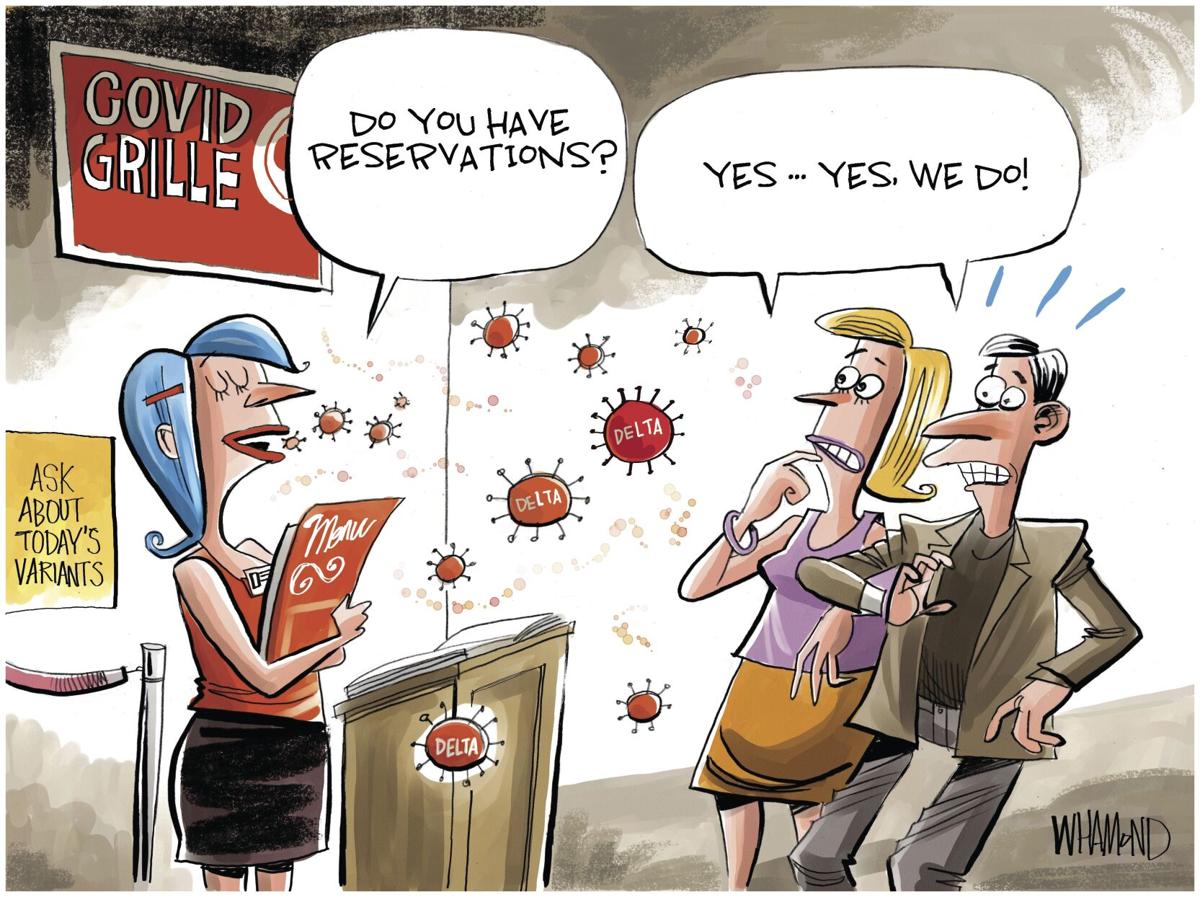
Delta fears grip economy as cases jump across the country

Delta fears grip economy as cases jump across the country

Covid-19: Delta Variant Reported In 85 Countries; Expected To Become  Dominant Lineage, Says Who

The delta variant of the coronavirus is sweeping through the United States, raising the average number of cases to 30,000-per-day, crowding hospitals in areas with large number of unvaccinated people and spurring questions about the nation’s recovery from the pandemic.

Stocks tanked on Monday, with the Dow Jones Industrial average dropping 725 points after being down more than 900 points at one time.

It was the worst one-day performance in the Dow since last October, and followed losses in markets around the world as investor fears about how the delta virus might slow both the health and economic recovery took hold.

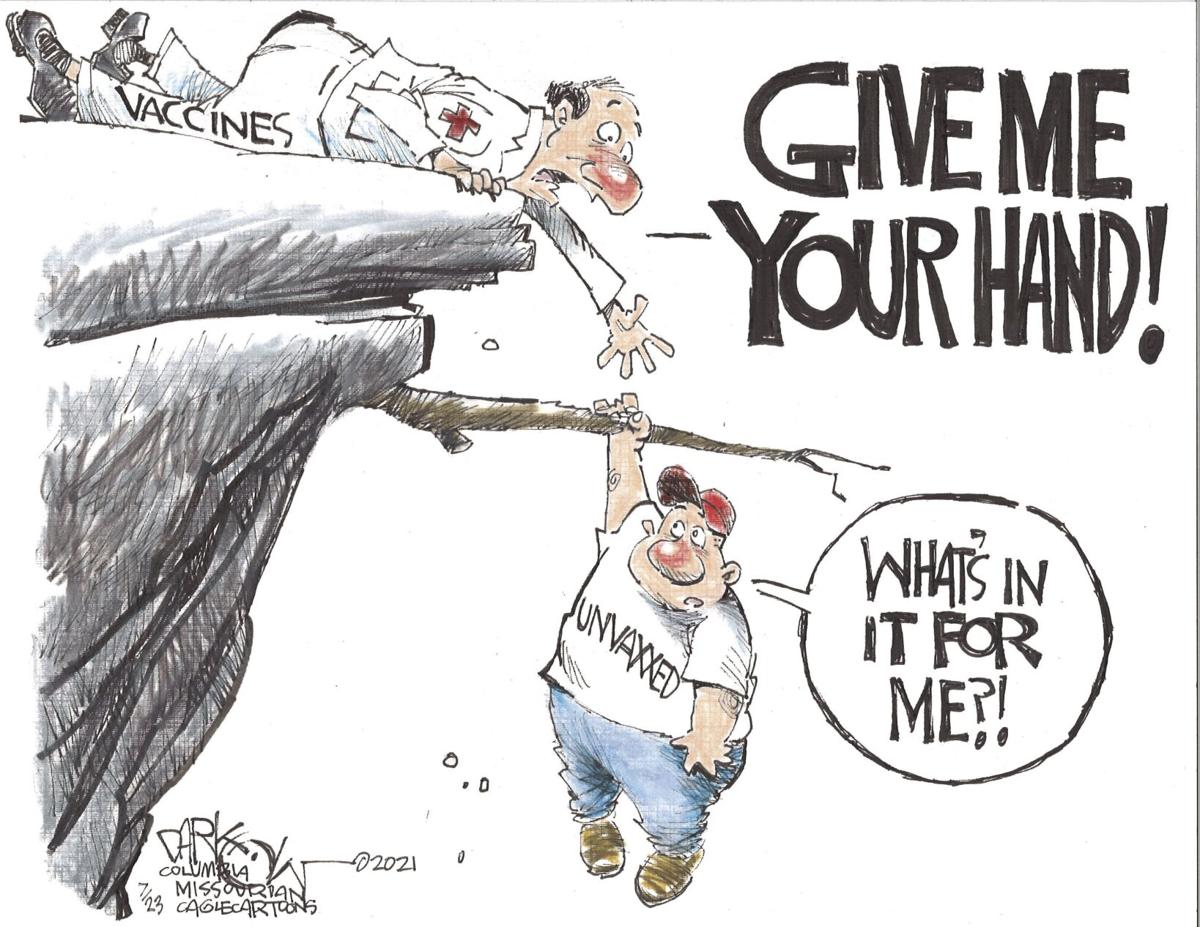
Health officials have described the latest stage of the coronavirus as a pandemic of the unvaccinated while emphasizing that those who have had their shots are relatively safe.

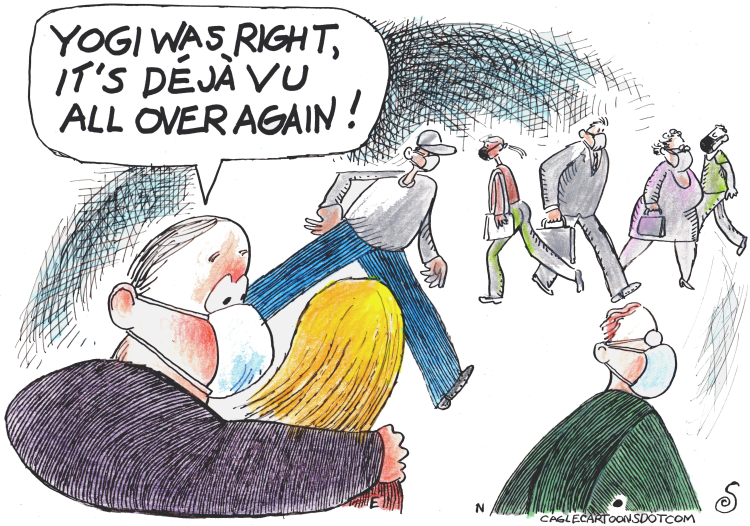
Yet Los Angeles County on Saturday reinstated a mask mandate for indoor public settings, a sign that local communities may decide to reimpose restrictions as a safety measure.

An Olympic gymnast and an Olympic women’s basketball player both announced they had tested positive as they prepared for the Games, which is being held in a state of emergency in Tokyo where the rate of vaccinations is behind the United States.

Canada had also been well behind the U.S. in its vaccination rate but surpassed its southern neighbor on Monday, a sign of how much more slowly the vaccination rate now is in the United States. A big reason is that many people who are unvaccinated do not want to get the vaccine, something the Biden administration has increasingly blamed on social media and some conservative media outlets.

While the 30,000 cases per day on average is more than double the 13,000 average at the end of June, that rate is still well below highs from last fall and earlier this year.

Still, deaths are also ticking back up, at around 240 per day. 

Because vaccinated people are still overwhelmingly protected, especially from severe outcomes, case and death numbers are likely to stay well below the worst of last winter’s surges, before vaccines were widely available. 

But unvaccinated people are at increasing risk, especially given the rise of the highly transmissible delta variant, and the vaccination campaign is hitting a wall, leaving more than 30 percent of adults without any shots and exposed to the full dangers of the virus.

States with lower vaccination rates are seeing the worst outbreaks. Arkansas, Missouri, Florida and Louisiana are the four states with the highest per capita new cases per day, according to data from the Covid Act Now tracking site. The percentage of the population with at least one shot in those states is 44 percent, 47 percent, 56 percent, and 40 percent, respectively. 

In contrast, Vermont and Massachusetts, where the vaccination rate is over 70 percent, are faring much better. 

Vaccine resistance among some leading conservative commentators and lawmakers is raising fears that many of the remaining unvaccinated may never get the shots.

Sten Vermund, a professor at the Yale School of Public Health, said he is “not particularly worried” about COVID-19 for himself, because he is fully vaccinated.

“What worries me is my fellow Americans who for a variety of reasons choose not to get vaccinated; they continue to be in harm’s way,” Vermund said.

In the rare instances where vaccinated people do get COVID-19 cases, symptoms are likely to be much milder.

CDC Director Rochelle Walensky said Friday that 97 percent of people entering the hospital with COVID-19 are unvaccinated, part of why she said it “is becoming a pandemic of the unvaccinated.”

Conservative resistance to vaccination is stiffening. A Washington Post-ABC News poll released earlier this month found that 47 percent of Republicans said they were unlikely to get vaccinated, compared to just six percent of Democrats. Among Republicans, 38 percent said they definitely would not get the shots.

Former President Trump has previously encouraged people to get vaccinated, though he has not made a forceful push, for example by recording a public service announcement or getting his own shots in public.

On Sunday, though, Trump appeared to justify people not taking the vaccine, blaming President Biden.

“He’s way behind schedule, and people are refusing to take the Vaccine because they don’t trust his Administration, they don’t trust the Election results, and they certainly don’t trust the Fake News, which is refusing to tell the Truth,” Trump said in a statement.

Asked if Biden would request Trump film a public service announcement on vaccination, White House press secretary Jen Psaki said “we don’t believe that requires an embroidered invitation to be a part of.”

“Certainly any role of anyone who has a platform where they can provide information to the public that the vaccine is safe, it is effective, we don’t see this as a political issue,” Psaki said. “We’d certainly welcome that engagement.”

She also emphasized, though, that the administration is focusing on local doctors and community leaders to try to boost vaccination rates, not national officials.

The effort is hitting its limits, though. The pace of vaccinations has fallen to around 500,000 per day, down from over 3 million at the peak in April, according to Our World in Data.

“I’m not that hopeful that we’re going to get to people who have refused to be vaccinated,” said Preeti Malani, an infectious disease expert at the University of Michigan.

Experts increasingly say the best remaining hopes of reaching the remaining unvaccinated are school and employer mandates for their workers or students to get vaccinated.

France is experiencing a surge in vaccinations after President Emmanuel Macron announced this month that proof of vaccination, or a negative test, would be required for everyday activities like going to restaurants. The Biden administration has repeatedly ruled out a national vaccine passport in the U.S., though, and Republicans have rebelled against the idea.

Full approval of the vaccines from the Food and Drug Administration, as opposed to the current emergency authorization, could also help assuage some people’s fears, and some experts have called on the FDA to move faster on issuing a full approval.

The Biden administration has stepped up its calls for Facebook and other technology companies to do more to fight vaccine misinformation on their platforms.

Biden on Friday said social media companies are “killing people” with misinformation. On Monday, though, he dialed the criticism back down, instead pointing to 12 people responsible for much of the disinformation.

“Facebook isn’t killing people, these 12 people are out there giving misinformation,” Biden said.

“My hope is that Facebook, instead of taking it personally, that somehow I’m saying Facebook is killing people, that they would do something about the misinformation, the outrageous misinformation about the vaccine,” Biden added. “That’s what I meant.”

For its part, Facebook said over the weekend, before Biden’s walk-back, that the administration was “finger pointing” and the company was not the reason the president’s goal of getting 70 percent of adults at least one shot by July 4 was missed.

Los Angeles County’s move to return to an an indoor mask mandate, even for vaccinated people,

got mixed reviews from experts, but either way, it is unlikely to be replicated in places that are the hardest hit, given that places that are resistant to vaccines tend to also be resistant to masks.

“Vaccines are really the only way out,” Malani said. “We can’t live in masks forever.”

Trinity Health mandates COVID-19 vaccination for all 117,000 employees, business partners

https://www.fiercehealthcare.com/hospitals/trinity-health-mandates-covid-19-vaccination-for-all-117-000-employees-business-partners

Trinity Health is the latest—and now the largest—U.S. provider organization to roll out a COVID-19 vaccination requirement for all of its employees.

Announced Thursday and effective immediately, the nonprofit, Catholic healthcare system said the policy will extend across its entire workforce of more than 117,000 employees, including clinical staff, remote employees, contractors and “those conducting business in its healthcare facilities.”

Trinity said it will approve exemptions for religious or health reasons that are formally requested and documented. Others who don’t meet the criteria for exemption and fail to provide proof of vaccination “will face termination of employment,” according to the announcement.

Trinity said an estimated 75% of its employees have already received at least one dose of a COVID-19 vaccine, and it hopes the new policy will bring that number closer to 100%.

“Safety is one of our core values. We feel it is important that we take every step available to us to stop the spread and protect those around us—especially the most vulnerable in our communities who cannot be vaccinated including young children and the more than 10 million people who are immunocompromised,” Trinity Health President and CEO Mike Slubowski said in a statement.

“Over the last year, Trinity Health has counted our own colleagues and patients in the too-high coronavirus death toll. Now that we have a proven way to prevent COVID-19 deaths, we are not hesitating to do our part,” he said.

Livonia, Michigan-based Trinity operates 91 hospitals and 113 continuing care locations serving more than 30 million people across 22 states. The system reports $19.4 billion in annual operating revenues and is on track to top that number having recently reported $15.1 billion in operating revenues for the nine-month period between July 2020 and March 2021.  

Trinity said that most of its locations will be requiring employees to submit their proof of vaccination by Sept. 21. Should it be determined that COVID-19 vaccine boosters will be necessary down the line, the hospital said that it would similarly require employees to submit proof of their receipt “as needed.”

“The science has shown us that the COVID-19 vaccine is the single most effective tool in slowing, and even stopping, the spread of the virus,” Dan Roth, M.D., Trinity Health executive vice president and chief clinical officer, said in a statement. “As a Catholic Health Ministry—even if we work remotely or do not regularly encounter patients—we view ourselves as caregivers, and it’s important that we do everything we can to end the pandemic and save lives.”

Trinity is among the growing number of provider organizations taking a hard stance on employee COVID-19 vaccination. Among the larger of these to announce mandatory policies over the last few months are St. Louis-based MercyDetroit-based Henry Ford Health SystemSt. Louis-based SSM Health and the member hospitals of the Connecticut Hospital Association (PDF).

But perhaps the best known of the bunch has been Houston Methodist, which drew a line in the sand on June 8 and has since cut loose 153 employees who did not comply with the vaccine mandate.

That policy led to protests from the dissenting employees as well as a lawsuit that argued the system was “forcing its employees to be human ‘guinea pigs’ as a condition for continued employment.” The case was dismissed by a U.S. district judge and quickly appealed by the employees.

Other organizations such as Mass General Brigham have signaled support for a mandatory COVID-19 vaccination policy but said that they would not enforce the requirement until a COVID-19 vaccine receives formal approval from the FDA.

Earlier this year, the U.S. Equal Employment Opportunity Commission paved the way for employer-mandated COVID-19 vaccine policies with guidance permitting the requirements “so long as employers comply with the reasonable accommodation provisions of the [Americans with Disabilities Act] and Title VII of the Civil Rights Act of 1964 and other [Equal Employment Opportunity] considerations.”

Pandemic of the Unvaccinated

COVID-19 vaccine

COVID-19 cases are up by nearly 70% over the past seven days due to huge spikes of cases in low vaccinated areas, Biden administration officials said Friday.

“This is becoming a pandemic of the unvaccinated,” said Rochelle Walensky, M.D., director of the Centers for Disease Control and Prevention, during a briefing Friday. “We are seeing outbreaks of cases in parts of the country that have low vaccination coverage because unvaccinated people are at risk. Communities that are fully vaccinated are generally faring well.”

The seven-day average of cases was 26,300 per day, an increase of nearly 70% from the last seven-day average, Walensky said.

Hospitalizations are also up to 2,790 per day, an increase of 36% from the previous seven-day period.

Deaths, a metric that has declined since prior surges earlier in the year, have also started to increase. The seven-day average increased by 26% to 211 per day, Walensky said.

“Our biggest concern is we are going to see preventable cases, hospitalizations and, sadly, deaths among the unvaccinated,” she said.

A major driver of the increases has been the highly transmissible Delta variant of COVID-19, but Walensky said that 97% of the patients hospitalized right now with the virus are unvaccinated.

The Biden administration is ramping up efforts to increase vaccinations in areas that have stubbornly low rates. The administration is sending more than 100 people to states to help enhance vaccine access and boost outreach efforts, said Jeff Zients, the White House coronavirus response coordinator, during the briefing.

States with the highest cases are starting to see their vaccination rates go up, Zients said.

“In the past week, the five states with the highest case rates had a higher rate of people getting newly vaccinated compared to the national average,” he added.

He added that so far the CDC and the Food and Drug Administration have not recommended a booster shot for the fully vaccinated.

Infectious disease expert Anthony Fauci, MD, said Friday that the federal government is looking into evidence accumulated on a daily basis on the need for a booster.

“At this particular time right now, we don’t recommend that there be boosters for people,” Fauci said.

Cartoon – Centers of Profit

MedCorp” by Matt Wuerker, Politico | Kaiser Health News

Senate Democrats strike a $3.5T spending deal

https://mailchi.mp/26f8e4c5cc02/the-weekly-gist-july-16-2021?e=d1e747d2d8

Senate Democrats aim to include Medicare drug price negotiation authority  in $3.5T infrastructure deal | FierceHealthcare

Senate Democrats announced a compromise budget framework to fund President Biden’s social spending plans to the tune of $3.5T, including substantial money for some of the administration’s key healthcare priorities. The framework sends instructions to several Senate committees, including the Budget and Finance panels, to craft legislative language around the central components of the deal, with the goal of passing a spending package before next month’s recess.

Many specifics remain to be ironed out in negotiations among the party’s progressive and moderate camps, but some of the main elements of the deal became clear this week. The plan includes extending the enhanced subsidies for purchasing individual coverage on the healthcare marketplaces, which were implemented earlier this year as part of the American Rescue Plan Act. It would also seek to close the so-called “Medicaid coverage gap”, by providing new coverage options for low-income adults in states that did not expand Medicaid under the Affordable Care Act (ACA).

New investments would be made in home- and community-based services for long-term care, along the lines of the $400B proposed in President Biden’s American Families Plan. And the budget deal envisions expanding benefits in the Medicare program to include dental, vision, and hearing services. Given the budgetary concerns of moderate Democratic lawmakers like Sen. Joe Manchin (WV), one critical question will be how the $3.5T deal will be paid for. One likely source of funding for the deal will be reforming the way Medicare purchases prescription drugs, making that long-time Democratic policy objective a probable part of any final package.
 
Notably absent from the healthcare spending proposals: lowering the eligibility age for Medicare from 65 to 60. No final decision has been reached on whether to incorporate such a move; rather, the question will be sent to the Senate Finance Committee for consideration. Given the urgency of passing as much of the Biden administration’s legislative agenda as possible before the midterm campaign season begins in earnest, we think it’s unlikely that Democrats will be willing to cross the Rubicon of Medicare expansion at this point.

The prospect of having to gain support from all 50 Democratic senators—as zero Republicans are expected to support the package—will likely temper any appetite for picking a fight with the influential hospital and physician industries, which have strongly opposed Medicare expansion.

One longer-term implication of the apparent decision to favor expansion of Medicare benefits over lowering the Medicare eligibility age now: a richer package of services in traditional Medicare might make Medicare Advantage (MA) a less attractive alternative for potential enrollees and could undermine any future efforts to create an “MA buy-in” for coverage expansion.

Expect lobbying and negotiations to reach a furious pace over the next several weeks, as lawmakers work out the final details of the $3.5T spending plan.

In search of the “clinician strategist”

https://mailchi.mp/26f8e4c5cc02/the-weekly-gist-july-16-2021?e=d1e747d2d8

How to make figuring out what to propose simple - PropLibrary

We’ve been working with a CEO and his strategy team around their health system’s five-year strategic plan. It’s still early in development, and they’re considering some bold moves. Given that some of the ideas are disruptive, he astutely observed they needed to bring a clinical leader into the process before the strategy is fully developed, but he’s having trouble identifying the right physician to be part of the very small executive working group. 

We began listing the important attributes, creating a rough job description for a “clinician strategist”: the ability to consider clinical and operational implications but not get bogged down in details; bold, big-picture thinking and a willingness to take risks; strong communication and leadership skills.

As the list grew longer, we began to wonder if we were really telling the CEO to chase a unicorn. Some of the characteristics that typically make for an outstanding clinician—reliance on data and evidence, lower risk tolerance—might conflict with embracing disruptive change. Much of strategic decision making is about finding “80-20” compromises, while doctors often tend to get bogged down in detail (for good reason) and are quick to poke holes.

And our ideal physician strategist, out of a desire to safeguard patient care, might sometimes find that the strategy team isn’t adequately considering the ramifications for quality and safety. Finding a physician leader who also has the skills of a chief strategy officer is indeed a rare thing. It’s probably a better bet to identify early-career doctors who have the right mindset and an interest in strategy and help them develop their leadership skills over time. 

Regardless, this CEO’s instinct was correct. Bringing doctors into the strategy-setting process early is crucial, even if the perfect clinician strategist might prove difficult to find.