


Cartoon – Modern Governance


Southfield, Mich.-based Beaumont Health reported a net loss of $278.4 million in the first quarter of 2020, a decrease of $407.5 million compared to the same period one year prior.
The health system said that the loss is largely due to the COVID-19 pandemic, which negatively affected operating and nonoperating income for the three-month period ended March 31.
Beaumont saw its operating revenue fall to $1.07 billion in the first quarter of 2020, compared to operating revenue of $1.15 billion in the same period in 2019.
In addition, the system saw its operating income drop $91.7 million year over year.
Nonoperating losses for the first quarter totaled $224.6 million, compared to a nonoperating gain of $91.6 million in the same period in 2019.
“The shelter-in-place order and community concerns about the virus have led to significant reductions in emergency center visits, nonessential surgeries and diagnostic services. We believe these reductions will continue well into the second quarter and negatively impact financial performance in a significant way,” Beaumont Health CFO John Kerndl said.
To help improve its financial performance, Beaumont said it will defer all nonessential capital expenditures, fine-tune staffing levels and cut other expenses.
“We will continue to explore and pursue all options and plans that will help our organization survive this crisis and return to a position of strength after COVID-19 is no longer a threat to our community,” Mr. Kerndl said.
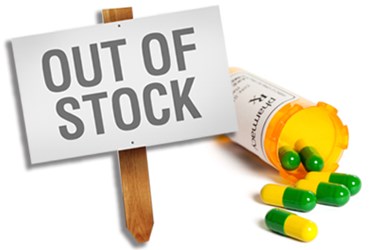
The U.S. is still scrambling to get health care workers the personal protective equipment, ventilators and lab testing materials that they need.
Between the lines: President Trump has repeatedly said that governors are responsible for obtaining supplies for their states, but industry groups are asking the federal government to play a larger role.
Meanwhile, the private sector is shifting into gear on its own and in partnership with the government.
1 scary stat: Prescription drugs needed by patients on ventilators are being filled only 53% of the time so far in April, as demand has skyrocketed, according to Vizient, a health care purchasing group.

People losing their employer-based health insurance in the coronavirus economy would find a pretty stable Affordable Care Act market if they need it — not that the Trump administration is advertising that fact, Bob writes.
Why it matters: ACA plans will be an important backstop for some newly uninsured people, many of whom could likely find affordable coverage on the law’s insurance marketplaces.
Where it stands: The average monthly premium for ACA coverage was down 3% in this year’s enrollment period, compared with 2019, according to a federal report that was released earlier this month but not publicly promoted.
Yes, but: You won’t hear much about those options from the Trump administration, which has been consistently hostile to the ACA and has declined to open up a special enrollment window that would let anyone who has been disrupted by the economic shutdown to buy coverage.

California Gov. Gavin Newsom released a roadmap on Tuesday that will guide how he will make the decision to relax the stay-at-home policies his state implemented to combat the spread of the coronavirus.
The big picture: While there is no timeline for modifying the stay-at-home order, Newsom’s office said California would use a “gradual, science-based and data-driven framework” to determine when it would be safe to do so. Newsom indicated efforts to flatten the curve in California “have yielded positive results.”
Details: Newsom said California would use six indicators to determine when to relax social distancing measures:
Newsom’s roadmap also notes that life will be different even after stay-at-home orders are eased. For example, restaurants will likely reopen with fewer tables and face coverings will be more common in public.
What he’s saying: “While Californians have stepped up in a big way to flatten the curve and buy us time to prepare to fight the virus, at some point in the future we will need to modify our stay-at-home order,” Newsom said.

It feels like some big, terrible switch got flipped when the coronavirus upended our lives — so it’s natural to want to simply flip it back. But that is not how the return to normalcy will go.
The big picture: Even as the number of illnesses and deaths in the U.S. start to fall, and we start to think about leaving the house again, the way forward will likely be slow and uneven. This may feel like it all happened suddenly, but it won’t end that way.
What’s next: Nationally, the number of coronavirus deaths in the U.S. is projected to hit its peak within the next few days. But many big cities will see their own peaks significantly later — for them, the worst is yet to come.
The future will come in waves — waves of recovery, waves of more bad news, and waves of returning to some semblance of normal life.
What the post-lockdown world will look like:
And there will be more waves of infection, even in areas that have passed their peaks.
This is all but inevitable in the U.S., too, especially as travel begins to pick back up. Some places may need to shut down again, or at least tighten back up, if these new flare-ups are bad enough.
What we’re watching: We’ll still need a lot more diagnostic testing to make this process work. Public health officials need to be able to identify people who might be spreading the virus before they begin to feel sick, and then identify the people they may have infected.
The real turning point won’t come until there’s a proven, widely available treatment or, even better, a widely available vaccine.
The bottom line: “I’m not going back to Disneyland, I’m not going to take a cruise again, until we have a very aggressive testing system or we have very effective therapeutics or a vaccine,” Gottlieb said.

The United States, the organization’s largest donor, has committed to provide the WHO with $893 million during its current two-year funding period, a State Department spokesperson told The Washington Post.
The Bill & Melinda Gates Foundation, the family’s giant philanthropy, is the next biggest donor to WHO after the U.S., accounting for close to 10 percent of the United Nations agency’s funding.
As The Washington Post’s Anne Gearan reported, the president said on Tuesday that the halt in U.S. funding would continue for a period of 60 to 90 days “while a review is conducted to assess the World Health Organization’s role and severely mismanaging and covering up the spread of the coronavirus.”
“We have not been treated properly,” Trump said at the Tuesday news briefing. He added, “The WHO pushed China’s misinformation about the virus.”
It remains unclear whether the United States will cut off money to the main international organization, or if Trump is setting conditions for a resumption of U.S. payments at a later date, The Post reported.
The announcement looms as a potentially devastating blow to the agency during the coronavirus pandemic, as the United States’ donations make up nearly 15 percent of all voluntary donations given worldwide.
The criticism from Gates, whose foundation has committed up to $100 million as part of the global response to the pandemic, comes as Trump has attempted to deflect blame for the administration’s failure to respond vigorously and early to the deadly novel coronavirus.
Also defending the WHO was U.N. Secretary General António Guterres, who, while not naming Trump, said it was “not the time to reduce the resources for the operations of the World Health Organization or any other humanitarian organization in the fight against the virus.”
“Now is the time for unity and for the international community to work together in solidarity to stop this virus and its shattering consequences,” he said.
Others, such as the American Medical Association, called Trump’s announcement to cut WHO funding “a dangerous step in the wrong direction.”
“Cutting funding to the WHO — rather than focusing on solutions — is a dangerous move at a precarious moment for the world,” the organization said in a statement. “The AMA is deeply concerned by this decision and its wide-ranging ramifications, and we strongly urge the President to reconsider.”
While some of Trump’s conservative allies are focusing on the WHO as complicit in a Chinese coverup of the outbreak, others have urged the president to hold off on moving forward on suspending funding.
“If the president wants to genuinely hold the WHO accountable, counter Chinese efforts to shift blame for COVID-19, and reform the WHO to better respond to the next pandemic, he should not cut funding — at least not yet,” wrote Brett D. Schaefer, an expert at the conservative Heritage Foundation and member of the U.N.’s Committee on Contributions.
It isn’t the first time that Gates has questioned the country’s response to the pandemic. In a TED interview last month, Gates, while not mentioning Trump by name, suggested the push to relax social distancing to reopen the country was reckless.
“There really is no middle ground, and it’s very tough to say to people: ‘Hey, keep going to restaurants, go buy new houses, ignore that pile of bodies over in the corner. We want you to keep spending because there’s maybe a politician who thinks GDP growth is all that counts,’” Gates said. “It’s very irresponsible for somebody to suggest that we can have the best of both worlds.”
In a March 31 op-ed for The Post, Gates emphasized that while the U.S. lost valuable time in getting out ahead of its response, there was still a path forward for recovery through decisions made by “science, data and the experience of medical professionals.”
“There’s no question the United States missed the opportunity to get ahead of the novel coronavirus. But the window for making important decisions hasn’t closed,” Gates wrote. “The choices we and our leaders make now will have an enormous impact on how soon case numbers start to go down, how long the economy remains shut down and how many Americans will have to bury a loved one because of covid-19.”


 HENRY KOTULA