Cartoon – Are you Socially Distancing or in Denial?

Weekly Humorist

Mask shortage for most health-care workers extended into May, Post-Ipsos poll shows

https://www.washingtonpost.com/health/mask-shortage-for-most-health-care-workers-extended-into-may-post-ipsos-poll-shows/2020/05/20/1ddbe588-9a21-11ea-ac72-3841fcc9b35f_story.html?fbclid=IwAR3rcjsPTuDjJODTBeJTRCqqJ4RbMTmWTih5jP91Vy9pn_S4NzWcVErobbY&utm_campaign=wp_main&utm_medium=social&utm_source=facebook

Feds uncover an alleged scheme to fraudulently sell 39 million N95 ...

Front-line health-care workers still experienced shortages of critical equipment needed for protection from the coronavirus into early May — including nearly two-thirds who cited insufficient supplies of the face masks that filter out most airborne particles, according to a Washington Post-Ipsos poll.

More than 4 in 10 also saw shortages of less protective surgical masks and 36 percent said their supply of hand sanitizer was running low, according to the poll. Roughly 8 in 10 reported wearing one mask for an entire shift, and more than 7 in 10 had to wear the same mask more than once.

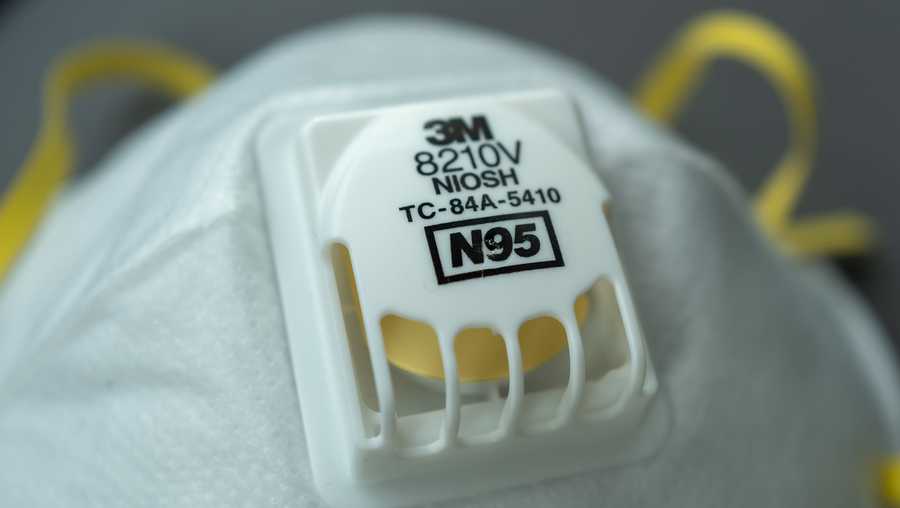
The dire shortage of personal protective equipment for health-care workers emerged in March as one of the earliest signals of the country’s lack of preparation for the coronavirus pandemic. Nurses and others have said they were forced to put their own health at risk caring for highly infectious patients because they lacked adequate supplies, in particular N95 masks, which filter out 95 percent of airborne particles.

Image without a caption

State governments and medical facilities went to extraordinary lengths to obtain, preserve, sanitize and reuse masks designed to be disposed after a single use if necessary. Health authorities asked a frightened public not to worsen the shortage by snapping them up.

The Post-Ipsos poll may provide the clearest nationwide measure to date of the shortages during those weeks, when the virus surged through parts of the country, overwhelming some hospitals in New York City and placing others across the nation under tremendous strain. The survey interviewed a national sample of 8,086 U.S. adults, including 278 people who work with patients in health-care settings, such as doctors’ offices, clinics, hospitals and nursing homes. The poll was conducted from April 27 to May 4; results among health workers have a 6.5-point margin of sampling error.

“Covid hit like a tidal wave. We went from nothing to insanity,” said Ronnie Dubrowin, a certified nurse midwife from Connecticut who responded to the poll. “It was like one week no one had heard of this disease and the next week everybody had it.”

Dubrowin, who sees obstetric patients in two hospitals and one office setting, said masks were in such short supply during the early days of the outbreak that she resorted to heating hers in an oven to kill the virus.

“Getting protective gear was difficult for everybody,” Dubrowin said. “It became a mission of so many people in hospital settings to get protective gear for their employees.”

Despite shortages, 75 percent of the health-care workers said their employer was doing enough to ensure their safety. They also gave high marks to state officials, with 71 percent approving of their governor’s handling of the crisis.

They had much less confidence in President Trump. A 59 percent majority disapproved of his handling of the coronavirus pandemic, while 41 percent approved.

Nearly a third of health workers said they believe restrictions were being lifted too quickly in late April and early May. A slim majority, 53 percent, said state governments are handling the pandemic about right, and 15 percent felt restrictions are not being lifted quickly enough. Those views are roughly similar to those of the general public, as are the ratings of Trump and governors.

Long Vinh, a pediatrician who works in the neonatal intensive care units at two San Francisco-area hospitals, said at the beginning of the outbreak some steps were taken to preserve masks, out of fear there might be a shortage. Now, he says there are no shortages of masks, gowns or other protective equipment at those hospitals: California Pacific Medical Center and Mills-Peninsula Medical Center.

“I really feel that being in the Bay Area, we were blessed and fortunate to have both a wealth of hospital capacity and resources and political leadership that took the crisis seriously,” he said.

Vinh said that while he had some concerns of an overall shortage early on, “I never felt like I was put into a situation where I might have a covid exposure where I wouldn’t have all the protection I need.”

The survey showed that more than 7 in 10 health-care workers expressed concern about exposing members of their household to the virus after coming in contact with it at work, and roughly half were regularly changing out of clothing before entering their homes. About a third said someone at their workplace has been infected by the coronavirus. A 58 percent majority said it is likely they have been exposed at work.

One woman, who works in a small, residential mental-health treatment center in Minnesota, said she and other workers are not provided masks, though they are seeing adults who come from hospitals and elsewhere and who could be infected.

The woman, a counselor who spoke on the condition of anonymity to discuss decisions made by her employer, said she is concerned about bringing the virus home to her young child.

“We have some capacity to social-distance . . . but with the size of our facility and the office space availability, I’d say 80 percent of the time that’s not possible,” she said.

More than three-quarters of health workers felt that people appreciated their efforts, and a similar proportion said someone has thanked them for their work since the outbreak began.

Just over 1 in 10, or 12 percent, of health-care workers said they do not have health insurance themselves. More than 6 in 10 have paid sick leave, though over 3 in 10 do not and the rest were not sure.

And the financial outlook for many is shaky. Nearly half of health-care workers, 48 percent, were at least somewhat concerned about paying their bills.

The Post-Ipsos poll was conducted through Ipsos’s KnowledgePanel, a large online survey panel recruited through random sampling of U.S. households.


Cartoon – Blinded by Science

A Politician Delivers A Campaign Speech Acrylic Print by Paul Noth

All 50 states have partially reopened; U.S. death toll surpasses 90,000

https://www.washingtonpost.com/nation/2020/05/20/coronavirus-update-us/?utm_campaign=wp_post_most&utm_medium=email&utm_source=newsletter&wpisrc=nl_most

NC coronavirus update May 18: Wake County leaders meet to discuss ...

Ready or not, the United States is reopening. All 50 states have started easing coronavirus-related restrictions — even though many of them do not meet federal benchmarks — leading public health experts to warn that a new surge of infections could be imminent.

As the U.S. death toll surpassed 90,000, White House officials continued to defend the push to reopen and optimistically predicted a swift economic recovery. As part of the focus on states’ efforts to revive their economies, Vice President Pence on Wednesday traveled to Florida while Trump was set to host the governors of Arkansas and Kansas at the White House.

Here are some significant developments:

  • Trump ramped up his rhetoric against China, claiming on Twitter that the nation’s “incompetence” was responsible for “this mass Worldwide killing!” Secretary of State Mike Pompeo also denounced China as a “brutal authoritarian regime” and described its relationship with the director of the World Health Organization as “troubling.”
  • A worker at a mink farm in the Netherlands may have contracted the novel coronavirus from an animal there, the country’s agricultural minister said. If confirmed, this is would be first recorded incident of animal-to-human transmission. 
  • A church in Houston and another in Georgia are closing for a second time after faith leaders and congregants tested positive for the virus shortly after the two churches reopened.
  • The president drew criticism for saying Tuesday it’s “a badge of honor” that America leads the world with more than 1.5 million confirmed cases of the novel coronavirus because “it means our testing is much better.” The United States has more than 30 percent of the world’s known coronavirus infections but accounts for less than 5 percent of the global population.
  • The Centers for Disease Control and Prevention laid out a detailed, delayed road map for reopening schools, child-care facilities, restaurants and mass transit, weeks after governors began opening states on their own terms.
  • The president privately expressed opposition to extending unemployment benefits for workers affected by the pandemic.


COVID-19 pushes Mayo Clinic’s operating income into free fall

https://www.healthcaredive.com/news/covid-19-pushes-mayo-clinics-operating-income-into-free-fall/578191/

Farrugia calls 2019 'a year of remarkable growth' as Mayo reports ...

Dive Brief:

  • Prior to the onset of the novel coronavirus, Mayo Clinic was cruising along with a healthy operating margin of 6.7% during the first two months of the quarter. But by the close of the period, the operating margin was squeezed to just 0.9% while net operating income fell off a cliff, free falling 88% to $29 million compared to the first quarter of 2019.
  • Due to contracting services and the near closure of its outpatient business in response to the pandemic, revenues for the quarter declined nearly 4% while expenses rose 3% compared to the prior-year period.
  • The fluctuation in the financial markets caused a downturn in Mayo’s investment portfolio, leading to an overall net loss of $623 million for the Rochester, Minnesota-based nonprofit health system.

Dive Insight:

Mayo Clinic is the latest hospital operator to report it first quarter results have been battered by the pandemic.

The system, which took in more than $1 billion in operating income in 2019, joins other major hospital operators that reported a dip in volumes amid the public health crisis, including HCA and CommonSpirit.

The second quarter is not likely to look better, according to Fitch Ratings. The second quarter looks bleak as the ratings agency issued an ominous report predicting it would be the “worst on record” for most nonprofit hospitals.

Yet, some of the for-profit hospital operators see May as the beginning of the recovery. Both Tenet and CHS executives seemed upbeat about the prospects for this month, noting it was the start of resuming elective procedures that had been put off.

Despite the hospital sector as a whole taking a major hit from the pandemic, big wealthy systems like Mayo have significant rainy day funds. Mayo reported cash and investments of more than $10.6 billion as of March 30 with 252 days cash on hand.

In April, Mayo issued a voluntary notice about how the virus was taking on its business, noting reduced salaries for executives and physicians, furloughs and a hiring freeze, among other efforts.​

In its first quarter report, Mayo detailed the ways in which it’s tackling the novel coronavirus on the medical front, including leading a program, approved by the FDA, that gives severely sick COVID-19 patients plasma from those who were previously sickened but have since recovered from the virus.

Mayo said it’s preparing the program’s first safety report on the first 5,000 patients to receive the infusion. As of May 12, more than 9,300 patients have been infused, Mayo said.

The system also runs COVID-19 testing, and said it is now able to administer 8,500 molecular tests and 20,000 serologic tests, which look for antibodies to the virus in those that may have been previously infected, daily.


CommonSpirit posts $1.4B loss, says full COVID-19 impact unknown

https://www.healthcaredive.com/news/commonspirit-posts-14b-loss-too-soon-to-project-long-term-covid-19-impac/578100/

Locations | CommonSpirit Health

Dive Brief:

  • CommonSpirit Health, sprung from last year’s merger of California-based Dignity Health and Colorado-based Catholic Health Initiatives, reported a loss topping $1.4 billion in the fiscal third quarter ending March 31, although adjusted revenues were flat compared to the third quarter of 2019. The biggest proportion of losses were tied to investments, as its portfolio dropped in value by nearly $1.1 billion. Its total net assets are down nearly $2.5 billion from a year ago.
  • Like many other hospital systems, CommonSpirit reported a drop in patient volumes that began in mid-March as states began issuing lockdown orders. Acute admissions dropped more than 5% for the quarter compared to a year ago.
  • CommonSpirit did receive more than $700 million in Coronavirus Aid, Relief, and Economic Security Act funds, although since it was received on March 31 it will be booked into its fiscal fourth quarter financial statements. The system received another $2.6 billion in accelerated payments from CMS and anticipates receiving another $410 million in disaster relief funding and from the Paycheck Protection Program.​

Dive Insight:

The COVID-19 pandemic is continuing to ravage the bottom lines of providers, and the nation’s largest not-for-profit hospital system, CommonSpirit Health, is no exception.

Its first full year as a unified system is 2020, and the COVID-19 pandemic is challenging the 134-hospital organization in ways it likely never anticipated. Admissions are down for the foreseeable future, coupled with the need to spend tens of millions of dollars on personal protective equipment, respirators and to divert a significant amount of resources toward treating coronavirus patients.

Fitch Ratings said COVID-19 is to blame for the worst second quarter for most U.S. hospitals and systems.

For the third quarter of 2020, CommonSpirit reported an operating loss of $145 million, compared to a pro forma $124 million loss reported by Dignity and CHI for the first quarter of 2019.

CommonSpirit posted a net loss of $1.4 billion for the third quarter, compared to a pro forma net gain of $9.7 billion for the third quarter of 2019. However, $9.2 billion of that came from what CommonSpirit termed a “contribution from business combination,” the net assets received from both parties by merging with one another. For the first nine months of fiscal 2020, CommonSpirit lost $1.1 billion on revenue of $22.4 billion, compared to a net gain of $9.5 billion on revenue of $21.6 billion over the same period in fiscal 2019.

And despite receiving some $3.7 billion in federal assistance, CommonSpirit said in its quarterly financial disclosures that it remains too soon to tell what the impact of COVID-19 will be on the organization over the long-term.

Prior to the pandemic, CommonSpirit’s financial position was trending stronger compared to its pre-merger state. Seven of its 14 operating divisions reported a jump in revenue during the quarter compared to 2019.


COVID-19 shreds Sutter Health’s finances in matter of weeks

https://www.healthcaredive.com/news/covid-19-shreds-sutter-healths-finances-in-matter-of-weeks/578021/

Dive Brief:

  • Sutter Health, one of California’s largest and most powerful hospital networks, is getting pounded by losses related to the COVID-19 outbreak, according to a report issued to bondholders.
  • Sutter posted an operating loss of $236 million for the first quarter ending March 31, and a net loss of almost $1.1 billion. That’s even though California officials did not begin locking down activities in the state until the second part of March. Sutter saw an operating loss of $360 million in April alone, after the first quarter concluded, suggesting net losses for the second quarter could be even larger.
  • Much of the losses are attributed to the abrupt cutoff of patient flow to Sutter hospitals, clinics and medical offices. Only 5.7% of its intensive care unit beds are being used to treat COVID-19 patients, Sutter reported, and almost 32% of its ICU beds were unused as of May 11.

Dive Insight:

For decades, Sacramento-based Sutter Health has been considered the most powerful hospital operator in Northern California, with facilities throughout the Bay Area and even the more rural part of the state north of San Francisco. Critics allege its market dominance contributes to the long-term cost imbalance for hospital services between the northern and southern parts of the state.

Like many other chains and hospitals, it took only a few weeks of the COVID-19 outbreak and California’s statewide stay-at-home order to hamstring Sutter’s operations. Between March 17 and the end of April, inpatient bed days at Sutter hospitals declined by 23%, its ambulatory facilities have experienced volume declines of 73%, and emergency room visits were down 43%.

In the Wednesday note to bondholders, Sutter reported unaudited losses of $1.1 billion on revenue of $3.2 billion for the first quarter. It netted $394 million on revenue of $3.3 billion in the same period last year.

Sutter joins other large hospital networks such as the Mayo Clinic and Kaiser Permanente in reporting recent revenue losses related to COVID-19.

Yet the numbers for Sutter could get grimmer over the second quarter as revenue continues to sink. For April, it projects operating losses of $360 million and a negative operating margin of 50.5%, not counting congressional relief funds.

“Sutter anticipates in the near term at least a $300 million per month reduction in operating performance until containment of COVID-19,” it reported. It is also spending tens of millions of dollars to purchase equipment to confront a potential resurgence of COVID-19 this fall and winter — on top of some $57 million it has already spent to prepare for the pandemic.

As a result, Sutter says it has either cut the hours of about 5,000 of its employees, reassigned them or sent them for retraining.

While Sutter noted that California is slowly reopening the state after six weeks of shutdown, it remains to be seen whether patient flow will return to normal. Anthony Fauci, director of the National Institute of Allergy and Infectious Diseases, warned this week that reopening too soon could lead to a spike in new coronavirus cases.

The funds Sutter has received from the Coronavirus Aid, Relief, and Economic Security Act have alleviated the financial pain to some extent. It has received $205 million to date, plus another $1 billion in accelerated Medicare claims payments from CMS. Factoring that in, Sutter says April operating losses would be cut to $168 million.

Sutter is also sitting on about $6 billion in cash and liquid investments, but notes it has lost $500 million from its portfolio since the start of the year. It has also borrowed $400 million from a $500 million credit line so far this year and obtained another $100 million credit line last month.


For-profit, higher-margin hospitals at advantage when it comes to CARES funding

https://www.healthcaredive.com/news/for-profit-higher-margin-hospitals-at-advantage-when-it-comes-to-cares-fun/577941/

Understanding the CARES Act student loan relief | Sanford Center ...

Dive Brief:

  • Hospitals that tend to have a higher mix of private payer revenue are likely to receive more novel coronavirus federal grant money compared to hospitals that rely on government payers such as Medicare and Medicaid, a new analysis from the Kaiser Family Foundation found.
  • The study aims to analyze the implications of tying the latest round of $50 billion in federal bailout money to providers’ net patient service revenue. It examined hospital financial data and used the HHS’ grant formula to determine the amount of grant money hospitals were likely to receive.
  • KFF found that hospitals with the highest share of private insurance revenue, or those in the top 10%, received $44,321 per hospital bed, or more than double the hospitals in the bottom 10%.

Dive Insight:

This latest analysis reveals some hospitals may be at a disadvantage when it comes to receiving federal funding that is meant to serve as a lifeline for them during the COVID-19 pandemic.

The study found that hospitals with the highest share of private insurance revenue — and those set to receive more in bailout money — were less likely to be teaching hospitals and more likely to be for-profit. Also, they were more likely to have higher operating margins and provided less uncompensated care as a share of operating expenses.

In short, KFF explains that the funding package is skewed toward hospitals with higher revenue from private payers.

“These hospitals’ large share of private reimbursement may be due either to having more patients with private insurance or charging relatively high rates to private insurers or a combination of those two factors. All things being equal, hospitals with more market power can command higher reimbursement rates from private insurers and therefore received a larger share of the grant funds under the formula HHS used,” according to the analysis.

The study points out that a community health center that sees a small portion of patients with private pay would receive less funding than a private physician office that sees the same total number of patients but treats more with private pay.

“With HHS expected to release additional relief fund grants and Congress considering additional stimulus, this analysis demonstrates that the formula used to distribute funding has significant consequences for how funding is allocated among providers,” according to KFF.

Hospitals have been battered by the outbreak of the novel coronavirus. They’ve halted elective procedures and routine care in an effort to preserve needed medical supplies and in an attempt to snuff out the spreading virus.

That has caused hospital volumes and revenues to plummet as care is deferred, so the federal government has sent financial aid in response as part of the Coronavirus Aid, Relief, and Economic Security Act.

This latest round of funding was designed to be a more targeted approach than the initial wave. The first $30 billion released was distributed based on a facility’s share of Medicare fee-for-service. That put facilities with a small slice of Medicare fee-for service business, such as children’s hospitals, at a disadvantage. However, the first round was one way to get money out the door quickly, which officials have acknowledged, knowing a more targeted approach would follow.


Fitch Q2 outlook for nonprofit hospitals: ‘worst on record’

https://www.healthcaredive.com/news/fitch-analysts-hospital-worries-FY-2020/577875/

Nicklaus Children's Health System Receives A+ Rating from Fitch ...

From the Mayo Clinic to Kaiser Permanente, nonprofit hospitals are posting massive losses as the coronavirus pandemic upends their traditional way of doing business.

Fitch Ratings analysts predict a grimmer second quarter: “the worst on record for most,” Kevin Holloran, senior director for Fitch, said during a Tuesday webinar.​

Over the past month, Fitch has revised its nonprofit hospital sector outlook from stable to negative. It has yet to change its ratings outlook to negative, though the possibility wasn’t ruled out.

Some have already seen the effects. Mayo estimates up to $3 billion in revenue losses from the onset of the pandemic until late April — given the system is operating “well below” normal capacity. It also announced employee furloughs and pay cuts, as several other hospitals have done.

Data released Tuesday from health cost nonprofit FAIR Health show how steep declines have been for larger hospitals in particular. The report looked at process claims for private insurance plans submitted by more than 60 payers for both nonprofit and for-profit hospitals.

Facilities with more than 250 beds saw average per-facility revenues based on estimated in-network amounts decline from $4.5 million in the first quarter of 2019 to $4.2 million in the first quarter of 2020. The gap was less pronounced in hospitals with 101 to 250 beds and not evident at all in those with 100 beds or fewer.

Funding from federal relief packages has helped offset losses at those larger hospitals to some degree.

Analysts from the ratings agency said those grants could help fill in around 30% to 50% of lost revenues, but won’t solve the issue on their own.

They also warned another surge of COVID-19 cases could happen as hospitals attempt to recover from the steep losses they felt during the first half of the year.

Anthony Fauci, the nation’s top infectious disease expert, warned lawmakers this week that the U.S. doesn’t have the necessary testing and surveillance infrastructure in place to prep for a fall resurgence of the coronavirus, a second wave that’s “entirely conceivable and possible.”

“If some areas, cities, states or what have you, jump over these various checkpoints and prematurely open up … we will start to see little spikes that may turn into outbreaks,” he told a Senate panel.

That could again overwhelm the healthcare system and financially devastate some on the way to recovery.

“Another extended time period without elective procedures would be very difficult for the sector to absorb,” Holloran said, suggesting if another wave occurs, such procedures should be evaluated on a case-by-case basis, not a state-by-state basis.

Hospitals in certain states and markets are better positioned to return to somewhat normal volumes later this year, analysts said, such as those with high growth and other wealth or income indicators. College towns and state capitols will fare best, they said.

Early reports of patients rescheduling postponed elective procedures provide some hope for returning to normal volumes.

“Initial expectations in reopened states have been a bit more positive than expected due to pent up demand,” Holloran said. But he cautioned there’s still a “real, honest fear about returning to a hospital.”

Moody’s Investors Service said this week nonprofit hospitals should expect the see the financial effects of the pandemic into next year and assistance from the federal government is unlikely to fully compensate them.

How quickly facilities are able to ramp up elective procedures will depend on geography, access to rapid testing, supply chains and patient fears about returning to a hospital, among other factors, the ratings agency said.

“There is considerable uncertainty regarding the willingness of patients — especially older patients and those considered high risk — to return to the health system for elective services,” according to the report. “Testing could also play an important role in establishing trust that it is safe to seek medical care, especially for nonemergency and elective services, before a vaccine is widely available.”

Hospitals have avoided major cash flow difficulties thanks to financial aid from the federal government, but will begin to face those issues as they repay Medicare advances. And the overall U.S. economy will be a key factor for hospitals as well, as job losses weaken the payer mix and drive down patient volumes and increase bad debt, Moody’s said.

Like other businesses, hospitals will have to adapt new safety protocols that will further strain resources and slow productivity, according to the report.​

Another trend brought by the pandemic is a drop in ER volumes. Patients are still going to emergency rooms, FAIR Health data show, but most often for respiratory illnesses. Admissions for pelvic pain and head injuries, among others declined in March.

“Hospitals may also be losing revenue from a widespread decrease in the number of patients visiting emergency rooms for non-COVID-19 care,” according to the report. “Many patients who would have otherwise gone to the ER have stayed away, presumably out of fear of catching COVID-19.”


Treasury Has Hardly Spent Its $500 Billion Coronavirus Relief Fund

https://www.thefiscaltimes.com/newsletter/20200518-500-Billion-Coronavirus-Fund-Has-Barely-Been-Used

Hard News Cafe » Blog Archive » Water-faucet-shutterstock-june-2011

The Treasury Department has disbursed just $37.5 billion out of $500 billion in emergency coronavirus funds approved by Congress as part of the CARES Act passed in March, according to the first report of the congressional oversight commission monitoring the implementation of the law.

Airlines still waiting on billions from relief fund: Congress allocated $46 billion for aid to the air travel industry, but the Treasury Department has yet to disburse any of the money. The funds include $25 billion for airlines and $17 billion for related businesses that are critical to national security.

Lending programs not yet lending: The Federal Reserve and Treasury last month announced five lending facilities meant to help prop up various segments of the economy, including “Main Street” lending programs targeting small- and mid-sized businesses, a program for states and municipalities, and a corporate-bond buying facility. Only one of those programs is fully up and running. Treasury disbursed $37.5 billion to the corporate facility, called the Secondary Market Corporate Credit Facility (SMCCF), earlier this month.

“The Treasury and the Fed have announced these facilities but, with the exception of the SMCCF, the Treasury has not invested in them yet, nor has the Fed put them into operation,” the oversight report says. “Their size and scope may also grow as the Treasury has only pledged $185 billion of the $454 billion appropriated in the CARES Act for investments in Fed lending facilities.”

Changes to lending terms: “The report describes how even before any money from the Main Street program has been lent, the terms of the program already have evolved,” The Washington Post’s Erica Werner reports. “The changes include increasing the size of loans, eliminating a requirement that companies have to attest they need money ‘due to the exigent circumstances presented by’ the coronavirus, and modifying a requirement that companies make ‘reasonable efforts’ to maintain payroll and retain employees during the term of a loan. Instead, they will be required to make ‘commercially reasonable efforts’ to do so.”

The Fed and Treasury also expanded the $35 billion facility to buy debt from states, cities and counties, after criticism that the original guidelines left only a few dozen cities and counties eligible to participate. The facility will now buy notes from counties with a population of at least 500,000 residents (instead of the original floor of 2 million residents) and cities with a population of at least 250,000 residents (instead of a million residents). The program will also buy notes that mature within at least three years instead of two years.

The bottom line: Congress may have moved with unusual speed to provide money to address the pandemic, but while the Treasury Department quickly implemented other elements of the CARES Act, the report highlights how the lending programs have gotten off to a slow start and how many questions remain to be answered about how they will function. Roughly a third of the new report is filled with questions for the Treasury Department and the Federal Reserve about the programs.

Similar questions still hang over the oversight commission and broader oversight of the trillions in new spending approved by Congress. The five-member commission still doesn’t have a chairman, as House Speaker Nancy Pelosi and Senate Majority Leader Mitch McConnell have yet to agree on a person to fill that post. The Senate also has yet to confirm a special inspector general to oversee the $500 billion Treasury fund.

The commission’s next report is reportedly due in mid-June.