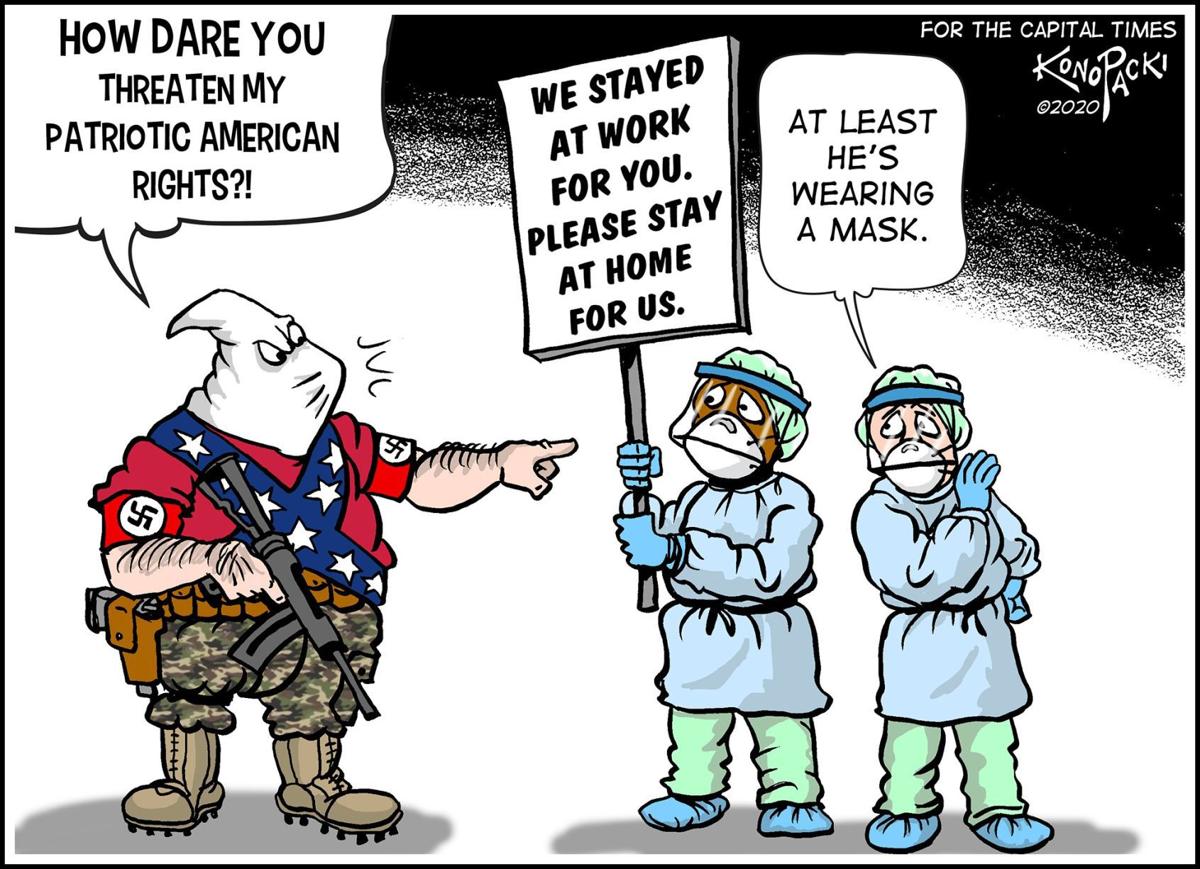
Cartoon – Current State of the Union

Plain Talk: Refusing to wear a mask isn't patriotic, it's just ...

In the Pandemic Era, Is It Safe to Go to Work?

In the Pandemic Era, Is It Safe to Go to Work?
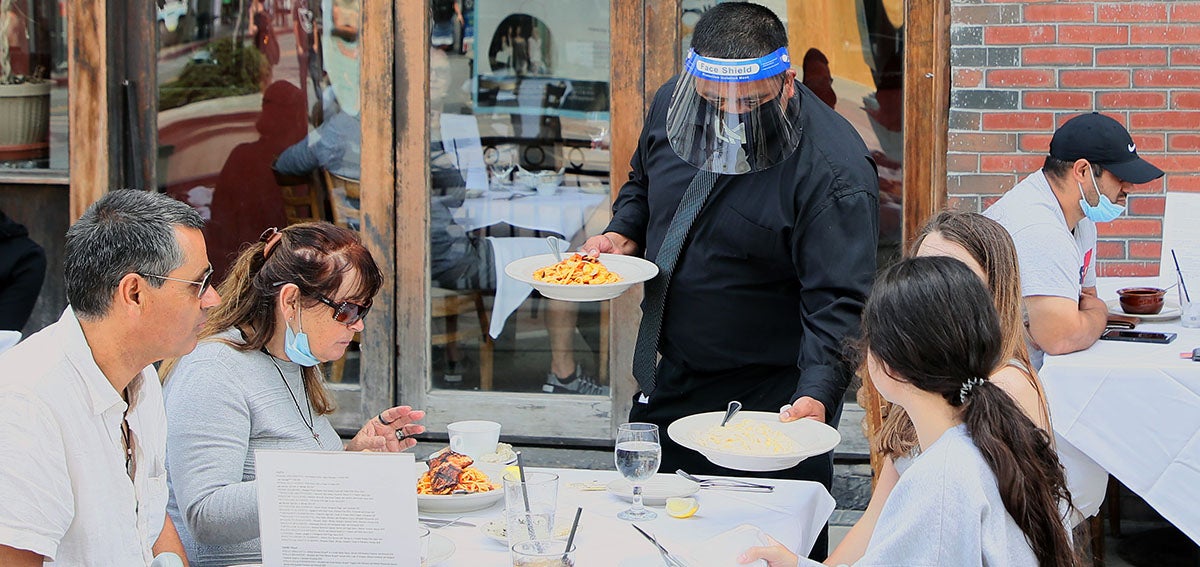
Waiter serves meal to customers wearing PPE

A waiter wearing a face shield and mask to protect himself and others from the coronavirus serves diners at a restaurant in Santa Monica, California, on June 21, 2020. Photo: David Livingston / Getty Images

Stories that caught our attention.

It’s a scary thing to go back and know you have low immunity.

—Patti Hanks, Virginia furniture store worker

Twelve million adults who are not working live with those higher risks in households with at least one full-time worker, thereby exposing them indirectly to the infection risks of housemates doing customer-facing or other service jobs during a pandemic.

The ability to earn income from home is a privilege, and the “impossible choice between lives and livelihoods falls mainly to lower-wage workers in service industries,” KFF President and CEO Drew Altman wrote in Axios. Here’s what it’s like to work in four jobs that require face-to-face interaction during the worsening COVID-19 crisis.

Patti Hanks, Virginia

Soon after finishing chemotherapy for ovarian cancer, Patti Hanks had to go back to her job processing transactions at a furniture and appliance store in Virginia. She was nervous about returning to work during the pandemic, but she couldn’t afford to lose employer-sponsored health insurance.

“It’s a scary thing to go back and know you have low immunity,” Hanks, 62, told Sarah Kliff in the New York Times. “But when it all boils down to it, I don’t think COVID-19 is going away any time soon. I don’t think you can hide from it.”

Nearly 60% of Americans under 65 have employer health coverage, according to the Peterson-KFF Health System Tracker. For people like Hanks, that makes work and health interdependent. Even without her furniture store job, she likely makes too much income from other sources (rental properties and raising cattle) to qualify for Medicaid.

So Hanks continues reporting to work. She wears a mask in the store, maintains distance from customers, and sanitizes shared objects like chairs and pens frequently. Still, there’s only so much she can control. The store has been busy since Virginia began lifting stay-at-home restrictions in May, and Hanks has assisted at least one customer who appeared to be unwell.

“You can’t crawl into a hole,” she told Kliff. “I think we’ve done everything we can to protect ourselves. . . . So I’ll just keep going.”

David Smith, Michigan

In normal times, David Smith, co-owner of the European-style eatery Café Muse in the Detroit suburb of Royal Oak, has one of his younger employees seat customers for dine-in service. But times are certainly not normal — nor are interactions with customers.

“I’ve been trying to do most of the seating, because it’s just really difficult when you have like an 18- or 19-year-old [employee] at the front having to enforce mask wearing,” he told Brenna Houck for her article in Eater Detroit.

The restaurant has been open for dine-in service for a only few weeks, and Smith has already had to call the police on an irate customer who refused to wear a mask when picking up a to-go order. Smith’s business partner, Greg Reyner, stepped in to ask the customer to wait for his food outside, and when the man refused, Reyner asked him to leave. The customer later called the restaurant and allegedly threatened the staff, leading Smith and Reyner to call the police.

The state of Michigan allowed restaurants and bars to reopen for indoor and outdoor dine-in service on June 8. Governor Gretchen Whitmer mandated that each customer must “wear a face covering over his or her nose and mouth . . . when in any enclosed public space, unless the individual is unable medically to tolerate a face covering.” Additionally, businesses are permitted to deny entry or access to anyone who refuses to comply with the mask rule.

That doesn’t mean it’s easy or pleasant to enforce the rule for the safety of staff and customers. “It is very upsetting,” Smith told Houck. “You’re shaking after having these conversations with people, because you just don’t know. What if someone got killed because they told [a customer] to wear a mask? You worry about it all the time.”

Amanda, Missouri

Nursing homes and assisted living facilities are hot spots for COVID-19 cases. Amanda (who asked that her last name be withheld) is a receptionist at a nursing home in St. Louis, and the last few months have been extremely stressful as she and her colleagues work to keep the facility free of COVID-19.

“I can’t sleep nowadays because I dream about being the cause of people dying,” she told Vox’s Luke Winkie. “That’s a horrifying thought for me. I’ve written up my resignation several times. But I don’t have the heart to do it because they need me there.”

So far, the nursing home has not had any cases, and Amanda attributes this to the facility’s early adoption of safety precautions. In February, the administrators advised staff to use personal protective equipment at work, regularly disinfect surfaces, and shelter in place at home when they weren’t working. The facility stopped admitting visitors, and when families dropped off presents for Mother’s Day, staff put the presents on hold for 24 to 72 hours before giving them to the residents.

[My family and I] never even hugged one another when I went to the emergency department because I don’t want to infect them.

—Marcial Reyes, emergency room nurse

Amanda and her colleagues take precautions not only at work, but also at home. “I won’t let my kids see their friends,” she told Winkie. “A lot of people are letting their kids see other kids, but I nipped that in the bud right away. My colleagues have done the same.”

As states reopen, Amanda is increasingly worried about the health of senior citizens like the ones she cares for. “I believe that our government hasn’t done anything,” she said. “Why don’t we have rapid testing in our facility right now? They should be in every hospital, every nursing home, and they should continue to produce them until they’re in schools and courthouses.”

Marcial Reyes, California

Fourteen years ago, Marcial Reyes emigrated from the Philippines to the US on a work visa to become a nurse. He’s been a US citizen for eight years. He was working as an emergency room nurse in Fontana, California, when the COVID-19 crisis struck, Josie Huang reported in LAist.

Reyes knew he was at high risk of contracting the coronavirus. When he started experiencing shortness of breath, he quarantined himself on the first floor of his house, away from his wife Rowena, who is also a nurse, and their five-year-old son. But the symptoms kept getting worse, and eventually he drove himself to the hospital — to the same emergency room where he usually cares for patients.

His health deteriorated so rapidly over the next few days that his doctors put him in a medically induced coma and hooked him up to a ventilator for 10 days. “[My family and I] never even hugged one another when I went to the emergency department because I don’t want to infect them,” he told Huang.

In California, nearly one in five registered nurses is of Filipino descent, according to a 2016 survey (PDF) by the California Board of Registered Nursing. California hospitals have recruited heavily from the Philippines for more than a century. Filipino nurses have stepped up to work in underserved areas and work on the front lines of health crises like the AIDS epidemic and COVID-19.

“It’s not uncommon for many Filipino families to produce multiple health care workers,” Huang wrote. The Reyes family is just one such example. Rowena Reyes and their son both also tested positive for COVID-19, though they recovered without hospitalization.

Marcial Reyes’ recovery will be much slower and more complicated. He needs to regain strength in his legs, and he still struggles with writing, Huang reported. Still, he is looking forward to the day when he can return to the emergency room as a nurse.


America’s workers still aren’t protected from the coronavirus

https://www.axios.com/americas-workers-vulnerable-coronavirus-944e3451-4458-4f1d-83d2-c86a1beb1117.html

America's workers still aren't protected from the coronavirus - Axios

Essential workers have borne the brunt of the coronavirus pandemic for months, but the U.S. is still doing relatively little to protect them.

Why it matters: With no end to the pandemic in sight, America’s frontline workers still must choose between risking their health and losing their source of income.

Driving the news: The Trump administration said this week that health insurers aren’t required to cover coronavirus diagnostic tests performed as part of workplace safety or public health surveillance efforts.

  • It didn’t say who is supposed to pay for these tests. If employers are stuck footing the bill, that makes the testing less likely to happen.

The big picture: There’s been no national effort or initiative to protect essential workers, and America is still failing to implement basic public health measures as new cases skyrocket.

  • Masks have become a political flashpoint and aren’t required in many of the states that are emerging coronavirus hotspots.
  • That means essential workers go to work each day without any guarantee that the people they’re interacting with will take one of the most basic and effective steps to prevent transmission of the virus.
  • No one is even talking about mass distribution of personal protective equipment beyond health care workers. And even some health care workers — particularly those who work in nursing homes — don’t have the protective gear that they need.

More broadly, the financial incentives for frontline workers, particularly those who are low-income, to keep working make it nearly impossible for them to avoid health risks.

  • At least 69 million American workers are potentially ineligible for the emergency paid sick leave benefits that Congress passed earlier this year, per the Kaiser Family Foundation.
  • An estimated 25-30 million people — particularly lower-wage workers in service industries — are unable to work from home but also face a high risk of severe infection, KFF’s Drew Altman wrote earlier this week.

What we’re watching: The line between essential workers and those who are required to return to the office by their employer has become blurry, and millions more Americans are facing dilemmas similar to those faced by grocers and bus drivers.

  • The sickest — and thus most vulnerable — Americans may feel the most pressure to return to work, as that’s often where they get their health insurance, the NYT points out.
  • Nearly a quarter of adult workers are vulnerable to severe coronavirus infections, per KFF.

The bottom line: Essential workers and their families will continue to feel the impact of America’s coronavirus failures most acutely.

Go deeper: “Disposable workers” doing essential jobs


Coronavirus Doesn’t Recognize Man-Made Borders

Coronavirus Doesn’t Recognize Man-Made Borders

Coronavirus Doesn't Recognize Man-Made Borders - California Health ...

From El Centro Regional Medical Center, the largest hospital in California’s Imperial County, it takes just 30 minutes to drive to Mexicali, the capital of the Mexican state of Baja California. The international boundary that separates Mexicali from Imperial County is a bridge between nations. Every day, thousands of people cross that border for work or school. An estimated 275,000 US citizens and green card holders live in Baja California. El Centro Regional Medical Center has 60 employees who reside in Mexicali and commute across the border, CEO Adolphe Edward told Julie Small of KQED.

Now these inextricably linked places have become two of the most concerning COVID-19 hot spots in the US and Mexico. While Imperial County is one of California’s most sparsely populated counties, it has the state’s highest per capita infection rate — 836 per 100,000according to the California Department of Public Health. This rate is more than four times greater than Los Angeles County’s, which is second-highest on that list. Imperial County has 4,800 confirmed positive cases and 64 deaths, and its southern neighbor Mexicali has 4,245 infections and 717 deaths.

The COVID-19 crisis on the border is straining the local health care system. El Centro Regional Medical Center has 161 beds, including 20 in its intensive care unit (ICU). About half of all its inpatients have COVID-19, Gustavo Solis reported in the Los Angeles Times, and the facility no longer has any available ventilators.

When Mexicali’s hospitals reached capacity in late May, administrators alerted El Centro that they would be diverting American patients to the medical center. “They said, ‘Hey, our hospitals are full, you’re about to get the surge,’” Judy Cruz, director of El Centro’s emergency department, recounted to Rebecca Plevin in the Palm Springs Desert Sun.

By the first week of June, El Centro was so overburdened that “a patient was being transferred from the hospital in El Centro every two to three hours, compared to 17 in an entire month before the COVID-19 pandemic,” Miriam Jordan reported in the New York Times.

Border Hospitals Filled to Capacity

Since April, hospitals in neighboring San Diego and Riverside Counties have been accepting patient transfers to alleviate the caseload at the lone hospital in El Centro, but the health emergency has escalated and now those counties need relief. “We froze all transfers from Imperial County [on June 9] just to make sure that we have enough room if we do have more cases here in San Diego County,” Chris Van Gorder, CEO of Scripps Health, told Paul Sisson in the San Diego Union-Tribune. El Centro patients are now being airlifted as far as San Francisco and Sacramento.

According to the US Census Bureau, nearly 85% of Imperial County residents are Latino, and statewide, Latinos bear a disproportionate burden of COVID-19. The California Department of Public Health reports that Latinos make up 39% of California’s population but 57% of confirmed COVID-19 cases.

Nonessential travel between the US and Mexico has been restricted since March 21, with the measure recently extended until July 21. However, jobs in Southern California, such as in agricultural fields and packing houses, require regular movement between the two countries. “I’m always afraid that people are imagining this rush on the border,” Andrea Bowers, a spokesperson for the Imperial County Public Health Department, told Small. “It’s just folks living their everyday life.”

These jobs, some of which are considered essential because of their role in the food supply chain, may have contributed to the COVID-19 crisis on the border. Agricultural workers often lack access to adequate personal protective equipment and are unable to practice physical distancing. They also are exposed to air pollution, pesticides, heat, and more — long-term exposures that can cause the underlying health conditions that raise the risk of death for COVID-19 patients.

Comite Civico del Valle, a nonprofit focused on environmental health and civic engagement in Imperial Valley, set up 40 air pollution monitors throughout the county and found that levels of tiny, dangerous particulates violated federal limits, Solis reported.

“I can tell you there’s hypertension, there’s poor air pollution, there’s cancers, there’s asthma, there’s diabetes, there’s countless things people here are exposed to,” David Olmedo, an environmental health activist with Comite Civico del Valle, told Solis.

Fear of New Surges

With summer socializing in full swing, health experts worry that COVID-19 spikes will follow. Imperial County saw surges after Mother’s Day and Memorial Day, probably because of lapsed physical distancing and mask use at social events.

Latinos in California are adhering to recommended public health behaviors to slow the spread of the virus. CHCF’s recent COVID-19 tracking poll with Ipsos asked Californians about their compliance with recommended behaviors. Eighty-four percent of Californians, including 87% of Latinos, say they routinely wear a mask in public spaces all or most of the time. Seventy-two percent of Californians, including 73% of Latinos, say they avoid unnecessary trips out of the home most or all of the time, and 90% of Californians, including 91% of Latinos, say they stay at least six feet away from others in public spaces all or most of the time.

A Push to Reopen Anyway

Most counties in California have met the state’s readiness criteria for entering the “Expanded Stage 2” phase of reopening. Imperial County has not. In the past two weeks, more than 20% of all COVID-19 tests in the county came back positive, the Sacramento Bee reported. The state requires counties to have a seven-day testing positivity rate of no more than 8% to enter Expanded Stage 2.

Still, the Imperial County Board of Supervisors is pushing Governor Gavin Newsom for local control over its reopening timetable. The county has a high poverty rate — 24% compared with the statewide average of 13% — and “bills are stacking up,” Luis Pancarte, chairman of the board, said on a recent press call.

He worries that because neighboring areas like Riverside and San Diego have opened some businesses with physical distancing measures in place, Imperial County residents will travel to patronize restaurants and stores. This movement could increase transmission of the new coronavirus, just as reopening Imperial County too soon could as well.

More than 1,350 residents have signed a petition asking Newsom to ignore the Board of Supervisor’s request, Solis reported. The residents called on the supervisors to focus instead on getting the infection rate down and expanding economic relief for workers and businesses.

Cruz, who has been working around the clock to handle the county’s COVID-19 crisis, agrees with the petitioners. The surges after Mother’s Day and Memorial Day made her “really concerned about unlocking and letting people go back to normal,” she told Plevin. “It’s going to be just like those little gatherings that happened [on holidays], but on a bigger scale.”


Few U.S. adults say they’ve been diagnosed with coronavirus, but more than a quarter know someone who has

https://www.pewresearch.org/fact-tank/2020/05/26/few-u-s-adults-say-theyve-been-diagnosed-with-coronavirus-but-more-than-a-quarter-know-someone-who-has/?utm_source=Pew+Research+Center&utm_campaign=ef5ba73bf3-EMAIL_CAMPAIGN_2020_05_29_05_11&utm_medium=email&utm_term=0_3e953b9b70-ef5ba73bf3-400197657

28% of U.S. adults say they know someone diagnosed with COVID-19 ...

Relatively few Americans say they have been diagnosed with COVID-19 or tested positive for coronavirus antibodies, but many more believe they may have been infected or say they personally know someone who has been diagnosed.

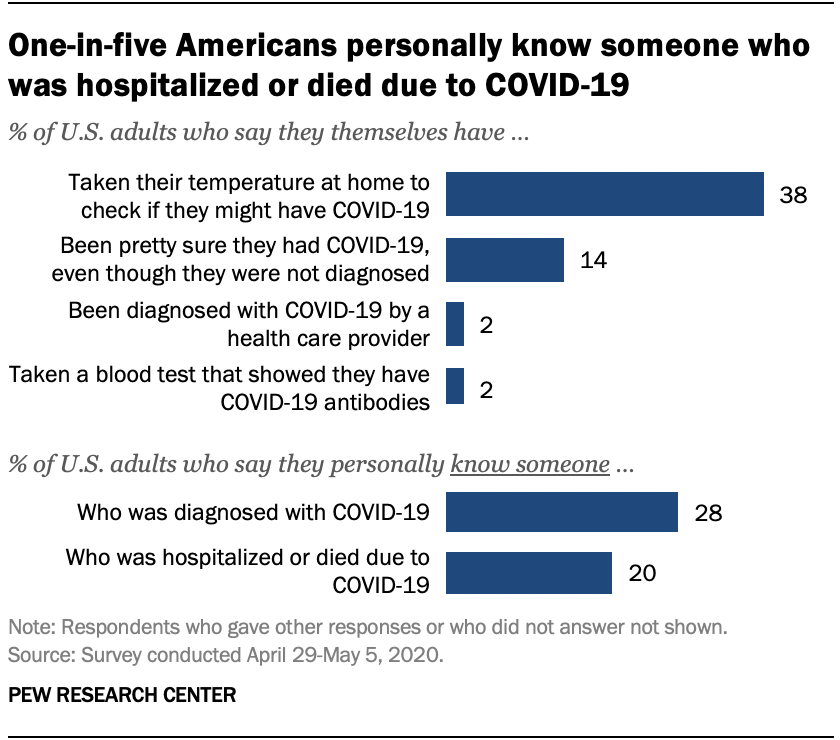
Only 2% of U.S. adults say they have been officially diagnosed with COVID-19 by a health care provider, according to a new Pew Research Center survey. And 2% say they have taken a blood test that showed they have COVID-19 antibodies, an indication that they previously had the coronavirus. But many more Americans (14%) say they are “pretty sure” they had COVID-19, despite not getting an official diagnosis. And nearly four-in-ten (38%) say they’ve taken their temperature to check if they might have the disease.

Although few Americans have been diagnosed with COVID-19 themselves, many more say they know someone with a positive diagnosis. More than one-in-four U.S. adults (28%) say they personally know someone who has been diagnosed by a health care provider as having COVID-19. A smaller share of Americans (20%) say they know someone who has been hospitalized or who has died as a result of having the coronavirus.

Some groups are more likely than others to report personal experiences with COVID-19. For instance, black adults are the most likely to personally know someone who has been hospitalized or died as a result of the disease. One-third of black Americans (34%) know someone who has been hospitalized or died, compared with 19% of Hispanics and 18% of white adults. Black Americans (32%) are also slightly more likely than Hispanic adults (26%) to know someone diagnosed with COVID-19. Public health studies have found black Americans are disproportionately dying or requiring hospitalization as a result of the coronavirus.

28% of U.S. adults say they know someone diagnosed with COVID-19 ...

Areas in the northeastern United States have recorded some of the highest rates of coronavirus cases and fatalities, and this is reflected in the Center’s survey. About four-in-ten adults living in the Northeast (42%) say they personally know someone diagnosed with COVID-19, significantly more than among adults living in any other region. People living in the Northeast (31%) are also the most likely to know someone who has been hospitalized or died as a result of the disease.

One aspect of personal risk for exposure to the coronavirus is whether someone is employed in a setting where they must have frequent contact with other people, such as at a grocery store, hospital or construction site. Given the potential for the spread of the coronavirus within households, risk to individuals is also higher if other members of the household are employed in similar settings. Among people who are currently employed full-time, 35% are working in a job with frequent public contact. Among those working part-time, almost half work (48%) in such a setting. For those living in a household with other adults, 35% report that at least one of those individuals is working in a job that requires frequent contact with other people.

Taken together, nearly four-in-ten Americans (38%) have this type of exposure – either currently working in a job that requires contact with others, living in a household with others whose jobs require contact, or both.

Hispanics (at 48%) are more likely than either blacks (38%) or whites (35%) to have this type of personal or household exposure. An earlier Center analysis of government data found Hispanic adults were slightly more likely to work in service-sector jobs that require customer interaction, and that are at higher risk of layoffs as a result of the virus. In fact, the current Center survey found Hispanics were among the most likely to have experienced pay cuts or job losses due to the coronavirus outbreak.

28% of U.S. adults say they know someone diagnosed with COVID-19 ...

Interpersonal exposure in the workplace is also more widespread among younger adults. And there is a 10 percentage point difference between upper- and lower-income Americans in exposure, with lower-income adults more likely to work in situations where they have to interact with the public, or to live with people who do.

Health experts warn that COVID-19 is particularly dangerous to people who have underlying medical conditions. In the survey, one-third of adults say they have such a condition. Among this group, nearly six-in-ten (58%) say that the coronavirus outbreak is a major threat to their personal health. Among those who do not report having an underlying medical condition, just 28% see the outbreak as a major threat to their health. Americans who have an underlying health condition are also more likely than those who do not to say they’ve taken their temperature to check if they might have COVID-19 (47% vs. 33% of those without a health condition).

Self-reports of an underlying health condition vary greatly by age. Among those ages 18 to 29, just 16% say they have a condition; this rises steadily with age to 56% among those 65 and older. Whites are a little more likely than blacks and Hispanics to report having a health condition, but both blacks (at 54%) and Hispanics (52%) are far more likely than whites (32%) to say that the coronavirus outbreak is “a major threat” to their health.


Over 500 Employees Of A Tyson Pork Processing Plant In Iowa Test Positive For Coronavirus

https://www.forbes.com/sites/mattperez/2020/05/28/over-500-employees-of-a-tyson-pork-processing-plant-in-iowa-test-positive-for-coronavirus/#4787159c4a1d

Iowa Tyson Foods Plant Halting Operations After 500+ Workers Test ...

TOPLINE

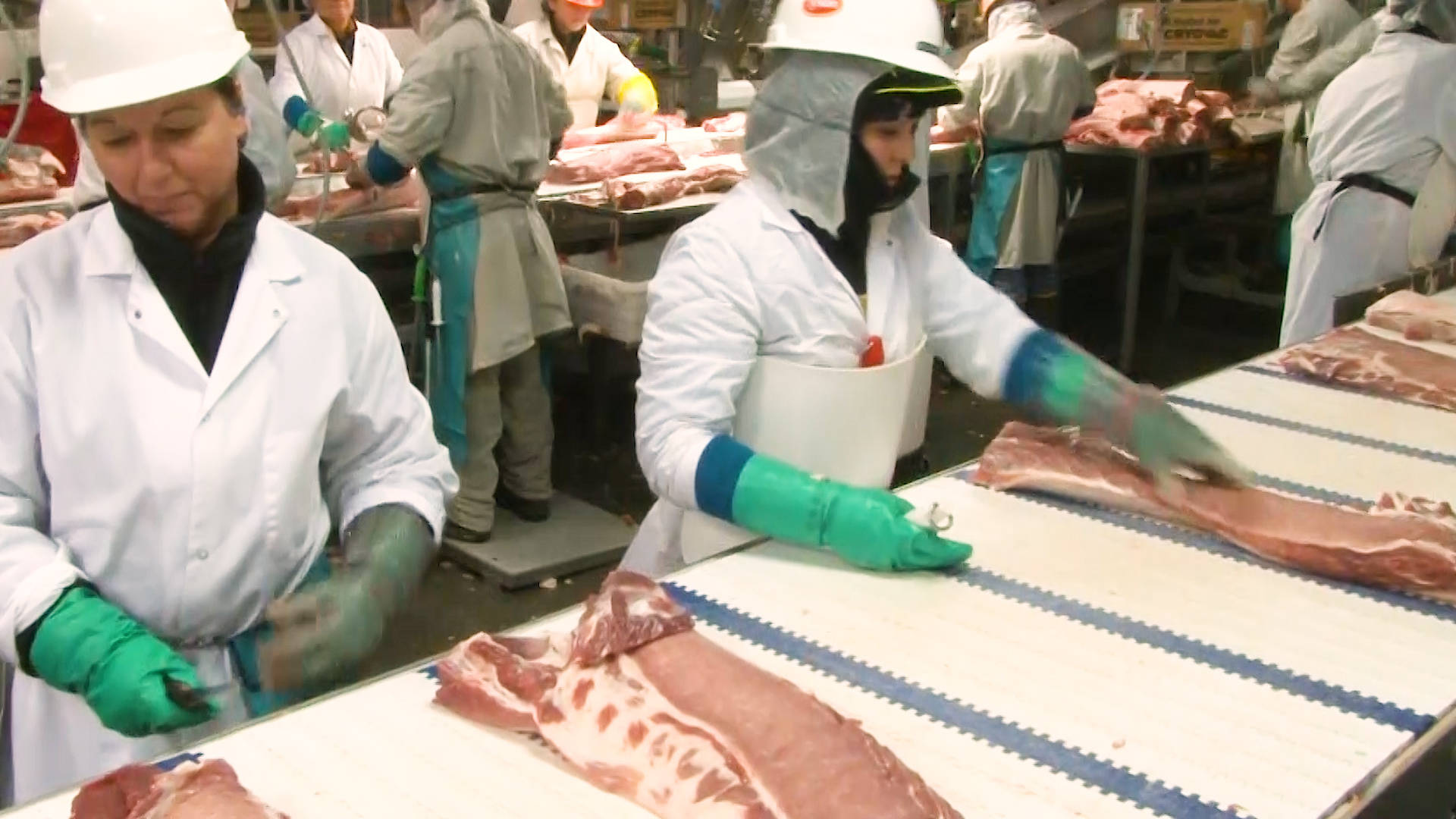
Coronavirus has swept through a Tyson pork processing plant in Storm Lake, Iowa, with 555 employees of 2,517 testing positive, fueling renewed concerns over safety measures at meatpacking plants.


KEY FACTS

On Wednesday, with suspicions the plant was the site of a new outbreak, Iowa’s Department of Public Health Deputy Director Sarah Reisetter said the state would only confirm outbreaks at businesses where 10% of employees test positive and only if the news media inquires about them specifically.

According to the Des Moines Register, cases in Buena Vista County more than doubled on Tuesday, and Reisetter is now confirming around 22% of the employees at the Storm Lake facility tested positive.

“We’ve determined confirming outbreaks at businesses is only necessary when the employment setting constitutes a high-risk environment for the potential of Covid-19 transmission,” Reisetter added.

On April 28, President Trump signed an executive order using the authority of the Defense Production Act to compel meat processing plants to remain open, but it hasn’t stopped facilities from shuttering to address low staffing and safety issues.

Tyson was previously forced to shut down its largest pork processing facility, located in Waterloo, Iowa, on April 22 following a number of coronavirus cases stemming from the plant, as well as worker absenteeism.

Other meatpacking facilities across the state have also been forced to address outbreaks, including plants owned by Smithfield Foods and JBS.

CHIEF CRITICS

State lawmakers and mayors in Iowa have complained about not getting information about the ongoing situations at meatpacking facilities until it’s too late. Sioux City Mayor Bob Scott said because Tyson isn’t based in the state, they don’t need to report numbers to them. Iowa Rep. Ras Smith criticized Governor Kim Reynolds and the Department of Health’s stance on the delays in reporting numbers.

KEY BACKGROUND

Food processing facilities have been the site of numerous outbreaks around the country, with Trump pushing for them to remain open amid fears of food shortages. Earlier in May, the United Food and Commercial Workers International Union, the largest meatpacking workers union, derided Trump’s executive order, saying that since its signing, “The administration has failed to take the urgent action needed to enact clear and enforceable safety standards at these meatpacking plants.” There are 18,524 confirmed cases of the coronavirus in Iowa. 


Fitch Q2 outlook for nonprofit hospitals: ‘worst on record’

https://www.healthcaredive.com/news/fitch-analysts-hospital-worries-FY-2020/577875/

Nicklaus Children's Health System Receives A+ Rating from Fitch ...

From the Mayo Clinic to Kaiser Permanente, nonprofit hospitals are posting massive losses as the coronavirus pandemic upends their traditional way of doing business.

Fitch Ratings analysts predict a grimmer second quarter: “the worst on record for most,” Kevin Holloran, senior director for Fitch, said during a Tuesday webinar.​

Over the past month, Fitch has revised its nonprofit hospital sector outlook from stable to negative. It has yet to change its ratings outlook to negative, though the possibility wasn’t ruled out.

Some have already seen the effects. Mayo estimates up to $3 billion in revenue losses from the onset of the pandemic until late April — given the system is operating “well below” normal capacity. It also announced employee furloughs and pay cuts, as several other hospitals have done.

Data released Tuesday from health cost nonprofit FAIR Health show how steep declines have been for larger hospitals in particular. The report looked at process claims for private insurance plans submitted by more than 60 payers for both nonprofit and for-profit hospitals.

Facilities with more than 250 beds saw average per-facility revenues based on estimated in-network amounts decline from $4.5 million in the first quarter of 2019 to $4.2 million in the first quarter of 2020. The gap was less pronounced in hospitals with 101 to 250 beds and not evident at all in those with 100 beds or fewer.

Funding from federal relief packages has helped offset losses at those larger hospitals to some degree.

Analysts from the ratings agency said those grants could help fill in around 30% to 50% of lost revenues, but won’t solve the issue on their own.

They also warned another surge of COVID-19 cases could happen as hospitals attempt to recover from the steep losses they felt during the first half of the year.

Anthony Fauci, the nation’s top infectious disease expert, warned lawmakers this week that the U.S. doesn’t have the necessary testing and surveillance infrastructure in place to prep for a fall resurgence of the coronavirus, a second wave that’s “entirely conceivable and possible.”

“If some areas, cities, states or what have you, jump over these various checkpoints and prematurely open up … we will start to see little spikes that may turn into outbreaks,” he told a Senate panel.

That could again overwhelm the healthcare system and financially devastate some on the way to recovery.

“Another extended time period without elective procedures would be very difficult for the sector to absorb,” Holloran said, suggesting if another wave occurs, such procedures should be evaluated on a case-by-case basis, not a state-by-state basis.

Hospitals in certain states and markets are better positioned to return to somewhat normal volumes later this year, analysts said, such as those with high growth and other wealth or income indicators. College towns and state capitols will fare best, they said.

Early reports of patients rescheduling postponed elective procedures provide some hope for returning to normal volumes.

“Initial expectations in reopened states have been a bit more positive than expected due to pent up demand,” Holloran said. But he cautioned there’s still a “real, honest fear about returning to a hospital.”

Moody’s Investors Service said this week nonprofit hospitals should expect the see the financial effects of the pandemic into next year and assistance from the federal government is unlikely to fully compensate them.

How quickly facilities are able to ramp up elective procedures will depend on geography, access to rapid testing, supply chains and patient fears about returning to a hospital, among other factors, the ratings agency said.

“There is considerable uncertainty regarding the willingness of patients — especially older patients and those considered high risk — to return to the health system for elective services,” according to the report. “Testing could also play an important role in establishing trust that it is safe to seek medical care, especially for nonemergency and elective services, before a vaccine is widely available.”

Hospitals have avoided major cash flow difficulties thanks to financial aid from the federal government, but will begin to face those issues as they repay Medicare advances. And the overall U.S. economy will be a key factor for hospitals as well, as job losses weaken the payer mix and drive down patient volumes and increase bad debt, Moody’s said.

Like other businesses, hospitals will have to adapt new safety protocols that will further strain resources and slow productivity, according to the report.​

Another trend brought by the pandemic is a drop in ER volumes. Patients are still going to emergency rooms, FAIR Health data show, but most often for respiratory illnesses. Admissions for pelvic pain and head injuries, among others declined in March.

“Hospitals may also be losing revenue from a widespread decrease in the number of patients visiting emergency rooms for non-COVID-19 care,” according to the report. “Many patients who would have otherwise gone to the ER have stayed away, presumably out of fear of catching COVID-19.”


AFL-CIO sues feds over coronavirus workplace safety

https://www.axios.com/afl-cio-sues-feds-over-coronavirus-workplace-safety-6de76122-2c75-4f84-92e5-21048c08b44b.html

AFL-CIO sues feds over coronavirus workplace safety - Axios

With states reopening for business and millions of people heading back to work, the nation’s largest labor organization is demanding the federal government do more to protect workers from contracting the coronavirus on the job.

What’s happening: The AFL-CIO, a collection of 55 unions representing 12.5 million workers, says it is suing the federal agency in charge of workplace safety to compel them to create a set of emergency temporary standards for infectious diseases.

Driving the news: The lawsuit against the U.S. Labor Department’s Occupational Safety and Health Administration (OSHA) is expected to be filed on Monday in the U.S. Court of Appeals in Washington, D.C.

  • Citing an urgent threat to “essential” workers and those being called back to work as government-imposed lockdowns are lifted, the AFL-CIO is asking the court to force OSHA to act within 30 days.
  • It wants a rule that would require each employer to evaluate its workplace for the risk of airborne disease transmission and to develop a comprehensive infection control plan that could include social distancing measures, masks and other personal protective equipment and employee training.

The agency has issued guidance, in collaboration with the Centers for Disease Control and Prevention, to protect workers in multiple industries — including dentist offices, nursing homes, manufacturing, meat processing, airlines and retail.

  • But the unions complain these are only recommendations, not requirements, and that mandatory rules should be imposed.
  • OSHA has been considering an infectious disease standard for more than a decade, they note, and has drafted a proposed standard.

U.S. Labor Secretary Eugene Scalia, in a letter to AFL-CIO President Richard Trumka, said employers are already taking steps to protect workers, and that OSHA’s industry-tailored guidelines provide more flexibility than a formal rule for all employers.

Yes, but: OSHA has received more than 3,800 safety complaints related to COVID-19 as of May 4, but it had already close to about 2,200 of them without issuing a single citation, according to the AFL-CIO.

What they’re saying: “It’s truly a sad day in America when working people must sue the organization tasked with protecting our health and safety,” Trumka said.

  • “But we’ve been left no choice. Millions are infected and nearly 90,000 have died, so it’s beyond urgent that action is taken to protect workers who risk our lives daily to respond to this public health emergency.
  • “If the Trump administration refuses to act, we must compel them to.”
  • OSHA could not immediately be reached for comment on the lawsuit.


The pandemic broke America

https://www.axios.com/coronavirus-america-broken-2baa69e4-60e6-49a5-932a-5d118441ae20.html

The coronavirus pandemic broke America - Axios

Eight weeks into this nation’s greatest crisis since World War II, we seem no closer to a national strategy to reopen the nation, rebuild the economy and defeat the coronavirus.

Why it matters: America’s ongoing cultural wars over everything have weakened our ability to respond to this pandemic. We may be our worst enemy.

  • The response is being hobbled by the same trends that have impacted so much of our lives: growing income inequality, the rise of misinformation, lack of trust in institutions, the rural/urban divide and hyper-partisanship.
  • We’re not even seeing the same threat from the virus. Democrats are far more likely than Republicans to be worried about getting seriously ill, while Republicans — including the president — are more likely to think the death counts are too high.

Without even a basic agreement on the danger of the pandemic and its toll, here’s how we see the national response unfold:

  • The Centers for Disease Control and Prevention, the crown jewel of the globe’s public health infrastructure, has been sidelined, its recommendations dismissed by the White House.
  • President Trump declares the U.S. has “prevailed on testing” at a time when health experts say we still need far more daily tests before the country can reopen safely.
  • Distribution of the promising coronavirus drug remdesivir was initially botched because of miscommunication between government agencies.
  • More than two thirds of Americans say it’s unlikely they would use a cell phone-based contact tracing program established by the federal government, a key component of a testing regime to control the virus.
  • The second phase of a program to aid small businesses isn’t fully allocated because firms are either concerned about its changing rules, confused about how to access it, or find the structure won’t help them stay in business.
  • With the unemployment rate at a post-Depression record last month, and expected to go higher, there is no meaningful discussion between the parties in Congress on aid to the out-of-work.
  • States and local governments are facing billions in losses without a strategy for assistance.
  • The virus is literally inside the White House. Aides have tested positive for coronavirus, leading to quarantines for some of the nation’s top public health officials and a new daily testing regime for White House staff and reporters who enter the West Wing.
  • The No. 1 book on Amazon for a time was a book by an anti-vaxxer whose conspiracy-minded video about the pandemic spread widely across social media, leading to takedowns by platforms like YouTube and Facebook.

The other side: There’s better news at the state level. “Governors collectively have been winning widespread praise from the public for their handling of the coronavirus outbreak,” the Washington Post reports.

Between the lines: Nationwide, 71% of Americans approve of the job their governor is doing, according to the Post. For Trump, the figure is 43%.

  • And former presidents we often expect to help rally the nation in trying times are scarce.
  • George W. Bush released a video, in which his face barely appeared, calling for unity in the fight against the virus. Barack Obama was recorded in leaked remarks to former staffers calling Trump’s coronavirus response “an absolute chaotic disaster.” Trump attacked both of them on Twitter.

The bottom line: An existential threat — like war or natural disaster — usually brings people together to set a course of action in response. Somehow, we’ve let this one drive us apart.