Healthcare AI investment will shift to these 5 areas in the next 2 years: survey

The COVID-19 pandemic has accelerated the pace of artificial intelligence adoption, and healthcare leaders are confident AI can help solve some of today’s toughest challenges, including COVID-19 tracking and vaccines.

The majority of healthcare and life sciences executives (82%) want to see their organizations more aggressively adopt AI technology, according to a new survey from KPMG, an audit, tax and advisory services firm.

Healthcare and life sciences (56%) business leaders report that AI initiatives have delivered more value than expected for their organizations. However, life sciences companies seem to be struggling to select the best AI technologies, according to 73% of executives.

As the U.S. continues to navigate the pandemic, life sciences business leaders are overwhelmingly confident in AI’s ability to monitor the spread of COVID-19 cases (94%), help with vaccine development (90%) and aid vaccine distribution (90%).

KPMG’s AI survey is based on feedback from 950 business or IT decision-makers across seven industries, with 100 respondents each from healthcare and life sciences companies.

Despite the optimism about the potential for AI, executives across industries believe more controls are needed and overwhelmingly believe the government has a role to play in regulating AI technology. The majority of life sciences (86%) and healthcare (84%) executives say the government should be involved in regulating AI technology.

And executives across industries are optimistic about the new administration in Washington, D.C., with the majority believing the Biden administration will do more to help advance the adoption of AI in the enterprise.

“We are seeing very high levels of support this year across all industries for more AI regulation. One reason for this may be that, as the technology advances very quickly, insiders want to avoid AI becoming the ‘Wild Wild West.’ Additionally, a more robust regulatory environment may help facilitate commerce. It can help remove unintended barriers that may be the result of other laws or regulations, or due to lack of maturity of legal and technical standards,” said Rob Dwyer, principal, advisory at KPMG, specializing in technology in government.

Healthcare and pharma companies seem to be more bullish on AI than other industries are.

The survey found half of business leaders in industrial manufacturing, retail and tech say AI is moving faster than it should in their industry. Concerns about the speed of AI adoption are particularly pronounced among small companies (63%), business leaders with high AI knowledge (51%) and Gen Z and millennial business leaders (51%).

“Leaders are experiencing COVID-19 whiplash, with AI adoption skyrocketing as a result of the pandemic. But many say it’s moving too fast. That’s probably because of current debate surrounding the ethics, governance and regulation of AI.  Many business leaders do not have a view into what their organizations are doing to control and govern AI and may fear risks are developing,” Traci Gusher, principal of artificial intelligence at KPMG, said in a statement.

Future AI investment

Healthcare organizations are ramping up their investments in AI in response to the COVID-19 pandemic. In a Deloitte survey, nearly 3 in 4 healthcare organizations said they expect to increase their AI funding, with executives citing making processes more efficient as the top outcome they are trying to achieve with AI.

Healthcare executives say current AI investments at their organizations have focused on electronic health record (EHR) management and diagnosis.

To date, the technology has proved its value in reducing errors and improving medical outcomes for patients, according to executives. Around 40% of healthcare executives said AI technology has helped with patient engagement and also to improve clinical quality. About a third of executives said AI has improved administrative efficiency. Only 18% said the technology helped uncover new revenue opportunities.

But AI investments will shift over the next two years to prioritize telemedicine (38%), robotic tasks such as process automation (37%) and delivery of patient care (36%), the survey found. Clinical trials and diagnosis rounded out the top five investment areas.

At life sciences companies, AI is primarily deployed during the drug development process to improve record-keeping and the application process, the survey found. Companies also have leveraged AI to help with clinical trial site selection.

Moving forward, pharmaceutical companies will likely focus their AI investments on discovering new revenue opportunities in the next two years, a pivot from their current strategy focusing on increasing profitability of existing products, according to the survey. About half of life sciences executives say their organizations plan to leverage AI to reduce administrative costs, analyze patient data and accelerate clinical trials.

Industry stakeholders are taking steps to advance the use of AI and machine learning in healthcare.

The Consumer Technology Association (CTA) created a working group two years ago to develop some standardization on definitions and characteristics of healthcare AI. Last year, the CTA working group developed a standard that creates a common language so industry stakeholders can better understand AI technologies. A group also recently developed a new standard to advance trust in AI solutions.

On the regulatory front, the U.S. Food and Drug Administration (FDA) last month released its first AI and machine learning action plan, a multistep approach designed to advance the agency’s management of advanced medical software. The action plan aims to force manufacturers to be more rigorous in their evaluations, according to the FDA.

Jefferson Health and Einstein Healthcare merger moves forward after FTC withdraws challenge

https://www.healthcarefinancenews.com/news/jefferson-health-and-einstein-healthcare-network-merger-moves-forward-after-ftc-withdraws-0

Jefferson Health and Einstein Healthcare Network merger clear final hurdle after  FTC will no longer challenge - 6abc Philadelphia

Jefferson’s hospital network will grow to 18 locations with Einstein’s three general acute care hospitals and an inpatient rehabilitation hospital.

The merger between Pennsylvania-based Jefferson Health and Einstein Healthcare Network can now close after the Federal Trade Commission voted to withdraw its opposition to the deal, Jefferson Health announced this week.

The deal is now expected to be finalized within the next six months.

Earlier this year, the FTC voted 4-0 to voluntarily dismiss its appeal to the Third Circuit of the district court, according to the commission’s case summary.

Once the deal is complete, Jefferson’s network of hospitals will grow to 18 with the addition of Einstein’s three general acute care hospitals and an inpatient rehabilitation hospital.

WHY IT MATTERS

Merger plans were first announced in 2018 in a deal estimated to be worth $599 million.

The FTC initially blocked the merger because it believed it would reduce competition in the Philadelphia and Montgomery counties.

It alleged the deal would give the two health systems control of at least 60% of the inpatient general acute care hospital services market in North Philadelphia, at least 45% of that market in Montgomery County, and at least 70% of the inpatient acute rehabilitation services market in the Philadelphia area.

But late last year, a federal judge blocked the FTC’s attempt to stop the merger. Judge Gerald Pappert of the U.S. District Court for the Eastern District of Pennsylvania wrote that the FTC failed to demonstrate that there’s a credible threat of harm to competition. He pointed to other competitors in the region, such as Penn Medicine, Temple Health and Trinity Health Mid-Atlantic.

The FTC and the Commonwealth of Pennsylvania attempted to appeal the court’s decision, but after Jefferson and Einstein filed a motion to withdraw the case, the commission unanimously voted to drop its appeal.

THE LARGER TREND

The FTC is taking a closer look at healthcare mergers and acquisitions to better understand how physician practice and healthcare facility mergers affect competition. Earlier this year, it sent orders to Aetna, Anthem, Florida Blue, Cigna, Health Care Service Corporation and United Healthcare to share patient-level claims data for inpatient, outpatient and physician services across 15 states from 2015 through 2020.

Although M&A activity was down in 2020 due to the COVID-19 pandemic, Kaufman Hall called the 79 transactions that did take place “remarkable” for falling within the range of the 92 deals from the year before.

The analysts expect activity to ramp up moving forward, however. They predict that as health systems evaluate their business strategies post-pandemic, those in strong positions will take advantage of other systems’ divestitures to grow their capabilities and expand into new markets.

ON THE RECORD

“We are excited to have Einstein and Jefferson come together, as our shared vision will enable us to improve the lives of patients, the health of our communities and enhance our health education and research capabilities,” said Ken Levitan, the interim president and CEO of Einstein Healthcare Network.

“By bringing our resources together, we can offer those we care for – particularly the historically underserved populations in Philadelphia and Montgomery County – even greater access to high-quality care.”

A large pay gap exists between independent and hospital-employed doctors

https://www.healthcarefinancenews.com/news/large-pay-gap-exists-between-independent-and-hospital-employed-doctors

Physician practices with more female doctors have smallest gender pay gaps  | Healthcare Finance News

The payment gap was $63,000 for primary care doctors, $178,000 for medical specialists and $150,000 for surgeons.

Doctors who work for hospital outpatient facilities get much higher payments for their services from Medicare than doctors who practice independently, according to a new study.

The research, based on Medicare claims data from 2010-2016, found that the program’s payments for doctors’ work were, on average, $114,000 higher per doctor per year when billed by a hospital than when billed by a doctor’s independent practice.

Published in Health Services Research, results found that the amount Medicare would pay for outpatient care at doctors’ offices would have been 80% higher if the services had been billed by a hospital outpatient facility. In 2010, the average set of Medicare services independent doctors performed annually for patients was worth $141,000, but charging for the same group of services would have grossed $240,000 if a hospital outpatient facility billed for them.

The payment difference varied by specialty. The payment gap was $63,000 for primary care doctors, $178,000 for medical specialists and $150,000 for surgeons.

Moreover, the study found the differential grew over time. From 2010-2016, the average difference between hospital outpatient and private practice payments grew from 80% higher to 99% higher.

WHAT’S THE IMPACT?

The main reason for these large payment differences: facility fees. For each service a doctor performs, Medicare pays hospital outpatient facilities both a fee for the doctor’s work and a fee for the facility, whereas private practices receive only doctor fees.

Although the doctor fees are a bit lower in hospital outpatient locations, the facility fees more than make up for the difference, and the total payments to hospitals are reflected in higher doctor salaries and bonuses.

The Centers for Medicare and Medicaid Services has been trying to correct this imbalance for years with policies that would pay both sites the same amount. In 2015, the Bipartisan Budget Act authorized CMS to impose site-neutral payments but grandfathered existing hospital outpatient facilities. Later, CMS expanded the equal payments to other hospital outpatient facilities, but the American Hospital Association sued to overturn this regulation.

In July 2020, the Appeals Court sided with HHS. The American Hospital Association and the Association of American Medical Colleges said they would seek to have the ruling overturned.

The groups filed for a petition for a rehearing, which was denied.

In February, the Supreme Court acknowledged the AHA’s request for judicial review. The government response was due by March 15, but on March 3, Norris Cochran, acting Secretary of Health and Human Service asked for an extension until April 14 to file the government’s response, according to court documents.

The significant difference between Medicare payments to hospital outpatient facilities and independent offices has encouraged hospitals and health systems to buy doctor practices, but the study noted that good research about this has been lacking up to now.

It found little evidence of a direct relationship linking the size of the pay gap between hospital outpatient facilities and independent offices, with hospitals buying doctor practices, in particular medical specialties. But it did find that doctors whose services had larger pay gaps were more likely to have a hospital buy their practice than doctors whose services had a smaller pay gap.

In an accompanying commentary, Dr. Michael Chernew of Harvard Medical School in Boston said the study had found that the ability of hospitals and employed doctors to earn more from Medicare had resulted in a greater amount of integration.

THE LARGER TREND

However, the authors pointed out that the Medicare payment difference is only one of many factors that have contributed to the huge increase in the share of doctors employed at hospitals over the past decade. For example, they found a higher probability of a doctor going to work for a hospital in highly concentrated hospital markets and rural areas.

Other studies, they said, have established that some health systems use integration with doctors’ offices as a bargaining chip with commercial health insurance plans. Also, some doctors may find that independent practice is less viable than it used to be for a variety of reasons.

It has also been suggested that many younger doctors prefer hospital employment to private practice because they crave economic security and work-life balance.

It’s been estimated that even the payments to hospitals vs. doctors could save CMS $11 billion over 10 years. But the paper illustrates that the payment disparities can also create broader market distortions because consolidation of hospitals and doctors’ offices has been shown to lead to higher prices overall.

Hospitals will likely continue to have staffing shortages despite falling COVID-19 cases

https://www.healthcarefinancenews.com/news/hospitals-will-likely-continue-have-staffing-shortages-despite-falling-covid-19-cases

Hospitals will likely continue to have staffing shortages despite falling  COVID-19 cases | Healthcare Finance News

Estimations show that between now and March 20, 7% of U.S. counties will experience “significant strains” on their hospital workforces.

Despite recent declines in coronavirus cases nationwide, many hospitals may still have workforce shortages over the next 30 days due to COVID-19 hospitalizations, according to estimates from George Washington University.

The university’s Fitzhugh Mullan Institute for Health Workforce Equity recently launched its COVID-19 County Workforce Estimator, which predicts that between now and March 20, 7% of U.S. counties will experience “significant strains” on their hospital workforces. It attributes the strain to long-standing staffing problems with the added pressure of the pandemic.

It also predicts that 209 counties will need to implement crisis workforce strategies due to its analysis that ICU doctors in those counties will be forced to take care of 24 or more patients at a time. Hospitals in those locations will likely need to use non-ICU-trained staff to help care for patients, the analysis said.

Further, the tool suggests that 12 counties will need to use contingency workforce strategies that include adding more patients per team, float pools and overtime due to COVID-19 hospitalization rates of 25% or more.

While it estimates a portion of counties will face staffing strains over the next month, the estimator calculated that 2,189 counties will be able to maintain normal workforce strategies due to COVID-19 hospitalization rates of 25% or less.

An additional 736 counties either did not have a hospital or didn’t have enough data to assess potential COVID-19 workforce strains.

The estimator tool was built in collaboration with Premier, a healthcare improvement company, the National Association of County and City Health Officials, and IQVIA, a healthcare data and analytics organization.

WHY THIS MATTERS

Healthcare staffing shortages have been a worry for some time now due to the nation’s increasingly aging population, but COVID-19 has only added to the concern.

Even before the pandemic, studies predicted physician staffing shortages by upwards of 140,000 by 2030, as well as shortages in-home health aides, nursing assistants, nurse practitioners and medical lab technicians by 2025.

Labor experts suggest hospitals develop a proactive response to staff shortages, and the George Washington estimator was designed to do exactly that, according to Clese Erikson, the principal investigator on the project and deputy director of the Health Equity Workforce Research Center.

Local leaders and hospital administrators can use the tool to gauge their county’s ability to care for COVID-19 hospitalized patients and others who need critical care services.

THE LARGER TREND

Outside of the ICU, many hospitals are also experiencing nursing shortages for several reasons, including the possibility that nurses could get $150 an hour to be a traveling nurse versus the $48 an hour they are paid as hospital staff.

In other cases, nurses had to choose between work and having children at home while schools were not holding in-person sessions. Some nurses who were close to retirement chose to leave while others left for work outside of acute care settings.

On top of workforce shortages, the ongoing COVID-19 pandemic has led many healthcare workers to experience strains on their mental health, including anxiety, stress, depression and loneliness.

ON THE RECORD

“The shortages could occur just as public health officials warn that variants of the coronavirus are spreading in the United States and could trigger a sharp rise in the number of Americans infected,” Erikson said.

“Our new online estimator will help county and local public health officials project shortages in the near future and take steps to help keep staffing at safe levels.”

Georgia health systems discard merger plans, averting FTC challenge

Federal Trade Commission (FTC) Definition

Dive Brief:

  • The Federal Trade Commission has closed its investigation of the merger between Atrium Health Navicent and Houston Healthcare System following news the two have abandoned their plans for a deal.
  • FTC staff had recommended commissioners challenge the merger on grounds that it would have led to “significant harm” for area residents and businesses in the form of higher healthcare costs, the FTC alleged. 
  • The tie-up between two of the largest systems in central Georgia would also hamper investment in facilities, technologies and expanded access to services, according to a statement released Wednesday.

Dive Insight:

FTC Acting Chairwoman Rebecca Kelly Slaughter said in the statement, “This is great news for patients in central Georgia.”

When the deal was originally announced, Atrium Health Navicent promised to spend $150 million on Houston over a decade, earmarking the money for routine capital expenditures and strategic growth initiatives, according to a previous review of the transaction by the state attorney general’s office.

After engaging with consultants at Kaufman Hall in 2017, leaders at Houston, an independent system, decided they needed to find a strategic partner to weather long-term challenges and ultimately picked Navicent.

Navicent recently merged with North Carolina-based Atrium Health, formerly known as Carolinas HealthCare System. At the time, the deal gave Atrium a foothold in the state of Georgia.

Healthcare consolidation has continued at a steady clip despite the pandemic, and the FTC will be closely investigating any deal involving close competitors. The agency is seeking to expand its arsenal to block future mergers by researching new theories of harm.

The FTC attempted to block a hospital deal in Philadelphia last year but has since abandoned its challenge after a series of setbacks in court. The judge was not swayed that the consolidation of providers would lead to an increase in prices given the plethora of healthcare options in the area.

California investigates Providence after physicians’ complaint of religious limits on care at Hoag

Hoag Memorial Hospital Presbyterian | Visit Newport Beach

Renton, Wash.-based Providence is being investigated by California’s attorney general, Xavier Becerra, over allegations that it inappropriately applied religious care restrictions at Hoag Memorial Hospital in Newport Beach, Calif., the Los Angeles Times reported March 3. 

Several women’s health specialists from Hoag submitted a confidential complaint to the attorney general’s office in October, prompting the investigation. The physicians claim Heritage Healthcare, Providence’s physician management division, refused to pay for contraceptive services for HMO patients at Hoag and delayed miscarriage treatment authorizations, among other allegations, according to the complaint referenced by the news outlet. 

The physicians also reported Heritage specifically referenced the Ethical and Religious Directives for Catholic Health Care Services, which are put forth by the United States Conference of Catholic Bishops, in at least one instance when it declined to pay for a patient’s intrauterine device insertion.   

Applying the directives would be in violation of conditions set by now-Vice President Kamala Harris, who approved an affiliation between Hoag and Irvine, Calif.-based St. Joseph Health, a Catholic healthcare system, when she was California’s attorney general in 2014. In 2016, St. Joseph merged with Providence, which required Providence to maintain the pre-merger conditions related to women’s health services at Hoag. The only service for which Hoag was subjected to a ban was “direct abortions,” according to the Los Angeles Times report. 

In a letter sent to the involved institutions March 2, Mr. Becerra requested Providence provide documents related to the issues by March 23. 

“This office is monitoring whether the Catholic Ethical and Religious Directives are or have been applied to any aspect of a service, procedure, or other activity associated with a medical billing code, with the exception of direct abortions, performed by Hoag obstetrician/gynecologists,” the letter reads. 

In an emailed statement to the Los Angeles Times, Providence said it “welcomes the Attorney General’s request for further information, and is confident that the review will demonstrate that Providence has always complied with all requirements under the merger conditions.”

In May, Hoag filed a lawsuit seeking to end its affiliation with Providence. 

To read the full Los Angeles Times report, click here. 

Chicago’s Mercy Hospital has a potential buyer

Mercy Hospital, denied approval to close in Bronzeville, files for  bankruptcy. Mayor Lightfoot calls it 'devastating for that community.' -  Chicago Tribune

Mercy Hospital & Medical Center in Chicago has secured a nonbinding purchase agreement with Insight Chicago just months before it is slated to close its doors, according to the Chicago Tribune.

Under terms of the deal, still being negotiated, Insight Chicago would operate Mercy Hospital as a full-service, acute care facility. Insight Chicago is a nonprofit affiliated with a Flint, Mich.-based biomedical technology company.

The deal is subject to regulatory approval, but if it goes through, it would keep the 170-year-old safety-net hospital open. 

Securing a potential buyer is the latest in a series of events related to the Chicago hospital.

On Feb. 10, Mercy filed for bankruptcy protection, citing mounting financial losses and losses of staff that challenged its ability to provide safe patient care. 

The bankruptcy filing came just a few weeks after the Illinois Health Facilities and Services Review Board rejected a plan from Mercy’s owner, Trinity Health, to build an outpatient center in the neighborhood where it planned to close Mercy. The same board unanimously rejected Livonia, Mich.-based Trinity’s plan to close the hospital in December.

The December vote from the review board came after months of protests from physicians, healthcare advocates and community organizers, who said that closing the hospital would create a healthcare desert on Chicago’s South Side. 

Mercy said that until the pending deal with Insight Chicago is signed and approved by regulators, it still plans to close the facility. If the agreement is reached before the May 31 closure, Mercy will help transition services to Insight Chicago, according to the Chicago Sun-Times. 

Insight Chicago told local NPR affiliate WBEZ that it has a difficult task ahead to build community trust and address the financial issues that have plagued the Chicago hospital.

“I think the big main point we want to understand between now and then is the community needs to build trust with the community, and I think to build trust we have to tell the truth and be sincere,” Atif Bawahab, chief strategy officer at Insight, told WBEZ. “And there’s a reality of the situation as to why [the hospital] is going bankrupt and why several safety net hospitals are struggling.”

In its bankruptcy filing, Mercy said its losses have averaged about $5 million per month and reached $30.2 million for the first six months of fiscal year 2021. The hospital also said it has accumulated debt of more than $303.2 million over the last seven years, and the hospital needs more than $100 million in upgrades and modernizations.

Troubled Pennsylvania health system looks for a buyer

Reading Hospital | Tower Health

West Reading, Pa.-based Tower Health is looking for a partner to buy the entire system, which comprises six hospitals, according to the Reading Eagle.

“We are compelled to pursue every possible avenue available to protect and preserve the future of care at all of our hospitals and facilities,” Tower said in a statement to The Philadelphia Inquirer on Feb. 26. “As part of this process, we will examine potential partnerships for the entire Tower Health system with like-minded health systems that share our same values and passion for clinical excellence.” 

The health system had previously said it was looking for buyers for its hospitals, with the exception of its flagship facility, Reading Hospital in West Reading, according to the Inquirer. 

On March 1, Tower Health was hit with a three-notch credit downgrade by Fitch Ratings. The credit rating agency said its long-term “B+” rating and negative outlook for the system reflect significant ongoing financial losses from the COVID-19 pandemic and operational challenges following the 2017 acquisition of five hospitals. 

S&P lowered its rating on Tower Health by two notches, to “BB-” from “BB+,” on March 2. 

Tower Health had operating losses of more than $415 million in fiscal year 2020, and it expects an operating loss of about $160 million in fiscal 2021, according to Fitch. 

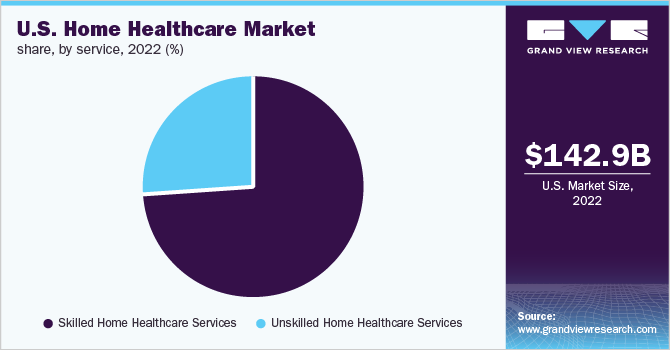
The home-based care space heats up

https://mailchi.mp/05e4ff455445/the-weekly-gist-february-26-2021?e=d1e747d2d8

Home Healthcare Market Size, Growth Report, 2020-2027

This week Brookdale Senior Living, the nation’s largest operator of senior housing, with 726 communities across 43 states and annual revenues of about $3B, announced the sale of 80 percent of its hospice and home-based care division to hospital operator HCA Healthcare for $400M. The transaction gives HCA control of Brookdale’s 57 home health agencies, 22 hospice agencies, and 84 outpatient therapy locations across a 26-state footprint, marking its entry into new lines of business, and allowing it to expand revenue streams by continuing to treat patients post-discharge, in home-based settings.

Like other senior living providers, Brookdale has struggled economically during the COVID pandemic; its home and hospice care division, which serves 17,000 patients, saw revenue drop more than 16 percent last year. HCA, meanwhile, has recovered quickly from the COVID downturn, and has signaled its intention to focus on continued growth by acquisition across 2021.
 
In separate news, Optum, the services division of insurance giant UnitedHealth Group, was reported to have struck a deal to acquire Landmark Health, a fast-growing home care company whose services are aimed at Medicare Advantage-enrolled, frail elderly patients. Landmark, founded in 2014, also participates in Medicare’s Direct Contracting program.

The transaction is reportedly valued at $3.5B, although neither party would confirm or comment on the deal. The acquisition would greatly expand Optum’s home-based care delivery services, which today include physician home visits through its HouseCalls program, and remote monitoring through its Vivify Health unit.

The Brookdale and Landmark deals, along with earlier acquisitions by Humana and others, indicate that the home-based care space is heating up significantly, reflecting a broader shift in the nexus of care to patients’ homes—a growing preference among consumers spooked by the COVID pandemic. 

Along with telemedicine, home-based care may represent a new front in the tug-of-war between providers and payers for the loyalty of increasingly empowered healthcare consumers.

Health systems falling further behind the industry in size

https://mailchi.mp/05e4ff455445/the-weekly-gist-february-26-2021?e=d1e747d2d8

Even though signs point to a post-COVID spike in health system mergers, retailers, insurers, and other healthcare industry players already far exceed health system scale. Even the largest of the “mega health systems” pale in comparison to other healthcare companies up and down the value chain, as shown in the graphic aboveAnd with the exception of pharma, these other industry players have seen revenues surge during the pandemic, while health system growth has stagnated. 

According to a recent report from Kaufman Hallhospitals saw a three percent reduction in annual total gross revenue in 2020. The majority of the decrease stemmed from a six percent decline in outpatient revenue, as volumes plummeted during the pandemic. 

The largest companies listed here, including Walmart, Amazon, CVS, and UnitedHealth Group, continue to double down on vertical integration strategies, configuring an array of healthcare assets into platform businesses focused on delivering value to consumers. 

To remain relevant, health systems will need to increase their focus on this strategy as well, assembling the right capabilities for a marketplace driven by value, at a scale that enables rapid innovation and sustainability.