Cartoon – Are you Socially Distancing or in Denial?

Weekly Humorist

Mask shortage for most health-care workers extended into May, Post-Ipsos poll shows

https://www.washingtonpost.com/health/mask-shortage-for-most-health-care-workers-extended-into-may-post-ipsos-poll-shows/2020/05/20/1ddbe588-9a21-11ea-ac72-3841fcc9b35f_story.html?fbclid=IwAR3rcjsPTuDjJODTBeJTRCqqJ4RbMTmWTih5jP91Vy9pn_S4NzWcVErobbY&utm_campaign=wp_main&utm_medium=social&utm_source=facebook

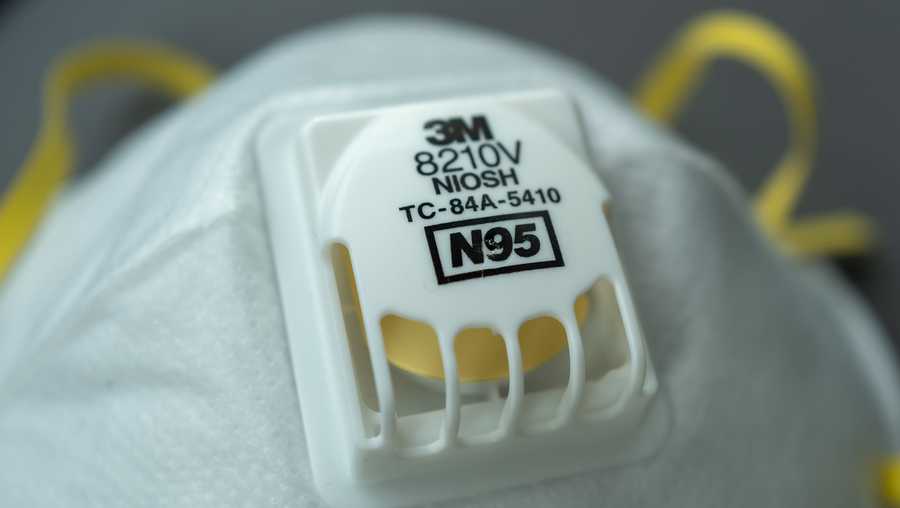
Feds uncover an alleged scheme to fraudulently sell 39 million N95 ...

Front-line health-care workers still experienced shortages of critical equipment needed for protection from the coronavirus into early May — including nearly two-thirds who cited insufficient supplies of the face masks that filter out most airborne particles, according to a Washington Post-Ipsos poll.

More than 4 in 10 also saw shortages of less protective surgical masks and 36 percent said their supply of hand sanitizer was running low, according to the poll. Roughly 8 in 10 reported wearing one mask for an entire shift, and more than 7 in 10 had to wear the same mask more than once.

The dire shortage of personal protective equipment for health-care workers emerged in March as one of the earliest signals of the country’s lack of preparation for the coronavirus pandemic. Nurses and others have said they were forced to put their own health at risk caring for highly infectious patients because they lacked adequate supplies, in particular N95 masks, which filter out 95 percent of airborne particles.

Image without a caption

State governments and medical facilities went to extraordinary lengths to obtain, preserve, sanitize and reuse masks designed to be disposed after a single use if necessary. Health authorities asked a frightened public not to worsen the shortage by snapping them up.

The Post-Ipsos poll may provide the clearest nationwide measure to date of the shortages during those weeks, when the virus surged through parts of the country, overwhelming some hospitals in New York City and placing others across the nation under tremendous strain. The survey interviewed a national sample of 8,086 U.S. adults, including 278 people who work with patients in health-care settings, such as doctors’ offices, clinics, hospitals and nursing homes. The poll was conducted from April 27 to May 4; results among health workers have a 6.5-point margin of sampling error.

“Covid hit like a tidal wave. We went from nothing to insanity,” said Ronnie Dubrowin, a certified nurse midwife from Connecticut who responded to the poll. “It was like one week no one had heard of this disease and the next week everybody had it.”

Dubrowin, who sees obstetric patients in two hospitals and one office setting, said masks were in such short supply during the early days of the outbreak that she resorted to heating hers in an oven to kill the virus.

“Getting protective gear was difficult for everybody,” Dubrowin said. “It became a mission of so many people in hospital settings to get protective gear for their employees.”

Despite shortages, 75 percent of the health-care workers said their employer was doing enough to ensure their safety. They also gave high marks to state officials, with 71 percent approving of their governor’s handling of the crisis.

They had much less confidence in President Trump. A 59 percent majority disapproved of his handling of the coronavirus pandemic, while 41 percent approved.

Nearly a third of health workers said they believe restrictions were being lifted too quickly in late April and early May. A slim majority, 53 percent, said state governments are handling the pandemic about right, and 15 percent felt restrictions are not being lifted quickly enough. Those views are roughly similar to those of the general public, as are the ratings of Trump and governors.

Long Vinh, a pediatrician who works in the neonatal intensive care units at two San Francisco-area hospitals, said at the beginning of the outbreak some steps were taken to preserve masks, out of fear there might be a shortage. Now, he says there are no shortages of masks, gowns or other protective equipment at those hospitals: California Pacific Medical Center and Mills-Peninsula Medical Center.

“I really feel that being in the Bay Area, we were blessed and fortunate to have both a wealth of hospital capacity and resources and political leadership that took the crisis seriously,” he said.

Vinh said that while he had some concerns of an overall shortage early on, “I never felt like I was put into a situation where I might have a covid exposure where I wouldn’t have all the protection I need.”

The survey showed that more than 7 in 10 health-care workers expressed concern about exposing members of their household to the virus after coming in contact with it at work, and roughly half were regularly changing out of clothing before entering their homes. About a third said someone at their workplace has been infected by the coronavirus. A 58 percent majority said it is likely they have been exposed at work.

One woman, who works in a small, residential mental-health treatment center in Minnesota, said she and other workers are not provided masks, though they are seeing adults who come from hospitals and elsewhere and who could be infected.

The woman, a counselor who spoke on the condition of anonymity to discuss decisions made by her employer, said she is concerned about bringing the virus home to her young child.

“We have some capacity to social-distance . . . but with the size of our facility and the office space availability, I’d say 80 percent of the time that’s not possible,” she said.

More than three-quarters of health workers felt that people appreciated their efforts, and a similar proportion said someone has thanked them for their work since the outbreak began.

Just over 1 in 10, or 12 percent, of health-care workers said they do not have health insurance themselves. More than 6 in 10 have paid sick leave, though over 3 in 10 do not and the rest were not sure.

And the financial outlook for many is shaky. Nearly half of health-care workers, 48 percent, were at least somewhat concerned about paying their bills.

The Post-Ipsos poll was conducted through Ipsos’s KnowledgePanel, a large online survey panel recruited through random sampling of U.S. households.


All 50 states have partially reopened; U.S. death toll surpasses 90,000

https://www.washingtonpost.com/nation/2020/05/20/coronavirus-update-us/?utm_campaign=wp_post_most&utm_medium=email&utm_source=newsletter&wpisrc=nl_most

NC coronavirus update May 18: Wake County leaders meet to discuss ...

Ready or not, the United States is reopening. All 50 states have started easing coronavirus-related restrictions — even though many of them do not meet federal benchmarks — leading public health experts to warn that a new surge of infections could be imminent.

As the U.S. death toll surpassed 90,000, White House officials continued to defend the push to reopen and optimistically predicted a swift economic recovery. As part of the focus on states’ efforts to revive their economies, Vice President Pence on Wednesday traveled to Florida while Trump was set to host the governors of Arkansas and Kansas at the White House.

Here are some significant developments:

  • Trump ramped up his rhetoric against China, claiming on Twitter that the nation’s “incompetence” was responsible for “this mass Worldwide killing!” Secretary of State Mike Pompeo also denounced China as a “brutal authoritarian regime” and described its relationship with the director of the World Health Organization as “troubling.”
  • A worker at a mink farm in the Netherlands may have contracted the novel coronavirus from an animal there, the country’s agricultural minister said. If confirmed, this is would be first recorded incident of animal-to-human transmission. 
  • A church in Houston and another in Georgia are closing for a second time after faith leaders and congregants tested positive for the virus shortly after the two churches reopened.
  • The president drew criticism for saying Tuesday it’s “a badge of honor” that America leads the world with more than 1.5 million confirmed cases of the novel coronavirus because “it means our testing is much better.” The United States has more than 30 percent of the world’s known coronavirus infections but accounts for less than 5 percent of the global population.
  • The Centers for Disease Control and Prevention laid out a detailed, delayed road map for reopening schools, child-care facilities, restaurants and mass transit, weeks after governors began opening states on their own terms.
  • The president privately expressed opposition to extending unemployment benefits for workers affected by the pandemic.


Fitch Q2 outlook for nonprofit hospitals: ‘worst on record’

https://www.healthcaredive.com/news/fitch-analysts-hospital-worries-FY-2020/577875/

Nicklaus Children's Health System Receives A+ Rating from Fitch ...

From the Mayo Clinic to Kaiser Permanente, nonprofit hospitals are posting massive losses as the coronavirus pandemic upends their traditional way of doing business.

Fitch Ratings analysts predict a grimmer second quarter: “the worst on record for most,” Kevin Holloran, senior director for Fitch, said during a Tuesday webinar.​

Over the past month, Fitch has revised its nonprofit hospital sector outlook from stable to negative. It has yet to change its ratings outlook to negative, though the possibility wasn’t ruled out.

Some have already seen the effects. Mayo estimates up to $3 billion in revenue losses from the onset of the pandemic until late April — given the system is operating “well below” normal capacity. It also announced employee furloughs and pay cuts, as several other hospitals have done.

Data released Tuesday from health cost nonprofit FAIR Health show how steep declines have been for larger hospitals in particular. The report looked at process claims for private insurance plans submitted by more than 60 payers for both nonprofit and for-profit hospitals.

Facilities with more than 250 beds saw average per-facility revenues based on estimated in-network amounts decline from $4.5 million in the first quarter of 2019 to $4.2 million in the first quarter of 2020. The gap was less pronounced in hospitals with 101 to 250 beds and not evident at all in those with 100 beds or fewer.

Funding from federal relief packages has helped offset losses at those larger hospitals to some degree.

Analysts from the ratings agency said those grants could help fill in around 30% to 50% of lost revenues, but won’t solve the issue on their own.

They also warned another surge of COVID-19 cases could happen as hospitals attempt to recover from the steep losses they felt during the first half of the year.

Anthony Fauci, the nation’s top infectious disease expert, warned lawmakers this week that the U.S. doesn’t have the necessary testing and surveillance infrastructure in place to prep for a fall resurgence of the coronavirus, a second wave that’s “entirely conceivable and possible.”

“If some areas, cities, states or what have you, jump over these various checkpoints and prematurely open up … we will start to see little spikes that may turn into outbreaks,” he told a Senate panel.

That could again overwhelm the healthcare system and financially devastate some on the way to recovery.

“Another extended time period without elective procedures would be very difficult for the sector to absorb,” Holloran said, suggesting if another wave occurs, such procedures should be evaluated on a case-by-case basis, not a state-by-state basis.

Hospitals in certain states and markets are better positioned to return to somewhat normal volumes later this year, analysts said, such as those with high growth and other wealth or income indicators. College towns and state capitols will fare best, they said.

Early reports of patients rescheduling postponed elective procedures provide some hope for returning to normal volumes.

“Initial expectations in reopened states have been a bit more positive than expected due to pent up demand,” Holloran said. But he cautioned there’s still a “real, honest fear about returning to a hospital.”

Moody’s Investors Service said this week nonprofit hospitals should expect the see the financial effects of the pandemic into next year and assistance from the federal government is unlikely to fully compensate them.

How quickly facilities are able to ramp up elective procedures will depend on geography, access to rapid testing, supply chains and patient fears about returning to a hospital, among other factors, the ratings agency said.

“There is considerable uncertainty regarding the willingness of patients — especially older patients and those considered high risk — to return to the health system for elective services,” according to the report. “Testing could also play an important role in establishing trust that it is safe to seek medical care, especially for nonemergency and elective services, before a vaccine is widely available.”

Hospitals have avoided major cash flow difficulties thanks to financial aid from the federal government, but will begin to face those issues as they repay Medicare advances. And the overall U.S. economy will be a key factor for hospitals as well, as job losses weaken the payer mix and drive down patient volumes and increase bad debt, Moody’s said.

Like other businesses, hospitals will have to adapt new safety protocols that will further strain resources and slow productivity, according to the report.​

Another trend brought by the pandemic is a drop in ER volumes. Patients are still going to emergency rooms, FAIR Health data show, but most often for respiratory illnesses. Admissions for pelvic pain and head injuries, among others declined in March.

“Hospitals may also be losing revenue from a widespread decrease in the number of patients visiting emergency rooms for non-COVID-19 care,” according to the report. “Many patients who would have otherwise gone to the ER have stayed away, presumably out of fear of catching COVID-19.”


OSHA Probing Health Worker Deaths But Urges Inspectors To Spare The Penalties

https://khn.org/news/osha-probing-health-worker-deaths-but-urges-inspectors-to-spare-the-penalties/

OSHA Probing Health Worker Deaths But Urges Inspectors To Spare ...

The Occupational Safety and Health Administration has in recent weeks launched investigations into deaths of workers at 34 health care employers across the U.S., federal records show, but former agency officials warn that the agency has already signaled it will only cite and fine the most flagrant violators.

The investigations come as health care workers have aired complaints on social media and to lawmakers about a lack of personal protective equipment, pressure to work while sick, and retaliation for voicing safety concerns as they have cared for more than 826,000 patients stricken by the coronavirus.

Despite those concerns, the nation’s top worker safety agency is not viewed as an advocate likely to rush to workers’ aid. President Donald Trump tapped a Labor Department leader who has represented corporations railing against the very agency he leads.

“It’s a worker safety crisis of monstrous proportions and OSHA is nowhere to be found,” said David Michaels, an epidemiologist and George Washington University professor who was assistant secretary of Labor and ran OSHA from 2009 to 2017.

Employers are required to report a work-related death to OSHA or face fines for failing to do so. Yet former OSHA leaders say the agency has not openly reminded hospitals and nursing homes to file such reports in recent weeks.

Last week, the Centers for Disease Control and Prevention reported that more than 9,200 health workers had been infected with the coronavirus, a number the agency concedes is a vast undercount. The estimate was based on a set of lab-generated reports in which only 16% included the patient’s profession. The agency said the true number is probably closer to 11% of all known cases.

Federal records show the OSHA fatality investigations ― searchable here — involve hospitals, an emergency medical service agency, a jail health department and nursing homes. Its investigations can be prompted by the complaint of a worker, a former worker or even an OSHA official who sees a news report about a workplace death. They can be conducted by phone and fax or involve an on-site inspection.

One fatality investigation launched April 7 focuses on Marion Regional Nursing home in Hamilton, Alabama, where nurse Rose Harrison, 60, worked before she died of COVID-19, her daughter Amanda Williams said.

Williams said her mother was not given a mask when caring for a patient on March 25 ― 10 days after the county’s first coronavirus case — who later tested positive for the virus. Williams said her mother felt pressured to keep going to work even as she was coughing, fatigued and running a low-grade fever.

“She kept telling me ‘Amanda, I have to work, I have to get my house paid off,’” Williams said, noting her mother said she was urged to work unless her temperature reached 100.4.

Williams said that she drove her mother to the hospital on April 3 and that Harrison was unhappy she’d spent the week working. Harrison went on a ventilator the following day, fully expecting to recover. She died April 6.

“When your mother dies mad, you’re pretty much mad,” Williams, one of Harrison’s three daughters, said. “I think if proper steps were taken from the beginning, this would have been different.”

North Mississippi Health Services, which owns the nursing home, and the home’s administrator did not reply to calls or emails.

An April 13 OSHA memo said the agency would prioritize death investigations involving health care workers and first responders. It said “formal complaints alleging unprotected exposures to COVID-19 … may warrant an on-site inspection.”

Michaels, the former Labor Department official, said a subsequent OSHA memo suggested that officials are unlikely to penalize all but the most careless employers.

The memo about employers’ “good faith” efforts said a citation may be issued “where the employer cannot demonstrate any efforts to comply.”

Michaels said that “any efforts” to comply with work safety rules could amount to making even one phone call to try to buy masks for workers.

Federal OSHA officials did not respond to a request for comment.

Democrats criticized Trump last year when he tapped Eugene Scalia, who spent years of his legal career defending major corporations, to head the Labor Department.

Scalia fought OSHA on behalf of SeaWorld after it was cited over the death of a woman training killer whales, The New York Times reported. Scalia’s team argued the work-safety agency was not meant to regulate the training of killer whales. He also argued that SeaWorld had adequate safety measures in place, but ultimately lost the case.

Sen. Bernie Sanders, alluding to Scalia’s record of defending firms like Chevron and Goldman Sachs, called the appointment “obscene.”

Since March 27, the ongoing fatality investigations have been mostly categorized as “partial” investigations, which initially focus on one area of noncompliance. Four are labeled “complete,” meaning they cover a wide range of hospital operations.

One of the “complete” investigations is listed at Coral Gables Hospital in South Florida, where respiratory therapist Jorge Mateo, 82, worked before he died of coronavirus complications, his daughter said.

The hospital reported the death, according to a statement from Shelly Weiss Friedberg of Tenet Healthcare, which owns the hospital. She said Mateo was with the hospital for four decades and “the loss of Jorge Mateo is felt throughout our entire community.”

A subsequent investigation — also labeled as “complete” ― was opened April 10 at Palmetto General Hospital, in South Florida.

There, 33-year-old Danielle Dicenso worked for a staffing agency as an ICU nurse, treating coronavirus patients. Dicenso died after developing COVID-19 symptoms, including fever and a cough, according to reports in the Miami Herald. The Palm Beach County medical examiner has not yet determined a cause of death, a spokesperson told Kaiser Health News.

Her husband, David Dicenso, told local news station WSVN she had not been given a protective mask and was “very scared of going to work.”

Weiss Friedberg, of Tenet, which also owns Palmetto, said in an email that “nurses are provided appropriate personal protective equipment (PPE) in compliance with Centers for Disease Control (CDC) guidelines.”

The latest guidelines say staff can wear a face mask if no N95 respirator is available when performing routine care with COVID-19 patients. For higher-risk procedures, such as intubation, workers must receive N95 masks.

OSHA opened an inspection at St. Catherine of Siena Medical Center, a Long Island hospital, on April 11. Federal officials had learned from a local news story about a patient care assistant dying of COVID-19, hospital leadership confirmed.

The hospital has no record of that employee having any interaction with COVID patients, said James O’Connor, its executive vice president. The hospital tests employees for COVID-19 only if they have had confirmed exposure to someone who tested positive and if they develop symptoms.

O’Connor said all employees who are in contact with suspected COVID-19 patients get the full suite of PPE; they are told to clean their N95 masks after each shift, he said, and to change masks entirely every three shifts.

That can mean workers wear the same equipment for multiple days.

Early research suggests that N95s can be sanitized and reused up to three times. But that paper has not yet undergone peer review. In an affidavit the New York State Nurses Association filed regarding another state hospital, the union argued that it has “yet to be adequately proven that disposable respirators can be effectively decontaminated” without putting the wearer at risk.

As recently as April 16, the local nurses union told Newsday that St. Catherine workers on Long Island are being told to share PPE.

While OSHA does have a “general duty” clause urging employers to keep workers safe and a standard for respiratory protection, it has no written rule on protecting workers from airborne disease, said Debbie Berkowitz, a former OSHA chief of staff and director of the National Employment Law Project’s worker safety and health program.

As OSHA and the Centers for Disease Control and Prevention downgrade their requirements week by week, workers are left with the choice in some places to wear a bandana in situations that had called for a properly fitted N95 mask, which can filter out particles as small as 0.1 microns.

“OSHA has really completely abandoned their mandate to protect workers,” Berkowitz said, “and every worker is on their own.”


Most states still aren’t doing enough coronavirus testing

https://www.axios.com/coronavirus-testing-states-still-behind-629973cb-d8ad-4f36-a6fa-d59959fe84a3.html


Most states still aren't doing enough coronavirus testing - Axios


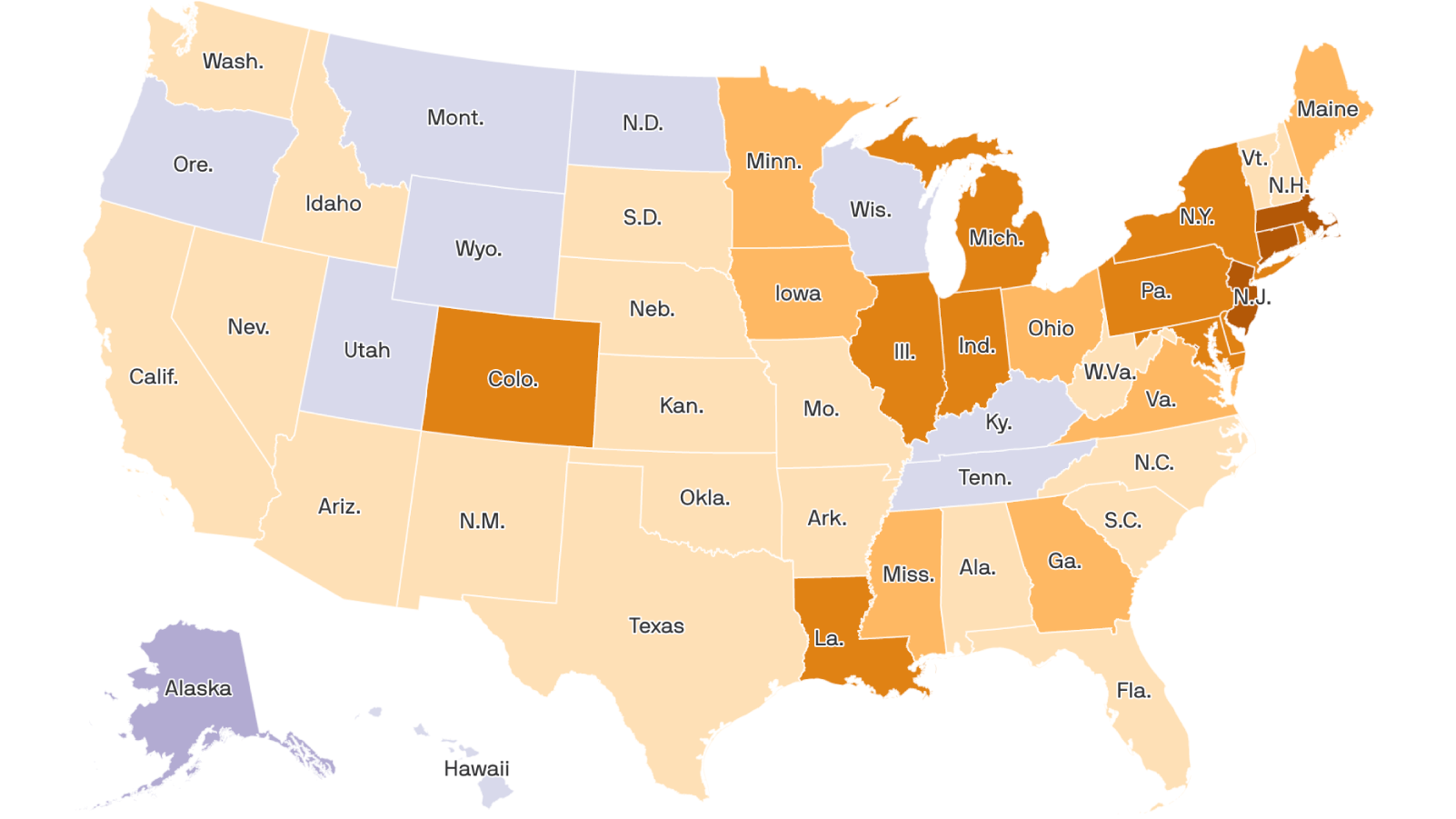
Most states still aren’t doing enough coronavirus testing, especially those that have suffered from larger outbreaks, according to recent testing targets calculated by the Harvard Global Health Institute.

Between the lines: It’s much harder to contain the virus once a lot of people have it — which is why we needed strong social distancing in the first place. But knowing who is infected is the foundation of containment going forward, and most states are still behind.

The big picture: Nationally, the U.S. needs to be doing about 900,000 tests a day, according to the Harvard estimate, which was released earlier this month.

  • But not all states need to be doing the same amount of tests. The goal Harvard suggested for each state — the number of tests they should have done on May 15  was calculated based on the size of its outbreak as of early May.
  • That means that New York needs to be doing a much larger number of tests each day than Wyoming, even after accounting for the states’ huge population discrepancy.

Why it matters: Most states have already begun reopening to some extent, even without key public health tools — like testing and contact tracing — fully built up.

  • That increases the chance that the virus will spread undetected as people begin interacting with one another again.
  • And these premature measures may just increase the number of tests a state needs, especially because the estimates were based on the assumption states would remain closed until May 15.
  • “The moment you relax, the number of cases will start climbing. And therefore, the number of tests you need to keep your society, your state from having large outbreaks will also start climbing,” Harvard’s Ashish Jha warned.


If the White House is struggling, how will ordinary businesses fare? 

https://mailchi.mp/f4f55b3dcfb3/the-weekly-gist-may-15-2020?e=d1e747d2d8

The RAOI Advisory Opinion: A Transformative Moment or a Bump in ...

In a week that saw reopening activity pick up across the country, drawing even more attention to the need for sufficient testing to give employers and workers confidence in returning to work, a new study from researchers at New York University (NYU) suggested that a widely-hailed rapid testing machine from Abbott Labs may be unreliable.

The Abbott ID NOW COVID-19 test produced false negatives a third of the time using nasopharyngeal swabs, and 48 percent of the time with less-invasive “dry nasal swabs”, according to the study, which has not yet undergone peer review. The five-minute, point-of-care test received emergency use authorization from the Food and Drug Administration (FDA) in late March and has been touted as a “great test” by President Trump, whose White House relies on it to test the President and those around him.

On Thursday, the FDA issued a warning about the potential for false negative results using the Abbott test. The company disputes the findings and sent a list of questions to the NYU researchers for clarification. Meanwhile, two White House staffers—an aide to the President and the Vice President’s press secretary—tested positive for coronavirus, causing the White House to mandate masks for all employees starting this week.

The uncertainty around test results, and the ensuing concern about safety at the White House, provides a foretaste of the difficult road ahead for thousands of employers nationwide as stay-at-home orders are lifted, and companies consider when and how to reopen workplaces.

If the White House is struggling, how will ordinary businesses fare?

US coronavirus update: 1.46M cases, 87K+ confirmed deaths, 10.2M total tests conducted.


Trump faces criticism over lack of national plan on coronavirus

Trump faces criticism over lack of national plan on coronavirus

COVID-19 National Health Plan – Primary Care – Central Patient ...

The Trump administration is facing intense criticism for the lack of a national plan to handle the coronavirus pandemic as some states begin to reopen.

Public health experts, business leaders and current administration officials say the scattershot approach puts states at risk and leaves the U.S. vulnerable to a potentially open-ended wave of infections this fall.

The White House has in recent days sought to cast itself as in control of the pandemic response, with President Trump touring a distribution center to tout the availability of personal protective equipment and press secretary Kayleigh McEnany detailing for the first time that the administration did have its own pandemic preparedness plan.

Still, the White House lacks a national testing strategy that experts say will be key to preventing future outbreaks and has largely left states to their own devices on how to loosen restrictions meant to slow the spread of the virus. Trump this week even suggested widespread testing may be “overrated” as he encouraged states to reopen businesses.

The Centers for Disease Control and Prevention (CDC) on Thursday night issued long-awaited guidance intended to aid restaurants, bars and workplaces as they allow employees and customers to return, but they appeared watered down compared to previously leaked versions.

Some experts said the lack of clear federal guidance on reopening could hamper the economic recovery. 

“A necessary condition for a healthy economy is a healthy population. This kind of piecemeal reopening with everyone using different criteria for opening, we’re taking a big risk,” said Mark Zandi, chief economist at Moody’s Analytics.

The lack of coherent direction from the White House was driven home this week by damaging testimony by a former top U.S. vaccine official who claims he was ousted from his post improperly.

“We don’t have a single point of leadership right now for this response, and we don’t have a master plan for this response. So those two things are absolutely critical,” said Rick Bright, who led the Biomedical Advanced Research and Development Authority until he was demoted in late April.

The U.S. faces the “darkest winter in modern history” if it does not develop a more coordinated national response, Bright said. “Our window of opportunity is closing.”

From the start, the White House has let states chart their own responses to the pandemic.

The administration did not issue a nationwide stay-at-home order, resulting in a hodgepodge of state orders at different times, with varying levels of restrictions.

Facing a widespread shortage, states were left to procure their own personal protective equipment, ventilators and testing supplies. Trump resisted using federal authority to force companies to manufacture and sell equipment to the U.S. government.

Without clear federal guidance, state officials were competing against each other and the federal government, turning the medical supply chain into a free-for-all as they sought scarce and expensive supplies from private vendors on the commercial market.

“The fact that we had questions about our ability to have enough mechanical ventilators, and you had states basically bidding against each other, trying to secure personal protective equipment …  it shouldn’t be happening during a pandemic,” said Amesh Adalja, a senior scholar at the Johns Hopkins University Center for Health Security.

Internally, the administration struggled to mount a unified front as various agencies jockeyed for control. Multiple agencies have been providing contradictory instructions.

At first, Department of Health and Human Services (HHS) Secretary Alex Azar led the White House coronavirus task force.

Roughly a month, later he was replaced by Vice President Pence. The Federal Emergency Management Agency (FEMA) was later tasked with leading the response to get supplies to states, while senior White House adviser Jared Kushner led what has been dubbed a “shadow task force” to engage the private sector. Now, FEMA is reportedly winding down its role, and turning its mission back over to HHS.

The CDC has been largely absent throughout the pandemic. Director Robert Redfield has drawn the ire of President Trump as well as outside experts, and he has been seen infrequently at White House briefings.

“I think seeing the nation’s public health agency hobbled at a time like this and looking over its shoulder at its political bosses is something I hoped I would never see, and I’ve been working with the CDC for over 30 years,” said Lawrence Gostin, a professor of public health at Georgetown University.

“I think that people will die because the public health agency has lost its visibility and its credibility and that it’s being politically interfered with,” he added.

The administration recently has taken some steps to improve on the initial response to the pandemic.

Ventilator production has increased, and the U.S. is no longer seeing a shortage of the devices. 

Testing has improved dramatically as well, though experts think the U.S. needs to be testing thousands of more people per day before the country can reopen.

The administration also unveiled plans to expand the Strategic National Stockpile’s supply of gowns, respirators, testing supplies and other equipment, after running out of supplies early in the pandemic.

Adalja said the administration’s positive steps are coming way too late. 

“It’s May 15, we should have been in this position January 15,” he said.

McEnany on Friday for the first time detailed the White House’s preparedness plan that replaced the Obama-era pandemic playbook, an acknowledgement that Trump’s predecessor did leave a road map, despite claims to the contrary from some of the president’s allies.

She did not give many specifics on the previously unknown plan. Instead, McEnany declared the Trump administration’s handling of the virus had been “one of the best responses we’ve seen in our country’s history.”

Yet as states look to reopen businesses and get people back to work, the White House is taking a back seat as governors set their own guidelines for easing stay-at-home orders and restrictions on social activities.

The White House in April issued a three-step plan for states to reopen their economies, but it has largely been ignored by states and by the president.

Dozens of governors have begun easing restrictions on businesses and social activities without meeting the White House guidelines. Trump has been urging them to move even faster, backing anti-lockdown protesters in Michigan, Virginia, Minnesota and Pennsylvania.

Even scaled-down guidance from federal agencies is critical for providing a road map for state and local leaders, and for businesses considering how best to resume operations, said Neil Bradley, chief policy officer with the U.S. Chamber of Commerce.

“We need guidance because it helps instill confidence about the right types of approaches to take, but when you begin to move away from guidance and into either regulations or very strict approach, then that’s increasingly going to be unworkable in lots of different locations,” Bradley said.


Amid reports of White House clashes with CDC, experts raise alarms about lack of coronavirus screening at airports

https://www.yahoo.com/news/coronavirus-screening-airports-144105500.html

Terminal 1 at John F. Kennedy International Airport in New York City. (Lev Radin/Pacific Press/LightRocket via Getty Images)

As the nation begins to reopen amid the coronavirus pandemic, some people are looking to the skies — and experts don’t necessarily like what they see, arguing there are not enough safeguards in place to protect passengers and crew. 

While air travel has fallen sharply due to the virus, the airports are open and planes are flying both domestically and internationally. The Centers for Disease Control and Prevention has issued travel guidelines encouraging air passengers to wear face coverings, “keep 6 feet of physical distance from others” and only board planes for essential travel. However, these guidelines are merely suggestions. 

There is no requirement for masks, and there have been multiple reports of crowded conditions in airports and on planes, which have left passengers alarmed. The Transportation Security Administration, which screens passengers and luggage at airports, has also experienced over 560 confirmed cases of COVID-19, the disease caused by the coronavirus, and six deaths from the illness.

Despite these concerns, there are currently no coronavirus screening procedures for domestic air travelers, and a congressional investigation has also raised questions about the level of screening being conducted for international passengers. Speaking in the Oval Office on April 28, President Trump told reporters his administration is working on implementing a procedure for temperature checks and COVID-19 tests for air travelers.

“We’re also setting up a system where we do some testing, and we’re working with the airlines on that,” Trump said.

According to a May 6 government document reviewed by Yahoo News, the CDC was “developing a tool for predicting risk of importation of COVID-19 among international travelers” and meeting with the White House National Security Council “to discuss strategies for screening arriving international passengers from countries with substantial COVID-19 transmission.”

However, there have been reports of discord between the CDC and the White House. On May 9, USA Today reported CDC officials were overruled by the White House after they raised concerns about a potential plan to establish temperature checks at the airports. While some COVID-19 patients do have high fevers, many do not and others are entirely asymptomatic. 

USA Today’s report included an email Dr. Martin Cetron, the CDC’s director of global mitigation and quarantine, sent to officials with the Department of Homeland Security criticizing the temperature checks as “a poorly designed control and detention strategy.” 

Cetron, the CDC and DHS did not respond to requests for comment. The White House did not respond to questions about the reported disagreements from the CDC or whether the Trump administration believes temperature checks are an adequate screening measure for airports.

Rep. Raja Krishnamoorthi, the chairman of the House oversight subcommittee on economic and consumer policy, has investigated coronavirus screening procedures at airports. Earlier this week, the Illinois Democrat told Yahoo News he was concerned by the report that the White House is pursuing a temperature screening plan over the objections of CDC officials. 

“The White House has been ignoring and sidelining America’s public health experts at the CDC, instead relying on nonexpert political appointees to make public health decisions,” Krishnamoorthi said. “I am troubled by reports that officials at the Centers for Disease Control and Prevention could raise this public health concern and be essentially overruled by presidential aides. The desire to lure Americans back into traveling by making them feel like they are safe cannot outweigh the need to actually keep this country safe.”

Krishnamoorthi has previously raised concerns about what he described as “lax” screening procedures for international travelers coming into the United States from coronavirus hot spots in March as the pandemic exploded around the globe. Trump has repeatedly pointed to restrictions he imposed on travelers from China — where the virus originated — on Jan. 31 as evidence of his strong efforts to curb its spread in the United States.

However, the restrictions on China contained exemptions that allowed over 400,000 people to subsequently travel from that country to the United States. And on May 7, Krishnamoorthi’s subcommittee released the results of an investigation that focused on two other early coronavirus hot spots — Italy and South Korea. Krishnamoorthi said he believes Trump has focused on “rhetoric and bluster rather than actually effective screenings.”

“Just from what we found with Italy and South Korea, there was no border closing. There was no screening. Unfortunately, the lack of screening probably had some very serious consequences at a time when cases were exponentially rising in the United States.”

Krishnamoorthi’s investigation, which included extensive briefings from officials, found that the White House National Security Council’s Policy Coordination Committees decided in March to rely on South Korean and Italian officials to screen passengers in those countries who were headed to the United States. The probe further found the U.S. had “limited” oversight for those screenings in Italy and that only 69 passengers were prevented from coming to the U.S. from those two countries in March. Once they arrived, the investigation found passengers entering from the two countries did not receive additional health screenings.

“Potentially thousands and thousands of people came across without screenings” from what were two of the leading coronavirus hot spots at the time, Krishnamoorthi told Yahoo News. “It doesn’t take a lot to believe that folks came over and seeded further outbreaks here in this country.”

Jonathan Ullyot, a spokesperson for the White House National Security Council, responded to questions about Krishnamoorthi’s investigation with a statement touting the government’s steps to screen international arrivals earlier this year.

“The reality is that the United States government took early and decisive action to mitigate the risk from global hot spots, including China, Iran, South Korea, and the Schengen area of Europe,” Ullyot wrote. “After restricting travel from China on January 31 … the security directive put forth by the administration required enhanced medical screenings for all passengers before they departed on flights to the United States from Northern Italy and South Korea.”

According to Ullyot, the screenings in Italy and South Korea “included checking the passenger’s temperature, visual observations to detect signs of illness, and questionnaires.” While Ullyot did not dispute Krishnamoorthi’s contention that the U.S. relied on officials in those countries to conduct the screenings and that few passengers were denied boarding, he said “U.S. mission staff visited airports” in both countries to “observe these screening procedures.”

A senior Trump administration official, who requested not to be named, said all international arrivals to the United States are subject to Customs and Border Protection (CBP) screenings that are following CDC guidelines. The official explained that those guidelines require CBP officers to refer travelers “to the CDC, DHS contract medical screeners, or local health authorities for health screening” if they are exhibiting symptoms or have traveled from countries that have experienced major outbreaks.

According to the official, the CBP has “established processes to identify travelers who have traveled to the United States directly or indirectly from areas that are experiencing COVID-19 outbreaks.”

Domestic air passengers, however, are treated differently.

“With regard to domestic travel, there’s not more screening beyond what TSA normally does,” Krishnamoorthi said. 

He said that lack of screening for domestic travelers is particularly worrisome as areas of the country are beginning to lift lockdown restrictions. He suggested this could lead to a situation where business people “go back and start traveling” and then “transport these cases everywhere.”

“We have to look at the science of it more closely, and we have to develop a more precise way of screening,” Krishnamoorthi said.

Randy Babbitt, a former administrator of the Federal Aviation Administration, said the lack of new screening procedures is not as much of a problem right now since “nobody’s flying.” However, he said it will become a pressing issue as the country reopens and airports become more crowded.

“People are going to start flying and as it ramps back up, that becomes a different question,” Babbitt told Yahoo News.

Babbitt further explained that one difficulty with establishing comprehensive procedures for airports is that so many different government agencies are involved in air travel. However, he pointed to proposals generated by Stonebriar Strategy Group Thought Leadership Initiative, a nonprofit consultancy, as a realistic potential road map.

Howard Thrall, the president and senior partner of the group, said the organization is comprised of multiple retired consultants and executives who have worked in the industry. According to Thrall, a  veteran executive who has worked for multiple aviation and aerospace companies, the group came together because they were “totally amazed” a coronavirus airport screening system has not yet been established. 

“This is really a pro bono exercise for a bunch of old graybeards,” Thrall said.

The Stonebriar Strategy Group’s proposal calls for screening perimeters to be established outside airports, where rapid COVID-19 tests, questionnaires and temperature checks could be administered to travelers and workers. Setting up a screening perimeter would mean that even if passengers ended up in close proximity during boarding or on planes, they could have a higher degree of confidence those around them were not contagious.

Along with addressing safety concerns, Thrall said implementing these screenings could help the economy since aviation is a substantial part of the nation’s gross domestic product and boosting consumer confidence is crucial to returning the industry to normal levels. He pointed to the aftermath of the Sept. 11 attacks, when the TSA was formed and security screening procedures were transformed, as evidence that airport procedures can quickly be revamped.

The Stonebriar Strategy Group’s detailed proposal estimated it would cost approximately $6.8 million per airport, per year, to establish coronavirus screening perimeters. With approximately 5,000 public airports in the country, that would mean a total cost of about $34 billion.

However, Thrall argued that cost is realistic relative to the urgent need and the trillions of dollars the government is spending to address the coronavirus. 

“That’s why we wrote it up. It wasn’t happening and it could happen. This is not a big deal,” Thrall said. “I mean, it’s not going to be free by any means, but this is very, very manageable.”


The pandemic broke America

https://www.axios.com/coronavirus-america-broken-2baa69e4-60e6-49a5-932a-5d118441ae20.html

The coronavirus pandemic broke America - Axios

Eight weeks into this nation’s greatest crisis since World War II, we seem no closer to a national strategy to reopen the nation, rebuild the economy and defeat the coronavirus.

Why it matters: America’s ongoing cultural wars over everything have weakened our ability to respond to this pandemic. We may be our worst enemy.

  • The response is being hobbled by the same trends that have impacted so much of our lives: growing income inequality, the rise of misinformation, lack of trust in institutions, the rural/urban divide and hyper-partisanship.
  • We’re not even seeing the same threat from the virus. Democrats are far more likely than Republicans to be worried about getting seriously ill, while Republicans — including the president — are more likely to think the death counts are too high.

Without even a basic agreement on the danger of the pandemic and its toll, here’s how we see the national response unfold:

  • The Centers for Disease Control and Prevention, the crown jewel of the globe’s public health infrastructure, has been sidelined, its recommendations dismissed by the White House.
  • President Trump declares the U.S. has “prevailed on testing” at a time when health experts say we still need far more daily tests before the country can reopen safely.
  • Distribution of the promising coronavirus drug remdesivir was initially botched because of miscommunication between government agencies.
  • More than two thirds of Americans say it’s unlikely they would use a cell phone-based contact tracing program established by the federal government, a key component of a testing regime to control the virus.
  • The second phase of a program to aid small businesses isn’t fully allocated because firms are either concerned about its changing rules, confused about how to access it, or find the structure won’t help them stay in business.
  • With the unemployment rate at a post-Depression record last month, and expected to go higher, there is no meaningful discussion between the parties in Congress on aid to the out-of-work.
  • States and local governments are facing billions in losses without a strategy for assistance.
  • The virus is literally inside the White House. Aides have tested positive for coronavirus, leading to quarantines for some of the nation’s top public health officials and a new daily testing regime for White House staff and reporters who enter the West Wing.
  • The No. 1 book on Amazon for a time was a book by an anti-vaxxer whose conspiracy-minded video about the pandemic spread widely across social media, leading to takedowns by platforms like YouTube and Facebook.

The other side: There’s better news at the state level. “Governors collectively have been winning widespread praise from the public for their handling of the coronavirus outbreak,” the Washington Post reports.

Between the lines: Nationwide, 71% of Americans approve of the job their governor is doing, according to the Post. For Trump, the figure is 43%.

  • And former presidents we often expect to help rally the nation in trying times are scarce.
  • George W. Bush released a video, in which his face barely appeared, calling for unity in the fight against the virus. Barack Obama was recorded in leaked remarks to former staffers calling Trump’s coronavirus response “an absolute chaotic disaster.” Trump attacked both of them on Twitter.

The bottom line: An existential threat — like war or natural disaster — usually brings people together to set a course of action in response. Somehow, we’ve let this one drive us apart.