The majority of hospitals are predicted to have negative margins in 2022, marking the worst year financially for hospitals since the beginning of the Covid-19 pandemic.
In Part 1 of Radio Advisory’s Hospital of the Future series, host Rachel (Rae) Woods invites Advisory Board experts Monica Westhead, Colin Gelbaugh, and Aaron Mauck to discuss why factors like workforce shortages, post-acute financial instability, and growing competition are contributing to this troubling financial landscape and how hospitals are tackling these problems.
As we emerge from the global pandemic, health care is restructuring. What decisions should you be making, and what do you need to know to make them? Explore the state of the health care industry and its outlook for next year by visiting advisory.com/HealthCare2023.
Here are 10 health systems with strong operational metrics and solid financial positions, according to reports from credit rating agencies Fitch Ratings and Moody’s Investors Service.
1. Allina Health System has an “AA-” rating and a stable outlook with Fitch. The Minneapolis-based system is the inpatient market share leader in a highly competitive market and has a strong relation with payers in the market, Fitch said.
2. Bryan Health has an “AA-” rating and stable outlook with Fitch. The Lincoln, Neb.-based health system has a leading and growing market position, very strong cash flow and a strong financial position, Fitch said. The credit rating agency said Bryan Health has been resilient through the COVID-19 pandemic and is well-positioned to accommodate additional strategic investments.
3. CaroMont Health has an “AA-” rating and stable outlook with Fitch. The Gastonia, N.C.-based system has a leading market position in a growing services area and a track record of good cash flow, Fitch said.
4. Christiana Care Health System has an “Aa2” rating and stable outlook with Moody’s. The Newark, Del.-based system has a unique position as the state’s largest teaching hospital and extensive clinical depth that affords strong regional and statewide market capture, and is expected to return to near pre-pandemic level margins over the medium-term, Moody’s said.
5. Intermountain Healthcare has an “Aa1” rating and stable outlook with Moody’s. The Salt Lake City-based health system has exceptional credit quality, which will continue to benefit from its leading market position in Utah, Moody’s said. The credit rating agency said the health system’s merger with Broomfield, Colo.-based SCL Health will also give Intermountain greater geographic reach.
6. OhioHealth has a “AA+” rating and stable outlook with Fitch. The Columbus, Ohio-based system has an exceptionally strong credit profile, broad regional operating platform and leading market position in both its competitive two-county primary service area and broader 47-county total service area, Fitch said.
7. Parkview Health has an “Aa3” rating and stable outlook with Moody’s. The Fort Wayne, Ind.-based system has a leading market position with expansive tertiary and quaternary clinical services in northeastern Indiana and northwestern Ohio, Moody’s said.
8. Rady Children’s Hospital has an “AA” rating and stable outlook with Fitch. The San Diego based hospital has a very strong balance sheet position and operating performance, and is also a leading provider of pediatric services in the growing city and tri-county service area, Fitch said.
9. ThedaCare has an “AA-” rating and stable outlook with Fitch. The Neenah, Wis.-based system has a focused strategy, strong financial profile and robust market share, Fitch said.
10. Trinity Health has an “AA-” rating and stable outlook with Fitch. The Livonia, Mich.-based system’s large size and market presence in multiple states disperses and the long-term ratings incorporate the expectation that Trinity will return to sustained stronger operating EBITDA margins.
The largest nonprofit health systems, Ascension, CommonSpirit Health and Trinity Health, reported net losses in the three months ended Sept. 30 compared to net incomes in the same period a year earlier.
Here’s how the three systems’ finances fared in the third quarter, according to financial documents:
1. St. Louis-based Ascension, a 144-hospital system, reported an operating loss of $118.6 million in the third quarter compared to an operating gain of $24.9 million in the same period last year. Third-quarter operating revenue hit $7.2 billion and operating expenses were $7.3 billion, both increasing from about $6.9 billion in the third quarter of last year. However, for the same period, it posted a $790.4 million loss on investments, down from a gain of $79.7 million in 2021. After factoring in nonoperating items, Ascension posted a net loss of $811 billion for the three months ended Sept. 30. A year earlier, it posted a net income of $80.4 million.
2. CommonSpirit Health, a 140-hospital system based in Chicago, posted $23 million income for the three months ending Sept. 30, down from $34 million over the same period in 2021. However, CommonSpirit received $325 million as part of the California provider fee program under the CMS-approved state plan amendment; after normalizing for the program, it reported a $227 million loss for the quarter. CommonSpirit’s quarterly operating revenue hit $8.53 billion. Salaries and benefits expenses increased 5.1 percent to $4.5 billion for the quarter due to high registry and contract labor as well as overtime, premium pay and inflation.
3. Livonia, Mich.-based Trinity Health, an 89-hospital system, reported $550.9 million net loss for the three months ending Sept. 30, compared to $398.4 million net income in the same period last year. Revenue for the period increased slightly to $5 billion after Trinity acquired the remaining stake in Iowa-based MercyOne from CommonSpirit. The transaction closed on Sept. 1 and added $126.2 million operating revenue to the quarter. Excluding MercyOne, Trinity’s revenue dropped $89.9 million compared to the same period last year. Third-quarter operating expenses rose almost 6 percent year over year to $5.2 billion, including a 5.8 percent increase in salary rates. Contract labor decreased $1 million during the quarter due to the MercyOne acquisition.
Motley earnings numbers from more than a dozen major nonprofit health systems show third-quarter operating incomes landing on both sides of zero, though issues such as labor shortages, limited volume recovery and worsening payer mix look to be a constant across much of the sector.
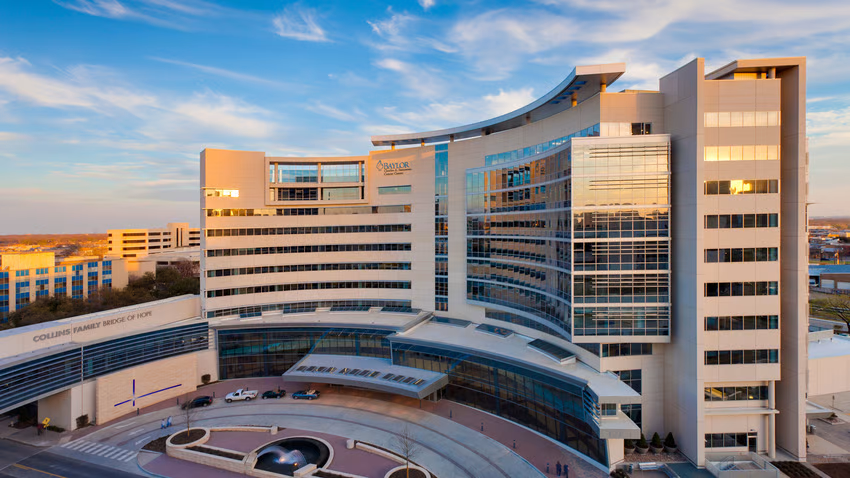
Baylor Scott & White led the pack with a $257 million operating income for the period ended Sept. 30, 2022, though it was closely followed by Sutter Health’s $244 million.
Baylor is among the outlier systems whose financials have been holding strong through the last few years, and the quarter’s 7.7% operating margin represents a slight improvement over the 7.4% of its 2022 fiscal year (ended June 30). It attributed the quarter’s 5.6% year-over-year (YoY) increase in consolidated total operating revenue to a blend of premium revenue increases, higher surgical volumes and favorable service mix that “returned to and/or exceeded pre-COVID levels.”
Sutter’s operations have been back and forth this year with a $91 million Q1 gain and a $51 million Q2 loss before the most recent quarter’s $244 million. Though it’s still well behind its numbers from last year, the organization’s leadership highlighted the quarter’s relatively flat salaries and progress toward long-term financial resiliency.
“Significant challenges remain, including inflationary pressures, supply chain uncertainties, increased labor costs and staffing shortages, and rising drug prices,” a spokesperson said regarding the numbers. “Our priorities include preparing for seismic infrastructure updates, reinvesting in our communities and supporting our clinicians in service to our mission.”
Topping the other end of the spectrum was Bon Secours Mercy Health and Providence’s respective $141 million and $164 million operating losses—though the latter’s could be viewed as an improvement in light of the $934 million it was down during the prior two quarters.
Both of those systems highlighted a continuation of the inflationary and labor trends that had increased their expenses during the year’s earlier quarters.
Providence, for instance, noted an additional $526 million of agency and overtime expenses during the past nine months in comparison to 2021. Bon Secours Mercy said in its filing that the economic pressures offset improvements to patient volumes that had “approached historical pre-pandemic levels.”
Other operating results of note included: UPMC, whose health services division logged a $103 million operating loss but was buoyed by the integrated system’s insurance services division; Intermountain Healthcare, which is fresh off a merger that helped boost its revenue by 28% and its expenses by 35%; and Advocate Aurora Health, which inched closer to its own pending merger with a narrow 0.2% operating margin.
Regardless of how they stuck the landing, virtually every system reported feeling the continued impact of labor shortages. Banner Health was among that list, reporting a 7% Year after Year increase in year-to-date contract labor costs and noting that understaffing in certain locations negatively impacted capacity and patient volumes.
The reports also suggest some heterogeneity across the patient volume metrics of different markets as demand for non-COVID care continued to recover. Several systems noted their surgical or elective volumes have yet to return to pre-pandemic levels, and some highlighted worsened case mixes that limited year-over-year revenue growth.
Similar to earlier quarters, across-the-board non-operating losses weighed heavily on the organizations’ bottom lines. Nearly every system posted a nine-figure investment loss during the quarter, though a nearly $1.7 billion net investment loss at Kaiser Permanente easily took the cake.
The investment losses led to 11 of the 13 nonprofits to notch a negative net income during the three months ended Sept. 30. See below for a breakdown of the numbers (and note that for systems reporting year-to-date results, third quarter numbers represent the difference between nine-month and six-month totals).
Total Operating Revenues
Total Operating Expenses
Operating Income
Net Income
Kaiser Permanente
24,253
24,328
-75
-1,550
CommonSpirit Health
9,011
8,988
23
-397
Providence
6,866
7,031
-164
-612
UPMC
6,376
6,449
114
-260
Mayo Clinic
4,117
3,960
157
-312
Sutter Health
3,985
3,741
244
103
AdventHealth
3,971
3,910
60
-305
Intermountain Healthcare
3,685
3,685
0
-582
Advocate Aurora Health
3,657
3,649
8
-311
Baylor Scott & White
3,335
3,078
257
135
Banner Health
3,069
3,096
-26
-198
Bon Secours Mercy Health
2,768
2,909
-141
-328
SSM Health
2,330
2,403
-73
-93
Nonprofit Health Systems’ Q3 Earnings ($ millions)
Providence, a 51-hospital system headquartered in Renton, Wash., ended the first nine months of 2022 with an operating loss of $1.1 billion, according to financial documents released Nov. 14.
The system said in a Nov. 11 news release that its third quarter financial results showed the “ongoing impact of inflation, the national healthcare labor shortage, delayed reimbursement from payers, global supply chain disruptions and financial market weakness.”
For the nine months ended Sept. 30, Providence’s operating revenues were $19.6 billion on a pro forma basis, up from $18.8 billion during the same period last year, according to the report. The pro forma results exclude the operations of Newport Beach, Calif.-based Hoag Hospital. Providence and Hoag ended their affiliation in January.
Operating expenses over the first nine months of the year were $20.7 billion, a 7 percent increase over the same period in 2021 on a pro forma basis. This includes a 9 percent increase in salary and benefits due to the cost of agency staff, overtime and wage increases, according to the release. It also includes a 6 percent increase in supply costs, driven by an 8 percent increase in pharmaceutical spending.
Providence said financial market weakness and volatility drove investment losses of $1.4 billion for the first nine months of 2022, bringing the system’s unrestricted cash and investments to $9.1 billion.
“Healthcare delivery systems across the country face unprecedented challenges, and Providence has not been immune,” Providence President and CEO Rod Hochman, MD, said in the release. “However, just as we have for more than 165 years, we will continue to be here to meet the health care needs of our communities. While we still have a journey ahead of us, we are moving in the right direction and are beginning to see signs of renewal this quarter. My deepest gratitude to the caregivers of Providence for continuing to focus on the Mission and serving those in need, especially those who are most vulnerable, with excellence and compassion.”
Here are 10 health systems with strong operational metrics and solid financial positions, according to reports from Fitch Ratings and Moody’s Investors Service.
1. Advocate Aurora Health has an “AA” rating and a stable outlook with Fitch. The health system, dually headquartered in Milwaukee and Downers Grove, Ill., has a strong financial profile and a leading market position over a broad service area in Illinois and Wisconsin, Fitch said. The health system’s fundamental operating platform is strong, the credit rating agency said.
2. Allina Health System has an “AA-” rating and a stable outlook with Fitch. The Minneapolis-based system is the inpatient market share leader in a highly competitive market and has a strong relation with payers in the market, Fitch said. Alliana’s financial profile is strong, the ratings agency said.
3. Banner Health has an “AA-” rating and stable outlook with Fitch. The Phoenix-based health system’s core hospital delivery system and growth of its insurance division combine to make it a successful, highly integrated delivery system, Fitch said. The credit rating agency said it expects Banner to maintain operating EBITDA margins of about 8 percent on an annual basis, reflecting the growing revenues from the system’s insurance division and large employed physician base.
4. Bon Secours Mercy Health has an “AA-” rating and stable outlook with Fitch. The Cincinnati-based health system has a broad geographic footprint as one of the five largest Catholic health systems in the U.S., a good payer mix and a leading or near-leading market share in eight of its eleven markets in the U.S., Fitch said.
5. Bryan Health has an “AA-” rating and stable outlook with Fitch. The Lincoln, Neb.-based health system has a leading and growing market position, very strong cash flow and a strong financial position, Fitch said. The credit rating agency said Bryan Health has been resilient through the COVID-19 pandemic and is well-positioned to accommodate additional strategic investments.
6. Deaconess Health System has an “AA” rating and stable outlook with Fitch. The Evansville, Ind.-based system has a leading market position in its primary service area and a favorable payer mix, Fitch said. The ratings agency said it expects Deaconess’ operating EBITDA margins to improve and stabilize around 10 percent by 2023, reflecting strong volumes and focus on operating efficiencies.
7. Gundersen Health System has an “AA-” rating and stable outlook with Fitch. The La Crosse, Wis.-based health system has strong balance sheet metrics, a leading market position and an expanding operating platform in its service area, Fitch said. The credit rating agency expects the health system to return to strong operating performance as it emerges from disruption related to the COVID-19 pandemic.
8. Hackensack Meridian Health has an “AA-” rating and stable outlook with Fitch. The Edison, N.J.-based health system has shown consistent year-over-year increases in market share and has a solid liquidity position, Fitch said.
9. Intermountain Healthcare has an “Aa1” rating and stable outlook with Moody’s. The Salt Lake City-based health system has exceptional credit quality, which will continue to benefit from its leading market position in Utah, Moody’s said. The credit rating agency said the health system’s merger with Broomfield, Colo.-based SCL Health will also give Intermountain greater geographic reach.
10. Yale New Haven (Conn.) Health has an “AA-” rating and stable outlook with Fitch. The health system’s turnaround efforts, brand recognition and market presence will help it return to strong operating results, Fitch said.
As everyone in our industry knows, sluggish volumes amid persistently rising costs, especially for labor, have sent health system margins into a downward spiral across 2022. Using the latest data from consultancy Kaufman Hall, the graphic above shows that by the end of this year, employed labor expenses will have increased more than all non-labor costs combined.
While contract labor usage, namely travel nursing, is declining, the constant battle for nursing talent means travel nurses are still a significant expense at many hospitals. Through the first six months of this year, over half of hospitals reported a negative operating margin, and the median hospital operating margin has dropped over 100 percent from 2019.
Larger health systems are not faring better: all five of the large, multi-regional, not-for-profit systems we’ve highlighted below saw their operating margins tumble this year, with drops ranging from three points (Kaiser Permanente) to nearly seven points (CommonSpirit Health and Providence).
While these unfavorable cost trends have been building throughout COVID, health systems now have neither federal relief nor returns from a thriving stock market to help stabilize their deteriorating financial outlooks.
Health system boards will tolerate negative margins in the short-term (especially given that many have months’ worth of days cash on hand), but if this situation persists into 2023, pressure for service cuts, layoffs, and restructuring will mount quickly.
St. Louis-based Ascension reported higher expenses in the 12 months ended June 30 and closed out the year with a loss, according to recently released financial documents.
The 144-hospital system reported operating revenue of $27.98 billion in the year ended June 30, up from $27.24 billion a year earlier.
Ascension’s operating expenses climbed to $28.77 billion in the 12 months ended June 30, up from $26.69 billion last year. The increase was attributed to several factors, including higher salaries, wages and benefits due to staffing challenges and increased use of contract and premium labor.
Ascension ended the most recent fiscal year with an operating loss of $879.2 million, compared to an operating income of $676.3 million a year earlier.
After factoring in nonoperating items, Ascension reported a net loss of $1.8 billion for the 12 months ended June 30. A year earlier, the health system posted net income of $5.7 billion.
Ascension is facing many of the same financial pressures as other health systems across the U.S. More than half of hospitals — 53 percent — are projected to have negative margins for the rest of the year.
Here are 14 health systems with strong operational metrics and solid financial positions, according to reports from Fitch Ratings and Moody’s Investors Service.
1. Advocate Aurora Health has an “AA” rating and stable outlook with Fitch. The health system, dually headquartered in Milwaukee and Downers Grove, Ill., has a strong financial profile and a leading market position over a broad service area in Illinois and Wisconsin, Fitch said. The health system’s fundamental operating platform is strong, the credit rating agency said.
2. AnMed Health has an “AA-” rating and stable outlook with Fitch. The Anderson, S.C.-based system has a leading market share in most service lines, strong operating performance and very solid EBITDA margins, Fitch said.
3. Banner Health has an “AA-” rating and stable outlook with Fitch. The Phoenix-based health system’s core hospital delivery system and growth of its insurance division combine to make it a successful highly integrated delivery system, Fitch said. The credit rating agency said it expects Banner to maintain operating EBITDA margins of about 8 percent on an annual basis, reflecting the growing revenues from the system’s insurance division and large employed physician base.
4. Bon Secours Mercy Health has an “AA-” rating and stable outlook with Fitch. The Cincinnati-based health system has a broad geographic footprint as one of the five largest Catholic health systems in the U.S., a good payer mix and a leading or near leading market share in eight of its eleven markets in the U.S., Fitch said.
5. Lincoln, Neb.-based Bryan Health has an “AA-” rating and stable outlook with Fitch. The health system has a leading and growing market position, very strong cash flow and a strong financial position, Fitch said. The credit rating agency said Bryan Health has been resilient through the COVID-19 pandemic and is well-positioned to accommodate additional strategic investments.
6. Franciscan Alliance has an “AA” rating and stable outlook with Fitch. The Mishawaka, Ind.-based health system has a very strong cash position and maintains leading market shares in seven of its nine defined primary service areas, Fitch said. The health system benefits from a good payer mix, the credit rating agency said.
7. Gundersen Health System has an “AA-” rating and stable outlook with Fitch. The La Crosse, Wis.-based health system has strong balance sheet metrics and a leading market position and expanding operating platform in its service area, Fitch said. The credit rating agency expects the health system to return to strong operating performance as it emerges from disruption related to the COVID-19 pandemic.
8. Hackensack Meridian Health has an “AA-” rating and stable outlook with Fitch. The Edison, N.J.-based health system has shown consistent year-over-year increases in market share and has a solid liquidity position, Fitch said.
9. Falls Church, Va.-based Inova Health System has an “Aa2” rating and stable outlook with Moody’s. The health system has a consistently strong operating cash flow margin and ample balance sheet resources, Moody’s said. Inova’s financial excellence will remain undergirded by its favorable regulatory and economic environment, the credit rating agency said.
10. Salt Lake City-based Intermountain Healthcare has an “Aa1” rating and stable outlook with Moody’s. The health system has exceptional credit quality, which will continue to benefit from its leading market position in Utah, Moody’s said. The credit rating agency said the health system’s merger with Broomfield, Colo.-based SCL Health will give Intermountain greater geographic reach.
11. Omaha-based Nebraska Medicine has an “AA-” rating and stable outlook with Fitch. The health system has a strong market position and is the only public academic provider in Nebraska with high acuity services, Fitch said. The health system continues to generate positive operating cash flow levels, and it has modest flexibility to absorb additional debt, according to the credit rating agency.
12. Fort Wayne, Ind.-based Parkview Health has an “Aa3” rating and stable outlook with Moody’s. The health system has a leading market position with expansive tertiary and quaternary clinical services in northeastern Indiana and northwestern Ohio, Moody’s said. The credit rating agency said the stable outlook reflects management’s ability to generate strong operating performance during the pandement and with less favorable reimbursement rates.
13. UnityPoint Health has an “AA-” rating and stable outlook with Fitch. The Des Moines, Iowa-based health system has strong leverage metrics and cash position, Fitch said. The credit rating agency expects the health system’s balance sheet and debt service coverage metrics to remain robust.
14. Yale New Haven (Conn.) Health has an “AA-” rating and stable outlook with Fitch. The health system’s turnaround efforts, brand recognition and market presence will help it return to strong operating results, Fitch said.
Moody’s Investors Service has downgraded MultiCare Health System’s revenue bonds to “A1” from “Aa3,” and revised the health system’s rating outlook to negative from stable.
Moody’s said the downgrade and the revision of the outlook to negative reflect several pressures that weaken the health system’s credit profile, including an unexpected 24 percent increase in debt, a decline in liquidity and significant operating losses through the first six months of fiscal 2022.
“Operations are expected to improve through the second half of fiscal 2022, but nevertheless full year results will remain weak, providing at best thin headroom to MultiCare’s debt service coverage covenant,” Moody’s said.
Moody’s noted that MultiCare, an 11-hospital system based in Tacoma, Wash., will continue to benefit from several strengths, including a large and growing revenue base and strong clinical offerings.







 HENRY KOTULA