HCA seeks nurse backup ahead of potential strike

https://www.healthcaredive.com/news/hca-seeks-nurse-backup-ahead-of-potential-strike/579502/

Dive Brief:

  • HCA is looking for qualified nurses in the event of a job action against its facilities in Los Angeles, such as a strike, according to a job posting from May 29. The giant hospital chain did not respond to multiple requests for comment.
  • The country’s largest nurses union, National Nurses United, has recently disputed with the system over other pandemic-related labor issues. Nurses at 15 HCA hospitals protested in late May over contractually bargained wage increases the hospital says it can’t deliver due to financial strains, asking nurses to give up the increases or face layoffs.
  • Another dispute involves a last-minute change mandating in-person voting for nurses deciding whether to form a union at HCA’s Mission Hospital in Asheville, North Carolina, according to an NNU release.

Dive Insight:

Nashville-based HCA Healthcare, the largest among for-profit hospital operators, has received the most among for-profits in Coronavirus Aid, Relief and Economic Security Act funding so far, about $1 billion. The amount is about 2% of HCA’s total 2019 revenue.

The 184-hospital system said it has not had to furlough any employees like other systems have, though some employees have been redeployed or seen their hours and pay decrease. HCA implemented a program providing seven weeks paid time off at 70% of base pay that was scheduled to expire May 16, but extended through June 27.

An NNU spokesperson told Healthcare Dive the program isn’t technically a furlough because some HCA nurses participating said they must remain on call or work rotating shifts.

The union spokesperson also confirmed that an email was sent to HCA nurses referring them to the strike-nurse job posting, which would offer more pay than their current roles.

“This really is a threat to nurses, and particularly insulting when you already have layoffs or cuts, if you don’t accept further concessions,” a union spokesperson told Healthcare Dive.

Nurses in California joined those in five other states at the end of May to protest HCA’s proposal to cut wage increases or impose layoffs.

At HCA’s Regional Medical Center in San Jose, California, NNU filed a suit to block the closure of the maternal-child care center, which it said is in violation of laws to protect the health and safety of the community. The closure proceeded anyway on May 30, followed by an announcement from Santa Clara County that the move may be jeopardizing the facility’s Level II Trauma designation agreement.

Across the country, frontline caregivers continue noting a lack of adequate personal protective equipment. The union’s executive director, Bonnie Castillo, will testify before Congress on Wednesday on protecting nurses during the pandemic and the dire need for optimal PPE.


Protests essential despite risk of coronavirus spread, healthcare workers say

https://www.beckershospitalreview.com/public-health/protests-essential-despite-risk-of-coronavirus-spread-healthcare-workers-say.html?utm_medium=email

After months of pleading for social distancing, health officials ...

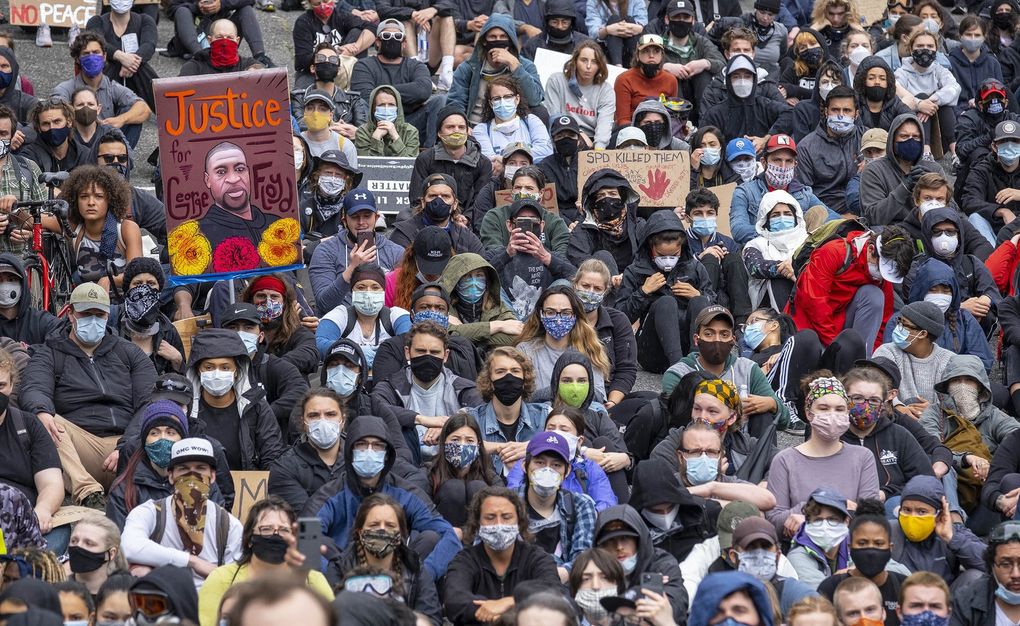
Though the protests that erupted after a black man died in police custody might result in spikes of COVID-19, some healthcare workers say that they are important, as racial disparities in healthcare is also a public health issue, according to The Wall Street Journal.

Public health experts and healthcare workers across the country are joining in the protests that began after George Floyd died at the hand of police in Minneapolis in late May. He is the most recent example of police brutality against black people and joins a long list of deaths of African Americans in police custody.

Healthcare experts and workers are saying though the protests may result in a new wave of coronavirus cases, the issue at hand is more important and the potential benefits outweigh the risks, especially since the risk of transmission is lower outside than inside when precautions are taken.

Darrell Gray, MD, a black gastroenterologist at the Ohio State University Wexner Medical Center in Columbus, has been attending protests, telling the Journal, “I prioritize being at protests and peaceful demonstrations because I strongly believe that they can be leveraged to produce change.” He said that he is taking precautions, wearing a face mask and distancing himself as much as possible.

Dr. Gray also said that the pandemic has disproportionately affected black communities, as the underlying conditions that are linked to more severe COVID-19 illness, such as diabetes and high blood pressure, are more rampant in those communities.

Jennifer Nuzzo, DrPH, an epidemiologist and senior scholar at the Johns Hopkins Center for Health Security in Baltimore, also supports the protests, though she has not been able to attend one in person as yet due to time constraints.

She told the Journal although she is worried about virus transmission, “there are some categories of risk that are, for me, completely worth it.” These protests are in those categories, she said.

Dr. Nuzzo and other health experts have also said protesters can reduce the risk of transmission by wearing masks, trying to maintain 6 feet of social distance when possible and making sure they are washing their hands often or using hand sanitizer.

More than 1,000 public health and infectious disease experts and community stakeholders signed an open letter last week saying that demonstrations were important for combating race-based health inequities, largely a result of racism, the Journal reports.


Pennsylvania orders stricter COVID-19 protections for all hospital workers

https://www.beckershospitalreview.com/workforce/pennsylvania-orders-stricter-covid-19-protections-for-all-hospital-workers.html?utm_medium=email

8,420 infected, 102 dead from COVID-19 in Pennsylvania to date | ABC27

Pennsylvania’s state health secretary issued an order June 9 requiring all hospitals to better protect staff from COVID-19. 

“I have heard from nurses and staff, and this order responds directly to many of their safety concerns,” said Secretary of Health Rachel Levine, MD.

The order requires hospitals to develop, implement and adhere to the following measures by June 15: 

  • Notify staff who have been in close contact with a confirmed or probable COVID-19 case within 24 hours of the known contact; provide instruction for quarantine and work exclusion
  • Provide testing for symptomatic and asymptomatic hospital staff members who have received notice of a close contact with a confirmed or probable COVID-19 case upon request
  • Equip staff with nationally approved respirators when staff determine the mask is soiled, damaged or otherwise ineffective
  • Require universal masking for all individuals entering the hospital facility, except for people for whom wearing a mask would create a further health risk, or individuals under age 2

In addition to medical staff, the measures apply to staff members in therapeutic services, social services, housekeeping services, dietary services and maintenance.


COVID-19 activity by region: Cases ramp up in rural areas

https://www.beckershospitalreview.com/public-health/covid-19-activity-by-region-cases-ramp-up-in-rural-areas.html?utm_medium=email

Coronavirus Timeline: March 2020 | WATE 6 On Your Side

Progress on containing COVID-19’s spread continues to vary drastically across regions, states and cities.

As the incubation period for COVID-19 is up to 14 days, most states have yet to report a potential surge in cases linked to nationwide protests against police violence.

What’s clear is the pandemic is loosening its grasp on major urban areas and ramping up in more rural areas, according to The Washington Post. Cases have increased in at least 22 states over the past two weeks, according to a June 9 analysis by The New York Times. Fourteen states have also had a record-high seven-day average of new coronavirus cases since June 1, according to data tracked by the Post.

Below is a snapshot of what COVID-19’s spread looks like across the U.S., as of June 9.

West

More COVID-19 cases have been confirmed in Oregon over the past week than any other time since the pandemic began, according to data from the Oregon Health Authority. The state reported 620 confirmed or presumed infections in the past week, with the state’s largest daily case total reported June 7 at 146 cases. The spike began the week ending May 31, when new COVID-19 cases in Oregon increased by 18 percent (353 cases) compared to the previous week. Between June 5-8, 26 counties in Oregon were able to enter Phase 2 of reopening, KGW reported.

COVID-19 cases in California hit 3,094 new daily cases June 5, the state’s second highest daily count after 3,705 cases reported May 30. Recently, some counties have resisted Gov. Gavin Newsom’s distancing orders and reopened sections of the economy, according to The Guardian.

Washington reported 442 new confirmed cases of COVID-19 on June 6, the most daily cases since April 10, according to KOMO News. The state has acquired sufficient supplies to expand COVID-19 testing and better monitor Washington’s 39 counties as they ease social distancing restrictions, Gov. Jay Inslee said June 4, according to The Seattle Times. As of June 8, all employees in the state must wear face coverings, with some exceptions for certain jobs or individuals with medical conditions, according to King 5.

Southwest

COVID-19 cases hit record-high numbers in Arizona in late May. The state reported more than 700 cases daily between May 26-29, the largest single-day increases seen since the pandemic started. However, known deaths have been decreasing since late May, with less than 10 deaths occurring daily between May 29 and June 2. On June 6, Cara Christ, MD, Arizona Department of Health Services director, sent a letter to hospitals urging them to “fully activate” emergency plans, according to AZ Central.

Meanwhile, COVID-19 cases and deaths are steadily increasing in Texas. The state reported 1,949 new cases May 31, marking the highest single-day increase seen since the pandemic’s start. Texas also reported a record number of related hospitalizations, with 1,935 people admitted June 8. Ten counties are reporting increased case counts because of testing at prisons or meatpacking plants, according to the Texas Department of State Health Services. On June 3, Gov. Greg Abbott announced the third phase of reopening, which includes increasing capacity and opening additional businesses and activities.

Nevada reported 194 new cases June 5, marking the largest single-day increase seen since May 22, when the state saw a record 255 cases. The cumulative death toll has also been rising since the start of the pandemic, although the state reported no new deaths between June 5 and June 7.

Northeast

New York reported 35 COVID-19 deaths June 5 — the lowest figure seen in eight weeks, according to The New York Times. The daily death toll has been steadily declining since New York reported nearly 800 deaths daily in late March and early April, according to state data. New York also reported a record-low number of hospitalizations last week.

The number of new cases, deaths and hospitalizations have significantly fallen in New Jersey since April. The state reported 356 new cases June 8, representing the 10th consecutive day in which new cases remained under 1,000. The state is set to enter phase 2 of its reopening June 15, which will allow restaurants to offer outdoor dining and nonessential businesses to open at half capacity, according to nj.com.

Massachusetts reported a large spike in new COVID-19 cases June 1 after conducting a retrospective review of state data since March 1. Of the 3,840 new cases reported, 3,514 were newly probable and 326 were newly confirmed, according to Boston 7 News. Overall, the state has seen a sustained decline in new cases throughout May, according to a New York Times analysis.

Southeast

Florida saw a large spike in new COVID-19 infections last week amid a steady increase in testing capacity. After reporting just 606 cases June 1, Florida had more than 1,000 new infections daily between June 3 and June 7. This marks the state’s longest sustained increase since early April. The state also reported 1,419 new infections June 4 — the largest single-day increase seen since the Florida health department started publishing COVID-19 data in March, according to the Miami Herald.

COVID-19 hospitalizations started falling in Mississippi in early June. However, the state reported a record 498 new cases June 8, the highest single-day increase seen since May 30 when 439 cases were reported, according to the Sun Herald.

North Carolina reported 1,370 new cases June 6, the highest daily increase seen during the pandemic, according to WSOC-TV. The previous record was set just a day prior when the state saw 1,289 new cases. North Carolina also reported 739 hospitalizations June 8, surpassing the previous record of 717 hospizaltions reported June 5, according to The News & Observer.

Midwest

Wisconsin reported no new COVID-19 deaths June 8 for the first time since May 17, reports CBS affiliate WSAW-TV. The number of people hospitalized with the virus also fell to a three-week low June 3, according to Urban Milwaukee. The state reported 203 new cases June 8, down from 733 on May 29. Wisconsin also performed a record 16,451 tests June 3, of which 483 were positive.

The rate of new COVID-19 cases and the number of people requiring intensive care continues to decline in Minnesota. The state reported 388 new infections June 7, the second-lowest daily increase since April 28, according to the StarTribune. In addition, 199 patients were being treated for COVID-19 in ICUs, marking the lowest total since May 13.


ThedaCare physicians, advanced practice clinicians take pay cuts

https://www.beckershospitalreview.com/compensation-issues/thedacare-physicians-advanced-practice-clinicians-take-pay-cuts.html?utm_medium=email

ThedaCare pay cuts: Doctors, advanced practice clinicians affected

ThedaCare physicians and advanced practice clinicians will take a 10 percent pay cut to help reduce the Appleton, Wis.-based health system’s financial hit due to the COVID-19 pandemic, the organization confirmed to The Post-Crescent.

The physicians and advanced practice clinicians — which include physician assistants and nurse practitioners — will see their pay reduced beginning in June, Cassandra Wallace, a ThedaCare spokesperson, told the newspaper.

ThedaCare is projecting a $70 million loss this year after temporarily postponing revenue-generating elective surgeries and nonurgent clinic visits due to the COVID-19 pandemic. The health system began a phased approach to reinstate services last month, but the recommended suspension and the costs associated with COVID-19 preparation resulted in net revenue dropping 40 percent in April, ThedaCare said in a June 4 news release.

The salary reductions are part of the health system’s plan to narrow its projected loss to $30 million, said Imran A. Andrabi, MD, ThedaCare president and CEO.

Dr. Andrabi has also agreed to take a 50 percent pay cut, and other executive leaders will take a 40 percent cut to improve the health system’s financial picture.

Additionally, ThedaCare leaders will not be eligible for incentive compensation for 2020, the health system said.

The health system’s plan does not include mass layoffs.


Coronavirus Live Updates: W.H.O. Walks Back Claim That Asymptomatic Transmission is Rare

Virus spreaders who never show symptoms 'very rare,' WHO says ...

Seven million people have been infected worldwide, and new cases hit a high globally on Sunday, according to the W.H.O. Central banks are seeking new tools to offset the downturn.

RIGHT NOW

New Jersey’s governor said on Tuesday that he was lifting the stay-at-home order that he issued in March. “With more and more of our businesses reopening, we’re no longer requiring you to stay at home,” he said.

The W.H.O. walked back an earlier assertion that asymptomatic transmission is ‘very rare.’

A top expert at the World Health Organization on Tuesday walked back her earlier assertion that transmission of the coronavirus by people who do not have symptoms is “very rare.”

Dr. Maria Van Kerkhove, who made the original comment at a W.H.O. briefing on Monday, said that it was based on just two or three studies and that it was a “misunderstanding” to say asymptomatic transmission is rare globally.

“I was just responding to a question, I wasn’t stating a policy of W.H.O. or anything like that,” she said.

Dr. Van Kerkhove said that the estimates of transmission from people without symptoms come primarily from models, which may not provide an accurate representation. “That’s a big open question, and that remains an open question,” she said.

Scientists had sharply criticized the W.H.O. for creating confusion on the issue, given the far-ranging public policy implications. Governments around the world have recommended face masks and social distancing measures because of the risk of asymptomatic transmission.

A range of scientists said Dr. Van Kerkhove’s comments did not reflect the current scientific research.

“All of the best evidence suggests that people without symptoms can and do readily spread SARS-CoV-2, the virus that causes Covid-19,” scientists at the Harvard Global Health Institute said in a statement on Tuesday.

“Communicating preliminary data about key aspects of the coronavirus without much context can have tremendous negative impact on how the public and policymakers respond to the pandemic.”

A widely cited paper published in April suggested that people are most infectious about two days before the onset of symptoms, and estimated that 44 percent of new infections are a result of transmission from people who were not yet showing symptoms.

Dr. Van Kerkhove and other W.H.O. experts reiterated the importance of physical distancing, personal hygiene, testing, tracing, quarantine and isolation in controlling the pandemic.

The debate over transmission erupted a day after the W.H.O. said that cases had reached a new single-day global high — 136,000 on Sunday, with three-quarters in just 10 countries, mostly in the Americas and South Asia. The coronavirus has already sickened more than seven million people worldwide and killed at least 405,400, according to a New York Times database.

The Pan American Health Organization said on Tuesday that 3.3 million people in South and Central America have been infected with the coronavirus. Dr. Carissa F. Etienne, the agency’s director, said that many areas are experiencing exponential growth in infections and death.

In India, health experts are warning of a looming shortage of hospital beds and doctors to treat patients as the country grapples with a sharp surge of infections. India reported 10,000 new infections in the past 24 hours, fortotal of at least 266,500, and has surpassed Spain to become one of the five countries with the highest caseloads.

Rajnish Sinha, the owner of an event management company in Delhi, struggled to find a hospital bed for his 75-year-old father-in-law, who tested positive for the virus on Tuesday.

“This is just the beginning of the coming disaster,” Mr. Sinha said. “Only God can save us.”


8 nonprofit health systems got $1.7B bailout, furloughed more than 30,000 workers

https://www.beckershospitalreview.com/finance/8-nonprofit-health-systems-got-1-7b-bailout-furloughed-more-than-30-000-workers.html?utm_medium=email

Sixty of the largest hospital chains in the U.S., including publicly traded and nonprofit systems, have received more than $15 billion in emergency funds through the Coronavirus Aid, Relief and Economic Security Act, according to an analysis by The New York Times

Congress has allocated $175 billion in relief aid to hospitals and other healthcare providers to cover expenses or lost revenues tied to the COVID-19 pandemic. The first $50 billion in funding from the CARES Act was distributed in April. Of that pool, HHS allocated $30 billion based on Medicare fee-for-service revenue and another $20 billion based on hospitals’ share of net patient revenue. HHS also sent $12 billion to hospitals that provided inpatient care to large numbers of COVID-19 patients and $10 billion to hospitals and other providers in rural areas.

Though one of the goals of the CARES Act was to avoid job losses, at least 36 of the largest  hospital systems that received emergency aid have furloughed, laid off or reduced pay for workers, according to the report.

Approximately $1.7 billion in bailout funds went to eight large nonprofit health systems: Mayo Clinic in Rochester, Minn.; Trinity Health in Livonia, Mich.; Beaumont Health in Southfield, Mich.; Henry Ford Health System in Detroit; SSM Health in St. Louis; Mercy in St. Louis; Fairview Health in Minneapolis; and Prisma Health in Greenville, S.C. Mayo Clinic furloughed or cut hours of about 23,000 workers, and the other seven health systems furloughed or laid off a total of more than 30,000 employees in recent months, according to The New York Times.

The pandemic has taken a financial toll on hospitals across the U.S. They’re losing more than $50 billion per month, according to a report from the American Hospital Association. Of the eight nonprofit systems that collected $1.7 billion in relief aid, several have reported losses for the first quarter of this year, which ended March 31. For instance, Mayo Clinic posted a $623 million net loss, SSM Health’s loss totaled $471 million, and Beaumont and Henry Ford Health System reported losses of $278 million and $235 million, respectively.

Since CARES Act payments were automatically sent to hospitals, some health systems have decided to return the funds. Kaiser Permanente, a nonprofit system, is returning more than $500 million it received through the CARES Act. The Oakland, Calif.-based health system ended the first quarter with a $1.1 billion net loss.

Access the full article from The New York Times here


How Many More Will Die From Fear of the Coronavirus?

Fear of contracting the coronavirus has resulted in many people missing necessary screenings for serious illnesses, like cancer and heart disease.

Seriously ill people avoided hospitals and doctors’ offices. Patients need to return. It’s safe now.

More than 100,000 Americans have died from Covid-19. Beyond those deaths are other casualties of the pandemic — Americans seriously ill with other ailments who avoided care because they feared contracting the coronavirus at hospitals and clinics.

The toll from their deaths may be close to the toll from Covid-19. The trends are clear and concerning. Government orders to shelter in place and health care leaders’ decisions to defer nonessential care successfully prevented the spread of the virus. But these policies — complicated by the loss of employer-provided health insurance as people lost their jobs — have had the unintended effect of delaying care for some of our sickest patients.

To prevent further harm, people with serious, complex and acute illnesses must now return to the doctor for care.

Across the country, we have seen sizable decreases in new cancer diagnoses (45 percent) and reports of heart attacks (38 percent) and strokes (30 percent). Visits to hospital emergency departments are down by as much as 40 percent, but measures of how sick emergency department patients are have risen by 20 percent, according to a Mayo Clinic study, suggesting how harmful the delay can be. Meanwhile, non-Covid-19 out-of-hospital deaths have increased, while in-hospital mortality has declined.

These statistics demonstrate that people with cancer are missing necessary screenings, and those with heart attack or stroke symptoms are staying home during the precious window of time when the damage is reversible. In fact, a recent poll by the American College of Emergency Physicians and Morning Consult found that 80 percent of Americans say they are concerned about contracting the coronavirus from visiting the emergency room.

Unfortunately, we’ve witnessed grievous outcomes as a result of these delays. Recently, a middle-aged patient with abdominal pain waited five days to come to a Mayo Clinic emergency department for help, before dying of a bowel obstruction. Similarly, a young woman delayed care for weeks out of a fear of Covid-19 before she was transferred to a Cleveland Clinic intensive care unit with undiagnosed leukemia. She died within weeks of her symptoms appearing. Both deaths were preventable.

The true cost of this epidemic will not be measured in dollars; it will be measured in human lives and human suffering. In the case of cancer alone, our calculations show we can expect a quarter of a million additional preventable deaths annually if normal care does not resume. Outcomes will be similar for those who forgo treatment for heart attacks and strokes.

Over the past 12 weeks, hospitals deferred nonessential care to prevent viral spread, conserve much-needed personal protective equipment and create capacity for an expected surge of Covid-19 patients. During that time, we also have adopted methods to care for all patients safely, including standard daily screenings for the staff and masking protocols for patients and the staff in the hospital and clinic. At this point, we are gradually returning to normal activities while also mitigating risk for both patients and staff members.

The Covid-19 crisis has changed the practice of medicine in fundamental ways in just a matter of months. Telemedicine, for instance, allowed us to pivot quickly from in-person care to virtual care. We have continued to provide necessary care to our patients while promoting social distancing, reducing the risk of viral spread and recognizing patients’ fears.

Both Cleveland Clinic and Mayo Clinic have gone from providing thousands of virtual visits per month before the pandemic to hundreds of thousands now across a broad range of demographics and conditions. At Cleveland Clinic, 94 percent of diabetes patients were cared for virtually in April.

While virtual visits are here to stay, there are obvious limitations. There is no substitute for in-person care for those who are severely ill or require early interventions for life-threatening conditions. Those are the ones who — even in the midst of this pandemic — must seek the care they need.

Patients who need care at a clinic or hospital or doctor’s office should know they have reduced the risk of Covid-19 through proven infection-control precautions under guidelines from the Centers for Disease Control and Prevention. We’re taking unprecedented actions, such as restricting visiting hours, screening patient and caregiver temperatures at entrances, encouraging employees to work from home whenever possible, providing spaces that allow for social distancing, and requiring proper hand hygiene, cough etiquette and masking.

All of these strategies are intended to significantly reduce risk while allowing for vital, high-quality care for our patients.

The novel coronavirus will not go away soon, but its systemic side effects of fear and deferred care must.

We will continue to give vigilant attention to Covid-19 while urgently addressing the other deadly diseases that haven’t taken a pause during the pandemic. For patients with medical conditions that require in-person care, please allow us to safely care for you — do not delay. Lives depend on it.


South Asia emerges as a new coronavirus hotspot

https://www.axios.com/india-coronavirus-cases-south-asia-pakistan-5447da22-7418-43f7-a17a-d247b92e4205.html

Featured image

India opened up restaurants, shopping malls and places of worship today even as it recorded a record-high 9,971 new coronavirus cases, the third-most worldwide behind Brazil and the U.S.

Why it matters: Lockdowns are being lifted in South Asia — home to one-quarter of the world’s population — not because countries are winning the battle against COVID-19, but because they simply can’t sustain them any longer.

Flashback: For a time, South Asia was cited as a source of optimism because relatively few cases and deaths were being recorded despite large, dense populations.

  • Lockdowns came relatively early, with varying severity (India’s was considerably stricter than Pakistan’s, for example).
  • Outbreaks have continued to accelerate, however. Pakistan’s daily case count is now on par with the U.K.’s and six times Germany’s, adjusted for population.
Data: The Center for Systems Science and Engineering at Johns Hopkins; Chart: Naema Ahmed/Axios

Limited testing means South Asia’s outbreaks could actually be far more severe. India, for example, is testing at one-twentieth the rate of the U.S.

  • John Clemens, an epidemiologist at ICDDR,B (formerly the International Centre for Diarrheal Disease Research, Bangladesh), estimates that Bangladesh’s capital, Dhaka, may have up to 750,000 cases — 12 times the official tally, per the Economist.
  • The official numbers still show India, Pakistan and Bangladesh with the third-, seventh- and tenth-most new cases in the world over the past three days, respectively.

Bhramar Mukherjee, a professor at the University of Michigan who has been modeling India’s outbreak, tells Axios that while some states have hit initial peaks, she doesn’t expect a national peak until late July or August.

  • While the transmission rate has slowed, “you see this steady rise in cases because the population is so large.” She expects the numbers to fall slowly after the peak, unlike the trajectory in Europe.
  • The numbers can be unreliable, Mukherjee says, with some states fearing that testing symptomatic people will cause them to “look bad” as cases rise.
  • She also worries that India didn’t use the lockdown period to build up testing and hospital capacity.
  • “It’s really chaos unfolding in Mumbai and Delhi, and I think unfortunately India is going to be at the top of the list in terms of cases,” she says.

Zoom in: Mumbai has launched an app to help people locate hospitals with empty beds, but such is the scarcity that they’re often full by the time patients arrive, WSJ reports. Some die without ever receiving treatment.

  • Morgues are overfull t00. There are reports of patients being treated in rooms that also contain dead bodies.
  • Public hospitals in Delhi, home to 26 million people, are also reportedly full and turning people away.

The coronavirus likely arrived in Mumbai with wealthy people returning from abroad, before spreading among poorer people and to slums where social distancing is hardly an option.

  • That pattern has been seen elsewhere in the developing world, including in cities like Rio de Janeiro.
  • There’s an additional complication in India’s case, though. After initially failing to account for migrant workers when implementing the lockdown, the government started to transport them to their home villages on special busses and trains.
  • The virus traveled too. 71% of cases recorded in Bihar, a state in eastern India, have been linked to returning workers, Foreign Policy reports.

The bottom line: South Asian governments attempted to balance health and hunger, knowing they could only shut down their largely informal economies for so long.

  • But with health care systems already stretched and case counts continuing to rise, they’re opening up with more hope than confidence.


Sports bettors may be a driving force behind the stock market surge

https://www.axios.com/sports-betting-stock-market-surge-0e945773-d676-4f0a-a6a0-a0f92611b10b.html

Sports bettors may be a driving force behind the stock market ...

Professional investors have largely abandoned the stock market amid the coronavirus pandemic, but sports bettors and bored millennials have jumped into the retail stock trading market with both feet.

Why it matters: They may be a driving force pushing U.S. stocks to their recent highs — and potentially driving them further.

What’s happening: Online brokerages have seen a record number of new accounts opened this year, and the big four — E-Trade, TD Ameritrade, Charles Schwab and Interactive Brokers — executed as many trades in March and April as in the whole first half of last year, per public disclosures.

  • Equity strategists at Deutsche Bank note there is “plenty of evidence” that new retail investors have been buying since the stock market began to crash and that professional money managers are “now chasing” them.

Between the lines: Robinhood, whose easy-to-use app makes the transition between sports betting and trading seamless, boasts a similar customer base to most sportsbooks, notes Marc Rubinstein in his newsletter, Net Interest.

  • “43% of North American men aged 25-34 who watch sports also bet on sports at least once per week, and that’s the same group that has flocked to Robinhood,” Rubinstein writes.
  • “On the basis that their customers love sports betting, there’s something meta about DraftKings itself having worked its way into more Robinhood portfolios than practically any other stock over the past month.”

The big picture: Sports betting and stock trading aren’t all that different. In fact, most online betting platforms are modeled on stock exchanges, and Nasdaq itself provides sportsbooks with technology that was born in the financial markets.

  • The comparisons between the two have only increased with the rise of legal sports betting and the surge in mobile stock trading, two activities that cater to the thrill of short-term gains and losses.
  • “For a gambler, investing has a ton of similarities,” said Barstool Sports founder Dave Portnoy, who has begun streaming his day-trading sessions for an audience that normally consumes sports betting content.
  • Barstool also changed its daily gambling radio show from “Picks Central” to “Stocks Central” — further evidence of the crossover between the two.

Meanwhile, most professional investors were sitting on the sidelines.

  • Nearly $5 trillion now sits in money market funds, which are effectively savings accounts, the largest total on record and about $1 trillion more than the record high during the global financial crisis.
  • In its note to clients, Deutsche strategists add that for “large swathes of the equity market in the U.S. as well as globally … positioning is still extremely low.”

Professionals have also been buying bonds rather than stocks as U.S. equity indexes raced back from their lows over the last two months.

  • Data from the Investment Company Institute shows equity funds saw six straight weeks of outflows from the week ending April 22 to the week ending May 27, totaling $78.2 billion. Bond funds, on the other hand, have had seven straight weeks of inflows through May 27, totaling $91.7 billion.
  • Professional traders have finally started dipping their toes back into the stock market in June, according to Bank of America’s data, which showed $6.2 billion into stocks last week, compared with $32.5 billion into bonds.
  • BofA’s Bull & Bear indicator rose from its lowest possible level — 0.0 — where it had been since March 25 to move to 0.4 last week, still indicating a paucity of institutional investors buying stocks.

The bottom line: Day trading has replaced sports betting as a form of entertainment for many Americans during the shutdown, and this phenomenon could partly explain the current disconnect between the economy (down) and the stock market (up).