


Thought of the Day: On Explanations

As parents await an approved vaccine for children under 5, Moderna said on Wednesday a study had found its two-dose pediatric vaccine to be safe for young children, toddlers and babies. Its effectiveness, however, was complicated by the spread of the coronavirus’s omicron variant. While the pediatric vaccine generated an immune response equivalent to that of young adults before the highly transmissible variant emerged, those immune defenses were less strong in the face of omicron. In children, the pediatric vaccine was about 40 percent effective, Moderna said. The company plans to submit the data to the Food and Drug Administration for consideration in the coming weeks.
The FDA also faces requests to authorize a second booster vaccine dose for adults. But even if they are authorized, Biden administration officials said they lack the funds to purchase those shots. They said they’ve bought enough doses for Americans age 65 and older, as well as the potential initial regimen for children under 5, but can’t buy more doses for people in other age groups unless Congress passes a delayed $15 billion funding package. It’s not yet clear whether additional doses for adults will be necessary, but officials said placing orders for doses ahead of time has been an important lesson of the pandemic. White House officials have expressed worry that vaccine manufacturers will prioritize orders placed by other countries.
That concern comes as omicron’s BA.2 subvariant of the coronavirus now amounts to as much as 70 percent of new infections in much of the United States, according to the genomic surveillance company Helix. That version of the virus has prompted a surge of cases in Europe and fear that the United States will experience its own wave, similarly to how it has mirrored Europe in the past. A broad increase in cases has so far not happened in the United States, and disease experts don’t know for sure whether it will. If it does, it’s unclear whether the pandemic policies of the Biden administration and private institutions would substantially change.
A program to ensure global vaccine equity was doomed from the beginning to fall short, a Washington Post analysis found. The initiative, called Covax, was meant to convince wealthy and poor countries to combine their money to order vaccine doses in advance and then share them in a way that would protect the most vulnerable people first. But the program’s supporters underestimated the desperation of the wealthier countries, which snatched up doses from manufacturers for their own residents. Covax was also slow to adapt as nations declined to participate. Now, more than one-third of the world has not received a vaccine dose — a result that not only is inequitable, but also makes it easier for new variants to emerge.
In a study published Monday, people who had covid-19 had a 46 percent higher risk of developing Type 2 diabetes or being prescribed medication to control their blood sugar within a year than those who had not had the coronavirus. Greater severity of covid symptoms was associated with a higher chance of developing diabetes, but even people with less severe or asymptomatic infection had an increased risk, according to the study of more than 181,000 Department of Veterans Affairs patients. The study did not prove cause and effect but did show a strong association between covid-19 and diabetes.
Omicron’s BA.2 subvariant has become the world’s dominant form of the coronavirus. The Post created a map and several charts to help you visualize how it’s spreading around the world.
White House press secretary Jen Psaki said Tuesday that she had tested positive for the coronavirus a second time. She had been scheduled to travel to Europe with President Biden and other administration officials, but canceled her trip.
| A new spring brings another anniversary of the Affordable Care Act. Twelve (sometimes tumultuous) years later, this remarkably resilient law is on firmer ground than ever before. So what are some highlights? The uninsured rate remained stable even in the face of a global pandemic. Congress leveraged parts of the ACA to quickly cover COVID-19 tests and vaccines without cost sharing. The American Rescue Plan Act supercharged marketplace subsidies, leading to record-high marketplace enrollment. And there are currently no existential legal threats to the law working their way through federal courts. In some ways, this rosy report feels unremarkable. Why expect otherwise with the law now in place for more than a decade and baked into every part of the health care system? But this outcome was far from inevitable. Just five years ago, Congress tried to repeal as much of the law as possible. When those broader efforts failed, Congress eliminated the much-maligned individual mandate penalty. We appeared to have reached a stalemate: Democrats could not improve the law while Republicans could not repeal it. Could this be the moment we moved on from ACA politics?! Enter the courts. In early 2018, Republican attorneys general sued to invalidate the mandate and, with it, the rest of the law. That lawsuit—California v. Texas—was ultimately heard by a new Supreme Court one week after the 2020 election, and the ACA was upheld just last summer. This marked the third time that the Supreme Court largely rebuffed what could have been a crippling legal challenge to the law. It feels like ancient history now, but it is worth remembering that we were still playing “will they or won’t they?” with the Supreme Court and ACA only one year ago. In the meantime, the Trump administration tried to undermine access to coverage under the law—except when it didn’t. I won’t list all the relevant Trump-era policies, but they had an impact: the uninsured rate rose, and marketplace enrollment declined until the 2021 plan year. Ironically, one policy meant to destabilize the market had the opposite effect: so-called “silver loading” led to more generous marketplace subsidies and likely helped stave off even greater coverage losses. This is the recent history that is top of mind as I reflect on the year ahead—and the work left to do to achieve universal coverage. Here are just some of the major issues facing policymakers: • The clock is ticking to extend the American Rescue Plan Act subsidies. If Congress fails to do so, millions will face premium hikes next year and marketplace enrollment will likely drop. • More than 2 million low-income people remain stuck in the Medicaid coverage gap in the 12 states that have not yet expanded their Medicaid program. • Up to 15 million people, including nearly 6 million children, could lose Medicaid coverage at the end of the COVID-19 public health emergency. • There is increasingly an affordability and underinsurance crisis, including for those with job-based coverage: an estimated 87 million people were underinsured in 2018. Congress and the White House are working to address these challenges, but much uncertainty remains. |
| “It feels like ancient history now, but it is worth remembering that we were still playing ‘will they or won’t they?’ with the Supreme Court and Affordable Care Act only one year ago.” – Katie Keith |
Looking beyond Congress, 2022 will be an important year for regulatory changes. The Biden administration has proposed, but has not yet finalized, major marketplace changes. Other already-identified priorities include fixing the family glitch, limiting short-term limited duration insurance, and enhancing nondiscrimination protections. We could see movement on at least some of these rules soon. While the Biden administration may be waiting out Congress before initiating some rulemaking, time is of the essence. New rules take many months to adopt and then take effect—followed by more time to deal with the legal challenges that typically follow. Follow along as I dive deep on these issues and more in a new Health Affairs’ Health Reform newsletter. We’ll highlight the latest health policy developments—from legislation to litigation—and explain what these changes mean for patients, payers, providers, and other key health care stakeholders. |
| It’s Your Birthday, Affordable Care Act! |
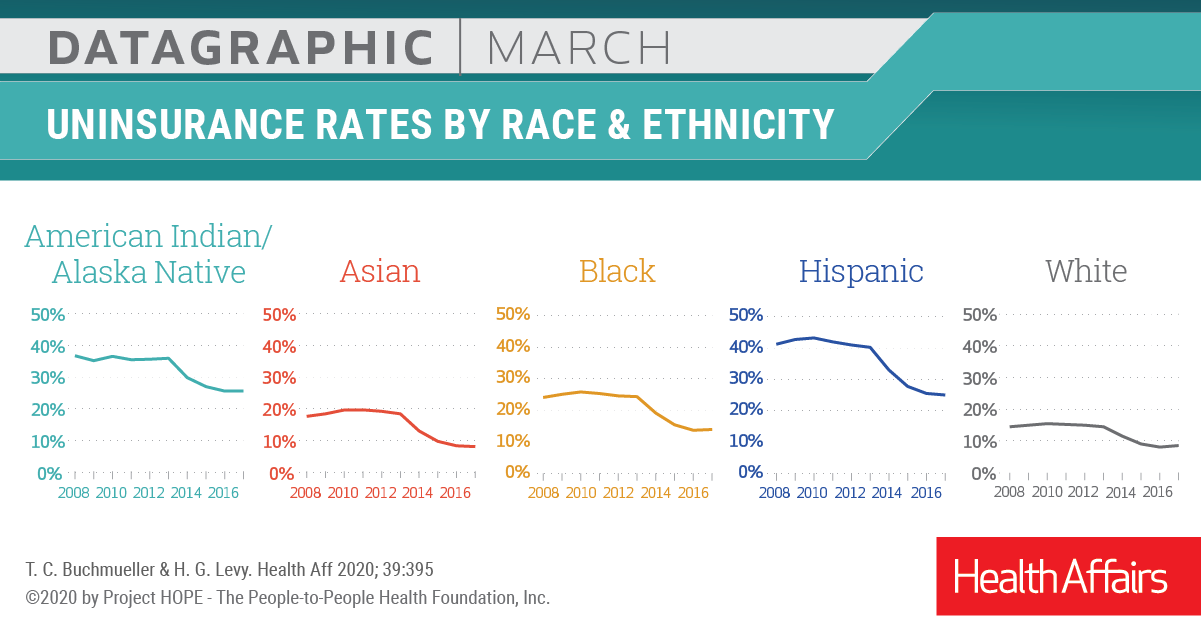
| In March 2020, Health Affairs published a theme issue to celebrate the tenth anniversary of the Affordable Care Act. The issue contains many illuminating research articles on the landmark legislation, from its impact on “the cost curve” to Medicaid expansion. Above is a datagraphic from the issue showing how the ACA affected insurance coverage. |

A new omicron subvariant of the virus that causes COVID-19, BA.2, is quickly becoming the predominant source of infections amid rising cases around the world. Immunologists Prakash Nagarkatti and Mitzi Nagarkatti of the University of South Carolina explain what makes it different from previous variants, whether there will be another surge in the U.S. and how best to protect yourself.
BA.2 is the latest subvariant of omicron, the dominant strain of the SARS-CoV-2 virus that causes COVID-19. While the origin of BA.2 is still unclear, it has quickly become the dominant strain in many countries, including India, Denmark and South Africa. It is continuing to spread in Europe, Asia and many parts of the world.
The omicron variant, officially known as B.1.1.529, of SARS-CoV-2 has three main subvariants in its lineage: BA.1, BA.2 and BA.3. The earliest omicron subvariant to be detected, BA.1, was first reported in November 2021 in South Africa. While scientists believe that all the subvariants may have emerged around the same time, BA.1 was predominantly responsible for the winter surge of infections in the Northern Hemisphere in 2021.
The first omicron subvariant, BA.1, is unique in the number of alterations it has compared to the original version of the virus – it has over 30 mutations in the spike protein that helps it enter cells. Spike protein mutations are of high concern to scientists and public health officials because they affect how infectious a particular variant is and whether it is able to escape the protective antibodies that the body produces after vaccination or a prior COVID-19 infection.
BA.2 has eight unique mutations not found in BA.1, and lacks 13 mutations that BA.1 does have. BA.2 does, however, share around 30 mutations with BA.1. Because of its relative genetic similarity, it is considered a subvariant of omicron as opposed to a completely new variant.
Some scientists have called BA.2 a “stealth” variant because, unlike the BA.1 variant, it lacks a particular genetic signature that distinguishes it from the delta variant.
While standard PCR tests are still able to detect the BA.2 variant, they might not be able to tell it apart from the delta variant.
BA.2 is considered to be more transmissible but not more virulant than BA.1. This means that while BA.2 can spread faster than BA.1, it might not make people sicker.
It is worth noting that while BA.1 has dominated case numbers around the world, it causes less severe disease compared to the delta variant. Recent studies from the U.K. and Denmark suggest that BA.2 may pose a similar risk of hospitalization as BA.1.
Yes! A recent study suggested that people previously infected with the original BA.1 subvariant have robust protection against BA.2.
Because BA.1 caused widespread infections across the world, it is likely that a significant percentage of the population has protective immunity against BA.2. This is why some scientists predict that BA.2 will be less likely to cause another major wave
However, while the natural immunity gained after COVID-19 infection may provide strong protection against reinfection from earlier variants, it weakens against omicron.
A recent preliminary study that has not yet been peer reviewed of over 1 million individuals in Qatar suggests that two doses of either the Pfizer–BioNTech or Moderna COVID-19 vaccines protect against symptomatic infection from BA.1 and BA.2 for several months before waning to around 10%. A booster shot, however, was able to elevate protection again close to original levels.
Importantly, both vaccines were 70% to 80% effective at preventing hospitalization or death, and this effectiveness increased to over 90% after a booster dose.
The rise in BA.2 in certain parts of the world is most likely due to a combination of its higher transmissibility, people’s waning immunity and relaxation of COVID-19 restrictions.
CDC data suggests that BA.2 cases are rising steadily, making up 23% of all cases in the U.S. as of early March. Scientists are still debating whether BA.2 will cause another surge in the U.S.
Though there may be an uptick of BA.2 infections in the coming months, protective immunity from vaccination or previous infection provides defense against severe disease. This may make it less likely that BA.2 will cause a significant increase in hospitalization and deaths. The U.S., however, lags behind other countries when it comes to vaccination, and falls even further behind on boosters.
Whether there will be another devastating surge depends on how many people are vaccinated or have been previously infected with BA.1. It’s safer to generate immunity from a vaccine, however, than from getting an infection. Getting vaccinated and boosted and taking precautions like wearing an N95 mask and social distancing are the best ways to protect yourself from BA.2 and other variants.
https://www.yahoo.com/gma/fauci-says-covid-19-cases-100200293.html

Over the next few weeks, the U.S. should expect an increase in cases from the BA.2 variant, Dr. Anthony Fauci told ABC News, but it may not lead to as severe a surge in hospitalizations or deaths.
“I would not be surprised if in the next few weeks we see somewhat of either a flattening of our diminution or maybe even an increase,” Fauci told ABC News’ Brad Mielke on the podcast “Start Here.”
His prediction is based on conversations with colleagues in the U.K., which is currently seeing a “blip” in cases, Fauci said. The pandemic trajectory in the U.S. has often followed the U.K. by about three weeks.
However, he added, “Their intensive care bed usage is not going up, which means they’re not seeing a blip up of severe disease.”
The BA.2 variant, a more transmissible strain of omicron, now represents around 23% of all cases in the U.S., according to the latest data from the Centers for Disease Control and Prevention.
And while Fauci predicted that the BA.2 variant will eventually overtake omicron as the most dominant variant, it’s not yet clear how much of a problem that will be.
“Whether or not that is going to lead to another surge, a mini surge or maybe even a moderate surge, is very unclear because there are a lot of other things that are going on right now,” Fauci said.
Similar to the U.K., much of the U.S. has recently relaxed mitigation efforts like mask mandates and requirements for proof of vaccination. At the same time, people who were vaccinated over six months ago and still haven’t gotten a booster shot, which is about half of vaccinated Americans, according to the CDC, are facing continuously waning immunity.
It’s also not yet clear how long immunity from prior infection will last, Fauci said.
Taken together, it’s why Fauci and other experts, including CDC Director Rochelle Walensky, have increasingly predicted that elderly people will need a second booster shot soon. The Food and Drug Administration began reviewing data from Pfizer on the safety and efficacy this week, and its advisory panel will debate if and when the additional booster shot is necessary in the coming weeks.
At the same time, Fauci urged Americans who haven’t yet gotten their first booster, which would be their third shot in a Pfizer or Moderna series, to do so.
A resurgence of cases could also mean Americans are asked to wear masks again, which Fauci predicted would be an uphill battle.
“From what I know about human nature, which I think is pretty much a lot, people are kind of done with COVID,” Fauci said.
Still, he defended the CDC decision to loosen its mask recommendations earlier this month by shifting to a strategy that focused more on severe outcomes, like hospitalizations and deaths, rather than on daily case spread.
“You can go ahead and continue to tiptoe towards normality, which is what we’re doing, but at the same time, be aware that you may have to reverse,” Fauci said.
And if the U.S. does continue to make its way back toward normal times, Fauci himself has a personal choice to consider. At 81 years old, the director of the National Institute of Allergy and Infectious Diseases is “certainly” thinking about retirement.
“I have said that I would stay in what I’m doing until we get out of the pandemic phase and I think we might be there already, if we can stay in this,” Fauci said, referring to the falling cases and hospitalizations in the U.S.
“I can’t stay at this job forever. Unless my staff is gonna find me slumped over my desk one day. I’d rather not do that,” he said, laughing.
While he doesn’t currently have retirement plans, the recent hire of Dr. Ashish Jha, dean of the Brown University School of Public Health, to be White House coronavirus coordinator, could alleviate some of his pandemic response duties and give him a window.
But Fauci, who has dedicated his career to public health, primarily studying HIV and AIDS, and worked under seven U.S. presidents, said he doesn’t have any particular hobbies waiting for him in retirement.
“I, unfortunately, am somewhat of a unidimensional physician, scientist, public health person. When I do decide I’m going to step down, whenever that is, I’m going to have to figure out what it is I’m going to do,” he said.
“I’d love to spend more time with my wife and family. That would really be good.”


Your fences need to be horse-high, pig-tight and bull-strong.
Keep skunks, bankers, and politicians at a distance.
Life is simpler when you plow around the stump.
A bumble bee is considerably faster than a John Deere tractor.
Words that soak into your ears are whispered, not yelled.
The best sermons are lived, not preached.
Forgive your enemies; its what GOD says to do.
If you don’t take the time to do it right, you’ll find the time to do it twice.
Don’t corner something that is meaner than you.
Don’t pick a fight with an old man. If he is too old to fight, he’ll just kill you.
It don’t take a very big person to carry a grudge.
You cannot unsay a cruel word.
Every path has a few puddles.
When you wallow with pigs, expect to get dirty.
Don’t be banging your shin on a stool that’s not in the way.
Borrowing trouble from the future doesn’t deplete the supply.
Most of the stuff people worry about ain’t never gonna happen anyway.
Don’t judge folks by their relatives.
Silence is sometimes the best answer.
Don‘t interfere with somethin’ that ain’t botherin’ you none.
Timing has a lot to do with the outcome of a rain dance.
If you find yourself in a hole, the first thing to do is stop diggin’.
Sometimes you get, and sometimes you get got.
The biggest troublemaker you’ll ever have to deal with watches you from the mirror every mornin’.
Always drink upstream from the herd.
Good judgment comes from experience, and most of that comes from bad judgment.
Lettin’ the cat outta the bag is a whole lot easier than puttin’ it back in.
If you get to thinkin’ you’re a person of some influence, try orderin’ somebody else’s dog around.
Live a good, honorable life. Then when you get older and think back, you’ll enjoy it a second time.
Live simply. Love generously. Care deeply. Speak kindly. Leave the rest to God.
Most times, it just gets down to common sense.

A surge in coronavirus infections in Western Europe has experts and health authorities on alert for another wave of the pandemic in the United States, even as most of the country has done away with restrictions after a sharp decline in cases.
Infectious-disease experts are closely watching the subvariant of omicron known as BA.2, which appears to be more transmissible than the original strain, BA.1, and is fueling the outbreak overseas.
Germany, a nation of 83 million people, saw more than 250,000 new cases and 249 deaths Friday, when Health Minister Karl Lauterbach called the nation’s situation “critical.” The country is allowing most coronavirus restrictions to end Sunday, despite the increase. The United Kingdom had a seven-day average of 65,894 cases and 79 deaths as of Sunday, according to the Johns Hopkins University Coronavirus Research Center. The Netherlands, home to fewer than 18 million people, was averaging more than 60,000 cases the same day.
In all, about a dozen nations are seeing spikes in coronavirus infections caused by BA.2, a cousin of the BA.1 form of the virus that tore through the United States over the past three months.
In the past two years, a widespread outbreak like the one now being seen in Europe has been followed by a similar surge in the United States some weeks later. Many, but not all, experts interviewed for this story predicted that is likely to happen. China and Hong Kong, on the other hand, are experiencing rapid and severe outbreaks, but the strict “zero covid” policies they have enforced make them less similar to the United States than Western Europe.
A number of variables — including relaxed precautions against viral transmission, vaccination rates, the availability of antiviral medications and natural immunity acquired by previous infection — may affect the course of any surge in the United States, experts said.
Most importantly, it is unclear at this point how many people will become severely ill, stressing hospitals and the health-care system as BA.1 did.
Another surge also may test the public’s appetite for returning to widespread mask-wearing, mandates and other measures that many have eagerly abandoned as the latest surge fades and spring approaches, experts said.
“It’s picking up steam. It’s across at least 12 countries … from Finland to Greece,” said Eric Topol, director of the Scripps Research Translational Institute in San Diego, who recently posted charts of the outbreak on Twitter. “There’s no question there’s a significant wave there.”
Topol noted that hospitalizations for covid-19, the disease caused by the virus, are rising in some places as well, despite the superior vaccination rates of many Western European countries.
At a briefing Monday, White House press secretary Jen Psaki said about 35,000 cases of BA.2 have been reported in the United States to date. But she offered confidence that “the tools we have — including mRNA vaccines, therapeutics and tests — are all effective tools against the virus. And we know because it’s been in the country.”
Kristen Nordlund, a spokeswoman for the Centers for Disease Control and Prevention, said in an email Tuesday that “although the BA.2 variant has increased in the United States over the past several weeks, it is not the dominant variant, and we are not seeing an increase in the severity of disease.”
The seven-day average of cases in the United States fell 17.9 percent in the past week, according to data tracked by The Washington Post, while the number of deaths dropped 17.2 percent and hospitalizations declined 23.2 percent.
Predicting the future course of the virus has proved difficult throughout the pandemic, and the current circumstances in Europe elicited a range of opinions from people who have closely tracked the pathogen and the disease it causes.
In the United States, just 65.3 percent of the population, 216.8 million people, are fully vaccinated, and only 96.1 million have received a booster shot, according to data tracked by The Post. In Germany, nearly 76 percent are fully vaccinated, according to the Johns Hopkins data, and the United Kingdom has fully vaccinated 73.6 percent.
That lower vaccination rate is very likely to matter as BA.2 spreads further in the United States, especially in regions where it is significantly lower than the national rate, several experts said. And even for people who are fully vaccinated and have received a booster shot, research data is showing that immunity to the virus fades over time. Vaccine-makers Pfizer and BioNTech asked the Food and Drug Administration on Tuesday for emergency authorization to offer a fourth shot to people 65 and older.
“Any place you have relatively lower vaccination rates, especially among the elderly, is where you’re going to see a bump in hospitalizations and deaths from this,” said Céline Gounder, an infectious-diseases physician and editor at large for public health at Kaiser Health News.
Similarly, as the public sheds masks — every state has dropped its mask mandate or announced plans to do so — another layer of protection is disappearing, several people tracking the situation said.
“Why wouldn’t it come here? Are we vaccinated enough? I don’t know,” said Kimberly Prather, a professor of atmospheric chemistry and an expert on aerosol transmission at the University of California at San Diego.
“So I’m wearing my mask still. … I am the only person indoors, and people look at me funny, and I don’t care.”
Yet BA.2 appears to be spreading more slowly in the United States than it has overseas, for reasons that aren’t entirely clear, Debbie Dowell, chief medical officer for the CDC’s covid-19 response, said in a briefing Saturday for clinicians sponsored by the Infectious Diseases Society of America.
“The speculation I’ve seen is that it may extend the curve going down, case rates from omicron, but is unlikely to cause another surge that we saw initially with omicron,” Dowell said.
One reason for that may be the immunity that millions of people acquired recently when they were infected with the BA.1 variant, which generally caused less-severe illness than previous variants. Yet no one really knows whether infection with BA.1 offers protection from BA.2.
“That’s the question,” said Jeffrey Shaman, an epidemiologist at the Columbia University Mailman School of Public Health. “Better yet, how long does it provide protection?”
Topol said the United States needs to improve its vaccination and booster rates immediately to protect more of the population against any coming surge.
“We have got to get the United States protected better. We have an abundance of these shots. We have to get them into people,” he said.
Biden administration officials said that whatever the further spread of BA.2 brings to the United States, the next critical step is to provide the $15.6 billion in emergency funding that Congress stripped from a deal to fund the government last week. That money was slated to pay for coronavirus tests, more vaccines and antiviral medications.
“That means that some programs, if we don’t get funding, could abruptly end or need to be pared back, Psaki said at Monday’s briefing. “And that could impact how we are able to respond to any variant.”
 HENRY KOTULA