


Preventing deaths from COVID-19 depends on people who get it seeking treatment – which also allows authorities to track down whom they came in contact with to reduce spread.
But, as the economic pain and joblessness caused by the statewide lockdowns continue to grow, more Americans are experiencing severe strains on their personal finances. This threatens our ability to contain the pandemic because those feeling the most financial stress are much less likely to seek medical care if they experience coronavirus symptoms, according to my analysis of a recent Federal Reserve survey.
As an economist who studies how individuals make health care choices, I worry that in the coming months even more people will consider forgoing vital treatment to pay rent or some other bill – especially as the extended unemployment benefits, rent moratoriums and other relief are set to expire soon.
The Fed conducts a survey of the economic health of U.S. households every quarter, most recently near the end of 2019. In April, it conducted a supplementary but similar survey to quickly gauge how people were handling the coronavirus crisis. Results of both surveys were released on May 14.
The Fed tries to measure financial stress in three key ways. Its surveys ask respondents if they are unable to pay all their monthly bills, couldn’t cover a US$400 emergency expense, or are “just getting by” or worse.
Even before the pandemic hit, the picture wasn’t pretty. In October, when the fourth-quarter survey was conducted, 42% of employed respondents reported fitting at least one of these descriptions, while over 8% said they fit all three. Those figures jumped to 72% and 20% for low-income workers.
But by April, tens of millions of people who had jobs in October lost them as most nonessential businesses across the U.S. either closed or reduced their services. The unemployment rate shot up to 14.7% that month – the highest since the Great Depression – and is expected to climb further when the May data are released on June 5.
The Fed’s April survey, however, paints an even broader picture of the economic impact of the pandemic. In that survey, about 28% of the previously employed respondents said they either lost their job, were being furloughed, had their hours cut or were taking unpaid leave. This has been financially devastating to many, with 68% of this group reporting one of the stresses listed above and 28% saying they were experiencing all three, regardless of income level.
Separate questions in the surveys demonstrate just how strong the link is between financial and physical health.
The October survey also asks those respondents if they had skipped a doctor’s visit during the previous 12 months because of the cost. More than 20% of those who reported one of these financial stresses said they had, while almost 46% of those with all three said so.
In April, the Fed asked a more timely question: “If you got sick with symptoms of the coronavirus, would you try to contact a doctor?”
A third of those respondents who also said they’re experiencing all three financial stresses said “no.” This is especially significant because, unlike the October question, it describes a current, known threat, rather than referring to a previous medical issue of unknown severity. And the widely reported urgency and seriousness of the coronavirus suggests someone wouldn’t treat the decision to seek a doctor’s care or advice lightly.
That was back in April, less than a month into the coronavirus lockdowns. If the same questions were asked today, I believe the numbers would look a lot worse.
In the middle of a serious pandemic, we don’t want sick people avoiding treatment because they’re worried they won’t be able to put food on the table. This would likely worsen the spread of the coronavirus and make it a whole lot harder to contain.
As Congress debates additional measures to mitigate the economic and financial effects of the pandemic, it would be wise to keep in mind the connection between financial stress and individual decisions to seek medical care.

When it became evident that the COVID-19 pandemic would spread across the U.S., lawmakers, scientists and healthcare leaders sought to predict what the financial and operational impact on hospitals would be. In those early days, policymakers relied on data from China, where the pandemic originated.
Now, with the benefit of time, the early predictions seriously underestimated the coronavirus’ impacts. University of California Berkeley and Kaiser Permanente researchers have determined that certain factors — such as how many patients would need treatment in intensive care units, average length of stay and fatality risk — are much worse than previously anticipated, and put a much greater strain on hospital resources.
WHAT’S THE IMPACT
Looking primarily at California and Washington, data showed the incidents of COVID-19-related hospital ICU admissions totaled between 15.6 and 23.3 patients per 100,000 in northern and southern California, respectively, and 14.7 per 100,000 in Washington. This incidence increased with age, hitting 74 per 100,000 people in northern California, 90.4 per 100,000 in southern California, and 46.7 per 100,000 in Washington for those ages 80 and older. These numbers peaked in late March and early April.
Those numbers are greater than the initial forecast, especially when factoring in the virus itself. Modeling estimates based on Chinese data suggested that about 30% of coronavirus patients would require ICU care, but in the U.S., the probability of ICU admissions was 40.7%. Male patients are more likely to be admitted to the ICU than females, and also are more likely to die.
Length of stay was also higher than had been predicted. By April 9, the median length of stay was 9.3 days for survivors and 12.7 days for non-survivors. Among patients receiving intensive care, the median stay was 10.5 days, although some patients stayed in the ICU for roughly a month.
Long durations of hospital stay, in particular among non-survivors, indicates the potential for substantial healthcare burden associated with the management of patients with severe COVID-19 — including the need for ventilators, personal protective equipment including N95 masks, more ICU beds and the cancellation of elective surgeries.
The considerable length of stay among COVID patients suggests that unmitigated transmission of the virus could threaten hospital capacity as it has in hotspots such as New York and Italy. Social distancing measures have acted as a stop-gap in reducing transmission and protecting health systems, but the authors said hospitals would do well to ensure capacity in the coming months in a manner that’s responsive to changes in social distancing measures.
THE LARGER TREND
These challenges have placed a financial burden on hospitals that can’t be overstated. In fact, a Kaufman Hall report looking at April hospital financial performance showed that steep volume and revenue declines drove margin performance so low that it broke records.
Despite $50 billion in funding allocated through the CARES Act, operating EBITDA margins fell to -19%. They fell 174%, or 2,791 basis points, compared to the same period last year, and 118% compared to March. This shows a steady and dramatic decline, as EBITDA margins were as high as 6.5% in April.
https://www.healthcaredive.com/news/medicaid-expansion-rural-hospitals-health-affairs/579005/

The unprecedented financial distress mega health systems are under amid the ongoing pandemic is all too familiar to rural hospitals.
These systems are often smaller, employing fewer specialists and less medical technology, thus limiting the variety of services they can provide and profit on. They remain the closest point of care for millions of Americans, yet face rising closures.
The good news is that most rural hospitals are nonprofit, the designation that fared best in Health Affairs’ six-year study. More than 80% of the 1,004 private, rural hospitals analyzed in the study were nonprofit, while 17% were for-profit.
But researchers found Medicaid expansion played a key role in rural hospitals’ financial viability during the study period, with closures occurring more often in the South than in other regions.
Thirty-seven states have expanded Medicaid under the ACA, but 14 have not, and a majority of them are concentrated in the southern U.S., according to data from the Kaiser Family Foundation.
One of those states is Oklahoma, which on Monday withdrew its planned July 1 Medicaid expansion, citing a lack of funding.
Another factor researchers found positively associated with overall margins and financial viability was charge markups, or the charged amount for a service relative to the Medicare allowable cost. Hospitals with low-charge markups had median overall margins of 1.8%, while those with high-charge markups had margins at 3.5%.
The same is true for occupancy rates. In 2017, rural hospitals with low occupancy rates had median overall profit margins of 0.1% Those with high occupancy rates had margins of 4.7%.
That presents a unique challenge for rural hospitals. Reimbursements from public and private payers do not compensate for fixed costs associated with providing standby capacity, which is essential in rural communities, where few hospitals serve large geographic areas.
Since 1997, CMS has been granting rural hospitals — particularly those with 25 or fewer acute care inpatient beds and located more than 35 miles from another hospital — critical access status, reimbursing them at cost for treating Medicare patients.
In the Health Affairs study, critical access hospitals accounted for 21% of the rural hospital bed capacity, with the remaining 79% of bed capacity provided by noncritical access hospitals.

Since protests and occasionally violent police confrontations in recent days were sparked by Floyd’s death, providers have taken to social media with notes of support and pictures of themselves taking a knee in their scrubs under the hashtag #WhiteCoatsForBlackLives.
The American Medical Association responded to ongoing unrest Friday, saying the harm of police violence is “elevated amidst the remarkable stress people are facing amidst the COVID-19 pandemic.”
Board Chair Jesse Ehrenfeld and Patrice Harris, AMA’s first African American woman to be president, continued: “This violence not only contributes to the distrust of law enforcement by marginalized communities but distrust in the larger structure of government including for our critically important public health infrastructure. The disparate racial impact of police violence against Black and Brown people and their communities is insidiously viral-like in its frequency, and also deeply demoralizing, irrespective of race/ethnicity, age, LGBTQ or gender.”
Other organizations weighed in, including CommonSpirit Health, the American Psychiatric Association, the American College of Physicians and several medical colleges.
The nascent research and data from the pandemic in the U.S. have shown people of color are more likely to die from COVID-19 than white people. The reasons behind that are myriad and complex, but many can be traced back to systemic inequality in social services and the healthcare system.
Payers, providers and other healthcare organizations have attempted to address these issues through programs targeting social determinants of health like stable housing, food security and access to transportation.
But despite these efforts over several years to recognize and document the disparities, they have persisted and in some cases widened, Samantha Artiga, director of the Disparities Policy Project at the Kaiser Family Foundation, noted in a blog post Monday.
“Health disparities, including disparities related to COVID-19, are symptoms of broader underlying social and economic inequities that reflect structural and systemic barriers and biases across sectors,” she wrote.
Providers have waded into political issues affecting them before, including gun violence. Several organizations also objected to the Trump administration’s decision to cut ties with the World Health Organization in the midst of the pandemic.
The American Public Health Association in late 2018 called law enforcement violence a public health issue.

In 1969, when Martin Luther King, Jr. had been assassinated a year earlier, black citizens weren’t allowed to swim in “white-only” swimming pools. Fred Rogers wanted to send a deliberate message on the May 9, 1969, episode of “Mister Rogers’ Neighborhood”: He invited Officer Clemmons, a black police officer played by François Clemmons, on his show and asked him if he wanted to cool off by dipping his feet into a children’s wading pool.
Officer Clemmons initially declines the invitation, noting he didn’t have a towel—but Rogers tells Clemmons he could share his. Mr. Rogers joined Clemmons in the pool, breaking the color barrier live on television. When Officer Clemmons had to go, he used Rogers’ towel to dry his feet, as promised. Mr. Rogers left the pool directly after Clemmons and proceeded to use the same towel. Their casual intimacy exposed the bigotry of denying black citizens access to pools, or any other place in society. We need more Mister Rogers in our world now.
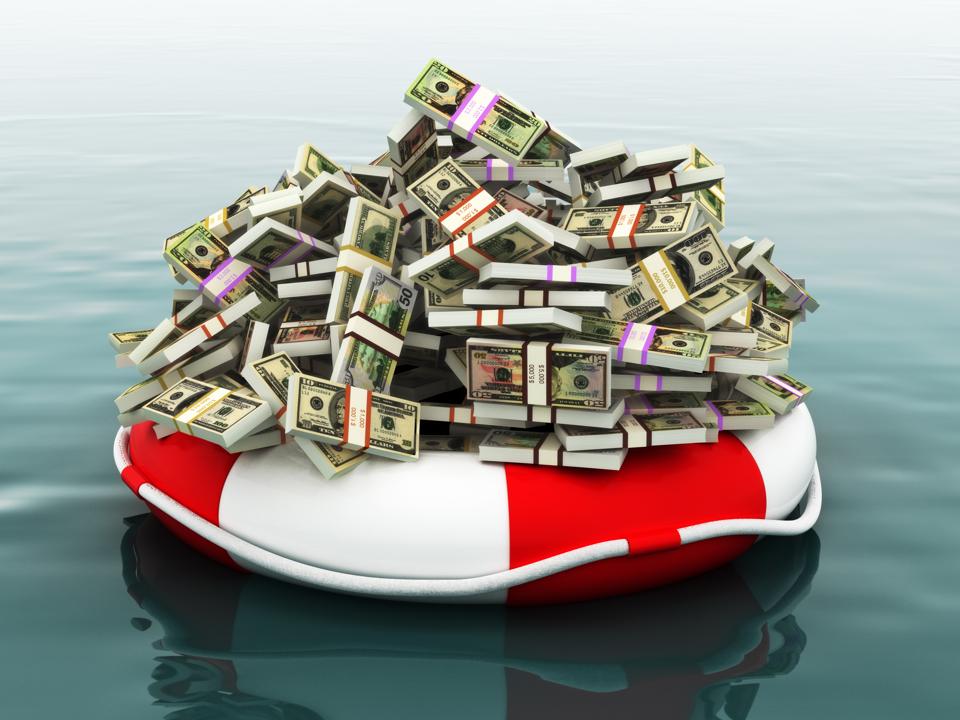
Nobody in Congress likes to give other politicians money. But the track record shows that writing checks directly to states could keep the recession from becoming way worse.
The last time the American economy tanked and Washington debated how to revive it, White House economists pushed one option that had never been tried in a big way: Send truckloads of federal dollars to the states.
When President Barack Obama took office in January 2009 during the throes of the Great Recession, tax revenues were collapsing and state budgets were hemorrhaging. The Obama team was terrified that without a massive infusion of cash from Congress, governors would tip the recession into a full-blown depression by laying off employees and cutting needed services. So the president proposed an unprecedented $200 billion in direct aid to states, a desperate effort to stop the bleeding that amounted to one-fourth of his entire stimulus request.
But the politics were dismal. Republican leaders had already decided to oppose any Obama stimulus. And even Washington Democrats who supported their new leader’s stimulus weren’t excited to help Republican governors balance their budgets. Most politicians enjoy spending money more than they enjoy giving money to other politicians to spend. And since state fiscal relief was a relatively new concept, the Obama team’s belief that it would provide powerful economic stimulus was more hunch-based than evidence-based.
Ultimately, the Democratic Congress approved $140 billion in state aid—only two-thirds of Obama’s original ask, but far more than any previous stimulus.
And it worked. At least a dozen post-recession studies found state fiscal aid gave a significant boost to the economy—and that more state aid would have produced a stronger recovery. The Obama team’s hunch that helping states would help the nation turned out to be correct.
But evidence isn’t everything in Washington. Now that Congress is once again debating stimulus for a crushed economy—and governors are once again confronted with gigantic budget shortfalls—a partisan war is breaking out over state aid. Memories of 2009 have faded, and the politics have scrambled under a Republican presidential administration.
Democratic leaders have made state aid a top priority now that Donald Trump is in the White House, securing $150 billion for state, local and tribal governments in the CARES Act that Congress passed in March, and proposing an astonishing $915 billion in the HEROES Act that the House passed in May. Republican leaders accepted the fiscal relief in the March bill, but they kept it out of the last round of stimulus that Congress enacted in April, and they have declared the HEROES Act dead on arrival. Though they’re no longer denouncing stimulus as socialism, as they did in the Obama era, they’ve begun attacking state aid as a “blue-state bailout.”
Polls show that most voters want Washington to help states avoid layoffs of teachers, police officers and public health workers, but Senate Majority Leader Mitch McConnell, Fox News personalities, and other influential Republicans are trying to reframe state aid as Big Government Democratic welfare spending. Trump doesn’t want to run for reelection during a depression, and he initially suggested he supported state aid, but in recent weeks he has complained that it would just reward Democratic mismanagement.
“There wasn’t a lot of evidence that state aid would be good stimulus in 2009, but now there’s a lot of data, and it all adds up to juice for the economy,” Moody’s chief economist Mark Zandi says. “It’s baffling that this is getting caught up in politics. If states don’t get the support they need soon, they’ll eliminate millions of jobs and cut spending at the worst possible time.”
The coronavirus is ravaging state budgets even faster than the Great Recession did, drying up revenue from sales taxes and income taxes while ratcheting up demand for health and unemployment benefits. But as Utah Republican Senator Mitt Romney pointed out earlier this month: “Blue states aren’t the only ones who are getting screwed.” Yes, California faces a $54 billion budget shortfall, and virus-ravaged blue states like New York and New Jersey are also confronting tides of red ink. But the Republican governors of Texas, Georgia and Ohio have also directed state agencies to prepare draconian spending cuts to close massive budget gaps.
Fiscal experts say the new Republican talking point that irresponsible states brought these problems on themselves with unbalanced budgets and out-of-control spending has little basis in reality. Unlike the federal government, which was running a trillion-dollar deficit even before the pandemic, every state except Vermont is required by law to balance its budget every year. State finances were unusually healthy before the crisis hit; overall, they had reserved 7.6 percent of their budgets in rainy day funds, up from 5 percent before the Great Recession.
But now, governors of both parties are now pivoting to austerity, which means more public employees applying for unemployment benefits, fewer state and local services in a time of need, and fewer dollars circulating in the economy as it begins to reopen.
Federal Reserve Chairman Jerome Powell, who has approved a plan to buy up to $500 billion worth of state and local government bonds to help ease their money problems, recently suggested that direct federal aid to states also “deserves a careful look,” which in Fed-speak qualifies as a desperate plea for congressional action.
Nevertheless, some Republicans who traditionally pushed to devolve power from the federal government to the states are now dismissing state aid as a bloated reward for liberal profligacy. Some fiscal conservatives have merely suggested that the nearly trillion-dollar pass-through to states, cities and tribes in the House HEROES bill is too generous given the uncertainties about the downturn’s trajectory. McConnell actually proposed that states in need should just declare bankruptcy, which is not even a legal option. Former Wisconsin Governor Scott Walker wrote a New York Times op-ed titled “Don’t Bail Out the States.” Sean Hannity told his Fox viewers that more fiscal relief would be a tax on “responsible residents of red states,” while Florida Senator (and former Governor) Rick Scott said it would “bail out liberal politicians in states like New York for their unwillingness to make tough and responsible choices.”
It was not so long ago that governors like Walker and Scott were burnishing their own reputations for fiscal responsibility with federal stimulus dollars. Obama’s American Recovery and Reinvestment Act was a bold experiment in using federal dollars to backstop states in an economic emergency, and its legacy hangs over the debate over today’s emergency.
By the time Obama won the 2008 election, the U.S. economy had already begun to collapse, and his aides had already given him a stimulus memo proposing a $25 billion “state growth fund.” The goal was anti-anti-stimulus: They wanted to prevent state spending cuts and tax hikes that would undo all the stimulus benefits of federal spending increases and tax cuts. The memo warned that states faced at least $100 billion in budget shortfalls, and that “state spending cuts will add to fiscal drag.” Cash-strapped states would also cut funding to local governments, accelerating the doom loop of public-sector layoffs and service reductions, pulling money out of the economy when government ought to be pouring money in.
The memo also warned that the fund might be caricatured as a bailout for irresponsible states and might run counter to the self-interest of politicians who enjoy dispensing largesse: “Congress may resist spending money that governors get credit for spending.” House Speaker Nancy Pelosi of California wasn’t keen on creating a slush fund for her state’s Republican governor, Arnold Schwarzenegger, and House Majority Whip James Clyburn of South Carolina was even more suspicious of his GOP governor, Mark Sanford, an outspoken opponent of all stimulus and most aid to the poor.
After President-elect Obama addressed a National Governors Association event in Philadelphia, Sanford and other conservative Republicans publicly declared that they didn’t want his handouts—and many congressional Democrats were inclined to grant their wish. Even Obama’s chief of staff, Rahm Emanuel, was worried about the politics of writing checks to governors who might run against Obama in 2012 on fiscal responsibility platforms.
There were plenty of studies suggesting that unemployment benefits and other aid to recession victims was good economic stimulus, because families in need tend to spend money once they get it, but there wasn’t much available research about aid to states. Congress had approved $20 billion in additional Medicaid payments to states in a 2003 stimulus package, but that aid had arrived much too late to make a measurable difference in the much milder 2001 recession.
Still, Obama’s economists speculated that state aid would have “reasonably large macroeconomic bang for the buck.” And the holes in state budgets were expanding at a scary pace, doubling in the first week after Obama’s election, increasing more than fivefold by Inauguration Day; Robert Greenstein of the Center on Budget and Policy Priorities remembers giving the Obama team frequent updates on state budget outlooks that seemed to deteriorate by the hour.
Obama ended up requesting $200 billion in state fiscal relief in the Recovery Act, eight times his team’s suggestion from November, 10 times more than Congress had authorized in 2003. Emanuel insisted on structuring the aid through increases in existing federal support for schools and Medicaid, rather than just sending states money, so it could be framed as saving the jobs of teachers and nurses. (One otherwise prescient memo by Obama economic aide Jason Furman suggested the unwieldy title of “Tax Increase and Teacher & Cop Layoff Prevention Fund.”) Republicans overwhelmingly opposed the entire stimulus, so Democrats dictated the contents, and they grudgingly agreed to most of their new president’s request for state bailouts.
“State aid was the part of the stimulus where Obama met the most resistance from Democrats,” Greenstein says. “It had such a huge price tag, and nobody loved it. But we can see how desperately it was needed.”
The Obama White House initially estimated that each dollar sent to states would generate $1.10 in economic activity, compared with $1.50 for aid to vulnerable families or infrastructure projects that had been considered the gold standard for emergency stimulus. But later work by Berkeley economist Gabriel Chodorow-Reich and others concluded the actual multiplier effect of the Medicaid assistance in the Recovery Act was as high as $2.00. In addition to preventing cuts in medical care for the poor, it saved or created about one job for every $25,000 of federal spending—and the help arrived much faster than even the most “shovel-ready” infrastructure projects, landing in state capitals just a week after the stimulus passed.
“There were at least a dozen papers written on the state aid, and the evidence is crystal clear that it helped,” says Furman, who is now an economics professor at Harvard. “Unfortunately, it was incredibly hard to get Congress to do more of it, and that hurt.”
After all the bluster about turning down Obama’s money, the only Republican governor who even tried to reject a large chunk of the federal stimulus was Sanford, who was overruled by his fellow Republicans in the South Carolina Legislature. Sarah Palin of Alaska did turn down some energy dollars, while Walker and Scott sent back aid for high-speed rail projects approved by their Democratic predecessors, but otherwise the governors all used the cash to help close their budget gaps. Bobby Jindal of Louisiana appeared at the ribbon-cutting for one Recovery Act project wielding a giant check with his own name on it. Rick Perry of Texas used stimulus dollars to renovate his governor’s mansion—which, in fairness, had been firebombed.
Nevertheless, the Recovery Act covered only about 25 percent of the state budget shortfalls, and Republican senators blocked or shrank Obama’s repeated efforts to send more money to states, forcing governors of both parties to impose austerity programs that slashed about 750,000 state and local government jobs. In 2010, 24 states laid off public employees, 35 cut funding for K-12 education, 37 cut prison spending, and 37 cut money for higher education, one reason for the sharp increases in student loan debt since then. In a recent academic review of fiscal stimulus during the Great Recession, Furman estimated that if state and local governments had merely followed their pattern in previous recessions, spending more to counteract the slowdown in the private sector, GDP growth would have been 0.5 percent higher every year from 2009 through 2013.
The Recovery Act helped turn GDP from negative to positive within four months of its passage, launching the longest period of uninterrupted job growth in U.S. history. But there’s a broad consensus among economists that austerity in the form of layoffs and reduced services at the state and local level worked against the stimulus spending at the federal level, weakening the recovery and making life harder for millions of families.
“The states would’ve made much bigger cuts without the Recovery Act, but they did make big cuts,” says Brian Sigritz, director of fiscal studies at the National Association of State Budget Officers. “We’re seeing similar reactions now, except the situation is even worse.”
It took a decade for state budgets to recover completely from the financial crisis. 2019 was the first year since the Great Recession that they grew faster than their historic average, and the first year in recent memory that no state had to make midyear cuts to get into balance. Rainy-day funds reached an all-time high.
And then the pandemic arrived.
The government sector shed nearly a million jobs in April alone, which is more jobs than it lost during the entire Great Recession. The fiscal carnage has not been limited to states like New York and New Jersey at the epicenter of the pandemic; oil-dependent states like Texas and tourism-dependent states like Florida have also seen revenues plummet. The bipartisan National Governors Association has asked Congress for $500 billion in state stabilization funds, warning that otherwise governors will be forced to make “drastic cuts to the programs we depend on to provide economic security, educational opportunities and public safety.”
So far, Congress has passed four coronavirus bills providing about $3.6 trillion in relief, including $200 billion in direct aid to state, local and tribal governments for Medicaid and other pandemic-related costs. Republican Governor Charlie Baker of Massachusetts says the aid has come in handy in fighting the virus—not only for providing health care and buying masks but for helping communities install plexiglass in consumer-facing offices and pay overtime to essential workers. Massachusetts had more than 10 percent of its expected tax revenues in its rainy-day fund before the crisis, but its revenues have dried up, putting tremendous pressure on the state as well as its 351 local governments.
“You don’t want states and locals to constrict when the rest of the economy is trying to take off,” Baker said. “So far, we’ve gotten close to what we need, but the question is what happens now, because no one knows what the world is going to look like in a few months.”
In the initial coronavirus bills, Democrats pushed for state aid, and Republicans relented. But in the most recent stimulus that Congress enacted, the $733 billion April package focused on small-business lending, Democrats pushed for state aid and Republicans refused. McConnell has said he’s open to another stimulus package, but he has ridiculed the $3 trillion Democratic HEROES Act as wildly excessive, and rejected its huge proposal for state relief as a bailout for irresponsible blue states with troubled pension funds. Sean Hannity expanded the critique, warning Fox viewers that they were being set up to help Democratic states pay off their “unfunded pensions, sanctuary state policies, massive entitlements, reckless spending on Green New Deal nonsense, and hundreds of millions of dollars of waste.”
In fact, the state with the most underfunded pension plan is McConnell’s Kentucky, which has just a third of the assets it needs to cover its obligations, even though it had unified Republican rule until a Democrat rode the pension crisis to the governor’s office last fall. In general, red states tend to be more dependent on federal largesse than blue states, which tend to pay more taxes to the federal government; an analysis by WalletHub found that 13 of the 15 most dependent states voted for Trump in 2016, with Kentucky ranking third.
Trump initially suggested state aid was “certainly the next thing we’re going to be discussing,” before embracing McConnell’s message that state bailouts would unfairly reward incompetent Democrats in states like California. But California’s finances were also in solid shape before the pandemic, with a $5 billion surplus announced earlier this year in addition to a record $17 billion socked away in its rainy-day fund. Some of the partisan arguments against state aid have been flagrantly hostile to economic evidence; Walker’s op-ed actually blamed the state budget shortfalls after the Great Recession on “the disappearance of federal stimulus funds,” rather than the recession itself, as if the stimulus funds somehow created the holes by failing to continue to plug them.
But plenty of Republican politicians support state aid, especially in states that need it the most. The GOP chairmen of Georgia’s appropriations committees recently asked their congressional delegation to support relief “to close the unprecedented gap in dollars required to maintain a conservative and lean government framework of services.” Some Republicans believe McConnell’s opposition to state fiscal relief is just a negotiating ploy, so he can claim he’s making a concession when it gets included in the next stimulus bill.
“Some aid to states is inevitable and necessary,” says Republican lobbyist Ed Rogers. “I suspect McConnell just wants to set a marker, and make sure aid to states doesn’t become aid to pension funds and public employee union coffers.”
That said, it’s not just Republican partisans who are skeptical of the Democratic push for nearly a trillion dollars in state and local aid. The current projections of state budget gaps range as high as $650 billion over the next two years, but some deficit hawks question whether it’s necessary to fill all of them before it’s clear how long the economic pain will last, and before the Fed has even begun its government bond-buying program. Maya MacGuineas, president of the Center for a Responsible Federal Budget, was already disgusted by the trillion-dollar deficits that Washington ran up before the pandemic, and while she says it makes sense to add to those deficits to prevent states from making the crisis worse with radical budget cuts, she doesn’t think federal taxpayers need to cater to every state-level request.
“We have a little time to catch our breath now, so we should make sure that we’re only getting states what they need,” MacGuineas says. “It’s not a moment to be padding the asks.”
Tom Lee, a Republican state senator and former Senate president, says it’s impossible to know how much help states will need without knowing how quickly the economy will reopen, whether there will be a second wave of infections, when Americans will return to their old travel habits, and at what point there will be treatment or a vaccine for the virus. More than three-quarters of Florida’s general revenue comes from sales taxes, so a lot depends on when Floridians start buying things again, and how much they’re willing to buy. Lee says it’s reasonable to expect Washington to help in an emergency, since the national government can print money and Florida can’t, but that the federal money store can’t be open indefinitely, since Florida’s finances were in much better shape than Washington’s before the emergency.
“No question, we need help, but we can’t expect the feds to make us whole,” Lee says. “We’re going to have to tighten our belts, too.”
That’s exactly what Keynesian economic stimulus is supposed to avoid: the contraction of public-sector spending at a time when private-sector spending has already shriveled. A recent poll by the liberal group Data for Progress found that 78 percent of Americans supported $1 trillion in federal aid to states so they can “avoid making deep cuts to government programs and services.”
But Obama White House veterans say they learned two related lessons from their experience with state fiscal relief: It’s better to get too much than not enough, and it’s unwise to assume you can get more later. Stimulus fatigue was real in 2009, and it seems to be returning to Washington. Republicans who spent much of the Obama era screaming about the federal deficit have embraced a free-spending culture of red ink under Trump, but lately they’re starting to talk more about slowing down—not only with state aid, but especially with state aid.
“We’ve already seen how state contraction can undo federal expansion,” Furman says. “This is the one part of the economy where we know exactly what needs to be done, and we don’t need to invent a brand new creative idea. But I worry that we’re not going to do it.”

 HENRY KOTULA