Graph of the Day: Daily Confirmed Covid-19 Cases (Rolling 3-day average)

Daily confirmed COVID-19 cases, rolling 3-day average - Our World ...

Coronavirus threat rises across U.S.: ‘We just have to assume the monster is everywhere’

https://www.washingtonpost.com/health/coronavirus-threat-rises-across-us-we-just-have-to-assume-the-monster-is-everywhere/2020/08/01/cdb505e0-d1d8-11ea-8c55-61e7fa5e82ab_story.html?utm_campaign=wp_post_most&utm_medium=email&utm_source=newsletter&wpisrc=nl_most

The coronavirus is spreading at dangerous levels across much of the United States, and public health experts are demanding a dramatic reset in the national response, one that recognizes that the crisis is intensifying and that current piecemeal strategies aren’t working.

This is a new phase of the pandemic, one no longer built around local or regional clusters and hot spots. It comes at an unnerving moment in which the economy suffered its worst collapse since the Great Depression, schools are rapidly canceling plans for in-person instruction and Congress has failed to pass a new emergency relief package. President Trump continues to promote fringe science, the daily death toll keeps climbing and the human cost of the virus in America has just passed 150,000 lives.

“Unlike many countries in the world, the United States is not currently on course to get control of this epidemic. It’s time to reset,” declared a report released this week by Johns Hopkins University.

Another report from the Association of American Medical Colleges offered a similarly blunt message: “If the nation does not change its course — and soon — deaths in the United States could be well into the multiple hundreds of thousands.”

The country is exhausted, but the virus is not. It has shown a consistent pattern: It spreads opportunistically wherever people let down their guard and return to more familiar patterns of mobility and socializing. When communities tighten up, by closing bars or requiring masks in public, transmission drops.

That has happened in some Sun Belt states, including Arizona, Florida and Texas, which are still dealing with a surge of hospitalizations and deaths but are finally turning around the rate of new infections.

There are signs, however, that the virus is spreading freely in much of the country. Experts are focused on upticks in the percentage of positive coronavirus tests in the upper South and Midwest. It is a sign that the virus could soon surge anew in the heartland. Infectious-disease experts also see warning signs in East Coast cities hammered in the spring.

“There are fewer and fewer places where anybody can assume the virus is not there,” Gov. Mike DeWine (R) of Ohio said Wednesday. “It’s in our most rural counties. It’s in our smallest communities. And we just have to assume the monster is everywhere. It’s everywhere.”

Dire data

An internal Trump administration briefing document prepared by the Federal Emergency Management Agency and obtained Friday by The Washington Post counted 453,659 new infections in the past week.

Alaska is in trouble. And Hawaii, Missouri, Montana and Oklahoma. Those are the five states, as of Friday, with the highest percentage increase in the seven-day average of new cases, according to a Post analysis of nationwide health data.

“The dominoes are falling now,” said David Rubin, director of the PolicyLab at Children’s Hospital of Philadelphia, which has produced a model showing where the virus is likely to spread over the next four weeks.

His team sees ominous trends in big cities, including Baltimore, Chicago, Detroit, Indianapolis, Kansas City, Louisville, Philadelphia, St. Louis and Washington, with Boston and New York not far behind. And Rubin warns that the expected influx of students into college towns at the end of this month will be another epidemiological shock.

“I suspect we’re going to see big outbreaks in college towns,” he said.

Young people are less likely to have a severe outcome from the coronavirus, but they are adept at propelling the virus through the broader population, including among people at elevated risk. Numbers of coronavirus-related hospitalizations in the United States went from 36,158 on July 1 to 52,767 on July 31, according to The Post’s data. FEMA reports a sharp increase in the number of patients on ventilators.

The crisis has highlighted the deep disparities in health outcomes among racial and ethnic groups, and data from the Centers for Disease Control and Prevention this week showed that hospitalization rates due to the coronavirus are roughly five times higher among Black, Hispanic and Native Americans than Whites.

Thirty-seven states and Puerto Rico will probably see rising daily death tolls during the next two weeks compared with the previous two weeks, according to the latest ensemble forecast from the University of Massachusetts at Amherst that combines more than 30 coronavirus models.

There are glimmers of progress. The FEMA report showed 237 U.S. counties with at least two weeks of steady declines in numbers of new coronavirus cases.

But there are more than 3,100 counties in America.

“This is not a natural disaster that happens to one or two or three communities and then you rebuild,” said Beth Cameron, vice president for global biological policy and programs at the Nuclear Threat Initiative and a former White House National Security Council staffer focused on pandemics. “This is a spreading disaster that moves from one place to another, and until it’s suppressed and until we ultimately have a safe and effective and distributed vaccine, every community is at risk.”

A national strategy, whether advanced by the federal government or by the states working in tandem, will more effectively control viral spread than the current patchwork of state and local policies, according to a study from researchers at the Massachusetts Institute of Technology published Thursday in the Proceedings of the National Academy of Sciences.

The coordination is necessary because one state’s policies affect other states. Sometimes, that influence is at a distance, because states that are geographically far apart can have cultural and social ties, as is the case with the “peer states” of New York and Florida, the report found.

“The cost of our uncoordinated national response to covid-19, it’s dramatic,” said MIT economist Sinan Aral, senior author of the paper.

Some experts argue for a full six-to-eight-week national shutdown, something even more sweeping than what was instituted in the spring. There appears to be no political support for such a move.

Neil Bradley, executive vice president of the U.S. Chamber of Commerce, said fresh federal intervention is necessary in this second wave of closures. Enhanced federal unemployment benefits expired at the end of July, with no agreement on a new stimulus package in sight.

“Congress, on a bipartisan basis, was trying to create a bridge to help individuals and businesses navigate the period of a shutdown,” Bradley said. “Absent an extension of that bridge, in light of a second shutdown, that bridge becomes a pier. And then that’s a real problem.”

With the economy in shambles, hospitals filling up and the public frustrated, anxious and angry, the challenge for national leadership is finding a plausible sea-to-sea strategy that can win widespread support and simultaneously limit sickness and death from the virus.

Many Americans may simply feel discouraged and overtaxed, unable to maintain precautions such as social distancing and mask-wearing. Others remain resistant, for cultural or ideological reasons, to public health guidance and buy into conspiracy theories and pseudoscience.

DeWine is struggling to get Ohio citizens to take seriously the need to wear masks. A sheriff in rural western Ohio told the governor Wednesday that people didn’t think the virus was a big problem. DeWine informed the sheriff that the numbers in his county were higher per capita than in Toledo.

“The way I’ve explained to people, if we want to have Friday night football in the fall, if we want our kids back in school, what we do in the next two weeks will determine if that happens,” DeWine said.

The crucial metric

The coronavirus has always been several steps ahead of the U.S. government, the scientific community, the news media and the general public. By the time a community notices a surge in patients to hospital emergency rooms, the virus has seeded itself widely.

The virus officially known as SARS-CoV-2 can be transmitted by people who are infectious but not symptomatic. The incubation period is typically about six days, according to the CDC. When symptoms flare, they can be ambiguous. A person may not seek a test right away. Then, the test results may not come back for days, a week, even longer.

That delay makes contact tracing nearly futile. It also means government data on virus transmission is invariably out of date to some degree — it’s a snapshot of what was happening a week or two weeks before. And different jurisdictions use different metrics to track the virus, further fogging the picture.

The top doctors on the White House coronavirus task force, Deborah Birx and Anthony S. Fauci, are newly focused on the early warning signs of a virus outbreak. This week, they warned that the kind of runaway outbreaks seen in the Sun Belt could potentially happen elsewhere. Among the states of greatest concern: Indiana, Kentucky, Ohio and Tennessee.

Fauci and Birx have pointed to a critical metric: the percentage of positive test results. When that figure starts to tick upward, it is a sign of increasing community spread of the virus.

“That is kind of the predictor that if you don’t do something — namely, do something different — if you’re opening up at a certain pace, slow down, maybe even backtrack a little,” Fauci said in an interview Wednesday.

Without a vaccine, the primary tools for combating the spread of the virus remain the common-sense “non-pharmaceutical interventions,” including mask-wearing, hand-washing, staying out of bars and other confined spaces, maintaining social distancing of at least six feet and avoiding crowds, Fauci said.

“Seemingly simple maneuvers have been very effective in preventing or even turning around the kind of surges we’ve seen,” he said.

Thirty-three U.S. states have positivity rates above 5 percent. The World Health Organization has cited that percentage as a crucial benchmark for governments deciding whether to reopen their economy. Above 5 percent, stay closed. Below, open with caution.

Of states with positivity rates below 5 percent, nine have seen those rates rise during the last two weeks.

“You may not fully realize that when you think things are okay, you actually are seeing a subtle, insidious increase that is usually reflected in the percent of your tests that are positive,” Fauci said.

The shutdown blues

Some governors immediately took the White House warnings to heart. On Monday, Kentucky Gov. Andy Beshear (D) said at a news conference that he had met with Birx the previous day and was told he was getting the same warning Texas and Florida received “weeks before the worst of the worst happened.”

To prevent that outcome in his state, Beshear said, he was closing bars for two weeks and cutting seating in restaurants.

But as Beshear pleaded that “we all need to be singing from the same sheet of music,” discord and confusion prevailed.

Iowa Gov. Kim Reynolds (R) said Thursday she wasn’t convinced a mask mandate is effective: “No one knows particularly the best strategy.”

Earlier in the week, Tennessee Gov. Bill Lee (R) demurred on masks and bar closures even as he stood next to Birx and spoke to reporters.

“That’s not a plan for us now,” he said. He added emphatically, “We are not going to close the economy back down.”

The virus is spreading throughout his state, and not just in the big cities. Vacationers took the virus home from the honky-tonks of Nashville and blues clubs of Memphis to where they live in more rural areas, said John Graves, a professor at Vanderbilt University studying the pandemic.

“The geographical footprint of the virus has reached all corners of the state at this point,” Graves said.

In Missouri, Gov. Michael L. Parson (R) was dismissive of New York’s imposition of a quarantine on residents from his state as a sign of a worsening pandemic. “I’m not going to put much stock in what New York says — they’re a disaster,” he said at a news conference Monday.

Missouri has no mask mandate, leaving it to local officials to act — often in the face of hostility and threats. In the town of Branson, angry opponents testified Tuesday that there was no reason for a mask order when deaths in the county have been few and far between.

“It hasn’t hit us here yet, that’s what I’m scared of,” Branson Alderman Bill Skains said before voting with a majority in favor of the mandate. “It is coming, and it’s coming like a freight train.”

Democratic mayors in Missouri’s two biggest cities, Kansas City and St. Louis, said that with so many people needing jobs, they are reluctant to follow Birx’s recommendation to close bars.

“The whole-blanket approach to shut everybody down feels a little harsh for the people who are doing it right,” said Jacob Long, spokesman for St. Louis Mayor Lyda Krewson. “We’re trying to take care of some bad actors first.”

Minneapolis Mayor Jacob Frey also got a warning from Birx. On Wednesday, he said all bar drinking must move outside.

“We don’t want to be heading in the direction of everybody else,” said Kristen Ehresmann, director of the infectious-disease epidemiology division at the Minnesota Department of Health. She acknowledged that some options “are really pretty draconian.”

The problem is that less-painful measures have proven insufficient.

“The disease transmission we’re seeing is more than what would have been expected if people were following the guidance as it is laid out. It’s a reflection of the fact that they’re not,” she said.

‘A tremendous disappointment’

Wisconsin Gov. Tony Evers (D) tried to implement broad statewide measures early in the pandemic, only to have his “Safer at Home” order struck down by the state’s Supreme Court.

With cases in his state rising anew, he tried again Thursday, declaring a public health emergency and issuing a statewide mask mandate.

“While our local health departments have been doing a heck of a job responding to this pandemic in our communities, the fact of the matter is, this virus doesn’t care about any town, city or county boundary, and we need a statewide approach to get Wisconsin back on track,” Evers said.

Ryan Westergaard, Wisconsin’s chief medical officer, said he is dismayed by the failures of the national pandemic response.

“I really thought we had a chance to keep this suppressed,” Westergaard said. “The model is a good one: testing, tracing, isolation, supportive quarantine. Those things work. We saw this coming. We knew we had to build robust, flexible systems to do this in all of our communities. It feels like a tremendous disappointment that we weren’t able to build a system in time that could handle this.”

There is one benefit to the way the virus has spread so broadly, he noted: “We no longer have to keep track of people traveling to a hot spot if hot spots are everywhere.”


July ends on an uncertain note in the pandemic battle

https://mailchi.mp/0fa09872586c/the-weekly-gist-july-31-2020?e=d1e747d2d8

Fighting a losing battle - post - Imgur

After a week that brought the most disastrous economic data in modern history, the death of a former Presidential candidate from COVID, and signs of an alarming surge in virus cases in the Midwest, Congress left Washington for the weekend without reaching a deal on a new recovery bill. That left millions of unemployed Americans without supplemental benefit payments, business owners wondering whether more financial assistance would be forthcoming, and hospitals facing the requirement to begin repaying billions of dollars of advance payments from Medicare.

Also remaining on the table was funding to bolster coronavirus testing, with the top health official in charge of the testing effort testifying on Friday that the system is not currently able to deliver COVID test results to patients in a timely manner. While the surge in cases appears to be shifting to the Midwest, there were early indications of positive news across the Sun Belt, as the daily new case count in Florida, Louisiana, Texas, Arizona and California continued to decline, while daily death counts (a lagging indicator) continued to hit new records.

Nationally, the daily case count appears to have reached a new plateau of around 65,000, with daily deaths rising to a 7-day average above 1,150, matching a level last seen in May.

Meanwhile, new clinical findings continued to refine our understanding of how the virus attacks its victims. Reporting in JAMA Cardiology, researchers used cardiac MRI to examine heart function among 100 coronavirus patients, 67 of whom recovered at home without hospitalization, finding that 78 percent demonstrated cardiac involvement and 60 percent had evidence of active heart muscle inflammation—concerning signs pointing to possible long-term complications, even in patients with relatively mild courses of COVID infection.

And yesterday in JAMA, investigators reported that while young children are typically less affected by COVID-19 than adults, children under 5 may harbor 100 times as much active virus in their nose and throat as infected adults. While the study does not confirm that kids spread the virus to adults, it is sure to raise concerns about reopening schools, which has generally been considered relatively safer for younger children.

US coronavirus update: 4.8M cases; 151K deaths; 52.9M tests conducted.


A Viral Epidemic Splintering into Deadly Pieces

Once again, the coronavirus is ascendant. As infections mount across the country, it is dawning on Americans that the epidemic is now unstoppable, and that no corner of the nation will be left untouched.

As of Wednesday, the pathogen had infected at least 4.3 million Americans, killing more than 150,000. Many experts fear the virus could kill 200,000 or even 300,000 by year’s end. Even President Trump has donned a mask, after resisting for months, and has canceled the Republican National Convention celebrations in Florida.

Each state, each city has its own crisis driven by its own risk factors: vacation crowds in one, bars reopened too soon in another, a revolt against masks in a third.

“We are in a worse place than we were in March,” when the virus coursed through New York, said Dr. Leana S. Wen, a former Baltimore health commissioner. “Back then we had one epicenter. Now we have lots.”

To assess where the country is heading now, The New York Times interviewed 20 public health experts — not just clinicians and epidemiologists, but also historians and sociologists, because the spread of the virus is now influenced as much by human behavior as it is by the pathogen itself.

Not only are American cities in the South and West facing deadly outbreaks like those that struck Northeastern cities in the spring, but rural areas are being hurt, too. In every region, people of color will continue to suffer disproportionately, experts said.

While there may be no appetite for a national lockdown, local restrictions must be tightened when required, the researchers said, and governors and mayors must have identical goals. Testing must become more targeted.

In most states, contact tracing is now moot — there are simply too many cases to track. And while progress has been made on vaccines, none is expected to arrive this winter in time to stave off what many fear will be a new wave of deaths.

Overall, the scientists conveyed a pervasive sense of sadness and exhaustion. Where once there was defianceand then a growing sense of dread, now there seems to be sorrow and frustration, a feeling that so many funerals never had to happen and that nothing is going well. The United States is a wounded giant, while much of Europe, which was hit first, is recovering and reopening — although not to us.

“We’re all incredibly depressed and in shock at how out of control the virus is in the U.S.,” said Dr. Michele Barry, the director of the Center for Innovation in Global Health at Stanford University.

With so much wealth and medical talent, they asked, how could we have done so poorly? How did we fare not just worse than autocratic China and isolated New Zealand, but also worse than tiny, much poorer nations like Vietnam and Rwanda?

“National hubris and belief in American exceptionalism have served us badly,” said Martha L. Lincoln, a medical anthropologist and historian at San Francisco State University. “We were not prepared to see the risk of failure.”

Since the coronavirus was first found to be the cause of lethal pneumonias in Wuhan, China, in late 2019, scientists have gained a better understanding of the enemy.

It is extremely transmissible, through not just coughed droplets but also a fine aerosol mist that is expelled when people talk loudly, laugh or sing and that can linger in indoor air. As a result, masks are far more effective than scientists once believed.

Virus carriers with mild or no symptoms can be infectious, and there may be 10 times as many people spreading the illness as have tested positive for it.

The infection may start in the lungs, but it is very different from influenza, a respiratory virus. In severely ill patients, the coronavirus may attach to receptors inside the veins and arteries, and move on to attack the kidneys, the heart, the gut and even the brain, choking off these organs with hundreds of tiny blood clots.

Most of the virus’s victims are elderly, but it has not spared young adults, especially those with obesity, high blood pressure or diabetes. Adults aged 18 to 49 now account for more hospitalized cases than people aged 50 to 64 or those 65 and older.

Children are usually not harmed by the virus, although clinicians were dismayed to discover a few who were struck by a rare but dangerous inflammatory versionYoung children appear to transmit the virus less often than teenagers, which may affect how schools can be opened.

Among adults, a very different picture has emerged. Growing evidence suggests that perhaps 10 percent of the infected account for 80 percent of new transmissions. Unpredictable superspreading events in nursing homes, meatpacking plants, churches, prisons and bars are major drivers of the epidemic.

Thus far, none of the medicines for which hopes were once high — repurposed malaria drugs, AIDS drugs and antivirals — have proved to be rapid cures. One antiviral, remdesivir, has been shown to shorten hospital stays, while a common steroid, dexamethasone, has helped save some severely ill patients.

One or even several vaccines may be available by year’s end, which would be a spectacular achievement. But by then the virus may have in its grip virtually every village and city on the globe.

Some experts, like Michael T. Osterholm, the director of the University of Minnesota’s Center for Infectious Disease Research and Policy, argue that only a nationwide lockdown can completely contain the virus now. Other researchers think that is politically impossible, but emphasize that localities must be free to act quickly and enforce strong measures with support from their state legislators.

Danielle Allen, the director of Harvard University’s Edmond J. Safra Center for Ethics, which has issued pandemic response plans, said that finding less than one case per 100,000 people means a community should continue testing, contact tracing and isolating cases — with financial support for those who need it.

Up to 25 cases per 100,000 requires greater restrictions, like closing bars and limiting gatherings. Above that number, authorities should issue stay-at-home orders, she said.

Testing must be focused, not just offered at convenient parking lots, experts said, and it should be most intense in institutions like nursing homes, prisons, factories or other places at risk of superspreading events.

Testing must be free in places where people are poor or uninsured, such as public housing projects, Native American reservations and churches and grocery stores in impoverished neighborhoods.

None of this will be possible unless the nation’s capacity for testing, a continuing disaster, is greatly expanded. By the end of summer, the administration hopes to start using “pooling,” in which tests are combined in batches to speed up the process.

But the method only works in communities with lower infection rates, where large numbers of pooled tests turn up relatively few positive results. It fails where the virus has spread everywhere, because too many batches turn up positive results that require retesting.

At the moment, the United States tests roughly 800,000 people per day, about 38 percent of the number some experts think is needed.

Above all, researchers said, mask use should be universal indoors — including airplanes, subway cars and every other enclosed space — and outdoors anywhere people are less than six feet apart.

Dr. Emily Landon, an infection control specialist at the University of Chicago Pritzker School of Medicine, said it was “sad that something as simple as a mask got politicized.”

“It’s not a statement, it’s a piece of clothing,” she added. “You get used to it the way you got used to wearing pants.”

Arguments that masks infringe on personal rights must be countered both by legal orders and by persuasion. “We need more credible messengers endorsing masks,” Dr. Wen said — just before the president himself became a messenger.

“They could include C.E.O.s or celebrities or religious leaders. Different people are influencers to different demographics.”

Although this feels like a new debate, it is actually an old one. Masks were common in some Western cities during the 1918 flu pandemic and mandatory in San Francisco. There was even a jingle: “Obey the laws, wear the gauze. Protect your jaws from septic paws.”

“A libertarian movement, the Anti-Mask League, emerged,” Dr. Lincoln of San Francisco State said. “There were fistfights with police officers over it.” Ultimately, city officials “waffled” and compliance faded.

“I wonder what this issue would be like today,” she mused, “if that hadn’t happened.”

Images of Americans disregarding social distancing requirements have become a daily news staple. But the pictures are deceptive: Americans are more accepting of social distancing than the media sometimes portrays, said Beth Redbird, a Northwestern University sociologist who since March has conducted regular surveys of 8,000 adults about the impact of the virus.

“About 70 percent of Americans report using all forms of it,” she said. “And when we give them adjective choices, they describe people who won’t distance as mean, selfish or unintelligent, not as generous, open-minded or patriotic.”

The key predictor, she said in early July, was whether or not the poll respondent trusted Mr. Trump. Those who trusted him were less likely to practice social distancing. That was true of Republicans and independents, “and there’s no such thing as a Democrat who trusts Donald Trump,” she added.

Whether or not people support coercive measures like stay-at-home orders or bar closures depended on how scared the respondent was.

“When rising case numbers make people more afraid, they have more taste for liberty-constraining actions,” Dr. Redbird said. And no economic recovery will occur, she added, “until people aren’t afraid. If they are, they won’t go out and spend money even if they’re allowed to.”

As of Wednesday, new infections were rising in 33 states, and in Puerto Rico and the District of Columbia, according to a database maintained by The Times.

Weeks ago, experts like Dr. Anthony S. Fauci, the director of the National Institute for Allergy and Infectious Diseases, were advising states where the virus was surging to pull back from reopening by closing down bars, forbidding large gatherings and requiring mask usage.

Many of those states are finally taking that advice, but it is not yet clear whether this national change of heart has happened in time to stop the newest wave of deaths from ultimately exceeding the 2,750-a-day peak of mid-April. Now, the daily average is 1,106 virus deaths nationwide.

Deaths may surge even higher, experts warned, when cold weather, rain and snow force Americans to meet indoors, eat indoors and crowd into public transit.

Oddly, states that are now hard-hit might become safer, some experts suggested. In the South and Southwest, summers are so hot that diners seek air-conditioning indoors, but eating outdoors in December can be pleasant.

Several studies have confirmed transmission in air-conditioned rooms. In one well-known case cluster in a restaurant in Guangzhou, China, researchers concluded that air-conditioners blew around a viral cloud, infecting patrons as far as 10 feet from a sick diner.

Rural areas face another risk. Almost 80 percent of the country’s counties lack even one infectious disease specialist, according to a study led by Dr. Rochelle Walensky, the chief of infectious diseases at Massachusetts General Hospital in Boston.

At the moment, the crisis is most acute in Southern and Southwestern states. But websites that track transmission rates show that hot spots can turn up anywhere. For three weeks, for example, Alaska’s small outbreak has been one of the country’s fastest-spreading, while transmission in Texas and Arizona has dramatically slowed.

Deaths now may rise more slowly than they did in spring, because hospitalized patients are, on average, younger this time. But overwhelmed hospitals can lead to excess deaths from many causes all over a community, as ambulances are delayed and people having health crises avoid hospitals out of fear.

The experts were divided as to what role influenza will play in the fall. A harsh flu season could flood hospitals with pneumonia patients needing ventilators. But some said the flu season could be mild or almost nonexistent this year.

Normally, the flu virus migrates from the Northern Hemisphere to the Southern Hemisphere in the spring — presumably in air travelers — and then returns in the fall, with new mutations that may make it a poor match for the annual vaccine.

But this year, the national lockdown abruptly ended flu transmission in late April, according to weekly Fluview reports from the Centers for Disease Control and Prevention. International air travel has been sharply curtailed, and there has been almost no flu activity in the whole southern hemisphere this year.

Assuming there is still little air travel to the United States this fall, there may be little “reseeding” of the flu virus here. But in case that prediction turns out be wrong, all the researchers advised getting flu shots anyway.

“There’s no reason to be caught unprepared for two respiratory viruses,” said Tara C. Smith, an epidemiologist at Kent State University’s School of Public Health.

Experts familiar with vaccine and drug manufacturing were disappointed that, thus far, only dexamethasone and remdesivir have proved to be effective treatments, and then only partially.

Most felt that monoclonal antibodies — cloned human proteins that can be grown in cell culture — represented the best hope until vaccines arrive. Regeneron, Eli Lilly and other drugmakers are working on candidates.

“They’re promising both for treatment and for prophylaxis, and there are companies with track records and manufacturing platforms,” said Dr. Luciana Borio, a former director of medical and biodefense preparedness at the National Security Council. “But manufacturing capacity is limited.”

According to a database compiled by The Times, researchers worldwide are developing more than 165 vaccine candidates, and 27 are in human trials.

New announcements are pouring in, and the pressure to hurry is intense: The Trump administration just awarded nearly $2 billion to a Pfizer-led consortium that promised 100 million doses by December, assuming trials succeed.

Because the virus is still spreading rapidly, most experts said “challenge trials,” in which a small number of volunteers are vaccinated and then deliberately infected, would probably not be needed.

Absent a known cure, “challenges” can be ethically fraught, and some doctors oppose doing them for this virus. “They don’t tell you anything about safety,” Dr. Borio said.

And when a virus is circulating unchecked, a typical placebo-controlled trial with up to 30,000 participants can be done efficiently, she added. Moderna and Pfizer have already begun such trials.

The Food and Drug Administration has said a vaccine will pass muster even if it is only 50 percent effective. Experts said they could accept that, at least initially, because the first vaccine approved could save lives while testing continued on better alternatives.

“A vaccine doesn’t have to work perfectly to be useful,” Dr. Walensky said. “Even with measles vaccine, you can sometimes still get measles — but it’s mild, and you aren’t infectious.”

“We don’t know if a vaccine will work in older folks. We don’t know exactly what level of herd immunity we’ll need to stop the epidemic. But anything safe and fairly effective should help.”

Still, haste is risky, experts warned, especially when opponents of vaccines are spreading fear. If a vaccine is rushed to market without thorough safety testing and recipients are hurt by it, all vaccines could be set back for years.

No matter what state the virus reaches, one risk remains constant. Even in states with few Black and Hispanic residents, they are usually hit hardest, experts said.

People of color are more likely to have jobs that require physical presence and sometimes close contact, such as construction work, store clerking and nursing. They are more likely to rely on public transit and to live in neighborhoods where grocery stores are scarce and crowded.

They are more likely to live in crowded housing and multigenerational homes, some with only one bathroom, making safe home isolation impossible when sickness strikes. They have higher rates of obesity, high blood pressure, diabetes and asthma.

Federal data gathered through May 28 shows that Black and Hispanic Americans were three times as likely to get infected as their white neighbors, and twice as likely to die, even if they lived in remote rural counties with few Black or Hispanic residents.

“By the time that minority patient sets foot in a hospital, he is already on an unequal footing,” said Elaine Hernandez, a sociologist at Indiana University.

The differences persist even though Black and Hispanic adults drastically altered their behavior. One study found that through the beginning of May, the average Black American practiced more social distancing than the average white American.

Officials in ChicagoBaltimore and other communities faced another threat: rumors flying about social media that Black people were somehow immune.

The top factor making people adopt self-protective behavior is personally knowing someone who fell ill, said Dr. Redbird. By the end of spring, Black and Hispanic Americans were 50 percent more likely than white Americans to know someone who had been sickened by the virus, her surveys found.

Dr. Hernandez, whose parents live in Arizona, said their neighbors who had not been scared in June had since changed their attitudes.

Her father, a physician, had set an example. Early on, he wore a mask with a silly mustache when he and his wife took walks, and they would decline friends’ invitations, saying, “No, we’re staying in our bubble.”

Now, she said, their neighbors are wearing masks, “and people are telling my father, ‘You were right,’” Dr. Hernandez said.

There was no widespread agreement among experts about what is likely to happen in the years after the pandemic. Some scientists expected a quick economic recovery; others thought the damage could persist for years.

Working at home will become more common, some predicted, while crowded, open-plan offices may be changed. The just-in-time supply chains on which many businesses depend will need fixing because the processes failed to deliver adequate protective gear, ventilators and test materials.

A disease-modeling system like that used by the National Weather Service to predict storms is needed, said Caitlin Rivers, an epidemiologist at the Johns Hopkins Center for Health Security. Right now, the country has surveillance for seasonal flu but no national map tracking all disease outbreaks. As Dr. Thomas R. Frieden, a former C.D.C. director, recently pointed out, states are not even required to track the same data.

Several experts said they assumed that millions of Americans who have been left without health insurance or forced to line up at food banks would vote for politicians favoring universal health care, paid sick leave, greater income equality and other changes.

But given the country’s deep political divisions, no researcher was certain what the outcome of the coming election would be.

Dr. Redbird said her polling of Americans showed “little faith in institutions across the board — we’re not seeing an increase in trust in science or an appetite for universal health care or workers equity.”

The Trump administration did little to earn trust. More than six months into the worst health crisis in a century, Mr. Trump only last week urged Americans to wear masks and canceled the Republican convention in Florida, the kind of high-risk indoor event that states have been banning since mid-March.

“It will probably, unfortunately, get worse before it gets better,” Mr. Trump said at the first of the resurrected coronavirus task force briefings earlier this month, which included no scientists or health officials. The briefings were discontinued in April amid his rosy predications that the epidemic would soon be over.

Mr. Trump has ignoredcontradicted or disparaged his scientific advisers, repeatedly saying that the virus simply would go away, touting unproven drugs like hydroxychloroquine even after they were shown to be ineffective and sometimes dangerous, and suggesting that disinfectants or lethal ultraviolet light might be used inside the body.

Millions of Americans have lost their jobs and their health insurance, and are in danger of losing their homes, even as they find themselves in the path of a lethal disease. The Trump presidency “is the symptom of the denigration of science and the gutting of the public contract about what we owe each other as citizens,” said Dr. Joia S. Mukherjee, the chief medical officer of Partners in Health in Boston.

One lesson that will surely be learned is that the country needs to be better prepared for microbial assaults, said Dr. Julie Gerberding, a former director of the C.D.C.

“This is not a once-in-a-century event. It’s a harbinger of things to come.”


Coronavirus update: July marked the worst month on record for new infections. In excess of 1,000 died per day which represents greater than 50% of those who died during the entire Vietnam War (this in just 1 month).

https://www.washingtonpost.com/nation/2020/08/01/coronavirus-covid-updates/?utm_campaign=wp_main&utm_medium=social&utm_source=facebook&fbclid=IwAR0xbw4thPtgPhENJTwT4SvP12mXTKepV237WVnLp6dCu-hav0FqYt1p1qs

U.S. Hits Another Record for New Coronavirus Cases - The New York ...

The United States saw a devastating surge in coronavirus infections during July, with more than 1.9 million new cases in total reported — by far the most tallied in a single month and a grim sign that the country had lost its grip on the pandemic.

The month’s infection total reported by states was more than double that of June and represents about 42 percent of the 4.5 million cases the country has logged since the outbreak started, according to tracking by The Washington Post. Nationwide, testing has steadily increased — in July, it rose from about 600,000 to 820,000 tests per day — but soaring positivity rates and hospitalizations made clear that virus transmission was accelerating.

Coronavirus-related deaths also rose after declining during April and May: The country saw 25,259 fatalities in July, up more than 3,700 from the previous month, according to The Post’s data. Health experts predicted daily deaths would continue to trend upward in August, trailing spikes in infections by a few weeks. To date, more than 150,000 people in the United States have died of covid-19, the disease the novel coronavirus causes.

Here are some significant developments:

  • Over the past week, 24 states surpassed a case increase of more than 100 cases per 100,000 people — a metric the White House and Deborah Birx, the coronavirus response coordinator, have defined as “red zone” states, where the spread of the virus is serious enough to warrant stricter public health precautions.
  • The United States tallied 1,315 coronavirus deaths Friday, the fifth day in a row the country has reached a four-digit death toll, according to data analysis by The Post.
  • Anthony S. Fauci, the country’s leading expert on infectious diseases, told Congress on Friday that a “diversity of response” from states had hampered efforts to bring down the number of new infections. In contrast, he said, many European nations went into near-total lockdowns.
  • Students can return to college safely if they are tested for the coronavirus every two days, according to a JAMA study by researchers from the Yale School of Public Health, Harvard Medical School and Massachusetts General Hospital.

Amid the rise in infections and deaths, the country’s virus response remains fractured and halting. Officials at all levels of government spent July sparring over whether to roll back reopening plans and institute mask mandates and other public health requirements recommended by leading health experts.

The pandemic has also had a harsh impact on the economy, with the nation’s gross domestic product shrinking at an annual rate of 32.9 percent in the second quarter. At midnight Friday, tens of millions of American workers lost $600 weekly unemployment payments after congressional leaders failed to reach an agreement on how to extend the benefit, which has helped keep many households afloat the past four months.


Fed chief: New surge in cases is beginning to weigh on the economy

https://www.washingtonpost.com/business/2020/07/29/powell-fed-economy/?utm_campaign=wp_main&utm_medium=social&utm_source=facebook&fbclid=IwAR2CvBwHTLxHdQVT0I2uItlkVA9TMiJQpxdEyT2wucJ-3r1J3isD2U8y6Ic

US Central Bank Chief Says Surge In Coronavirus (COVID-19) Cases ...

The Federal Reserve is keeping interest rates unchanged at close to zero, but the Fed is also extending programs to buy Treasuries and mortgage-backed securities.

The head of the Federal Reserve said Wednesday that rising numbers of coronavirus cases since mid-June are beginning to weigh on the economy, reinforcing that the fate of the recovery depends on containing the pandemic.

“On balance, it looks like the data are pointing to a slowing in the pace of the recovery,” Federal Reserve Chair Jerome H. Powell said during a news conference on Wednesday. “I want to stress it’s too early to say both how large that is and how sustained it will be.”

Job gains from May and June came “sooner and stronger” than expected, Powell said. But those encouraging signs were closely followed by a surge in coronavirus cases nationwide. Powell said that at the same time people’s lives depend on containing the public health crisis, it is also important to “deal with the economic ramifications.”

Powell said some measures of consumer spending, based on debit card and credit card use, have moved down since late June. Powell also mentioned recent labor market indicators that are pointing to slower job growth, especially for smaller businesses. Hotel occupancy rates have flattened out, Powell said, while Americans are not going to restaurants, gas stations and beauty salons as much as they had been earlier in the summer.

Powell said the upcoming jobs reports and other surveys will help flesh out the Fed’s economic outlook, cautioning that he did not “want to get ahead of where the data are on this.” But as he has for months, Powell again emphasized that the economy’s recovery depends on the country’s ability to stop the virus from spreading.

“The path of the economy is going to depend, to a very high extent, on the course of the virus and on the measures we take to keep it in check,” Powell said. “The two things are not in conflict. Social distancing measures and a fast reopening of the economy actually go together. They’re not in competition with each other.”

As expected, the Fed’s policymaking board decided to keep interest rates, which are already near zero, unchanged as it concluded two days of policy meetings this week. Markets responded optimistically to the news, with the Dow Jones industrial average ending up 160 points at Wednesday’s close.

The Federal Reserve signaled in its statement on Wednesday that the Fed would continue to use “its full range of tools” to steer the economy out of recession, even as the virus significantly shapes the future of the economy.

“The ongoing public health crisis will weigh heavily on economic activity, employment, and inflation in the near term, and poses considerable risks to the economic outlook over the medium term,” the Fed’s top panel of policymakers said in a statement at the conclusion of two days of meetings.

After sharp declines, economic activity and employment “have picked up somewhat in recent months,” the Fed said. Economists have been closely watching July indicators, which could help explain whether the recovery from earlier this summer is beginning to fizzle as some states and cities reimpose restrictions on businesses to combat rising coronavirus cases.

“Overall financial conditions have improved in recent months, in part reflecting policy measures to support the economy and the flow of credit to U.S. households and businesses,” the Fed statement read.

To support the flow of credit to households and businesses, the Fed said it would increase its holdings of Treasury securities and agency residential and commercial mortgage-backed securities at least at the current pace over the coming months. The Fed has said its support of the markets should remain in place to help safeguard the broader financial system during the pandemic.

At his news conference, Powell said the Fed was committed to keeping its lending facilities and other emergency measures in place not only during the shutdown and reopening, but also through the “long tail where a large number of people are struggling to get back to work.”

“We’re in this until we’re well through it,” Powell said.

Powell’s news conference comes as Congress clashes over another stimulus bill and an extension for enhanced unemployment benefits. On Tuesday, President Trump brushed off the new $1 trillion Senate GOP coronavirus legislation as “sort of semi-irrelevant.”

Powell has repeatedly said that the Fed cannot heal the economy alone and that more help will be needed from Congress to ease the pain for millions of Americans. On Wednesday, Powell said funding from the Cares Act has been key to keeping people in their homes and jobs. He praised the Paycheck Protection Program, for example, for getting money directly to businesses that couldn’t necessarily have been saved through a Fed lending program.

“Lending is a particular tool, and we’re using it very aggressively, but fiscal policy is essential here,” Powell said. “As I’ve said, more will be needed from all of us, and I see Congress is negotiating now over a new package, and I think that’s a good thing.”

Powell has stopped short of telling lawmakers exactly what they should do, or how urgently they should act, saying it isn’t his role to tell other parts of government how to do their jobs. But on Wednesday, Powell pushed the success of Congress’s earlier programs as reason for lawmakers to act again, said Skanda Amarnath, research director of Employ America, a policy group that advocates for full employment and higher wages.

Amarnath said Powell’s framing could give some cover to Republican lawmakers who are less convinced more help is needed, or who dispute the connection between the virus and the recovery.

“[Powell] is trying to reiterate that you can’t think of this as ‘either or,’ ” Amarnath said, adding that when it comes to tackling the pandemic and the economy, “you’re going to have to tackle one to tackle the other.”

For months, Powell has insisted that the virus will dictate an economic turnaround, which he says can’t happen until Americans feel safe going about their daily routines. Since the Fed’s last meeting in June, rising case counts have forced states to reimpose restrictions on business activity. Minutes from the Fed’s June meeting showed officials were worried the United States could enter a much worse recession later this year if the pandemic is not contained.

At this week’s Fed meeting, Fed leaders were expected to discuss other policy tools, such as forward guidance and asset purchases, without necessarily coming away with any firm conclusions. Economists are also awaiting the release of the Fed’s long-term monetary policy review, which could change the way the Fed approaches its inflation target.


In-Person, Mask-Free Classes: Some Schools About To Resume Despite Coronavirus Resurgence

https://www.forbes.com/sites/danielcassady/2020/07/28/in-person-mask-free-classes-some-schools-about-to-resume-despite-coronavirus-resurgence/#52f69637511d

In-Person, Mask-Free Classes: Some Schools About To Resume Despite ...

TOPLINE

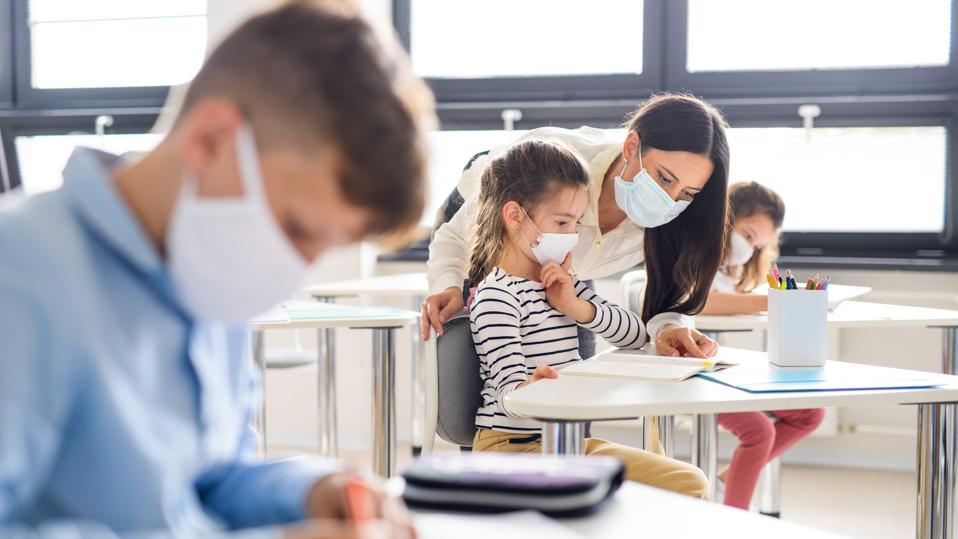
As coronavirus infection rates continue to spike across the nation, some school districts—including Jefferson City Schools in Jefferson, Georgia—have decided to trudge forward with reopening plans and offer face-to-face classes without requiring face masks.


KEY FACTS

Jefferson City Schools plans to begin face-to-face classes on Friday, one of the earliest starting dates in the country, according to a report from the New York Times.

School officials in Jefferson said they would strongly encourage students or teachers to wear face masks, but wouldn’t require them to do so.

The debate over face masks has proven divisive among the town’s residents, 80% of whom voted for Trump in 2016, with high school students creating petitions both for and against mandatory face masks.

Jackson county, of which Jefferson is the county seat, has seen 162 new Covid-19 cases in the past 7 days while Georgia as a whole, a recent hotspot for the virus, has seen over 170,000 cases and more that 3,500 deaths.

At least 14 other school districts have chosen to open for full, in-person classes between July 27 and August 7, according to Ed Week, each with different rules regarding face masks.

At least 14 other school districts have chosen to open for full, in-person classes between July 27 and August 7, according to Ed Week, each with different rules regarding face masks.

KEY BACKGROUND

There has been a debate about when and how schools should reopen almost since the coronavirus pandemic began. Last week President Trump, who has been adamant that schools reopen in the fall, reversed course saying that schools in coronavirus hotspots should delay reopening, but that doing so would prevent them from receiving billions in federal aid. The CDC has also backed reopening schools as of last week, saying in a statement “Reopening schools creates opportunity to invest in the education, well-being, and future of one of America’s greatest assets — our children — while taking every precaution to protect students, teachers, staff and all their families.” Some school districts are operating more judiciously, halting reopenings until the coronavirus outbreaks subside, or relying on virtual lessons and hybrid classes.


Florida Coronavirus Deaths Spike To Record High After Days Of Declines

https://www.forbes.com/sites/nicholasreimann/2020/07/28/florida-coronavirus-deaths-spike-to-record-high-after-days-of-declines/?utm_source=newsletter&utm_medium=email&utm_campaign=dailydozen&cdlcid=5d2c97df953109375e4d8b68#2d45f7d31d35

Florida Coronavirus Deaths Spike To Record High After Days Of Declines

TOPLINE

The coronavirus death toll Florida reported Tuesday set a new daily record high for the state, while new cases, hospitalizations and the number of ICUs at capacity once again rose, reversing what had been days of the state’s coronavirus crisis appearing to show signs of improvement.

KEY FACTS

Florida reported 186 new coronavirus deaths Tuesday, topping a record that had stood since July 22 and ending a streak of what had been a declining daily death toll every day since then.

Hospitals reporting 0% available ICU beds are also again on the rise, with 55 facilities reporting they were at capacity Tuesday, up from the 49 that reported 0% availability Monday.

Other major metrics that show worsening coronavirus spread, like hospitalizations and the rate of tests coming back positive, are also on the rise after declines during the past week.

Florida is the nation’s coronavirus epicenter, and has been for weeks—posting daily case increases that have been unmatched by any other state during the pandemic thus far.

Florida reported 9,243 new cases Tuesday, a rise from the 8,892 reported on Monday, which was the lowest increase the state had posted in three weeks, yet still more cases than most countries have reported throughout the entire pandemic so far.

The death toll in Florida is still far below what New York had during the worst of the pandemic there in March and April, when on its worst days the state would report around 1,000 deaths on its own.

KEY BACKGROUND

Florida was one of the fastest states to lift restrictions on its economy, and was eager to do so since the state largely avoided the dire impact the spring coronavirus surge brought to areas like New York. But a spike would come. Around Memorial Day, when large crowds packed popular vacation spots, the state was only reporting about 500 new cases a day. By mid-July, the state was regularly reporting over 10,000 new cases a day. A rise in hospitalizations would follow, and, more recently, a spike in deaths.

TANGENT

The southern part of the state has been the hardest-hit, including the city of Miami. Even its baseball team, the Miami Marlins, have not escaped the rampant coronavirus spread in Florida. At least 17 members of the organization, mostly players, have tested positive for coronavirus—thrusting plans for a 2020 Major League Baseball season into doubt.


What it’s like to be a nurse after 6 months of COVID-19 response

https://www.healthcaredive.com/news/what-its-like-to-be-a-nurse-6-months-coronavirus/581709/

Those on the front lines of the fight against the novel coronavirus worry about keeping themselves, their families and their patients safe.

That’s especially true for nurses seeking the reprieve of their hospitals returning to normal operations sometime this year. Many in the South and West are now treating ICUs full of COVID-19 patients they hoped would never arrive in their states, largely spared from spring’s first wave.

And like many other essential workers, those in healthcare are falling ill and dying from COVID-19. The total number of nurses stricken by the virus is still unclear, though the Centers for Disease Control and Prevention has reported 106,180 cases and 552 deaths among healthcare workers. That’s almost certainly an undercount.

National Nurses United, the country’s largest nurses union, told Healthcare Dive it has counted 165 nurse deaths from COVID-19 and an additional 1,060 healthcare worker deaths.

Safety concerns have ignited union activity among healthcare workers during the pandemic, and also given them an opportunity to punctuate labor issues that aren’t new, like nurse-patient ratios, adequate pay and racial equality.

At the same time, the hospitals they work for are facing some of their worst years yet financially, after months of delayed elective procedures and depleted volumes that analysts predict will continue through the year. Many have instituted furloughs and layoffs or other workforce reduction measures.

Healthcare Dive had in-depth conversations with three nurses to get a clearer picture of how they’re faring amid the once-in-a-century pandemic. Here’s what they said.

Elizabeth Lalasz, registered nurse, John H. Stroger Hospital in Chicago

Elizabeth Lalasz has worked at John H. Stroger Hospital in Chicago for the past 10 years. Her hospital is a safety net facility, catering to those who are “Black, Latinx, the homeless, inmates,” Lalasz told Healthcare Dive. “People who don’t actually receive the kind of healthcare they should in this country.”

Data from the CDC show racial and ethnic minority groups are at increased risk of getting COVID-19 or experiencing severe illness, regardless of age, due to long-standing systemic health and social inequities.

CDC data reveal that Black people are five times more likely to contract the virus than white people.

This spring Lalasz treated inmates from the Cook County Jail, an epicenter in the city and also the country. “That population gradually decreased, and then we just had COVID patients, many of them Latinx families,” she said.

Once Chicago’s curve began to flatten and the hospital could take non-COVID patients, those coming in for treatment were desperately sick. They’d been delaying care for non-COVID conditions, worried a trip to the hospital could risk infection.

A Kaiser Family Foundation poll conducted in May found that 48% of Americans said they or a family member had skipped or delayed medical care because of the pandemic. And 11% said the person’s condition worsened as a result of the delayed care.

When patients do come into Lalasz’s hospital, many have “chest pain, then they also have diabetes, asthma, hypertension and obesity, it just adds up,” she said.

“So now we’re also treating people who’ve been delaying care. But after the recent southern state surges, the hospital census started going down again,” she said.

Amy Arlund, registered nurse, Kaiser Permanente Medical Center in Fresno, California:

Amy Arlund works the night shift at Kaiser Fresno as an ICU nurse, which she’s done for the past two decades.

She’s also on the hospital’s infection control committee, where for years she’s fought to control the spread of clostridium difficile colitis, or C. diff., in her facility. The highly infectious disease can live on surfaces outside the body for months or sometimes years.

The measures Arlund developed to control C. diff served as her litmus test, as “the top, most stringent protocols we could adhere to,” when coronavirus patients arrived at her hospital, she told Healthcare Dive.

But when COVID-19 cases surged in northern states this spring, “it’s like all those really strict isolation protocols that prior to COVID showing up would be disciplinable offenses were gone,” Arlund said.

Widespread personal protective equipment shortages at the start of the pandemic led the CDC and the Occupational Safety and Health Administration to change their longstanding guidance on when to use N95 respirator masks, which have long been the industry standard when dealing with novel infectious diseases.

The CDC also issued guidance for N95 respirator reuse, an entirely new concept to nurses like Arlund who say those changes go against everything they learned in school.

“I think the biggest change is we always relied on science, and we have always relied heavily on infection control protocols to guide our practice,” Arlund said. “Now infection control is out of control, we can no longer rely on the information and resources we always have.”

The CDC says experts are still learning how the coronavirus spreads, though person-to-person transmission is most common, while the World Health Organization recently acknowledged that it wouldn’t rule out airborne transmission of the virus.

In Arlund’s ICU, she’s taken care of dozens of COVID positive patients and patients ruled out for coronavirus, she said. After a first wave in the beginning of April, cases dropped, but are now rising again.

Other changing guidance weighing heavily on nurses is how to effectively treat coronavirus patients.

“Are we doing remdesivir this week or are we going back to the hydroxychloroquine, or giving them convalescent plasma?”Arlund said. “Next week I’m going to be giving them some kind of lavender enema, who knows.”

Erik Andrews, registered nurse, Riverside Community Hospital in Riverside, California:

Erik Andrews, a rapid response nurse at Riverside Community Hospital in California, has treated coronavirus patients since the pandemic started earlier this year. He likens ventilating them to diffusing a bomb.

“These types of procedures generate a lot of aerosols, you have to do everything in perfectly stepwise fashion, otherwise you’re going to endanger yourself and endanger your colleagues,” Andrews, who’s been at Riverside for the past 13 years, told Healthcare Dive.

He and about 600 other nurses at the hospital went on strike for 10 days this summer after a staffing agreement between the hospital and its owner, HCA Healthcare, and SEIU Local 121RN, the union representing RCH nurses, ended without a renewal.

The nurses said it would lead to too few nurses treating too many patients during a pandemic. Insufficient PPE and recycling of single-use PPE were also putting nurses and patients at risk, the union said, and another reason for the strike.

But rapidly changing guidance around PPE use and generally inconsistent information from public officials are now making the nurses at his hospital feel apathetic.

“Unfortunately I feel like in the past few weeks it’s gotten to the point where you have to remind people about putting on their respirator instead of face mask, so people haven’t gotten lax, but definitely kind of become desensitized compared to when we first started,” Andrews said.

With two children at home, Andrews slept in a trailer in his driveway for 12 weeks when he first started treating coronavirus patients. The trailer is still there, just in case, but after testing negative twice he felt he couldn’t spend any more time away from his family.

He still worries though, especially about his coworkers’ families. Some coworkers he’s known for over a decade, including one staff member who died from COVID-19 related complications.

“It’s people you know and you know that their families worry about them every day,” he said. “So to know that they’ve had to deal with that loss is pretty horrifying, and to know that could happen to my family too.”


Every sport has a coronavirus plan. MLB’s lasted four days.

https://www.washingtonpost.com/sports/2020/07/27/every-sport-has-coronavirus-plan-mlbs-lasted-four-days/

Cancel the MLB year, maybe by the end of this week.

Forget about the NFL season; it’s never going to happen.

The idea of attempting a college football season — putting amateur athletes at risk — is obscenely unthinkable.

Within days or a couple of weeks, we also may find out just how feasible it is for the NBA, in its Florida bubble, or the NHL, playing in two hub cities in Canada, to finish truncated seasons and crown champions.

Sure, none of that is certain, but Monday morning’s news that at least 14 members of the Miami Marlins and their staff have tested positive for the novel coronavirus in recent days was a Category 5 covid-19 hurricane alert. You couldn’t have a worse MLB start or a grimmer predictor for other games.

With lots of inherent social distancing, baseball was supposed to be the easiest major American team sport to resume, just as leagues in Japan and South Korea have functioned smoothly for months. But MLB couldn’t go even a week without the serious prospect that its 60-game season should be canceled.

“Hey, I’m going to be honest with you: I’m scared. I really am,” said Washington Nationals Manager Dave Martinez, 55, who has a heart condition.

Why is MLB creating a situation where Dusty Baker, 71, the survivor of multiple life-threatening conditions in the past 15 years, manages Houston every day while Texas is a national coronavirus hot spot?

Martinez added that before long his team may see more players “opt out,” as Ryan Zimmerman and Joe Ross already have. Once the defections start, the cascade won’t stop until the sport must call a halt.

“Now we REALLY get to see if MLB is going to put players health first,” tweeted Los Angeles Dodgers left-hander David Price, who passed on $11.8 million by opting out of this partial season. “Remember when [Commissioner Rob] Manfred said players health was PARAMOUNT?! Part of the reason I’m at home right now is because players health wasn’t being put first. I can see that hasn’t changed.”

Underneath all the discussions and elaborate plans to reopen various sports — MLB, the NBA and NHL now, and the NFL and college football by the end of next month — has been one naive assumption: If the virus hit a team, it would infect one or two players. Maybe three. But the sense was things still would be manageable. You could still field a team.

When did this become the highest of all human goals?

The danger and the damage would not be “too bad.” In this, we see Americans’ national tendency toward willful pandemic ignorance being played out on a small, crystal-clear stage so everyone can get the message.

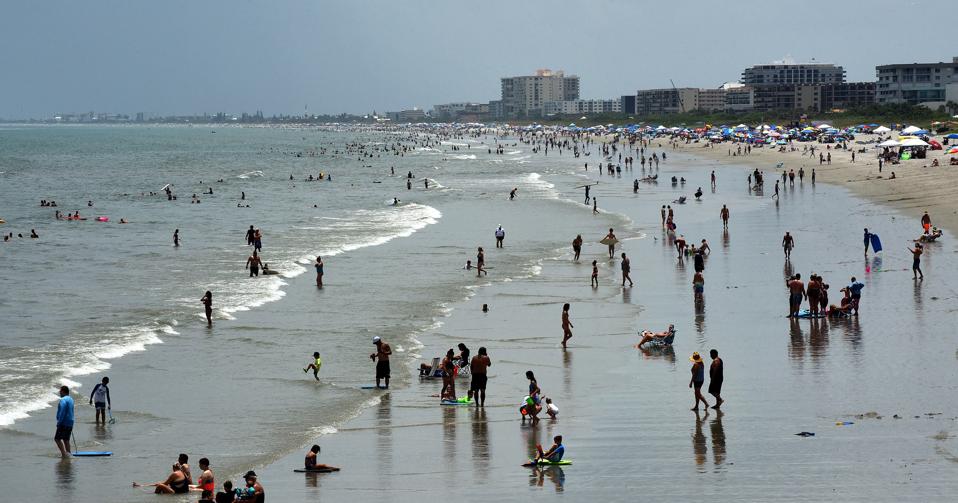
For months, we have watched healthy people, mostly young, swarm into bars or hit the beaches with an apparent sense that community spread was a fiction or not something that applied to them. Maybe, the fantasy went, one person in the wrong bar would get the virus.

Now we learn differently. Now we see the truth.

Over a dozen Marlins and counting.

The immediate consequences of the Marlins’ outbreak were the postponements of their home opener against the Baltimore Orioles and the Philadelphia Phillies’ home game against the New York Yankees, who would have been occupying the clubhouse those Marlins just showered and dressed in Sunday.

The wider effect: Back to normal, or even semi-normal, in sports was shattered just days after being reintroduced.

What does this mean?

Some events have ambiguous consequences. We won’t know their impact for some time. But in rare cases, one event may have enormous impact, just as the positive virus test for the NBA’s Rudy Gobert in mid-March resulted in the shutdown of every major sport within 48 hours.

This is such a moment — but perhaps bigger.

Why are we here? The answer is simple yet inexplicably unacknowledged in wide swaths of this country: The pandemic is not under control until you stop it, suppress it, dominate it and crush the curve.

Though many other countries have done it, America has not come within a million miles of that outcome.

As I pointed out in a column last week, when a league says, Given what we are seeing with covid-19 hitting our teams, maybe we should cancel the season, the correct response is “get rid of the word ‘maybe.’ ”

The entire American experience of this pandemic has been: Don’t embolden the virus by acknowledging its threat. Try to outrun it, hide from it, say it’s not so bad and will go away.

That just breeds a disaster, and now that disaster has hit MLB just days into its season. The Cincinnati Reds also have multiple positive tests. The Atlanta Braves have been without two catchers who have symptoms, though no positive tests. Nationals star Juan Soto is inactive after a positive test.

Do we need a longer list?

You can’t be much healthier, as a group, than a pro baseball team. You can’t be much better protected or tested more often than an MLB team. The Marlins are close to the safest possible case. And now, less than a week into their season, at least half of the team has the coronavirus!

That is what is meant by “community spread.” That is what is meant by an “outbreak” in an epidemic. All of us have worried that one or two players — or people in the MLB community — would have bad outcomes from the virus if a 60-game season was played. Time to blow up that assumption. If half of the Marlins team can test positive within a few days, then the scale of danger to health — the number of people who may get sick and the severity of the damage they may suffer, including prime-of-life pro athletes — just shot through the ceiling.

Our assumptions, while well-intentioned, have been blown to pieces. And in short order, so will the season of one, or perhaps several, of our sports.

The Marlins are just the latest — but one of the most vivid — illustrations of what America is facing. And how little we are willing to take seriously the true measure of our fearsome enemy.