The lifesaving potential of OpenAI’s GPT-4o update

https://www.linkedin.com/pulse/lifesaving-potential-openais-gpt-4o-update-robert-pearl-m-d–ngrmc/

Generative AI tools have made remarkable strides in medicine since the launch of ChatGPT in late 2022. Research has shown that AI, with expert clinician oversight, can significantly enhance diagnostic accuracy, treatment recommendations, and patient monitoring and analysis.

And yet, despite its impressive capabilities and buzz, generative AI is still in the early stages of adoption—both in U.S. healthcare and society.

While almost everyone has heard of genAI, less than a quarter of Americans use it regularly in their personal or professional lives. OpenAI’s newest update, GPT-4o, aims to change that.

In demos released during its spring update, OpenAI showed users engaged in natural, human-like conversations with GPT-4o. The AI interacted with people on their smartphones across video, audio and text, offering real-time spoken responses that sounded eerily human.

In the demo above, AI’s instant answers and friendly voice closely mimic the pace and inflection of normal dialogue. Not coincidently, GPT-4o’s voice sounded remarkably like Scarlett Johansson’s AI character in the movie Her (a decision OpenAI later walked back “out of respect”).

Regardless of the voice coming out of it, GPT-4o is at once awe-inspiring and unsettling. It also represents a significant departure from tech-industry norms. Most tech companies have long avoided creating AI “companions” because of ethical concerns, fearing people could form addictions that exacerbate isolation and loneliness.

What Will GPT-4o’s Rule-Breaking Mean For Medicine?

Critics point out that OpenAI and its peers have yet to resolve a host of major “trust” issues. These include accuracy, privacy, security, bias and misinformation. Of course, these will need to be resolved.

But by creating an AI experience that feels more like talking to a friend, or potentially a doctor, OpenAI has already leapt the tallest hurdle to mass acceptance and adoption. The company understands that humanizing GPT-4o—making it easier and more enjoyable to use—is essential for attracting a wide array of users, including the “late majority” and “laggards” described in Geoffrey Moore’s seminal 1991 book Crossing the Chasm.

Today, 70% of genAI’s non-users are Gen X (ages 44-59) and Baby Boomers (60-78). These generations, which comprise 136 million people, strongly prefer voice and video technologies to typing or touchscreens, and greatly prefer “conversational” AI apps to text-only ones.

They also make up the overwhelming majority of Americans with chronic diseases like diabetes, heart failure and cancer.

GenAI: From Mass Adoption To Mass Empowerment

Once consumers in their 50s, 60s and 70s become comfortable using GPT-4o for everyday tasks, they will then start to rely on it for medical inquiries, too. In a healthcare context, using GPT-4o will closely resemble a video visit or a phone call with a medical professional—two modalities that satisfy the majority of older patients. In fact, 93% of adults over age 70 say they value having telehealth as an option.

With broad adoption, GPT-4o (which will be embedded in next generations of ChatGPT) will empower the sickest Americans to take greater control of their own health, preventing up to hundreds of thousands of premature deaths each year from the complications of chronic disease: heart attacks, strokes, cancer and kidney failure. According to the Centers for Disease Control and Prevention, the effective management of chronic illness would reduce these complications by 30% to 50%, with a similar reduction in mortality.

Generative AI technology contains both the knowledge and ability to help accomplish this:

  • Knowledge. ChatGPT houses an extensive corpus of scientific literature, which includes a diverse and extensive dataset of clinical studies, guidelines from professional medical organizations and research published in top-tier medical journals. In the future, it will be updated with real-time data from medical conferences, health records and up-to-the-minute research, ensuring the AI’s knowledgebase remains both comprehensive and current.
  • Ability. To assist overburdened clinicians, genAI can provide patients with round-the-clock monitoring, insights and advice—empowering them to better diagnose and manage their own health problems. Future generations of these tools will connect with monitoring devices, informing patients about their health status and suggesting medication adjustments or lifestyle changes in clear and friendly terms. These tools will also remind people about preventive screenings and even facilitate testing appointments and transportation. These proactive approaches can reduce complications and improve health outcomes for the 130 million Americans living with chronic diseases.

Combatting Chronic Disease With GPT-4o

To dive deeper into genAI’s difference-making potential, let’s look at two major gaps in chronic disease management: diabetes and hypertension.

Diabetes is the leading cause of kidney failure, a major contributor to heart attacks and responsible for 80% of lower limb amputations. Effective management is possible for nearly all patients and would prevent many of these complications. Yet diabetes is well controlled in only 30% of cases across the United States.

Similarly, effective control of high blood pressure—the leading cause of strokes and a major contributor to kidney failure and heart attacks—is achieved only 55% to 60% of the time. Although some health systems achieve control levels above 90%, the best-available tools and approaches are inconsistently deployed throughout medical practices.

Medical monitoring devices plus AI could play a crucial role in managing hypertension. Imagine a scenario in which a doctor prescribes medication for hypertension and sends the patient home with a wearable device to monitor progress. After a month, the patient has 100 readings—90 normal and 10 elevated. The patient is unsure whether the 90 normal readings indicate all is well or if the 10 elevated ones signal a major problem. The doctor doesn’t have time to review all 100 readings and prefers not to clutter the electronic health record with this data. Instead of the patient waiting four months for the next visit to find out if all is well or not, a generative AI tool could quickly analyze the data (using the doctor’s instructions) and advise whether a medication adjustment is needed or to continue as is.

Today’s generative AI tools aren’t ready to transform medical monitoring or care delivery, but their time is coming. With the technology doubling in power each year, these tools will be 32 times more capable in five years.

Overcoming Barriers To Mass Adoption

Concerns about AI privacy, security and misinformation need to be solved before the majority of Americans will buy in to an AI-empowered future. Progress is being made on those fronts. For example, the leap from GPT-3.5 to GPT-4 saw an 82% reduction in hallucinations, a larger context window and better safety mechanisms.

In addition, clinicians worry about potential income loss if AI leads to healthier patients and reduced demand for medical services. The best solution is to shift from the current fee-for-service reimbursement model (which rewards the volume of medical services) to a value-based, capitated model. This system rewards doctors for preventing chronic diseases and avoiding their most serious complications, rather than simply treating life-threatening medical problems when they arise.

By adopting a pay-for-value approach, medical professionals will embrace genAI as a tool to help prevent and manage diseases (rather than seeing it as a threat to their livelihoods).

The release of GPT-4o shattered the industry norm against creating human-like AI, introducing ethical risks that must be carefully managed. However, the potential for genAI to save thousands of lives each year makes this risk worth taking.


Trends shaping the business of health insurance in 2024

The new year dawned on a health insurance industry beset by challenges.

Only 7% of health plan executives view 2024 positively after being hammered by the coronavirus pandemic, regulatory turbulence and rising cost pressures, according to a Deloitte survey.

Costs are spiking, and health insurers remain uncertain how the lingering effects of COVID-19 will impact care utilization. Medicaid redeterminations are rewriting the coverage landscape state by state, while Medicare Advantage — the darling of payers’ business sheets — experiences significant regulatory upheaval.

Meanwhile, 2024 is a presidential election year. That’s adding more political uncertainty into the picture as Washington hammers payers over claims denials and the business practices of pharmacy benefit units.

Here’s what experts see coming down the pike for health insurers this year.

The uninsured rate will go up

The number of Americans without insurance coverage is almost certainly going to rise this year as states overhaul their Medicaid rolls, experts say.

During the pandemic, continuous enrollment protections led a record number of people to enroll in Medicaid. But earlier this year, states resumed checking eligibility for the safety-net program. Around 14.4 million Americans have been removed from Medicaid due to the redeterminations process, many for administrative reasons like incorrect paperwork despite remaining eligible.

“We are going to see an increase in the uninsured rate for children and probably adults as well as a consequence,” said Joan Alker, executive director of the Georgetown University Center for Children and Families.

The question is how big of an increase, experts said. Redeterminations began in April, but lagging information and state differences in data reporting has made it difficult to determine where individuals are turning for coverage, and in what numbers.

Early signs suggest some people losing Medicaid have found plans in the Affordable Care Act exchanges, though it’s probably “a very small percentage,” Alker saidMore than 20 million people have signed up for ACA coverage since open enrollment began in November — an all-time high, according to data released by the Biden administration in early January.

Experts say the growth is due in part to redeterminations, along with the effects of more generous federal subsidies. Those subsidies are slated to expire in 2025, meaning ACA enrollment should stay elevated until then.

But it’s unlikely everyone who loses Medicaid will find a home on the marketplaces. The cost of family coverage without an employer remains out of reach for many Americans. It’s also too early to determine how many people terminated from Medicaid have shifted into employer coverage — that data should also emerge as 2024 continues, said Matt Fiedler, a senior fellow with the Brookings Schaeffer Initiative on Health Policy.

Federal regulators have also taken a number of actions to try and curb improper procedural Medicaid losses, like cracking down on states with high levels of child disenrollments. Yet, procedural terminations are unlikely to improve significantly this year, experts said.

“We do see a very hopeful trend” in some states, like Washington and Oregon, embracing longer periods of continuous eligibility, Alker noted.

The government has ramped up ACA marketplace outreach, which — along with macro forces like a strong labor market — are positive signs that individuals no longer eligible for Medicaid may find alternative coverage, whether in the ACA exchanges or through employment.

But “it’s likely we’ll see an increase in the uninsured rate. I think the question is how much,” Fiedler said.

Increasing vigilance around costs

Healthcare costs are projected to grow much faster in 2024 than the historical average, fueled by inflation, supply chain disruption and labor pressures increasing provider wages. Those costs are burdening employers already stressed by worker mental health and deferred preventive screenings that could worsen health conditions down the line.

As a result, employers are investing heavily in mental health and substance use disorder services. Seven out of ten employers say mental healthcare access is a priority in 2024, and employers say they’ll turn to virtual care providers to address the need, according to a Business Group on Health survey.

As a result, employers are increasingly demanding integrated platforms combining different benefits, continuing a pivot away from the point solutions they were deluged with during the pandemic. Payers are racing to meet that need.

This year, UnitedHealthcare plans to integrate more than 20 standalone products into a “supported benefits platform,” said Dan Kueter, CEO of the payer’s employer and individual business, during an investor day in November.

Cigna, which focuses on employer-sponsored plans, plans to add more services to its behavioral health navigator to help employers personalize the platform for their employees this year, said CEO David Cordani during a November earnings call.

For their part, health insurers are likely to raise premiums and combat hospital reimbursement hikes in 2024 to control costs, according to credit rating agency Fitch Ratings.

However, that outlook is complicated by uncertainty around how much elevated care utilization seen in 2023 will continue. Some payers, like UnitedHealth and Humana, are forecasting high utilization, while others like CVS have said they expect it to drop.

More payers might pursue mergers and acquisitions or build out internal musculoskeletal management programs to control costs, said Prateesh Maheshwari, a managing director at venture capital firm Maverick Ventures. Hip and knee surgeries were an oft-cited driver of utilization last year.

Still, publicly traded health insurance companies could see their margins moderately decrease in 2024, Fitch said.

GLP-1 coverage will increase — slowly

Surging demand for GLP-1s means insurance coverage for the drugs is expected to increase next year, putting more stress on the nation’s pressured healthcare payment system. GLP-1s, or glucagon-like peptide-1 drugs, have historically been used to treat diabetes but have shown efficacy in weight loss.

The drugs are exceedingly expensive, but that hasn’t stopped people from trying to get their hands on GLP-1s — off-label or not. TD Cowen predicts GLP-1 sales could reach $102 billion by 2030, with $41 billion of that for obesity.

More private payers are considering covering the drugs next year, though the doors to coverage aren’t being thrown wide open. According to a November survey by the International Foundation of Employee Benefit Plans, while 76% of employers provide GLP-1 drug coverage for diabetes, just 27% provide coverage for weight loss.

Yet, 13% are considering adding coverage for weight loss.

As insurance coverage increases, payers will ensure only eligible patients are accessing the drugs through checks like step therapy, said Nathan Ray, head of healthcare M&A at consultancy West Monroe. As a result, access could remain restricted.

Payers will also tie coverage for GLP-1s to additional behavioral management programs. That trend has proved a gold rush for chronic condition management companies and telehealth providers, which have rushed to stand up new business lines for weight loss that include GLP-1s.

“Things like this, that include the opportunity for medication along with the accompaniment of behavioral change, is where I think the market will go in 2024,” said Heather Dlugolenski, Cigna’s U.S. commercial strategy officer.

Proponents of weight loss medication are also eyeing a potential overturn of the ban on Medicare coverage of weight loss drugs next year. A growing number of lawmakers (and drugmakers standing to profit from Medicare coverage) have come out in support of a bill introduced in 2023 to allow Medicare to cover anti-obesity drugs.

The bill is unlikely to be prioritized given Washington has a lot on its plate during the election year, but passage isn’t out of the realm of possibility, experts said.

Medicare Advantage will continue to grow under Washington’s watchful eye

More seniors will select Medicare Advantage plans this year, further growing a program that recently saw its enrollment sneak past that of traditional Medicare.

In MA, the government contracts with private insurers to manage the care of Medicare seniors. MA has become increasingly popular, swelling to cover 31 million people last year — a boon for insurers offering the coverage, which can be twice as profitable for private payers than other types of plans.

As such, MA plans have been advertising heavily, trumpeting their supplemental benefits like gym memberships or subsidized groceries. Seniors find those benefits attractive, Brookings’ Fiedler said, and may not understand that MA plans may not cover as much medical care as traditional Medicare.

”My best bet would be MA enrollment in the near term continues to grow,” Fiedler said. “I don’t think we’re at the ceiling yet.”

Despite elevated costs in 2023 from seniors using more medical care, insurers generally didn’t cut back on plan benefits this year as they continue to compete for members.

Major payers in MA, including Humana, UnitedHealthcare, Centene and Kaiser Permanente, expanded their geographic markets for 2024, even as some lagging competitors like Cigna consider exiting MA altogether.

Yet, the program hasn’t been without its complications. Payers cried foul last year over tweaks to MA ratesstar ratings and reimbursement audits, with Humana and Elevance suing to stop the changes.

MA “should remain a key long-term growth driver for managed care, but we see a more challenging setup in 2024 as weaker funding, risk coding changes, and lower Star ratings combine to pressure margins,” J.P. Morgan analysts wrote in an outlook report published late last year.

Insurers were also plagued in 2023 by congressional hearings and lawsuits over their claims reviews processes, sparking criticism that seniors may not be receiving the care they’re due.

Scrutiny from Washington around such practices is likely to continue.

“We are seeing both in the Senate and House a lot of interest in peeling back the layers of the onion of how big health plans are operating their Medicare Advantage programs. That’s going to continue to be an issue,” said Reed Stephens, a healthcare chair at law firm Winston & Strawn who focuses on risk.

Though it’s unlikely that legislation will be passed reforming MA, Reed said. Overall, regulatory and political turbulence should subside somewhat this year.

The rate and marketing changes were “short of the last train out of the station,” said Brookings’ Fiedler. “The administration is unlikely to want a big fight with MA plans in an election year.”

The Mark Cuban effect: Payers with PBMs will launch more ‘transparent’ options

Major pharmacy benefit managers will introduce more options billed as transparent and cost-effective to retain clients after some turned to upstart competitors last year.

PBM clients are clamoring for outcomes-based pricing, with structures tying PBM compensation to measures like adherence, according to a J.P. Morgan survey from late 2023. Clients also want transparency, whether more data sharing or full administration models.

The changes aren’t revolutionary, but they hint at ongoing distrust of major PBMs from benefits teams, J.P. Morgan said.

UnitedHealth’s Optum RxCigna’s Express Scripts and CVS Caremark — which together control 80% of prescriptions in the U.S. — have all recently launched new programs, partnerships or models they say are more affordable and transparent to meet the demand.

The industry is likely to see more moves along those lines in 2024, experts say — especially as Congress considers legislation to reform PBMs. The Lower Costs, More Transparency Act passed the House in December. The bill is seen as unlikely to clear the Senate, but specific measures, like forced PBM transparency, could make it into larger legislative packages.

The passing of measures around transparency could satisfy politicians’ need for a win when it comes to drug pricing without creating meaningful reform in the sector, according to Jefferies analyst Brian Tanquilut.

Yet, momentum to do something about high drug costs will certainly carry into this year. Presidential candidates on both sides of the aisle are expected to wield the issue on the campaign trail.

“The companies in those markets are going to have to stay nimble and keep on their toes,” said Winston & Strawn’s Stephens.

M&A, especially vertical integration, carries on

Companies like UnitedHealth, CVS and Humana will continue building out networks of physical care sites in 2024. New M&A guidelines from the Department of Justice and Federal Trade Commission could raise the bar for merger approvals, but the value proposition for insurers to acquire healthcare providers is too high for them to be dissuaded, experts said.

Payers will continue to pursue as many deals “as they can find willing, available targets,” said West Monroe’s Ray.

By directing members to owned locations for medical needs, health insurers can essentially pay themselves for providing a service, keeping more revenue in-house. As a result, payers — especially those with a large presence in MA, which incentivizes organizations to better manage cost — will stay on the hunt for acquisition targets.

While healthcare M&A was relatively slow in 2023, 68% of senior leaders in the sector expect deal volume to rise in 2024, according to a survey by investment bank Jefferies.

Optum — which employs or is affiliated with around one-tenth of all doctors in the U.S. — is already eyeing M&A. The health services arm of UnitedHealth is currently pursuing an acquisition of a physician-owned clinic chain in Oregon, even as it comes off a number of big provider buys in 2023, including the multi-billion-dollar acquisitions of home health providers Amedisys and LHC Group.

Cigna has also said it plans to look for smaller strategic acquisitions to grow its business, after a  potential merger with rival Humana crumbled late last year.

Coronavirus Updates

As parents await an approved vaccine for children under 5, Moderna said on Wednesday a study had found its two-dose pediatric vaccine to be safe for young children, toddlers and babies. Its effectiveness, however, was complicated by the spread of the coronavirus’s omicron variant. While the pediatric vaccine generated an immune response equivalent to that of young adults before the highly transmissible variant emerged, those immune defenses were less strong in the face of omicron. In children, the pediatric vaccine was about 40 percent effective, Moderna said. The company plans to submit the data to the Food and Drug Administration for consideration in the coming weeks. 

The FDA also faces requests to authorize a second booster vaccine dose for adults. But even if they are authorized, Biden administration officials said they lack the funds to purchase those shots. They said they’ve bought enough doses for Americans age 65 and older, as well as the potential initial regimen for children under 5, but can’t buy more doses for people in other age groups unless Congress passes a delayed $15 billion funding package. It’s not yet clear whether additional doses for adults will be necessary, but officials said placing orders for doses ahead of time has been an important lesson of the pandemic. White House officials have expressed worry that vaccine manufacturers will prioritize orders placed by other countries.

That concern comes as omicron’s BA.2 subvariant of the coronavirus now amounts to as much as 70 percent of new infections in much of the United States, according to the genomic surveillance company Helix. That version of the virus has prompted a surge of cases in Europe and fear that the United States will experience its own wave, similarly to how it has mirrored Europe in the past. A broad increase in cases has so far not happened in the United States, and disease experts don’t know for sure whether it will. If it does, it’s unclear whether the pandemic policies of the Biden administration and private institutions would substantially change. 

A program to ensure global vaccine equity was doomed from the beginning to fall short, a Washington Post analysis found. The initiative, called Covax, was meant to convince wealthy and poor countries to combine their money to order vaccine doses in advance and then share them in a way that would protect the most vulnerable people first. But the program’s supporters underestimated the desperation of the wealthier countries, which snatched up doses from manufacturers for their own residents. Covax was also slow to adapt as nations declined to participate. Now, more than one-third of the world has not received a vaccine dose — a result that not only is inequitable, but also makes it easier for new variants to emerge.

In a study published Monday, people who had covid-19 had a 46 percent higher risk of developing Type 2 diabetes or being prescribed medication to control their blood sugar within a year than those who had not had the coronavirus. Greater severity of covid symptoms was associated with a higher chance of developing diabetes, but even people with less severe or asymptomatic infection had an increased risk, according to the study of more than 181,000 Department of Veterans Affairs patients. The study did not prove cause and effect but did show a strong association between covid-19 and diabetes. 

Other important news

Omicron’s BA.2 subvariant has become the world’s dominant form of the coronavirus. The Post created a map and several charts to help you visualize how it’s spreading around the world. 

White House press secretary Jen Psaki said Tuesday that she had tested positive for the coronavirus a second time. She had been scheduled to travel to Europe with President Biden and other administration officials, but canceled her trip.

4 of the biggest healthcare trends CVS Health says to watch in 2021

COVID-19 accelerated a number of trends already brewing in the healthcare industry, and that’s not likely to change this year, according to a new report from CVS Health.

The healthcare giant released its annual Health Trends Report on Tuesday, and the analysis projects several industry trends that are likely to define 2021 in healthcare, ranging from technology to behavioral health to affordability.

“We are facing a challenging time, but also one of great hope and promise,” CVS CEO Karen Lynch said in the report. “As the pandemic eventually passes, its lessons will serve to make our health system more agile and more responsive to the needs of consumers.”

Here’s a look at four of CVS’ predictions:

1. A looming mental health crisis

Behavioral health needs were a significant challenge in healthcare prior to COVID-19, but the number of people reporting declining mental health jumped under the pandemic.

Cara McNulty, president of Aetna Behavioral Health, said in a video attached to the report that it will be critical to “continue the conversation around mental health and well-being” as we emerge from the pandemic and to reduce stigma so people who need help seek it out.

“We’re normalizing that it’s important to take care of our mental well-being,” she said.

Data released in December by GoodRx found that prescription fills for depression and anxiety medications hit an all-time high in 2020. GoodRx researchers polled 1,000 people with behavioral health conditions on how they were navigating the pandemic, and 63% said their depression and/or anxiety symptoms worsened.

McNulty said symptoms to look for when assessing whether someone is struggling with declining mental health include whether they’re withdrawn or agitated or if there’s a notable difference in their self-care routine.

2. Pharmacists take center stage

CVS dubbed 2021 “the year of the pharmacist” in its report.

The company expects pharmacists to be a key player in a number of areas, especially in vaccine distribution as that process inches toward broader access. They also offer a key touchpoint to counsel patients about their care and direct them to appropriate services, CVS said.

CVS executives said in the report that they see a significant opportunity for pharmacists to have a positive impact on the social determinants of health. 

“We’ve found people are not only open and willing to share social needs with their pharmacists but in many cases, they listen to and act on the advice and recommendations of pharmacists,” Peter Simmons, vice president of transformation, pharmacy delivery and innovation at CVS Health, said in the report.

3. Finding ways to mitigate the cost of high-price therapies

Revolutionary drugs and therapies are coming to market with eye-popping price tags; it’s not uncommon to see new pharmaceuticals priced at $1 million or more. For pharmacy benefit managers, this poses a major cost challenge.

To address those prices, CVS expects value-based contracting to take off in a big way. And drugmakers are comfortable with the idea, according to the report. Novartis, for example, is offering insurers a five-year payment plan for its $2 million gene therapy Zolgensma, with refunds available if the drug doesn’t achieve desired results.

CVS said the potential for these therapies is clear, but many payers want to see some type of results before they fork over hundreds of thousands.

“Though the drug may promise to cure these patients for life, these are early days in their use,” said Joanne Armstrong, M.D., enterprise head of women’s health and genomics at CVS Health, in the report. “What we’re saying is, show us the clinical value proposition first.”

CVS said it’s also offering a stop-loss program for gene therapy to self-funded employers contracted with Aetna and/or Caremark to assist them in capping the expenses associated with these drugs.

4. Getting into the community to address diabetes

Diabetes risk is higher among vulnerable populations, such as Black patients, and addressing it will require local and community-based solutions, CVS executives said in the report. Groups at the highest risk for the disease are less likely to live in areas with easy access to a supermarket, for example, which boosts their risk of unhealthy eating, according to the report.

The two key hurdles to addressing this issue are access and affordability. The rise in retail clinics and ambulatory care centers can get at the access issue, as they can offer a way to better meet patients where they are.

At CVS’ MinuteClinics, patients can walk in and receive a number of services to assist them in managing diabetes, including screenings, consultations with providers and connections to diabetes educators who can assist with lifestyle changes.

Retail locations can also assist with medication costs, creating a one-stop-shop experience that’s easier for many diabetes patients to slot into their daily lives, CVS said.

“Diabetes is a case study in how a more connected experience can translate to simpler, affordable and more accessible care for underserved communities,” said Dan Finke, executive vice president of CVS Health and president of its healthcare benefits division.

Diabetes highlights two Americas: One where COVID is easily beaten, the other where it’s often devastating

https://www.usatoday.com/story/news/health/2020/07/27/diabetes-and-covid-two-americas-health-problems/5445836002/?utm_source=Sailthru&utm_medium=email&utm_campaign=Issue:%202020-07-27%20Healthcare%20Dive%20%5Bissue:28706%5D&utm_term=Healthcare%20Dive

What You Need to Know about Diabetes and the Coronavirus | diaTribe

Dr. Anne Peters splits her mostly virtual workweek between a diabetes clinic on the west side of Los Angeles and one on the east side of the sprawling city. 

Three days a week she treats people whose diabetes is well-controlled. They have insurance, so they can afford the newest medications and blood monitoring devices. They can exercise and eat well.  Those generally more affluent West L.A. patients who have gotten COVID-19 have developed mild to moderate symptoms – feeling miserable, she said – but treatable, with close follow-up at home.

“By all rights they should do much worse, and yet most don’t even go to the hospital,” said Peters, director of the USC Clinical Diabetes Programs.

On the other two days of her workweek, it’s a different story.

In East L.A., many patients didn’t have insurance even before the pandemic. Now, with widespread layoffs, even fewer do. They live in “food deserts,” lacking a car or gas money to reach a grocery store stocked with fresh fruits and vegetables. They can’t stay home, because they’re essential workers in grocery stores, health care facilities and delivery services. And they live in multi-generational homes, so even if older people stay put, they are likely to be infected by a younger relative who can’t.

They tend to get COVID-19 more often and do worse if they get sick, with more symptoms and a higher likelihood of ending up in the hospital or dying, said Peters, also a member of the leadership council of Beyond Type 1, a diabetes research and advocacy organization. 

“It doesn’t mean my East Side patients are all doomed,” she emphasized.

But it does suggest COVID-19 has an unequal impact, striking people who are poor and already in ill health far harder than healthier, better off people on the other side of town.

Tracey Brown has known that for years.

“What the COVID-19 pandemic has done is shined a very bright light on this existing and pervasive problem,” said Brown, CEO of the American Diabetes Association. Along with about 32 million others – roughly 1 in 10 Americans – Brown has diabetes herself.

“We’re in 2020, and every 5 minutes, someone is losing a limb” to diabetes, she said. “Every 10 minutes, somebody is having kidney failure.”

Americans with diabetes and related health conditions are 12 times more likely to die of COVID-19 than those without such conditions, she said. Roughly 90% of Americans who die of COVID-19 have diabetes or other underlying conditions. And people of color are over-represented among the very sick and the dead.

Diabetes and COVID: Coronavirus highlights America's health problems

Diabetes increases COVID risk

The data is clear: People with diabetes are at increased risk of having a bad case of COVID-19, and diabetics with poorly controlled blood sugar are at even higher risk, said Liam Smeeth, dean of the faculty of epidemiology and population health at the London School of Hygiene and Tropical Medicine. He and his colleagues combed data on 17 million people in the U.K. to come to their conclusions.

Diabetes often comes paired with other health problems – obesity and high blood pressure, for instance. Add smoking, Smeeth said, and “for someone with diabetes in particular, those can really mount up.”

People with diabetes are more vulnerable to many types infections, Peters said, because their white blood cells don’t work as well when blood sugar levels are high. 

“In a test tube, you can see the infection-fighting cells working less well if the sugars are higher,” she said.

Peters recently saw a patient whose diabetes was triggered by COVID-19, a finding supported by one recent study.

Going into the hospital with any viral illness can trigger a spike in blood sugar, whether someone has diabetes or not. Some medications used to treat serious cases of COVID-19 can “shoot your sugars up,” Peters said.

In patients who catch COVID-19 but aren’t hospitalized, Peters said, she often has to reduce their insulin to compensate for the fact that they aren’t eating as much.

Low income seems to be a risk factor for a bad case of COVID-19, even independent of age, weight, blood pressure and blood sugar levels, Smeeth said. “We see strong links with poverty.”

Some of that is driven by occupational risks, with poorer people unable to work from home or avoid high-risk jobs. Some is related to housing conditions and crowding into apartments to save money. And some, may be related to underlying health conditions.

But the connection, he said, is unmistakable.

Peters recently watched a longtime friend lose her husband. Age 60 and diabetic, he was laid off due to COVID, which cost him his health insurance. He developed a foot ulcer that he couldn’t afford to treat. He ignored it until he couldn’t stand anymore and then went to the hospital.

After surgery, he was released to a rehabilitation facility where he contracted COVID. He was transferred back to the hospital, where he died four days later.

“He died, not because of COVID and not because of diabetes, but because he didn’t have access to health care when he needed it to prevent that whole process from happening,” Peters said, adding that he couldn’t see his family in his final days and died alone. “It just breaks your heart.”

Taking action on diabetes– personally and nationally

Now is a great time to improve diabetes control, Peters added. With many restaurants and most bars closed, people can have more control over what they eat. No commuting leaves more time for exercise.

That’s what David Miller has managed to do. Miller, 65, of Austin, Texas, said he has stepped up his exercise routine, walking for 40 minutes four mornings a week at a nearby high school track. It’s cool enough at that hour, and the track’s not crowded, said Miller, an insurance agent, who has been able to work from home during the pandemic. “That’s more consistent exercise than I’ve ever done.”

His blood sugar is still not where he wants it to be, he said, but his new fitness routine has helped him lose a little weight and bring his blood sugar under better control. Eating less remains a challenge. “I’m one of those middle-aged guys who’s gotten into the habit of eating for two,” he said. “That can be a hard habit to shake.”

Miller said he isn’t too worried about getting COVID-19.

“I’ve tried to limit my exposure within reason,” he said, noting that he wears a mask when he can in public. “I honestly don’t feel particularly more vulnerable than anybody else.”

Smeeth, the British epidemiologist, said even though they’re at higher risk for bad outcomes, people with diabetes should know that they’re not helpless. 

“The traditional public health messages – don’t be overweight, give up smoking, keep active  – are still valid for COVID,” he said. Plus, people with diabetes should prioritize getting a flu vaccine this fall, he said, to avoid compounding their risk.

(For more practical recommendations for those living with diabetes during the pandemic, go to coronavirusdiabetes.org.)

In Los Angeles, Peters said, the county has made access to diabetes medication much easier for people with low incomes. They can now get three months of medication, instead of only one. “We refill everybody’s medicine that we can to make sure people have the tools,” she said, adding that diabetes advocates are also doing what they can to help people get health insurance.

Controlling blood sugar will help everyone, not just those with diabetes, Peters said. Someone hospitalized with uncontrolled blood sugar takes up a bed that could otherwise be used for a COVID-19 patient. 

Brown, of the American Diabetes Association, has been advocating for those measures on a national level, as well as ramping up testing in low-income communities. Right now, most testing centers are in wealthier neighborhoods, she said, and many are drive-thrus, assuming that everyone who needs testing has a car.

Her organization is also lobbying for continuity of health insurance coverage if someone with diabetes loses their job, as well as legislation to remove co-pays for diabetes medication.

“The last thing we want to have happen is that during this economically challenged time, people start rationing or skipping their doses of insulin or other prescription drugs,” Brown said. That leads to unmanaged diabetes and complications like ulcers and amputations. “Diabetes is one of those diseases where you can control it. You shouldn’t have to suffer and you shouldn’t have to die.”


Learning from the largest US study of coronavirus patients

https://mailchi.mp/0d4b1a52108c/the-weekly-gist-april-24-2020?e=d1e747d2d8

ICU patients with coronavirus and pneumonia treated in Wuhan ...

study published this week in JAMA provides a look at the largest series of COVID-19 hospitalized patients studied to date in the US, reporting that almost all patients treated had at least one underlying condition. Physicians from Northwell Health evaluated the outcomes, comorbidities and clinical course of 5,700 confirmed coronavirus patients hospitalized between March 1st and April 4th across the New York City area. Hospitalized patients, 60 percent of whom were men, had a high burden of chronic disease.

Similar to other reports, older patients, and those with a higher chronic disease burden (especially diabetes) were both more likely to require mechanical ventilation, and more likely to die. Only nine of the 436 patients under age 50 who had no significant cormorbidities (as measured by the Charlson Comorbidity Index) had died. One number received the most press coverage: as reported in the abstract, 88 percent of patients who received mechanical ventilation died. Digging into the details of the series, this may end up being an overestimation, as the statistic is based on a subset of 320 ventilated patients who either died or were discharged by April 4th. At that time, 831 patients remained in the hospital on ventilators, with outcomes still to be determined. Ultimately, the mortality rate of full cohort of ventilated patients could fall nearer to the 50-60 percent range seen in other studies.

Regardless, the rich dataset of the Northwell report adds to the body of evidence that severe COVID-19 infections and deaths involve several organ systems. This Science article provides a thorough (and comprehensible to the non-clinician) review of how the virus invades the body. While the lungs remain “ground zero” for infection, critically ill patients may experience serious kidney, cardiac, or even nervous system involvement. A host of chronic diseases predispose patients for worse outcomes—yet doctors remain puzzled that they aren’t seeing “a huge number of asthmatics” in ICUs. Patients are presenting with dangerously low oxygen levels but less distress than expected, likely because they are able to still “blow off” carbon dioxide, limiting the body’s ability to sense the seriousness of their condition.

Many dying patients are overwhelmed by a “cytokine storm”—an overreaction of the immune system that compounds organ failure. And new evidence suggests that large numbers of critically ill patients may experience abnormal blood clotting, contributing to the high mortality rates of the disease. The more doctors and scientists learn about coronavirus, the more complex the disease process seems—leaving doctors with work to do to understand, manage, and treat the tens of thousands of these seriously ill patients.


Here come the prediabetics

https://mailchi.mp/1d8c22341262/the-weekly-gist-the-spotify-anxiety-edition?e=d1e747d2d8

Image result for Here come the prediabetics

Alarming statistics appeared this week in the journal JAMA Pediatrics, based on an analysis conducted by researchers at the Centers for Disease Control and Prevention (CDC) that showed that 20 percent of adolescents (ages 12-18) and 25 percent of young adults (ages 19-34) in the US are now prediabetic. These young people are at substantially increased risk for developing type 2 diabetes, as well as related cardiovascular diseases, as they grow older.

The numbers are a staggering picture of what confronts the American healthcare system as the millennial generation (whose median age is now 30) and the younger “Gen-Z” generation (born after 1997) move closer to their prime care consumption years. These age cohorts are likely to be much more medically complex, and will drive even higher healthcare costs, than previous generations—especially since both of the younger generations are larger than those that preceded them. But the statistics also raise important health policy questions.

To what extent should we “medicalize” prediabetes? In other words, should we begin to flag and treat prediabetes, which is more of a predisposition than an actual medical condition, with medications and interventions? Surely the reimbursement system will create a powerful temptation to do exactly that—at exorbitant cost. Or will we instead focus efforts on “reversing” prediabetes, with more robust attempts to encourage lifestyle changes (diet, exercise) and drive environmental changes (neighborhood walkability, availability and affordability of healthy foods)?

And there’s an information privacy issue looming as well—how will “prediabetics” be flagged, and could prediabetes be viewed as a “pre-existing condition” that might be used in coverage (and even employment) decisions should the regulatory environment change? As much as we focus today on the healthcare impact of the aging Baby Boom generation, we need to get out ahead of some of the issues we’re certain to face as our younger citizens grow older (and sicker).


Rethinking the model for managing chronic disease

https://mailchi.mp/1d8c22341262/the-weekly-gist-the-spotify-anxiety-edition?e=d1e747d2d8


As we’ve discussed before, the greatest challenge facing health system economics is demographics. Simply put, with 80M Boomers entering their Medicare years, hospitals beds will fill with elderly patients receiving treatment for exacerbations of congestive heart failure (CHF), diabetes, or other chronic conditions, of which the average Medicare beneficiary has four. It’s easy to envision the hospital becoming a giant nursing facility, with the vast majority of beds occupied by Medicare patients receiving nursing care and drugs, only to be sent home until their chronic disease flares again and the cycle repeats, four or five times a year.

Health systems must create a new model for managing Medicare patients with multiple chronic conditions, one that does not rely on care delivered in an inpatient setting. In the graphic below, we outline two approaches for managing a Medicare patient with advanced CHF. The top path illustrates today’s legacy model, where limited support for ongoing care management leaves the patient vulnerable to exacerbations, leading to numerous ED visits and admissions for diuresis, after which the patient returns home to a sub-optimal diet and lifestyle and is likely to return.

A better alternative is illustrated in the second path. Here our CHF patient has access to the ongoing support of a care team, which regularly monitors her status from home with the help of remote monitoring and can communicate with the patient to adjust therapy if early symptoms are detected. At Gist, we’re working with clinicians to understand just how to build this system of care and maximize its impact.

One example: a leading heart failure specialist told us that admissions for CHF could be reduced by one-third if patients with severe heart failure were monitored with a CardioMEMS implantable device, which can detect changes in pressure before the patient has symptoms, allowing for very early intervention. Developing these kind of care approaches to manage chronic disease outside the hospital will be the key to sustainable health system economics—and may have the greatest impact on lowering the total cost of care for the growing Medicare population.


Today’s health problems are tomorrow’s health crises

https://www.axios.com/public-health-crisis-trends-future-c24f9720-4657-45f2-ab73-05a8bb9a4d3e.html

Image result for Today's health problems are tomorrow's health crises

The health troubles we’re seeing now — especially among young people — will continue to strain the system for years and even decades to come.

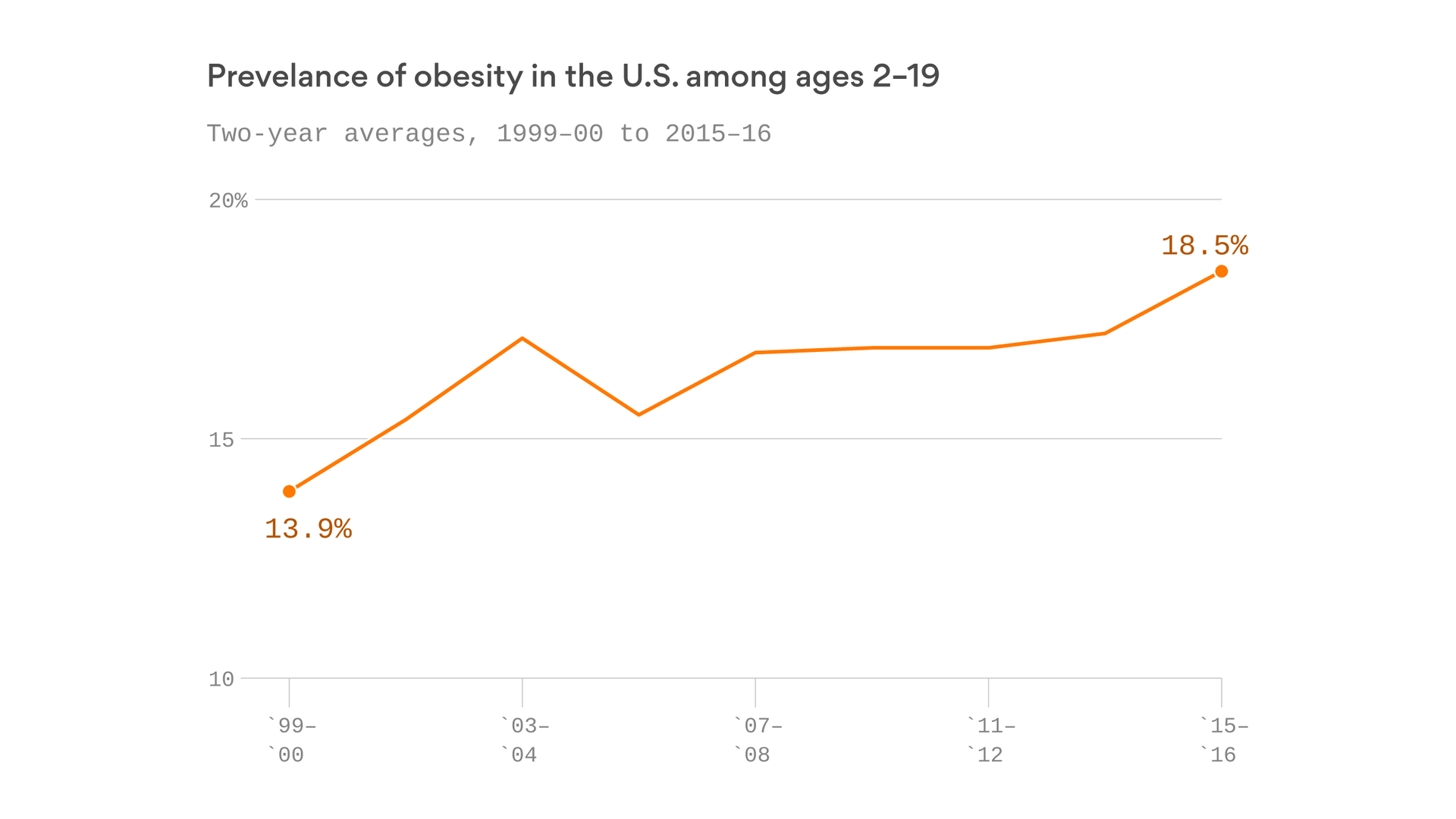
The big picture: Rising obesity rates now will translate into rising rates of type 2 diabetes and heart disease. The costs of the opioid crisis will continue to mount even after the acute crisis ends. And all of this will strain what’s already the most expensive health care system in the world.

By the numbers: 18% of American kids are now obese, according to new CDC data. So are roughly 40% of adults. And it’s projected to get worse.

  • That helps explain why diabetes rates are also rising, and why roughly 30% of adults have high blood pressure.

Why it matters: More obese children means there will be more adults down the road with chronic conditions like diabetes — which can’t be cured, only managed — and these diseases in turn increase the risk of further complications, such as kidney disease and stroke.

  • Diabetes roughly doubles your lifetime health care bills, according to the CDC, and costs the U.S. a total of $245 billion per year.
  • As the price of insulin continues to skyrocket, the disease only gets harder for patients to manage, if they can afford treatment at all.

We’re only beginning to see the full costs of the opioid crisis, even though it has raged for years.

  • A White House report earlier this week pegged the cost of the epidemic at a staggering $696 billion last year alone, including the cost of productivity lost to addiction.
  • The tide has only barely begun to turn on overall overdose deaths — they still numbered around 68,000 last year.
  • And many survivors of the epidemic will face long-term health costs. Addiction recovery can be a lifelong process requiring sustained investments. It has also led to skyrocketing rates of Hepatitis C — some states have seen their infection rates rise by more than 200% over the past decade.

Groundbreaking new treatments offer the first-ever cure for Hepatitis C, but at price tags so high that states are experimenting with entirely new ways of paying for the drugs, fearing the status quo simply can’t bear these costs all at once.

The bottom line: The flaws in the U.S. health care system compound one another.

  • They reward doctors and hospitals for performing more treatment on sick people, and those treatments are expensive. That leaves big gaps in prevention, which drives the need for more expensive treatment.
  • That’s how we ended up with the world’s most expensive health care system, but without a particularly healthy population to show for it. And that trajectory isn’t changing.