The No. 1 lesson from the 2021 JP Morgan Healthcare Conference: Healthcare is ‘too vital to fail’

Chronic Conditions | HENRY KOTULA

The annual J.P. Morgan Healthcare Conference is one of the best ways to diagnose the financial condition of the healthcare industry. Every January, every key stakeholder — providers, payers, pharmaceutical companies, tech companies, medical device and supply companies as well as bankers, venture capital and private equity firms — comes together in one exam room, even when it is virtual, for their annual check-up. But as we all know, this January is unlike any other as this past year has been unlike any other year.

You would have to go back to the banking crisis of 2008 to find a similar moment from an economic perspective. At the time, we were asking, “Are banks too big to fail?” The concern behind the question was that if they did fail, the economic chaos that would follow would lead to a collapse with the consumer ultimately picking up the tab. The rest is history.

Healthcare is “Too Vital to Fail” 

2020 was historic in too many ways to count. But in a year when healthcare providers faced the worst financial crisis in the history of healthcare, the headline is that they are still standing. And what they proved is that in contrast to banks in 2008 that were seen by many as “too big to fail,” healthcare providers in 2020 proved that they were “too vital to fail.” 

One of the many unique things about the COVID-19 pandemic is we are simultaneously experiencing a health crisis, where healthcare providers are the front line in the battle, and an economic crisis, felt in a big way in healthcare given the unique role hospitals play as the largest employer in most communities. Hospitals and health systems have done the vast majority of testing, treating, monitoring, counseling, educating and vaccinating all while searching for PPE and ventilators, and conducting clinical trials. And that’s just the beginning of the list.

Stop and think about that for a minute. What would we have done without them? Thinking through that question will give you some appreciation for the critical, challenging and central role that healthcare providers have had to play over the past year.

Simply stated, healthcare providers are the heart of healthcare, both clinically (essentially 100 percent of the care) and financially (over 50 percent of the $4 trillion annual spend on U.S. healthcare). Over the last year they stepped up and they stepped in at the moment where we needed them the most. This was despite the fact that, like most businesses, they were experiencing calamitous losses with no assurances of any assistance. 

Healthcare is “Pandemic-Proof”

This was absolutely the worst-case scenario and the biggest test possible for our nation’s healthcare delivery system. Patient volume and therefore revenue dropped by over 50 percent when the panic of the pandemic was at its peak, driving over $60 billion in losses per month across hospitals and healthcare providers. At the same time, they were dramatically increasing their expenses with PPE, ventilators and additional staff. This was not heading in a good direction. While failure may not have been seen as an option, it was clearly a possibility. 

The CARES Act clearly provided a temporary lifeline, providing funding for our nation’s hospitals to weather the storm. While there are more challenging times ahead, it is now clear that most are going to make it to the other side. The system of care in our country is often criticized, but when faced with perhaps the most challenging moment in the history of healthcare, our nation’s hospitals and health systems stepped up heroically and performed miraculously. The work of our healthcare providers on the front line and those who supported them was and is one thing that we all should be exceptionally proud of and thankful for. In 2020, they proved that not only is our nation’s healthcare system too vital to fail, but also that it is “pandemic proof.” 

Listening to Front Line at the 2021 J.P. Morgan Healthcare Conference 

There has never been a more important year to listen to the lessons from healthcare providers. They are and were the front line of our fight against COVID-19. If there was a class given about how to deal with a pandemic at an institutional level, this conference is where those lessons were being taught.  

This year at the J.P. Morgan Healthcare Conference, CEOs, and CFOs from many of the most prestigious and most well-respected health systems in the world presented including AdventHealth, Advocate Aurora Health, Ascension, Baylor Scott & White Health, CommonSpirit Health, Henry Ford Health System, Intermountain Healthcare, Jefferson Health, Mass General Brigham, Northwell Health, OhioHealth, Prisma Health, ProMedica Health System, Providence, Spectrum Health and SSM Health.

I’ve been in healthcare for 30 years and this is my fifth year of writing up the summary of the non-profit provider track of the conference for Becker’s Healthcare to help share the wisdom of the crowd of provider organizations that share their stories. Clearly, this year was different and not because the presentations were virtual, but because they were inspirational. 

What did we learn? The good news is that they have made many changes that have the potential to move healthcare in a much better direction and to get to a better place much faster. So, this year instead of providing you a nugget from each presentation, I am going to take a shot at summarizing what they collectively have in motion to stay vital after COVID.

10 Moves Healthcare Providers are Making to Stay Vital After-COVID

As a leader in healthcare, you will never have a bigger opportunity to drive change than right now. Smart leaders are framing this as essentially “before-COVID (BC)” and “after-COVID (AC)” and using this moment as their burning platform to drive change. Credit to the team at Providence for the acronym, but every CEO talked about this concept. As the saying goes, “never let a good crisis go to waste.” Well, we’ve certainly had a crisis, so here is a list of what the top health systems are doing to ensure that they don’t waste it and that they stay vital after-COVID:

1. Take Care of Your Team and They’ll Take Care of You: In a crisis, you can either come together as a team or fall apart. Clearly there has been a significant and stunning amount of pressure on healthcare providers. Many are fearing that mental health might be our nation’s next pandemic in the near future because they are seeing it right now with their own team. Perhaps one of their biggest lessons from this crisis has been the need to address the mental, physical and spiritual health of both team members as well as providers. They have put programs in place to help and have also built a tremendous amount of trust with their team by, in many cases, not laying off and/or furloughing employees. While they have made cuts in other areas such as benefits, this collective approach proved incredibly beneficial. And the last point here that relates to thinking differently about their team is that similar to other businesses, many health systems are making remote arrangements permanent for certain administrative roles and moving to a flexible approach regarding their team and their space in the future. 

2. Focus on Health Equity, Not Just Health Care: This was perhaps the most notable and encouraging change from presentations in past years at J.P. Morgan. I have been going to the conference for over a decade, and I’ve never heard someone mention this term or outline their efforts on “health equity” — this year, nearly everyone did. In the past, they have outlined many wonderful programs on “social determinants of health,” but this year they have seen the disproportionate impact of COVID on low-income communities bringing the ongoing issue of racial disparities in access to care and outcomes to light. As the bedrock of employment in their community, this provides an opportunity to not just provide health care, but also health equity, taking an active role to help make progress on issues like hunger, homelessness, and housing. Many are making significant investments in a number of these and other areas. 

3. Take the Lead in Public Health — the Message is the Medicine: One of the greatest failings of COVID, perhaps the greatest lesson learned, is the need for clear and consistent messaging from a public health perspective. That is a role that healthcare providers can and should play. In the pandemic, it represented the greatest opportunity to save lives as the essence of public health is communication — the message is the medicine. A number of health systems stepped into this opportunity to build trust and to build their brand, which are essentially one in the same. Some organizations have created a new role — a Chief Community Health Officer — which is a good way to capture the work that is in motion relative to social determinants of health as well as health equity. Many understand the opportunity here and will take the lead relative to vaccine distribution as clear messaging to build confidence is clearly needed.

4. Make the Home and Everywhere a Venue of Care: A number of presenters stated that “COVID didn’t change our strategy, it accelerated it.” For the most part, they were referring to virtual visits, which increased dramatically now representing around 10 percent of their visits vs. 1 percent before-COVID. One presenter said, “Digital has been tested and perfected during COVID,” but that is only considering the role we see digital playing in this moment. It is clear some organizations have a very narrow tactical lens while others are looking at the opportunity much more strategically. For many, they are looking at a “care anywhere and everywhere” strategy. From a full “hospital in the home” approach to remote monitoring devices, it is clear that your home will be seen as a venue of care and an access point moving forward. The pandemic of 2020 may have sparked a new era of “post-hospital healthcare” — stay tuned.

5. Bury Your Budget and Pivot to Planning: The budget process has been a source of incredible distrust, dissatisfaction and distraction for every health system for decades. The chaos and uncertainty of the pandemic forced every organization to bury their budget last year. With that said, many of the organizations that presented are now making a permanent shift away from a “budget-based culture” where the focus is on hitting a now irrelevant target set that was set six to nine months ago to a “performance-based culture” where the focus is on making progress every day, week, month and quarter. Given that the traditional annual operating budget process has been the core of how health systems have operated, this shift to a rolling forecast and a more dynamic planning process is likely the single most substantial and permanent change in how hospitals and health systems operate due to COVID. In other words, it is arguably a much bigger headline than what’s happened with virtual visits.

6. Get Your M&A Machine in Motion: It was clear from the presentations that activity around acquisitions is going to return, perhaps significantly. These organizations have strong balance sheets and while the strong have gotten stronger during COVID, the weak have in many cases gotten weaker. Many are going to be opportunistic to acquire hospitals, but at the same time they have concluded that they can’t just be a system of care delivery. They are also focused on acquiring and investing in other types of entities as well as forming more robust partnerships to create new revenue streams. Organizations that already had diversified revenue streams in place came through this pandemic the best. Most hospitals are overly reliant on the ED and surgical volume. Trying to drive that volume in a value-based world, with the end of site of service differentials and the inpatient only list, will be an even bigger challenge in the future as new niche players enter the market. As I wrote in the headline of my summary two years ago,It’s the platform, stupid.” There are better ways to create a financial path forward that involve leveraging their assets — their platform — in new and creative ways. 

7. Hey, You, Get into the Cloud: With apologies for wrapping a Rolling Stones song into a conference summary, one of the main things touted during presentations was “the cloud” and their ability to pull clinical, operational and financial dashboards together to monitor the impact of COVID on their organization and organize their actions. Focus over the last decade has been on the clinical (implementing EHRs), but it is now shifting to “digitizing operations” with a focus on finance and operations (planning, cost accounting, ERPs, etc.) as well as advanced analytics and data science capabilities to automate, gather insight, manage and predict. It is clear that the cloud has moved from a curiosity to a necessity for health systems, making this one of the biggest areas of investment for every health system over the next decade.

8. Make Price Transparency a Key Differentiator: One of the great lessons from Amazon (and others) is that you can make a lot of money when you make something easy to buy. While many health systems are skeptical of the value of the price transparency requirements, those that have a deep understanding of both their true cost of care and margins are using this as an opportunity to prove their value and accelerate their strategy to become consumer-centric. While there is certainly a level of risk, no business has ever been unsuccessful because they made their product easier to understand and access. Because healthcare is so opaque, there is an opening for healthcare providers to build trust, which is their main asset, and volume, which is their main source of revenue, by becoming stunningly easy to do business with. This may be tough sledding for some as this isn’t something healthcare providers are known for. To understand this, spend a few minutes on Tesla’s website vs. Ford’s. The concept of making something easy, or hard, to buy will become crystal clear as fast as a battery-driven car can go from zero to 60.

9. Make Care More Affordable: This represents the biggest challenge for hospitals and health systems as they ultimately need to be on the right side of this issue or the trust that they have will disappear and they will remain very vulnerable to outside players. All are investing in advanced cost accounting systems (time-driven costing, physician costing, supply, and drug costing) to truly understand their cost and use that as a basis to price more strategically in the market. Some are dropping prices for shoppable services and using loss leader strategies to build their brand. The incoming Secretary of Health and Human Services has a strong belief regarding the accountability of health systems to be consumer centric. The health systems that understand this are working to get ahead of this issue as it is likely one of their most significant threats (or opportunities) over the next decade. This means getting all care to the right site of care, evaluating every opportunity to improve, and getting serious about eliminating the need for expensive care through building healthy communities. If you’re worried about Wal-Mart or Amazon, this is your secret weapon to keep them on the sideline.

10. Scale = Survival: One of the big lessons here is that the strong got stronger, the weak got weaker. For the strong, many have been able to “snapback” in financial performance because they were resilient. They were able to designate COVID-only facilities, while keeping others running at a higher capacity. To be clear, while most health systems are going to get to the other side and are positioned better than ever, there are many others that will continue to struggle for years to come. According to our data at Strata, we see 25 percent operating at negative margins right now and another 50 percent just above breakeven. They key to survival moving forward, for those that don’t have a captive market, will be scale. If this pandemic proved one thing relative to the future of health systems it is this — scale equals survival. 

When Will We Return to Normal?

Based on what the projections that these health systems shared, the “new normal” for health systems for the first half of 2021 will be roughly 95 percent of prior year inpatient volume with a 20 percent year-over-year drop in ED volume and a drop of 10-15 percent in observation visits. So, the pain will continue, but given the adjustments that were already made in 2020, it looks like they will be able to manage through COVID effectively. While there will be a pickup in the second half of 2021, the safe bet is that a “return to normal” pre-COVID volumes likely won’t occur until 2022. And there are some who believe that some of the volume should have never been there to begin with and we might see a permanent shift downward in ED volume as well as in some other areas.

With that said, I’ll steal a quote from Bert Zimmerli, the CFO of Intermountain Healthcare, who said, “Normal wasn’t ever nearly good enough in healthcare.” In that spirit, the goal should be to not return to normal, but rather to use this moment as an opportunity to take the positive changes driven by COVID — from technology to processes to areas of focus to a sense of responsibility — and make them permanent.

Thanking Our “Healthcare Heroes”

We’ll never see another 2020 again, hopefully. With that said, one of the silver linings of the year is everything we learned in healthcare. The most important lesson was this — in healthcare there are literally heroes everywhere. To each of them, I just want to say “thank you” for being there for us when we needed you the most. We should all be writing love letters to those on the front line who risked their lives to save others. Our nation’s healthcare system has taken a lot of criticism through the years from those on the outside, often with a blind eye to how things work in practice vs. in concept. But this year we all got to see first-hand what’s happening inside of healthcare — the heroic work of our healthcare providers and those who support them. 

They faced the worst crisis in the history of healthcare. They responded heroically and were there for our families and friends.

They proved that healthcare is too vital to fail. They proved that healthcare is pandemic-proof.

Thank you to our healthcare heroes.
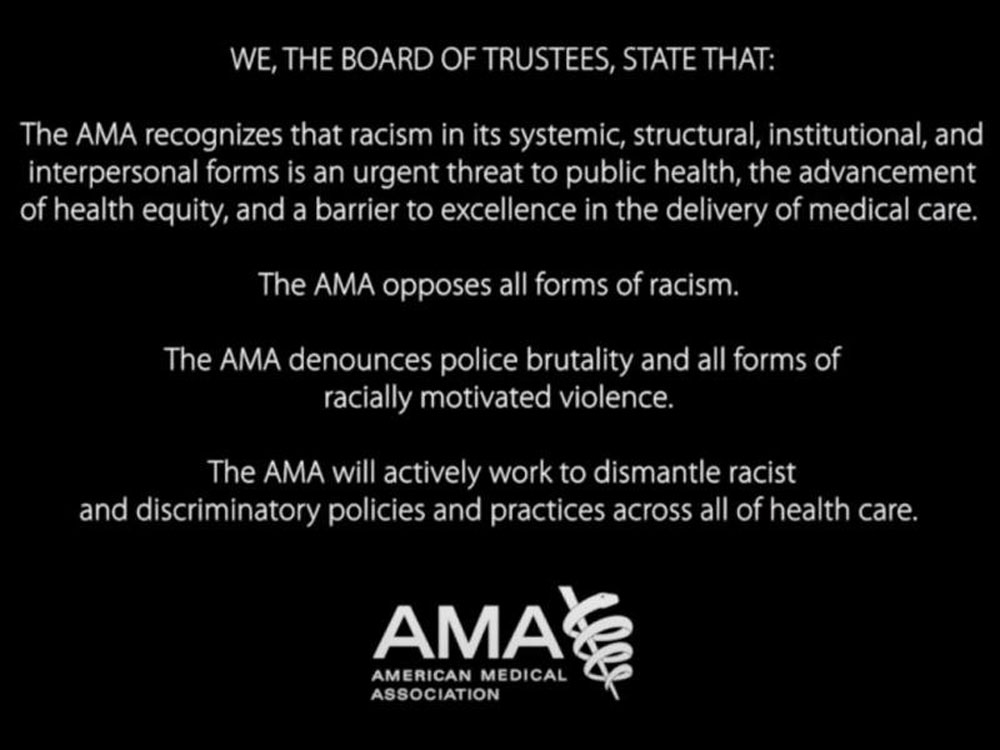
The AMA declares racism a public health threat

https://mailchi.mp/4422fbf9de8c/the-weekly-gist-november-20-2020?e=d1e747d2d8

AMA Declares Racism a Public Health Threat and Adopts Anti-Racist Policies  - Non Profit News | Nonprofit Quarterly

On Monday, the American Medical Association (AMA) voted to recognize racism as an “urgent threat to public health”. At its annual meeting, the organization’s House of Delegates voted to take actions to confront systemic, cultural and interpersonal racism, including acknowledging harm and bias in medical research and healthcare delivery, funding research to identify risks of racial bias to health, and encouraging medical schools to teach students about the causes and effects of racism, and strategies to prevent adverse health outcomes.

The resolution was one of several proposed items aimed at addressing racial diversity and equity in medical education and care delivery. Over the past two years, the AMA has been moving toward a more progressive stance on health and social policy; in June the AMA Board of Trustees also pledged action against racism and police brutality in response to the murder of George Floyd.

A generational divide between older and younger doctors was also apparent during last year’s debates on Medicare for All, when the organization narrowly voted to maintain its opposition to single-payer healthcare in a close vote that would have been unimaginable a decade ago.

At this week’s meeting, however, the group gave its stamp of approval to proposals for a more limited “public option” coverage expansion. As more young physicians enter the field of medicine, we’d expect the AMA to become a stronger voice on a range of social and policy issues. 

What ‘Racism Is a Public Health Issue’ Means

https://www.smithsonianmag.com/science-nature/what-racism-public-health-issue-means-180975326/?utm_source=smithsoniandaily&utm_medium=email&utm_campaign=20200720-daily-responsive&spMailingID=43001584&spUserID=MTA5MDI1MDg0MjgxOQS2&spJobID=1801530184&spReportId=MTgwMTUzMDE4NAS2&fbclid=IwAR027OjpNcyZKM6Jd5aTYhgVaTzaO5lBqI4hCl1xsrKgQRL1bFYH538YIMA

What 'Racism Is a Public Health Issue' Means | Science ...

Epidemiologist Sharrelle Barber discusses the racial inequalities that exist for COVID-19 and many other health conditions.

Throughout the COVID-19 pandemic, whether cases are flaring up, slowing to a simmer, or back on the rise in areas across the United States, the data makes one fact apparent: The viral disease has disproportionally sickened and killed marginalized communities. A New York Times analysis of data from almost 1,000 counties that reported racial breakdowns of COVID-19 cases and fatalities revealed that, compared to white Americans, African Americans and Hispanics were three times more likely to experience and two times more likely to die from the illness. The Navajo Nation has, per capita, more confirmed cases and deaths than any of the 50 states.

Many factors, like access to healthcare and testing, household size, or essential worker status, likely contribute to the pandemic’s outsized toll on communities of color, but experts see a common root: the far-reaching effects of systemic racism.

That racism would have such an insidious effect on health isn’t a revelation to social epidemiologists. For decades, public health experts have discussed “weathering,” or the toll that repeated stressors experienced by people of color take on their health. Studies have demonstrated the link between such chronic stress and high blood pressure, the increased maternal mortality rate among black and indigenous women, and the elevated prevalence of diabetes in black, Latino and especially Native American populations. The pandemic has laid bare these inequities. At the same time, outcry over systemic racism and police brutality against African Americans has roiled the nation, and the phrase, “Racism is a public health issue” has become an internet refrain.

What exactly is the nebulous concept of “public health”? According to Sharrelle Barber, a Drexel University assistant professor of epidemiology, the concept goes beyond the healthcare setting to take a more holistic look at health in different populations. “The charge of public health,” Barber told Smithsonian, “is really to prevent disease, prevent death, and you prevent those things by having a proper diagnosis of why certain groups might have higher rates of mortality, higher rates of morbidity, et cetera.”

Below is a lightly edited transcript of Smithsonian’s conversation with Barber, who studies how anti-black racism impacts health, about the many ways in which racism is a public health crisis:

When people say, “Racism is a public health problem,” what, in broad strokes, do they mean?

We’ve been observing racial inequities in health for decades in this country. W.E.B. DuBois, who was a sociologist, in The Philadelphia Negro showed mortality rates by race and where people lived in the city of Philadelphia at the turn of the 20th century and found striking inequalities based on race. Fast forward to 1985, 35 years ago, and we have the [Department of Health and Human Services-sponsored] Heckler Report, one of the most comprehensive studies the country had undertaken, which again found striking inequalities across a wide range of health outcomes: infant mortality, cancer, stroke, et cetera.

There are various explanations for why these racial inequalities exist, and a lot of those have erroneously focused on either biology or genetics or behavioral aspects, but it’s important to examine the root causes of those inequities, which is structural racism…Racism is a public health problem, meaning racism is at the root of the inequities in health that we see, particularly for blacks in this country. So whether it’s housing, criminal justice, education, wealth, economic opportunities, healthcare, all of these interlocking systems of racism really are the main fundamental drivers of the racial inequities that we see among black Americans.

What are some specific factors or policies that have set the foundations for these health inequities?

Any conversation about racial inequities has to start with a conversation about slavery. We have to go back 400-plus years and really recognize the ways in which the enslavement of African people and people of African descent is the initial insult that set up the system of racism within this country. One of the major drivers that I actually study is the link between racial residential segregation, particularly in our large urban areas, and health inequities. Racial residential segregation is rooted in racist policies that date back at least to the 1930s. Practices such as redlining, which devalued black communities and led to the disinvestment in black communities, were then propped up by practices and policies at the local, the state and federal level, for example, things like restrictive covenants, where blacks were not allowed to move into certain communities; racial terror, where blacks were literally intimidated and run out of white communities when they tried to or attempted to move into better communities; and so many other policies. Even when you get the 1968 Fair Housing Act, the system finds a way to reinvent itself to still perpetuate and maintain racism.

Within segregated communities, you have so many adverse exposures, like poor quality housing or lack of access to affordable, healthy foods, lack of access to quality healthcare, and the list goes on. The chronic stressors within these communities are compounded in segregated communities, which then can lead to a wide array of health outcomes that are detrimental. So for example, in the city of Philadelphia, there’s been work that has shown upwards of a 15-year life expectancy difference between racially and economically segregated communities, black communities and wealthier white communities.

I imagine that sometimes you might get pushback from people who ask about whether you can separate the effects of socioeconomic status and race in these differences in health outcomes.

Yeah, that’s a false dichotomy in some ways. Racism does lead to, in many aspects, lower income, education, wealth. So they’re inextricably linked. However, racism as a system goes beyond socioeconomic status. If we look at what we see in terms of racial inequities in maternal mortality for black women, they are three times times more likely to die compared to white women. This disparity or this inequity is actually seen for black women who have a college degree or more. The disparity is wide, even when you control for socioeconomic status.

Let’s talk about the COVID-19 pandemic. How does racism shape the current health crisis?

The COVID-19 pandemic has literally just exposed what me and so many of my colleagues have known for decades, but it just puts it in such sharp focus. When you see the disproportionate impact COVID-19 is having, particularly for blacks, but also we’re seeing emerging data on Indigenous folks, it is just laying bare the ways racism is operating in this moment to produce those inequities.

Essential workers who had to continue to work during periods of stay at home orders across the country were disproportionately black and Latino. These are also often low wage workers. They weren’t given personal protective equipment, paid sick leave, hazard pay, and really had to choose between being exposed and protecting themselves and having an income during this period. So that’s one way racism operates.

Then we know that those individuals aren’t isolated, that they return to homes that often are crowded because of the lack of affordable housing. Again, another system of racism that compounds the effect. Then you think about places like Flint, Michigan, or places that don’t have access to clean water. When we were telling people, “Wash your hands, social distance,” all of those things, there were people who literally could not adhere to those basic public health prevention measures and still can’t.

So many things were working in tandem together to then increase the risk, and what was frustrating for myself and colleagues was this kind of “blame the victim” narrative that emerged at the very onset, when we saw the racial disparities emerge and folks were saying, “Blacks aren’t washing their hands,” or, “Blacks need to eat better so they have better outcomes in terms of comorbidities and underlying chronic conditions,” when again, all of that’s structured by racism. To go back to your original question, that’s why racism is a public health issue and fundamental, because in the middle of a pandemic, the worst public health crisis in a century, we’re seeing racism operate and racism produce the inequities in this pandemic, and those inequities are striking…

If we had a structural racism lens going into this pandemic, perhaps we would have done things differently. For example, get testing to communities that we know are going to be more susceptible to the virus. We would have done that early on as opposed to waiting, or we would have said, “Well, folks need to have personal protective equipment and paid sick leave and hazard pay.” We would have made that a priority…

The framing [of systemic racism as a public health concern] also dictates the solutions you come up with in order to actually prevent death and suffering. But if your orientation is, “Oh, it’s a personal responsibility” or “It’s behavioral,” then you create messages to black communities to say, “Wash your hands; wear a mask,” and all of these other things that, again, do not address the fundamental structural drivers of the inequities. That’s why it’s a public health issue, because if public health is designed to prevent disease, prevent suffering, then you have to address racism to have the biggest impact.

Can you talk about how police brutality fits into the public health picture?

We have to deal with the literal deaths that happen at the hands of the police, because of a system that is rooted in slavery, but I also think we have to pay attention to the collective trauma that it causes to black communities. In the midst of a pandemic that’s already traumatic to watch the deaths due to COVID-19, [communities] then have to bear witness to literal lynchings and murders and that trauma. There’s really good scholarship on the kind of spillover effects of police brutality that impact the lives of whole communities because of the trauma of having to witness this kind of violence that then does not get met with any kind of justice.

It reinforces this idea that one, our lives are disposable, that black lives really don’t matter, because the whole system upholds this kind of violence and this kind of oppression, particularly for black folks. I’ve done studies on allostatic load [the wear and tear on the body as a result of chronic stress] and what it does, the dysregulation that happens. So just think about living in a society that’s a constant source of stress, chronic stress, and how that wreaks havoc on blacks and other marginalized racial groups as well.


How The Rapid Shift To Telehealth Leaves Many Community Health Centers Behind During The COVID-19 Pandemic

https://www.healthaffairs.org/do/10.1377/hblog20200529.449762/full/

How to reduce the impact of coronavirus on our lives - The ...

The COVID-19 pandemic has transformed the landscape of ambulatory care with rapid shifts to telehealth. Well-resourced hospitals have quickly made the transition. Community health centers (CHCs), which serve more than 28 million low-income and disproportionately uninsured patients in rural and underserved urban areas of the United States, have not fared as well since ambulatory visits have disappearedresulting in furloughs, layoffs, and more than 1,900 temporary site closures throughout the country. Government officials have taken notice, and the Coronavirus Aid, Relief, and Economic Security (CARES) Act infused $1.32 billion toward COVID-19 response and maintaining CHC capacity.

Many states have directed insurers to temporarily cover COVID-19-related services via telehealth while mandating parity of reimbursement for telehealth visits with in-person visits for their Medicaid program.

Preparedness Of Community Health Centers For Telehealth

Despite the changes, many health centers may not be ready to implement high-quality telehealth. study using 2016 data showed that only 38 percent of CHCs used any telehealth. In our review of 2018 Uniform Data System data—the most recent available—from a 100 percent sample of US CHCs, we found that our nation’s health centers are largely unprepared for this transformation.

Across the US, 56 percent of 1,330 CHCs did not have any telehealth use in 2018 (exhibit 1). Of those without telehealth use, only about one in five were in the process of actively implementing or exploring telehealth. Meanwhile, 47 percent of the centers using telehealth were doing so only with specialists such as those at referral centers, rather than with patients. Of those using telehealth, the majority (68 percent) used it to provide mental health services; fewer used it for primary care (30 percent) or management of chronic conditions (21 percent), suggesting that most CHCs with telehealth capabilities prior to COVID-19 were not using it for the most frequent types of services provided at CHCs.

CHCs not using telehealth reported several barriers to implementation (exhibit 2). Thirty-six percent cited lack of reimbursement, 23 percent lacked funding for equipment, and 21 percent lacked training for providing telehealth. Although most barriers were similar in both urban and rural regions, a greater proportion of rural clinics compared to urban clinics (18 percent versus 7 percent) reported inadequate broadband services as an issue.

The COVID-19 pandemic has laid bare the enormous disparities in telehealth capacity. Without adequate telehealth capacity and support, many CHCs will be left without means of providing the continuous preventive and chronic disease care that can keep communities healthy and out of the hospital. During the crisis, the Health Resources and Services Administration estimates that CHCs have seen 57 percent of the number of weekly visits compared to pre-COVID-19 visit rates, 51 percent of which have been conducted virtually, suggesting that many CHC patients have forgone care that they would have otherwise received. Given CHCs serve a disproportionate share of low-income, racial/ethnic minority, and immigrant populations—populations hardest hit by the COVID-19 pandemic—any disruption to CHC capacity may exacerbate the racial disparities that have rapidly emerged.

While an important first step, policy makers cannot simply infuse more funding to CHCs and expect them to withstand the challenges of the COVID-19 era. We recommend three targeted strategies to help CHCs adapt and perhaps even thrive beyond COVID-19: legislate permanent parity in telehealth reimbursement for all insurers; allocate sufficient funding and guidance for telehealth equipment, personnel, training, and protocols; and implement telehealth systems tailored to vulnerable populations.

Permanent All-Payer Parity For Telehealth Reimbursement

Payment parity—where telehealth is reimbursed at the same level as an in-person visit—is a crucial issue that must be addressed and instituted beyond the current public health emergency. Without commensurate reimbursement for telehealth, CHCs cannot maintain patient volume or make the long-term investments necessary to remain financially viable. A “global budget” of paying CHCs a fixed payment per patient per month would give practices flexibility in how and where to treat the patient, although this may be politically and practically challenging. Meanwhile, payment parity has already been implemented and could simply be permanently codified into existing reimbursement schemes, giving providers the option to select the best mode of treatment without making financial trade-offs.

In reviewing state telehealth policies during COVID-19, all states have implemented temporary executive orders or released guidance on telehealth access—although with significant variations. At least 22 states have explicitly implemented telehealth parity for Medicaid. For Medicare, the Centers for Medicare and Medicaid Services (CMS) expanded access to telehealth beyond designated rural areas, loosened HIPAA requirements around telehealth platforms, and instituted parity in reimbursement with in-person visits.

To build on these significant steps, states should mandate telehealth parity across all payers and cover all services provided at CHCs, not just COVID-19-related care. At least 12 states have mandated all-payer parity for telehealth. Meanwhile, private insurers have individually adjusted telehealth policies on a state-by-state basis if there was no statewide mandate. Nevertheless, all payers should reimburse at parity given the patchwork quilt of insurance plans that exists at CHCs.

Furthermore, state legislatures and CMS should look to extend parity beyond the current COVID-19 emergency so that CHCs can make sustainable investments that continue to benefit patients. Even as states reopen, in-person visits are unlikely to return to their previous volume as the threat of infection continues to loom. Temporary measures should be made permanent so that CHCs can make sustainable investments that continue to benefit patients.

Funding And Guidance For Equipment, Personnel, Training, And Protocols

For telehealth to function smoothly and reduce errors, proper hardware and software are critical, including telephone service, computers, broadband internet access, and electronic health records. The Federal Communications Commission (FCC) released funding to procure telehealth services and devices and some CHCs have received private funding; similar targeted funding mechanisms from states and the federal government are necessary at scale to equip hundreds of CHCs with the necessary telehealth capabilities.

However, merely having technology is not sufficient. Proper personnel with appropriate training are key to a high-functioning telehealth system along with support from information technology specialists. Additionally, CHCs need ancillary systems in place to allow for the effective use of phone and video visits. Empanelment systems to attribute patients to providers can allow for longitudinal follow-up even with telehealth. Daily huddles and team-based care can enhance the inherent complexities of coordinating care remotely. Protocols should be tailored for different specialties and services such as nutrition management and social work. Meanwhile, a robust e-consult referral network should allow primary care providers at CHCs to easily connect patients to specialty care when necessary. Adding robust protocols and systems will allow for the successful implementation and scaling of telehealth.

For example, groups of CHCs called the Health Center Controlled Networks (HCCNs), which have traditionally collaborated to leverage health information technology, are positioned to harness their economies of scale and group purchasing power to widely adopt new infrastructure while standardizing protocols. They could be a means to accelerate the adoption of telehealth technologies, trainings, and care models to optimize the use of telehealth across CHCs.

Telehealth Support For Vulnerable Patients

The patient population seen by CHCs presents unique challenges that not all ambulatory practices, particularly those in affluent neighborhoods, may face. Health centers care for many immigrant patients with limited English proficiency. Thus, clinics need financial support to contract with telehealth interpreter and translation services to provide equitable access and care. Better yet, all telehealth platforms contracting with CHCs should be required to provide multilingual support to deliver equitable access to telehealth services.

Moreover, many low-income patients lack health and digital literacy. Virtual telehealth platforms should design applications such that interfaces are intuitive and easy to navigate. They should provide specialized support to guide patients who are not familiar with telehealth systems. Additionally, insurers can reimburse CHCs that provide patient navigators, care coordinators, and shared decision-making support that bridge the health literacy divide.

Many around the US also do not have access to high-speed internet, consistent telephone services, and phones or computers with video conferencing capabilities. First, to allow for flexible access to telehealth for all patients, insurers should permanently waive geographic and originating site restrictions that limit the type and location of facilities from which patients can use telehealth. Second, insurers should waive audio-video requirements and consistently reimburse for phone-only visits to accommodate patients without video conferencing. Third, the type of services covered by telehealth should be expanded—ranging from primary care to physical therapy to nutrition counseling to behavioral health.

To address disparities in ownership of digital devices, taking a page out of the book of educators in low-income neighborhoods, local governments could loan laptops and smartphones or supply internet hotspots and phone-charging stations for these communities to enable access. Additionally, insurers could reimburse for the FCC Lifeline program to provide affordable communication services and cellular data to low-income populations to maintain their outpatient care.

Conclusions

As the COVID-19 pandemic sweeps through the US, health care delivery will never be the same. Health centers are struggling as many have been largely unprepared for the abrupt swing toward telehealth. COVID-19 may pose long-lasting damaging effects on CHCs and the patient populations that they serve. Nonspecific federal and state funding will allow CHCs to survive; however, deliberate action is needed to enhance telehealth capacities and ensure long-term resilience.

Similar to the Association of American Medical Colleges’ recent letter to CMS to make various telehealth changes permanent, both CMS and state governments should take immediate action by making permanent parity in reimbursement for telehealth services by all payers. State and federal policy should direct payers to lift onerous restrictions on the types of services covered via telehealth, audio/video requirements, and geographic and originating sites of telehealth services. States and payers should also explore innovative solutions to expand access to cellular data services and digital devices that allow low-income patients to digitally “get to their appointment,” similar to non-emergency medical transportation. Local governments should invest in digital infrastructure that expands broadband coverage and provides internet or cellular access points for people to engage in telehealth. Additionally, CHCs should come together under HCCNs to harness their group purchasing power to rapidly implement telehealth infrastructure that provides multilingual support and other tools that bridge gaps in digital literacy. Finally, best practices, trainings, and protocols should be standardized and disseminated across CHC networks to optimize the quality of telehealth.  

By reorienting the goals for implementing telehealth, policy makers, payers, and providers can empower health centers to thrive into the future and meet the nation’s underserved patients where they are, even during the pandemic. In the long run, telehealth can increase access and equity—but only if the right investments are made now to fill the gaps laid bare by COVID-19.


Healthcare groups call racism a ‘public health’ concern in wake of tensions over police brutality

https://www.fiercehealthcare.com/practices/healthcare-groups-denounce-systemic-racism-wake-tensions-over-police-brutality?mkt_tok=eyJpIjoiWmpobE5XVmlaRGd6T0dFdyIsInQiOiJsQmxnbVNxNVlISVNkczJIZkJXb3ZFZG9tVlpMblZ1XC9oVVB6SlRINzNhOXE4MWQzNk1cL3JTaDlcL2l0MGdhSnk0NUtqY1RzdThCN1wvZ1ZoVUxqOHJwZFJcL1wvK3FtS0o5NFwvSHA0WHhTUnhVNnY3bk5RNmhRQTdxYzYwclhYN3JTRW8ifQ%3D%3D&mrkid=959610

After days of protests across the world against police brutality toward minorities sparked by the killing of George Floyd in Minneapolis, healthcare groups are speaking out against the impact of “systemic racism” on public health.

“These ongoing protests give voice to deep-seated frustration and hurt and the very real need for systemic change. The killings of George Floyd last week, and Ahmaud Arbery and Breonna Taylor earlier this year, among others, are tragic reminders to all Americans of the inequities in our nation,” Rick Pollack, president and CEO of the American Hospital Association (AHA), said in a statement.

As places of healing, hospitals have an important role to play in the wellbeing of their communities. As we’ve seen in the pandemic, communities of color have been disproportionately affected, both in infection rates and economic impact,” Pollack said. “The AHA’s vision is of a society of healthy communities, where all individuals reach their highest potential for health … to achieve that vision, we must address racial, ethnic and cultural inequities, including those in health care, that are everyday realities for far too many individuals. While progress has been made, we have so much more work to do.”

The Society for Healthcare Epidemiology of America (SHEA) also decried the public health inequality highlighted by the dual crises.

“The violent interactions between law enforcement officers and the public, particularly people of color, combined with the disproportionate impact of COVID-19 on these same communities, puts in perspective the overall public health consequences of these actions and overall health inequity in the U.S.,” SHEA said in a statement. Association of American Medical Colleges (AAMC) executives called for health organizations to do more to address inequities. 

“Over the past three months, the coronavirus pandemic has laid bare the racial health inequities harming our black communities, exposing the structures, systems, and policies that create social and economic conditions that lead to health disparities, poor health outcomes, and lower life expectancy,” said David Skorton, M.D., AAMC president and CEO, and David Acosta, M.D., AAMC chief diversity and inclusion officer, in a statement.

“Now, the brutal and shocking deaths of George Floyd, Breonna Taylor, and Ahmaud Arbery have shaken our nation to its core and once again tragically demonstrated the everyday danger of being black in America,” they said. “Police brutality is a striking demonstration of the legacy racism has had in our society over decades.”

They called on health system leaders, faculty researchers and other healthcare staff to take a stronger role in speaking out against forms of racism, discrimination and bias. They also called for health leaders to educate themselves, partner with local agencies to dismantle structural racism and employ anti-racist training.


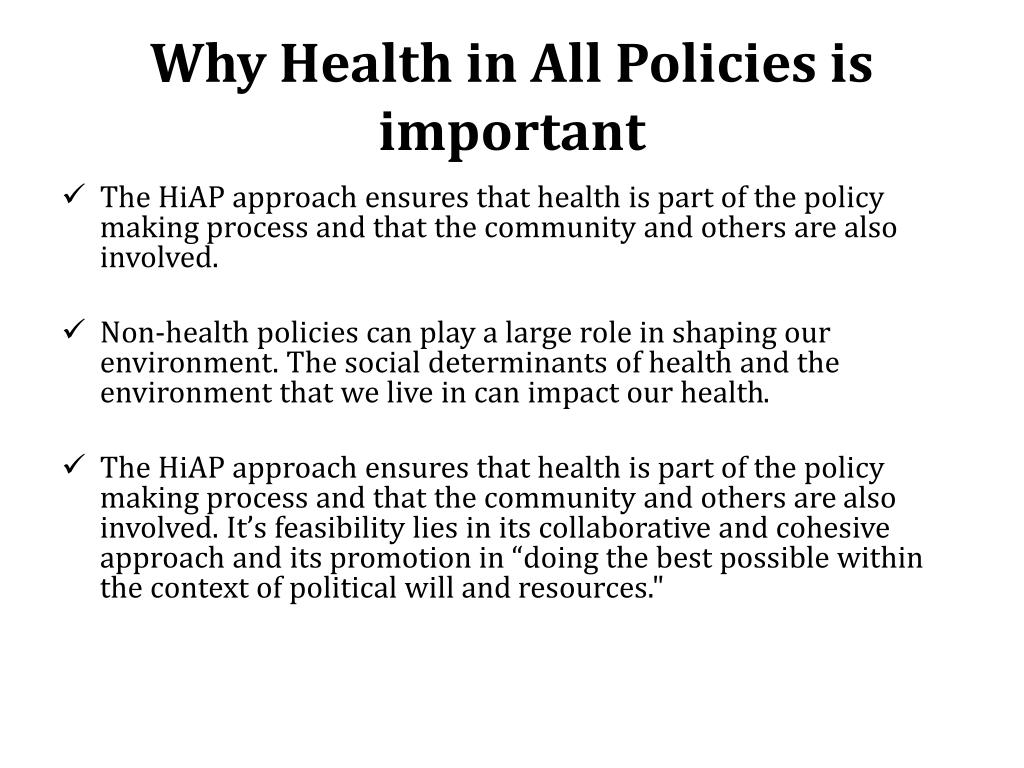
“All policy is health policy”

https://www.axios.com/newsletters/axios-vitals-8873028c-f37e-4712-a53a-ae324c56dbb6.html?utm_source=newsletter&utm_medium=email&utm_campaign=newsletter_axiosvitals&stream=top

PPT - Health in All Policies PowerPoint Presentation, free ...

The effects of racism are often inseparable from black Americans’ health and well-being, as “black communities bear the physical burdens of centuries of injustice, toxic exposures, racism, and white supremacist violence,” Rachel Hardeman, Eduardo Medina and Rhea Boyd write in the New England Journal of Medicine:

Any solution to racial health inequities must be rooted in the material conditions in which those inequities thrive. Therefore, we must insist that for the health of the black community and, in turn, the health of the nation, we address the social, economic, political, legal, educational, and health care systems that maintain structural racism. Because as the Covid-19 pandemic so expeditiously illustrated, all policy is health policy…

The response to the pandemic has made at least one thing clear: systemic change can in fact happen overnight.


Providers show support amid unrest: #WhiteCoatsForBlackLives

https://www.healthcaredive.com/news/providers-show-support-amid-unrest-whitecoatsforblacklives/579020/

Dive Brief:

  • The American Hospital Association on Monday condemned what they called the “senseless killing of an unarmed black man in Minneapolis,” referring to George Floyd, who died more than a week ago after a police officer held his knee on Floyd’s neck for more than eight minutes. AHA said the group’s vision is a “society of healthy communities, where ALL individuals reach their highest potential for health.”
  • Medical societies, providers and other healthcare organizations weighed in to support peaceful protests, especially as the COVID-19 pandemic shines a light on racial inequities in access to healthcare and job security in America.
  • Health officials also expressed worry that the protest gatherings could further spread of the novel coronavirus. Minnesota Gov. Tim Walz said hospitals in the state could be overwhelmed. And some COVID-19 testing sites have been shut down for safety reasons, further exacerbating concerns.

Dive Insight:

Since protests and occasionally violent police confrontations in recent days were sparked by Floyd’s death, providers have taken to social media with notes of support and pictures of themselves taking a knee in their scrubs under the hashtag #WhiteCoatsForBlackLives.

The American Medical Association responded to ongoing unrest Friday, saying the harm of police violence is “elevated amidst the remarkable stress people are facing amidst the COVID-19 pandemic.”

Board Chair Jesse Ehrenfeld and Patrice Harris, AMA’s first African American woman to be president, continued: “This violence not only contributes to the distrust of law enforcement by marginalized communities but distrust in the larger structure of government including for our critically important public health infrastructure. The disparate racial impact of police violence against Black and Brown people and their communities is insidiously viral-like in its frequency, and also deeply demoralizing, irrespective of race/ethnicity, age, LGBTQ or gender.”

Other organizations weighed in, including CommonSpirit Health, the American Psychiatric Association, the American College of Physicians and several medical colleges.

The nascent research and data from the pandemic in the U.S. have shown people of color are more likely to die from COVID-19 than white people. The reasons behind that are myriad and complex, but many can be traced back to systemic inequality in social services and the healthcare system.

Payers, providers and other healthcare organizations have attempted to address these issues through programs targeting social determinants of health like stable housing, food security and access to transportation.

But despite these efforts over several years to recognize and document the disparities, they have persisted and in some cases widened, Samantha Artiga, director of the Disparities Policy Project at the Kaiser Family Foundation, noted in a blog post Monday.

Health disparities, including disparities related to COVID-19, are symptoms of broader underlying social and economic inequities that reflect structural and systemic barriers and biases across sectors,” she wrote.

Providers have waded into political issues affecting them before, including gun violence. Several organizations also objected to the Trump administration’s decision to cut ties with the World Health Organization in the midst of the pandemic.

The American Public Health Association in late 2018 called law enforcement violence a public health issue.


Health Equity Principles for State and Local Leaders in Responding to, Reopening and Recovering from COVID-19

https://www.rwjf.org/en/library/research/2020/05/health-equity-principles-for-state-and-local-leaders-in-responding-to-reopening-and-recovering-from-covid-19.html

Centering Health Equity in COVID-19 Response and Recovery Plans ...

Health equity means that everyone has a fair and just opportunity to be as healthy as possible. This requires removing obstacles to health such as poverty, discrimination, and their consequences, including powerlessness and lack of access to good jobs with fair pay, quality education and housing, safe environments, and health care.”

COVID-19 has unleashed a dual threat to health equity in the United States: a pandemic that has sickened millions and killed tens of thousands and counting, and an economic downturn that has resulted in tens of millions of people losing jobs—the highest numbers since the Great Depression. The COVID pandemic underscores that:

  • Our health is inextricably linked to that of our neighbors, family members, child- and adult-care providers, co-workers, school teachers, delivery service people, grocery store clerks, factory workers, and first responders, among others;
  • Our current health care, public health, and economic systems do not adequately or equitably protect our well-being as a nation; and
  • Every community is experiencing harm, though certain groups are suffering disproportionately, including people of color, workers with low incomes, and people living in places that were already struggling financially before the economic downturn.

For communities and their residents to recover fully and fairly, state and local leaders should consider the following health equity principles in designing and implementing their responses. These principles are not a detailed public health guide for responding to the pandemic or reopening the economy, but rather a compass that continually points leaders toward an equitable and lasting recovery.


Collect, analyze, and report data disaggregated by age, race, ethnicity, gender, disability, neighborhood, and other sociodemographic characteristics.

Pandemics and economic recessions exacerbate disparities that ultimately hurt us all. Therefore, state and local leaders cannot design equitable response and recovery strategies without monitoring COVID’s impacts among socially and economically marginalized groups.¹ Data disaggregation should follow best practices and extend not only to public health data on COVID cases, hospitalizations, and fatalities, but also to: measures of access to testing, treatment, personal protective equipment (PPE), and safe places to isolate when sick; receipt of social and economic supports; and the downstream consequences of COVID on well-being, ranging from housing instability to food insecurity.

Geographic identifiers would allow leaders and the public to understand the interplay between place and social factors, as counties with large black populations account for more than half of all COVID deaths, and rural communities and post-industrial cities generally fare worse in economic downturns. Legal mandates for data disaggregation are proliferating, but 11 states are still not reporting COVID deaths by race; 16 are not reporting by gender; and 26 are not reporting based on congregate living status (e.g., nursing homes, jails). Only three are reporting testing data by race and ethnicity.

While states and cities can do more, the federal government should also support data disaggregation through funding and national standards.

Include in decision-making the people most affected by health and economic challenges, and benchmark progress based on their outcomes.

Our communities are stronger, more stable, and more prosperous when every person, including the most disadvantaged residents, is healthy and financially secure. Throughout the response and recovery, state and local leaders should ask: Are we making sure that people facing the greatest risks have access to PPE, testing and treatment, stable housing, and a way to support their families? And, are we creating ways for residents—particularly those hardest hit—to meaningfully participate in and shape the government’s recovery strategy?

Accordingly, policymakers should create space for leaders from these communities to be at decision-making tables and should regularly consult with community-based organizations that can identify barriers to accessing health and social services, lift up grassroots solutions, and disseminate public health guidance in culturally and linguistically appropriate ways. For example, they could recommend trusted, accessible locations for new testing sites and advise on how to diversify the pool of contact tracers, who will be crucial to tamping down the spread of infection in reopened communities. They could also collaborate with government leaders to ensure that all people who are infected with coronavirus (or exposed to someone infected) have a safe, secure, and acceptable place to isolate or quarantine for 14 days. Key partners could include community health centers, small business associations, community organizing groups, and workers’ rights organizations, among others. Ultimately, state and local leaders should measure the success of their response based not only on total death counts and aggregate economic impacts but also on the health and social outcomes of the most marginalized.

Establish and empower teams dedicated to promoting racial equity in response and recovery efforts.

Race or ethnicity should not determine anyone’s opportunity for good health or social well-being, but, as COVID has shown, we are far from this goal. People of color are more likely to be front-line workers, to live in dense or overcrowded housing, to lack health insurance, and to experience chronic diseases linked to unhealthy environments and structural racism. Therefore, state and local leaders should empower dedicated teams to address COVID-related racial disparities, as several leaders, Republican and Democrat, have already done.

To be effective, these entities should: include leaders of color from community, corporate, academic, and philanthropic sectors; be integrated as key members of the broader public health and economic recovery efforts; and be accountable to the public. These teams should foster collaboration between state, local, and tribal governments to assist Native communities; anticipate and mitigate negative consequences of current response strategies, such as bias in enforcement of public health guidelines; address racial discrimination within the health care system; and ensure access to tailored mental health services for people of color and immigrants who are experiencing added trauma, stigma, and fear. Ultimately, resources matter. State and local leaders must ensure that critical health and social supports are distributed fairly, proportionate to need, and free of undue restrictions to meet the needs of all groups, including black, Latino, Asian, and Indigenous communities.


Proactively identify and address existing policy gaps while advocating for further federal support.

The Congressional response to COVID has been historic in its scope and speed, but significant gaps remain. Additional federal resources are needed for a broad range of health and social services, along with fiscal relief for states and communities facing historically large budget deficits due to COVID. Despite these challenges, state and local leaders must still find ways to take targeted policy actions. The following questions can help guide their response.

Who is left out?Inclusion of all populations will strengthen the public health response and lessen the pandemic’s economic fallout for all of society, but federal actions to date have not included all who have been severely harmed by the pandemic. As a result, many states and communities have sought to fill gaps in eviction protections and paid sick and caregiving leave. Others are extending support to undocumented immigrants and mixed-status families through public-private partnerships, faith-based charities, and community-led mutual aid systems. Vital health care providers, including safety net hospitals and Indian Health Service facilities, have also been disadvantaged and need targeted support.

Will protections last long enough?Many programs, such as expanded Medicaid funding, are tied to the federal declaration of a public health emergency, which will likely end before the economic crisis does. Other policies, like enhanced unemployment insurance and mortgage relief, are set to expire on arbitrary dates. And still others, such as stimulus checks, were one-time payments. Instead, policy extensions should be tied to the extent of COVID infection in a state or community (or its anticipated spread) and/or to broader economic measures such as unemployment. This is particularly important as communities will likely experience re-openings and closings over the next six to 12 months as COVID reemerges.

Have programs that meet urgent needs been fully and fairly implemented?Allexisting federal resources should be used in a time of great need. For example, additional states should adopt provisions that would allow families with school-age children to receive added Supplemental Nutrition Assistance Program (SNAP) benefits, and more communities need innovative solutions to provide meals to young children who relied on schools or child care providers for breakfast and lunch. States should also revise eligibility, enrollment, and recertification processes that deter Medicaid use by children, pregnant women, and lawfully residing immigrants.

Invest in strengthening public health, health care, and social infrastructure to foster resilience.

Health, public health, and social infrastructure are critical for recovery and for our survival of the next pandemic, severe weather event, or economic downturn. A comprehensive public health system is the first line of defense for rural, tribal, and urban communities. While a sizable federal reinvestment in public health is needed, states and communities must also reverse steady cuts to the public health workforce and laboratory and data systems.

Everyone in this country should have paid sick and family leave to care for themselves and loved ones; comprehensive health insurance to ensure access to care when sick and to protect against medical debt; and jobs and social supports that enable families to meet their basic needs and invest in the future. As millions are projected to lose employer-sponsored health insurance, Medicaid expansion becomes increasingly vital for its proven ability to boost health, reduce disparities, and provide a strong return on investment. In the longer term, policies such as earned income tax credits and wage increases for low-wage workers can help secure economic opportunity and health for all. Finally, states and communities should invest in affordable, accessible high-speed internet, which is crucial to ensuring that everyone—not just the most privileged among us—is informed, connected to schools and jobs, and engaged civically.

These principles can guide our nation toward an equitable response and recovery and help sow the seeds of long-term, transformative change. States and cities have begun imagining and, in some cases, advancing toward this vision, putting a down payment on a fair and just future in which health equity is a reality. Returning to the ways things were is not an option.

Chicago hospitals blame 11th-hour legislation shakeup for ending $1B South Side project

https://www.healthcaredive.com/news/chicago-hospitals-end-plans-for-new-south-side-system/578673/

Chicago hospitals blame 11th-hour legislation shakeup for ending ...

Dive Brief:

  • Four Chicago hospitals were on track to create a new health system designed to expand access to care to reduce health inequities on the city’s South Side, but the effort was derailed after state funding plans changed. The hospitals planned on receiving $520 million over five years from the state to offset any losses as they stood up the new system.
  • The hospitals are blaming an “eleventh-hour shift in the legislation” that they say forces them to abandon plans to form the new system, according to a letter sent to the director of the Illinois Department of Healthcare and Family Services. They contend a broad health bill as approved did not provide the requested funding.
  • The quartet warned that the move by the legislators would only continue to perpetuate health disparities among the African American community, also laid bare by the novel coronavirus claiming more African American lives in Chicago than whites.

Dive Insight:

The four hospitals — Advocate Trinity Hospital, Mercy Hospital and Medical Center (a member of Trinity Health), South Shore Hospital and St. Bernard Hospital — had ambitious plans for the underserved area of the city, in which nearly 60% of residents leave the area for care, leaders have claimed.

The group had planned to invest at least $1.1 billion to erect a new hospital and community health centers, targeted at reducing the health disparities. Average life expectancy is 30 years shorter for residents on the South Side compared to other parts of the city.

But forming a new health system would create financial challenges of its own, which is why the four hospitals were leaning on the state to help with funding.

The system “moved closer to reality in recent weeks, as the agreements for the complex legal transaction as well as the financial and operational models — have been refined and finalized,” the letter to the Illinois health official said.

The system even held virtual town hall meetings, convening more than 700 community leaders and residents across 11 ZIP codes to assess their needs and wants from the new provider.

But leaders blamed the failed plans due to changes in legislation that they expected to help fund the effort. The bill was approved by both the state Senate and House on Friday.

“You can imagine our profound disappointment that our project is not identified in the final form of the legislation and that, in fact, HFS cannot allocate funds associated with the hospital and health care transformation pool without further action,” according to the letter. ​

The group hopes that its business plan will serve as a resource for the state should a similar plan be developed in the future.


The rich pull up the drawbridges

https://www.axios.com/coronavirus-rich-drawbridges-7567f493-1bed-494e-926c-be897823a706.html

 Animated illustration of a drawbridge made out of a hundred dollar note being pulled up.

From hastily-chartered superyachts to fortresslike country estates, the wealthiest Americans have found places to ride out the pandemic far away from the masses.

Why it matters: The contrast between the rich vs. poor experience of coronavirus exposes class differences — in housing, access to health care, etc. — that are less obvious in normal times.

Where it stands: Even as elected officials tell us that the novel coronavirus does not discriminate — New York Gov. Andrew Cuomo called it “the great equalizer” — it’s still true that the moneyed classes are walling themselves off and, on the whole, suffering less.

  • People with second (and third) homes have stampeded from hot spots like New York City to pastoral and less-afflicted areas — like the Hamptons, Cape Cod, Hilton Head and Palm Beach.
  • Thanks to “concierge medicine,” where people pay hefty annual fees in exchange for near-unlimited access to their doctors, the rich have been getting faster access to COVID-19 tests, plus more attention when they’re sick.

Headlines that tell the story:

  • “Chic Hamptons food stores ransacked by the wealthy amid coronavirus pandemic” (NY Post)
  • Private jets ‘pour in’ to Martha’s Vineyard as rich flee coronavirus” (The Telegraph)
  • “Billionaires are chartering superyachts for months at a time to ride out the coronavirus pandemic” (Business Insider)
  • “The U.S. has a shortage of coronavirus tests, so the ultra-wealthy are paying concierge doctors to do their own,” (Business Insider)

What they’re saying: “There is an undercurrent of unequal sacrifice,” Chuck Collins, a senior scholar at the progressive Institute for Policy Studies, tells Axios.

Seasonal vacation resorts don’t have the doctors, hospital beds and other resources to care for throngs of sick people — prompting calls for the moneyed interlopers (renters and owners alike) to go home.

  • The mayor of Honolulu wants the Trump administration to suspend nonessential travel to Hawaii.
  • The governor of New Jersey is urging people not to come to the Jersey Shore — even enlisting Mike “The Situation” Sorrentino to spread the “stay home” word.
  • The chiefs of Nantucket Cottage Hospital (which has 15 beds) and Martha’s Vineyard Hospital (25 beds) are asking people to keep off the islands.
  • Angry Cape Cod residents are circulating a (probably doomed) petition to close the bridges to their area.

While the wealthy were among the first in the U.S. to contract the virus (as they’re more apt to travel abroad), the brunt of the pandemic has hurt the working poor.

  • Per the WSJ: “The new coronavirus has struck hardest in working-class neighborhoods in New York City’s outer boroughs, city data shows, underlining how the pandemic has ravaged densely packed lower-income areas where social-distancing guidelines have proved difficult to implement.”

People who live in poverty are more likely to have underlying illnesses that make them more susceptible to coronavirus — asthma, heart disease, hypertension, diabetes.

  • “Income in the United States is our pre-existing condition,” Collins said. “This infection is landing on an extremely unequal society — much more unequal than 40 years ago.”

A tale of two pandemics: As soon as NYC schools closed, real estate agents were flooded with calls from people begging to rent houses in the Hamptons — where a single summer’s lease can easily cost $100,000 — immediately and sight unseen.

  • “You have people calling in and saying, ‘We’re going to be in a car tomorrow, give me a house that I can move into,’ ” Eddie Shapiro, founder and CEO of Nest Seekers International, tells Axios. “We’ve never seen that.”

To drive there, the renters would have had to pass through Queens — the city’s hardest-hit borough — where “apocalyptic” conditions at a 545-bed public hospital in Elmhurst have turned the neighborhood into a poster child for the virus’ wrath.