Reducing COVID-19 Deaths In Nursing Homes: Call To Action

https://www.healthaffairs.org/do/10.1377/hblog20200522.474405/full/?utm_source=Newsletter&utm_medium=email&utm_content=COVID-19%3A+Reducing+Deaths+In+Nursing+Homes%2C+Effective+Multilateralism%3B+Surprise+Out-Of-Network+Bills+For+Ambulance+Transportation+And+Ambulatory+Surgery+Centers&utm_campaign=HAT+5-27-20

Reducing COVID-19 Deaths In Nursing Homes: Call To Action | Health ...

Nursing homes are a hidden and frequently forgotten part of our health care system. They are now under attack by the COVID-19 pandemic: residents are dying, families are disconnected from their loved ones, and staff are sick and overwhelmed by work and the grief of losing so many patients in such a short time. Our state, Massachusetts, is one of the hardest-hit by COVID-19, with over 3,600 deaths and counting in nursing homes, or almost 10 percent of the nursing home population. Over 60 percent of all COVID-19-related deaths in Massachusetts are in nursing homes, one of six states where nursing home residents comprise over 50 percent of COVID-19-related deaths.  The COVID-19 pandemic is exposing years of neglect and chronic underfunding of nursing homes.  

Over 85 percent of the almost 400 nursing homes in Massachusetts currently report two or more cases of COVID-19 among residents or staff.  Emerging data make it abundantly clear that the nursing home environment is highly conducive to the rapid spread of COVID-19, and nursing home residents are among the most susceptible to severe illness and death.  Urgent and decisive action is required to reduce mortality among frail and vulnerable seniors in nursing homes. 

The New England Geriatrics Network (NEGN) is a group of geriatricians, geriatric psychiatrists, nurse practitioners, and others interested in improving care of older adults, that recently convened a Nursing Home Work Group of members interested in improving nursing home care.  We write to share our collective experiences and to reflect on some innovative and promising initiatives adopted in our state.

Success in reducing COVID-19-related morbidity and mortality in the nursing home setting requires urgent action in three areas: 1) enhancing infection control with an individualized plan for each nursing home that incorporates both regulatory guidance and current literature and is feasible to implement; 2) ensuring necessary resources to implement infection control plans, especially adequate staff, training, personal protective equipment (PPE), COVID-19 testing, creation of units for COVID-19 positive patients, and access to onsite ancillary services (labs, imaging, intravenous (IV) management); 3) mirroring the federal Coronavirus Commission for Safety and Quality in Nursing Homes by establishing state-level task forces focused on improving communication and collaboration between nursing homes and families, health care providers (hospitals, health systems, home health agencies, physician organizations), and government agencies.

Although the federal government has offered guidance on infection control in nursing homes, most efforts to manage the pandemic are initiated and managed at the state level.  As a result, there is significant variability in the response. For example, until the federal government recently mandated it, fewer than half of the states reported infection rates and deaths in nursing homes.  Massachusetts implemented several key initiatives that may serve as a model for how to limit COVID-19 epidemic in nursing homes.

Recommendation #1: Operationalizing Effective Infection Control

The only way to reduce COVID-19 deaths is to universally implement effective infection control programs in every nursing home.  The Centers for Disease Control and Prevention (CDC), state agencies like the Massachusetts Department of Public Health, and medical specialty societies have issued checklists and guidance for managing COVID-19 infections in nursing homes. The core challenge is the diversity of the nursing homes, each varying structurally in layout and room design, financially in resources and reserves, and organizationally in staffing and medical leadership. Nationally, 39 percent of nursing homes had deficiencies related to infection control in 2017, including 30 percent of Massachusetts nursing homes.  Each nursing home must create and implement a COVID-19 control plan, review it regularly with public health officials, and allow site visits to validate performance.  A truly collaborative effort will empower and support nursing homes to make required changes, maintain transparency, uphold accountability, and save lives. 

Our colleagues working in Massachusetts nursing homes continue to directly observe ongoing issues with infection control, despite the state’s best efforts to address the pandemic.  In late April, a colleague rounding at a nursing home with known COVID-19 cases found COVID-19-positive, test pending, and COVID-19-free residents sitting together in a communal area. Nurses were wearing varying levels of PPE, some in gowns and masks, and only some with face shields.

Massachusetts recently enhanced its plan to manage COVID-19 in nursing homes by allocating up to $130 million in additional funding to support infection control, staffing, and PPE. Part of the plan is 28-point audit tool to evaluate the strength of each nursing home’s plan, which will be assessed through site visits by state inspectors to every nursing home in the state either every two or four weeks (depending on initial audit results) through the end of June.  Nursing homes can qualify for up to a 50 percent increase over their baseline Medicaid (MassHealth) reimbursement by demonstrating adherence to an effective infection control plan. Facilities failing to implement effective plans can face serious penalties starting with reduced bonus funding and extending to receivership, termination from the state Medicaid program and even forced closure.

In addition to a clear and transparent approach to audits, the state is providing access to infection control expertise to enhance the ability of nursing homes to execute effective infection control plans.  A statewide infection control command center is being led by the nursing home trade organization Massachusetts Senior Care Association (MSCA), along with a senior care and housing organization, Hebrew Senior Life, and others.

Comprehensive infection control plans may require dedicated units for COVID-19-infected patients, important for preventing spread of the infection within nursing homes and for treating COVID-19-positive patients needing inpatient nursing and rehabilitation.  Massachusetts made this a focus of the first phase of its approach to managing COVID-19 in nursing homes.  As of May 1, 2020, six nursing homes have been fully converted to COVID-only facilities, and more than 80 nursing homes have dedicated in-house COVID units.  The state accelerated the creation of these facilities with increased Medicaid payment rates for the care of patients with COVID-19. This has helped offset revenue loss related to decreased post-acute care admissions due to a decrease in elective procedures.

Recommendation #2: Nursing Homes Must Have Adequate Resources For Patient Care Including Staffing, PPE, Testing, And Onsite Ancillary Services

The lack of infection control resources reflects longstanding gaps in the nursing home setting which have been greatly exacerbated by the current pandemic. The state is providing additional Medicaid payments to nursing homes, as mentioned above. These resources are needed to improve care and infection control.

Staffing

In mid-April, as the surge in COVID-19 cases accelerated in Massachusetts, 40 percent of nursing home positions were vacant in the state  As the pandemic spread, many staff became unavailable due to infection, increased risk related to underlying comorbidities, or family responsibilities.  Many nursing home staff work on a per diem basis, and often lack paid sick leave. Until recently, transportation and paid housing solutions put in place for hospital staff had not been extended to them.

The staffing shortage threatens the health of all residents on short-staffed units and reveals how human contact is fundamental to good nursing home care.  A member of our group recently visited a nursing home where staffing on a 30-resident unit was reduced to one nurse and one nurse’s aide.  Isolation is a cornerstone of fighting COVID-19, but with family and volunteers not permitted in nursing homes, he reported seeing increased dehydration, falls, and poor hygiene as staff struggled to hand-feed residents and provide personal care.  In addition, family members may wait days to hear back about their loved one from overwhelmed nursing home staff.  This lack of communication is a huge barrier to high quality care, especially for patients needing frequent symptom management, such as those in hospice care. 

Massachusetts is taking several actions to alleviate staffing shortages.  The state offered a $1,000 bonus for new nursing home staff, and an online portal was created to match nursing homes with job seekers and volunteers.  The state is making available rapid response teams including nurses, emergency medical technicians (EMTs), and others that can be temporarily deployed for a few days to assist challenged nursing homes. National Guard units are available for non-clinical support, as well as staff from temporary staffing agencies contracted by the state.  Private sector efforts include a collaboration between Massachusetts Senior Care Association, the MIT COVID-19 Policy Alliance, and Monster.com to offer free staffing listings on Monster’s recruiting website.

Personal Protective Equipment

As with all other health care settings, PPE shortages are an ongoing challenge, and states must do more to help.  In Massachusetts, as of May 19, 2020, the state has distributed almost 350,000 N95 masks, over 780,000 masks, and 708,000 pairs of gloves to nursing homes.  However, this is not enough to provide for all of the needs of the nearly 400 nursing homes in the state, which must still rely on their own supply chains, including new purchasing collaboratives, to help facilities gain PPE access. Providing PPE to family members and volunteers could help mitigate some of the impact of extreme staffing shortages.

Testing For COVID-19

Access to routine testing can improve infection control and identify patients at risk of decline.  Testing should not be limited to only those with symptoms.  In early April, a nursing home in Wilmington, MA underwent facility-wide screening.  Over 50 percent of residents without symptoms tested positive for COVID-19, and within two weeks, 25 residents had died.  Universal testing of residents and staff should be performed as quickly as possible, and routine testing must be available to evaluate symptomatic nursing home residents.  The state of Massachusetts now requires every nursing home to test all residents and staff as a prerequisite to receiving any supplemental COVID-19 funding.  If the nursing home cannot arrange testing, the state will continue to supply National Guard mobile testing teams and dispense testing kits directly to nursing homes.  For nursing homes where testing may not be readily available, or if there are already significant numbers of COVID-19 infections, it should be presumed that all residents and staff are infected, and PPE and other universal infection control measures should be implemented.

Ancillary Services

One overlooked but essential resource is access to ancillary services.  Most nursing homes rely on external companies to provide onsite services, including laboratory tests (e.g. blood tests, urinalysis), to start IVs and provide portable imaging (X-Ray, ultrasound), and to stock medications.  Many of these companies also face challenges with staff and PPE and have decreased services from daily visits to once or twice a week.  As a result, families who want their loved one diagnosed and treated in the nursing home (e.g. chest x-ray, labs for possible pneumonia, followed by IV insertion for antibiotics), or who need urgent assessments, COVID-19 related or not, must decide whether to transfer their family member to the emergency department. One solution is redeploying EMTs, now freed up from transport for elective procedures, to draw labs and start IVs in nursing homes to keep patients where they feel safe and comfortable, and to avoid further stress on over-burdened emergency departments.

Recommendation #3: Establishing COVID-19 Control Task Forces

COVID-19 has forced our society into isolation, but communication and collaboration are essential for successfully fighting pandemics.  We strongly recommend each state create a task force for COVID-19 pandemic control in nursing homes for a minimum of two years, to bring together relevant governmental agencies (Public Health, Elder Affairs or Aging agency, Emergency Management, Medicaid, and others) and other key stakeholders, which include nursing home clinicians, the nursing home industry, ancillary services companies, hospitals, physician groups, and nursing home residents and family members. Local and regional task forces should collaborate to support links between nursing homes and local health care systems and ensure that nursing homes have effective communications with family members and clinicians providing care.  Collaboration with state governments and nursing home leadership in other states is also essential, as many staff, clinicians, and family members travel across state lines.

Task Forces must initially focus on ensuring effective infection control and making resources available to reduce the morbidity and mortality of COVID-19 on nursing home residents and those needing post-acute care. They also should anticipate and plan for the inevitable changes and continued need for nursing home care in the wake of the COVID-19 pandemic.

In Summary

Nursing homes should receive necessary support as an integral and most vulnerable part of the continuum of care. The population is aging, and the need for high quality long-term care, especially for those who lack family or financial resources, is growing rapidly.  Now is the time to ensure the safety and continued viability of this vital health care setting.

Authors’ Note: This call to action was written by the co-authors above on behalf of The New England Geriatrics Network (NEGN) Nursing Home Work Group.


Pandemic response complicated by public health agencies’ inability to receive data from hospitals

https://www.healthcaredive.com/news/pandemic-response-complicated-by-public-health-agencies-inability-to-recei/578663/

Dive Brief:

  • The biggest problem with electronic syndromic surveillance reporting isn’t that hospitals lack the capacity to send data — it’s that public health agencies lack the ability to receive it, according to a new report published in the Journal of the American Medical Informatics Association.
  • More than four in 10 U.S. hospitals say their local, state and federal public health agencies are unable to receive data electronically, reflecting a decade-long investment in health IT infrastructure on the private sector side without a concomitant investment from its federal partners, researchers found.
  • Hospitals in regions forecast to be some of the hardest hit from COVID-19 were more likely to say public health agencies were unable to receive health data electronically, implying areas of highest need were some of the least prepared to mount a coordinated, data-driven response going into the pandemic.

Dive Insight:

Effective pandemic response requires real-time, accurate data sharing between providers and public health agencies, allowing the government to track outbreaks and allocate resources as needed.

A lack of nationwide, interoperable reporting infrastructure has been one of the major criticisms of the Trump administration’s handling of the pandemic, which has infected almost 1.7 million and killed 99,000 people in the U.S. as of Wednesday.

CMS requires hospitals be able to electronically send and receive health information, including lab results and syndromic surveillance data, to and from public health agencies like their state’s department of health. For more than a decade, providers have funneled significant resources into their IT infrastructure due to a slurry of federal incentive programs, though EHR implementation remains piecemeal across the U.S. due to cost and other barriers.

The JAMIA study, one of the first looking at the state of health data reporting, analyzed 2018 American Hospital Association data to identify hospital-reported barriers to surveillance data reporting, and Harvard Global Health Institute data on the coronavirus pandemic’s projected impact on hospital capacity at the hospital referral region (HRR) level. Researchers assumed a 40% population infection rate over 12 months.

The group found 31 high-need HRRs, those in the top quartile of projected beds needed for COVID-19 patients, with more than half of the hospitals in the region saying the relevant public health agency couldn’t electronically receive data.

That suggests areas more likely to be overwhelmed by the pandemic had some of the least interoperable data-sharing capabilities going into it, hamstringing outbreak response.

Researchers found the most common barrier to data-sharing nationwide, reported by 41% of hospitals, was that public health agencies didn’t have the capacity to receive data electronically.

The next most common, reported by 32% of hospitals, was interface-related issues, such as costs or implementation complexity; followed by difficulty extracting data from the EHR (14% of hospitals reporting), different data standards (also 14%), hospitals lacking the capacity to send data (8%) and hospitals being unsure what public health agencies to send the data to (3%).

Researchers also found significant state variance in hospitals saying public health agencies couldn’t receive needed data electronically, running the gamut from 83% of hospitals saying so in Hawaii and Rhode Island to 40% in New Jersey and Virginia to none in Delaware.

Geographic variation is likely due to different funding priorities in different places, as some agencies may only be able to receive specific data elements or interface with a select number of EHRs. This spotty IT implementation results in a patchwork picture of disease progression across the U.S., though the Centers for Disease Control and Prevention is working to automate the COVID-19 reporting process.

The study does have some significant limitations. It’s a relatively one-sided portrayal of the issue, as researchers did not have access to data or survey results from public health agencies. And, since AHA survey results were from two years ago, the EHR landscape could have shifted since 2018.

However, researchers called upon policymakers to build up public health agencies’ IT capabilities, especially as states begin to reopen despite an increasingly likely resurgence of the virus in the fall.

“Policymakers should prioritize investment in public health IT infrastructure along with broader health system information technology for both long-term COVID-19 monitoring as well as future pandemic preparedness,” authors A Jay Holmgren, a doctoral candidate at Harvard Business School; Nate Apathy, a doctoral candidate at Indiana University’s Richard M. Fairbanks School of Public Health; and Julia Adler-Milstein, a professor at University of San Francisco Department of Medicine, wrote.


Chicago hospitals blame 11th-hour legislation shakeup for ending $1B South Side project

https://www.healthcaredive.com/news/chicago-hospitals-end-plans-for-new-south-side-system/578673/

Chicago hospitals blame 11th-hour legislation shakeup for ending ...

Dive Brief:

  • Four Chicago hospitals were on track to create a new health system designed to expand access to care to reduce health inequities on the city’s South Side, but the effort was derailed after state funding plans changed. The hospitals planned on receiving $520 million over five years from the state to offset any losses as they stood up the new system.
  • The hospitals are blaming an “eleventh-hour shift in the legislation” that they say forces them to abandon plans to form the new system, according to a letter sent to the director of the Illinois Department of Healthcare and Family Services. They contend a broad health bill as approved did not provide the requested funding.
  • The quartet warned that the move by the legislators would only continue to perpetuate health disparities among the African American community, also laid bare by the novel coronavirus claiming more African American lives in Chicago than whites.

Dive Insight:

The four hospitals — Advocate Trinity Hospital, Mercy Hospital and Medical Center (a member of Trinity Health), South Shore Hospital and St. Bernard Hospital — had ambitious plans for the underserved area of the city, in which nearly 60% of residents leave the area for care, leaders have claimed.

The group had planned to invest at least $1.1 billion to erect a new hospital and community health centers, targeted at reducing the health disparities. Average life expectancy is 30 years shorter for residents on the South Side compared to other parts of the city.

But forming a new health system would create financial challenges of its own, which is why the four hospitals were leaning on the state to help with funding.

The system “moved closer to reality in recent weeks, as the agreements for the complex legal transaction as well as the financial and operational models — have been refined and finalized,” the letter to the Illinois health official said.

The system even held virtual town hall meetings, convening more than 700 community leaders and residents across 11 ZIP codes to assess their needs and wants from the new provider.

But leaders blamed the failed plans due to changes in legislation that they expected to help fund the effort. The bill was approved by both the state Senate and House on Friday.

“You can imagine our profound disappointment that our project is not identified in the final form of the legislation and that, in fact, HFS cannot allocate funds associated with the hospital and health care transformation pool without further action,” according to the letter. ​

The group hopes that its business plan will serve as a resource for the state should a similar plan be developed in the future.


Memorial Day: Why veterans are particularly vulnerable to the coronavirus pandemic

https://theconversation.com/memorial-day-why-veterans-are-particularly-vulnerable-to-the-coronavirus-pandemic-139251?utm_medium=email&utm_campaign=Latest%20from%20The%20Conversation%20for%20May%2022%202020%20-%201630015658&utm_content=Latest%20from%20The%20Conversation%20for%20May%2022%202020%20-%201630015658+Version+A+CID_f23e0e73a678178a59d0287ef452fe33&utm_source=campaign_monitor_us&utm_term=Memorial%20Day%20Why%20veterans%20are%20particularly%20vulnerable%20to%20the%20coronavirus%20pandemic

Memorial Day: Why veterans are particularly vulnerable to the ...

As the nation takes a day to memorialize its military dead, those who are living are facing a deadly risk that has nothing to do with war or conflict: the coronavirus.

Different groups face different degrees of danger from the pandemic, from the elderly who are experiencing deadly outbreaks in nursing homes to communities of color with higher infection and death rates. Veterans are among the most hard-hit, with heightened health and economic threats from the pandemic. These veterans face homelessness, lack of health care, delays in receiving financial support and even death.

I have spent the past four years studying veterans with substance use and mental health disorders who are in the criminal justice system. This work revealed gaps in health care and financial support for veterans, even though they have the best publicly funded benefits in the country.

Here are eight ways the pandemic threatens veterans:

1. Age and other vulnerabilities

In 2017, veterans’ median age was 64, their average age was 58 and 91% were male. The largest group served in the Vietnam era, where 2.8 million veterans were exposed to Agent Orange, a chemical defoliant linked to cancer.

Younger veterans deployed to Iraq and Afghanistan were exposed to dust storms, oil fires and burn pits with numerous toxins, and perhaps as a consequence have high rates of asthma and other respiratory illnesses.

Age and respiratory illnesses are both risk factors for COVID-19 mortality. As of May 22, there have been 12,979 people under Veterans Administration care with COVID-19, of whom 1,100 have died.

2. Dangerous residential facilities

Veterans needing end-of-life care, those with cognitive disabilities or those needing substance use treatment often live in crowded VA or state-funded residential facilities.

State-funded “soldiers’ homes” are notoriously starved for money and staff. The horrific situation at the soldiers’ home in Holyoke, Massachusetts, where more than 79 veteran residents have died from a COVID-19 outbreak, illustrates the risk facing the veterans in residential homes.

3. Benefits unfairly denied

When a person transitions from active military service to become a veteran, they receive a Certificate of Discharge or Release. This certificate provides information about the circumstances of the discharge or release. It includes characterizations such as “honorable,” “other than honorable,” “bad conduct” or “dishonorable.” These are crucial distinctions, because that status determines whether the Veterans Administration will give them benefits.

Research shows that some veterans with discharges that limit their benefits have PTSD symptoms, military sexual trauma or other behaviors related to military stress. Veterans from Iraq and Afghanistan have disproportionately more of these negative discharges than veterans from other eras, for reasons still unclear.

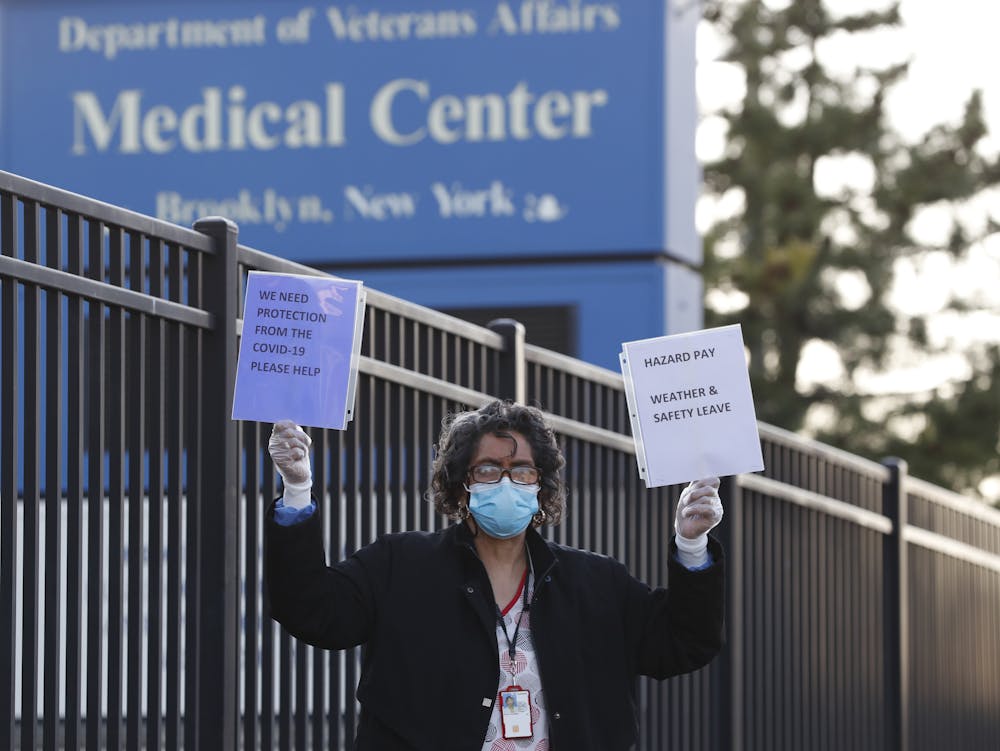
VA hospitals across the country are short-staffed and don’t have the resources they need to protect their workers. AP/Kathy Willens

The Veterans Administration frequently and perhaps unlawfully denies benefits to veterans with “other than honorable” discharges.

Many veterans have requested upgrades to their discharge status. There is a significant backlog of these upgrade requests, and the pandemic will add to it, further delaying access to health care and other benefits.

4. Diminished access to health care

Dental surgery, routine visits and elective surgeries at Veterans Administration medical centers have been postponed since mid-March. VA hospitals are understaffed – just before the pandemic, the VA reported 43,000 staff vacancies out of more than 400,000 health care staff positions. Access to health care will be even more difficult when those medical centers finally reopen because they may have far fewer workers than they need.

As of May 4, 2020, 2,250 VA health care workers have tested positive for COVID-19, and thousands of health care workers are under quarantine. The VA is asking doctors and nurses to come out of retirement to help already understaffed hospitals.

5. Mental health may get worse

An average of 20 veterans die by suicide every day. A national task force is currently addressing this scourge.

But many outpatient mental health programs are on hold or being held virtually. Some residential mental health facilities have closed.

Under these conditions, the suicide rate for veterans may grow. Suicide hotline calls by veterans were up by 12% on March 22, just a few weeks into the crisis.

6. Complications for homeless veterans and those in the justice system

An estimated 45,000 veterans are homeless on any given night, and 181,500 veterans are in prison or jail. Thousands more are under court-supervised substance use and mental health treatment in veterans treatment courtsMore than half of veterans involved with the justice system have either mental health problems or substance use disorders.

As residential facilities close to new participants, many veterans eligible to leave prison or jail have nowhere to go. They may stay incarcerated or become homeless.

Courts have moved online or ceased formal operations altogether, meaning no veteran charged with a crime can be referred to a treatment court. It is unclear whether those who were already participating in a treatment program will face delays graduating from court-supervised treatments.

Further, some veterans treatment courts still require participants to take drug tests. With COVID-19 circulating, those participants must put their health at risk to travel to licensed testing facilities.

As veterans’ facilities close to new participants, many veterans eligible to leave prison or jail have nowhere to go and may become homeless, like this Navy veteran in Los Angeles. Getty/Mario Tama

7. Disability benefits delayed

In the pandemic’s epicenter in New York, tens of thousands of veterans should have access to VA benefits because of their low income – but don’t, so far.

The pandemic has exacerbated existing delays in finding veterans in need, filing their paperwork and waiting for decisions. Ryan Foley, an attorney in New York’s Legal Assistance Group, a nonprofit legal services organization, noted in a personal communication that these benefits are worth “tens of millions of dollars to veterans and their families” in the midst of a health and economic disaster.

All 56 regional Veterans Administration offices are closed to encourage social distancing. Compensation and disability evaluations, which determine how much money veterans can get, are usually done in person. Now, they must be done electronically, via telehealth services in which the veteran communicates with a health care provider via computer.

But getting telehealth up and running is taking time, adding to the longstanding VA backlog. Currently, more than 100,000 veterans wait more than 125 days for a decision. (That is what the VA defines as a backlog – anything less than 125 days is not considered a delay on benefit claims.)

8. Economic catastrophe

There are 1.2 million veteran employees in the five industries most severely affected by the economic fallout of the coronavirus.

A disproportionately high number of post-9/11 veterans live in some of the hardest-hit communities that depend on these industries. Veterans returning from overseas will face a dire economic landscape, with far fewer opportunities to integrate into civilian life with financial security.

In addition, severely disabled veterans living off of VA benefits were initially required to file a tax return to get stimulus checks. This initial filing requirement delayed benefits for severely disabled veterans by at least a month. The IRS finally changed the requirements after public outcry, given that many older and severely disabled veterans do not have access to computers or the technological skills to file electronically.

There are many social groups to pay attention to, all with their own problems to face during the pandemic. With veterans, many of the problems they face now existed long before the coronavirus arrived on U.S. shores.

But with the challenges posed by the situation today, veterans who were already lacking adequate benefits and resources are now in deeper trouble, and it will be harder to answer their needs.


Charting the rebound of physician office visits

https://mailchi.mp/f2774a4ad1ea/the-weekly-gist-may-22-2020?e=d1e747d2d8

MultiBrief: Telehealth is keeping doctors, patients connected in ...

As patients begin to return to doctors’ offices, we were intrigued to read an analysis out this week from the Commonwealth Fund that provides a first glimpse into the pace of the recovery. Researchers from Harvard University and healthcare technology company Phreesia analyzed data from 12M visits at over 50,000 physician practices, finding that in-person visits had declined nearly 70 percent by mid-April, compared to pre-pandemic levels.

Behavioral health providers, medical specialists and primary care practices maintained the most volume, and procedural specialists were the hardest hit. Many practices deployed telemedicine quickly, but even with those added encounters, total visits were still down by nearly 60 percent. While visits are starting to return, it’s likely that physician practices are in for a long, slow rebound. Telemedicine as a percentage of all visits peaked in late April, and by mid-May, in-person visits had reached 55 percent of pre-pandemic levels.

Even if virtual volumes pull back from their COVID high, we’re likely to see telemedicine play a much more expansive role moving forward. Dr. Rushika Fernandopulle, CEO of Iora Health, shared his company’s learnings from their COVID-19 response, predicting that ultimately 70-80 percent of physician encounters could be virtual, necessitating a need to reorganize care delivery around populations, instead of practices.

Expect the next year to be a reckoning as changes in payment and regulations, combined with a heated marketplace for virtual care, continue to shift the balance between in-person and virtual care.


Employers seeking a “source of truth” for coronavirus guidance

https://mailchi.mp/f2774a4ad1ea/the-weekly-gist-may-22-2020?e=d1e747d2d8

What Is Truth? | Psychology Today

As states begin to reopen, employers need guidance to ensure safe, COVID-free operations, and are beginning to call local health systems for advice on how to manage this daunting task. Providing this support is uncharted territory for most systems, and they’re learning on the fly as they bring back shuttered outpatient services and surgery centers themselves. This week we convened leaders from across our Gist Healthcare membership to share ideas on how to assist employers in bringing businesses safely back online—and to discuss whether the pandemic might create broader opportunities for working with the employer community.

It’s no surprise some companies are hoping that providers can step in to test their full workforce, but as several systems shared, “Even if we thought that was the right plan, testing supplies and PPE are still too limited for us to deliver on it now.” Better to support businesses in creating comprehensive screening strategies (with some offering their own app-based solutions), coupled with a testing plan for symptomatic employees.

Health systems have been surprised by the hunger for information on COVID-19 among the business community. Hundreds of companies have registered for informational webinars, hosted by systems through their local chambers of commerce. They’re excited to receive distilled information on local COVID-19 impact and response. As one leader said, the system isn’t really creating new educational content, but rather summarizing and synthesizing CDC, state and local guidance.

Business leaders are looking for “a source of truth” from their local health system amid conflicting guidelines and media reports. Case in point: employers are asking about the need for antibody testing, having been approached by testing vendors and feeling pressure from employees. Guidance from system doctors provides a plain-spoken interpretation on testing utility (great for looking at a population, meaningless right now for an individual), and helps them make smarter decisions and educate their workforce.

Health systems are hopeful that helping employers through the coronavirus crisis will lay the foundation for longer-term partnerships with employers, allowing them to continue to provide benefits through lower cost, coordinated care and network options. 

Timing is critical, and it may be smaller businesses that have the ability to change more quickly. Large companies have mostly locked in their benefits for 2021, whereas many mid-market businesses are looking for alternative options now.

Worksite health, telemedicine, and direct primary care arrangements are all on the table. One system surveyed local brokers and employers and found that 20 percent of mid-market employers are open to narrow-network partnerships. “The number seems low,” they reported, “but it’s up from five percent last year, a huge jump.” For systems seeking direct partnerships with employers, there’s a window of opportunity right now to find those businesses committed to continuing to offer benefits, who are looking for a creative, local alternative—and to get that first Zoom meeting on the calendar.


Further confusion on the coronavirus testing front

https://mailchi.mp/f2774a4ad1ea/the-weekly-gist-may-22-2020?e=d1e747d2d8

Coronavirus test: confusion over availability and criteria is ...

With all 50 states now in the process of reopening, data reported by public health agencies on coronavirus testing is under increased scrutiny. The issue is not how many tests are being conducted—that number has dramatically increased nationwide (although experts still caution that total testing should be about three times higher than the current 300,000 per day).

Rather, as reported this week, the issue is what kind of tests are being included in public reporting. It emerged this week that several states—including GeorgiaTexasPennsylvaniaVermont, and Virginia—have been combining statistics on polymerase chain reaction (PCR) tests, used to diagnose current infection, with antibody blood tests, used to detect past infection.

More troublingly, The Atlantic reported on Wednesday that the Centers for Disease Control and Prevention (CDC) has been doing the same thing, which artificially inflates the number of tests conducted, and makes the numbers difficult to interpret. Among other experts, Dr. Ashish Jha, director of Harvard’s Global Public Health Institute, was stunned: “You’ve got to be kidding me. How could the CDC make that mistake? This is a mess.”

Accurate testing data is critical to determine the pace and scope of reopening, and to monitor for resurgences of the virus that might necessitate future restrictions. It’s important to know who’s infected now for clinical reasons, and it’s essential to understand who’s already been sick for public health purposes. Combining the two datasets is positively unhelpful, and likely only serves a political purpose.

Testing problems have proven to be this country’s original sin in the way the coronavirus pandemic has evolved, but it’s not too late to make sure that we have ample, accurate, and well-reported testing to guide critical public health decisions.

US coronavirus update: 1.62M cases, 95K+ confirmed deaths, 12.9M tests conducted (of some type).


Huge Study Throws Cold Water on Antimalarials for COVID-19

https://www.medpagetoday.com/infectiousdisease/covid19/86642?xid=nl_mpt_DHE_2020-05-23&eun=g885344d0r&utm_source=Sailthru&utm_medium=email&utm_campaign=Daily%20Headlines%20Top%20Cat%20HeC%20%202020-05-23&utm_term=NL_Daily_DHE_dual-gmail-definition

Huge Study Throws Cold Water on Antimalarials for COVID-19 ...

— No support for continued use seen in analysis of 15,000 patients who got controversial drugs

Chloroquine or hydroxychloroquine (HCQ), with or without an antibiotic, in hospitalized COVID-19 patients were associated with increased risk of death in the hospital and higher rates of arrhythmias, analysis of outcomes in nearly 100,000 patients indicated.

The 15,000 patients who received HCQ or chloroquine were about twice as likely to die compared to controls who did not receive these agents after adjusting for covariates (18.o% for hydroxychloroquine and 16% for chloroquine versus 9.3% for controls), reported Mandeep Mehra, MD, of Brigham and Women’s Hospital in Boston, and colleagues.

The drug was also associated with a higher risk of ventricular arrhythmia during hospitalization (6.1% for hydroxychloroquine, 4.3% for chloroquine versus 0.3% for controls), the authors wrote in The Lancet.

Moreover, risks for both in-hospital mortality and ventricular arrhythmia were even higher compared to controls when either drug was combined with a macrolide antibiotic, they noted.

Mehra said in a statement these drugs should not be used as treatments for COVID-19 outside of clinical trials.

“This is the first large scale study to find statistically robust evidence that treatment with chloroquine or hydroxychloroquine does not benefit patients with COVID-19,” he said. “Instead, our findings suggest it may be associated with an increased risk of serious heart problems and increased risk of death. Randomised clinical trials are essential to confirm any harms or benefits associated with these agents.”

Mehra’s group analyzed some 96,000 patients from 671 hospitals on six continents with COVID-19 infection, from Dec. 20 to April 14, all of whom had either died or been discharged from the hospital by April 21.

Overall, 14,888 patients were treated with hydroxychloroquine, chloroquine, hydroxychloroquine with a macrolide antibiotic or chloroquine with an antibiotic, and their results were compared to 81,144 controls who did not receive these drugs.

Authors adjusted for demographic factors, as well as cardiovascular disease, diabetes, lung disease, smoking, immunosuppressed conditions and baseline disease severity.

The estimated excess risk attributable to the drug regimen rather than other factors, such as comorbidities, ranged from 34% to 35%.

Arrhythmia’s greatest risk was in the group who received hydroxychloroquine and a macrolide antibiotic such as azithromycin (8% versus 0.3% of controls), and this regimen was associated with a more than five-fold risk of developing an arrhythmia while hospitalized, though cause and effect cannot be inferred, the group noted.

“Previous small-scale studies have failed to identify robust evidence of a benefit and larger, randomised controlled trials are not yet completed,” said co-author Frank Ruschitzka, MD, Director of the Heart Center at University Hospital Zurich in a statement. “However, we now know from our study that the chance that these medications improve outcomes in COVID-19 is quite low.”

An accompanying editorial by Christian Funck-Brentano, MD, PhD, and Joe-Elie Salem, MD, PhD, of Sorbonne Université in Paris, noted limitations of the observational data, but said the authors “should be commended for providing results from a well designed and controlled study … in a very large sample of hospitalized patients.”

They also cautioned against attributing the increased risk of hospital deaths to the higher incidence of arrhythmias, noting that “the relationship between death and ventricular tachycardia was not studied and causes of deaths (i.e., arrhythmic vs non-arrhythmic) were not adjudicated.”

The editorialists nevertheless concluded both hydroxychloroquine and chloroquine, with or without azithromycin, “are not useful and could be harmful in hospitalized patients with COVID-19,” and stressed the importance of clinical trials for these drugs.

“The global community awaits the results of ongoing, well powered randomized controlled trials showing the effects of chloroquine and hydroxychloroquine on COVID-19 clinical outcomes,” they wrote.


Congress headed toward unemployment showdown

Congress headed toward unemployment showdown

Alabama Starts Giving $600 Federal Stimulus Payments to the ...

A debate over whether to extend enhanced unemployment benefits is emerging as a significant obstacle to getting a deal on another round of coronavirus relief legislation.

With the national unemployment rate expected to creep toward 20 percent in the months ahead, the fight over whether to boost benefits for Americans who lose their jobs or to keep benefits lean to motivate laid-off employees to rejoin the workforce is set to become a defining issue ahead of the election.

Senate Majority Leader Mitch McConnell (R-Ky.) says that Senate Republicans don’t have any interest in extending the $600 federal increase to state unemployment benefits that was a core component of the $2.2 trillion CARES Act.

The enhanced benefits are due to expire at the end of July, making them a principal topic of the upcoming negotiations.

McConnell told House GOP lawmakers in a conference call Wednesday that the Senate will not extend the beefed-up federal unemployment benefits, which GOP senators say has become a disincentive for middle- and lower-wage workers to return to the job.

But not all Republicans are on board with McConnell.

Sen. Pat Roberts (R-Kan.) said “my inclination would say that that’s going to have to continue for a while.”

“I get it, I talk to a lot of business people in Kansas — and South Carolina — about that and the disincentive if you continue to pay it to work. So I say it’s a tough a choice. But I think under the circumstances it should be continued in some form,” he added.

The employment picture grew darker on Thursday after the Labor Department announced that another 2.4 million Americans filed unemployment claims last week, bringing the total for the past nine weeks to 38 million new claims.

Sen. Thom Tillis (R), who faces a tough reelection race in North Carolina, said he wants to wait and see how the unemployment numbers play out.

“I think a lot of it really depends on how well the business openings go. I for one think that anything we do has to be tailored to where we’re not in the situation where the benefit’s greater than the salary it was replacing,” he said.

Other Republicans, however, say there is strong support for shutting off the federal boost to unemployment insurance after July.

“They think it is a huge disincentive to get the economy back and growing again. They’re not happy it was done in the first place,” said Sen. Rob Portman (R-Ohio), who helped craft the unemployment benefits section of the CARES Act, referring to complaints he has heard from GOP colleagues about the beefed-up benefits.

Sen. Rand Paul (R-Ky.) on Thursday warned: “When the government wage exceeds the market wage you’ll get institutionalized unemployment.”

“It was a mistake to make it so high to begin with. It would be a mistake to extend it,” he added. “If you favor extending it, basically you’re favoring institutionalized unemployment.”

Other Republicans are raising concerns that adding $600 in federal assistance to weekly state unemployment compensation creates a benefit that exceeds the hourly wage for many jobs in their states.

“I think it needs to end,” said Sen. John Boozman (R-Ark.). “Hopefully the economy will start to be getting back on track and we’ll be able to get rid of it.”

Portman has proposed a bill that he hopes will give laid-off workers incentive to give up their enhanced benefits and look for new jobs before the July 31 expiration of the $600 federal add-on.

His legislation would let these workers continue collecting $450 of the $600 weekly benefit if they find work in the next nine weeks.

This sets up a major fight with Democrats, who see expanded unemployment benefits as the most effective way to help Americans hit hardest economically by the pandemic.

Speaker Nancy Pelosi (D-Calif.) and House Democrats have passed a $3 trillion coronavirus relief bill that would extend the $600 federal add-on to state unemployment benefits through July.

Sen. Sherrod Brown (D-Ohio) said Democrats “absolutely” will insist on extending the federal increase to state unemployment benefits.

“It’s been a longtime Republican plan to reduce the amount of UI to workers, to shrink the number of weeks and to make fewer people eligible. In Ohio, only a quarter of unemployed workers are eligible for Ohio unemployment,” he said.

He said Democrats will make extending the program a top priority.

“Democrats are the party of workers, clearly, and they aren’t,” he said of his GOP colleagues.

The debate is just beginning, but it will grow heated in the weeks ahead as both sides begin to negotiate in earnest the size and scope of the next relief bill.

Senate Democratic Whip Dick Durbin (Ill.) predicted: “Republicans will catch … hell back home when they try to explain cutting off unemployment.”

He also predicted fallout for not reforming the Small Business Administration’s Paycheck Protection Program or providing more aid to state and local governments.

Durbin warned that failing to extend enhanced unemployment benefits would be a “disastrous mistake.”

“The economists tell us it is probably the single best stimulus that we can put into this economy,” he said

Durbin said if McConnell blocks extending beefed-up unemployment benefits past July 31, there will be hardship across America and in the commonwealth of Kentucky that “he doesn’t even begin to contemplate at this moment.”

Sen. Bernie Sanders (I-Vt.), who was a competitive candidate in the Democratic presidential primary and whose support is seen as crucial to turning out voters in the fall, also weighed in Thursday.

“Republicans are going nuts about the $600 per week expanded unemployment benefits that workers now receive. Imagine that! Americans not forced to live on starvation wages. What a frightening precedent. What will they want next? Health care as a human right?” Sanders tweeted Thursday afternoon.

Some Democratic moderates, however, have signaled in private talks that they’re open to negotiating with Republicans to scaling down the $600 in additional weekly assistance after July.

A Republican source familiar with the preliminary talks said that moderate Sens. Christopher Coons (D-Del.), Bob Menendez (D-N.J.) and Joe Manchin (D-W.Va.) have expressed interest in finding a compromise.

Sen. Michael Bennet (D-Colo.) has also signaled a willingness in reviewing the impact of the generous federal payment on people rejoining the workforce.


Congress Should Redirect The Medicare Shared Savings Program To Address The COVID-19 Emergency

https://www.healthaffairs.org/do/10.1377/hblog20200518.386084/full/?utm_source=Newsletter&utm_medium=email&utm_content=COVID-19%3A+Redirecting+The+Medicare+Shared+Savings+Program%2C+The+Hidden+Homeless%2C+Senior+Housing+Communities+Need+Support%3B+Reimagining+Involuntary+Commitment%3B+Book+Reviews&utm_campaign=HAT+5-22-20

Congress Should Redirect The Medicare Shared Savings Program To ...

The COVID-19 virus has unleashed a rolling series of crises among fee-for-service providers. First, and most directly affected, providers in areas with major outbreaks have suffered extreme personal hardship and risked infection themselves with inadequate equipment and protective gear when treating patients. Second, everywhere in the country, physician practices and hospitals have seen revenue drops from 20 percent to 60 percent due to the need to follow social distancing practices to minimize infection. This revenue collapse has perversely resulted in staffing reductions that are likely to accelerate unless Congress provides further assistance to the industry. Third, and only partially observed so far, there is a pending “second wave” of health crises discernible in the “missing heart attacks” and reports from nephrologists and oncologists of patients making difficult decisions about whether to continue necessary care. In some cases, emergency care has shifted out of the hospital, and some triage is conducted on the street to avoid risk of COVID-19 infection.

The COVID-19 public health emergency has generated a massive set of emergency changes in Medicare payment policy, loosening regulation of acute hospital care, dramatically expanding use cases for telehealth and other types of virtual care, and, through the Coronavirus Aid, Relief, and Economic Security (CARES) Act and subsequent relief legislation, releasing a $175 billion pool of money that attempts to prop up Medicare providers dependent on in-person, fee-for-service revenue. Now, with that first batch of changes handled, a debate has started among proponents of value-based purchasing as to the appropriate direction for the Medicare Shared Savings Program (MSSP) and other value-based initiatives during the emergency.

In this context, a number of stakeholders have begun to call on the Centers for Medicare and Medicaid Services (CMS) to modify existing MSSP parameters to maintain the program through the emergency. CMS has responded by eliminating downside risk for accountable care organizations (ACOs) for the duration of the public health emergency and taking COVID-19 costs out of ACO financial calculations. These are welcome changes but don’t completely address the serious problems ACO participants face. We urge a different focus—the federal government should charge these existing networks with addressing the “second wave” of health care needs going largely unaddressed, as patients with serious, non-COVID-19-related chronic conditions see procedures and visits postponed indefinitely. Commensurately, Congress should suspend all financial impacts from the MSSP for the duration of the public health emergency—and consider excluding any data from 2020 for performance years 2021 and beyond. We describe key elements of these changes in this post.

A Growing Call For MSSP Modifications

The Medicare Payment Advisory Commission (MedPAC) issued a comment letter urging CMS to allow ACO providers to focus on COVID-19, rather than shared savings. MedPAC, acknowledging the dramatic shifts in care delivery necessitated by the COVID-19 crisis, made several recommendations about treatment of savings and losses in the MSSP for 2020. MedPAC asked CMS not to use 2020 data for purposes of ACO quality, bonuses, and penalties. MedPAC would also have CMS disregard 2020 claims when assigning beneficiaries to ACOs, since a shift to telehealth, with physicians and patients potentially located far apart, could distort the ACO assignment with unintended effects. Finally, MedPAC recommended extending all ACO agreement periods, keeping everyone in the current risk arrangement for one year, a recommendation CMS adopted.

William Bleser and colleagues recently suggested immediate and short-term actions that could help preserve ACOs through this crisis. Their blog post identifies the decision point, coming on June 30, 2020, for ACOs to stay in the program and be accountable for losses in 2020. The impact of the emergency on ACOs will still be unclear at that time, and the authors recommend that CMS allow ACOs to completely opt out of downside risk for 2020 while accepting a capped amount of potential shared savings. Eliminating the downside and offering a limited upside might just convince ACOs not to leave the program entirely. CMS has taken these concerns seriously and removed all COVID-19–related costs from ACO financial calculations and eliminated shared losses during the public health emergency.  

Another recent blog post by Travis Broome and Farzad Mostashari makes the case that the population health focus and financial incentives for ACOs position them uniquely, not just to survive, but to lead the way for primary care during the COVID-19 crisis. ACO participation may protect these practices because of the program’s unique financial metrics. Unlike Medicare managed care, MSSP ACOs are measured against a benchmark that trends forward at actual regional and national spending growth rates. During an unusual spending year, as 2020 is sure to be, those factors are included in the trend, and the ACO is not heavily penalized for the spending pattern. Broome and Mostashari recommend that CMS focus on shielding primary care practices from certain quality reporting and information collection requirements to pave the way for high-quality care and solid financial performance.

A More Focused Re-Envisioning Of The MSSP

Foundational to the MSSP is an agreement between groups of providers and the federal government to align their financial relationship with patient and taxpayer goals: to improve the quality of care for their patients and reduce the growth of health care spending. Both of those elements must take a back seat during a massive public health emergency.

Reducing overall health care costs is not an appropriate consideration for providers today. Even though national and regional growth factors will track actual changes in expenditures and may allow for identification of more efficient providers, this objective is second order to directly responding to the threat of the emergency. Given the overwhelming need to respond to the COVID-19 crisis in their communities, the ability of any health system or ACO to influence costs this year is likely to be dwarfed by factors outside its control. This type of highly infectious, novel pandemic is a risk that can only be properly assumed by the federal government. Neither physician practices, nor hospitals, nor any other ACO participants can realistically budget and prepare for such an event on their own. Congress and CMS should adopt MedPAC’s suggestion to suspend charging penalties or paying bonuses for all of 2020, no matter how long the public health emergency is in effect.

Similarly, while the prevention and care management metrics embedded in the MSSP remain appropriate indicators directionally, difficulties in seeing patients for well visits and new standards for documentation during telehealth visits will make any precise differentiation of quality in primary care practices near impossible. MedPAC is correct that using 2020 data for performance evaluation would undercut the legitimacy of the program, and the commissioners are right to support the call to suspend the use of such data in establishing bonuses, penalties, and benchmarks in 2020 and beyond.

However, many practices have made significant investments in population health technology, staff, and training that remain as valuable as ever during this emergency. And the public has an interest in maintaining those staff and those skills, as the basis for a better health system in the future. All told, like much of the rest of the economy, putting the MSSP and other ACO arrangements “on ice” to allow providers to focus on near-term priorities would best serve the public interest. That includes delaying or freezing requirements to step up to higher-risk tracks in the Pathways to Success program, as well as delaying or canceling quality submission requirements. These delays, however, should be paired with public funding to reflect the work that ACOs have already undertaken, as well as work that they can do to help manage through the crisis, discussed further below.

Taking steps to preserve ACOs through 2020 is a good start, but we believe Congress and CMS should think bigger and empower ACOs to focus directly on the current crisis for the next two years.

Adapting ACOs To Serve The Current Emergency

ACOs are a valuable asset for the Medicare program, reflecting nearly 10 years of work across hundreds of thousands of providers serving tens of millions of beneficiaries. Disbanding them by indifference would be a mistake. The current collapse in fee-for-service volume is a problem of fee-for-service medicine primarily, and ACOs represent an infrastructure for a further step away from volume-focused medicine once the danger from this emergency passes.

Suspending financial considerations and consequences for the duration of the emergency is insufficient. Without the responsibility for managing risk and sharing in any savings, the ACO contract with CMS loses its organizing force, and the program becomes “a solution in search of a problem.”

We see two opportunities for ACOs to redirect their energies productively this year and next. First, ACOs should be directed to follow best practices in testing and public health data collection, in collaboration with local and state officials. Managing the spread of the virus in their communities is already a daily task for these providers; additional surveillance and data collection could be adopted and updated continuously as recommendations evolve. By providing resources to ACOs to support this work directly, CMS would help ensure providers can keep up.

Second, and perhaps more important in most of the country to date, ACOs should be charged with meeting explicit virtual care management requirements to identify, contact, and serve patients in their panel with multiple high-risk chronic diseases. These patients are underserved today, and efforts to address their needs are piecemeal. In place of the current financial incentives, we propose that CMS require ACOs to perform a variety of care management and COVID-19 surveillance functions in exchange for a care management fee. Congress could enable and CMS could specify that ACOs place 10 percent to 15 percent of their patients under virtual care management programs, for example, and require that ACOs maintain regular contact with these patients as well as others at higher risk. The 10 percent to 10 percent figure is a fairly low bar, considering that more than 60 percent of Medicare patients have multiple chronic conditions, according to CMS. Additionally, COVID-19 patients could be offered principal care management, a new service for Medicare beneficiaries with one serious health condition, for a month or more after their diagnosis. New flexibilities for remote patient monitoring and virtual care make this far easier to implement than it had been before the pandemic.

CMS could quickly adapt existing financial models to support this work, drawing from analysis and design of the Primary Care FirstComprehensive Primary Care Plus, and other care management programs. ACOs are by design collaborative and can rapidly learn and share best practices for establishing virtual care management services. Behavioral health services and outreach, as well as other valuable preventive care, could also be directly funded through this structure. As an alternative to the fee for care management and surveillance, Congress could allow ACOs to receive their 2019 shared savings amounts again for 2020, for ACOs continuously operating in each year.

Looking Ahead

The steps we have outlined here will accomplish several worthwhile ends in this crisis:

  • directly funding primary care capacity at a time when volumes are nosediving;
  • keeping the nearly 500,000 physician and other clinicians already in ACOs working together, maintaining the infrastructure that has already been built; and
  • providing upfront resources to manage patients whose conditions could deteriorate in the coming months, potentially catching them before they do.

These modifications should be executed first by Congress, not CMS, to ensure that such changes to the program do not become commonplace. This would invigorate the ACO programs by focusing them on the unique set of problems of this crisis, unencumbered by requirements better suited to peacetime than wartime. And when the war is over, these organizations can resume their longer-term mission to manage total costs and quality with all of the new tools and capabilities they have acquired during the crisis.