CommonSpirit came up with a new plan to restart elective procedures. Here’s what it says

https://www.fiercehealthcare.com/hospitals-health-systems/commonspirit-gives-tookit-to-hospitals-how-to-restart-elective-surgical?mkt_tok=eyJpIjoiWldSbVlqVTFPV0l4T1dGaSIsInQiOiIwSWp6WDBDRk9GK2U5T1hkYnpsRzRleSsyQlhFb1NrR1BpbHBwZFVHSlBNOVc4cjhuQVRBZUIzRnZVQVA1UFV0ekVoUWJnZDVLeDNoQitqSmJ2c0ZpbXBcL3lLbVQ0RGlKRXlzVzNSbkthaUpUV0twQ2Z4emFGaTViemFcL1N6WTZrIn0%3D&mrkid=959610

CommonSpirit came up with a new plan to restart elective ...

Like a lot of major health systems, CommonSpirit Health is making strides to reopen elective procedures canceled due to COVID-19.

Some facilities have already resumed some surgical procedures, and others are going to start scheduling such procedures as soon as Monday.

To get started, officials say, the health system giant recently created a toolkit that they sent to its 137 hospitals that stretch across more than 20 states outlining testing, screening and supply protocols. CommonSpirit’s toolkit builds on a framework put out in recent weeks by the American Hospital Association, the American College of Surgeons and other provider groups.

A key message: Hospitals must also make sure to keep one eye on the virus and its ongoing spread in the community on a daily basis and be ready to respond accordingly. CommonSpirit says that facilities need to coordinate with local and state authorities.

“The virus isn’t going away because we reopened,” Barbara Pelletreau, senior vice president for patient safety at CommonSpirit, told FierceHealthcare.

Here’s a look at what else the health system’s new toolkit advises:

1. Assess: The toolkit offers five phases of surgical care, Pelletreau said. In the first phase, a facility must look at how to reassess the health status of patients since the cancellation of their procedure, she said.

Hospitals must adhere to the Centers for Medicare & Medicaid Services’ requirement that there is a physical examination and history of a patient within 30 days of any procedure. “This will verify if there has been no significant interim change in patient’s health status,” the toolkit said.

Hospitals can rely on telehealth for part of this evaluation.

Testing is also a critical part of the restart. Facilities should test patients before surgical procedures and tell patients to remain at home before the results come in to limit any new potential exposure.

A hospital must also create a process to determine next steps if patient testing is not available or results haven’t come back in time for the surgery.

2. Designate leadership and coordinate: As they prepare to get going again, facilities should establish a prioritization policy committee that has members from surgery, anesthesia and nursing.

The committee should examine which types of procedures should get priority to resume.

3. Ensure they have enough PPE: They also need to make sure they have enough personal protective equipment (PPE) to handle not just any new procedures but also another wave of COVID-19 cases.

For instance, one part of the toolkit recommends a facility to have a minimum of four days of PPE on hand and projection of new inventory arriving for the next two weeks.

As facilities ramp up, they must ensure they have enough primary and adjunct personnel. A hospital must also put out guidelines for who is present during intubation and extubation of the patient and how to use PPE.

Communication

However, a key element is harder to address: confidence among patients.

“In the end, you can have all the clinical facts. But it is, ‘How do you feel about your safety?’” Pelletreau said. “How do you feel about going to the grocery store or a hospital that delivers amazing medical care?”

Pelletreau said that CommonSpirit is now also working on messaging to its own employees and to the community to assure patients it is safe to return to the hospital for needed medical care. That includes several communication resources to show examples of the work it is doing, from ramped-up testing to more stringent cleaning protocols, to ensure surgical procedures can be performed safely.

“Consider a proactive approach to communicating with staff, patients, physicians and the community,” the toolkit said. “Recognize the significant interest and questions from our key audiences.”


Kaiser Permanente reports $1.1B loss in Q1

https://www.fiercehealthcare.com/hospitals-health-systems/kaiser-permanente-earnings?mkt_tok=eyJpIjoiWldSbVlqVTFPV0l4T1dGaSIsInQiOiIwSWp6WDBDRk9GK2U5T1hkYnpsRzRleSsyQlhFb1NrR1BpbHBwZFVHSlBNOVc4cjhuQVRBZUIzRnZVQVA1UFV0ekVoUWJnZDVLeDNoQitqSmJ2c0ZpbXBcL3lLbVQ0RGlKRXlzVzNSbkthaUpUV0twQ2Z4emFGaTViemFcL1N6WTZrIn0%3D&mrkid=959610

Kaiser Permanente building infrastructure to 'connect the dots ...

Kaiser Permanente reported a $1.1 billion loss in the first quarter—a drop from $3.2 billion in income in the first quarter a year earlier, blamed largely on investment losses. 

Kaiser Foundation Health Plan and Hospitals saw operating revenues of $22.6 billion and total operating expenses of $21.4 billion. That was up compared to total operating revenues of $21.3 billion and total operating expenses of $19.8 billion in the same period of the prior year.

Operating income was $1.3 billion or 5.5% of total operating revenues in the first quarter of this year, compared to $1.5 billion or 7.2% in the first quarter of 2019.

Typically, the healthcare group sees its strongest operating margin in the first quarter due to the timing of open enrollment. Instead, that margin sustained a major blow with $2.4 billion in investment losses in the first quarter of 2020 compared to a first-quarter gain of $1.6 billion in 2019.

Kaiser said its first-quarter results also reflect costs incurred from surge planning, equipment and preparations in response to the COVID-19 pandemic in the tail end of the first quarter. The full cost of that planning, as well as economic and membership impacts of the pandemic, aren’t yet known, they said. The full cost of surge planning, as well as the overall economic and membership impacts of the COVID-19 pandemic are not yet known. Kaiser Permanente established mobile hospitals and triage units, recommissioned retired units, increased inpatient capacity and acquired additional equipment to prepare for the potential surge, officials said.

“Even with all this rapidly escalating preparation and direct care delivery, only a small portion of the financial effects of the pandemic, in terms of lost revenue and increased costs, was experienced in the first quarter,” said Executive Vice President and Chief Financial Officer Kathy Lancaster in a statement.

Kaiser Permanente is one of the largest nonprofit healthcare plans in the U.S., with over 12 million members. It operates 39 hospitals and more than 700 medical offices. 

Kaiser Permanente is among many health systems giants that have reported major financial hits in the first quarter including publicly traded health systems Tenet Health, Community Health Systems, Universal Health Systems and HCA Healthcare. However, most major payers have indicated they were largely able to weather the financial storm caused by COVID-19 in the first quarter.


What we’ve learned from the telemedicine explosion

https://mailchi.mp/aa7806a422dd/the-weekly-gist-may-8-2020?e=d1e747d2d8

Why telemedicine could be the next big thing in employee healthcare

In our decades in healthcare, we’ve never seen a faster care transformation than the rapid growth in telemedicine sparked by COVID-19. Every system we’ve spoken with over the past two months reports its doctors are now performing thousands of “virtual visits” each week, often up from just a handful in February. As one chief digital officer told us, “We took our three-year digital strategic plan and implemented it in two weeks!

This week, we convened leaders from across our Gist Healthcare membership to share learnings and questions about their telemedicine experiences. COVID-19 brought down regulatory and payment hurdles, as well as internal cultural barriers to adoption—but leaders expressed a concern that current payment levels and physician enthusiasm could dissipate. Some insurers have hinted at pulling back on payment, although they will have a hard time doing so as long as Medicare maintains “parity” with in-person visits.

Switching to 100 percent telemedicine was easier than most doctors anticipated. But as practices now begin to ramp up office visits, new questions are emerging about how to integrate digital and physical visit workflow, requiring providers to rethink office layout and technology within the practice: is there a good physical space in the office to conduct televisits? Zoom and FaceTime have worked in a pinch, but what platform is best for long-term operational sustainability and consumer experience?

Telemedicine has also raised consumer expectations: patients expect providers to be on time for a virtual appointment—setting a bar for punctuality that will likely carry over to their next in-person office visit. Across the rest of this year, health systems and physician groups will continue to push the boundaries of virtual care, establishing how far it can be extended to provide quality care in a host of specialties.

But at the same time, systems must also prepare for growing complexity in 2021: what is the right balance of in-person versus virtual care? How should telemedicine integrate with urgent and emergency care offerings? How should physician compensation change? And as payers and disruptors expand their virtual care offerings, how can providers differentiate their own platforms in the eyes of consumers? We’ll continue to share learnings as our members work through the myriad challenges and opportunities of this new virtual care expansion.


Make (surgery) hay while the sun is shining

https://mailchi.mp/aa7806a422dd/the-weekly-gist-may-8-2020?e=d1e747d2d8

Growth Mindset & Feedback Cats: Make hay while the sun shines.

As we talk this week with leaders of health systems that have restarted non-emergent surgeries, they report that volume has been slower to return than anticipated. A typical data point: a Midwestern system opened up half of its outpatient surgery capacity two weeks ago, but by the end of this week saw just 15 percent of that capacity being utilized.

Most surgeons are ready to operate, but patients are still reticent to come into a healthcare setting. Many providers are facing more sobering forecasts and expecting that volume may not return to pre-COVID levels until 2021. They’re also anticipating challenges in filling the summer surgery schedule. Patients expecting to have procedures in June or July should be seeing their doctor now, and undergoing screening exams and other diagnostic testing—the months-long surgery “pipeline” has almost evaporated.

And looming over everything are worries about a COVID-19 resurgence forcing another shutdown. Taken together, the outlook seems grim, but one chief strategy officer told us it’s motivation to act quickly: “We have to do as much as we can, as fast as we can, until we can’t.” With a future resurgence and shutdown likely, hospitals and doctors must quickly recruit patients and make them feel comfortable, while finding ways to expedite diagnostics and testing amid operational challenges. And they must deliver as much care as they can while it’s safe to do so. That’s critical for providers’ finances, but even more important for the thousands of patients facing delayed diagnoses, postponed treatments, and prolonged pain as the pandemic continues.


Most consumers nervous about returning to care settings

https://mailchi.mp/aa7806a422dd/the-weekly-gist-may-8-2020?e=d1e747d2d8

As non-essential businesses begin to reopen, there’s no guarantee that merely opening the doors will make customers return. A recent Morning Consult poll provides an assessment of the impact of COVID-19 on consumer confidence: fewer than one in five US adults are currently comfortable doing (formerly) everyday activities like eating at a restaurant or going to a shopping mall.

The graphic below provides similar data for healthcare. Consumers’ willingness to visit healthcare providers in person for non-COVID care is only slightly better, at 21 percent. Which providers might see patients return most quickly?

Consumers say they are about twice as likely to visit their primary care doctor’s office than other healthcare facilities, including hospitals, specialists, and walk-in clinics. And when it comes to scheduling a routine in-office visit, nearly half say they will wait two to six months, with almost one in ten not comfortable going to a doctor’s office in person for a year or more.

Healthcare facilities face an uphill battle in bringing back patients—many of whom have ongoing chronic diseases that necessitate care now. Reaching patients through telemedicine and providing concrete messages about how they can safely see their doctor will be critical to staving off a tide of disease exacerbations that will mount as fear delays much-needed care.


I’m a nurse in a Covid-19 unit. My hospital’s leaders frighten me more than the virus.

I’m a nurse in a Covid-19 unit. My hospital’s leaders frighten me more than the virus

As a nurse, my hospital's leaders frighten me more than Covid-19 ...

I’ve been a nurse for almost 10 years, working mainly on a hospital’s cardiac floor.

One day I was assigned to a makeshift intensive care unit that had previously been an observation unit for highly stable patients waiting for test results. Many of the patients in this new Covid-19 unit were intubated, with ventilators breathing for them.

When I started the shift, a trained intensive care unit nurse was crying in the supply closet. She was overwhelmed and anxious, hadn’t worked on her familiar unit in weeks, and had been told that her next shift would be an overnight one — and she had no choice in the matter.

Many of us don’t have a choice. We are assigned to work in unfamiliar units, with patients who are outside our expertise, without any training. We’re lost.

Most shifts start with nurses crying. Most shifts end that way too.

“It’s out of our hands,” we hear from hospital administrators.

Nurses who typically work in outpatient clinics are being sent to inpatient floors and assigned to care for patients who are acutely ill. Many haven’t worked at the bedside in decades. The number of patients who have fallen in this unit has risen exponentially in the past two weeks due to lack of training of outpatient nurses.

I wonder if the patients know their nurses are overwhelmed, and that many of them are scared they’ll make a deadly mistake.

“Everyone is out of their comfort zone, just hang in there,” we’re told.

Doctors have been instructed not to enter patients’ rooms unless they must as a way to minimize their exposure to the virus that causes Covid-19 while nurses go from one room to the next, medicating, bathing, turning, and comforting their patients without changing their uncomfortable personal protective equipment, since supplies are limited. This work can take hours. It is not uncommon for nurses to go all day without drinking water or eating because that would mean removing our protective gear.

During one of my shifts, a doctor at my hospital posted several TikToks he made while sitting at the nurses’ station of a busy Covid-19 unit as nurses whispered words of encouragement to patients clinging to life supported by ventilators. Over our words and the hum of the ventilators, I wondered if our patients heard music coming from this doctor’s TikToks.

“We hear your concerns, but there’s nothing we can do,” doesn’t reassure or encourage us.

One day as I worked in the makeshift ICU, one of the hospital’s leaders went floor to floor making an important delivery. She approached our nursing station in her crisp professional attire and fresh disposition, and proudly delivered a supply of makeup-removing wipes. She told us to use the wipes to clean our faces before putting on our N95 masks so we could reuse the masks later, then moved on to the next nurses’ station without asking how our staff was doing or if we needed anything. I wonder if she had noticed the nurse crying in the supply closet.

“That’s above us, we don’t make those decisions,” is passing the buck at its worst.

Excuses from hospital administrators seem to have punctuated every shift for the past six weeks. The praise and applause from hospital leadership only go so far.

I can read in my co-workers’ faces and hear from the stories they tell that the biggest danger we face is not Covid-19. It’s the hospital’s administration.

Leadership is failing us, even as we stand firm in not failing our patients. We care for your loved ones, Covid-19 or not, monitor their vital signs, give them medications, rub lotion on their backs, help them to the bathroom, and brush their hair. We FaceTime their families from our personal phones so they can see their loved ones fighting to live. This is important care that nurses are proud to provide.

The narrative is simple. Nursing, and nurses, are not valued. It’s a shame, and maybe even a deadly shame, that hospital leaders don’t care about nurses like we care for our patients.


14 health systems receiving biggest CARES Act payments

https://www.beckershospitalreview.com/finance/14-health-systems-receiving-biggest-cares-act-payments.html?utm_medium=email

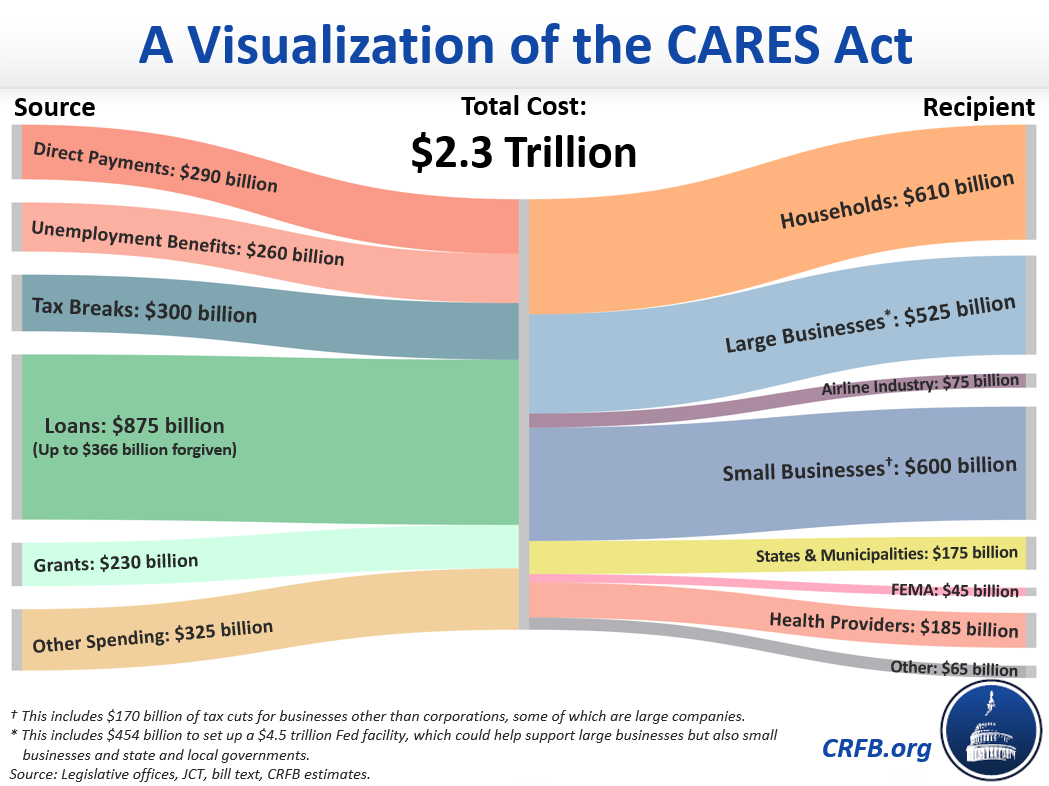
A Visualization of the CARES Act | Committee for a Responsible ...

Hospitals across the U.S. received their first payments in April from the $175 billion in relief aid Congress allocated to cover expenses or lost revenues tied to the COVID-19 pandemic. 

The first $50 billion in funding from the Coronavirus Aid, Relief and Economic Security Act was delivered to hospitals last month. HHS distributed $30 billion based on Medicare fee-for-service reimbursements and another $20 billion based on hospitals’ share of net patient revenue.

HHS released new data May 7, sharing where the $50 billion in funding went. The department provided a list of hospitals that received payments and agreed to the terms and conditions for receiving the relief aid as of May 4. As part of those terms, hospitals agreed not to balance bill COVID-19 patients and to submit documents showing the funds were used for expenses or lost revenue attributable to COVID-19.

Here are the 10 health systems that received the most funding: 

1. Dignity Health (San Francisco): $180.3 million

2. Cleveland Clinic: $103.3 million

3. Stanford Health Care (Palo Alto, Calif.): $102.4 million

4. Memorial Hermann Health System (Houston): $92.4 million

5. NYU Langone Hospitals (New York City): $92.1 million

6. The County of Los Angeles: $80.9 million (Los Angeles County operates four hospitals)

7. Hackensack (N.J.) Meridian Health: $76.8 million

8. Florida Cancer Specialists & Research Institute (Fort Myers): $67.3 million

9. Memorial Hospital for Cancer and Allied Diseases (New York City): $64 million

10. Massachusetts General Hospital (Boston): $58.1 million


Separately, major publicly traded hospital operators disclosed how much funding they received from the CARES Act. Each company received at least $195 million. 

1. HCA Healthcare (Nashville, Tenn.): $700 million

2. Tenet Healthcare (Dallas): $345 million

3. Community Health Systems (Brentwood, Tenn.): $245 million

4. Universal Health Services (King of Prussia, Pa.): $195 million


States face economic death spiral from Coronavirus

https://www.axios.com/coronavirus-states-economy-295ac091-9dc2-4852-be67-d070ec268d8c.html

YEAR-OVER-YEAR CHANGE IN STATE TAX REVENUES

April 2020 vs. April 2019, select states

States face economic death spiral from coronavirus - Business Insider


Early numbers show how significantly the coronavirus is devastating states’ revenue streams — and could force choices between raising taxes or gutting services and laying off public employees.

Why it matters: Even as some states move toward reopening, the economic ramifications of having shut down will haunt them far into the future.

  • When states can reopen, and how quickly industries are able to bounce back, could either worsen or improve projections.

What to watch: Sens. Bob Menendez (D-N.J.) and Bill Cassidy (R-La.) plan to introduce bipartisan legislation as soon as next week that would create a $500 billion fund designed to help struggling state and municipality budgets in the wake of COVID-19.

  • “If there was another way to do this, I’d rather do it the other way,” Cassidy tells Axios. “But what I don’t want to happen is all this money spent for families and for employers to go to waste because cities cannot provide essential services.”
  • Menendez tells Axios: “This is the time to step up to the plate.”

By the numbers: The Urban Institute has been compiling lost revenue data as states make it publicly available. So far, there are figures for about one in four states that compare this April’s state income and sales tax revenue collections against those from April 2019.

  • The data shows collections dropping between 20% and more than 50%, depending on the state, senior researcher Lucy Dadayan tells Axios — and those figures could get worse as new data comes in.
  • South Dakota is an outlier in the states the Urban Institute has tracked so far, in that revenues actually appear up for April. That may be largely because it is one of very few states that did not issue a stay at home order. But experts expect to see revenue declines next month.
  • Although it has not yet released April sales tax numbers to enable a year-over-year comparison, California’s staggering tax revenue loss due to COVID-19 has led to an expected $54.3 billion budget shortfall through FY 2021 — including a $13.4 billion shortfall this fiscal year, the governor announced Thursday. That’s with a $21 billion surplus last year.
  • New York also has yet to release April tax revenue data, but its latest budget projection has the state short as much as $13.3 billion in FY 2021, according to Dadayan’s analysis of most recent state budget projections. Illinois is looking at a more than $4.6 billion shortfall for next fiscal year.
  • Arizona is projecting to be short more than half a billion dollars for this fiscal year.
  • The projected shortfalls for FY 2020, which ends at the end of June for most states, is arguably a bigger problem because there isn’t much time left to make changes, per Axios’ Dan Primack.

The big picture: Democratic-leaning cities have seen the highest case and death rates. But red and blue states alike are facing serious budget shortfalls.

  • That’s why some Republican senators are getting behind efforts to provide federal dollars to help states balance budgets.
  • Even after accounting for state emergency savings accounts — which in many states were at an all-time high — 33 states will likely need to fill budget gaps of 5% or more, according to a recent analysis by Moody’s Analytics.
  • 21 states would need to fill gaps of 10% or more.
  • “Anybody is going to be overwhelmed by this — even states who were well prepared,” Dan White, director of government consulting and fiscal policy research at Moody’s Analytics, tells Axios.

Between the lines: Much of the burden will likely be pushed on struggling local governments’ plates, White said.

  • Cities have also lost smaller revenue sources such as hotel occupancy fees, inspection fees and construction fees.
  • Some could be forced to lay off public workers needed to combat the virus and keep the public safe — such as firefighters, paramedics, public hospital workers.
  • It’s either that or raise taxes in the midst of high unemployment and financial insecurity. “That’s the death spiral,” said Menendez, who has been talking with mayors across his state.
  • New York City Mayor Bill de Blasio has already said he may have to start furloughing municipal employees if the city doesn’t receive federal funds to help fill budget gaps.

Some state and local governments will wait to make tough budget decisions in the hopes that they get needed funds from Congress, which is in heated negotiations around the fourth stimulus package.

Republican lawmakers have been hesitant to provide this much federal help to states, but they’ve been warming to the idea.

  • Menendez says he expects several Republican senators besides Cassidy to sign on to their proposal.


Bankrupt hospitals sue feds

https://www.axios.com/newsletters/axios-vitals-e6483366-26b3-4f34-99c1-f2b356e47b4a.html?utm_source=newsletter&utm_medium=email&utm_campaign=newsletter_axiosvitals&stream=top

Stifel CEO: Hospitals Will Go Bankrupt in Overlooked Threat

Small hospitals going through bankruptcy are suing the Small Business Administration, arguing it is unlawful for the federal government to deny them loans under the Paycheck Protection Program, Axios’ Bob Herman reports.

Why it matters: Allowing bankrupt hospitals access to PPP loans could keep their doors open, and could force the federal government to reverse its stance and allow other bankrupt firms to get PPP loans.

Driving the news: Faith Community Health System, a small rural hospital in Texas that filed for bankruptcy in February, sued the SBA Thursday.

  • The hospital wants to apply for a $2.4 million PPP loan to pay staff and remain open while it goes through bankruptcy and handles the coronavirus pandemic.
  • However, the SBA says bankrupt companies will not be approved for the bailout money because of their “high risk.”
  • Faith Community argues the government agency doesn’t have the authority to exclude bankrupt firms from PPP funding because the law doesn’t spell out those eligibility requirements.

The big picture: Courts are starting to take hospitals’ side.

  • A bankruptcy judge in Maine said the funding was a “grant of aid necessitated by a public health crisis,” and that two hospitals that sued the federal government are entitled to PPP loans.
  • A separate bankrupt hospital in Vermont also should be eligible for PPP funds, a judge ruled this week.

The bottom line: Rural hospitals have been in dire straits for years, and for those that are on the precipice of or are going through bankruptcy, they may be eligible for this bailout funding despite SBA exclusions.