


Cartoon – Affordable Healthcare Realized
https://mailchi.mp/92a96980a92f/the-weekly-gist-january-14-2022?e=d1e747d2d8
Biden administration’s vaccine mandate for healthcare workers is a go, but its mandate for large employers and at-home testing plan face roadblocks. The US Supreme Court ruled Thursday that the vaccine mandate for the nation’s healthcare workers at facilities participating in Medicare and Medicaid can go forward while lower courts hear legal challenges. But it said that the Occupational Safety and Health Administration (OSHA) did not have the authority to enforce the broader vaccine-or-test mandate for businesses over 100 employees, which would have covered more than 80 million private sector workers.
Meanwhile, private insurers are required to begin covering eight at-home tests per beneficiary per month starting tomorrow. The roughly half of Americans with private insurance coverage stand to benefit, if they’re lucky enough to get their hands on rapid tests, which have been in increasingly scarce supply.
The Gist: Health systems that were early to issue vaccine mandates will have a leg up on others who paused requirements amid ongoing legal challenges. Lagging facilities now have a little over a month to start enforcement amid troublesome staffing shortages.
Also, the use of the private insurance system to cover at-home tests not only excludes nearly 40 million seniors on traditional Medicare, as well as the uninsured, but means that the cost of tests will ultimately be borne by consumers and employers through higher insurance premiums.
https://www.managedhealthcareexecutive.com/view/many-americans-remain-uninsured-following-layoffs
Job losses from the COVID-19 pandemic are the highest since the Great Depression. A year and a half later, most Americans who lost their health insurance along with their job remain uninsured.
Most Americans who lost their jobs and health insurance more than a year ago remain uninsured.
Over 1,200 Americans who are still unemployed due to COVID-19 were surveyed by AffordableHealthInsurance.com. At least four out of five in all participants don’t have insurance coverage.
To be exact, 56% of Americans who remain unemployed since being laid off due to the COVID-19 pandemic lost their health insurance along with their job. In addition, 23% of workers did not have employer-provided health insurance prior to losing their jobs.
Even before the pandemic, small businesses struggled to absorb the cost of providing health insurance to their employees, said health insurance advisor and nursing consultant Tammy Burns in the Affordable Health Insurance study.
“Companies have cut costs by going with high-deductible plans and sharing less of the cost towards the insurance,” Burns said. “This makes it cheaper for employees to get their own health insurance through the Affordable Care Act (ACA) marketplace. At larger companies, health care costs are growing faster than worker wages, so a large amount of an employee’s check goes to insurance. Therefore, many workers opt out because they can’t afford it.”
Majority of Those Who Lost Health Insurance Still Lack Coverage
Of the 56% of unemployed Americans who lost their health insurance along with their job, 81% are still uninsured.
This lack of coverage is impacting certain groups more than others. There are also several contributing factors to why the number of unemployed Americans without health insurance remains high.
These factors are:
When broken down by gender, men are more likely than women to have lost their health insurance when they lost their jobs at 66% and 44%, respectively. However, women are twice as likely as men to have not had health insurance in the first place at 31% and 16%, respectively.
Currently, men are slightly more likely to still be uninsured. Eighty-four percent of male survey respondents do not currently have health insurance, compared to 75% of women.
Our survey also found that certain age groups are more likely than others to still be uninsured after a pandemic-related job loss.
Eighty-six percent of individuals ages 35 to 44, and 84% of both 25 to 34 year-olds and 45 to 54 year-olds remain without health insurance after being laid off. Comparatively, 67% of unemployed individuals 18 to 24, and 58% of those older than 55 are still uninsured.
Americans ages 25 to 44 are also the age group most likely to have lost their health insurance when they were let go from their jobs (66%).
The high cost of individual insurance is the number one reason Americans still unemployed from the pandemic remain uninsured.
Sixty-seven percent of those uninsured can’t afford private health insurance. Eleven percent of people who still lack health insurance say they did not qualify for government-funded health insurance, despite the fact that a number of states expanded access to Medicaid during the pandemic.
A lack of understanding about how the ACA marketplace works may also play a role in why uninsured Americans are not pursuing all possible avenues to get health insurance.
“People are scared of the ACA because it involves a lot of personal information, like taxes,” Burns said. “I have found that many people are afraid it is ‘the government being in my business.’ There is a lack of knowledge about how helpful and affordable the ACA is now. There needs to be better education about this program.”
The survey also found 20% of unemployed Americans who are uninsured choose to forgo health insurance altogether.
This is particularly true for men, 22% of whom are choosing not to have health insurance, compared to 15% of women.
Younger adults are also more likely than older Americans to opt out of health insurance if they are unemployed. Twenty-five percent of 25 to 34 year-olds, and 20% of 25 to 34 year-olds choose not to have health insurance.
A lack of insurance has serious short- and long-term implications for individuals’ health and well-being. The biggest impact: 58% of uninsured individuals are no longer getting routine care, which could hinder their ability to identify more serious underlying issues.
Other impacts include no longer taking doctor-prescribed medication (56%); delaying planned medical procedures (46%); not seeking treatment for chronic issues (44%), and no longer receiving mental health treatment (41%).
Our survey also found that those at greater risk for medical issues, based on age, are the most likely to be skipping their routine check-ups. Three-fourths of uninsured individuals over the age of 55 (76%) say they are not going for regular doctor visits because of their lack of insurance, the highest percentage of any age group.
Meanwhile, 64% of individuals 35 to 44 are not taking doctor-prescribed medication, which can have both short- and long-term negative effects.
Given that so many individuals are already hard-pressed to afford health insurance, it’s not surprising that many of them will also be in a dangerous place financially if there is a medical emergency.
Fifty-nine percent of uninsured people are “very likely” to be financially devastated by a medical emergency, while another quarter are “somewhat likely” to face financial ruin in the event of a medical emergency.

Nonprofit payers have used a variety of strategies to address plan affordability throughout the next year, including reducing premiums by as much as 10% in some instances, finds a new report from the Alliance of Community Health Plans.
ACHP’s inaugural Report on Affordability found that when health plans manage premiums, provide enhanced benefits, smooth the way for access and reduce costs for governments and employers, the system – and outcomes – improve.
This is exemplified by some of the strategies employed by ACHP member plans, which largely reduced insurance premiums or held them flat, with some member companies reducing premiums by as much as 10%.
On top of that, every plan added new health benefits, or expanded existing ones, without increasing costs to consumers, the report found. Some of the additional benefits include free vaccines, transportation, hearing aids, reduced insulin costs, nutrition classes and meal services, smoking cessation programs and $0 co-pays for mental health visits.
Roughly three-quarters of ACPH plans moved acute and recovery services out of the hospital setting, which was deemed too expensive in most cases. By establishing hospital-at-home programs and remote patient monitoring, plans have generated significant savings for both consumers and the health system, plus improved consumer satisfaction, results showed.
Meanwhile, about two-thirds of the plans offered price transparency tools meant to allow consumers to make more-informed choices. They included information on inpatient and outpatient services, behavioral health, prescription drugs, lab and imaging services and other fees, and many provided options for several locations and virtual care, a move intended to reduce travel costs.
Priority Health’s cost estimator has tallied $13.8 million in shared savings and paid out roughly $4.1 million in rewards to members.
In a bid to improve access, all plans expanded telehealth offerings, smoothing access to mental healthcare as well as to specialties such as Medication Assisted Treatment, physical and occupational therapy, medication management, speech therapy and dialysis. Most eliminated co-pays and cost sharing.
WHAT’S THE IMPACT?
In the last year, ACHP members expanded the hospital-at-home care model, attempting to offer more efficient ways to provide acute and recovery care as well as care management in a home setting. The expansion of virtual care, complete with remote monitoring and social support, reduces the risk of infection, keeps patients comfortable at home and alleviates inpatient hospital bed shortages, according to the report.
For example, SelectHealth and its owner system, Utah-based Intermountain Healthcare, launched Connect Care Pro, a virtual hospital meant to enable access for patients in remote locations. The online, digital program connects more than 500 caregivers across the Intermountain system, enabling patients to receive both basic medical and specialty care without making a long journey, including by helicopter.
Presbyterian Health of New Mexico’s Complete Care, on the other hand, is a wrap-around program that combines primary, urgent and home care for patients with complex medical needs, including those with functional decline and at risk of needing long-term institutional care. Patients receive and manage their care from home, 24/7, including acute and palliative care, house-call and same-day visits, as well as medication management. In addition, care coordinators and social workers manage social needs, including transportation and food insecurity.
And the Home Care Recovery program from Wisconsin’s Security Health Plan and Marshfield Clinic Health System brings the elements of acute inpatient recovery to a patient’s home, eliminating fixed-cost allocations associated with traditional hospital-level care and reducing post-acute utilization and readmissions for 150 traditional inpatient conditions such as congestive heart failure, pneumonia and asthma.
THE LARGER TREND
A 2016 report from the Centers for Medicare and Medicaid Services found that nonprofit organizations and health plans tend to receive higher star ratings than their for-profit counterparts.
For Medicare Part Ds, about 70% of the nonprofit contracts received four or more stars compared to 39% of the for-profit MA-Part-Ds. Similarly, roughly 63% of nonprofit prescription drug plans received four or more stars, compared to 24% of the for-profit PDPs.
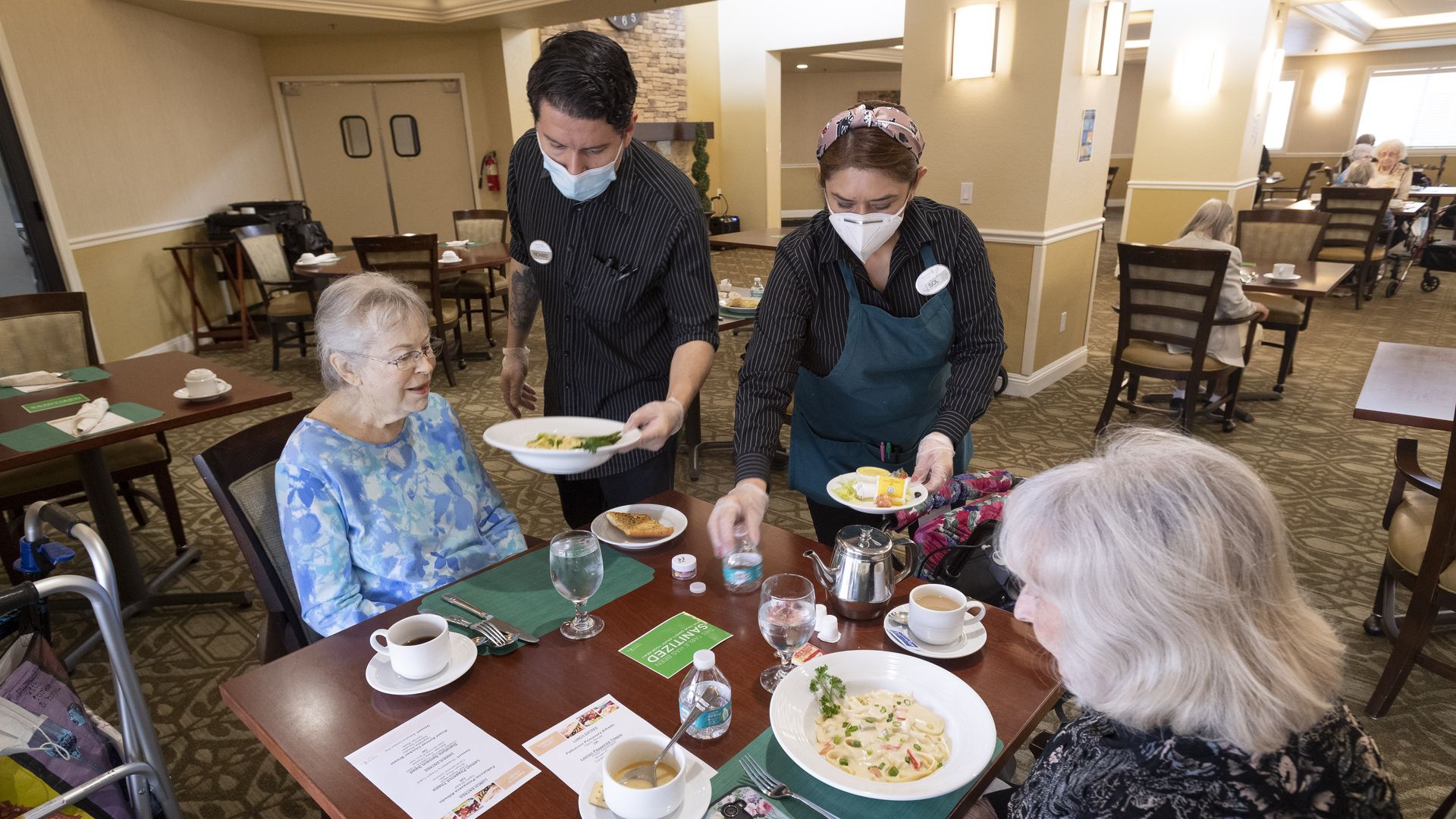
Monthly premiums that cover physician and outpatient care for Medicare patients will increase by 15% next year, the Biden administration said in a notice Friday evening.
Why it matters: People on Medicare are getting slammed with a big hike during an election year, due largely to the big price tag from the questionable Alzheimer’s treatment, Aduhelm, and uncertainty stemming from the coronavirus.
By the numbers: Standard Medicare Part B premiums will be $170.10 per month next year, up from $148.50 per month this year.
Between the lines: Medicare is still determining whether it will pay for Aduhelm yet, but federal actuaries have to plan for a “high-cost scenario of Aduhelm coverage,” regulators said.
The bottom line: The pandemic has made it difficult to predict future Medicare spending, such as trying to determine whether patients will get more non-COVID care that had been put off.
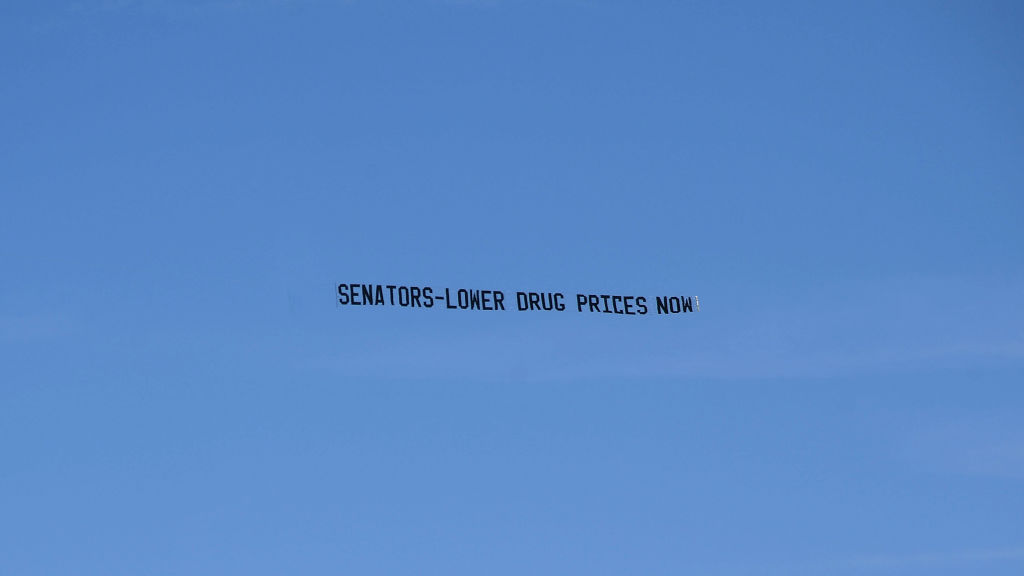
Here in Washington, the conversation about politics is often framed as a spectrum, a straight line with poles at the end that are hard-wired opposites. Team Blue to the left and Team Red to the right. But in reality, the chatter might more accurately be framed as a loop, with the far ends bending back on themselves like a lasso. Eventually, the far-right voices and the far-left voices meet at the weird spot where Rand Paul supporters find common ground with The Squad.
It’s often at the knot between the two ends of that scale that we find some of the loudest voices on any given issue: foreign aid, vaccine mandates, the surveillance state. Right now, as Congress is considering a massive spending package on roads and bridges, pre-K and paid family leave, lawmakers have been debating a point on which political opponents agree: drug prices are too high.
Drug pricing is one of those rare sweet spots where it seems everyone in Washington can agree that consumers are getting a raw deal. The motives behind that sentiment differ, of course: liberals want to make medical care more accessible and to curb the power of big pharma, and conservatives see drug prices divorced from pure capitalism. But everyone can rally around the end goal. No one gets excited to tuck away pennies on the paycheck to control acid reflux or prevent migraines.
The package under consideration tries to fix drug costs by ending the ban on feds negotiating with pharmaceutical companies. In a deal hashed out among Democrats, Medicare would be allowed to negotiate directly with drug companies on the prices of the 10 most expensive drugs by 2025. That number would double to 20 drugs three years later. Only established drugs that have been on the market at least nine years in most cases would be eligible, giving pharmaceutical companies almost a decade of unrestricted profitability. (Start-up biotech companies would be exempted from the process under the guise of giving newcomer innovators a leg-up.)
For individuals on private insurance, their drug costs would be tied to inflation, meaning no spiking costs if a drug becomes popular. Seniors, meanwhile, would have a $2,000 cap on what they’d be responsible for at the pharmacy.
Democrats have been working for years to make drug companies the enemy. In the current environment of woke capitalism, they’re an easy target for lawmakers in Washington to come after. Drugs, after all, aren’t luxury goods. They’re necessary. And for the government to give them a pass in ways few other industries enjoy, that just seems wrong to the far-left wing of the Democratic Party that has flirted with elements of socialism.
It turns out, maybe that messaging isn’t working. New polling, provided exclusively to TIME from centrist think tank Third Way, suggests the way the conversation is framed matters more than you’d think. In a poll of 1,000 likely voters in September, costs were their biggest hangup about the healthcare system, regardless of political identity. Almost 40% of respondents cited healthcare costs as the biggest flaw in the system.
What didn’t seem to bother people much? Fairness. That’s right. The spot where the far-right and the far-left tines of the political fork meet is usually seen as an objection to a system rigged against the consumers. But a meager 18% of respondents to the Third Way poll say profits were what’s wrong with the system. Grievance isn’t the most grievous of problems.
And if you dig a little deeper, you find other reasons Democrats might want to reconsider how they talk about drug prices in the twin infrastructure plans parked in Congress. In fact, there’s a 12-point gap in two competing reasons to address healthcare; lowering costs draws the support of 72% of respondents while making things fair wins backing from 60%.
“This is kitchen table economics and it’s not a morality play,” says Jim Kessler, a co-founder of Third Way and its policy chief who is advising the Hill on messaging on the twin bills. “Those are winning messages, especially on healthcare. You’re going to keep the exact same system, but you’re going to get some help with costs.”
In other words, the chatter in the purple knot might feel most fulsome when talking about justice and weeding out the super-rich exploiters of capitalism. But, really, people just want to hold onto their cash. Protections against healthcare bankruptcy are super popular, suggesting the fear of losing everything to a hospital visit is real. Capitalism may well be exploitative but it’s tough to argue that a few extra bucks in the bank can make falling asleep easier at the end of the day.
So as Congress gets ready to move forward with drug prices in its infrastructure talks, lawmakers can find some comfort that the whole of the political spectrum agrees costs need to come down. And they don’t really care if it’s done in a fair way — as long as their savings doesn’t take a hit every 90 days.
https://www.axios.com/gop-targets-dems-with-medicscare-ads-abc27c8c-f2d2-4e3d-9d4b-40a5552d4444.html

Conservative and industry groups are trying to whip up opposition to President Biden’s massive social spending plan by warning it will imperil Medicare benefits, Axios has learned.
Why it matters: “Medicscare” is a well-worn political tactic precisely because it can be effective. For Democrats, there’s zero room for defections against the $3.5 trillion proposal if they want to pass the bill.
What’s happening: Senior citizens in Arizona, represented by Sen. Kyrsten Sinema (D-Ariz.), potential Democratic holdout, have started receiving large boxes labeled “Medical Shipment. Please open immediately.”
Another nonprofit advocacy group, A Healthy Future, is targeting the prescription drug portions of the bill in a digital ad campaign aimed at key Democratic votes.
The big picture: Democrats have turned to drug pricing reforms to offset part of the legislation’s massive price tag, potentially paying for as much as $600 billion in new spending.
Yes, but: The Mediscare tactic is larger than just the drug pricing fight. Americans for Prosperity, the Koch-backed conservative advocacy group, is running its own ads warning of much larger impending Medicare cuts.

About 73% of health insurance markets are highly concentrated, and in 46% of markets, one insurer had a share of 50% or more, a new report from the American Medical Association shows. The report comes a few months after President Joe Biden directed federal agencies to ramp up oversight of healthcare consolidation.
The majority of health insurance markets in the U.S. are highly concentrated, curbing competition, according to a report released by the American Medical Association.
For the report, researchers reviewed market share and market concentration data for the 50 states and District of Columbia, and each of the 384 metropolitan statistical areas in the country.
They found that 73% of the metropolitan statistical area-level payer markets were highly concentrated in 2020. In 91% of markets, at least one insurer had a market share of 30%, and in 46% of markets, one insurer had a share of 50% or more.
Further, the share of markets that are highly concentrated rose from 71% in 2014 to 73% last year. Of those markets that were not highly concentrated in 2014, 26% experienced an increase large enough to enter the category by 2020.
In terms of national-level market shares of the 10 largest U.S. health insurers, UnitedHealth Group comes out on top with the largest market share in both 2014 and 2020, reporting 16% and 15% market share, respectively. Anthem comes in second with shares of 13% in 2014 and 12% in 2020.
But the picture looks different when it comes to the market share of health insurers participating in the Affordable Care Act individual exchanges. In 2014, Anthem held the largest market share among the top 10 insurers on the exchanges, with a share of 14%. By 2020, Centene had taken the top spot, with a share of 18%, while Anthem had slipped to fifth place, with a share of just 4%.
Another key entrant into the top 10 list in 2020 was insurance technology company Oscar Health, with 3% of the market share in the exchanges at the national level.
“These [concentrated] markets are ripe for the exercise of health insurer market power, which harms consumers and providers of care,” the report authors wrote. “Our findings should prompt federal and state antitrust authorities to vigorously examine the competitive effects of proposed mergers involving health insurers.”
The payer industry hit back. In a statement provided to MedCity News, America’s Health Insurance Plans, a national payer association, said that Americans have many affordable choices for their coverage, pointing to the fact that CMS announced average premiums for Medicare Advantage plans will drop to $19 per month in 2022 from $21.22 this year.
“Health insurance providers are an advocate for Americans, fighting for lower prices and more choices for them,” said Kristine Grow, senior vice president of communications at America’s Health Insurance Plans, in an email. “We negotiate lower prices with doctors, hospitals and drug companies, and consumers benefit from lower premiums as a result.”
Further, the report does not mention the provider consolidation that also contributes to higher healthcare prices. Mergers and acquisitions among hospitals and health systems have continued steadily over the past decade, remaining relatively impervious to even the Covid-19 pandemic.
Scrutiny around consolidation in the healthcare industry may grow. In July, President Joe Biden issued an executive order urging federal agencies to review and revise their merger guidelines through the lens of preventing patient harm.
The Federal Trade Commission has already said that healthcare businesses will be one of its priority targets for antitrust enforcement actions.

Contrary to what health care executives advertise, hospital mergers and acquisitions aren’t good for patients. They rarely improve access to health care or its quality, and they don’t reduce prices. But the system in place to stop them is often more bark than bite.
During 2019 and 2020, hospitals acquired an additional 3,200 medical practices and 18,600 physicians. By January 2021, almost half of all U.S. physicians were employed by a hospital or health system.
In 2018, the last year for which complete data are available, 72% of hospitals and more than 90% of hospital beds were affiliated with a health care system. Mergers and acquisitions are increasing the number of health care systems while decreasing the number of independently operated hospitals.
When hospitals buy provider practices, it leads to more unnecessary care and more expensive care, which increases overall spending. The same thing happens when hospitals merge or acquire other hospitals. These deals often increase prices and they don’t improve care quality; patients simply pay more for the same or worse care.
Mergers and acquisitions can negatively affect clinician morale as well. Some argue they lead to providers’ loss of autonomy and increase the emphasis on financial targets rather than patient care. They can also contribute to burnout and feeling unsupported.
Considerable machinery is in place at both the federal and state levels to stop “anticompetitive” mergers before they happen. But that machinery is limited by a lack of follow through.
The Federal Trade Commission (FTC) and the U.S. Department of Justice have always had broad authority over mergers. By law, one or both of these entities must review for any antitrust concerns proposed deals of a certain size before the deals are finalized. After a preliminary review, if no competition issues are identified, the merger or acquisition is allowed to proceed. This is what happens in most cases. If concerns are raised, however, the involved parties must submit additional information and undergo a second evaluation.
Some health care organizations seem willing to challenge this process. Leaders involved in a pending merger between Lifespan and Care New England in Rhode Island — which would leave 80% of the state’s inpatient market under one company’s umbrella — are preparing to move forward even if the FTC deems the deal anticompetitive. The companies will simply ask the state to approve the merger despite the FTC’s concerns.
The reality is that the FTC’s reach is limited when it comes to nonprofits, which most hospitals are. While the FTC can oppose anticompetitive mergers involving nonprofits, it cannot enforce action against them for anticompetitive behavior. So if a merger goes through, the FTC has limited authority to ensure the new entity plays fairly.
What’s more, the FTC has acknowledged it can’t keep up with its workload this year. It modified its antitrust review process to accommodate an increasing number of requests and its stagnant capacity. In July, the Biden administration issued an executive order about economic competition that explicitly acknowledges the negative impact of health care consolidation on U.S. communities. This is encouraging, signaling that the government is taking mergers seriously. Yet it’s unclear if the executive order will give the FTC more capacity, which is essential if it is to actually enforce antitrust laws.
At the state level, most of the antitrust power lies with the attorney general, who ultimately approves or challenges all mergers. Despite this authority, questionable mergers still go through.
In 2018, for example, two competing hospital systems in rural Tennessee merged to become Ballad Health and the only source of care for about 1.2 million residents. The deal was opposed by the FTC, which deemed it to be a monopoly. Despite the concerns, the state attorney general and Department of Health overrode the FTC’s ruling and approved the merger. (This is the same mechanism the Rhode Island hospitals hope to employ should the FTC oppose their merger.) As expected, Ballad Health then consolidated the services offered at its facilities and increased the fees on patient bills.
It’s clear that mechanisms exist to curb potentially harmful mergers and promote industry competition. It’s also clear they aren’t being used to the fullest extent. Unless these checks and balances lead to mergers being denied, their power over the market is limited.
Experts have been raising the alarm on health care consolidation for years. Mergers rarely lead to better care quality, access, or prices. Proposed mergers must be assessed and approved based on evidence, not industry pressure. If nothing changes, the consequences will be felt for years to come.

 HENRY KOTULA