How The Rapid Shift To Telehealth Leaves Many Community Health Centers Behind During The COVID-19 Pandemic

https://www.healthaffairs.org/do/10.1377/hblog20200529.449762/full/

How to reduce the impact of coronavirus on our lives - The ...

The COVID-19 pandemic has transformed the landscape of ambulatory care with rapid shifts to telehealth. Well-resourced hospitals have quickly made the transition. Community health centers (CHCs), which serve more than 28 million low-income and disproportionately uninsured patients in rural and underserved urban areas of the United States, have not fared as well since ambulatory visits have disappearedresulting in furloughs, layoffs, and more than 1,900 temporary site closures throughout the country. Government officials have taken notice, and the Coronavirus Aid, Relief, and Economic Security (CARES) Act infused $1.32 billion toward COVID-19 response and maintaining CHC capacity.

Many states have directed insurers to temporarily cover COVID-19-related services via telehealth while mandating parity of reimbursement for telehealth visits with in-person visits for their Medicaid program.

Preparedness Of Community Health Centers For Telehealth

Despite the changes, many health centers may not be ready to implement high-quality telehealth. study using 2016 data showed that only 38 percent of CHCs used any telehealth. In our review of 2018 Uniform Data System data—the most recent available—from a 100 percent sample of US CHCs, we found that our nation’s health centers are largely unprepared for this transformation.

Across the US, 56 percent of 1,330 CHCs did not have any telehealth use in 2018 (exhibit 1). Of those without telehealth use, only about one in five were in the process of actively implementing or exploring telehealth. Meanwhile, 47 percent of the centers using telehealth were doing so only with specialists such as those at referral centers, rather than with patients. Of those using telehealth, the majority (68 percent) used it to provide mental health services; fewer used it for primary care (30 percent) or management of chronic conditions (21 percent), suggesting that most CHCs with telehealth capabilities prior to COVID-19 were not using it for the most frequent types of services provided at CHCs.

CHCs not using telehealth reported several barriers to implementation (exhibit 2). Thirty-six percent cited lack of reimbursement, 23 percent lacked funding for equipment, and 21 percent lacked training for providing telehealth. Although most barriers were similar in both urban and rural regions, a greater proportion of rural clinics compared to urban clinics (18 percent versus 7 percent) reported inadequate broadband services as an issue.

The COVID-19 pandemic has laid bare the enormous disparities in telehealth capacity. Without adequate telehealth capacity and support, many CHCs will be left without means of providing the continuous preventive and chronic disease care that can keep communities healthy and out of the hospital. During the crisis, the Health Resources and Services Administration estimates that CHCs have seen 57 percent of the number of weekly visits compared to pre-COVID-19 visit rates, 51 percent of which have been conducted virtually, suggesting that many CHC patients have forgone care that they would have otherwise received. Given CHCs serve a disproportionate share of low-income, racial/ethnic minority, and immigrant populations—populations hardest hit by the COVID-19 pandemic—any disruption to CHC capacity may exacerbate the racial disparities that have rapidly emerged.

While an important first step, policy makers cannot simply infuse more funding to CHCs and expect them to withstand the challenges of the COVID-19 era. We recommend three targeted strategies to help CHCs adapt and perhaps even thrive beyond COVID-19: legislate permanent parity in telehealth reimbursement for all insurers; allocate sufficient funding and guidance for telehealth equipment, personnel, training, and protocols; and implement telehealth systems tailored to vulnerable populations.

Permanent All-Payer Parity For Telehealth Reimbursement

Payment parity—where telehealth is reimbursed at the same level as an in-person visit—is a crucial issue that must be addressed and instituted beyond the current public health emergency. Without commensurate reimbursement for telehealth, CHCs cannot maintain patient volume or make the long-term investments necessary to remain financially viable. A “global budget” of paying CHCs a fixed payment per patient per month would give practices flexibility in how and where to treat the patient, although this may be politically and practically challenging. Meanwhile, payment parity has already been implemented and could simply be permanently codified into existing reimbursement schemes, giving providers the option to select the best mode of treatment without making financial trade-offs.

In reviewing state telehealth policies during COVID-19, all states have implemented temporary executive orders or released guidance on telehealth access—although with significant variations. At least 22 states have explicitly implemented telehealth parity for Medicaid. For Medicare, the Centers for Medicare and Medicaid Services (CMS) expanded access to telehealth beyond designated rural areas, loosened HIPAA requirements around telehealth platforms, and instituted parity in reimbursement with in-person visits.

To build on these significant steps, states should mandate telehealth parity across all payers and cover all services provided at CHCs, not just COVID-19-related care. At least 12 states have mandated all-payer parity for telehealth. Meanwhile, private insurers have individually adjusted telehealth policies on a state-by-state basis if there was no statewide mandate. Nevertheless, all payers should reimburse at parity given the patchwork quilt of insurance plans that exists at CHCs.

Furthermore, state legislatures and CMS should look to extend parity beyond the current COVID-19 emergency so that CHCs can make sustainable investments that continue to benefit patients. Even as states reopen, in-person visits are unlikely to return to their previous volume as the threat of infection continues to loom. Temporary measures should be made permanent so that CHCs can make sustainable investments that continue to benefit patients.

Funding And Guidance For Equipment, Personnel, Training, And Protocols

For telehealth to function smoothly and reduce errors, proper hardware and software are critical, including telephone service, computers, broadband internet access, and electronic health records. The Federal Communications Commission (FCC) released funding to procure telehealth services and devices and some CHCs have received private funding; similar targeted funding mechanisms from states and the federal government are necessary at scale to equip hundreds of CHCs with the necessary telehealth capabilities.

However, merely having technology is not sufficient. Proper personnel with appropriate training are key to a high-functioning telehealth system along with support from information technology specialists. Additionally, CHCs need ancillary systems in place to allow for the effective use of phone and video visits. Empanelment systems to attribute patients to providers can allow for longitudinal follow-up even with telehealth. Daily huddles and team-based care can enhance the inherent complexities of coordinating care remotely. Protocols should be tailored for different specialties and services such as nutrition management and social work. Meanwhile, a robust e-consult referral network should allow primary care providers at CHCs to easily connect patients to specialty care when necessary. Adding robust protocols and systems will allow for the successful implementation and scaling of telehealth.

For example, groups of CHCs called the Health Center Controlled Networks (HCCNs), which have traditionally collaborated to leverage health information technology, are positioned to harness their economies of scale and group purchasing power to widely adopt new infrastructure while standardizing protocols. They could be a means to accelerate the adoption of telehealth technologies, trainings, and care models to optimize the use of telehealth across CHCs.

Telehealth Support For Vulnerable Patients

The patient population seen by CHCs presents unique challenges that not all ambulatory practices, particularly those in affluent neighborhoods, may face. Health centers care for many immigrant patients with limited English proficiency. Thus, clinics need financial support to contract with telehealth interpreter and translation services to provide equitable access and care. Better yet, all telehealth platforms contracting with CHCs should be required to provide multilingual support to deliver equitable access to telehealth services.

Moreover, many low-income patients lack health and digital literacy. Virtual telehealth platforms should design applications such that interfaces are intuitive and easy to navigate. They should provide specialized support to guide patients who are not familiar with telehealth systems. Additionally, insurers can reimburse CHCs that provide patient navigators, care coordinators, and shared decision-making support that bridge the health literacy divide.

Many around the US also do not have access to high-speed internet, consistent telephone services, and phones or computers with video conferencing capabilities. First, to allow for flexible access to telehealth for all patients, insurers should permanently waive geographic and originating site restrictions that limit the type and location of facilities from which patients can use telehealth. Second, insurers should waive audio-video requirements and consistently reimburse for phone-only visits to accommodate patients without video conferencing. Third, the type of services covered by telehealth should be expanded—ranging from primary care to physical therapy to nutrition counseling to behavioral health.

To address disparities in ownership of digital devices, taking a page out of the book of educators in low-income neighborhoods, local governments could loan laptops and smartphones or supply internet hotspots and phone-charging stations for these communities to enable access. Additionally, insurers could reimburse for the FCC Lifeline program to provide affordable communication services and cellular data to low-income populations to maintain their outpatient care.

Conclusions

As the COVID-19 pandemic sweeps through the US, health care delivery will never be the same. Health centers are struggling as many have been largely unprepared for the abrupt swing toward telehealth. COVID-19 may pose long-lasting damaging effects on CHCs and the patient populations that they serve. Nonspecific federal and state funding will allow CHCs to survive; however, deliberate action is needed to enhance telehealth capacities and ensure long-term resilience.

Similar to the Association of American Medical Colleges’ recent letter to CMS to make various telehealth changes permanent, both CMS and state governments should take immediate action by making permanent parity in reimbursement for telehealth services by all payers. State and federal policy should direct payers to lift onerous restrictions on the types of services covered via telehealth, audio/video requirements, and geographic and originating sites of telehealth services. States and payers should also explore innovative solutions to expand access to cellular data services and digital devices that allow low-income patients to digitally “get to their appointment,” similar to non-emergency medical transportation. Local governments should invest in digital infrastructure that expands broadband coverage and provides internet or cellular access points for people to engage in telehealth. Additionally, CHCs should come together under HCCNs to harness their group purchasing power to rapidly implement telehealth infrastructure that provides multilingual support and other tools that bridge gaps in digital literacy. Finally, best practices, trainings, and protocols should be standardized and disseminated across CHC networks to optimize the quality of telehealth.  

By reorienting the goals for implementing telehealth, policy makers, payers, and providers can empower health centers to thrive into the future and meet the nation’s underserved patients where they are, even during the pandemic. In the long run, telehealth can increase access and equity—but only if the right investments are made now to fill the gaps laid bare by COVID-19.




A 70-year-old man was hospitalized with COVID-19 for 62 days. Then he received a $1.1 million hospital bill, including over $80,000 for using a ventilator.

https://www.yahoo.com/news/70-old-man-hospitalized-covid-170112895.html

Man, 70, hospitalized with COVID-19 for 62 days gets $1.1 million ...

  • A man in Washington state who spent more than two months in the hospital and more than a month in the Intensive Care Unit with COVID-19 received a 181-page itemized bill that totals more than $1.1 million, The Seattle Times reported.
  • Michael Flor, 70, will likely foot little of the bill due to his being insured through Medicare, according to the report.
  • “I feel guilty about surviving,” Flor told The Seattle Times. “There’s a sense of ‘why me?’ Why did I deserve all this? Looking at the incredible cost of it all definitely adds to that survivor’s guilt.”

A 70-year-old man in Seattle, Washington, was hit with a $1.1 million 181-page long hospital bill following his more than two-month stay in a local hospital while he was treated for — and nearly died from — COVID-19. 

“I opened it and said ‘holy (expletive)!’ ” the patient, Michael Flor, who received the $1,122,501.04 bill told The Seattle Times.

He added: “I feel guilty about surviving. There’s a sense of ‘why me?’ Why did I deserve all this? Looking at the incredible cost of it all definitely adds to that survivor’s guilt.”

According to the report, Flor will not have to pay for the majority of the charges because he has Medicare, which will foot the cost of most if not all of his COVID-19 treatment. The 70-year-old spent 62 days in the Swedish Medical Center in Issaquah, Washington, 42 days of which he spent isolated in the Intensive Care Unit (ICU). 

Of the more than one month he spent in a sealed-off room in the ICU, Flor spent 29 days on a ventilator. According to the Seattle Times, a nurse on one occasion even helped him call his loved ones to say his final goodbyes, as he believed he was close to death from the virus.

While in the ICU, Flor was billed $9,736 each day; more than $80,000 of the bill is made up of charges incurred from his use of a ventilator, which cost $2,835 per day, according to the report. A two-day span of his stay in the hospital when his organs, including his kidneys, lungs, and heart began to fail, cost $100,000, according to the report.  

In total, there are approximately 3,000 itemized charges on Flor’s bill — about 50 charges for each day of his hospital stay, according to The Seattle Times. Flor will have to pay for little of the charges — including his Medicare Advantage policy’s $6,000 out-of-pocket charges — due to $100 billion set aside by Congress to help hospitals and insurance companies offset the costs of COVID-19.

Flor is recovering in his home in West Seattle, according to the report.


State-by-state breakdown of 130 rural hospital closures

https://www.beckershospitalreview.com/finance/state-by-state-breakdown-of-130-rural-hospital-closures.html

Rural Hospital Closures Hit Poor, Minority Communities Hardest ...

Nearly one in five Americans live in rural areas and depend on their local hospital for care. Over the past 10 years, 130 of those hospitals have closed.

Thirty-three states have seen at least one rural hospital shut down since 2010, and the closures are heavily clustered in states that have not expanded Medicaid under the ACA, according to the Cecil G. Sheps Center for Health Services Research.

Twenty-one rural hospitals in Texas have closed since 2010, the most of any state. Tennessee has the second-most closures, with 13 rural hospitals shutting down in the past decade. In third place is Oklahoma with eight closures. 

Listed below are the 130 rural hospitals that have closed since Jan. 1, 2010, as tracked by the Sheps Center. For the purposes of its analysis, the Sheps Center defined a hospital closure as the cessation in the provision of inpatient services.

“We follow the convention of the Office of Inspector General that a closed hospital is ‘a facility that stopped providing general, short-term, acute inpatient care,'” reads a statement on the Sheps Center’s website. “We did not consider a hospital closed if it: merged with, or was sold to, another hospital but the physical plant continued to provide inpatient acute care, converted to critical access status, or both closed and reopened during the same calendar year and at the same physical location.”

As of June 8, all the facilities listed below had stopped providing inpatient care. However, some of them still offered other services, including outpatient care, emergency care, urgent care or primary care.

Alabama
SouthWest Alabama Medical Center (Thomasville)
Randolph Medical Center (Roanoke)
Chilton Medical Center (Clanton)
Florence Memorial Hospital
Elba General Hospital
Georgiana Medical Center

Alaska
Sitka Community Hospital

Arizona
Cochise Regional Hospital (Douglas)
Hualapai Mountain Medical Center (Kingman)
Florence Community Healthcare

Arkansas
De Queen Medical Center

California
Kingsburg Medical Center
Corcoran District Hospital
Adventist Health Feather River (Paradise)
Coalinga Regional Medical Center

Florida
Campbellton-Graceville Hospital
Regional General Hospital (Williston)
Shands Live Oak Regional Medical Center
Shands Starke Regional Medical Center

Georgia
Hart County Hospital (Harwell)
Charlton Memorial Hospital (Folkston)
Calhoun Memorial Hospital (Arlington)
Stewart-Webster Hospital (Richland)
Lower Oconee Community Hospital (Glenwood)
North Georgia Medical Center (Ellijay)

Illinois
St. Mary’s Hospital (Streator)

Indiana
Fayette Regional Health System

Kansas
Central Kansas Medical Center (Great Bend)
Mercy Hospital Independence
Mercy Hospital Fort Scott
Horton Community Hospital
Oswego Community Hospital
Sumner Community Hospital (Wellington)

Kentucky
Nicholas County Hospital (Carlisle)
Parkway Regional Hospital (Fulton)
New Horizons Medical Center (Owenton)
Westlake Regional Hospital (Columbia)

Louisiana
Doctor’s Hospital at Deer Creek (Leesville)

Maine
St. Andrews Hospital (Boothbay Harbor)
Southern Maine Health Care-Sanford Medical Center
Parkview Adventist Medical Center (Brunswick)

Maryland
Edward W. McCready Memorial Hospital (Crisfield)

Massachusetts
North Adams Regional Hospital

Michigan
Cheboygan Memorial Hospital

Minnesota
Lakeside Medical Center
Albany Area Hospital
Albert Lea-Mayo Clinic Health System
Mayo Clinic Health System-Springfield

Mississippi
Patient’s Choice Medical of Humphreys County (Belzoni)
Pioneer Community Hospital of Newton
Merit Health Natchez-Community Campus
Kilmichael Hospital
Quitman County Hospital (Marks)

Missouri
Sac-Osage Hospital (Osceola)
Parkland Health Center-Weber Road (Farmington)
Southeast Health Center of Reynolds County (Ellington)
Southeast Health Center of Ripley County (Doniphan)
Twin Rivers Regional Medical Center (Kennett)
I-70 Community Hospital (Sweet Springs)
Pinnacle Regional Hospital (Boonville)

Nebraska
Tilden Community Hospital

Nevada
Nye Regional Medical Center (Tonopah)

New York
Lake Shore Health Care Center
Moses-Ludington Hospital (Ticonderoga)

North Carolina
Blowing Rock Hospital
Vidant Pungo Hospital (Belhaven)
Novant Health Franklin Medical Center (Louisburg)
Yadkin Valley Community Hospital (Yadkinville)
Our Community Hospital (Scotland Neck)
Sandhills Regional Medical Center (Hamlet)
Davie Medical Center-Mocksville

Ohio
Physicians Choice Hospital-Fremont
Doctors Hospital of Nelsonville

Oklahoma
Muskogee Community Hospital
Epic Medical Center (Eufaula)
Memorial Hospital & Physician Group (Frederick)
Latimer County General Hospital (Wilburton)
Pauls Valley General Hospital
Sayre Community Hospital
Haskell County Community Hospital (Stigler)
Mercy Hospital El Reno

Pennsylvania
Saint Catherine Medical Center Fountain Springs (Ashland)
Mid-Valley Hospital (Peckville)
Ellwood City Medical Center
UPMC Susquehanna Sunbury

South Carolina
Bamberg County Memorial Hospital
Marlboro Park Hospital (Bennettsville)
Southern Palmetto Hospital (Barnwell)
Fairfield Memorial Hospital (Winnsboro)

South Dakota
Holy Infant Hospital (Hoven)

Tennessee
Riverview Regional Medical Center South (Carthage)
Starr Regional Medical Center-Etowah
Haywood Park Community Hospital (Brownsville)
Gibson General Hospital (Trenton)
Humboldt General Hospital
United Regional Medical Center (Manchester)
Parkridge West Hospital (Jasper)
Tennova Healthcare-McNairy Regional (Selmer)
Copper Basin Medical Center (Copperhill)
McKenzie Regional Hospital
Jamestown Regional Medical Center
Takoma Regional Hospital (Greeneville)
Decatur County General Hospital (Parsons)

Texas
Wise Regional Health System-Bridgeport
Shelby Regional Medical Center
Renaissance Hospital Terrell
East Texas Medical Center-Mount Vernon
East Texas Medical Center-Clarksville
East Texas Medical Center-Gilmer
Good Shepherd Medical Center (Linden)
Lake Whitney Medical Center (Whitney)
Hunt Regional Community Hospital of Commerce
Gulf Coast Medical Center (Wharton)
Nix Community General Hospital (Dilley)
Weimar Medical Center
Care Regional Medical Center (Aransas Pass)
East Texas Medical Center-Trinity
Little River Healthcare Cameron Hospital
Little River Healthcare Rockdale Hospital
Stamford Memorial Hospital
Texas General-Van Zandt Regional Medical Center (Grand Saline)
Hamlin Memorial Hospital
Chillicothe Hospital
Central Hospital of Bowie

Virginia
Lee Regional Medical Center (Pennington Gap)
Pioneer Community Hospital of Patrick County (Stuart)
Mountain View Regional Hospital (Norton)

West Virginia
Williamson Memorial Hospital
Fairmont Regional Medical Center

Wisconsin
Franciscan Skemp Medical Center (Arcadia)


Telehealth could grow to a $250B revenue opportunity post-COVID-19: analysis

https://www.fiercehealthcare.com/tech/telehealth-could-grow-to-a-250b-revenue-opportunity-post-covid-mckinsey-reports

virtual visit

With the acceleration of consumer and provider adoption of telehealth, a quarter of a trillion dollars in current U.S. healthcare spend could be done virtually, according to a new report.

During the COVID-19 pandemic, consumer adoption of telehealth has skyrocketed, from 11% of U.S. consumers using telehealth in 2019 to 46% of consumers now using telehealth to replace canceled healthcare visit, according to consulting firm McKinsey & Company’s COVID-19 consumer survey conducted in April.

McKinsey’s survey also found that about 76% of consumers say they are highly or moderately likely to use telehealth in the future. Seventy-four percent of people who had used telehealth reported high satisfaction.

Health systems, independent practices, behavioral health providers, and other healthcare organizations rapidly scaled telehealth offerings to fill the gap between need and canceled in-person care. Providers are ready for the shift to virtual care: 57% view telehealth more favorably than they did before COVID-19 and 64% are more comfortable using it, according to McKinsey’s recent provider surveys.

Pre-COVID-19, the total annual revenues of U.S. telehealth players were an estimated $3 billion, with the largest vendors focused on virtual urgent care.

Telehealth is now poised to take a bigger share of the healthcare market as McKinsey estimates that up to $250 billion, or 20% of all Medicare, Medicaid, and commercial outpatient, office, and home health spend could be done virtually.

The consulting firm looked at anonymized claims data representative of commercial, Medicare, and Medicaid utilization.

The company’s claims-based analysis suggests that approximately 20% of all emergency room visits could potentially be avoided via virtual urgent care offerings, 24% of healthcare office visits and outpatient volume could be delivered virtually, and an additional 9% “near-virtually.”

Up to 35% of regular home health attendant services could be virtualized, and 2% of all outpatient volume could be shifted to the home setting, with tech-enabled medication administration.

Many of the dynamics that have helped to expand telehealth adoption are likely to be in place for at least the next 12 to 18 months, as concerns about COVID-19 remain until a vaccine is widely available.

Going forward, telehealth can increase access to necessary care in areas with shortages, such as behavioral health, improve the patient experience, and improve health outcomes, McKinsey reported.

Providers and patients are concerned that recent federal and state policies expanding access to telehealth will be rolled back once the emergency period ends.

Industry groups, including the College of Healthcare Information Management Executives (CHIME), are calling on lawmakers to ensure the changes enacted by Congress and the administration become permanent.

McKinsey’s research indicates providers’ concerns about telehealth include security, workflow integration, effectiveness compared with in-person visits, and the future for reimbursement.

“We call on Medicare and all other insurers to continue to fund telehealth programs and work collaboratively on coverage and coding to lessen provider burden. We cannot go back to pre-COVID telehealth; instead, we must go forward. Patients will demand it and providers will expect it,” CHIME CEO and President Russell Branzell said in a recent statement.

Telehealth also is drawing bipartisan support. Senator Marsha Blackburn, R-Tenn., urged Congress to “continue to support this expansion and codify the administration’s changes to support the health needs of the American people,” in a recent news release.

Rep. Robin Kelly, D-Illinois, is introducing a bill directing HHS Secretary Alex Azar to oversee a telehealth study looking at the technology’s impact on health and costs, Politico reported in its newsletter today.


Taking advantage of the telehealth opportunity

Healthcare providers and payers will need to take action to ensure the full potential of telehealth is realized after the crisis has passed, according to McKinsey.

There continue to be challenges as providers cite concerns about telehealth include security, workflow integration, effectiveness compared with in-person visits, and the future for reimbursement. There also is a gap between consumers’ interest in telehealth (76%) and actual usage (46%). Factors such as lack of awareness of telehealth offerings and understanding of insurance coverage are some of the drivers of this gap.

“The current crisis has demonstrated the relevance of telehealth and created an opening to modernize the care delivery system,” McKinsey consultants wrote. “Healthcare systems that come out ahead will be those who act decisively, invest to build capabilities at scale, work hard to rewire the care delivery model, and deliver distinctive high-quality care to consumers.”

McKinsey outlined steps industry stakeholders should take to drive the growth of telehealth.


Payers: Health plans should look to optimize provider networks and accelerate value-based contracting to incentivize telehealth. Align incentives for using telehealth, particularly for chronic patients, with the shift to risk-based payment models.

Payers also should build virtual health into new product designs to meet changing consumer preferences, This new design may include virtual-first networks, digital front-door features (for example, e-triage), seamless “plug-and-play” capabilities to offer innovative digital solutions, and benefit coverage for at-home diagnostic kits.


Health systems: Hospitals and health systems should accelerate the development of an overall consumer-integrated “front door.” Consider what the integrated product will initially cover beyond what currently exists and integrate with what may have been put in place in response to COVID-19, for example, e-triage, scheduling, clinic visits, record access.

Providers also should build the capabilities and incentives of the provider workforce to support virtual care, including, workflow design, centralized scheduling, and continuing education. And, health systems need to take steps to measure the value of virtual care by quantifying clinical outcomes, access improvement, and patient/provider satisfaction. Include the potential value from telehealth when contracting with payers for risk models to manage chronic patients, McKinsey said.


Investors and health technology firms: These players also can support the new reality of expanded telehealth services. Technology firms should consider developing scenarios on how virtual health will evolve and when, including how usage evolved post-COVID-19, based on expected consumer preferences, reimbursement, CMS and other regulations.

Investors also should develop potential options and define investment strategies based on the expected virtual health future. For example, combinations of existing players/platforms, linkages between in-person and virtual care offerings and create sustainable value. Investors and technology companies also can identify the assets and capabilities to implement these options, including specific assets or capabilities to best enable the play, and business models that will deliver attractive returns.


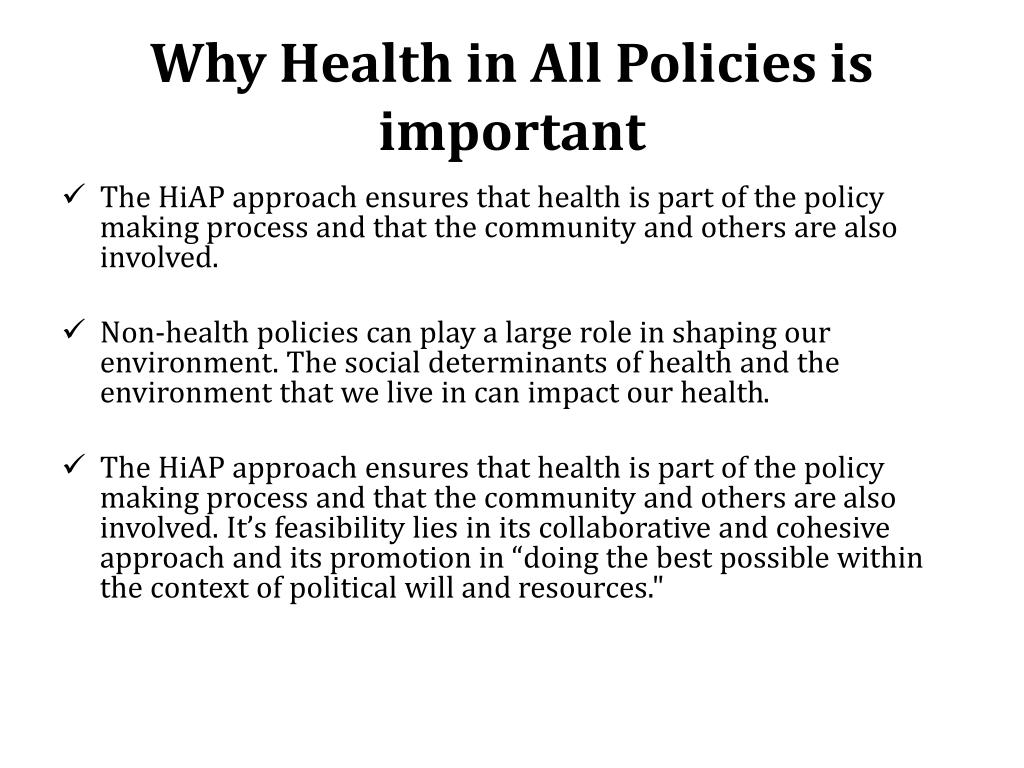
“All policy is health policy”

https://www.axios.com/newsletters/axios-vitals-8873028c-f37e-4712-a53a-ae324c56dbb6.html?utm_source=newsletter&utm_medium=email&utm_campaign=newsletter_axiosvitals&stream=top

PPT - Health in All Policies PowerPoint Presentation, free ...

The effects of racism are often inseparable from black Americans’ health and well-being, as “black communities bear the physical burdens of centuries of injustice, toxic exposures, racism, and white supremacist violence,” Rachel Hardeman, Eduardo Medina and Rhea Boyd write in the New England Journal of Medicine:

Any solution to racial health inequities must be rooted in the material conditions in which those inequities thrive. Therefore, we must insist that for the health of the black community and, in turn, the health of the nation, we address the social, economic, political, legal, educational, and health care systems that maintain structural racism. Because as the Covid-19 pandemic so expeditiously illustrated, all policy is health policy…

The response to the pandemic has made at least one thing clear: systemic change can in fact happen overnight.


Rich vs. poor hospitals

https://www.axios.com/hospitals-coronavirus-inequality-segregation-f10c49eb-5ccc-4739-b2a9-254fd9a3d40e.html

Rich vs. poor hospitals | News Break

The inequalities in American health care extend right into the hospital: Cash-strapped safety-net hospitals treat more people of color, while wealthier facilities treat more white patients.

Why it matters: Safety-net hospitals lack the money, equipment and other resources of their more affluent counterparts, which makes providing critical care more difficult and exacerbates disparities in health outcomes.

The big picture: A majority of patients who go to safety-net hospitals are black or Hispanic; 40% are either on Medicaid or uninsured.

The other side: Wealthy hospitals, including many prominent academic medical centers, are “far less likely to serve or treat black and low-income patients even though those patients may live in their backyards,” said Arrianna Planey, an incoming health policy professor at the University of North Carolina.

  • An investigation by the Boston Globe in 2017 found black people in Boston “are less likely to get care at several of the city’s elite hospitals than if you are white.”
  • The Cleveland Clinic has expanded into a global icon for health care, but rarely cares for those in the black neighborhoods that surround its campus, Dan Diamond of Politico reported in 2017.

Between the lines: The way the federal government is bailing out hospitals for the revenues they’ve lost during coronavirus is exacerbating this inequality. More money is flowing to richer hospitals.

  • For example, the main hospital within University of Colorado Health has gotten $79.3 million from the government’s main “provider relief” fund — about the same amount as Cook County Health, Chicago’s public hospital system, which predominantly treats low-income black and Hispanic people. It has gotten $77.6 million from that pot.
  • The Colorado system, however, is sitting on billions of dollars in cash and investments that Chicago’s safety-net hospitals don’t have. Chicago has also seen a worse coronavirus outbreak.

The bottom line: Poor hospitals that treat minorities have had to rely on GoFundMe pages and beg for ventilators during the pandemic, while richer systems move ahead with new hospital construction plans.


After criticism, HHS directs $25B in CARES funding to Medicaid providers, safety net hospitals

https://www.healthcaredive.com/news/after-criticism-hhs-directs-25b-in-cares-funding-to-medicaid-providers-s/579496/

Dive Brief:

  • HHS announced Tuesday it will deliver $25 billion to providers and hospitals that serve the nation’s most vulnerable patients, or those with Medicaid and Children’s Health Insurance Program coverage. Of that, $15 billion will go to providers that primarily serve Medicaid and CHIP patients while the other $10 billion is reserved for safety net hospitals that usually operate on razor-thin margins. A total of 758 safety net hospitals will receive direct deposits, and the administration noted that many of these facilities are operating in the red with an average profit margin of -7%.
  • Not all Medicaid providers received Coronavirus Aid, Relief, and Economic Security funding from the initial general distribution. This targeted allocation is designed to make up for that by distributing money to the remaining 38% of Medicaid and CHIP providers who were left out of the first tranche.
  • These Medicaid providers will receive at least 2% of reported gross patient revenue, but could receive more depending on how many patients they serve. HHS will make a final determination once providers start submitting data to the relief portal.

Dive Insight:

The industry has been clamoring for HHS to target funding to Medicaid providers amid the COVID-19 pandemic and the downturn in business, noting these organizations are already on fragile ground.

Last week the American Hospital Association pleaded for the administration to release $50 billion more for all hospitals, with $10 billion reserved for providers with a heavy caseload of Medicaid patients.

HHS answered the hospital lobby’s call — in part. HHS will distribute funds to safety net providers — more than AHA asked for — but disclosed no plans Tuesday to broaden that funding to all hospitals. America’s Essential Hospitals, which represents safety net providers, had also called for the quick release of targeted funding.

“Our goal for all these distributions has been to get the money to the providers who need it most as soon as possible,” Eric Hargan, HHS deputy secretary, said Tuesday during a call with reporters.

However, some have been critical of how the administration decided to allocate the first few waves of funding.

Congress has earmarked a total of $175 billion in funding for providers through two pieces of legislation, including the CARES Act.

To get the money out the door quickly, the first tranche was sent to providers based on the Medicare fee-for-service business, and later on the net patient service revenue.

These formulas put certain providers at an advantage, which tend to be for-profit hospitals with higher-margins, or those who were already well off heading into the pandemic, according to a recent Kaiser Family Foundation analysis.

This targeted funding was not swift, one reason for the delay was the challenge in getting a list of Medicaid providers from the states to validate and authenticate those who came to the portal to apply for funds, according to a senior HHS official.​

Still, providers that have already received funds have noted that it comes with its own set of headaches. Some have decided to return the funds as navigating the legal and compliance issues may not be worth the hassle.

Though, that’s likely not the case for these safety net hospitals and providers.


Chart of the Day: The Dire State of State Tax Revenues

https://www.thefiscaltimes.com/2020/06/02/Chart-Day-Dire-State-State-Tax-Revenues

Chart of the Day: The Dire State of State Tax Revenues | The ...

Lucy Dadayan of the Urban-Brookings Tax Policy Center breaks down the good, the bad and the ugly of the fiscal crisis facing states as the coronavirus pandemic crushes revenues and raises costs.

“Prior to the onset of the COVID-19 pandemic, most states were generating solid revenue growth. And many built up robust rainy day funds. But the pandemic has largely wiped out earlier revenue gains and most states now anticipate substantial revenue shortfalls for the current fiscal year and for fiscal year 2021,” she writes.

The good: Preliminary April tax revenue data show a steep drop in estimated and final annual tax payments as the tax-filing deadline got pushed back from April 15 to July 15. But taxes withheld from paychecks grew in 17 states compared to April 2019. “Tax withholding is usually a better indicator of the current strength of the economy and of the path for personal income tax revenue because it comes largely from current wages,” Dadayen explains. On the other hand, 16 states reported declines of less than 10%, while five states posted double-digits drops, so the bright spots are limited.

The bad: “Declines in sales tax revenues have been fast, steep, and widespread across the states,” Dadayen writes. How steep? April sales tax revenues fell by 16% across 42 states for which the Tax Policy Center has complete data. Twenty-three states reported double-digit declines, while just five states reported year-over-year growth. And since the April data mostly reflect March sales, the May numbers are likely to be even worse.

The ugly: For the fiscal year so far, total state tax revenue has fallen sharply — and next year is expected to be worse. “With two months remaining in the fiscal year for 46 states, total state tax revenues are now down about $57 billion, compared to last year,” Dadayen writes.

After the sharp pandemic-related plunge in April, tax revenues have fallen in 34 states compared to 2019 and risen in 12. (New York, the state hit hardest by the virus, is surprisingly among those dozen, but Dadayen says that’s only because its fiscal year 2020 ended in March, so April’s devastation isn’t reflected in the data. The state reported that net taxes and fees collected in April, the first month of its new fiscal year, fell by 69% compared with April 2019.)

Chart of the Day: The Dire State of State Tax Revenues | The ...


Hospitals push for release of $50B more in COVID-19 funds

https://www.healthcaredive.com/news/hospitals-push-for-release-of-50b-more-in-covid-19-funds/579072/

COVID-19 Stimulus Bill: What It Means for States

Dive Brief:

  • The American Hospital Association is urging HHS to distribute at least $50 billion more in funding from the $175 billion allocated by Congress to hospitals as providers continue to wrestle with the challenges spurred by the outbreak of the novel coronavirus. 
  • More funds are “urgently needed” for the more than 5,000 hospitals and health systems AHA represents, the group wrote in a letter to HHS Secretary Alex Azar on Tuesday.
  • While AHA is calling for more money for all hospitals, it also wants a special focus paid to hospitals in hot spot areas and those serving a higher number of Medicaid and uninsured patients. 

Dive Insight:

AHA is requesting $10 billion for hot spot areas, $10 billion for hospitals with a larger share of Medicaid and uninsured patients and another $30 billion for all hospitals, including inpatient rehabilitation centers and inpatient psychiatric facilities.

Making substantial funds of money available will help facilities weather the pandemic and will “actually ensure they are able to keep their doors open,” AHA CEO Richard Pollack wrote. The second quarter is expected be the hardest hit to hospital operations.​

On Tuesday, the HHS Office of the Assistant Secretary for Preparedness and Response said it was making available another $225 million for health systems. That’s a drop in the bucket compared to the total federal funds that have already gone out the door. 

So far, the federal government has earmarked a total of $175 billion to disperse to hospitals and providers across the country. Only a portion of those funds have gone out. Initially, HHS sent out $30 billion directed to all eligible hospitals, based on Medicare fee-for-service. The criteria for funding faced criticism over seemingly giving an advantage to certain hospitals over others, such as those with many Medicaid patients.

Other more targeted tranches have followed, including $20 billion based on net patient service revenue. Disbursements of $10 and $12 billion were reserved for rural providers and hot spots, respectively.

AHA’s latest requests seems to acknowledge the concerns others have raised about providers with high Medicaid numbers.

Late last month, America’s Essential Hospitals, which represent safety net hospitals, said the administration should quickly move to dstribute more funding to facilities serving large shares of uninsured and Medicaid members.

“They continue to struggle with the heavy financial costs of this public health emergency and need relief now,” Bruce Siegel, CEO of AEH, said in a statement.

HHS developed funding formulas that rely heavily on a Medicare and net patient service revenue, so facilities that rely more on Medicaid as opposed to private insurers and Medicare, like pediatric hospitals, are at a disadvantage when it comes to receiving funds.

As such, AHA is calling for an additional $20 billion, divided evenly between hot spot hospitals and those with a large share of Medicaid patients.

“These hospitals care for the nation’s most vulnerable patients, who, largely as a result of underlying health conditions, have suffered disproportionately from the pandemic. They have been hospitalized at greater rates, and required more care and resources once hospitalized,” AHA said of hospitals with large shares of Medicaid patients.


Medicaid expansion key indicator for rural hospitals’ financial viability

https://www.healthcaredive.com/news/medicaid-expansion-rural-hospitals-health-affairs/579005/

Hospital Closures, Underfunded Health Centers In Ohio Valley ...

Dive Brief:

  • Struggling rural hospitals are faring better financially in states that expanded Medicaid under the Affordable Care Act, according to a new Health Affairs study examining 1,004 rural hospitals’ CMS cost reports submitted from 2011 to 2017.
  • Among rural, nonprofit critical access hospitals in states that expanded Medicaid, the median overall margin increased from 1.8% to 3.7%, while it dropped from 3.5% to 2.8% in states that did not expand the program.
  • Tax-exempt status played another key role in determining rural hospitals’ financial viability. During the study period, the median overall profit margin at nonprofit critical access hospitals rose from 2.5% to 3.2%, while it dropped among for-profit operators from 3.2% to 0.4%.

Dive Insight:

The unprecedented financial distress mega health systems are under amid the ongoing pandemic is all too familiar to rural hospitals.

These systems are often smaller, employing fewer specialists and less medical technology, thus limiting the variety of services they can provide and profit on. They remain the closest point of care for millions of Americans, yet face rising closures.

The good news is that most rural hospitals are nonprofit, the designation that fared best in Health Affairs’ six-year study. More than 80% of the 1,004 private, rural hospitals analyzed in the study were nonprofit, while 17% were for-profit.

But researchers found Medicaid expansion played a key role in rural hospitals’ financial viability during the study period, with closures occurring more often in the South than in other regions.

Thirty-seven states have expanded Medicaid under the ACA, but 14 have not, and a majority of them are concentrated in the southern U.S., according to data from the Kaiser Family Foundation.

One of those states is Oklahoma, which on Monday withdrew its planned July 1 Medicaid expansion, citing a lack of funding.

Another factor researchers found positively associated with overall margins and financial viability was charge markups, or the charged amount for a service relative to the Medicare allowable cost. Hospitals with low-charge markups had median overall margins of 1.8%, while those with high-charge markups had margins at 3.5%.

The same is true for occupancy rates. In 2017, rural hospitals with low occupancy rates had median overall profit margins of 0.1% Those with high occupancy rates had margins of 4.7%.

That presents a unique challenge for rural hospitals. Reimbursements from public and private payers do not compensate for fixed costs associated with providing standby capacity, which is essential in rural communities, where few hospitals serve large geographic areas.

Since 1997, CMS has been granting rural hospitals — particularly those with 25 or fewer acute care inpatient beds and located more than 35 miles from another hospital — critical access status, reimbursing them at cost for treating Medicare patients.

In the Health Affairs study, critical access hospitals accounted for 21% of the rural hospital bed capacity, with the remaining 79% of bed capacity provided by noncritical access hospitals.