


Cartoon – The Things Medical Science Can’t Explain
https://www.healthcaredive.com/news/CMS-second-round-COVID-rollbacks/577199/

The new rules come out of the recent public health emergency declaration, building on others announced in late March and early April. This round of changes, which take effect immediately, focuses on expanding testing capacity to help reopen the U.S. economy, according to CMS, along with delivering expanded care to seniors.
Major provider lobbies the American Hospital Association and American Medical Association praised the changes, noting that Medicare patients have been canceling needed medical appointments because of physical distancing and transportation challenges.
The Trump administration, which allowed traditional Medicare to temporarily cover telehealth in March, continues to expand virtual care access. CMS is expanding the types of specialists allowed to provide telehealth services for reimbursement to include physical therapists, occupational therapists, speech language pathologists and others. In the past, only doctors, nurse practitioners, physician assistants and certain others could do so.
Earlier changes included waiving the video requirement for telehealth patients without access to interactive audio-video technology – particularly those in rural areas. CMS is increasing payments for telephone visits from a range of about $14-$41 to about $46-$110, according to the release.
The rollbacks are a “major victory for medicine that will enable physicians to care for their patients, especially their elderly patients with chronic conditions who may not have access to audio-visual technology or high-speed Internet,” the AMA said.
Michael Abrams, managing partner of Numerof & Associates, a healthcare consulting firm, said the current, rapid adoption of telehealth is an experiment, and depending on the results, waivers could eventually become permanent.
“Once you increase pricing, you almost never roll it back,” Abrams said. “If this new pricing on telehealth visits makes it more attractive, attractive enough to substitute telehealth for in-office visits, that not only lowers the cost of care, but makes it very much more accessible, particularly for those whose ability to see a physician is limited.”
In a victory for ACOs, CMS said the value-based organizations wouldn’t incur any financial penalties because of COVID-19 testing and treatment for their patient populations. Roughly 60% of ACOs said previously they were likely to drop out of their risk-based model to avoid potential losses, according to the National Association of ACOs.
CMS is also allowing ACOs to remain at the same level of risk for another year, instead of bumping them up to the next risk level. NAACOs said it was “appreciative” of the changes in a statement, though they asked for additional relief for providers in two-sided risk arrangements.
Other loosened restrictions include those on who can administer COVID-19 diagnostic tests for payment to include any healthcare professional authorized to do so under state law, including pharmacists. Medicare and Medicaid recipients can now get tested at parking lot sites operated by pharmacies and other entities for reimbursement.
Outpatient hospital services such as wound care, drug administration, and behavioral health services can now be delivered in temporary expansion locations, including parking lot tents, converted hotels or patients’ homes for reimbursement, so long as they’re temporarily designated as part of a hospital.
Hospital outpatient departments that relocate off-campus are paid at lower rates under current law, but CMS is making a temporary exception to continue paying those physicians at their standard rates.
The agency will also pay for certain partial hospitalization services – that is, individual psychotherapy, patient education, and group psychotherapy – that are delivered in temporary expansion locations, including patient homes.
CMS is also now requiring nursing homes to inform residents, their families, and representatives of COVID-19 outbreaks in their facilities.

The Trump administration is suspending a program that offered advanced payments to providers and reevaluating another program that offered accelerated payments to health systems after doling out about $100 billion.
The Centers for Medicare & Medicaid Services (CMS) announced over the weekend it is immediately suspending its Advance Payment Program to Medicare Part B suppliers such as doctors, non-physician practitioners and durable medical equipment suppliers.
The agency is reevaluating the amounts that will be paid under its Accelerated Payment Program, which have been made available to fee-for-service Medicare providers such as hospitals in light of the $100 billion already sent to providers through the program.
CMS had expanded the loan programs to ensure providers and suppliers had resources needed to combat COVID-19 as many began furloughing or laying off workers due to sharp revenue drops from elective care amid the COVID-19 response.
CMS approved more than 24,000 applications under the program and advanced more than $40 billion to Part B suppliers in the last several weeks. It approved 21,000 applications for accelerated payments, totaling nearly $60 billion in payments to hospitals.
Prior to COVID-19, the agency had only approved just over 100 of such requests.
The advanced and accelerated payments are not grants, but instead payments that are required to be paid back within one year, officials said.
In a release, CMS officials said the actions are also being taken “in light of the $175 billion recently appropriated for healthcare provider relief payments,” the agency said, referring to $100 billion allocated in the CARES Act as well as $75 billion allocated to providers through the Paycheck Protection Program and Health Care Enhancement Act.
The Department of Health and Human Services is distributing that money through the Provider Relief Fund. Those funds will be used to support healthcare-related expenses or lost revenue attributable to the COVID-19 pandemic and to ensure uninsured Americans can get treatment for COVID-19, officials said.
Among the recipients of the funding, HCA Healthcare said it benefited from about $4 billion in accelerated Medicare payments provided under the CARES Act, saying that money will be repaid over an eight-month period beginning in August. HCA also received about $700 million of funds from the first phase of the public health and social services emergency fund.
Those two pieces of economic assistance have had the greatest impact in stabilizing the health system’s financials amid challenges presented by COVID-19, HCA officials said during a recent conference call with analysts.
https://mailchi.mp/0d4b1a52108c/the-weekly-gist-april-24-2020?e=d1e747d2d8

The death toll from the novel coronavirus continued to mount this week, with more than 50,000 deaths reported in the US, and over 900,000 confirmed cases nationwide. Globally, the disease has infected more than 2.7M people and killed nearly 200,000. On Tuesday, public health officials in California announced that two people who died in Santa Clara County in early February were victims of COVID-19, making them the earliest known fatalities in the US, and altering experts’ understanding of how long the disease has been spreading in the country. New modeling from researchers at Northeastern University this week suggested that the virus may have been spreading widely in several cities by early February, but went undetected because of restrictions on testing.
National attention has remained focused on the subject of testing, as states and localities scramble to secure enough testing supplies and equipment to allow them to understand community spread and identify new cases. President Trump signed an emergency $484B relief bill on Friday that will provide $25B to ramp up testing, give additional aid to businesses forced to shutter, and send hospitals $75B in additional emergency funding.
The new money for hospitals is in addition to $100B already approved by Congress for a “provider relief fund” as part of the CARES Act. Having already distributed $30B of the initial grant money to hospitals, the Department of Health and Human Services (HHS) was expected to pay out an additional $20B today, this time according to a formula based on the net patient revenue of each hospital, rather than the earlier approach based on Medicare billings. The shift is expected to address concerns among children’s hospitals, safety-net providers, and others who were disadvantaged by the Medicare-based approach. It is unclear how the newly approved $75B of additional funding will be allocated.
Meanwhile, states began to plan for the reopening of their economies, with most governors taking a measured approach in coordination with neighboring states. A handful of states moved to loosen stay-at-home restrictions in advance of meeting the Trump administration’s “gating” criteria, including Florida, which reopened some beaches for recreational use, Oklahoma, and Georgia, which controversially allowed gyms, bowling alleys, hair and nail salons, and tattoo parlors to reopen on Friday.
Many states began to put in place plans to restart elective surgeries, which had been curtailed by a patchwork of differing state and local directives. The Centers for Medicare and Medicaid Services (CMS) released guidelines this week to help local officials decide when and how to restart surgeries. Whether for healthcare services or other types of economic activity, states will (and should) be guided by the ability to conduct widespread testing, robust contact tracing, and isolation of those infected with the virus. Ensuring that ability will likely make the next phase of the pandemic a protracted and frustrating “dance” of fits and starts, likely to last into the summer months and beyond.

The Medicare board of trustees held steady with its prediction on when the program’s hospital fund will run dry: 2026.
In an annual report (PDF) released Wednesday, the trustees said hospital expenditures exceeded income by $5.8 billion last year. They expect similar trends to continue until the fund runs out in six years. The 2026 estimate has remained the same over the past several years of reports.
Medicare’s Hospital Insurance Trust Fund has missed the trustees’ tests of short-term financial adequacy every year since 2003, according to the report. It also marks the third year in a row that the trustees have issued a funding warning for the program.
Total Medicare spending in 2019 was $796 billion, according to the report.
The trustees did say that despite the looming depletion of the fund, Congress has never allowed the hospital fund to fully run out. And the sooner policymakers act, the more time they have to roll out an extensive plan, the trustees said.
“The financial projections in this report indicate a need for substantial changes to address Medicare’s financial challenges,” the trustees said. “The sooner solutions are enacted, the more flexible and gradual they can be.”
“The early introduction of reforms increases the time available for affected individuals and organizations—including health care providers, beneficiaries, and taxpayers—to adjust their expectations and behavior,” they said.
While the fund backing Part A remains a risk, the funds for prescription drug coverage in Parts B and D are set to be stable for the foreseeable future, according to the report.
That’s because these segments of the program are designed differently from the hospital benefit. Income and premium revenue reset annually, which allows the program to build a reserve for Part B contingencies and cover expected costs.
The trustees also projected that Part B premiums will be about $153 in 2021. Premiums will be finalized in the fall.
The trustees caution, however, that the constant evolution in medicine makes it hard for long-term projections to be reliable. They also note that none of the projections account for any impacts related to the COVID-19 pandemic.
“Projections of Medicare costs are highly uncertain, especially when looking out more than several decades,” the trustees said. “No one knows whether future developments will, on balance, increase or decrease costs.”

Congress’ big stimulus package will provide more than $100 billion and several favorable payment policies to hospitals, doctors and others in the health care system as they grapple with the coronavirus outbreak.
The big picture: Hospitals, including those that treat a lot of rural and low-income patients, are getting the bailout they asked for — and then some.
The cornerstone provision is a no-strings-attached $100 billion fund for hospitals and other providers so they “continue to receive the support they need for COVID-19 related expenses and lost revenue,” according to a summary of the legislation.
The bill provides many other incentives for the industry.
What’s missing: Patients who are hospitalized with COVID-19 could still be saddled with large, surprise bills for out-of-network care.

Lobbyists are racing to grab a piece of the stimulus package lawmakers are still trying to hammer out on Capitol Hill, Bob writes.
Driving the news: Hospitals and physicians want at least $100 billion and significant Medicare payment hikes, partially because they’ve had to cancel lucrative elective procedures.
The intrigue: The chance for federal bailouts has motivated small players to make bigger investments, and some nontraditional parties are spending their first lobbying dollars.
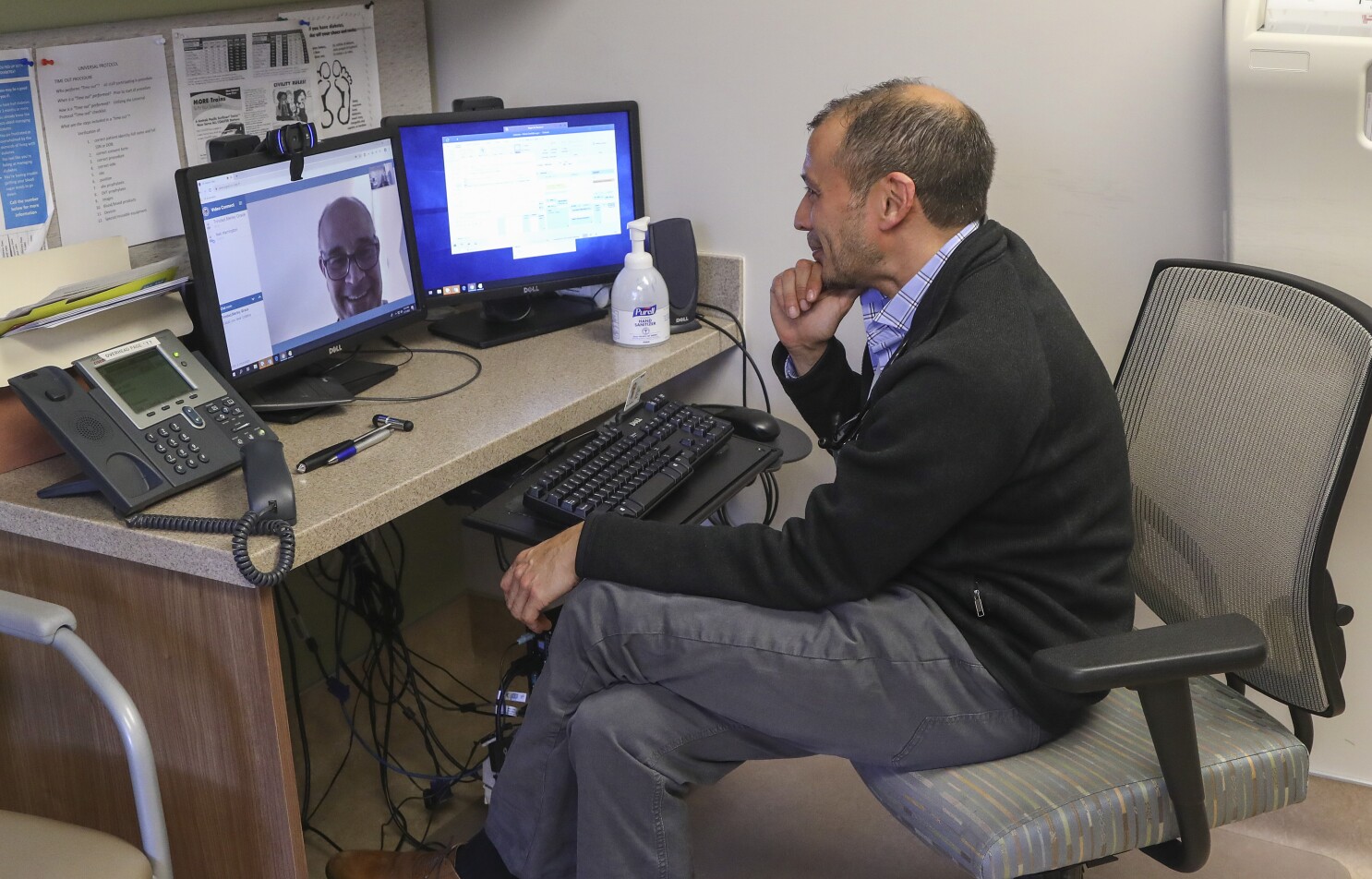
As a physician, waiting for the worst of coronavirus to hit, I see a lot to fear. It seems increasingly likely that this will be one of the most significant pandemics in modern human history, and that it will change our approach to healthcare going forward. But not all of its legacy will be negative. Here’s one thing I hope will come out of the crisis: an increased reliance on telemedicine, something that should have happened long ago.
A few months ago, when I was between jobs, I took a part-time job in a rural hospital serving a county of more than 150,000 people. On the verge of bankruptcy, the hospital was unable to attract many specialists to join its ranks, and in desperation, had turned to telemedicine to cover many services. So, for example, if a patient was rushed to the emergency room after a stroke, there was unlikely to be a neurologist in the room. Instead, a neurologist would assess the patient on a mobile screen from far away, with local nursing staff and doctors aiding him or her.
I had been skeptical of telemedicine going in. Physical exams are the bedrock of how doctors and nurses assess patients. We look patients and their loved ones in the eye, palpate sore spots with our fingers and offer comfort with a hand on a shoulder. Physical contact, I’d always thought, was at the heart of how doctors and patients communicate.
It was with this skepticism that I found myself next to a young man who been brought to the emergency room after attempting to take his own life. Again. This time, instead of seeing a psychiatrist in person, he saw one on a screen with wheels. The psychiatrist was in some distant location, but she had been in touch with the local doctors and had access to his medical records. Despite her physical remoteness, she connected with him, and he opened up. She knew of all the local resources to refer him to, and at the end of her conversation, she had developed a real rapport with him. After the visit ended and the nurse wheeled the monitor out of the room, I asked the young man what he thought, and to my surprise, he told me he was more comfortable with this than an in-person visit. He wasn’t the only one — many patients say they prefer a virtual doc to one sitting across from them.
Over the past few decades, medical care has been transformed by technology. Whenever a new drug becomes available, or a medical procedure is approved by the FDA, the medical community is quick to deploy it. Yet, when it comes to how we see patients, our current practices haven’t changed much since the time of Hippocrates. If a patient is sick they either have to come see us in clinic, urgent care, the emergency room or the hospital. Despite the internet transforming every aspect of our lives, from how we find love to how we order groceries, the way we deliver medical care has stagnated.
In the United States, not only are doctors often inaccessible for those living in rural areas, hospitals everywhere have huge economic challenges. One healthcare executive jokingly told me his hospital made more money from its parking lots than its clinics.
The response to COVID-19 might help change that.
One of the main reasons China has been able to slow coronavirus transmission has been because of a dramatic increase in virtual visits. In fact, China has moved half of all medical care online, allowing patients to consult with their doctors and get prescriptions from the comfort of their homes. Hospitals have been notorious petri dishes for deadly bugs since long before COVID-19, and this pandemic has brought that risk into crystal-clear focus. On Tuesday, Medicare announced that it will greatly expand coverage for telemedicine visits, previously sharply restricted. And at a White House briefing, the government announced it was urging states to similarly expand Medicaid coverage to include telemedicine visits by Skype, Facetime or other platforms. Some insurers have also said they will cover telehealth visits at parity with in-person visits.
These measures are commendable, but policies need to be put in place to ensure that the expansion of telemedicine is not temporary. Of course, in-person visits will still be necessary in many cases. But supporting telemedicine on a par with such visits has the potential to protect patients and healthcare personnel and allow for much more efficiency in the system. That said, physicians and nurses will need high-quality training to provide compassionate and thorough care to a patient from across a computer screen. Technology that allows patients to be “examined” remotely needs to be better studied and made more accessible. And since the backbone of telemedicine is reliable high-speed internet, Congress should consider Elizabeth Warren’s plan to bring broadband internet to the remotest parts of this country, to ensure broad access to these services.
This week my team converted most of our clinic visits from face to face to virtual visits. Some were over the phone, others were over video, often with a family member present as well. While there were some patients that still needed to be seen in person, we were able to minimize the risk of viral transmission not only for patients, but also for valuable members of our clinical team. Even before this crisis, as part of my job at the Veterans Affairs Health System in Boston, I often consulted with patients I had never seen as part of an “E Consult” system. While I was initially nervous when I first started doing this, it allowed me to expand my footprint far beyond what I could manage if I were seeing every patient in person.
At some point, I fervently hope the coronavirus will be a thing of the past. But I hope it leaves behind a legacy. I hope it changes how well we wash our hands, how well we fund public health and how well we protect the healthcare workers caring for our sickest patients. And, most of all, I hope it pushes us to embrace telemedicine.

The Medicare Payment Advisory Commission released its March 2020 report on Medicare payment policy to Congress, which includes a chapter analyzing the effects of hospital and physician consolidation in the healthcare sector.
Here are seven takeaways:
1. Medicare’s Insurance Trust Fund is likely to run out without changes. Trustees from Medicare estimate that the program’s Hospital Insurance Trust Fund, mostly funded through a payroll tax, will be depleted by 2026. To keep the fund solvent for the next 25 years, Medicare trustees advise that the payroll tax immediately be raised from 2.9 percent to 3.7 percent, or Part A spending to be reduced by 18 percent.
2. MedPAC recommends boosting payment rate for three sectors:
3. MedPAC recommends unchanged payment rates for four sectors:
4. MedPAC recommends payment rate reductions for two sectors:
5. MedPAC builds on its recommendation to revamp quality programs. MedPAC is furthering its recommendation to replace Medicare’s four current hospital quality programs with a single hospital value incentive program. MedPAC said it believes that this recommendation would provide hospitals higher aggregate payments than they would get under current law.
6. MedPAC’s findings on hospital and physician consolidation. MedPAC said that consolidation gives providers greater market power, which has a statistically significant association with higher profit margins for treating non-Medicare patients. Higher non-Medicare margins also are associated with higher standardized costs per discharge. But the direct association between market power and standardized costs per discharge is statistically insignificant, the commission found.
“The effect of consolidation on hospitals’ costs is not clear in theory or from our current analysis. From a theoretical standpoint, the merger of two hospitals could initially create some efficiencies and bargaining power with suppliers. But over time, higher prices from commercial payers could loosen hospitals’ budget constraints and lead to higher cost growth, thus offsetting any efficiency gains,” MedPAC’s report states.
7. MedPAC’s findings on the 340B Drug Discount Program. MedPAC was asked to analyze whether the availability of 340B drug discounts creates incentives for hospitals to choose more expensive products than they would without the program. MedPAC studied the effect of 340B market share on higher drug spending on cancer treatments between 2009 and 2017. The commission found that for two of the five cancer types studied, 340B participation boosted prices by about $300 per patient per month. However, the boost in spending attributed to 340B was much smaller than the general increase in oncology spending, which includes rising prices and the launch of new products with high drug prices. For example, cancer drug spending grew by more than $2,000 per patient month for patients with breast cancer, lung cancer, and leukemia/lymphoma.
“The MedPAC report released today uses rigorous analysis and finds little evidence 340B participation influences cancer drug spending. Modest differences may be attributable to the types of patients treated in 340B facilities. The safety-net hospitals that participate in the 340B drug-pricing program are essential providers of cancer care in this nation, especially to patients who are living with low incomes, those living with disabilities, and patients requiring more complex oncology care,” said Maureen Testoni, president and CEO of 340B Health, an association that represents more than 1,400 hospitals participating in the 340B program.
Access MedPAC’s full report here.
https://mailchi.mp/325cd862d7a7/the-weekly-gist-march-13-2020?e=d1e747d2d8

Now that the Democratic primary campaign has produced a clear front runner, it’s worth examining Joe Biden’s healthcare plan, which aims to expand the Affordable Care Act (ACA) by increasing access and affordability. As the graphic above highlights, former Vice President Biden has a broad—if at this point, still fairly high-level—proposal that includes a Medicare-like public option along with a variety of other ACA tweaks that aim to offer consumers more options and lower their healthcare costs.
These include allowing individuals in states without Medicaid expansion to join the pubic option premium-free, providing unlimited subsidy eligibility, and limiting drug price increases to the level of consumer inflation.
An independent analysis projects Biden’s plan would cost $2.25T and add an additional $800B to the deficit over 10 years. While large at first blush, these costs pale in comparison to Sen. Bernie Sanders’ Medicare for All plan, which would add a projected $12.95T to the deficit over the same period.
Of course, there are still many unanswered questions in Biden’s proposal, including how much consumers would pay under the public option, how much the public option plan would reimburse providers as a percentage of Medicare, and how the public option would impact competition among private insurers.
A public option offered at a significant discount has the potential to drive private plans out of business, which some project could eventually result in Medicare for All as an ultimate consequence. The devil will, as always, be in the details.
 HENRY KOTULA