Non-hospital physician employment rose sharply during pandemic 

https://mailchi.mp/28f390732e19/the-weekly-gist-march-10-2023?e=d1e747d2d8

While hospitals, payers, and private equity firms have long been competing to acquire independent physician groups, the COVID pandemic spurred a marked acceleration of the physician employment trend, with non-hospital corporate entities leading the charge.

The graphic above uses data released by consulting firm Avalere Health and the nonprofit Physicians Advocacy Institute to show that nearly three quarters of American physicians were employed by a larger entity as of January 2022up from 62 percent just three years prior. 

While hospitals employ a majority of those physicians, corporate entities (a group that includes payers, private equity groups, and non-provider umbrella organizations) have been increasing their physician rolls at a much faster rate. 

Corporate entities employed over 40 percent more physicians in 2022 than in 2019, and in the southern part of the country—a hotspot for growth of Medicare Advantage—corporate physician employment grew by over 50 percent.

We expect the move away from private practice, accelerated by the pandemic, will only continue as physicians seek financial returns, secure a path to retirement, and look to access capital for necessary investments to help grow and manage the increasing complexities of running a practice. 

We’ve become even less prepared for the next pandemic

https://mailchi.mp/28f390732e19/the-weekly-gist-march-10-2023?e=d1e747d2d8

Published this week in the Washington Post, this sobering article surveys the dismantling of our nation’s patchwork public health infrastructure, driven by a backlash to COVID pandemic restrictions. Positioning themselves as defenders of freedom, a coalition of conservative and libertarian activists, legislators, and judges have neutered many of the nation’s public health authorities. State health officials and governors in over half the country are now unable to issue mask mandates or order school closures without the permission of their state legislatures.

While the implications for a hypothetical “next COVID” are dire, we’re already seeing the consequences today: officials in Columbus, OH can no longer, for example, quarantine a child with measles, or shut down a restaurant experiencing a hepatitis A outbreak. 

The Gist: The anti-public health backlash in the wake of COVID has now been codified, with far reaching consequences for future disease outbreaks. COVID protections for hospital-based healthcare providers are winding down, even in states like California which quickly embraced masking.

But now in over half the country, many reasonable responses to unknown future health threats won’t even be on the table, or will involve debate and legislative action, wasting precious response time. 

Eli Lilly cuts prices on its insulin products

https://mailchi.mp/175f8e6507d2/the-weekly-gist-march-3-2023?e=d1e747d2d8

On Wednesday, Indianapolis, IN-based pharmaceutical giant Eli Lilly announced that it will cut its list price for both Humalog and Humulin, its two most commonly prescribed insulin products, by 70 percent. While these changes will go into effect later this year, the company is also immediately expanding its Insulin Value Program, available at participating pharmacies for the commercially insured and upon program enrollment for the uninsured, to match Medicare Part D’s $35 per month out-of-pocket insulin cap. Eli Lilly shared that 30 percent of the US’s 8M insulin users rely on its products, though the company is only cutting prices for its older insulin products.

The Gist: Nearly 30 percent of uninsured and 20 percent of commercially insured insulin users in the US report having to ration their doses due to cost concerns.While it still won’t be providing its insulin for free, as some have demanded, Lilly’s move should help the company gain market share, in addition to generating some good PR—and it’s expected that other large insulin manufacturers will be pressured to follow suit. 

But even if a $35 out-of-pocket cap was adopted nationally, Americans would still be paying three times more for their insulin than people in comparable countries. 

Questioning the value of the integrated delivery system

https://mailchi.mp/175f8e6507d2/the-weekly-gist-march-3-2023?e=d1e747d2d8

During one of our regular check-ins with a health system CEO this week, the conversation took a turn for the existential. Lamenting the difficult economic situation in the industry, the continued shift of care to ambulatory disruptors, and the mounting pressure to dial back money-losing services, he shared that he was starting to question the fundamental business model

“Many years ago, we set out to become an integrated delivery system. But I’m not sure we’ve succeeded at any of those things: we’re not integrated enough, we don’t act like a system, and we don’t seem to be delivering the kind of care consumers want.” A stark admission, but one that could apply to many large health systems across the industry.

In theory, those three “legs of the stool” should create a virtuous flywheel: greater integration across the care continuum (perhaps in a risk-bearing model, but not necessarily) ought to allow systems to deliver quality care at the right place, right time. And a system-oriented approach ought to allow for efficiencies and cost-savings that enable care to be delivered at lower cost to patients.

Instead, the three components often create a vicious spiral: care that’s not coordinated across an integrated continuum, with little success at leveraging system-level efficiencies, resulting in unnecessary, duplicative, and variable-quality care delivery at excessive cost.

Capturing the value of integrated delivery systems will ultimately require hard work, and not just lip service, on all three pieces. Meanwhile, scaling a broken model will only exacerbate the problems of organizations that are neither integrated, nor systemic, nor delivering care that is high value.

Payers racing to expand their provider footprints

https://mailchi.mp/175f8e6507d2/the-weekly-gist-march-3-2023?e=d1e747d2d8

In last week’s graphic, we showed how the nation’s largest health insurance companies earn annual revenues several times greater than the largest health systems. In the graphic above, we unpack the 2022 revenue of five of the largest payers, to show just how diversified they have become. 

UnitedHealth Group (UHG) continues to lead the way not only as the largest US payer, but also the most vertically integrated, growing its OptumCare provider business by over 30 percent last year. 

Playing catch-up, the other payers have also shown willingness to spend large sums on provider acquisitions, with CVS dropping nearly $20B on primary care company Oak Street and home health company Signify last year. UHG and Humana also recently spent over $5B each, on their own home health companies, in pursuit of lower cost settings for treating their Medicare Advantage enrollees.

In contrast, Cigna and Elevance have not been as active in the M&A space of late, prompting Cigna investors to question the CEO on whether the company may be at a competitive disadvantage. We’d expect the race to create full-stack, vertically integrated healthcare platforms, of the kind illustrated by these large payers, to gain steam across the rest of 2023 and beyond. Looming even larger than UHG, CVS Health, and the like: Amazon and Walmart, both of which are actively pursuing their own platform visions in healthcare.  

FDA approves first combination flu and COVID at-home test

https://mailchi.mp/175f8e6507d2/the-weekly-gist-march-3-2023?e=d1e747d2d8

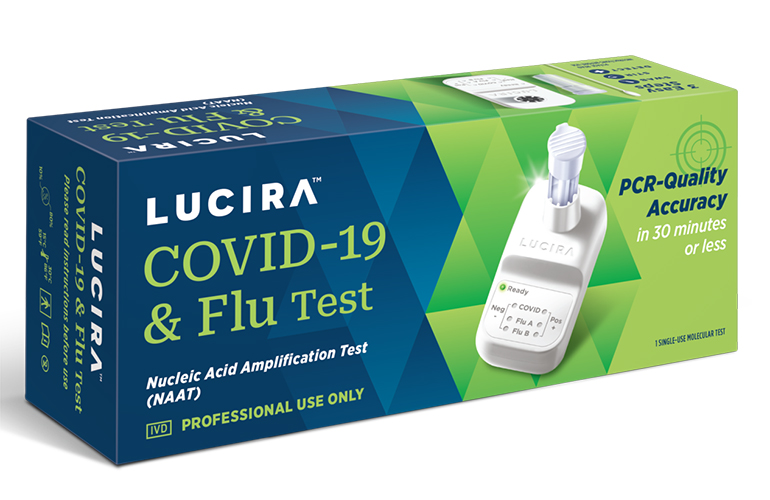
Last Friday, the Food and Drug Administration (FDA) granted emergency use authorization to the Lucira COVID-19 and Flu Test, making it the first at-home flu test approved for US consumers. The decision came just days after Lucira filed for Chapter 11 bankruptcy, blaming a protracted approval process for a test it had anticipated would be approved last August. As Lucira was unable to find a buyer prior to filing for bankruptcy, it remains unclear if the test will ever reach store shelves.

The Gist: While most Americans first experienced at-home viral testing with COVID, Europeans have used the same underlying technology to diagnose themselves with the flu at home for years. Lucira’s test was only approved because its capacity to detect COVID qualified it for emergency approval, and even then, approval took so long that the company began to falter. Many have questioned the FDA’s slow-walking of at-home diagnostics, especially now that Americans have demonstrated both the willingness and ability to swab their own noses. 

With the locus of care shifting towards the home, and in an environment of cost-conscious consumers, the push for more at-home diagnostics will continue to grow.   

UnityPoint Health and Presbyterian Healthcare Services announce intent to merge

https://mailchi.mp/175f8e6507d2/the-weekly-gist-march-3-2023?e=d1e747d2d8

On Thursday, Des Moines, IA-based UnityPoint Health and Albuquerque, NM-based Presbyterian Healthcare Services revealed they have signed a letter of intent to explore a merger. The UnityPoint and Presbyterian brands would continue to operate in their local regions, but the combined system would manage $11B in annual revenue, over 40 hospitals, and nearly 3K physicians and advanced practice clinicians.

The Gist: A UnityPoint and Presbyterian link up would seem to follow the playbook of the recently closed Advocate Aurora and Atrium merger. Mergers between large, noncontiguous health systems are currently popular as a means to achieve the benefits of scale without tripping the alarms of federal antitrust regulators. 

UnityPoint has been seeking a merger partner for years; most recently its plan to combine with Sanford Health fell through in 2019. It may have found a like-minded partner in Presbyterian, as both systems have made significant investments in risk, including establishing mature ACOs, developing their own Medicare Advantage plans, and expanding their hospital at home programs. 

We’re expecting to see a number of these cross-state system mergers announced over the course of 2023, as large regional players seek combinations that allow them to scale into super-regional, or even national, delivery platforms.