


Cartoon – Never Felt so Debt Free

https://www.medpagetoday.com/opinion/second-opinions/101004?trw=no

Millions are about to lose Medicaid while still eligible.
President Biden recently said that the pandemic is “over.” Regardless of how you feel about that statement or his clarification, it is clear that state and federal health policy is and has been moving in the direction of acting as if the pandemic is indeed over. And with that, a big shoe yet to drop looms large — millions of Americans are about to lose their Medicaid coverage, even though many will still be eligible. This amounts to a self-inflicted wound of lost coverage and a potential crisis for access to healthcare, simply because of paperwork.
An August report from HHS estimated that about 15 million Americans will lose either Medicaid or Children’s Health Insurance Program (CHIP) coverage once the federal COVID-19 public health emergency (PHE) declaration is allowed to expire. Of these 15 million, 8.2 million are projected to be people who no longer qualify for Medicaid or CHIP — but nearly just as many (6.8 million) will become uninsured despite still being eligible.
Why Is This Happening?
This Medicaid “cliff” will happen because the extra funding states have been receiving under the Families First Coronavirus Response Act (FFCRA) since March 2020 was contingent upon keeping everyone enrolled by halting all the bureaucracy that determines whether people are still eligible. Once all the processes to redetermine eligibility resume, the lack of up-to-date contact information, requests for documentation, and other administrative burdens will leave many falling through the cracks. A wrong address, one missed letter, and it all starts to unravel. This will have potentially devastating implications for health.
When Will This Happen?
HHS has said they will provide 60 days’ notice to states before any termination or expiration of the PHE — and they haven’t done so yet. It also seems incredibly unlikely that they would announce an end date for the PHE before the midterm elections, as that would be a major self-inflicted political wound. So, odds are that we are safe until at least January 2023 — but extensions beyond that feel less certain.
What Are States Doing to Prepare?
CMS has issued a slew of guidance over the past year to help states prepare for the end of the PHE and minimize churn, another word for when people lose coverage. Some of this guidance has included ways to work with managed care plans, which deliver benefits to more than 70% of Medicaid enrollees, to obtain up-to-date beneficiary contact information, and methods of conducting outreach and providing support to enrollees during the redetermination process.
However, the end of the PHE and the Medicaid redetermination process will largely be a state-by-state story. Georgetown University’s Center for Children and Families has been tracking how states are preparing for the unwinding process. Unsurprisingly, there is considerable variation between states’ plans, outreach efforts, and the types of information accessible to people looking to renew their coverage. For example, less than half of all states have a publicly available plan for how the redetermination process will occur. While CMS has encouraged states to develop plans, they are not required to submit their plans to CMS and there is no public reporting requirement.
Who Will Be Hurt Most?
If you dig into the HHS report, you will see that the disenrollment cliff will likely be a disaster for health equity — as if the inequities of the pandemic itself weren’t enough. A majority of those projected to lose coverage are non-white and/or Latinx, making up 52% of those losing coverage because of changes in eligibility and 61% among those losing coverage because of administrative burdens. Only 17% of white non-Latinx are projected to be disenrolled inappropriately, compared to 40% of Black non-Latinx, 51% of Asian American, Native Hawaiian, and Pacific Islander, and 64% of Latinx people — a very grim picture. This represents a disproportionate burden of coverage loss, when still eligible, among those already bearing inequitable burdens of the pandemic and systemic racism more generally.
Another key population at risk are seniors and people with disabilities who have Medicaid coverage, or those who aren’t part of the Modified Adjusted Gross Income (MAGI) population. Under the Affordable Care Act, states are required to redetermine eligibility at renewal using available data. This process, known as ex parte renewal, prevents enrollees from having to respond to, and potentially missing, onerous re-enrollment notifications and forms. Despite federal requirements, not all states attempt to conduct ex parte renewals for seniors and people with disabilities who have Medicaid coverage, or those who aren’t qualifying based on income. Excluding these groups from the ex parte process has important health equity implications, leaving already vulnerable groups more exposed and at risk for having their coverage inappropriately terminated.
What Can Be Done?
There are ways to mitigate some of this coverage loss and ensure people have continued access to care. HHS recently released a proposed rule that would simplify the application for Medicaid by shifting more of the burden of the application and renewal processes onto the government as opposed to those trying to enroll or renew their coverage. We could also change the rules to allow states to use more data, like information collected to verify eligibility for the Supplemental Nutrition Assistance Program (SNAP), in making renewal decisions, rather than relying so much on income. The Biden administration also made significant investments into navigator organizations, which can help those who are no longer eligible for Medicaid transition to marketplace coverage. Furthermore, states should use this as an opportunity to determine the most effective ways to reach Medicaid enrollees by partnering with researchers to test different communication methods surrounding renewals and redeterminations.
As the federal government and state Medicaid agencies continue to prepare for the end of the PHE, it is critical that they consider who these burdensome processes will affect the most and how to improve them to prevent people from falling through the cracks. More sick Americans without access to care is the last thing we need.
https://mailchi.mp/b1e0aa55afe5/the-weekly-gist-october-7-2022?e=d1e747d2d8

“A few months ago, I was confident we would be able to wean our system off travel nurses. But now I’m not so sure,” a chief nursing officer recently shared with us. Like most health systems, they had seen their use of agency nurses decline from peaks during the Delta and Omicron waves of the pandemic, and were encouraged by anecdotes of nurses returning to staff after stints as travelers. But today they remain “persistently stuck with a quarter of the agency nurses we needed at the peak”.
Seeing nurses returning from travel roles makes sense. It’s naturally a time-limited job—eventually the desire to be home wins out over the earning potential on the road. But another nursing leader shared his fear that a stint as a traveler could become an expected part of the arc of a nurse’s career. And from a hospital operations perspective, agency nursing needs are no longer connected to COVID, but are instead driven by general capacity needs in a tight labor market, keeping the operating rooms, emergency department, and ICUs open.
Health systems and physician groups continue to face labor costs that are up to 40 percent higher than 2019. A permanent need for agency nurses will frustrate efforts to rein in labor costs, through both the dollars spent on premium labor, and the resulting need to boost staff nurse salaries when a portion of their colleagues’ pay is anchored at the “traveling rate”.
https://mailchi.mp/b1e0aa55afe5/the-weekly-gist-october-7-2022?e=d1e747d2d8

As everyone in our industry knows, sluggish volumes amid persistently rising costs, especially for labor, have sent health system margins into a downward spiral across 2022. Using the latest data from consultancy Kaufman Hall, the graphic above shows that by the end of this year, employed labor expenses will have increased more than all non-labor costs combined.
While contract labor usage, namely travel nursing, is declining, the constant battle for nursing talent means travel nurses are still a significant expense at many hospitals. Through the first six months of this year, over half of hospitals reported a negative operating margin, and the median hospital operating margin has dropped over 100 percent from 2019.
Larger health systems are not faring better: all five of the large, multi-regional, not-for-profit systems we’ve highlighted below saw their operating margins tumble this year, with drops ranging from three points (Kaiser Permanente) to nearly seven points (CommonSpirit Health and Providence).
While these unfavorable cost trends have been building throughout COVID, health systems now have neither federal relief nor returns from a thriving stock market to help stabilize their deteriorating financial outlooks.
Health system boards will tolerate negative margins in the short-term (especially given that many have months’ worth of days cash on hand), but if this situation persists into 2023, pressure for service cuts, layoffs, and restructuring will mount quickly.
https://mailchi.mp/b1e0aa55afe5/the-weekly-gist-october-7-2022?e=d1e747d2d8

In an explosive two-part series published late last month, New York Times reporters Jessica Silver-Greenberg and Katie Thomas cast a spotlight on the revenue collection tactics used by two of the nation’s largest not-for-profit health systems, Renton, WA-based Providence and Cincinnati-based Bon Secours Mercy Health.
The articles detail how Providence leveraged help from consulting firm McKinsey & Company to collect sums as small as $2 from patients pressured to pay anything they could for their care, even if many were actually eligible for free care under state law. Bon Secours was scrutinized for conduct in its Richmond, VA market, where it was portrayed as leveraging safety-net facility Richmond Community Hospital for its 340B license, while stripping out essential services needed by the surrounding lower-income community.
Both health systems have responded to the Times investigation, Providence by refunding payments collected from hundreds of low-income patients, saying they were charged due to an “unintended error,” and Bon Secours by claiming the allegations in the article were “baseless” and stating that it has invested millions into its Richmond Community Hospital.
The Gist: Providence and Bon Secours Mercy Health are far from the only health systems accused of pursuing patient collections though any means available, which makes these articles especially worrisome to many system executives: the tactics deployed by the two systems are relatively common across the industry.
Given current margin pressures, health systems are already beginning to double down on aggressive revenue cycle management. But as most are also not-for-profit organizations who anchor their missions in providing community benefit, their tactics must also pass muster when judged in the court of public opinion.
https://mailchi.mp/b1e0aa55afe5/the-weekly-gist-october-7-2022?e=d1e747d2d8
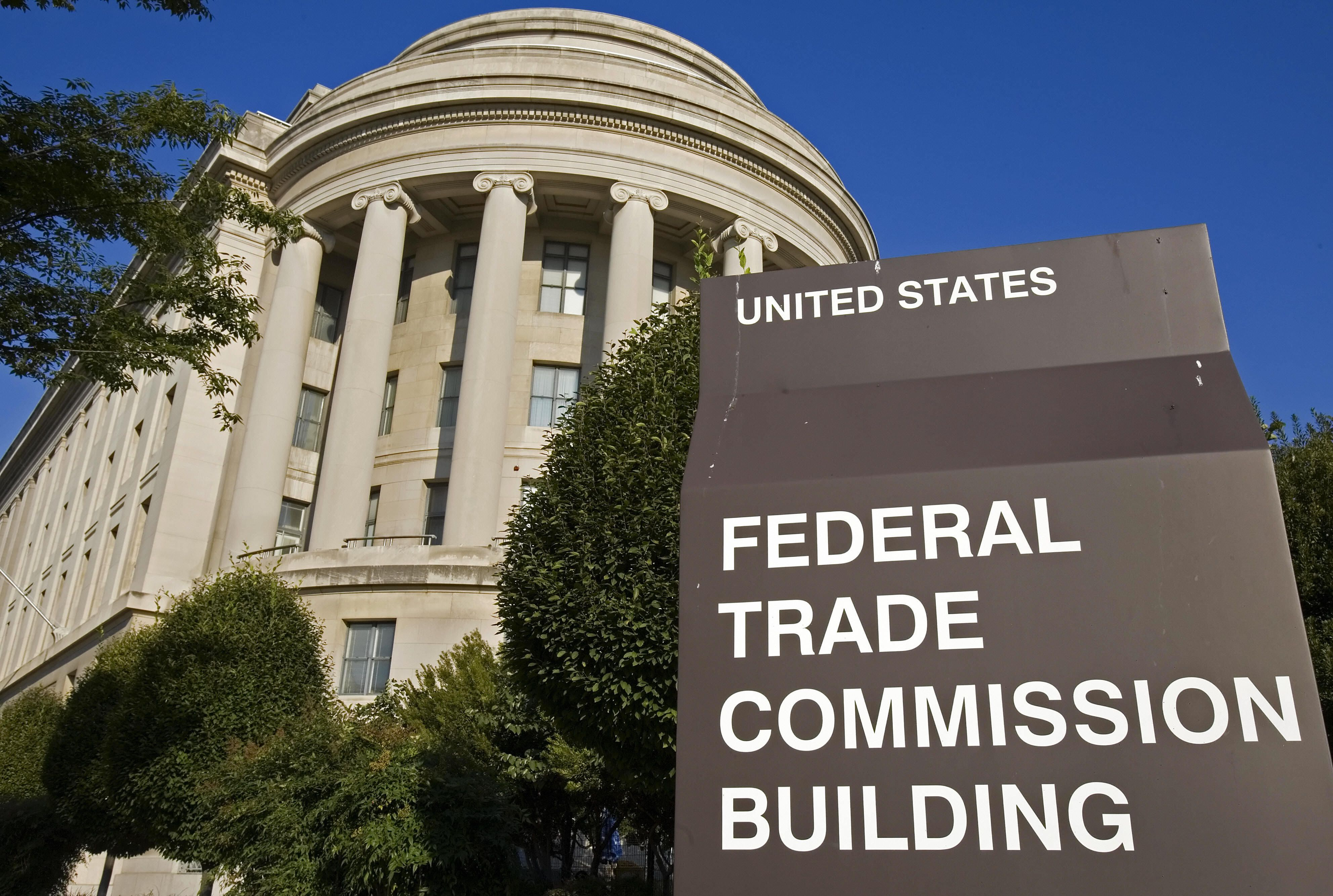
The FTC is investigating US Anesthesia Providers (USAP), a private equity (PE)-backed group with 4.5K physicians working in nine states, over concerns of monopoly power in certain markets. The inquiry is focused on USAP’s acquisition history, which has followed the PE “playbook” of rolling up small anesthesiology groups into a single entity large enough to exert leverage in contract negotiations. USAP’s presence in Texas and Colorado is likely to be of particular interest, as it controls at least 30 percent of the anesthesiology market in both states.
The Gist: Like many other PE-backed physician groups, USAP achieved market power mostly through myriad acquisitions too small to warrant regulatory attention on their own. The probe is in line with recent government scrutiny of private equity influence in the healthcare sector, and will no doubt be closely watched by investors and PE-backed groups.
If USAP is forced to divest from certain markets, the precedent could prove especially damaging to other rapidly growing investor-backed physician groups, particularly those staffing hospital functions, who are already being rocked by ramifications of the No Surprises Act.
https://mailchi.mp/b1e0aa55afe5/the-weekly-gist-october-7-2022?e=d1e747d2d8

Late last week, both chambers agreed to an interim funding bill to keep the government open through mid-December. In what is likely the last major piece of legislation before the midterm elections, the bill included an extension of two key Medicare payment programs for rural hospitals, but excluded any new funding for vaccines, testing, or treatment for either COVID-19 or monkeypox.
It has been more than 560 days since the Department of Health and Human Services last received federal COVID funding, and its free COVID vaccination program only has enough money to last through the end of 2022.
The Gist: Ever since President Biden declared the pandemic “over”, prospects for the White House’s requested $22B to support the continued pandemic response have diminished. While most hospitals had already given up hope of any additional direct COVID aid coming their way, this bill was the last good chance for the lagging bivalent booster campaign to receive a needed shot in the arm.
A recent Commonwealth Fund study found that if Americans got the new bivalent COVID booster at a rate similar to seasonal flu shots this fall, we could prevent 75K deaths and $44B in medical spending by March 2023—but unfortunately most Americans know little about the boosters, with less than four percent of eligible Americans receiving them so far.

The court ruling comes after the Supreme Court struck down a nearly 30 percent cut to 340B hospital payments from 2018.
October 04, 2022 – A federal judge has ordered HHS to immediately end the almost 30 percent cut in Medicare drug reimbursement to 340B hospitals.
The decision published last week by judge Rudolph Contreras with the US District Court for the District of Columbia rejected HHS’ plan to restore full payment to hospitals participating in the 340B Drug Pricing Program in 2023.
“HHS should not be allowed to continue its unlawful 340B reimbursements for the remainder of the year just because it promises to fix the problem later,” wrote Contreras.
Hospitals participating in the 340B Drug Pricing Program receive outpatient prescription drugs at a discounted price of up to 50 percent since they treat a disproportionate amount of low-income and vulnerable patients. The 340B Program is designed to enable the safety-net providers to stretch their financial resources. Medicare must also reimburse hospitals for administering covered outpatient drugs.
HHS reduced the Medicare drug reimbursement rates for 340B hospitals though in 2018, cutting payments by 28.5 percent in an effort to generate about $1.6 billion in savings. Federal officials reasoned that reimbursing 340B hospitals at the same rate as other hospitals creates an incentive for the hospitals to overprescribe the drugs or prescribe more expensive drugs since they receive covered outpatient drugs at a discounted price.
HHS also argued that 340B hospital reimbursement cuts would lower co-payments for Medicare beneficiaries since the amounts are tied to hospital reimbursement rates.
Hospitals and hospital groups, including the American Hospital Association (AHA) Association of American Medical Colleges (AAMC), and American’s Essential Hospitals, sued the federal government over the reduced reimbursement rates.
The case made it all the way to the Supreme Court where, in a major win for hospitals, judges unanimously ruled that HHS should not have reduced payments to certain hospitals in 2018 and 2019 without surveying hospitals to determine average acquisition costs for drugs. HHS had relied on the average price of the drugs to set lower rates.
However, the Supreme Court did not make judgments on 340B hospital reimbursement cuts for 2020 and later years. Following the Supreme Court’s ruling, HHS announced it would reimburse hospitals for administering 340B-covered drugs the same as non-340B drugs starting Jan. 1, 2023.
Hospital groups again challenged HHS policy, asking the courts to immediately halt the unlawful cuts in 2022.
“The AHA appreciates Judge Contreras’ ruling that the Department of Health and Human Services must immediately stop unlawful reimbursement cuts for 2022 for hospitals participating in the 340B drug pricing program. Halting these cuts will help 340B hospitals provide comprehensive health services to their patients and communities,” said Melinda Hatton, AHA’s general counsel and secretary, regarding the most recent court ruling.
“We continue to urge the Administration to promptly reimburse all the hospitals that were affected by these unlawful cuts in previous years and to ensure the remainder of the hospital field is not penalized for their prior unlawful policy, especially as hospitals and health systems continue to deal with rising costs for supplies, equipment, drugs and labor,” Hatton continued in the public statement.
340B Health’s president and CEO Maureen Testoni also called the court ruling “an important victory for 340B hospitals that have been fighting these unlawful cuts for nearly six years.” 340B health advocates safety-net hospitals participating in the drug pricing program.
“The Centers for Medicare & Medicaid Services (CMS) has the clear responsibility to restore the appropriate payments for 340B drugs immediately, and now a federal court has ordered it to do so without delay,” Testoni said.
HHS has not announced a repayment plan for 340B hospitals. Notably, the court ruling also did not cover the AHA’s motion to include reimbursement cuts from 2020 through 2022 in the case, nor AHA’s motion to repay hospitals for the cuts since 2018 without penalizing other hospitals.

 HENRY KOTULA