4 of the biggest healthcare trends CVS Health says to watch in 2021

COVID-19 accelerated a number of trends already brewing in the healthcare industry, and that’s not likely to change this year, according to a new report from CVS Health.

The healthcare giant released its annual Health Trends Report on Tuesday, and the analysis projects several industry trends that are likely to define 2021 in healthcare, ranging from technology to behavioral health to affordability.

“We are facing a challenging time, but also one of great hope and promise,” CVS CEO Karen Lynch said in the report. “As the pandemic eventually passes, its lessons will serve to make our health system more agile and more responsive to the needs of consumers.”

Here’s a look at four of CVS’ predictions:

1. A looming mental health crisis

Behavioral health needs were a significant challenge in healthcare prior to COVID-19, but the number of people reporting declining mental health jumped under the pandemic.

Cara McNulty, president of Aetna Behavioral Health, said in a video attached to the report that it will be critical to “continue the conversation around mental health and well-being” as we emerge from the pandemic and to reduce stigma so people who need help seek it out.

“We’re normalizing that it’s important to take care of our mental well-being,” she said.

Data released in December by GoodRx found that prescription fills for depression and anxiety medications hit an all-time high in 2020. GoodRx researchers polled 1,000 people with behavioral health conditions on how they were navigating the pandemic, and 63% said their depression and/or anxiety symptoms worsened.

McNulty said symptoms to look for when assessing whether someone is struggling with declining mental health include whether they’re withdrawn or agitated or if there’s a notable difference in their self-care routine.

2. Pharmacists take center stage

CVS dubbed 2021 “the year of the pharmacist” in its report.

The company expects pharmacists to be a key player in a number of areas, especially in vaccine distribution as that process inches toward broader access. They also offer a key touchpoint to counsel patients about their care and direct them to appropriate services, CVS said.

CVS executives said in the report that they see a significant opportunity for pharmacists to have a positive impact on the social determinants of health. 

“We’ve found people are not only open and willing to share social needs with their pharmacists but in many cases, they listen to and act on the advice and recommendations of pharmacists,” Peter Simmons, vice president of transformation, pharmacy delivery and innovation at CVS Health, said in the report.

3. Finding ways to mitigate the cost of high-price therapies

Revolutionary drugs and therapies are coming to market with eye-popping price tags; it’s not uncommon to see new pharmaceuticals priced at $1 million or more. For pharmacy benefit managers, this poses a major cost challenge.

To address those prices, CVS expects value-based contracting to take off in a big way. And drugmakers are comfortable with the idea, according to the report. Novartis, for example, is offering insurers a five-year payment plan for its $2 million gene therapy Zolgensma, with refunds available if the drug doesn’t achieve desired results.

CVS said the potential for these therapies is clear, but many payers want to see some type of results before they fork over hundreds of thousands.

“Though the drug may promise to cure these patients for life, these are early days in their use,” said Joanne Armstrong, M.D., enterprise head of women’s health and genomics at CVS Health, in the report. “What we’re saying is, show us the clinical value proposition first.”

CVS said it’s also offering a stop-loss program for gene therapy to self-funded employers contracted with Aetna and/or Caremark to assist them in capping the expenses associated with these drugs.

4. Getting into the community to address diabetes

Diabetes risk is higher among vulnerable populations, such as Black patients, and addressing it will require local and community-based solutions, CVS executives said in the report. Groups at the highest risk for the disease are less likely to live in areas with easy access to a supermarket, for example, which boosts their risk of unhealthy eating, according to the report.

The two key hurdles to addressing this issue are access and affordability. The rise in retail clinics and ambulatory care centers can get at the access issue, as they can offer a way to better meet patients where they are.

At CVS’ MinuteClinics, patients can walk in and receive a number of services to assist them in managing diabetes, including screenings, consultations with providers and connections to diabetes educators who can assist with lifestyle changes.

Retail locations can also assist with medication costs, creating a one-stop-shop experience that’s easier for many diabetes patients to slot into their daily lives, CVS said.

“Diabetes is a case study in how a more connected experience can translate to simpler, affordable and more accessible care for underserved communities,” said Dan Finke, executive vice president of CVS Health and president of its healthcare benefits division.

The home-based care space heats up

https://mailchi.mp/05e4ff455445/the-weekly-gist-february-26-2021?e=d1e747d2d8

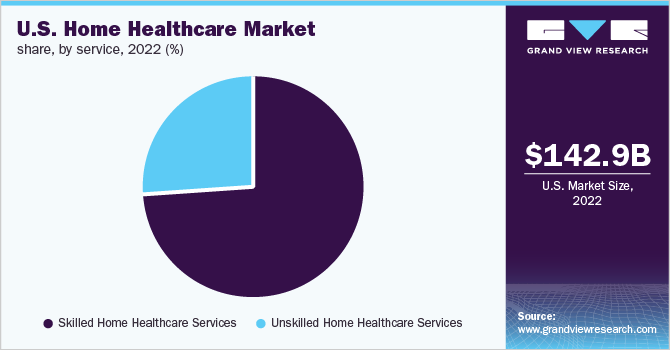
Home Healthcare Market Size, Growth Report, 2020-2027

This week Brookdale Senior Living, the nation’s largest operator of senior housing, with 726 communities across 43 states and annual revenues of about $3B, announced the sale of 80 percent of its hospice and home-based care division to hospital operator HCA Healthcare for $400M. The transaction gives HCA control of Brookdale’s 57 home health agencies, 22 hospice agencies, and 84 outpatient therapy locations across a 26-state footprint, marking its entry into new lines of business, and allowing it to expand revenue streams by continuing to treat patients post-discharge, in home-based settings.

Like other senior living providers, Brookdale has struggled economically during the COVID pandemic; its home and hospice care division, which serves 17,000 patients, saw revenue drop more than 16 percent last year. HCA, meanwhile, has recovered quickly from the COVID downturn, and has signaled its intention to focus on continued growth by acquisition across 2021.
 
In separate news, Optum, the services division of insurance giant UnitedHealth Group, was reported to have struck a deal to acquire Landmark Health, a fast-growing home care company whose services are aimed at Medicare Advantage-enrolled, frail elderly patients. Landmark, founded in 2014, also participates in Medicare’s Direct Contracting program.

The transaction is reportedly valued at $3.5B, although neither party would confirm or comment on the deal. The acquisition would greatly expand Optum’s home-based care delivery services, which today include physician home visits through its HouseCalls program, and remote monitoring through its Vivify Health unit.

The Brookdale and Landmark deals, along with earlier acquisitions by Humana and others, indicate that the home-based care space is heating up significantly, reflecting a broader shift in the nexus of care to patients’ homes—a growing preference among consumers spooked by the COVID pandemic. 

Along with telemedicine, home-based care may represent a new front in the tug-of-war between providers and payers for the loyalty of increasingly empowered healthcare consumers.

Stop thinking of telemedicine as a “substitute” for the office visit

https://mailchi.mp/41540f595c92/the-weekly-gist-february-12-2021?e=d1e747d2d8

Image result for thinking

“I don’t think we have good enough information to show how we should be deploying telemedicine,” a physician leader recently told us. “If we can’t show that a virtual visit can adequately substitute for an in-person visit, then we should be focusing on making sure patients know it’s safe to come in.” It struck us that viewing telemedicine as a direct substitute for an office visit was a narrow and antiquated way to think about virtual care.

Moreover, the argument that telemedicine visits are potentially cost-increasing if they are “additive” to other care interactions, rather than “substitutive”, is rooted in fee-for-service payment: more patient-provider interactions equals more billable visits, and with more visits, we run the risk of increasing costs.

Telemedicine (both video and phone visits) likely taps into pent-up demand for access by patients who would otherwise not seek care. Some patients could be aided by more frequent, brief encounters; this is considered a failure only when viewed through the lens of fee-for-service payment. (Honestly, with primary care accounting for less than 6 percent of total healthcare spending, it’s hard to argue that additional telemedicine visits will be responsible for supercharging the cost of care.) Of course, there are many clinical situations in which in-person interaction—to perform a physical exam, measure vitals, observe a patient—is fundamental. Patients know this, and understand that sometimes they’ll need to be seen in person. But hopefully that next encounter will be more efficient, having already covered the basics. 

The ideal care model will look different for different patients, and different kinds of clinical problems—but will likely be a blend of both virtual and in-person interactions, maximizing communication, information-gathering, and patient convenience. 

In need of more nuanced consumer segmentation

https://mailchi.mp/85f08f5211a4/the-weekly-gist-february-5-2021?e=d1e747d2d8

Image result for Healthcare In need of more nuanced consumer segmentation

As “consumerism” becomes an ever-greater focus of health system strategy, we’ve begun to field a number of questions from leaders looking to develop a better understanding of consumers in their market.

In particular, there’s a growing desire for more sophistication around consumer segmentation—understanding how preferences and behavior differ among various kinds of patients. 

Traditional segmentation has largely been marketing-driven, helping to target advertising and patient recruitment messages to key groups. For that, the old-school marketing segments were good enough: busy professionals, the worried well, the growing family, and so forth.

But as systems begin to develop product offerings (telemedicine or home-based services, for example) for target populations, those advertising-based segments need to be supplemented with a more advanced understanding of care consumption patterns over time. Segmentation needs to be dynamic, not static—how does a person move through life stages, and across care events, over time?

A single consumer might be in different segments depending on the type of care they need: if I have a new cancer diagnosis, that matters more than whether I’m a “busy professional”, and my relevant segment might be different still if I’m just looking for a quick virtual visit.

Layered on top of demographic and clinical segments is the additional complexity of payer category—am I a Medicare Advantage enrollee or do I have a high-deductible exchange plan? 

With consumers exercising ever greater choice over where, when, and how much care to receive, understanding the interplay of these different kinds of segments is fast becoming a key skill for health systems—one that many don’t currently have.  

Humana partners with DispatchHealth for hospital at home

https://mailchi.mp/85f08f5211a4/the-weekly-gist-february-5-2021?e=d1e747d2d8

Image result for Humana partners with DispatchHealth for hospital at home

Humana, the nation’s second-largest Medicare Advantage (MA) insurer, is pushing further into home-based care, partnering with Denver-based startup DispatchHealth to offer its members—especially those with conditions like heart failure, chronic obstructive pulmonary disease, and chronic cellulitis—access to hospital-level care at home.

The service will initially be available in the Denver and Tacoma, WA markets, with plans to expand to Arizona, Nevada, and Texas across 2021. Humana members who meet hospital admission criteria will receive daily home visits from an on-call, dedicated DispatchHealth medical team, as well as 24/7 physician coverage enabled by remote monitoring and an emergency call button.

DispatchHealth will also coordinate other patient care and wraparound services in the home as needed, including pharmacy, imaging, physical therapy, durable medical equipment, and meal delivery. Dispatch’s earlier offerings centered around home-based, on-demand urgent and emergency care services, now available in at least 29 cities nationwide. 

Humana’s partnership with DispatchHealth could deliver a full care continuum of home-based services to its Medicare Advantage enrollees and has the potential to displace hospitals from at least a portion of acute care services

Post-COVID, it’s becoming increasingly clear that the nexus of care delivery has shifted even more rapidly to consumers’ homes—and traditional providers will need to rethink service strategies accordingly.

CommonSpirit, Blue Shield of California expand payment platform to 20 hospitals

Blue Shield of California Expands Collaboration with Dignity Health  Hospitals to Make Billing and Payment Easier for Patients, Providers |  State | ttownmedia.com

Chicago-based CommonSpirit and Blue Shield of California expanded a new billing program to 20 Dignity Health hospitals, the organizations said Jan. 11.

The Member Payments billing program aims to create faster and more transparent billing processes for Blue Shield of California members who receive care at Dignity facilities and owe money after their insurance is processed. CommonSpirit is the parent organization of Sacramento, Calif.-based Dignity. 

Under the program, Dignity can get a patient’s portion of a bill at the time of claim adjudication. Patients who receive care from a Dignity facility get a monthly bill from Blue Shield of California. Through that bill, patients can then pay for their cost-sharing amount in full or through installments. 

The program, announced in 2018, was launched in September 2019 by Dignity, CommonSpirit, Blue Shield of California and technology startup company Ooda Health. The program’s 12-month pilot started at two hospitals in Sacramento and grew to six hospitals by the end of the pilot year.

The addition of 20 Dignity hospitals comes after the process was found to streamline cost-sharing payments, resulting in a 92 percent satisfaction rate from patients who used the platform, the organizations said.

No more snow days in the clinic

https://mailchi.mp/e38b070b8787/the-weekly-gist-december-18-2020?e=d1e747d2d8

Snow Days and Health Care…No Such Thing. | The CureTalks Blog

It turns out it’s not just the kids who aren’t getting snow days this year. This week, we spoke with an executive at a health system hit hard by Wednesday’s Nor’easter, and asked how the system was faring with the expected 18 inches of snowfall. He replied that the medical group was as busy as usual.

With all the work this spring to expand telemedicine capabilitiesclinic staff were able to reach out to patients the day before the storm, and proactively convert a majority of scheduled in-person clinic visits to telemedicine. “Normally we would’ve been closed, and most appointments rescheduled for weeks down the road,” he told us. Instead, they were able to keep most of those visits in their scheduled time slot.

Now that we have a systemwide process for telemedicine, I don’t think we’ll have a reason for the clinic to take a snow day again.” It’s a clear win-win for the system and patients: patient care seamlessly goes on. It’s easy to see the many use cases for the ability to toggle between in-person and virtual visits. A parent is stuck at home with a sick kid, and can’t make her endocrinologist appointment? Moved to virtual! A patient has an unexpected business trip taking him out of town? Don’t cancel, let’s do that follow-up visit via telemedicine.

We’ve been worried about the slowdown in progress made on telemedicine as patients switched back to in-person visits across the summer and fall. The ability to continue patient care during a record-breaking snowstorm is a perfect illustration of why it’s critical not to “backslide” with virtual care: meeting patients where they are, regardless of circumstances, is an essential part of building long-term loyalty and care continuity.

Cartoon – The Customer is Often Wrong

My son's kindergarten is doing remote learning. It's the worst. | cartoon