All 50 states have partially reopened; U.S. death toll surpasses 90,000

https://www.washingtonpost.com/nation/2020/05/20/coronavirus-update-us/?utm_campaign=wp_post_most&utm_medium=email&utm_source=newsletter&wpisrc=nl_most

NC coronavirus update May 18: Wake County leaders meet to discuss ...

Ready or not, the United States is reopening. All 50 states have started easing coronavirus-related restrictions — even though many of them do not meet federal benchmarks — leading public health experts to warn that a new surge of infections could be imminent.

As the U.S. death toll surpassed 90,000, White House officials continued to defend the push to reopen and optimistically predicted a swift economic recovery. As part of the focus on states’ efforts to revive their economies, Vice President Pence on Wednesday traveled to Florida while Trump was set to host the governors of Arkansas and Kansas at the White House.

Here are some significant developments:

  • Trump ramped up his rhetoric against China, claiming on Twitter that the nation’s “incompetence” was responsible for “this mass Worldwide killing!” Secretary of State Mike Pompeo also denounced China as a “brutal authoritarian regime” and described its relationship with the director of the World Health Organization as “troubling.”
  • A worker at a mink farm in the Netherlands may have contracted the novel coronavirus from an animal there, the country’s agricultural minister said. If confirmed, this is would be first recorded incident of animal-to-human transmission. 
  • A church in Houston and another in Georgia are closing for a second time after faith leaders and congregants tested positive for the virus shortly after the two churches reopened.
  • The president drew criticism for saying Tuesday it’s “a badge of honor” that America leads the world with more than 1.5 million confirmed cases of the novel coronavirus because “it means our testing is much better.” The United States has more than 30 percent of the world’s known coronavirus infections but accounts for less than 5 percent of the global population.
  • The Centers for Disease Control and Prevention laid out a detailed, delayed road map for reopening schools, child-care facilities, restaurants and mass transit, weeks after governors began opening states on their own terms.
  • The president privately expressed opposition to extending unemployment benefits for workers affected by the pandemic.


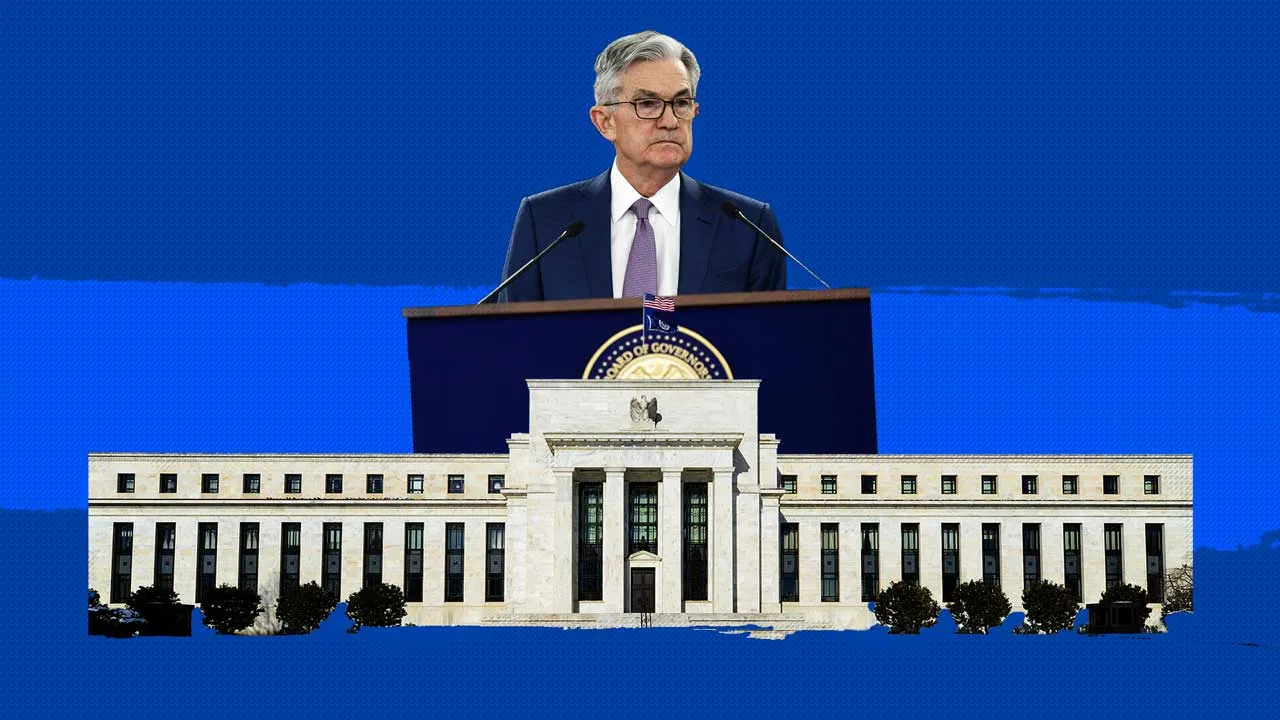
Jay Powell warns US recovery could take until end of 2021

https://www.ft.com/content/2ed602f1-ed11-4221-8d0b-ef85018c96ea

Fed Makes Second Emergency Rate Cut to Zero Due To Coronavirus ...

Fed chair says economy may not fully bounce back until virus vaccine is available.

Federal Reserve chair Jay Powell has warned that a full US economic recovery may take until the end of next year and require the development of a Covid-19 vaccine.

“For the economy to fully recover, people will have to be fully confident. And that may have to await the arrival of a vaccine,” Mr Powell told CBS News on Sunday. A full revival would happen, he said, but “it may take a while . . . it could stretch through the end of next year, we really don’t know”.

He added: “Assuming there is not a second wave of the coronavirus, I think you will see the economy recover steadily through the second half of this year.”

Mr Powell told CBS it was likely there would be a “couple more months” of net job losses, with the unemployment rate climbing to as high as 20-25 per cent. But he said it was “good news” that the “overwhelming” majority of those claiming unemployment benefits report themselves as having been laid off temporarily, meaning they are expecting to go back to their old jobs.

Oil prices and stocks in Asia rose on Monday despite the gloomy outlook. West Texas Intermediate, the US crude benchmark, climbed 4.4 per cent to take it above $30 a barrel for the first time in two months. Brent crude, the international benchmark, rose 3.6 per cent to $33.67 a barrel. Japan’s Topix was up 0.4 per cent and China’s CSI 300 index of Shanghai- and Shenzhen-listed stocks added 0.6 per cent.

Donald Trump, US president, said last week that he hoped to have a vaccine ready by the end of 2020. But public health experts, including Anthony Fauci, the head of the US National Institute of Allergy and Infectious Diseases, and Rick Bright, the recently ousted head of the US Biomedical Advanced Research and Development Authority, have warned that the process is likely to take longer.

Dr Fauci, a high-profile member of Mr Trump’s coronavirus task force, has said he expects the search for a vaccine to take at least a year to 18 months. But Dr Bright has said that was too optimistic.

Some world leaders have also raised doubts about the immediate prospects for a vaccine. Giuseppe Conte, prime minister of Italy, said at the weekend that his country could “not afford” to wait for a vaccine, while Boris Johnson, UK prime minister, warned that a vaccine “might not come to fruition” at all.

Mr Powell said that while lawmakers had “done a great deal and done it very quickly”, Congress and the Fed may need to do more “to avoid longer-run damage to the economy”.

The Fed chair said fiscal policies that “help businesses avoid avoidable insolvencies and that do the same for individuals” would position the US economy for a strong recovery post-crisis.

Mr Powell also reiterated his position against using negative interest rates, something Mr Trump has called for. The Fed chair told CBS that the Federal Open Market Committee had eschewed negative interest rates after the last financial crisis in favour of “other tools” such as forward guidance and quantitative easing.

The US Congress has already approved nearly $3tn of economic relief measures intended to support struggling businesses and individuals, but there is growing consensus in Washington that more fiscal stimulus will be needed — even if Democrats and Republicans are divided over how to dole out federal funds.

Late on Friday, the Democrat-controlled House of Representatives passed Nancy Pelosi’s plan for $3tn in new stimulus spending.

Mr Trump has repeatedly called for the next stimulus to include a cut to payroll taxes — deductions for entitlements such as social security and Medicare. Last week, Larry Kudlow, the top White House economic adviser, suggested that lower corporate taxes and looser business regulation should be part of any future relief package.

The Trump administration has taken a more bullish stance on the US economic recovery than Mr Powell, with White House officials repeatedly insisting that the economy will bounce back before the end of the year.

Mr Powell told CBS it was a “reasonable expectation that there will be growth in the second half of the year” but “we won’t get back to where we were by the end of the year”.


Most states still aren’t doing enough coronavirus testing

https://www.axios.com/coronavirus-testing-states-still-behind-629973cb-d8ad-4f36-a6fa-d59959fe84a3.html


Most states still aren't doing enough coronavirus testing - Axios


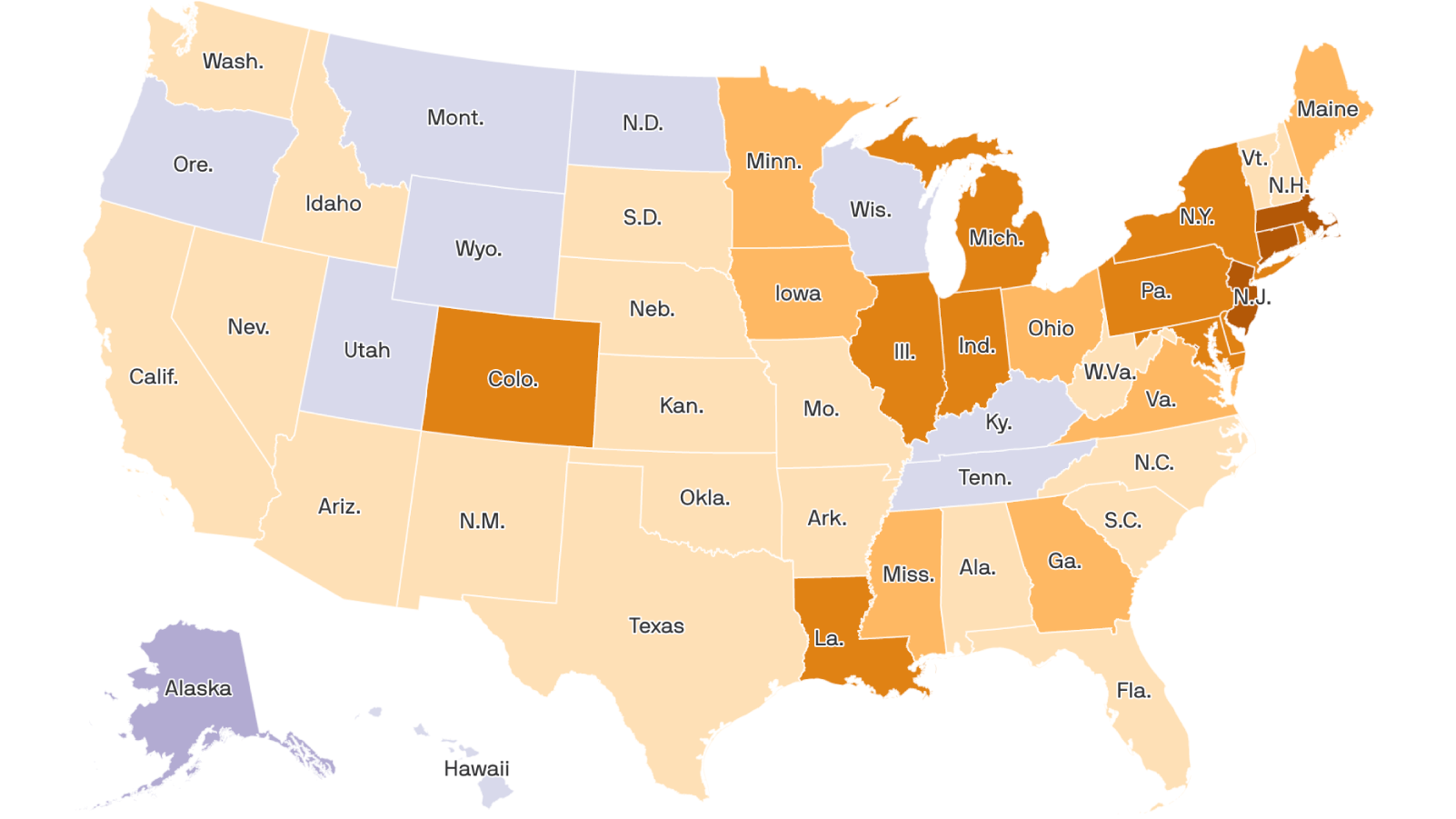
Most states still aren’t doing enough coronavirus testing, especially those that have suffered from larger outbreaks, according to recent testing targets calculated by the Harvard Global Health Institute.

Between the lines: It’s much harder to contain the virus once a lot of people have it — which is why we needed strong social distancing in the first place. But knowing who is infected is the foundation of containment going forward, and most states are still behind.

The big picture: Nationally, the U.S. needs to be doing about 900,000 tests a day, according to the Harvard estimate, which was released earlier this month.

  • But not all states need to be doing the same amount of tests. The goal Harvard suggested for each state — the number of tests they should have done on May 15  was calculated based on the size of its outbreak as of early May.
  • That means that New York needs to be doing a much larger number of tests each day than Wyoming, even after accounting for the states’ huge population discrepancy.

Why it matters: Most states have already begun reopening to some extent, even without key public health tools — like testing and contact tracing — fully built up.

  • That increases the chance that the virus will spread undetected as people begin interacting with one another again.
  • And these premature measures may just increase the number of tests a state needs, especially because the estimates were based on the assumption states would remain closed until May 15.
  • “The moment you relax, the number of cases will start climbing. And therefore, the number of tests you need to keep your society, your state from having large outbreaks will also start climbing,” Harvard’s Ashish Jha warned.


Cartoon – Economic Stimulus vs. Leadership

Family leadership and organisational leadership: what's the ...

If the White House is struggling, how will ordinary businesses fare? 

https://mailchi.mp/f4f55b3dcfb3/the-weekly-gist-may-15-2020?e=d1e747d2d8

The RAOI Advisory Opinion: A Transformative Moment or a Bump in ...

In a week that saw reopening activity pick up across the country, drawing even more attention to the need for sufficient testing to give employers and workers confidence in returning to work, a new study from researchers at New York University (NYU) suggested that a widely-hailed rapid testing machine from Abbott Labs may be unreliable.

The Abbott ID NOW COVID-19 test produced false negatives a third of the time using nasopharyngeal swabs, and 48 percent of the time with less-invasive “dry nasal swabs”, according to the study, which has not yet undergone peer review. The five-minute, point-of-care test received emergency use authorization from the Food and Drug Administration (FDA) in late March and has been touted as a “great test” by President Trump, whose White House relies on it to test the President and those around him.

On Thursday, the FDA issued a warning about the potential for false negative results using the Abbott test. The company disputes the findings and sent a list of questions to the NYU researchers for clarification. Meanwhile, two White House staffers—an aide to the President and the Vice President’s press secretary—tested positive for coronavirus, causing the White House to mandate masks for all employees starting this week.

The uncertainty around test results, and the ensuing concern about safety at the White House, provides a foretaste of the difficult road ahead for thousands of employers nationwide as stay-at-home orders are lifted, and companies consider when and how to reopen workplaces.

If the White House is struggling, how will ordinary businesses fare?

US coronavirus update: 1.46M cases, 87K+ confirmed deaths, 10.2M total tests conducted.


Quantifying the massive blow to hospital volumes

https://mailchi.mp/f4f55b3dcfb3/the-weekly-gist-may-15-2020?e=d1e747d2d8

Even after hearing dozens of reports from health systems about how steep their COVID-related volume losses have been, we were still floored by this analysis from healthcare analytics firm Strata Decision Technology, documenting a 55 percent drop in patients seeking hospital care across the country.

The report, which analyzed data from 228 hospitals in 51 health systems across 40 states, found that no clinical service line was immune from steep volume losses. The graphic below shows volume loss by service line in March-April 2020 compared to the same period in 2019.

Unsurprisingly, ophthalmology, gynecology, ortho/spine and ENT—all specialties with a high portion of elective cases, and heavily dependent on procedures—saw volume declines of greater than 70 percent. But even obstetrics and neonatology (which we expected to be “pandemic proof”) and infectious disease (which we thought might be busier in the throes of COVID-19) saw losses of 20-30 percent.

Looking at specific procedures, complex elective surgeries like spinal fusion and hip and knee replacements were almost completely obliterated. Precipitous declines in encounters for chronic diseases like coronary heart disease and diabetes (down 75 and 67 percent, respectively) and cancer screenings (a 55 percent decline in breast health and a 37 percent decline in cancer care overall) point to the likelihood of worrisome disease exacerbations, and a future full of more complex patients.

The volume losses, plus a 114 percent rise in uninsured patients, led to average two-week losses of $26.5M per health system across the study’s cohort. Strata will continue to track and publish volume changes, but this early snapshot paints a bleak picture of staggering financial hits, and “lost” patient care that will carry lasting ramifications for the health of communities nationwide.


Putting a pillar of the community in jeopardy

https://mailchi.mp/f4f55b3dcfb3/the-weekly-gist-may-15-2020?e=d1e747d2d8

Pillars of the Community - New York Improv Teams

It’s easy to become numb to the numbers we’re bombarded with on a daily basis—case counts, deaths, financial losses, unemployment claims, bailout funding. An article from the Washington Post this week put a very human face on how the coronavirus crisis is playing out on the ground, profiling the experience of 115-bed Griffin Hospital in Derby, CT.

We first got to know Griffin, and its CEO Patrick Charmel, years ago in the course of work for our former employer. It’s a remarkable, fiercely independent organization—recognized as the flagship hospital of the “Planetree” patient-centered care model, and a decade-long fixture on Fortune’s list of Top 100 Best Companies to Work For. But the COVID-19 wave hit Griffin hard, as it did much of Connecticut.

With the high cost of caring for COVID patients, and lost revenue from cancelled procedures, Griffin has had to make hard decisions about furloughing and redeploying staff—incredibly difficult for a small facility that has been a pillar of the community for a century. Charmel has been able to secure some relief in the form of advance payment from Medicare, but his efforts to lobby for a share of the state’s allocation of CARES Act grant funding for hospitals proved unsuccessful, and so the future of the hospital—or at least its continued viability as an independent organization—is in jeopardy.

In the words of Griffin’s chief financial officer, “This could be devastating for us.” As the recovery begins, and questions begin to be asked about the billions of dollars of “bailouts” paid to “greedy hospitals”—an easy narrative for the media to latch onto—it’s worth remembering what’s happening to Griffin Hospital, and to hundreds of other similar organizations across the country.

Countless communities rely on these hospitals, and their survival is worth safeguarding.


Trump faces criticism over lack of national plan on coronavirus

Trump faces criticism over lack of national plan on coronavirus
COVID-19 National Health Plan – Primary Care – Central Patient ...

The Trump administration is facing intense criticism for the lack of a national plan to handle the coronavirus pandemic as some states begin to reopen.

Public health experts, business leaders and current administration officials say the scattershot approach puts states at risk and leaves the U.S. vulnerable to a potentially open-ended wave of infections this fall.

The White House has in recent days sought to cast itself as in control of the pandemic response, with President Trump touring a distribution center to tout the availability of personal protective equipment and press secretary Kayleigh McEnany detailing for the first time that the administration did have its own pandemic preparedness plan.

Still, the White House lacks a national testing strategy that experts say will be key to preventing future outbreaks and has largely left states to their own devices on how to loosen restrictions meant to slow the spread of the virus. Trump this week even suggested widespread testing may be “overrated” as he encouraged states to reopen businesses.

The Centers for Disease Control and Prevention (CDC) on Thursday night issued long-awaited guidance intended to aid restaurants, bars and workplaces as they allow employees and customers to return, but they appeared watered down compared to previously leaked versions.

Some experts said the lack of clear federal guidance on reopening could hamper the economic recovery. 

“A necessary condition for a healthy economy is a healthy population. This kind of piecemeal reopening with everyone using different criteria for opening, we’re taking a big risk,” said Mark Zandi, chief economist at Moody’s Analytics.

The lack of coherent direction from the White House was driven home this week by damaging testimony by a former top U.S. vaccine official who claims he was ousted from his post improperly.

“We don’t have a single point of leadership right now for this response, and we don’t have a master plan for this response. So those two things are absolutely critical,” said Rick Bright, who led the Biomedical Advanced Research and Development Authority until he was demoted in late April.

The U.S. faces the “darkest winter in modern history” if it does not develop a more coordinated national response, Bright said. “Our window of opportunity is closing.”

From the start, the White House has let states chart their own responses to the pandemic.

The administration did not issue a nationwide stay-at-home order, resulting in a hodgepodge of state orders at different times, with varying levels of restrictions.

Facing a widespread shortage, states were left to procure their own personal protective equipment, ventilators and testing supplies. Trump resisted using federal authority to force companies to manufacture and sell equipment to the U.S. government.

Without clear federal guidance, state officials were competing against each other and the federal government, turning the medical supply chain into a free-for-all as they sought scarce and expensive supplies from private vendors on the commercial market.

“The fact that we had questions about our ability to have enough mechanical ventilators, and you had states basically bidding against each other, trying to secure personal protective equipment …  it shouldn’t be happening during a pandemic,” said Amesh Adalja, a senior scholar at the Johns Hopkins University Center for Health Security.

Internally, the administration struggled to mount a unified front as various agencies jockeyed for control. Multiple agencies have been providing contradictory instructions.

At first, Department of Health and Human Services (HHS) Secretary Alex Azar led the White House coronavirus task force.

Roughly a month, later he was replaced by Vice President Pence. The Federal Emergency Management Agency (FEMA) was later tasked with leading the response to get supplies to states, while senior White House adviser Jared Kushner led what has been dubbed a “shadow task force” to engage the private sector. Now, FEMA is reportedly winding down its role, and turning its mission back over to HHS.

The CDC has been largely absent throughout the pandemic. Director Robert Redfield has drawn the ire of President Trump as well as outside experts, and he has been seen infrequently at White House briefings.

“I think seeing the nation’s public health agency hobbled at a time like this and looking over its shoulder at its political bosses is something I hoped I would never see, and I’ve been working with the CDC for over 30 years,” said Lawrence Gostin, a professor of public health at Georgetown University.

“I think that people will die because the public health agency has lost its visibility and its credibility and that it’s being politically interfered with,” he added.

The administration recently has taken some steps to improve on the initial response to the pandemic.

Ventilator production has increased, and the U.S. is no longer seeing a shortage of the devices. 

Testing has improved dramatically as well, though experts think the U.S. needs to be testing thousands of more people per day before the country can reopen.

The administration also unveiled plans to expand the Strategic National Stockpile’s supply of gowns, respirators, testing supplies and other equipment, after running out of supplies early in the pandemic.

Adalja said the administration’s positive steps are coming way too late. 

“It’s May 15, we should have been in this position January 15,” he said.

McEnany on Friday for the first time detailed the White House’s preparedness plan that replaced the Obama-era pandemic playbook, an acknowledgement that Trump’s predecessor did leave a road map, despite claims to the contrary from some of the president’s allies.

She did not give many specifics on the previously unknown plan. Instead, McEnany declared the Trump administration’s handling of the virus had been “one of the best responses we’ve seen in our country’s history.”

Yet as states look to reopen businesses and get people back to work, the White House is taking a back seat as governors set their own guidelines for easing stay-at-home orders and restrictions on social activities.

The White House in April issued a three-step plan for states to reopen their economies, but it has largely been ignored by states and by the president.

Dozens of governors have begun easing restrictions on businesses and social activities without meeting the White House guidelines. Trump has been urging them to move even faster, backing anti-lockdown protesters in Michigan, Virginia, Minnesota and Pennsylvania.

Even scaled-down guidance from federal agencies is critical for providing a road map for state and local leaders, and for businesses considering how best to resume operations, said Neil Bradley, chief policy officer with the U.S. Chamber of Commerce.

“We need guidance because it helps instill confidence about the right types of approaches to take, but when you begin to move away from guidance and into either regulations or very strict approach, then that’s increasingly going to be unworkable in lots of different locations,” Bradley said.


Seven weeks into coronavirus lockdowns, Fed has a new, darker message

https://www.yahoo.com/news/seven-weeks-coronavirus-lockdowns-fed-182614531.html

Seven weeks into coronavirus lockdowns, Fed has a new, darker ...

One Thursday morning seven weeks ago, Federal Reserve Chair Jerome Powell made a rare appearance on NBC’s “Today Show” to offer a reassuring message to Americans dealing with economic fallout from measures to contain the coronavirus outbreak.

There is “nothing fundamentally wrong with our economy,” Powell told viewers, while pointing out the U.S. central bank’s outsized ability to take on lending risk and provide a financial “bridge” over the temporary economic weakness the country was experiencing.

Speaking after the Fed cut interest rates to near zero and rolled out a plan to backstop credit for small- and mid-sized companies, Powell emphasized the first order of business was to get the virus under control.

“The sooner we get through this period and get the virus under control, the sooner the recovery can come,” said Powell, echoing remarks made the day before by Anthony Fauci, a top U.S. health official helping to coordinate the federal government’s response to the coronavirus crisis.

At the time, Powell said he expected economic activity would resume in the second half of the year, and maybe even enjoy a “good rebound.”

But on Wednesday, he offered a much more sober outlook.

In an interview webcast by the Peterson Institute for International Economics, Powell warned of an “extended period” of weak economic growth, tied to uncertainty about how well the virus could be controlled in the United States. “There is a sense, growing sense I think, that the recovery may come more slowly than we would like,” he said.

Fauci, the director of the National Institute of Allergy and Infectious Diseases, was similarly somber when he told lawmakers earlier this week that the country was by no means in “total control” of the outbreak.

“There is a real risk that you will trigger an outbreak that you may not be able to control and, in fact, paradoxically, will set you back, not only leading to some suffering and death that could be avoided, but could even set you back on the road to try to get economic recovery,” Fauci said.

The pandemic has killed more than 83,000 people in the United States so far, and many epidemiological models now point to a death toll that will surpass 100,000 in a matter of weeks.

Overall new cases of the virus continue to climb as well, as states end lockdowns and reopen local economies without the widespread, uniform testing and contact tracing policies that helped stamp out initial outbreaks in South Korea and Germany.

UNCERTAIN FUTURE

Powell’s remarks on Wednesday mirrored warnings this week from a clutch of regional Fed presidents who outlined the country’s uncertain future.

U.S. central bank officials, and especially the Fed chief, historically choose their words carefully, to avoid alarming or exciting investors or causing swings in financial markets, making their universally dour outlook more remarkable.

St. Louis Fed President James Bullard said the situation could lead to a new Great Depression, with millions of so-far temporary job losses becoming permanent, and businesses failing “on a grand scale.”

“We have to get better at this and get more risk-based with our health policy,” Bullard said.

The U.S. economy can return to growth in the second half of the year, Cleveland Fed President Loretta Mester said on Tuesday, with more testing and contact tracing. If that happens, she said, “as some of the stay-at-home restrictions are lifted, the economy will begin to grow again in the second half of this year and unemployment will begin to move down.”

However, a more pessimistic scenario, in which a surge in infections requires businesses to shut down again or the crisis leads to more bankruptcies or instability in the banking sector, is “almost as likely,” she said.