Health Agency Preparing for Lapse in Extra ACA Subsidies

https://news.bloomberglaw.com/pharma-and-life-sciences/health-agency-preparing-for-lapse-in-extra-obamacare-subsidies?mkt_tok=ODUwLVRBQS01MTEAAAGDWuGQisFiXP1YU7ldhH-D-v-Qezz0Y7Ol85lQV_EWybFJCX5nhwm1xijPeqwqKvJ4KM_KHbGLJ6Tq5fpqr7aHTFGKPLChP3FMmQbI5dZoOR8W

  • Obamacare enrollment at a record-high 14.5 million
  • Congress may not fund premium subsidies in 2023

The Affordable Care Act marks its 12th anniversary Wednesday, and despite a record 14.5 million enrollees, the Biden administration is preparing for the possibility that millions could lose coverage next year.

The $1.9 trillion pandemic stimulus package (Public Law 117-2), signed March 2021, reduced Obamacare premiums to no more than 8.5% of income for eligible households and expanded premium subsidies to households earning more than 400% of the federal poverty level. The rescue plan also provided additional subsidies to help with out-of-pocket costs for low-income people. As a result, 2.8 million more consumers are receiving tax credits in 2022 compared to 2021.

But without congressional action, the subsidies—and the marketplace enrollment spikes they ushered in—could be lost in 2023. new HHS report released Wednesday, shows an estimated 3.4 million Americans would lose marketplace coverage and become uninsured if the premium tax credits aren’t extended beyond 2022.

In a briefing with reporters Tuesday, Chiquita Brooks-LaSure, administrator for the Centers for Medicare & Medicaid Services, said her agency is “confident that Congress will really understand how important the subsidies were” to enrolling more people this year. The CMS would “pivot quickly,” however, to implement new policies and outreach plans if the subsidies aren’t extended as open enrollment for 2023 begins in November.

“That said, today and tomorrow we are celebrating the Affordable Care Act,” Brooks-LaSure added. “As part of that process, we’ve been reminding ourselves that sometimes it takes some time to pass legislation. And just like the Affordable Care Act took time, we’re confident that Congress is going to address these critical needs for the American people.”

After years of legal and political brawls that turned the landmark legislation into a political football, Obamacare “is at its strongest point ever,” Brooks-LaSure said. The 14.5 million total enrollees—those who extended coverage and those who signed up for the first time—is a 21% increase from last year. The number of new consumers during the 2022 open enrollment period increased by 20% to 3.1 million from 2.5 million in 2021.

This week, the Department of Health and Human Services will highlight the impact of the ACA and the Biden administration’s efforts to strengthen the law. The CMS recently announced a new special enrollment period opportunity for people with household incomes under 150% of the federal poverty level who are eligible for premium tax credits. The new special enrollment period will make it easier for low-income people to enroll in coverage throughout the year.

Troubled times could be around the corner, however, as millions of people with Medicaid coverage could become uninsured after the public health emergency ends. Under the Families First Coronavirus Response Act (Public Law 116-127), signed March 2020, states must maintain existing Medicaid enrollment until the end of the month that the public health emergency is lifted. Once the continuous enrollment mandate ends, states will resume Medicaid redeterminations and disenrollments for people who no longer meet the program’s requirements.

Dan Tsai, deputy administrator and director of the Center for Medicaid and CHIP Services at CMS, said the agency is working with states to make sure people who lose Medicaid coverage can be transferred into low- and no-cost Obamacare coverage.

“A substantial portion of individuals who will no longer be eligible for Medicaid will be eligible for other forms of coverage,” including marketplace coverage, Tsai told reporters Tuesday.

In a statement, President Joe Biden acknowledged the law’s great impact. “This law is the reason we have protections for pre-existing conditions in America. It is why women can no longer be charged more simply because they are women. It reduced prescription drug costs for nearly 12 million seniors. It allows millions of Americans to get free preventive screenings, so they can catch cancer or heart disease early—saving countless lives. And it is the reason why parents can keep children on their insurance plans until they turn 26.”
The Affordable Care Act: Twelve Years and Nine Lives Later

http://healthaffairs.activehosted.com/index.php?action=social&chash=de905148259ea27fa49e2303ef2e0017.5360&s=a9eec07a130d7809d93928ad264a482b

A new spring brings another anniversary of the Affordable Care Act. Twelve (sometimes tumultuous) years later, this remarkably resilient law is on firmer ground than ever before.

So what are some highlights?

The uninsured rate remained stable even in the face of a global pandemic. Congress leveraged parts of the ACA to quickly cover COVID-19 tests and vaccines without cost sharing.

The American Rescue Plan Act supercharged marketplace subsidies, leading to record-high marketplace enrollment.

And there are currently no existential legal threats to the law working their way through federal courts.

In some ways, this rosy report feels unremarkable. Why expect otherwise with the law now in place for more than a decade and baked into every part of the health care system?

But this outcome was far from inevitable.

Just five years ago, Congress tried to repeal as much of the law as possible. When those broader efforts failed, Congress eliminated the much-maligned individual mandate penalty. We appeared to have reached a stalemate: Democrats could not improve the law while Republicans could not repeal it.

Could this be the moment we moved on from ACA politics?!

Enter the courts. In early 2018, Republican attorneys general sued to invalidate the mandate and, with it, the rest of the law. That lawsuit—California v. Texas—was ultimately heard by a new Supreme Court one week after the 2020 election, and the ACA was upheld just last summer.

This marked the third time that the Supreme Court largely rebuffed what could have been a crippling legal challenge to the law. It feels like ancient history now, but it is worth remembering that we were still playing “will they or won’t they?” with the Supreme Court and ACA only one year ago.

In the meantime, the Trump administration tried to undermine access to coverage under the law—except when it didn’t. I won’t list all the relevant Trump-era policies, but they had an impact: the uninsured rate rose, and marketplace enrollment declined until the 2021 plan year.

Ironically, one policy meant to destabilize the market had the opposite effect: so-called “silver loading” led to more generous marketplace subsidies and likely helped stave off even greater coverage losses.

This is the recent history that is top of mind as I reflect on the year ahead—and the work left to do to achieve universal coverage. Here are just some of the major issues facing policymakers:

     • The clock is ticking to extend the American Rescue Plan Act subsidies. If Congress fails to do so, millions will face premium hikes next year and marketplace enrollment will likely drop.

     • More than 2 million low-income people remain stuck in the Medicaid coverage gap in the 12 states that have not yet expanded their Medicaid program.

     • Up to 15 million people, including nearly 6 million children, could lose Medicaid coverage at the end of the COVID-19 public health emergency.

     • There is increasingly an affordability and underinsurance crisis, including for those with job-based coverage: an estimated 87 million people were underinsured in 2018.

Congress and the White House are working to address these challenges, but much uncertainty remains.
“It feels like ancient history now, but it is worth remembering that we were still playing ‘will they or won’t they?’ with the Supreme Court and Affordable Care Act only one year ago.” – Katie Keith

Looking beyond Congress, 2022 will be an important year for regulatory changes. The Biden administration has proposed, but has not yet finalized, major marketplace changes. Other already-identified priorities include fixing the family glitch, limiting short-term limited duration insurance, and enhancing nondiscrimination protections. We could see movement on at least some of these rules soon.

While the Biden administration may be waiting out Congress before initiating some rulemaking, time is of the essence. New rules take many months to adopt and then take effect—followed by more time to deal with the legal challenges that typically follow.

Follow along as I dive deep on these issues and more in a new Health Affairs’ Health Reform newsletter.

We’ll highlight the latest health policy developments—from legislation to litigation—and explain what these changes mean for patients, payers, providers, and other key health care stakeholders.
It’s Your Birthday, Affordable Care Act!
In March 2020, Health Affairs published a theme issue to celebrate the tenth anniversary of the Affordable Care Act. The issue contains many illuminating research articles on the landmark legislation, from its impact on “the cost curve” to Medicaid expansion.

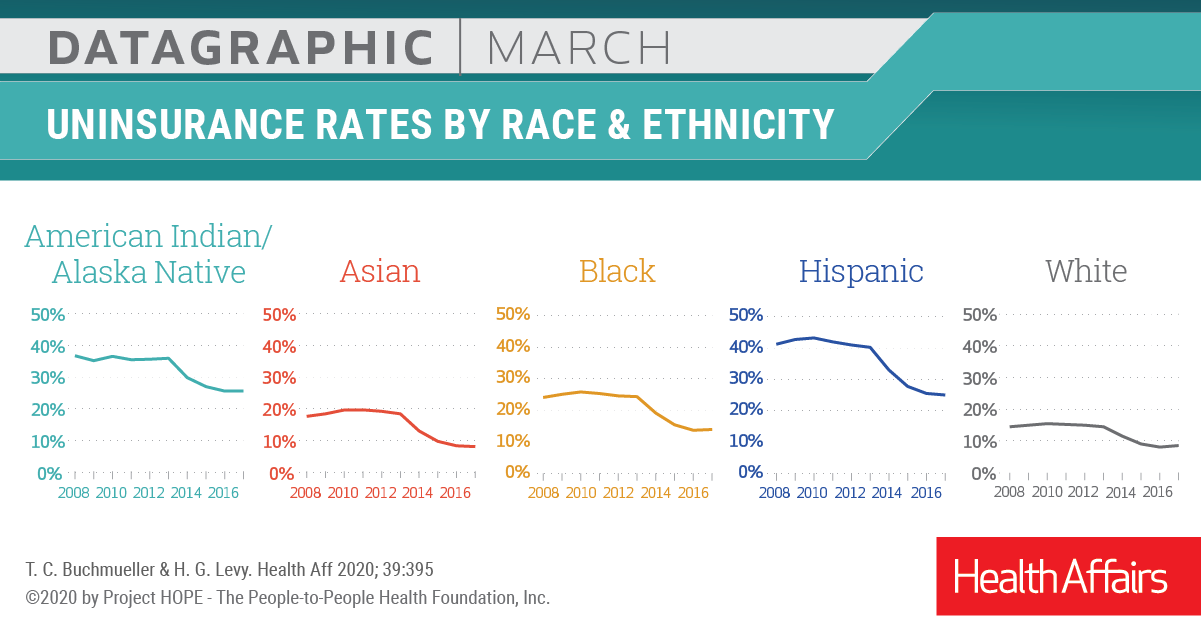
Above is a datagraphic from the issue showing how the ACA affected insurance coverage.

A covid surge in Western Europe has U.S. bracing for another wave

https://www.washingtonpost.com/health/2022/03/16/covid-ba2-omicron-surge/?utm_campaign=wp_post_most&utm_medium=email&utm_source=newsletter&wpisrc=nl_most&carta-url=https%3A%2F%2Fs2.washingtonpost.com%2Fcar-ln-tr%2F36559b9%2F62320b1e9d2fda34e7d4e992%2F5b63a342ade4e2779550ca1b%2F9%2F73%2F62320b1e9d2fda34e7d4e992

A surge in coronavirus infections in Western Europe has experts and health authorities on alert for another wave of the pandemic in the United States, even as most of the country has done away with restrictions after a sharp decline in cases.

Infectious-disease experts are closely watching the subvariant of omicron known as BA.2, which appears to be more transmissible than the original strain, BA.1, and is fueling the outbreak overseas.

Germany, a nation of 83 million people, saw more than 250,000 new cases and 249 deaths Friday, when Health Minister Karl Lauterbach called the nation’s situation “critical.” The country is allowing most coronavirus restrictions to end Sunday, despite the increase. The United Kingdom had a seven-day average of 65,894 cases and 79 deaths as of Sunday, according to the Johns Hopkins University Coronavirus Research Center. The Netherlands, home to fewer than 18 million people, was averaging more than 60,000 cases the same day.

In all, about a dozen nations are seeing spikes in coronavirus infections caused by BA.2, a cousin of the BA.1 form of the virus that tore through the United States over the past three months.

In the past two years, a widespread outbreak like the one now being seen in Europe has been followed by a similar surge in the United States some weeks later. Many, but not all, experts interviewed for this story predicted that is likely to happen. China and Hong Kong, on the other hand, are experiencing rapid and severe outbreaks, but the strict “zero covid” policies they have enforced make them less similar to the United States than Western Europe.

A number of variables — including relaxed precautions against viral transmission, vaccination rates, the availability of antiviral medications and natural immunity acquired by previous infection — may affect the course of any surge in the United States, experts said.

Most importantly, it is unclear at this point how many people will become severely ill, stressing hospitals and the health-care system as BA.1 did.

Another surge also may test the public’s appetite for returning to widespread mask-wearing, mandates and other measures that many have eagerly abandoned as the latest surge fades and spring approaches, experts said.

“It’s picking up steam. It’s across at least 12 countries … from Finland to Greece,” said Eric Topol, director of the Scripps Research Translational Institute in San Diego, who recently posted charts of the outbreak on Twitter. “There’s no question there’s a significant wave there.”

Topol noted that hospitalizations for covid-19, the disease caused by the virus, are rising in some places as well, despite the superior vaccination rates of many Western European countries.

At a briefing Monday, White House press secretary Jen Psaki said about 35,000 cases of BA.2 have been reported in the United States to date. But she offered confidence that “the tools we have — including mRNA vaccines, therapeutics and tests — are all effective tools against the virus. And we know because it’s been in the country.”

Kristen Nordlund, a spokeswoman for the Centers for Disease Control and Prevention, said in an email Tuesday that “although the BA.2 variant has increased in the United States over the past several weeks, it is not the dominant variant, and we are not seeing an increase in the severity of disease.”

The seven-day average of cases in the United States fell 17.9 percent in the past week, according to data tracked by The Washington Post, while the number of deaths dropped 17.2 percent and hospitalizations declined 23.2 percent.

Predicting the future course of the virus has proved difficult throughout the pandemic, and the current circumstances in Europe elicited a range of opinions from people who have closely tracked the pathogen and the disease it causes.

In the United States, just 65.3 percent of the population, 216.8 million people, are fully vaccinated, and only 96.1 million have received a booster shot, according to data tracked by The Post. In Germany, nearly 76 percent are fully vaccinated, according to the Johns Hopkins data, and the United Kingdom has fully vaccinated 73.6 percent.

That lower vaccination rate is very likely to matter as BA.2 spreads further in the United States, especially in regions where it is significantly lower than the national rate, several experts said. And even for people who are fully vaccinated and have received a booster shot, research data is showing that immunity to the virus fades over time. Vaccine-makers Pfizer and BioNTech asked the Food and Drug Administration on Tuesday for emergency authorization to offer a fourth shot to people 65 and older.

Any place you have relatively lower vaccination rates, especially among the elderly, is where you’re going to see a bump in hospitalizations and deaths from this,” said Céline Gounder, an infectious-diseases physician and editor at large for public health at Kaiser Health News.

Similarly, as the public sheds masks — every state has dropped its mask mandate or announced plans to do so — another layer of protection is disappearing, several people tracking the situation said.

“Why wouldn’t it come here? Are we vaccinated enough? I don’t know,” said Kimberly Prather, a professor of atmospheric chemistry and an expert on aerosol transmission at the University of California at San Diego.

“So I’m wearing my mask still. … I am the only person indoors, and people look at me funny, and I don’t care.”

Yet BA.2 appears to be spreading more slowly in the United States than it has overseas, for reasons that aren’t entirely clear, Debbie Dowell, chief medical officer for the CDC’s covid-19 response, said in a briefing Saturday for clinicians sponsored by the Infectious Diseases Society of America.

“The speculation I’ve seen is that it may extend the curve going down, case rates from omicron, but is unlikely to cause another surge that we saw initially with omicron,” Dowell said.

One reason for that may be the immunity that millions of people acquired recently when they were infected with the BA.1 variant, which generally caused less-severe illness than previous variants. Yet no one really knows whether infection with BA.1 offers protection from BA.2.

“That’s the question,” said Jeffrey Shaman, an epidemiologist at the Columbia University Mailman School of Public Health. “Better yet, how long does it provide protection?

Topol said the United States needs to improve its vaccination and booster rates immediately to protect more of the population against any coming surge.

“We have got to get the United States protected better. We have an abundance of these shots. We have to get them into people,” he said.

Biden administration officials said that whatever the further spread of BA.2 brings to the United States, the next critical step is to provide the $15.6 billion in emergency funding that Congress stripped from a deal to fund the government last week. That money was slated to pay for coronavirus tests, more vaccines and antiviral medications.

“That means that some programs, if we don’t get funding, could abruptly end or need to be pared back, Psaki said at Monday’s briefing. “And that could impact how we are able to respond to any variant.”

Higher prices correlated with lower mortality in competitive hospital markets

https://mailchi.mp/f6328d2acfe2/the-weekly-gist-the-grizzly-bear-conflict-manager-edition?e=d1e747d2d8

A National Bureau of Economic Research working paper found that higher-priced hospitals in competitive markets were associated with lower patient mortality—flying in the face of the common policy narrative that higher-priced care is not higher quality. However, in more concentrated, less-competitive healthcare markets (in which over two-thirds of the nation’s hospitals are located), the study found no correlation between price and quality. Authors of the study analyzed patient outcomes from more than 200K admissions among commercially insured patients, transported by ambulance to about 1,800 hospitals between 2007 and 2014.   

The Gist: As hospitals have consolidated, prices have risen by about 30 percent between 2015 to 2019, leading policy experts and regulators to search for ways to rein in price inflation. 

While there continues to be widespread consensus that industry consolidation has resulted in unsustainable cost growth, the new study’s findings bring a bit of welcome nuance around impact on quality and outcomes to an otherwise one-sided, price-centric policy narrative.

Administration’s latest plans to manage COVID—including “test to treat”—now in question, as Congress strips funding

https://mailchi.mp/f6328d2acfe2/the-weekly-gist-the-grizzly-bear-conflict-manager-edition?e=d1e747d2d8

Congress cut billions of dollars in COVID-related funding from the broader government spending bill it just passed, jeopardizing President Biden’s plans for covering the costs of COVID testing and treatments, and making antiviral drugs available for free at pharmacies for those who test positive through the “test to treat” initiative.

However, a variety of other healthcare funding made it into the final package, including a five-month extension of COVID-era telehealth flexibilities for Medicare beneficiaries, and funds for pandemic preparedness. Congressional Democrats now plan to pass a separate COVID funding bill, although that effort will likely face stiff opposition from Senate Republicans.

The Gist: Removing COVID funding from the final spending package may signal the beginning of the end of federal pandemic relief spending, and could render the “test to treat” initiative, which has been praised by public health experts, dead on arrival. 

Pharmacists, who have taken on a larger role in patient care during the pandemic, assisting with testing and vaccination of millions of Americans, have pushed for the ability to prescribe new antiviral therapies, but the American Medical Association criticized the initiative, maintaining that physicians should control the prescribing. Although the drug interactions and side effects cited by the AMA are important to manage, pharmacy-based “test to treat” would reduce time to treatment for those with COVID, and provide a sustainable mechanism for managing future surges of the disease

More States Are Proposing Single-Payer Health Care. Why Aren’t They Succeeding?

The Democratic presidential primary might feel like a lifetime ago, but one important storyline in that race was health care — specifically single-payer health care, or the policy that the government should offer universal health insurance to everyone in the country. The nomination of now-President Biden, who opposed single-payer health care during the primary, has put single-payer health care on the backburner nationally. But that hasn’t stopped the issue from impacting state legislators, who have introduced more single-payer health care bills in the last few years than ever before.

Health care policy researchers Erin C. Fuse Brown and Elizabeth McCuskey tracked the number of unique single-payer bills introduced in state legislatures across the country from 2010 to 2019, finding a sharp uptick in bills introduced since 2017. During each of those three years, at least 10 single-payer proposals were introduced, according to Brown and McCuskey’s research, for the first time since 2013. In total, state legislators proposed more single-payer bills from 2017 to 2019 than in the previous seven years combined. And for 2021, we’ve identified 10 single-payer bills that legislators introduced across the country, from liberal states like California and Massachusetts to more conservative ones including Iowa and Ohio.1

What do all these proposals have in common? They’ve all universally failed. In fact, Vermont, the only state that managed to pass single-payer health care in 2011, ended up shelving its plan three years later.

It makes sense why single-payer advocates have tried to take these fights to the states. States have traditionally been seen as thelaboratories of democracy,” and some advocates of single-payer health care have argued that liberal states could provide unique opportunities to advance single-payer health care. But as I’ll explain, passing single-payer health care at the state level is next to impossible, as states are particularly limited in how they can allocate federal and private health care funds. There is, however, evidence that Americans may have an appetite for a public option, or government-run health insurance that people can opt into at the state level. Three states (Colorado, Nevada and Washington) have already passed a public option. It’s not single-payer health care reform, but it’s possible that we might see more states adopt their own public-option reforms.

One big reason single-payer proposals haven’t caught on at the state level is because finding a reliable way to pay for such a program is challenging. Single-payer advocates originally envisioned a federal proposal that would cover all Americans under a more generous version of a preexisting program — that is, Medicare, but now for all. Doing this state-by-state would require each state to apply for waivers to divert federal funds used for Medicare, Medicaid and Affordable Care Act exchanges to be used for their own single-payer plans. And that’s tricky because the Department of Health and Human Services has wide discretion to approve or deny states’ requests, which makes any proposal highly dependent on the national political climate.

This isn’t just a theoretical debate either: Trump’s administrator for the Centers for Medicare & Medicaid Services Seema Verma said in 2018 that she would deny waivers from states to create single-payer systems, while Biden’s Health and Human Services Secretary Xavier Becerra has expressed more favorable sentiments. Almost all single-payer proposals depend on these waivers and states don’t often have fallback plans for if this federal funding gets denied.

Employer-sponsored health insurance plans, which cover 54 percent of Americans, are another hurdle for states trying to pass single-payer health care. Federal law largely prevents states from regulating employer-provided health insurance, so states can’t just stop employers from offering their own health care benefits. The exact scope of this law has been litigated for decades, but suffice it to say that it’s successfully put the kibosh on many statewide health care reforms. Single-payer health insurance is particularly tricky as there’s no way to get everyone onto the plan without first changing how private insurance works. States have tried to address this through measures like increasing payroll taxes or restricting providers’ ability to accept reimbursement from private insurance plans. But the more elaborate these mechanisms get, the more complicated it becomes to implement — and the more people that could slip through the cracks.

Finally, another big financial barrier is that state governments have far less leeway than the federal government to increase budgetary spending. That means tax increases, which come with their own political challenges, are often necessary for states to secure the funding they need.

Take California’s single-payer proposal, which failed in late January. It would have required two-thirds of voters to pass a separate constitutional amendment to implement the necessary tax increases to pay for it. Concerns over tax increases also contributed to the demise of single-payer proposals in Colorado and Vermont. It’s true that a recent analysis of New York’s single-payer health care plan found that it would lower overall health care spending by 3 percent by 2031, but it would also require additional state tax revenue of $139 billion in 2022 — over 150 percent of the current state budget. Politicians facing the next election cycle may be leery of proposing short-term tax increases, even if the end result is long-term savings.

All of this creates a daunting picture for statewide single-payer health care. But the failures of single-payer doesn’t entirely close the door on health care reform, especially if these reforms are supplementing the existing system instead of entirely replacing it. Colorado and Nevada, for instance, successfully passed a public option in 2021, joining Washington, which passed one in 2019. Colorado’s success in advancing a public option is particularly striking, given that almost 80 percent of people voted against its single-payer proposal in 2016.

To be sure, though, efforts to implement a public option aren’t without their own challenges. In 2021, during its first year of implementation, Washington state’s public option struggled to enroll people and get health care providers to agree to lower payment rates. State lawmakers have tried to fix this problem by introducing legislation that would require more providers to participate and bring down premiums by increasing subsidies. Proponents have also cautioned that it might take years before the public option really gains a foothold with Washington state residents.

It’s not clear yet how successful these state-run public option plans will be, but it is possible that a public option may prove more popular than single-payer. For starters, while single-payer health care is popular among Democrats, the public option still polls much better among Republicans and independents. According to a Morning Consult/Politico poll from March 2021, the public option was roughly as popular as Medicare for All among Democrats — about 80 percent said they supported each. But support for the public option was much higher than support for Medicare for All among both Republicans and independents. Just 28 percent of Republicans and 50 percent of independents supported Medicare for All versus 56 percent of Republicans and 63 percent of independents who supported a public option.

Moreover, a public option may align more naturally with Americans’ existing views on the role of government in health care. Polls have long found that Americans still want a choice in their health care, even though they believe that providing health insurance to the uninsured is the government’s responsibility.

Ultimately, any health care reforms would be easier to implement on a federal level than a patchwork, state-by-state approach. But Washington, Colorado and Nevada remain important tests of state governments’ ability to implement a public option in lieu of action by the federal government. It’s not single-payer, but it’s still some of the most consequential health care reforms in decades — and a potential sign of where the debates over health care are heading.

US House Passes a Massive Spending Bill—but Leaves out Billions in Covid Aid

https://link.wired.com/view/5db707423f92a422eaeaf234g2an9.rsw/db0c8990

The House passed a sweeping spending bill last night that omitted billions in Covid-19 aid. Biden administration officials had said the funds were urgently needed to maintain supplies of essential treatments and support further vaccine development, but Republicans disagreed. Some public health experts have expressed dismay that the pandemic relief money was cut, given the likelihood that new variants will continue to emerge. After all, viruses keep evolving until they run out of hosts to infect, and there are billions of people around the world—and millions in the US—who haven’t been vaccinated against Covid-19.

Cases continue to decline in the US, and a number of top voices in public health recently put out a report mapping when and how the country can transition out of the pandemic. Their recommendations include vaccinating at least 85 percent of the US population by 2023, improving indoor air quality in public buildings, and allocating additional funding for Covid-19 response and to prepare for future pandemics.

How the pandemic may fundamentally change the health-care system

https://www.washingtonpost.com/politics/2022/03/11/how-pandemic-may-fundamentally-change-health-care-system/

Welcome to Friday’s Health 202, where today we have a special spotlight on the pandemic two years in.

🚨 The federal government is about to be funded. The Senate sent the long-term spending bill to President Biden’s desk last night after months of intense negotiations. 

Two years since the WHO declared a pandemic, what health-care system changes are here to stay?

Nurses screened patients at a drive-through testing site in March 2020. (Win McNamee/Getty Images)

Exactly two years ago, the World Health Organization declared the coronavirus a pandemic and much of American life began grinding to a halt. 

That’s when the health-care system, which has never been known for its quickness, sped up. The industry was forced to adapt, delivering virtual care and services outside of hospitals on the fly. Yet, the years-long pandemic has exposed decades-old cracks in the system, and galvanized efforts to fix them.

Today, as coronavirus cases plummet and President Biden says Americans can begin resuming their normal lives, we explore how the pandemic could fundamentally alter the health-care system for good. What changes are here to stay — and what barriers are standing in the way?

A telehealth boom

What happened: Telehealth services skyrocketed as doctors’ offices limited in-person visits amid the pandemic. The official declaration of a public health emergency eased long-standing restrictions on these virtual services, vastly expanding Medicare coverage. 

But will it stick? Some of these changes go away whenever the Biden administration decides not to renew the public health emergency (PHE). The government funding bill passed yesterday extends key services roughly five months after the PHE ends, such as letting those on Medicare access telehealth services even if they live outside a rural area.

But some lobbyists and lawmakers are pushing hard to make such changes permanent. Though the issue is bipartisan and popular, it could be challenging to pass unless the measures are attached to a must-pass piece of legislation. 

  • “Even just talking to colleagues, I used to have to spend three or four minutes while they were trying desperately not to stare at their phone and explain to them what telehealth was … remote patient monitoring, originating sites, and all this wonky stuff,”said Sen. Brian Schatz (D-Hawaii), a longtime proponent of telehealth.
  • “Now I can go up to them and say, ‘So telehealth is great, right?’ And they say, ‘yes, it is.’ ”
A new spotlight on in-home care

What happened: The infectious virus tore through nursing homes, where often fragile residents share rooms and depend on caregivers for daily tasks. Ultimately, nearly 152,000 residents died from covid-19.

The devastation has sparked a rethinking of where older adults live and how they get the services they need — particularly inside their own homes. 

  • “That is clearly what people prefer,” said Gail Wilensky, an economist at Project HOPE who directed the Medicare and Medicaid programs under President George H.W. Bush. “The challenge is whether or not it’s economically feasible to have that happen.”

More money, please: Finding in-home care — and paying for it — is still a struggle for many Americans. Meanwhile, many states have lengthy waitlists for such services under Medicaid.

Experts say an infusion of federal funds is needed to give seniors and those with disabilities more options for care outside of nursing homes and assisted-living facilities. 

For instance, Biden’s massive social spending bill included tens of billions of dollars for such services. But the effort has languished on Capitol Hill, making it unclear when and whether additional investments will come. 

A reckoning on racial disparities

What happened: Hispanic, Black, and American Indian and Alaska Native people are about twice as likely to die from covid-19 than White people. That’s according to age-adjusted data from a recent Kaiser Family Foundation report

In short, the coronavirus exposed the glaring inequities in the health-care system. 

  • “The first thing to deal with any problem is awareness,” said Georges Benjamin, the executive director of the American Public Health Association. “Nobody can say that they’re not aware of it anymore, that it doesn’t exist.”

But will change come? Health experts say they hope the country has reached a tipping point in the last two years. And yet, any real systemic change will likely take time. But, Benjamin said, it can start with increasing the number of practitioners from diverse communities, making office practices more welcoming and understanding biases. 

We need to, as a matter of course, ask ourselves who’s advantaged and who’s disadvantaged” when crafting new initiatives, like drive-through testing sites, Benjamin said. “And then how do we create systems so that the people that are disadvantaged have the same opportunity.”

Out-of-pocket limits aren’t silver bullets

Part of the reason why medical debt is so high is because many Americans don’t have enough savings to pay their deductibles and other out-of-pocket costs, according to a second KFF analysis.

Driving the news: Health insurance plans’ out-of-pocket limits prevent enrollees from paying limitless sums of money for medical care. But that doesn’t mean they protect people from having to pay several thousands of dollars — which not everyone has lying around.

  • Deductibles alone, which people must pay before coverage for most services kicks in, are frequently thousands of dollars and can exceed the amount of liquid assets a household has.

By the numbers: Over 40% of multi-person households can’t cover a mid-range employer family plan deductible of $4,000, and 61% don’t have enough to cover a high-range deductible.

  • The ability to pay out-of-pocket costs varies significantly by income.

America’s giant medical debt

Americans owe at least $195 billion of medical debt, despite 90% of the population having some kind of health coverage, according to new research from the Peterson Center on Healthcare and the Kaiser Family Foundation.

Why it matters: People are spending down their savings and skimping on food, clothing and household items to pay their medical bills, Adriel writes.

About 16 million people, or 6% of U.S. adults, owe more than $1,000 in medical bills, and 3 million people owe more than $10,000.

  • The financial burden falls disproportionately on people with disabilities, those in generally poor health, Black Americans and people living in the South or in non-Medicaid expansion states, per the research.

Go deeper: 16% of privately-insured adults say they would need to take on credit card debt to meet an unexpected $400 medical expense, while 7% would borrow money from friends or family, per the research, which focused on adults who reported having more than $250 in unpaid bills as of December 2019. 

It’s not yet clear how much the pandemic and the recession factor into the picture, in part because many people delayed or went without care. There also was a small shift from employer-based coverage to Medicaid, which has little or no cost-sharing.

  • While the new federal ban on surprise billing limits exposure to some unexpected expenses, it only covers a fraction of the large medical bills many Americans face, the researchers say.