The Department of Health and Human Services told hospitals in April that reporting to the vendor, TeleTracking Technologies, was a “prerequisite to payment.”
The Trump administration tied billions of dollars in badly needed coronavirus medical funding this spring to hospitals’ cooperation with a private vendor collecting data for a new Covid-19 database that bypassed the Centers for Disease Control and Prevention.
The highly unusual demand, aimed at hospitals in coronavirus hot spots using funds passed by Congress with no preconditions, alarmed some hospital administrators and even some federal health officials.
The office of the health secretary, Alex M. Azar II, laid out the requirement in an April 21 email obtained by The New York Times that instructed hospitals to make a one-time report of their Covid-19 admissions and intensive care unit beds to TeleTracking Technologies, a company in Pittsburgh whose $10.2 million, five-month government contract has drawn scrutiny on Capitol Hill.
“Please be aware that submitting this data will inform the decision-making on targeted Relief Fund payments and is a prerequisite to payment,” the message read.
The financial condition, which has not been previously reported, applied to money from a $100 billion “coronavirus provider relief fund” established by Congress as part of the $2.2 trillion Coronavirus Aid, Relief and Economic Security Act, or CARES Act,signed by President Trump on March 27. Two days later, the administration instructed hospitals to make daily reports to the C.D.C., only to change course.
“Another data reporting ask,” a regional official in the health department informed colleagues in an email exchange obtained by The Times, adding: “It comes with $$ incentive. We really need a consolidated message on the reporting/data requests, this is past ridiculous.”
A colleague replied, “Another wrinkle. What a mess.”
The disclosure of the demand in April is the most striking example to surface of the department’s efforts to expand the role of private companies in health data collection, a practice that critics say infringes on what has long been a central mission of the C.D.C. Last month, the federal health department moved beyond financial incentives and abruptly ordered hospitals to send daily coronavirus reports to TeleTracking, not the C.D.C.,raising concerns about transparency and reliability of the data.
Officials at the Department of Health and Human Services say that the moves were necessary to improve and streamline data collection in a crisis, and that the one-time reports collected in April by TeleTracking were not available from any other source.
“The national health system has not been challenged in this way in any time in recent history,” Caitlin Oakley, a department spokeswoman, said in a statement, adding that TeleTracking offered a “standardized national hospital capacity tracking system which provided more real-time, better informed data to make decisions from.”
But critics remain alarmed.
“In the middle of a pandemic, the Trump administration is using funds meant to support hospitals as a tool to coerce them to use an unproven, untrusted and deeply flawed system that sidelines public health experts,” Senator Patty Murray of Washington, the ranking Democrat on the Senate Health Committee, said in a statement.
In a statement, TeleTracking said it has three decades of experience providing health care systems “with actionable data and unprecedented visibility to make better, faster decisions.”
Still, public health experts and hospital executives are puzzled as to why the health agency chose such a difficult time to employ an untested private vendor rather than improve the C.D.C.’s National Healthcare Safety Network, a decades-old disease tracking system that was deeply familiar to hospitals and state health departments.
The N.H.S.N., as it is known, had built up trust over decades of working with hospitals and state health departments. Administrators were reluctant to make the switch.
“People — especially in public health and clinical health — are very protective of their data, so that trust factor is certainly an issue,” said Patina Zarcone, the director of informatics for the Association of Public Health Laboratories. “The fear of having their data leaked or misused or used for a purpose that they weren’t aware of or agreed to — I think that’s the biggest rub.”
Ms. Oakley said the C.D.C.’s system was “not designed for use in a disaster response” and could not adapt quickly in a crisis. Allies of the C.D.C. say withholding taxpayer dollars from the CARES Act in lieu of cooperation was an inappropriate effort to push hospitals into a system they were reluctant to use.
“It’s an absolutely enormous lever,” said William Schaffner, an infectious disease expert at Vanderbilt University. “It’s a compulsion to oblige institutions to report to this TeleTracking system because they knew if it weren’t tied to money, it wouldn’t happen.”
The Pittsburgh company has no obvious ties to the Trump administration. Rather, the push appears to be part of a broader privatization. The Health and Human Services Department has also asked the Minnesota-based manufacturer 3M “to create, and continuously update, a nationwide clinical data set on Covid-19 treatment,” according to documents obtained by The Times.
The effort is separate from the TeleTracking data collection. Tim Post, a company spokesman, said that because 3M already operates hospital information systems, it is “uniquely positioned,” with the permission of its clients, to submit information to the health department to help officials study disease patterns and recommend treatment options.
Some experts say this kind of cooperation with the private sector is long overdue. But the push also appears to be driven at least in part by an intensifying rift between the C.D.C., based in Atlanta, and officials at the White House and Department of Health and Human Services, the parent agency of the disease control centers.
Dr. Deborah L. Birx, the White House coronavirus response coordinator, and Mark Meadows, the president’s chief of staff, have taken a dim view of the C.D.C. and believe its reporting systems were inadequate. In a recent interview, Michael Caputo, the spokesman for Mr. Azar, accused the C.D.C. of having “a tantrum.”
Accurate hospital data — including information about coronavirus caseloads, deaths, bed capacity and personal protective equipment — is essential to tracking the pandemic and guiding government decisions about how to distribute scarce resources, like ventilators and the drug remdesivir, the only approved treatment for hospitalized Covid-19 patients.
The health agency has set up a new database, H.H.S. Protect, to collect and analyze Covid-19 data from a range of sources. TeleTracking feeds hospital data to that system.
But the public rollout of H.H.S. Protect has been rocky. The nonpartisan Covid Tracking Project identified big disparities between hospital data reported by states and the federal government and deemed the federal data “unreliable.”
On March 29, Vice President Mike Pence, charged by Mr. Trump with overseeing the federal response, informed hospital administrators that the C.D.C. was setting up a “Covid-19 Module,” and asked them to file daily reports which, he said, were “necessary in monitoring the spread of severe Covid-19 illness and death as well as the impact to hospitals.”
But around that time, TeleTracking submitted a proposal for data collection to the Trump administration, through an initiative, ASPR Next, created to promote innovation. On April 10, TeleTracking was awarded its contract.
The health department’s spokeswoman said the intent was to complement the C.D.C., not compete with it. Like the C.D.C.’s network, TeleTracking’s system requires manual reporting on a daily basis. But in June, Ms. Murray demanded the administration provide more information about what she called a “multimillion-dollar contract” for a “duplicative health data system.”
Some hospital officials also objected to the change.
“We have been directing our hospitals to N.H.S.N.,” Jackie Gatz, a vice president of the Missouri Hospital Association, wrote to a regional health and human services official in an email obtained by The Times, “and now this email with a much greater carrot — CARES Act distributions — is routing them to TeleTracking.”
When the order was delivered, flaws had already emerged in the new system.
“H.H.S. has acknowledged long wait times for those calling for technical support, and indicated that TeleTracking recently added 100 staff to respond to call center requests,” the American Hospital Association wrote to its members in a “special bulletin” on April 23. “They also are directing hospitals to leave a message if they are unable to reach someone live.”
At the time, hospitals had the option of making their daily coronavirus reports to TeleTracking or the C.D.C. Few were using the new database.
In June, the administration again used a stick to demand that hospitals report to TeleTracking, this time in order to obtain remdesivir. By July, with Dr. Birx pushing to bolster hospital compliance, the administration instructed hospitals to stop filing daily reports to the C.D.C. and to send them to TeleTracking instead.
One official at a major academic hospital, who spoke on the condition of anonymity for fear of angering officials in Washington, said the switch left her “unable to sleep at night.”
“Ethically, it felt like they had taken a very trusted institution in the C.D.C. and all of that trust built up with many public health people,” she said, then “moved it onto a politically and financially motivated portion of this response.”
Health and human services officials say the government now has a much more complete picture of hospital bed capacity, with more than 90 percent of hospitals reporting. But Dr. Janis M. Orlowski, the chief health officer for the Association of American Medical Colleges, who worked with Dr. Birx and the administration to bolster hospital reporting, said that she was “stunned” by the switch and that the increase in reporting came because of efforts by her group and others, not the TeleTracking system.
Dr. Orlowski said the data and maps now published on the administration’s H.H.S. Protect data hub are “just not as sophisticated as the C.D.C.”
The switch also generated pushback inside the C.D.C., where officials have refused to analyze and publish TeleTracking data, saying they could not be assured of its quality and had continuing questions about its accuracy, according to a senior federal health official.
Administration officials say the C.D.C. is working with a little-known office in the executive branch — the United States Digital Service — to build a “modernized automation process” in which data will continue to flow directly to the Department of Health and Human Services. But the project is in its infancy, one senior federal health official said.
Critics say that if the department believed the C.D.C.’s health network had problems, those should have been fixed.
“We have a public health system that depends upon communication from hospitals to state health departments to the C.D.C.,” said Dr. Schaffner, the Vanderbilt University infectious disease expert. “It’s very well established. Can it be improved? Of course. But to cut out the public health infrastructure and report to a private firm essential public health data is misguided in the extreme.”
Drugmakers are getting bolder in their bid to restrict access to drugs discounted under the 340B program as legal experts say a lack of enforcement has created a regulatory void.
Hospitals are imploring the Department of Health and Human Services (HHS) to clamp down on several moves by drug companies, including Novartis and AstraZeneca, to limit distribution of certain 340B drugs. But experts say an administration-wide change in what agencies can enforce is likely behind drugmakers’ aggressive moves.
“It is an outrage that these actions are being taken at a time when hospitals are in the midst of their response to the COVID-19 public health emergency, which has further demonstrated the fractured, inadequate state of the prescription drug supply chain,” the American Hospital Association said in a release last week.
Hospitals and 340B advocates are furious that AstraZeneca announced last Friday that starting Oct. 1 it will not offer any discounted drugs to contract pharmacies, which are third-party entities that dispense drugs acquired under the program.
It is the most aggressive move in a fight sparked last month between drug companies against contract pharmacies, which are a popular tool among 340B hospitals.
The back story
In exchange for participating in Medicaid, a drug manufacturer is required to offer discounts to safety-net hospitals that participate in 340B. But the program has been beset with controversy in recent years as drug companies claim the program has gotten too large and patients aren’t benefiting from the discounts.
Eli Lilly decided last month to restrict sales to contract pharmacies of certain formulations of erectile dysfunction drug Cialis. Merck and Novartis also said contract pharmacies would need to submit claims data to avoid duplicate discounts.
We’ve reached out to pharmaceutical companies for comment and will update when we hear back.
Industry advocacy organization Pharmaceutical Research and Manufacturers of America (PhRMA) has previously called for reforms to the 340B program, including to the ability for covered entities to contract with multiple outside pharmacies to dispense drugs that receive 340B discounts. Even though the number of Americans who are insured has risen, 340B is growing exponentially, they said. “Not all 340B hospitals are good stewards of the program,” PhRMA said.
Hospital groups and 340B allies charge that the moves blatantly violate a 2010 guidance released by the Health Resources and Services Administration (HRSA), which oversees the 340B program.
The guidance permits a hospital participating in 340B to voluntarily use a contract pharmacy and outlines the requirements to do so. The guidance also says a manufacturer must still sell a drug at a price not to exceed the statutory 340B price.
But an October 2019 executive order said federal agencies cannot enforce guidance documents unless they are part of a contract amid other exceptions.
HRSA has said that it doesn’t have the authority under the 340B statute to take enforcement action on “requirements that have been established under guidance,” said Emily Cook, a partner with law firm McDermott Will & Emery.
The agency’s current position is that it can only take enforcement actions on clear violations of the 340B statute, she added.
HRSA told Fierce Healthcarein a statementit is considering the issues raised by the manufacturers and “evaluating our next steps.”
What’s next
Hospitals are hoping HHS steps in and clears up the issue.
If not, then hospitals could either take drug companies to court or lobby Congress to give HRSA more authority over the program.
The advocacy group 340B Health said last week that if the administration refuses to step in then it will “pursue all legislative and legal avenues available to us to defend the safety net.”
Hospitals need to re-examine their 340B contract pharmacy deals to exclude AstraZeneca drugs, according to an article from Brenda Maloney Shafer and Richard Davis of law firm Quarles & Brady.
If they fail to do this, then the contract pharmacy could pay for dispensing and administrative fees for drugs that won’t get a 340B discount.
This is the latest spat over the controversial program. Hospitals took the administration to court after it tried to cut payments under the program by nearly 30%.
CMS has pushed back publishing a final rule that would ease anti-kickback regulations on providers by a year. The move is likely to anger healthcare organizations that have long clamored for the rule’s relaxation.
The deadline to finalize the rule proposed Oct. 17, 2019, is now Aug. 31, 2021. Originally, the rule relaxing stipulations of the decades-old Stark Lawwas expected this month. It’s unclear how the extension affects OIG’s tandem rule slacking similar regulations outlined in the Federal Anti-Kickback Statute and the Civil Monetary Penalties Law.
CMS chalked up the delay to the need to detangle the many thorny issues raised by healthcare companies in their comments on the rule. “We are still working through the complexity of the issues raised by comments received on the proposed rule and therefore we are not able to meet the announced publication target date,” Wilma Robinson, HHS deputy executive secretary, wrote in a notice on the change dated Monday. CMS did not respond to requests to clarify what issues are tying up the rule.
Dive Insight:
Hospital groups are unlikely to be pleased with the delay. The American Hospital Association earlier this month sent the Office of Management and Budget a letter urging them to expedite the review and release of the final Stark and AKS regulations.
“These rules take on even more significance in light of the COVID-19 pandemic,” AHA EVP Thomas Nickels wrote in the letter dated Aug. 19. “These rules will remove unnecessary regulatory burden from hospitals and health systems, allow for enhanced care coordination for patients, improve quality, and reduce waste in the Medicare and Medicaid programs.”
AHA did not respond to a request for comment by time of publication.
Healthcare organizations have said the Stark Law and Anti-Kickback Statute, passed decades ago in an attempt to deter physicians from referring patients to other locations or for services that would financially benefit them, are outdated and burdensome. Providers say the proposed changes are long overdue, citing longstanding concerns the laws hinder efforts to coordinate patient care across different sites and episodes.
The proposed rule, if finalized, would sharply ease federal anti-kickback regulations in a bid to help providers use value-based payment arrangements, reflecting the growing shift away from fee-for-service reimbursement and siloed care models.
The rule clarified exemptions from the physician self-referral law for certain value-based payment arrangements among physicians, providers and suppliers. Specifically, it applies to models with a specific patient population, where one of the entities takes on full financial risk for providing Medicare Part A and Part B for the first six months. The payments can either be capitated or global.
Doctors would be required to pay back a fourth of payments if they don’t meet financial goals.
The proposed rule also introduced a new exemption for certain arrangements under which a doctor receives limited payment for items and services that he or she provides, and another that would allow hospitals and medical device manufacturers to donate cybersecurity tools and other related software to doctors without fear of retribution.
Comments on the proposed rule from the hospital and physician community were generally supportive of the changes, though some organizations, including the American Hospital Association and Walmart, thought the feds didn’t go far enough. Hospital groups argued the exceptions should be expanded to include private payers, along with Medicare and Medicaid and the definition of value-based arrangements should be broadened, along with some other clarifications.
Per the Social Security Act, agencies have to maintain a regular timeline for publishing final regulations, normally within three years of the draft. However, they are allowed to extend the original deadline, if they justify the change.
Hospital Operating Margins have plunged 96% since the start of 2020 in comparison with the first seven months of 2019, according to a new Kaufman Hall report, as uncertainty and volatility continue in the wake of the COVID-19 pandemic.
Those results do not include federal funding from the Coronavirus Aid, Relief, and Economic Security (CARES) Act. Even with that aid, however, Operating Margins are down 28% year-to-date compared to January-July 2019.
Operating Margins fell 2% year-over-year in July without the CARES Act relief, according to the latest edition of Kaufman Hall’s National Hospital Flash Report. Hospitals also saw flat year-over-year gross revenue performance in July, continued high per-patient expenses, and a fifth consecutive month of volumes falling below 2019 performance and below budget.
From June to July, however, hospital Operating Margins were up 24%, likely due to a backlog in demand resulting from the shutdown of many non-urgent services in the early months of the pandemic.
“COVID-19 has created a highly volatile operating environment for our nation’s hospitals and health systems,” said Jim Blake, managing director, Kaufman Hall. “Hospitals have shown some incremental signs of potential financial recovery in recent months. Unfortunately, there is no guarantee these trends will continue, and hospitals still have a long way to go to recover from devastating losses in the early months of the pandemic.”
July volumes continued to fall year-over-year, but showed some signs of potential recovery month-over-month. Adjusted Discharges were down 7% compared to July 2019, but up 6% compared to June 2020. Adjusted Patient Days were down 4% year-over-year, but up 7% month-over-month. Adjusted Discharges are down 13% and Adjusted Patient Days are down 11% since the start of 2020, compared to the first seven months of 2019.
Hospital Emergency Department (ED) volumes have been hardest hit, falling 17% year-to-date compared to the same period in 2019, down 17% year-over-year, and 13% below budget in July. Surgery volumes saw some gains with the continued resumption of non-urgent procedures pushing Operating Room Minutes up 3% month-over-month and 4% above budget in July, but they remain down 15% year-to-date.
Not including CARES Act relief, Gross Operating Revenues were essentially flat year-over-year and 2% below budget for the month, but have fallen 8% year-to-date compared to the same period in 2019. Inpatient Revenue is down 5% year-to-date and fell 3% below budget in July, but increased 1% year-over-year. Outpatient Revenue is down 11% year-to-date, 1% year-over-year, and 2% below budget.
Hospitals nationwide also continued to see higher per-patient expenses despite having fewer patients. Total Expense per Adjusted Discharge has jumped 16% year-to-date compared to the same seven-month period in 2019, and rose 9% year-over-year and 5% above budget in July. Labor Expense per Adjusted Discharge is up 18% year-to-date and rose 9% year-over-year and 5% above budget in July. Non-Labor Expense per Adjusted Discharge has increased 15% during the first seven months of 2020 and jumped 11% year-over-year and was 5% above budget for the month.
AdventHealth, a 46-hospital system based in Altamonte Springs, Fla., reported a decline in revenue in the second quarter of this year and ended the period with an operating loss, according to recently released unaudited financial documents.
The health system reported revenues of $2.8 billion in the three months ended June 30, down from $2.9 billion in the same period a year earlier. The decline was attributed to lower patient volumes from mid-March through early May. On a same-facility basis, hospital admissions were down 29 percent year over year in April, and surgical volumes were down 66 percent.
Expenses climbed 2.8 percent year over year, and AdventHealth ended the second quarter of this year with an operating loss of $799 million. In the same period a year earlier, the system posted operating income of $190.9 million.
After factoring in nonoperating items, including a $291.8 million gain on investments, the system reported net income of $290.8 million in the second quarter of 2020. In the same period last year, the system posted net income of $372.8 million.
Looking at the first six months of this year, AdventHealth reported a net loss of $287.7 million on revenues of $5.8 billion. That’s compared to the first half of 2019, when the system recorded net income of $865 million on revenues of $5.9 billion.
Sutter Health had a staggering loss of $857 million in the first half of the year as the Northern California health was bruised by the pandemic. That’s almost a $1.4 billion drop in income compared to the first half of last year, a plummet Sutter management largely blamed on investment and operational losses in its latest financial filing posted Thursday.
The virus shuttered operations for a period of time, driving Sutter’s revenue down 8% to $6.1 billion during the first half of the year. Expenses climbed nearly 2%, contributing to an operating loss of $557 million.
Still, the nonprofit noted it did experience a significant rebound in its investments in the second quarter after weathering the devastating effects of the first quarter.
Dive Insight:
Sutter joins other major nonprofit health systems in posting net losses for the first half of the year despite receiving hundreds of millions in federal grants to help offset headwinds brought on by the pandemic.
Recently, both Renton, Washington-based Providence and Arizona-based Banner Health posted losses for the first half of the year — $538 million and $267 million, respectively. Dampened revenue and downturns in investments contributed to their losses.
The federal government has funneled billions of dollars to providers across the country in an attempt to help them weather the downturn in patient volumes. Sutter noted in its filing that it’s received $400 million in federal relief funds so far, though that wasn’t enough to push the health system back into the black. Sutter operates 29 hospitals and enjoys a large presence in Northern California.
Sutter reported fewer admissions and emergency room visits in the second quarter compared to the prior-year period, down about 10% and 19%, respectively.
The pandemic was quick to wreak havoc on Sutter’s finances during the first quarter, in which the system reported an operating loss of $236 million and a net loss of almost $1.1 billion.
The coronavirus is also serving as a drag on its ratings. In April, two of the three big ratings agencies downgraded Sutter Health’s rating.
In part, Moody’s attributed the downgrade to Sutter’s weaker profitability profile. In its rationale, Moody’s said, “Following a second year of weaker results, margins in 2020 are likely to remain under pressure due to COVID-19 related disruptions, ongoing performance challenges at some of Sutter’s facilities, and continued reimbursement pressure.”
Also weighing on Moody’s rating is the $575 million settlement expected to be paid this year to resolve antitrust issues. Last year, the health system averted a trial over antitrust concerns after agreeing to a settlement with California regulators. Sutter agreed it would end any contracts that require all of its facilities to be in-network or none of them and cap out-of-network charges, among other stipulations.
Eight health systems in AHA case study are asking Congress for more relief funding.
The American Hospital Association has released eight case studies from hospitals and health systems across the country that highlight how systems of different shapes and sizes are reacting to the financial challenges posed by COVID-19.
The case studies include Kindred Healthcare and TIRR Memorial Hermann in Houston; AdventHealth Central Florida Division in Orlando, Florida; the Loretto Hospital in Chicago; Kittitas Valley Healthcare in Ellensburg, Washington; Washington Regional Medical Center in Fayetteville, Arkansas; Banner Health in Phoenix; UR Medicine Thompson Health in Canandaigua, New York; and the Queen’s Health Systems and the Queen’s Medical Center in Honolulu.
Across the board, every case study revealed that hospitals and health systems are asking Congress for more relief funding.
“We are begging for more assistance and more help because we can’t keep moving forward,” said Michael Stapleton, the president and CEO of UR Medicine Thompson Health in New York.
WHAT’S THE IMPACT?
In Texas, the state with the third most COVID-19 cases, Kindred Healthcare and TIRR Memorial Hermann have begun to rely on inpatient rehabilitation facilities and long-term acute care hospitals to treat COVID-19-positive and medically complex recovering COVID-19 patients.
“In particular, as communities and hospitals struggled to meet ICU capacity needs, these hospitals stepped forward to take care of COVID-19-positive patients and others to help provide beds for more COVID-19-positive patients,” the case study said.
However, even with assistance from local facilities, post-acute care providers have incurred increased costs to prepare for and treat COVID-19-positive patients and complex post-COVID-19 patients.
“When you look at lost revenue and volumes, and the additional costs of ramping up to prepare for COVID-19, whether it’s personal protective equipment, respiratory systems, medications or facility infrastructure changes, there are significant dollars associated with that,” said Jerry Ashworth, the senior vice president and CEO at TIRR Memorial Hermann.
AdventHealth in Florida has taken financial hits from declining elective procedures and purchasing personal protective equipment. The company says it has lost $263 million since the start of the pandemic and has spent $254 million sourcing PPE.
“Florida is in the middle of the crisis,” said Todd Goodman, division chief financial officer of AdventHealth. “Our current COVID numbers are four times higher than the peak that we had back in April. We are bringing in higher-priced nurses and staff from other parts of the nation, because of a rapid increase in inpatient census. We are in a different place today than we were even six weeks ago.”
COVID-19 has disproportionately affected communities of color across the country, but especially in Chicago, where 30% of the population is Black. Forty-six percent of all COVID-19 cases and 57% of all deaths are Black people.
Despite having 70% of its admissions being related to COVID-19, the Loretto Hospital in Chicago has not received any funds from the Coronavirus Aid, Relief, and Economic Security Act hot spot distribution.
“Our COVID-19 unit is full and has been for the last three months; we’re now at 296 COVID-19 patients [on July 16] and yet we’ve not received any of the COVID-19 high impact ‘hot spot’ payments,” said George Miller, the president and CEO of the Loretto Hospital. “We got the Small Business Administration loan to help keep our team members employed.”
Kittitas Valley Healthcare in Washington was among the first in the country to feel the impact of COVID-19. The rural delivery system and its critical access hospital postponed elective surgeries and many other nonessential services in response.
“Our revenues and volumes fell off a cliff,” said Julie Petersen, the CEO of Kittitas Valley Healthcare. “Our orthopedics programs, our GI [gastrointestinal] programs and cataract surgeries evaporated.”
Now, the hospital is off its original 2020 net revenue projections by $8.4 million.
After seeing a 12% rise in COVID-19 cases over a two-week period in Fayetteville, Arkansas, the Washington Regional Medical Center had 96% of its 40 intensive care unit beds occupied, a 20-bed COVID-19 ICU was completely full, and 298 of the facility’s 315 adult beds were occupied.
Taking care of these patients put the health system in a financial crisis. Its net patient revenue declined by $14 million in April. It furloughed 350 of its 3,300 employees and reduced the hours of 360 full-time workers, according to Larry Shackelford, the president and CEO of Washington Regional Medical Center.
On July 12, Banner Health in Arizona had more than 1,500 inpatients who either tested COVID-positive or are suspected of having COVID-19, representing 45% of the COVID-19 inpatient hospitalizations in the state, according to Dr. Marjorie Bessel, the chief clinical officer at Banner Health.
Banner expects operating losses of $500 million for 2020, compared to its initial expectations, with expected revenue losses approaching $1 billion for the year, according to the case study.
By mid-March, New York had 15 times more COVID-19 cases than any other state, according to the case study. Like the rest of the state, UR Medicine Thompson Health shut down many of its services, resulting in “insurmountable” financial losses and staff furloughs.
“Our first projection was a $17 million loss through the year-end,” Stapleton said. “We lost half of March, all of April and half of May. The hospital has received only $3.1 million from the CARES Act tranche payments.”
Although the Queen’s Health Systems and the Queen’s Medical Center in Hawaii are starting to reschedule appointments, surgeries and procedures that had been delayed by COVID-19, patients aren’t coming back as anticipated.
“Even with the pent-up demand for elective procedures, minimally invasive and even short-stay procedures are still down by about 18%. We are seeing our in-person clinic visits down by about 14%, and the emergency department (ED) is the one that surprised us the most – down by 38%,” said Jason Chang, president of the Queen’s Medical Center and chief operating officer of the Queen’s Health Systems and the Queen’s Medical Center.
The systems lost $127 million between March and May, according to Chang. He says the projected losses are about $60 million for 2021, but could reach $300 million if Hawaii experiences a second wave of COVID-19.
THE LARGER TREND
The AHA has cited $323 billion in losses industry-wide due to the ongoing COVID-19 pandemic, with U.S. hospitals anticipating about $120 billion in losses from July to December alone.
It was joined by the American Nurses Association and the American Medical Association to ask Congress to provide additional funding to the original $100 billion from the CARES Act. In a letter sent in July, the organizations asked for “at least an additional $100 billion to the emergency relief fund to provide direct funding to front line health care personnel and providers, including nurses, doctors, hospitals and health systems, to continue to respond to this pandemic.”
Hospitals say revenue from the 340B program is essential, while others contend the original law is being abused.
On August 3, an federal appeals court ruled that 340B hospitals will now be subject to Medicare cuts in outpatient drug payments by nearly 30%, reversing an earlier ruling calling those cuts illegal. The 2-1 decision by the U.S Court of Appeals for the District of Columbia Circuit essentially gives the Trump Administration and the Department of Health and Human Services the legal authority to reduce payment for Medicare Part B drugs to 340B hospitals.
HHS Secretary Alex Azar said the action means patients – particularly those who live in vulnerable areas – will pay less out-of-pocket for drugs in the Medicare Part B program. But providers, including the American Hospital Association, the Association of American Medical Colleges and America’s Essential Hospitals, said the 340B decision will hurt hospitals and patients in these vulnerable areas.
Hospitals that serve large numbers of Medicaid, Medicare and uninsured patients were getting the drugs for a discounted price, but, getting reimbursed at the higher price, HHS pays all hospitals for Medicare Part B drugs. The hospitals, many of which are in the red or operating on thin margins, were using the pay gap in the price difference to cover operational expenses. HHS deemed it inappropriate that these facilities would use Medicare to subsidize other activities and initiatives, and the appeals court agreed.
As per the original 340B legislation, discounts on drugs can range from 13% to 32% off the average retail price for participating providers, but Medicare Part D sets reimbursement in an entirely different way, leading to the significant reimbursement discrepancies – until the ruling, which furthered HHS’ push to narrow the spread between acquisition price and reimbursement.
THE DEBATE
“The opportunity to exploit this buy/sell differential probably has something to do with the explosive growth there’s been in the number of participating institutions in 340B,” said Michael Abrams, cofounder and managing partner of Numerof and Associates. “According to the data I came across, discounted 340B purchases grew 23% from 2018 to 2019, and currently make up about 8% of the total of the U.S. drug market. So from my perspective this looks like a loophole that’s been used by a small number of large institutions, who in many cases don’t serve that many disadvantaged patients, but nonetheless serve enough to qualify for the 340B program and to purchase the drugs they buy at the discounted rate.”
Groups representing U.S. hospitals would disagree with that assessment, and, in fact, when the appeals court handed its ruling, the AHA, AAMC and America’s Essential Hospitals said 340B hospitals and their patients would “suffer lasting consequences.”
“The decision conflicts with Congress’ clear intent and defers to the government’s inaccurate interpretation of the law, a point that was articulated by the judge who dissented from the opinion,” the groups wrote in a statement. “For more than 25 years, the 340B program has helped hospitals stretch scarce federal resources to reach more patients and provide more comprehensive services. Hospitals that rely on the savings from the 340B drug pricing program are also on the front-lines of the COVID-19 pandemic, and today’s decision will result in the continued loss of resources at the worst possible time.”
President and CEO of 340B Health Maureen Testoni also lamented the appeals court’s decision, calling the cuts “discriminatory.”
“These cuts of nearly 30% have caused real and lasting pain to safety-net hospitals and the patients they serve,” she said earlier this month. “Keeping these cuts in place will only deepen the damage of forced cutbacks in patient services and cancellations of planned care expansions. These effects will be especially detrimental during a global pandemic.”
Abrams contends that much of the confusion and legal wrangling can be attributed to the vagueness of the original 340B legislation, the stated goal of which was to “enable participating institutions to stretch scarce financial dollars.” With little else to go on in terms of the language, those on each side of the issue were able to interpret it in their own way, with participating institutions saying it’s within the bounds of the law to use that revenue stream to enhance their mission – another phrase that’s open to wide interpretation.
“There’s no question this is being put to uses that were never intended,” said Abrams, adding that the profits generated by the buy/sell differential often disappear into balance sheets with little to no accountability.
Hospitals, for their part, feel they’re under siege by HHS at a critical time for the healthcare system’s financial viability. Even before the COVID-19 pandemic, hospitals saw the migration of lucrative inpatient procedures, such as hip and knee replacements, to freestanding outpatient facilities, which in some cases are not owned by the hospital. That represents a significant loss of revenue. Factor in the lost revenue from cancelled or delayed elective procedures due to the coronavirus, as well as patients who are too cautious to enter the healthcare system, and hospitals are hurting. AHA President and CEO Rick Pollack said in July that half of all U.S. hospitals will likely be in the red by the end of the year.
A COMPLICATED PICTURE
Actions by the pharmaceutical industry are also adding to the complication. A recent statement from America’s Essential Hospitals alleges that recent actions by pharmaceutical manufacturers “hinder access to affordable medications for millions of people who face financial hardships and defy clear statutory requirements that they provide drugs to 340B Drug Pricing Program covered entities.”
The manufacturers have threatened punitive actions – including withholding 340B drugs to contract pharmacies – for failing to comply with reporting requirements that Essential Hospitals call “arbitrary.”
“These data requests have no clear link to program integrity,” the group said. “Rather, they seem to be little more than a fishing expedition.”
A concrete example can be found in AstraZeneca’s decision to refuse 340B pricing to hospitals with on-site pharmacies for any drugs that will be dispensed through contract pharmacies. In a statement this week, Testoni of 340B called this action an “attack” on the 340B program that will hurt healthcare institutions as well as low-income and rural Americans.
“We believe that refusing to offer discounts that the 340B statute requires is a violation of federal law,” said Testoni. “We are calling on Health and Human Services Secretary (Alex) Azar to exercise his authority to stop these overcharges before they cause permanent damage to the healthcare safety net.”
Abrams sides more with the appeals court decision, saying that requiring the pharmaceutical industry to sell drugs at a discount comes with significant regulation to ensure they do so – a stark contrast to the lack of regulation around the resulting revenue. Though another appeal certainly isn’t out of the question, Abrams expects participation in the program to shrink back to a level reflecting the size of the target populations.
“This is about helping disadvantaged patients get their drugs, and that should be the driving activity of the program,” he said. “I’m fine with HHS taking this problem on, because it was an abuse that was never intended in the original legislation. It just seems to me that HHS really wants the healthcare sector to deliver care that is more accountable both for efficient use of resources and outcomes.”
One person who disagrees is Circuit Judge Cornelia Pillard, who wrote the dissenting opinion in the appeals court decision.
“The challenged rules took a major bite out of 340B hospitals’ funding,” she said. “Often operating at substantial losses, 340B hospitals rely on the revenue that Medicare Part B provides in the form of standard drug-reimbursement payments that exceed those hospitals’ acquisition costs. 340B hospitals have used the additional resources to provide critical healthcare services to communities with underserved populations that could not otherwise afford these services.”
The partnership will give Geisinger’s 1.5 million customers and 13 hospitals a consolidated and personalized healthcare billing experience.
Geisinger, a health system serving Pennsylvania and New Jersey, announced this week a new partnership with the digital financial service platform VisitPay.
The partnership will give Geisinger’s 1.5 million customers and 13 hospitals a consolidated and personalized healthcare billing experience through VisitPay.
Its financial services integrate within existing electronic medical record systems and can equip internal revenue cycle teams with a customer service portal for employees to manage patient obligations, customer requests and internal workflow.
Additionally, VisitPay’s system uses artificial intelligence and machine learning to give patient payment recommendations. It also offers point-of-service devices to collect payments and co-pays up front.
For patients who are offline, the platform provides the option to choose between electronic or paper billing statements.
WHY THIS MATTERS
The COVID-19 pandemic has created “historic financial pressures for America’s hospitals and health systems,” according to the American Hospital Association.
The AHA estimated a financial impact of $202.6 billion in losses for hospitals and health systems between March and June as a result of COVID-19.
As a result, many hospitals and health systems are looking for ways to turn around their finances.
VisitPay has found that using greater price transparency and more personalized and convenient payment options may be the way to do so. The company conducted research showing that while healthcare providers experienced a 47% decline and daily total patient payments between March and May, those who used VisitPay’s platform saw a 10% increase in patient payments.
The platform uses a five-point plan designed to give patients the flexibility they need while keeping them engaged in the financial cycle, ensuring providers sustain revenue.
The plan’s points are to maximize self-service, communicate purposefully, make precise offers, target relief appropriately, and balance patient satisfaction and payment rate.
THE LARGER TREND
To help health systems recover financially from the pandemic, Congress allocated $175 million in the Provider Relief Fund of the Coronavirus Aid, Relief, and Economic Security Act and in the Paycheck Protection Program and Healthcare Enhancement Act.
However, many hospitals are still feeling financial burdens and have asked for more assistance.
As they wait for aid, many hospitals have needed to reduce expenses through layoffs and furloughs. Others have created new strategies to recoup lost revenue, some of which include relying on telehealth to continue seeing patients, creating flexible workflows and ensuring positive patient engagements.
ON THE RECORD
“At Geisinger our sole focus is to make health easier for the communities we serve — it is our North Star and guides all of our strategic decisions,” said Kevin Roberts, the executive vice president and CFO at Geisinger. “Partnering with VisitPay is the latest step in that direction and highlights our mission to make healthcare more accessible for our patients, especially given the financial challenges caused by COVID-19. We are thrilled to roll out VisitPay’s solutions as we feel they will be extremely beneficial to our communities.”
Several factors will shape the financial performance of physician- and hospital-led organizations under total cost of care payment models.
Introduction
Broad consensus has long existed among public- and private-sector leaders in US healthcare that improvements in healthcare affordability will require, among other changes, a shift away from fee-for-service (FFS) payments to alternative payment models that reward quality and efficiency. The alternative payment model that has gained broadest adoption over the past ten years is the accountable care organization (ACO), in which physicians and/or hospitals assume responsibility for the total cost of care for a population of patients.
Launched by the Centers for Medicare & Medicaid Services (CMS) Innovation Center in 2012, Pioneer ACO was the first such model design to generate savings for Medicare. In this incarnation, Medicare set a benchmark for total cost of care per attributed ACO beneficiary: If total cost of care was kept below the benchmark, ACOs were eligible to share in the implied savings, as long as they also met established targets for quality of care. If total cost of care exceeded the benchmark, ACOs were required to repay the government for a portion of total cost of care above the benchmark.
Payment models similar to the one adopted by Pioneer ACOs also have been extended to other Medicare ACO programs, with important technical differences in estimates for savings and rules for the distribution of savings or losses as well as some models offering gain sharing without potential for penalties for costs exceeding the benchmark. State Medicaid programs as well as private payers (across Commercial, Medicare Advantage, and Medicaid Managed Care) also have adopted ACO-like models with similar goals and payment model structures. Of the roughly 33 million lives covered by an ACO in 2018, more than 50 percent were commercially insured and approximately 10 percent were Medicaid lives.2
On the whole, ACOs in the Medicare Shared Savings Program (MSSP) have delivered high-quality care, with an average composite score of 93.4 percent for quality metrics. However, cost savings achieved by the program have been limited: ACOs that entered MSSP during the period from January 1, 2012 to December 31, 2014, were estimated to have reduced cumulative Medicare FFS spending by $704M by 2015; after bonuses were accounted for, net savings to the Medicare program were estimated to be $144M.3 Put another way, in aggregate, savings from Medicare ACOs in 2015 represented only 0.02 percent of total Medicare spending. The savings achieved were largely concentrated among physician-led ACOs (rather than hospital-led ACOs). In fact, after accounting for bonuses, hospital-led ACOs actually had higher total Medicare spending by $112M on average over three years.4
While savings from MSSP have been relatively limited, in aggregate, numerous examples exist of ACOs that have achieved meaningful savings—in some cases in excess of 5 percent of total cost of care—with significant rewards to both themselves as well as sponsoring payers (for example, Millennium, Palm Beach, BCBSMA AQC).567 The wide disparity of performance among ACOs (and across Medicare, Medicaid, and Commercial ACO programs) raises the question of whether certain provider organizations are better suited than others to succeed under total cost of care arrangements, and whether success is dictated more by ACO model design or by structural characteristics of participating providers.
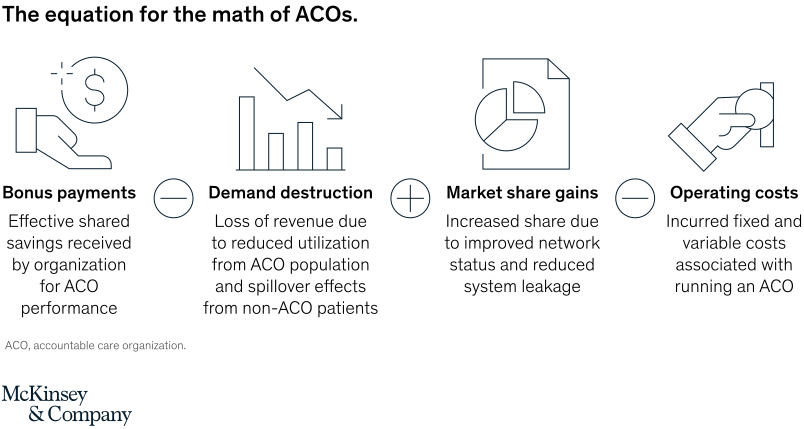
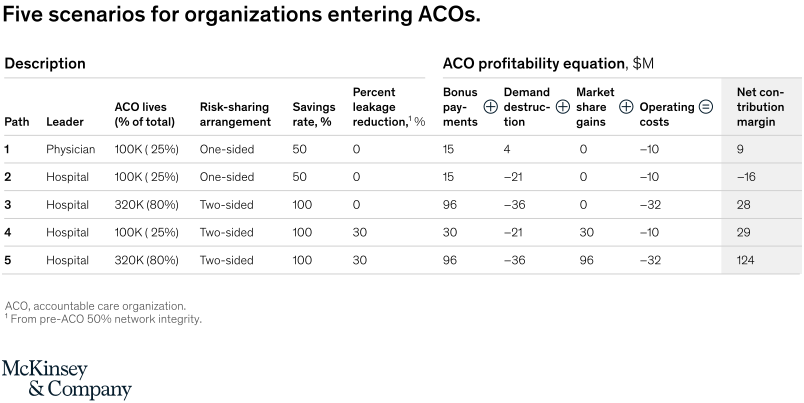
In the pages that follow, we examine these questions in two ways. First, we analyze “the math of ACOs” by isolating four factors that contribute to overall ACO profitability: bonus payments, “demand destruction,” market share gains, and operating expenses. Following these factors, we illustrate the math of ACOs through modeling of the performance of five different archetypes: physician-led ACOs; hospital-led ACOs with low ACO penetration and low leakage reduction; hospital-led ACOs with high ACO penetration; hospital-led ACOs with high leakage reduction; and hospital-led ACOs with high penetration and leakage reduction.
The Math of ACOs
In the pages that follow, we break down “the math of ACOs” into several key parameters, each of which hospital and physician group leaders could consider evaluating when deciding whether to participate in an ACO arrangement with one or more payers. Specifically, we measure the total economic value to ACO-participating providers as the sum of four factors: bonus payments, less “demand destruction,” plus market share gains, less operating costs for the ACO (Exhibit 1).
In the discussion that follows, we examine each of these factors and understand their importance to the overall profitability of ACOs, using both academic research as well as McKinsey’s experience advising and supporting payers and providers participating in ACO models.
1. Bonus payments
The premise of ACOs rests on the opportunity for payers and participating providers to share in cost savings arising from curbing unnecessary utilization and more efficient population health management, thus aligning incentives to control total cost of care. Because ACOs are designed to reduce utilization, the bonus—or share of estimated savings received by an ACO—is one factor that significantly influences ACO profitability and has garnered the greatest attention both in academic research and in private sector negotiations and deliberations over ACO participation. Bonus payments made to ACOs are themselves based on several key design elements:
The baseline and benchmark for total costs, against which savings are estimated8 ;
The shared savings rate and minimum savings/loss rates;
Risk corridors, based on caps on gains/losses and/or “haircuts” to benchmarks; and,
Frequency of rebasing, with implications for benchmark and shared savings.
1a. Baseline and benchmark
Most ACO models are grounded in a historical baseline for total cost of care, typically on the population attributed to providers participating in the ACO. Most ACO models apply an annual trend rate to the historical baseline, in order to develop a benchmark for total cost of care for the performance period. This benchmark is then used as the point of reference to which actual costs are compared for purposes of determining the bonus to be paid.
Historical baselines may be based either on one year or averaged over multiple years in order to mitigate the potential for a single-year fluctuation in total cost of care that could create an artificially high or low point of comparison in the future. Trend factors may be based on historically observed growth rates in per capita costs, or forward-looking projections, which may depart from historical trends due to changes in policy, fee schedules, or anticipated differences between past and future population health. Trend factors may be based on national projections, more market-specific projections, or even ACO-specific projections. For these and other reasons, a pre-determined benchmark may not be a good estimate of what total cost of care would have been in the absence of the ACO. As a result, estimated savings, and hence bonuses, may not reflect the true savings generated by ACOs if compared to a rigorous assessment of what otherwise would have occurred.
Recent research suggests that an ACO’s benchmark should be set using trend data from providers in similar geographic areas and/or with similar populations instead of using a national market average trend factor.9 It has been observed in Medicare (and other) populations that regions (and therefore possibly ACOs) that start at a lower-than-average cost base tend to have a higher-than-average growth trend. For example, Medicare FFS spending in low-cost regions grew at a rate 1.2 percentage points faster than the national average (2.8 percent and 1.6 percent from 2013 to 2017 compound annual growth rate, respectively). This finding is particularly relevant in low-cost rural communities, where healthcare spending grows faster than the national average.10 Based on this research, some ACO models, such as MSSP and the Next Generation Medicare ACO model, have developed benchmarks based on blending ACO-specific baselines with market-wide baselines. This approach is intended to account for the differences in “status quo” trend, which sponsoring payers may project in the absence of ACO arrangements or associated improvements in care patterns. Some model architects have advocated for this provider-market blended approach to benchmark development because they believe such an approach balances the need to reward providers who improve their own performance with a principle tenet of this model: That ACOs within a market should be held accountable to the same targets (at least in the long term).
The shared savings rate is the percentage of any estimated savings (compared with benchmark) that is paid to the ACO, subject to meeting any requirements for quality performance. For example, an ACO with a savings rate of 50 percent that outperforms its benchmark by 3 percent would keep 1.5 percent of benchmark spend. Under the array of Medicare ACO models, the shared savings rate percentage ranges anywhere from 40 percent to 100 percent.11
In some ACO models, particularly one-sided gain sharing models that do not introduce downside risk, payers impose a minimum savings rate (MSR), which is the savings threshold for an ACO to receive a payout, typically 2 percent, but can be higher or lower.12 For example, assume ACO Alpha has a savings rate of 60 percent and MSR of 1.5 percent. If Alpha overperforms the benchmark by 1 percent, there would be no bonus payout, because the total savings do not meet or exceed the MSR. If, however, Alpha overperforms the benchmark by 3 percent, Alpha would receive a bonus of 1.8 percent of benchmark (60 percent of 3 percent). An MSR is common in one-sided risk agreements to protect the payer from paying out the ACO if modest savings are a result of random variations. ACOs in two-sided risk arrangements may often choose whether to have an MSR.
Both factors impact the payout an ACO receives. Between 2012 and 2018, average earned shared savings for MSSP ACOs were between $1.0M and $1.6M per ACO (between $10 and $100 per beneficiary).13 However, while nearly two out of three MSSP ACOs in 2018 were under benchmark, only about half of them (37 percent of all MSSP ACOs) received a payout due to the MSR.14
1c. Risk corridors
In certain arrangements, payers include clauses that limit an ACO’s gains or losses to protect against extreme situations. Caps depend on the risk-sharing agreement (for example, one-sided or two-sided) as well as the shared savings/loss rate. For example, MSSP Track 1 ACOs (one-sided risk sharing) cap shared savings at the ACO’s share of 10 percent variance to the benchmark, while Track 3 ACOs (two-sided risk sharing) cap shared savings at the ACO’s share of 20 percent variance to the benchmark and cap shared losses at 15 percent variance to the benchmark.15 In contrast with these Medicare models, many Commercial and Medicaid ACO models have applied narrower risk corridors, with common ranges of 3 to 5 percent. In our experience, payers have elected to offer narrower risk corridors. Their choice is based on their desire to mitigate risk as well as the interest of some payers (and state Medicaid programs) to share in extraordinary savings that may be attributable in part to policy changes or other interventions undertaken by the payers themselves, whether in coordination with ACOs or independent of their efforts.
Payers also may vary the level of shared savings (and/or risk), between that which applies to the first dollar of savings (versus benchmark) compared with more significant savings. For example, by applying a 1 percent adjustment or “haircut” to the benchmark, a payer might keep 100 percent of the first 1 percent of savings and share any incremental savings with the ACO at a negotiated shared savings rate. Depending on what higher shared savings rate may be offered in trade for the “haircut,” such a structure has the potential to increase the incentive for ACOs to significantly outperform the benchmark. For example, an ACO that beats the benchmark by 4 percentage points and earns 100 percent of savings after 1 percentage point would net 75 percent of total estimated savings. However, under the same risk model, if the ACO were to beat the benchmark by 2 percentage points, they would only earn 50 percent of total savings. Such a structure could therefore be either more favorable or less favorable than 60 percent shared savings without a “haircut,” depending on the ACO’s anticipated performance.
1d. Frequency of rebasing
In most ACO models (including those adopted by CMS for the Medicare FFS program), the ACO’s benchmark is reset for each performance period based (at least in part) on the ACO’s performance in the immediate prior year. This approach is commonly referred to as “rebasing.” The main criticism of this approach toward ACO model design—which is also evident in capitation rate setting for Managed Care Organizations—is that ACOs become “victims of their own success”: Improvements made by the ACO in one year lead to a benchmark that is even harder to beat in the following year. The corollary is also true: An ACO with “excessive” costs in Year 1 may be setting themselves up for significant shared savings in Year 2 simply by bringing their performance back to “normal” levels.
Even in situations where ACOs show steady improvements in management of total cost of care over several years, the “ratchet” effect of rebasing can have significant implications for the share of estimated savings that flow to the ACO. Exhibit 2 illustrates the shared savings that would be captured by an ACO, if it were to mitigate trend by 2 percentage points consistently for 5 years (assumes linear growth), under a model that provides 50 percent shared savings against a benchmark that is set with annual rebasing. In this scenario, although the ACO would earn 50 percent of the savings estimated in any one year (against benchmark), the ACO would derive only 16 percent of total savings achieved relative to a “status quo” trend.
Exhibit 2
Some ACO model designs (including MSSP) have mitigated this “ratchet” effect, to some extent, by using multi-year baselines, whereby the benchmark for a given performance year is based not on the ACO’s baseline performance in the immediate prior year but over multiple prior years. This approach smooths out the effect of one-year fluctuations in performance on the benchmark for subsequent years; by implication, improvements made by an ACO in Year 1 and sustained in Year 2 create shared savings in both years. Under a three-year baseline, weighted toward the most recent year 60/30/10 percent (as applies to new contracts under the MSSP), the ACO in Exhibit 2 would capture 22 percent of total estimated savings over 5 years. If the model were instead to adopt an evenly weighted three-year baseline, that same ACO would capture 28 percent over 5 years.
In select cases, particularly in the Commercial market, payers and ACOs have agreed to multi-year prospective benchmarks. Under this approach, the benchmark for performance Years 1 to 5 (for example) are set prospectively in Year 0; the benchmarks for Years 2 and 3, for example, are not impacted by the ACO’s performance in Year 1. If this approach were to be applied to the ACO depicted in Exhibit 2, they would earn fully 50 percent of the total savings, assuming that the prospectively established 5-year benchmark was set at the “status quo” trend line. While prospective multi-year benchmarks may be more favorable to ACOs, they also increase the sensitivity of ACO performance to both the original baseline as well as the reasonableness of the prospectively applied trend rate.
Key takeaways
While in many cases healthcare organizations are highly focused on the percent of shared savings they will receive (shared savings rate), in our experience, the financial sustainability of ACO arrangements may be equally or more greatly affected by several other design parameters outlined here, among them: the inclusion of an MSR or a “haircut” to benchmark, either of which may dampen the incentive to perform; benchmark definitions including the use of provider-specific, market-specific, and/or national baseline and trend factors; and the frequency of rebasing, as implied by the use of a single-year or multi-year baseline, or the adoption of prospectively determined multi-year benchmarks.
2. Demand destruction
Although shared savings arrangements are meant to align providers’ incentives with curbing unnecessary utilization, the calculation of bonus payments based on avoided claims costs (as described in Section 1) does not account for the foregone provider revenue (and margins) attached to reductions in patient volume. The economic impact of this reduction in patient volume, sometimes referred to as “demand destruction,” is described in this section, which we address in two parts:
Foregone economic contribution based on reduced utilization in the ACO population; and,
Spillover effects from reduced utilization in the non-ACO population, based on clinical and operational changes that “spillover” from the ACO population to the non-ACO population.
2a. Foregone economic contribution
Claims paid to hospital systems for inpatient, outpatient, and post-acute facility utilization typically comprise 40 to 70 percent of total cost of care, with hospital systems that own a greater share of outpatient diagnostic lab and/or imaging and/or skilled nursing beds falling at the upper end of this range. These same categories of facility utilization may comprise 60 to 80 percent of reductions in utilization arising from improvements in population health management by an ACO. Given the high fixed costs (and correspondingly high gross margins) associated with inpatient, outpatient, and post-acute facilities, foregone facility volume could come at an opportunity cost of 30 to 70 percent of foregone revenue—that opportunity cost being the gross contribution margin associated with incremental patient volume, calculated as revenue less variable costs: Commercially insured ACO populations are more likely to fall into the upper end of this range and Medicaid populations into the lower end. This is the reason savings rates tend to be higher in the Commercial market, to offset the larger (negative) financial impact of “demand destruction.”
For example, a hospital-led ACO that mitigates total cost of care by 3 percent (or $300 based on a benchmark of $10,000 per capita) might forego $180 to $240 of revenue per patient (assuming 60 to 80 percent of savings derived from hospital services), which may represent $90 to $120 in foregone economic contribution, assuming 50 percent gross margins. As this example shows, this foregone economic contribution may represent a significant offset to any bonus paid under shared savings arrangements, unless the shared savings percentage is significantly greater than the gross margin percentage for foregone patient revenue.
For some hospitals that are capacity constrained, the lost patient volume may be replaced (that is, backfilled) with additional patient volume that may be more or less profitable depending on the payer (for example, an ACO that backfills with more profitable Commercial patients). However, the vast majority of hospitals are not traditionally capacity constrained and therefore must look to other methods (for example, growing market share) to be financially sustainable.
In contrast, physician-led ACOs have comparatively little need to consider the financial impact of “demand destruction,” given that they never benefitted from hospitalizations and thus do not lose profits from forgone care. Furthermore, primary care practices may actually experience an increase, rather than decrease, in patient revenue, based on more effective population health management. Even for multi-specialty physician practices that sponsor ACO formation, any reductions in patient volume arising from the ACO may have only modest impact on practice profitability due to narrow contribution margins attached to incremental patient volume. Physician-led ACOs may need to be concerned with “demand destruction” only to the extent that a disproportionate share of savings is derived from reductions in practice-owned diagnostics or other high-margin services; however, the savings derived from such sources are typically smaller than reductions in utilization for emergency department, inpatient, and post-acute facility utilization.
2b. Spillover effects
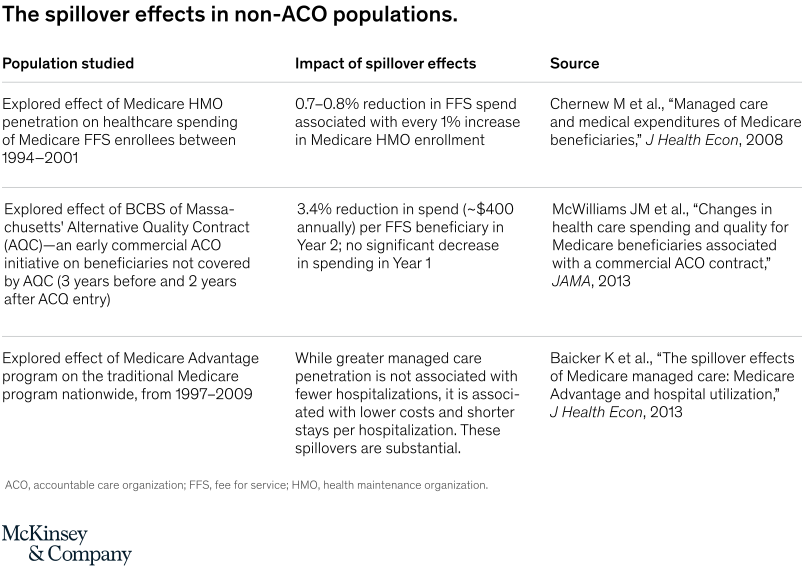
Though ACOs are not explicitly incentivized to reduce total cost of care of their non-ACO populations (including FFS), organizations often see increased efficiency across their full patient population after becoming an ACO. For example, research over the last decade has found reductions in spend for non-ACO lives between 1 and 3 percent (Exhibit 3).
Exhibit 3
The impact of spillover effects on an ACO’s profitability depends on the proportion of ACO and non-ACO lives that comprise a provider’s patient panel. Further, impact also depends on the ACO’s ability to implement differentiated processes for ACO and non-ACO lives to limit the spillover of the efficiencies. Although conventional wisdom implies that physicians will not discriminate their clinical practice patterns based on the type of payer (or payment), nonetheless many examples exist of hospitals and other providers with the ability to differentiate processes based on payer or payment type. For example, many hospitals deploy greater resources to discharge planning or initiate the process earlier for patients reimbursed under a Diagnosis Related Group (case rate) than for those reimbursed on a per diem or percent of charges model. Moreover, ACOs and other risk-bearing entities routinely direct care management activities disproportionately or exclusively toward patients for whom they have greater financial accountability for quality and/or efficiency. For physician-led ACOs, differentiating resource deployment between ACO- and non-ACO populations may be necessary to achieve a return on investment for new care management or other population health management activities. For hospital sponsors of ACOs that continue to derive the majority of their revenue from FFS populations outside the ACO, differentiating population health management efforts across ACO and FFS populations are of paramount importance to overall financial sustainability. To the extent that hospital-led ACOs are unable to do so, they may find total cost of care financial arrangements to be financially sustainable only if extended to the substantial majority of their patient populations in order to reduce the severity of any spillover effects.
Key takeaways
The adverse impact of “demand destruction” is what most distinguishes the math of hospital-led ACOs from that of physician-led ACOs. The structure of ACO-sponsoring hospitals—whether they own post-acute assets, for example—further shapes the severity of demand destruction, which then provides a point of reference for determining what shared savings percentage may be necessary to overcome the impact of demand destruction. Though in the long term, hospitals may be able to right size capacity, in the near term when deciding to become an ACO, there is often limited ability to alter the fixed-cost base. Finally, the extent of “spillover effects” from the ACO to the non-ACO population further impacts the financial sustainability of hospital-led ACOs. Hospital-led ACOs can seek to minimize the impact through 1) differentiating processes between the two populations, and/or 2) transitioning the substantial majority of their patient population into ACO arrangements.
3. Market share gains
Providers can further improve profitability through market share gains, specifically:
Reduced system leakage through improved alignment of referring physicians across both ACO and non-ACO patients; and,
Improved network status as an ACO.
3a. Reduced system leakage
ACOs can grow market share by coordinating patients within the system (that is, reduce leakage) to better manage total cost of care and quality. This coordination is often accomplished by improving the provider’s alignment with the referring physician; for example, ACOs can establish a comprehensive governance structure and process around network integrity, standardize the referral process between physicians and practices, and improve physician relationships within, and with awareness of, the network. Furthermore, ACOs can develop a process to ensure that a patient schedules follow-up appointments before leaving the physician’s office, optimizing the scheduling system and call center.
Stark Laws (anti-kickback regulations) have historically prevented systems from giving physicians financial incentives to reduce leakage. While maintaining high-quality standards, ACOs are given a waiver to this law and therefore are allowed to pursue initiatives that improve network integrity to better coordinate care for patients. In our experience, hospitals generally experience 30 to 50 percent leakage (Exhibit 4), but ACOs can improve leakage by 10 to 30 percent.
Exhibit 4
3b. Improved network status
In some instances for Commercial payers, an ACO may receive preferential status within a network by entering into a total cost of care arrangement with a payer. As a result, the ACO would see greater utilization, which will improve profitability. For example, in 2012, the Cooley Dickinson Hospital (CDH) and Cooley Dickinson Physician Hospital Organization, a health system in western Massachusetts with 66 primary care providers and 160 specialists, joined Blue Cross Blue Shield of Massachusetts’ (BCBSMA) Alternative Quality Contract (AQC), which established a per-patient global budget to cover all services and expenses for its Commercial population. As a result of joining the AQC, reducing the prices charged for services, and providing high quality of care, CDH was “designated as a high-value option in the Western Mass. Region,” which meant BCBSMA members with certain plans “[paid] less out-of-pocket when they [sought] care” at CDH.16 Other payers have also established similar mutually beneficial offerings to providers who assume more accountability for care.1718 An ACO can benefit from these arrangements up until most or all other provider systems in the same market join.
Key takeaways
These factors to improve market share (at lower cost and better quality) can help an ACO compensate for any lost profits from “demand destruction” (foregone profits and spillover effects) and increased operating costs. The opportunity from this factor, which requires initiatives that focus on reducing leakage, can be the difference between a net-neutral hospital-led ACO and a significantly profitable ACO. An example initiative would be performance management systems that analyze physician referral patterns.
4. Operating costs
Finally, profitability is impacted by operating costs or any additional expenses associated with running an ACO. These costs generally are lower for physician-led ACOs than for hospital-led ACOs (and also depend on buy-versus-build decisions). In our experience, operating costs to run an ACO vary widely depending on the provider’s operating model, cost structure (for example, existing personnel, IT capabilities), and ACO patient population (for example, number and percent of ACO lives). However, we will focus on three specific types of costs:
Care management costs, often variable, or a marginal expense for every life;
Data and analytics operating costs, which can vary widely depending on whether the ACO builds or buys this capability; and
Additional administrative costs, which are fixed or independent of the number of lives.
4a. Care management costs
In our experience, care management costs to operate an ACO range from 0.5 to 2.0 percent of total cost of care for a given ACO population. These care management costs include ensuring patients with chronic conditions are continuously managing those conditions and coordinating with physician teams to improve efficacy and efficiency of care. A core lever of success involves reducing use of unnecessary care. ACOs that spend closer to 2 percent and/or those whose efforts focus on expanding care coordination for high-risk patients struggle to achieve enough economic contribution to break even. This is because care coordination (devoting more resources to testing and treating patients with chronic disease) often does not have a positive return on investment.19 ACOs that do this effectively and ultimately spend less on care management (around 0.5 percent of the total cost of care) tend to create value primarily through curbing unnecessary utilization and steering patients toward more efficient facilities rather than managing chronic conditions. This value creation is particularly true for Commercial ACO contracts, where there is greater price variation across providers compared with Medicare and Medicaid contracts, where pricing is standardized.
4b. Data and analytics operating costs
Data and analytics operating costs are critical to supporting ACO effectiveness. For example, high-performing ACOs prioritize data interoperability across physicians and hospitals and constantly analyze electronic health records and claims data to identify opportunities to better manage patient care and reduce system leakage. ACOs can either build or license data and analytics tools, a decision that often depends on the number of ACO lives. In our experience, an ACO that decides to build its own data and analytics solutions in-house will on average invest around $24M for upfront development, amortized over 8 years for $3M per year, plus $6M in annual costs (for example, using data scientists and analysts to generate insights from the data), for a total of $9M per year. Alternatively, ACOs can license analytics software on a per-patient basis, typically costing 0.5 to 1.5 percent of the total cost of care. Thus, we find the breakeven point at around 100,000 covered ACO lives; therefore, it often makes financial sense for ACOs with more than 100,000 lives to build in-house.
4c. Additional administrative costs
Organizations must also invest in personnel to operate an ACO, typically including an executive director, head of real estate, head of care management, and lawyers and actuaries. The ACO leadership team’s responsibilities often include setting the ACO’s strategy (for example, target markets, lines of business, services offered, through which physicians and hospitals) and developing, managing, and communicating with the physician network to support continuity of care.
Key takeaways
Operating costs to run an ACO are significant. Ability to find ways to invest in fixed costs that are more transformational in nature may result in lower near-term profitability but can provide a greater return on investment in the long term both for the ACO and the rest of the system. The decision to make these investments is dependent on the number of lives covered by an individual ACO.
ACO Archetypes
Drawing on the analysis outlined above, we conducted scenario modeling of “the math of ACOs” using five different ACO archetypes, which vary in structure and performance under a common set of rules. These five archetypes include:
Typical physician-led ACO
Hospital-led ACO with low ACO penetration and low leakage reduction
Hospital-led ACO with high ACO penetration
Hospital-led ACO with high leakage reduction
Hospital-led ACO with high leakage reduction and high ACO penetration
Subsequently, taking an ACO’s structure as a given, we describe for each ACO archetype the key model design parameters and other strategic and operational choices that ACOs might make to maximize their performance.
Comparision of archetypes based on scenario modeling
Summarizing the four factors, the profitability of each archetype reveals certain insights (Exhibit 5).





 HENRY KOTULA