What you need to know about the COVID-19 vaccine

https://www.gatesnotes.com/Health/What-you-need-to-know-about-the-COVID-19-vaccine?WT.mc_id=20200430164943_COVID-19-vaccine_BG-FB&WT.tsrc=BGFB&linkId=87665504&fbclid=IwAR0SsBGe1GTcy-fOIXz86kImkScsdCGlRVgmDcPOgXMcaU7kdO39SyNpRSs

What you need to know about the COVID-19 vaccine | Bill Gates

Humankind has never had a more urgent task than creating broad immunity for coronavirus.

One of the questions I get asked the most these days is when the world will be able to go back to the way things were in December before the coronavirus pandemic. My answer is always the same: when we have an almost perfect drug to treat COVID-19, or when almost every person on the planet has been vaccinated against coronavirus.

The former is unlikely to happen anytime soon. We’d need a miracle treatment that was at least 95 percent effective to stop the outbreak. Most of the drug candidates right now are nowhere near that powerful. They could save a lot of lives, but they aren’t enough to get us back to normal.

Which leaves us with a vaccine.

Humankind has never had a more urgent task than creating broad immunity for coronavirus. Realistically, if we’re going to return to normal, we need to develop a safe, effective vaccine. We need to make billions of doses, we need to get them out to every part of the world, and we need all of this happen as quickly as possible.

That sounds daunting, because it is. Our foundation is the biggest funder of vaccines in the world, and this effort dwarfs anything we’ve ever worked on before. It’s going to require a global cooperative effort like the world has never seen. But I know it’ll get done. There’s simply no alternative.

Here’s what you need to know about the race to create a COVID-19 vaccine.

The world is creating this vaccine on a historically fast timeline.

Dr. Anthony Fauci has said he thinks it’ll take around eighteen months to develop a coronavirus vaccine. I agree with him, though it could be as little as 9 months or as long as two years.

Although eighteen months might sound like a long time, this would be the fastest scientists have created a new vaccine. Development usually takes around five years. Once you pick a disease to target, you have to create the vaccine and test it on animals. Then you begin testing for safety and efficacy in humans.

Safety and efficacy are the two most important goals for every vaccineSafety is exactly what it sounds like: is the vaccine safe to give to people? Some minor side effects (like a mild fever or injection site pain) can be acceptable, but you don’t want to inoculate people with something that makes them sick.

Efficacy measures how well the vaccine protects you from getting sick. Although you’d ideally want a vaccine to have 100 percent efficacy, many don’t. For example, this year’s flu vaccine is around 45 percent effective.

To test for safety and efficacy, every vaccine goes through three phases of trials:

  • Phase one is the safety trial. A small group of healthy volunteers gets the vaccine candidate. You try out different dosages to create the strongest immune response at the lowest effective dose without serious side effects.
  • Once you’ve settled on a formula, you move onto phase two, which tells you how well the vaccine works in the people who are intended to get it. This time, hundreds of people get the vaccine. This cohort should include people of different ages and health statuses.
  • Then, in phase three, you give it to thousands of people. This is usually the longest phase, because it occurs in what’s called “natural disease conditions.” You introduce it to a large group of people who are likely already at the risk of infection by the target pathogen, and then wait and see if the vaccine reduces how many people get sick.

After the vaccine passes all three trial phases, you start building the factories to manufacture it, and it gets submitted to the WHO and various government agencies for approval.

This process works well for most vaccines, but the normal development timeline isn’t good enough right now. Every day we can cut from this process will make a huge difference to the world in terms of saving lives and reducing trillions of dollars in economic damage.

So, to speed up the process, vaccine developers are compressing the timeline. This graphic shows how:

In the traditional process, the steps are sequential to address key questions and unknowns. This can help mitigate financial risk, since creating a new vaccine is expensive. Many candidates fail, which is why companies wait to invest in the next step until they know the previous step was successful.

For COVID-19, financing development is not an issue. Governments and other organizations (including our foundation and an amazing alliance called the Coalition for Epidemic Preparedness Innovations) have made it clear they will support whatever it takes to find a vaccine. So, scientists are able to save time by doing several of the development steps at once. For example, the private sector, governments, and our foundation are going to start identifying facilities to manufacture different potential vaccines. If some of those facilities end up going unused, that’s okay. It’s a small price to pay for getting ahead on production.

Fortunately, compressing the trial timeline isn’t the only way to take a process that usually takes five years and get it done in 18 months. Another way we’re going to do that is by testing lots of different approaches at the same time.

There are dozens of candidates in the pipeline.

As of April 9, there are 115 different COVID-19 vaccine candidates in the development pipeline. I think that eight to ten of those look particularly promising. (Our foundation is going to keep an eye on all the others to see if we missed any that have some positive characteristics, though.)

The most promising candidates take a variety of approaches to protecting the body against COVID-19. To understand what exactly that means, it’s helpful to remember how the human immune system works.

When a disease pathogen gets into your system, your immune system responds by producing antibodies. These antibodies attach themselves to substances called antigens on the surface of the microbe, which sends a signal to your body to attack. Your immune system keeps a record of every microbe it has ever defeated, so that it can quickly recognize and destroy invaders before they make you ill.

Vaccines circumvent this whole process by teaching your body how to defeat a pathogen without ever getting sick. The two most common types—and the ones you’re probably most familiar with—are inactivated and live vaccines. Inactivated vaccines contain pathogens that have been killed. Live vaccines, on the other hand, are made of living pathogens that have been weakened (or “attenuated”). They’re highly effective but more prone to side effects than their inactivated counterparts.

Inactivated and live vaccines are what we consider “traditional” approaches. There are a number of COVID-19 vaccine candidates of both types, and for good reason: they’re well-established. We know how to test and manufacture them.

The downside is that they’re time-consuming to make. There’s a ton of material in each dose of a vaccine. Most of that material is biological, which means you have to grow it. That takes time, unfortunately.

That’s why I’m particularly excited by two new approaches that some of the candidates are taking: RNA and DNA vaccines. If one of these new approaches pans out, we’ll likely be able to get vaccines out to the whole world much faster. (For the sake of simplicity, I’m only going to explain RNA vaccines. DNA vaccines are similar, just with a different type of genetic material and method of administration.)

Our foundation—both through our own funding and through CEPI—has been supporting the development of an RNA vaccine platform for nearly a decade. We were planning to use it to make vaccines for diseases that affect the poor like malaria, but now it’s looking like one of the most promising options for COVID. The first candidate to start human trials was an RNA vaccine created by a company called Moderna.

Here’s how an RNA vaccine works: rather than injecting a pathogen’s antigen into your body, you instead give the body the genetic code needed to produce that antigen itself. When the antigens appear on the outside of your cells, your immune system attacks them—and learns how to defeat future intruders in the process. You essentially turn your body into its own vaccine manufacturing unit.

Because RNA vaccines let your body do most of the work, they don’t require much material. That makes them much faster to manufacture. There’s a catch, though: we don’t know for sure yet if RNA is a viable platform for vaccines. Since COVID would be the first RNA vaccine out of the gate, we have to prove both that the platform itself works and that it creates immunity. It’s a bit like building your computer system and your first piece of software at the same time.

Even if an RNA vaccine continues to show promise, we still must continue pursuing the other options. We don’t know yet what the COVID-19 vaccine will look like. Until we do, we have to go full steam ahead on as many approaches as possible.

It might not be a perfect vaccine yet—and that’s okay.

The smallpox vaccine is the only vaccine that’s wiped an entire disease off the face of the earth, but it’s also pretty brutal to receive. It left a scar on the arm of anyone who got it. One out of every three people had side effects bad enough to keep them home from school or work. A small—but not insignificant—number developed more serious reactions.

The smallpox vaccine was far from perfect, but it got the job done. The COVID-19 vaccine might be similar.

If we were designing the perfect vaccine, we’d want it to be completely safe and 100 percent effective. It should be a single dose that gives you lifelong protection, and it should be easy to store and transport. I hope the COVID-19 vaccine has all of those qualities, but given the timeline we’re on, it may not.

The two priorities, as I mentioned earlier, are safety and efficacy. Since we might not have time to do multi-year studies, we will have to conduct robust phase 1 safety trials and make sure we have good real-world evidence that the vaccine is completely safe to use.

We have a bit more wiggle room with efficacy. I suspect a vaccine that is at least 70 percent effective will be enough to stop the outbreak. A 60 percent effective vaccine is useable, but we might still see some localized outbreaks. Anything under 60 percent is unlikely to create enough herd immunity to stop the virus.

The big challenge will be making sure the vaccine works well in older people. The older you are, the less effective vaccines are. Your immune system—like the rest of your body—ages and is slower to recognize and attack invaders. That’s a big issue for a COVID-19 vaccine, since older people are the most vulnerable. We need to make sure they’re protected.

The shingles vaccine—which is also targeted to older people—combats this by amping up the strength of the vaccine. It’s possible we do something similar for COVID, although it might come with more side effects. Health authorities could also ask people over a certain age to get an additional dose.

Beyond safety and efficacy, there are a couple other factors to consider:

  • How many doses will it be? A vaccine you only get once is easier and quicker to deliver. But we may need a multi-dose vaccine to get enough efficacy.
  • How long does it last? Ideally, the vaccine will give you long-lasting protection. But we might end up with one that only stops you from getting sick for a couple months (like the seasonal flu vaccine, which protects you for about six months). If that happens, the short-term vaccine might be used while we work on a more durable one.
  • How do you store it? Many common vaccines are kept at 4 degrees C. That’s around the temperature of your average refrigerator, so storage and transportation is easy. But RNA vaccines need to be stored at much colder temperature—as low as -80 degrees C—which will make reaching certain parts of the world more difficult.

My hope is that the vaccine we have 18 months from now is as close to “perfect” as possible. Even if it isn’t, we will continue working to improve it. After that happens, I suspect the COVID-19 vaccine will become part of the routine newborn immunization schedule.

Once we have a vaccine, though, we still have huge problems to solve. That’s because…

We need to manufacture and distribute at least 7 billion doses of the vaccine.

In order to stop the pandemic, we need to make the vaccine available to almost every person on the planet. We’ve never delivered something to every corner of the world before. And, as I mentioned earlier, vaccines are particularly difficult to make and store.

There’s a lot we can’t figure out about manufacturing and distributing the vaccine until we know what exactly we’re working with. For example, will we be able to use existing vaccine factories to make the COVID-19 vaccine?

What we can do now is build different kinds of vaccine factories to prepare. Each vaccine type requires a different kind of factory. We need to be ready with facilities that can make each type, so that we can start manufacturing the final vaccine (or vaccines) as soon as we can. This will cost billions of dollars. Governments need to quickly find a mechanism for making the funding for this available. Our foundation is currently working with CEPI, the WHO, and governments to figure out the financing.

Part of those discussions center on who will get the vaccine when. The reality is that not everyone will be able to get the vaccine at the same time. It’ll take months—or even years—to create 7 billion doses (or possibly 14 billion, if it’s a multi-dose vaccine), and we should start distributing them as soon as the first batch is ready to go.

Most people agree that health workers should get the vaccine first. But who gets it next? Older people? Teachers? Workers in essential jobs?

I think that low-income countries should be some of the first to receive it, because people will be at a much higher risk of dying in those places. COVID-19 will spread much quicker in poor countries because measures like physical distancing are harder to enact. More people have poor underlying health that makes them more vulnerable to complications, and weak health systems will make it harder for them to receive the care they need. Getting the vaccine out in low-income countries could save millions of lives. The good news is we already have an organization with expertise about how to do this in Gavi, the Vaccine Alliance.

With most vaccines, manufacturers sign a deal with the country where their factories are located, so that country gets first crack at the vaccines. It’s unclear if that’s what will happen here. I hope we find a way to get it out on an equitable basis to the whole world. The WHO and national health authorities will need to develop a distribution plan once we have a better understanding of what we’re working with.

Eventually, though, we’re going to scale this thing up so that the vaccine is available to everyone. And then, we’ll be able to get back to normal—and to hopefully make decisions that prevent us from being in this situation ever again.

It might be a bit hard to see right now, but there is a light at the end of the tunnel. We’re doing the right things to get a vaccine as quickly as possible. In the meantime, I urge you to continue following the guidelines set by your local authorities. Our ability to get through this outbreak will depend on everyone doing their part to keep each other safe.



U.S. coronavirus updates

https://www.axios.com/coronavirus-west-virginia-first-case-ac32ce6d-5523-4310-a219-7d1d1dcb6b44.html

Coronavirus outbreak is level of public pain we haven't seen in ...


The pandemic is a long way from over, and its impact on our daily lives, information ecosystem, politics, cities and health care will last even longer.

The big picture: The novel coronavirus has infected more than 939,000 people and killed over 54,000 in the U.S., Johns Hopkins data shows. More than 105,000 Americans have recovered from the virus as of Sunday.

Lockdown measures: Demonstrators gathered in Florida, Texas and Louisiana Saturday to protest stay-at-home orders designed to protect against the spread of COVID-19, following a week of similar rallies across the U.S.

  • 16 states have released formal reopening plans, Vice President Mike Pence said at Thursday’s White House briefing. Several Southern states including South Carolina have already begun reopening their economies.
  • Alaska, Oklahoma and Georgia reopened some non-essential businesses Friday. President Trump said Wednesday he “strongly” disagrees with Georgia Gov. Brian Kemp on the move.
  • California’s stay-at-home orders and business restrictions will remain in place, Gov. Gavin Newsom made clear at a Wednesday news briefing. But some local authorities reopened beaches in Southern California Saturday.
  • New York recorded its third-straight day of fewer coronavirus deaths Friday. Still, Gov. Andrew Cuomo said he’s not willing to reopen the state, citing CDC guidance that states need two weeks of flat or declining numbers.

Catch up quick: Deborah Birx said Sunday that it “bothers” her that the news cycle is still focused on Trump’s comments about disinfectants possibly treating coronavirus, arguing that “we’re missing the bigger pieces” about how Americans can defeat the virus.

  • Anthony Fauci said Saturday the U.S. is testing roughly 1.5 million to 2 million people a week. “We probably should get up to twice that as we get into the next several weeks, and I think we will,” he said.
  • The number of sailors aboard the USS Kidd to test positive for the coronavirus has risen from 18 Friday to 33, the U.S. Navy said Saturday. It’s the second major COVID-19 outbreak on a U.S. naval vessel, after the USS Theodore Roosevelt, where a total of 833 crew members tested positive, per the Navy’s latest statement.
  • The first person known to have the coronavirus when they died was killed by a heart attack “due to COVID-19 infection” on Feb. 6, autopsy results obtained by the San Francisco Chronicle on Saturday show.
  • Some young coronavirus patients are having severe strokes.
  • Trump tweeted Saturday that White House press conferences are “not worth the time & effort.” As first reported by Axios, Trump plans to pare back his coronavirus briefings.
  • The South is at risk of being devastated by the coronavirus, as states tend to have at-risk populations and weak health care systems.
  • New York Gov. Andrew Cuomo said Friday Trump was right to criticize the World Health Organization’s handling of the global outbreak.
  • Trump signed legislation Friday for $484 billion in more aid to small businesses and hospitals.
  • The House voted along party lines on Thursday to establish a select committee to oversee the federal government’s response to the crisis.
  • Unemployment: Another 4.4 million Americans filed last week. More than 26 million jobless filings have been made in five weeks due to the pandemic.


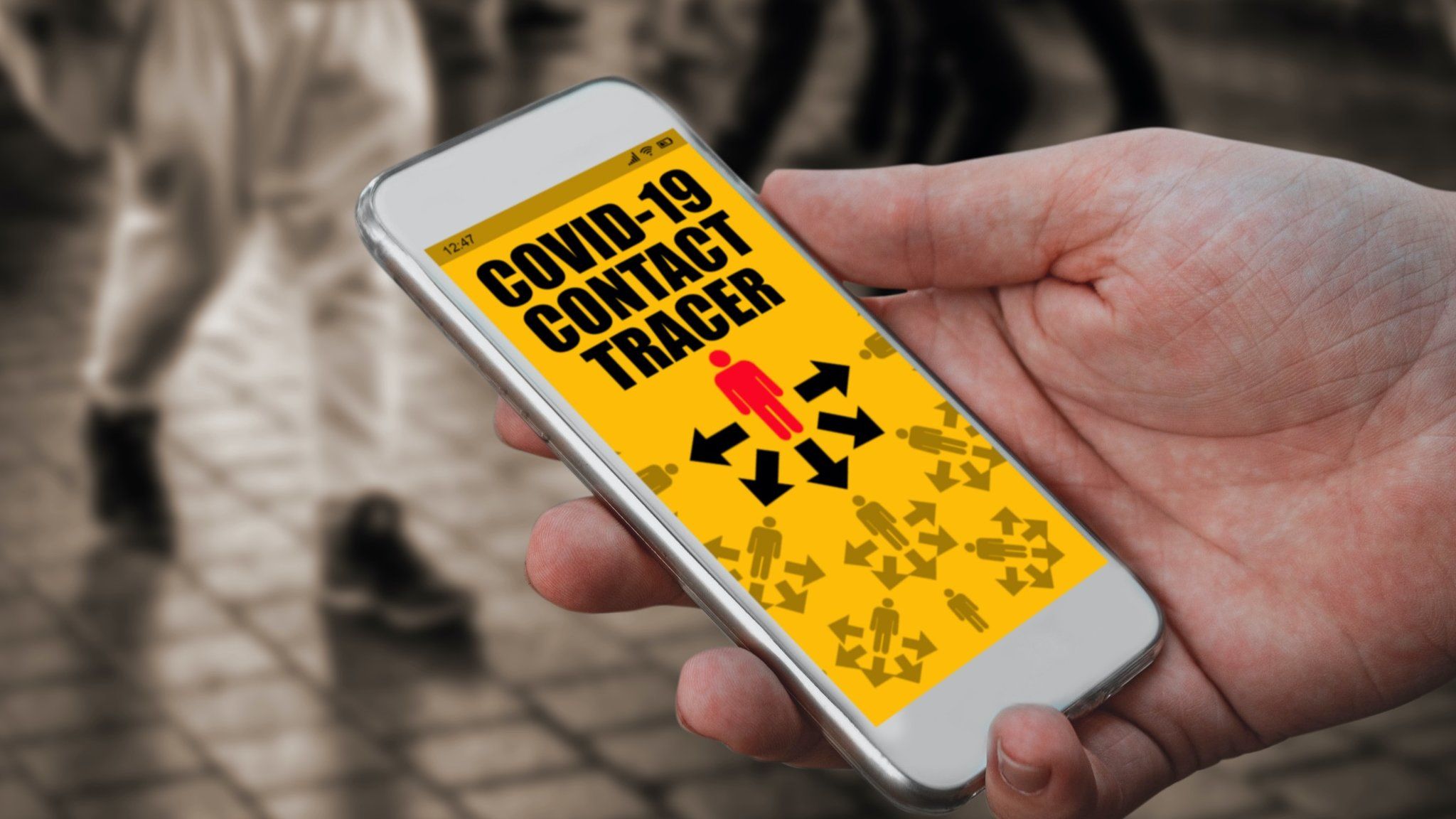
Governor Cuomo, Bloomberg Announce Unprecedented New York COVID-19 Coronavirus Contact Tracing Program

https://www.forbes.com/sites/brucelee/2020/04/23/governor-cuomo-bloomberg-announce-unprecedented-new-york-covid-19-coronavirus-contact-tracing-program/?utm_source=newsletter&utm_medium=email&utm_campaign=career&cid=5d2c97df953109375e4d8b68#129e09243cd1

Coronavirus: Why are there doubts over contact-tracing apps? - BBC ...

New York is not going to let the COVID-19 coronavirus spread without a trace. Make that multiple traces. In fact, make that many, many, many traces.

New York State Governor Andrew Cuomo and former New York City Mayor Mike Bloomberg announced the launch of a massive contact tracing program in an effort to better contain the severe acute respiratory syndrome coronavirus 2 (SARS-CoV-2). How massive? How about larger-than-any-contact-tracing-effort-that’s-been-attempted-before-in-the-U.S. massive?

It is a sign of the times that Cuomo had to include a slide that said: “But we can’t be stupid.” After all, there are other people out there pushing to re-open businesses without at the same time providing a specific plan on how exactly to stop the virus when social distancing measures are relaxed.

Bloomberg Philanthropies, which was founded by Bloomberg, will contribute $10.5 million as well as technical support and assistance to the program. The Johns Hopkins Bloomberg School of Public Health will develop an online training program and certification process for those doing the contact tracing. Vital Strategies, via its Resolve to Save Lives initiative, will advise and assist the New York State Health Department staff in developing protocols and processes to help the whole contact tracing process.

Speaking of vital strategies, “test-trace-isolate” is quite a vital strategy to try to contain the COVID-19 coronavirus so that social distancing measures can be relaxed and things can re-open, at least to some degree. Contact tracing is the “trace” part of that strategy. I’ve described previously for Forbes how to do contact tracing. When you’ve identified a person (an index case) infected with the SARS-Cov2 via testing, contact tracing is determining and locating every person that index case may have had contact with that was close enough to transmit the virus. This way you can isolate or quarantine all of those contacts as quickly as possible so that they can’t spread the virus any further. Essentially testing, tracing, and isolating or quarantining aims to contain the virus, to box it in, to give it no people to spread to, to surround it by nothing but toilet paper, fluffy pillows, Netflix videos, and whatever else people have in their houses and apartments.

Without a vaccine or specific treatment versus the SARS-Cov2, the virus could have spread much more widely without social distancing measures in place, because supplements, gargling salt water, Medieval chants or whatever bogus prevention measures have been offered weren’t going to stop the virus. Premature re-opening could send all of those efforts down the metaphorical toilet bowl. “While we start our work to re-open our economy we must ensure we are doing it in a way that does no harm and does not undo all of the work and sacrifice it has taken to get here,” said Cuomo in statement. “One of the most critical pieces of getting to a new normal is to ramp up testing, but states have a second big task – to put together an army of people to trace each person who tested positive, find out who they contacted and then isolate those people.”

Think about it. If you re-open places and relax social distancing measures, it could take only a small number of people spreading the virus to then cause another surge in COVID-19 cases. Therefore, a good contact tracing program needs to be in place to catch potentially infectious people quickly. Implementing large scale and coordinated contact tracing programs has been one way that Germany, Singapore and South Korea have been able to better control the COVID-19 coronavirus and its impact than the U.S. and U.K. have.

“We’re all eager to begin loosening restrictions on our daily lives and our economy,” said Bloomberg in a statement. “But in order to do that as safely as possible, we first have to put in place systems to identify people who may have been exposed to the virus and support them as they isolate.”

Putting appropriate systems in place before making a decision? Hear that sound? It’s the sound of science walking back into the ongoing “re-open America” conversation and saying, “what the heck have you been doing to the house while I’ve been away.” Deciding to re-open anything without first putting proper systems in place to monitor and contain the virus would be like going to a dinner party when you aren’t wearing any clothes. It would leave you quite exposed and basically put your butt on the line.

Although the program is launching immediately, it will take some time to recruit and train hundreds or perhaps thousands of tracers. Potential recruits will come from a variety of places such as the State Department of Health, various state agencies, the State University of New York (SUNY), and the City University of New York (CUNY). Henning indicated that the timeline for getting things in place will be in the order of “a number of weeks.”

This program will coordinate with contact tracing efforts in New Jersey and Connecticut. After all, this virus doesn’t respect borders or need an E-ZPass to spread to neighboring states. As Henning noted, “New York state has already been talking extensively with New Jersey and other states.”

If you live outside this tri-state area, try to pay attention to what’s going on here. After all, contact tracing will have to occur in other parts of the country as well. Otherwise, the virus can keep circulating in different parts of the country, which means that it could at any time readily spread to the rest of the U.S. After all, the virus is like a very bad house guest. It doesn’t respect boundaries. And it is unlikely to just disappear without a trace.


Here are the innovations we need to reopen the economy

https://www.washingtonpost.com/opinions/2020/04/23/bill-gates-here-are-innovations-we-need-reopen-economy/?arc404=true

Bill Gates: Here are the innovations we need to reopen the economy ...

Bill Gates is a co-chair of the Bill & Melinda Gates Foundation. This article is adapted from his blog post “Pandemic I: the First Modern Pandemic,” available at gatesnotes.com.

It’s entirely understandable that the national conversation has turned to a single question: “When can we get back to normal?” The shutdown has caused immeasurable pain in jobs lost, people isolated and worsening inequity. People are ready to get going again.

Unfortunately, although we have the will, we don’t have the way — not yet. Before the United States and other countries can return to business and life as usual, we will need some innovative new tools that help us detect, treat and prevent covid-19.

It begins with testing. We can’t defeat an enemy if we don’t know where it is. To reopen the economy, we need to be testing enough people that we can quickly detect emerging hotspots and intervene early. We don’t want to wait until the hospitals start to fill up and more people die.

Innovation can help us get the numbers up. The current coronavirus tests require that health-care workers perform nasal swabs, which means they have to change their protective gear before every test. But our foundation supported research showing that having patients do the swab themselves produces results that are just as accurate. This self-swab approach is faster and safer, since regulators should be able to approve swabbing at home or in other locations rather than having people risk additional contact.

Another diagnostic test under development would work much like an at-home pregnancy test. You would swab your nose, but instead of sending it into a processing center, you’d put it in a liquid and then pour that liquid onto a strip of paper, which would change color if the virus was present. This test may be available in a few months.

We need one other advance in testing, but it’s social, not technical: consistent standards about who can get tested. If the country doesn’t test the right people — essential workers, people who are symptomatic and those who have been in contact with someone who tested positive — then we’re wasting a precious resource and potentially missing big reserves of the virus. Asymptomatic people who aren’t in one of those three groups should not be tested until there are enough for everyone else.

The second area where we need innovation is contact tracing. Once someone tests positive, public-health officials need to know who else that person might have infected.

For now, the United States can follow Germany’s example: interview everyone who tests positive and use a database to make sure someone follows up with all their contacts. This approach is far from perfect, because it relies on the infected person to report their contacts accurately and requires a lot of staff to follow up with everyone in person. But it would be an improvement over the sporadic way that contact tracing is being done across the United States now.

An even better solution would be the broad, voluntary adoption of digital tools. For example, there are apps that will help you remember where you have been; if you ever test positive, you can review the history or choose to share it with whoever comes to interview you about your contacts. And some people have proposed allowing phones to detect other phones that are near them by using Bluetooth and emitting sounds that humans can’t hear. If someone tested positive, their phone would send a message to the other phones, and their owners could get tested. If most people chose to install this kind of application, it would probably help some.

Naturally, anyone who tests positive will immediately want to know about treatment options. Yet, right now, there is no treatment for covid-19. Hydroxychloroquine, which works by changing the way the human body reacts to a virus, has received a lot of attention. Our foundation is funding a clinical trial that will give an indication whether it works on covid-19 by the end of May, and it appears the benefits will be modest at best.

But several more-promising candidates are on the horizon. One involves drawing blood from patients who have recovered from covid-19, making sure it is free of the coronavirus and other infections, and giving the plasma (and the antibodies it contains) to sick people. Several major companies are working together to see whether this succeeds.

Another type of drug candidate involves identifying the antibodies that are most effective against the novel coronavirus, and then manufacturing them in a lab. If this works, it is not yet clear how many doses could be produced; it depends on how much antibody material is needed per dose. In 2021, manufacturers may be able to make as few as 100,000 treatments or many millions.

If, a year from now, people are going to big public events — such as games or concerts in a stadium — it will be because researchers have discovered an extremely effective treatment that makes everyone feel safe to go out again. Unfortunately, based on the evidence I’ve seen, they’ll likely find a good treatment, but not one that virtually guarantees you’ll recover.

That’s why we need to invest in a fourth area of innovation: making a vaccine. Every additional month that it takes to produce a vaccine is a month in which the economy cannot completely return to normal.

The new approach I’m most excited about is known as an RNA vaccine. (The first covid-19 vaccine to start human trials is an RNA vaccine.) Unlike a flu shot, which contains fragments of the influenza virus so your immune system can learn to attack them, an RNA vaccine gives your body the genetic code needed to produce viral fragments on its own. When the immune system sees these fragments, it learns how to attack them. An RNA vaccine essentially turns your body into its own vaccine manufacturing unit.

There are at least five other efforts that look promising. But because no one knows which approach will work, a number of them need to be funded so they can all advance at full speed simultaneously.

Even before there’s a safe, effective vaccine, governments need to work out how to distribute it. The countries that provide the funding, the countries where the trials are run, and the ones that are hardest-hit will all have a good case that they should receive priority. Ideally, there would be global agreement about who should get the vaccine first, but given how many competing interests there are, this is unlikely to happen. Whoever solves this problem equitably will have made a major breakthrough.

World War II was the defining moment of my parents’ generation. Similarly, the coronavirus pandemic — the first in a century — will define this era. But there is one big difference between a world war and a pandemic: All of humanity can work together to learn about the disease and develop the capacity to fight it. With the right tools in hand, and smart implementation, we will eventually be able to declare an end to this pandemic — and turn our attention to how to prevent and contain the next one.


Melinda Gates: This is not a once-in-a-century pandemic.

https://www.businessinsider.com/melinda-gates-coronavirus-interview-vaccine-timeline-2020-4?linkId=87026774

Melinda Gates

‘We will absolutely have more of these.’ The billionaire philanthropist predicts a timeline for going back to normal.

  • Business Insider spoke with Melinda Gates about COVID-19, the prospect and timeline of making an effective vaccine, and how the world will be permanently changed by the coronavirus.
  • Gates said it would likely take about 18 months for a vaccine to become widely available, and that it should first go to healthcare workers to help them keep others safe.
  • She said this pandemic was not a once-in-a-century situation, like the Spanish flu. Because the world is now a global community, we’re likely to see other pandemics in our lifetimes, Gates said.
  • Even after things get back to normal, “our psyches are going to permanently changed … I hope we change to realize that we’re a global community.”

Melinda Gates is the cochair of the Bill & Melinda Gates Foundation, which has donated more than $45 billion to tackle some of the world’s toughest problems, including vaccination research and combating pandemics, from coronavirus to Ebola.

Gates and her husband have long been concerned about a pandemic and have warned that we need to be more prepared at a global level.

In a wide-ranging interview with Gates on Thursday afternoon, she gave her thoughts on the coronavirus pandemic, the inequality of it all, and how the world can go back to semi-normal. The highlights:

  • The world needs a vaccine delivered at mass scale to go back to “normal.” A realistic timeline is about 18 months, the same time it took to create an Ebola vaccine.
  • It is possible we won’t be able to find an effective vaccine for coronavirus, although Gates thinks that is highly unlikely.
  • The idea of herd immunity solving coronavirus is far-fetched. Gates said that would require more than half the population to get coronavirus (which isn’t anywhere close to happening) and a lot of death along the way.
  • To effectively roll out a vaccine, Gates believes you need to first give it to health workers, then to high-risk groups, then distribute it equitably to different countries and communities. The vaccine also has to cost very little with a fund to cover it for everyone. What the US is doing right now, pitting states against each other for supplies and allowing wealthy individuals to access tests first, would be disastrous for a vaccine rollout.
  • To prepare for the second wave of coronavirus this fall, or even a next pandemic, we need mass testing from the get-go, voluntary data sharing from people so that we can trace who has been tested and where they have been, and vaccine stockpiles so that you can distribute those as soon as you see signs of an outbreak.
  • Gates said there would “absolutely” be more pandemics in our lifetime. Coronavirus is not a once-in-a-century occurrence like the Spanish flu.
  • If you want to help vulnerable, poor communities survive coronavirus, Gates recommends giving to the WHO COVID Solidarity FundUnited Way, or America’s Food Fund.

We need a vaccine to be widely distributed before the world will start to feel normal again. Gates says we won’t get that for at least 18 months.

Alyson Shontell: How is it going in the Gates household?

Melinda Gates: Like all other families, it’s been a complete change of life for all of us. But we are also incredibly privileged, and we know that, and our kids know that. But yes, life has changed drastically. The kids are studying online. Bill and I are doing all of our meetings via video teleconference. I’m a terrible cook, so I’m heating things up a lot more, and everybody’s trying to pitch in to do what needs to get done in terms of things around the house.

And the other thing I would just say is every night, we’ve had this tradition for a long time of saying grace before meals. And what that looks like is that we all go around and say something we’re thankful for. Pretty much every night what comes up from the kids and us is we’re thankful for our health and for the fact that we’re not going hungry and the fact that we can still do our work and the kids can still learn. It’s kind of amazing.

Shontell: We heard Dr. Fauci say earlier this week that things probably won’t return to normal until we have a vaccine. What do you think is a realistic timeline for a wide distribution of a vaccine? Is anything faster than 18 months really safe?

Gates: I think it’s likely 18 months. Just from everything we know from working with our partners for many, many years on vaccines, you have to test the compounds. Then, you have to go into preclinical trials, then full-scale trials. And even though I’m sure the FDA will fast-track some of these vaccine trials like they did with Ebola, still by the time you get it through the trials safety- and efficacy-wise, then you have to manufacture the vaccine and manufacture at scale. I think it really is 18 months.

The good news that I’m seeing on that front, though, is so many scientists are coming forward, and I’m seeing CEOs come forward and say, “I have this platform we can use.” Pharmaceutical companies are coming together already to say, “How do we build up the manufacturing capacity so it’s there when we get a vaccine and we can basically just run it through the manufacturing process?” I’m seeing lots of good things come forward, but it’s a process that needs to run its full course, because you don’t want to put something in someone’s body that is harmful.

Shontell: Right. It seems like, in addition to creating something we’ve never had before, you do really have to do these human tests in a way that’s safe so that you’re not creating a vaccine that maybe cures coronavirus but gives you something else.

Gates: I’d add also that we need to know who it’s safe to give the vaccine to and in what dosages. We know COVID-19 is affecting people who are particularly vulnerable health-wise if they have diabetes, or a heart condition, or they have asthma. You have to make sure that, safety-wise, you’re not giving somebody a vaccine that’s going to affect their heart. So yeah, there are lots of issues there that have to be tested.

It’s possible we won’t be able to create a coronavirus vaccine, although Gates thinks that’s highly unlikely. Also, herd immunity is not the solution.

Shontell: If at the end of this 18-month period, or however long it is, we do feel like we’ve got a vaccine, what do you think that vaccine will actually look like? Is it possible that we actually won’t be able to create a vaccine at all? Could that be one scenario?

Gates: Well, it’s possible. We have to look at how far science has come even in the last five years. And the number of compounds we have, there’s something like 14,000 compounds that we, with our partners alone, have. And there are many, many, many others testing compounds that we’re looking at to see, “Is this promising?” Could that one be promising? And we have high throughput screening now of compounds. I really think we’re going to find a vaccine.

We found a vaccine for Ebola, right? And we did that in about an 18-month time frame, and that was hard. When I see the scientific community all coming together the way they are around the globe and sharing data and sharing information, we’re going to get a vaccine.

Shontell: OK, so you’d say that it’s a high likelihood.

Gates: High likelihood.

Shontell: That’s very, very good to know.

Gates: The other thing to think about is, in the meantime, there’s another whole strand of work going on, which is the therapeutics accelerator. Through the accelerator, we’re trying to find medicines so that if you get COVID-19, hopefully we can boost your immune system or tamp down the effect of the disease on you. So again, hopefully, we’ll come up with some medicines that will also help so people don’t get as sick as they’re getting and landing in the ICU, which is what’s truly tragic.

Shontell: Is there anything to this idea of herd immunity? Could we be closer than we think on that, or is that far-fetched thinking?

Gates: That’s still very far-fetched today. You don’t get herd immunity until you have a huge percent of your population that has had the disease. We know that from all the diseases in the past that humans have had. So no, we’re still a long way from herd immunity. And you can’t count on that because a lot of people are going to die in the meantime if you let the experiment run and you just let the disease run its course in communities. Sure, we could get herd immunity and we will get so much death. That’s why it’s so important to remind people the only tools we have today are physical distancing, handwashing, and wearing masks in public. We have to go with what we know works.

How to distribute a coronavirus vaccine to the masses: 1. Make it cheap and buy it for everyone. 2. Give it to healthcare workers. 3. Give it to the highest-risk people. 4. Come up with an equitable way for everyone else to get it (the US is screwing that up right now).

Shontell: Once we have a vaccine, what do you think is the best way to distribute it to the masses? Who should get it first? How would we do it on such a big scale?

Gates: We have to make sure that the vaccine is very low priced and that there’s a fund for buying it for everyone, whether you’re in a low-, middle-, or a high-income country. And that’s doable. We’ve done that with the Vaccine Alliance that exists today. That’s been in existence since 1990, so we know how to do that piece.

But we also have to distribute very carefully. The very first people that need to get this vaccine are healthcare workers, because if you can keep them safe, they can help keep others safe. Then you need to distribute it to the people who are the very most vulnerable. That is, they have underlying health conditions, some of the ones that we’ve talked about before. And from there, you then make it distributed completely equitably across society.

And even the United States is going to have to really work at that. COVID-19 is exposing all the inequities we have in our healthcare system. And so we need to look at, OK, does Mississippi get this vaccine at the same time California gets it and New York gets it? We can’t do this game that we’re playing right now where you have 50 different states competing for resources for masks and PPE, that makes zero sense. You need a national strategy that will equitably distribute this vaccine and we first look at the vulnerable populations.

Shontell: To touch on that point, as you mentioned, there are so many inequalities coming to light with this pandemic, from who has been able to get initial testing on to how it’s affecting different genders in different ways, to more African Americans in the US dying of this than other races. When you think about it, social distancing, stocking up on food, and handwashing are all privileges that some of the poorest communities don’t have.

You’ve done a lot of work on equality efforts, and you’ve said it’s the best way to fix everything in society is to level the playing field. How do we start leveling the playing field so the next time it’s better for everybody? How do we help the people who are in the poorest, most vulnerable communities right now?

Gates: We have to start by remembering that COVID-19 anywhere is COVID-19 everywhere. And if we keep that front and center in our minds, then we will start to think really deeply about these most vulnerable populations.

The thing that keeps me up at night — because I’ve traveled to Africa so many times and been in so many townships and slums — is if you are a person living in those conditions, you can’t begin to handwashing or social distance. In those situations, we need to start with food. People need to be able to feed themselves. And then if they feel like they have COVID symptoms, then they don’t have to go out of the house looking for food.

When I think forward about how we would do this, right now, we have to focus on the pandemic today right in front of us. We have to take the tools we have and try and distribute them as equitably as we possibly can. That means a national response that is thought out and strategic. So you start there.

When you plan for the future, you start to plan it out the way we did for other diseases that came into the world. You would create a vaccine stockpile. We’ve actually been quite involved with that for cholera, which we don’t get much in the United States anymore, but you get in a lot of places in the developing world or in refugee camps. And when there’s a stockpile of vaccine, then when you see an outbreak or a vulnerable population get it, it’s already basically paid for and you ship the vaccines out.

We have to have not a national stockpile of vaccines but an international stockpile of vaccines for something like COVID. We can predict some of these types of disease outbreaks; we just haven’t been planning it. We plan for things like an earthquake or a fire. We need to plan for disease. We are a global community. People travel. We’ve just learned that New York mostly got infected from people coming back from Europe. We have to plan for these things as a global community in the future.

How to be ready for the 2nd wave to hit this fall: Are you ready to give up your personal data and get tracked?

Shontell: Clearly, we were caught flat-footed and unprepared here in the US especially. There’s talk of a second wave of coronavirus potentially hitting in the fall. What are the things we need to do to plan for it? What has to be done by the end of the summer to put us all in a much better shape for it? And then I’m curious what we need to have in place to prevent something like this moving forward, if that’s even possible.

Gates: In terms of what we need to do to prepare ourselves this fall, first of all, all the way through this, we need to listen to the medical experts and the science experts. They know what’s real. We need to do the disease modeling to see where the outbreaks are going. We need to plan resources appropriately and share them in the United States with all the states in an equitable way.

And then we need to do massive testing. We have to have testing at wide scale so that you can get a test and you can know if you’re positive. And if you’re positive, then you self-isolate. Unless you get further disease, you then get telemedicine. You figure out if you need to go to the health system. And you have different tiers of the health system, places people can go for oxygen versus people who go to the ICU.

We can do that, kind of. You can do that triage of people if you have a test. To be frank, we also need to be able to share all that testing data so that eventually the US would be a place like South Korea, where I can literally prove on my phone “I took a test this morning — I’m COVID-free” or “Guess what? I had COVID before and I tested for antibodies in my system. I can be out in society working maybe now.” You could literally have a code on your phone that says, “Tested this morning” or “See? I have a COVID antibody.”

And so we can start to see who can be in society versus who needs to self-isolate. But without testing and contact tracing and some way of being able to prove to one another we’re safe, you can’t plan for a full eventual reopening of society. We need to do get that up and running at scale at a national level.

Preparing for the next epidemic is a whole different conversation. You’d have tests available from the get-go. You would have fought through the civil-liberties issues of people sharing their health information willingly or not willingly. Am I willing to share my health data so that you know if I got it?

Early on, people with COVID had symptoms we didn’t know to track. If we had known that from the get-go because they were able to share their information into a national database voluntarily, we would have known to tell people, “Look for these symptoms. Self-isolate just in case you have it.” We have to be able to start thinking through those types of systems as a country so that we’re prepared for whatever comes next.

Whose job is it to solve a pandemic, the elite’s or the government’s?

Shontell: Yes to all of that. Edelman put out on their annual Trust Barometer in January. They found that trust in media is really low right now. Trust in the government is really low too. But trust in business leaders is the highest group, and people seem to put the most faith in business leaders to solve some of society’s biggest problems.

You and Bill have done a tremendous amount with the foundation. You’re seeing Mark Zuckerberg giving a ton of money toward this. Sheryl Sandberg is doing the same. Jack Dorsey just pledged a big chunk of net worth to help fight COVID. Lots of people are stepping up. Bezos as well.

Is it the responsibility of business leaders to do this versus the government? Is this something we should come to expect? How do you kind of view the responsibility of the people who are in positions of the most privilege as we tackle something as wide-scale is this?

Gates: What I’m seeing is people stepping up. I sometimes wish people could see the number of emails we’re receiving daily at the foundation, not just Bill and me, but our scientists and our head of global health. We’re seeing CEOs come forward. We’re seeing philanthropists come forward. We’re seeing people who have knowledge and data saying, “Should we look at this? What should we do?” I am seeing the best of humanity come out right now in some of these leaders who are stepping forward and doing the right thing.

“Is this the responsibility of business?” was your question. It’s the responsibility of all of us. Business won’t be able to solve this. There’s no way business or philanthropy can solve this alone. It takes the government. It’s government who puts out huge amounts of money into our healthcare system to take care of everybody, to take care of the most vulnerable. It’s philanthropy and business and nonprofits coming together with government to have a national response. That is the only way we’re going to be able to care for all Americans.

But what I see is amazing scientists like Dr. Fauci stepping up and giving all the right messages. Those are the people we should be listening to, and I am seeing so many people come together behind the scenes to try and do the right thing. While the vulnerable is what keeps me up at night, one of the things that keeps me encouraged when I wake up in the morning is seeing so many people doing the right thing.

This is not just a once-in-a-century pandemic. ‘We are absolutely going to have more of these.’

Shontell: Is this a once-in-a-century pandemic like the Spanish flu, or do we need to expect to face more pandemics like this moving forward?

Gates: This is not a once-in-a-century pandemic. We are absolutely going to have more of these. This thing is highly infectious, COVID-19. But it is not nearly as infectious as measles. And we dealt with measles in the world. We know how to deal with measles. We’re going to see more, so we need to plan for them. And we haven’t planned for them as a global community.

Shontell: Why do you think we’ll see more pandemics?

Gates: We’ll see more because of all kinds of reasons, but mainly because we’re a global community and we travel and we spread disease.

Alyson: To end on a positive note, we are going to get through this, right? It will be hard, but we will get through this. I’m curious from your estimation: What timeline are we looking at for life to feel normal again? Or are we in a new normal, and are there things that we should expect to be permanently changed?

No one really knows when things will feel normal again. But be prepared for some permanent changes, including to your psyche.

Gates: I definitely think there are going to be things that are permanently changed. Our psyches are going to be permanently changed. We are learning some things about how to do more meetings online. We’re learning how to take care of each other online. People are reaching out to the elderly in their homes and doing video calls and sending emails or dropping a meal off. What’s going to change is our psyche, and I hope we change to realize that we’re a global community.

To the question of when does society reopen in what we think of as our normal form, nobody really knows the answer to that. It really is when we get a vaccine at scale.

Will we get, over time, probably some partial reopenings of society where you can do certain smaller group things or be out walking with one friend or two friends? I think we will start to see some partial reopenings.

We have to follow the data, though, of how is that working in Wuhan right now? How did it work in South Korea? How does it work in Germany? The places that are kind of ahead of us on both their response and when they got the disease? And then, we’ll start to be able to see, OK, where can we open up pockets of society over time? For right now, we need to be physically distant from one another.

Shontell: If the average person wants to give to help a vulnerable person or community, what’s the best way to do that other than social distancing? Is there some cause to give to or something that’s most helpful?

Gates: Yes. You could go globally. You could go to the WHO COVID Solidarity Fund. Locally, you could go to United Way. America’s Food Fund is another place you can go. I would give also to local domestic-violence organizations. We see domestic violence on the rise for many, many people, particularly women. Any of those would be amazing places to go and to give, even if you only give $10 — $10 or $100, it all makes a difference.

Shontell: I’m leaving this conversation very hopeful. Thank you for all efforts you and Bill and the foundation are doing in helping fight this. You were early to realizing the problems of pandemics, and we are grateful that you’re on it.

Gates: Thanks, Alyson. Be safe. Be well.


The Inside Story Of How The Bay Area Got Ahead Of The COVID-19 Crisis

https://khn.org/news/the-inside-story-of-how-the-bay-area-got-ahead-of-the-covid-19-crisis/

The Inside Story Of How The Bay Area Got Ahead Of The COVID-19 ...

Sunday was supposed to be a rare day off for Dr. Tomás Aragón after weeks of working around-the-clock.

Instead, the San Francisco public health officer was jolted awake by an urgent 7:39 a.m. text message from his boss.

“Can you set up a call with San Mateo and Santa Clara health officers this a.m., so we can discuss us all getting on the same page this week with aggressive actions, thanks,” said the message from Dr. Grant Colfax, director of San Francisco’s Department of Public Health.

“Will do, getting up now,” Aragón responded.

It was March 15, two days before St. Patrick’s Day, a heavy partying holiday and nightmare scenario for public health officials.

The novel coronavirus was spreading stealthily across the San Francisco Bay Area and public health officials were alarmed by the explosion of deaths in Italy and elsewhere around the globe. Silicon Valley would be next, case counts indicated.

Until then, they had primarily focused on banning mass gatherings. But they knew more had to be done — and wanted to present a united front.

Within a few hours of the text, Bay Area public health leaders jumped on a series of calls to debate options, including the most dramatic — a lockdown order that would shutter businesses, isolate families and force millions of residents to stay home.

They decided they had no choice. And they were able to move swiftly because they had a secret weapon: a decades-long alliance seeded in the early days of the AIDS epidemic that shields them from political blowback when they need to make difficult decisions.

Together, they would issue the nation’s first stay-at-home order, likely saving thousands of lives and charting the course for much of the country. Three days later, Gov. Gavin Newsom followed with his own order for California. New York came next, as have dozens of states since.

“This was one exhausting and difficult day for all of us,” Aragón later wrote in his journal. “We all wish we did not have to do this.”

Now, officials nationwide are weighing how to lift isolation orders as the rate of COVID-19 transmission slows — and protests against the orders mount. The Bay Area is again poised to lead, but with a warning: All of this could be for naught if it isn’t done right.

The coalition of county public health officers didn’t set out to lock down the Bay Area that fateful Sunday morning in mid-March. But as they discussed the exponential increase in Santa Clara County cases, where the hospitals were becoming overwhelmed by infected patients falling ever sicker, what they needed to do “started to crystalize,” said Dr. Sara Cody, the county’s public health officer.

“It felt huge to me,” she recalled, “because I knew how disruptive it would be.”

Elsewhere in the region, diagnosed cases were sparse. But decades of experience had shown the health officers that while they represent different jurisdictions, they are one region when it comes to infectious diseases. “We knew that it would be a matter of time before that was our experience,” said Dr. Matt Willis, Marin County’s public health officer, who contracted COVID-19 days later.

Cody told her colleagues that Italy was under siege, and her county was just two weeks away from a similar fate. If she could have locked down sooner, she told them, she would have.

“That was compelling,” said Dr. Lisa Hernandez, the public health officer for the city of Berkeley, which had not yet recorded any cases of community transmission. “We knew there was going to be St. Patrick’s Day parades and celebrations, so the timing was critical.”

Dr. Scott Morrow, California’s longest-serving public health officer, who heads operations in San Mateo County, said he also felt the urgency. “We thought, ‘Yes, the clock is ticking,’” he recalled.

County health officers in California have immense power to act independently in the interest of public health, including the authority to issue legally binding directives. They don’t need permission from the governor or mayors or county supervisors to act.

Even for this group, though, with all its collective strength, telling millions of Californians to shelter in place seemed risky at first. But the health officers involved had grown to trust one another, even if they don’t always see eye to eye.

For instance, they currently disagree on whether to require residents to wear face coverings. Some counties, including San Francisco and Marin, are requiring them in public, while others, like Santa Clara, are not.

On the first Sunday morning call, Aragón floated the idea of developing a coordinated recommendation that Bay Area residents stay at home. By the next confab, Cody, Santa Clara County’s health official, made the case that for social distancing to work, it had to be an order.

“Sara Cody was the courageous leader!” Aragón later wrote in his journal.

So forceful a move can be unpopular, but evidence shows it can also be the most effective, in the absence of treatment or a vaccine. “Here’s the rub on these methods — they only work if you do it really early,” said Dr. Howard Markel, a medical historian at the University of Michigan and an expert on the 1918 flu pandemic.

“When you do a quarantine, you stop the commerce, you stop the flow of money,” he said. “But on the other side of that are those whose lives are saved.”

This isn’t the group’s first pandemic. The alliance, formally called the Association of Bay Area Health Officials, was born in 1985 in the early days of the AIDS epidemic.

Dr. David Werdegar, who became health officer for San Francisco that year, was analyzing AIDS data for surrounding counties and asked their health officers to join him for dinner at Jack’s, an old bordello-turned-political hangout in the city that has since shuttered.

Most of the infectious disease research was happening in San Francisco at the time, but HIV was spreading, and one city couldn’t fight it alone.

“It was important that we share all the information we had,” said Werdegar, now in his 80s and retired.

Dr. Robert Melton, a former Monterey County health officer, said that working for nearly two decades with Bay Area public health giants taught him tremendous lessons. “Camaraderie is important in maintaining the energy to be able to focus on the common good, through good and bad,” he said.

That close-knit relationship among the 13 health officers — representing counties stretching across a large swath of Northern California from Napa to Monterey — continues to this day. Collectively, their public health actions touch about 8.5 million people.

They meet monthly and communicate regularly on Slack, a messaging app. Their diverse backgrounds and expertise, especially in an era of funding cuts, provide a deep well of public health knowledge from which to draw. Together, the group has joined forces to combat youth vaping, air pollution and measles outbreaks.

And they have also tackled various influenza scares, which is why they had an emergency response blueprint at the ready when cases of what would later be called COVID-19 first cropped up in Wuhan, China.

“We spent a couple years as a region thinking about pandemic planning, and that really helped us come a long way thinking about these policies for COVID-19,” said Dr. Erica Pan, the interim health officer for Alameda County.

So when they jumped on the call that Sunday, they were already in mid-conversation about how to respond. They brought their lawyers and, working into the predawn hours, translated their lockdown plan into legalese, one that would be enforceable with fines and misdemeanor charges.

They would make prime-time announcements across the region the next day, alongside elected officials. “This is not the moment for half-measures,” said San Jose Mayor Sam Liccardo. “History won’t forgive us for waiting an hour more.”

At first, the stay-at-home order applied just to the “Big Seven” counties surrounding the San Francisco Bay, whose officers peeled off from the larger group to issue it first. They shared their model ordinance with the others, who quickly followed.

Dr. Gail Newel, an OB-GYN and Santa Cruz County’s health officer, is not an infectious disease expert. She has relied heavily on the group’s expertise throughout her career, and especially now.

“It’s this incredible bank of knowledge and wisdom and experience that’s freely shared among the members,” she said. “And the whole Bay Area benefits by that shared knowledge bank.”

Roughly one month after they made the unprecedented decision to close the local economy, the risk seems to have paid off. It will be years before researchers have fully analyzed its impact, but officials across the Bay Area are cautiously optimistic. Others haven’t been so lucky.

Though there are important differences between the two regions, New York City, which issued a stay-at-home order four days after the Bay Area, saw its hospitals completely overwhelmed and had recorded more than 14,600 deaths as of Monday.

By comparison, the counties represented by the alliance have documented more than 215 deaths and hospitals haven’t been overtaken by a surge. In fact, hospitals brought online specifically to accommodate an overflow of patients are sitting largely empty.

Even within California, communities that waited to issue lockdown orders have emerged as COVID-19 hot spots, including Los Angeles, where Mayor Eric Garcetti followed suit three days after the Bay Area.

Internally, some of the Bay Area health officials have wondered if they made the right call. But “anytime I have any doubt, I just read another news report from New York or Detroit or New Orleans,” said Dr. Chris Farnitano, Contra Costa County’s health officer.

And the close-knit band is already undertaking its next task: reopening the economy without causing another spike in cases.

Before the orders are lifted, the officials say there must be rapid, widespread testing across the population. They want to hire disease investigators by the hundreds, if not the thousands, to trace the virus and quarantine those who have been infected. And until there is a vaccine, they may ask people to wear masks in public and continue social distancing, even in bars, restaurants and schools when they reopen.

“I was concerned that we might get a lot of resistance and it might get interpreted as alarmist and overreach,” said Marin County’s Willis. “Time has shown that it was really a vital step to take when we took it.”


We can’t just flip the switch on the coronavirus

https://www.axios.com/coronavirus-slow-recovery-econony-deaths-27e8d258-754e-4883-bebe-a2e95564e3b6.html

The end of the coronavirus lockdown won't be like flipping a ...

It feels like some big, terrible switch got flipped when the coronavirus upended our lives — so it’s natural to want to simply flip it back. But that is not how the return to normalcy will go.

The big picture: Even as the number of illnesses and deaths in the U.S. start to fall, and we start to think about leaving the house again, the way forward will likely be slow and uneven. This may feel like it all happened suddenly, but it won’t end that way.

What’s next: Nationally, the number of coronavirus deaths in the U.S. is projected to hit its peak within the next few days. But many big cities will see their own peaks significantly later — for them, the worst is yet to come.

  • The White House is eyeing May 1 as the time to begin gradually reopening the economy. But that also will not be a single nationwide undertaking, and it will be a halting process even in the places where it can start to happen soon.
  • “In principle it sounds very nice, and everyone wants to return to normalcy. I think in reality it has to be incredibly carefully managed,” said Claire Standley, an infectious-disease expert at Georgetown University.

The future will come in waves — waves of recovery, waves of more bad news, and waves of returning to some semblance of normal life.

  • “It’s going to be a gradual evolution back to something that approximates our normal lives,” former Food and Drug Administration Commissioner Scott Gottlieb said.

What the post-lockdown world will look like:

  • Some types of businesses will likely be able to open before others, and only at partial capacity.
  • Stores may continue to only allow a certain number of customers through the door at once, or restaurants may be able to reopen but with far fewer tables available at once.
  • Some workplaces will likely bring employees back into the office only a few days a week and will stagger shifts to segregate groups of workers from each other, so that one new infection won’t get the whole company sick.
  • Large gatherings may need to stay on ice.

And there will be more waves of infection, even in areas that have passed their peaks.

  • “Everything doesn’t just go down to zero” once a city or region gets through its initial crush of cases, said Janet Baseman, a professor of epidemiology at the University of Washington.
  • This is happening now in Singapore, which controlled its initial outbreak more effectively than almost any other country in the world but is now seeing the daily number of new cases climb back up.

This is all but inevitable in the U.S., too, especially as travel begins to pick back up. Some places may need to shut down again, or at least tighten back up, if these new flare-ups are bad enough.

  • Part of the reason to lock down schools, businesses and workplaces is to prevent an outbreak from overwhelming the local health care system. If new cases start to pile up too quickly, leaders may need to pump the brakes.
  • “If you go back to normal too fast, then cases start to go up quickly, and then we end up back where we started,” Baseman said.
  • The good news, though, is that hospitals should have far more supplies by the fall, thanks to the coming surge in manufacturing for items like masks and ventilators.

What we’re watching: We’ll still need a lot more diagnostic testing to make this process work. Public health officials need to be able to identify people who might be spreading the virus before they begin to feel sick, and then identify the people they may have infected.

  • Most of the U.S. does not seem prepared for that undertaking, at least on any significant scale.
  • Another kind of test — serology tests, which identify people who have already had the virus and may be immune to it — will also help. We can’t test everyone, but identifying potential immunity could be important in knowing who can safely return to work in high-risk fields like health care.

The real turning point won’t come until there’s a proven, widely available treatment or, even better, a widely available vaccine.

  • A vaccine is still about a year away, even at a breakneck pace and if everything goes right. A treatment isn’t likely to be available until the fall, at the earliest.
  • In the meantime, all we can do is try to manage a slow recovery, using a less aggressive version of the same tools that are in place today.

The bottom line: “I’m not going back to Disneyland, I’m not going to take a cruise again, until we have a very aggressive testing system or we have very effective therapeutics or a vaccine,” Gottlieb said.


When the coronavirus lockdowns end, we will live in a shrunken world

https://www.yahoo.com/news/coronavirus-lockdowns-end-live-shrunken-122800321.html

Flipboard: When the coronavirus lockdowns end, we will live in a ...

  • A projection from the Department of Homeland Security, published by the New York Times, shows coronavirus cases spiking again at the end of summer.
  • It’s a stark reminder that American life after lockdown will still be one of limited human interaction. And that means we’ll have to live with a smaller economy too. 
  • The economy will be packed with uncertainty given the possibility of another shelter-in-place order.
  • Until we can all hang out again with confidence, the US economy is going to be a shell of its former self.

When the US emerges from its various shades of shelter-in-place orders, it will emerge to a shrunken global economy. One that will not easily be inflated living within parameters the coronavirus demands.

Financial transactions are a form of human interaction, and even after strict orders to stay at home are lifted, Americans will need to limit human interaction to mitigate the spread of coronavirus. One projection from the Department of Homeland Security, first reported by the New York Times, imagines a world where schools remain closed, 25% of Americans work from home, and social distancing remains in place through the summer.

And people will still be scared. They will know that there is an deadly virus infecting people who interact with other people.

In this scenario, back to work doesn’t mean back to growth because people won’t be spending money the way they did before. Back to work simply means finding a more sane, stable way to maintain society until we get a vaccine. There will be no V-shaped recovery. This is a marathon, and if we’re lucky, we will limp across the finish line.

As incomplete as it is, China is the best picture we have for understanding what a life after lockdown looks like, and it doesn’t look like a booming economy. 460,000 businesses closed permanently in China during the first quarter.

One Chinese county has gone back into lockdown already. In Beijing — where state media says epidemic prevention and control will “probably” become “long-term normal” — restaurants have been ordered to maintain social distance by cutting seating in half and limiting tables to three people. Customers have been slow to come back anyway.

All of this is to say that even if we’re out of lockdown, this saga isn’t remotely over.

Deflation strikes back

What China’s economy is telling us is that once this weird supply funk brought on by everyone staying home is over, and some people are able to go back to work, we’ll still have a demand crisis. Even though the virus has been contained analysts at Oxford Economics told clients it expects to see “basically no growth” in China this year. With other global economies weakened it will sell fewer exports. 

Zhu Jun, director of the international department of the People’s Bank of China, said that there’s a small chance the world risks another Great Depression. Cheery, I know, but until there’s a vaccine, optimism will be in short supply.

Here in the US, just as in China, people will be broke and businesses will be broken. Money will be scarce. Demand will be depressed not just because of a lack of funds, but because people will have changed their behavior to avoid getting sick. 

Wall Street it seems, hasn’t processed this bad news yet. It’s taking this pandemic day-by-day, not looking at life after lockdown. This week the market rallied on news that all over the US, even New York City, the curve is flattening. It was a silly rally.

It’s silly for the market to declare victory before we’ve even seen how much damage has been done (that will take months at least). It’s silly to expect any kind of stability until we know what kind of demand a post-shelter-in-place, pre-vaccine American economy will have.

Finally, we don’t know how long Washington will be in a giving mood. So far the Federal Reserve has pulled out all the stops, and Congress has approved trillions in aid. But will Washington keep sending checks to unemployed Americans until we have a vaccine? 

US employment by industry who can work from home

We thought we knew uncertainty

I think back to all the times I’ve heard CEOs and Wall Street types talk about uncertainty around regulations, or elections, or literally anything else that has happened in my life time, and I have to laugh. All of it seems silly compared to the uncertainty before us right now.

It is quite possible that sometime this summer scientists will develop a treatment for COVID-19 that makes the symptoms much more mild — something more like a standard, week-long flu. That discovery could make things a lot easier, and really bolster confidence enough to bring the economy back until we have a vaccine. But government officials obviously can’t plan with that in mind. Neither can businesses.

And so, those charged with imagining the worst case scenario must imagine a world where Americans are again forced to shelter-in-place to flatten the curve. Homeland Security’s projections put a resurgence of the virus somewhere around the end of summer to the beginning of fall. It’s not unreasonable to think certain populations may have to go back into shelter-in-place then.

Singapore has a robust system of testing for and tracking the coronavirus and its citizens went back into shelter-in-place this week. Here in the US we don’t have such a system. Last week the White House ended federal funding for its drive-thru testing site program.

On Friday New York Governor Andrew Cuomo urged the President to invoke the Defense Production Act to ramp up production of antibody tests that can show who has been infected with the coronavirus and built up immunity. That would allow people to go back to work, but the federal government will only be able to produce 2,000 a day in the next two weeks. 

As a nation, we need to be doing everything we can to ensure that when this lockdown is over, those who can go out can do so with as much confidence as possible. We need to inject as much certainty into this situation as possible Without testing, that’s not happening.

In an interview with CNBC, Bill Gates — the Microsoft founder and billionaire philanthropist who has dedicated a significant chunk of his charitable efforts to studying pandemics — said the federal government simply doesn’t seem interested in a unified testing system. This is one of the few variables in this pandemic the government can control, and it’s blowing it.

Testing is one of the only things that will make our beleaguered, shrunken coronavirus economy a little bit bigger. It’s one of the only ways we can impact the ugly twist of this economic downturn, behavior.

Even then, though, the possibility of an outbreak in a workplace, city, or state will change the way our economy works in ways that will make money scarce. We need to be ready for that.


Dr. Fauci says America getting back to normal and where it was before the coronavirus crisis ‘might not ever happen’ without a vaccine

https://www.yahoo.com/news/dr-fauci-says-america-getting-000524738.html

Fauci: US going back to pre-coronavirus state 'might not ever ...

  • Dr. Anthony Fauci said that the United States might never get entirely back to where it was before the novel coronavirus outbreak, especially without a vaccine.
  • “If you want to get back to pre-coronavirus, that might not ever happen in the sense that the threat is there,” Fauci said, expressing optimism that new therapies and a vaccine will help the US recover.
  • Fauci said that with “the therapies that will be coming online, and the fact that I feel confident that over a period of time we will get a good vaccine, that we will never have to get back to where we are right now.” 

In a Monday press briefing of the White House Coronavirus task force, Dr. Anthony Fauci said that the United States might never get entirely back to where it was before the novel coronavirus outbreak, especially without a vaccine and effective treatments.

As of Monday, there are currently over 364,000 confirmed cases of COVID-19, the disease caused by the novel coronavirus, in the United States, with over 9,600 deaths, according to data collected by Johns Hopkins University.

Both economic activity and life as normal have come to a grinding halt across the country. Forty-four states have issued some form of a stay-at-home order temporarily closing down non-essential businesses and telling citizens to practice social distancing and stay at home as much as possible to mitigate the spread.

And while some states have shown encouraging signs that widespread social distancing is working to slow the progression of the disease, US officials warn that social distancing and other mitigation measures remain crucial to help flatten the curve of the rate of cases.

Fauci, the Director of the National Institute for Allergy and Infectious Diseases and the nation’s top infectious disease expert,

At the briefing, ABC News Correspondent Jon Karl said, “you said you wanted to get back to normal as soon as possible,” asking, “Will we truly get back to normal in this country before there’s an actual vaccine that’s available to everybody, and how do you start lifting the restrictions without a vaccine?”

“If ‘back to normal’ means acting like there never was a coronavirus problem, I don’t think that’s going to happen until we do have a situation where you can completely protect the population,” Dr. Fauci said. “But when we say getting back to normal, we mean something very different from what we’re going through right now. Because right now, we’re in a very intense mitigation.”

“When we get back to normal, we will go back to the point where we can function as a society. But you’re absolutely right. If you want to get back to pre-coronavirus, that might not ever happen in the sense that the threat is there,” Fauci continued. “But I believe that with the therapies that will be coming online, and the fact that I feel confident that over a period of time we will get a good vaccine, that we will never have to get back to where we are right now.”

Fauci emphasized that “you never even think about claiming victory prematurely.” However, he said that New York reporting a leveling off in hospitalizations and an increase in daily hospital discharges proves that mitigatory measures like social distancing are working, with Fauci encouraging states to “keep it up.”

There are currently several clinical trials underway testing both therapies to treat COVID-19 patients and possible vaccines that could protect against contracting the disease.

On Monday, Inovio Pharmaceuticals began clinical trials located in both Philadelphia and Kansas City in an experimental coronavirus vaccine effort backed by the Gates Foundation. And other trials are testing the effectiveness of drugs, including the anti-arthritis drug Actemra and the malaria drug hydroxychloroquine as therapies for COVID-19.

But in March 11 testimony before the House Oversight Committee, Fauci said that while researchers are working incredibly fast to develop a vaccine across multiple trials in different stages, he estimated that a “deployable vaccine” would not be available for at least another year to a year in a half.  

“Getting it into [a phase one clinical trial] in a matter of months is the quickest that anyone has ever done literally in the history of vaccinology. But the process of developing a vaccine is one that is not that quick. It will bring us three or four months down the pike, and then you go into an important phase called phase two to determine if it works,” he continued. “That will take at least another eight months or so.”