3 Ways The Pandemic Has Permanently Changed The Minds Of Consumers

https://www.forbes.com/sites/traversmark/2020/05/29/3-ways-the-pandemic-has-permanently-changed-the-minds-of-consumers/#16b023d41eec

3 Ways The Pandemic Has Permanently Changed The Minds Of Consumers

For most people, the effect of Covid-19 on the body is temporary. A dry cough. Fever. Shortness of breath. Then recovery.

But the way the pandemic has altered the behavior of consumers may turn out to be a more permanent shift.

A recent article in the Wall Street Journal reported that the global cosmetics market is down 8%, with less people venturing out of their homes. Demand for at-home cooking products such as Hellman’s Mayonnaise, Knorr soup cubes, and frozen dinners are on the rise. Consumers are ordering more online, embracing food-delivery services, and buying cleaning and hygiene products in droves.

And this is just the tip of the iceberg.

Here are three ways the pandemic has shifted consumers’ mindsets and purchasing behavior, with the data to prove it.

1) Live entertainment in the age of coronavirus

The live entertainment industry has experienced significant disruption since Covid-19 began spreading globally in January. The NBA suspended its season in early March. The International Olympic Committee postponed this summer’s Olympic Games in Tokyo until next year. Concert venues have been shuttered as many countries have limited social gatherings to 50, 10, or even 2 people.

What does the future hold for live entertainment? Data suggests that consumers’ fear of Covid-19 might keep them from returning to arenas, concert halls, and other venues even after the industry kicks back into gear. A recent global survey by Dynata, the world’s largest first-party survey platform, found that over half of people expressed significant concern about returning to live events.

“Our findings suggest a mood of caution as people think about a return to live experiences,” state the researchers at Dynata. “Sixty-five percent overall say they will return to live concerts quite slowly or not at all; 55% say the same for movies, 57% for sporting events and 64% for live theater.”

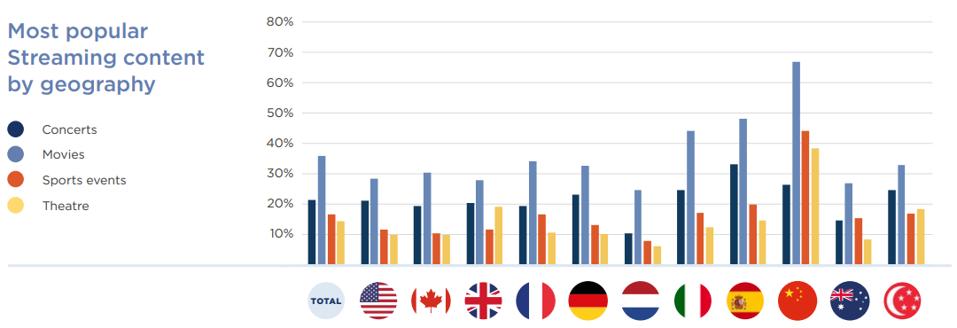
The team at Dynata also found that, since the pandemic started, more than half of those surveyed have live-streamed a concert, movie, sports event, or theatrical production, with movies being the most popular choice of entertainment. Live-streaming events is most common in China, where close to 70% of Chinese people have live-streamed at least one movie since the pandemic began.

Consumers aren’t nearly as shy about returning to restaurants. A recent survey by the Cincinnati-based experiential marketing firm AGAR found that consumers were more likely to indicate a desire to return to restaurants than sporting events, concerts, and cultural holidays and fairs.

Moreover, consumers are voicing a growing interest in health-conscious event planning. Asking consumers what event features they would most desire in the future, the team at AGAR found that hand sanitizing kiosks, social distancing ground stickers, and spaced-apart seating were on the top of the list. Interestingly, over a third of people expressed a willingness to pay a premium to attend smaller events with limited capacities.

“The results of the study clearly show us the path forward, what must be done to bring people back and to make them comfortable,” said AGAR founder, Josh Heuser. “It’s vital that we ensure people feel supported, safe and cared for while attending events.”

2) Contactless payment is becoming the rule not the exception

Covid-19 may have finally given contactless payment the nudge it needs to become the go-to mode of payment. The team at AGAR found that consumers view contactless payment as a necessary feature at live events moving forward.

Prior to the pandemic, approximately 22% of the more than 11,000 global respondents surveyed by Dynata expressed a preference for cash. This has now fallen to 15%. The countries most prepared to make the shift to contactless payment are China, Singapore, and the United Kingdom.

“The past few months have seen an increase in the availability of contactless methods,” according to researchers at Dynata. “The biggest growth has been seen in the USA, moving from 38% to 46% ownership of a contactless method of payment.”

3) Adjusting to telemedicine

According to the researchers at Dynata, 84% of people using telemedicine services during the pandemic were doing so for the first time. And the data show that it is here to stay; 55% of people using telemedicine found the experience to be extremely or very satisfactory. Interestingly, people in the United Kingdom, United States, and Canada were most satisfied with the experience, perhaps because there is a relatively low number of doctors per capita in these countries.

Beyond telemedicine, consumers are increasingly interested in products that provide protection against environmental contaminants and pathogens. Wesley LaPorte, co-founder and CEO of PhoneSoap, a company that makes UV light phone sanitizers, notes a significant uptick (+500%) in PhoneSoap web traffic.

“As awareness of the spread of COVID-19 began to grow in the country, PhoneSoap quickly sold out of UV-C light sanitizers,” said LaPorte. “After the spike in March, web traffic is still significantly higher than last year, with consumers continuing to place pre-orders at unprecedented levels.”

Conclusion: Sigmund Freud was famous for popularizing the idea that human behavior is largely guided by sex, attraction, and the pleasure principle. Covid-19 provides a compelling counterpoint to Freud’s theory — that, especially during times of heightened panic and threat, it is the survival instinct that trumps all other motivations.


Charting the rebound of physician office visits

https://mailchi.mp/f2774a4ad1ea/the-weekly-gist-may-22-2020?e=d1e747d2d8

MultiBrief: Telehealth is keeping doctors, patients connected in ...

As patients begin to return to doctors’ offices, we were intrigued to read an analysis out this week from the Commonwealth Fund that provides a first glimpse into the pace of the recovery. Researchers from Harvard University and healthcare technology company Phreesia analyzed data from 12M visits at over 50,000 physician practices, finding that in-person visits had declined nearly 70 percent by mid-April, compared to pre-pandemic levels.

Behavioral health providers, medical specialists and primary care practices maintained the most volume, and procedural specialists were the hardest hit. Many practices deployed telemedicine quickly, but even with those added encounters, total visits were still down by nearly 60 percent. While visits are starting to return, it’s likely that physician practices are in for a long, slow rebound. Telemedicine as a percentage of all visits peaked in late April, and by mid-May, in-person visits had reached 55 percent of pre-pandemic levels.

Even if virtual volumes pull back from their COVID high, we’re likely to see telemedicine play a much more expansive role moving forward. Dr. Rushika Fernandopulle, CEO of Iora Health, shared his company’s learnings from their COVID-19 response, predicting that ultimately 70-80 percent of physician encounters could be virtual, necessitating a need to reorganize care delivery around populations, instead of practices.

Expect the next year to be a reckoning as changes in payment and regulations, combined with a heated marketplace for virtual care, continue to shift the balance between in-person and virtual care.


Is it time for hospital at home?

https://mailchi.mp/f2774a4ad1ea/the-weekly-gist-may-22-2020?e=d1e747d2d8

JAMA - The John A. Hartford Foundation

We’ve long been intrigued by “hospital at home” care models, which deliver hospital-level care for acute conditions, supported by caregivers and technology, in a patient’s home. Stymied by the lack of payment, however, few health systems have pursued the approach. But as COVID-19 has made patients fearful of entering hospitals, we’ve had a flurry of health system leaders ask us whether they should consider launching a program now.

We think the answer is yes—with some caveats. A growing body of evidence supports its use. Cost of care is lower compared to a traditional inpatient stay. Patient satisfaction with care is high. And from a clinical perspective, hospital at home is well-established, capable of managing a number of mild- and moderate-acuity medical conditions, including exacerbations of chronic diseases like heart failure and diabetes, as well as infections like pneumonia and cellulitis, often better than a traditional hospital stay. Some programs are now using hospital at home for management of COVID-19 patients as well. Physician leaders we’ve spoken with are also interested in using the approach to manage post-operative recovery.

“Over half of our joint replacement patients spend time in skilled nursing or inpatient rehab,” one doctor told us. “People think those places are death traps now, and those cases aren’t coming back until we can find another way for them to recover.”

For patients averse to facility-based care, and systems wanting to offer an alternative, hospital at home sounds like a panacea. But experts recommend approaching it with a clear eye to the economics and ramp-up time, which can easily take 12 to 18 months. With emergency regulations released last month, Medicare will now provide payment for hospital care provided in an alternate setting, including the patient’s home—although it’s unclear whether that will continue once the COVID emergency ends. Commercial payer coverage usually requires a separate negotiation.

According to one leader, “Grass roots support of doctors is not enough. The CEO and CFO have to be on board with changing the care and payment model if it’s ever going to be more than a pilot.” But with patients and doctors becoming more comfortable with virtual care and open to new options, there is a a window of opportunity for expanding home-based care—and the longer the COVID-19 crisis lasts, the more hospital at home could provide a competitive advantage over being admitted to a busy, crowded inpatient hospital.


Consumers trust providers but aren’t hearing from them

https://mailchi.mp/f4f55b3dcfb3/the-weekly-gist-may-15-2020?e=d1e747d2d8

Last week, we reported that consumer healthcare confidence is down—it’s unclear when people will feel safe enough to return to reopened care sites. Recent polling data provided by our friends at Public Opinion Strategies, and detailed in the graphic below, shows that direct provider communication is crucial to reengaging patients and rebuilding their trust in seeking care.

The majority of Americans receive health-related information from news media outlets, but only 18 percent say they regularly hear it from their doctors or providers—yet 66 percent of Americans view doctors and providers as highly trusted sources of information. Consumers are looking to providers to demonstrate and communicate a commitment to safe operations that are as “COVID-free” as possible.

In particular, many patients would feel safe returning to a healthcare facility if their doctor assured them it’s safe to go. Health systems are taking myriad steps to provide COVID-safe care—staggering appointments, eliminating waiting rooms, screening temperatures upon arrival, providing masks, enhancing sterilization and testing at-risk patients—more communication about the specifics of their efforts, directly to patients, will be vital to restoring consumer confidence. (See more survey data gathered by Public Opinion Strategies here.)


What we’ve learned from the telemedicine explosion

https://mailchi.mp/aa7806a422dd/the-weekly-gist-may-8-2020?e=d1e747d2d8

Why telemedicine could be the next big thing in employee healthcare

In our decades in healthcare, we’ve never seen a faster care transformation than the rapid growth in telemedicine sparked by COVID-19. Every system we’ve spoken with over the past two months reports its doctors are now performing thousands of “virtual visits” each week, often up from just a handful in February. As one chief digital officer told us, “We took our three-year digital strategic plan and implemented it in two weeks!

This week, we convened leaders from across our Gist Healthcare membership to share learnings and questions about their telemedicine experiences. COVID-19 brought down regulatory and payment hurdles, as well as internal cultural barriers to adoption—but leaders expressed a concern that current payment levels and physician enthusiasm could dissipate. Some insurers have hinted at pulling back on payment, although they will have a hard time doing so as long as Medicare maintains “parity” with in-person visits.

Switching to 100 percent telemedicine was easier than most doctors anticipated. But as practices now begin to ramp up office visits, new questions are emerging about how to integrate digital and physical visit workflow, requiring providers to rethink office layout and technology within the practice: is there a good physical space in the office to conduct televisits? Zoom and FaceTime have worked in a pinch, but what platform is best for long-term operational sustainability and consumer experience?

Telemedicine has also raised consumer expectations: patients expect providers to be on time for a virtual appointment—setting a bar for punctuality that will likely carry over to their next in-person office visit. Across the rest of this year, health systems and physician groups will continue to push the boundaries of virtual care, establishing how far it can be extended to provide quality care in a host of specialties.

But at the same time, systems must also prepare for growing complexity in 2021: what is the right balance of in-person versus virtual care? How should telemedicine integrate with urgent and emergency care offerings? How should physician compensation change? And as payers and disruptors expand their virtual care offerings, how can providers differentiate their own platforms in the eyes of consumers? We’ll continue to share learnings as our members work through the myriad challenges and opportunities of this new virtual care expansion.


Five Healthcare Industry Changes to Watch in 2020

https://www.managedhealthcareexecutive.com/news/five-healthcare-industry-changes-watch-2020

Innovation

Industry experts expect significant changes to shake up the healthcare landscape in the next few years, which will affect both health insurers and providers. Many are the result of a shift toward value-based care, a move toward decreased care in hospital settings, technological advances, and other forces.

Here’s a look at what can payers and providers can expect to occur, why each change is occurring, and how payers and providers can prepare for each change:

1. A shift in healthcare delivery from hospital to ambulatory settings

Healthcare delivery will continue to move from inpatient to outpatient facilities. “More surgeries and diagnostic procedures that historically have required an inpatient hospital stay can now be performed more safely and efficiently in an outpatient setting,” says Stephen A. Timoni, JD, an attorney and partner at the law firm Lindabury, McCormick, Estabrook & Cooper, in Westfield, New Jersey, who represents healthcare providers in areas of reimbursement and managed care contracting. A growing volume of outpatient care will be provided in ambulatory surgery centers, primary care clinics, retail clinics, urgent care centers, nurse managed health centers, imaging facilities, emergency departments, retail clinics, and patients’ homes.

This change is occurring as the result of clinical innovations, patient preferences, financial incentives, electronic health records, telemedicine, and an increased focus on improving quality of care and clinical outcomes. “The upward trend in value-based payment models is also influencing this shift, with the goal of reducing the cost of care and improving the overall patient experience,” Timoni says.

Payers and providers can prepare for this shift by analyzing and forecasting the cost and reimbursement implications of providing care in outpatient settings compared to inpatient settings. They should continue to analyze changing patient demographics, consumer preferences, and satisfaction trends, Timoni says. Collecting and analyzing data regarding quality and clinical outcomes as the result of changes in delivery of care from inpatient to outpatient is also key. Healthcare providers should develop effective strategies to grow capacity and infrastructure for outpatient services and invest in innovative mobile technologies, diagnostic tools, and telemedicine systems.

2. Consolidation will continue industry wide

More healthcare entities will continue to merge together. “Even though the number of available partners for transactions is shrinking, new deals pop up all the time because smaller entities are being targeted or entities that had been holding out are now changing their position,” says Matthew Fisher, JD, partner and chair of the Health Law Group at Mirick O’Connell, a law firm in Westborough, Massachusetts. Increased consolidation will result in higher healthcare prices as larger sized institutions use their size to their advantage. Another impact will be narrowing the field of contracting options, which will result in greater dominance by fewer entities in a market.

This change is occurring because industry stakeholder believes that consolidation is the way to survive in a healthcare landscape still being shaped by the ACA. “The belief is that value-based care models require single unified entities as opposed to more contractual-based ventures to succeed,” Fisher says. Another factor is that momentum for consolidations across the industry has continued to build and no player wants to be left behind.

Along these lines, Timoni says that consolidation has been motivated by the evolving and challenging commercial and government reimbursement models which include lower fee-for-service payment rates, value-based payment components, and incentives to move care from inpatient to outpatient settings. “Basic economic theory suggests that consolidation of hospitals and physicians enables these combined providers to charge higher prices to private payers as the result of a lack of competition,” Timoni says. “Likewise, combined insurers are able to charge higher premiums to their subscribers.”

Payers and providers can prepare for this change by evaluating their operations and determining whether consolidation with another entity is advantageous. “This requires assessing an entity’s operations and the risks of consolidation,” Fisher says.

Timoni advises payers and providers to monitor the consolidation landscape and develop effective merger and acquisition strategies. These strategies should focus on optimizing economies of scale to reduce costs and finding the best partners to achieve improved quality of care and effectively manage population health.

3. Protecting data privacy

Ongoing attention will be given to protecting the privacy of healthcare data. New laws, at both the federal and state levels, will be considered that could introduce new regulatory requirements, Fisher says.

While a federal law in an election year may be doubtful, individual states are proceeding. The California Consumer Protection Act (CCPA), intended to enhance privacy rights and consumer protection, will become effective in 2020, for example. Even though the CCPA doesn’t cover all healthcare data, healthcare organizations will still collect additional information that could be subject to CCPA, which means more compliance obligations, Fisher says. Other states are considering how to jump on the privacy legislation bandwagon, which means that regulatory requirements will increase. “Even in the absence of legislation, payers and providers can expect individuals to assert concerns and use public pressure to drive increased attention to privacy issues,” Fisher says.

Meanwhile, debates around what is meant by privacy continue to evolve, Fisher continues. A backlash against the non-transparent sharing of healthcare data and arguable profiteering is creating anger among patients and other groups. Simultaneously, data breaches continue to be reported on a daily basis. Add in that healthcare is a prime target, and all of the factors point to healthcare needing to do more to protect data.

Payers and providers can embrace increased data privacy by focusing on existing compliance efforts, which will require taking time to better understanding HIPAA. “Ignoring or only making superficial efforts to respect data privacy is insufficient,” Fisher says. “Merely doing what is legally permissible may not be good enough.”

4. Consumerization of healthcare

As patients assume more financial responsibility for their healthcare costs due to higher premiums, co-pays, co-insurance, and deductibles, they have become more concerned with the value of the care they receive as well as cost. Patients will likely demand improved access to clearer benefits, billing, and network information to improve transparency, says Brooks Dexter, MBA, Los Angeles-based managing director and head of the healthcare M&A advisory practice at Duff & Phelps, a global consultancy firm.

“Healthcare providers must follow suit to meet value expectations and deliver more consumer-friendly services or may risk losing market share to innovative new healthcare arrangements, such as direct primary care, which offer convenient and quality care with simplified medical billing,” Dexter says. Some ways to do this are to offer better patient portals, expanded hours, improved access, and clear procedure pricing. Despite the trend, payers and providers will most likely continue to resist CMS’ efforts to force greater cost transparency by requiring hospitals to post payer-specific negotiated charges for common services that can be shopped.

Furthermore, Peter Manoogian, principal at ZS, a consulting firm focused on healthcare in Boston, says that the voices of older adults will become comparatively louder as this rapidly growing segment becomes more tech-savvy. The Trump Administration supports increased use of Medicare Advantage and expanding consumer choices. Plan options will reach a record high this year and create an unprecedented amount of choices for this population. The average number of plans a beneficiary has access to this year will be 28, up by a whopping 50% from 2017. What’s more, new entrants that boast a customer-driven approach such as Oscar Health are entering the fray in major markets such as New York and Houston.

Health plans need to be laser focused on improving their understanding and engagement of their customers—who are evolving themselves. “To stay ahead of the change, health plans need access to the right data coupled with leading-edge analytics and technology to continuously mine insights on what members are seeking in their healthcare experience, how patients and providers interact throughout their healthcare journey, and how to meet the needs of future healthcare customers,” Manoogian says.

Health plans will need to take more of a retail focus than what they’re accustomed to, Manoogian says. The bar for providing a great experience and retaining members will also increase.

5. More technological innovations will emerge

Technological innovation will continue to dramatically and rapidly change the manner in which healthcare is delivered, resulting in more personalized care, improved clinical outcomes and patient experience, and overall quality of life. “Information systems, mobile technology, high-tech digital devices, and electronic medical records will allow payers and providers to accurately measure clinical outcomes and effectively manage the continuum of medical care and their population’s overall health,” Timoni says.

One specific way that care will change is that providers will start seeing telehealth play a more critical role in care delivery as the brick-and-mortar, in-person care model becomes less common. “Telehealth will grow past a nice-to-have tool into a standard of care, particularly for low-risk and predictable appointments,” says Cindy Gaines, MSN, RN, clinical leader, Population Health Management, Philips, a company focused on transforming care through collaborative health management in Alpharetta, Georgia. This transformation will enable providers to better tailor their care to patients’ unique needs, while increasing patient autonomy and engagement.

Technological innovations are occurring due to booming private sector interest and investment in medical technology innovation. “Patients are demanding real-time health information, personalized medicine, higher quality of care, and convenient treatment options,” Timoni says. “Payers are demanding more detailed and expansive outcomes data to scientifically manage the reimbursement system to lower costs and improve their subscribers’ health. The medical and information technology fields are attracting more high-skilled workers, who will continue to drive innovation to new levels as long as investor interest is sustained.”

Regarding the increased use of telehealth, Gaines says that many appointments that occur in a hospital today can take place outside of the hospital. And, as the healthcare industry increasingly moves toward value-based care, providers need to extend their line-of-sight outside of a hospital’s four walls. For example, a low-risk follow-up appointment after an operation is usually mostly dialogue and has a predictable outcome—it could be conducted electronically. “By filling up hospitals with visits that could occur virtually, it makes it harder for patients who need face-to-face healthcare access to get it,” she says.

A lack of insurance coverage is a major impediment to telehealth adoption for most health systems. Therefore, providers should pair guaranteed reimbursement opportunities with change management workflows to advance these efforts, Gaines says. They would also be smart to leverage their patients’ everyday devices to manage their care, whether it’s on their smart phone, a fitness watch, or voice assistant.

To embrace technological innovation, payers and providers must continue to be educated and aware of the expanding medical technology landscape and develop technology investment and deployment strategies. “Consider investing and participating in technology venture capital funds and partnering with private sector technology manufacturers and research institutions,” Timoni says.


The health system “black market” for care

https://mailchi.mp/192abb940510/the-weekly-gist-february-7-2020?e=d1e747d2d8

Image result for black market

Recently we’ve been working with one of our member health systems to build a comprehensive plan for ambulatory access. As we were brainstorming a list of success metrics, one physician leader made an interesting comment: “I’ll know we’re successful at improving access when people stop calling me asking to get their mom or husband or friend into a specialist.”

The other leaders in the room all nodded in agreement. While we’re all happy to assist friends and family with finding the best doctor for their problem, or getting in more quickly, these leaders recognized that these informal channels represent yet another level of inequality in our healthcare system: patients and families who can tap into “insider” provider connections have access to a “black market” of enhanced access and information that can expedite treatment, assuage worry, and potentially provide better outcomes.

Thinking about eliminating the need for the healthcare black market broadened our discussion of a successful access solution. Getting a quick appointment doesn’t fully solve the problem, patients want to be assured they’re seeing the “best” doctor for their problem—meaning the system needs to have a better process for matching new patients to the most appropriate provider.

One call to tap into the “black market” can eliminate a dozen frustrating calls and dead ends; any solution must also address the many friction points in finding the right care. A tall order for sure, but one that could address one large inequity in our healthcare system: the difference between people who know someone on the inside and those who don’t.


The top 10 questions from the 2020 J.P. Morgan Healthcare Conference that every CEO must answer

https://www.beckershospitalreview.com/strategy/the-top-10-questions-from-the-2020-j-p-morgan-healthcare-conference-that-every-ceo-must-answer.html

Related image

As we enter a new decade, everyone is searching for something to truly change the game in healthcare over the next 10 years. To find that answer, an estimated 50,000 people headed to San Francisco this week for the prestigious J.P. Morgan Healthcare Conference. Every one of them is placing big bets on who will win and lose in the future of healthcare. The shortcut to figuring this out is actually a question — or 10 questions to be more precise. And what matters most is whether or not the right people are asking and answering those questions.  

While the prophets are ever present and ever ready to pitch their promises in every corner of the city, the pragmatists head up to the 32nd floor of the Westin St. Francis Hotel to hear from the CEOs and CFOs of close to 30 of the largest and most prestigious providers of care in the country. Why? Remember, this is an investor conference and if you want to understand any market, the first rule is to follow the money. And if you want to understand the future business model of healthcare, you better listen closely to the health providers in that room and take notes. 

What providers are saying matters to everyone in healthcare

Healthcare is the largest industry in our economy with over $4 trillion spent per year. Healthcare delivery systems and healthcare providers account for over $2 trillion of that spend, so that feels like a pretty good place to start, right? For that reason alone, it’s critical to listen closely to the executives in those organizations, as their decisions will affect the quality, access and cost of care more than any other stakeholder in healthcare.

Some will say that what they saw this year from healthcare providers was more of the same, but I encourage you to ignore that cynicism and look more closely. As the futurist William Gibson once said, “The future is already here — it’s just not evenly distributed.” The potential for any health system to drive major change is certainly there and the examples are everywhere. The biggest blocker is whether they are asking the right questions. One question can change everything. Here’s proof. 

The stunning power of and need for good questions 

Last year I titled my summary The #1 Takeaway from the 2019 JP Morgan Conference – It’s the Platform, Stupid.” The overwhelming response to the article was pretty surprising to me  — it really resonated with leaders. One example was Jeff Bolton, the chief administrative officer of Mayo Clinic, who told me that the article had inspired their team to ask a single question, “Does Mayo need to be a platform?” They answered the question “yes” and then took aggressive action to activate a strategy around it. Keep reading to learn about what they set in motion. 

Soon after, I had a discussion with John Starcher, CEO of Cincinnati-based Bon Secours Mercy Health, one of the largest health systems in the country, who shared with me that he is taking his team off site for a few days to think about their future. It occurred to me that the most helpful thing for his team wouldn’t be a laundry list of ideas from the other 30 healthcare delivery systems that presented, but rather the questions that they asked at the board and executive level that drove their strategy. Any of those questions would have the potential to change the game for John’s team or any executive team. After all, if you’re going to change anything, the first thing you need to do is change is your mind. 

The wisdom of the crowd 

So, I set out to figure this out: If you were having a leadership or board retreat, what are the 10 questions you should be asking and answering that may change the future of your organization over the next 10 years? I didn’t have the answers, so I decided to tap into the wisdom of the crowd, listening to all 30 of the nonprofit provider presentations, spending additional time with a number of the presenters and reaching out to dozens of experts in the market to help define and refine a set of 10 questions that could spark the conversation that fires up an executive team to develop to the right strategy for their organization. 

A special thank you to a number of the most respected leaders in healthcare who took their time to contribute to and help think through these questions: 

  • Mike Allen, CFO of OSF Healthcare (Peoria, Ill.)
  • Jeff Bolton, CAO of Mayo Clinic (Rochester, Minn.)
  • Robin Damschroder, CFO of Henry Ford Health System (Detroit)
  • JP Gallagher, CEO of NorthShore University HealthSystem (Evanston, Ill.)
  • Kris Zimmer, CFO of SSM Health (St. Louis) 
  • Wright Lassiter, CEO of Henry Ford Health System (Detroit)
  • Mary Lou Mastro, CEO of Edwards-Elmhurst Health (Warrenville, Ill.)
  • Dominic Nakis, CFO of Advocate Aurora Health (Milwaukee and Downers Grove, Ill.) 
  • Dr. Janice Nevin, CEO of ChristianaCare (Newark, Del.)
  • Randy Oostra, CEO or ProMedica (Toledo, Ohio)
  • John Orsini, CFO of Northwestern Medicine (Chicago)
  • Lou Shapiro, CEO of Hospital for Special Surgery (New York City) 
  • John Starcher, President & CEO, Bon Secours Mercy Health (Cincinnati)
  • Vinny Tammaro, CFO, Yale New Haven Health (New Haven, Conn.)
  • Bert Zimmerli, CFO of Intermountain Healthcare (Salt Lake City)

Here are the top 10 questions from the 2020 J.P. Morgan Healthcare Conference

Based on the wisdom of the crowd including the 30 nonprofit provider presentations at the 2020 JP Morgan Healthcare Conference, here are the Top 10 Questions that every CEO needs to answer that may make or break their next 10 years.

1. Business model: Will we think differently and truly leverage our “platform?” As referenced earlier in this article, this was the major theme from last year — health systems leveraging their current assets to build high-value offerings and new revenue streams on top of the infrastructure they have in place. Providers are pivoting from the traditional strategy of buying and building hospitals and simply providing care toward a new and more dynamic strategy that focuses on leveraging the platform they have in place to create more value and growth. Mayo Clinic is an organization that all health systems follow closely. Mayo adopted the platform model around their ‘digital assets’ into what they refer to as Mayo Clinic Platform, which initially targets three game-changing initiatives: a Home Hospital to deliver more health in the home even for high acuity patients, a Clinical Data Analytics Platform for research and development and an Advanced Diagnostics Platform focused on predictive analytics, using algorithms to capture subtle signals before a disease even develops. Children’s Hospital of Philadelphia, one of the top pediatric hospitals in the world, is leveraging their platform to drive international volume, where revenue is 3.5x more per patient. They are also making investments in cell and gene therapy, where their spinoff of Spark Therapeutics returned hundreds of millions of dollars back to their organization. Both organizations were clear that any returns that they generate will be re-invested back into raising the bar on both access to care and quality of care.


2. Market share: Are we leveraging a “share of cup” strategy? Starbucks had dominant share in the market against Caribou Coffee, Peet’s Coffee and Dunkin’ Donuts. Instead of solely focusing on how to grab a little more market share, they reframed the definition of their market. They called it “share of cup” meaning that anywhere and any time a cup of coffee was consumed, they wanted it to be Starbucks. In that definition of the market, they had very little share, but enormous growth potential. Hospital for Special Surgery in New York is the largest and highest volume orthopedic shop in the world. Their belief is that wherever and whenever a musculoskeletal issue occurs, they should be part of that conversation. This thinking has led them to build a robust referral network, which 33 percent of the time leads to no surgical treatment. So instead of fighting for share of market in New York, they have a very small share and a very big opportunity in a “share of cup” approach. NorthShore University Health System in Illinois has taken a similar approach on a regional level, converting one of their full-service hospitals into the first orthopedic and spine institute in the state. The results have exceeded expectations on every measure and they already have to increase their capacity due to even higher demand than they originally modeled. 


3. Structure: Are we a holding company or an operating company? There has been a tremendous amount of consolidation over the last few years, but questions remain over the merits of those moves. The reality is that many of these organizations haven’t made the tough decisions and are essentially operating as a holding company. They are not getting any strategic or operational leverage. You can place all health systems on a continuum along these two endpoints — being a holding vs. an operating company — but the most critical step is to have an open conversation about where you’re at today, where you intend to be in the future, when you’re going to get there and how you’re going to make it happen. Bon Secours Mercy Health’s CEO John Starcher shared, “It makes sense to merge, but only if you’re willing to make the tough decisions.” His team hit the mark on every measure of their integration following their merger. They then leveraged that same competency to acquire the largest private provider of care in Ireland, as well as seven hospitals in South Carolina and Virginia. Northwestern Medicine has leveraged a similar approach to transform from a $1 billion hospital into a $5 billion health system in a handful of years. Both of these organizations prioritized and made tough decisions quickly and each has created an organizational competency in executing efficiently and effectively on mergers and acquisitions. 


4. Culture: Do we have employees or a team? Every organization states that their employees are their most important asset, but few have truly engaged them as a team. Hospitals and healthcare delivery systems can become extraordinarily political, and it’s easy to see why. These are incredibly complex businesses with tens of thousands of employees in hundreds of locations and thousands of departments. Getting that type of organization to move in the same direction is incredibly challenging in any industry. At the same time, the upside of breaking through is perhaps the most important test of any leadership team. JP Gallagher, CEO of North Shore University Health System, shared his perspective that, “Healthcare is a team sport.” The tough question is whether or not your employees are truly working as a team. Christiana Care provides care in four states — Delaware, Maryland, Pennsylvania and New Jersey. They have taken a unique approach that they frame as “for the love of health,” incorporating the essence of what they do in every communication both internally and externally, in their values and in their marketing. In a multi-state system, it is tricky to create a caring and collaborative culture, but it’s critical and they’ve nailed it. Their CEO shared that, “If you lead with love, excellence will follow.” That’s not only well said but spot-on. Creating a world-class team requires not only loving what you do, but the team you’re part of.


5. Physicians: Are our physicians optimistic or pessimistic? There’s a lot of concern about “physician burnout” with a reflex to blame it on EHRs, cutting off the needed conversation to dive deeper into where it really comes from and how best to address it. The challenge over the next decade is to create an optimistic, engaged and collaborative culture with physicians. In reading this, some will react with skepticism, which is exactly why leadership here is so important. One suggestion I was given was to make this question edgier and ask, “Are our physicians with us or not?” However the question is asked, the bottom line is that leadership needs to find a way to turn this into a dynamic, hyper-engaged model. A little while back I spent the day with the leadership team at Cleveland Clinic. At the end of the day, their CEO Dr. Tom Mihaljevic was asked what he would tell someone who was thinking of going to medical school. He said he would tell them that, “This is absolutely the best time to be a doctor.” His answer was based on the fact that there has never been a time when you could do more to help people. He wasn’t ignoring the challenges, he was simply reframing those issues as important problems that smart people need to help solve in the future. Those who adopt that type of optimism and truly engage and partner with their physicians will create a major competitive advantage over the next decade.


6. Customer: Do we treat sick patients or care for consumers? Words matter here – patients vs. consumers. Most hospitals are in a B2B, not B2C, mindset. Patients get sick, they try to access care, they check into an ER, they get admitted, they are treated, they get discharged. People get confused, anxious and concerned, then they seek not only care, but simplicity, compassion and comfort. With half of America coming through their stores every week, Walmart is already the largest provider organization that no one thinks of as they provide ‘consumer’ care, not ‘patient’ care. But they are starting to broaden their lens, and health systems will need to make moves as well. Competing with Walmart, CVS and other consumer-centric models will require a different mindset. I think Dr. Janice Nevin, the CEO ChristianaCare, captured this really well when she said, “Our mindset is that our role is to ensure everything that can be digital will be digital. Everything than can be done in the home will be done in the home.” Henry Ford Health System CEO Wright Lassiter commented, “Trust is the fundamental currency in healthcare.” Building that trust will require a digital experience in the future that is just as compassionate and caring as what health systems strive to deliver in person in the past. 


7. Data: Will we make data liquid? The most undervalued and misunderstood asset of health systems may be their data. While some at the conference refer to this as having the economic equivalent of being the “oil of healthcare,” the real and more practical question is whether or not your organization will make data liquid, available and accessible to the right players on your team at the right time. Jeff Bolton from Mayo commented that, “The current model is broken. Data and tech can eliminate fragmentation.” In a recent Strata survey, we asked leaders in health systems whether they had access to the information they needed to do their job, and 90 percent said no. For many health systems, data is a science project, hidden behind the scenes primarily used for research and impossible to access for most stakeholders. The call to action is activating that data to improve clinical outcomes, operations and/or financial performance. 


8. Cost: Are we serious about reducing the cost of care and delivering value? Affordability is a hot topic, and for good reason, as high deductible plans, price transparency and other factors have accelerated its urgency. As Intermountain Healthcare CEO Dr. Marc Harrison shared, “We have an absolute responsibility to make healthcare affordable.” While the consumer side will be a moving target for some time, the No. 1 challenge for hospitals right now is to lower their cost structure so they can compete more effectively in the future. Advocate Aurora HealthBaylor Scott & White Health, CommonSpirit Health and many others are targeting cost reductions of over $1 billion over the next few years. As most hospitals are now in a continuous process to reduce cost in order to compete more effectively in the future, organizations like Yale New Haven Health in Connecticut have implemented advanced cost accounting solutions to better understand both cost and margins. Yale is using this data to understand variation, supporting an initiative that drove over $150 million in savings. Additionally, they have combined cost data with clinical feeds from their EHR to understand the cost of harm events, which turn out to be 5x more expensive. As more providers take on risk, having a “source of truth” on the cost of care will be essential. Advocate Aurora Health CFO Dominic Nakis shared that, “We believe the market will continue to move to taking on risk.” Many of the presenting organizations shared that same perspective, but they won’t be able to manage that risk unless they understand the cost of care for every patient at every point of care across the continuum every day.


9. Capital: Do we have an “asset-light” strategy? Traditional strategy for health systems was defined primarily by what they built or bought. Many hospitals still maintain an “if you build it, they will come” strategy at the board level. Yet, Uber has become the biggest transportation company in the world without owning a single car and Airbnb has become the biggest hospitality company in the world without owning a single room. These models are important to reflect upon as healthcare delivery systems assess their capital investment strategy. Intermountain Healthcare CFO Bert Zimmerli refers to their overall thought process as an “asset-light expansion strategy.” In 2019, they opened a virtual hospital and they have now delivered over 700,000 virtual interactions. The number of virtual visits at Kaiser Permanente now exceeds the number of in-person visits at their facilities. With that said, there will be a balance. I really like how Robin Damschroder the CFO of Henry Ford Health System framed it: “We believe healthcare will be more like the airline and banking industry, both of which are fully digitally enabled but have a balance of ‘bricks and clicks’ with defined roles where you can seamlessly move between the two. Clearly, we have a lot of ‘bricks’ so building out the platform that integrates ‘clicks’ is essential.” 


10. Performance: Do we want our team to build a budget or improve performance? The most significant barrier to driving change that many organizations have baked into their operating model is their budget process. The typical hospital spends close to five months creating a budget that is typically more than $100 million off the mark. After it’s presented to the board, it is typically thrown out within 90 days. It creates a culture of politics, entitlement and inertia. According to a Strata survey of 200 organizations, close to 40 percent are now ditching the traditional budget process in favor of a more dynamic approach, often referred to as Advanced PlanningOSF HealthCare leverages a rolling approach, radically simplifying and streamlining the planning process while holding their team accountable for driving improvement vs. hitting a budget. When it comes to driving performance, SSM Health CEO Laura Kaiser captured the underlying mindset that’s needed: “We have a strong bias toward purposeful action.” Well said, and it certainly applies to all of the questions here among the top 10.


5 additional questions to consider

As you would imagine or might suggest, the questions above can and in some cases should be replaced with others. Additional critical questions to answer that came from the group included the following:

  1. Competition: Who else will we compete with in the future and are we positioned to win?
  2. Digital health: Are we going to be a “digital health” company, providing tech-enabled services?
  3. Affordability: How are we making care more affordable and easier to understand and access?
  4. Social determinants: Is this a mission, marketing or operations strategy?
  5. Leadership: Have we made the tough decisions we need to make, and will we in the future?


Start asking questions

The point here isn’t to get locked into a single list of questions, but rather to force your team to ask and answer the most important and challenging ones that will take you from where you are today to where you want to be in the future. After reviewing these questions with your team, the one additional question you need to consider is one of competency: Do you have the ability and bandwidth to execute on what you’ve targeted? In the end, that’s what matters most. While there are many interesting opportunities, too many teams end up chasing too much and delivering too little.

The next 10 years can and should be the best 10 years for every health system and every healthcare provider, but making it happen will require some really tough questions. “The current path we’re on will leave us with a healthcare delivery model that is completely unsustainable,” stated Randy Osstra, CEO of ProMedica Health System. “We need to take meaningful action toward creating a new model of health and well-being — one that supports healthy aging, addresses social determinants of health, encourages appropriate care in the lowest cost setting, and creates funding and incentives to force a truly integrated approach.”

Strong leaders are needed now more than ever. The rest of healthcare is watching, not just professionally but personally. We are all grateful to you for the extraordinary and often heroic care that you deliver without hesitation to our family and friends every day both in our communities and across our country. But now we all need you to not only deliver care, but a new and better version of healthcare. So, ask and answer these and other tough questions. We know you will do everything that you can to help make healthcare healthier for all of us over the next 10 years.


TOP 6 HEALTHCARE MERGERS OF 2019

https://www.healthleadersmedia.com/finance/top-6-healthcare-mergers-2019?spMailingID=16768251&spUserID=MTg2ODM1MDE3NTU1S0&spJobID=1781800057&spReportId=MTc4MTgwMDA1NwS2

M&A activity continued to thrive among insurers and providers in 2019.

As was the case in 2018, the healthcare industry saw several megamergers occur in 2019.

Healthcare leaders pointed to industry consolidation as the year’s top priority, according to a Definitive Healthcare survey, with different reasons for pursuing mergers.

Related: Top 5 Healthcare Mergers of 2018

Providers sought to achieve scale in order to address staffing shortages while insurers looked to respond to the increasing influence of consumerism in healthcare.

While some mergers fell through, many organizations announced or finalized deals during the course of the year.

Below are six major healthcare mergers that were announced or completed in 2019.

1. CVS-AETNA

The nearly $70 billion megamerger received final judicial approval in September after an extended review by U.S. District Judge Richard J. Leon.

The merger originally received approval from the Department of Justice in October 2018 but was subject to questions and criticisms by numerous stakeholders.

The deal was marked by scrutiny over vertical mergers, with Leon noting that his approval shouldn’t be seen as a rubber stamp.


2. CENTENE-WELLCARE

Centene Corp. announced a $17.3 billion merger with WellCare Health Plans in March, a move seen as doubling down on the marketplaces established by the Affordable Care Act.

The merged company will be based in St. Louis and encompass 22 million members, $97 billion in revenues, and $5 billion in EBITDA for 2019.

The pending transaction has already received regulatory approval from 25 states.

Earlier this month, Centene agreed to sell its subsidiary IlliniCare Health to CVS Health, including its Medicaid and Medicare Advantage plans in Illinois.

3. DIGNITY-CHI

Dignity Health and Catholic Health Initiatives finalized a $29 billion megamerger between the two Catholic health systems in February.

Renamed as “CommonSpirit,” the Chicago–based health system has a footprint in 21 states, with more than 700 care sites and 142 hospitals.

In November, the system released its Q1 2020 financials highlighted by $7.1 billion in revenues and a net loss of $227 million.


4. HARVARD PILGRIM-TUFTS

Harvard Pilgrim Health Care and Tufts Health Plan announced an intention to merge in August, potentially serving nearly 2.4 million plan members across New England.

As part of the proposed deal, Tufts CEO Tom Croswell would serve as CEO of the merged company while Harvard Pilgrim CEO Michael Carson would serve as president.

The two Massachusetts-based insurers told The Boston Globe earlier this month that the merger would benefit consumers with more affordable health coverage.


5. TOTAL HEALTH CARE-PRIORITY HEALTH

Total Health Care and Priority Health received final regulatory approval from the Michigan Department of Insurance and Financial Services (DIFS) in late November.

The two Michigan-based healthcare organizations, which announced plans to merge in late August, plan to complete the deal by the end of 2019.

Prior to receiving approval from state regulators, Total Health Care members approved the merger earlier this fall.

As part of the merger, the two Michigan-based healthcare organizations will also be establishing a $25 million foundation to improve health outcomes in Detroit.


6. DARTMOUTH-HITCHCOCK-GRANITEONE HEALTH

Two New Hampshire-based health systems agreed to merge nine months after signing a letter of intent to merge.

The new merged system will be renamed “Dartmouth-Hitchcock Health GraniteOne” and includes Catholic Medical Center in Manchester.

Both organizations will maintain their locations and local leadership as part of the deal.