Eleven hospitals and health systems since Feb. 18 have advanced, completed or begun facility expansions and renovations with price tags of $300 million or more.
2. UCSF’s plans 1.5M-square-foot hospital The University of California San Francisco plans to build a 1.5 million-square-foot hospital and research facility in the city. The first phase of the construction included a $500 million pledge from the Helen Diller Foundation, according to The San Francisco Chronicle.
3. City of Hope buys site for $1B cancer hospital, research center Duarte, Calif.-based City of Hope has purchased a 190,000-square-foot building and 11 acres of land as part of a $1 billion investment in a new hospital and cancer research center in Irvine, Calif.
10. Pennsylvania hospital’s $327M modernization project OK’d Media, Pa.-based Riddle Hospital’s $327 million upgrade and expansion project received the green light from the Middle Township board and its parent organization, Main Line Health.
A California federal judge again refused to approve a deal requiring Dignity Health to pay as much as $747 million to settle a class-action lawsuit accusing the San Francisco-based health system of underfunding its pension plan, according toLaw360.
The lawsuit, filed by former Dignity Health workers, alleges the health system used a religious Employee Income Retirement Security Act exemption to underfund its pension plan by $1.8 billion. In October, a federal judge in the Northern District of California refused to sign off on a proposed settlement because it contained a “kicker” clause. The clause would allow Dignity to keep the difference between the amount of attorneys’ fees awarded by the court and the more than $6 million in fees authorized by the settlement.
“Although the fact is not explicitly stated in the settlement, if the court awards less than $6.15 million in fees, defendants keep the amount of the difference and those funds are not distributed to the class,” Judge Jon S. Tigar said, according to Bloomberg Law. “The Court concludes that this arrangement, which potentially denies the class money that defendants were willing to pay in settlement — with no apparent countervailing benefit to the class — renders the settlement unreasonable.”
Both sides agreed to eliminate the kicker clause and resolved other issues the court outlined when it denied preliminary approval and class certification in October. In November, the workers filed a renewed unopposed motion, which the court denied June 12.
To certify a class for the purpose of settlement, the court must find that the plaintiffs named in the lawsuit and their lawyer were negotiating on behalf of the entire class. In Dignity’s case, there’s a “fundamental conflict of interest between the vesting subgroup and the rest of the class that must be addressed by subclass certification,” Mr. Tigar wrote in the order denying the motion. “Because the court cannot certify the class, it cannot grant preliminary approval of the settlement.”
Mr. Tigar wrote that he made the finding reluctantly because of the extensive litigation that has already occurred and the age of the case. However, he said Rule 23 of the Federal Rules of Civil Procedure requires it.
For two decades, healthcare consolidation has been a strong industry trend. But in the COVID-19 era, big healthcare is proving to be a big problem.
Once the community spread of COVID-19 became apparent, large systems turned off the spigot of specialty and nonessential services almost immediately. Now, as these organizations try to entice patients back into services, they face consumers who have good reason to fear the large, populated spaces these systems are built on.
As patients return for care and treatments, large hospitals and health providers need targeted approaches to overcome risk and obstacles. Here are nine strategies to consider for restarting patients:
1. Identify patients and instances with care disruption and high risks associated with care deferral.Knowing which patients are at high riskdue to missed appointments plus other risk and time-based analytics will be useful in targeting efforts to bring patients back. Use various technologies to identify prior scheduled procedures and diagnostics.
2.Create a clinical flow for patients in each treatment or appointment category so communication to patients is clear as they are recruited back into the system. The clinical flows should determine which patients will receive telehealth services and who will need physical exams, along with how imaging or laboratory services will be handled to safely address patient time and access to services.
3.Use population health technology to target patients by risk level for services and deferral reasons. Patients who were infected with COVID-19 should be indicated and targeted for services, since this calls for additional surveillance of new risk factors associated with the disease.
4. Contact patients for pre-appointment discussions prior to actual telehealth or personal visits and services. Identify data to collect from patients on symptoms, social determinants and concerns about healthcare or COVID-19 infection so patients can vet their concerns and upcoming discussions with physicians can be more informative.
5. Reimagine the role and functions of some specialists. Because specialty practices are often located in close proximity to many diagnostic services, primary care physicians, who tend to be off campus, can provide initial services in a low-density setting and leave the procedures to specialists.
6. Consider aligning with smaller or more localized services for diagnostics, or provide wearable devices that capture needed clinical data.
7. If feasible, consider whether physical access to some care locations should be redetermined in the short or midterm for patient ease of access.
8. For physical visits or treatments, adjust scheduling to accommodate patient and staff density in clinical or waiting areas.
9.Involve specialists in care and space redesign as well as designing risk criteria. Every specialty will have unique issues that should be accommodated in the design of restarting services.
Planning to improve and strengthen connections to patients in larger healthcare operations will go far toward helping them gain confidence to return during this phase of the pandemic. Now more than ever, we can’t afford a systemwide hit or miss.
The coronavirus pandemic has shown the healthcare industry that it needs to decide whether it’s playing basketball or soccer, journalist and author Malcolm Gladwell said.
Gladwell, the opening keynote speaker at America’s Health Insurance Plans’ annual Institute & Expo, said the two sports exemplify the differences in thinking when one tackles problems using a “strong link” approach versus a “weak link” approach.
In basketball, he said, the team is as strong as its strongest, most high-profile players. In soccer, by contrast, the team is only as strong as its weakest players.
For healthcare organizations, that means making investments in the “weakest links”—such as harried clinicians who may need more training and low-income communities that cannot afford or access coverage—rather than the stronger links, like building out teaching hospitals and physician specializations.
“In healthcare, this is a chance for us to turn the ship around and say we can benefit far more from making health insurance more plentiful and more affordable,” Gladwell said.
Gladwell emphasized that healthcare is far from the only industry to largely follow a “strong link” approach to improvement. In higher education, for example, much of the investment and funding goes to Ivy League institutions and other wealthy, top-performing universities.
Meanwhile, the education system could see significant benefits if it invested in the “weak links” like community colleges and bringing down tuition, Gladwell said.
It’s a similar story in national security—and that “strong link” thinking led to two of the largest security breaches in American history, Gladwell said. Both Edward Snowden and Chelsea Manning were relatively low-ranking people within the security apparatus, but they were able to access critical files and release them.
“I would argue that ‘strong link’ paradigm has dominated every part of American society,” Gladwell said. “We have really put our chips down on the ‘strong link’ paradigm.”
How could a “weak link” approach have impacted the response to the COVID-19 pandemic? Gladwell argues that, for instance, widespread testing is hampered by a lack of supplies like nasal swabs. Investment in the supply chain could have mitigated that challenge, he said.
The virus also disproportionately impacts people with certain conditions, notably diabetes. A broader focus on preventing and treating obesity could have had a large impact on how the pandemic played out, he said.
“With this particular pandemic, I think we’re having a wake-up call,” Gladwell said.
Health systems across the U.S. saw revenue decline, expenses rise and investment gains dwindle in the first quarter of this year due to the COVID-19 pandemic.
For the three months ended March 31, some of the biggest nonprofit health systems in the U.S. reported losses. Below are seven health systems that reported net losses of $1 billion or more.
Ascension (St. Louis) Revenue: $6.1 billion
Operating loss: $429.4 million
Net loss: $2.7 billion
CommonSpirit Health (Chicago) Revenue: $7.8 billion
Operating loss: $145 million
Net loss: $1.4 billion
Kaiser Permanente (Oakland, Calif.) Revenue: $22.6 billion
Operating income: $1.3 billion
Net loss: $1.1 billion
Providence (Renton, Wash.) Revenue: $6.3 billion
Operating loss: $276 million
Net loss: $1.1 billion
Sutter Health (Sacramento, Calif.) Revenue: $3.2 billion
Operating loss: $236 million
Net loss: $1.1 billion
Advocate Aurora Health (Downers Grove, Ill., and Milwaukee) Revenue: $3.1 billion
Operating loss: $85.6 million
Net loss: $1.3 billion
Intermountain Healthcare (Salt Lake City) Revenue: $2.3 billion
Operating income: $115 million
Net loss: $1 billion
Beaumont Health announced it is in partnership talks with Advocate Aurora Health on June 17, less than one month after canceling a plan to merge with Akron, Ohio-based Summa Health.
Southfield, Mich.-based Beaumont and Advocate Aurora, which has dual headquarters in Downers Grove, Ill., and Milwaukee, said they began partnership discussions in late 2019 but paused talks to allow both organizations to focus on the COVID-19 pandemic. On June 17, the health systems signed a nonbinding letter of intent to create a health system that would span across Michigan, Wisconsin and Illinois.
Though talks are still in early stages, the health systems have already agreed to an equal one-third governance representation of any future partnership between Beaumont, Advocate Health Care and Aurora Health Care, which merged in 2018 to create Advocate Aurora Health.
Beaumont President and CEO John Fox said the system is excited to explore the partnership with Advocate Aurora.
“The potential opportunity to leverage the strength and scale of a regional organization while maintaining a local focus and strong presence in Michigan as a leader and major employer is important to us,” Mr. Fox said in a news release.
Advocate Aurora President and CEO Jim Skogsbergh described the potential deal as a “unique opportunity.”
“Beaumont Health has built a strong reputation for clinical excellence, education and research,” Mr. Skogsbergh said in a news release. “This is a unique opportunity to explore a partnership with a like-minded, purpose-driven organization.”
The Supreme Court’s historic ruling on LGBTQ nondiscrimination could sideline the Trump administration’s new policies on health care and adoption.
Why it matters: The ruling’s ripple effects will be felt immediately, and could ultimately derail regulations the administration had finalized just days ago.
The big picture: Federal civil rights law prohibits discrimination on the basis of sex, and the Supreme Court said Monday that “sex” includes sexual orientation and gender identity.
Monday’s case was specifically about employment, but the same legal interpretation will likely carry over to other areas, most notably health care — and that could cause problems for some of the Trump administration’s policies.
Between the lines: Just a few days before the Supreme Court’s ruling, the Department of Health and Human Services rolled back Obama-era rules that banned health care providers from denying care to trans patients.
That was based on the Trump administration’s interpretation of what constitutes “sex” discrimination — that it only encompasses biological traits defined at birth. That is, broadly, the same interpretation the high court rejected on Monday.
What’s next: The court’s ruling does not automatically invalidate the health care rules, but would make them much harder to defend in court. And if the administration doesn’t withdraw the rules, those lawsuits are coming.
“The court here today clearly articulated that discrimination based on sexual orientation, discrimination based on gender identity, are forms of sex discrimination,” said Alphonso David, president of the Human Rights Campaign.
“So, we are expecting the administration to rescind their rule immediately,” he said. “If they don’t, we are prepared to continue to use all of our resources, including litigation, to sue them and make sure that the rule is never implemented,”
HHS declined to answer questions about the regulations in light of Monday’s ruling.
Federal adoption guidelines could also be affected by the court’s decision.
The Trump administration has been working on rules that would make it easier for adoption and foster agencies to refuse to work with same-sex couples. Those rules would also face lawsuits if and when they’re finalized.
The specific legal foundations at issue there are somewhat different, but now that the Supreme Court has said civil-rights law prohibits discrimination on the basis of sexual identity and gender identity, any policy allowing such discrimination is going to face a steeper climb in the courts.
The bottom line: It may take a while for some of these issues to work their way through the courts, but the Supreme Court’s ruling Monday will make many forms of LGBTQ discrimination harder to defend, and in the scheme of things, that will likely happen pretty quickly.
ProPublica deputy managing editor Charles Ornstein wanted to know why experts were wrong when they said U.S. hospitals would be overwhelmed by COVID-19 patients. Here’s what he learned, including what hospitals can do before the next wave.
The prediction from New York Gov. Andrew Cuomo was grim.
In late March, as the number of COVID-19 cases was growing exponentially in the state, Cuomo said New York hospitals might need twice as many beds as they normally have. Otherwise there could be no space to treat patients seriously ill with the new coronavirus.
“We have 53,000 hospital beds available,” Cuomo, a Democrat, said at a briefing on March 22. “Right now, the curve suggests we could need 110,000 hospital beds, and that is an obvious problem and that’s what we’re dealing with.”
The governor required all hospitals to submit plans to increase their capacity by at least 50%, with a goal of doubling their bed count. Hospitals converted operating rooms into intensive care units, and at least one replaced the seats in a large auditorium with beds. The state worked with the federal government to open field hospitals around New York City, including a large one at the Jacob K. Javits Convention Center.
But when New York hit its peak in early April, fewer than 19,000 people were hospitalized with COVID-19. Some hospitals ran out of beds and were forced to transfer patients elsewhere. Other hospitals had to care for patients in rooms that had never been used for that purpose before. Supplies, medications and staff ran low. And, as The Wall Street Journal reported on Thursday, many New York hospitals were ill prepared and made a number of serious missteps.
All told, more than 30,000 New York state residents have died of COVID-19. It’s a toll worse than any scourge in recent memory and way worse than the flu, but, overall, the health care system didn’t run out of beds.
“All of those models were based on assumptions, then we were smacked in the face with reality,” said Robyn Gershon, a clinical professor of epidemiology at the NYU School of Global Public Health, who was not involved in the models New York used. “We were working without situational awareness, which is a tenet in disaster preparedness and response. We simply did not have that.”
Cuomo’s office did not return emails seeking comment, but at a press briefing on April 10, the governor defended the models and those who created them. “In fairness to the experts, nobody has been here before. Nobody. So everyone is trying to figure it out the best they can,” he said. “Second, the big variable was, what policies do you put in place? And the bigger variable was, does anybody listen to the policies you put in place?”
So, why were the projections so wrong? And how can political leaders and hospitals learn from the experience in the event there is a second wave of the coronavirus this year? Doctors, hospital officials and public health experts shared their perspectives.
The Models Overstated How Many People Would Need Hospital Care
The models used to calculate the number of people who would need hospitalization were based on assumptions that didn’t prove out.
Early data from the U.S. Centers for Disease Control and Prevention suggested that for every person who died of COVID-19, more than 11 would be hospitalized. But that ratio was far too high and decreased markedly over time, said Dr. Christopher J.L. Murray, director of the Institute for Health Metrics and Evaluation at the University of Washington. IHME’s earliest models on hospitalizations were based on that CDC data and predicted that many states would quickly run out of hospital beds.
A subsequent model, released in early April, assumed about seven hospitalizations per death, reducing the predicted surge. Currently, Murray said, the ratio is about four hospital admissions per death.
“Initially what was happening and probably what we saw in the CDC data is doctors were admitting anybody they thought had COVID,” Murray said. “With time they started admitting only very sick people who needed oxygen or more aggressive care like mechanical ventilation.”
A patient with COVID-19 is taken into Mount Sinai Hospital in New York on May 3. (Alexi Rosenfeld/Getty Images)
A model created by the Harvard Global Health Institute made a different assumption that also turned out to be too high. Data from Wuhan, China, suggested that about 20% of those known to be infected with COVID-19 were hospitalized. Harvard’s model, which ProPublica used to build a data visualization, assumed a hospitalization rate in the United States of 19% for those under 65 who were infected and 28.5% for those older than 65.
But in the U.S., that percentage proved much too high. Official hospitalization rates vary dramatically among states, from as low as 6% to more than 20%, according to data gathered from states by The COVID Tracking Project. (States with higher rates may not have an accurate tally of those infected because testing was so limited in the early weeks of the pandemic.) As testing increases and doctors learn how to treat coronavirus patients out of the hospital, the average hospitalization rate continues to drop.
New York state’s testing showed that by mid-April, approximately 20% of the adult population in New York City had antibodies to COVID-19. Given the number hospitalized in the city and adjusting for the time needed for the body to produce antibodies, this means that the city’s hospitalization rate was closer to 2%, said Dr. Nathaniel Hupert, an associate professor at Weill Cornell Medicine and co-director of the Cornell Institute for Disease and Disaster Preparedness.
Dr. Ashish Jha, director of the Harvard Global Health Institute, and his team also assumed that between 20% and 60% of the population would be infected with COVID-19 over six to 18 months. That was before stay-at-home orders took effect nationwide, which slowed the virus’s spread. Outside of New York City, a far lower percentage of the population has been infected. Granted, we’re not even six months into the pandemic.
A number of factors go into disease models, including the attack rate (the percentage of the entire population that eventually becomes infected), the symptomatic rate (how many people are going to show symptoms), the hospitalization rate for different age groups, the fraction of those hospitalized that will need intensive care and how much care they will need, as well as how the disease travels through the population over time (what is known as “the shape of the epidemic curve”), Hupert said.
Before mid-March, Hupert’s best estimate of the impact of COVID-19 in New York state was that it would lead to a peak hospital occupancy of between 13,800 to 61,000 patients in both regular medical wards and intensive care. He shared his work with state officials.
David Muhlestein, chief strategy and chief research officer at Leavitt Partners, a health care consulting firm, said one takeaway from COVID-19 is that models can’t try to predict too far into the future. His firm has created its own projection tool for hospital capacity that looks ahead three weeks, which Muhlestein said is most realistic given the available data.
“If we were held to our very initial projection of what was going to happen, everybody would be very wrong in every direction,” he said.
Hospitals Proved Surprisingly Adept at Adding Beds
When calculating whether hospitals would run out of beds, experts used as their baseline the number of beds in use in each hospital, region and state. That makes sense in normal times because hospitals have to meet stringent rules before they are able to add regular beds or intensive care units.
Workers prepare dozens of extra beds that were delivered to Mount Sinai on March 31. (Spencer Platt/Getty Images)
But in the early weeks of the pandemic, state health departments waived many rules and hospitals responded by increasing their capacity, sometimes dramatically. “Just because you only have six ICU beds doesn’t mean they will only have six ICU beds next week,” Muhlestein said. “They can really ramp that up. That’s one of the things we’re learning.”
Take Northwell Health, a chain of 17 acute-care hospitals in New York. Typically, the system has 4,000 beds, not including maternity beds, neonatal intensive care unit beds and psychiatric beds. The system grew to 6,000 beds within two weeks. At its peak, on April 7, the hospitals had about 5,500 patients, of which 3,425 had COVID-19.
The system erected tents, placed patients in lobbies and conference rooms, and its largest hospital, North Shore University Hospital, removed the chairs from its 300-seat auditorium and replaced them with a unit capable of treating about 50 patients. “We were pulling out all the stops at that point,” Senior Vice President Terence Lynam said. “It was unclear if the trend was going to go the other way. We did not end up needing them all.”
Northwell went from treating 49 COVID-19 inpatients on March 16 to 3,425 on April 7. “I don’t think anybody had a clear handle on what the ceiling was going to be,” Lynam said. As of Wednesday, the system was still caring for 367 COVID-19 patients in its hospitals.
As hospitals found ways to expand, government leaders worked with the Army Corps of Engineers to build dozens of field hospitals across the country, such as the one at the Javits Center. According to an analysis of federal spending by NPR, those efforts cost at least $660 million. “But nearly four months into the pandemic, most of these facilities haven’t treated a single patient,” NPR reported. As they began to come online, stay-at-home orders started producing results, with fewer positive cases and fewer hospitalizations.
Demand for Non-COVID-19 Care Plummeted More Than Expected
Hospitals across the country canceled elective surgeries, from hip replacements to kidney transplants. That greatly reduced the number of non-COVID-19 patients they had to treat. “We generated a lot more capacity by getting rid of elective procedures than any of us thought was possible,” Harvard’s Jha said.
Northwell canceled elective surgeries on March 16, and over the span of the next week and a half, its hospitals discharged several thousand patients in anticipation of the coming surge. “In retrospect, it was a wise move,” Lynam said. “It just ballooned after that. If we had not discharged those patients in time, there would have been a severe bottleneck.”
What’s more, experts say, it’s clear that some patients with true emergencies also stayed home. A recent report from the CDC said that emergency room visits dropped by 42% in the early weeks of the pandemic. In 2019, some 2.1 million people visited ERs each week from late March to late April. This year, that dropped to 1.2 million per week. That was especially true for children, women and people who live in the Northeast.
In New York City, emergency room visits for asthma practically ceased entirely at the peak, Cornell’s Hupert said. “You wouldn’t imagine that asthma would just disappear,” he said. “Why did it go away? … Nobody has seen anything like that.”
Undoubtedly some people experienced heart attacks and strokes and didn’t go to the hospital because they were fearful of getting COVID-19. “I didn’t expect that,” Jha said. A draft research paper available on a preprint server, before it is reviewed and published in an academic journal, found that heart disease deaths in Massachusetts were unchanged in the early weeks of the pandemic compared to the same period in 2019. What that may mean is that those people died at home.
The Coronavirus Attacked Every Region at a Different Pace
Some initial models forecast that COVID-19 would hit different regions in similar ways. That has not been the case. New York was hit hard early; California was not, at least initially.
In recent weeks, hospitals in Montgomery, Alabama, saw a lot of patients. Arizona’s health director has told hospitals in the state to “fully activate” their emergency plans in light of a spike in cases there. The Washington Post reported on Tuesday that hospitalizations in at least nine states have been rising since Memorial Day.
St. Luke’s, a closed hospital in Phoenix, is prepared to receive overflow patients on April 23. Arizona initially wasn’t hit hard, but cases are now spiking. (Ross D. Franklin/AP Photo)
Dr. Mark Rupp, medical director of the Department of Infection Control and Epidemiology at the University of Nebraska Medical Center in Omaha, said his region hasn’t seen a tidal wave like New York. “What we’ve seen is a rising tide, a steady increase in the number of cases.” Initially that was associated with outbreaks at specific locations like meatpacking and food processing plants and to some degree long-term care facilities.
But since then, “it has just plateaued,” he said. “That has me concerned. This is a time when I feel like we should be working as hard as we can to push these numbers as low as possible.”
Rupp’s hospital has been caring for 50 to 60 COVID-19 patients on any given day. The hospital has started to perform surgeries and procedures that had been on hold because “elective cases stay elective for only so long.”
The hospital’s general medical/surgical beds are 70% to 80% filled, and its ICU beds are 80% to 90% full. “We don’t have a big cushion.”
Even in New York City, the virus hit boroughs differently. Queens and the Bronx were hard hit; Manhattan, Brooklyn and Staten Island less so. “Maybe we can’t even model a city as big as New York,” Hupert said. “Each neighborhood seemed to have a different type of outbreak.”
That needs further study but could be attributable to both social and demographic conditions and the type of jobs residents of the neighborhoods had, among other factors.
What We Can Learn From Coronavirus “Round One”
While hospitals were able to add beds more quickly than experts realized they could, some other resources were harder to come by. Masks, gowns and other personal protective equipment were tough to get. So were ventilators. Anesthesia agents and dialysis medications were in short supply. And every additional bed meant the need for more doctors, nurses and respiratory therapists.
In early February, before any cases were discovered in New York, Northwell purchased $5 million in PPE, ventilators and lab supplies just in case, Lynam said. “It turned out to be a wise move,” he said. “What’s clear is that you can never have enough.”
Northwell has spent $42 million on PPE alone. “We were going through 10,000 N95 masks a day, just a crazy amount,” he said. “One of the lessons learned is you have to stockpile the PPE. There’s got to be a better procurement process in place.”
If there’s one thing the system could have done differently, Lynam said, it’s bringing in more temporary nurses earlier. Northwell brought in 500 nurses from staffing agencies. “They came in a week later than they should have.”
Dr. Robert Wachter, chair of the department of medicine at the University of California, San Francisco, agreed. “I’ve helped run services in hospitals for 25 years,” he said. “I’ve probably given two minutes of thought to the notions of supply chains and PPE. You realize that is absolutely central to your preparedness. That’s a lesson.”
Experts and hospital leaders agree that everyone can do better if another wave hits. Here’s what that entails:
Having testing readily available, as it now is, to more quickly spot a resurgence of the virus.
Stocking up now on PPE and other supplies. “We definitely have to stockpile PPE by the fall,” Gershon of NYU said. “We have to. … [Hospitals and health departments] have to really get those contracts nailed down now. They should have been doing this, of course, all the time, but no one expected this kind of event.”
Being able to quickly move personnel and equipment from one hot spot to the next.
Planning for how to care for those with other medical ailments but who are scared of contracting COVID-19. “We have to have some sort of a mechanism by which we can offer people assurance that if they come in, they won’t get sick,” Jha said. “We can’t repeat in the fall what we just did in the spring. It’s terrible for hospitals. It’s terrible for patients.”
Providing mental health resources for front-line caregivers who have been deeply affected by their work. The intensity of the work, combined with watching patients suffer and die alone, was immensely taxing.
Coming up with ways to allow visitors in the hospital. Wachter said the visitor bans in place at many hospitals, though well intentioned, may have backfired. “When all hell was breaking loose and we were just doing the best we could in the face of a tsunami, it was reasonable to just keep everybody out,” he said. “We didn’t fully understand how important that was for patients, how much it might be contributing to some people not coming in for care when they really should have.”
Lynam of Northwell said he’s worried about what lies ahead. “You look back on the 1918 Spanish flu and the majority of victims from that died in the second wave. … We don’t know what’s coming on the second wave. There may be some folks who say you’re paranoid, but you’ve got to be prepared for the worst.”
Tower Health on Tuesday announced that it is cutting 1,000 jobs, or about 8 percent of its workforce, citing the loss of $212 million in revenue through May because of the coronavirus restrictions on nonurgent care.
Fast-growing Tower had already furloughed at least 1,000 employees in April. It’s not clear how much overlap there is between the furloughed employees, some of whom have returned to work, and the people who are now losing their jobs permanently. Tower employs 12,355, including part-timers.
“The government-mandated closure of many outpatient facilities and the suspension of elective procedures caused a 40 percent drop in system revenue,” Tower’s president and chief executive, Clint Matthews, wrote in an email to staff. “At the same time, our spending increased for personal protective equipment, staff support, and COVID-related equipment needs.”
Despite the receipt of $66 million in grants through the federal CARES Act, Tower reported an operating loss of $91.6 million in the three months ended March 31, according to its disclosure to bondholders.
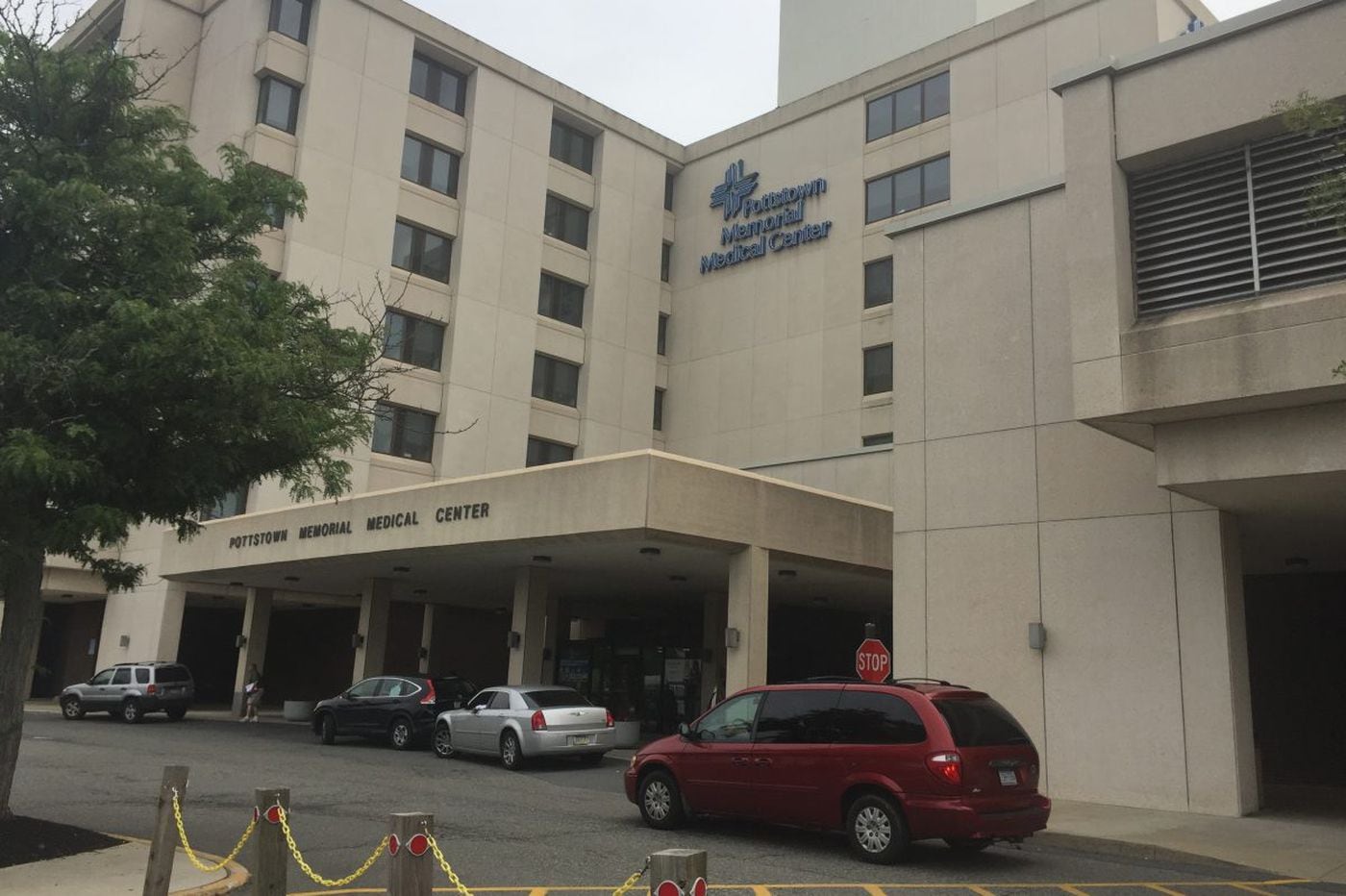
In 2017, Tower paid $418 million for five community hospitals in Southeastern Pennsylvania — Brandywine in Coatesville, Chestnut Hill in Philadelphia, Jennersville Regional in West Grove, Phoenixville in Phoenixville, and Pottstown Memorial Medical Center, now called Pottstown Hospital, in Pottstown.
Tower’s goal was to remain competitive as bigger systems — the University of Pennsylvania Health System and Jefferson Health from the Southeast, Lehigh Valley Health Network and St. Luke’s University Health Network from the east and northeast, and University of Pittsburgh Medical Center from the west — encroached on its Berk’s county base.
Tower had set itself a difficult task in the best of times, but COVID-19 has made it significantly harder for the nonprofit, which had an operating loss of $175 million on revenue of $1.75 billion in the year ended June 30, 2019.
“Hospitals and all other health service providers were hit with this disruption with lightning speed, forcing the industry to learn in real time how to handle a situation for which there was no playbook,” Standard & Poor’s analysts David P. Peknay and Suzie R. Desai said in a research report last month.
Tower’s said positions will be eliminated in executive, management, clinical, and support areas.
The cuts include consolidations of clinical operations. Tower plans to close Pottstown Hospital’s maternity unit, which employs 32 nurses and where 359 babies were born in 2018, according to the most recent state data. Tower also has maternity units at Reading Hospital in West Reading and at Phoenixville Hospital.
Tower is aiming to trim expenses by $230 million over the next two years, Matthews told staff.
Like many other health systems, Tower has taken advantage of federal programs to ensure that it has ample cash in the bank to run its businesses. Tower has deferred payroll taxes, temporarily sparing $25 million. It received $166 million in advanced Medicare payments in April.
In the private sphere, Tower obtained a $40 million line of credit in April for St. Chris, which has lost $23.6 million on operations since Tower and Drexel bought it in December. Last month, Tower said it was in the final stages of negotiating a deal to sell and then lease back 24 medical office buildings. That was expected to generate $200 million in cash for Tower.
Coronavirus cases and hospitalizations are reaching alarming levels in some states.
What they’re saying: “Arizona is the new national hotspot for COVID-19 with more than 4,400 new cases in just the last 72 hours. Per capita, Arizona’s infection rate is now more than three times higher than New York state. It’s spreading like wildfire,” Rep. Greg Stanton tweeted last night.
The big picture: Several states have seen record numbers of new cases over the last few days, including Alabama, Alaska, Arizona, Arkansas, California, Florida, North Carolina, Oklahoma and South Carolina, Reuters reports.
On Saturday, Texas reported 2,242 coronavirus hospitalizations — a record for the state, per the Houston Chronicle. Health officials are becoming concerned about hospital capacity.
Arkansas, North Carolina and Utah also had record numbers of patients enter the hospital on Saturday, per Reuters.
“South Carolina recorded nearly 800 new coronavirus cases on Sunday, setting another single-day record and raising the state’s seven-day average for the 17th day straight,” the Post and Courier reports.
The bottom line: There’s never been any reason to think that states with mild outbreaks in April weren’t at risk of having a crisis in June, especially states that haven’t taken lockdowns or social distancing as seriously.
“This is not the second wave of the pandemic in states like Arizona, Texas, Utah, California, and Florida. Unlike in New York, the first wave never ended in these places,” the Kaiser Family Foundation’s Larry Levitt tweeted.











/cloudfront-us-east-1.images.arcpublishing.com/dmn/HOLPLLCNCZGCVOECUBIPHZKKQE.jpg)
 HENRY KOTULA