While nurses in Cook County, Illinois, struck a deal in recent days, those on a three-month-plus strike against a Tenet hospital in Massachusetts plan a protest at the chain’s Dallas headquarters.
Thousands of healthcare workers have waged strikes this summer to demand better staffing levels as the pandemic brought greater attention to what happens when a nurse must take care of more patients than they can reasonably handle.
In New York, a report from the attorney general that found nursing homes with low staffing ratings had higher fatality rates during the worst COVID-19 surges last spring helped spur legislators to pass a safe staffing law long-advocated for by the New York State Nurses Association.
While unions elsewhere face a steeper climb to win the success found in New York, through strikes and other actions, they’re attempting to get new staffing rules outlined in their employment contracts.
Most nursing strikes include demands for ratios, or limits on the number of patients a nurse can be required to care for, Rebecca Givan, associate professor in the School of Management and Labor Relations at Rutgers University, said.
“And employers are very anxious about that because it threatens their bottom line, so often when a compromise is found, it’s something that approaches a ratio but maybe has a bit more flexibility,” Givan said.
Some have been successful, like the 1,000 Chicago-area nurses at Stroger Hospital, Provident Hospital and Cook County Jail who waged a one-day strike on June 24 after negotiating with the countyover a new contract for nearly eight months.
They reached a tentative agreement shortly after the strike, stipulating the hiring of 300 nurses, including 125 newly added positions throughout the system within the next 18 months.
The deal also includes wage increases to help retain staff, ranging from 12% to 31% over the contract’s four-year term, according to National Nurses United.
Meanwhile, 700 nurses at Tenet’s St. Vincent Hospital in Worcester, Massachusetts, have been on strike for over 100 days over staffing levels. Nurses represented by the Massachusetts Nurses Association have been trying to get an actual nurse-to-patient ratio outlined for specific units in their next contract.
The two sides haven’t come close to reaching a deal yet, and some nurses will travel to Tenet’s headquarters in Dallas on Wednesday in an attempt to appeal to corporate executives, according to MNA.
At the same time, federal lawmakers wrote to Tenet CEO Ron Rittenmeyer seeking details on the chain’s use of federal coronavirus relief funds amid the strike and alongside record profits it turned last year.
The hospital denied lawmakers’ claims in the letter that Tenet used federal funds to enrich executives and shareholders rather than meet patient and staff needs, saying in a statement it strongly objects to the “mischaracterization of the facts and false allegations of noncompliance with any federal program.”
The strike is currently the longest among nurses nationally in a decade, according to the union.
A number of other major hospital chains have contracts covering their nurses expiring this summer, including for-profit HCA Healthcare and nonprofit Sutter Health.
Unionized nurses at 10 HCA hospitals in Florida have reached a deal on a new collective bargaining agreement, though members still need to ratify it, according to National Nurses United. The details are still unclear.
And after joining NNU just last year, 2,000 nurses at HCA’s Mission Hospital in Asheville, North Carolina, ratified their first contract Saturday, which includes wage increases and the formation of a nurse-led staffing committee.
Newly-formed unions take an average of 409 days to win a first contract, according to an analysis from Bloomberg Law. In the healthcare industry, new unions take an average of 528 days to win a first contract, the longest among all sectors examined.
Across the country at Sutter’s California hospitals, disputes haven’t been so easily resolved. Healthcare workers at eight Sutter hospitals planned protests throughout July “to expose the threat to workers and patients caused by understaffing, long patient wait times and worker safety issues at Sutter facilities,” according to Service Employees International Union United Healthcare Workers West, which represents the workers.
Similar to the ongoing Tenet hospital strike, SEIU is highlighting Sutter’s profits so far this year and the federal relief funds it received.
CommonSpirit Health and Essentia Health have called off a deal for Essentia to acquire 14 CommonSpirit facilities in North Dakota and Minnesota, the two Catholic systems announced Tuesday.
The deal, nixed just four months after being announced, would have doubled the size of Duluth, Minn.-based Essentia’s hospital network. One of the facilities up for grabs, CHI St. Alexius Medical Center, is a tertiary hospital and the other 13 are critical access hospitals. The deal would also have included associated clinics and living communities.
The systems did not provide details as to why they scrapped the deal in their release, and an Essentia representative did not respond to a request for comment by time of publication.
Dive Insight:
CommonSpirit and Essentia signed a letter of intent in January to explore the sale, but talks have now fizzled following months of deliberation.
“While we share a similar mission, vision, values and strong commitment to sustainable rural healthcare, CommonSpirit and Essentia were unable to come to an agreement that would serve the best interests of both organizations, the people we employ and the patients we serve,” a joint statement from the two systems said.
Earlier this month, more than 700 nurses and medical workers filed a petition noting their concern over the deal. In the petition, the Minnesota Nurses Association and employees at Essentia and CommonSpirit said they feared layoffs and restricted access to patient care resulting from the acquisition.
Nurses cited Essentia’s partnership with Mercy Hospital in Moose Lake, Minn., last summer, which they claimed hurt the quality of patient care.
“Ever since the takeover, we’ve lost numerous staff, causing shortages in how we care for patients,” a nurse wrote in a news release about the petition May 4. “We don’t want CHI’s hospitals and clinics to lay off workers, cut the services they offer or close entirely.”
Essentia did not respond to a request for comment about whether workers’ concerns affected the decision to call off the deal.
Hospitals maintain consolidation betters the patient experience and improves care quality, but numerous studies have suggested that’s not the case. One from early last year published in the New England Journal of Medicine found acquired hospitals actually saw moderately worse patient experience, along with no change in 30-day mortality or readmission rates, while another from 2019 found mergers and acquisitions drive up prices for consumers.
Despite that, provider mergers and acquisitions have continued at a rapid clip even during COVID-19, as hospitals look to divest underperforming assets and bulk up market share in more lucrative geographies. The letter of intent CommonSpirit signed with Essentia suggests the roughly 140-hospital system is taking stock of its smaller rural facilities.
Chicago-based CommonSpirit was formed in 2019 by the merger of nonprofit giants Catholic Health Initiatives and Dignity Health. The nonprofit giant was hit hard by the pandemic, losing $550 million in the 2020 fiscal year.
About 800 nurses at a Tenet hospital are on the third week of a strike that’s shaping up to be one of the longest among healthcare workers in recent years.
At the hospital chain’s St. Vincent Hospital in Worcester, Massachusetts, nurses represented by the Massachusetts Nurses Association have been on strike since March 8 following a breakdown in negotiations over a new contract they’ve been bargaining for since November 2019.
Nurses have been active on the labor organization front in wake of the COVID-19 pandemic, and share a common issue at stake — staffing levels, and more specifically the nurse to patient ratio.
At St. Vincent, unionized nurses say their staffing has been worsened by the pandemic, affecting their ability to adequately care for patients.They point to hundreds of unsafe staffing reports filed by nurses over the past year, and the departure of more than 100 St. Vincent nurses over the past 10 months.
The hospital rejects those claims, and said only two citations have been issued by the Massachusetts Department of Public Health since 2019, according to a release.
The changes MNA is asking for are “excessive,” St. Vincent Hospital CEO Carolyn Jackson contended in an interview with Healthcare Dive, and the hospital cannot agree to the “aggressive” levels the union is proposing.
The two sides haven’t met again since the strike began, and do not have a timeline to get back to the table.
Right now, St. Vincent operates on staffing guidelines brokered after its nurses waged a 49-day strike over their first union contract in 2000. Under those terms, one nurse in its medical surgical units can be assigned to either four or five patients.
The terms proposed by MNA stipulate that one nurse in those units would be assigned to four patients at a maximum. MNA is also asking for a five-nurse critical care float pool, and for the hospital to double its emergency department staff from 71 employees to 157, Jackson said.
California is currently the only state with mandated ratios of one nurse to five patients in medical surgical units.
“It has been our request for them to remove some of those unreasonable, or preferably all of those unreasonable staffing requests, and come back to the table and really work on getting a reasonable deal done,” Jackson said.
During the first week of the strike, the hospital paid over $5 million to hire replacement nurses, according to a release. When asked directly about how much the hospital has spent so far, Jackson declined to answer.
“It is definitely an added expense to the hospital, and that is challenging,” she said.
The strike in 2000 ended when both parties reached a deal brokered by former Sen. Ted Kennedy, D-Mass., that resulted in provisions to limit mandatory overtime and the staffing guidelines currently in place.
But this time it seems “there is no point at which anybody’s going to step in and settle this for the two parties,” Paul Clark, professor and director of Penn State’s school of labor and employment relations said.
The union has garnered support from Massachusetts lawmakers including Sen. Elizabeth Warren, Rep. James McGovern and former Rep. Joe Kennedy, who visited the picket line on March 12, along with state Attorney General Maura Healey, who visited Wednesday.
The Worcester City Council also approved a resolution in support of the striking nurses at St. Vincent on March 16.
But those moves wield little power to break the strike, although the political pressure could hurt the hospital.
“The increased cost is, perhaps, public opinion beginning to coalesce behind the union,” Clark said.
Strikes have costs for both sides, as nurses on the picket line have gone without pay for almost three weeks now.
“Until the cost becomes too great to one or the other sides, they’re going to continue down this road,” Clark said.
Fourteen defendants have been sentenced to more than 74 years in prison combined and ordered to pay $82.9 million in restitution for their roles in a $200 million healthcare scheme designed to get physicians to steer patients to Forest Park Medical Center, a now-defunct hospital in Dallas, the U.S. Justice Department announced March 19.
More than 21 defendants were charged in a federal indictment in 2016 for their alleged involvement in a bribe and kickback scheme that involved paying surgeons, lawyers and others for referring patients to FPMC’s facilities.Those involved in the scheme paid and/or received $40 million in bribes and kickbacks for referring patients, and the fraud resulted in FPMC collecting $200 million.
Several of the defendants, including a founder and former administrator of FPMC, were convicted at trial in April 2019 and sentenced last week. Other defendants pleaded guilty before trial.
Hospital manager and founder Andrew Beauchamp pleaded guilty in 2018 to conspiracy to pay healthcare bribes and commercial bribery, then testified for the government during his co-conspirators’ trial. He admitted that the hospital “bought surgeries” and then “papered it up to make it look good.” He was sentenced March 19 to 63 months in prison.
Wilton “Mac” Burt, a founder and managing partner of the hospital, was found guilty of conspiracy, paying kickbacks, commercial bribery in violation of the Travel Act and money laundering. He was sentenced March 17 to 150 months in prison.
Four surgeons, a physician and a nurse were among the other defendants sentenced last week for their roles in the scheme. Access a list of the defendants and their sentences here.
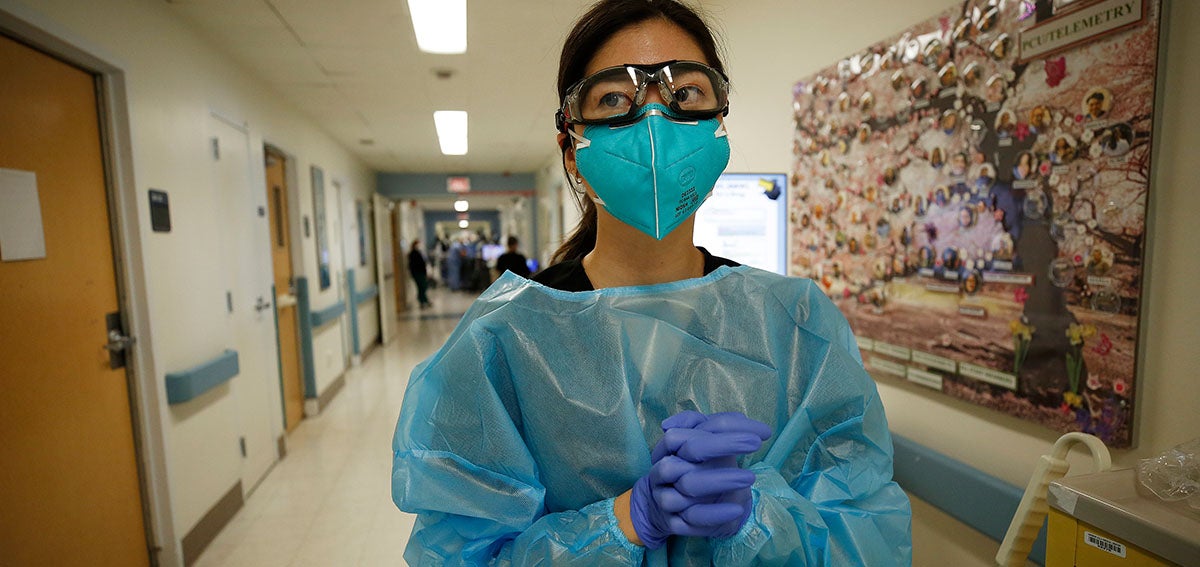
Dr. Christine Choi, 32, a medical resident at Harbor-UCLA Medical Center in Torrance, prepares to enter an isolation area for COVID-19 inpatients. Health care providers must face daily patient death and suffering.
Soon after the COVID-19 pandemic began last spring, Christine Choi, DO, a second-year medical resident at Harbor-UCLA Medical Center, volunteered to enter COVID-19 patient rooms. Since then, she has worked countless nights in the intensive care unit in full protective gear, often tasked with giving the sickest patients and their families the grim choice between intubation or near-certain death.
“I’m offering this guy two terrible options, and that’s how I feel about work: I can’t fix this for you and it sucks, and I’m sorry that the choices I’m giving you are both terrible,” Choi told the Los Angeles Times’ Soumya Karlamangla about one patient encounter.
While Choi exhibits an “almost startlingly positive attitude” in her work, it’s no match for the psychological burdens placed on her shoulders by the global pandemic, Karlamangla wrote. When an older female COVID-19 patient died in the hospital recently, her husband — in the same hospital with the same diagnosis — soon began struggling to breathe. Sensing that he had little time left, Choi held a mobile phone at his bedside so that each of his children could come on screen to tell him they loved him. “I was just bawling in my [personal protective equipment],” Choi said. “The sound of the family members crying — I probably will never forget that,” she said.
It was not the first time the young doctor helped family members say goodbye to a loved one, and it would not be the last. Health care providers like Choi have had to work through unimaginable tragedies and unprecedented circumstances because of COVID-19, with little time to dedicate to their own mental health or well-being.
It has been nearly a year since the US reported what was believed at the time to be its first coronavirus death in Washington State. Since then, the pandemic death toll has mushroomed to nearly 500,000 nationwide, including 49,000 Californians. These numbers are shocking, and yet they do not capture the immeasurable emotional weight that falls on the health care providers with the most intimate view of COVID-19’s deadly progression.“The horror of the pandemic has unfolded largely outside public view and inside hospitals, piling a disproportionate share of the trauma on the people whose work takes them inside their walls,” Karlamangla wrote.
Experts are deeply concerned about the psychological and physical burdens that providers must bear, and the fact that there is still no end in sight. “At least with a natural disaster, it happens, people get scattered all over the place, property gets damaged or flooded, but then we begin to rebuild,” Lawrence Palinkas, PhD, MA, a medical anthropologist at USC, told Karlamangla. “We’re not there yet, and we don’t know when that will actually occur.”
Sixty-eight percent of providers said they feel emotionally drained from their work, 59% feel burned out, 57% feel overworked, and 50% feel frustrated. The poll asked providers who say they feel burned out what contributes most to that viewpoint. One doctor from the Central Valley wrote:
“Short staffed due to people out with COVID. I’m seeing three times as many patients, with no time to chart or catch up. Little appreciation or contact from my bosses. I have never had an N95 [mask]. The emotional toll this pandemic is taking. Being sick myself and spreading it to my wife and young kids. Still not fully recovered but needing to be at work due to physician shortages. Lack of professional growth, and a sense of lack of appreciation at work and feeling overworked. The sadness of the COVID-related deaths and the stories that go along with the disease. That’s a lot of stuff to unpack.”
The pandemic has been especially challenging for female health providers, who compose 77% of health care workers with direct patient contact. “The pandemic exacerbated gender inequities in formal and informal work, and in the distribution of home responsibilities, and increased the risk of unemployment and domestic violence,” an international group of experts wrote in the Lancet. “While trying to fulfill their professional responsibilities, women had to meet their families’ needs, including childcare, home schooling, care for older people, and home care.”
For one female doctor from the Bay Area who responded to the CHCF survey, the extra burdens of the pandemic have been unrelenting: “Having to work more, lack of safe, affordable, available childcare while I’m working. As a single mother, working 15 hours straight, then having to care for my daughter when I get home. Just exhausted with no days off. So many Zoom meetings all day long. Miss my family and friends.”
It is unclear how the pandemic will affect the health care workforce in the long term. For now, the damage “can be measured in part by a surge of early retirements and the desperation of community hospitals struggling to hire enough workers to keep their emergency rooms running,” Andrew Jacobs reported in the New York Times.
One of the early retirements Jacobs cited was Sheetal Khedkar Rao, MD, a 42-year-old internist in suburban Chicago. Last October, she decided to stop practicing medicineafter “the emotional burden and moral injury became too much to bear,” she said. Two of the main factors driving her decision were a 30% pay cut to compensate for the decline in revenue from primary care visits and the need to spend more time at home after her two preteen children switched to remote learning.
“Everyone says doctors are heroes and they put us on a pedestal, but we also have kids and aging parents to worry about,” Rao said.
Working Through Unremitting Sickness and Death
In addition to the psychological burden, health care providers must cope with a harsh physical toll. People of color account for most COVID-19 cases and deaths among health care workers, according to a KFF issue brief. Some studies show that health care workers of color “are more likely to report reuse of or inadequate access to [personal protective equipment] and to work in clinical settings with greater exposure to patients with COVID-19.”
“Lost on the Frontline,” a collaboration of Kaiser Health News and the Guardian, has counted more than 3,400 deaths among US health care workers from COVID-19. Eighty-six percent of the workers who died were under age 60, and nurses accounted for roughly one-third of the deaths.
“Lost on the Frontline” provides the most comprehensive picture available of health care worker deaths, because the US still lacks a uniform system to collect COVID-19 morbidity and mortality data among health care workers. A year into the project, the federal government has decided to take action. Officials at the US Department of Health and Human Services cited the project when asking the National Academies of Sciences, Engineering, and Medicine for a rapid expert consultation to understand the causes of deaths among health care workers during the pandemic.
The National Academies’ report, published December 10, recommends the “adoption and use of a uniform national framework for collecting, recording, and reporting mortality and morbidity data” along with the development of national reporting standards for a core set of morbidity impacts, including mental well-being and psychological effects related to working through public health crises. Some health care experts said the data gathering could be modeled on the federal government’s World Trade Center Health Program, which provides no-cost medical monitoring and treatment for workers who responded to the 9/11 terrorist attacks 20 years ago.
“We have a great obligation to people who put their lives on the line for the nation,” Victor J. Dzau, MD, president of the National Academy of Medicine, told Jacobs.
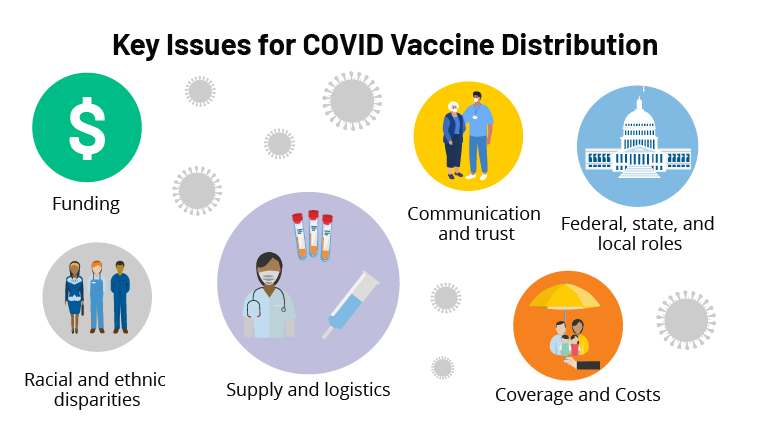
Although only 17 states are currently reporting data on the racial and ethnic breakdown of vaccine recipients, the early data indicate that there are significant disparities in who is getting vaccinated, with the share of Black and Latino people among vaccinees lower than their share of the total population in those states.
Alarmingly, in our recent conversations with health system executives,those same disparities seem to be present among healthcare workers employed by hospitals and health systems. Anecdotally, across a half-dozen health systems we’ve spoken with in the past week, most report that they’ve had about 70 percent of their workers agree to get the first dose of the COVID-19 vaccine.
However, that number looks significantly different when broken down by race and ethnicity:on average, the uptake rate among White, Asian, and Pacific Islander workers has been closer to 90-95 percent, while among Black and Latino workers, it’s been closer to 30-40 percent. Bear in mind these are employees of health systems—in many cases they’re frontline caregivers—and given their work environments you might expect them to be less hesitant to get the vaccine.
That 30-40 percent uptake rate is very worrisome, in two ways:caregivers outside of hospital settings, especially home care and nursing home workers, likely include a larger number of workers hesitant to get vaccinated. And in the general population, among whom health literacy is presumably much lower than among healthcare workers,it’s precisely those populations who are at highest risk of COVID infection, hospitalization, and death. (A further complication: health systems made it easy for their employees to get the shot. With vaccines for the general population still scarce, at-risk populations will inevitably have the most difficult time getting signed up, even if they want the vaccine.)
If health systems are the canary in the coal mine for vaccine hesitancy rates, we’re in for a tough challenge in getting the most vulnerable populations vaccinated in the months to come.
The annual J.P. Morgan Healthcare Conference is one of the best ways to diagnose the financial condition of the healthcare industry. Every January, every key stakeholder — providers, payers, pharmaceutical companies, tech companies, medical device and supply companies as well as bankers, venture capital and private equity firms — comes together in one exam room, even when it is virtual, for their annual check-up. But as we all know, this January is unlike any other as this past year has been unlike any other year.
You would have to go back to the banking crisis of 2008 to find a similar moment from an economic perspective. At the time, we were asking, “Are banks too big to fail?” The concern behind the question was that if they did fail, the economic chaos that would follow would lead to a collapse with the consumer ultimately picking up the tab. The rest is history.
Healthcare is “Too Vital to Fail”
2020 was historic in too many ways to count. But in a year when healthcare providers faced the worst financial crisis in the history of healthcare, the headline is that they are still standing. And what they proved is that in contrast to banks in 2008 that were seen by many as “too big to fail,” healthcare providers in 2020 proved that they were “too vital to fail.”
One of the many unique things about the COVID-19 pandemic is we are simultaneously experiencing a health crisis, where healthcare providers are the front line in the battle, and an economic crisis, felt in a big way in healthcare given the unique role hospitals play as the largest employer in most communities. Hospitals and health systems have done the vast majority of testing, treating, monitoring, counseling, educating and vaccinating all while searching for PPE and ventilators, and conducting clinical trials. And that’s just the beginning of the list.
Stop and think about that for a minute. What would we have done without them? Thinking through that question will give you some appreciation for the critical, challenging and central role that healthcare providers have had to play over the past year.
Simply stated, healthcare providers are the heart of healthcare, both clinically (essentially 100 percent of the care) and financially (over 50 percent of the $4 trillion annual spend on U.S. healthcare). Over the last year they stepped up and they stepped in at the moment where we needed them the most. This was despite the fact that, like most businesses, they were experiencing calamitous losses with no assurances of any assistance.
Healthcare is “Pandemic-Proof”
This was absolutely the worst-case scenario and the biggest test possible for our nation’s healthcare delivery system. Patient volume and therefore revenue dropped by over 50 percent when the panic of the pandemic was at its peak, driving over $60 billion in losses per month across hospitals and healthcare providers. At the same time, they were dramatically increasing their expenses with PPE, ventilators and additional staff. This was not heading in a good direction. While failure may not have been seen as an option, it was clearly a possibility.
The CARES Act clearly provided a temporary lifeline, providing funding for our nation’s hospitals to weather the storm. While there are more challenging times ahead, it is now clear that most are going to make it to the other side. The system of care in our country is often criticized, but when faced with perhaps the most challenging moment in the history of healthcare, our nation’s hospitals and health systems stepped up heroically and performed miraculously. The work of our healthcare providers on the front line and those who supported them was and is one thing that we all should be exceptionally proud of and thankful for.In 2020, they proved that not only is our nation’s healthcare system too vital to fail, but also that it is “pandemic proof.”
Listening to Front Line at the 2021 J.P. Morgan Healthcare Conference
There has never been a more important year to listen to the lessons from healthcare providers. They are and were the front line of our fight against COVID-19. If there was a class given about how to deal with a pandemic at an institutional level, this conference is where those lessons were being taught.
This year at the J.P. Morgan Healthcare Conference, CEOs, and CFOs from many of the most prestigious and most well-respected health systems in the world presented including AdventHealth, Advocate Aurora Health, Ascension, Baylor Scott & White Health, CommonSpirit Health, Henry Ford Health System, Intermountain Healthcare, Jefferson Health, Mass General Brigham, Northwell Health, OhioHealth, Prisma Health, ProMedica Health System, Providence, Spectrum Health and SSM Health.
I’ve been in healthcare for 30 years and this is my fifth year of writing up the summary of the non-profit provider track of the conference for Becker’s Healthcare to help share the wisdom of the crowd of provider organizations that share their stories. Clearly, this year was different and not because the presentations were virtual, but because they were inspirational.
What did we learn? The good news is that they have made many changes that have the potential to move healthcare in a much better direction and to get to a better place much faster. So, this year instead of providing you a nugget from each presentation, I am going to take a shot at summarizing what they collectively have in motion to stay vital after COVID.
10 Moves Healthcare Providers are Making to Stay Vital After-COVID
As a leader in healthcare, you will never have a bigger opportunity to drive change than right now. Smart leaders are framing this as essentially “before-COVID (BC)” and “after-COVID (AC)” and using this moment as their burning platform to drive change. Credit to the team at Providence for the acronym, but every CEO talked about this concept. As the saying goes, “never let a good crisis go to waste.” Well, we’ve certainly had a crisis, so here is a list of what the top health systems are doing to ensure that they don’t waste it and that they stay vital after-COVID:
1. Take Care of Your Team and They’ll Take Care of You: In a crisis, you can either come together as a team or fall apart. Clearly there has been a significant and stunning amount of pressure on healthcare providers. Many are fearing that mental health might be our nation’s next pandemic in the near future because they are seeing it right now with their own team. Perhaps one of their biggest lessons from this crisis has been the need to address the mental, physical and spiritual health of both team members as well as providers. They have put programs in place to help and have also built a tremendous amount of trust with their team by, in many cases, not laying off and/or furloughing employees. While they have made cuts in other areas such as benefits, this collective approach proved incredibly beneficial. And the last point here that relates to thinking differently about their team is that similar to other businesses, many health systems are making remote arrangements permanent for certain administrative roles and moving to a flexible approach regarding their team and their space in the future.
2. Focus on Health Equity, Not Just Health Care: This was perhaps the most notable and encouraging change from presentations in past years at J.P. Morgan. I have been going to the conference for over a decade, and I’ve never heard someone mention this term or outline their efforts on “health equity” — this year, nearly everyone did. In the past, they have outlined many wonderful programs on “social determinants of health,” but this year they have seen the disproportionate impact of COVID on low-income communities bringing the ongoing issue of racial disparities in access to care and outcomes to light. As the bedrock of employment in their community, this provides an opportunity to not just provide health care, but also health equity, taking an active role to help make progress on issues like hunger, homelessness, and housing. Many are making significant investments in a number of these and other areas.
3. Take the Lead in Public Health — the Message is the Medicine:One of the greatest failings of COVID, perhaps the greatest lesson learned, is the need for clear and consistent messaging from a public health perspective. That is a role that healthcare providers can and should play. In the pandemic, it represented the greatest opportunity to save lives as the essence of public health is communication — the message is the medicine. A number of health systems stepped into this opportunity to build trust and to build their brand, which are essentially one in the same. Some organizations have created a new role — a Chief Community Health Officer — which is a good way to capture the work that is in motion relative to social determinants of health as well as health equity. Many understand the opportunity here and will take the lead relative to vaccine distribution as clear messaging to build confidence is clearly needed.
4. Make the Home and Everywhere a Venue of Care:A number of presenters stated that “COVID didn’t change our strategy, it accelerated it.” For the most part, they were referring to virtual visits, which increased dramatically now representing around 10 percent of their visits vs. 1 percent before-COVID. One presenter said, “Digital has been tested and perfected during COVID,” but that is only considering the role we see digital playing in this moment. It is clear some organizations have a very narrow tactical lens while others are looking at the opportunity much more strategically. For many, they are looking at a “care anywhere and everywhere” strategy. From a full “hospital in the home” approach to remote monitoring devices, it is clear that your home will be seen as a venue of care and an access point moving forward. The pandemic of 2020 may have sparked a new era of “post-hospital healthcare” — stay tuned.
5. Bury Your Budget and Pivot to Planning:The budget process has been a source of incredible distrust, dissatisfaction and distraction for every health system for decades. The chaos and uncertainty of the pandemic forced every organization to bury their budget last year. With that said, many of the organizations that presented are now making a permanent shift away from a “budget-based culture” where the focus is on hitting a now irrelevant target set that was set six to nine months ago to a “performance-based culture” where the focus is on making progress every day, week, month and quarter. Given that the traditional annual operating budget process has been the core of how health systems have operated, this shift to a rolling forecast and a more dynamic planning process is likely the single most substantial and permanent change in how hospitals and health systems operate due to COVID. In other words, it is arguably a much bigger headline than what’s happened with virtual visits.
6. Get Your M&A Machine in Motion: It was clear from the presentations that activity around acquisitions is going to return, perhaps significantly. These organizations have strong balance sheets and while the strong have gotten stronger during COVID, the weak have in many cases gotten weaker. Many are going to be opportunistic to acquire hospitals, but at the same time they have concluded that they can’t just be a system of care delivery. They are also focused on acquiring and investing in other types of entities as well as forming more robust partnerships to create new revenue streams. Organizations that already had diversified revenue streams in place came through this pandemic the best. Most hospitals are overly reliant on the ED and surgical volume. Trying to drive that volume in a value-based world, with the end of site of service differentials and the inpatient only list, will be an even bigger challenge in the future as new niche players enter the market. As I wrote in the headline of my summary two years ago, “It’s the platform, stupid.” There are better ways to create a financial path forward that involve leveraging their assets — their platform — in new and creative ways.
7. Hey, You, Get into the Cloud:With apologies for wrapping a Rolling Stones song into a conference summary, one of the main things touted during presentations was “the cloud” and their ability to pull clinical, operational and financial dashboards together to monitor the impact of COVID on their organization and organize their actions. Focus over the last decade has been on the clinical (implementing EHRs), but it is now shifting to “digitizing operations” with a focus on finance and operations (planning, cost accounting, ERPs, etc.) as well as advanced analytics and data science capabilities to automate, gather insight, manage and predict. It is clear that the cloud has moved from a curiosity to a necessity for health systems, making this one of the biggest areas of investment for every health system over the next decade.
8. Make Price Transparency a Key Differentiator: One of the great lessons from Amazon (and others) is that you can make a lot of money when you make something easy to buy. While many health systems are skeptical of the value of the price transparency requirements, those that have a deep understanding of both their true cost of care and margins are using this as an opportunity to prove their value and accelerate their strategy to become consumer-centric. While there is certainly a level of risk, no business has ever been unsuccessful because they made their product easier to understand and access. Because healthcare is so opaque, there is an opening for healthcare providers to build trust, which is their main asset, and volume, which is their main source of revenue, by becoming stunningly easy to do business with. This may be tough sledding for some as this isn’t something healthcare providers are known for. To understand this, spend a few minutes on Tesla’s website vs. Ford’s. The concept of making something easy, or hard, to buy will become crystal clear as fast as a battery-driven car can go from zero to 60.
9. Make Care More Affordable:This represents the biggest challenge for hospitals and health systems as they ultimately need to be on the right side of this issue or the trust that they have will disappear and they will remain very vulnerable to outside players. All are investing in advanced cost accounting systems (time-driven costing, physician costing, supply, and drug costing) to truly understand their cost and use that as a basis to price more strategically in the market. Some are dropping prices for shoppable services and using loss leader strategies to build their brand. The incoming Secretary of Health and Human Services has a strong belief regarding the accountability of health systems to be consumer centric. The health systems that understand this are working to get ahead of this issue as it is likely one of their most significant threats (or opportunities) over the next decade. This means getting all care to the right site of care, evaluating every opportunity to improve, and getting serious about eliminating the need for expensive care through building healthy communities. If you’re worried about Wal-Mart or Amazon, this is your secret weapon to keep them on the sideline.
10. Scale = Survival: One of the big lessons here is that the strong got stronger, the weak got weaker. For the strong, many have been able to “snapback” in financial performance because they were resilient. They were able to designate COVID-only facilities, while keeping others running at a higher capacity. To be clear, while most health systems are going to get to the other side and are positioned better than ever, there are many others that will continue to struggle for years to come. According to our data at Strata, we see 25 percent operating at negative margins right now and another 50 percent just above breakeven. They key to survival moving forward, for those that don’t have a captive market, will be scale. If this pandemic proved one thing relative to the future of health systems it is this — scale equals survival.
When Will We Return to Normal?
Based on what the projections that these health systems shared, the “new normal” for health systems for the first half of 2021 will be roughly 95 percent of prior year inpatient volume with a 20 percent year-over-year drop in ED volume and a drop of 10-15 percent in observation visits. So, the pain will continue, but given the adjustments that were already made in 2020, it looks like they will be able to manage through COVID effectively. While there will be a pickup in the second half of 2021, the safe bet is that a “return to normal” pre-COVID volumes likely won’t occur until 2022. And there are some who believe that some of the volume should have never been there to begin with and we might see a permanent shift downward in ED volume as well as in some other areas.
With that said, I’ll steal a quote from Bert Zimmerli, the CFO of Intermountain Healthcare, who said, “Normal wasn’t ever nearly good enough in healthcare.”In that spirit, the goal should be to not return to normal, but rather to use this moment as an opportunity to take the positive changes driven by COVID — from technology to processes to areas of focus to a sense of responsibility — and make them permanent.
Thanking Our “Healthcare Heroes”
We’ll never see another 2020 again, hopefully. With that said, one of the silver linings of the year is everything we learned in healthcare. The most important lesson was this — in healthcare there are literally heroes everywhere. To each of them, I just want to say “thank you” for being there for us when we needed you the most. We should all be writing love letters to those on the front line who risked their lives to save others. Our nation’s healthcare system has taken a lot of criticism through the years from those on the outside, often with a blind eye to how things work in practice vs. in concept. But this year we all got to see first-hand what’s happening inside of healthcare — the heroic work of our healthcare providers and those who support them.
They faced the worst crisis in the history of healthcare. They responded heroically and were there for our families and friends.
They proved that healthcare is too vital to fail. They proved that healthcare is pandemic-proof.
The first month of the pandemic was also supposed to be the month I got pregnant, but my clinic closed and plans changed. Doctors and nurses needed personal protective equipment to tend to patients with covid-19, not women with recurrent miscarriages.
When the clinic reopened several months later, it turned out my husband and I had only been delaying yet another loss: In late August, he obeyed the medical center’s strict coronavirus protocols by waiting anxiously in the car while I trudged inside, masked and hand-sanitized, to receive a miscarriage diagnosis alone. I searched the ultrasound screen for the rhythmic beat of a heart, and then accepted that whatever had once been there was now gone.
But that was 2020 for you, consistent only in its utter crappiness. For every inspiring video of neighbors applauding a shift change at the hospital, another video of a bone-tired nurse begging viewers to believe covid was real, it wasn’t a hoax, wear a mask.
For every protest organized by activists who understood racism is also a long-term crisis, an appearance by the Proud Boys; for every GoFundMe successfully raising money for a beloved teacher’s hospital bills, a bitter acknowledgment that online panhandling is our country’s version of a safety net.
Millions of citizens stood in line for hours to vote for the next president and then endured weeks of legal petitions arguing that their votes should be negated. The basis for these legal actions were conspiracy theories too wild to be believed, except that millions of other citizens believed them.
And that was 2020 for you, too: accepting the increasingly obvious reality that the country was in peril, built on iffy foundations that now buckled under pressure. My loved ones who worked as waiters or bartenders or physical therapists were choosing between health and paychecks, and even from the lucky safety of my work-from-home job, each day began to feel like watching America itself arrive at a hospital in bad shape, praying that doctors or clergy could find something they were able to save.
Is there a heartbeat?
You want the answer to be yes, but even so, it was hard to imagine how we would come back from this.
What kind of delusional person would even try to get pregnant in this world? In my case it would never be a happy accident; it would always be a herculean effort. And so it seemed I should have some answers.
How do you explain to a future child: Sorry, we can’t fix climate change; we can’t even get people to agree that we should wear masks in grocery stores? How do you explain the frustration of seeing brokenness, and then the wearying choice of trying to fix it instead of abandoning it? How do you say, Love it anyway. You’re inheriting an absolute mess, but love it anyway?
I found myself asking a lot of things like this in 2020, but really they were all variations of the same question: What does it mean to have hope?
But in the middle of this, scientists worked quietly in labs all over the world. They applied the scientific method with extraordinary discipline and speed. A vaccine was developed. Tens of thousands of volunteers rolled up their sleeves and said, Try it out on me.
It was approved, and a nurse from Long Island was the first American televised receiving it. Her name was Sandra Lindsay, an immigrant from Jamaica who had come to the United States 30 years ago and who had spent the last year overseeing critical care teams in back-to-back shifts. She said she had agreed to go first to show communities of color, long abused, brushed-off or condescended to by the medical system, that the vaccine was safe.
Here was hope. And more than that, here was hope from a woman who had more reason than most to be embittered: an exhausted health-care worker who knew too well America’s hideous racial past and present, who nonetheless also knew there was only one way out of the tunnel. Here she was, rolling up her own sleeve, and there were the lines of hospital employees ready to go after her, and there were the truck drivers ferrying shipments of syringes.
I can’t have been the only person to watch the video of those early inoculations, feeling elated and tired, and to then burst into tears. I can’t have been the only person to realize that even as 2020 revealed brokenness, it also contained such astounding undercurrents of good.
The scientific method works whether you accept it or not. Doctors try to save you whether you respected public-health guidelines or not. Voter turnout was astronomical because individual citizens realized they were all, every one of them, necessary pieces in a puzzle, even if they couldn’t see what the final picture was supposed to look like.
The way to believe in America is to believe those things are passed down, too.
Sometime in October, a couple of months after my last miscarriage — when the country was riding up on eight months of lonely and stoic birthdays, graduations, deaths and weddings — I went into the bathroom and saw a faint second line on a First Response pregnancy test. It was far from my first rodeo, so I knew better than to get excited. I mentioned it to my husband with studied nonchalance, I told him that I’d test again in a few days but that we should assume the worst would happen.
Two weeks after that, I had a doctor’s appointment, and then another a week later, each time assuming the worst, but each time scheduling another appointment anyway, until eventually I was further along than I’d ever gotten before — by one day, then three days, then thirty.
I am not a superstitious person. I don’t believe that good things always come to those who deserve them. I believe that stories regularly have sad endings and that it’s often nobody’s fault when they do, and that we should tell more stories with sad endings so that people who experience them know that they’re not alone.
But 2020 has taught me that I am, for better or worse, someone who wants to hope for things. To believe in the people who developed vaccines. In the people who administered them. In Sandra Lindsay. In the people who delivered groceries, who sewed masks, who have long cursed America’s imperfect systems and long fought to change them, who still donate $10 to a sick teacher’s GoFundMe.
At my most recent appointment, the doctor’s office was backed up in a holiday logjam. I sat in the exam room for nearly three hours while my husband again waited anxiously in the car. I texted him sporadic updates and tried to put hope in a process that so far had not seemed to warrant my hope.
It all felt precarious. The current reality always feels precarious.
And yet there we all are together, searching for signs of life, hoping that whatever we emerge to can be better than what we had before, and that whatever we build will become our new legacy. The sonographer finally arrived and turned on the machine.
In late November, Cliff Willmeng’s wife handed him a sealed envelope at their Minneapolis home “with some trepidation,” he recalled. He looked at the sender printed on the front: “Minnesota Board of Nursing.” Willmeng, a registered nurse, openedtheletter and read that the board was investigating his conduct as a nurse at United Hospital in St. Paul, from which he’d been fired in May. Clearly his license was at stake.
Willmeng was disappointed, but not surprised. He believes the review is due to his standing up for his own safety and that of other nurses, and for filing a lawsuit and union grievance against United’s parent company, Allina Health, after his termination.
He also thinks the investigation, like his firing, has been orchestrated to scare other healthcare workers away from reporting safety violations and concerns as the pandemic rages, and to make an example out of the former union steward.
The investigation is being led by a former Allina executive: “It feels meant to intimidate me,” he said.
Taking a Stand for Safety
Willmeng is a 13-year nursing veteran, husband, and father, who began working at United in October 2019.
When the pandemic hit late last winter, managers instructed nurses to use and reuse their own scrubs rather than hospital-issued scrubs. They were asked to launder their scrubs themselves at home.
Willmeng and others worried about bringing the virus home and pressed for the hospital scrubs. These scrubs were available, he said, and healthcare workers were permitted to wear hospital gear at Abbott Northwestern, another Allina hospital in Minneapolis.
In addition, while United managers told staff their laundering co-op could not keep up with demand for all the scrubs, the co-op denied that assertion, said Brittany Livaccari, RN, an ER nurse and union steward at United.
Willmeng addressed his concerns with management, filed state OSHA complaints, and enlisted the Minnesota Nurses Association (MNA). “He was taking action 100% to protect himself and to protect his patients,” Livaccari said.
But management did not change its policy, which was devised before the pandemic, and pointed to early-pandemic CDC and Minnesota Department of Health (MDH) guidelines — even when Willmeng shared emerging reports suggesting the policy was jeopardizing safety.
“It did feel like a pissing match,” Livaccari said. “We didn’t feel like we were being protected. … We weren’t being valued.”
Managers repeatedly wrote up Willmeng and colleagues who wore the hospital scrubs despite the policy. “It definitely felt like an intimidation tactic — ‘You’re going to do this, you’re going to follow these policies,'” Livaccari said. “A lot of staff chose to stop wearing those scrubs because they needed their job, they have families to pay for, they were afraid.”
Willmeng continued to wear the hospital scrubs. “I had to decide whether that policy was most important, or the safety of my workplace and public health and my family,” he said.
On May 8, the hospital terminated Willmeng. He said its stated cause was violating hospital policies regarding uniform code and a respectful workplace.
Two weeks later, the local nurses’ union held a rally that drew hundreds of supporters for Willmeng and blasted the hospital’s scrub policy.
‘I’m Not a Bad Nurse’
In June, Willmeng sued Allina for whistleblower retaliation and wrongful termination. The case is scheduled to be heard next August.
His union grievance is set to be arbitrated in January. He maintains his firing was not for “just cause” because United’s uniform code policy violated standard nursing practices.
Willmeng has been running the website WeDoTheWork, which describes itself as “worker-run journalism.” It’s an independent but union-affiliated publication that “unflinchingly tells our side of the story, and takes the fight to management.”
He’s been publicizing his case on that website. In his Twitter account he notes, “I believe in the working class, democratically run economy, socialism, and revolution.”
Willmeng is applying for jobs, but despite his experience, a national nursing shortage, and reports of severe understaffing as hospitalizations surge again, Willmeng has not even been interviewed by any of the roughly 20 medical centers he has applied to.
He thinks he is being blackballed. “I’m not a bad nurse,” he said.
The board letter cited these concerns: “On April 16, 2020, you received a written warning for not following the uniform policy,” reads one item, citing a report shared with the board. “On May 5, 2020, you were issued a final written warning for repeatedly violating policy. … On May 8, 2020, you were terminated from employment based on violating hospital policies, behavioral expectations, code of conduct, and not following the directions of your manager.” The letter asks Willmeng to respond to eight questions.
“This looks like it was taken right out of my HR file,” he said. The board will not reveal who reported him, citing confidentiality policies. But he is certain — given the detail in the letter — that it was Allina/United management.
The nursing board cannot comment on Willmeng’s review to protect confidentiality, said executive director Shirley Brekken, MS, RN. The board receives about 1,200 complaints annually and first determines whether a complaint would merit disciplinary action if true. If so, it launches a review.
Allina declined to answer questions via a spokesperson, citing the lawsuit. “We cannot appropriately retain employees who willfully and repeatedly choose to violate hospital policies,” according to an emailed statement. Throughout the pandemic Allina has been following CDC and MDH guidelines, “which do not consider hospital issued scrubs as PPE [personal protective equipment].”
“In the early days of the pandemic, our local and national supply chain was extremely stressed,” the statement continues. “Our practices are aligned with other local and national hospitals … and have enabled us to allocate the appropriate supplies for daily patient care and ongoing care for COVID-19 patients.”
But United healthcare workers still lack hospital scrubs and enough N95 masks, Livaccari said, and the hospital is severely understaffed as the patient load increases. “We hear, ‘It’s a pandemic. You have to do more with less,'” she said. “It’s a really bad situation.”
Retaliation and Intimidation
Some think Willmeng’s review was initiated primarily to retaliate against him, not to protect public health and safety.
“Hospitals, they want a docile workforce, they want a workforce they can control,” said John Kauchick, RN, a retired 37-year nursing veteran who advocates for workplace rights. They do so “by fear and intimidation,” he added. “A nurse’s number one fear is to be turned in to a board of nursing for anything.”
“If you’re a whistleblower and you speak truth to power, that will get you a disciplinary hearing even more so than if there is patient harm.”
The letter was drafted more than six months after Willmeng was fired, and after he filed the lawsuit and union grievance. Just before he received the letter, he was elected to the MNA board. The timing strikes Willmeng and Kauchick as significant.
“If you think there’s been a violation, you are supposed to report that in a much shorter time period,” Kauchick said. Kauchick thinks Allina filed the complaint as leverage, to persuade Willmeng to drop the grievance and lawsuit.
But Livaccari noted the process can take up to six months, and that every firing is supposed to be reported to the board.
Like Kauchick, she takes umbrage with the review’s leader: Stephanie Cook, MSN, RN, a board nursing practice specialist who spent 24 years as a director with Allina. She was a member of multiple Allina committees, including its ethics committee, according to reports. She was with Allina as recently as 2018. Brekken confirmed her employment with Allina, noting that it’s “a very large system.”
Regardless, that’s a conflict of interest, Kauchick and Livaccari said, arguing that Cook should not be part of the review. “It’s just so blatantly obvious. How are you going to look at this with an unbiased lens when you worked for the organization that says Cliff was in the wrong?” Livaccari said. “It’s so inappropriate.”
This is not uncommon, Kauchick said, noting state nursing board reviews are “really just designed to get rid of whistleblowers. It’s like a buddy system. They hire higher-ups from big hospital systems. It’s just incestuous.”
Brekken was aware of Cook’s background before a colleague assigned this review to Cook, she said, noting the board vets staff for personal involvement in cases. Brekken “might consider” removing Cook from the review given her connection to Allina, she said, but added: “Many individuals on our staff may have worked for a particular health system throughout their career.”
The board could throw out the complaint or take action. Such actions typically range from a reprimand to revoking a nurse’s license, Brekken said. A staff member and board member together will review the report and Willmeng’s response, but she said the board itself makes final decisions.
Willmeng is also focused on the grievance, which asks Allina to provide full back pay and reinstate him.
“I would not feel comfortable; I’d feel very anxious” going back, he said. “But I’m an ER nurse. I belong in the ER…. It’s important for a frontline healthcare worker to demonstrate that when they stand up and speak truthfully and assertively about working conditions and patient safety, that they can’t just be triangulated.”
His salary — about twice his current unemployment benefits — is also a draw, he acknowledged.
Meanwhile, he continues applying for other jobs. His life insurance cost doubled and his family switched to his wife’s lesser health insurance plan, he said. A fourth-grade teacher with a local public school system, her salary is the primary support for themselves and their two children.
Willmeng also just hired an attorney at $250 an hour to help him respond to the board letter. “It’s not something I take lightly,” he said. “There’s cause for real concern. That’s my nursing license, that’s everything.“


:max_bytes(150000):strip_icc()/GettyImages-477514725-c4271ad485734ba6b84cae22be7833cf.jpg)



 HENRY KOTULA