Trump Unveils Healthcare Agenda

https://www.medpagetoday.com/washington-watch/electioncoverage/88250?xid=nl_mpt_DHE_2020-08-26&eun=g885344d0r&utm_source=Sailthru&utm_medium=email&utm_campaign=Daily%20Headlines%20Top%20Cat%20HeC%20%202020-08-26&utm_term=NL_Daily_DHE_dual-gmail-definition

What's in, and out, of Biden's health care plan

List of bullet points prompts debate over lack of detail, potential for actual achievement.

Health policy scholars critiqued the Trump campaign’s broad strokes healthcare agenda for his potential second term. While some found it overly vague, even dishonest, one suggested it was precisely what voters want.

Released Sunday night as a list of bullet points, the “Fighting for You” agenda will apparently serve as the Republican platform for the 2020 election. The GOP’s platform committee voted over the weekend to dispense with the customary detailed policy document for this cycle, in favor of simply backing President Trump’s agenda.

That agenda, which the Trump campaign promised would be fleshed out in future speeches and statements, included the following points relevant to healthcare:

Eradicate COVID-19

  • Develop a vaccine by the end of 2020
  • Return to normal in 2021
  • Make all critical medicines and supplies for healthcare workers
  • Refill stockpiles and prepare for future pandemics

Healthcare

  • Cut prescription drug prices
  • Put patients and doctors back in charge of our healthcare system
  • Lower healthcare insurance premiums
  • End surprise billing
  • Cover all pre-existing conditions
  • Protect Social Security and Medicare
  • Protect our veterans and provide world-class healthcare and services

Reliance on China

  • Allow 100% expensing deductions for essential industries like pharmaceuticals and robotics who bring back their manufacturing to the U.S.
  • No federal contracts for companies who outsource to China
  • Hold China fully accountable for allowing the virus to spread around the world

Joseph Antos, PhD, a resident scholar in healthcare and retirement policy at the American Enterprise Institute, characterized Trump’s strategy as “Don’t explain it. Just say what your goals are.”

He applauded the brevity of the document, 6 pages in total, covering 10 different policy areas from jobs to healthcare to immigration, as a “smart strategy.”

Voters don’t want to read lengthy policy briefs and gave the “Biden-Sanders Unity Task Force Recommendations” which were over 100 pages long and “unbelievably complicated stuff” as an example of how not to reach voters.

“I think [Trump] got it right. He’s not running a think tank…. He’s running for office. He does have a keen eye for what the average voter could stand to listen to.”

Gail Wilensky, PhD, an economist and senior fellow at Project Hope in Bethesda, Maryland, and CMS administrator under President George H.W. Bush, agreed that a platform packed with policy details doesn’t sway many voters.

This election, she said, is about one thing only: “Trump or not Trump.”

Whither the ACA?

Nevertheless, the Trump campaign’s goals merit attention, often for what they don’t include as well as what they do.

As for the substance of the agenda, the key difference between the Trump administration’s proposed agenda and that of the Democratic nominee, former Vice President Joe Biden, is that the latter aims to expand access to health insurance using the Affordable Care Act’s (ACA) framework, said Wilensky.

While Trump’s 2016 healthcare agenda centered around repealing the ACA, his second-term agenda doesn’t mention the law by name.

Wilensky said she’s glad that Trump did not include ACA repeal among his goals, given that “there’s no historical precedence” for eliminating the core benefits of such far-reaching legislation, now on the books for 10 years and fully implemented for 6.

Kavita Patel, MD, a primary care physician and Brookings Institution scholar in Washington, D.C., who was an advisor on the Democrats’ platform, said, “This is all just posturing and politics and almost a continuation of things [Trump’s] been saying without any real details behind it.”

Many of these items — such as ending surprise billing, lowering health insurance premiums, and cutting prescription drug prices — would have Democrats’ support “but they would get there in a different way,” Patel said.

One thing she was surprised not to see in the agenda were references to abortion or other reproductive health issues, she noted.

Insurance Coverage Neglected

Rosemarie Day, founder and CEO of Day Health Strategies and author of Marching Toward Coverage: How Women can Lead the Fight for Universal Healthcare, was dumbfounded by the overall lack of substance in the agenda, and particularly by the absence of a plan to deal with rising rates of uninsurance related to the pandemic.

Day thought the Trump campaign could have at least included a plan for returning to the “baseline” on the number of uninsured. Another administration might have chosen to promote Medicaid coverage or encourage unemployed workers to enroll on the health insurance exchanges, but not this administration, she said.

“So, they’re really just leaving people out in the cold,” Day said.

Wilensky, too, suggested it would have been “useful” for the Trump campaign to have “talked about how they envision getting more people covered.”

Paul Ginsburg, PhD, director of the USC-Brookings Schaeffer Initiative for Health Policy, said much of the agenda is “just aspirations.”

“‘Put patients and doctors in charge of our healthcare system’? … I don’t know what the policy is, [but] who’s going to quarrel with that?”

Lowering healthcare premiums also sounds “nice” but how that would be achieved is unclear, he said.

One agenda item in the document that really really irked Day was the Trump administration’s pledge to protect people who have pre-existing conditions.

“I consider the ‘covering all pre-existing conditions’ an outright lie,” she said. “I find it incredibly upsetting that [Trump] continues to say that” because he spent his first term attacking the ACA, which does protect pre-existing condition coverage.

Day also noted that the administration has repeatedly promised an ACA replacement without ever delivering an actual proposal.

Responding to the Pandemic

The Trump campaign agenda lists “eradicate COVID-19” on its bullet list, but Patel said it’s “probably not an achievable goal.” A more realistic target is to control it better.

“We have deaths every year and hospitalizations from influenza, but we have a vaccine and we have … strategies to protect people like seniors and young children,” Patel said. “That’s exactly the kind of attitude we have to take” with regard to COVID-19.

For both Patel and Ginsburg, “return to normal” is another aspiration that’s beyond the government’s power to deliver.

“So much depends on a vaccine and its acceptance and how quickly it can be produced,” Ginsburg said.

As for making all critical medicines and supplies for healthcare workers in the United States, Ginsburg acknowledged that it’s theoretically doable, but still unrealistic because it would be “way too expensive.”

“Brand name drugs are routinely produced in other countries as well as the U.S.; I wouldn’t want to upset that supply chain, especially for drugs that are in shortage,” he said.


Declining antibodies and immunity to COVID-19 – why the worry?

https://theconversation.com/declining-antibodies-and-immunity-to-covid-19-why-the-worry-143323?utm_medium=email&utm_campaign=Latest%20from%20The%20Conversation%20for%20August%2026%202020%20-%201713516549&utm_content=Latest%20from%20The%20Conversation%20for%20August%2026%202020%20-%201713516549+Version+A+CID_ca860340297de2ef2c2c85020b74576b&utm_source=campaign_monitor_us&utm_term=Declining%20antibodies%20and%20immunity%20to%20COVID-19%20%20why%20the%20worry

Most people are aware that testing for antibodies in a person’s blood can show if someone has had a specific disease, such as COVID-19. Those antibodies provide protection from getting the disease again.

But in a paper published in the New England Journal of Medicine, researchers found that antibody levels decline in individuals who have recovered from COVID-19, dropping by half every 36 days. Does that mean people who have recovered from COVID-19 have lost their immunity?

I am a geneticist interested in innate immune response – the part of the immune system that we have at birth – and how the innate immune cells “educate” antibody-producing cells about a pathogen and how to identify and destroy it. As I’ll explain, antibodies are important for immunity, but they aren’t the only factor that counts.

Two arms of the immune system

The immune system is made up of two parts: innate immunity and adaptive – or acquired – immunity.

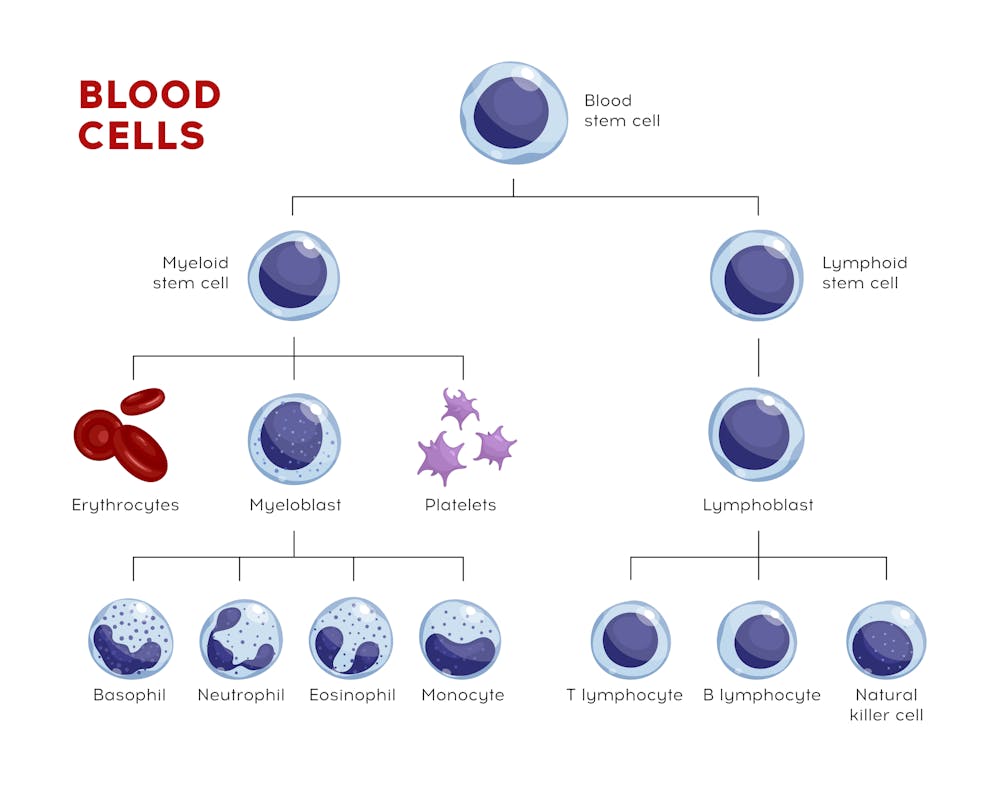
The innate immune system, which includes white blood cells called dendritic cells, monocytes and neutrophils, is present at birth and responds instantly to invaders. This group of white blood cells bombard pathogens with destructive chemicals and swallow and destroy viruses and bacteria. The innate immune system provides an instantaneous reaction to a pathogen. The problem is that it’s a blunt instrument – it responds the same way to all perceived threats.

The adaptive immune system, which is made up of B cells and T cells, must learn about a pathogen and its characteristics from the innate immune cells. This system takes longer to kick in, but the up side is that it is very specific and in many cases lasts a lifetime.

The immune system’s memory

The history of pathogen exposure is carried in so-called memory T cells and memory B cells. When an infection is defeated and gone, these cells reside in the peripheral tissues of the body such as lymph nodes or spleen and serve as a memory of the disease-causing virus. This immunological memory is responsible for the host defense and kicks into action in case of the second wave or attack of the pathogen.

It is normal for antibody levels to decline after a person has recovered from a disease. But the New England Journal of Medicine paper raised concerns because it suggests that we are losing our immunological memory – which is as bad as losing a real memory.

What role do T cells play in immunity?

B cells and antibodies are only part of the immune response. T cells help B cells produce antibodies – which are proteins that can bind to a specific pathogen and destroy it.

The way this happens is that first the B cells swallow the virus and start producing antibodies.

T cells cannot swallow the virus. But a type of white blood cell called an antigen-presenting cell can. After it does, it “shows” different parts of the virus to the T cells. The T cells then learn about the virus which they can now seek and destroy.

T cells also stick to the B cells and send them the activation signals that help B cells ramp up antibody production.

If antibodies decline, what does this mean for COVID-19 immunity?

It suggests that when there are fewer antibodies in the blood, there is a greater chance that a number of individual virus particles, called virions, will survive and escape destruction. Therefore, the remaining virions will continue to proliferate and cause disease.

What do declining antibody levels mean for establishing herd immunity?

Herd immunity refers to a population and occurs when a sufficiently high number of people within a community are immune to the virus and incapable of transmitting it. That provides protection for those who are still vulnerable. For example, if 60% of people are protected against COVID – because they have survived the infection and carry antibodies – it might protect (via less frequent interactions) the remaining 40% from getting sick.

But the results in the New England Journal of Medicine suggest that people with lower levels of antibody may still have the virus and may not have symptoms of the disease.

That means that if these people with low antibody levels hang around healthy, uninfected people, they present a danger to them because they can transmit the virus.

When antibody levels fall, does immunity disappear?

In general, the answer is no. If the virus attempts to cause a second infection, the memory B and T cells are able to recognize it, multiply million of times and defend the body against the virus, preventing it from triggering another full-blown infection.

The protection provided by memory T and B cells is the reason that vaccine-based protection works.

However, there are exceptions. A lifelong vaccine against the flu does not work because flu’s genetic code changes rapidly, altering the appearance of the flu, and therefore requires a new vaccine every season.

But with SARS-CoV-2, the problem as I see it, seems to be that those memory T cells and B cells seem to be wiped out.

Antibodies are proteins and last for only between three and four weeks in the blood circulation. To keep antibody levels high, B cells need to replenish them with a fresh supply. But in COVID-19, the declining antibody levels suggest that the cells that produce these antibodies are not present in sufficient numbers, which would explain the drop in antibody levels. Studies of how long immunity from COVID-19 last may shed more light, but for now we do not know the reason why.


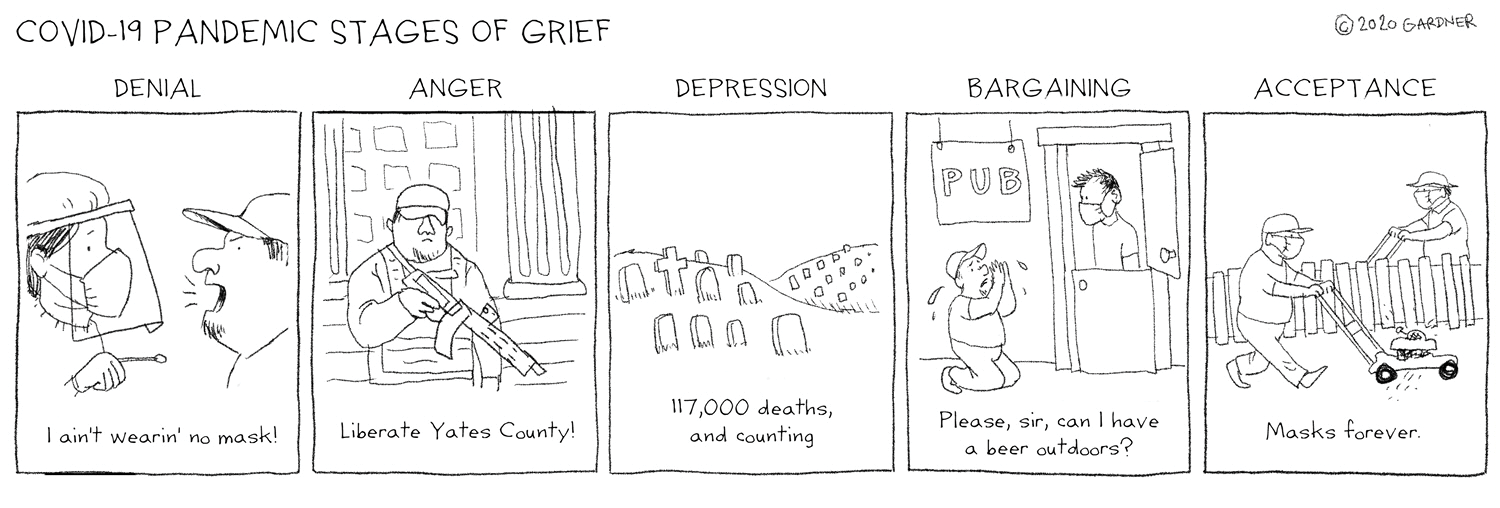
Cartoon – Pandemic Stages of Grief

Cartoon by Sally-Covid 19 Pandemic Stages of Grief |

Contact tracing stopped at the country club gates

https://mailchi.mp/0e13b5a09ec5/the-weekly-gist-august-21-2020?e=d1e747d2d8

Neo Classical Country Club Estate - $8,300,000 | Entrance gates ...

From downtown New Orleans to the tony suburbs of New York, post-graduation parties and summer gatherings drawing dozens of teens have become loci of COVID infections around the country.

Taking a look inside one prep-school-party COVID cluster, an article in the New Yorker recounts the reverberations from graduation parties turned superspreader events at an exclusive Atlanta private school.

Spurred by a false sense of security (“We don’t live in New York,” one dad said) and Georgia’s early reopening orders, several families at the Lovett School held graduation parties, some with as many as 50 attendees.

The school received its first report of a student testing positive four days after attending the graduation festivities. A growing cluster of infections became evident as more cases came to light, including among students who posted TikTok videos to announce their positive test results. Lovett’s school nurse began ad-hoc contact tracing, finding 23 positive cases on her first day of searching.

But Fulton County contact tracers were met with fierce resistance from parents, with the vast majority of those contacted declining to talk. The school provided students’ contact information, but said it couldn’t cooperate with tracers further due to privacy regulations.

There are many reasons that individuals might be reticent to participate in contact tracing, such as fear of losing a job, or worries about immigration status. But the resistance of wealthy, highly educated “prep school parents” to contact tracing is shocking. Public health efforts will continue to be stymied as long as the instinct to protect individual and school reputations from the perceived stigma of infection outweighs the greater good—the health of the community.


Long-Haulers Are Redefining COVID-19

https://www.theatlantic.com/health/archive/2020/08/long-haulers-covid-19-recognition-support-groups-symptoms/615382/

Long-Haulers Deal With Symptoms Weeks After Coronavirus Infection ...

Without understanding the lingering illness that some patients experience, we can’t understand the pandemic.

Lauren nichols has been sick with COVID-19 since March 10, shortly before Tom Hanks announced his diagnosis and the NBA temporarily canceled its season. She has lived through one month of hand tremors, three of fever, and four of night sweats. When we spoke on day 150, she was on her fifth month of gastrointestinal problems and severe morning nausea. She still has extreme fatigue, bulging veins, excessive bruising, an erratic heartbeat, short-term memory loss, gynecological problems, sensitivity to light and sounds, and brain fog. Even writing an email can be hard, she told me, “because the words I think I’m writing are not the words coming out.” She wakes up gasping for air twice a month. It still hurts to inhale.

Tens of thousands of people, collectively known as “long-haulers,” have similar stories. I first wrote about them in early June. Since then, I’ve received hundreds of messages from people who have been suffering for months—alone, unheard, and pummeled by unrelenting and unpredictable symptoms. “It’s like every day, you reach your hand into a bucket of symptoms, throw some on the table, and say, ‘This is you for today,’” says David Putrino, a neuroscientist and a rehabilitation specialist at Mount Sinai Hospital who has cared for many long-haulers.

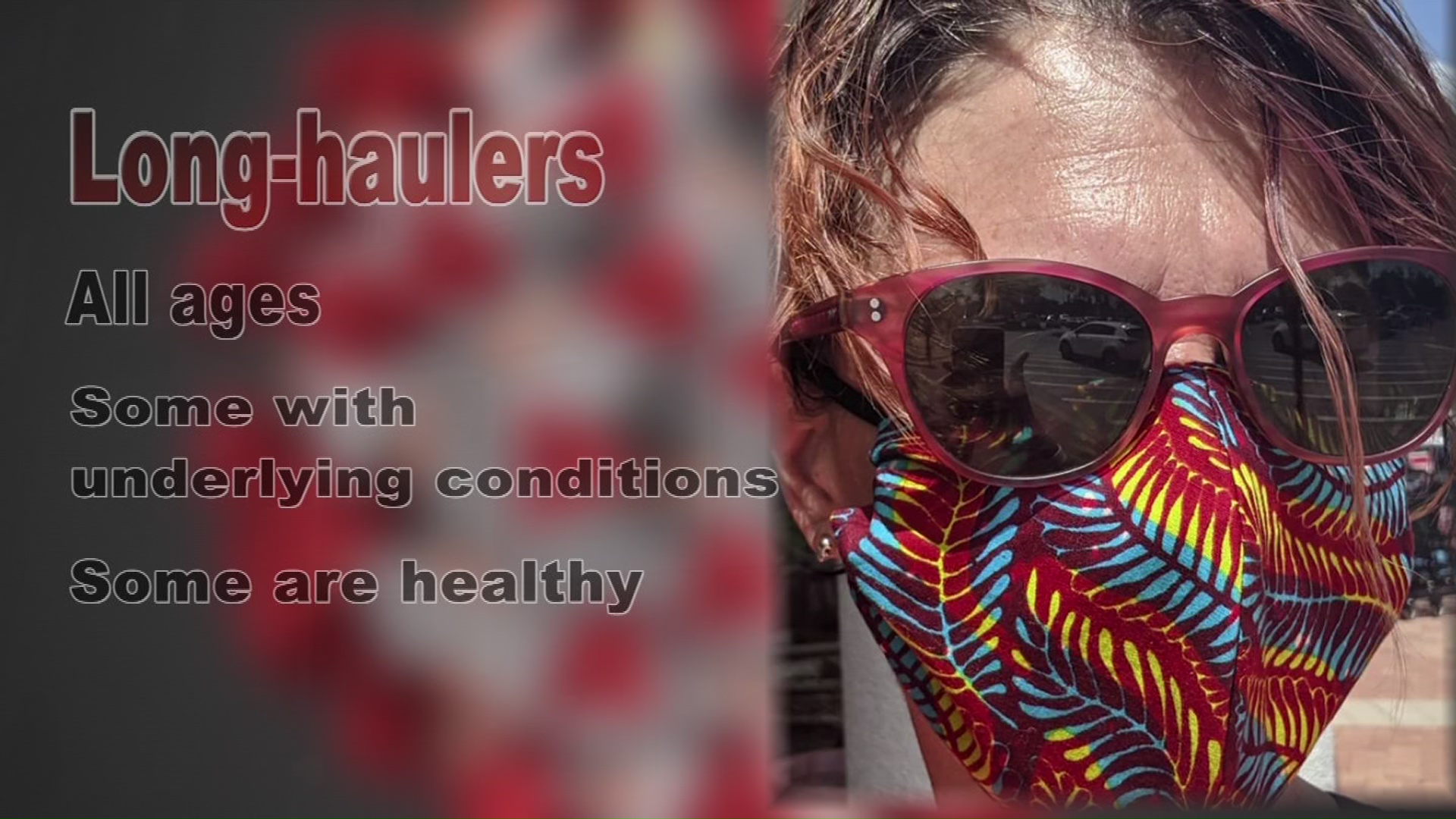
Of the long-haulers Putrino has surveyed, most are women. Their average age is 44. Most were formerly fit and healthy. They look very different from the typical portrait of a COVID-19 patient—an elderly person with preexisting health problems. “It’s scary because in the states that are surging, we have all these young people going out thinking they’re invincible, and this could easily knock them out for months,” Putrino told me. And for some, months of illness could turn into years of disability.

Our understanding of COVID-19 has accreted around the idea that it kills a few and is “mild” for the rest. That caricature was sketched before the new coronavirus even had a name; instead of shifting in the light of fresh data, it calcified. It affected the questions scientists sought to ask, the stories journalists sought to tell, and the patients doctors sought to treat. It excluded long-haulers from help and answers. Nichols’s initial symptoms were so unlike the official description of COVID-19 that her first doctor told her she had acid reflux and refused to get her tested. “Even if you did have COVID-19, you’re 32, you’re healthy, and you’re not going to die,” she remembers him saying. (She has since tested positive.)

Long-haulers had to set up their own support groups. They had to start running their own research projects. They formed alliances with people who have similar illnesses, such as dysautonomia and myalgic encephalomyelitis, also known as chronic fatigue syndrome. A British group—LongCovidSOS—launched a campaign to push the government for recognition, research, and support.

All of this effort started to have an effect. More journalists wrote stories about them. Some doctors began taking their illness seriously. Some researchers are developing treatment and rehabilitation programs. Representative Jamie Raskin of Maryland introduced a bill that would allow the National Institutes of Health to fund and coordinate more research into chronic illnesses that follow viral infections.

It’s not enough, argues Nisreen Alwan, a public-health professor at the University of Southampton who has had COVID-19 since March 20. She says that experts and officials should stop referring to all nonhospitalized cases as “mild.” They should agree on a definition of recovery that goes beyond being discharged from the hospital or testing negative for the virus, and accounts for a patient’s quality of life. “We cannot fight what we do not measure,” Alwan says. “Death is not the only thing that counts. We must also count lives changed.”

Only then will we truly know the full stakes of the pandemic. As many people still fantasize about returning to their previous lives, some are already staring at a future where that is no longer possible.

A few formal studies have hinted at the lingering damage that COVID-19 can inflict. In an Italian study, 87 percent of hospitalized patients still had symptoms after two months; a British study found similar trends. A German study that included many patients who recovered at home found that 78 percent had heart abnormalities after two or three months. A team from the Centers for Disease Control and Prevention found that a third of 270 nonhospitalized patients hadn’t returned to their usual state of health after two weeks. (For comparison, roughly 90 percent of people who get the flu recover within that time frame.)

These findings, though limited, are galling. They suggest that in the United States alone, which has more than 5 million confirmed COVID-19 cases, there are probably hundreds of thousands of long-haulers.

These people are still paying the price for early pandemic failures. Many long-haulers couldn’t get tested when they first fell sick, because such tests were scarce. Others were denied tests because their symptoms didn’t conform to a list we now know was incomplete. False negatives are more common as time wears on; when many long-haulers finally got tested weeks or months into their illness, the results were negative. On average, long-haulers who tested negative experienced the same set of symptoms as those who tested positive, which suggests that they truly do have COVID-19. But their negative result still hangs over them, shutting them out of research and treatments.

Several studies have found that most COVID-19 patients produce antibodies that recognize the new coronavirus, and that these molecules endure for months. Their presence should confirm whether a long-hauler was indeed infected. But there’s a catch: Most existing antibody studies focused on either hospitalized patients or those with mild symptoms and swift recoveries. By contrast, Putrino told me that in his survey of 1,400 long-haulers, two-thirds of those who have had antibody tests got negative results, even though their symptoms were consistent with COVID-19. Nichols, for example, tested negative for antibodies after twice testing positive for the coronavirus itself. “Just because you’re negative for antibodies doesn’t mean you didn’t have COVID-19,” Putrino said.

Organizations and governments have been slow to recognize what long-haulers call “long COVID.” In July, the U.K. allocated $11 million (£8.4 million) for research into the long-term consequences of COVID-19, but “to be eligible, you have to have been admitted into hospital,” says Trisha Greenhalgh, a primary-health-care professor at the University of Oxford. “That makes no sense.” Meanwhile, the CDC’s website still does not mention this phenomenon, and its list of symptoms barely reflects the full range of neurological problems. As late as June 25, the agency’s deputy director for infectious diseases said “we don’t yet know” whether COVID-19 “could persist for more than a few months.” By then, thousands of long-haulers already did know, and had been talking about it.

Without clear information from official sources, many long-haulers have found answers from one another. Support groups on Facebook have thousands of membersOne Slack group, founded within a wellness organization called Body Politic, has almost doubled in size since June to more than 7,000 active participants from 25 countries. There are channels for discussing every organ system in the body. There are lists of sympathetic medical providers, and tips for convincing those who aren’t listening. Eerily, the group’s membership morphs as the pandemic spreads: “When Brazil had a huge spike, we had a massive influx of Brazilian patients,” said Nichols, who is an administrator.

The Body Politic group has its own team of researchers, whose survey of 640 long-haulers remains the most illuminating study of the long COVID experience. More than any formally published study, it cataloged the full range of symptoms, and explored problems with stigma and testing.

Many long-haulers start feeling better in their fourth or fifth month, but recovery is tentative, variable, and not guaranteed. Hannah Davis, an artist in New York City, still has fever, facial numbness, brain fog, and rapid heartbeats whenever she stands up, but she’s sleeping better, at least; at the end of July, she had her first relatively normal day since mid-March. Margot Gage, a social epidemiologist at Lamar University, has only now regained the ability to read without shooting pain, but still has debilitating headaches and fatigue. Hannah Wei, a product designer based in Ottawa who is a Body Politic researcher, has recovered from her neurological symptoms but not the scars the coronavirus left on her lungs. “Will I be living with this lasting damage, or will it eventually go away?” she says. “I don’t have the answers, and no one can tell me.”

The physical toll of long COVID almost always comes with an equally debilitating comorbidity of disbelief. Employers have told long-haulers that they couldn’t possibly be sick for that long. Friends and family members accused them of being lazy. Doctors refused to believe they had COVID-19. “Every specialist I saw—cardiologist, rheumatologist, dermatologist, neurologist—was wedded to this idea that ‘mild’ COVID-19 infections last two weeks,” says Angela Meriquez Vázquez, a children’s activist in Los Angeles. “In one of my first ER visits, I was referred for a psychiatric evaluation, even though my symptoms were of heart attack and stroke.”

This “medical gaslighting,” whereby physiological suffering is downplayed as a psychological problem such as stress or anxiety, is especially bad for women, and even worse for women of color. “Doctors not taking our conditions seriously is a common issue, and now we have COVID-19 on top of it,” says Gage, who is Black. When she sought medical help for her symptoms, doctors in two separate hospitals assumed she was having a drug overdose.

Such gaslighting still occurs, but has been reduced by the recent spate of media attention. Davis was stunned when she met with a cardiologist who used the term long-hauler without needing an explanation. Vázquez burst into tears after her new primary-care provider instantly believed her. “I went into that appointment armed with my notebook, ready to do battle,” she says. “Just having a doctor who believed that my symptoms were directly related to COVID-19 was transformative.”

Putrino, the Mount Sinai doctor, came to recognize long COVID on his own. Back in March, he realized that some patients who were referred to his hospital were in bad shape but weren’t sick enough to be admitted. His team created an app to keep track of these people remotely. By late May, they realized that “around 10 percent just weren’t getting better,” he told me. He has since started a program at Mount Sinai that’s dedicated to caring for long-haulers.

But such programs are still scarce, creating large geographical deserts where long-haulers cannot find help. Putrino cannot see patients who live outside New York State. Igor Koralnik, a neurologist at Northwestern Medicine who runs a similar operation, was booked solid through April 2021; he has since brought extra staff members so he could accept more patients. Canadian long-haulers “have just one clinic, in Toronto, and that’s it,” Wei says.

Putrino thinks that many long-haulers have symptoms that resemble dysautonomia. This is an umbrella term for disorders that disturb the autonomic nervous system, which controls bodily functions such as breathing, heart rate, blood pressure, and digestion. Damage to this system, whether inflicted by the virus itself or by an overly intense immune response, might explain why many long-haulers struggle for breath when their oxygen levels are normal, or have unsteady heartbeats when they aren’t feeling anxious. Things that were once automatic are now erratic.

More than 90 percent of long-haulers whom Putrino has worked with also have “post-exertional malaise,” in which even mild bouts of physical or mental exertion can trigger a severe physiological crash. “We’re talking about walking up a flight of stairs and being out of commission for two days,” Putrino said. This is the defining symptom of myalgic encephalomyelitis, or chronic fatigue syndrome. For decades, people with ME/CFS have endured the same gendered gaslighting that long-haulers are now experiencing. They’re painfully familiar with both medical neglect and a perplexing portfolio of symptoms.

These symptoms defeat intuitions that people have about work and rest, sickness and recovery. “You have to get away from this idea that you can do more each day, or that you can push through,” says Caroline Dalton of Sheffield Hallam University in England, who works for a COVID-19 rehabilitation program. Many long-haulers push themselves because they miss their lives, or need to return to work. But as her colleague Robert Copeland, a sport psychologist, explains, “managing your fatigue is now your full-time job.”

The trick, then, is to slowly recondition a patient’s nervous system through careful exercises, without triggering a debilitating crash. On Putrino’s team, a strength and conditioning coach devises workouts to slowly get patients accustomed to a higher heart rate. A nutritionist fashions personalized meal plans to compensate for any dietary deficiencies. A neuropsychologist—Gudrun Lange, who has long worked with ME/CFS patients and is helping the group pro bono—uses relaxation and somatic-awareness techniques to help long-haulers manage their feelings about their condition.

Putrino insists on seeing and caring for all the long-haulers that he can. His colleagues at Mount Sinai’s newly launched center for post-COVID-19 care have to follow guidelines that permit them to admit only patients with positive tests. Anyone the center can’t admit is referred to Putrino’s team, which also keeps in touch with the Body Politic group to track patients who fall through the cracks.

I asked him why he is so inclined to believe long-haulers when so many other medical professionals dismiss them. First, he said, “these people are telling us the same things over and over again.” But also, his wife has Ehlers-Danlos syndrome—a group of genetic disorders that affect the body’s connective tissues, and that commonly lead to dysautonomia. “I watched her go through the same thing: ‘You must have anxiety, or panic attacks, or every-excuse-under-the-sun,’” he told me. “Finally, after three years of searching, someone said, ‘Oh, you have dysautonomia and EDS.’ They put her on a treatment protocol, and she could live her life again.”

“If you listen to the population you’re trying to help, they’ll tell you what’s wrong,” he said.

Nichols is a few weeks away from meeting the CDC’s criteria for ME/CFS. She has post-exertional malaise. She has brain fog. On September 9, she’ll mark her sixth month of extreme fatigue. “Am I happy about it? No,” she said. “But I have to face reality. If this is what I have, this is what I have.” Lots of long-haulers are in the same boat. Many (but not all) cases of ME/CFS are triggered by viral infections, and new clusters have historically emerged after outbreaks. “When COVID-19 started to happen, I said to my husband, ‘Oh God, there’s going to be an avalanche of ME/CFS,’” Lange told me.

Some long-haulers are skeptical—and even angry—about the ME/CFS connection. They won’t countenance the prospect of being chronically disabled. They don’t want to be labeled with a condition that has long been trivialized. Nichols sympathizes; she used to trivialize it herself. “I falsely thought it was just people being too tired—and I feel terrible about that,” she said. Her plan is to use her imminent diagnosis as fuel for advocacy, “as a way of paying back the ME community for my disbelief.”

But COVID-19 is still a new disease, and ME/CFS is just one of several possible outcomes. Some long-haulers recover before the six-month threshold. Some don’t have post-exertional malaise. Some have lung damage and breathing problems that aren’t traditional ME/CFS symptoms. Some have symptoms that more closely fit with other chronic illnesses, including dysautonomia, fibromyalgia, or mast cell activation syndrome.

Putrino doesn’t want to assign any labels. “Let’s just start helping them,” he said, while simultaneously collecting data that will eventually show how much long COVID overlaps with other known syndromes. (Several other teams are conducting similar studies.) Even when symptoms such as fatigue are shared, their biological roots might differ—and those differences matter. Exercise might be devastating for someone with ME/CFS, but might benefit a patient with something else. Many long-haulers, meanwhile, are treating any diagnosis as more of an anchor than an answer: It’s a starting point for understanding what’s happening to them. Vázquez, for example, was diagnosed with MCAS, and although it’s not a perfect match for her symptoms, “it’s close enough,” she says.

No matter the exact diagnosis, the COVID-19 pandemic will almost certainly create a substantial wave of chronically disabled people. It might be hard to ignore this cohort because of the sheer number of them, the intense attention commanded by the pandemic, and the stories from celebrities such as the actor Alyssa Milano and the journalist Chris Cuomo. Then again, they might face the same neglect that people with ME/CFS have long endured. “We’ve been demanding for decades that people do something,” says Terri Wilder, who has ME/CFS and is an activist with #MEAction. “I’ve met with [NIH Director] Francis Collins. I’ve called Tony Fauci, and state senators. We still have no FDA-approved drugs, no systems of care. We only have 10 to 15 ME/CFS medical experts in the country. We all want our lives back, and we want this broken system fixed.

The uncertainty that long-haulers are experiencing results from that long-standing neglect. But so does the help they’re getting from people with chronic illnesses, who have already walked the same path. When the pandemic began, “it was like watching the roller coaster go up the hill, and only people like us knew that the track was broken,” says Alison Sbrana, who has ME/CFS and dysautonomia. She now spends her few productive weekly hours moderating the Body Politic support group. She has invited ME/CFS and dysautonomia specialists to give seminars, and has directed people to credible resources on aspects of disabled life, including care and benefits.

That frontier, in which long-haulers attempt to access social support, “is about to be a shit show,” Sbrana says. Some want their employers to make accommodations, such as reduced hours or long-term sick leave, so they can keep working at a time when their medical bills are mounting. Others cannot work, but are pressured to do so by bosses who don’t understand what long COVID is. “We keep seeing that people who don’t have a positive test result struggle to get paid time off work,” says Fiona Lowenstein, who founded Body Politic. Yet others “don’t want people to see them as complainers, push themselves, and then get sicker,” says Barbara Comerford, a New Jersey–based attorney who specializes in disability law and has represented many people with ME/CFS.

If they lose their jobs, “they’re in really bad shape,” she adds. Other sources of disability benefits and care, including private insurance and Social Security, are notoriously hard to access. Long-haulers would need to provide a history of being unable to do substantial gainful employment, and ample medical documentation of their disability to prove that it’s expected to last at least a year. Many have neither.

Being a long-hauler in August is very different from being one in February. The first wave, who were infected early in the year, endured months of solitude and confusion. While the national narrative shifted from physical distancing to reopenings, their realities were pinned in place by fever or fatigue. Many had no idea that others were going through the same ordeal. They wondered why they were still sick, or how long they’d be sick for. “We didn’t know what tomorrow would bring,” Nichols said.

Long-hauler support groups act as windows in time. In the Body Politic community, “the earliest person we know got sick in January,” Davis says. “She posts from the future, two months ahead of everyone else.” Conversely, as veteran long-haulers watch new generations pass the same monthly milestones, some are struck by a strange sense of solidarity, validation, and jealousy. The newer long-haulers already know what to call themselves, have bustling communities to learn from, and have better access to tests and medical care. The older ones are battle-worn and weary. “There’s something about having got sick in March and April that’s a unique experience, almost like post-traumatic stress disorder,” Vázquez says.

Throughout the pandemic, systemic failures have been portrayed as personal ones. Many people ignored catastrophic governmental choices that allowed the coronavirus to spread unchecked, and instead castigated individuals for going to beaches or wearing masks incorrectly. So, too, with recovery. The act of getting better is frequently framed as a battle between person and pathogen, ignoring everything else that sways the outcome of that conflict—the disregard from doctors and the sympathy from strangers, the choices of policy makers and the narratives of journalists. Nothing about COVID-19 exists in a social vacuum. If people are to recover, “you have to create the conditions in which they can recover,” Copeland, the sport psychologist from Sheffield Hallam, says.

If those conditions don’t exist, they can be at least partly willed into existence. Here, too, the long-hauler story is a microcosm of the pandemic. In the U.S., citizens chose to physically distance themselves, take precautions, and wear masks long before leaders urged or ordered them to do so. Likewise, the long-haulers have taken matters into their own hands, pushing for respect, research, and support when none were offered.

But such effort comes at a cost. Long-haulers are precariously perched on a physiological precipice—a difficult position from which to fight for their future. “A lot of people who don’t have the energy to educate the world are educating the world,” Nichols said.


When COVID infection becomes a chronic disease

https://mailchi.mp/0e13b5a09ec5/the-weekly-gist-august-21-2020?e=d1e747d2d8

Long COVID-19' a reality; 75 per cent patients suffer from ...

The minimal evidence of serious impact of COVID infection on young healthy individuals has been one of the bright spots of this pandemic. Overall, only a small percentage of those infected, mostly the elderly or those with pre-existing conditions, get very sick, and an even smaller number die.

But a new piece in The Atlantic lays out mounting evidence that many younger patients don’t spring back to good health after a few weeks, as common wisdom suggests; instead, they experience debilitating long-term effects, months after infection. The profile of the average patient with “Long-COVID” is just 44 years old, and previously fit and healthy.

She (the condition is much more common in women) likely suffered a mild initial infection. But now, months later, she still faces a wide range of symptoms. Some patients have significant chronic pulmonary or cardiac function abnormalities (like Georgia State’s star freshman quarterback recruit, sidelined for the year with post-COVID myocarditis).

But others are dealing with a different, but just as debilitating, set of symptoms resembling chronic fatigue syndrome (CFS).

And like CFS patients, many COVID “long-haulers” find their symptoms minimized by their doctors. Early studies show that large numbers of patients may be affected: in a series of 270 non-hospitalized patients, the CDC found a full third hadn’t returned to their usual health after two weeks (as compared to just 10 percent of influenza patients).

A handful of centers have taken the first step toward better understanding “Long-COVID”, establishing dedicated clinics to study and treat the growing number of patients for whom COVID-19 is turning out to be a chronic disease, leaving a wave of people with long-term disabilities in its wake.


2020 Hospital Operating Margins Down 96% Through July

https://www.prnewswire.com/news-releases/2020-hospital-operating-margins-down-96-through-july-301116888.html

Ship in a Storm | ICOExaminer

Hospital Operating Margins have plunged 96% since the start of 2020 in comparison with the first seven months of 2019, according to a new Kaufman Hall report, as uncertainty and volatility continue in the wake of the COVID-19 pandemic.

Those results do not include federal funding from the Coronavirus Aid, Relief, and Economic Security (CARES) Act. Even with that aid, however, Operating Margins are down 28% year-to-date compared to January-July 2019.

Operating Margins fell 2% year-over-year in July without the CARES Act relief, according to the latest edition of Kaufman Hall’s National Hospital Flash Report. Hospitals also saw flat year-over-year gross revenue performance in July, continued high per-patient expenses, and a fifth consecutive month of volumes falling below 2019 performance and below budget.

From June to July, however, hospital Operating Margins were up 24%, likely due to a backlog in demand resulting from the shutdown of many non-urgent services in the early months of the pandemic.

“COVID-19 has created a highly volatile operating environment for our nation’s hospitals and health systems,” said Jim Blake, managing director, Kaufman Hall. “Hospitals have shown some incremental signs of potential financial recovery in recent months. Unfortunately, there is no guarantee these trends will continue, and hospitals still have a long way to go to recover from devastating losses in the early months of the pandemic.”

July volumes continued to fall year-over-year, but showed some signs of potential recovery month-over-month. Adjusted Discharges were down 7% compared to July 2019, but up 6% compared to June 2020. Adjusted Patient Days were down 4% year-over-year, but up 7% month-over-month. Adjusted Discharges are down 13% and Adjusted Patient Days are down 11% since the start of 2020, compared to the first seven months of 2019.

Hospital Emergency Department (ED) volumes have been hardest hit, falling 17% year-to-date compared to the same period in 2019, down 17% year-over-year, and 13% below budget in July. Surgery volumes saw some gains with the continued resumption of non-urgent procedures pushing Operating Room Minutes up 3% month-over-month and 4% above budget in July, but they remain down 15% year-to-date.

Not including CARES Act relief, Gross Operating Revenues were essentially flat year-over-year and 2% below budget for the month, but have fallen 8% year-to-date compared to the same period in 2019. Inpatient Revenue is down 5% year-to-date and fell 3% below budget in July, but increased 1% year-over-year. Outpatient Revenue is down 11% year-to-date, 1% year-over-year, and 2% below budget.

Hospitals nationwide also continued to see higher per-patient expenses despite having fewer patients. Total Expense per Adjusted Discharge has jumped 16% year-to-date compared to the same seven-month period in 2019, and rose 9% year-over-year and 5% above budget in July. Labor Expense per Adjusted Discharge is up 18% year-to-date and rose 9% year-over-year and 5% above budget in July. Non-Labor Expense per Adjusted Discharge has increased 15% during the first seven months of 2020 and jumped 11% year-over-year and was 5% above budget for the month.

The National Hospital Flash Report draws on data from more than 800 hospitals.


The kids are not all right

https://mailchi.mp/0e13b5a09ec5/the-weekly-gist-august-21-2020?e=d1e747d2d8

Many children heading back to school—in whichever form that that may take this fall—have skipped their annual visit to the pediatrician. The graphic above highlights the sluggish rebound in pediatric ambulatory volume. While adult primary care visits have mostly bounced back, pediatric visits are still 26 percent below pre-COVID levels.

The drop in visits early in the pandemic also impacted immunizations, with 2.5M regular childhood vaccinations missed in the US during the first quarter of 2020—and early data suggests those seem to be rebounding at a similarly anemic rate.

This lack of pediatric routine care is particularly worrisome as COVID-19 cases in children are climbing, with a 90 percent increase from July to August. Though most of the nation’s largest public school districts have opted to begin the school year with online learning, some districts have already returned to in-person classes, and, unsurprisingly, new cases are already being reported.

While COVID-19 is normally neither severe nor fatal in children, infections among school-age kids put others at risk. According to the Kaiser Family Foundation, nearly a quarter of teachers (1.5M) are considered high-risk and almost six percent of seniors (3.3M) live with school-aged children.

Without the traditional back-to-school push for well-child visits, sports physicals, and immunization updates, healthcare providers must think creatively about how to give children with the care they need, whether through personalized communication from pediatricians that assuages parental concerns about office safety, or through more innovative means such as drive-thru vaccination services.


It looks like what happens in Vegas isn’t staying in Vegas.

https://www.forbes.com/sites/suzannerowankelleher/2020/08/21/las-vegas-may-be-a-superspreader-hot-spot-new-study-suggests/?utm_source=newsletter&utm_medium=email&utm_campaign=coronavirus&cdlcid=5d2c97df953109375e4d8b68#506ae817484d

Travelers returning from the Covid-19 hot spot are potentially spreading the virus to virtually every state in the nation, according to a new mobility data study conducted on behalf of the non-profit investigative news organization ProPublica.

The findings highlight the connection between travelers and the spread of the virus during the pandemic.

The ProPublica study looked at a total of 12 days of cellphone data in three batches: four days in May, when Nevada was still shut down; four days in June, just after Las Vegas reopened to tourism; and four days in mid-July. In May, travel from Las Vegas was mainly regional. But since Las Vegas reopened in early June, the mobility of smartphones leaving Las Vegas has become progressively more widespread and nationalized.

Over the final four-day period, in July, the study identified 26,000 smartphones on the Las Vegas Strip, many of which later appeared in 47 states within the same four-day period — every state in the continental United States except Maine.

“About 3,700 of the devices were spotted in Southern California in the same four days; about 2,700 in Arizona, with 740 in Phoenix; around 1,000 in Texas; more than 800 in Milwaukee, Detroit, Chicago and Cleveland; and more than 100 in the New York area,” reported ProPublica.

While the study did not determine how many of these travelers were infected with Covid-19 when they returned to their home states, it is reasonable to assume that many were. For the past several months, Las Vegas has been a hot spot for the disease.

Las Vegas is located in Clark County, Nevada, which is currently struggling with one of the highest rates of new COVID-19 infections in the country, with 26.9 new daily cases per 100,000 people tested over a rolling seven-day average, according to the Harvard Global Health Institute’s Covid-19 tracker. Any community with over 25 new daily cases is deemed to be at a tipping point where stay-at-home orders are necessary, according to Harvard researchers.

This isn’t the first data-driven study to show how travelers are spreading Covid-19 across the United States. In early July, the PolicyLab at Children’s Hospital of Philadelphia (CHOP) released research indicating that the novel coronavirus was spreading along the nation’s interstate highways.

“Travel is certainly a huge driving factor,” the researchers wrote at the time. “We see spread along I-80 between central Illinois and Iowa, as well as along the I-90 corridor across upstate New York.” They pointed to a rise in cases along the I-95 corridor and concluded that interstate travel was creating renewed risk to regions like the Northeast that had successfully flattened the curve of the novel coronavirus.

Yesterday, Clark County’s Twitter account announced a grim milestone: The number of deaths attributed to Covid-19 in the community has now topped 1,000.


Why Most Voters Oppose Schools Reopening

https://www.forbes.com/sites/williamhaseltine/2020/08/21/why-most-voters-oppose-schools-reopening/#2df43b5b1822

Why Most Voters Oppose Schools Reopening

Even as test rates hover around six to seven percent and tens of thousands of new Covid-19 cases are being reported daily, school districts across the country will continue with plans to resume operations in the coming weeks. The latest survey data shows, however, that most Americans oppose reopening K-12 education in their states.

Parents have reason to be concerned that sending their children to school could bring the virus into their homes, as well as spike positivity rates in their communities. From July 30th to August 13th, over 75,000 new child Covid-19 cases were reported, according to the American Academy of Pediatrics. The outcome would be disastrous were even one asymptomatic carrier to attend classes in the coming weeks.

A recent survey conducted by the Financial Times-Peterson Foundation US Economic Monitor revealed that six in ten voters oppose reopening K-12 schools in their states, while as many as 81 percent urge the prioritization of health among students and faculty over the economy. Were children to get sick at school, not only would their health be endangered, but so would the health of their families. There would be no economy without healthy parents, which is why the vast majority of Americans urge the safety of American students over the state of the economy.

One of the more prudent concerns about the resumption of K-12 education is the social nature of a student’s daily life. School districts are assuring parents that they have put preventative measures in place, such as social distancing and classroom hybridization. But to assume students will have no interaction at all seems ludicrous. Children and teens have been out of the traditional school setting for over five months and they will be ready to interact with others. 

Despite the urge shared by parents and children alike to return to normal, the average voter realizes that the pandemic in the United States is far from over. Parents want their children to stay healthy for many reasons—to ensure the physical health and wellbeing of the family, to ensure the economic livelihood of the family, and to avoid the unknown long term health risks associated with Covid-19. Around 65 percent of voters believe social distancing requirements and non essential business restrictions should be in place for at least another three months—a sacrifice many are willing to make for the sake of their families and children.

Such statistics also show that people recognize there will be several more months of abnormality and want decision makers to take action accordingly, even if it means deprioritizing the economy. Families and individuals have been economically crippled by the pandemic and the US government’s lack of public assistance. The official unemployment rate still hovers around ten percent according to the Bureau of Labor Statistics. Low income families are struggling and eviction rates are sure to spike as rent moratoriums expire. These families have enough to worry about without the added pressure of sending their children back to school at this time.

The reopening of K-12 school districts in the coming weeks presents medical and economic challenges for families in the pandemic era, especially those already disadvantaged or experiencing hardship. Societal immunity is a long way off; as thirty five percent of voters said they would not be likely to get a COVID-19 vaccine were one approved and available by the end of the year, meaning children of those thirty five percent would also be unlikely to get vaccinated. With the inability to ensure the health and safety of students and the unknown economic future to come, schools are better off staying online for the time being.