The ACA’s Promise of Free Preventive Health Care Faces Ongoing Legal Challenges

An ongoing legal challenge is threatening the guarantee of free preventive care in the Affordable Care Act (ACA).

Six individuals and the owners of two small businesses sued the federal government, arguing that the ACA provision “makes it impossible” for them to purchase health insurance for themselves or their employees that excludes free preventive care. The plaintiffs argue that they do not want or need such care. They specifically name the medication PrEP (used to prevent the spread of HIV), contraception, the HPV vaccine, and screening and behavioral counseling for sexually transmitted diseases and substance use; however, they seek to invalidate the entire ACA preventive benefit package.

A federal trial court judge agreed with some of their claims and invalidated free coverage of more than 50 services, including lung, breast, and colon cancer screenings and statins to prevent heart disease.

This ruling, which is currently being appealed, strips free preventive services coverage from more than 150 million privately insured people and approximately 20 million Medicaid beneficiaries who are covered under the ACA’s Medicaid expansion.

This suit was first filed in 2020. The plaintiffs in the case, Braidwood Management v. Becerra, continue to oppose the entire preventive benefit package, which consists of four service bundles: services rated “A” or “B” by the United States Preventive Services Task Force (USPSTF); routine immunizations recommended by the Advisory Committee on Immunization Practices (ACIP); evidence-informed services for children recommended by the Health Resources and Services Administration (HRSA); and evidence-informed women’s health care recommended by HRSA. The trial judge invalidated all benefits recommended by the USPSTF after March 23, 2010, the date the ACA became law. (The court also exempted the plaintiffs on religious grounds from their obligation to cover PrEP.) The Fifth Circuit put the trial court’s decision on temporary hold while the case is on appeal.

The Fifth Circuit, one of the nation’s most conservative appeals courts, will hear the Biden administration’s appeal of the trial court’s USPSTF ruling and the entirety of the plaintiffs’ original challenge, thereby putting all four coverage guarantees in play. The court also will hear whether the ruling should apply only to the plaintiffs or to all Americans.

The trial court held that the USPSTF lacks the legal status necessary under the Constitution to make binding coverage decisions, and that the Secretary of the U.S. Department of Health and Human Services (HHS) — who can make such binding decisions — lacks the power to rectify matters by formally adopting USPSTF recommendations. The judge concluded that federal law fails to require that members be presidential nominees confirmed by the Senate under the Appointments Clause; in the judge’s view, this means that members are not politically accountable for their decisions, which is constitutionally problematic. The judge also ruled that federal law makes the USPSTF the final coverage arbiter, which means that the HHS Secretary, who is nominated and confirmed under the Appointments Clause and thus politically accountable, cannot cure the constitutional problem by ratifying USPSTF recommendations.

On appeal, the Biden administration argues that the USPSTF passes constitutional muster because the HHS Secretary, who oversees the Task Force, is a nominated and confirmed constitutional officer. Alternatively, the administration argues the appeals court should interpret the statute as allowing the HHS Secretary to ratify USPSTF recommendations, since the law specifies that USPSTF members are independent of political pressure only “to the extent practicable.” The administration makes similar arguments on behalf of ACIP and HRSA.

The plaintiffs argue that secretarial ratification cannot cure the constitutional problems with all three advisory bodies. According to the plaintiffs, none of the advisory bodies has the status of constitutional officers demanded by the Appointments Clause, and so their recommendations must remain recommendations only, unenforceable by HHS on insurers, health plans, and state Medicaid programs.

The second issue is the scope of the remedy if the law is found unconstitutional. The trial court did not limit its holding to the four individual plaintiffs and two companies who sued, but instead applied its order nationwide. The Biden administration argues that, if the coverage guarantee is unconstitutional, the court only should prohibit HHS from enforcing the preventive services provision against the plaintiffs who brought the lawsuit and should allow the coverage guarantee to remain in force for the rest of the country. Citing an amicus brief filed by the American Public Health Association and public health deans and scholars, the administration argues that barring HHS from enforcing the preventive services requirement nationwide “pose[s] a grave threat to the public health” by decreasing Americans’ access to lifesaving preventive services. The plaintiffs argue that a nationwide prohibition is necessary, the broader public interest in free preventive coverage is irrelevant, and insurers will voluntarily continue to offer free preventive coverage if people want it.

The administration’s arguments on appeal have attracted amicus briefs by bipartisan economic scholars, organizations concerned with health equity and preventive health, health care organizations, and 23 states.

Crucially, the economists point out that, prior to the ACA, comprehensive free preventive coverage was extremely limited because it is not in insurers’ interest to make a long-term economic investment in members’ health. Indeed, prior to the ACA, insurers did not even uniformly cover the basic screenings for newborns to detect treatable illnesses and conditions.

Amicus briefs supporting the plaintiffs have been filed by Texas and an organization dedicated to “protecting individual liberties . . . against government overreach.” All briefing will be complete by November 3, 2023, with oral argument thereafter. A decision is likely in early to mid-2024. Whatever the outcome, expect a Supreme Court appeal given the size of the stakes in the case.


Ryder Cup Lessons for Team USA Healthcare

Saturday, Congress voted overwhelming (House 335-91, Senate 88-9) to keep the government funded until Nov. 17 at 2023 levels. No surprise.  Congress is supposed to pass all 12 appropriations bills before the start of each fiscal year but has done that 4 times since 1970—the last in 1997. So, while this chess game plays out, the health system will soldier on against growing recognition it needs fixing.

In Wednesday night’s debate, GOP Presidential aspirant Nicki Haley was asked what she would do to address the spike in personal bankruptcies due to medical debt. Her reply:

“We will break all of it [down], from the insurance company, to the hospitals, to the doctors’ offices, to the PBMs [pharmacy benefit managers], to the pharmaceutical companies. We will make it all transparent because when you do that, you will realize that’s what the problem is…we need to bring competition back into the healthcare space by eliminating certificate of need systems… Once we give the patient the ability to decide their healthcare, deciding which plan they want, that is when we will see magic happen, but we’re going to have to make every part of the industry open up and show us where their warts are because they all have them”

It’s a sentiment widely held across partisan aisles and in varied degrees among taxpayers, employers and beyond. It’s a system flaw and each sector is complicit.

What seems improbable is a solution that rises above the politics of healthcare where who wins and loses is more important than the solutions themselves.

Perhaps as improbable as the European team’s dominating performance in the 44th Ryder Cup Championship played in Rome last week especially given pre-tournament hype about the US team.

While in Rome last week, I queried hotel employees, restaurant and coffee shop owners, taxi drivers and locals at the tournament about the Italian health system. I saw no outdoor signage for hospitals and clinics nor TV ads for prescriptions and OTC remedies. Its pharmacies, clinics and hospitals are non-descript, modest and understated. Yet groups like the World Health Organization (WHO) and the Organization for Economic Cooperation Development (OECD) rank Servizio Sanitario Nazionale (SSN), the national system authorized in December 1978, in the top 10 in the world (The WHO ranks it second overall behind France).

“It covers all Italian citizens and legal foreign residents providing a full range of healthcare services with a free choice of providers. The service is free of charge at the point of service and is guided by the principles of universal coverage, solidarity, human dignity, and health. In principle, it serves as Italy’s public healthcare system.” Like U.S. ratings for hospitals, rankings for the Italian system vary but consistently place it in the top 15 based on methodologies comparing access, quality, and affordability.

The U.S., by contrast, ranks only first in certain high-end specialties and last among developed systems in access and affordability.

Like many systems of the world, SSN is governed by a national authority that sets operating principles and objectives administered thru 19 regions and two provinces that deliver health services under an appointed general manager. Each has significant independence and the flexibility to determine its own priorities and goals, and each is capitated based on a federal formula reflecting the unique needs and expected costs for that population’s health. 

It is funded through national and regional taxes, supplemented by private expenditure and insurance plans and regions are allowed to generate their own additional revenue to meet their needs. 74% of funding is public; 26% is private composed primarily of consumer out-of-pocket costs. By contrast, the U.S. system’s funding is 49% public (Medicare, Medicaid et al), 24% private (employer-based, misc.) and 27% OOP by consumers.

Italians enjoy the 6th highest life expectancy in the world, as well as very low levels of infant mortality. It’s not a perfect system: 10% of the population choose private insurance coverage to get access to care quicker along with dental care and other benefits. Its facilities are older, pharmacies small with limited hours and hospitals non-descript.

But Italians seem satisfied with their system reasoning it a right, not a privilege, and its absence from daily news critiques a non-concern.

Issues confronting its system—like caring for its elderly population in tandem with declining population growth, modernizing its emergency services and improving its preventive health programs are understood but not debilitating in a country one-fifth the size of the U.S. population.

My take:

Italy spends 9% of its overall GDP on its health system; the $4.6 trillion U.S spends 18% in its GDP on healthcare, and outcomes are comparable.  Our’s is better known but their’s appears functional and in many ways better.

Should the U.S.copy and paste the Italian system as its own? No. Our societies, social determinants and expectations vary widely. Might the U.S. health system learn from countries like Italy? Yes.

Questions like these merit consideration:

Might the U.S. system perform better if states had more authority and accountability for Medicare, CMS, Veterans’ health et al?

Might global budgets for states be an answer?

Might more spending on public health and social services be the answer to reduced costs and demand?

Might strict primary care gatekeeping be an answer to specialty and hospital care?

Might private insurance be unnecessary to a majority satisfied with a public system?

Might prices for prescription drugs, hospital services and insurance premiums be regulated or advertising limited?

Might employers play an expanded role in the system’s accountability?

Can we afford the system long-term, given other social needs in a changing global market?

Comparisons are constructive for insights to be learned. It’s true in healthcare and professional golf. The European team was better prepared for the Ryder Cup competition. From changes to the format of the matches, to pin placements and second shot distances requiring precision from 180-200 yards out on approach shots: advantage Europe. Still, it was execution as a team that made the difference in its dominating 16 1/2- 11 1/2 win —not the celebrity of any member.

The time to ask and answer tough questions about the sustainability of the U.S. system and chart a path forward. A prepared, selfless effort by a cross-sector Team Healthcare USA is our system’s most urgent need. No single sector has all the answers, and all are at risk of losing.

Team USA lost the Ryder Cup because it was out-performed by Team Europe: its data, preparation and teamwork made the difference.

Today, there is no Team Healthcare USA: each sector has its stars but winning the competition for the health and wellbeing of the U.S. populations requires more.

You might need an ambulance, but your state might not see it as ‘essential’

Ambulance services can receive state money once declared essential services.

When someone with a medical emergency calls 911, they expect an ambulance to show up.

But sometimes, there simply isn’t one available.

Most states don’t declare emergency medical services (EMS) to be an “essential service,” meaning the state government isn’t required to provide or fund them.

Now, though, a growing number of states are taking interest in recognizing ambulance services as essential — a long-awaited move for EMS agencies and professionals in the field, who say they hope to see more states follow through. Experts say the momentum might be driven by the pandemic, a decline in volunteerism and the rural health care shortage.

EMS professionals have been advocating for essential designation and more sustainable funding “for longer than I’ve been around — longer than I’ve been a paramedic,” said Mark McCulloch, 42, who is deputy chief of emergency medical services for West Des Moines, Iowa, and who has been a paramedic for more than two decades.

Currently, 13 states and the District of Columbia have passed laws designating or allowing local governments to deem EMS as an essential service, according to the National Conference of State Legislatures, a think tank that has been tracking legislation around the issue.

Those include Connecticut, Hawaii, Indiana, Iowa, Louisiana, Maine, Nebraska, Nevada, Oregon, Pennsylvania, South Carolina, Virginia and West Virginia.

And at least two states — Massachusetts and New York — have pending legislation.

Idaho passed a resolution in March requiring the state’s health department to draft legislation for next year’s legislative session.

Meanwhile, lawmakers in Wyoming this summer rejected a bill that would have deemed EMS essential, according to local media.

“States have the authority to determine which services are essential, required to be provided to all citizens,” said Kelsie George, a policy specialist with the National Conference of State Legislatures’ health program.

Among those states deeming EMS as essential services, laws vary widely in how they provide funding. They might provide money to EMS services, establish minimum requirements for the agencies or offer guidance on organizing and paying for EMS services at the local level, George said.

The lack of EMS services is acute in rural America, where EMS agencies and rural hospitals continue to shutter at record rates, meaning longer distances to life-saving care.

“The fact that people expect it, but yet it’s not listed as an essential service in many states, and it’s not supported as such really, is where that dissonance occurs,” said longtime paramedic Brenden Hayden, chairperson of the National EMS Advisory Council, a governmental advisory group within the U.S. Department of Transportation.

More financial support

There isn’t a sole federal agency dedicated to overseeing or funding EMS, with multiple agencies handling different regulations, and some federal dollars in the form of grants and highway safety funds from the Department of Transportation. Medicaid and Medicare offer some reimbursements, but EMS advocates argue it isn’t nearly enough.

“It forces it as a state question, because the federal government has not taken on the authority to require it,” said Dia Gainor, executive director for the National Association of State EMS Officials and a former Idaho state EMS director. “It’s the prerogative of the state to make the choice” to mandate and fund EMS.

In states that don’t provide funding, EMS agencies often must rely on Medicaid and Medicare reimbursements and money they get from local governments.

Many of the latter don’t have the budgets to pay EMS workers, forcing poorer communities to turn to volunteers. But the firefighter and EMS volunteer pool is shrinking nationally as the volunteer force ages and fewer young people sign up.

Overhead for EMS agencies is expensive: A basic new ambulance can cost $200,000 to $300,000. Then there are the medicine and equipment costs, as well as staff wages and farther driving distances to medical centers in rural areas.

“The fact that people expect it, but yet it’s not listed as an essential service in many states, and it’s not supported as such really, is where that dissonance occurs.”

– Paramedic Brenden Hayden, chairperson of the National EMS Advisory Council

By contrast, police departments are supported and receive funds from the U.S. Department of Justice along with local tax dollars, and fire departments are supported by the U.S. Fire Administration, although many underserved areas also rely on volunteer firefighters to fill gaps.

“We need more if we’re going to save this industry and [if] we’re going to be available to treat patients,” Hayden said. “EMS in general represents a rounding error in the federal budget.”

What’s more, reimbursements only occur if a patient is taken to an emergency room. Agencies may not receive compensation if they stabilize a patient without transporting them to a hospital.

Gary Wingrove, president of the Paramedic Foundation, an advocacy group, has co-authored studies on the lack of ambulance service and on ambulance costs in rural areas. The former Minnesota EMS state director argues that reimbursements should be adjusted on a cost-based basis, like critical-access medical centers that serve high rates of uninsured patients and underresourced communities.

A rural crisis

About 4.5 million people across the United States live in an “ambulance desert,” and more than half of those are residents of rural counties, according to a recent national study by the Maine Rural Health Research Center and the Rural Health Research & Policy Centers. The researchers define an ambulance desert as a community 25 minutes or more from an ambulance station.

Some regions are more underserved than others: States in the South and the West have the most rural residents living in ambulance deserts, according to the researchers, who studied 41 states using data from 2021 and last year.

In South Dakota, the Rosebud Sioux Reservation covers a 1,900-square-mile area in the south-central part of the state.

State Rep. Eric Emery, a Democrat, is a paramedic and EMS director of the tribe’s sole ambulance station, providing services to 11,400 residents.

Emery and his colleagues respond to a variety of critical calls, from heart attacks to overdoses. They also provide care that people living on the reservation would otherwise get in the doctor’s office — if it didn’t take the whole day to travel to one. Those services might include taking blood pressure measurements, checking vital signs or making sure that a diabetic patient is taking their medicine properly.

Nevertheless, South Dakota is one of 37 states that doesn’t designate emergency medical services as essential, so the state isn’t required to provide or fund them.

While he and his staff are paid, remote parts of the reservation are often served by their respective county volunteer EMS agencies. It would simply take Emery’s crew too long — up to an hour — to arrive to a call.

“Something I wanted to tackle this year is to really look into making EMS an essential service here in South Dakota,” Emery said. “Being from such a conservative state that’s very conservative when it comes to their pocketbook, I know that’s probably going to be a really hard hill to climb.”

Ultimately, Wingrove said, officials need to value a profession that relies on volunteers to fill funding and staffing gaps.

“We’re looking for volunteers to make decisions about whether you live or die,” he said.

“Somehow, we have placed ourselves in a situation where the people that actually make those decisions are just not valued in the way they should be valued,” he said. “They’re not valued in the city budget, the county budget, the state budget, the federal budget system. They’re just not valued at all.”

New Jersey hospital to suspend healthcare benefits from striking nurses

Robert Wood Johnson University Hospital in New Brunswick, N.J., said it plans to temporarily cut off healthcare benefits for striking union workers, effective Sept. 1.

Hospital spokesperson Wendy Gottsegen described the move as unfortunate.

“We have said all along that no one benefits from a strike — least of all our nurses. We hope the union considers the impact a prolonged strike is having on our nurses and their families,” Ms. Gottsegen said in an Aug. 28 news release shared with Becker’s. “As of Sept. 1, RWJUH nurses must pay for their health benefits through COBRA. This hardship, in addition to the loss of wages throughout the strike, is very unfortunate and has been openly communicated to the union and the striking nurses since prior to the walkout on Aug. 4.”

The ongoing strike involves the United Steelworkers Local 4-200, which represents about 1,700 nurses at the facility.

Union members voted to authorize a strike in July. The union and hospital have been negotiating a new agreement for months, with the last bargaining session occurring Aug. 16.

During negotiations, the union has said it seeks a contract that provides safe staffing standards, living wages and quality, affordable healthcare.

Local 4-200 President Judy Danella, RN, said in a previous union release, “Our members remain deeply committed to our patients. However, we must address urgent concerns, like staffing. We need enough nurses on each shift, on each floor, so we can devote more time to each patient and keep ourselves safe on the job.”

Several nurses told TAPinto New Brunswick last week that they began preparing for the current situation ahead of the strike, taking overtime shifts and saving as much money as possible. Others told the publication they are taking part-time jobs or temporary employment elsewhere in the nursing field or adjacent roles.

“I think it’s important that you [remember] you might not get the job you want to do at that moment, but people have to do what they have to do to get it done,” Jessica Newcomb, RN, told TAPinto New Brunswick.

Meanwhile, the hospital has contracted with an agency to hire replacement nurses during the strike. 

“As always, our top priority is to our patients. RWJUH is open, fully operational and completely staffed, and we remain steadfast in our commitment to deliver the highest quality and always-safe patient care,” Ms. Gottsegen said.

As of Aug. 28, no further dates for negotiations were scheduled by mediators.

American healthcare: The good, bad, ugly, future

https://www.linkedin.com/pulse/american-healthcare-good-bad-ugly-future-robert-pearl-m-d-/

Albert Einstein determined that time is relative. And when it comes to healthcare, five years can be both a long and a short amount of time.

In August 2018, I launched the Fixing Healthcare podcast. At the time, the medium felt like the perfect auditory companion to the books and articles I’d been writing. By bringing on world-renowned guests and engaging in difficult but meaningful discussions, I hoped the show would have a positive impact on American medicine. After five years and 100 episodes, now is an opportune time to look back and examine how healthcare has improved and in what ways American medicine has become more problematic.

Here’s a look at the good, the bad and the ugly since episode one of Fixing Healthcare:

The Good

Drug breakthroughs and government actions headline medicine’s biggest wins over the past five years.

Vaccines

Arguably the most massive (and controversial) healthcare triumph over the past five years was the introduction of vaccines, which proved successful beyond any reasonable expectation.

At first, health experts expressed doubts that Pfizer, Moderna and others could create a safe and effective Covid-19 vaccine with messenger RNA (mRNA) technology. After all, no one had succeeded in more than two decades of trying.

Thanks in part to Operation Warp Speed, the government-funded springboard for research, our nation produced multiple vaccines within less than a year. Previously, the quickest vaccine took four years to develop (mumps). All others required a minimum of five years.

The vaccines were pivotal in ending the coronavirus pandemic, and their success has opened the door to other life-saving drugs, including those that might prevent or fight cancer. And, of course, our world is now better prepared for when the next viral pandemic strikes.

Weight-Loss Drugs

Originally designed to help patients manage Type 2 diabetes, drugs like Ozempic have been helping people reverse obesity—a condition closely correlated with diabetes, heart disease and cancer.

For decades, America’s $150 billion a year diet industry has failed to curb the nation’s continued weight gain. So too have calls for increased exercise and proper nutrition, including restrictions on sugary sodas and fast foods.

In contrast, these GLP-1 medications are highly effective. They help overweight and obese people lose 15 to 25 pounds on average with side effects that are manageable for nearly all users.

The biggest stumbling block to their widespread use is the drug’s exorbitant price (upwards of $16,000 for a year’s supply).

Drug-Pricing Laws

With the Inflation Reduction Act of 2022, Congress took meaningful action to lower drug prices, a move the CBO estimates would reduce the federal deficit by $237 billion over 10 years.

It’s a good start. Americans today pay twice as much for the same medications as people in Europe largely because of Congressional legislation passed in 2003.

That law, the Medicare Prescription Drug Price Negotiation Act, made it illegal for  Health and Human Services (HHS) to negotiate drug prices with manufacturers—even for the individuals publicly insured through Medicare and Medicaid.

Now, under provisions of the new Inflation Reduction Act, the government will be able to negotiate the prices of 10 widely prescribed medications based on how much Medicare’s Part D program spends. The lineup is expected to include prescription treatments for arthritis, cancer, asthma and cardiovascular disease. Unfortunately, the program won’t take effect until 2026. And as of now, several legal challenges from both drug manufacturers and the U.S. Chamber of Commerce are pending.

The Bad

Spiking costs, ongoing racial inequalities and millions of Americans without health insurance make up three disappointing healthcare failures of the past five years.

Cost And Quality 

The U.S. spends nearly twice as much on healthcare per citizen as other countries, yet our nation lags 10 of the wealthiest countries in medical performance and clinical outcomes. As a result, Americans die younger and experience more complications from chronic diseases than people in peer nations.

As prices climb ever-higher, at least half of Americans can’t afford to pay their out-of-pocket medical bills, which remain the leading cause of U.S. bankruptcy. And with rising insurance premiums alongside growing out-of-pocket expenses, more people are delaying their medical care and rationing their medications, including life-essential drugs like insulin. This creates a vicious cycle that will likely prolong today’s healthcare problems well into the future.

Health Disparities

Inequalities in American medicine persist along racial lines—despite action-oriented words from health officials that date back decades.

Today, patients in minority populations receive unequal and inequitable medical treatment when compared to white patients. That’s true even when adjusting for differences in geography, insurance status and socioeconomics.

Racism in medical care has been well-documented throughout history. But the early days of the Covid-19 pandemic provided several recent and deadly examples. From testing to treatment, Black and Latino patients received both poorer quality and less medical care, doubling and even tripling their chances of dying from the disease.

The problems can be observed across the medical spectrum. Studies show Black women are still less likely to be offered breast reconstruction after mastectomy than white women. Research also finds that Black patients are 40% less likely to receive pain medication after surgery. Although technology could have helped to mitigate health disparities, our nation’s unwillingness to acknowledge the severity of the problem has made the problem worse.

Uninsurance

Although there are now more than 90 million Americans enrolled in Medicaid, there are still 30 million people without any health insurance. This disturbing reality comes a full decade after the passage of the Affordable Care Act.

On Capitol Hill, there is no plan in place to reduce the number of uninsured.

Moreover, many states are looking to significantly rollback their Medicaid enrollment in the post-Covid era. Kaiser Family Foundation estimates that between 8 million and 24 million people will lose Medicaid coverage during the unwinding of the continuous enrollment provisions implemented during the pandemic. Without coverage, people have a harder time obtaining the preventive services they need and, as a result, they suffer more chronic diseases and die younger.

The Ugly

An overall decrease in longevity, along with higher maternal mortality and a worsening mental-health crisis, comprise the greatest failures of U.S. healthcare over the past five years.

Life Expectancy

Despite radical advances in medical science over the past five years, American life expectancy is back to where it was at the turn of the 20th century, according to CDC data.

Alongside environmental and social factors are a number of medical causes for the nation’s dip in longevity. Research demonstrated that many of the 1 million-plus Covid-19 deaths were preventable. So, too, was the nation’s rise in opioid deaths and teen suicides.

Regardless of exact causation, Americans are living two years less on average than when we started the Fixing Healthcare podcast five years ago.

Maternal Mortality

Compared to peer nations, the United States is the only country with a growing rate of mothers dying from childbirth. The U.S. experiences 17.4 maternal deaths per 100,000 live births. In contrast, Norway is at 1.8 and the Netherlands at 3.0.

The risk of dying during delivery or in the post-partum period is dramatically higher for Black women in the United States. Even when controlling for economic factors, Black mothers still suffer twice as many deaths from childbirth as white women.

And with growing restrictions on a woman’s right to choose, the maternal mortality rate will likely continue to rise in the United States going forward.

Mental Health

Finally, the mental health of our country is in decline with rates of anxiety, depression and suicide on the rise.

These problems were bad prior to Covid-19, but years of isolation and social distancing only aggravated the problem. Suicide is now a leading cause of death for teenagers. Now, more than 1 in every 1,000 youths take their own lives each year. The newest data show that suicides across the U.S. have reached an all-time high and now exceed homicides.

Even with the expanded use of telemedicine, mental health in our nation is likely to become worse as Americans struggle to access and afford the services they require.

The Future

In looking at the three lists, I’m reminded of a baseball slugger who can occasionally hit awe-inspiring home runs but strikes out most of the time. The crowd may love the big hitter and celebrate the long ball, but in both baseball and healthcare, failing at the basics consistently results in more losses than wins.

Over the past five years, American medicine has produced a losing record. New drugs and surgical breakthroughs have made headlines, but the deeper, more systemic failures of American healthcare have rarely penetrated the news cycle.

If our nation wants to make the next five years better and healthier than the last five, elected officials and healthcare leaders will need to make major improvements. The steps required to do so will be the focus of my next article.

Biden administration seeks to compel insurers to cover mental healthcare

https://mailchi.mp/c02a553c7cf6/the-weekly-gist-july-28-2023?e=d1e747d2d8

On Tuesday, the White House issued a proposal to enhance the 2008 Mental Health Parity and Addiction Equity Act, which requires insurers to cover mental healthcare at the same level as physical care.

Health plans would be required to evaluate mental health coverage policies, including network size, prior authorization rules, and out-of-network payment policies.

The proposal also includes closing a loophole in the original law that excludes non-federal government health plans from these parity standards. 

The Gist: Fewer than half of the one in five US adults experiencing mental illness in 2020 received care for their illness, and fewer than one in 10 received treatment for a substance abuse disorder.

But while insurance companies’ failure to establish adequate mental health networks is part of the problem, there are other, larger access issues at play, including the nationwide shortage of mental health clinicians, many of whom don’t accept insurance.

Opinion:  The AI revolution in health care is already here

Pay attention to the media coverage around artificial intelligence, and it’s easy to get the sense that technologies such as chatbots pose an “existential crisis” to everything from the economy to democracy.

These threats are real, and proactive regulation is crucial. But it’s also important to highlight AI’s many positive applications, especially in health care.

Consider the Mayo Clinic, the largest integrated, nonprofit medical practice in the world, which has created more than 160 AI algorithms in cardiology, neurology, radiology and other specialties. Forty of those have already been deployed in patient care.

To better understand how AI is used in medicine, I spoke with John Halamka, a physician trained in medical informatics who is president of Mayo Clinic Platform. As he explained to me, “AI is just the simulation of human intelligence via machines.”

Halamka distinguished between predictive and generative AI. The former involves mathematical models that use patterns from the past to predict the future; the latter uses text or images to generate a sort of human-like interaction.

It’s that first type that’s most valuable to medicine today. As Halamka described, predictive AI can look at the experiences of millions of patients and their illnesses to help answer a simple question: “What can we do to ensure that you have the best journey possible with the fewest potholes along the way?”

For instance, let’s say someone is diagnosed with Type 2 diabetes. Instead of giving generic recommendations for anyone with the condition, an algorithm can predict the best care plan for that patient using their age, geography, racial and ethnic background, existing medical conditions and nutritional habits.

This kind of patient-centered treatment isn’t new; physicians have long been individualizing recommendations. So in this sense, predictive AI is just one more tool to aid in clinical decision-making.

The quality of the algorithm depends on the quantity and diversity of data. I was astounded to learn that the Mayo Clinic team has signed data-partnering agreements with clinical systems across the United States and globally, including in Canada, Brazil and Israel. By the end of 2023, Halamka expects the network of organizations to encompass more than 100 million patients whose medical records, with identifying information removed, will be used to improve care for others.

Predictive AI can also augment diagnoses. For example, to detect colon cancer, standard practice is for gastroenterologists to perform a colonoscopy and manually identify and remove precancerous polyps. But some studies estimate that 1 in 4 cancerous lesions are missed during screening colonoscopies.

Predictive AI can dramatically improve detection. The software has been “trained” to identify polyps by looking at many pictures of them, and when it detects one during the colonoscopy, it alerts the physician to take a closer look. One randomized controlled trial at eight centers in the United States, Britain and Italy found that using such AI reduced the miss rate of potentially cancerous lesions by more than half, from 32.4 percent to 15.5 percent.

Halamka made a provocative statement that within the next five years, it could be considered malpractice not to use AI in colorectal cancer screening.

But he was also careful to point out that “it’s not AI replacing a doctor, but AI augmenting a doctor to provide additional insight.” There is so much unmet need that technology won’t reduce the need for health-care providers; instead, he argued, “we’ll be able to see more patients and across more geographies.”

Generative AI, on the other hand, is a “completely different kind of animal,” Halamka said. Some tools, such as ChatGPT, are trained on un-curated materials found on the internet. Because the inputs themselves contain inaccurate information, the models can produce inappropriate and misleading text. Moreover, whereas the quality of predictive AI can be measured, generative AI models produce different answers to the same question each time, making validation more challenging.

At the moment, there are too many concerns over quality and accuracy for generative AI to direct clinical care. Still, it holds tremendous potential as a method to reduce administrative burden. Some clinics are already using apps that automatically transcribe a patient’s visit. Instead of creating the medical record from scratch, physicians would edit the transcript, saving them valuable time.

Though Halamka is clearly a proponent of AI’s use in medicine, he urges federal oversight. Just as the Food and Drug Administration vets new medications, there should be a process to independently validate algorithms and share results publicly. Moreover, Halamka is championing efforts to prevent the perpetuation of existing biases in health care in AI applications.

This is a cautious and thoughtful approach. Just like any tool, AI must be studied rigorously and deployed carefully, while heeding the warning to “first, do no harm.”

Nevertheless, AI holds incredible promise to make health care safer, more accessible and more equitable.

Senate Finance Hearing on Hospital Consolidation: Political Theatre or Something More?

Last Thursday, the Senate Finance Committee heard testimony from experts who offered damning testimony about hospital consolidation (excerpts below).  Committee Chair Ron Wyden (D-OR) gaveled the session to order with this commentary:

“I’d like to talk about health care costs and quality. Advocates for proposed mergers often say they will bring lower health costs due to increased efficiency. Time after time, it’s simply not proven to be the case. When hospitals merge, prices go up, not down. When insurers merge, premiums go up, not down. And quality of care is not any better with this higher cost. “

Ranking Member Mike Crapo (R-ID) offered a more conciliatory assessment in his opening statement: “In exploring and addressing these problems, we have the opportunity to build on our efforts to improve medication access and affordability by taking a broader look at the health care system through a similarly bipartisan, consensus-based lens…We need to examine the drivers of consolidation, as well as its effects on care quality and costs, both for patients and taxpayers. We also need to develop focused, bipartisan and bicameral solutions that reduce out-of-pocket spending while protecting access to lifesaving services.”

Congress’ concern about consolidation in healthcare is broad-based. Pharmacy benefits managers and health insurers face similar scrutiny. Drug price control referenda have passed in several states and a federal cap was included in the Inflation Reduction Act.

The reality is this: the entire U.S. health system is on trial in the court of public opinion for ‘careless disregard for affordability’. And hospitals are seen as part of the problem justifying consolidation as a defense mechanism.

What followed in this 3-hour hearing was testimony from 3 experts critical of hospital consolidation, a Colorado community hospital CEO who opined to competition with big hospital systems and a Peterson Foundation spokesperson who offered that data access and transparency are necessary to mitigate consolidation’s downside impact.

None of their testimony was surprising. Nor were questions from the 25 members of the committee. It’s a narrative that played out in House Energy and Commerce and Ways and Means Committee hearings last month. It’s likely to continue.

Often, Congressional Hearings on healthcare issues amount to little more than political theatre. In this one, four key themes emerged:

  1. Consolidation among hospitals has adversely impacted quality of care and affordability of healthcare. Prices have gone up without commensurate improvements in quality harming consumers.
  2. Larger organizations use horizontal and vertical integration to strengthen their positions relative to smaller competitors. Physician employment by hospitals is concerning. Rural and safety net hospitals are impaired most.
  3. Anti-trust efforts, price transparency mandates, data sharing and value-based programs have not been as effective as anticipated.
  4. Physicians are victims of consolidation and corporatization in U.S. healthcare. They’re paid less because others are paid more.

While committee members varied widely in the intensity of their animosity toward hospitals, a consensus emerged that the hospital status quo is not working for voters and consumers.

My take:

Consolidation is part of everyday life. Last Tuesday’s bombshell announcement of the merger of the PGA Tour and the Saudi Arabia’s Public Investment Fund caught the golfing world by surprise. Anti-trust issues and monopolistic behaviors are noticed by voters and lawmakers. Hospital consolidation is no exception festering suspicions among lawmakers and voters that the public’s good is ill-served. And studies showing that charity care among not-for-profit hospitals is lower than for-profit confuse and complicate.

As I listened to the hearing, I had questions…

  • Were all relevant perspectives presented?
  • Was the information provided by witnesses and cited in Committee member questioning accurate?
  • Will meaningful action result?

But having testified before Congressional Committees, I find myself dismissive of most hearings which seem heavy on political staging but light on meaningful insight. Many are little more than political theatre. Hospital consolidation seems different. There seems to be growing consensus that it’s harmful to some and costly to all.

Sadly, this hearing is the latest evidence that the good will built by hospital heroics in the pandemic is now forgotten. It’s clear hospital consolidation is an issue that faces strong and increased headwinds with evidence mounting—accurate or not– showing more harm than good.

Academic Medicine: Where Privilege Compounds Organizational Dysfunction

Academic medicine combines healthcare with higher education, the two sectors of the American economy that have exhibited outsized cost growth during the past 50 years. The result is a stunning disconnection between the business practices of academic medical centers (AMCs) and the supply-demand dynamics reshaping healthcare delivery.

Market, technological and regulatory forces are pushing the healthcare industry to deliver higher-value care that generates better outcomes at lower costs. A parallel movement is shifting resources out of specialty and acute care services into primary, preventive, behavioral health and chronic disease care services. In the process, care delivery is decentralizing and becoming more consumer-centric.

AMCs Double Down

Counter to these trends, academic medicine is doubling down on high-cost, centralized, specialty-focused care delivery. Privilege has its price. Several AMCs — including Mass General Brigham, IU Health, UCSF, Ohio State and UPMC — are undertaking multibillion-dollar expansions of their existing campuses. Collectively, AMCs expect American society to fund their continued growth and profitability irrespective of cost, effectiveness and contribution to health status.

Despite being tax-exempt and having access to a large pool of free labor (residents), AMCs charge the highest treatment prices in most markets. [1] Archaic formulas allocate residency “slots” and lucrative Graduate Medical Education payments (over $20 billion annually) disproportionately into specialty care and more-established AMCs. Given their cushy funding arrangements, it’s no wonder AMCs fight vigorously to maintain an out-of-date status quo.

Legacy practices from the early 1900s still dominate medical education, medical research and clinical care. Like tenured faculty, academic physicians manage their practices with little interference. Clinical deans rule their departments with a free hand. With few exceptions, interdisciplinary coordination is an oxymoron. The result is fragmented care delivery that tolerates duplication, medical error and poor patient service.

Irresistible consumerism confronts immovable institutional inertia. As exhibited by substantial operating losses at many AMCs, their foundations are beginning to crack. [2]

Medicine’s Rise from Poverty to Prosperity 

In his 1984 Pulitzer Prize-winning work, Paul Starr chronicles the social transformation of American medicine during the 19th and 20th centuries. Prior to the 1900s, doctors had low social status. Most care took place in the home. Pay was low. The profession lacked professional standards. There were too many quacks. Most doctors lived hand-to-mouth.

As the century turned, several cultural, economic, scientific and legal developments converged to elevate the profession’s status in American society. Stricter licensing reduced the supply of physicians and closed most existing medical schools. Legislation and legal rulings restricted corporate ownership of medical practices and enshrined physicians’ operating autonomy. Scientific breakthroughs gave medicine more healing power.

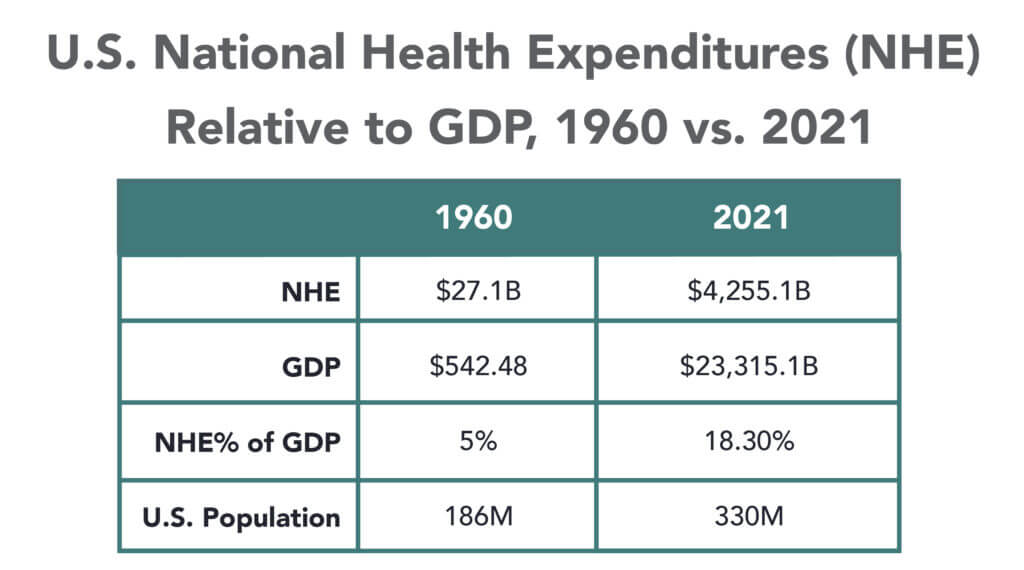
Through the decades that followed, the American Medical Association and state medical societies frustrated external attempts to control medical delivery externally and institute national health insurance. They insisted on fee-for-service payment and the absolute right of patients to choose their doctors. These are causal factors underlying healthcare’s skyrocketing cost increases, growing from 5% of the U.S. gross domestic product (GDP) in 1960 to over 18% in 2021.

Academic and community-based physicians have always had a tenuous relationship. Status and prestige accompany academic affiliations. Academic practices require referrals from community physicians but rarely consult with them on treatment protocols. For their part, community physicians marvel at the lack of market awareness exhibited by academic practices. They have tolerated one another to perpetuate collective physician control over healthcare operations.

Incomes and prestige for both community and academic physicians rose as the medical profession limited practitioner supply, established payment guidelines, encouraged specialization, controlled service delivery and socialized capital investment. One hundred years later, the business of healthcare still exhibits these characteristics. Gleaming new medical centers testify to the profession’s success in socializing capital investment and maintaining autonomy over hospital operations.

Entrenched beliefs and behaviors explain why most hospitals, despite their high construction costs, are largely deserted after 4 p.m. and on weekends. They explain the maldistribution of facilities and practitioners. They explain the overdevelopment of specialty care. They explain the underinvestment in preventive care, mental health services and public health.

Value-Focused Backlash Portends Reckoning

These beliefs and behaviors are contributing to AMC’s current economic dislocation. Dependent upon public subsidies and premium treatment payments to maintain financial sustainability, high-cost AMCs are particularly vulnerable to value-based competitors.

The marketplace is attacking inefficient clinical care with tech-savvy, consumer-friendly business models. Care delivery is decentralizing even as many AMCs invest more heavily in campus-based medicine. A market-based reckoning confronts academic medicine.

A visit up north illustrates the general unwillingness of academic physicians to accept market realities and their continued insistence on maintaining full control over the academic medical enterprise. It’s like watching a train wreck occur in slow motion.

Minnesota Madness

After experiencing severe economic distress, the University of Minnesota sold its University of Minnesota Medical Center (UMMC) to Fairview Health in 1997. Fairview currently operates UMMC in partnership with the University of Minnesota Physicians (UMP) under the banner of M Health Fairview.

In September 2022, Sanford Health and Fairview Health signed a letter of intent to merge. The new combined company would bear the Sanford name with its headquarters in Sioux Falls, South Dakota. Despite the opportunity to double its catchment area for specialty referrals, the University and UMP oppose the merger with Sanford. They fear out-of-state ownership could compromise the integrity of UMMC’s operations.

Fairview wants the Sanford merger to help it address massive operating losses resulting, in part, from its contractual arrangements with UMP. Negotiations between the parties have become acrimonious. Amid the turmoil, the University and UMP announced in January 2023 their intention to acquire UMMC from Fairview and build a new state-of-the-art medical center on the University’s Minneapolis campus.

The University has named this proposal MPact Health Care Innovation.” It calls for the Minnesota state legislature to fund the multibillion-dollar cost of acquiring, building and operating the new medical enterprise. Typical of academic medical practices, UMP expects external sources to pony up the funding to support their high-cost centralized business model while they continue to call the shots.

The arrogance and obliviousness of the University’s proposal is staggering. Minnesota struggles with rising rates of chronic disease and inequitable healthcare access for low-income urban and rural communities. The idea that a massive governmental investment in academic medicine will “bridge the past and future for a healthier Minnesota” as the MPact tagline proclaims is ludicrous.

Out of Touch

Like the rest of the country, Minnesota is experiencing declining life expectancy. Despite spending more than double the average per-capita healthcare cost of other wealthy countries, the United States scores among the worst in health status measures. Spending more on high-end academic medicine won’t change these dismal health outcomes. Spending more on preventive care, health promotion and social determinants of health could.

The real gem in the University of Minnesota’s medical enterprise is its medical school. It has trained 70% of the state’s physicians. It ranks third and fourth nationally in primary care and family medicine. It is advancing a progressive approach to interdisciplinary and multi-professional care.

If the Minnesota state legislature really wants to advance health in Minnesota, it should expand funding for the University’s aligned health schools and community-based programs without funding the acquisition and expansion of the University’s clinical facilities.

No Privilege Without Performance

Our nation must stop enabling academic medicine’s excesses. Funding AMCs’ insatiable appetite for facilities and specialized care delivery is counterproductive. It is time for academic medicine to embrace preventive health, holistic care delivery and affordable care access.

Privilege comes with responsibility. AMCs that resist the pivot to value-based care and healthier communities deserve to lose market relevance.

America has the means to create a healthier society. It requires shifting resources out of healthcare into public health. We must have the will to make community-based health networks a reality. It starts by saying no to needless expansion of acute care facilities.

What Kaiser’s Acquisition Of Geisinger Means For Us All

Healthcare’s most recent billion-dollar deal took the industry by surprise, leaving medical experts and hospital leaders grappling to comprehend its implications.

In case you missed it, California-based Kaiser Foundation Health Plan and Hospitals, which make up the insurance and facilities half of Kaiser Permanente, announced the acquisition of Geisinger, a Pennsylvania-based health system once acknowledged by President Obama for delivering “high-quality care.”

Upon regulatory approval, Geisinger will become the first organization to join Risant Health, Kaiser Foundation’s newly created $5 billion subsidiary. According to Kaiser, the aim is to build “a portfolio of likeminded, nonprofit, value-oriented, community-based health systems anchored in their respective communities.” 

Having spent 18 years as CEO of The Permanente Medical Group, the half of Kaiser Permanente responsible for the delivery of medical care, I took great interest in the announcement. And I wasn’t alone. My phone rang off the hook for weeks with calls from reporters, policy experts and healthcare executives.

After hundreds of conversations, here are the three most common questions I received about the acquisition—and the implications for doctors, insurers, health-system competitors and patients all over the country.

Question 1: Why did Kaiser acquire Geisinger?

Most callers wanted to know about Kaiser’s motivation, figuring there must’ve been more to the acquisition than the press release indicated. Although I don’t have inside information, I believe they were right. Here’s why:

Kaiser Permanente has a long and ongoing reputation for delivering nation-leading care. The organization has consistently earned the highest quality and patient-satisfaction rankings from the National Committee for Quality Assurance (NCQA), Leapfrog Group, JD Power and Medicare.

And yet, despite a 78-year history, dozens of hospitals and 13 million members across eight states, Kaiser Permanente is still considered a coastal—not national—health system. It maintains a huge market share in California and a strong presence in the Mid-Atlantic states, yet the organization has failed repeatedly to replicate that success in other geographies.

With that context, I see two compelling reasons why the Kaiser Foundation Health Plan and Hospitals wish to become a national brand:

  1. Influence. Elected officials and regulatory bodies often turn to healthcare’s biggest players to set legislative agendas and carve out national policy. At that table, there are a limited number of seats. By shedding its reputation as a “local” health system, Kaiser could earn one.
  2. Survival. In recent years, companies like Amazon, CVS and Walmart have been scooping up organizations that provide primary care, telehealth, home health and specialty care services. These “retail giants” are spending up to $13 billion per acquisition. And they’re consuming already-successful healthcare companies like One Medical, Oak Street Health, Signify, Pill Pack and many others. Like an army preparing for war, these corporate behemoths are amassing the components needed to battle the traditional healthcare incumbents and ultimately oust them entirely.

The Geisinger deal expands Kaiser’s footprint, adding 600,000 patients, 10 hospitals and 100 specialty and primary care clinics. These assets lend gravitas, even though Geisinger also comes with a 2022 operating loss of $239 million.

The lesson to draw from this first question is clear: size matters. The days of solo physicians and stand-alone hospitals are over. Nostalgia for medicine’s folksy, home-spun past is understandable but futile. To survive, healthcare players must get bigger quickly or team up with someone who can. That insight leads to the next question and lesson.

Question 2: How much value will Kaiser give Geisinger?

Almost everyone I’ve spoken with understands Kaiser’s desire for greater national influence, but they’re less sure how this deal will affect Geisinger Health.

Geisinger’s Pennsylvania-based hospitals and clinics have been locked in territorial battles for years with surrounding health systems. More recently, the pandemic, combined with staffing shortages and national inflation, have challenged Geisinger’s clinical performance and eroded its bottom line.

Assuming Kaiser plans to invest roughly $1 billion in each of the four to five health systems it’s planning to acquire, that surge in cash inflow will provide Geisinger with temporary financial safety. But the bigger question is how will Kaiser improve Geisinger’s value-proposition enough to grow its market share?

In public comments, Kaiser leaders spoke of the acquisition as an opportunity for Risant to “improve the health of millions of people by increasing access to value-based care and coverage, and raising the bar for value-based approaches that prioritize patient quality outcomes.”

Many of the experts I spoke with understand Kaiser’s value intent. But they question how Kaiser can could deliver on that promise since The Permanente Medical Group (TPMG) wasn’t involved in the deal.

If, hypothetically, Kaiser and Permanente leaders were to strike a deal to collaborate in the future, TPMG’s physician leaders could bring tremendous knowledge, experience and expertise to the table. Otherwise, I agree with those who’ve expressed doubt that Kaiser, alone, will be able to significantly improve Geisinger’s clinical performance.

Health plans and insurance companies play an important role in financing medical care. They possess rich data on performance and can offer incentives that boost access to higher-quality care. But insurers don’t work directly with individual doctors to coordinate medical care or advance clinical solutions on behalf of patients. And without strong physician leadership, the pace of positive change slows to a crawl. As a example, research conducted within The Permanente Medical Group found that it takes only three years to turn a proven clinical advance into standard practice—that’s nearly six times faster than the national average.

For decades, the secret sauce for Kaiser Permanente has been the cohesive success of its three parts: Kaiser Health Plan, Kaiser Foundation Hospitals and The Permanente Medical Group.

And KP’s results speak for themselves:

  • 90% control of hypertension for members (compared to 60% for the rest of the country)
  • 30% fewer deaths from heart attack and stroke (compared to the rest of the country)
  • 20% fewer deaths from colon cancer

The big lesson: insurance, by itself, doesn’t drive major improvements in medicine. It must be a combined effort between forward-looking insurers and innovative, high-performing clinicians.

But there’s another takeaway here for doctors everywhere: now is the time to join forces with other clinicians in your community. Together, you can collaborate to improve clinical quality. You can augment access and make care more affordable for patients. Simultaneously, this is the time for the insurers and the retail giants to figure out which medical groups can deliver the best care and make the best partners. Neither side will flourish alone. And this leads to a third question and lesson.

Question 3: Will the deal work?

Almost all of my conversations ended with this query. I say it’s too early to tell. But as I look years down the road, one part of the deal, in particular, gives me doubt.

Today, Geisinger uses a hybrid reimbursement model—blending both “value-based” care payments with traditional “fee-for-service” insurance plans. In addition to offering its own coverage, it contracts with a variety of other insurance companies. Rarely have I seen this scattered approach succeed.

Most healthcare observers understand the inherent flaw in the “fee for service” (FFS) model is also its greatest appeal to providers: the more you do the more you earn. FFS is how nearly all financial transactions take place in America (i.e., provide a service, earn a fee). In medicine, however, this financial model results in frequent over-testing and over-treatment with minimal if any improvement in clinical outcomes, according to researchers.

The “value-based” alternative to FFS involves prepaying for care—a model often referred to as “capitation.” In short, capitation involves a single fee, paid upfront for all the medical care provided to a defined population of patients for one year based on their age and health status. The better an organization at preventing disease and avoiding complications from chronic illness, the greater its success in both clinical quality and affordability.

Within the small world of capitated healthcare payments, there’s an important element that often gets overlooked. It makes a big difference who receives that lump-sum payment.

In the case of Kaiser Permanente, capitated payments are made directly to the medical group and the physicians who are responsible for providing care. In almost every other health system, an insurance company collects capitated payments but then pays the medical providers on a fee-for-service basis. Even though the arrangement is referred to as capitated, the incentives are overwhelmingly tied to the volume of care (not the value of that care).

In a mixed-payment model, doctors and hospitals invariably prioritize the higher paying FFS patients over the capitated ones. When I think about these conflicting incentives, I’m reminded of a prominent medical group in California. It had a main entrance for its fee-for-service patients and a second, smaller one off to the side for capitated patients.

I doubt the time spent with the patient—or the overall care provided—was equal for both groups. When income is based on quantity of care, not quality, clinicians focus more on treating the complications of chronic disease and medical errors rather than preventing them in the first place. Geisinger has walked this tightrope in the past, but as economic pressures mount, I fear doctors will find the two sets of incentives conflicting and difficult to navigate.

The big lesson: as financial pressures mount, the most effective approaches of the past will likely fail in the future. All healthcare organizations will need to make a decision: keep trying to drive volume and prices up through FFS or shift to capitation. Getting caught in the middle is a prescription for failure.

Examining the healthcare acquisitions made by Amazon and CVS, it’s clear these giants have decided to move aggressively toward a model more like Kaiser Permanente’s—one that brings insurance, pharmacy, physicians and sophisticated IT systems under one roof. These companies, along with Walmart, are aggressively marching down a path toward capitation, focusing on Medicare Advantage (the value-based option for Americans 65+) as an entry point.

So far, Geisinger has hedged its bets by maintaining a hybrid revenue stream. I doubt they can do so successfully in the future. That brings us to a final question.

The biggest question remaining  

Over the next decade, hospital systems, insurers and retailers will battle for healthcare supremacy. The most recent Kaiser-Geisinger deal reflects an industry that’s undergoing massive change as health systems face intensifying pressure to remain relevant.  

The most important issue to resolve is whether these shifts will ultimately help or harm patients. I’m optimistic for a positive outcome.

Whether or not the retail giants displace the incumbents, they will redefine what it takes to win. For all their faults, companies like Amazon and Walmart care a lot about meeting the needs of customers—a mindset rarely found in today’s healthcare world. As these companies grow ever larger, they’ll place consumer-oriented demands on doctors and hospitals. This will require care providers to deliver higher quality care at more affordable prices.

The retailers will only do deals with the best of the best. And they’ll kick the underachievers to the curb. They’ll use their sophisticated IT systems to better coordinate and innovate medical care. Insurers, hospitals and doctors who fail to keep up will be left behind.

Over time, patients will find themselves with far more choices and control than they have today. And I’m optimistic that will be good for the health of our nation.