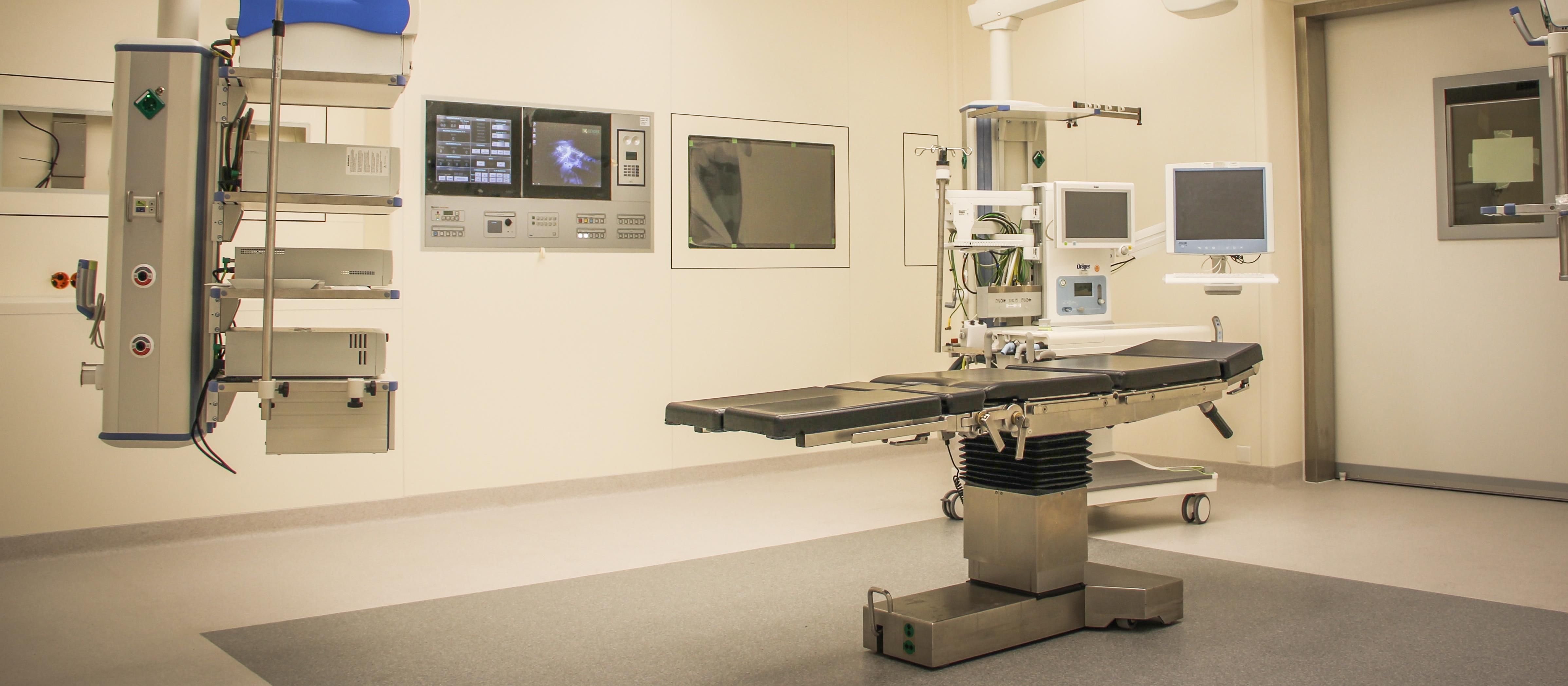
Canceled elective procedures putting pressure on nation’s hospitals

https://www.healthcarefinancenews.com/news/canceled-elective-procedures-putting-pressure-nations-hospitals

U.S. Hospitals Brace for 'Tremendous Strain' from New Virus - JEMS

Even upticks in COVID-19 patients haven’t made up for the revenue losses, since reimbursement for those services is comparatively slim.

Elective procedures are in a strange place at the moment. When the COVID-19 pandemic started to ramp up in the U.S., many of the nation’s hospitals decided to temporarily cancel elective surgeries and procedures, instead dedicating the majority of their resources to treating coronavirus patients. Some hospitals have resumed these surgeries; others resumed them and re-cancelled them; and still others are wondering when they can resume them at all.

In a recent HIMSS20 digital presentation, Reenita Das, a senior vice president and partner at Frost and Sullivan, said that during the pandemic, plastic surgery activity declined by 100%, ENT surgeries declined by 79%, cardiovascular surgeries declined by 53% and neurosurgery surgeries declined by 57%.

It’s hard to overstate the financial impact this is likely to have on hospitals’ bottom lines. Just this week, American Hospital Association President and CEO Rick Pollack, pulling from Kaufman Hall data, said the cancellation of elective surgeries is among the factors contributing to a likely industry-wide loss of $120 billion from July to December alone. When including data from earlier in the pandemic, the losses are expected to be in the vicinity of $323 billion, and half of the nation’s hospitals are expected to be in the red by the end of the year.

Doug Wolfe, cofounder and managing partner of Miami-based law firm Wolfe Pincavage, said this has amounted to a “double-whammy” for hospitals, because on top of elective procedures being cancelled, the money healthcare facilities received from the federal Coronavirus Aid, Relief, and Economic Security Act was an advance on future Medicare payments – which is coming due. While hospitals perform fewer procedures, they will now have to start paying that money back.

All hospitals are hurting, but some are in a more precarious position than others.

“Some hospital systems have had more cash on hand and more liquidity to withstand some of the financial pressure some systems are facing,” said Wolfe. “Traditionally, the smaller hospital systems in the healthcare climate we face today have faced a lot more financial pressure. They’re not able to control costs the same way as a big system. The smaller hospitals and systems were hurting to begin with.”

LOWER REVENUE, HIGHER COSTS

Some hospitals, especially ones in hot spots, are seeing a surge in COVID-19 patients. While this has kept frontline healthcare workers scrambling to care for scores of sick Americans, COVID-19 treatments are not reimbursed at the same level as surgeries. Hospital capacity is being stretched with less lucrative services.

“Some hospitals may be filling up right now, but they’re filling up with lower-reimbursing volume,” said Wolfe. “Inpatient stuff is lower reimbursement. It’s really the perfect storm for hospitals.”

John Haupert, CEO of Grady Health in Atlanta, Georgia, said this week that COVID-19 has had about a $115 million negative impact on Grady’s bottom line. Some $70 million of that is related to the reduction in the number of elective surgeries performed, as well as dips in emergency department and ambulatory visits. 

During one week in March, Grady saw a 50% reduction in surgeries and a 38% reduction in ER visits. The system is almost back to even in terms of elective and essential surgeries, but due to a COVID-19 surge currently taking place in Georgia, it has had to suspend those services once again. ER visits have only come back about halfway from that initial 38% dip, and the system is currently operating at 105% occupancy.

“Part of what we’re seeing there is reluctance from patients to come to hospitals or seek services,” said Haupert. “Many have significantly exacerbated chronic disease conditions.”

Patient hesitation has been an ongoing problem, as has the associated cost of treating coronavirus patients, said Wolfe.

“When they were ramping up to resume the elective stuff, there was a problem getting patients comfortable,” he said. “And the other thing was that the cost of treating patients in this environment has gone up. They’ve put up plexiglass everywhere, they have more wiping-down procedures, and all of these things add cost and time. They need to add more time between procedures so they can clean everything … so they’re able to do less, and it costs more to do less. Even when elective procedures do resume, it’s not going back to the way it was.”

Most hospitals have adjusted their costs to mitigate some of the financial hit. Even some larger systems, such as 92-hospital nonprofit Trinity Health in Michigan, have taken to measures such as laying off and furloughing workers and scaling back working hours for some of its staff. At the top of the month, Trinity announced another round of layoffs and furloughs – in addition to the 2,500 furloughs it announced in April – citing a projected $2 billion in revenue losses in fiscal year 2021, which began on June 1.

Hospitals are at the mercy of the market at the moment, and Wolfe anticipates there could be an uptick in mergers and consolidation as organizations look to partner with less cash-strapped entities. 

“Whether reorganization will work remains to be seen, but there will definitely be a fallout from this,” he said.
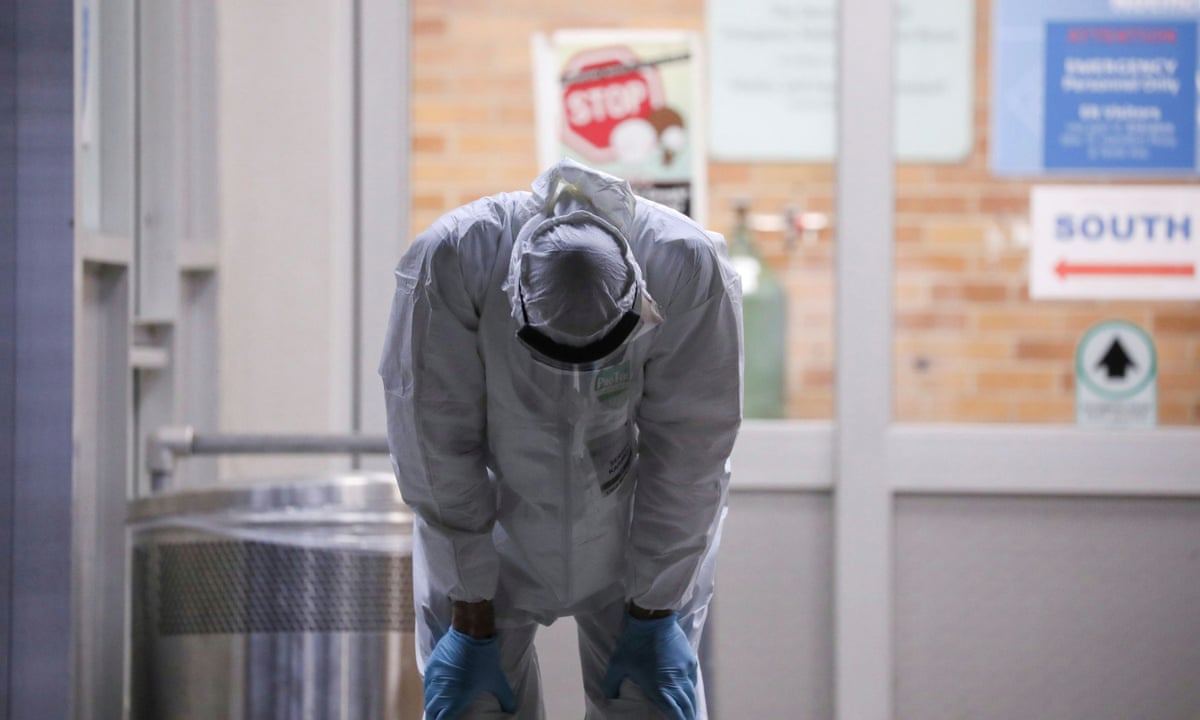


“We’ve jumped past burnout to anger”

https://mailchi.mp/9075526b5806/the-weekly-gist-july-24-2020?e=d1e747d2d8

What coronavirus is doing to stressed US health workers – and why ...

Last week we wrote about an observation from some physician leaders that, paradoxically, physician burnout seemed to have waned a bit during the COVID crisis. They felt that, as clinicians rallied to provide care for patients during the pandemic, many found new purpose in the work, despite great challenges. Bureaucratic hurdles yielded to the need to make critical decisions quickly, as did regulatory barriers to telemedicine.

The piece sparked a number of doctors, most from regions now experiencing surges, to share their alternative viewpoints with us.

One employed physician wrote that, across specialties, he and his colleagues are angry. They don’t feel protected, either financially, or even for their own physical safety.

A nurse practitioner working long shifts in an emergency department overloaded with COVID patients wrote, “In April, I would have never believed that we would be scrounging for PPE at the end of July. How could this happen?” And a nephrologist redeployed to a COVID ICU shared: “With the surge in New York, it felt like the entire country was behind their doctors and nurses. I drive home past restaurants and stores filled with people refusing to wear masks. It’s so demoralizing.”

Several expressed that their employers, both health systems and payers, are “counting on our goodwill that we’ll just keep showing up.” But once the crisis passes, there may be “drastic and irrational physician revolts. Someone should be watching for it.”

These comments reveal a marked difference in physician sentiment in different parts of the country, based both on the severity of the pandemic, and the nature of the local response.  Regardless, we’d agree that the clinical workforce, both doctors and nurses, is working through a period of unprecedented stress, and for some, emotional trauma. Ensuring their stability and safety must be a top priority for every health system and medical group.


Hospital margins could sink to a negative 7% this year: 5 things to know

https://www.beckershospitalreview.com/finance/hospital-margins-could-sink-to-a-negative-7-this-year-5-things-to-know.html?utm_medium=email

New Kaufman Hall Report: Hospital Finances Crashed in April ...

The COVID-19 pandemic has created financial challenges for hospitals and health systems, and, without additional federal aid, half of US hospitals could be operating in the red in the second half of this year, according to an analysis released by the American Hospital Association on July 21.

Five takeaways from the analysis: 

1. Before the COVID-19 pandemic, the median hospital margin was 3.5 percent. COVID-19 is expected to drive the median hospital margin from positive to negative. 

2. Without funding from the Coronavirus Aid, Relief and Economic Security Act, hospital margins would have been a negative 15 percent in the second quarter of 2020. Margins are still expected to drop to a negative 3 percent in the second quarter.

3. Without additional aid from the federal government, hospital margins could sink to a negative 7 percent in the second half of this year. 

4. In the second quarter of this year, nearly half of U.S. hospitals had negative margins. Those hospitals will remain with negative margins without further financial support.  

5. “Heading into the COVID-19 crisis, the financial health of many hospitals and health systems were challenged, with many operating in the red,” said hospital association President and CEO Rick Pollack in a news release. “As today’s analysis shows, this pandemic is the greatest financial threat in history for hospitals and health systems and is a serious obstacle to keeping the doors open for many.” 

The full report, prepared by Kaufman, Hall & Associates and released by the AHA, is available here


Public’s disconnect from COVID-19 reality worries experts

Public’s disconnect from COVID-19 reality worries experts

Public's disconnect from COVID-19 reality worries experts | TheHill

The United States is being ravaged by a deadly pandemic that is growing exponentially, overwhelming health care systems and costing thousands of lives, to say nothing of an economic recession that threatens to plague the nation for years to come.

But the American public seems to be over the pandemic, eager to get kids back in schools, ready to hit the bar scene and hungry for Major League Baseball to play its abbreviated season.


The startling divergence between the brutal reality of the SARS-CoV-2 virus and the fantasy land of a forthcoming return to normalcy has public health experts depressed and anxious about what is to come. The worst is not behind us, they say, by any stretch of the imagination.


“It’s an absolute disconnect between our perceived reality and our actual reality,” said Craig Spencer, a New York City emergency room doctor who directs global health in emergency medicine at New York Presbyterian/Columbia University Medical Center. “To look at the COVID case count and the surge in cases and to think that we can have these discussions as we have uncontrolled spread, to think we can have some national strategy for reopening schools when we don’t even have one for reopening the country, it’s just crazy.”

The number of dead from the virus in the United States alone, almost 136,000, is roughly equal to the populations of Charleston, S.C., or Gainesville, Fla. If everyone in America who had been infected lived in the same city, that city would be the third-largest in the country, behind only New York and Los Angeles. More people in the United States have tested positive for the coronavirus than live in the state of Utah. By the weekend, there are likely to be more confirmed coronavirus cases than there are residents of Connecticut.

There are signs that the outbreak is getting worse, not better. The 10 days with the highest number of new coronavirus infections in the United States have come in the past 11 days.

Case counts, hospitalizations and even deaths are on the rise across the nation, not only in Southern states that were slow to embrace lockdowns in March and April.

California, the first state to completely lock down, has reported more than 54,000 new cases over both of the last two weeks. Nevada, about one-thirteenth the size of California, reported 5,200 new cases last week. States where early lockdowns helped limit the initial peak like Pennsylvania, Illinois and Ohio are all seeing case counts grow and hospital beds fill up.

Only two states — Maine and New Jersey — have seen their case counts decline for two consecutive weeks.


“We are nearing the point where pretty much most of the gains we had achieved have been lost,” said Christine Petersen, an epidemiologist at the University of Iowa. “All of us are hoping we magically get our acts together and we can look like Europe in two months. But all the data shows we are not doing that right now.”

It is in that dismal context that schools are preparing some sort of return to learning, whether in person or remote. President Trump and Education Secretary Betsy DeVos have threatened schools that do not fully reopen.

But even though the coronavirus appears to have less severe consequences among children, sending them back to schools en masse does not carry zero risk. Children have died from the virus, and the more who are exposed mean more opportunities for the virus to kill again, even before considering the millions of teachers who may be vulnerable or the parents and grandparents asymptomatic children might be exposed to.

Already, school districts in Los Angeles and San Diego have delayed reopening plans as case counts rise.

“We do know that kids can get sick and they can even die. It’s definitely a much lower number,” Petersen said. “Even if they aren’t as infectious, if there are millions of them gathering in schools not having great hygiene, it’s a multiplier effect.”


The painful lockdowns that were supposed to reduce viral transmissions bought time to bolster testing and hospital capacity, to speed production of the equipment needed to test patients and protect front-line health care workers.

But that hasn’t happened; laboratories in the United States have tested as many as 823,000 people in a day, a record number but far shy of the millions a day necessary to wrestle the virus under control. Arizona and Los Angeles have canceled testing appointments for lack of supplies. Hospitals are reporting new shortages of protective gear and N95 masks.

The Trump administration used the Defense Production Act to order meat processing plants to stay open; it has only awarded contracts sufficient to produce 300 million N95 masks by the end of the year, far short of what health experts believe will be necessary to protect health care workers.


“A failure of national leadership has led us to a place where we are back where we were before, no national testing strategy, no national strategy for supply,” said Kelli Drenner, who teaches public health at the University of Houston. “States are still on their own to scramble for reagents and swabs and PPE and all of that, still competing against each other and against nations for those resources.”

There are troubling signs that the promise of a vaccine may not be the cure-all for which many had hoped. Early studies suggest that the immune system only retains coronavirus antibodies for a few months, or perhaps a year, raising the prospect that people could become reinfected even after they recover. A growing, if still fringe, movement of anti-vaccination activists may refuse a vaccine altogether, putting others at risk.

“A vaccine is not going to solve this. People die of vaccine-preventable diseases every day. All the failures with testing and diagnostics and all the inequities and access to care with those are going to be the same things that are going to be magnified with a vaccine,” said Nita Bharti, a biologist at Penn State’s Center for Infectious Disease Dynamics.


More than a dozen states hit hardest by the latest wave of disease have paused or reversed their reopening processes. But only 24 states and the District of Columbia have ordered residents to wear masks in public, and compliance varies widely by both geography and political affiliation.

“This is the critical time. If we are going to try to reverse this, we have to get back to the mental space and the resolute action we had in March. I’m not sure we have the energy and the wherewithal to do it,” Petersen said.


Without a dramatic recommitment to conquering the virus, health officials warn, the new normal in which the country exists will be one of serious and widespread illness, and a steady drumbeat of death.

“None of this was inevitable. None of this should be acceptable. There are ways we can do better,” Spencer said. “This will continue to be our reality for as long as we don’t take it seriously.”

But after months of repeating the same warnings — wear a mask, stay socially distant, stay home if possible, avoid places where people congregate in tight quarters — some health experts worry their message has been lost amid a sea of doubt, skepticism and mixed signals.

“It’s like a learned helplessness when we’re not helpless,” Drenner said. “There are some pretty effective strategies, but we don’t seem to have the political will to do it.”


Fauci has been an example of conscience and courage.

https://www.washingtonpost.com/opinions/fauci-has-been-an-example-of-conscience-and-courage-trump-has-been-nothing-but-weak/2020/07/13/7c9a7578-c52b-11ea-8ffe-372be8d82298_story.html?fbclid=IwAR0n0o67FMhhUjxqU11cfrd4daMkW0ZWZtIg–I1P3ioLPA7ka7Ew0XT_EA&utm_campaign=wp_main&utm_medium=social&utm_source=facebook

Opinion | Fauci has been an example of conscience and courage ...

When historians try to identify the most shameful documents from the Trump administration, a few are likely to stand out. For unconstitutional bigotry, it is hard to beat the initial executive order banning travel to the United States from Muslim countries. For cruelty and smallness, there is the “zero tolerance” directive to federal prosecutors that led to family separations at the border. For naked corruption, there is the transcript of the quid-pro-quo conversation between President Trump and the president of Ukraine.

But for rash, foolish irresponsibility, I’d nominate the opposition research paper recently circulated by the White House in an attempt to discredit the National Institute of Allergy and Infectious Diseases’ Anthony S. Fauci. As reported by The Post, the document recounted a number of instances — on community transmission, asymptomatic transmission and mask wearing in particular — where Fauci’s views have shifted over time. As far as I know, this official record is unique: A White House attack on the government’s leading infectious-disease specialist during a raging pandemic. It indicates an administration so far gone in rage, bitterness and paranoia that it can no longer be trusted to preserve American lives.

From a purely political standpoint, it is understandable that the administration would want to divert attention from its covid-19 record. Trump’s policy of reopening at any cost is exacting a mounting cost. Five months into the greatest health crisis of modern U.S. history, there are still serious problems with supply chains for protective equipment. There are still long wait times for testing results in many places. The contact tracing process in many communities remains (as one health expert described it to me) “a joke.” More than 132,000 Americans have died.

Rather than addressing these failures, Trump has chosen to sabotage a public official who admits their existence. Rather than confronting these problems, Trump wants to ensure his whole administration lies about them in unison. The president has surveyed America’s massive spike in new infections and thinks the most urgent matter is . . . message discipline.

It is true that a number of Fauci’s views on the novel coronavirus have evolved (though some of the administration’s charges against him are distorted). But attacking a scientist for making such shifts is to willfully misunderstand the role of science in the fight against disease. We do not trust public health officials during an emerging pandemic because they have fully formed scientific views from the beginning. We trust them because 1) they are making judgments based on the best available information and 2) they have no other motive than the health of the public. If, say, health officials were initially mistaken about the possibility of asymptomatic transmission, it is not failure when they change their views according to better data. It is the nature of the scientific method and the definition of their duty.

In the inch-deep world of politics, amending your view based on new information is a flip-flop. In epidemiology, it is known as, well, epidemiology.

Meanwhile, the president is failing according to both requirements of public trust. Trump is not making judgments based on the best available information. And he clearly has political goals that compete with (and often override) his commitment to public health. The president is hoping against hope that the public will forget about the virus until November, or at least about the federal role in fighting it. To apply a veneer of normalcy, he is holding public events that endanger his staff and his audience and is planning a Republican convention that will double as a petri dish.

It now seems likely that the most decisive moment of the American pandemic took place in mid-April when new cases began to stabilize around 25,000 a day. Even four or six more weeks of firm presidential leadership — urging the tough, sacrificial application of stay-at-home orders — might have reduced the burden of disease to more sustainable levels, as happened in Western Europe. And this would have relieved stress on systems of testing, tracing and treatment.

But Trump’s nerve failed him. Instead of holding firm, he began siding with populist demands for immediate opening, pressuring governors to take precipitous steps and encouraging skepticism about basic public health information and measures. This may well have been the defining moment of the Trump presidency. And he was weak, weak, weak.

It is typical for Trump to shift blame. But in this case, the president has selected his fall guy poorly. Fauci has been an example of conscience and courage in an administration that values neither. When Trump encourages a contrast to his own selfishness and cravenness, he only damages himself.


Facing another round of elective surgery shutdowns

https://mailchi.mp/86e2f0f0290d/the-weekly-gist-july-10-2020?e=d1e747d2d8

COVID-19: Hospitals brace for elective surgery shut-downs | New ...

With elective surgery shutdowns hitting health systems in Florida and Texas, providers across the country are thinking through the odds of a second round coming to their markets. While shutting down nonemergent cases in areas truly overwhelmed by the virus may be a necessity, we have been struck by how much better prepared systems are to deal with a second surge.

According to one of our member COOs, the enormous amount that hospitals and doctors have learned about COVID across the past six months, and the operational changes they’ve made to ensure safety (which now feel routine) make systems much better equipped to manage elective cases even if COVID admissions begin to rise.

“We created designated non-COVID facilities, supported by rigorous safety procedures. And we now have a few months of evidence that these changes allow us to manage electives without putting patients or staff at risk,” he said. “Just like none of us are wiping down our groceries with bleach anymore, we’ve learned what is and isn’t essential to create a safe environment in a surgery center.”

But he cautioned that, in their market, supply shortages will likely threaten electives before a local surge of COVID cases. The system recently postponed some procedures when the turnaround time for COVID test results suddenly jumped, and they are once again worried about shortages of PPE.

As we look toward fall, when more surges are likely as kids return to school and the flu season sets in, hospitals must have the resources to manage COVID spikes without shutting down the rest of the system. Many patients with ongoing health needs put their care on hold for much of the spring. If much of healthcare is forced into a second months-long shutdown, the toll from untreated conditions could be enormous.


U.S. sets one-day record with more than 60,500 COVID cases; Americans divided

https://www.reuters.com/article/us-health-coronavirus-usa/u-s-sets-one-day-record-with-more-than-60500-covid-cases-americans-divided-idUSKBN24A28B?utm_source=Sailthru&utm_medium=email&utm_campaign=Issue:%202020-07-10%20Healthcare%20Dive%20%5Bissue:28416%5D&utm_term=Healthcare%20Dive

Texas, Florida and Arizona see increase in COVID-19 deaths | Daily ...

More than 60,500 new COVID-19 infections were reported across the United States on Thursday, according to a Reuters tally, setting a one-day record as weary Americans were told to take new precautions and the pandemic becomes increasingly politicized.

The total represents a slight rise from Wednesday, when there were 60,000 new cases, and marks the largest one-day increase by any country since the pandemic emerged in China last year.

As infections rose in 41 of the 50 states over the last two weeks, Americans have become increasingly divided on issues such as the reopening of schools and businesses. Orders by governors and local leaders mandating face masks have become particularly divisive.

“It’s just disheartening because the selfishness of (not wearing a mask) versus the selflessness of my staff and the people in this hospital who are putting themselves at risk, and I got COVID from this,” said Dr. Andrew Pastewski, ICU medical director at Jackson South Medical Center in Miami.

“You know, we’re putting ourselves at risk and other people aren’t willing to do anything and in fact go the other way and be aggressive to promote the disease. It’s really, it’s really hard,” he said.

Stephanie Porta, 41, a lifelong Orlando, Florida, resident, said only about half the shoppers at her grocery store wore masks, though that was more than she saw two weeks ago.

“They’re trying to make everything seem normal, when it’s not. People are dying, people are getting sick. It’s insane,” she said.

Florida on Thursday announced nearly 9,000 new cases and 120 new coronavirus deaths, a record daily increase in lives lost. Governor Ron DeSantis called the rising cases a “blip” and urged residents not to be afraid.

“I know we’ve had a lot of different blips,” DeSantis said. “We’re now at a higher blip than where we were in May and the beginning of June.”

Florida is one of the few states that does not disclose the number of hospitalized COVID patients. But more than four dozen Florida hospitals reported their intensive care units reached full capacity earlier this week.

In Texas a group of bar owners sued Governor Greg Abbott, a Republican, saying his June 26 order closing them down violates the state constitution, the Dallas Morning News reported.

Dr. Robert Redfield, director of the U.S. Centers for Disease Control and Prevention, said Thursday that keeping schools closed would be a greater risk to children’s health than reopening them.

California and Texas, the two most populous states, announced record increases in COVID deaths on Wednesday.

California has seen cases and hospitalizations surge, even though it imposed one of the strictest lockdowns. After several lawmakers and staffers at the state Capitol in Sacramento were infected, lawmakers said the legislature would not return from summer break until July 27.

Riverside University Health System, east of Los Angeles, expanded its 44-bed intensive care unit after it filled up with patients.

“It’s been very consistent every day in the last couple of weeks. Every day has been like a full moon,” Riverside emergency room physician Stephanie Loe said, referring to doctors’ beliefs that a full moon brings more patients to the emergency room.

Governors in California, Florida and Texas have either ruled out forced business closures and quarantines or called them a last resort. But Los Angeles Mayor Eric Garcetti warned he would impose a new stay-at-home order in two weeks if the latest surge did not ease.

The rise in infections also weighed on the stock market Thursday on fears of new lockdowns, which would take a toll on the economic recovery. The Dow .DJI and the S&P 500 .SPX ended down about 1%.


Hospitals in new COVID-19 hot spots face delicate balancing act with elective surgeries

https://www.fiercehealthcare.com/hospitals/hospitals-new-covid-19-hotspots-face-delicate-balancing-act-elective-surgeries?mkt_tok=eyJpIjoiT1RJMlpqWTNPREJtTmpGaSIsInQiOiJ0enNDdXU5R0ZEdUJmSE1GcXl5UHd4VjdcL1FQcWE3ckN2YmhLVUhnazNFNlhUOEdLQndTcnRnXC9TbWNzWDhZMW5KWEhtMUxJRDRFdG1uXC84NGVhTHZ5QklGK0Fyc2dadXVcL0phNWFaVGY1SGlVVzN6NFRxVlRLOE9mRmdHR2VmdDgifQ%3D%3D&mrkid=959610

Hospitals in new COVID-19 hot spots face delicate balancing act ...

Some hospital systems located in states that are seeing huge spikes of COVID-19 are continuing to perform elective procedures and developing strategies to avoid a total shutdown.

The experiences of hospitals in states such as Florida and Arizona could inform how systems will handle new surges of COVID-19 cases, especially if a second surge of the virus arrives in the fall. Hospitals have been reticent to shut down surgical procedures, which are pivotal to their bottom line and also impact patient care.

“We are not turning it all the way off,” said Marjorie Bessel, M.D., chief clinical officer for Banner Health, referring to elective procedures. “Our surgeries are needed and medically necessary and people need to have those surgeries done.”

The 28-hospital system has a large footprint in Arizona, which is experiencing a major spike in cases. Bessel said 45% of Arizona COVID-19 patients are in a Banner Health facility.

Like many states, Arizona’s governor required hospitals to shutter elective procedures to ensure there is enough capacity and personal protective equipment (PPE) for COVID-19 patients. The governor lifted the shutdown May 1, and Banner has slowly ramped up delayed or canceled elective procedures.

“We attempted to reduce the backlog of people who had been waiting or wait-listed,” Bessel told Fierce Healthcare. “We didn’t quite get back to full normal operations, but we got close.”

That progress has been hindered now as COVID-19 cases soar in the state.

But instead of doing a full shutdown, Banner is implementing a tiered and step-wise approach to surgeries.

“One of the things that we are going to try is to do surgeries for patients that don’t need an inpatient stay,” Bessel said. “We are gonna try that and see how that works for us.”

The system is also tightly monitoring the patients that need an intensive care unit stay after their surgery. Banner can transfer patients to other facilities to ensure it has enough capacity.

“We look at our [patient] census almost hourly throughout the day and the night and make these adjustments to best meet the needs of those in the community,” she said.

Tampa General Hospital in Florida resumed elective procedures back in early May and is still performing surgeries as COVID-19 cases rise. The hospital told Fierce Healthcare that it treats COVID-19 patients in a “negative-pressure unit that is separate from other areas of the hospital.”

The hospital has 81 of these rooms and 100 hospitals and has a surge plan to adjust capacity when necessary.

Another important factor for hospitals is to communicate with patients about what is going on. Tampa General, for instance, issued a release on when it is appropriate to go to the emergency room and outlined the procedures for screening patients of COVID-19 to assuage fears.

Hospitals’ own internal processes have also gotten better amid the COVID-19 pandemic.

“In the operating area, COVID-19 has made us more efficient,” said Michael Zinner, M.D., CEO of the Miami Cancer Institute, which is part of 11-hospital system Baptist Health South Florida. “It has taught us how to move things out of the general operating room into ambulatory and more efficient in the turnovers. It has taught us how to adapt.”

Some states could decide to shut down elective procedures again, which is a move Texas has decided to make in four counties in the state.

Getting and keeping enough PPE

One of the key reasons that states ordered hospitals to shut down surgeries was to preserve enough PPE for COVID-19 care.

But hospital systems say they are in a better place now in terms of PPE than they were at the onset of the pandemic, when a buying spree caused hospitals to fight among each other to get supplies.

“We are a heck of a lot better than we were two months ago,” Zinner said.

He added that Baptist Health even bought a stake in a domestic PPE manufacturer, a move Banner Health made as well.

“Besides the current spike, we were preparing for what we think will be a surge in the fall,” Zinner added.

Another important development for hospitals now is there are guidelines for how to reprocess PPE.

“We have found ways to reprocess some PPE safely so you can reuse it without losing efficacy and take it through a decontamination procedure,” said Michael Calderwood, M.D., an epidemiologist at Dartmouth-Hitchcock Medical Center in New Hampshire.

He pointed to using ultraviolet light and hydrogen peroxide as among methods facilities can use to reprocess their supplies.

The type of PPE that is used in surgeries is also sometimes different than the equipment used to treat COVID-19 patients, Bessel said.

“They use a procedural mask for most of the cases, while the masks in shortage has been the N-95 respirators,” she said.