Cases skyrocketing among communities of color

https://www.axios.com/newsletters/axios-vitals-e9aa531d-4ef5-46ec-aedb-56f2bc9a77c9.html?utm_source=newsletter&utm_medium=email&utm_campaign=newsletter_axiosvitals&stream=top

Coronavirus cases skyrocketing among communities of color - Axios

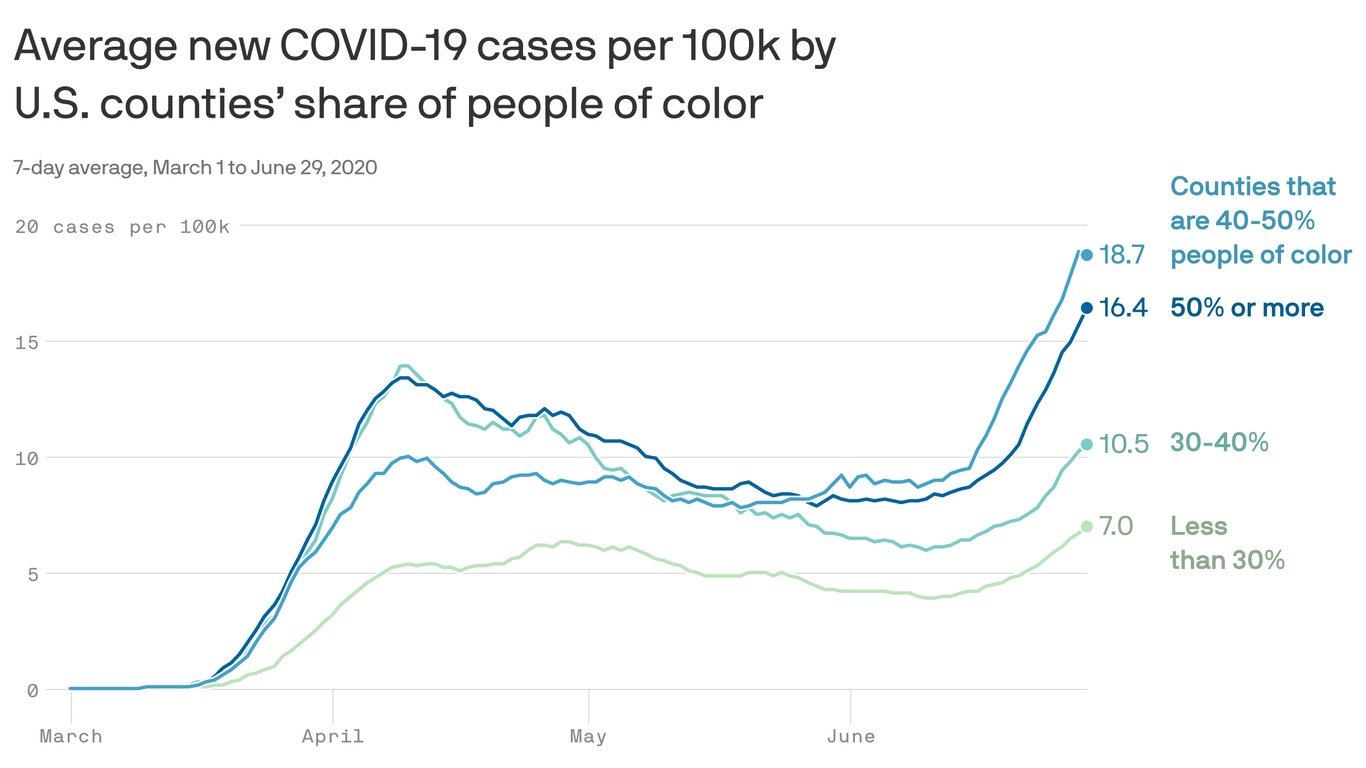
Counties populated by larger numbers of people of color tend to have more coronavirus cases than those with higher shares of white people.

What we’re watching: As the outbreak worsens throughout the South and the West, caseloads are growing fastest in counties with large communities of color.

The big picture: The southern and southwestern parts of the U.S. — the new epicenters of the outbreak — have higher Black and Latino or Hispanic populations to begin with.

  • People of color have seen disproportionate rates of infection, hospitalization and death throughout the pandemic.

Between the lines: These inequities stem from pre-existing racial disparities throughout society, and have been exacerbated by the U.S. coronavirus response.

  • Black and Hispanic or Latino communities have had less access to diagnostic testing, and people of color are also more likely to be essential workers. That means the virus is able to enter and spread throughout a community without adequate detection, often with disastrous results.

The bottom line: Until we plug the huge holes in the American coronavirus response — like inadequate testing and contact tracing and a lack of protection for essential workers — people of color will continue to bear the brunt of the pandemic.

Go deeper: People of color have less access to coronavirus testing


3 moral virtues necessary for an ethical pandemic response and reopening

https://theconversation.com/3-moral-virtues-necessary-for-an-ethical-pandemic-response-and-reopening-140688?utm_medium=email&utm_campaign=Latest%20from%20The%20Conversation%20for%20June%2026%202020%20-%201662516009&utm_content=Latest%20from%20The%20Conversation%20for%20June%2026%202020%20-%201662516009+Version+A+CID_98447eb9cb25b06b85aed07c7fd721bd&utm_source=campaign_monitor_us&utm_term=3%20moral%20virtues%20necessary%20for%20an%20ethical%20pandemic%20response%20and%20reopening

3 moral virtues necessary for an ethical pandemic response and ...

The health and economic impacts of the coronavirus pandemic are not equally felt. From the United States to Brazil and the United Kingdomlow-wage workers are suffering more than others and communities of color are most vulnerable to the virus.

Despite the disparities, countries are reopening without a plan to redress these unequal harms and protect the broader community going forward. Our ethics research examines the potential for using virtues as a guide for a more moral coronavirus response.

Virtues are applied morals – actions that promote individual and collective well-being. Examples include generosity, compassion, honesty, solidarity, fortitude, justice and patience. While often embedded in religion, virtues are ultimately a secular concept. Because of their broad, longstanding relevance to human societies, these values tend to be held across cultures.

We propose three core virtues to guide policymakers in easing out of coronavirus crisis mode in ways that achieve a better new normalcompassion, solidarity and justice.

1. Compassion

Compassion is a core virtue of all the world’s major religions and a bedrock moral principle in professions like health care and social work. The distinguishing characteristic of compassion is “shared suffering:” Compassionate people and policies recognize suffering and take actions to alleviate it.

As the French philosopher André Comte-Sponville said, compassion “means that one refuses to regard any suffering as a matter of indifference or any living being as a thing.”

Individual acts of compassion abound in the coronavirus crisis, like frontline health care professionals and neighbors who deliver food, among other examples.

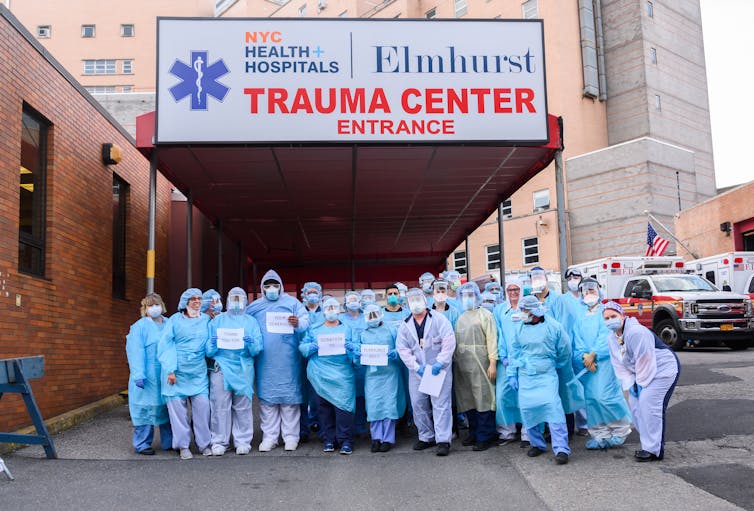
Compassion and solidarity on display at New York’s Elmhurst Hospital, during the April peak of the city’s coronavirus outbreak. Noam Galai/Getty Images

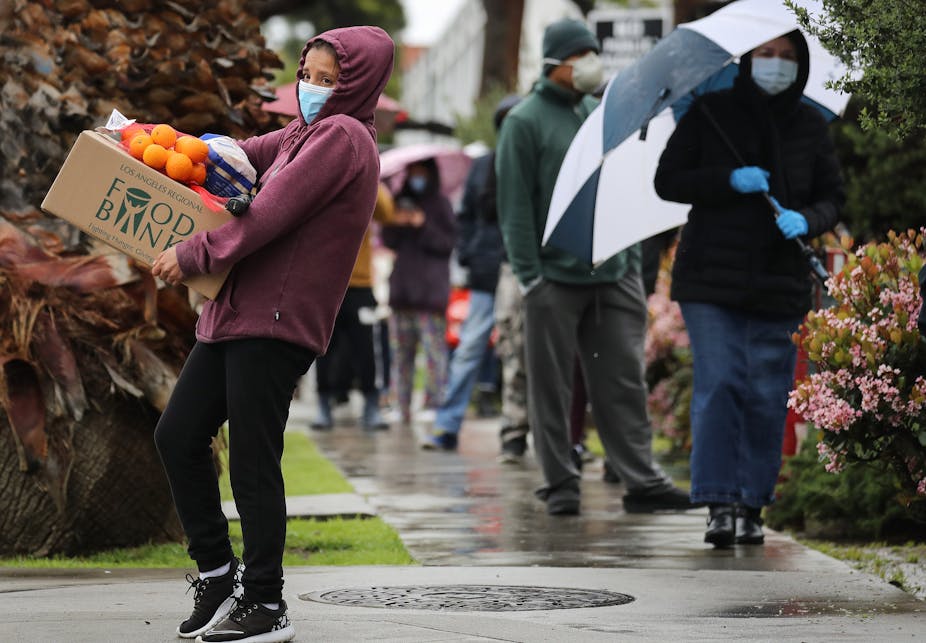
Some pandemic-era policies also reflect compassion, such as regulations preventing evictions and expanding unemployment benefits and giving food aid to poor familes.

A compassion-guided reopening aimed at preventing or reducing human suffering would require governments to continually monitor and alleviate the pain of their people. That includes addressing new forms of suffering that arise as circumstances change.

2. Solidarity

In a global pandemic, the actions people do or don’t take affect the health of others worldwide. Such shared emergencies require solidarity, which recognizes both the inherent dignity of each individual person and the interdependence of all people. As United Nations officials have emphasized, “we are all in this together.”

Public health measures like stay-at-home orders, social distancing and wearing masks reflect solidarity. While compliance in the United States has not been universal, data indicate broad approval for these measures. A new study found that 80% of Americans nationwide support staying home and social distancing and 74% support using face coverings in public.

To achieve these acts of solidarity, the leaders most praised in their countries and abroad – from U.S. National Institutes of Health director Dr. Anthony Fauci to New Zealand prime minister Jacinda Ardern – have relied primarily on moral persuasion, not threats of punishment.

By delivering clear information, giving simple and repeated behavioral guidance, and setting a good example, they’ve helped convince millions to take personal responsibility for protecting their community.

Face masks signal that wearers care about protecting others around them. Islam Dogru/Anadolu Agency via Getty Images

3. Justice

Justice focuses on the fair distribution of resources and the social structures that enable what the Dutch philosopher Patrick Loobuyck has called a “condition of equality.”

Justice-oriented policies are necessary for a moral reopening because of the pandemic’s disproportionate health and economic impacts. The evidence clearly shows that communities of colorlow-income populationspeople in nursing homes and those on the margins of society, such as homeless people and undocumented immigrants, are hardest hit.

Justice-oriented policies would aim for equitable balancing of necessary pandemic resources. That means directing testing and health equipment toward vulnerable communities – as identified by COVID-19 tracking data and risk factors like housing density and poverty – and ensuring free, widespread vaccine distribution when it becomes available.

In the U.S., economic justice will also require aggressively investing in minority-run businesses and poorer areas to guard against further harm to owners, employees and neighborhoods.

Similarly, all American school children have lost critical classroom hours, but lower-income children have been disproportionately damaged by remote learning in part due to the digital divide and loss of free lunch programs. Justice would demand channeling additional resources to the students and schools that need them most.

A moral reopening

Using virtues to guide social policies is an old idea. It dates back at least to the Greek thinker Aristotle.

Social distance stickers to prepare Nepal’s empty Tribhuwan International Airport for reopening. Narayan Maharjan/NurPhoto via Getty Images

New Zealand is a good example of virtuous pandemic policymaking, even considering its advantages in having wealth, low density and no land borders. Its coronavirus response included not only aggressive public health measures but also a well articulated message of being united in the COVID-19 fight and recurring government payments so workers did not have to risk their health for their job.

Note that it isn’t enough to apply just one virtue in a crisis of this magnitude. Policies built on compassion, solidarity and justice should be deployed in combination.

A compassionate post-pandemic response that does not address underlying inequalities, for example, ignores certain communities’ specific needs. Meanwhile, tackling specific injustices without engaging everyone in efforts like mask-wearing endangers the public health.

Bolstered by scientific evidence, virtue ethics can help nations reopen not just economically but morally, too.


Coronavirus Doesn’t Recognize Man-Made Borders

Coronavirus Doesn’t Recognize Man-Made Borders

Coronavirus Doesn't Recognize Man-Made Borders - California Health ...

From El Centro Regional Medical Center, the largest hospital in California’s Imperial County, it takes just 30 minutes to drive to Mexicali, the capital of the Mexican state of Baja California. The international boundary that separates Mexicali from Imperial County is a bridge between nations. Every day, thousands of people cross that border for work or school. An estimated 275,000 US citizens and green card holders live in Baja California. El Centro Regional Medical Center has 60 employees who reside in Mexicali and commute across the border, CEO Adolphe Edward told Julie Small of KQED.

Now these inextricably linked places have become two of the most concerning COVID-19 hot spots in the US and Mexico. While Imperial County is one of California’s most sparsely populated counties, it has the state’s highest per capita infection rate — 836 per 100,000according to the California Department of Public Health. This rate is more than four times greater than Los Angeles County’s, which is second-highest on that list. Imperial County has 4,800 confirmed positive cases and 64 deaths, and its southern neighbor Mexicali has 4,245 infections and 717 deaths.

The COVID-19 crisis on the border is straining the local health care system. El Centro Regional Medical Center has 161 beds, including 20 in its intensive care unit (ICU). About half of all its inpatients have COVID-19, Gustavo Solis reported in the Los Angeles Times, and the facility no longer has any available ventilators.

When Mexicali’s hospitals reached capacity in late May, administrators alerted El Centro that they would be diverting American patients to the medical center. “They said, ‘Hey, our hospitals are full, you’re about to get the surge,’” Judy Cruz, director of El Centro’s emergency department, recounted to Rebecca Plevin in the Palm Springs Desert Sun.

By the first week of June, El Centro was so overburdened that “a patient was being transferred from the hospital in El Centro every two to three hours, compared to 17 in an entire month before the COVID-19 pandemic,” Miriam Jordan reported in the New York Times.

Border Hospitals Filled to Capacity

Since April, hospitals in neighboring San Diego and Riverside Counties have been accepting patient transfers to alleviate the caseload at the lone hospital in El Centro, but the health emergency has escalated and now those counties need relief. “We froze all transfers from Imperial County [on June 9] just to make sure that we have enough room if we do have more cases here in San Diego County,” Chris Van Gorder, CEO of Scripps Health, told Paul Sisson in the San Diego Union-Tribune. El Centro patients are now being airlifted as far as San Francisco and Sacramento.

According to the US Census Bureau, nearly 85% of Imperial County residents are Latino, and statewide, Latinos bear a disproportionate burden of COVID-19. The California Department of Public Health reports that Latinos make up 39% of California’s population but 57% of confirmed COVID-19 cases.

Nonessential travel between the US and Mexico has been restricted since March 21, with the measure recently extended until July 21. However, jobs in Southern California, such as in agricultural fields and packing houses, require regular movement between the two countries. “I’m always afraid that people are imagining this rush on the border,” Andrea Bowers, a spokesperson for the Imperial County Public Health Department, told Small. “It’s just folks living their everyday life.”

These jobs, some of which are considered essential because of their role in the food supply chain, may have contributed to the COVID-19 crisis on the border. Agricultural workers often lack access to adequate personal protective equipment and are unable to practice physical distancing. They also are exposed to air pollution, pesticides, heat, and more — long-term exposures that can cause the underlying health conditions that raise the risk of death for COVID-19 patients.

Comite Civico del Valle, a nonprofit focused on environmental health and civic engagement in Imperial Valley, set up 40 air pollution monitors throughout the county and found that levels of tiny, dangerous particulates violated federal limits, Solis reported.

“I can tell you there’s hypertension, there’s poor air pollution, there’s cancers, there’s asthma, there’s diabetes, there’s countless things people here are exposed to,” David Olmedo, an environmental health activist with Comite Civico del Valle, told Solis.

Fear of New Surges

With summer socializing in full swing, health experts worry that COVID-19 spikes will follow. Imperial County saw surges after Mother’s Day and Memorial Day, probably because of lapsed physical distancing and mask use at social events.

Latinos in California are adhering to recommended public health behaviors to slow the spread of the virus. CHCF’s recent COVID-19 tracking poll with Ipsos asked Californians about their compliance with recommended behaviors. Eighty-four percent of Californians, including 87% of Latinos, say they routinely wear a mask in public spaces all or most of the time. Seventy-two percent of Californians, including 73% of Latinos, say they avoid unnecessary trips out of the home most or all of the time, and 90% of Californians, including 91% of Latinos, say they stay at least six feet away from others in public spaces all or most of the time.

A Push to Reopen Anyway

Most counties in California have met the state’s readiness criteria for entering the “Expanded Stage 2” phase of reopening. Imperial County has not. In the past two weeks, more than 20% of all COVID-19 tests in the county came back positive, the Sacramento Bee reported. The state requires counties to have a seven-day testing positivity rate of no more than 8% to enter Expanded Stage 2.

Still, the Imperial County Board of Supervisors is pushing Governor Gavin Newsom for local control over its reopening timetable. The county has a high poverty rate — 24% compared with the statewide average of 13% — and “bills are stacking up,” Luis Pancarte, chairman of the board, said on a recent press call.

He worries that because neighboring areas like Riverside and San Diego have opened some businesses with physical distancing measures in place, Imperial County residents will travel to patronize restaurants and stores. This movement could increase transmission of the new coronavirus, just as reopening Imperial County too soon could as well.

More than 1,350 residents have signed a petition asking Newsom to ignore the Board of Supervisor’s request, Solis reported. The residents called on the supervisors to focus instead on getting the infection rate down and expanding economic relief for workers and businesses.

Cruz, who has been working around the clock to handle the county’s COVID-19 crisis, agrees with the petitioners. The surges after Mother’s Day and Memorial Day made her “really concerned about unlocking and letting people go back to normal,” she told Plevin. “It’s going to be just like those little gatherings that happened [on holidays], but on a bigger scale.”


Re-examining the delivery of high-value care through COVID-19

https://thehill.com/opinion/healthcare/502851-examining-the-delivery-of-high-value-care-through-covid-19#bottom-story-socials

Re-examining the delivery of high-value care through COVID-19 ...

Over the past months, the country and the economy have radically shifted to unchartered territory. Now more than ever, we must reexamine how we spend health care dollars. 

While the COVID-19 pandemic has exposed challenges with health care in America, we see two overarching opportunities for change:

1) the under-delivery of evidence-based care that materially improves the lives and well-being of Americans and

2) the over-delivery of unnecessary and, sometimes, harmful care.

The implications of reallocating our health care spending to high-value services are far-ranging, from improving health to economic recovery. 

To prepare for coronavirus patients and preserve protective equipment, clinicians and hospitals across the country halted non-urgent visits and procedures. This has led to a substantial reduction in high-value care: emergency care for strokes or heart attacks, childhood vaccinations, and routine chronic disease management. However, one silver lining to this near shutdown is that a similarly dramatic reduction in the use of low-value services has also ensued.

As offices and hospitals re-open, we have a once in a century opportunity to align incentives for providers and consumers, so patients get more high-value services in high-value settings, while minimizing the resurgence of low-value care. For example, the use of pre-operative testing in low-risk patients should not accompany the return of elective procedures such as cataract removal. Conversely, benefit designs should permanently remove barriers to high-value settings and services, like patients receiving dialysis at home or phone calls with mental health providers.   

People with low incomes and multiple chronic conditions are of particular concern as unemployment rises and more Americans lose their health care coverage. Suboptimal access and affordability to high-value chronic disease care prior to the COVID-19 pandemic was well documented  As financially distressed providers re-open to a new normal, hopeful to regain their financial footing, highly profitable services are likely to be prioritized.

Unfortunately, clinical impact and profitability are frequently not linked. The post-COVID reopening should build on existing quality-driven payment models and increase reimbursement for high-value care to ensure that compensation better aligns with patient-centered outcomes.

At the same time, the dramatic fall in “non-essential care” included a significant reduction in services that we know to be harmful or useless. Billions are spent annually in the US on routinely delivered care that does not improve health; a recent study from 4 states reports that patients pay a substantial proportion (>10 percent) of this tab out-of-pocket. This type of low-value care can lead to direct harm to patients — physically or financially or both — as well as cascading iatrogenic harm, which can amplify the total cost of just one low-value service by up to 10 fold. Health care leaders, through the Smarter Health Care Coalition, have hence called on the Department of Health and Human Services Secretary Azar to halt Medicare payments for services deemed low-value or harmful by the USPSTF. 

As offices and hospitals reopen with unprecedented clinical unmet needs, we have a unique opportunity to rebuild a flawed system. Payment policies should drive incentives to improve individual and population health, not the volume of services delivered. We emphasize that no given service is inherently high- or low-value, but that it depends heavily on the individual context. Thus, the implementation of new financial incentives for providers and patients needs to be nuanced and flexible to allow for patient-level variability. The added expenditures required for higher reimbursement rates for highly valuable services can be fully paid for by reducing the use of and reimbursement for low-value services.  

The delivery of evidence-based care should be the foundation of the new normal. We all agree that there is more than enough money in U.S. health care; it’s time that we start spending it on services that will make us a healthier nation.


How The Rapid Shift To Telehealth Leaves Many Community Health Centers Behind During The COVID-19 Pandemic

https://www.healthaffairs.org/do/10.1377/hblog20200529.449762/full/

How to reduce the impact of coronavirus on our lives - The ...

The COVID-19 pandemic has transformed the landscape of ambulatory care with rapid shifts to telehealth. Well-resourced hospitals have quickly made the transition. Community health centers (CHCs), which serve more than 28 million low-income and disproportionately uninsured patients in rural and underserved urban areas of the United States, have not fared as well since ambulatory visits have disappearedresulting in furloughs, layoffs, and more than 1,900 temporary site closures throughout the country. Government officials have taken notice, and the Coronavirus Aid, Relief, and Economic Security (CARES) Act infused $1.32 billion toward COVID-19 response and maintaining CHC capacity.

Many states have directed insurers to temporarily cover COVID-19-related services via telehealth while mandating parity of reimbursement for telehealth visits with in-person visits for their Medicaid program.

Preparedness Of Community Health Centers For Telehealth

Despite the changes, many health centers may not be ready to implement high-quality telehealth. study using 2016 data showed that only 38 percent of CHCs used any telehealth. In our review of 2018 Uniform Data System data—the most recent available—from a 100 percent sample of US CHCs, we found that our nation’s health centers are largely unprepared for this transformation.

Across the US, 56 percent of 1,330 CHCs did not have any telehealth use in 2018 (exhibit 1). Of those without telehealth use, only about one in five were in the process of actively implementing or exploring telehealth. Meanwhile, 47 percent of the centers using telehealth were doing so only with specialists such as those at referral centers, rather than with patients. Of those using telehealth, the majority (68 percent) used it to provide mental health services; fewer used it for primary care (30 percent) or management of chronic conditions (21 percent), suggesting that most CHCs with telehealth capabilities prior to COVID-19 were not using it for the most frequent types of services provided at CHCs.

CHCs not using telehealth reported several barriers to implementation (exhibit 2). Thirty-six percent cited lack of reimbursement, 23 percent lacked funding for equipment, and 21 percent lacked training for providing telehealth. Although most barriers were similar in both urban and rural regions, a greater proportion of rural clinics compared to urban clinics (18 percent versus 7 percent) reported inadequate broadband services as an issue.

The COVID-19 pandemic has laid bare the enormous disparities in telehealth capacity. Without adequate telehealth capacity and support, many CHCs will be left without means of providing the continuous preventive and chronic disease care that can keep communities healthy and out of the hospital. During the crisis, the Health Resources and Services Administration estimates that CHCs have seen 57 percent of the number of weekly visits compared to pre-COVID-19 visit rates, 51 percent of which have been conducted virtually, suggesting that many CHC patients have forgone care that they would have otherwise received. Given CHCs serve a disproportionate share of low-income, racial/ethnic minority, and immigrant populations—populations hardest hit by the COVID-19 pandemic—any disruption to CHC capacity may exacerbate the racial disparities that have rapidly emerged.

While an important first step, policy makers cannot simply infuse more funding to CHCs and expect them to withstand the challenges of the COVID-19 era. We recommend three targeted strategies to help CHCs adapt and perhaps even thrive beyond COVID-19: legislate permanent parity in telehealth reimbursement for all insurers; allocate sufficient funding and guidance for telehealth equipment, personnel, training, and protocols; and implement telehealth systems tailored to vulnerable populations.

Permanent All-Payer Parity For Telehealth Reimbursement

Payment parity—where telehealth is reimbursed at the same level as an in-person visit—is a crucial issue that must be addressed and instituted beyond the current public health emergency. Without commensurate reimbursement for telehealth, CHCs cannot maintain patient volume or make the long-term investments necessary to remain financially viable. A “global budget” of paying CHCs a fixed payment per patient per month would give practices flexibility in how and where to treat the patient, although this may be politically and practically challenging. Meanwhile, payment parity has already been implemented and could simply be permanently codified into existing reimbursement schemes, giving providers the option to select the best mode of treatment without making financial trade-offs.

In reviewing state telehealth policies during COVID-19, all states have implemented temporary executive orders or released guidance on telehealth access—although with significant variations. At least 22 states have explicitly implemented telehealth parity for Medicaid. For Medicare, the Centers for Medicare and Medicaid Services (CMS) expanded access to telehealth beyond designated rural areas, loosened HIPAA requirements around telehealth platforms, and instituted parity in reimbursement with in-person visits.

To build on these significant steps, states should mandate telehealth parity across all payers and cover all services provided at CHCs, not just COVID-19-related care. At least 12 states have mandated all-payer parity for telehealth. Meanwhile, private insurers have individually adjusted telehealth policies on a state-by-state basis if there was no statewide mandate. Nevertheless, all payers should reimburse at parity given the patchwork quilt of insurance plans that exists at CHCs.

Furthermore, state legislatures and CMS should look to extend parity beyond the current COVID-19 emergency so that CHCs can make sustainable investments that continue to benefit patients. Even as states reopen, in-person visits are unlikely to return to their previous volume as the threat of infection continues to loom. Temporary measures should be made permanent so that CHCs can make sustainable investments that continue to benefit patients.

Funding And Guidance For Equipment, Personnel, Training, And Protocols

For telehealth to function smoothly and reduce errors, proper hardware and software are critical, including telephone service, computers, broadband internet access, and electronic health records. The Federal Communications Commission (FCC) released funding to procure telehealth services and devices and some CHCs have received private funding; similar targeted funding mechanisms from states and the federal government are necessary at scale to equip hundreds of CHCs with the necessary telehealth capabilities.

However, merely having technology is not sufficient. Proper personnel with appropriate training are key to a high-functioning telehealth system along with support from information technology specialists. Additionally, CHCs need ancillary systems in place to allow for the effective use of phone and video visits. Empanelment systems to attribute patients to providers can allow for longitudinal follow-up even with telehealth. Daily huddles and team-based care can enhance the inherent complexities of coordinating care remotely. Protocols should be tailored for different specialties and services such as nutrition management and social work. Meanwhile, a robust e-consult referral network should allow primary care providers at CHCs to easily connect patients to specialty care when necessary. Adding robust protocols and systems will allow for the successful implementation and scaling of telehealth.

For example, groups of CHCs called the Health Center Controlled Networks (HCCNs), which have traditionally collaborated to leverage health information technology, are positioned to harness their economies of scale and group purchasing power to widely adopt new infrastructure while standardizing protocols. They could be a means to accelerate the adoption of telehealth technologies, trainings, and care models to optimize the use of telehealth across CHCs.

Telehealth Support For Vulnerable Patients

The patient population seen by CHCs presents unique challenges that not all ambulatory practices, particularly those in affluent neighborhoods, may face. Health centers care for many immigrant patients with limited English proficiency. Thus, clinics need financial support to contract with telehealth interpreter and translation services to provide equitable access and care. Better yet, all telehealth platforms contracting with CHCs should be required to provide multilingual support to deliver equitable access to telehealth services.

Moreover, many low-income patients lack health and digital literacy. Virtual telehealth platforms should design applications such that interfaces are intuitive and easy to navigate. They should provide specialized support to guide patients who are not familiar with telehealth systems. Additionally, insurers can reimburse CHCs that provide patient navigators, care coordinators, and shared decision-making support that bridge the health literacy divide.

Many around the US also do not have access to high-speed internet, consistent telephone services, and phones or computers with video conferencing capabilities. First, to allow for flexible access to telehealth for all patients, insurers should permanently waive geographic and originating site restrictions that limit the type and location of facilities from which patients can use telehealth. Second, insurers should waive audio-video requirements and consistently reimburse for phone-only visits to accommodate patients without video conferencing. Third, the type of services covered by telehealth should be expanded—ranging from primary care to physical therapy to nutrition counseling to behavioral health.

To address disparities in ownership of digital devices, taking a page out of the book of educators in low-income neighborhoods, local governments could loan laptops and smartphones or supply internet hotspots and phone-charging stations for these communities to enable access. Additionally, insurers could reimburse for the FCC Lifeline program to provide affordable communication services and cellular data to low-income populations to maintain their outpatient care.

Conclusions

As the COVID-19 pandemic sweeps through the US, health care delivery will never be the same. Health centers are struggling as many have been largely unprepared for the abrupt swing toward telehealth. COVID-19 may pose long-lasting damaging effects on CHCs and the patient populations that they serve. Nonspecific federal and state funding will allow CHCs to survive; however, deliberate action is needed to enhance telehealth capacities and ensure long-term resilience.

Similar to the Association of American Medical Colleges’ recent letter to CMS to make various telehealth changes permanent, both CMS and state governments should take immediate action by making permanent parity in reimbursement for telehealth services by all payers. State and federal policy should direct payers to lift onerous restrictions on the types of services covered via telehealth, audio/video requirements, and geographic and originating sites of telehealth services. States and payers should also explore innovative solutions to expand access to cellular data services and digital devices that allow low-income patients to digitally “get to their appointment,” similar to non-emergency medical transportation. Local governments should invest in digital infrastructure that expands broadband coverage and provides internet or cellular access points for people to engage in telehealth. Additionally, CHCs should come together under HCCNs to harness their group purchasing power to rapidly implement telehealth infrastructure that provides multilingual support and other tools that bridge gaps in digital literacy. Finally, best practices, trainings, and protocols should be standardized and disseminated across CHC networks to optimize the quality of telehealth.  

By reorienting the goals for implementing telehealth, policy makers, payers, and providers can empower health centers to thrive into the future and meet the nation’s underserved patients where they are, even during the pandemic. In the long run, telehealth can increase access and equity—but only if the right investments are made now to fill the gaps laid bare by COVID-19.


Telehealth could grow to a $250B revenue opportunity post-COVID-19: analysis

https://www.fiercehealthcare.com/tech/telehealth-could-grow-to-a-250b-revenue-opportunity-post-covid-mckinsey-reports

virtual visit

With the acceleration of consumer and provider adoption of telehealth, a quarter of a trillion dollars in current U.S. healthcare spend could be done virtually, according to a new report.

During the COVID-19 pandemic, consumer adoption of telehealth has skyrocketed, from 11% of U.S. consumers using telehealth in 2019 to 46% of consumers now using telehealth to replace canceled healthcare visit, according to consulting firm McKinsey & Company’s COVID-19 consumer survey conducted in April.

McKinsey’s survey also found that about 76% of consumers say they are highly or moderately likely to use telehealth in the future. Seventy-four percent of people who had used telehealth reported high satisfaction.

Health systems, independent practices, behavioral health providers, and other healthcare organizations rapidly scaled telehealth offerings to fill the gap between need and canceled in-person care. Providers are ready for the shift to virtual care: 57% view telehealth more favorably than they did before COVID-19 and 64% are more comfortable using it, according to McKinsey’s recent provider surveys.

Pre-COVID-19, the total annual revenues of U.S. telehealth players were an estimated $3 billion, with the largest vendors focused on virtual urgent care.

Telehealth is now poised to take a bigger share of the healthcare market as McKinsey estimates that up to $250 billion, or 20% of all Medicare, Medicaid, and commercial outpatient, office, and home health spend could be done virtually.

The consulting firm looked at anonymized claims data representative of commercial, Medicare, and Medicaid utilization.

The company’s claims-based analysis suggests that approximately 20% of all emergency room visits could potentially be avoided via virtual urgent care offerings, 24% of healthcare office visits and outpatient volume could be delivered virtually, and an additional 9% “near-virtually.”

Up to 35% of regular home health attendant services could be virtualized, and 2% of all outpatient volume could be shifted to the home setting, with tech-enabled medication administration.

Many of the dynamics that have helped to expand telehealth adoption are likely to be in place for at least the next 12 to 18 months, as concerns about COVID-19 remain until a vaccine is widely available.

Going forward, telehealth can increase access to necessary care in areas with shortages, such as behavioral health, improve the patient experience, and improve health outcomes, McKinsey reported.

Providers and patients are concerned that recent federal and state policies expanding access to telehealth will be rolled back once the emergency period ends.

Industry groups, including the College of Healthcare Information Management Executives (CHIME), are calling on lawmakers to ensure the changes enacted by Congress and the administration become permanent.

McKinsey’s research indicates providers’ concerns about telehealth include security, workflow integration, effectiveness compared with in-person visits, and the future for reimbursement.

“We call on Medicare and all other insurers to continue to fund telehealth programs and work collaboratively on coverage and coding to lessen provider burden. We cannot go back to pre-COVID telehealth; instead, we must go forward. Patients will demand it and providers will expect it,” CHIME CEO and President Russell Branzell said in a recent statement.

Telehealth also is drawing bipartisan support. Senator Marsha Blackburn, R-Tenn., urged Congress to “continue to support this expansion and codify the administration’s changes to support the health needs of the American people,” in a recent news release.

Rep. Robin Kelly, D-Illinois, is introducing a bill directing HHS Secretary Alex Azar to oversee a telehealth study looking at the technology’s impact on health and costs, Politico reported in its newsletter today.


Taking advantage of the telehealth opportunity

Healthcare providers and payers will need to take action to ensure the full potential of telehealth is realized after the crisis has passed, according to McKinsey.

There continue to be challenges as providers cite concerns about telehealth include security, workflow integration, effectiveness compared with in-person visits, and the future for reimbursement. There also is a gap between consumers’ interest in telehealth (76%) and actual usage (46%). Factors such as lack of awareness of telehealth offerings and understanding of insurance coverage are some of the drivers of this gap.

“The current crisis has demonstrated the relevance of telehealth and created an opening to modernize the care delivery system,” McKinsey consultants wrote. “Healthcare systems that come out ahead will be those who act decisively, invest to build capabilities at scale, work hard to rewire the care delivery model, and deliver distinctive high-quality care to consumers.”

McKinsey outlined steps industry stakeholders should take to drive the growth of telehealth.


Payers: Health plans should look to optimize provider networks and accelerate value-based contracting to incentivize telehealth. Align incentives for using telehealth, particularly for chronic patients, with the shift to risk-based payment models.

Payers also should build virtual health into new product designs to meet changing consumer preferences, This new design may include virtual-first networks, digital front-door features (for example, e-triage), seamless “plug-and-play” capabilities to offer innovative digital solutions, and benefit coverage for at-home diagnostic kits.


Health systems: Hospitals and health systems should accelerate the development of an overall consumer-integrated “front door.” Consider what the integrated product will initially cover beyond what currently exists and integrate with what may have been put in place in response to COVID-19, for example, e-triage, scheduling, clinic visits, record access.

Providers also should build the capabilities and incentives of the provider workforce to support virtual care, including, workflow design, centralized scheduling, and continuing education. And, health systems need to take steps to measure the value of virtual care by quantifying clinical outcomes, access improvement, and patient/provider satisfaction. Include the potential value from telehealth when contracting with payers for risk models to manage chronic patients, McKinsey said.


Investors and health technology firms: These players also can support the new reality of expanded telehealth services. Technology firms should consider developing scenarios on how virtual health will evolve and when, including how usage evolved post-COVID-19, based on expected consumer preferences, reimbursement, CMS and other regulations.

Investors also should develop potential options and define investment strategies based on the expected virtual health future. For example, combinations of existing players/platforms, linkages between in-person and virtual care offerings and create sustainable value. Investors and technology companies also can identify the assets and capabilities to implement these options, including specific assets or capabilities to best enable the play, and business models that will deliver attractive returns.


Healthcare groups call racism a ‘public health’ concern in wake of tensions over police brutality

https://www.fiercehealthcare.com/practices/healthcare-groups-denounce-systemic-racism-wake-tensions-over-police-brutality?mkt_tok=eyJpIjoiWmpobE5XVmlaRGd6T0dFdyIsInQiOiJsQmxnbVNxNVlISVNkczJIZkJXb3ZFZG9tVlpMblZ1XC9oVVB6SlRINzNhOXE4MWQzNk1cL3JTaDlcL2l0MGdhSnk0NUtqY1RzdThCN1wvZ1ZoVUxqOHJwZFJcL1wvK3FtS0o5NFwvSHA0WHhTUnhVNnY3bk5RNmhRQTdxYzYwclhYN3JTRW8ifQ%3D%3D&mrkid=959610

After days of protests across the world against police brutality toward minorities sparked by the killing of George Floyd in Minneapolis, healthcare groups are speaking out against the impact of “systemic racism” on public health.

“These ongoing protests give voice to deep-seated frustration and hurt and the very real need for systemic change. The killings of George Floyd last week, and Ahmaud Arbery and Breonna Taylor earlier this year, among others, are tragic reminders to all Americans of the inequities in our nation,” Rick Pollack, president and CEO of the American Hospital Association (AHA), said in a statement.

As places of healing, hospitals have an important role to play in the wellbeing of their communities. As we’ve seen in the pandemic, communities of color have been disproportionately affected, both in infection rates and economic impact,” Pollack said. “The AHA’s vision is of a society of healthy communities, where all individuals reach their highest potential for health … to achieve that vision, we must address racial, ethnic and cultural inequities, including those in health care, that are everyday realities for far too many individuals. While progress has been made, we have so much more work to do.”

The Society for Healthcare Epidemiology of America (SHEA) also decried the public health inequality highlighted by the dual crises.

“The violent interactions between law enforcement officers and the public, particularly people of color, combined with the disproportionate impact of COVID-19 on these same communities, puts in perspective the overall public health consequences of these actions and overall health inequity in the U.S.,” SHEA said in a statement. Association of American Medical Colleges (AAMC) executives called for health organizations to do more to address inequities. 

“Over the past three months, the coronavirus pandemic has laid bare the racial health inequities harming our black communities, exposing the structures, systems, and policies that create social and economic conditions that lead to health disparities, poor health outcomes, and lower life expectancy,” said David Skorton, M.D., AAMC president and CEO, and David Acosta, M.D., AAMC chief diversity and inclusion officer, in a statement.

“Now, the brutal and shocking deaths of George Floyd, Breonna Taylor, and Ahmaud Arbery have shaken our nation to its core and once again tragically demonstrated the everyday danger of being black in America,” they said. “Police brutality is a striking demonstration of the legacy racism has had in our society over decades.”

They called on health system leaders, faculty researchers and other healthcare staff to take a stronger role in speaking out against forms of racism, discrimination and bias. They also called for health leaders to educate themselves, partner with local agencies to dismantle structural racism and employ anti-racist training.


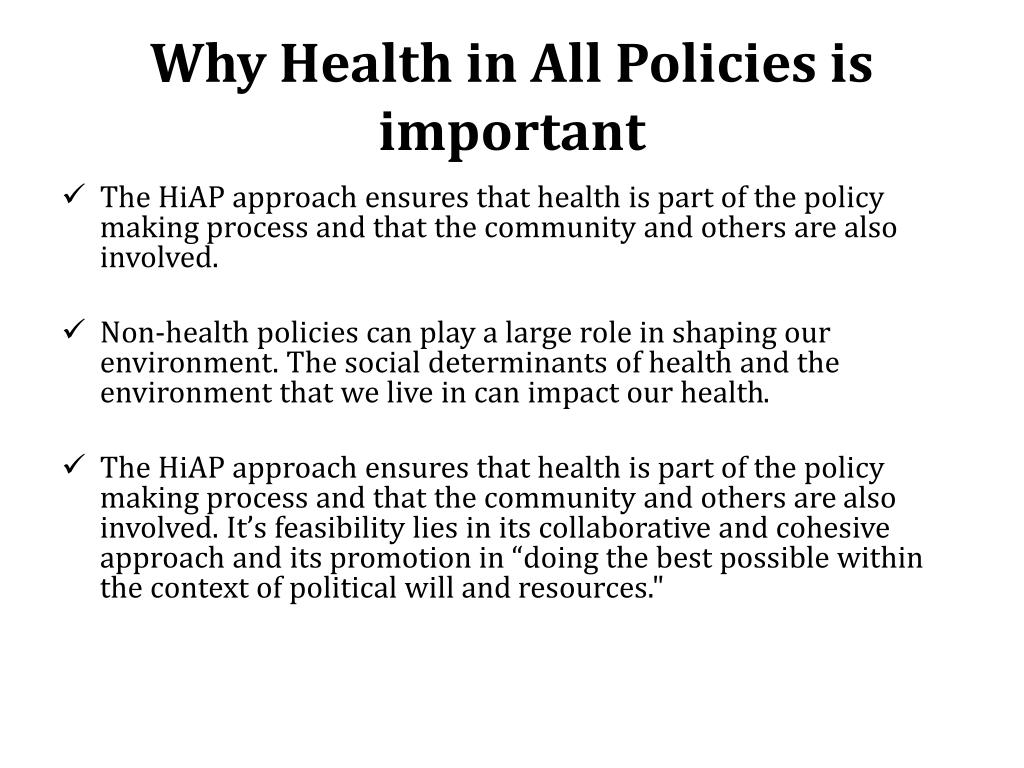
“All policy is health policy”

https://www.axios.com/newsletters/axios-vitals-8873028c-f37e-4712-a53a-ae324c56dbb6.html?utm_source=newsletter&utm_medium=email&utm_campaign=newsletter_axiosvitals&stream=top

PPT - Health in All Policies PowerPoint Presentation, free ...

The effects of racism are often inseparable from black Americans’ health and well-being, as “black communities bear the physical burdens of centuries of injustice, toxic exposures, racism, and white supremacist violence,” Rachel Hardeman, Eduardo Medina and Rhea Boyd write in the New England Journal of Medicine:

Any solution to racial health inequities must be rooted in the material conditions in which those inequities thrive. Therefore, we must insist that for the health of the black community and, in turn, the health of the nation, we address the social, economic, political, legal, educational, and health care systems that maintain structural racism. Because as the Covid-19 pandemic so expeditiously illustrated, all policy is health policy…

The response to the pandemic has made at least one thing clear: systemic change can in fact happen overnight.


Rich vs. poor hospitals

https://www.axios.com/hospitals-coronavirus-inequality-segregation-f10c49eb-5ccc-4739-b2a9-254fd9a3d40e.html

Rich vs. poor hospitals | News Break

The inequalities in American health care extend right into the hospital: Cash-strapped safety-net hospitals treat more people of color, while wealthier facilities treat more white patients.

Why it matters: Safety-net hospitals lack the money, equipment and other resources of their more affluent counterparts, which makes providing critical care more difficult and exacerbates disparities in health outcomes.

The big picture: A majority of patients who go to safety-net hospitals are black or Hispanic; 40% are either on Medicaid or uninsured.

The other side: Wealthy hospitals, including many prominent academic medical centers, are “far less likely to serve or treat black and low-income patients even though those patients may live in their backyards,” said Arrianna Planey, an incoming health policy professor at the University of North Carolina.

  • An investigation by the Boston Globe in 2017 found black people in Boston “are less likely to get care at several of the city’s elite hospitals than if you are white.”
  • The Cleveland Clinic has expanded into a global icon for health care, but rarely cares for those in the black neighborhoods that surround its campus, Dan Diamond of Politico reported in 2017.

Between the lines: The way the federal government is bailing out hospitals for the revenues they’ve lost during coronavirus is exacerbating this inequality. More money is flowing to richer hospitals.

  • For example, the main hospital within University of Colorado Health has gotten $79.3 million from the government’s main “provider relief” fund — about the same amount as Cook County Health, Chicago’s public hospital system, which predominantly treats low-income black and Hispanic people. It has gotten $77.6 million from that pot.
  • The Colorado system, however, is sitting on billions of dollars in cash and investments that Chicago’s safety-net hospitals don’t have. Chicago has also seen a worse coronavirus outbreak.

The bottom line: Poor hospitals that treat minorities have had to rely on GoFundMe pages and beg for ventilators during the pandemic, while richer systems move ahead with new hospital construction plans.


66% of counties with most COVID-19 cases lack infectious disease physician

https://www.beckershospitalreview.com/infection-control/66-of-counties-with-most-covid-19-cases-lack-infectious-disease-physician.html?utm_medium=email

About 208 million Americans are living in counties with no or very few infectious disease physicians, and many of these areas have been hit hardest by COVID-19, according to a study published in Annals of Internal Medicine.

Researchers determined the density of infectious disease physicians in every U.S. county using 2017 Medicare Provider Utilization and Payment Data. They also used aggregated data from the CDC and local public health agencies to plot the rate of confirmed COVID-19 cases in each county as of May 12.

Four study findings:

1. Of the 3,142 total counties in the U.S., 79.5 percent did not have a single infectious disease physician.

2. Among 785 counties with the highest burden of COVID-19 cases, 66 percent did not have an infectious disease physician working in the county.

3. About 9.9 percent of counties had an infectious disease physician density below the national average of 1.76 physicians per 100,000 population.

4. Only 10.5 percent of counties had an infectious disease physician density above the national average.

“The deficits in our [infectious disease] physician workforce today have left us poorly prepared for the unprecedented demand ahead,” study authors said, highlighting telemedicine as a key strategy for expanding access to this speciality.

To view the full study, click here.