Lee Health to freeze pay for 13,500 employees

https://www.beckershospitalreview.com/compensation-issues/lee-health-to-freeze-pay-for-13-500-employees.html?utm_medium=email

Tuesday's Headlines: Junior Bankers Watch Out—Pay Freeze May Be Imminent |  eFinancialCareers

Fort Myers, Fla.-based Lee Health is freezing salaries for its 13,500 employees next year to help offset financial losses tied to the COVID-19 pandemic, according to the Fort Myers News-Press

The pay freeze in 2021 will mark the first time in nine years that the publicly operated health system has not given employee raises. Salaries and benefits make up about half of the system’s nearly $2 billion in spending each year, according to the report.

Lee Health is facing a budget deficit for the first time in two decades due to financial strain linked to the pandemic. The salary freeze is one of several steps the system is taking to offset losses and avoid layoffs. 

The system has halted most capital projects, and its top executives took pay cuts earlier this year. Lee Health will also reduce the match for employee retirement plans from 5 percent to 4 percent next year, and health plan premiums and copays will also increase, according to the report.

Read the full Fort Myers News-Press article here


Another 870,000 Americans filed new unemployment claims last week

https://finance.yahoo.com/news/jobless-claims-coronavirus-unemployment-week-ended-september-19-2020-184747657.html

Another 870,000 Americans filed for first-time unemployment benefits last week, unexpectedly rising slightly from the prior week to reaffirm a slowdown in the U.S. economic recovery.

The U.S. Department of Labor (DOL) released its weekly jobless claims report at 8:30 a.m. ET Thursday. Here were the main metrics from the report, compared to Bloomberg estimates:

  • Initial jobless claims, week ended Sept. 19: 870,000 vs. 840,000 expected, and 866,000 during the prior week
  • Continuing claims, week ended Sept. 12: 12.580 million vs. 12.275 million expected, and 12.747 million during the prior week

At 870,000, Thursday’s figure represented the fourth consecutive week that new jobless claims came in below the psychologically important 1 million level, but was still high on a historical basis. Nevertheless, the labor market has made strides in recovering from the pandemic-era spike high of nearly 7 million weekly new claims seen in late March.

“While jobless claims under a million for four straight weeks could be considered a positive, we’re staring down a pretty stagnant labor market,” Mike Loewengart, managing director of investment strategy for E-Trade Financial Corporation, said in an email Thursday. “This has been a slow roll to recovery and with no signs of additional stimulus from Washington, jobless Americans will likely continue to exist in limbo. Further, a shaky labor market translates into a skittish consumer, and in the face of a pandemic that seemingly won’t go away without a vaccine, the outlook for the economy certainly comes into question.”

On an unadjusted basis, initial jobless claims rose by a greater margin, or about 28,500, from the previous week to about 824,500. The seasonally adjusted level of new claims rose by 4,000 week on week.

By state, unadjusted claims in California – where joblessness due to the pandemic has compounded with labor market stress due to wildfires – were again the highest in the country at more than 230,000, for an increase of about 4,400 week-over-week. Georgia, New York, New Jersey and Massachusetts also reported significant increases in new claims relative to the rest of the country. Most states reported at least increases in new claims last week.

Continuing claims have also trended lower after a peak of nearly 25 million in May, and fell for a second straight week in this week’s report. But these claims, which capture the total number of individuals still receiving unemployment insurance, have not broken below the 12 million mark since before the pandemic took hold of the labor market in mid-March.

Consistently high numbers of individuals have been filing for, and receiving, jobless benefits from regular state programs, and those newly created during the pandemic. The number of individuals claiming benefits in all programs for the week ended September 5 – the latest reported week – fell for the first time following three straight weeks of increases to 26.04 million, from the nearly 29.8 million reported during the prior week.

Of that total, more than 11.5 million comprised individuals receiving Pandemic Unemployment Assistance, which is aimed at self-employed and gig workers who don’t qualify for regular unemployment compensation but have still been impacted by the pandemic.

One of the major downside risks to further improvement in the labor market has been concern that Congress may not soon pass another round of fiscal stimulus aimed at keeping individuals on payrolls during the pandemic. Economists have already said that the end of the last round of augmented federal unemployment benefits in late July has weighed on improvements in joblessness.

“The current picture suggests that growth has slowed sharply in the past three months, and that the labor market is stalling again in the face of rising infections and the sudden ending of federal government support to unemployed people,” Ian Shepherdson, chief economist for Pantheon Macroeconomics, said in a note Wednesday.

The need for more fiscal stimulus to encourage the economy’s ongoing recovery has become a key talking point of policymakers including Federal Reserve Chair Jerome Powell and his colleagues at the central bank. In congressional testimony Tuesday and Wednesday, the Fed leader said further fiscal stimulus is “unequaled” by any other form of support that could be unleashed, with the central bank’s lending facilities having gone largely untouched by Main Street.

“The concept of the [congressionally authorized] Paycheck Protection Program was helpful because for many of those kinds of businesses – those businesses that don’t have cash reserves – the ability to get a forgivable loan if they stay open, if they keep people employed, was sound, and did give them the prospect of staying in business,” Joseph Minarik, The Conference Board chief policy economist and former Office of Management and Budget chief economist, told Yahoo Finance. “The notion that you have businesses that have been weak over the last few months and now have simply had to shut their doors, that’s a real problem, and it is not necessity going to be solved with a loan.”


House government funding bill gives providers relief on Medicare advance payments

https://www.fiercehealthcare.com/hospitals/house-government-funding-bill-gives-providers-relief-medicare-advance-payments?utm_medium=nl&utm_source=internal&mrkid=959610&mkt_tok=eyJpIjoiWTJZek56Z3lNV1E0TW1NMyIsInQiOiJKdUtkZE5DVGphdkNFanpjMHlSMzR4dEE4M29tZ24zek5lM3k3amtUYSt3VTBoMmtMUnpIblRuS2lYUWozZk11UE5cL25sQ1RzbFpzdExcL3JvalBod3Z6U3BZK3FBNjZ1Rk1LQ2pvT3A5Witkc0FmVkJocnVRM0dPbFJHZTlnRGJUIn0%3D

The House passed a short-term government funding bill that extends the deadline for providers to start repaying Medicare advance payment loans to the end of the COVID-19 public health emergency.

The bill that the House passed late Tuesday is a major win for provider groups who worried they could struggle to repay the Medicare loans starting in August. The bill still has to pass through the GOP-controlled Senate.

The continuing resolution, which funds the federal government through Dec. 11, also lowers the interest rate for payments made under the Medicare Accelerated and Advance Payment Program to 4%, down from 10.25%.

The Centers for Medicare & Medicaid Services (CMS) gave out more than $100 billion in advance payments in March to providers slammed by the pandemic. The payments are essentially loans which CMS recoups by garnishing Medicare payments to providers. That process starts 120 days after the first payment was received.

But the bill would give providers one year before Medicare can claim their payments.

It would also give providers 29 months since the first payment to fully repay the loan amount. Currently, CMS gives providers a year to fully repay.

In addition to the changes to the repayment terms, the bill also delays $4 billion in payment cuts to disproportionate share hospitals that were supposed to go into effect as part of the Affordable Care Act. The cuts will now be delayed until December.

The bill earned plaudits from the hospital industry, which has pressed Congress for help as providers are still struggling with the pandemic and could not afford to have Medicare payments become garnished.

“Our hospitals continue to suffer high costs and revenue losses associated with COVID-19, and they welcome the relief this continuing resolution would provide,” said Bruce Siegel, president and CEO of America’s Essential Hospitals, which represents safety net hospitals.

The Federation of American Hospitals said earlier this week before the House vote that the advance payment program is a “vital lifeline to hospitals and healthcare providers during the pandemic that has enabled hospitals and providers to maintain access to critical patient care. But the ongoing pressures of the current crisis required a revision of the repayment terms.”

The bill, which has approval from the White House, now heads to the Senate. The chamber must reach a decision on the legislation to avoid a government shutdown when funding runs out on Sept. 30.


A Wall Street Giant Tapped $1.5 Billion in Federal Aid for Its Hospitals

https://www.bloomberg.com/news/articles/2020-09-14/a-wall-street-giant-tapped-1-5-billion-in-federal-aid-for-its-hospitals

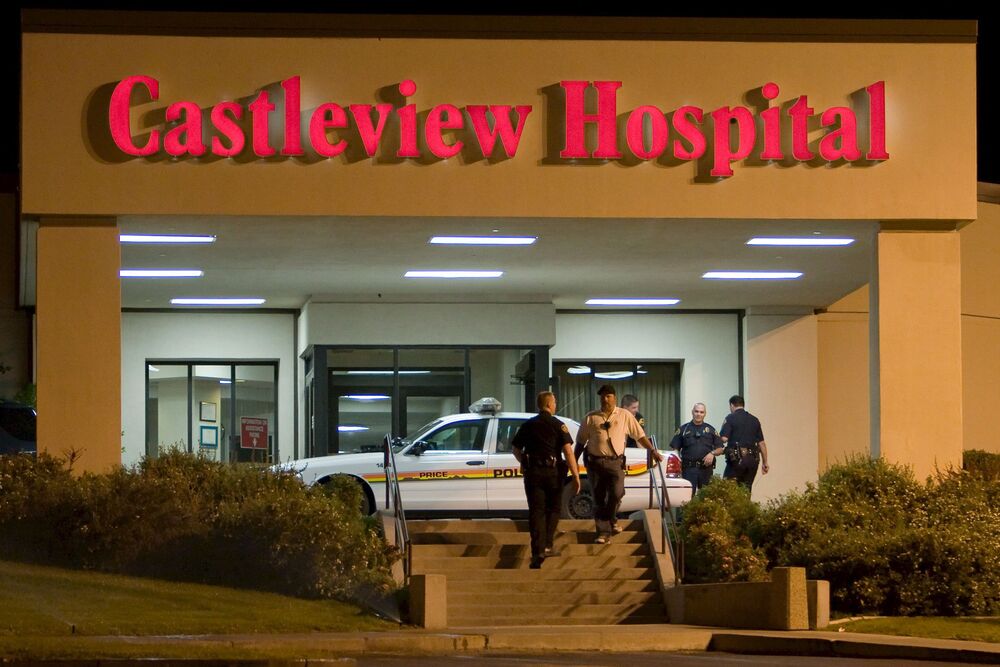
LifePoint’s Castleview Hospital in Price, Utah.

Private equity firm, flush with cash, sees ‘upside’ and more acquisitions.

Like hospital chains across the U.S., LifePoint Health tapped federal relief money to blunt the cost of the Covid-19 pandemic. It was a potent lifeline, a total of $1.5 billion.

But LifePoint is unusual in one respect, its owner: private equity firm Apollo Global Management, led by billionaire Leon Black.

LifePoint was certainly eligible for the money. But the extent of the federal assistance could contribute to concern in Washington over whether private equity-backed hospitals should have been. In July, the U.S. House passed a bill that would require health-care companies to disclose any private equity backing when seeking short-term loans from the federal Medicare program.

The reason for lawmakers’ concern: Private equity firms have ample access to cash. As recently as June, the Apollo fund that owns LifePoint had more than $2 billion to support its investments. Apollo, which manages $414 billion, recently told investors in an internal document that LifePoint was in such a strong market position that it was planning to make acquisitions of less fortunate hospitals.

The relief flowing to LifePoint illustrates a drawback of a government program designed to send out money quickly to every hospital, regardless of financial circumstances, according to Gerard Anderson, a health policy professor at Johns Hopkins University.

“This particular hospital system does not appear to need the money,” he said.

LifePoint and Apollo say they absolutely did. In their view, taxpayer money helped cover the soaring cost of treating Covid-19 patients and lost revenue because of the loss of fees from lucrative elective procedures. The assistance enabled the chain to retain all of its workers and provide essential service to its communities, they said.

“No health-care provider, including LifePoint, is immune to this, regardless of their ownership,” said LifePoint spokesperson Michelle Augusty.

Said an Apollo spokesperson: “Apollo is proud of LifePoint’s response to the Covid pandemic as they continue to provide vital care for both Covid and non-Covid patients.’’

LifePoint owns a far-flung collection of small-town hospitals, from Western Plains Medical Complex in Dodge City, Kansas, to Bourbon Community Hospital in Paris, Kentucky. For years, private equity has been pushing into every corner of American health care. Many medical professionals worry that these Wall Street-style investors will inevitably put profits before patients – something private equity denies.

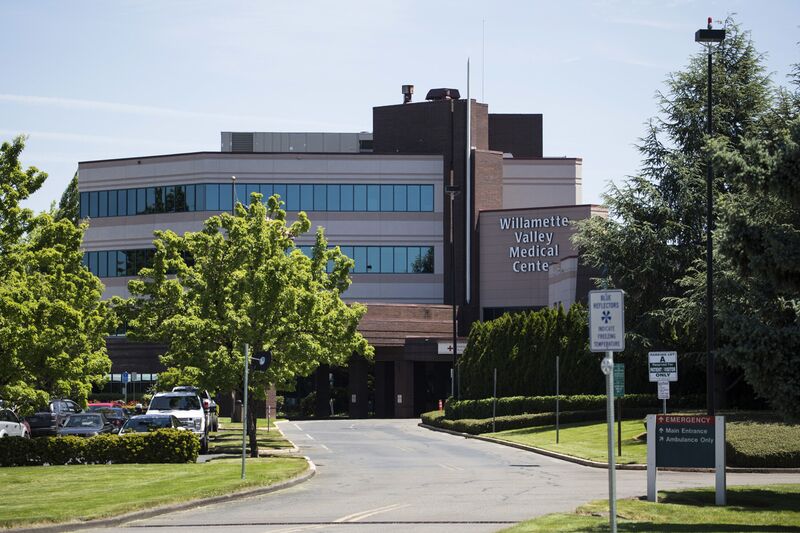
LifePoint’s Willamette Valley Medical Center in McMinnville, Oregon.

In April, LifePoint Chief Executive Officer David Dill and other hospital officials met with President Donald Trump. Dill urged Trump to keep helping hospitals, noting that LifePoint’s medical centers tend to be in the middle of the country, “smaller communities, which I know are communities very important to you,’’ according to a transcript of the meeting.

Rural hospitals are a very important part of the infrastructure in this country and also treating the uninsured and the Medicaid population as well,’’ Dill said.

Trump pointed out that the hospitals didn’t appear to be in the “hot spots.” Dill acknowledged they were handling only “a couple hundred Covid patients.” (The company said it has now cared for almost 20,000.)

In April, the month the government started distributing assistance, LifePoint borrowed $680 million in the capital markets. It also had access to $900 million in cash and an $800 million credit line, according to Moody’s Investors Service

By Apollo’s own account, LifePoint was doing just fine when the pandemic struck. In fact, it was thriving – and looking to expand. As of March 31, shortly before LifePoint got taxpayer dollars, Apollo’s investors were on track to double their money, internal documents show. On paper, they were sitting on a gain of more than $800 million.

“Independent hospital systems have greater difficulty weathering prolonged periods of financial stress,’’ Apollo wrote to its investors in May. “A  consolidation strategy will provide meaningful upside for Apollo funds’ investment.’’

Apollo said the crisis represented an opportunity: “The coronavirus pandemic will serve as a catalyst for additional M&A opportunities given the attractive scale and overall position of the LifePoint platform.”

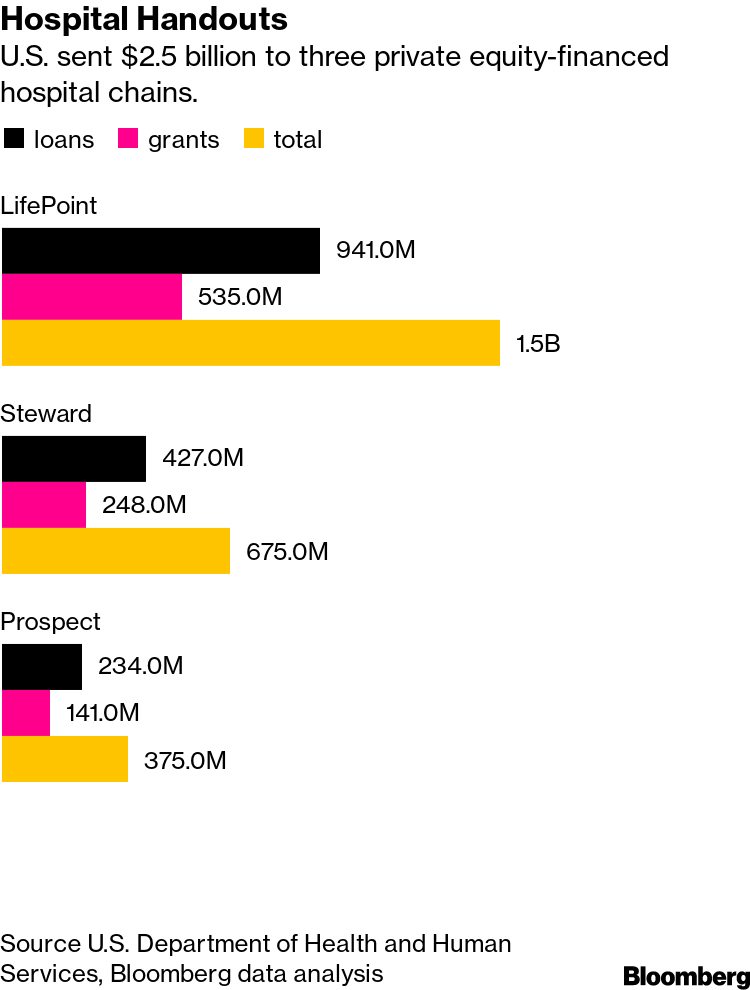
Apollo is one of three private equity firms whose hospitals, as a group, received a total of about $2.5 billion in bailout grants and loans, according to an analysis of the latest federal records. That’s a conservative figure because it doesn’t count the many smaller sums distributed to subsidiaries.
LifePoint’s UP Health System-Marquette in Michigan.
Steward Health Care, a hospital  chain financed by private equity firm Cerberus Capital Management, received $675 million in grants and loans. In May, Cerberus transferred ownership of Steward to a group of doctors in exchange for a note that can be converted into a 37.5% equity stake. Another hospital company, Prospect Medical Holdings, owned by private equity firm Leonard Green & Partners, took in $375 million.
Apollo’s LifePoint hospitals received the most: $941 million in subsidized loans and $535 million in outright grants. 
While Democratic lawmakers have said such firms could have instead tapped their own cash stockpiles, private equity industry representatives have said they have a duty to manage that money in the best interests of their investors, which include public pension plans.
A Wall Street Giant Tapped $1.5 Billion in Federal Aid for Its Hospitals -  Bloomberg

Apollo built its rural hospital empire through the acquisition of three regional hospital chains in 2015, 2016 and 2018.  Apollo Investment Fund VIII LP owns 76% of LifePoint, which is based in Brentwood, Tennessee.

Even though many individual rural hospitals are struggling, Apollo says it can operate them more efficiently by merging them together. LifePoint now owns 88 hospitals in 29 states. It had almost $9 billion of annual revenue last year.

Apollo says that on its watch, the chain has improved its infrastructure and technology, recruited care providers and built new centers.

And for rural hospitals, Apollo argues, bigger is better.

“We continue to believe that rural hospitals can benefit from being part of a larger well-run system that enables access to greater resources and infrastructure for improved patient care,” the Apollo spokesperson said.


Despite turbulence in H1, no avalanche of health systems downgrades

https://www.healthcaredive.com/news/despite-turbulence-in-h1-no-avalanche-of-health-systems-downgrades/584353/?utm_source=Sailthru&utm_medium=email&utm_campaign=Issue:%202020-09-02%20Healthcare%20Dive%20%5Bissue:29437%5D&utm_term=Healthcare%20Dive

“It’s new territory, which is why we’re taking that measured approach on rating actions,” Suzie Desai, senior director at S&P, said.

The healthcare sector has been bruised from the novel coronavirus and the effects are likely to linger for years, but the first half of 2020 has not resulted in an avalanche of hospital and health system downgrades.

At the outset of the pandemic, some hospitals warned of dire financial pressures as they burned through cash while revenue plunged. In response, the federal government unleashed $175 billion in bailout funds to help prop up the sector as providers battled the effects of the virus.

Still, across all of public finance — which includes hospitals — the second quarter saw downgrades outpacing upgrades for the first time since the second quarter of 2017.

S&P characterized the second quarter as a “historic low” for upgrades across its entire portfolio of public finance credits.

“While only partially driven by the coronavirus, the second quarter was the first since Q2 2017 with the number of downgrades surpassing upgrades and by the largest margin since Q3 2014,” according to a recent Moody’s Investors Service report.

Through the first six months of this year, Moody’s has recorded 164 downgrades throughout public finance and, more specifically, 27 downgrades among the nonprofit healthcare entities it rates.

By comparison, Fitch Ratings has recorded 14 nonprofit hospital and health system downgrades through July and just two upgrades, both of which occurred before COVID-19 hit.

“Is this a massive amount of rating changes? By no means,” Kevin Holloran, senior director of U.S. Public Finance for Fitch, said of the first half of 2020 for healthcare.

Also through July, S&P Global recorded 22 downgrades among nonprofit acute care hospitals and health systems, significantly outpacing the six healthcare upgrades recorded over the same period.

“It’s new territory, which is why we’re taking that measured approach on rating actions,” Suzie Desai, senior director at S&P, said.

Still, other parts of the economy lead healthcare in terms of downgrades. State and local governments and the housing sector are outpacing the healthcare sector in terms of downgrades, according to S&P.

Virus has not ‘wiped out the healthcare sector’

Earlier this year when the pandemic hit the U.S., some made dire predictions about the novel coronavirus and its potential effect on the healthcare sector.

Reports from the ratings agencies warned of the potential for rising covenant violations and an outlook for the second quarter that would result in the “worst on record, one Fitch analyst said during a webinar in May.

That was likely “too broad of a brushstroke,” Holloran said. “It has not come in and wiped out the healthcare sector,” he said. He attributes that in part to the billions in financial aid that the federal government earmarked for providers.

Though, what it has revealed is the gaps between the strongest and weakest systems, and that the disparities are only likely to widen, S&P analysts said during a recent webinar.

The nonprofit hospitals and health systems pegged with a downgrade have tended to be smaller in size in terms of scale, lower-rated already and light on cash, Holloran said.

Still, some of the larger health systems were downgraded in the first half of the year by either one of the three rating agencies, including Sutter Health, Bon Secours Mercy Health, Geisinger, University of Pittsburgh Medical Center and Care New England.

“This is something that individual management of a hospital couldn’t control,” said Rick Gundling, senior vice president of Healthcare Financial Management Association, which has members from small and large organizations. “It wasn’t a bad strategy — that goes into a downgrade. This happened to everybody.”

Deteriorating payer mix

Looking forward, some analysts say they’re more concerned about the long-term effects for hospitals and health systems that were brought on by the downturn in the economy and the virus.

One major concern is the potential shift in payer mix for providers.

As millions of people lose their job they risk losing their employer-sponsored health insurance. They may transition to another private insurer, Medicaid or go uninsured.

For providers, commercial coverage typically reimburses at higher rates than government-sponsored coverage such as Medicare and Medicaid. Treating a greater share of privately insured patients is highly prized.

If providers experience a decline in the share of their privately insured patients and see a growth in patients covered with government-sponsored plans, it’s likely to put a squeeze on margins.

The shift also poses a serious strain for states, and ultimately providers. States are facing a potential influx of Medicaid members at the same time state budgets are under tremendous financial pressure. It raises concerns about whether states will cut rates to their Medicaid programs, which ultimately affects providers.

Some states have already started to re-examine and slash rates, including Ohio.


Hospitals face closure as $100B in Medicare loans come due

https://www.beckershospitalreview.com/finance/hospitals-face-closure-as-100b-in-medicare-loans-come-due.html?utm_medium=email

HCA posts a billion-dollar profit, bolstered by CARES Act funds - MedCity  News

CMS accelerated payments to hospitals and other healthcare providers at the beginning of the COVID-19 pandemic to help temporarily relieve financial strain. It’s time to begin repaying the Medicare loans but that isn’t possible for some rural hospitals, according to NPR

CMS expanded the Accelerated and Advance Payment Program in late March to help offset financial damage caused by the COVID-19 pandemic. CMS announced April 26 that it was reevaluating pending and new applications for advance payments due to the availability of funds under the Coronavirus Aid, Relief and Economic Security Act. As of May, CMS had paid out $100 billion in advance payments, the bulk of which went to hospitals. 

Hospitals and other healthcare providers are required to start repaying the Medicare loans this month. Most hospitals will have one year from the date the first loan payment was made to repay the loans, according to Kaiser Family Foundation.

Ozarks Community Hospital, 25-bed critical access hospital in Gravette, Ark., is one of the hospitals that applied for and accepted the Medicare loans. The hospital also received grants made available under the CARES Act, which do not have to be repaid.

CEO Paul Taylor said Ozarks Community Hospital’s revenue is still constrained, and he doesn’t know how it will pay back its $8 million Medicare loan. Payments for new Medicare claims will be offset to repay the loans, but losing those payments could force the hospital to close, Mr. Taylor told NPR.

“If I get no relief and they take the money … we won’t still be open,” he said.

Ozarks Community Hospital is one of more than 850 critical access hospitals in rural areas that received Medicare loans, according to NPR. Given the shaky financial footing of many rural hospitals before the pandemic, the strain of having Medicare payments withheld could be enough to force others to shut down. 

Before the pandemic, more than 600 rural hospitals across the U.S. were vulnerable to closure, according to an estimate from iVantage Health Analytics, a firm that compiles a hospital strength index based on data about financial stability, patients and quality indicators.

If the financial pressures tied to the pandemic force any of those hospitals to shut down, they’ll join the list of 131 rural hospitals that have closed over the past decade, according to the Cecil G. Sheps Center for Health Services Research.


Sutter posts $857M loss in H1 on investment, operational declines

https://www.healthcaredive.com/news/sutter-posts-857m-loss-in-h1-on-investment-operational-declines/583910/?utm_source=Sailthru&utm_medium=email&utm_campaign=Issue:%202020-08-21%20Healthcare%20Dive%20%5Bissue:29231%5D&utm_term=Healthcare%20Dive

California's Sutter Health reaps rewards from investments in ...

Dive Brief:

  • Sutter Health had a staggering loss of $857 million in the first half of the year as the Northern California health was bruised by the pandemic. That’s almost a $1.4 billion drop in income compared to the first half of last year, a plummet Sutter management largely blamed on investment and operational losses in its latest financial filing posted Thursday.
  • The virus shuttered operations for a period of time, driving Sutter’s revenue down 8% to $6.1 billion during the first half of the year. Expenses climbed nearly 2%, contributing to an operating loss of $557 million.
  • Still, the nonprofit noted it did experience a significant rebound in its investments in the second quarter after weathering the devastating effects of the first quarter.

Dive Insight:

Sutter joins other major nonprofit health systems in posting net losses for the first half of the year despite receiving hundreds of millions in federal grants to help offset headwinds brought on by the pandemic.

Recently, both Renton, Washington-based Providence and Arizona-based Banner Health posted losses for the first half of the year — $538 million and $267 million, respectively. Dampened revenue and downturns in investments contributed to their losses.

The federal government has funneled billions of dollars to providers across the country in an attempt to help them weather the downturn in patient volumes. Sutter noted in its filing that it’s received $400 million in federal relief funds so far, though that wasn’t enough to push the health system back into the black. Sutter operates 29 hospitals and enjoys a large presence in Northern California.

Sutter reported fewer admissions and emergency room visits in the second quarter compared to the prior-year period, down about 10% and 19%, respectively.

The pandemic was quick to wreak havoc on Sutter’s finances during the first quarter, in which the system reported an operating loss of $236 million and a net loss of almost $1.1 billion.

The coronavirus is also serving as a drag on its ratings. In April, two of the three big ratings agencies downgraded Sutter Health’s rating.

In part, Moody’s attributed the downgrade to Sutter’s weaker profitability profile. In its rationale, Moody’s said, “Following a second year of weaker results, margins in 2020 are likely to remain under pressure due to COVID-19 related disruptions, ongoing performance challenges at some of Sutter’s facilities, and continued reimbursement pressure.”

Also weighing on Moody’s rating is the $575 million settlement expected to be paid this year to resolve antitrust issues. Last year, the health system averted a trial over antitrust concerns after agreeing to a settlement with California regulators. Sutter agreed it would end any contracts that require all of its facilities to be in-network or none of them and cap out-of-network charges, among other stipulations.


Recovery Through Resilience: Considerations of Top CFOs

https://www.cfo.com/strategy/2020/08/recovery-through-resilience-considerations-of-top-cfos/?utm_source=Sailthru&utm_medium=email&utm_campaign=Issue:%202020-08-21%20CFO%20Dive%20%5Bissue:29224%5D&utm_term=CFO%20Dive

Recovery Through Resilience: Considerations of Top CFOs - CFO

As the pandemic continues to cause global economic disparity, experts scramble to forecast economic recovery. While no one can predict with precision what lies ahead for the economy, CFOs’ expectations and actions can be a helpful barometer. On a recent Resilient Podcast episode, Mike Kearney, Deloitte Risk & Financial Advisory CMO, and I discussed CFOs’ expectations for the economy, how they are handling hiring and retention, and how they can position their companies for growth. Here are the top takeaways.

1. CFOs Remain on the Defensive

CFOs’ economic expectations have plummeted. Our Q2 CFO Signals Survey marked the lowest readings on business expectation metrics since the first survey 41 quarters ago. Just 1% of CFOs rated conditions in North America as good, compared with 80% in the first quarter. A separate poll of 118 Fortune 500 CFOs conducted at the end of June echoed the sentiments of our Q2 Signals Survey and found that most respondents expect slow to moderate recovery. Over half expect they will not reach pre-crisis operating levels until 2021 and with 17% expecting 2022 or later.

Right now, a foremost priority for resilient CFOs is to ensure enough cash and liquidity for their company to operate. The focus on cost reduction outweighed revenue growth for the first time in the history of the Signals survey. As such, CFOs are doubling down on investing cash rather than returning it to shareholders, staying in existing geographies rather than moving to new ones, and focusing on organic growth as opposed to inorganic growth like mergers and acquisitions.

 2. Navigating New Frontiers

Rest assured that the news isn’t all bad. The Q2 Signals Survey did find that 585 of CFOs see the North American economy rebounding a year from now. Notably, when asked whether they felt their company was in response or recovery mode, or already in a position to thrive, only about a quarter of CFOs said they were still responding to the pandemic. In fact, 37% of CFOs believe their companies are already in “thrive” mode. In the meantime, CFOs are reimagining company configurations, diversifying supply chains, and accelerating automation.

One obvious example of how CFOs are taking a resilient approach to navigate uncertainties is the widespread adoption of virtual work.

According to the Q2 Signals Survey, while just under half say they will resume on-site work as soon as governments allow it, about 70% of CFOs say those who can continue to work remotely will have the option of doing so. This will likely become a critical component to retaining top talent—a longtime concern for CFOs—particularly in a challenging economy. Resilient CFOs will continue to shift underlying business processes to accommodate routine remote work, including investing in new technologies for an efficient and effective virtual workforce, moving platforms to the cloud, and even adjusting internal control mechanisms to allow for off-site collaboration, budgeting, and financial planning.

3. The Role the CFO Can Play

Over the past decade or so, CFOs have evolved to become business strategists, but never has their role as stewards been more important as they grapple with how to navigate a business landscape that changes by the hour. In the coming months, CFOs should consider focusing on:

  • Revisiting their financing and liquidity strategies, centralizing cash release decisions with the treasurer, and leveraging tax planning to reduce cash outlays and preserve budget. Deliver a balance sheet with headroom, flexibility, and liquidity to take advantage of once-in-a-lifetime market opportunities that could present themselves.
  • Exploring different recovery scenarios, keeping an eye on important risk metrics that may signal a time to innovate. Evolve business models, processes, and technologies to maximize current performance and position companies to be able to seize new opportunities.
  • Keeping top talent by embracing a company’s best people, whether it is offering work-from-home capabilities, or nurturing followership through trust. Organizations that can retain their top people may be best positioned in recovery.

During recovery, a critical benchmark to track will be CFOs’ risk appetite. In the Q2 Signals Survey, the proportion of CFOs saying it is a good time to be taking greater risk plummeted to 27%. An upward tick of this finding may signal a greater focus on revenue growth, a willingness to expand into new markets, and an appetite for deal-making. Until then, by taking a resilient approach in the coming months, CFOs can position their companies for strong performance, future growth, and market-moving success as the economy starts to recover.


Cash-Pinched Hospitals Press Congress to Break Virus Fund Logjam

https://news.bloomberglaw.com/health-law-and-business/cash-pinched-hospitals-press-congress-to-break-virus-fund-logjam

DIY Money Tree Gift Idea - So TIPical Me

Hospital groups are pressing Congress to put more money into a relief fund for hospitals and providers, even as labor data showed signs of a turnaround for the health-care industry last month.

Congressional leaders are at a standstill over the next coronavirus-relief package and it could be weeks until lawmakers vote on legislation. Hospital groups have said the $175 billion Congress already approved has been a crucial lifeline to keep hospitals from laying off more staff or potentially closing. Some are worried the money may start to run dry soon.

The coronavirus is prompting many Americans to delay health care, and further funding delays exacerbate the need for assistance, the hospitals warn. Some providers that shed jobs earlier in the pandemic have begun adding them back, but employment levels remain far below where they once were.

“The longer we are in the pandemic the more clear it becomes that this is not going to be a short-term issue,” Beth Feldpush, senior vice president of policy and advocacy at America’s Essential Hospitals, said.

Leaders of both parties back more federal funding to help hospitals and doctors’ offices stay in business. Democrats proposed $100 billion for the industry, as hospital groups such as AEH sought, in virus-relief legislation (H.R. 6800) the House passed earlier this year. Republicans included $25 billion in their counterproposal.

The Health and Human Services Department has promised about $115 billion of the $175 billion in relief Congress approved this year to help health-care providers offset their Covid-19-related losses, according to agency data. That leaves the industry with about $60 billion left.

The U.S. exceeded 5 million confirmed Covid-19 cases Aug. 9, according to data from Bloomberg News and Johns Hopkins University, more than any other country. Almost 165,000 people in the U.S. have died from the virus.

Industry Impact

The health-care industry added more than 126,000 jobs in July, according to data released last week by the Bureau of Labor Statistics. Dentist offices and hospitals, the section of the industry that was laying off tens of thousands of people in April and May, accounted for more than 70,000 of those new jobs.

Still, there were 797,000 fewer health-care jobs compared to before the pandemic, according to BLS.

The virus hit parts of the heath-care industry unevenly. Large health systems such as HCA Healthcare Inc. and Universal Health Services Inc. posted better-than-expected profits for the second quarter of 2020.

Some hospitals that didn’t have much cash-on-hand to start the year are struggling with lower profits and may need added relief if the virus continues to keep Americans from seeking care, industry watchers said.

“No hospital is going to come out of this year better than they were in prior years,” Suzie Desai, senior director for S&P Global Rating’s Not-for-Profit Health Care group, said.

The federal relief funds helped buoy hospitals this year, hospital groups argue. The American Hospital Association estimates that without relief funds, hospitals margins would have been down 15% and could be down 11% at the end of 2020 if the virus continues to spread at its current pace.

The AHA estimated losses for the nation’s hospitals and health systems will reach $323 billion this year.


Pandemic relief funds pivotal in keeping hospitals afloat during Q2

https://www.fiercehealthcare.com/hospitals/hospital-earnings-highlight-pivotal-role-federal-relief-funds-staying-afloat-during?mkt_tok=eyJpIjoiTURoaU9HTTRZMkV3TlRReSIsInQiOiJwcCtIb3VSd1ppXC9XT21XZCtoVUd4ekVqSytvK1wvNXgyQk9tMVwvYXcyNkFHXC9BRko2c1NQRHdXK1Z5UXVGbVpsTG5TYml5Z1FlTVJuZERqSEtEcFhrd0hpV1Y2Y0sxZFNBMXJDRkVnU1hmbHpQT0pXckwzRVZ4SUVWMGZsQlpzVkcifQ%3D%3D&mrkid=959610

Hospital system earnings for the second quarter of the year painted a stark picture of how federal relief funding helped offset massive losses in patient volume sparked by the COVID-19 pandemic.

But a full financial recovery may not happen until next year, some analysts warn.

Major hospital systems such as HCA Health and Universal Health Services posted profits in the second quarter despite plummeting volumes sparked by the cancellation of elective procedures and patients avoiding care due to fears of exposure to the virus. A key boost, however, came from a $175 billion fund passed by Congress and loans under the Medicare Accelerated and Advance Payments Program.

“These companies survived the June quarter and exited the quarter with substantial amounts of liquidity,” said Jonathan Kanarek, vice president and senior credit officer for Moody’s Investors Services. “We think [liquidity] is probably the most critical factor for them as far as weathering the storm.”

Congress has approved $175 billion to help prop up providers, of which the Department of Health and Human Services has distributed more than $100 billion.

The Centers for Medicare & Medicaid Services also gave out $100 billion in advance Medicare payments before suspending the program in late April. But the payments are loans that hospitals have to start repaying as soon as this month, as opposed to the congressional funding that does not have to get paid back.

Hospital system earnings illustrated how pivotal the relief funds were to combat massive holes in patient volumes.

Tenet Healthcare, which operates 65 hospitals across the country, reported Monday that it earned in the second quarter adjusted earnings before interest, taxes, depreciation and amortization (EBITDA) of $732 million. But of that $732 million, more than 70% of it was aid from the relief fund.

Tenet wasn’t the only for-profit system where relief funding was a large part of their adjusted EBITDA.

Community Health Systems, which operates 95 facilities, reported an adjusted EBITDA of $454 million in the second quarter. But most of that figure was due to the $448 million that it got from the relief funds.

The provider funding made up a smaller portion of HCA Healthcare’s earnings. The system of 184 hospitals reported that the funding made up 31% of its adjusted EBITDA.

Hospital system volumes greatly declined in April as facilities were forced to cancel elective procedures and patients were scared of going to the hospital.

For example, Tenet’s hospital admissions in April were 33% of what it had in the same month in 2019. But volumes started to recover as shelter-in-place orders expired and some states got a better handle on the pandemic.

Tenet saw admissions grow in June to 90% of what they were in June 2019.

But it remains unclear what hospital finances will look like for the rest of the year. Major systems like Tenet and HCA have scrapped their 2020 financial outlook because of the pandemic.

“We don’t think the shape of this recovery or trajectory will be linear in nature,” Kanarek said. “We think there will be a lot of starts and stops.”

Those starts and stops will depend on the extent of the spread of the virus in an area.

Some states such as Florida, Texas and Arizona have seen massive spikes in the virus in recent weeks, which has put renewed strain on systems. Texas’ governor canceled elective procedures in eight counties back in June, some of which included major cities such as Houston and Dallas.

“I am a little skeptical that we are going to be back to normal before we ultimately have a vaccine,” Kanarek said.

It is also murky on whether hospitals will continue to get more financial help from Congress.

The House passed the HEROES Act more than a month ago that gives providers another $100 billion, but it has stalled in the Senate.

Congress and the White House have been in extensive talks for more than a week on a new relief package. Senate Majority Leader Mitch McConnell released a package last week that had $25 billion in relief funding and lawsuit liability protections for providers.

But even without the additional funding, for-profit hospitals have made some moves to prepare for more shutdowns such as accessing capital markets to add additional lawyers of bank liquidity, Kanarek said.

“We can only hope 2021 will look like a more normal year for hospitals, perhaps more like 2019, but there is still a lot of uncertainty out there,” he said.