Re-examining the delivery of high-value care through COVID-19

https://thehill.com/opinion/healthcare/502851-examining-the-delivery-of-high-value-care-through-covid-19#bottom-story-socials

Re-examining the delivery of high-value care through COVID-19 ...

Over the past months, the country and the economy have radically shifted to unchartered territory. Now more than ever, we must reexamine how we spend health care dollars. 

While the COVID-19 pandemic has exposed challenges with health care in America, we see two overarching opportunities for change:

1) the under-delivery of evidence-based care that materially improves the lives and well-being of Americans and

2) the over-delivery of unnecessary and, sometimes, harmful care.

The implications of reallocating our health care spending to high-value services are far-ranging, from improving health to economic recovery. 

To prepare for coronavirus patients and preserve protective equipment, clinicians and hospitals across the country halted non-urgent visits and procedures. This has led to a substantial reduction in high-value care: emergency care for strokes or heart attacks, childhood vaccinations, and routine chronic disease management. However, one silver lining to this near shutdown is that a similarly dramatic reduction in the use of low-value services has also ensued.

As offices and hospitals re-open, we have a once in a century opportunity to align incentives for providers and consumers, so patients get more high-value services in high-value settings, while minimizing the resurgence of low-value care. For example, the use of pre-operative testing in low-risk patients should not accompany the return of elective procedures such as cataract removal. Conversely, benefit designs should permanently remove barriers to high-value settings and services, like patients receiving dialysis at home or phone calls with mental health providers.   

People with low incomes and multiple chronic conditions are of particular concern as unemployment rises and more Americans lose their health care coverage. Suboptimal access and affordability to high-value chronic disease care prior to the COVID-19 pandemic was well documented  As financially distressed providers re-open to a new normal, hopeful to regain their financial footing, highly profitable services are likely to be prioritized.

Unfortunately, clinical impact and profitability are frequently not linked. The post-COVID reopening should build on existing quality-driven payment models and increase reimbursement for high-value care to ensure that compensation better aligns with patient-centered outcomes.

At the same time, the dramatic fall in “non-essential care” included a significant reduction in services that we know to be harmful or useless. Billions are spent annually in the US on routinely delivered care that does not improve health; a recent study from 4 states reports that patients pay a substantial proportion (>10 percent) of this tab out-of-pocket. This type of low-value care can lead to direct harm to patients — physically or financially or both — as well as cascading iatrogenic harm, which can amplify the total cost of just one low-value service by up to 10 fold. Health care leaders, through the Smarter Health Care Coalition, have hence called on the Department of Health and Human Services Secretary Azar to halt Medicare payments for services deemed low-value or harmful by the USPSTF. 

As offices and hospitals reopen with unprecedented clinical unmet needs, we have a unique opportunity to rebuild a flawed system. Payment policies should drive incentives to improve individual and population health, not the volume of services delivered. We emphasize that no given service is inherently high- or low-value, but that it depends heavily on the individual context. Thus, the implementation of new financial incentives for providers and patients needs to be nuanced and flexible to allow for patient-level variability. The added expenditures required for higher reimbursement rates for highly valuable services can be fully paid for by reducing the use of and reimbursement for low-value services.  

The delivery of evidence-based care should be the foundation of the new normal. We all agree that there is more than enough money in U.S. health care; it’s time that we start spending it on services that will make us a healthier nation.


Telehealth could grow to a $250B revenue opportunity post-COVID-19: analysis

https://www.fiercehealthcare.com/tech/telehealth-could-grow-to-a-250b-revenue-opportunity-post-covid-mckinsey-reports

virtual visit

With the acceleration of consumer and provider adoption of telehealth, a quarter of a trillion dollars in current U.S. healthcare spend could be done virtually, according to a new report.

During the COVID-19 pandemic, consumer adoption of telehealth has skyrocketed, from 11% of U.S. consumers using telehealth in 2019 to 46% of consumers now using telehealth to replace canceled healthcare visit, according to consulting firm McKinsey & Company’s COVID-19 consumer survey conducted in April.

McKinsey’s survey also found that about 76% of consumers say they are highly or moderately likely to use telehealth in the future. Seventy-four percent of people who had used telehealth reported high satisfaction.

Health systems, independent practices, behavioral health providers, and other healthcare organizations rapidly scaled telehealth offerings to fill the gap between need and canceled in-person care. Providers are ready for the shift to virtual care: 57% view telehealth more favorably than they did before COVID-19 and 64% are more comfortable using it, according to McKinsey’s recent provider surveys.

Pre-COVID-19, the total annual revenues of U.S. telehealth players were an estimated $3 billion, with the largest vendors focused on virtual urgent care.

Telehealth is now poised to take a bigger share of the healthcare market as McKinsey estimates that up to $250 billion, or 20% of all Medicare, Medicaid, and commercial outpatient, office, and home health spend could be done virtually.

The consulting firm looked at anonymized claims data representative of commercial, Medicare, and Medicaid utilization.

The company’s claims-based analysis suggests that approximately 20% of all emergency room visits could potentially be avoided via virtual urgent care offerings, 24% of healthcare office visits and outpatient volume could be delivered virtually, and an additional 9% “near-virtually.”

Up to 35% of regular home health attendant services could be virtualized, and 2% of all outpatient volume could be shifted to the home setting, with tech-enabled medication administration.

Many of the dynamics that have helped to expand telehealth adoption are likely to be in place for at least the next 12 to 18 months, as concerns about COVID-19 remain until a vaccine is widely available.

Going forward, telehealth can increase access to necessary care in areas with shortages, such as behavioral health, improve the patient experience, and improve health outcomes, McKinsey reported.

Providers and patients are concerned that recent federal and state policies expanding access to telehealth will be rolled back once the emergency period ends.

Industry groups, including the College of Healthcare Information Management Executives (CHIME), are calling on lawmakers to ensure the changes enacted by Congress and the administration become permanent.

McKinsey’s research indicates providers’ concerns about telehealth include security, workflow integration, effectiveness compared with in-person visits, and the future for reimbursement.

“We call on Medicare and all other insurers to continue to fund telehealth programs and work collaboratively on coverage and coding to lessen provider burden. We cannot go back to pre-COVID telehealth; instead, we must go forward. Patients will demand it and providers will expect it,” CHIME CEO and President Russell Branzell said in a recent statement.

Telehealth also is drawing bipartisan support. Senator Marsha Blackburn, R-Tenn., urged Congress to “continue to support this expansion and codify the administration’s changes to support the health needs of the American people,” in a recent news release.

Rep. Robin Kelly, D-Illinois, is introducing a bill directing HHS Secretary Alex Azar to oversee a telehealth study looking at the technology’s impact on health and costs, Politico reported in its newsletter today.


Taking advantage of the telehealth opportunity

Healthcare providers and payers will need to take action to ensure the full potential of telehealth is realized after the crisis has passed, according to McKinsey.

There continue to be challenges as providers cite concerns about telehealth include security, workflow integration, effectiveness compared with in-person visits, and the future for reimbursement. There also is a gap between consumers’ interest in telehealth (76%) and actual usage (46%). Factors such as lack of awareness of telehealth offerings and understanding of insurance coverage are some of the drivers of this gap.

“The current crisis has demonstrated the relevance of telehealth and created an opening to modernize the care delivery system,” McKinsey consultants wrote. “Healthcare systems that come out ahead will be those who act decisively, invest to build capabilities at scale, work hard to rewire the care delivery model, and deliver distinctive high-quality care to consumers.”

McKinsey outlined steps industry stakeholders should take to drive the growth of telehealth.


Payers: Health plans should look to optimize provider networks and accelerate value-based contracting to incentivize telehealth. Align incentives for using telehealth, particularly for chronic patients, with the shift to risk-based payment models.

Payers also should build virtual health into new product designs to meet changing consumer preferences, This new design may include virtual-first networks, digital front-door features (for example, e-triage), seamless “plug-and-play” capabilities to offer innovative digital solutions, and benefit coverage for at-home diagnostic kits.


Health systems: Hospitals and health systems should accelerate the development of an overall consumer-integrated “front door.” Consider what the integrated product will initially cover beyond what currently exists and integrate with what may have been put in place in response to COVID-19, for example, e-triage, scheduling, clinic visits, record access.

Providers also should build the capabilities and incentives of the provider workforce to support virtual care, including, workflow design, centralized scheduling, and continuing education. And, health systems need to take steps to measure the value of virtual care by quantifying clinical outcomes, access improvement, and patient/provider satisfaction. Include the potential value from telehealth when contracting with payers for risk models to manage chronic patients, McKinsey said.


Investors and health technology firms: These players also can support the new reality of expanded telehealth services. Technology firms should consider developing scenarios on how virtual health will evolve and when, including how usage evolved post-COVID-19, based on expected consumer preferences, reimbursement, CMS and other regulations.

Investors also should develop potential options and define investment strategies based on the expected virtual health future. For example, combinations of existing players/platforms, linkages between in-person and virtual care offerings and create sustainable value. Investors and technology companies also can identify the assets and capabilities to implement these options, including specific assets or capabilities to best enable the play, and business models that will deliver attractive returns.


How Many More Will Die From Fear of the Coronavirus?

Fear of contracting the coronavirus has resulted in many people missing necessary screenings for serious illnesses, like cancer and heart disease.

Seriously ill people avoided hospitals and doctors’ offices. Patients need to return. It’s safe now.

More than 100,000 Americans have died from Covid-19. Beyond those deaths are other casualties of the pandemic — Americans seriously ill with other ailments who avoided care because they feared contracting the coronavirus at hospitals and clinics.

The toll from their deaths may be close to the toll from Covid-19. The trends are clear and concerning. Government orders to shelter in place and health care leaders’ decisions to defer nonessential care successfully prevented the spread of the virus. But these policies — complicated by the loss of employer-provided health insurance as people lost their jobs — have had the unintended effect of delaying care for some of our sickest patients.

To prevent further harm, people with serious, complex and acute illnesses must now return to the doctor for care.

Across the country, we have seen sizable decreases in new cancer diagnoses (45 percent) and reports of heart attacks (38 percent) and strokes (30 percent). Visits to hospital emergency departments are down by as much as 40 percent, but measures of how sick emergency department patients are have risen by 20 percent, according to a Mayo Clinic study, suggesting how harmful the delay can be. Meanwhile, non-Covid-19 out-of-hospital deaths have increased, while in-hospital mortality has declined.

These statistics demonstrate that people with cancer are missing necessary screenings, and those with heart attack or stroke symptoms are staying home during the precious window of time when the damage is reversible. In fact, a recent poll by the American College of Emergency Physicians and Morning Consult found that 80 percent of Americans say they are concerned about contracting the coronavirus from visiting the emergency room.

Unfortunately, we’ve witnessed grievous outcomes as a result of these delays. Recently, a middle-aged patient with abdominal pain waited five days to come to a Mayo Clinic emergency department for help, before dying of a bowel obstruction. Similarly, a young woman delayed care for weeks out of a fear of Covid-19 before she was transferred to a Cleveland Clinic intensive care unit with undiagnosed leukemia. She died within weeks of her symptoms appearing. Both deaths were preventable.

The true cost of this epidemic will not be measured in dollars; it will be measured in human lives and human suffering. In the case of cancer alone, our calculations show we can expect a quarter of a million additional preventable deaths annually if normal care does not resume. Outcomes will be similar for those who forgo treatment for heart attacks and strokes.

Over the past 12 weeks, hospitals deferred nonessential care to prevent viral spread, conserve much-needed personal protective equipment and create capacity for an expected surge of Covid-19 patients. During that time, we also have adopted methods to care for all patients safely, including standard daily screenings for the staff and masking protocols for patients and the staff in the hospital and clinic. At this point, we are gradually returning to normal activities while also mitigating risk for both patients and staff members.

The Covid-19 crisis has changed the practice of medicine in fundamental ways in just a matter of months. Telemedicine, for instance, allowed us to pivot quickly from in-person care to virtual care. We have continued to provide necessary care to our patients while promoting social distancing, reducing the risk of viral spread and recognizing patients’ fears.

Both Cleveland Clinic and Mayo Clinic have gone from providing thousands of virtual visits per month before the pandemic to hundreds of thousands now across a broad range of demographics and conditions. At Cleveland Clinic, 94 percent of diabetes patients were cared for virtually in April.

While virtual visits are here to stay, there are obvious limitations. There is no substitute for in-person care for those who are severely ill or require early interventions for life-threatening conditions. Those are the ones who — even in the midst of this pandemic — must seek the care they need.

Patients who need care at a clinic or hospital or doctor’s office should know they have reduced the risk of Covid-19 through proven infection-control precautions under guidelines from the Centers for Disease Control and Prevention. We’re taking unprecedented actions, such as restricting visiting hours, screening patient and caregiver temperatures at entrances, encouraging employees to work from home whenever possible, providing spaces that allow for social distancing, and requiring proper hand hygiene, cough etiquette and masking.

All of these strategies are intended to significantly reduce risk while allowing for vital, high-quality care for our patients.

The novel coronavirus will not go away soon, but its systemic side effects of fear and deferred care must.

We will continue to give vigilant attention to Covid-19 while urgently addressing the other deadly diseases that haven’t taken a pause during the pandemic. For patients with medical conditions that require in-person care, please allow us to safely care for you — do not delay. Lives depend on it.


Memorial Day: Why veterans are particularly vulnerable to the coronavirus pandemic

https://theconversation.com/memorial-day-why-veterans-are-particularly-vulnerable-to-the-coronavirus-pandemic-139251?utm_medium=email&utm_campaign=Latest%20from%20The%20Conversation%20for%20May%2022%202020%20-%201630015658&utm_content=Latest%20from%20The%20Conversation%20for%20May%2022%202020%20-%201630015658+Version+A+CID_f23e0e73a678178a59d0287ef452fe33&utm_source=campaign_monitor_us&utm_term=Memorial%20Day%20Why%20veterans%20are%20particularly%20vulnerable%20to%20the%20coronavirus%20pandemic

Memorial Day: Why veterans are particularly vulnerable to the ...

As the nation takes a day to memorialize its military dead, those who are living are facing a deadly risk that has nothing to do with war or conflict: the coronavirus.

Different groups face different degrees of danger from the pandemic, from the elderly who are experiencing deadly outbreaks in nursing homes to communities of color with higher infection and death rates. Veterans are among the most hard-hit, with heightened health and economic threats from the pandemic. These veterans face homelessness, lack of health care, delays in receiving financial support and even death.

I have spent the past four years studying veterans with substance use and mental health disorders who are in the criminal justice system. This work revealed gaps in health care and financial support for veterans, even though they have the best publicly funded benefits in the country.

Here are eight ways the pandemic threatens veterans:

1. Age and other vulnerabilities

In 2017, veterans’ median age was 64, their average age was 58 and 91% were male. The largest group served in the Vietnam era, where 2.8 million veterans were exposed to Agent Orange, a chemical defoliant linked to cancer.

Younger veterans deployed to Iraq and Afghanistan were exposed to dust storms, oil fires and burn pits with numerous toxins, and perhaps as a consequence have high rates of asthma and other respiratory illnesses.

Age and respiratory illnesses are both risk factors for COVID-19 mortality. As of May 22, there have been 12,979 people under Veterans Administration care with COVID-19, of whom 1,100 have died.

2. Dangerous residential facilities

Veterans needing end-of-life care, those with cognitive disabilities or those needing substance use treatment often live in crowded VA or state-funded residential facilities.

State-funded “soldiers’ homes” are notoriously starved for money and staff. The horrific situation at the soldiers’ home in Holyoke, Massachusetts, where more than 79 veteran residents have died from a COVID-19 outbreak, illustrates the risk facing the veterans in residential homes.

3. Benefits unfairly denied

When a person transitions from active military service to become a veteran, they receive a Certificate of Discharge or Release. This certificate provides information about the circumstances of the discharge or release. It includes characterizations such as “honorable,” “other than honorable,” “bad conduct” or “dishonorable.” These are crucial distinctions, because that status determines whether the Veterans Administration will give them benefits.

Research shows that some veterans with discharges that limit their benefits have PTSD symptoms, military sexual trauma or other behaviors related to military stress. Veterans from Iraq and Afghanistan have disproportionately more of these negative discharges than veterans from other eras, for reasons still unclear.

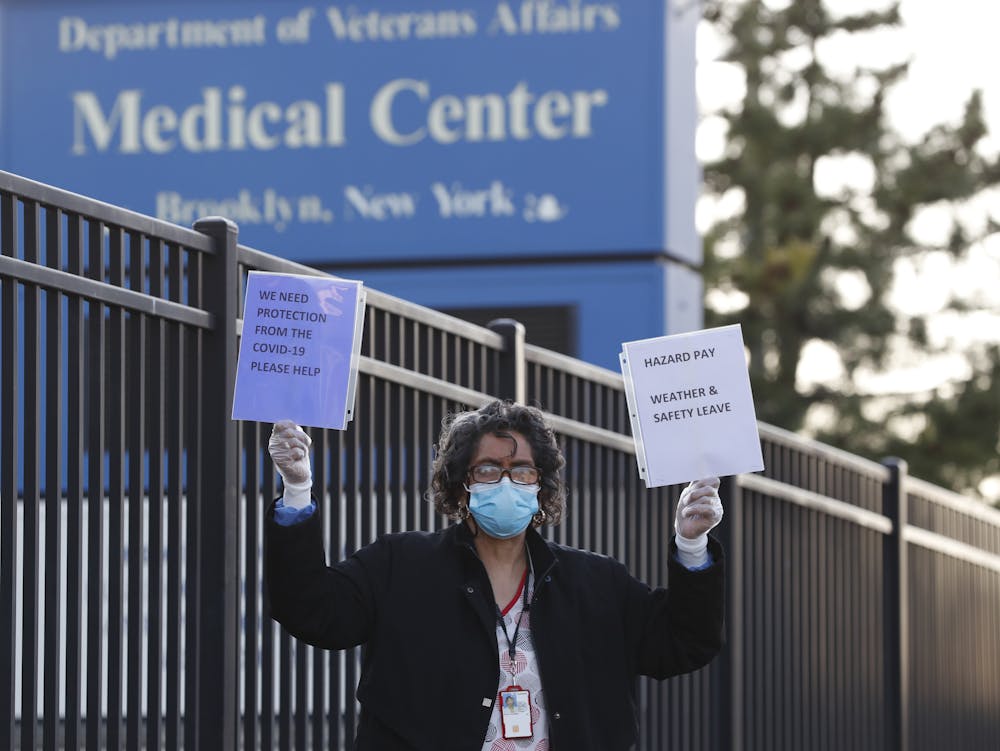
VA hospitals across the country are short-staffed and don’t have the resources they need to protect their workers. AP/Kathy Willens

The Veterans Administration frequently and perhaps unlawfully denies benefits to veterans with “other than honorable” discharges.

Many veterans have requested upgrades to their discharge status. There is a significant backlog of these upgrade requests, and the pandemic will add to it, further delaying access to health care and other benefits.

4. Diminished access to health care

Dental surgery, routine visits and elective surgeries at Veterans Administration medical centers have been postponed since mid-March. VA hospitals are understaffed – just before the pandemic, the VA reported 43,000 staff vacancies out of more than 400,000 health care staff positions. Access to health care will be even more difficult when those medical centers finally reopen because they may have far fewer workers than they need.

As of May 4, 2020, 2,250 VA health care workers have tested positive for COVID-19, and thousands of health care workers are under quarantine. The VA is asking doctors and nurses to come out of retirement to help already understaffed hospitals.

5. Mental health may get worse

An average of 20 veterans die by suicide every day. A national task force is currently addressing this scourge.

But many outpatient mental health programs are on hold or being held virtually. Some residential mental health facilities have closed.

Under these conditions, the suicide rate for veterans may grow. Suicide hotline calls by veterans were up by 12% on March 22, just a few weeks into the crisis.

6. Complications for homeless veterans and those in the justice system

An estimated 45,000 veterans are homeless on any given night, and 181,500 veterans are in prison or jail. Thousands more are under court-supervised substance use and mental health treatment in veterans treatment courtsMore than half of veterans involved with the justice system have either mental health problems or substance use disorders.

As residential facilities close to new participants, many veterans eligible to leave prison or jail have nowhere to go. They may stay incarcerated or become homeless.

Courts have moved online or ceased formal operations altogether, meaning no veteran charged with a crime can be referred to a treatment court. It is unclear whether those who were already participating in a treatment program will face delays graduating from court-supervised treatments.

Further, some veterans treatment courts still require participants to take drug tests. With COVID-19 circulating, those participants must put their health at risk to travel to licensed testing facilities.

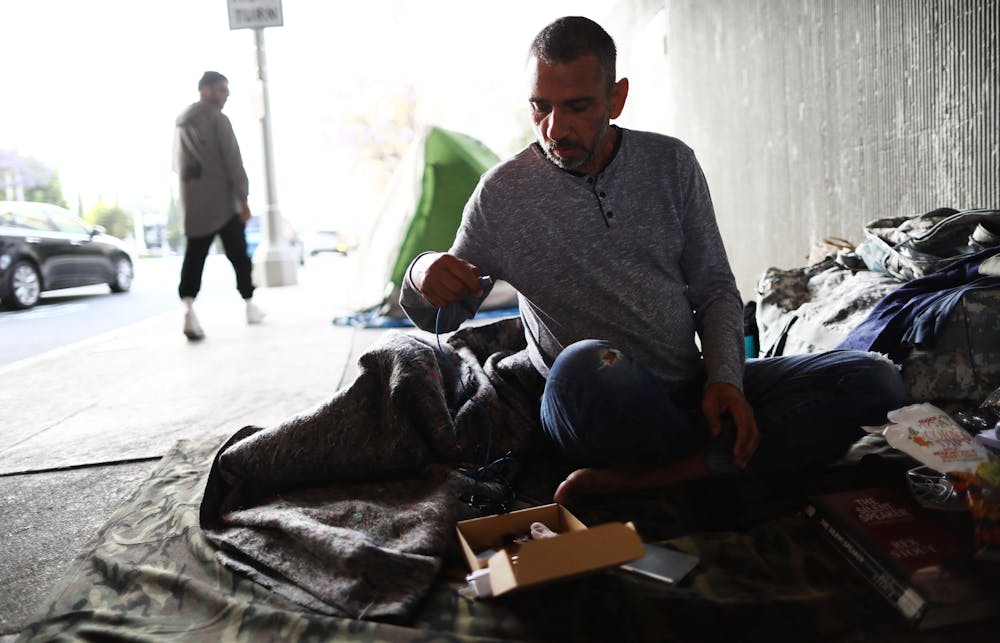
As veterans’ facilities close to new participants, many veterans eligible to leave prison or jail have nowhere to go and may become homeless, like this Navy veteran in Los Angeles. Getty/Mario Tama

7. Disability benefits delayed

In the pandemic’s epicenter in New York, tens of thousands of veterans should have access to VA benefits because of their low income – but don’t, so far.

The pandemic has exacerbated existing delays in finding veterans in need, filing their paperwork and waiting for decisions. Ryan Foley, an attorney in New York’s Legal Assistance Group, a nonprofit legal services organization, noted in a personal communication that these benefits are worth “tens of millions of dollars to veterans and their families” in the midst of a health and economic disaster.

All 56 regional Veterans Administration offices are closed to encourage social distancing. Compensation and disability evaluations, which determine how much money veterans can get, are usually done in person. Now, they must be done electronically, via telehealth services in which the veteran communicates with a health care provider via computer.

But getting telehealth up and running is taking time, adding to the longstanding VA backlog. Currently, more than 100,000 veterans wait more than 125 days for a decision. (That is what the VA defines as a backlog – anything less than 125 days is not considered a delay on benefit claims.)

8. Economic catastrophe

There are 1.2 million veteran employees in the five industries most severely affected by the economic fallout of the coronavirus.

A disproportionately high number of post-9/11 veterans live in some of the hardest-hit communities that depend on these industries. Veterans returning from overseas will face a dire economic landscape, with far fewer opportunities to integrate into civilian life with financial security.

In addition, severely disabled veterans living off of VA benefits were initially required to file a tax return to get stimulus checks. This initial filing requirement delayed benefits for severely disabled veterans by at least a month. The IRS finally changed the requirements after public outcry, given that many older and severely disabled veterans do not have access to computers or the technological skills to file electronically.

There are many social groups to pay attention to, all with their own problems to face during the pandemic. With veterans, many of the problems they face now existed long before the coronavirus arrived on U.S. shores.

But with the challenges posed by the situation today, veterans who were already lacking adequate benefits and resources are now in deeper trouble, and it will be harder to answer their needs.


Do employers want to buy “population health”?

https://mailchi.mp/0ee433170414/the-weekly-gist-february-14-2020?e=d1e747d2d8

Image result for Do employers want to buy “population health”?

I’ve had two conversations this week with health system leaders who have been struggling to navigate conversations about direct contracting with large employers in their market. A system chief innovation officer expressed frustration about the pace of discussions with a regional employer: “They’re clearly interested in our network, and we’ve been designing a program for them. They’ve seen our performance results from our accountable care organization (ACO) and the savings we generated. But even after a year of meetings, I’m not sure it’s going anywhere.”

Direct-to-employer (DTE) contracting has proven much more difficult for health systems than anyone anticipated a decade ago, in the wake of highly publicized DTE contracts with Boeing and Intel. Most employers, even large ones, lack the sophistication and bandwidth to co-create DTE offerings with health systems.

But those two deals may have led health systems to mistake what employers are looking for in a relationship. Both Boeing and Intel keep their employees for decades, and are interested in solutions, like chronic disease management, that have a longer-term return on investment (think heart disease management for the 55-year-old engineer).

The average employer, on the other hand, keeps a worker for just a few years. They don’t have a “population health” problem: from a healthcare cost perspective, they won’t see an ROI from management of chronic conditions.

Their pressing healthcare cost problems result from high-cost events, like a premature baby in the NICU, an unexpected spine surgery or a new cancer diagnosis.

Most health system ACOs have been designed to manage the cost of aging Medicare beneficiaries with multiple chronic diseases via enhanced primary care—and are a mismatch for delivering what the average employer needs the most: high-cost episode management, behavioral health support, and ready, available, guaranteed access.

Striking successful DTE deals will require providers to augment their service offerings beyond traditional population health, and to demonstrate their success in managing the benefit costs of their own employees.


Rethinking the model for managing chronic disease

https://mailchi.mp/1d8c22341262/the-weekly-gist-the-spotify-anxiety-edition?e=d1e747d2d8


As we’ve discussed before, the greatest challenge facing health system economics is demographics. Simply put, with 80M Boomers entering their Medicare years, hospitals beds will fill with elderly patients receiving treatment for exacerbations of congestive heart failure (CHF), diabetes, or other chronic conditions, of which the average Medicare beneficiary has four. It’s easy to envision the hospital becoming a giant nursing facility, with the vast majority of beds occupied by Medicare patients receiving nursing care and drugs, only to be sent home until their chronic disease flares again and the cycle repeats, four or five times a year.

Health systems must create a new model for managing Medicare patients with multiple chronic conditions, one that does not rely on care delivered in an inpatient setting. In the graphic below, we outline two approaches for managing a Medicare patient with advanced CHF. The top path illustrates today’s legacy model, where limited support for ongoing care management leaves the patient vulnerable to exacerbations, leading to numerous ED visits and admissions for diuresis, after which the patient returns home to a sub-optimal diet and lifestyle and is likely to return.

A better alternative is illustrated in the second path. Here our CHF patient has access to the ongoing support of a care team, which regularly monitors her status from home with the help of remote monitoring and can communicate with the patient to adjust therapy if early symptoms are detected. At Gist, we’re working with clinicians to understand just how to build this system of care and maximize its impact.

One example: a leading heart failure specialist told us that admissions for CHF could be reduced by one-third if patients with severe heart failure were monitored with a CardioMEMS implantable device, which can detect changes in pressure before the patient has symptoms, allowing for very early intervention. Developing these kind of care approaches to manage chronic disease outside the hospital will be the key to sustainable health system economics—and may have the greatest impact on lowering the total cost of care for the growing Medicare population.


Health Care System Accepting New Math: Housing = Health

Health Care System Accepting New Math: Housing = Health

Apartment complex with swimming pool on a sunny day

The Residences at Camelback West in Phoenix has 500 rental units ranging from studios to two-bedroom apartments, of which 100 are set aside for homeless UnitedHealth Medicaid members. Photo: Tiempo Development & Management

In the course of a single year, a homeless man named Steve in Phoenix, Arizona, visited the emergency room 81 times. Only 54 years old, Steve is coping with a daunting array of medical conditions: multiple sclerosis, cerebral palsy, heart disease, and diabetes. Because of his health and reliance on emergency rooms, his medical costs averaged about $13,000 per month that year.

Thanks to an innovative housing program run by the nation’s largest health insurer, UnitedHealth Group, Steve no longer sleeps outside — a crucial prerequisite to improved health. He is one of about 60 formerly homeless people covered by Arizona Medicaid who now receive housing and support services in Phoenix, John Tozzi reported for Bloomberg Businessweek. The UnitedHealth housing program, called myConnections, represents the growing recognition across the health care system that improved health cannot be achieved exclusively by traditional clinical models. Getting patients off the streets is often the first — and most important — step to helping them heal, physically and mentally.

Patients like Steve wind up in the ER because they don’t fit into the ways we deliver health care. . . . [The US system] is not set up to keep vulnerable people housed, clothed, and nourished so they’ll be less likely to get sick in the first place. —John Tozzi, Bloomberg News

“Patients like Steve wind up in the ER because they don’t fit into the ways we deliver health care,” Tozzi explained. “The US system is engineered to route billions of dollars to hospitals, clinics, pharmacies, and labs to diagnose and treat patients once they’re sick. It’s not set up to keep vulnerable people housed, clothed, and nourished so they’ll be less likely to get sick in the first place.”

MyConnections was the brainchild of a partnership between UnitedHealthcare (a division of UnitedHealth) and the Camden Coalition, a New Jersey–based nonprofit dedicated to improving care for people with complex health and social needs. The partnership was established in 2017 at the same time Jeffrey Brenner, MD, founder and executive director of the Camden Coalition, announced he was leaving the nonprofit to lead myConnections. He is now UnitedHealthcare’s senior vice president for integrated health and human services. UnitedHealthcare provides managed care to about six million people nationwide, according to company filings. It does not get reimbursed by Medicaid for housing assistance.

Making the Case for Addressing Social Determinants

Brenner hopes myConnections will show that both a health care and a business case can be made for investing in a Housing First (PDF) model. Tozzi reported that UnitedHealth “aims to reduce expenses not by denying care, but by spending more on social interventions, starting with housing.”

At the Residences at Camelback West, a Phoenix apartment complex of 500 apartments ranging from studios to two-bedroom units, up to 100 apartments are set aside for UnitedHealth Medicaid members enrolled in myConnections. The rest of the units are rented out at market rates. Five health coaches use an on-site office to serve as case managers and counselors for the myConnections residents. The coaches make sure that their clients remember medical appointments, and arrange transportation for them and sometimes accompany them to the doctor.

Since receiving housing and health coaching from Brenner’s team, Steve’s average monthly medical costs have dropped from $12,945 to $2,073. An analysis of the first 41 participants in Phoenix shows that “housing and support services proved cost effective for the 25 most expensive patients, reducing their overall costs dramatically,” Tozzi reported. But total spending for the other 16 increased, highlighting the complexity of this work.

“The return’s only going to work out if we target the right people,” Brenner told Tozzi. The myConnections team selects patients who are enrolled in UnitedHealth, are homeless, and who have annual medical spending greater than $50,000 mostly because of ER visits and inpatient stays. Those high-cost patients are UnitedHealth’s best bet for recovering the cost of its housing investment.

UnitedHealth is starting with 10 subsidized apartments in each new city where it’s introducing the program, including in places where there might be hundreds of homeless Medicaid members on its rolls, Tozzi reported. MyConnections will be in 30 markets by early 2020.

Kaiser Addresses Homelessness in Its Backyard

In its home base of Oakland, California, health system Kaiser Permanente has invested $200 million in an affordable housing project, Hannah Norman reported in the San Francisco Business Times. Its help is not targeted exclusively at Kaiser members, instead aiming to benefit any residents who live in communities it serves.

The initiative was championed by Bernard Tyson, the late chairman and CEO of Kaiser, who died unexpectedly this month. In a New York Times remembrance, Reed Abelson noted that Tyson was committed to addressing social determinants of health in the places where Kaiser operates. “He had the organization examine broad issues like housing shortages, food insecurity, and gun violence and their impact on health and well-being,” Abelson wrote.

Tyson, who was the health system’s first Black chief executive, served as chair of the Bay Area Council, a business association dedicated to economic development in the San Francisco region. His chairmanship culminated in a major report (PDF) that documented the severity of the homelessness crisis and recommended ways to address it, Norman reported.

“We don’t believe as a mega-health system that our only lane is medical care,” Tyson said in April. “It’s a critical lane, but it’s not our only lane.”

Steady Rents in Buildings with Seismic Upgrades

Kaiser announced its $200 million housing initiative, the Thriving Communities Fund, in January. Since then, it partnered with Enterprise Community Partners, a nonprofit organization focused on affordable housing, and the nonprofit East Bay Asian Local Development Corporation to invest a total of $8.7 million ($5.2 million from Kaiser) in Kensington Gardens, a 41-apartment building in East Oakland. “The trio of organizations plans to keep the residents in place and the rent steady at $1,597 per month for a studio and $2,250 for a two-bedroom,” Norman wrote. “Some residents receive federal housing benefits, including Section 8, to help cover the cost.”

The Kensington Gardens purchase is part of the Thriving Communities Fund’s strategy to keep rents steady and to make health and safety upgrades such as seismic upgrades and new roofs.

Kaiser’s Built for Zero initiative committed $3 million over three years to a data-driven, county-level approach to understanding the dynamics of homelessness. Built for Zero tracks the homeless population in a county from month to month to understand “who they are, what they need, and even how many of them are repeatedly visiting emergency rooms,” Norman reported. Fifteen Kaiser communities, including eight in California, are participating in the program.


Retail makes its case, telehealth and voice tech dominate: 6 takeaways from HLTH19

https://www.healthcaredive.com/news/retail-makes-its-case-telehealth-and-voice-tech-dominate-6-takeaways-from/566548/

Headlines at HLTH 2019 included a peek behind the curtain at the secretive healthcare division of tech giant Google from ex-Geisinger CEO David Feinberg, Uber’s newly inked deal with Cerner and a preventive health push by Facebook sparking renewed data privacy concerns.

On the government side, outgoing head of CMS’ innovation center Adam Boehler suggested industry will be pleased with his replacement and CMS Administrator Seema Verma promised further Medicaid deregulation and “humility” in government.

But the four-day conference last week also covered some broader themes, including retail’s presence in the industry, the rise of telehealth and voice tech and the challenges of interoperability. Here are six of the biggest takeaways from Las Vegas.

Retail still defining its role in healthcare

Executives from Walmart and CVS taking to the main stage at HLTH to tout their initiatives.

Walmart’s VP of transformation, Marcus Osborne, talked up the company’s first health superstore in Dallas, Georgia, which opened this fall. The center provide patients with primary care, dental care, vision care and psychiatric and behavioral health counseling, with the goal of providing an integrated healthcare experience in the traditionally underserved area. Lab services and imaging are available on-site, as are nutrition and fitness classes.

“When you give consumers options, they engage more,” Osborne said. “The healthcare system is designed to be complex when it should be simple.”

A primary care visit at Walmart Health Center costs a flat fee of $40. For an adult, getting a dental checkup and cleaning costs $50, and an eye appointment is $45. Therapy services are $1 per minute.

The store pits the Bentonville, Arkansas-based retailer directly against CVS Health, which is expanding its own health-focused clinics, called HealthHUBs, to 13 new markets by the end of next year.

Brick-and-mortar behemoths’ attempts to position themselves as the front door to healthcare are spurred by the increasing push of consumerism in healthcare.

“With the emergence of this retail health consumer, we’ve got to make healthcare more integrated than it’s been for several years now,” CVS CEO Larry Merlo said.

Limits of consumerism

But engagement is notoriously tricky, and consumerism can only take the industry so far. Healthcare startups providing a new way of accessing or managing care, like digital chat startups allowing consumers to talk via text with a remote physician or chronic care management companies, are struggling to establish trust with the consumer.

Hank Schlissberg, president of care manager Vively Health, a subsidiary of DaVita that assumes full risk for its population, compared the sea change in the industry to what’s happened with companies like AirBnB.

“I sleep in someone else’s bed. I shower in their shower. And we’ve convinced ourselves that’s totally normal,” he said. “All I want to do is provide people with free healthcare. And convincing people of that is much harder than we expected.”

Natalie Schneider, VP of Digital Health for Samsung, agreed, telling Healthcare Dive consumers are “routinely irrational” and don’t act in their own best interests. But “we’re seeing policyholders, health plans and others in healthcare not only account for this irrationality, but also capitalize on it” through incentives like providing a reward immediately following a healthy behavior.​

The wearables trend is a key example, experts said. Payers and providers alike are increasingly turning to the tech in an effort to engage consumers in wellness, fitness and preventive care activities. However, the ROI of trackers, whether from Apple Watch, Fitbit, Samsung or others, is still unproven.

“We’ve seen a lot of technologies and they’re often not that smart and very rarely wearable,” Tom Waller, who heads up the R&D lab of athleisure retailer lululemon, said. “We’re still patiently waiting for that perfect contextualization of data that will give us both a physical and emotional insight, and that we can use to augment an existing behavior to nudge someone in the right way.”

“At the end of the day, these patients are consumers, and consumers have been trained over the last 10 years to decide what quality they want, to decide when they want it and how they want to get it,” Robbie Cape, CEO of primary care startup 98point6, said. “Healthcare hasn’t caught up to that.”

Execution could stymie looming interoperability rules

Two rules to halt information blocking from HHS are expected to be finalized any day now. Despite the regulatory pressure, industry is “still a ways from true interoperability,” said Ed Simcox, CTO and acting CIO of HHS, due to a slew of factors like a lack of economic incentive for EHR vendors.

The rules would impose a slate of new requirements on healthcare companies. Payers in federal programs would have to provide their 125 million patients with free electronic access to their personal health data by the end of next year; healthcare companies would have to adopt standardized application programming interfaces allowing their disparate software systems to communicate; and any player found information blocking could be fined up to $1 million per violation.

Google Cloud’s director of global healthcare solutions, Aashima Gupta, warned that although the government might mandate new standards, that doesn’t mean industry will be able or willing to immediately adhere to them.

Additionally, the government is still playing catch-up to technology, and interoperability is no different, Pranay Kapadia, CEO of voice-enabled digital assistant Notable, told Healthcare Dive. The rules are the “right thing to do, and then there’ll be an evolution of it, and then there’ll be another evolution of it.”

​”This problem is much bigger than big tech or government or health systems or innovators,” Gupta said. “It’s an ecosystem problem. No player can do it alone.”

Despite the private sector’s uncertainly, Don Rucker, the head of the Office of the National Coordinator for Health IT, said interoperability had fostered price and business model transparency in every other U.S. industry over the past few decades.

“Healthcare is just about the last one to resist,” Rucker said. “I don’t think that will be much longer.”

Telehealth and voice tech: the belles of the ball

Telehealth was unsurprisingly a big focus at HLTH, with themes touching on expansion to complex care needs, followup visits and chronic care management and barriers like state physician licensure.

It’s an “efficiency mechanism” that can help a lot in areas like primary care, Teladoc COO David Sides told Healthcare Dive.

Voice-enabled tech was another focus of chatter in Las Vegas. The technology, which allows physicians free use of their hands while enabling them to take notes or write a script, for example, is currently experiencing heavy hype from industry and Silicon Valley as a way to streamline the heavy EHR and documentation requirements on physicians.

Talking is an “important element to how people interface with things,” Notable’s Kapadia said. “You have to think of things from a human perspective.”

Suki also announced at HLTH it expanded its relationship with Google’s cloud computing business. The digital assistant’s CEO, Punit Soni, told Healthcare Dive industry could expect to hear about two “very, very large deployment announcements” with health systems in the near future as providers become more comfortable levering the software to cut down documentation time for clinicians.

Solving for social determinants, preventive health

A slew of players rolled out initiatives targeting social determinants of health in Las Vegas.

​Uber Health is now available for providers to schedule non-emergency rides for their patients via Cerner’s EHR platform in a bid to provide better access to transportation for underserved populations. The one-year-old NEMT division of San Francisco-based Uber has roughly 1,000 partnerships across payers, healthcare tech companies and providers such as Boston Medical Center.

“You need to develop a benefit that serves the needs of your distinct population,” Jami Snyder, director of Arizona’s Medicaid and CHIP programs, said. The state recently partnered with ride-hailing company and Uber rival Lyft to provide rides for eligible Medicaid beneficiaries.

Kaiser Permanente rolled out a food insecurity initiative to connect eligible California residents with CalFresh, the state’s supplemental nutrition assistance or food stamp program. The integrated, nonprofit health system plans to reach out via text and mail to more than 600,000 Kaiser Permanente health plan members with a goal of getting 100,000 enrolled in CalFresh by spring 2020.

If the program is successful, Kaiser plans to expand it to the rest of the country, CEO Bernard Tyson, noting “healthcare across the ecosystem of health plays a very small part” in outcomes. “Things like behavior, genetics and where you live has a bigger impact.”​

On the preventive health side, Facebook launched a consumer health tool. Users plug in their age and sex in return for targeted heart, cancer and flu prevention measures, with information supplied by healthcare groups like the American Cancer Society.

The pilot for the $7 billion tech behemoth will be evaluated for six months to a year before being expanded to other preventable conditions to make consumers their “own health advocates,” Freddy Abnousi, Facebook’s head of health research, said. “The lion’s share of health outcomes is driven by social and behavioral variables.”

CVS is similarly working to combat SDOH factors by leveraging its reams of consumer data, Firdaus Bhathena, the retail pharmacy giant’s CDO, told Healthcare Dive. If someone doesn’t pick up their prescription, “there’s a number of ways we can engage with them,” including by text message or speaking to services in the local town, to see if transportation to the pharmacy, a lack of funds or some other issue is stopping the person from receiving the medication they need.

Funding disruption

Much of the industry runs today like non-healthcare companies ran 50 or 60 years ago, according to entrepreneur Mark Cuban.

“For that reason, they’re ripe for disruption,” Cuban said at HLTH.

Investors and startups alike are taking note. Venture capitalists, eager to fund new medical solutions and methods of care delivery, pumped $26.3 billion into more than 1,500 healthcare startups in just the first 10 months of 2018.

Providers looking to invest in new solutions or acquire startups are looking for a relatively mature corporate structure and an alignment with existing priorities in-house, according to Dan Nigrin, SVP and CIO at Boston Children’s Hospital.

“It starts with our organizational strategy,” agreed Rebecca Kaul, VP at the MD Anderson Cancer Center. An attractive startup presents “something that really drives change,” she said. “If you’re pitching a solution that isn’t at a given time part of our strategy, it may not be the right time for us to connect.”

Highmark Health CEO David Holmberg told Healthcare Dive its physicians lead system-wide conversations in what areas need investment. “Ultimately, that’s how you’ll get things to scale.”

Intermountain Healthcare is similarly interested in ways to manage and inject value into its operations. “We’re not interested in point solutions,” Dan Liljenquist, SVP of the Salt Lake City-based nonprofit provider said, adding he deletes and blocks emailed pitches he receives. “We’re interested in technologies that obviate the need for clinical interventions, that help people solve their own problems, and the way to do that is not a point solution but in a systemic, creative way.”

Payers have similar priorities and seek out companies to invest in that could provide value down the road. Cigna Ventures, which recently invested in precision medicine company GNS Healthcare, looks for new tools across the areas of insight and analytics, digital health and retail and all-around care delivery and enablement, for example.

“We’re looking for companies that are innovative and looking to solve important problems,” Tom Richards, global strategy and business development leader at Cigna, told Healthcare Dive, noting most companies start with a more focused solution and then expand.

For example, chronic disease platform Omada Health, which raised $50 million in a 2017 funding round led by Cigna Ventures, started with diabetes, but has since expanded its care management services to hypertension, Type 2 diabetes and behavioral and mental health.


Today’s health problems are tomorrow’s health crises

https://www.axios.com/public-health-crisis-trends-future-c24f9720-4657-45f2-ab73-05a8bb9a4d3e.html

Image result for Today's health problems are tomorrow's health crises

The health troubles we’re seeing now — especially among young people — will continue to strain the system for years and even decades to come.

The big picture: Rising obesity rates now will translate into rising rates of type 2 diabetes and heart disease. The costs of the opioid crisis will continue to mount even after the acute crisis ends. And all of this will strain what’s already the most expensive health care system in the world.

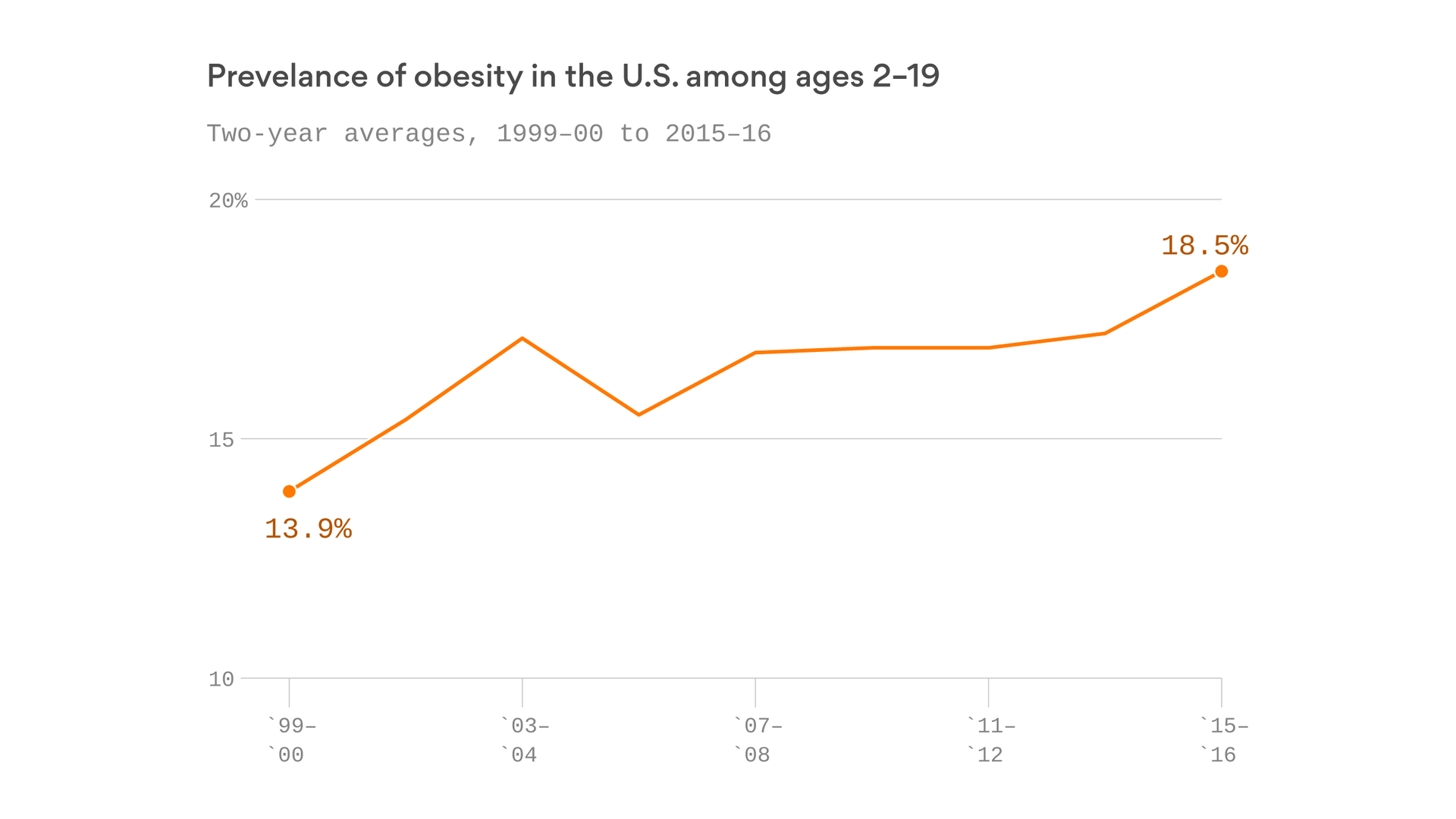
By the numbers: 18% of American kids are now obese, according to new CDC data. So are roughly 40% of adults. And it’s projected to get worse.

  • That helps explain why diabetes rates are also rising, and why roughly 30% of adults have high blood pressure.

Why it matters: More obese children means there will be more adults down the road with chronic conditions like diabetes — which can’t be cured, only managed — and these diseases in turn increase the risk of further complications, such as kidney disease and stroke.

  • Diabetes roughly doubles your lifetime health care bills, according to the CDC, and costs the U.S. a total of $245 billion per year.
  • As the price of insulin continues to skyrocket, the disease only gets harder for patients to manage, if they can afford treatment at all.

We’re only beginning to see the full costs of the opioid crisis, even though it has raged for years.

  • A White House report earlier this week pegged the cost of the epidemic at a staggering $696 billion last year alone, including the cost of productivity lost to addiction.
  • The tide has only barely begun to turn on overall overdose deaths — they still numbered around 68,000 last year.
  • And many survivors of the epidemic will face long-term health costs. Addiction recovery can be a lifelong process requiring sustained investments. It has also led to skyrocketing rates of Hepatitis C — some states have seen their infection rates rise by more than 200% over the past decade.

Groundbreaking new treatments offer the first-ever cure for Hepatitis C, but at price tags so high that states are experimenting with entirely new ways of paying for the drugs, fearing the status quo simply can’t bear these costs all at once.

The bottom line: The flaws in the U.S. health care system compound one another.

  • They reward doctors and hospitals for performing more treatment on sick people, and those treatments are expensive. That leaves big gaps in prevention, which drives the need for more expensive treatment.
  • That’s how we ended up with the world’s most expensive health care system, but without a particularly healthy population to show for it. And that trajectory isn’t changing.