New Jersey hospitals are a microcosm of potential COVID-19 financial impact

https://www.healthcarefinancenews.com/news/new-jersey-hospitals-microcosm-potential-covid-19-financial-impact

What CFOs think about the economic impact of COVID-19

The last time margins sank so deeply into the red was after the Balanced Budget Act of 1997, though today’s margins are faring worse.

COVID-19 continues to have deep and lingering financial impacts on hospitals in New Jersey. A midyear analysis of financial data shows nearly 60% of the state’s hospitals in the red and an average statewide operating margin of negative 4%.

The effects have been profound, and serve as a potential microcosm of the continuing impact of the coronavirus on hospital operating margins nationwide.

The decline in the state is the result of a dual blow of declining revenues and rising expenses, according to the report from the Center for Health Analytics, Research and Transformation at the New Jersey Hospital Association. Officials said the state’s hospitals haven’t experienced this level of fiscal distress in more than 20 years.

In fact, the last time margins sunk so deeply into the red was in the late 1990s. At that time, the Balanced Budget Act of 1997 resulted in significant payment cuts to the state’s hospitals, with margins falling to -1.7% and -2.3% in 1998 and 1999, respectively. And those numbers are not as distressing as the ones being experienced during the public health crisis.

WHAT’S THE IMPACT?

The report, “At Mid-Year, COVID-19’s Financial Wounds Continue for N.J. Hospitals,” shows the impact of continued loss of revenue from the suspension of elective procedures at COVID-19’s peak in the spring, and the slow rebound of patients returning to the hospital.

CHART’s data, comparing June 30, 2019, with June 30, 2020, shows that total patient revenues declined 6.6%. Emergency department cases plummeted 23%, while hospital admissions fell by 8% and outpatient visits dropped by 22%.

An additional aggravating factor is a 12% increase in total operating expenses, because COVID-19 required hospitals to redirect resources to increase staffing; boost supplies of personal protective equipment, pharmaceuticals and ventilators; and modify operations and facilities to expand capacity.

CHART’s analysis takes a closer look at the disruption of elective procedures in New Jersey hospitals and its lingering impact. Governor Phil Murphy’s Executive Order 109, in effect March 27 through May 26, required hospitals to suspend elective procedures during the state’s COVID-19 surge. CHART used claims data for some of the highest-volume elective procedures performed in New Jersey hospitals – bariatric surgery, pacemaker insertion, spinal fusion, knee replacement and hernia repair – to gauge the impact.

In April and May 2019, the state’s hospitals performed these procedures 4,336 times. That number plummeted to just 400 statewide in April and May 2020. The state’s executive order suspending procedures during this time allowed exemptions for cases in which a delay would result in “undue risk to the current or future health of the patient.” 

The year-over-year decline persisted even when the suspension was lifted. In June and July of 2019, 4,194 procedures from the list of high-volume procedures were performed, compared with 3,191 in June and July of 2020.

But the greatest decline in volume by percentage was seen in hospital emergency departments, where cases nosedived 23.4% between June 30, 2019, and June 30, 2020. That has healthcare leaders concerned.

NJHA officials said a hospital turnaround is critical for the statewide recovery from the coronavirus.

“The state’s hospitals pump $25 billion annually into the New Jersey economy and employ 154,000 people,” said NJHA’s Roger Sarao, vice president of economic and financial information and lead author of the CHART report. “They are an essential part of the road to recovery from this public health and economic crisis.”

THE LARGER TREND

The effects of the pandemic on the nation’s hospitals will be long-lasting, especially among nonprofits. A recent Fitch Ratings analysis showed that the full effects have yet to be felt.

The agency predicted that capital spending will be greatly reduced in the initial years post-pandemic, though some of it will ultimately accelerate due to anticipated merger and acquisition activity.

Fitch expects hospitals to take on added expenses to perform the same level of service, and predicts revenue declines from a shift in payer mix.

How Much Would Trump’s Coronavirus Treatment Cost Most Americans?

https://news.yahoo.com/much-trumps-coronavirus-treatment-cost-130318676.html

President Donald Trump's physician, Dr. Sean Conley, accompanied by other medical staff members, briefing reporters outside of Walter Reed National Military Medical Center in Bethesda Md., on Oct. 4, 2020. (Anna Moneymaker/The New York Times)

President Donald Trump spent three days in the hospital. He arrived and left by helicopter. And he received multiple coronavirus tests, oxygen, steroids and an experimental antibody treatment.

For someone who isn’t president, that would cost more than $100,000 in the American health system. Patients could face significant surprise bills and medical debt even after health insurance paid its share.

The biggest financial risks would come not from the hospital stay but from the services provided elsewhere, including helicopter transit and repeated coronavirus testing.

Trump has praised the high quality of care he received at Walter Reed National Military Medical Center, and has played down the risk of the virus. “Don’t be afraid of Covid,” Trump tweeted on Monday, before returning to the White House. “Don’t let it dominate your life.”

Across the country, patients have struggled with both the long-term health and financial effects of contracting coronavirus. Nearly half a million have been hospitalized. Routine tests can result in thousands of dollars in uncovered charges; hospitalized patients have received bills upward of $400,000.

Trump did not have to worry about the costs of his care, which are covered by the federal government. Most Americans, including many who carry health coverage, do worry about receiving medical care they cannot afford.

For some Americans, the bills could start mounting with frequent tests. Insurers are generally required to pay for those tests when physicians order them, but not when employers do.

The Trump administration made that clear in June, when it issued guidance stating that insurers do not have to pay for “testing conducted to screen for general workplace health and safety.” Instead, patients need to pay for that type of testing themselves. Some might be able to get free tests at public sites, and some employers may voluntarily cover the costs. Others could face significant medical debt from tests delivered at hospitals or urgent care centers.

COVID tests can be expensive. Although they typically cost $100, one emergency room in Texas has charged as much as $6,408 for a drive-through test. About 2.4% of coronavirus tests billed to insurers leave the patient responsible for some portion of payment, according to the health data firm Castlight. With 108 million tests performed in the United States, that could amount to millions of tests that leave patients responsible for some share of the cost.

Marta Bartan, who works as a hair colorist in New York City, needed a coronavirus test to return to her job this summer. She received a $1,394 bill from the hospital running the drive-through site where she was tested.

“I was so confused,” said Bartan, who is contesting the bill. “You go in to get a COVID test expecting it to be free. What could they have possibly charged me $1,400 for?”

The bills for the typical American would continue at the hospital, with the routine monitoring that any patient would receive and the drugs provided in the course of care.

Remdesivir, a new coronavirus treatment created by Gilead, costs $3,120 when purchased by private insurers and $2,340 with public programs like Medicare and Medicaid.

Trump also received an experimental antibody treatment from Regeneron. It’s currently available to clinical trial participants or to those granted a “compassionate use” exemption. In either situation, the drug would typically be provided to the patient at no charge. This will most likely change, however, when the treatment finishes trials and hits the commercial market. These types of drugs are hard to manufacture, and other monoclonal antibodies cost thousands of dollars.

Health economists are only starting to understand the full costs of coronavirus treatment, just as scientists are mapping out how the disease works and spreads. They do have some early estimates: The median charge for a coronavirus hospitalization for a patient over 60 is $61,912, according to a claims database, FAIR Health

That figure includes any medical care during the hospital stay, such as an emergency room visit that led to admission or drugs provided by the hospital.

For insured patients, that price would typically be negotiated lower by their health plan. FAIR Health estimates that the median amount paid is $31,575. That amount, like most things in American health care, varies significantly from one patient to another.

In the FAIR Health data on coronavirus patients over 60, one-quarter face charges less than $26,821 for their hospital stay. Another quarter face charges higher than $193,149, in part because of longer stays.

Many, but not all, health insurers have said they will not apply copayments or deductibles to patients’ coronavirus hospital stays, which could help shield patients from large bills.

Uninsured patients, however, could be stuck with the entire hospital charges and not receive any discounts. While the Trump administration did set up a fund to cover coronavirus testing and treatment costs for the uninsured, The New York Times has reported that some Americans without health insurance have received large bills for their hospital stays.

The biggest billing risk for a patient receiving treatment similar to Trump’s would probably come from helicopter rides to the hospital.

Air ambulances are expensive and often not in major health insurance plans’ networks. The median charge for an air ambulance is $38,770, according to a study in the journal Health Affairs published this year. When the helicopter trip is out of network — as about three-quarters of them are — patients are left with a median charge of $21,698 after the insurance payout.

Taking two helicopter rides, as Trump did, could plausibly result in more than $40,000 in medical debt for patients without access to their own aircraft (though of course most people do not leave the hospital by helicopter).

The financial consequences of a coronavirus hospitalization could be long-lasting, if a new Supreme Court challenge to the Affordable Care Act is successful. That case argues that all of Obamacare is unconstitutional, including the health law’s protections for preexisting conditions. The administration filed a brief in June supporting the challenge.

The Supreme Court hears that case on Nov. 10. If the challenge succeeds, COVID-19 could join a long list of preexisting conditions that would leave patients facing higher premiums or denials of coverage. In that case, coronavirus survivors could face a future in which their hospital stays increase their health costs for years to come.

This article originally appeared in The New York Times.

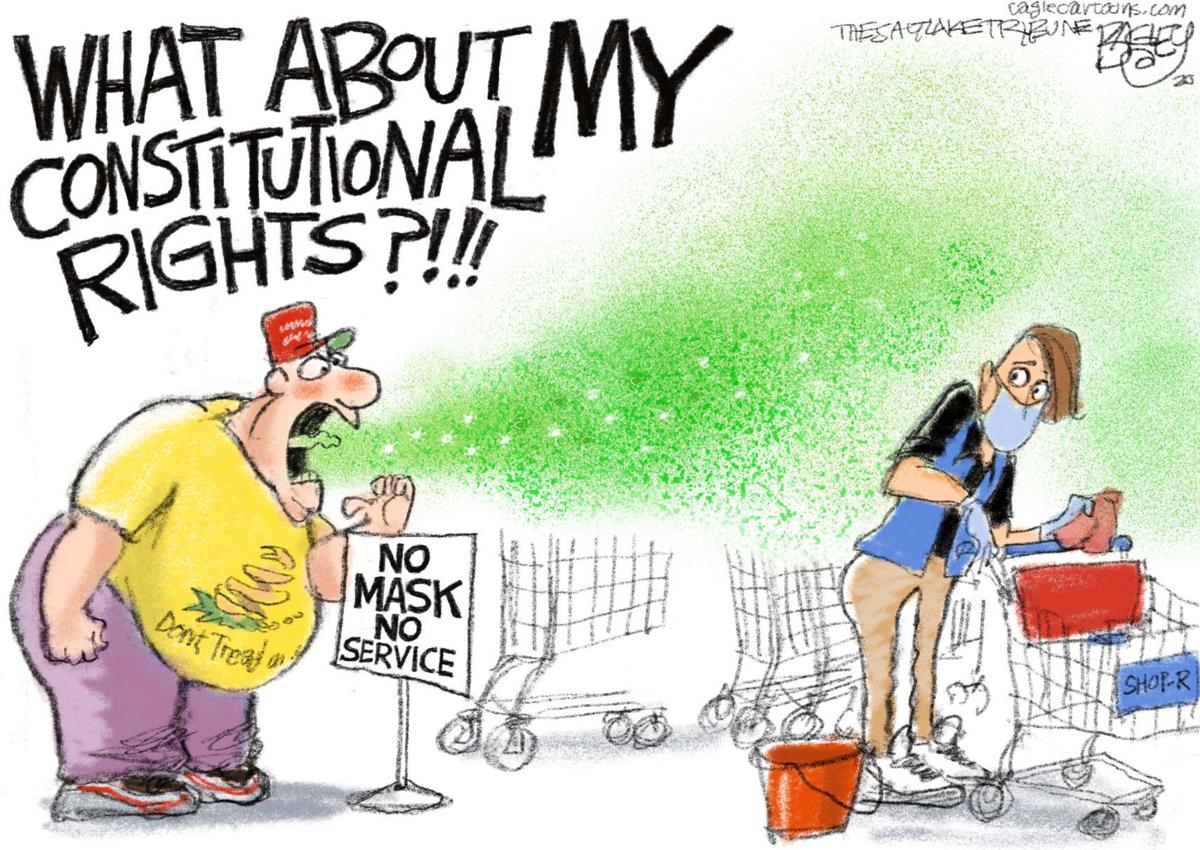
Cartoon – I’m DONE wearing a MASK

Editorial cartoon for June 19, 2020 | West Central Tribune

Cartoon – Constitutional Rights vs. Civility

Saturday cartoon

Cartoon – Come in We’re Open

No mask, no service | Opinion | dailyindependent.com

CommonSpirit Health posts $550M operating revenue loss in fiscal year due to COVID-19

A financial chart

Hospital system CommonSpirit Health reported operating revenue losses of $550 million during its fiscal year that ended in June, as the COVID-19 pandemic continues to roil patient volumes.

The 137-hospital system reported its financial earnings Friday for the 2020 fiscal year that ended June 30. CommonSpirit’s expenses also surged during the pandemic as more resources were needed to screen visitors and staff.

“Although it varies significantly by division, beginning the middle of March, the COVID-19 pandemic caused up to a 40% slowdown in volumes,” CommonSpirit’s financial report said. “As communities heeded guidelines to avoid hospitals for non-emergent issues, appointment volume, especially for specialty practices, fell and emergency department volume declined.”

CommonSpirit’s patient volumes did rebound after shelter-in-place orders started to be lifted in April and May, but the volumes are still below pre-pandemic levels.

At the end of the system’s fiscal year on June 30, the volumes on adjusted admissions were down 6.2% compared with the 2019 fiscal year.

Adjusted patient days for the fiscal year were also lower than the same period in 2019 by 5.7%.

At the same time, net patient and premium revenues declined by $239 million, or 0.9% over the same period in 2019.

“The decrease is primarily due to the impact of the COVID-19 pandemic and increased charity care, partially offset by a stable payor mix,” the earnings said.

Overall, CommonSpirit recorded an operating loss of $550 million for the 2020 fiscal year, which was an improvement on the $617 million in losses from 2019.

But those 2020 losses ballooned up to $1.4 billion when not taking into account money the system received from a $175 billion provider relief fund Congress set up as part of the CARES Act to help prop up hospitals and other providers.

The system also reported a $1.3 billion decline in earnings before interest, tax, depreciation and amortization and nonoperating income from March through June.

About 62% of the lost EBITDA has been recouped through the CARES Act funding, and another $500 million remains to be regained, CommonSpirit said.

Overall, CommonSpirit has recorded $826 million in money from the provider relief fund. It also got another $2.6 billion from the Medicare Accelerated and Advance Payment Program, which the system will have to repay.

The system anticipates it will defer $410 million in employer payroll taxes to December 2022, a flexibility also afforded under the CARES Act.

“While the aid received from the programs above provides much needed assistance during this crisis, CommonSpirit is unable to assess the extent to which the amounts and benefits received, or to be received, will offset the long-term changes in volumes, payor mix or service mix,” the report said.

The Department of Health and Human Services has more than $50 billion to still give out to hospitals, but some hospital groups say that more money is needed to combat the financial crisis caused by the pandemic. Talks on a new coronavirus relief deal have stalled in Congress.

While some larger for-profit systems such as HCA and Tenet have posted profits thanks to the provider relief funding, other not-for-profit systems such as Trinity Health and some smaller systems have reported struggles with overcoming the new financial crisis.

Lee Health to freeze pay for 13,500 employees

https://www.beckershospitalreview.com/compensation-issues/lee-health-to-freeze-pay-for-13-500-employees.html?utm_medium=email

Tuesday's Headlines: Junior Bankers Watch Out—Pay Freeze May Be Imminent |  eFinancialCareers

Fort Myers, Fla.-based Lee Health is freezing salaries for its 13,500 employees next year to help offset financial losses tied to the COVID-19 pandemic, according to the Fort Myers News-Press

The pay freeze in 2021 will mark the first time in nine years that the publicly operated health system has not given employee raises. Salaries and benefits make up about half of the system’s nearly $2 billion in spending each year, according to the report.

Lee Health is facing a budget deficit for the first time in two decades due to financial strain linked to the pandemic. The salary freeze is one of several steps the system is taking to offset losses and avoid layoffs. 

The system has halted most capital projects, and its top executives took pay cuts earlier this year. Lee Health will also reduce the match for employee retirement plans from 5 percent to 4 percent next year, and health plan premiums and copays will also increase, according to the report.

Read the full Fort Myers News-Press article here


$6B fraud bust includes numerous telehealth schemes

https://www.healthcaredive.com/news/6b-fraud-bust-includes-numerous-telehealth-schemes/586220/?utm_source=Sailthru&utm_medium=email&utm_campaign=Issue:%202020-10-01%20Healthcare%20Dive%20%5Bissue:29992%5D&utm_term=Healthcare%20Dive

Dive Brief:

  • Federal agencies have charged 345 people across the country, including more than 100 providers and four telehealth executives, with submitting more than $6 billion in fraudulent claims to payers. Of that, $4.5 billion was connected to telemedicine schemes and about $800 million each to substance abuse treatment and illegal opioid distribution.
  • More than 250 medical professionals had their federal healthcare billing privileges revoked for being involved in the scams, according to a statement released Wednesday.
  • The U.S. Department of Justice also said it is creating a new rapid response strike force to investigate fraud cases involving major providers that operate in multiple jurisdictions.

Dive Insight:

Telehealth fraud has increased significantly since 2016, the HHS Office of Inspector General said. As providers have quickly pivoted many services to virtual care during the COVID-19 pandemic, attempts at fraud will likely follow.

One of the cases outlined Wednesday included false claims for COVID-19 testing while another involved a COVID-19 related scheme to defraud insurers out of more than $4 million.

The telehealth fraud allegedly involved a marketing network that lured hundreds of thousands of people into a criminal scheme with phone calls, direct mail, TV ads and online pop-up ads. Telemedicine executives then paid doctors to order unneeded medical equipment, testing or drugs with either no patient interaction or only a brief call. 

Those were either not given to the patients or were worthless to them. The proceeds were then laundered through international shell corporations and banks.

The scheme is similar to one DOJ prosecuted in April 2019 involving fraudulent telehealth companies that pushed unneeded braces on Medicare beneficiaries in exchange for kickbacks from durable medical equipment companies.

The massive bust included the work of 175 HHS OIG agents and analysts and targeted myriad fraud operations across the U.S. and its territories.

One of the larger scams involved 29 defendants in the Middle District of Florida. A telemedicine company and medical professionals working for it billed Medicare for medical equipment for patients they never spoke to.

In New Jersey, laboratory owners paid marketers to get DNA samples at places like senior health fairs. Doctors on telemedicine platforms then ordered medically unnecessary and not reimbursable genetic testing.


Election 2020: Trump and Biden’s starkly diverging views on healthcare

https://www.healthcaredive.com/news/presidential-election-2020-trump-biden-different-healthcare-policies-ACA-coronavirus/585184/?utm_source=Sailthru&utm_medium=email&utm_campaign=Issue:%202020-10-01%20Healthcare%20Dive%20%5Bissue:29992%5D&utm_term=Healthcare%20Dive

Spoiler: the 2 nominees differ on almost everything.

President Donald Trump and Democrat nominee Joe Biden’s starkly contrasting views on healthcare were laid bare during this week’s chaotic debate. But some major industry executives noted at a recent conference they’ve done relatively well under Trump and could likely weather a Biden presidency, given his moderate stance and rejection of liberal dreams of “Medicare for All.”

The former vice president stresses incremental measures to shore up President Barack Obama’s landmark Affordable Care Act. Trump’s campaign website has no list of healthcare priorities, making his record even more relevant to attempts to forecast his future policies.

“I think a lot of the president’s second term agenda will be extensions of things he’s done in his first term,” Lanhee Chen, domestic policy director at Stanford University’s Public Policy program, said at AHIP in September.

Either way, the impact of whoever lands in the White House next year still matters for the industry’s future.

And 33 seats in the Senate are also up for grabs in November, complicating the outlook. Two scenarios would likely lead to health policy gridlock, according to analysts and DC experts: Trump wins regardless of Senate outcome, or Biden wins and Republicans maintain control of the Senate. A third scenario, where Biden wins and Democrats retake the Senate, would be the most negative for healthcare stocks, Jefferies analysts say, while the other two outcomes would be a net positive or mostly neutral.

Here’s a look at where the candidates stand on the biggest healthcare issues: the coronavirus pandemic, the Affordable Care Act, changes to Medicare and Medicaid and lowering skyrocketing healthcare costs.

COVID-19 response

Trump

Of all wealthy nations, the U.S. has been particularly unsuccessful in mitigating the pandemic. The U.S. makes up 4% of the global population, but accounted for 23% of all COVID-19 cases and 21% of all deaths as of early September.

Public health experts assign the majority of the blame to an uncoordinated federal response, with the president electing to take a largely hands-off approach to the virus that’s killed nearly 207,000 people in the U.S. to date. That backseat stance is unlikely to change if Trump is elected to a second term.

In March, Trump said a final COVID-19 death toll in the range of 100,000 to 200,000 Americans would mean he’s “done a very good job.”

Critics blame shortages of supplies like test materials, personal protective equipment and ventilators, especially in the crucial early days of the pandemic, on Trump’s approach. States and healthcare companies have also reported challenges with shifting federal guidelines on topics from risk of infection to hospital requirements for reporting COVID-19 caseloads.

Trump has also pushed unproven treatments for COVID-19, giving rise to concerns about political influence on traditionally nonpartisan agencies like the Food and Drug Administration and the Centers for Disease Control and Prevention.

These concerns have colored Operation Warp Speed, the administration’s public-private partnership to fast-track viable vaccines. The operation received $10 billion in funds from Congress, but administration officials have also pulled $700 million from the CDC, even as top health officials face accusations of trying to manipulate CDC scientific research publications.

Fears that political motivations, not clinical rigor, are driving the historically speedy timeline could lower public trust in a vaccine once it’s eventually approved.

Trump has also repeatedly refused to endorse basic protections like widespread mask wearing, often eschewing the face covering himself in public appearances. He’s consistently downplayed the severity of the pandemic, saying it’ll go away on its own while suggesting falsely that rising COVID-19 cases were solely due to increased testing.

While Trump’s list of priorities for his second term include “eradicating COVID-19,” the plan is short on details. His most aggressive promise has been approval of a vaccine by the end of this year and creating all “critical medicines and supplies for healthcare workers” for a planned return to normal in 2021, along with refilling stockpiles to prepare for future pandemics.

Biden

Biden, for his part, would likely work to enact COVID-19 legislation and dramatically change the role of the federal government in pandemic response first thing if elected.

The Democratic candidate says he would re-assume primary responsibility for the pandemic. He plans to “dramatically scale up testing” and “giving states and local governments the resources they need to open schools and businesses safely,” per an August speech in Wilmington, Delaware.

Biden says he’d take a backseat to scientists and allow FDA to unilaterally make decisions on emergency authorizations and approvals.

The candidate supports reopening an ACA enrollment period for the uninsured, eliminating out-of-pocket costs for COVID-19 treatment, enacting additional pay and protective equipment for essential workers, increasing the federal match rate for Medicaid by at least 10%, covering COBRA with 100% premium subsidies during the emergency, expanding unemployment insurance and sick leave, reimbursing employers for sick leave and giving them tax credits for COVID-19 healthcare costs.

Trump opposes most of these measures, though he did sign COVID-19 relief legislation that upped the Medicaid match rate by 6.2% and extended the COBRA election period, though without subsidies.

Biden has said he’d be willing to use executive power for a national mask mandate, though ensuring compliance would be difficult. He’d also rejoin the World Health Organization, which Trump pulled the U.S. out of in May.

Affordable Care Act

Trump

On his first day in office, Trump issued an executive order saying: “It is the policy of my Administration to seek the prompt repeal of the Patient Protection and Affordable Care Act.” But after the Republican repeal-and-replace effort floundered in 2017, the administration began steadily chipping away at key tenets of the decade-old law through regulatory avenues.

Trump has maintained he’ll protect the 150 million people with preexisting conditions in the U.S. But despite publicly promising a comprehensive replacement plan on the 2015 campaign trail (and at least five times this year alone), Trump has yet to make one public. The president did in September sign a largely symbolic executive order that it’s the stance of his administration to protect patients with preexisting conditions.

The president doesn’t mention the ACA in his list of second term priorities. The omission could have been intentional, as Trump is backing a Republican state-led lawsuit seeking to overturn the sweeping law, now pending in front of the U.S. Supreme Court and scheduled for oral arguments one week after the election.

The death of liberal justice Ruth Bader Ginsburg puts the law in an even more precarious position.

And Trump’s health agencies have enacted myriad policies keeping the law from functioning as designed.

The president signed legislation zeroing out the individual mandate penalty requiring people to be insured in 2017. The same year, he ended cost-sharing reduction payments to insurers, suggesting that would cause the ACA to become “dead.” But the marketplace generally stabilized.

The administration has also increased access to skimpier but cheaper coverage that doesn’t have to comply with the 10 essential health benefits under the ACA. The short-term insurance plans widely discriminate against people with pre-existing health conditions, even as a growing number of Americans, facing rising healthcare costs, enrolled, according to a probe conducted by House Democrats this year.

Trump has also encouraged state waivers that promote non-ACA plans, cut funding for consumer enrollment assistance and outreach, shortened the open enrollment period and limited mid-year special enrollments.

​Despite his efforts, the ACA has grown in popularity among voters on both sides of the aisle, mostly due to provisions like shoring up pre-existing conditions and allowing young adults to stay on their parent’s insurance until age 26.

Biden

If elected, Biden would likely roll back Trump-era policies that allowed short-term insurance to proliferate, and restore funding for consumer outreach and assistance, political consultants say.

Building on the law is the linchpin of Biden’s healthcare plan. The nominee has pledged to increase marketplace subsidies to help more people afford ACA plans through a number of policy tweaks, including lowering the share of income subsidized households pay for their coverage; determining subsidies by setting the benchmark plan at the pricier “gold” level; and removing the current cap limiting subsidies to people making 400% of the federal poverty level or below.

Biden maintains as a result of these changes, no Americans would have to pay more than 8.5% of their annual income toward premiums. They could save millions of people hundreds of dollars a month, according to a Kaiser Family Foundation analysis. Commercial payers mostly support these efforts, hoping they’ll stabilize the exchanges.

But a second prong of Biden’s health strategy is deeply unpopular with private insurers: the public option. Biden’s called for a Medicare-like alternative to commercial coverage, available to anyone, including people who can’t afford private coverage or those living in a state that hasn’t expanded Medicaid.

The rationale of the public plan is that it can directly negotiate prices with hospitals and other providers, lowering costs across the board. However, market clout will depend on enrollment, which is still to-be-determined.

Critics see the plan, which by Biden’s estimate would cost $750 billion over 10 years, as a down payment on Medicare for All. And the private sector worries it could threaten the very profitable healthcare industry, which makes up about a fifth of the U.S. economy.

Medicare

Trump

Neither Trump nor Biden supports Medicare for All, dashing the hopes of supporters of the sweeping insurance scheme for at least another four years.

“It has a pulse — it’s not dead — I just don’t see it happening in any near term,” John Cipriani, vice president at public affairs firm Global Strategy Group, said at AHIP.

Trump has promised to protect Medicare if elected to a second term, and it’s unlikely he’d make any major changes to the program’s structure or eligibility requirements, experts say.

But Medicare is quickly running out of money, and neither Trump nor Biden has issued a complete plan to ensure it survives beyond 2024. Political consultants think it’ll teeter right up to the edge of insolvency before lawmakers feel compelled to act.

The president’s administration has allowed Medicare to pay for telehealth and expanding supplemental benefits in privately run Medicare Advantage programs, efforts that would likely bleed into his second term — or Biden’s first, given general bipartisan support on both, experts say.

Under Trump, HHS did pass a site-neutral payment policy, cutting Medicare payments for hospital outpatient visits in a bid to save money. But Democratic lawmakers have argued Trump’s calls to get rid of the federal payroll tax, which partially funds Medicare, could throw the future of the cash-strapped program in jeopardy.

The president has also signed legislation experts say accelerated insolvency, including the Tax Cuts and Jobs Act of 2017, the Bipartisan Budget Act of 2018 and the Further Consolidated Appropriations Act of 2020, which repealed the ACA’s Cadillac tax — a tax on job-based insurance premiums above a certain level.

Nixing that tax lowered payroll tax revenue, also dinging Medicare’s shrinking trust fund.

Trump’s proposed budget for the 2021 fiscal year floated culling about $450 billion in Medicare spending over a decade. And repealing the ACA would also nix provisions that closed the Medicare prescription drug “donut hole,” that added free coverage of preventive services and reduced spending to strengthen Medicare’s winnowing Hospital Insurance Trust Fund.

Biden

Biden has proposed lowering the Medicare age of eligibility to 60 years, with the option for people aged 60-64 to keep their coverage if they like it. The idea is popular politically, though providers oppose it, fearful of losing more lucrative commercial revenue.

It would make about 20 million more people eligible for the insurance, but could also add even more stress onto the program, experts say. Biden’s campaign says it would be financed separately from the current Medicare program, with dollars from regular tax revenues, and will reduce hospital costs.

Biden also says he’d add hearing, vision and dental benefits to Medicare.

Medicaid

Trump

Trump’s tenure has also been defined by repeated efforts to prune Medicaid. The president has consistently backed major cuts to the safety net insurance program, along with stricter rules for who can receive coverage. That’s likely to continue.

Republican lawmakers maintain the program costs too much and discourages low-income Americans from getting job-based coverage, and have enacted policies trying to privatize Medicaid. The Trump administration took a step toward a long-held conservative dream earlier this year, when CMS invited state waivers that would allow states to deviate from federal standards in program design and oversight, in exchange for capped funding.

So far, no states have enacted the block grants.

The administration also aggressively encouraged states to adopt work requirements, programs tying Medicaid coverage to work or volunteering hours. A handful of states followed suit, but all halted implementation or rolled back the idea following fierce public backlash and legal ramifications.

And repealing the ACA would ax Medicaid expansion, which saved some 20,000 lives between 2014 and 2017, according to the Center on Budget and Policy Priorities.

Biden

Biden, however, wants to preserve expansion, and would take a number of other steps to bolster the program, including increasing federal Medicaid funding for home- and community-based services. The roughly 4.8 million adults in states that elected not to expand Medicaid would be automatically enrolled into his public option, with no premium and full Medicaid benefits.

Additionally, states that have expanded Medicaid could elect to move their enrollees into the public option, with a maintenance-of-effort payment.

Lowering costs of drugs and services

Trump

Efforts to lower prescription drug costs have defined Trump’s healthcare agenda in his first term, and been a major talking point for the president. That’s more than likely to continue into a second term, experts say, despite a lack of results.

Trump did cap insulin costs for some Medicare enrollees, effective 2021. He also signed legislation in 2018 banning gag clauses preventing pharmacists from telling customers about cheaper options.

But despite fiery rhetoric and a litany of executive orders, Trump has made little if any concrete progress on actually lowering prices. One week into 2020, drugmakers had announced price hikes for almost 450 drugs, despite small price drops earlier in Trump’s tenure.

Trump has proposed several ideas either dropped later or challenged successfully by drugmakers in court, including allowing patients to import drugs from countries like Canada, banning rebates paid to pharmacy benefit manufacturers in Medicare and forcing drugmakers to disclose the list prices of drugs in TV ads.

The president has signed recent executive orders to lower costs largely viewed as pre-election gambits, including one tying drug prices in Medicare to other developed nations and another directing his agencies to end surprise billing. Implementation on both is months away. Trump has also promised to send Medicare beneficiaries $200 in drug discount cards before the election, an effort slammed as vote-buying that would cost Medicare at least $6.6 billion.

Both Trump and Biden support eliminating surprise bills but haven’t provided any details how. That “how” is important, as hospitals and payers support wildly different solutions.

Biden

Biden also has a long list​ of proposals to curb drug costs, including allowing the federal government to negotiate directly with drug manufacturers on behalf of Medicare and some other public and private purchasers, with prices capped at the level paid by other wealthy countries. Trump actually supported this proposal in his 2016 campaign, but quickly dropped it amid fierce opposition from drugmakers and free market Republican allies.

Biden would also cap out-of-pocket drug costs in Medicare Part D — but wouldn’t ban rebates, as of his current plan, allow consumers to import drugs (subject to safeguards) and eliminate tax breaks for drug advertising expenses.

He would also prohibit prices for all brand-name and some generic drugs from rising faster than inflation under Medicare and his novel public option. Biden would create a board to assess the value of new drugs and recommend a market-based price, in a model that’s shown some efficacy in other wealthy countries like Germany.

Both Biden and Trump say they support developing alternative payment models to lower costs. But they diverge on the role of competition versus transparency in making healthcare more affordable. In a rule currently being challenged in court, Trump’s HHS required hospitals to disclose private negotiated prices between hospitals and insurers, with the hope price transparency will allow consumers to shop between different care sites and shame companies into lowering their prices.

Biden, by comparison, says he would enforce antitrust laws to prevent anti-competitive healthcare consolidations, and other business practices that jack up spending. Trump has been mum on the role of M&A in driving healthcare costs, and inherited a complacent Federal Trade Commission that’s done little to reduce provider consolidation. Until a contentious hospital merger in February this year, the FTC hadn’t opposed a hospital merger since 2016.


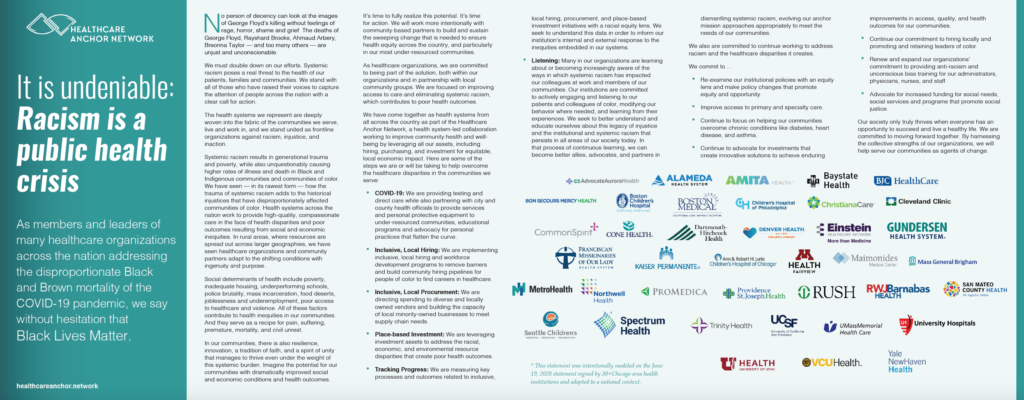
It is undeniable: Racism is a public health crisis

It is undeniable: Racism is a public health crisis

39 health systems in 45 states and Washington, DC have committed to addressing racism and the public health disparities caused by racism. Read the full statement below or download the PDF.

As members and leaders of many healthcare organizations across the nation addressing the disproportionate Black and Brown mortality of the COVID-19 pandemic, we say without hesitation that Black Lives Matter.

No person of decency can look at the images of George Floyd’s killing without feelings of rage, horror, shame, and grief. The deaths of George Floyd, Rayshard Brooks, Ahmaud Arbery, Breonna Taylor — and too many others — are unjust and unconscionable.

We must double down on our efforts. Systemic racism poses a real threat to the health of our patients, families, and communities. We stand with all of those who have raised their voices to capture the attention of people across the nation with a clear call for action.

The health systems we represent are deeply woven into the fabric of the communities we serve, live, and work in, and we stand united as frontline organizations against racism, injustice, and inaction. 

Systemic racism results in generational trauma and poverty, while also unquestionably causing higher rates of illness and death in Black and Indigenous communities and communities of color. We have seen — in its rawest form — how the trauma of systemic racism adds to the historical injustices that have disproportionately affected communities of color. Health systems across the nation work to provide high-quality, compassionate care in the face of health disparities and poor outcomes resulting from social and economic inequities. In rural areas, where resources are spread out across larger geographies, we have seen healthcare organizations and community partners adapt to the shifting conditions with ingenuity and purpose.

These social determinants of health include poverty, inadequate housing, underperforming schools, police brutality, mass incarceration, food deserts, joblessness and underemployment, poor access to healthcare, and violence. All of these factors contribute to health inequities in our communities. And they serve as a recipe for pain, suffering, premature mortality — and civil unrest.

In our communities, there is also resilience, innovation, a tradition of faith, and a spirit of unity that manages to thrive even under the weight of this systemic burden. Imagine the potential for our communities with dramatically improved social and economic conditions and health outcomes.

It’s time to fully realize this potential. It’s time for action. We will work more intentionally with community-based partners in building and sustaining the sweeping change that is needed to ensure health equity across the country, and particularly in our most under-resourced communities.

As healthcare organizations, we are committed to being part of the solution, both within our organizations and in partnership with local community groups. We are focused on improving access to care and eliminating systemic racism, which contributes to poor health outcomes.

We have come together as health systems from all across the country as part of the Healthcare Anchor Network, a health system-led collaboration working to improve community health and well-being by leveraging all our assets, including hiring, purchasing, and investment for equitable, local economic impact. Here are some of the steps we are or will be taking to help overcome the healthcare disparities in the communities we serve:

  • COVID-19: We are providing testing and direct care while also partnering with city and county health officials to provide educational programs, services and personal protective equipment to under-resourced communities, and advocacy for personal practices that flatten the curve.
  • Inclusive, Local Hiring: We are implementing inclusive, local hiring and workforce development programs to remove barriers and build community hiring pipelines for people of color to find careers in healthcare.
  • Inclusive, Local Procurement: We are directing spending to diverse and locally owned vendors and building the capacity of local minority-owned businesses to meet supply chain needs.
  • Place-based Investment: We are leveraging investment assets to address the racial, economic, and environmental resource disparities that create poor health outcomes.
  • Tracking Progress: We are measuring key processes and outcomes related to inclusive, local hiring, procurement, and place-based investment initiatives with a racial equity lens. We seek to understand this data in order to inform our institution’s internal and external response to the inequities embedded in our systems.
  • Listening: Many in our organizations are learning about or becoming increasingly aware of the ways in which systemic racism has impacted our colleagues at work and members of our communities. Our institutions are committed to actively engaging and listening to our patients and colleagues of color, modifying our behavior where needed, and learning from their experiences. We seek to better understand and educate ourselves about this legacy of injustice and the institutional and systemic racism that persists in all areas of our society today. In that process of continuous learning, we can become better allies, advocates, and partners in dismantling systemic racism, evolving our anchor mission approaches appropriately to meet the needs of our communities.

We also are committed to continue working to address racism and the healthcare disparities it creates. 

We commit to … 

  • Re-examine our institutional policies with an equity lens and make policy changes that promote equity and opportunity.
  • Improve access to primary and specialty care.
  • Continue to focus on helping our communities overcome chronic conditions like diabetes, heart disease, and asthma.
  • Continue to advocate for investments that create innovative solutions to achieve enduring improvements in access, quality, and health outcomes for our communities.
  • Continue our commitment to hiring locally and promoting and retaining leaders of color.
  • Renew and expand our organizations’ commitment to providing anti-racism and unconscious bias training for our administrators, physicians, nurses, and staff.
  • Advocate for increased funding for social needs, social services, and programs that promote social justice.

Our society only truly thrives when everyone has an opportunity to succeed and live a healthy life. We are committed to moving forward together. By harnessing the collective strengths of our organizations, we will help serve our communities as agents of change.

The healthcare systems that have signed onto this statement are: Advocate Aurora Health, Alameda Health System, AMITA Health, Baystate Health, BJC HealthCare, Bon Secours Mercy Health, Boston Children’s Hospital, Boston Medical Center, Children’s Hospital of Philadelphia, ChristianaCare, Cleveland Clinic, CommonSpirit Health, Cone Health, Dartmouth-Hitchcock Health, Denver Health, Einstein Healthcare Network, Franciscan Missionaries Of Our Lady Health System, Gundersen Health System, Kaiser Permanente, Lurie Children’s, M Health Fairview, Maimonides Medical Center, Mass General Brigham, Northwell Health, ProMedica, Providence St. Joseph Health, Rush University Medical Center, RWJBarnabas Health, San Mateo County Health, Seattle Children’s, Spectrum Health, The MetroHealth System, Trinity Health, UC San Francisco, UMass Memorial Health, University Hospitals, University of Utah Health, VCU Health, and Yale New Haven Health.