New CDC Report Says Nearly Half of U.S. Population Is at Risk of Contracting Severe COVID-19

https://www.cidrap.umn.edu/news-perspective/2020/07/chronic-conditions-put-nearly-half-us-adults-risk-severe-covid-19

Coronavirus Disease 2019 Case Surveillance — United States ...

Chronic conditions put nearly half of US adults at risk for severe COVID-19

About 47% of US adults have an underlying condition strongly tied to severe COVID-19 illness, researchers at the Centers for Disease Control and Prevention (CDC) have found.

The model-based study, published today in the CDC’s Morbidity and Mortality Weekly Report, used self-reported data from the 2018 Behavioral Risk Factor Surveillance System and the US Census.

Researchers analyzed the data for the prevalence of chronic obstructive pulmonary disease (COPD), heart disease, diabetes, chronic kidney disease (CKD), and obesity in residents of 3,142 counties in all 50 states and the District of Columbia. They defined obesity as having a body mass index (BMI) of 30 kg/m2 or higher.

They found that prevalence patterns generally followed population distributions, with high numbers in large cities, but that these conditions were more prevalent in rural than in urban areas. Counties with the highest prevalence of these conditions were generally clustered in the Southeast and Appalachia.

Severe COVID-19 disease, requiring hospitalization, intensive care, and mechanical ventilation or leading to death, is most common in people of advanced age and in those who have at least one of the previously mentioned underlying conditions.

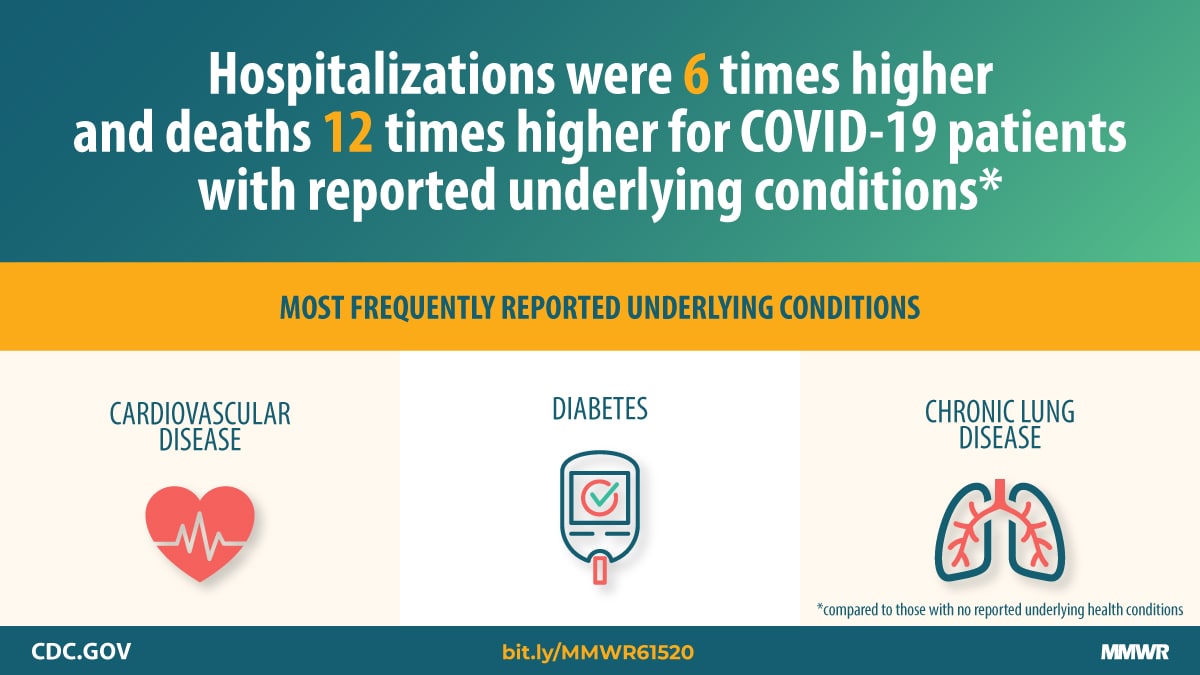
A CDC analysis last month of US COVID-19 patient surveillance data from Jan 22 to May 30 showed that those with underlying conditions were hospitalized six times more often, needed intensive care five times more often, and had a death rate 12 times higher than those without these conditions. But the authors of today’s reported noted that the earlier study defined obesity as a BMI of 40 kg/m2 or higher and included some conditions with mixed or limited evidence of a tie to poor coronavirus outcomes.

Prevalence of underlying conditions in rural, urban counties

Median estimated county prevalence of any underlying illness was 47.2% (range, 22.0% to 66.2%). Numbers of people with any underlying condition ranged from 4,300 in rural counties to 301,744 in large cities.

Prevalence of obesity was 35.4% (range, 15.2% to 49.9%), while it was 12.8% for diabetes (range, 6.1% to 25.6%), 8.9% for COPD (range, 3.5% to 19.9%), 8.6% for heart disease (range, 3.5% to 15.1%), and 3.4% for CKD, 3.4% (range, 1.8% to 6.2%).

Nationwide, the overall weighted prevalence of adults with chronic underlying conditions was 30.9% for obesity, 11.4% for diabetes, 6.9% for COPD, 6.8% for heart disease, and 3.1% for CKD.

The estimated median prevalence of any underlying condition generally increased with increasing county remoteness, ranging from 39.4% in large metropolitan counties to 48.8% in rural ones.

Resource allocation, preventive health measures

The authors noted that access to healthcare resources in some rural counties may be poor, adding to the risk of severe COVID-19 outcomes.

“The findings can help local decision-makers identify areas at higher risk for severe COVID-19 illness in their jurisdictions and guide resource allocation and implementation of community mitigation strategies,” they wrote. “These findings also emphasize the importance of prevention efforts to reduce the prevalence of these underlying medical conditions and their risk factors such as smoking, unhealthy diet, and lack of physical activity.”

The researchers called for future studies to include the weighting of the contribution of each underlying illness according to the risk of serious COVID-19 outcomes and identifying and integrating other factors leading to susceptibility to both infection and serious outcomes to better estimate the number of people at increased risk for COVID-19 infection. 


I’m a doctor in Miami. Here’s how I know Florida’s covid-19 outbreak won’t improve anytime soon.

https://www.washingtonpost.com/opinions/2020/07/21/im-doctor-miami-heres-how-i-know-floridas-covid-19-outbreak-wont-improve-anytime-soon/?utm_campaign=wp_main&utm_medium=social&utm_source=facebook&fbclid=IwAR3cbnYiDkNswMcWc3AzmM2BfSOF5bskUtLUf83b66MI3ojH49xTygQVrUI

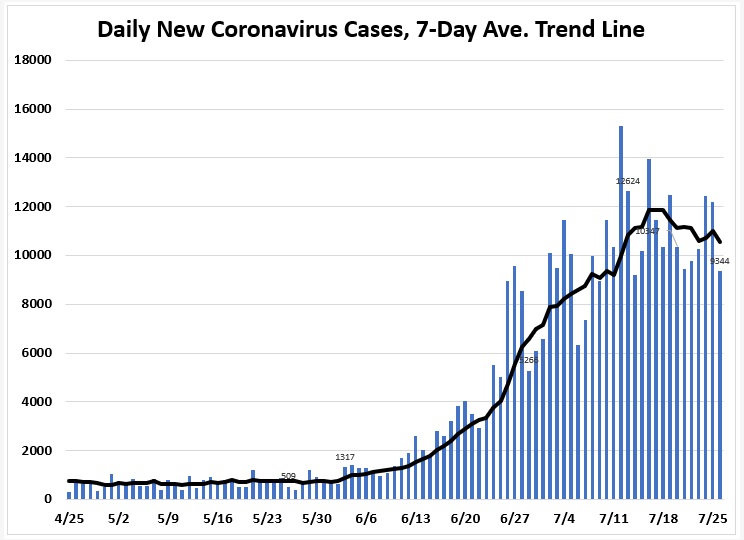
July 26: Tracking Florida COVID-19 Cases, Hospitalizations, and ...

I knew something was amiss when I had my car repaired in early June, shortly after Miami began relaxing its coronavirus restrictions. At first glance, the dealership looked as if it was following the recommended precautions: Every other seat was blocked off with tape, and customers and workers were wearing face coverings.

On closer inspection, many of the customers’ nostrils protruded above their masks. Staff members wore masks with one-way valves, allowing their breath to escape as they told customers the cost of fixing their clunkers. And no one was enforcing limits on the number of customers who could enter the reception area while waiting for their repairs.

It wasn’t just the repair shop. As I walked around my neighborhood in the early evenings, I’d pass houses with cars packed into their driveways. The sounds of Pitbull and J Balvin blared through the tropical shrubbery — a sure sign of a Miami house party.

A month later, Miami has become the pandemic’s epicenter. Miami-Dade County’s intensive-care units and emergency departments are jammed. Specialists unaccustomed to managing critically ill patients are being called into action. The state has sent 100 additional health workers, mostly nurses, to the county’s large public hospital to help its exhausted staff.

I see patients in one of the hospital’s primary-care clinics. Recently, a colleague started her week as ward attending by being called to a code, one of several occurring simultaneously in different parts of the hospital; a middle-aged woman recovering from the coronavirus had suddenly gone into cardiac arrest. Other colleagues have been intubating physically fit young people who precipitously went into respiratory failure.

This is what happens when your state becomes a national embarrassment. And the reason is clear: We have suffered from failures of political leadership at every level.

Florida’s challenges are similar to those that New York and other northern states faced months ago. But while leaders in those states took aggressive action and modeled good behavior, our state has been significantly more laissez-faire and chaotic. Bars and restaurants closed for indoor service in March but reopened in June; now, Miami-Dade County’s mayor has shut them down again. Opening business might have worked if our state and local officials had enforced the correct wearing of appropriate masks, or modeled good mask-wearing behavior themselves, or provided businesses with instructions on maintaining proper ventilation. But they didn’t.

Covid-19 testing is woefully inadequate, and the lucky folks who can actually score an appointment at one of the state’s free testing sites, such as Marlins Park, are waiting more than a week to receive their results. The perpetually underfunded and politically influenced Florida Department of Health lacks enough staff to adequately trace all the people who test positive. Our leaders should have developed a robust public-health infrastructure capable of supporting contact tracing and quarantine enforcement long ago. They didn’t, and scrambling to assemble these systems in the midst of a pandemic is too little, too late.

Ironically, I feel safer at work, where everyone wears masks correctly and takes proper precautions, than I do out in public. We still have adequate personal protective equipment — for now — and are not yet forced to wear garbage bags and rain ponchos like our colleagues in New York. But many staff are already calling in sick, and we worry we won’t have enough nurses, respiratory therapists and doctors to manage the continuing deluge. And still young medical trainees tell me they see crowds of people, many without masks, congregating in the trendy areas of Miami Beach and in Miami’s Brickell neighborhood.

Meanwhile, Florida Gov. Ron DeSantis (R), who only recently began reliably sporting a mask, has thrown up his hands and proclaimed that younger adults are “going to do what they’re going to do,” arguing that he’s powerless to stop them. At the same time, he’s been bullying local school districts to offer in-person classes next month. Unfortunately, many public schools are housed in environmentally unhealthy buildings with lousy ventilation. Several classrooms in my daughter’s public high school lack windows; in other rooms, the windows that do exist don’t open. For years, the building’s outdated air-conditioning system has emitted a musty smell.

In a rational world, the federal government would help us test more people, faster; state and federal leaders would set an example by wearing masks correctly and consistently; local officials would strictly enforce quarantine rules; someone would slap warning labels on those awful ubiquitous online ads for valved masks; and our public health departments would be guided by health experts, not politicians. But this is Florida, a state with a well-established history of being anything but rational.

So for now, the state’s citizens continue to muddle through. My fellow physicians and I are trying to stay on top of a fast-changing situation, while also keeping an eye on hurricane season. In the absence of responsible leadership, we doubt Florida will stop setting records — of the wrong kind — anytime soon.


Houston, Miami, other cities face mounting health care worker shortages as infections climb

https://www.washingtonpost.com/national/houston-miami-and-other-cities-face-mounting-health-care-worker-shortages-as-infections-climb/2020/07/25/45fd720c-ccf8-11ea-b0e3-d55bda07d66a_story.html?utm_campaign=wp_main&utm_medium=social&utm_source=facebook&fbclid=IwAR14P9OGxTOPU8pMgjsVof7YlOAPv-vfxq2MBm9RlpYFVVa3qvpmvyIjFyA

Shortages of health care workers are worsening in Houston, Miami, Baton Rouge and other cities battling sustained covid-19 outbreaks, exhausting staffers and straining hospitals’ ability to cope with spiking cases.

That need is especially dire for front-line nurses, respiratory therapists and others who play hands-on, bedside roles where one nurse is often required for each critically ill patient.

While many hospitals have devised ways to stretch material resources — converting surgery wards into specialized covid units and recycling masks and gowns — it is far more difficult to stretch the human workers needed to make the system function.

“At the end of the day, the capacity for critical care is a balance between the space, staff and stuff. And if you have a bottleneck in one, you can’t take additional patients,” said Mahshid Abir, a senior physician policy researcher at the RAND Corporation and director of the Acute Care Research Unit (ACRU) at the University of Michigan. “You have to have all three … You can’t have a ventilator, but not a respiratory therapist.”

“What this is going to do is it’s going to cost lives, not just for covid patients, but for everyone else in the hospital,” she warned.

The increasingly fraught situation reflects packed hospitals across large swaths of the country: More than 8,800 covid patients are hospitalized in Texas; Florida has more than 9,400; and at least 13 other states also have thousands of hospitalizations, according to data compiled by The Washington Post.

Facilities in several states, including Texas, South Carolina and Indiana, have in recent weeks reported shortages of such workers, according to federal planning documents viewed by The Post, pitting states and hospitals against one another to recruit staff.

On Thursday, Louisiana Gov. John Bel Edwards (D) said he asked the federal government to send in 700 health-care workers to assist besieged hospitals.

“Even if for some strange reason … you don’t care about covid-19, you should care about that hospital capacity when you have an automobile accident or when you have your heart attack or your stroke, or your mother or grandmother has that stroke,” Edwards said at a news conference.

In Florida, 39 hospitals have requested help from the state for respiratory therapists, nurses and nursing assistants. In South Carolina, the National Guard is sending 40 medical professionals to five hospitals in response to rising cases.

Many medical facilities anticipate their staffing problems will deteriorate, according to the planning documents: Texas is hardest hit, with South Carolina close behind. Needs range from pharmacists to physicians.

Hot spots stretch across the country, from Miami and Atlanta to Southern California and the Rio Grande Valley, and the demands for help are as diffuse as the suffering.

“What we have right now are essentially three New Yorks with these three major states,” White House coronavirus task force coordinator Deborah Birx said Friday during an appearance on NBC’s “Today” show.

But today’s diffuse transmission requires innovative thinking and a different response from months ago in New York, say experts. While some doctors have been able to share expertise online and nurses have teamed up to relieve pressures, the overall strains are growing.

“We missed the boat,” said Serena Bumpus, a leader of multiple Texas nursing organizations and regional director of nursing for the Austin Round Rock Region of Baylor Scott and White Health.

Bumpus blames a lack of coordination at national and state officials. “It feels like this free-for-all,” she said, “and each organization is just kind of left up to their own devices to try to figure this out.”

In a disaster, a hospital or local health system typically brings in help from neighboring communities. But that standard emergency protocol, which comes into play following a hurricane or tornado, “is predicated on the notion that you’ll have a concentrated area of impact,” said Christopher Nelson, a senior political scientist at the RAND Corporation and a professor at the Pardee RAND Graduate School.

That is how Texas has functioned in the past, said Jennifer Banda, vice president of advocacy and public policy at the Texas Hospital Association, recalling the influx of temporary help after Hurricane Harvey deluged Houston three years ago.

It is how the response took shape early in the outbreak, when health-care workers headed to hard-hit New York.

But the sustained and far-flung nature of the pandemic has made that approach unworkable. “The challenge right now,” Banda said, “is we are taxing the system all across the country.”

Theresa Q. Tran, an emergency medicine physician and assistant professor of emergency medicine at Houston’s Baylor College of Medicine, began to feel the crunch in June. Only a few weeks before, she had texted a friend to say how disheartening it was to see crowds of people reveling outdoors without masks on Memorial Day weekend.

Her fears were borne out when she found herself making call after call after call from her ER, unable to admit a critically ill patient because her hospital had run out of ICU space, but unable to find a hospital able to take them.

Under normal circumstances, the transfer of such patients — “where you’re afraid to look away, or to blink, because they may just crash on you,” as Tran describes them — happens quickly to ensure the close monitoring the ICU affords.

Those critical patients begin to stall in the ER, stretching the abilities of the nurses and doctors attending to them. “A lot of people, they come in, and they need attention immediately,” Tran said, noting that emergency physicians are constantly racing against time. “Time is brain, or time is heart.”

By mid-July, an influx of “surge” staff brought relief, Tran said. But that was short-lived as the crisis jumped from one locality to the next, with the emergency procedures to bring in more staff never quite keeping up with the rising infections.

An ER physician in the Rio Grande Valley said all three of the major trauma hospitals in the area have long since run out of the ability to absorb new ICU patients.

“We’ve been full for weeks,” said the physician, who spoke on the condition of anonymity because he feared retaliation for speaking out about the conditions.

“The truth is, the majority of our work now in the emergency department is ICU work,” he said. “Some of our patients down here, we’re now holding them for days.” And each one of those critically ill patients needs a nurse to stay with them.

When ICU space has opened up — maybe two, three, four beds — it never feels like relief, he said, because in the time it takes to move those patients out, 20 new ones arrive.

Even with help his hospital has received — masks and gowns were procured, and the staff more than doubled in the past few weeks with relief nurses and other health-care workers from outside — it still is not enough.

The local nurses are exhausted. Some quit. Even the relief nurses who helped out in New York in the spring seem horrified by the scale of the disaster in South Texas, he said.

“If no one comes and helps us out and gives us the ammo we need to fight this thing, we are not going to win,” the doctor said.

One of the root causes of the problem in the United States is that emergency departments and ICUs are often operating at or near capacity, Abir and Nelson said, putting them dangerously close to shortages before a crisis even hits.

Texas, along with 32 other states, has joined a licensure compact, allowing nurses to practice across state borders, but it is becoming increasingly difficult to recruit from other parts of the country.

Texas medical facilities can apply to the Department of State Health Services for staffers to fill a critical shortage, typically for a two-week period. But two weeks, which would allow time to respond to most disasters, hardly registers in a pandemic, so facilities have to ask for extensions or make new applications.

South Carolina last week issued an order that allows nursing graduates who have not yet completed their licensing exams to begin working under supervision. Prisma Health, the state’s biggest hospital system, said this week that the number of patients admitted to its hospitals has more than tripled in the past three weeks and is approaching 300 new patients a day.

“As the capacity increases, so does the need for additional staff,” Scott Sasser, the incident commander for Prisma Health’s covid-19 response said in a statement. Prisma has so far shifted nurses from one area to another, brought back furloughed nurses, hired more physicians and brought in temporary nurse hires, among other measures, Sasser said.

Bumpus has fielded calls from nurses all over the country — some as far afield as the United Kingdom — wanting to know how they can help. But Bumpus says she does not have an easy answer.

“I’ve had to kind of just do my own digging and use my connections,” she said. At first, she said, interested nurses were asked to register through the Texas Disaster Volunteer Registry; but then the system never seemed to be put to use.

Later she learned — “by happenstance … literally by social media” — that the state had contracted with private agencies to find nurses. So now she directs callers to those agencies.

Even rural parts of Texas that were spared initially are being ravaged by the virus, according to John Henderson, CEO of the Texas Organization of Rural and Community Hospitals.

“Unless things start getting better in short order, we don’t have enough staff,” he acknowledged. As for filling critical staffing gaps by moving people around, “even the state admits that they can’t continue to do that,” Henderson said.

The situation has become so dire in some rural parts of the state that Judge Eloy Vera implored people to stay home on the Starr County Facebook page, warning, “Unfortunately, Starr County Memorial Hospital has limited resources and our doctors are going to have to decide who receives treatment, and who is sent home to die.”

Steven Gularte, CEO of Chambers Health in Anahuac, Tex., 45 miles from Houston, said he had to bring in 10 nurses to help staff his 14-bed hospital after Houston facilities started appealing for help to care for patients who no longer needed intensive care but were not ready to go home.

“Normally, we are referring to them,” Gularte said. “Now, they are referring to us.”

Donald M. Yealy, chair of emergency medicine at the University of Pittsburgh Medical Center, said rather than sending staff to other states, his hospital has helped others virtually, particularly to support pulmonary and intensive care physicians.

“Covid has been catalytic in how we think about health care,” Yealy said, providing lessons that will outlast the pandemic.

But telehealth can do little to relieve the fatigue and fear that goes with front-line work in a prolonged pandemic. Donning and doffing masks, gowns and gloves is time consuming. Nurses worry about taking the virus home to their families.

“It is high energy work with a constant grind that is hard on people,” said Michael Sweat, director of the Center for Global Health at the Medical University of South Carolina.

Coronavirus has turned the regular staffing challenge at Harris Health in Houston into a daily life-or-death juggle for Pamela Russell, associate administrator of nursing operations, who helps provide supplemental workers for the system’s two public hospitals and 46 outpatient clinics.

Now, 162 staff members — including more than 50 nurses — are quarantined, either because they tested positive or are awaiting results. Many others need flexible schedules to accommodate child care, she said. Some cannot work in coronavirus units because of their own medical conditions. A few contract nurses left abruptly after learning their units would soon be taking covid-positive patients.

Russell has turned to the state and the international nonprofit Project Hope for resources, even as she acts as a morale booster, encouraging restaurants to send meals and supporting the hospital CEO in his cheerleading rounds.

“It’s hard to say how long we can do this. I just don’t know” said Russell, who praised the commitment of the nurses. “Like I said, it’s a calling. But I don’t see it being sustainable.”


Cartoon – Masks are for the Weak!!!

Gun Control and Gun Rights Cartoons | US News

Cartoon – Under Control

Coronavirus | The Manchester Journal | Manchester Breaking News ...

America Now Has 4 Million Covid-19 Cases, As Calls For Mask Mandates Grow

https://www.forbes.com/sites/carlieporterfield/2020/07/23/america-nears-4-million-covid-19-cases-as-calls-for-mask-mandates-grow/?utm_source=newsletter&utm_medium=email&utm_campaign=dailydozen&cdlcid=5d2c97df953109375e4d8b68#9e673414550f

America Now Has 4 Million Covid-19 Cases As Calls For Mask ...

TOPLINE

Seven months since the first coronavirus case in the country was reported, the United State’s total infection count passed the 4 million milestone Thursday, according to a tally from The New York Times, a brutal marker as cases continue to rise in most of the country and calls for masking increase.

KEY FACTS

The number of total fatalities attributed to the virus has exceeded 143,000, the Times reported.

On Wednesday, a record-breaking 12,807 new cases was enough to tip California’s total number past that of New York, once the world epicenter of the pandemic (though its per capita infection rate remains less than New York at its peak).

Nationwide daily virus deaths topped 1,000 fatalities Wednesday for the first time since May.

The troubling numbers come as calls for widespread use of face masks grows, with President Donald Trump, who has in the past downplayed the garment, calling their use “patriotic” in a tweet this week.

Labor Department numbers released Thursday showed unemployment claims over the past week have jumped for the first time since March, rising by upwards of 100,000 to total 1.4 million.

KEY BACKGROUND

Around 230 million Americans are under a form of public masking mandate where they live, amounting to some 70% of the country, according to a Forbes analysis. A politically-charged garment for some, Americans on both sides of the aisle seem to be accepting of face masks mandates—a Politico/Morning Consult poll released this week found that 72% of voters surveyed would support a state mask mandate where they live, though Democrats identified as “strongly support[ing]” such an order roughly twice as much as Republicans, according to the survey.

President Donald Trump and inched closer to voicing support for masking during his first coronavirus briefing in months on Wednesday, saying, “Whether you like the mask or not, they have an impact, they’ll have an effect—and we need everything we can get,” Forbes reported.


Canceled elective procedures putting pressure on nation’s hospitals

https://www.healthcarefinancenews.com/news/canceled-elective-procedures-putting-pressure-nations-hospitals

U.S. Hospitals Brace for 'Tremendous Strain' from New Virus - JEMS

Even upticks in COVID-19 patients haven’t made up for the revenue losses, since reimbursement for those services is comparatively slim.

Elective procedures are in a strange place at the moment. When the COVID-19 pandemic started to ramp up in the U.S., many of the nation’s hospitals decided to temporarily cancel elective surgeries and procedures, instead dedicating the majority of their resources to treating coronavirus patients. Some hospitals have resumed these surgeries; others resumed them and re-cancelled them; and still others are wondering when they can resume them at all.

In a recent HIMSS20 digital presentation, Reenita Das, a senior vice president and partner at Frost and Sullivan, said that during the pandemic, plastic surgery activity declined by 100%, ENT surgeries declined by 79%, cardiovascular surgeries declined by 53% and neurosurgery surgeries declined by 57%.

It’s hard to overstate the financial impact this is likely to have on hospitals’ bottom lines. Just this week, American Hospital Association President and CEO Rick Pollack, pulling from Kaufman Hall data, said the cancellation of elective surgeries is among the factors contributing to a likely industry-wide loss of $120 billion from July to December alone. When including data from earlier in the pandemic, the losses are expected to be in the vicinity of $323 billion, and half of the nation’s hospitals are expected to be in the red by the end of the year.

Doug Wolfe, cofounder and managing partner of Miami-based law firm Wolfe Pincavage, said this has amounted to a “double-whammy” for hospitals, because on top of elective procedures being cancelled, the money healthcare facilities received from the federal Coronavirus Aid, Relief, and Economic Security Act was an advance on future Medicare payments – which is coming due. While hospitals perform fewer procedures, they will now have to start paying that money back.

All hospitals are hurting, but some are in a more precarious position than others.

“Some hospital systems have had more cash on hand and more liquidity to withstand some of the financial pressure some systems are facing,” said Wolfe. “Traditionally, the smaller hospital systems in the healthcare climate we face today have faced a lot more financial pressure. They’re not able to control costs the same way as a big system. The smaller hospitals and systems were hurting to begin with.”

LOWER REVENUE, HIGHER COSTS

Some hospitals, especially ones in hot spots, are seeing a surge in COVID-19 patients. While this has kept frontline healthcare workers scrambling to care for scores of sick Americans, COVID-19 treatments are not reimbursed at the same level as surgeries. Hospital capacity is being stretched with less lucrative services.

“Some hospitals may be filling up right now, but they’re filling up with lower-reimbursing volume,” said Wolfe. “Inpatient stuff is lower reimbursement. It’s really the perfect storm for hospitals.”

John Haupert, CEO of Grady Health in Atlanta, Georgia, said this week that COVID-19 has had about a $115 million negative impact on Grady’s bottom line. Some $70 million of that is related to the reduction in the number of elective surgeries performed, as well as dips in emergency department and ambulatory visits. 

During one week in March, Grady saw a 50% reduction in surgeries and a 38% reduction in ER visits. The system is almost back to even in terms of elective and essential surgeries, but due to a COVID-19 surge currently taking place in Georgia, it has had to suspend those services once again. ER visits have only come back about halfway from that initial 38% dip, and the system is currently operating at 105% occupancy.

“Part of what we’re seeing there is reluctance from patients to come to hospitals or seek services,” said Haupert. “Many have significantly exacerbated chronic disease conditions.”

Patient hesitation has been an ongoing problem, as has the associated cost of treating coronavirus patients, said Wolfe.

“When they were ramping up to resume the elective stuff, there was a problem getting patients comfortable,” he said. “And the other thing was that the cost of treating patients in this environment has gone up. They’ve put up plexiglass everywhere, they have more wiping-down procedures, and all of these things add cost and time. They need to add more time between procedures so they can clean everything … so they’re able to do less, and it costs more to do less. Even when elective procedures do resume, it’s not going back to the way it was.”

Most hospitals have adjusted their costs to mitigate some of the financial hit. Even some larger systems, such as 92-hospital nonprofit Trinity Health in Michigan, have taken to measures such as laying off and furloughing workers and scaling back working hours for some of its staff. At the top of the month, Trinity announced another round of layoffs and furloughs – in addition to the 2,500 furloughs it announced in April – citing a projected $2 billion in revenue losses in fiscal year 2021, which began on June 1.

Hospitals are at the mercy of the market at the moment, and Wolfe anticipates there could be an uptick in mergers and consolidation as organizations look to partner with less cash-strapped entities. 

“Whether reorganization will work remains to be seen, but there will definitely be a fallout from this,” he said.


EXCLUSIVE: WHITE HOUSE PRIVATELY WARNS 11 CITIES MUST TAKE “AGGRESSIVE” ACTION AGAINST CORONAVIRUS

Exclusive: White House privately warns 11 cities must take ‘aggressive’ action against coronavirus

New red flags about the severity of the coronavirus outbreak come after Trump focused on upsides in televised briefing.

Dr. Deborah Birx, a leader of the White House Coronavirus Task Force, warned state and local leaders in a private phone call Wednesday that 11 major cities are seeing increases in the percentage of tests coming back positive for COVID-19 and should take “aggressive” steps to mitigate their outbreaks. 

The cities she identified were Baltimore, Cleveland, Columbus, Indianapolis, Las Vegas, Miami, Minneapolis, Nashville, New Orleans, Pittsburgh and St. Louis.

The call was yet another private warning about the seriousness of the coronavirus outbreaks given to local officials but not the public at large. It came less than a week after the Center for Public Integrity revealed that the White House compiled a detailed report showing 18 states were in the “red zone” for coronavirus cases but did not release it publicly.

Increasing test positivity — an indicator that a community does not have an outbreak under control — should be expected in areas that reopened and grew more relaxed about social distancing measures, said Harvard epidemiologist Bill Hanage. He said the warnings and data from the White House should be made public.

“This is a pandemic. You cannot hide it under the carpet,” he said. “The best way to deal with a crisis or a natural disaster is to be straight with people, to earn their trust and to give the information they need to make decisions for themselves and their communities.”

Birx told hundreds of emergency managers and other state and local leaders that they should act quickly to stem the outbreaks. Among her recommendations were to trace the contacts of patients testing positive for COVID-19 in areas where test positivity is going up.

“When you first see that increase in test positivity, that is when to start the mitigation efforts,” she said in a recording obtained by Public Integrity. “I know it may look small and you may say, ‘That only went from 5 to 5-and-a-half [percent], and we’re gonna wait and see what happens.’ If you wait another three or four or even five days, you’ll start to see a dramatic increase in cases.”

Birx said the federal government was seeing encouraging declines in test positivity in places like Phoenix and San Antonio but warned that the outbreak in the Sunbelt was moving north.

“What started out very much as a southern and western epidemic is starting to move up the East Coast into Tennessee, Arkansas, up into Missouri, up across Colorado, and obviously we’re talking about increases now in Baltimore,” she said. “So this is really critical that everybody is following this and making sure they’re being aggressive about mitigation efforts.”

It’s unclear who heard the warnings and was invited to the call, which was hosted by the White House Office of Intergovernmental Affairs and closed to the press. Baltimore and Cleveland were two of the cities Birx warned were facing rising test positivity, but a spokeswoman for the Cleveland mayor’s office, Nancy Kelsey-Carroll, said they did not participate in the call. And Baltimore health department leaders didn’t know about it, agency spokesman Adam Abadir said in an email. That city today announced a mask mandate and new restrictions on indoor dining.

The test positivity rates may not have been news to some elected officials. For example, Pennsylvania already publicly reports that data by county.

Birx’s warning came a day after President Donald Trump resumed his televised coronavirus briefings. The president offered a rosier picture of the pandemic than Birx, focusing on examples of improvements in the fight against the virus, such as better treatment with the drug remdesivir.

Her call also came the same day that Democratic Senate Minority Leader Sen. Chuck Schumer said on the Senate floor that he and House Majority Leader Nancy Pelosi had insisted on greater data transparency in a meeting with White House Chief of Staff Mark Meadows. Schumer said they would push for legislation to “ensure that COVID-19 data is fully transparent and accessible without any interference from the administration.”   

And on Tuesday, former CDC Director Tom Frieden and colleagues released a list of data points they would like states to publish in real-time, standardized, to give officials and residents better information.

“It’s not just people who are holding office who need to make decisions,” said Caitlin Rivers, an epidemiologist at Johns Hopkins University, on a call with reporters. “The more that we can provide information to people to keep themselves and their families safe, the better off we’ll be.”

The White House did not immediately respond to a request for comment on Birx’s warnings, nor did it answer repeated questions over several days from Public Integrity on why it had not made the “red zone” report public. Birx said on the call that the weekly report had been sent to governors for four weeks. One staffer for a governor said his boss received only the section of the report related to his state, not the entire report.


America has to be ready for mail voting to avert an election crisis

America has to be ready for mail voting to avert an election crisis

States Should Embrace Vote by Mail and Early Voting To Protect ...

Valid concerns have been raised about mail voting. In New York, the local election boards have taken weeks to count primary ballots received in the mail as a result of the coronavirus, leaving several races for Congress still unresolved. The problems have been blamed on the late decision to send out the absentee ballot applications, outdated ballot counting machines, and the sheer number of mail ballots. The New York case raises a serious alarm with the 2020 election approaching and many states considering more reliance on mail voting in the midst of the pandemic.

Adding to this sense of urgency, President Trump has declared, without evidence, that mail voting is an open invitation to fraud and will be used unfairly against him this fall. He has tweeted that mail voting would make this the “most rigged” election in history. Setting aside the fact that states have relied on absentee and mail voting to hold secure elections for many years, the stumbles in New York and the irresponsible fear mongering by Trump raise the potential of a very real crisis come this fall.

Consider the national disruption surrounding the 2000 election, which was decided for George Bush after a recount in Florida, a month of legal battles, and a controversial split Supreme Court decision. After you add the factor of a second wave of coronavirus cases in the fall and a sitting president shouting “rigged!” to the rafters, and you can understand why some analysts worry that the period following the 2020 election may be one of the most disruptive contests in our modern history.

A crisis foretold, however, can be a crisis averted. Instead of wringing our hands over the recent problems with mail voting in New York, we have to learn from them and from the multiple states that have implemented mail voting systems without problems or fraud. Then states can make common sense preparations to ensure the process goes as quickly and smoothly as possible to prevent a potential election crisis in November.

The fact that election boards were overwhelmed by an influx of absentee ballots in New York must be the rallying cry for dedicating more resources to efficiently implement mail voting systems. Reducing funds available for mail voting initiatives, as some Trump supporters have advocated, in this era when many people have to rely on these ballots or literally risk death, will only serve to suppress voting, which may be the point.

Consider the case of Ohio for a glimpse of what a proactive mail voting initiative looks like. At the urging of Governor Mike DeWine, Republican and Democratic lawmakers unanimously approved their all mail voting primary that was successfully concluded in April. Governors and state legislatures across the country have to learn from Ohio, and additional federal funds have to be made available to assist the efforts.

All those claims that mail ballots are subject to rampant tampering is not evidence that they are, and it suggests the need to educate voters on the issue. Members of the Armed Forces have relied on absentee voting with mail ballots since the Civil War. Trump himself has voted absentee by mail. Meanwhile, three states allow ounties to conduct elections completely by mail if they choose, five other states conduct elections almost entirely by mail, and more than two dozen other states permit their residents to cast absentee ballots by mail without having to provide a reason.

Over 250 million votes have been cast using mailed ballots since 2000, according to the Vote at Home Institute, and yet exhaustive analysis has identified only a tiny fraction of cases of fraud. None of those states that hold their elections almost entirely by mail has seen voter fraud scandals. The bipartisan group Vote Safe, chaired by former Governor Tom Ridge of Pennsylvania and former Governor Jennifer Granholm of Michigan, notes that several studies have consistently proven that mail ballots are secure and do not advantage one political party over the other. The team rightly emphasizes that the goal of ensuring the safety of voters as they exercise their rights during a raging pandemic is not a partisan issue.

Whether we improve our voting systems or defund them, the use of mail ballots will inevitably be much greater in the 2020 election than in years past. We can prepare for this eventuality and find innovative ways to deal with the challenges that arise, or we can shift our gaze from another crisis foretold and suffer the major consequences come November.

Winston Churchill Quotes About Democracy. QuotesGram

Winston Churchill noted that democracy is the worst form of government, except for all other forms that have been tried. In the midst of a pandemic across the country that has already claimed the lives of tens of thousands of Americans, exercising our right to vote by mail instead of in person may also seem like the worst solution, except for all other options.


U.S. passes 4 million coronavirus cases as pace of new infections roughly doubles

https://www.washingtonpost.com/politics/us-passes-4-million-coronavirus-cases-as-pace-of-new-infections-roughly-doubles/2020/07/23/d0125192-cd02-11ea-b0e3-d55bda07d66a_story.html?utm_campaign=wp_main&utm_medium=social&utm_source=facebook&fbclid=IwAR3Ve5MnHiStJnPO_mzkc1c2sHE2EM6QOG-2HochFPBmJe6hnyvcmqEVQ4U

The United States on Thursday passed the grim milestone of 4 million confirmed coronavirus infections, and President Trump announced he was canceling the public celebration of his nomination for a second term, as institutions from schools to airlines to Major League Baseball wrestled with the consequences of a pandemic still far from under control.

The rapid spread of the virus this summer is striking, taking just 15 days to go from 3 million confirmed cases to 4 million. By comparison, the increase from 1 million cases to 2 million spanned 45 days from April 28 to June 11, and the leap to 3 million then took 27 days.

Trump’s cancellation of the in-person portion of the Republican National Convention planned for next month in Jacksonville, Fla., represented a remarkable reversal. He had insisted for months on a made-for-television spectacle that would have packed people close together in a state that is now an epicenter of the resurgent pandemic.

On Thursday, he conceded that was not going to work. “The timing for this event is not right,” Trump said during the latest of somber, solo White House briefings this week. “It’s just not right with what’s been happening.”

Florida reported 173 deaths on Thursday, its highest single-day count of new deaths, and also reported more than 10,200 new coronavirus cases.

In a scathing statement blaming the surge of new cases on Trump’s “failure to care,” presumptive Democratic nominee Joe Biden said the president “quit on this country and waved the white flag of surrender.”

Meanwhile, nearly every public health metric suggests America is badly losing its fight against the virus.

Positivity rates have reached alarming levels in numerous states, hospitalizations are soaring, and more than 1,100 new coronavirus deaths were reported across the United States on Wednesday, marking the first time since May 29 that the daily count exceeded that number, according to Washington Post tracking.

The rolling seven-day average of infections has doubled in less than a month, reaching more than 66,000 new cases per day Wednesday. The U.S. death toll now exceeds 141,000.

As a result, many businesses appear to be pulling back after their attempts to resume more normal operations proved premature, and an additional 1.4 million American workers filed for unemployment benefits last week. It was the first time since March that new claims rose. Another 980,000 new Pandemic Unemployment Assistance claims — the benefits offered to self-employed and gig workers — were also filed.

Congress, meanwhile, struggled to confront the crisis. Senate Republicans killed Trump’s payroll tax cut proposal on Thursday, widening an unusual rift with the White House over the cost and contents of the latest national coronavirus relief package.

Senate Majority Leader Mitch McConnell (R-Ky.) had planned to roll out a $1 trillion GOP bill Thursday morning, but that was canceled amid the intraparty conflicts.

Administration officials then floated a piecemeal approach, involving several different aid bills, but ran into opposition from lawmakers in both parties.

Trump’s briefing Thursday afternoon, his third of the week, reflected an effort to increase popular support for his management of the coronavirus outbreak, which even many of his allies have criticized. About 2 out of 3 Americans disapprove of Trump’s handling of the pandemic, a new poll found.

Trump dismissed or played down the risk of the virus for months after it had begun spreading in the United States and has been a self-described cheerleader for rapid reopening of businesses and schools shuttered to help slow its spread.

The survey of 1,057 adults in the United States, conducted by the Associated Press-NORC Center for Public Affairs Research, also showed that 3 out of 4 Americans, including a majority of Republicans, support mandatory face coverings when people are outside their own homes.

Democrats overwhelmingly favor mask mandates, at 89 percent. The majority of Republicans — 59 percent — also support them.

Ninety-five percent of Democrats and 75 percent of Republicans say they wear face coverings when leaving home. Overall, more Americans — 86 percent — are wearing masks compared with in May, when 73 percent were doing so.

Trump resisted wearing a mask in public until earlier this month, despite calls to set a good example from the top. He now calls it patriotic to wear a mask, though he still does not wear one consistently and says people should decide for themselves. Trump carries a black-cloth version in his pocket, which he says is sufficient for those instances when he is close to people who have not been screened for the virus.

Trump’s shift may reflect a growing consensus in favor of masks, although it is not clear that opposition to them has ebbed among some of the president’s strongest political supporters.

The business community is struggling, too. American Airlines and Southwest Airlines posted big quarterly losses between April and July in their earnings reports released Thursday, projecting that travel demand will not rebound anytime soon.

In American’s second quarter, revenue dropped more than 86 percent, to $1.6 billion, from nearly $12 billion a year ago, according to a Securities and Exchange Commission filing. The company posted a net loss of nearly $2.1 billion, attributing it to stay-at-home orders, border closures and travel restrictions.

“As a result, we have experienced an unprecedented decline in the demand for air travel, which has resulted in a material deterioration in our revenues,” the company said in the earnings report. “While the length and severity of the reduction in demand due to Covid-19 is uncertain, we expect our results of operations for the remainder of 2020 to be severely impacted.”

Southwest posted revenue of $1 billion in its second quarter, an almost 83 percent dip compared with a year ago. The company also posted a net loss of $915 million.

Trump also took a small step back from his insistence that schools should open on time this fall, conceding instead that some schools might need to delay in-person learning. Many school districts have already announced that decision.

Trump has been critical of guidance from the Centers for Disease Control and Prevention, saying it made it too tough for schools to reopen, and promised new guidelines would be issued. On Thursday, the CDC released several documents emphasizing the benefits of in-person school, in line with Trump’s messaging. Some of the guidance was written by White House officials rather than experts at the CDC, people familiar with the process said. They spoke on the condition of anonymity to discuss internal decision-making.

The new guidelines for school administrators mention precautions outlined in previous documents, but they appear to drop specific reference to keeping students six feet apart — something many schools find almost impossible to do if they are fully reopened. This document also suggests that schools consider closing only if there is “substantial, uncontrolled transmission” of the virus, and not necessarily even then.

Florida Gov. Ron DeSantis (R) echoed Trump in making a case for students to return to classrooms, despite the state’s teachers union suing over an order forcing schools to fully reopen. Meanwhile, a new poll showed that most parents would prefer to delay the start of in-person school.

During an appearance on “Fox & Friends,” DeSantis said that schoolchildren are “by far at the least risk for coronavirus, thankfully.”

“We also know they play the smallest role by far in transmission of the virus, and yet they’ve really been asked to shoulder the brunt of our control measures,” said DeSantis, a close Trump ally who had volunteered his state for the Republican convention next month.

DeSantis said that the “evidence-based decision” is for all parents to have the option of in-class instruction for their children if they choose. He said those who are not comfortable with sending their children back to school could continue distance learning.

The role children play in spreading the virus is still being studied, with experts saying that results are not definitive. A South Korean study found that children over the age of 10 were as likely to transmit the virus as adults, while those under 10 were less likely to spread it.

Deborah Birx, the White House coronavirus response coordinator, said Wednesday on Fox News that the United States is launching a study of its own, adding that the data “really needs to be confirmed here.”

Among the most visible American institutions searching for a path forward is the sports industry. Major League Baseball began a pandemic-shortened season on Thursday, playing in empty stadiums amid questions about whether the sport can make it through October without having to abort. It is as much a science experiment as a championship pursuit.

Players are prohibited from spitting or high-fiving. Foul balls that wind up in the stands will remain there.

Anthony S. Fauci, the nation’s leading infectious-disease expert, threw out the first pitch for the Washington Nationals home opener against the New York Yankees. Nationals star outfielder Juan Soto tested positive for the coronavirus on Thursday and missed the game.

Meanwhile, Japan marked a year’s delay of the Olympic Games on Thursday. Tokyo was to host the 2020 Summer Olympics starting Friday. A 15-minute ceremony in Tokyo’s newly built $1.4 billion Olympic Stadium started the countdown to the delayed games, now set to begin on July 23, 2021. The city also marked a new daily record in reported cases on Thursday, with 366.

poll this week by Japan’s Kyodo News Agency found that fewer than 1 in 4 people in Japan even want to host the games anymore. One-third of respondents said the games should be canceled, while 36 percent expressed interest in postponing them for more than a year.