Massive Growth in Expenses and Rising Inflation Fuel Continued Financial Challenges for America’s Hospitals and Health Systems

https://www.aha.org/costsofcaring

Hospitals are experiencing significant increases in expenses for workforce, drugs and medical supplies

Introduction

For over two years since the outset of the COVID-19 pandemic, America’s hospitals and health systems have been on the front lines caring for patients, comforting families and protecting communities.

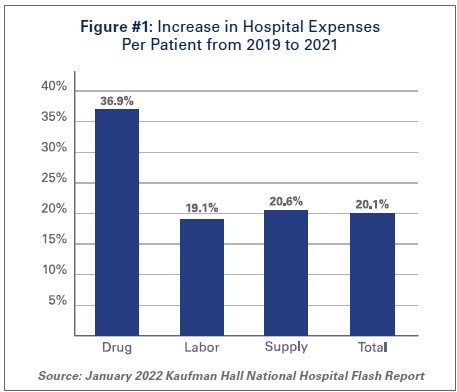
With over 80 million cases1, nearly 1 million deaths2, and over 4.6 million hospitalizations3, the pandemic has taken a significant toll on hospitals and health systems and placed enormous strain on the nation’s health care workforce. During this unprecedented public health crisis, hospitals and health systems have confronted many challenges, including historic volume and revenue losses, as well as skyrocketing expenses (See Figure #1).
Hospitals and health systems have been nimble in responding to surges in COVID-19 cases throughout the pandemic by expanding treatment capacity, hiring staff to meet demand, acquiring and maintaining adequate supplies and personal protective equipment (PPE) to protect patients and staff and ensuring that critical services and programs remain available to the patients and communities they serve. However, these and other factors have led to billions of dollars in losses over the last two years for hospitals, and over 33% of hospitals are operating on negative margins.

The most recent surges triggered by the delta and omicron variants have added even more pressure to hospitals. During these surges, hospitals saw the number of COVID-19 infected patients rise while other patient volumes fell, and patient acuity increased. This drove up expenses and added significant financial pressure for hospitals. Moreover, hospitals did not receive any government assistance through the COVID-19 Provider Relief Fund (PRF) to help mitigate rising expenses and lost revenues during the delta and omicron surges. This is despite the fact that more than half of COVID-19 hospitalizations have occurred since July 1, 2021, during these two most recent COVID-19 surges.

At the same time, patient acuity has increased, as measured by how long patients need to stay in the hospital. The increase in acuity is a result of the complexity of COVID-19 care, as well as treatment for patients who may have put off care during the pandemic. The average length of a patient stay increased 9.9% by the end of 2021 compared to pre-pandemic levels in 2019.4

As hospitals treat sicker patients requiring more intensive treatment, they also must ensure that sufficient staffing levels are available to care for these patients, and must acquire the necessary expensive drugs and medical supplies to provide high-quality care. As a result, overall hospital expenses have experienced considerable growth.

Data from Kaufman Hall, a consulting firm that tracks hospital financial metrics, shows that by the end of 2021, total hospital expenses were up 11% compared to pre-pandemic levels in 2019. Even after accounting for changes in volume that occurred during the pandemic, hospital expenses per patient increased significantly from pre-pandemic levels across every category. (See Figure #1)

The pandemic has strained hospitals’ and health systems’ finances. Many hospitals operate on razorthin margins, so even slight increases in expenses can have dramatic negative effects on operating margins, which can jeopardize their ability to care for patients. These expense increases have been more challenging to withstand in light of rising inflation and growth in input prices. In fact, despite modest growth in revenues compared to pre-pandemic levels, median hospital operating margins were down 3.8% by the end of 2021 compared to pre-pandemic levels, according to Kaufman Hall. Further exacerbating the problem for hospitals are Medicare sequestration cuts and payment increases that are well below increases in costs. For example, an analysis by PINC found that for fiscal year 2022, hospitals received a 2.4% increase in their Medicare inpatient payment rate, while hospital labor rates increased 6.5%.5

These levels of increased expenses and declines in operating margins are not sustainable. This report highlights key pressures currently facing hospitals and health systems, including:

  1. Workforce and contract labor expenses
  2. Drug expenses
  3. Medical supply and PPE expenses
  4. Rising economy-wide inflation

Each of these issues separately presents significant challenges to the hospital field. Taken together, they represent conditions that would be potentially catastrophic for most organizations, institutions and industries. However, the fact that the nation’s hospitals and health systems continue to serve on the front lines of the ongoing pandemic is a testament to their resiliency and steadfast commitment to their mission to serve patients and communities around the country.

Hospitals and health systems are the cornerstones of their communities. Their patients depend on them for access to care 24 hours a day, seven days a week. Hospitals are often the largest employers in their community, and large purchasers of local services and goods. Additional support is needed to help ensure hospitals have the adequate resources to care for their communities.

I. Workforce and Contract Labor Expenses

The hospital workforce is central to the care process and often the largest expense for hospitals. It is no surprise then that even before the pandemic, labor costs — which include costs associated with recruiting and retaining employed staff, benefits and incentives — accounted for more than 50% of hospitals’ total expenses. Therefore, even a slight increase in these costs can have significant impacts on a hospital’s total expenses and operating margins.

As the pandemic has persisted for over two years, the toll on the health care workforce has been immense. A recent survey of health care workers found that approximately half of respondents felt “burned out” and nearly a quarter of respondents said they anticipated leaving the health care field.6

This has been mirrored by a significant and sustained decline in hospital employment, down approximately 100,000 employees from pre-pandemic levels.7 At the height of the omicron surge, approximately 1,400 hospitals or 30% of all U.S. hospitals reporting data to the government, indicated that they anticipated a critical staffing shortage within the week.8 This high percentage of hospitals reporting a critical staffing shortage stayed relatively consistent throughout the delta and omicron surges.
The combination of employee burnout, fewer available staff, increased patient acuity and higher demand for care especially during the delta and omicron surges, has forced hospitals to turn to contract staffing firms to help address staffing shortages.

Though hospitals have long worked with contract staffing firms to bridge temporary gaps in staffing, the pandemic-driven-staffing-shortage has created an expanded reliance on contract staff, especially contract or travel registered nurses. Travel nurses are in particularly high demand because they serve a critical role in delivering care for both COVID-19 and non-COVID-19 patients and allow the hospital to meet the demand for care, especially during pandemic surges.

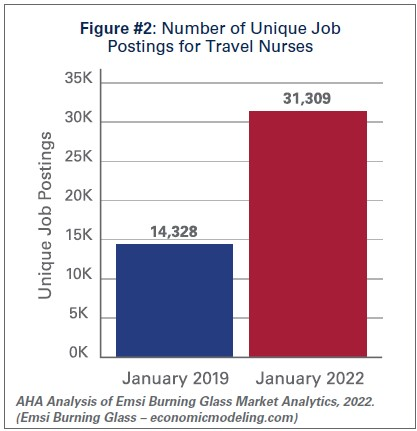
According to a survey by AMN Healthcare, one of the nation’s largest health care staffing agencies, 95% of health care facilities reported hiring nurse staff from contract labor firms during the pandemic.9 Staffing firms have increased their recruitment of contract or travel nurses, illustrating the significant growth in their demand. According to data from EMSI/Burning Glass, there has been a nearly 120% increase in job postings for contract or travel nurses from pre-pandemic levels in January 2019 to January 2022. (See Figure #2)

Similarly, the hours worked by contract or travel nurses as a percentage of total hours worked by nurses in hospitals has grown from 3.9% in January 2019 to 23.4% in January 2022, according to data from Syntellis Performance Solutions. (See Figure #3) In fact, a quarter of hospitals have experienced nearly a third of their total nurse hours accounted for by contract or travel nurses.
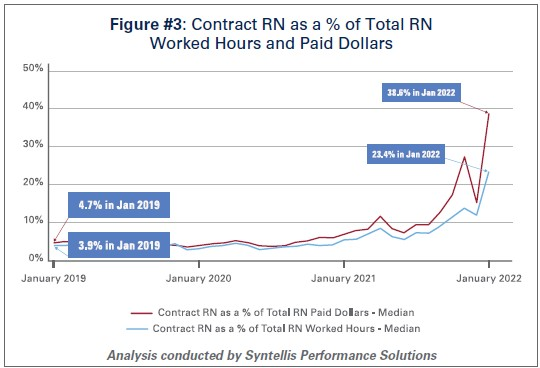
As the share of contract travel nurse hours has grown significantly compared to before the pandemic, so too have the costs of employing travel nurses compared to pre-pandemic levels. In 2019, hospitals spent a median of 4.7% of their total nurse labor expenses for contract travel nurses, which skyrocketed to a median of 38.6% in January 2022. (See Figure #3) A quarter of hospitals — those who have had to rely disproportionately on contract travel nurses — saw their costs for contract travel nurses account for over 50% of their total nurse labor expenses. In fact, while contract travel nurses accounted for 23.4% of total nurse hours in January 2022, they accounted for nearly 40% of the labor expenses for nurses. (See Figure #3) This difference has grown considerably compared to pre-pandemic levels in 2019, suggesting that the exorbitant prices charged by staffing companies are a primary driver of higher labor expenses for hospitals.

Data from Syntellis Performance Solutions show a 213% increase in hourly rates charged to hospitals by staffing companies for travel nurses in January 2022 compared to pre-pandemic levels in January 2019. This is because staffing agencies have exploited the situation by increasing the hourly rates billed to hospitals for contract travel nurses more than the hourly rates they pay to travel nurses. This is effectively the “margin” retained by the staffing agencies. During pre-pandemic levels in 2019, the average “margin” retained by staffing agencies for travel nurses was about 15%. As of January 2022, the average “margin” has grown to an astounding 62%. (See Figure #4)

These high “margins” have fueled massive growth in the revenues and profits of health care staffing companies. Several staffing firms have reported significant growth in their revenues to as high as $1.1 billion in just the fourth quarter of 202110, tripling their revenues and net income compared to 2020 levels.11

The data indicate that the growth in labor expenses for hospitals and health systems was in large part due to the exorbitant rates charged by contract staffing firms. By the end of 2021, hospital labor expenses per patient were 36.9% higher than pre-pandemic levels, and increased to 57% at the height of the omicron surge in January 2022.12 A study looking at hospitals in New Jersey found that the increased labor expenses for contract staff amounted to $670 million in 2021 alone, which was more than triple what their hospitals spent in 2020.13 High reliance on contract or travel staff prevents hospitals and health systems from investing those costs into their existing employees, leading to low morale and high turnover, which further exacerbates the challenges hospitals and health systems have been facing.

II. Drug Expenses

Prescription drug spending in the U.S. has grown significantly since the pandemic. In 2021, drug spending (including spending in both retail and non-retail settings) increased 7.7%14, which was on top of an increase of 4.9%15 in 2020. While some of this growth can be attributed to increased utilization as patient acuity increased during the pandemic, a significant driver has been the continued increase in prices of existing drugs as well as the introduction of new products at very high prices. A study by GoodRx found that in January 2022 alone, drug companies increased the price of about 810 brand and generic drugs that they reviewed by an average of 5.1%.16 These price increases followed massive price hikes for certain drugs often used in the hospital such as Hydromorphone (107%), Mitomycin (99%), and Vasopressin (97%).17 For another example, the drug manufacturer of Humira, one of the most popular brand drugs used to treat rheumatoid arthritis, increased the price of the drug by 21% between 2019 and 2021.18 A study by the Kaiser Family Foundation found that in Medicare Part B and D markets, half of all drugs in each market experienced price increases above the rate of inflation between 2019 and 2020 – in fact, a third of these drugs experienced price increases of greater than 7.5%.19 At the same time, according to a report by the Institute for Clinical and Economic Review (ICER), eight drugs with unsupported U.S. drug price increases between 2019 and 2020 alone accounted for an additional $1.67 billion in drug spending, further illustrating that drug companies’ decisions to raise the prices of their drugs are simply an unsustainable practice.20
As hospitals have worked to treat sicker patients during the pandemic, they have been forced to contend with sky-high prices for drugs, many of which are critical and lifesaving for their patients. For example, in 2020, 16 of the top 25 drugs by spending in Medicare Part B (hospital outpatient settings) had price increases greater than inflation — two of the top three drugs, Keytruda and Prolia — experienced price increases of 3.3% and 4.1%, respectively.21

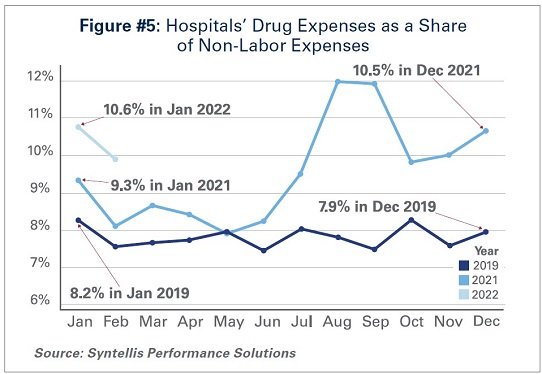
As a result of these price increases, hospital drug expenses have skyrocketed. By the end of 2021, total drug expenses were 28.2% higher than pre-pandemic levels.22 When taken as a share of all non-labor expenses, drug expenses have grown from approximately 8.2% in January 2019, to 9.3% in January 2021, and to 10.6% in January 2022. (See Figure #5) Even when considering changes in volume during the pandemic, drug expenses per patient compared to pre-pandemic levels in 2019 saw significant increases, with a 36.9% increase through 2021.

While continued drug price increases by drug companies have been a major driver of the growth in overall hospital drug expenses, there also are other important driving factors to consider:

  • Drug Treatments for COVID-19 Patients: Remdesivir, one of the primary drugs used to treat COVID-19 patients in the hospital, has become the top spend drug for most hospitals since the pandemic. This drug alone accounted for over $1 billion in sales in the fourth quarter of 2021.23 Priced at an average of $3,12024Remdesivir’s cost was initially covered by the federal government. However, hospitals must now purchase the drug directly.
  • Limitation of 340B Contract Pharmacies: The 340B program allows eligible providers, including hospitals that treat many low-income patients or treat certain patient populations like children and cancer patients, to buy certain outpatient drugs at discounted prices and use those savings to provide more comprehensive services to the patients and communities they serve. Since July 2020, several of the largest drug manufacturers have denied 340B pricing to eligible hospitals through pharmacies with whom they contract, despite calls from the Department of Health and Human Services that such actions are illegal. Because of these actions, many 340B hospitals, especially rural hospitals who disproportionately rely on contract pharmacies to ensure access to drugs for their patients, have lost millions in 340B drug savings.25 In addition, these manufacturers have required claim-level data submissions as a condition of receiving 340B discounts, which has increased costs to deliver the data as well as staff time and expense to manage that process. The loss of 340B savings coupled with increased burden of providing detailed data to drug companies have contributed to increasing drug expenses.
  • Health Plans’/Pharmacy Benefit Managers’ (PBMs’) “White Bagging” Policies: Health plans and PBMs have engaged in a tactic that steers hospital patients to third-party specialty pharmacies to acquire medication necessary for clinician-administered treatments, known as “white-bagging.” This practice disallows the hospital from procuring and managing the handling of a drug — typically drugs that are infused or injected requiring a clinician to administer in a hospital or clinic setting — used in patient care. These policies not only create serious patient safety concerns, but create delays and risks in patient care; add to administration, storage and handling costs; and create important liability issues for hospitals.

Taken together, these factors increase both drug expenses and overall hospital expenses.

III. Medical Supply and PPE Expenses

The U.S., like most countries in the world, relies on global supply chains for goods and services. This is especially true for medical supplies used at hospitals and other health care settings. Everything from the masks and gloves worn by staff to medical devices used in patient care come from a large network of global suppliers. Prior to the global pandemic, hospitals had established relationships with distributors and other vendors in the global health care supply chain to deliver goods as necessitated by demand. After the pandemic hit, many factories, distributors and other vendors shut down their operations, leaving hospitals, which were on the front lines facing surging demand, to fend for themselves. In fact, supply chain disruptions across industries, including health care, increased by 67% in 2020 alone.26

As a result, hospitals turned to local suppliers and non-traditional suppliers, often paying significantly higher rates than they did prior to the pandemic. Between fall 2020 and early 2022 costs for energy, resins, cotton and most metals surged in excess of 30%; these all are critical elements in the manufacturing of medical supplies and devices used every day in hospitals.27 As COVID-19 cases surged, demand for hospital PPE, such as N95 masks, gloves, eye protection and surgical gowns, increased dramatically causing hospitals to invest in acquiring and maintaining reserves of these supplies. Further, downstream effects from other global events such as the war in Ukraine and the energy crisis in China, as well as domestic issues, such as labor shortages and rising fuel and transportation costs, have all contributed to drive up even higher overall medical supply expenses for hospitals in the U.S.28 For instance, according to the Health Industry Distributors Association, transportation times for medical supplies are 440% longer than pre-pandemic times resulting in massive delays.29

Compared to 2019 levels, supply expenses for hospitals were up 15.9%30 through the end of 2021. When focusing on hospital departments involved most directly in care for COVID-19 patients − primarily hospital intensive care units (ICUs) and respiratory care departments − the increase in expenses is significantly higher. Medical supply expenses in ICUs and respiratory care departments increased 31.5% and 22.3%, respectively. Further, accounting for changes in volume during surge and non-surge periods of the pandemic, medical supply expenses per patient in ICUs and respiratory care departments were 31.8% and 25.9% higher, respectively. (See Figure #6) These numbers help illustrate the magnitude of the impact that increases in supply costs have had on hospital finances during the pandemic.

IV. Impact of Rising Inflation

Higher economy-wide costs have serious implications for hospitals and health systems, increasing the pressures of higher labor, supply, and acquisition costs; and potentially lower consumer demand. Inflation is defined as the general increase in prices and the decrease in purchasing power. It is measured by the Consumer Price Index (CPI-U). In April 2021, the Bureau of Labor Statistics (BLS) reported that the CPI-U had the largest 12-month increase since September 2008. The CPI-U hit 40-year highs in February 2022.31 Overall, consumer prices rose by a historic 8.5% on an annualized basis in March 2022 alone.32

As inflation measured by consumer prices is at record highs, below are key considerations on the potential impact of higher general inflation on hospital prices:

  • Labor Costs and Retention: Labor costs represent a significant portion of hospital costs (typically more than 50% of hospital expenses are related to labor costs). As the cost-of-living increases, employees generally demand higher wages/total compensation packages to offset those costs. This is especially true in the health care sector, where labor demands are already high, and labor supply is low.
  • Supply Chain Costs: Medical supplies account for approximately 20% of hospital expenses, on average. As input/raw good costs increase due to general inflation, hospital supplies and medical device costs increase as well. Furthermore, shortages of raw materials, including those used to manufacture drugs, could stress supply chains (i.e., medical supply shortages), which may result in changes in care patterns and add further burden on staff to implement work arounds.
  • Capital Investment Costs: Capital investments also may be strained, especially as hospitals have already invested heavily in expanding capacity to treat patients during the pandemic (e.g., constructing spaces for testing and isolation of COVID-19 patients). One of the areas that has seen the largest increase in prices/shortages is building materials (e.g., lumber). Additionally, a historically large increase in inflation has resulted in increases in interest rates, which may hamper borrowing options and add to overall costs.
  • Consumer Demand: Higher inflation also may result in decreases in demand for health care services, specifically if inflation exceeds wage growth. Specifically, higher costs for necessities (food, transportation, etc.) could push down demand for health care services and, in turn, dampen hospital volumes and revenues in the long run.
Health care and hospital prices are not driving recent overall inflation increases. The BLS has cited increases in the indices for gasoline, shelter and food as the largest contributors to the seasonally adjusted all items increase. The CPI-U increased 0.8% in February on a seasonally adjusted basis, whereas the medical care index rose 0.2% in February. The index for prescription drugs rose 0.3%, but the hospital index for hospital services declined 0.1%.33

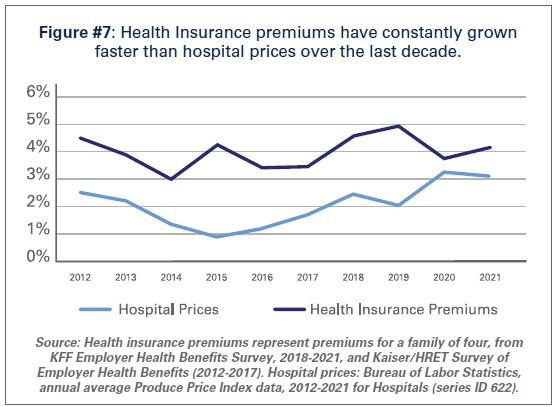
This is consistent with pre-pandemic trends. Despite persistent cost pressures, hospital prices have seen consistently modest growth in recent years. According to BLS data, hospital prices have grown an average 2.1% per year over the last decade, about half the average annual increase in health insurance premiums. (See Figure #7) More recently, hospital prices have grown much more slowly than the overall rate of inflation. In the 12 months ending in February 2022, hospital prices increased 2.1%. In fact, even when excluding the artificially low rates paid to hospitals by Medicare and Medicaid, average annual price growth has still been below 3% in recent years.34

Conclusion

While we hope that our nation is rounding the corner in the battle against COVID-19, it is clear that the pandemic is not over. During the week of April 11, there have been an average of over 33,000 cases per day35 and reports suggest that a new subvariant of the virus (Omicron BA.2) is now the dominant strain in the U.S.36 As a result, the challenges hospitals and health systems are currently facing are bound to last much longer.

As COVID-19 infections and hospitalizations are decreasing in some parts of the U.S. and increasing in others, hospitals and health systems continue to care for COVID-19 and non-COVID-19 patients. With additional surges potentially on the horizon, the massive growth in expenses is unsustainable. Most of the nation’s hospitals were operating on razor thin margins prior to the pandemic; and now, many of these hospitals are in an even more precarious financial situation. Regardless of potential new surges of COVID-19, hospitals and health systems continue to face workforce retention and recruitment challenges, supply chain disruptions and exorbitant expenses as outlined in this report.

Hospitals appreciate the support and resources that Congress has provided throughout the pandemic; however, additional support is needed now to keep hospitals strong so they can continue to provide care to patients and communities.


$1.6B CMS pay bump next year isn’t enough, hospitals say

The CMS proposed payment increase of 3.2 percent, or $1.6 billion, for fiscal year 2023, is inadequate due to inflation and labor and supply costs, Stacey Hughes, executive vice president of the American Hospital Association, said April 18.

Hospitals would actually see a net decrease in payments from this year to next year because of proposed cuts to Disproportionate Share Hospital payments and other payment cuts, Ms. Hughes said.

“This is simply unacceptable for hospitals and health systems and their caregivers that have been on the front lines of the COVID-19 pandemic for over two years now,” she stated in an April 18 news release. “While we have made great progress in the fight against this virus, our members continue to face a range of challenges that threaten their ability to continue caring for patients and providing essential services for their communities.”

The association is happy with the proposed 5 percent cap on a decrease to a hospital’s wage index, but Ms. Hughes asked that this be used in a “non-budget neutral” way.

CMS released the Inpatient Prospective Payment System proposed rule April 18 and is now accepting comments on it through June 17.

Read the full American Hospital Association statement here.

Pandemic’s end could surge the number of uninsured kids

The formal end of the pandemic could swell the ranks of uninsured children by 6 million or more as temporary reforms to Medicaid are lifted.

Why it matters: Gaps in coverage could limit access to needed care and widen health disparities, by hitting lower-income families and children of color the hardest, experts say.

The big picture: A requirement that states keep Medicaid beneficiaries enrolled during the public health emergency in order to get more federal funding is credited with preventing a spike in uninsured adults and kids during the crisis.

  • Children are the biggest eligibility group in Medicaid, especially in the 12 states that haven’t expanded their Medicaid programs under the Affordable Care Act.
  • The lifting of the public health emergency, which was just extended to July 15, will lead states to determine whether their Medicaid enrollees are still eligible for coverage — a complicated process that could result in millions of Americans being removed from the program.

What they’re saying: The end of the continuous coverage guarantee puts as many as 6.7 million children at very high risk of losing coverage, per Georgetown University’s Center for Children and Families.

  • That would more than double the number of uninsured kids, which stood at 4.4 million in 2019.
  • “It is a stark, though we believe conservative, estimate,” said Joan Alker, the center’s executive director. “There are a lot of children on Medicaid.”

Between the lines: Not all of the Medicaid enrollees who are removed from the program would become uninsured. But parents and their children could be headed down different paths if their household income has risen even slightly.

  • Adults who’ve returned to work may be able to get insurance through their employer. Others could get coverage through the ACA marketplace, though it’s unclear whether that would come the COVID-inspired extra financial assistance that’s now being offered.
  • Most kids would be headed for the Children’s Health Insurance Program, Alker said — a prospect that can entail added red tape and the payment of premiums or an annual enrollment fee, depending on the state.

What we’re watching: Changes in children’s coverage could be most pronounced in Texas, Florida and Georgia — the biggest non-Medicaid expansion states, which have higher rates of uninsured children than the national average.

  • Congress could still require continuous Medicaid coverage, the way the House did when it passed the sweeping social policy package that stalled in the Senate over cost concerns.
  • CMS’ Office of the Actuary projects a smaller decline in Medicaid enrollment than some health policy experts are predicting — and the Biden administration continues to move people deemed ineligible for Medicaid onto ACA plans, Raymond James analyst Chris Meekins noted in a recent report on the unwinding of the public health emergency.

Biden proposes ACA coverage expansion to include more families

President Joe Biden proposed a change in federal regulations April 5 to expand health coverage to millions of people through the Affordable Care Act.

The proposal aims to close what is known as the “family glitch,” according to a press release.

People who do not have access to affordable health coverage through their employers can qualify for subsidies to purchase coverage through the ACA marketplace. The federal definition of affordable employer-provided coverage is only for single individuals and not for family members, meaning about 5 million people are ineligible for the marketplace subsidy. 

To fix the glitch, the proposal directs the Treasury Department and Internal Revenue Service to allow family members of employees who are offered affordable self-only coverage but unaffordable family coverage to qualify for the subsidies to purchase family health coverage through the ACA marketplace. If the rule is approved, an estimated 200,000 uninsured people would gain coverage, and nearly 1 million would see their coverage become more affordable.

President Biden will also sign an executive order Tuesday directing agencies to find ways to make coverage more affordable for more people.

Failing to fund the U.S. covid response bodes trouble for the entire world

Atul Gawande leads global health and is co-chair of the Covid-19 Task Force at the U.S. Agency for International Development.

Nearly a year ago, President Biden announced that the United States would be the “arsenal of vaccines for the world,” just as America served as an arsenal for democracies during World War II. With the president’s leadership and the consistent bipartisan support of Congress, the United States has delivered more than half a billion coronavirus vaccines to 114 lower-income countries free of charge, a historic accomplishment. This example spurred contributions from other wealthy nations and contributed to vaccination of almost 60 percent of the world.

But the global battle against covid-19 is not done. Instead, the challenge has changed. The lowest-income countries, where vaccinations have reached less than 15 percent of people, are now declining free vaccine supply because they don’t have the capacity to get shots in arms fast enough.

We must therefore not just provide an arsenal; to protect our allies against future variants, we must also provide the support they need to ramp up their vaccination campaigns. That effort requires money, and despite generously funding our covid-19 response up to this point, Congress is now failing to provide the resources we need.

I am writing to say: This bodes serious trouble for the world.

Despite a period of relative calm here at home, we’re again seeing cases and hospitalizations spike in Europe and Asia, even in places with higher levels of vaccination than the United States. These surges are due to the more-transmissible BA.2 subvariant of the already highly infectious omicron strain. Without additional funding, we risk not having the tools we need — vaccines, treatments, tests, masks and more — to manage future surges at home. And no less troubling, if we don’t close the vaccine gap between richer and poorer countries, we will give the virus more chances to mutate into a new variant.

Since the virus first emerged, the package of tools we’ve developed to fight it has proved resilient against all coronavirus variants. But there’s no guarantee that will remain true. A new variant that evades our defenses might once again fuel new surges of severe illness and batter the global economy. Helping all countries protect their populations by supercharging vaccination campaigns is our best hope to prevent future strains from emerging and ending this pandemic once and for all.

Turning vaccines into actual vaccinations has been difficult even in wealthy countries, where capable health systems, state-of-the-art cold chains and public awareness campaigns mean that anyone who wants a vaccine can get one. In countries without strong health infrastructure — without enough freezers and refrigerated trucks to keep vaccines from spoiling or enough health-care workers to reach rural populations living miles from the nearest health facility — it’s much tougher. We’ve also seen the same vaccine myths and disinformation that swirl through our media ecosystem spread just as rapidly through social media and hurt public trust abroad.

But we’ve also learned how to successfully tackle these challenges. In December, the Biden administration launched an initiative called Global VAX to help low-income countries train health workers, strengthen health infrastructure and raise vaccine access and awareness. While vaccine coverage in those countries remains far below the global average, the rapid progress we’ve supported in places such as Ivory Coast, Uganda and Zambia show what is possible when governments that are committed to fighting covid-19 have the global support they need.

Without more funding, we would have to halt our plans to expand the Global VAX initiative. The United States would have to turn its back on countries that need urgent help to boost their vaccination rates. And many countries that finally have the vaccines they need to protect their populations would risk seeing them spoil on the tarmac.

We can’t let this happen. It not only endangers people abroad but also risks the health and prosperity of all Americans. The virus is not waiting on Congress to negotiate; it is infecting people and mutating as we speak.

Over the past two years, both parties in Congress have repeatedly stepped up to fight covid-19 in an inspiring show of bipartisan unity. Now, we need our leaders to come together once more. With an effective strategy in place and the tools to transform covid-19 from a killer pandemic to a manageable respiratory disease, the United States has the expertise and capabilities the world needs to win the fight against this virus. We need Congress to let us take the fight to the front lines.

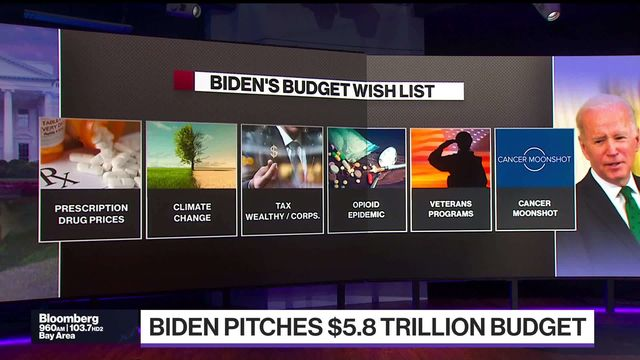
Biden’s $5.8 trillion budget: 9 healthcare takeaways

President Joe Biden proposed a $5.8 trillion budget March 28 for fiscal year 2023, which includes funding for healthcare. 

Nine healthcare takeaways:

1. Pandemic preparedness. The budget calls for a five-year investment of $81.7 billion to plan ahead for future pandemics. The funding would help support research and development of vaccines, improve clinical trial infrastructure and expand domestic manufacturing. 

2. Mental health parity. Under the proposed budget, federal regulators would get the power to levy fines against health plans that violate mental health parity rules. The budget calls for $275 million over 10 years to increase the Labor Department’s capacity to ensure health plans are complying with the requirements and take action against those plans that do not. The budget also proposes funding to bolster the mental healthcare workforce and boost funding for suicide prevention programs. 

3. Vaccines for uninsured adults. The proposed budget calls for establishing a new Vaccines for Adults program that would provide uninsured adults access to recommended vaccines at no cost.

4. Title X funding. The budget proposes providing $400 million in funding for the Title X Family Planning Program, which provides family planning and other healthcare services to low-income individuals.

5. Cancer Moonshot initiative. The budget proposes several investments across the FDA, CDC, National Cancer Institute and Advanced Research Projects Agency for Health to advance President Biden’s Cancer Moonshot initiative. The initiative aims to reduce the cancer death rate by 50 percent over the next 25 years. 

6. Spending to reduce HIV. The proposed budget includes $850 million to reduce new HIV cases by increasing access to HIV prevention services and support services.

7. Veterans Affairs medical care. President Biden’s proposed budget allocates $119 billion, or a 32 percent increase, to medical care for veterans. The money will fully fund inpatient, outpatient, mental health and long-term care services, while also investing in training programs for clinicians to work in the VA.

8. Discretionary funding for HHS. President Biden is asking Congress to approve $127.3 billion in discretionary funding for HHS in fiscal 2023, representing a $26.9 billion increase from the department’s allotment for fiscal 2021.

9. Mandatory spending for the Indian Health Service. The budget request for the Indian Health Service calls for shifting the healthcare agency from discretionary to mandatory funding. The budget calls for $9.1 billion in funding, a 20 percent increase from the amount allocated in fiscal 2021.

Is it the beginning of the end of CON? 

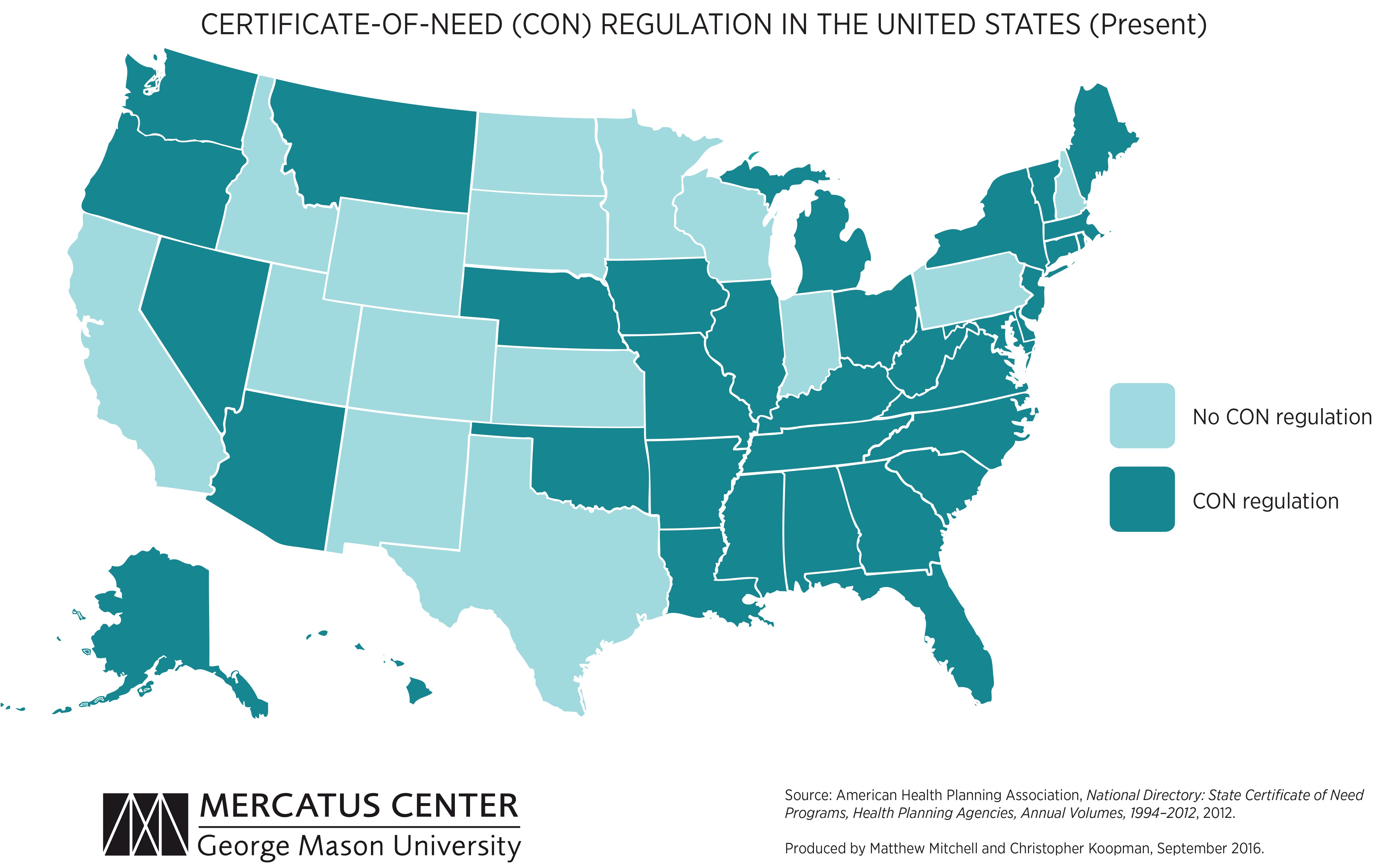
We’re picking up on a growing concern among health system leaders that many states with “certificate of need” (CON) laws in effect are on the cusp of repealing them. CON laws, currently in place in 35 states and the District of Columbia, require organizations that want to construct new or expand existing healthcare facilities to demonstrate community need for the additional capacity, and to obtain approval from state regulatory agencies. While the intent of these laws is to prevent duplicative capacity, reduce unnecessary utilization, and control cost growth, critics claim that CON requirements reduce competition—and free market-minded state legislators, particularly in the South and Midwest, have made them a target. 
 
One of our member systems located in a state where repeal is being debated asked us to facilitate a scenario planning session around CON repeal with system and physician leaders. Executives predicted that key specialty physician groups would quickly move to build their own ambulatory surgery centers, accelerating shift of surgical volume away from the hospital.

The opportunity to expand outpatient procedure and long-term care capacity would also fuel investment from private equity, which have already been picking up in the market. An out-of-market health system might look to build microhospitals, or even a full-service inpatient facility, which would be even more disruptive.

CON repeal wasn’t all downside, however; the team identified adjacent markets they would look to enter as well. The takeaway from our exercise: in addition to the traditional response of flexing lobbying influence to shape legislative change, the system must begin to deliver solutions to consumers that are comprehensive, convenient, and competitively priced—the kind of offerings that might flood the market if CON laws were lifted. 

Providers will no longer be reimbursed for caring for uninsured COVID patients, as funding runs out

Starting next month, the federal government will stop reimbursing hospitals and other providers for the vaccination, testing, and treatment of uninsured COVID-19 patients. So far, about 50K providers have submitted a total of $20B of claims for COVID-related care for the uninsured.

Congress has yet to authorize more funding for this and other COVID relief programs, after stripping $15.6B from the latest government spending package. Though the White House is asking Congress to authorize $22.5B for further COVID aid and surge preparedness, it’s not clear how much of any new funding would go toward reimbursing care for the uninsured.

The Gist: This news comes as US officials expect a rise in cases driven by the Omicron BA.2 subvariant. Hospitals, already struggling with high labor and supply expenses, will face further margin pressures if a future COVID surge brings increased hospitalizations. 

This will be especially true for safety net hospitals, and for those in states which haven’t expanded Medicaid. At the same time, 15M Americans are also at risk of losing Medicaid coverage when the federal government ends the public health emergency. Lower-income patients and the hospitals that treat them have already shouldered COVID’s worst effects, and the funding stalemate risks further worsening their situation.

How do you convince a skeptical public to get a fourth shot?

The expected green light for a second coronavirus booster shot poses a challenge to the Biden administration, which will need to work overtime to convince a public that has largely decided to move on from the COVID-19 pandemic.

Both Pfizer and Moderna have filed for emergency use authorization with the Food and Drug Administration for a fourth dose of their respective vaccines, citing evidence that protection from the third shot has decreased enough to warrant a fourth dose.

Yet the nation’s vaccination and booster rates have dropped to record lows, just as experts and officials are bracing for the possibility of another wave of infections from the BA.2 subvariant of omicron.

The BA.2 version of omicron is much more transmissible than the original variant. Combined with relaxed precautions like indoor masking and waning immunity among those who have not received a vaccine booster, cases have risen sharply in Europe in the past few weeks, and the U.S. could follow shortly. 

The omicron subvariant is responsible for about 35 percent of all cases in the country. In some regions though, like the northeast, it is responsible for the majority of infections.

Federal health officials are reportedly poised to authorize a fourth dose of coronavirus vaccine for adults age 50 and older as soon as this week. A fourth shot is already authorized for the immunocompromised.

But the issues that plagued the administration during the first booster campaign loom large, and officials are likely eager to avoid the same pitfalls. 

Chaotic and at times disparate messages from administration health officials culminated in a complicated set of recommendations about who should be getting booster shots, and why, which experts said helped depress enthusiasm. 

“I think that some of the low uptake of boosters, especially amongst people who would benefit, the high risk population, is because that message has been diluted,” said Amesh Adalja, a senior scholar at the Johns Hopkins Center for Health Security.

But the underlying disagreement about the goal of booster shots has not changed. While there’s widespread agreement that older Americans are much more at risk for severe outcomes, it’s still not clear if younger people will benefit from an additional dose. 

Much of the debate has centered on whether the goal is to prevent people from being hospitalized with COVID-19 or whether the goal is to prevent them from getting sick at all, even if it is milder. 

Anthony Fauci, White House chief medical advisor and the nation’s top infectious disease doctor, said regulators are trying to determine how low protection against hospitalization needs to drop before a booster is warranted.

“So the real open question that we don’t know definitively the answer to, is how long is the durability of protection against severe disease going to last even when the protection against infection diminishes substantially,” Fauci said during a Washington Post event last week. 

“For example, we know that when you get down to a rather low level 30, 40 or so percent of protection against infection, you still have, when you look at hospitalization, a high degree [of protection],” Fauci said.

President Biden last summer promised widespread boosters for all Americans by the end of September, well before the FDA and the Centers for Disease Control and Prevention (CDC) had examined the evidence. 

While officials were careful to say the booster program was contingent on the FDA and CDC giving the green light, scientists inside and outside the government argued there wasn’t enough evidence showing protection against severe illness and hospitalization dropped to levels that warranted a booster.

The CDC initially decided against recommending broad authorization, and instead recommended a booster shot for people over the age of 65, as well as anyone who was at “high risk” of exposure to the virus in the workplace. 

The agency eventually decided to make everyone eligible, but by then much of the damage had been done. Vaccinated Americans have largely shown they are not interested in getting a booster.

According to current CDC data, less than 45 percent of all adults have received a booster shot, but the number rises to about 67 percent of adults age 65 and older. 

Adalja said it makes sense to be proactive and have a plan to get additional booster shots to the older group. But he said the decisions should be left to the scientists, and the health agencies should make decisions independent of the White House. 

Keep the politicians out of it,” Adalja said. “The miscommunications occurred because they made boosters a political issue, not a scientific issue.”

But even if there is a targeted recommendation, a stalled funding request in Congress further complicates matters. The U.S government does not have enough doses on hand to vaccinate everyone who would be eligible for another booster.

The White House says it needs tens of billions of dollars in COVID response funding, which is tied up due to political disagreements. Administration officials say they don’t have enough doses on hand to cover anyone other than the immunocompromised and people aged 65 and older.

But an independent analysis from the Kaiser Family Foundation found the government only has enough vaccine supplies to cover 70 percent of the 65 and older group. 

COVID-19 cases tick up in 10 states

Cases of COVID-19 have increased during the last 14 days in 10 states and Washington, D.C., with the latest additions of the district and Illinois. 

Nationwide, COVID-19 cases decreased 15 percent over the past 14 days, according to HHS data collected by The New York Times. But as the more contagious omicron subvariant BA.2 continues to spread, cases are ticking upward in 10 states and D.C. as of March 25. Cases were moving upward in nine states as of March 24, with D.C. and Illinois reporting increases a day later. 

Here are the 14-day changes for cases in each state reporting an increase, according to HHS data collected by The New York Times:

New York: 44 percent 

Kentucky: 35 percent 

Arkansas: 23 percent 

Colorado: 21 percent 

Connecticut: 18 percent 

Texas: 17 percent 

Massachusetts: 15 percent 

Vermont: 13 percent

Rhode Island: 11 percent

Washington, D.C.: 5 percent

Illinois: 1 percent 

The latest variant proportion estimates from the CDC show the omicron subvariant BA.2 accounts for more than one-third of COVID-19 cases nationwide and more than half of cases in the Northeast. Rhode Island has the highest proportion of BA.2 cases of all states, according to the latest ranking of states by the subvariant’s prevalence.

“If we maintain our preparedness, an increase in cases does not need to be a cause for alarm like it once was,” Jeff Zients, White House COVID-19 response coordinator, said in a March 23 media briefing. “We know what tools we need to fight the virus. Unfortunately, because of congressional action, we’re at risk of not having these tools readily available.” 

President Joe Biden signed into law March 15 a sweeping $1.5 trillion bill that funds the government through September. The legislation did not include COVID-19 funding the White House had requested from Congress due to partisan disagreement about offsetting the funding.

There is no clear path to approval of more COVID-19 funding.

The lack of funding is affecting resources for COVID-19 testing and treatment. The Health Resources and Services Administration stopped accepting providers’ claims for COVID-19 testing and treatment of the uninsured March 22 due to a lack of sufficient funds. The federal government is also cutting back shipments of monoclonal antibody treatments to states by 30 percent, and the U.S. supply of those treatments could run out as soon as May.