Fewer than 10% of primary care practices have stabilized operations amid COVID-19 pandemic

https://www.fiercehealthcare.com/practices/fewer-than-10-primary-care-practices-have-stabilized-operations-amid-covid-19-pandemic?mkt_tok=eyJpIjoiWTJGaE1qTTRaalpsT1dGayIsInQiOiJTNWFxb3VcL3J3ZmE4ZWV0bFwvOGJCYUc0Ukd3TWp4WlM1SzBzT01aeVJIUGlsSWkwNTlVajJxekJqUUsrcWoxZ0IwTUNqVlhTWVJLQmZkSk1XNGtKVEdCOWg3NmRWeFdldFpsSmlONnFvTTFGQ2l1bzQ4S3ZqNWpoaUx2d1pHaSs1In0%3D

Fewer than 10% of primary care practices have stabilized ...

Four months into the COVID-19 pandemic, fewer than 10% of U.S. primary care practices have been able to stabilize operations.

Nearly 9 in 10 primary care practices continue to face significant difficulties with COVID-19, including obtaining medical supplies, meeting the increasing health needs of their patients, and finding sufficient resources to remain operational, according to a recent survey of close to 600 primary care clinicians in 46 states.

Only 13% of primary care clinicians say they are adapting to a “new normal” in the protracted pandemic, the survey found.

More than four months into the pandemic and at a time when 39 states are experiencing an increase of COVID-19 cases, fewer than 4 in 10 clinicians feel confident and safe with their access to personal protective equipment, according to the survey from the Larry A. Green Center in partnership with the Primary Care Collaborative, which was conducted July 10 to July 13.

Among the primary care clinicians surveyed, 11% report that staff in their practice have quit in the last four weeks over safety concerns.

A primary care provider in Ohio said this: “The ‘I can do 4-6 weeks of this’ transition to ‘this feels like a new/permanent normal’ is crushing and demoralizing. Ways to build morale when everyone is at a computer workstation away from other staff (and patients) feels impossible.”

“In the first few months of the pandemic, the country pulled together to stop the spread of the virus, and it seemed like we were making progress. Primary care clinicians and practices were working hard, against tremendous challenges,” said Rebecca Etz, Ph.D., co-director of The Larry A. Green Center in a statement.

“But now the country is backsliding, and it’s clear that primary care doesn’t have enough strength to deal with the rising number of cases. If primary care were a COVID-19 patient, it would be flat on its back,” Etz said.

The survey conducted by the Larry A. Green Center is part of an ongoing series looking at the attitudes of primary care clinicians and patients during the COVID-19 pandemic and the abilities of practices to meet patients’ needs.

Close to 40% of primary care providers report they are maxed out with mental exhaustion and 18% say they spend each week wondering if their practice or job will still be there next week.

In addition to feeling stressed, clinicians and their practices are also experiencing upheaval. The survey found that 22% of clinicians report skipped or deferred salaries, and 78% report preventive and chronic care is being deferred or delayed by patients.

Primary care clinicians report that 42% of in-person volume is down but overall contact with patients is high, while 39% report not being able to bill for the majority of work delivered, the survey found.

“Given the rapidly rising infection rates and persistent lack of PPE, more than a third of primary care clinicians are reporting feeling unsafe at the office, and 20% are cutting back on face-to-face visits while doing more remote outreach,” said Ann Greiner, president and CEO of the Primary Care Collaborative in a statement.

Greiner said this is a clear signal that payers must advance or retain parity for telehealth and telephonic calls.

“It also is a clarion call to move to a new payment system that doesn’t rely on face-to-face visits and that is prospective so practices can better manage patient care,” she said.

Providers say they need more support from private insurers, particularly when it comes to reimbursing for telehealth and telephone visits. 

According to the survey, a primary care doctor in Illinois said, “Recently told we would not be able to conduct telephone visits due to lack of reimbursement. I work in a low-income Medicare population which has low health literacy and no technology literacy. We were 80% telephone and 20% Zoom and in-office. This further exemplifies the extreme health care disparities in the U.S.”


What ‘Racism Is a Public Health Issue’ Means

https://www.smithsonianmag.com/science-nature/what-racism-public-health-issue-means-180975326/?utm_source=smithsoniandaily&utm_medium=email&utm_campaign=20200720-daily-responsive&spMailingID=43001584&spUserID=MTA5MDI1MDg0MjgxOQS2&spJobID=1801530184&spReportId=MTgwMTUzMDE4NAS2&fbclid=IwAR027OjpNcyZKM6Jd5aTYhgVaTzaO5lBqI4hCl1xsrKgQRL1bFYH538YIMA

What 'Racism Is a Public Health Issue' Means | Science ...

Epidemiologist Sharrelle Barber discusses the racial inequalities that exist for COVID-19 and many other health conditions.

Throughout the COVID-19 pandemic, whether cases are flaring up, slowing to a simmer, or back on the rise in areas across the United States, the data makes one fact apparent: The viral disease has disproportionally sickened and killed marginalized communities. A New York Times analysis of data from almost 1,000 counties that reported racial breakdowns of COVID-19 cases and fatalities revealed that, compared to white Americans, African Americans and Hispanics were three times more likely to experience and two times more likely to die from the illness. The Navajo Nation has, per capita, more confirmed cases and deaths than any of the 50 states.

Many factors, like access to healthcare and testing, household size, or essential worker status, likely contribute to the pandemic’s outsized toll on communities of color, but experts see a common root: the far-reaching effects of systemic racism.

That racism would have such an insidious effect on health isn’t a revelation to social epidemiologists. For decades, public health experts have discussed “weathering,” or the toll that repeated stressors experienced by people of color take on their health. Studies have demonstrated the link between such chronic stress and high blood pressure, the increased maternal mortality rate among black and indigenous women, and the elevated prevalence of diabetes in black, Latino and especially Native American populations. The pandemic has laid bare these inequities. At the same time, outcry over systemic racism and police brutality against African Americans has roiled the nation, and the phrase, “Racism is a public health issue” has become an internet refrain.

What exactly is the nebulous concept of “public health”? According to Sharrelle Barber, a Drexel University assistant professor of epidemiology, the concept goes beyond the healthcare setting to take a more holistic look at health in different populations. “The charge of public health,” Barber told Smithsonian, “is really to prevent disease, prevent death, and you prevent those things by having a proper diagnosis of why certain groups might have higher rates of mortality, higher rates of morbidity, et cetera.”

Below is a lightly edited transcript of Smithsonian’s conversation with Barber, who studies how anti-black racism impacts health, about the many ways in which racism is a public health crisis:

When people say, “Racism is a public health problem,” what, in broad strokes, do they mean?

We’ve been observing racial inequities in health for decades in this country. W.E.B. DuBois, who was a sociologist, in The Philadelphia Negro showed mortality rates by race and where people lived in the city of Philadelphia at the turn of the 20th century and found striking inequalities based on race. Fast forward to 1985, 35 years ago, and we have the [Department of Health and Human Services-sponsored] Heckler Report, one of the most comprehensive studies the country had undertaken, which again found striking inequalities across a wide range of health outcomes: infant mortality, cancer, stroke, et cetera.

There are various explanations for why these racial inequalities exist, and a lot of those have erroneously focused on either biology or genetics or behavioral aspects, but it’s important to examine the root causes of those inequities, which is structural racism…Racism is a public health problem, meaning racism is at the root of the inequities in health that we see, particularly for blacks in this country. So whether it’s housing, criminal justice, education, wealth, economic opportunities, healthcare, all of these interlocking systems of racism really are the main fundamental drivers of the racial inequities that we see among black Americans.

What are some specific factors or policies that have set the foundations for these health inequities?

Any conversation about racial inequities has to start with a conversation about slavery. We have to go back 400-plus years and really recognize the ways in which the enslavement of African people and people of African descent is the initial insult that set up the system of racism within this country. One of the major drivers that I actually study is the link between racial residential segregation, particularly in our large urban areas, and health inequities. Racial residential segregation is rooted in racist policies that date back at least to the 1930s. Practices such as redlining, which devalued black communities and led to the disinvestment in black communities, were then propped up by practices and policies at the local, the state and federal level, for example, things like restrictive covenants, where blacks were not allowed to move into certain communities; racial terror, where blacks were literally intimidated and run out of white communities when they tried to or attempted to move into better communities; and so many other policies. Even when you get the 1968 Fair Housing Act, the system finds a way to reinvent itself to still perpetuate and maintain racism.

Within segregated communities, you have so many adverse exposures, like poor quality housing or lack of access to affordable, healthy foods, lack of access to quality healthcare, and the list goes on. The chronic stressors within these communities are compounded in segregated communities, which then can lead to a wide array of health outcomes that are detrimental. So for example, in the city of Philadelphia, there’s been work that has shown upwards of a 15-year life expectancy difference between racially and economically segregated communities, black communities and wealthier white communities.

I imagine that sometimes you might get pushback from people who ask about whether you can separate the effects of socioeconomic status and race in these differences in health outcomes.

Yeah, that’s a false dichotomy in some ways. Racism does lead to, in many aspects, lower income, education, wealth. So they’re inextricably linked. However, racism as a system goes beyond socioeconomic status. If we look at what we see in terms of racial inequities in maternal mortality for black women, they are three times times more likely to die compared to white women. This disparity or this inequity is actually seen for black women who have a college degree or more. The disparity is wide, even when you control for socioeconomic status.

Let’s talk about the COVID-19 pandemic. How does racism shape the current health crisis?

The COVID-19 pandemic has literally just exposed what me and so many of my colleagues have known for decades, but it just puts it in such sharp focus. When you see the disproportionate impact COVID-19 is having, particularly for blacks, but also we’re seeing emerging data on Indigenous folks, it is just laying bare the ways racism is operating in this moment to produce those inequities.

Essential workers who had to continue to work during periods of stay at home orders across the country were disproportionately black and Latino. These are also often low wage workers. They weren’t given personal protective equipment, paid sick leave, hazard pay, and really had to choose between being exposed and protecting themselves and having an income during this period. So that’s one way racism operates.

Then we know that those individuals aren’t isolated, that they return to homes that often are crowded because of the lack of affordable housing. Again, another system of racism that compounds the effect. Then you think about places like Flint, Michigan, or places that don’t have access to clean water. When we were telling people, “Wash your hands, social distance,” all of those things, there were people who literally could not adhere to those basic public health prevention measures and still can’t.

So many things were working in tandem together to then increase the risk, and what was frustrating for myself and colleagues was this kind of “blame the victim” narrative that emerged at the very onset, when we saw the racial disparities emerge and folks were saying, “Blacks aren’t washing their hands,” or, “Blacks need to eat better so they have better outcomes in terms of comorbidities and underlying chronic conditions,” when again, all of that’s structured by racism. To go back to your original question, that’s why racism is a public health issue and fundamental, because in the middle of a pandemic, the worst public health crisis in a century, we’re seeing racism operate and racism produce the inequities in this pandemic, and those inequities are striking…

If we had a structural racism lens going into this pandemic, perhaps we would have done things differently. For example, get testing to communities that we know are going to be more susceptible to the virus. We would have done that early on as opposed to waiting, or we would have said, “Well, folks need to have personal protective equipment and paid sick leave and hazard pay.” We would have made that a priority…

The framing [of systemic racism as a public health concern] also dictates the solutions you come up with in order to actually prevent death and suffering. But if your orientation is, “Oh, it’s a personal responsibility” or “It’s behavioral,” then you create messages to black communities to say, “Wash your hands; wear a mask,” and all of these other things that, again, do not address the fundamental structural drivers of the inequities. That’s why it’s a public health issue, because if public health is designed to prevent disease, prevent suffering, then you have to address racism to have the biggest impact.

Can you talk about how police brutality fits into the public health picture?

We have to deal with the literal deaths that happen at the hands of the police, because of a system that is rooted in slavery, but I also think we have to pay attention to the collective trauma that it causes to black communities. In the midst of a pandemic that’s already traumatic to watch the deaths due to COVID-19, [communities] then have to bear witness to literal lynchings and murders and that trauma. There’s really good scholarship on the kind of spillover effects of police brutality that impact the lives of whole communities because of the trauma of having to witness this kind of violence that then does not get met with any kind of justice.

It reinforces this idea that one, our lives are disposable, that black lives really don’t matter, because the whole system upholds this kind of violence and this kind of oppression, particularly for black folks. I’ve done studies on allostatic load [the wear and tear on the body as a result of chronic stress] and what it does, the dysregulation that happens. So just think about living in a society that’s a constant source of stress, chronic stress, and how that wreaks havoc on blacks and other marginalized racial groups as well.


6 months in: Following the flow of CARES hospital funding

https://www.healthcaredive.com/news/6-months-cares-hospital-funding-covid/581506/

Congress has allocated $175 billion to help providers respond to the COVID-19 crisis, but HHS has been hit with multiple complaints about distribution as that money goes out the door.

The COVID-19 pandemic created massive upheaval for the nation’s healthcare system still evident six months after the U.S. declared it a national public health crisis.

The virus continues to surge, reaching new heights with more than 4 million confirmed cases and more than 143,000 deaths. No other country has experienced more deaths or cases than the U.S., data with Johns Hopkins Coronavirus Research Center show.

Parts of the country are facing the prospect of another lockdown as cases overwhelm healthcare facilities.

Forced into quickly responding to the pandemic, health systems have taken substantial financial hits. While the impact has been far from even, one estimate from the American Hospital Association estimates the nation’s health systems’ financial losses in the first four months of the outbreak reached nearly $203 billion.

To help staunch the free fall, Congress earmarked $175 billion in two pieces of legislation in an attempt to keep providers afloat as the virus wreaked havoc on the economy. The majority of that was from the Coronavirus Aid, Relief, and Economic Security Act passed in late March.

Yet, about 65% of the money has yet to go out to providers, with just $61 billion delivered and attested to by providers by mid-July, a senior HHS official told Healthcare Dive.

Still, with no end in sight for the pandemic, at least on U.S. shores, providers are ramping up lobbying in an effort to secure more funding as case counts soar. AHA is asking for another $100 billion in the next round of congressional relief now under discussion.

Many healthcare providers stopped profitable elective procedures as stay-at-home orders blanketed parts of the country to contain the spread of the disease. This also allowed providers to conserve much needed resources such as personal protective equipment that proved hard to procure amid the crisis.

But revenue quickly plummeted as providers delayed care in preparing for a surge of COVID-19 patients.

“The funding hospitals and health systems have received to date, while helpful, is just a small fraction of what we estimate they will lose this year,” Lisa Kidder Hrobsky, group vice president of federal relations for AHA, told Healthcare Dive in a statement.

Where did the money go?

So far, HHS has outlined a spending plan for $125 billion of the $175 billion in provider relief funds.

The program has been met with an array of criticism, including whether the distribution of funds went to those most in need and whether the fine print has deterred providers from taking a piece of the massive financial package.

https://www.datawrapper.de/_/7PvZ4/

In response to those critiques, HHS has sent out additional federal funding in more targeted waves since April.

The first tranche of money — $30 billion in April — was designed to get out the door quickly, as providers were struggling. From there, HHS has attempted to pinpoint the money to certain providers and geographic areas to appease the needs of various providers.

To even out distribution, HHS began sending targeted funding, such as to hospitals overrun with COVID-19 patients, mainly in New York and other hard hit areas. The agency also funneled money to rural providers and skilled-nursing facilities, among others.

After HHS was met with the argument that wealthier hospitals, or those that had larger shares of privately-insured patients, received more funding, it allocated money for those taking care of the neediest.

At the same time, as the agency doles out the rest of the $175 billion, it has promised to reimburse providers for uninsured COVID-19 patients. That has raised questions about whether HHS will have enough for uninsured care and additional tranches.  

However, a senior HHS official said it has only paid out $340 million to providers for uninsured COVID-19 patients, less than what they had expected. So low, that HHS has been trying to encourage providers to apply for such funding.

Timeline of HHS funding

  • AprilHHS​ released $30 billion from the first tranche of money based on a provider’s 2018 Medicare fee-for-service revenue. By the end of April, an additional $20 billion from general distribution was released, for a total of $50 billion.
  • MayMore than $26 billion was sent to rural, skilled-nursing facilities and those hit hard by the virus.
  • JuneHHS released an additional $25 billion earmarked for safety-net providers and those that cater to large populations of Medicaid patients.
  • JulyHHS​ said it would release another $4 billion for safety-net providers and certain specialty rural providers missed in earlier rounds, along with another $10 billion for those in hot spots.

Fears eased over fine print

Some providers declined or returned funding they had received, worried about the fine print or the terms and conditions, like how to appropriately spend the money.

However, HHS has relaxed some of those conditions, easing the fears of some.

For a lot of providers, it was a sigh of relief, causing many to say, “‘Great, we can feel comfortable participating in this program’,” Tim Fry, an attorney with McGuireWoods, told Healthcare Dive.

In particular, HHS recently said that if at the end of this pandemic, providers didn’t use all of the funding for lost revenue or healthcare related expenses, there will be a process to return the money. Initially, providers expressed concern that it was an all-or-nothing program.

Plus, HHS provided clarity on how the money can be used, stipulating that the funds go to healthcare-related expenses or lost revenue attributable to the coronavirus. HHS has provided more guidance and examples of appropriate uses, a relief to many, Fry said.

Earlier, health systems were overwhelmed by the administrative burden and fearful over how to appropriately spend the money without running afoul of new rules.

“We are not infinitely flexible around those requirements, but when we hear from providers of issues that they’re having — and we think we can be reasonably [accommodating], we try to be,” a senior HHS official said.


One question still dogs Administration: Why not try harder to solve the coronavirus crisis?

https://www.washingtonpost.com/politics/trump-not-solve-coronavirus-crisis/2020/07/26/7fca9a92-cdb0-11ea-91f1-28aca4d833a0_story.html?utm_source=ActiveCampaign&utm_medium=email&utm_content=Republicans+Roll+Out+%241+Trillion+Coronavirus+Relief+Plan&utm_campaign=TFT+Newsletter+07272020

Questions to ask students in class to help them deal with the ...

Both President Trump’s advisers and operatives laboring to defeat him increasingly agree on one thing: The best way for him to regain his political footing is to wrest control of the novel coronavirus.

In the six months since the deadly contagion was first reported in the United States, Trump has demanded the economy reopen and children return to school, all while scrambling to salvage his reelection campaign.

But allies and opponents agree he has failed at the one task that could help him achieve all his goals — confronting the pandemic with a clear strategy and consistent leadership.

Trump’s shortcomings have perplexed even some of his most loyal allies, who increasingly have wondered why the president has not at least pantomimed a sense of command over the crisis or conveyed compassion for the millions of Americans hurt by it.

People close to Trump, many speaking on the condition of anonymity to share candid discussions and impressions, say the president’s inability to wholly address the crisis is due to his almost pathological unwillingness to admit error; a positive feedback loop of overly rosy assessments and data from advisers and Fox News; and a penchant for magical thinking that prevented him from fully engaging with the pandemic.

In recent weeks, with more than 145,000 Americans now dead from the virus, the White House has attempted to overhaul — or at least rejigger — its approach. The administration has revived news briefings led by Trump and presented the president with projections showing how the virus is now decimating Republican states full of his voters. Officials have also set up a separate, smaller coronavirus working group led by Deborah Birx, the White House coronavirus response coordinator, along with Trump son-in-law and senior adviser Jared Kushner.

For many, however, the question is why Trump did not adjust sooner, realizing that the path to nearly all his goals — from an economic recovery to an electoral victory in November — runs directly through a healthy nation in control of the virus.

“The irony is that if he’d just performed with minimal competence and just mouthed words about national unity, he actually could be in a pretty strong position right now, where the economy is reopening, where jobs are coming back,” said Ben Rhodes, a deputy national security adviser to former president Barack Obama. “And he just could not do it.”

Many public health experts agree.

“The best thing that we can do to set our economy up for success and rebounding from the last few months is making sure our outbreak is in a good place,” said Caitlin Rivers, an epidemiologist at the Johns Hopkins Center for Health Security. “People are not going to feel comfortable returning to activities in the community — even if it’s allowed from a policy perspective — if they don’t feel the outbreak is under control.”

Some aides and outside advisers have tried to stress to Trump and others in his orbit that before he could move on to reopening the economy and getting the country back to work — and life — he needed to grapple with the reality of the virus.

But until recently, the president was largely unreceptive to that message, they said, not fully grasping the magnitude of the pandemic — and overly preoccupied with his own sense of grievance, beginning many conversations casting himself as the blameless victim of the crisis.

In the past couple of weeks, senior advisers began presenting Trump with maps and data showing spikes in coronavirus cases among “our people” in Republican states, a senior administration official said. They also shared projections predicting that virus surges could soon hit politically important states in the Midwest — including Michigan, Minnesota and Wisconsin, the official said.

This new approach seemed to resonate, as he hewed closely to pre-scripted remarks in a trio of coronavirus briefings last week.

“This could have been stopped. It could have been stopped quickly and easily. But for some reason, it wasn’t, and we’ll figure out what that reason was,” Trump said Thursday, seeming to simultaneously acknowledge his predicament while trying to assign blame elsewhere.

In addition to Birx and Kushner, the new coronavirus group guiding Trump includes Kushner advisers Adam Boehler and Brad Smith, according to two administration officials. Marc Short, chief of staff to Vice President Pence, also attends, along with Alyssa Farah, the White House director of strategic communications, and Stephen Miller, Trump’s senior policy adviser.

The working group’s goal is to meet every day, for no more than 30 minutes. It views its mission as half focused on the government’s response to the pandemic and half focused on the White House’s public message, the officials said.

White House spokeswoman Sarah Matthews defended the president’s handling of the crisis, saying he acted “early and decisively.”

“The president has also led an historic, whole-of-America coronavirus response — resulting in 100,000 ventilators procured, sourcing critical PPE for our front-line heroes, and a robust testing regime resulting in more than double the number of tests than any other country in the world,” Matthews said in an email statement. “His message has been consistent and his strong leadership will continue as we safely reopen the economy, expedite vaccine and therapeutics developments, and continue to see an encouraging decline in the U.S. mortality rate.”

For some, however, the additional effort is too little and far too late.

“This is a situation where if Trump did his job and put in the work to combat the health crisis, it would solve the economic crisis, and it’s an instance where the correct governing move is also the correct political move, and Trump is doing the opposite,” said Josh Schwerin, a senior strategist for Priorities USA, a super PAC supporting former vice president Joe Biden, the presumptive Democratic nominee.

Other anti-Trump operatives agree, saying he could make up lost ground and make his race with Biden far more competitive with a simple course correction.

“He’s staring in the mirror at night: That’s who can fix his political problem,” said John Weaver, one of the Republican strategists leading the Lincoln Project, a group known for its anti-Trump ads.

One of Trump’s biggest obstacles is his refusal to take responsibility and admit error.

In mid-March, as many of the nation’s businesses were shuttering early in the pandemic, Trump proclaimed in the Rose Garden, “I don’t take responsibility at all.” Those six words have neatly summed up Trump’s approach not only to the pandemic, but also to many of the other crises he has faced during his presidency.

“His operating style is to double- and triple-down on positions and to never, ever admit he’s wrong about anything,” said Anthony Scaramucci, a longtime Trump associate who briefly served as White House communications director and is now a critic of the president. “His 50-year track record is to bulldog through whatever he’s doing, whether it’s Atlantic City, which was a failure, or the Plaza Hotel, which was a failure, or Eastern Airlines, which was a failure. He can never just say, ‘I got it wrong and let’s try over again.’ ”

Another self-imposed hurdle for Trump has been his reliance on a positive feedback loop. Rather than sit for briefings by infectious-disease director Anthony S. Fauci and other medical experts, the president consumes much of his information about the virus from Fox News and other conservative media sources, where his on-air boosters put a positive spin on developments.

Consider one example from last week. About 6:15 a.m. that Tuesday on “Fox & Friends,” co-host Steve Doocy told viewers, “There is a lot of good news out there regarding the development of vaccines and therapeutics.” The president appears to have been watching because, 16 minutes later, he tweeted from his iPhone, “Tremendous progress being made on Vaccines and Therapeutics!!!”

It is not just pro-Trump media figures feeding Trump positive information. White House staffers have long made upbeat assessments and projections in an effort to satisfy the president. This, in turn, makes Trump further distrustful of the presentations of scientists and reports in the mainstream news media, according to his advisers and other people familiar with the president’s approach.

This dynamic was on display during an in-depth interview with “Fox News Sunday” anchor Chris Wallace that aired July 19. After the president claimed the United States had one of the lowest coronavirus mortality rates in the world, Wallace interjected to fact-check him: “It’s not true, sir.”

Agitated by Wallace’s persistence, Trump turned off-camera to call for White House press secretary Kayleigh McEnany. “Can you please get me the mortality rates?” he asked. Turning to Wallace, he said, “Kayleigh’s right here. I heard we have one of the lowest, maybe the lowest mortality rate anywhere in the world.”

Trump, relying on cherry-picked White House data, insisted that the United States was “number one low mortality fatality rates.”

Fox then interrupted the taped interview to air a voice-over from Wallace explaining that the White House chart showed Italy and Spain doing worse than the United States but countries like Brazil and South Korea doing better — and other countries that are doing better, including Russia, were not included on the White House chart. By contrast, worldwide data compiled by Johns Hopkins University shows the U.S. mortality rate is far from the lowest.

Trump is also predisposed to magical thinking — an unerring belief, at an almost elemental level, that he can will his goals into existence, through sheer force of personality, according to outside advisers and former White House officials.

The trait is one he shares with his late father and family patriarch, Fred Trump. In her best-selling memoir, “Too Much and Never Enough,” the president’s niece, Mary L. Trump, writes that Fred Trump was instantly taken by the “shallow message of self-sufficiency” he encountered in Norman Vincent Peale’s 1952 bestseller, “The Power of Positive Thinking.”

Some close to the president say that when Trump claims, as he did twice last week, that the virus will simply “disappear,” there is a part of him that actually believes the assessment, making him more reluctant to take the practical steps required to combat the pandemic.

Until recently, Trump also refused to fully engage with the magnitude of the crisis. After appointing Pence head of the coronavirus task force, the president gradually stopped attending task force briefings and was lulled into a false sense of assurance that the group had the virus under control, according to one person familiar with the dynamic.

Trump also maintained such a sense of grievance — about how the virus was personally hurting him, his presidency and his reelection prospects — that aides recount spending valuable time listening to his gripes, rather than focusing on crafting a national strategy to fight the pandemic.

Nonetheless, some White House aides insist the president has always been focused on aggressively responding to the virus. And some advisers are still optimistic that if Trump — who trails Biden in national polls — can sustain at least a modicum of self-discipline and demonstrate real focus on the pandemic, he can still prevail on Election Day.

Others are less certain, including critics who say Trump squandered an obvious solution — good governance and leadership — as the simplest means of achieving his other goals.

“There is quite a high likelihood where people look back and think between February and April was when Trump burned down his own presidency, and he can’t recover from it,” Rhodes said. “The decisions he made then ensured he’d be in his endless cycle of covid spikes and economic disruption because he couldn’t exhibit any medium- or long-term thinking.”


Pandemic Proves Why Leaders Must Protect Americans From Junk Insurance Plans

https://morningconsult.com/opinions/pandemic-proves-why-leaders-must-protect-americans-from-junk-insurance-plans/?utm_source=ActiveCampaign&utm_medium=email&utm_content=Republicans+Roll+Out+%241+Trillion+Coronavirus+Relief+Plan&utm_campaign=TFT+Newsletter+07272020

Cartoon – Short Term Health Insurance | HENRY KOTULA

The coronavirus pandemic hit the nation hard and fast, infecting Americans from coast to coast, overwhelming health care systems and wreaking havoc on the economy. Those with pre-existing conditions – like diabetes and cardiovascular disease – are more vulnerable to the deadly virus. Americans have higher rates of these chronic conditions than other countries, in part because so many people live without health insurance or have shoddy coverage. This has become increasingly worse over the last four years as underlying health coverage has shrunken for the virus’s hardest hit victims: Black Americans, Native Americans and people of color.

Of the hundreds of thousands of Americans now recovering from COVID-19, many will undoubtedly have new chronic conditions, like lasting lung damage. This will be on top of the pre-existing conditions many who were predisposed to coronavirus already had. Record job losses in the wake of the pandemic have resulted in the loss of employer-sponsored coverage for more than 5 million Americans who are now on the hunt for new, affordable health insurance plans.

This presents the perfect storm for junk insurance plans – short-term limited duration insurance plans – that allow discrimination based on pre-existing conditions, expose consumers to financial risk and provide inadequate coverage. STLDIs are more dangerous now than ever in our new COVID-19 reality. Let’s be clear: These junk insurance plans – touted by the Trump administration and supported through taxpayer dollars – are not the answer. It is time for our leaders to put back the limitations on how long they can be used.

As their name suggests, short-term limited duration plans are meant to be used temporarily to bridge short-term gaps in coverage that arise from a job loss or other extenuating circumstance. However, new federal rules under the Trump administration have allowed the coverage period of STLDI plans to expand from six to 12 months. The administration has also promoted these plans to states as being eligible for federal subsidies, meaning our tax dollars help pay for them. President Donald Trump himself has touted these plans for being more affordable than Obamacare, but that is because they lack the same protections and do not meet minimum essential coverage standards under the law.

That is what makes these plans so dangerous. Though they tend to be less expensive than Affordable Care Act plans, they leave consumers vulnerable to unanticipated out-of-pocket costs by offering bare-bones coverage. Unlike ACA plans, STLDI plans can exclude coverage for pre-existing conditions, do not cover the cost of prescription drugs, have annual or lifetime maximums on covered services, and are not required to cover preventive services like cancer screenings or maternity care.

The lower price tag may lure consumers suffering financially during the pandemic, but they are high risk for those who do not fully understand what they are buying. Without carefully reading the fine print, many may not know before purchasing that STLDI plans are exempt from ACA rules as well as regulations for insurers recently passed in the Families First Coronavirus Response Act and the Coronavirus Aid, Relief, and Economic Security Act. We have already seen the pandemic exacerbate existing health inequalities in America, and now these plans expose consumers, especially low-income individuals and those with chronic conditions, to more discrimination and financial ruin.

The Department of Health and Human Services has already acknowledged that these plans fall short. In fact, the government is having to cover the cost of COVID-19 testing for people with STLDI plans, classifying them as “uninsured.” Yet, they will not cover the cost of COVID-19 treatment, meaning those with STLDI plans could face bills in the thousands of dollars, considering the average cost to treat a hospitalized coronavirus patient is $30,000.

Consumers for Quality Care, a coalition of advocates and former policy makers which provides a voice for patients in the health care debate, recently sent a letter to HHS Secretary Alex Azar and Centers for Medicare & Medicaid Services Administrator Seema Verma asking that they protect consumers from these dangerous plans.

This pandemic has laid bare how dangerously unprepared America’s health care system is for a large-scale public health crisis. People needed high-quality insurance coverage before coronavirus hit, and they will need it long after the pandemic subsides. Let this be a lesson to the Trump administration – it is time to stop backing junk insurance plans and remove them from the open market. If our leaders fail to act, the lives and financial well-being of millions of Americans are at stake.


Administration’s talking health care again, with 2020 in mind

https://www.politico.com/news/2020/07/26/trumps-health-care-again-with-2020-election-381473?utm_source=ActiveCampaign&utm_medium=email&utm_content=Republicans+Roll+Out+%241+Trillion+Coronavirus+Relief+Plan&utm_campaign=TFT+Newsletter+07272020

Tell us: How has Trump handled healthcare in his first 100 days ...

Polls show voters say Joe Biden would handle the issue better. And Trump is running short on options to make concrete changes before November.

President Donald Trump is suddenly talking about health care again.

He signed several executive orders on drug pricing on Friday. He vowed to unveil some new health plan by the end of next week, although he hasn’t provided specifics or an explanation of how he’ll do it. His aides are touting a speech in which Trump will lay out his health care vision. White House counselor to the president Kellyanne Conway has been calling Trump “the health care president.”

Yet it’s unlikely to amount to much in terms of policy ahead of the election. There’s almost no chance Congress will enact any legislation on the issue before November and policy specialists say the executive orders in question will make changes only at the margins — if they make any changes at all. Trump has also previously vowed to roll out a grand health care plan without following through.

That leaves Trump with mostly rhetorical options — even if he insists otherwise — cognizant that voters consistently rank health care as a top priority and say Joe Biden, Trump’s presumptive 2020 rival, would handle the issue better than the president. Meanwhile, Trump is running for reelection having not replaced Obamacare or presented an alternative — all while urging the Supreme Court to overturn the decade-old health law. And millions of Americans are currently losing their health insurance as the coronavirus-gripped economy sputters.

“I think politically, the main objective will be to have something he can call a plan, but it will be smaller than a plan. Just something that he can talk about,” said Drew Altman, president and CEO of the Kaiser Family Foundation, a nonpartisan health policy organization. “But it’s almost inconceivable that anything can be delivered legislatively before the election.”

Trump has long stumped on his pledges to kill Obamacare, the law his predecessor implemented that expanded Americans’ access to health insurance, set baseline standards for coverage, introduced penalties for not having insurance and guaranteed coverage for preexisting conditions. But conservatives say the law introduced too many mandates and drove up costs.

But after winning election in 2016, Trump failed to overturn the law in Congress — or even offer an agreed upon alternative to the law — despite holding the majority in both chambers on Capitol Hill. Democrats then retook the House in the 2018 midterms, essentially ending any chances the law, formally known as the Affordable Care Act, would be repealed.

Even some conservatives said the ongoing failure to present a concrete replacement plan is helping the Democrats politically.

Republicans, said Joe Antos, a health expert at the conservative American Enterprise Institute, “spent basically 2010 to today arguing that the ACA is no good. After 10 years, clearly there are some problems with starting all over again. I haven’t detected very strong interest, at least among elected officials, in revisiting that.”

But the coronavirus pandemic has added pressure to address health care costs, and Trump has lagged behind Biden on his handling of the issue in polls. Fifty seven percent of registered voters recently polled by Quinnipiac said Biden would do a better job on health care than Trump, while only 35 percent approved of Trump’s handling of health care as president. And on the issue of affordability, a CNBC poll found 55 percent of battleground voters favored Biden and the Democrats, compared with 45 percent who preferred Trump and the Republicans.

“At this point, there are two huge issues, jobs and the economy, and health care, i.e., the coronavirus. If anything that’s simply been magnified,” said David Winston, a Republican pollster and strategist. “Given the fact that it’s one of the top issues, it’s not like there’s a choice but to talk about it. If candidates aren’t making statements and proposing solutions around that, it’s a requirement. Both candidates have to address it.”

Biden has campaigned on expanding Obamacare while also promising to implement a “public option” similar to Medicare, which is government-run health insurance for seniors. On drug pricing, he and Trump embrace some of the same ideas, like allowing the safe importation of drugs from other countries where they are cheaper. Biden also supports direct Medicare negotiation of drug prices, a Democratic priority that Trump supported during the 2016 campaign before reversing course.

“Donald Trump has spent his entire presidency working to take health care away from tens of millions of Americans and gut coverage for preexisting conditions,” said Andrew Bates, a Biden campaign spokesman. “If the Trump campaign wants to continue their pattern of highlighting the worst possible contrasts for Donald Trump, we certainly won’t stop them.”

The Trump administration insists it can point to several health care victories during Trump’s term.

Trump frequently notes the removal of the penalty for Americans who do not purchase insurance as a major victory, falsely claiming it is equivalent to overturning Obamacare.

Trump also signed an executive order last year to fight kidney disease to encourage home dialysis and increase the amount of kidney transplants, and he expanded telehealth medicine during the pandemic.

More recently, the U.S. Court of Appeals for the District of Columbia upheld a Trump administration rule expanding the availability of short-term health plans, which Trump has touted as an alternative to Obamacare but Democrats deride as “junk.” The plans are typically cheaper than Obamacare coverage because they don’t provide the same level of benefits or consumer protections for preexisting conditions.

A federal judge in June similarly upheld another Trump administration rule requiring hospitals to disclose the prices they have negotiated with insurers. Price transparency in the health care system has long been a significant issue, with Americans rarely having clarity over how much their treatments will cost ahead of time. Trump called the win “bigger than health care itself,” in an apparent reference to Obamacare. It’s unclear whether transparency will force down health care prices, and hospitals opposing the rule have appealed the judge’s decision.

And on Friday at the White House, Trump held an event to sign four executive orders aimed at slashing drug pricing. The move aimed to tackle a largely unfulfilled signature campaign promise — that he would stop pharmaceutical companies from “getting away with murder.”

“We are ending the sellouts, betrayals and broken promises from Washington,” Trump said Friday.“You have a lot of broken promises from Washington.”

But the orders appeared largely symbolic for now, as they were not immediately enforceable, contained notable caveats and may not be completed before the election anyway. For instance, an order requiring drugmakers to pass along any discounts directly to seniors requires the health secretary to confirm the plan won’t result in higher premiums or drive up federal spending. But the White House had shelved that plan last summer over worries the move might hike seniors’ Medicare premiums ahead of the election and cost taxpayers $180 billion over the next decade.

Conway disputed that Trump had not made progress on issues like drug pricing.

“President Trump is directing the development of therapeutics and vaccines, has delivered lower prescription drug costs, increased transparency in pricing for consumers and is committed to covering preexisting conditions and offering higher quality health care with lower costs and more choices,” she said.

Yet a number of Trump’s other health care initiatives have faced hurdles — especially amid the coronavirus pandemic.

The opioid crisis, which the president had touted as a top priority and campaigned on in 2016, is getting worse. Drug overdose deaths hit a record high in 2019 and federal and state data shows they are skyrocketing in 2020.

“The overdose epidemic will not take a back seat simply because Covid-19 has hit us hard, and that needs to be reflected in policy,” said Andrew Kessler, founder and principal of Slingshot Solutions, a behavioral health consulting firm.

The president’s plan to end HIV by 2030 has similarly receded during the pandemic. And Trump’s proposal on improving kidney care — an issue that affects roughly 15 percent of American adults — is still in its early stages and will not be finalized until next year.


Cartoon – Masks are for the Weak!!!

Gun Control and Gun Rights Cartoons | US News

Canceled elective procedures putting pressure on nation’s hospitals

https://www.healthcarefinancenews.com/news/canceled-elective-procedures-putting-pressure-nations-hospitals

U.S. Hospitals Brace for 'Tremendous Strain' from New Virus - JEMS

Even upticks in COVID-19 patients haven’t made up for the revenue losses, since reimbursement for those services is comparatively slim.

Elective procedures are in a strange place at the moment. When the COVID-19 pandemic started to ramp up in the U.S., many of the nation’s hospitals decided to temporarily cancel elective surgeries and procedures, instead dedicating the majority of their resources to treating coronavirus patients. Some hospitals have resumed these surgeries; others resumed them and re-cancelled them; and still others are wondering when they can resume them at all.

In a recent HIMSS20 digital presentation, Reenita Das, a senior vice president and partner at Frost and Sullivan, said that during the pandemic, plastic surgery activity declined by 100%, ENT surgeries declined by 79%, cardiovascular surgeries declined by 53% and neurosurgery surgeries declined by 57%.

It’s hard to overstate the financial impact this is likely to have on hospitals’ bottom lines. Just this week, American Hospital Association President and CEO Rick Pollack, pulling from Kaufman Hall data, said the cancellation of elective surgeries is among the factors contributing to a likely industry-wide loss of $120 billion from July to December alone. When including data from earlier in the pandemic, the losses are expected to be in the vicinity of $323 billion, and half of the nation’s hospitals are expected to be in the red by the end of the year.

Doug Wolfe, cofounder and managing partner of Miami-based law firm Wolfe Pincavage, said this has amounted to a “double-whammy” for hospitals, because on top of elective procedures being cancelled, the money healthcare facilities received from the federal Coronavirus Aid, Relief, and Economic Security Act was an advance on future Medicare payments – which is coming due. While hospitals perform fewer procedures, they will now have to start paying that money back.

All hospitals are hurting, but some are in a more precarious position than others.

“Some hospital systems have had more cash on hand and more liquidity to withstand some of the financial pressure some systems are facing,” said Wolfe. “Traditionally, the smaller hospital systems in the healthcare climate we face today have faced a lot more financial pressure. They’re not able to control costs the same way as a big system. The smaller hospitals and systems were hurting to begin with.”

LOWER REVENUE, HIGHER COSTS

Some hospitals, especially ones in hot spots, are seeing a surge in COVID-19 patients. While this has kept frontline healthcare workers scrambling to care for scores of sick Americans, COVID-19 treatments are not reimbursed at the same level as surgeries. Hospital capacity is being stretched with less lucrative services.

“Some hospitals may be filling up right now, but they’re filling up with lower-reimbursing volume,” said Wolfe. “Inpatient stuff is lower reimbursement. It’s really the perfect storm for hospitals.”

John Haupert, CEO of Grady Health in Atlanta, Georgia, said this week that COVID-19 has had about a $115 million negative impact on Grady’s bottom line. Some $70 million of that is related to the reduction in the number of elective surgeries performed, as well as dips in emergency department and ambulatory visits. 

During one week in March, Grady saw a 50% reduction in surgeries and a 38% reduction in ER visits. The system is almost back to even in terms of elective and essential surgeries, but due to a COVID-19 surge currently taking place in Georgia, it has had to suspend those services once again. ER visits have only come back about halfway from that initial 38% dip, and the system is currently operating at 105% occupancy.

“Part of what we’re seeing there is reluctance from patients to come to hospitals or seek services,” said Haupert. “Many have significantly exacerbated chronic disease conditions.”

Patient hesitation has been an ongoing problem, as has the associated cost of treating coronavirus patients, said Wolfe.

“When they were ramping up to resume the elective stuff, there was a problem getting patients comfortable,” he said. “And the other thing was that the cost of treating patients in this environment has gone up. They’ve put up plexiglass everywhere, they have more wiping-down procedures, and all of these things add cost and time. They need to add more time between procedures so they can clean everything … so they’re able to do less, and it costs more to do less. Even when elective procedures do resume, it’s not going back to the way it was.”

Most hospitals have adjusted their costs to mitigate some of the financial hit. Even some larger systems, such as 92-hospital nonprofit Trinity Health in Michigan, have taken to measures such as laying off and furloughing workers and scaling back working hours for some of its staff. At the top of the month, Trinity announced another round of layoffs and furloughs – in addition to the 2,500 furloughs it announced in April – citing a projected $2 billion in revenue losses in fiscal year 2021, which began on June 1.

Hospitals are at the mercy of the market at the moment, and Wolfe anticipates there could be an uptick in mergers and consolidation as organizations look to partner with less cash-strapped entities. 

“Whether reorganization will work remains to be seen, but there will definitely be a fallout from this,” he said.


U.S. passes 4 million coronavirus cases as pace of new infections roughly doubles

https://www.washingtonpost.com/politics/us-passes-4-million-coronavirus-cases-as-pace-of-new-infections-roughly-doubles/2020/07/23/d0125192-cd02-11ea-b0e3-d55bda07d66a_story.html?utm_campaign=wp_main&utm_medium=social&utm_source=facebook&fbclid=IwAR3Ve5MnHiStJnPO_mzkc1c2sHE2EM6QOG-2HochFPBmJe6hnyvcmqEVQ4U

The United States on Thursday passed the grim milestone of 4 million confirmed coronavirus infections, and President Trump announced he was canceling the public celebration of his nomination for a second term, as institutions from schools to airlines to Major League Baseball wrestled with the consequences of a pandemic still far from under control.

The rapid spread of the virus this summer is striking, taking just 15 days to go from 3 million confirmed cases to 4 million. By comparison, the increase from 1 million cases to 2 million spanned 45 days from April 28 to June 11, and the leap to 3 million then took 27 days.

Trump’s cancellation of the in-person portion of the Republican National Convention planned for next month in Jacksonville, Fla., represented a remarkable reversal. He had insisted for months on a made-for-television spectacle that would have packed people close together in a state that is now an epicenter of the resurgent pandemic.

On Thursday, he conceded that was not going to work. “The timing for this event is not right,” Trump said during the latest of somber, solo White House briefings this week. “It’s just not right with what’s been happening.”

Florida reported 173 deaths on Thursday, its highest single-day count of new deaths, and also reported more than 10,200 new coronavirus cases.

In a scathing statement blaming the surge of new cases on Trump’s “failure to care,” presumptive Democratic nominee Joe Biden said the president “quit on this country and waved the white flag of surrender.”

Meanwhile, nearly every public health metric suggests America is badly losing its fight against the virus.

Positivity rates have reached alarming levels in numerous states, hospitalizations are soaring, and more than 1,100 new coronavirus deaths were reported across the United States on Wednesday, marking the first time since May 29 that the daily count exceeded that number, according to Washington Post tracking.

The rolling seven-day average of infections has doubled in less than a month, reaching more than 66,000 new cases per day Wednesday. The U.S. death toll now exceeds 141,000.

As a result, many businesses appear to be pulling back after their attempts to resume more normal operations proved premature, and an additional 1.4 million American workers filed for unemployment benefits last week. It was the first time since March that new claims rose. Another 980,000 new Pandemic Unemployment Assistance claims — the benefits offered to self-employed and gig workers — were also filed.

Congress, meanwhile, struggled to confront the crisis. Senate Republicans killed Trump’s payroll tax cut proposal on Thursday, widening an unusual rift with the White House over the cost and contents of the latest national coronavirus relief package.

Senate Majority Leader Mitch McConnell (R-Ky.) had planned to roll out a $1 trillion GOP bill Thursday morning, but that was canceled amid the intraparty conflicts.

Administration officials then floated a piecemeal approach, involving several different aid bills, but ran into opposition from lawmakers in both parties.

Trump’s briefing Thursday afternoon, his third of the week, reflected an effort to increase popular support for his management of the coronavirus outbreak, which even many of his allies have criticized. About 2 out of 3 Americans disapprove of Trump’s handling of the pandemic, a new poll found.

Trump dismissed or played down the risk of the virus for months after it had begun spreading in the United States and has been a self-described cheerleader for rapid reopening of businesses and schools shuttered to help slow its spread.

The survey of 1,057 adults in the United States, conducted by the Associated Press-NORC Center for Public Affairs Research, also showed that 3 out of 4 Americans, including a majority of Republicans, support mandatory face coverings when people are outside their own homes.

Democrats overwhelmingly favor mask mandates, at 89 percent. The majority of Republicans — 59 percent — also support them.

Ninety-five percent of Democrats and 75 percent of Republicans say they wear face coverings when leaving home. Overall, more Americans — 86 percent — are wearing masks compared with in May, when 73 percent were doing so.

Trump resisted wearing a mask in public until earlier this month, despite calls to set a good example from the top. He now calls it patriotic to wear a mask, though he still does not wear one consistently and says people should decide for themselves. Trump carries a black-cloth version in his pocket, which he says is sufficient for those instances when he is close to people who have not been screened for the virus.

Trump’s shift may reflect a growing consensus in favor of masks, although it is not clear that opposition to them has ebbed among some of the president’s strongest political supporters.

The business community is struggling, too. American Airlines and Southwest Airlines posted big quarterly losses between April and July in their earnings reports released Thursday, projecting that travel demand will not rebound anytime soon.

In American’s second quarter, revenue dropped more than 86 percent, to $1.6 billion, from nearly $12 billion a year ago, according to a Securities and Exchange Commission filing. The company posted a net loss of nearly $2.1 billion, attributing it to stay-at-home orders, border closures and travel restrictions.

“As a result, we have experienced an unprecedented decline in the demand for air travel, which has resulted in a material deterioration in our revenues,” the company said in the earnings report. “While the length and severity of the reduction in demand due to Covid-19 is uncertain, we expect our results of operations for the remainder of 2020 to be severely impacted.”

Southwest posted revenue of $1 billion in its second quarter, an almost 83 percent dip compared with a year ago. The company also posted a net loss of $915 million.

Trump also took a small step back from his insistence that schools should open on time this fall, conceding instead that some schools might need to delay in-person learning. Many school districts have already announced that decision.

Trump has been critical of guidance from the Centers for Disease Control and Prevention, saying it made it too tough for schools to reopen, and promised new guidelines would be issued. On Thursday, the CDC released several documents emphasizing the benefits of in-person school, in line with Trump’s messaging. Some of the guidance was written by White House officials rather than experts at the CDC, people familiar with the process said. They spoke on the condition of anonymity to discuss internal decision-making.

The new guidelines for school administrators mention precautions outlined in previous documents, but they appear to drop specific reference to keeping students six feet apart — something many schools find almost impossible to do if they are fully reopened. This document also suggests that schools consider closing only if there is “substantial, uncontrolled transmission” of the virus, and not necessarily even then.

Florida Gov. Ron DeSantis (R) echoed Trump in making a case for students to return to classrooms, despite the state’s teachers union suing over an order forcing schools to fully reopen. Meanwhile, a new poll showed that most parents would prefer to delay the start of in-person school.

During an appearance on “Fox & Friends,” DeSantis said that schoolchildren are “by far at the least risk for coronavirus, thankfully.”

“We also know they play the smallest role by far in transmission of the virus, and yet they’ve really been asked to shoulder the brunt of our control measures,” said DeSantis, a close Trump ally who had volunteered his state for the Republican convention next month.

DeSantis said that the “evidence-based decision” is for all parents to have the option of in-class instruction for their children if they choose. He said those who are not comfortable with sending their children back to school could continue distance learning.

The role children play in spreading the virus is still being studied, with experts saying that results are not definitive. A South Korean study found that children over the age of 10 were as likely to transmit the virus as adults, while those under 10 were less likely to spread it.

Deborah Birx, the White House coronavirus response coordinator, said Wednesday on Fox News that the United States is launching a study of its own, adding that the data “really needs to be confirmed here.”

Among the most visible American institutions searching for a path forward is the sports industry. Major League Baseball began a pandemic-shortened season on Thursday, playing in empty stadiums amid questions about whether the sport can make it through October without having to abort. It is as much a science experiment as a championship pursuit.

Players are prohibited from spitting or high-fiving. Foul balls that wind up in the stands will remain there.

Anthony S. Fauci, the nation’s leading infectious-disease expert, threw out the first pitch for the Washington Nationals home opener against the New York Yankees. Nationals star outfielder Juan Soto tested positive for the coronavirus on Thursday and missed the game.

Meanwhile, Japan marked a year’s delay of the Olympic Games on Thursday. Tokyo was to host the 2020 Summer Olympics starting Friday. A 15-minute ceremony in Tokyo’s newly built $1.4 billion Olympic Stadium started the countdown to the delayed games, now set to begin on July 23, 2021. The city also marked a new daily record in reported cases on Thursday, with 366.

poll this week by Japan’s Kyodo News Agency found that fewer than 1 in 4 people in Japan even want to host the games anymore. One-third of respondents said the games should be canceled, while 36 percent expressed interest in postponing them for more than a year.


‘The virus doesn’t care about excuses’: US faces terrifying autumn as Covid-19 surges

https://www.theguardian.com/world/2020/jul/18/us-coronavirus-fall-second-wave-autumn
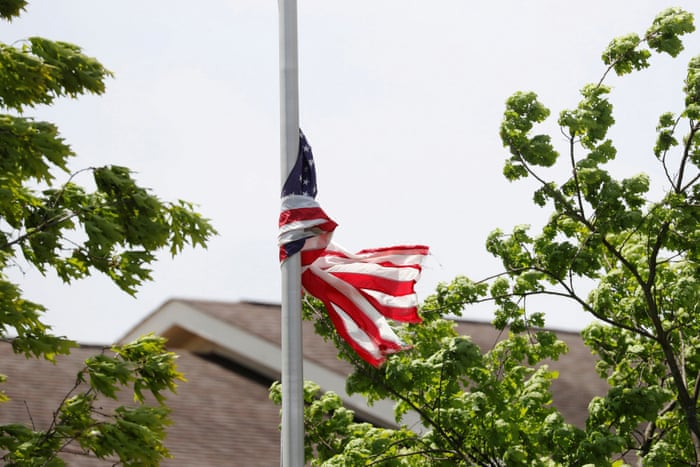
The breathing space afforded by lockdowns in the spring has been squandered, with new cases running at five times the rate of the whole of Europe. Things will only get worse, experts warn.

In early June, the United States awoke from a months-long nightmare.

Coronavirus had brutalized the north-east, with New York City alone recording more than 20,000 deaths, the bodies piling up in refrigerated trucks. Thousands sheltered at home. Rice, flour and toilet paper ran out. Millions of jobs disappeared.

But then the national curve flattened, governors declared success and patrons returned to restaurants, bars and beaches. “We are winning the fight against the invisible enemy,” vice-president Mike Pence wrote in a 16 June op-ed, titled, “There isn’t a coronavirus ‘second wave’.”

Except, in truth, the nightmare was not over – the country was not awake – and a new wave of cases was gathering with terrifying force.

As Pence was writing, the virus was spreading across the American south and interior, finding thousands of untouched communities and infecting millions of new bodies. Except for the precipitous drop in New York cases, the curve was not flat at all. It was surging, in line with epidemiological predictions.

Now, four months into the pandemic, with test results delayed, contact tracing scarce, protective equipment dwindling and emergency rooms once again filling, the United States finds itself in a fight for its life: swamped by partisanship, mistrustful of science, engulfed in mask wars and led by a president whose incompetence is rivaled only by his indifference to Americans’ suffering.

With flu season on the horizon and Donald Trump demanding that millions of students return to school in the fall – not to mention a presidential election quickly approaching – the country appears at risk of being torn apart.

“I feel like it’s March all over again,” said William Hanage, a professor of epidemiology at the Harvard TH Chan School of Public Health. “There is no way in which a large number of cases of disease, and indeed a large number of deaths, are going to be avoided.”

The problem facing the United States is plain. New cases nationally are up a remarkable 50% over the last two weeks and the daily death toll is up 42% over the same period. Cases are on the rise in 40 out of 50 states, Washington DC and Puerto Rico. Last week America recorded more than 75,000 new cases daily – five times the rate of all Europe.

“We are unfortunately seeing more higher daily case numbers than we’ve ever seen, even exceeding pre-lockdown times,” said Jennifer Nuzzo, an epidemiologist at the Johns Hopkins Center for Health Security. “The number of new cases that occur each day in the US are greater than we’ve yet experienced. So this is obviously a very worrisome direction that we’re headed in.”

The mayor of Houston, Texas, proposed a “two-week shutdown” last week after cases in the state climbed by tens of thousands. The governor of California reclosed restaurants, churches and bars, while the governors of Louisiana, Alabama and Montana made mask-wearing in public compulsory.

“Today I am sounding the alarm,” Governor Kate Brown said. “We are at risk of Covid-19 getting out of control in Oregon.”

As dire as the current position seems, the months ahead look even worse. The country anticipates hundred of thousands of hospitalizations, if the annual averages hold, during the upcoming flu season. Those hospitalizations will further strain the capacity of overstretched clinics.

But a flu outbreak could also hamper the country’s ability to fight coronavirus in other ways. Because the two viruses have similar symptoms – fever, chills, diarrhea, fatigue – mistaken diagnoses could delay care for some patients until it’s too late, and make outbreaks harder to catch, one of the country’s top health officials has warned.

“I am worried,” Dr Robert Redfield, the director of the Centers for Disease Control (CDC), said last week. “I do think the fall and the winter of 2020 and 2021 are probably going to be one of the most difficult times that we have experienced in American public health because of … the co-occurrence of Covid and influenza.”

Other factors will be in play. A precipitous reopening of schools in the fall, as demanded by Trump and the education secretary, Betsy DeVos, without safety measures recommended by the CDC, could create new superspreader events, with unknown consequences for children.

“We would expect that to be throwing fuel on the fire,” said Hanage of blanket school reopenings. “So it’s going to be bad over the next month or so. You can pretty much expect it to be getting worse in the fall.”

The list of aggravating circumstances goes on and on. A federal unemployment assistance program that gave each claimant an extra $600 a week is set to expire at the end of July. A new coronavirus relief package is being held up in Congress by Republicans’ accusations that states are wasting money, and their insistence that any new legislation include liability protections for businesses that reopen during the pandemic.
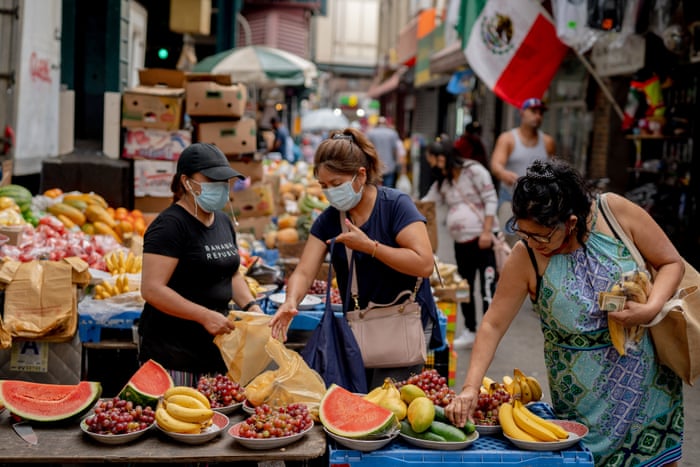
Cable broadcasts and social media have been filled, meanwhile, with video clips of furious confrontations on sidewalks, in stores and streets over wearing facial masks. In Michigan, a sheriff’s deputy shot dead a man who had stabbed another man for challenging him about not wearing a mask at a convenience store. In Georgia, the Republican governor sued the Democratic mayor of Atlanta for issuing a city-wide mask mandate.

The partisan divide on masks is slowly closing as the outbreaks intensify. The share of Republicans saying they wear masks whenever they leave home rose 10 points to 45% in the first two weeks of July, while 78% of Democrats reported doing so, according to an Axios-Ipsos poll.

Another divide has proven tragically resilient. As hotspots have shifted south, the virus continues to affect Black and Latinx communities disproportionately. Members of those communities are three times as likely to become infected and twice as likely to die from the virus as white people, according to data from early July.

The raging virus has prompted speculation in some corners that the only way out for the United States is through some kind of “herd immunity” achieved by simply giving up. But that grossly underestimates the human tragedy such a scenario would involve, epidemiologists say, in the form of tens of millions of new cases and unknown thousands of deaths.

“I think that every single serology study that’s been done to date suggests that the vast majority of Americans have not yet been exposed to this virus,” Nuzzo said. “So we’re still very much in the early stages.

“Which is good, that’s actually really good news. I don’t want to strive for herd immunity, because that means the vast majority of us will get sick and that will mean many, many more deaths. The point is to slow the spread as much as possible, protect ourselves as much as possible, until we have other tools.”

But the ability of the US to take that basic step – to slow the spread, as dozens of other countries have done – is in perilous doubt. After half a year, the Trump administration has made no effort to establish a national protocol for testing, contact tracing and supported isolation – the same proven three-pronged strategy by which other countries control their outbreaks.

Critics say that instead, Trump has dithered and denied as the national death toll climbed to almost 140,000. The Democratic presidential candidate, Joe Biden, who is hoping to unseat Trump in November, blasted the president for refusing until recently to wear a mask in public.

“He wasted four months that Americans have been making sacrifices by stoking divisions and actively discouraging people from taking a very basic step to protect each other,” Biden said in a statement last weekend.
Meanwhile the White House has attacked Dr Anthony Fauci, the country’s foremost expert on infectious diseases whose refusal to lie to the public has enraged Trump, by publishing an op-ed signed by one of the president’s top aides titled “Anthony Fauci has been wrong about everything I have interacted with him on” and by releasing a file of opposition research to the Washington Post.

Trump claimed the number of cases was a function of unusually robust testing, though experts said that positivity rates of 20% in multiple states suggested that the United States is testing too little – and that in any case closing one’s eyes to the problem by testing less would not make it go away.

“We’ve done 45 million tests,” Trump said this week, padding the figure only slightly. “If we did half that number, you’d have half the cases, probably around that number. If we did another half of that, you’d have half the numbers. Everyone would be saying we’re doing well on cases.”

Such statements by Trump have encouraged unfavorable comparisons of the US pandemic response with those in countries such as Italy, which recorded just 169 new cases on Monday after a horrific spring, and South Korea, which has kept cases in the low double-digits since April.

But the United States could also look to many African countries for lessons in pandemic response, said Amanda McClelland, who runs a global epidemic prevention program at Resolve to Save Lives.

“We’ve seen some good success in countries like Ghana, who have really focused on contact tracing, and being able to follow up superspreading events,” said McClelland. “We see Ethiopia: they kept their borders open for a lot longer than other countries, but they have really aggressive testing and active case-finding to make sure that they’re not missing cases.

“I think what we’ve seen is that you need not just a strong health system but strong leadership and governance to be able to manage the outbreak, and we’ve seen countries that have all three do well.”
But in America, the large laboratories that process Covid-19 tests are unable to keep up with demand. Quest Diagnostics announced on Tuesday that the turnaround time for most non-emergency test results was at least seven days.

“We want patients and healthcare providers to know that we will not be in a position to reduce our turnaround times as long as cases of Covid-19 continue to increase dramatically,” the lab said.

“You can’t have unlimited lab capacity, and what we’ve done is allow, to some extent, cases to go beyond our capacity,” said McClelland. “We’re never going to be able to treat and track and trace uncontrolled transmission. This outbreak is just too infectious.”

Public health experts emphasize that the United States does not have to accept as its fate a cascade of tens of millions of new cases, and tens of thousands of deaths, in the months ahead. Focused leadership and individual resolve could yet help the country follow in the footsteps of other nations that have successfully faced serious outbreaks – and brought them under control.

But it is clear that the most vulnerable Americans, including the elderly and those with pre-existing conditions, face grave danger. Republicans have argued in recent weeks that while cases in the US have soared, death rates are not climbing so quickly, because the new cases are disproportionately affecting younger adults.

That is a false reassurance, health experts say, because deaths are a lagging indicator – cases necessarily rise before deaths do – and because large outbreaks among any demographic group speeds the virus’s ability to get inside nursing homes, care facilities and other places where residents are most vulnerable.

“If we don’t do anything to stop the virus, it’s going to be very difficult to prevent it from getting to people who will die,” said Nuzzo.

There is a question of whether the United States, for all its wealth and expertise – and its self-regard as an exceptional actor on the world stage – can summon the will to keep up the fight. People are tired of fighting the virus, and of fighting each other.

“I think unfortunately people are emotionally exhausted from having to think about and worry about this virus,” said Nuzzo. “They feel like they’ve already sacrificed a lot. So the worry that I have is, what willingness is there left, to do what it takes?”

It is as if the country is “treading water in the middle of the ocean”, Hanage said.

“People tend to be shuffling very quickly between denial and fatalism,” he said. “That’s really not helpful. There are a number of things that can be done.

“What I would hope is that this marks a point when the United States finally wakes up and realizes that this is a pandemic and starts taking it seriously.

“Folks tend to look at what has happened elsewhere and then they make up some kind of magical reason why it’s not going to happen to them.

“People keep making these excuses, and the virus doesn’t care about the excuses. The virus just keeps going. If you give it the opportunity, it will take it.”