Business forecasters see inflation heating up to 5.1%

Dive Brief:

  • Inflation as measured by the consumer price index will surge 5.1% year-over-year during the fourth quarter, forecasters for the National Association for Business Economics (NABE) said, raising their estimate in May for a 2.8% year-over-year increase in prices. The forecasters anticipate inflation will ease to 2.4% year-over-year during the fourth quarter of 2022, according to a survey.
  • “Inflation expectations have moved up significantly from those in the May 2021 survey,” according to Holly Wade, survey chair and executive director for the research center at the National Federation of Independent Business. “But panelists anticipate inflation will ease in 2022.”
  • The NABE panel reduced its estimate for growth in gross domestic product (GDP) this year to 5.6% from 6.7% in May, citing the coronavirus delta variant as the biggest risk to the expansion.

Dive Insight:

NABE expectations that inflation will cool next year align with the view of Federal Reserve Chair Jerome Powell and Treasury Secretary Janet Yellen. Both policy-makers have staked record stimulus in part on the premise that the fastest price gains in decades will slow as pandemic-induced kinks in supply chains even out.

The Fed’s preferred inflation measure — the core personal consumption expenditures price index — rose 3.6% in July compared with a year earlier, well above the central bank’s 2% target.

In an estimate released after a two-day meeting on Wednesday, Fed officials forecast that so-called core inflation will rise 2.3% next year, slightly above the 2.2% estimate by the NABE panel.

Confident that inflation will ease, Fed policy-makers indicated after their meeting that they may begin to cut $120 billion in monthly purchases of Treasury and mortgage bonds as early as their next scheduled gathering in November. Powell said that the Fed will gradually taper and may conclude bond buying “around the middle of next year.”

Half of the 18 participants in the Fed’s policy-making committee expect to raise the benchmark interest rate from a record low by the end of 2022.

“I expect inflation to decelerate,” Fed Governor Lael Brainard said Monday in a speech to NABE. “But with delta disrupting the rotation from goods to services and prolonging supply bottlenecks, it is uncertain just how fast and how much inflation will decelerate over the remainder of the year and into next year.”

With the delta variant disrupting demand and supply, the employment report for September due out on Oct. 8 “may be weaker and less informative of underlying economic momentum than I had hoped,” she said.

More than half (58%) of the NABE forecasters see downside risks to economic growth for the remainder of 2021, while 16% “expect the balance to be to the upside — a complete reversal from the May survey results,” Wade said.

Sixty-three percent of panelists identify the delta variant as the leading risk to growth, while 5% of respondents said fiscal policy inaction or gridlock as their greatest growth concern, NABE said. Two-thirds (67%) of survey respondents predict that nonfarm payrolls will return to pre-pandemic levels by the end of 2022.

Powell and Yellen will have an opportunity to update their views on inflation and the economy, and the outlook for record monetary and fiscal stimulus, in testimony scheduled for Tuesday before the Senate Banking Committee.

The NABE panel of 47 forecasters spans a range of organizations, including economists from Ford, Grant Thornton, Moody’s Analytics, the Conference of State Bank Supervisors, Nationwide Insurance, Morgan Stanley, the National Association of Homebuilders, Visa and Wells Fargo.

Preparing for generations of Medicare growth

https://mailchi.mp/72a9d343926a/the-weekly-gist-september-24-2021?e=d1e747d2d8

The healthcare industry is now at the peak of the long-awaited transition of the Baby Boom generation into Medicare. The “greying” of the Boomers will continue to bring a rapid influx of new Medicare beneficiaries, but this is just the beginning of a protracted period of growth for the program, with the number of Medicare-eligible Americans increasing by more than 50 percent over the next three decades.

Using data from the US Census Bureau, the graphic above shows how the generational makeup of the Medicare population will change across time. The next decade will bring the fastest growth, as the latter half of the Baby Boom generation turns 65. Over that time, the Medicare-eligible population will increase by almost a third. Gen X will begin to age into Medicare in 2029. (Go ahead, take a minute. It hurts.) While fewer in number, Gen X beneficiaries, combined with the longer lifespan of Baby Boomers, will bring no respite from Medicare growth, with enrollment still increasing 11 percent between 2030 and 2040. 

As the country looks at a prolonged period of Medicare cost growth, we’ll be counting on a ballooning workforce of Millennials and Gen Z youngsters—each part of generations even larger than the Baby Boom—to continue to fund the Medicare trust across the next 25 years, when the first Millennials will receive their Medicare cards. (See how it feels?)

Intermountain, SCL Health to create $11B system 

https://mailchi.mp/72a9d343926a/the-weekly-gist-september-24-2021?e=d1e747d2d8

Trends In Hospital and Health System Marketing in a Rapidly Consolidating  Industry - Hirsch Healthcare Consulting

Salt Lake City-based Intermountain Healthcare announced plans to merge with Broomfield, CO-based SCL Health to form a 33-hospital, $11B dollar system working in six states. The combined system will keep the Intermountain name, be based in Salt Lake City, and be led by Intermountain CEO Dr. Marc Harrison.

Harrison said that the merger will accelerate the evolution toward population health and value, and “swiftly advance that cause across a broader geography”—a similar value proposition to the system’s previously proposed combination with South Dakota-based Sanford Health, which fell apart last December after Sanford’s CEO stepped down following his controversial comments about mask-wearing.

Intermountain has long been regarded as a national leader in clinical quality, and its integrated payer-provider approach is often cited as a model for US healthcare. The merger with SCL Health will enable expansion of its SelectHealth insurance plan and integrated care model into Colorado, Montana and Kansas, including the fast-growing Denver metropolitan area, making the combined system a formidable player across the Mountain West.

But as we’ve written before, achieving that vision will require a level of integration not often realized in similar mergers, and the burden of proof is on health systems to demonstrate that the merger will create meaningful value for patients and consumers.

We’ll be watching closely to better understand their plans for lowering costs and improving access and quality for patients across the region.

Hospitals projected to lose $54 billion in net income this year

https://www.healthcarefinancenews.com/news/hospitals-projected-lose-54-billion-net-income-year

Hospitals and Health Systems Projected to Lose About $54B in Net Income in  2021 | HealthLeaders Media

Higher expenses for labor, drugs and supplies as well as a continuation of delayed care during the ongoing COVID-19 pandemic is projected to cost hospitals an estimated $54 billion in net income over the course of this year, according to a new Kaufman Hall analysis released by the American Hospital Association.

Hospitals and health systems are seeing sicker patients, the report said. This includes COVID-19 patients and patients who put off care during the pandemic. They are requiring longer lengths of stay and more services than prior to the pandemic in 2019, the report said.

The seven-day average of new hospital admissions of patients with COVID-19 has increased 488%, from 1,900 on June 19 to 11,168 on September 14, the report said, citing recent data from the Centers for Disease Control and Prevention.

Many hospitals are also reportedly spending a lot more on staffing, paying for contract or travel nurses due to shortages.

WHY THIS MATTERS

The report projects hospitals nationwide will lose an estimated $54 billion in net income over the course of the year, even after taking into account federal Coronavirus Aid, Relief, and Economic Security (CARES) Act funding from last year

If there were no relief funds from the federal government, losses in net income would be as high as $92 billion. 

However, the AHA said, the uncertain trajectory of the Delta and Mu variants in the U.S. this fall could result in even greater financial uncertainty for hospitals.

Despite the recent announcement of additional provider relief funds, none have yet to be allocated or distributed, the AHA said. 

THE LARGER TREND

This latest analysis incorporates actual hospital performance data in the first and second quarters of this year, from before the latest surge. Projections were then made for the remainder of 2021 based on this data.

Based on the analysis, median hospital margins are projected to be 11% below pre-pandemic levels by year’s end. More than a third of hospitals are expected to end 2021 with negative margins.

Many hospitals were financially challenged and already operating in the red heading into the COVID-19 pandemic, the AHA said last year.

CARES Act funding helped hospitals and health systems, but covered only a portion of the more than $323 billion in losses hospitals were expected to have in 2020. 

The government allocated a total of $175 billion in relief funds to providers.

ON THE RECORD 

“America’s hospitals and health systems continue to face significant, ongoing instability and strain as the COVID-19 pandemic endures and spreads,” said AHA President and CEO Rick Pollack. “With cases and hospitalizations at elevated levels again due to the rapid spread of the Delta variant, physicians, nurses and other hospital caregivers and personnel are working tirelessly to care for COVID-19 patients and all others who need care. At the same time, hospitals are experiencing profound headwinds that will continue throughout the rest of 2021.”

Hospital mergers and acquisitions are a bad deal for patients. Why aren’t they being stopped?

Contrary to what health care executives advertise, hospital mergers and acquisitions aren’t good for patients. They rarely improve access to health care or its quality, and they don’t reduce prices. But the system in place to stop them is often more bark than bite.

During 2019 and 2020, hospitals acquired an additional 3,200 medical practices and 18,600 physicians. By January 2021, almost half of all U.S. physicians were employed by a hospital or health system.

In 2018, the last year for which complete data are available, 72% of hospitals and more than 90% of hospital beds were affiliated with a health care system. Mergers and acquisitions are increasing the number of health care systems while decreasing the number of independently operated hospitals.

When hospitals buy provider practices, it leads to more unnecessary care and more expensive care, which increases overall spending. The same thing happens when hospitals merge or acquire other hospitals. These deals often increase prices and they don’t improve care quality; patients simply pay more for the same or worse care.

Mergers and acquisitions can negatively affect clinician morale as well. Some argue they lead to providers’ loss of autonomy and increase the emphasis on financial targets rather than patient care. They can also contribute to burnout and feeling unsupported.

Considerable machinery is in place at both the federal and state levels to stop “anticompetitive” mergers before they happen. But that machinery is limited by a lack of follow through.

The Federal Trade Commission (FTC) and the U.S. Department of Justice have always had broad authority over mergers. By law, one or both of these entities must review for any antitrust concerns proposed deals of a certain size before the deals are finalized. After a preliminary review, if no competition issues are identified, the merger or acquisition is allowed to proceed. This is what happens in most cases. If concerns are raised, however, the involved parties must submit additional information and undergo a second evaluation.

Some health care organizations seem willing to challenge this process. Leaders involved in a pending merger between Lifespan and Care New England in Rhode Island — which would leave 80% of the state’s inpatient market under one company’s umbrella — are preparing to move forward even if the FTC deems the deal anticompetitive. The companies will simply ask the state to approve the merger despite the FTC’s concerns.

The reality is that the FTC’s reach is limited when it comes to nonprofits, which most hospitals are. While the FTC can oppose anticompetitive mergers involving nonprofits, it cannot enforce action against them for anticompetitive behavior. So if a merger goes through, the FTC has limited authority to ensure the new entity plays fairly.

What’s more, the FTC has acknowledged it can’t keep up with its workload this year. It modified its antitrust review process to accommodate an increasing number of requests and its stagnant capacity. In July, the Biden administration issued an executive order about economic competition that explicitly acknowledges the negative impact of health care consolidation on U.S. communities. This is encouraging, signaling that the government is taking mergers seriously. Yet it’s unclear if the executive order will give the FTC more capacity, which is essential if it is to actually enforce antitrust laws.

At the state level, most of the antitrust power lies with the attorney general, who ultimately approves or challenges all mergers. Despite this authority, questionable mergers still go through.

In 2018, for example, two competing hospital systems in rural Tennessee merged to become Ballad Health and the only source of care for about 1.2 million residents. The deal was opposed by the FTC, which deemed it to be a monopoly. Despite the concerns, the state attorney general and Department of Health overrode the FTC’s ruling and approved the merger. (This is the same mechanism the Rhode Island hospitals hope to employ should the FTC oppose their merger.) As expected, Ballad Health then consolidated the services offered at its facilities and increased the fees on patient bills.

It’s clear that mechanisms exist to curb potentially harmful mergers and promote industry competition. It’s also clear they aren’t being used to the fullest extent. Unless these checks and balances lead to mergers being denied, their power over the market is limited.

Experts have been raising the alarm on health care consolidation for years. Mergers rarely lead to better care quality, access, or prices. Proposed mergers must be assessed and approved based on evidence, not industry pressure. If nothing changes, the consequences will be felt for years to come.

Virtual mental health sees a big merger announced

https://mailchi.mp/13ef4dd36d77/the-weekly-gist-august-27-2021?e=d1e747d2d8

Ginger and Headspace Will Merge to Meet Escalating Global Demand for Mental  Health Support | Business Wire

Two of the best-known companies in the virtual mental health space announced plans to merge this week, creating a $3B player poised to dominate this fast-growing segment of healthcare demand. 

Headspace, a direct-to-consumer provider of app-based “mindfulness” meditation programs, will combine with Ginger, which sells text- and video-based coaching and therapy services to employers and insurers. Between them, the two companies claim to serve over 100M users worldwide.

Headspace is best known as a consumer-focused app, while Ginger largely serves business and payer clients. The combined company, to be called Headspace Health, will surely look to consolidate offerings into a comprehensive mental health service for employees, targeting a benefits market that is rapidly becoming overwhelmed with startup providers of virtual point solutions.

Behavioral health telemedicine utilization skyrocketed during last year’s COVID surge, and has been the one area of virtual care not to fall back to earth since—we’ve learned that virtual is often a superior approach for many mental health services.

Two questions arose in our minds after the Headspace/Ginger merger was announced. First, does the combined company bring a broad enough value proposition to overcome employer frustration with a highly fragmented market, or will the new Headspace Health eventually need to be part of a larger insurer platform to capture the opportunity in front of it? And second, does “mindfulness” even work?

The academic evidence is decidedly mixed, but the popularity of Headspace and other meditation apps, especially among Millennial consumers, might make that question moot. The mindfulness “wrapper” on more traditional mental health services may prove to be very popular with employees, and could become a must-have element of employers’ benefit packages.

Unemployment claims jumped to 419,000 last week, a sudden increase reflecting an unsettled labor market

Unemployment claims jumped last week, as the delta variant of the coronavirus sparked rising caseloads around the country and renewed fears about the potential for more restrictions and business closures.

The number of new claims grew to 419,000 from 368,000, the third time in six weeks that they had ticked up, according to data from the Department of Labor.

Economists said the uptick was concerning but cautioned that it was too early to tell whether it was a one week aberration or telegraphed a more concerning turn for the labor market.

“The unexpected bump in claims could be noise in the system, but it’s also not hard to see how the rise of the covid-19 delta variant could add thousands of layoffs to numbers that already are double what they were pre-Covid,” said Robert Frick, corporate economist at Navy Federal Credit Union.

Overall, unemployment numbers have been falling gradually from the peaks at other stages of the pandemic, but they are still well above pre-pandemic averages.

The jobless numbers have provided a jarring catalogue about the economic devastation wrought by the pandemic — spiking to records as the pandemic unfolded in March 2020, and remaining at historic high levels throughout most of 2020.

The coronavirus surge last fall helped precipitate a rise in claims that saw the labor market, as seen in the monthly jobs report, slide backward too.

But until recently, the last few months been marked by strong jobs growth and a sense of optimism as vaccinations picked up, giving economists hope that the country was back on track to recovering the nearly 7 million jobs it is still down from before the pandemic.

Now, the delta variant is driving an alarming increase in covid-19 cases around the country, according to public health officials: the number of new cases increased more than 40 percent in the last week, sending jitters through the stock market, and is raising questions about whether state and local health authorities will reinstitute restrictions to slow the virus’ spread.

A new mandate in Los Angeles county to wear masks indoors has sparked protests and anger from local officials, as other counties where cases are increasing mull similar actions.

Frick said that the report showed the potential for unemployment claims to start trending upward after months of steady declines.

“There’s definitely a correlation, however loose, that the rise in covid does cause a rise in claims,” he said. “My fear is that the rise in the delta variant could cause claims to go back up…Certainly one week doesn’t show that. But I wouldn’t be surprised if we start to see claims rise.”

Texas for example, where cases have grown 54 percent in the last week, lead the way with an increase of 10,000 new claims.

However, there are also lots of signs that the economy continues to rebound despite rising caseloads.

The more than 2.2 million people that the Transportation Security Administration said it screened at airports on Sunday was the most since late February 2020 — and nearly three times the amount it was on the same day last year.

Restaurant dining has largely rebounded in recent months, at times surpassing the levels from before the pandemic — on Saturday the number of diners was 1 percent higher than the same day in 2019, according to data from Open Table.

Last week, some 12.5 million claims were filed for unemployment insurance overall, according to the most recent numbers — down from 32.9 million filed at the same point last year.

Nevada, Rhode Island and California topped the list of states with the highest number of people on unemployment, the Labor Department said.

Economic concerns in recent months have been more focused on the ways that workers are still held back from filling some of the more than 9 million job openings in the country, than unemployment, with high hopes that school re-openings in the fall will help many parents get back into the labor force.

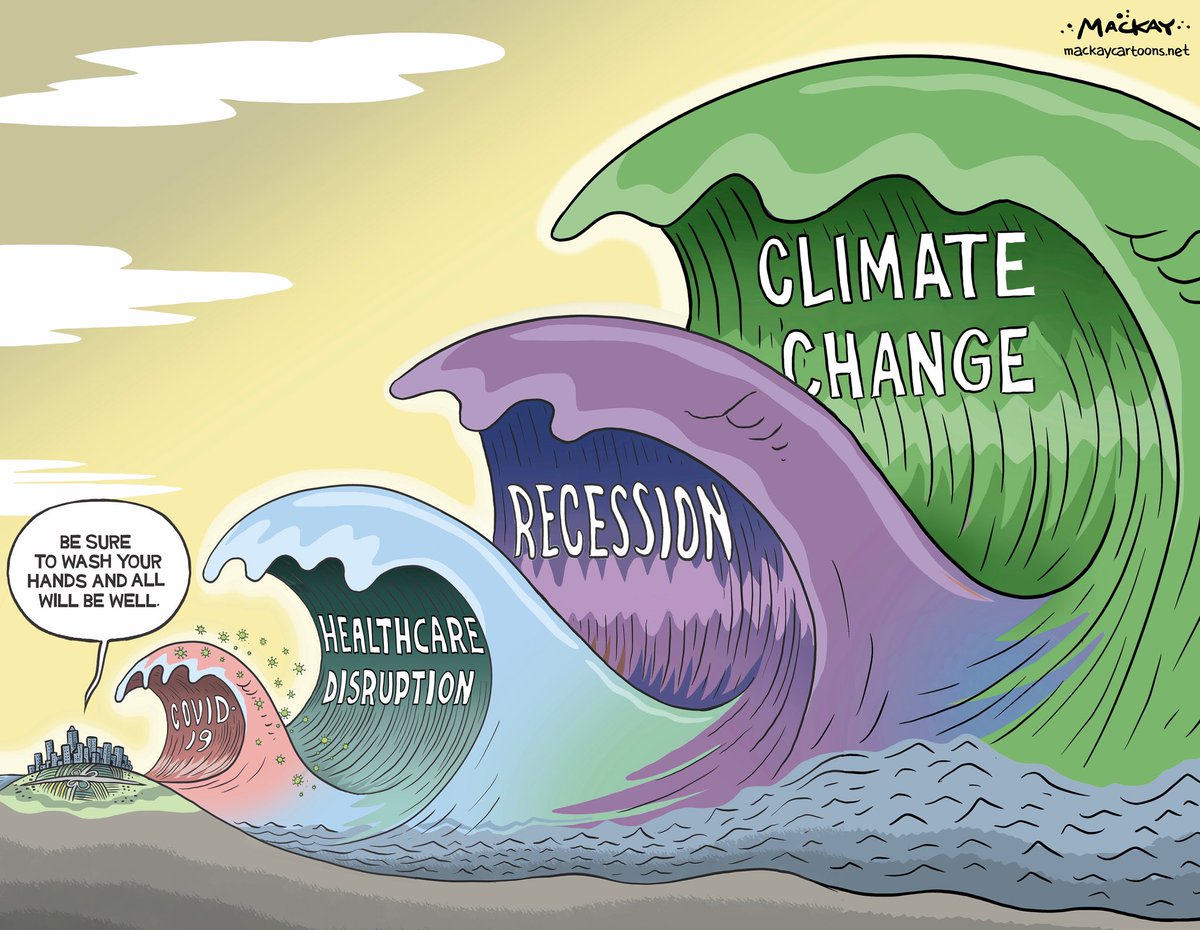
Cartoon – Catch a Wave

Dre Joanne Liu on Twitter: "Acid cartoon humor on the next Waves to come  2020-0311-NATrevised-healthcare.jpg 7 740 × 6 000 pixels… "

CFOs working around cost pressures, labor availability

Labor Shortage, Rising Costs, Supply-Chain Hiccups Hit Manufacturers -  Bloomberg

Dive Brief:

  • While CFOs, on the whole, remain optimistic about an economic rebound this year, they’re concerned about labor availability and accompanying cost pressures, according to a quarterly survey by Duke University’s Fuqua School of Business and the Federal Reserve Banks of Richmond and Atlanta.
  • Over 75% of CFOs included in the survey said their companies faced challenges in finding workers. More than half of that group also said worker shortage reduced their revenue—especially for small businesses. The survey panel includes 969 CFOs across the U.S.
  • CFOs expect revenue and employment to rise notably through the rest of 2021,” Sonya Ravindranath Waddell, VP and economist at the Federal Reserve Bank of Richmond said. “[But] over a third of firms anticipated worker shortages to reduce revenue potential in the year.”

Dive Insight:

As many companies struggle to find employees and meet renewed product demand, it’s unsurprising CFOs anticipate both cost and price increases, Waddell said.

About four out of five CFO respondents reported larger-than-normal cost increases at their firms, which they expect will last for several more months. They anticipate the bulk of these cost increases will be passed along to the consumer, translating into higher-priced services.

Despite labor concerns, CFOs are reporting higher optimism than last quarter, ranking their optimism at 74.9 on a scale of zero to 100, a 1.7 jump. They rated their optimism towards the overall U.S. economy at an average of 69 out of 100, a 1.3 increase over last quarter. 

For many CFOs, revenue has dipped below 2019 levels due to worker shortage, and in some cases, material shortages, Waddell told Fortune last week. Even so, spending is on the rise, which respondents chalked up to a reopening economy.

“Our calculations indicate that, if we extrapolate from the CFO survey results, the labor shortage has reduced revenues across the country by 2.1%,” Waddell added. “In 2019, we didn’t face [the] conundrum of nine million vacancies combined with nine million unemployed workers.”

Consumer prices have jumped 5.4% over the past year, a U.S. Department of Labor report from last week found; a Fortune report found that to be the largest 12-month inflation spike since the Great Recession in 2008. 

To reduce the need for labor amid the shortage, many companies will be “surviving with just some compressed margins for a while, or turning to automation,” Waddell said.

Health system consolidation as a “safety net”

https://mailchi.mp/26f8e4c5cc02/the-weekly-gist-july-16-2021?e=d1e747d2d8

Might health care consolidation be slowing and if so, why and what might it  mean? A perspective on where we are, how we got here and what is next. —  CASTLING PARTNERS

One of the underappreciated ways in which health systems create value in our healthcare economy, as was recently the topic of discussion with the CEO of an organization we work with, is their role as a “safety net”. We weren’t talking about safety-net providers in the traditional sense—those which serve low-income populations. Rather, we were talking about the ability of larger health systems to acquire and invest in smaller hospitals that might otherwise risk going out of business entirely due to economic pressures.

When economic shocks hit, as was recently the case with COVID, we often see firms close; think of all the restaurant and hospitality businesses forced to shut down over the past year. As the economy rebounds, new business spring up to take their places—that kind of “creative destruction” is commonplace in the larger economy. But when a hospital is forced to shut its doors, it’s a different story, one that could be potentially disastrous for the community. 

Often the most economically vulnerable hospitals are sole providers for their communities; without them, critical medical services could be much less accessible for patients. Enter multi-hospital health systems, which have often stepped in to acquire hospitals in jeopardy. 

By providing access to capital, technology, and management infrastructure, systems have probably kept hundreds of such smaller hospitals in business over the past several decades. Policy analysts are quick to criticize health systems for value destruction: leveraging scale to raise prices, and so forth.

Often valid criticism, but it would be myopic to overlook the fact that systems have also allowed many vulnerable communities to retain access to a viable local hospital. The pushback is often to posit that we simply have too many hospitals to begin with—but try telling that to patients and communities who have lost access to their local source of care.