Administration’s Record on Health Care

President Trump’s Record on Health Care

President Trump's Record on Health Care | KFF

A review of Trump’s health care record so far. Avoiding the problematic issue of Trump’s alleged plan, analysts at the nonpartisan Kaiser Family Foundation released a report this week that examines President Trump’s record on health care over the last three and half years. Some highlights from the overview and the full analysis:

  • On the Affordable Care Act: “From the start of his presidential term, President Trump took aim at the Affordable Care Act, consistent with his campaign pledge leading up to the 2016 election. He supported many efforts in Congress to repeal the law and replace it with an alternative that would have weakened protections for people with pre-existing conditions, eliminated the Medicaid expansion, and reduced premium assistance for people seeking marketplace coverage. While the ACA remains in force, President Trump’s Administration is supporting the case pending before the U.S. Supreme Court to overturn the ACA in its entirety that is scheduled for oral arguments one week after the election.”


  • On Medicare and Medicaid: “The Administration has proposed spending reductions for both Medicaid and Medicare, along with proposals that would promote flexibility for states but limit eligibility for coverage under Medicaid (e.g., work requirements).”


  • On drug prices: “The President has made prescription drug prices a top health policy priority and has issued several executive orders and other proposals that aim to lower drug prices; most of these proposals, however, have not been implemented, other than one change that would lower the cost of insulin for some Medicare beneficiaries with diabetes, and another that allows pharmacists to tell consumers if they could save money on their prescriptions. The Trump Administration has also moved forward with an initiative to improve price transparency in an effort to lower costs, though it is held up in the courts.”


  • On the response to the coronavirus: “The Trump administration has not established a coordinated, national plan to scale-up and implement public health measures to control the spread of coronavirus, instead choosing to have states assume primary responsibility for the COVID-19 response, with the federal government acting as back-up and ‘supplier of last resort.’ The President has downplayed the threat of COVID-19, given conflicting messages and misinformation, and often been at odds with public health officials and scientific evidence.”


President Trump’s Record on Health Care – Issue Brief


One million Americans lost health insurance last year

https://www.washingtonpost.com/politics/2020/09/16/health-202-one-million-americans-lost-health-insurance-last-year/?utm_campaign=wp_the_health_202&utm_medium=email&utm_source=newsletter&wpisrc=nl_health202

Analysis | The Health 202: One million Americans lost health insurance last  year - Digital Tariq

Americans became wealthier and more held jobs last year.

Yet at the very same time, one million people lost health insurance. And that number has steadily climbed this year under the pandemic.

U.S. Census Bureau report released yesterday showed a continued slow erosion of the nation’s insured rate in 2019. The decline of coverage illustrates both the shortcomings of President Barack Obama’s 2010 health-care law and repeated attempts by President Trump and Republicans to undermine it.

“Though the reasons are sharply debated, the new data signifies that the first three years of President Trump’s tenure were a period of contracting health insurance coverage,” Amy Goldstein writes. “The decreases reversed gains that began near the end of the Great Recession and accelerated during early years of expanded access to health plans and Medicaid through the Affordable Care Act.”

Nearly 30 million Americans lacked health coverage in 2019.

The uninsured rate rose to 29.6 million people, totaling 9.2 percent of the population. It has slowly ticked upward since 2016, when 28.1 million people didn’t have a health plan. Between 2018 and 2019, the share of people without coverage increased in 19 states and decreased in just one.

The share of people on Medicare and with employer-sponsored coverage actually increased slightly. That was due to an aging population and last year’s booming economy, which meant more people had workplace plans — still the chief way Americans get their coverage.

The biggest erosions in coverage took place in state Medicaid programs.

Medicaid enrollment fell from 17.9 percent of Americans to 17.2 percent.

One reason for the decline is positive: As poverty rates fell for all major racial and ethnic groups, more people earned too much to qualify for the program. The poverty rate fell to 18.8 percent for Blacks, 15.7 percent for Hispanics and 9.1 percent for Whites.

But other factors were also at play. People no longer face a tax penalty for being uninsured, after Congress repealed it in 2017. Several GOP-led states expanded enrollment requirements. And wide disparities persisted in how states run their programs.

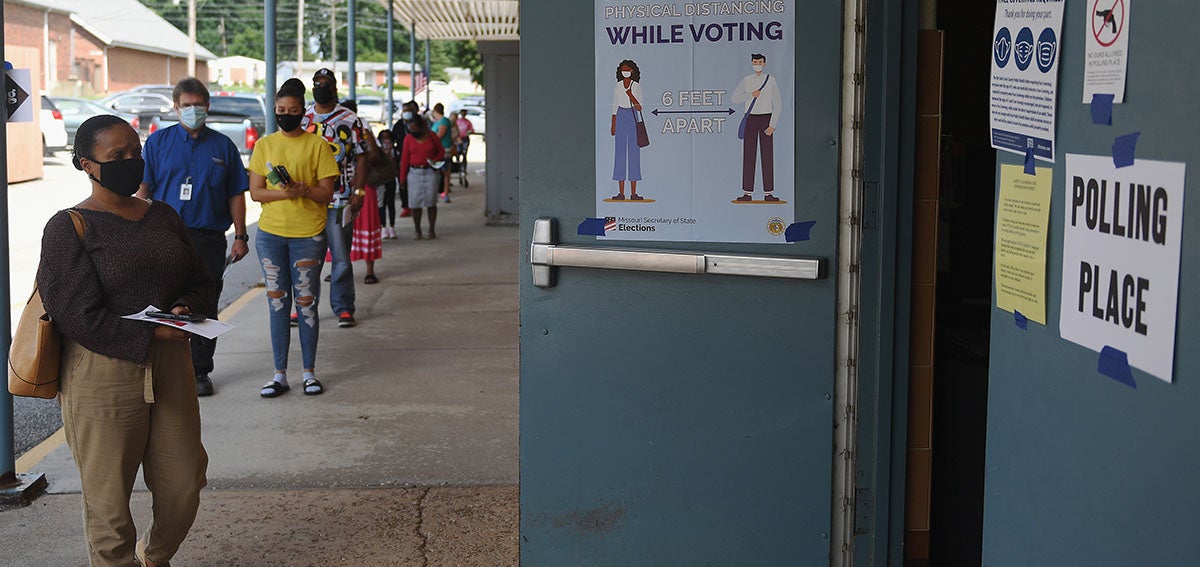
Missouri voters recently approved Medicaid expansion, making the state the seventh to do so under President Trump.

“There is huge variation state-to-state in the ease of enrollment, the administrative process, the mechanisms for verifying eligibility, how hard the state works to sign people up,” said Katherine Baicker, a health economist at the University of Chicago. “All those have big effects on net take-up rates.”

The trickle of coverage losses has become a flood under the pandemic.

Before the coronavirus pandemic upended life, the United States was enjoying a record-long economic expansion. By the end of last year, the unemployment rate was at a 50-year low of 3.5 percent.

Women outnumbered men in the workforce for only the second time, buoyed by a tight labor market and fast job growth in health care and education,” Amy writes. “Minimum-wage increases were also fueling faster wage growth for those at the bottom.”

But now millions of people have lost their jobs — and, in the process, their health insurance.

“Since March … job losses have disproportionately hit low-income workers and women, many of whom held service-sector jobs that were gutted by shutdown measures to help protect people from infection,” Amy writes. “Nearly 40 percent of households with income below $40,000 were laid off or furloughed by early April, according to the Federal Reserve.”

The Economic Policy Institute has estimated that 12 million people have lost health insurance received through their workplace or that of a family member. Some of those have been able to enroll in Medicaid — its rolls have risen by about 4 million during the pandemic — but others find it unaffordable.


How important is the ACA for people who lose their jobs?

https://us3.campaign-archive.com/?u=6ab1fc39a0b1b15521551487c&id=6f9ac3fd86&e=ad91541e82

https://www.nejm.org/doi/full/10.1056/NEJMp2023312

This week’s contributor is Larry Levitt, the Executive Vice President for Health Policy at the Kaiser Family Foundation.

For the first time in an economic downturn, the Affordable Care Act (ACA) exists as a health care safety net for people losing their jobs and employer-provided health insurance. A new study provides some clues as to how well the health care law works for people who lose their jobs and insurance.

The study – by Sumit Agarwal and Benjamin Sommers, published in the New England Journal of Medicine – compares people who lost their jobs before and after the ACA went into effect in 2014 to see if there is a difference in how many people retained health insurance. During the pre-ACA period (2011-2013), there was about a 5% increase in the uninsured rate for people following a job loss. After the ACA went into effect (2014-2016), no such increase occurred. Instead, Medicaid and the marketplaces saw large increases in utilization.

With millions of Americans losing their jobs during the pandemic, the number of people without health coverage has undoubtedly risen. However, by how much is unknown, since we don’t track insurance coverage in real-time like we do employment. Many who have lost jobs may not have had employer-sponsored insurance in the first place, if they worked an industry like food service or retail. And the vast majority of people who are unemployed are classified as on temporary layoff, with employers who may be continuing health benefits for their furloughed workers, at least for now. However, the share of unemployed workers who have permanently lost their jobs is growing.

If the economic crisis persists, the number of people losing job-based health insurance will climb, making the ACA’s role as a safety net more relevant than ever.


Despite turbulence in H1, no avalanche of health systems downgrades

https://www.healthcaredive.com/news/despite-turbulence-in-h1-no-avalanche-of-health-systems-downgrades/584353/?utm_source=Sailthru&utm_medium=email&utm_campaign=Issue:%202020-09-02%20Healthcare%20Dive%20%5Bissue:29437%5D&utm_term=Healthcare%20Dive

“It’s new territory, which is why we’re taking that measured approach on rating actions,” Suzie Desai, senior director at S&P, said.

The healthcare sector has been bruised from the novel coronavirus and the effects are likely to linger for years, but the first half of 2020 has not resulted in an avalanche of hospital and health system downgrades.

At the outset of the pandemic, some hospitals warned of dire financial pressures as they burned through cash while revenue plunged. In response, the federal government unleashed $175 billion in bailout funds to help prop up the sector as providers battled the effects of the virus.

Still, across all of public finance — which includes hospitals — the second quarter saw downgrades outpacing upgrades for the first time since the second quarter of 2017.

S&P characterized the second quarter as a “historic low” for upgrades across its entire portfolio of public finance credits.

“While only partially driven by the coronavirus, the second quarter was the first since Q2 2017 with the number of downgrades surpassing upgrades and by the largest margin since Q3 2014,” according to a recent Moody’s Investors Service report.

Through the first six months of this year, Moody’s has recorded 164 downgrades throughout public finance and, more specifically, 27 downgrades among the nonprofit healthcare entities it rates.

By comparison, Fitch Ratings has recorded 14 nonprofit hospital and health system downgrades through July and just two upgrades, both of which occurred before COVID-19 hit.

“Is this a massive amount of rating changes? By no means,” Kevin Holloran, senior director of U.S. Public Finance for Fitch, said of the first half of 2020 for healthcare.

Also through July, S&P Global recorded 22 downgrades among nonprofit acute care hospitals and health systems, significantly outpacing the six healthcare upgrades recorded over the same period.

“It’s new territory, which is why we’re taking that measured approach on rating actions,” Suzie Desai, senior director at S&P, said.

Still, other parts of the economy lead healthcare in terms of downgrades. State and local governments and the housing sector are outpacing the healthcare sector in terms of downgrades, according to S&P.

Virus has not ‘wiped out the healthcare sector’

Earlier this year when the pandemic hit the U.S., some made dire predictions about the novel coronavirus and its potential effect on the healthcare sector.

Reports from the ratings agencies warned of the potential for rising covenant violations and an outlook for the second quarter that would result in the “worst on record, one Fitch analyst said during a webinar in May.

That was likely “too broad of a brushstroke,” Holloran said. “It has not come in and wiped out the healthcare sector,” he said. He attributes that in part to the billions in financial aid that the federal government earmarked for providers.

Though, what it has revealed is the gaps between the strongest and weakest systems, and that the disparities are only likely to widen, S&P analysts said during a recent webinar.

The nonprofit hospitals and health systems pegged with a downgrade have tended to be smaller in size in terms of scale, lower-rated already and light on cash, Holloran said.

Still, some of the larger health systems were downgraded in the first half of the year by either one of the three rating agencies, including Sutter Health, Bon Secours Mercy Health, Geisinger, University of Pittsburgh Medical Center and Care New England.

“This is something that individual management of a hospital couldn’t control,” said Rick Gundling, senior vice president of Healthcare Financial Management Association, which has members from small and large organizations. “It wasn’t a bad strategy — that goes into a downgrade. This happened to everybody.”

Deteriorating payer mix

Looking forward, some analysts say they’re more concerned about the long-term effects for hospitals and health systems that were brought on by the downturn in the economy and the virus.

One major concern is the potential shift in payer mix for providers.

As millions of people lose their job they risk losing their employer-sponsored health insurance. They may transition to another private insurer, Medicaid or go uninsured.

For providers, commercial coverage typically reimburses at higher rates than government-sponsored coverage such as Medicare and Medicaid. Treating a greater share of privately insured patients is highly prized.

If providers experience a decline in the share of their privately insured patients and see a growth in patients covered with government-sponsored plans, it’s likely to put a squeeze on margins.

The shift also poses a serious strain for states, and ultimately providers. States are facing a potential influx of Medicaid members at the same time state budgets are under tremendous financial pressure. It raises concerns about whether states will cut rates to their Medicaid programs, which ultimately affects providers.

Some states have already started to re-examine and slash rates, including Ohio.


Trump Unveils Healthcare Agenda

https://www.medpagetoday.com/washington-watch/electioncoverage/88250?xid=nl_mpt_DHE_2020-08-26&eun=g885344d0r&utm_source=Sailthru&utm_medium=email&utm_campaign=Daily%20Headlines%20Top%20Cat%20HeC%20%202020-08-26&utm_term=NL_Daily_DHE_dual-gmail-definition
What's in, and out, of Biden's health care plan

List of bullet points prompts debate over lack of detail, potential for actual achievement.

Health policy scholars critiqued the Trump campaign’s broad strokes healthcare agenda for his potential second term. While some found it overly vague, even dishonest, one suggested it was precisely what voters want.

Released Sunday night as a list of bullet points, the “Fighting for You” agenda will apparently serve as the Republican platform for the 2020 election. The GOP’s platform committee voted over the weekend to dispense with the customary detailed policy document for this cycle, in favor of simply backing President Trump’s agenda.

That agenda, which the Trump campaign promised would be fleshed out in future speeches and statements, included the following points relevant to healthcare:

Eradicate COVID-19

  • Develop a vaccine by the end of 2020
  • Return to normal in 2021
  • Make all critical medicines and supplies for healthcare workers
  • Refill stockpiles and prepare for future pandemics

Healthcare

  • Cut prescription drug prices
  • Put patients and doctors back in charge of our healthcare system
  • Lower healthcare insurance premiums
  • End surprise billing
  • Cover all pre-existing conditions
  • Protect Social Security and Medicare
  • Protect our veterans and provide world-class healthcare and services

Reliance on China

  • Allow 100% expensing deductions for essential industries like pharmaceuticals and robotics who bring back their manufacturing to the U.S.
  • No federal contracts for companies who outsource to China
  • Hold China fully accountable for allowing the virus to spread around the world

Joseph Antos, PhD, a resident scholar in healthcare and retirement policy at the American Enterprise Institute, characterized Trump’s strategy as “Don’t explain it. Just say what your goals are.”

He applauded the brevity of the document, 6 pages in total, covering 10 different policy areas from jobs to healthcare to immigration, as a “smart strategy.”

Voters don’t want to read lengthy policy briefs and gave the “Biden-Sanders Unity Task Force Recommendations” which were over 100 pages long and “unbelievably complicated stuff” as an example of how not to reach voters.

“I think [Trump] got it right. He’s not running a think tank…. He’s running for office. He does have a keen eye for what the average voter could stand to listen to.”

Gail Wilensky, PhD, an economist and senior fellow at Project Hope in Bethesda, Maryland, and CMS administrator under President George H.W. Bush, agreed that a platform packed with policy details doesn’t sway many voters.

This election, she said, is about one thing only: “Trump or not Trump.”

Whither the ACA?

Nevertheless, the Trump campaign’s goals merit attention, often for what they don’t include as well as what they do.

As for the substance of the agenda, the key difference between the Trump administration’s proposed agenda and that of the Democratic nominee, former Vice President Joe Biden, is that the latter aims to expand access to health insurance using the Affordable Care Act’s (ACA) framework, said Wilensky.

While Trump’s 2016 healthcare agenda centered around repealing the ACA, his second-term agenda doesn’t mention the law by name.

Wilensky said she’s glad that Trump did not include ACA repeal among his goals, given that “there’s no historical precedence” for eliminating the core benefits of such far-reaching legislation, now on the books for 10 years and fully implemented for 6.

Kavita Patel, MD, a primary care physician and Brookings Institution scholar in Washington, D.C., who was an advisor on the Democrats’ platform, said, “This is all just posturing and politics and almost a continuation of things [Trump’s] been saying without any real details behind it.”

Many of these items — such as ending surprise billing, lowering health insurance premiums, and cutting prescription drug prices — would have Democrats’ support “but they would get there in a different way,” Patel said.

One thing she was surprised not to see in the agenda were references to abortion or other reproductive health issues, she noted.

Insurance Coverage Neglected

Rosemarie Day, founder and CEO of Day Health Strategies and author of Marching Toward Coverage: How Women can Lead the Fight for Universal Healthcare, was dumbfounded by the overall lack of substance in the agenda, and particularly by the absence of a plan to deal with rising rates of uninsurance related to the pandemic.

Day thought the Trump campaign could have at least included a plan for returning to the “baseline” on the number of uninsured. Another administration might have chosen to promote Medicaid coverage or encourage unemployed workers to enroll on the health insurance exchanges, but not this administration, she said.

“So, they’re really just leaving people out in the cold,” Day said.

Wilensky, too, suggested it would have been “useful” for the Trump campaign to have “talked about how they envision getting more people covered.”

Paul Ginsburg, PhD, director of the USC-Brookings Schaeffer Initiative for Health Policy, said much of the agenda is “just aspirations.”

“‘Put patients and doctors in charge of our healthcare system’? … I don’t know what the policy is, [but] who’s going to quarrel with that?”

Lowering healthcare premiums also sounds “nice” but how that would be achieved is unclear, he said.

One agenda item in the document that really really irked Day was the Trump administration’s pledge to protect people who have pre-existing conditions.

“I consider the ‘covering all pre-existing conditions’ an outright lie,” she said. “I find it incredibly upsetting that [Trump] continues to say that” because he spent his first term attacking the ACA, which does protect pre-existing condition coverage.

Day also noted that the administration has repeatedly promised an ACA replacement without ever delivering an actual proposal.

Responding to the Pandemic

The Trump campaign agenda lists “eradicate COVID-19” on its bullet list, but Patel said it’s “probably not an achievable goal.” A more realistic target is to control it better.

“We have deaths every year and hospitalizations from influenza, but we have a vaccine and we have … strategies to protect people like seniors and young children,” Patel said. “That’s exactly the kind of attitude we have to take” with regard to COVID-19.

For both Patel and Ginsburg, “return to normal” is another aspiration that’s beyond the government’s power to deliver.

“So much depends on a vaccine and its acceptance and how quickly it can be produced,” Ginsburg said.

As for making all critical medicines and supplies for healthcare workers in the United States, Ginsburg acknowledged that it’s theoretically doable, but still unrealistic because it would be “way too expensive.”

“Brand name drugs are routinely produced in other countries as well as the U.S.; I wouldn’t want to upset that supply chain, especially for drugs that are in shortage,” he said.


The future of the ACA takes center stage yet again

https://mailchi.mp/0e13b5a09ec5/the-weekly-gist-august-21-2020?e=d1e747d2d8

The 2020 ACA Reporting & Regulation Landscape for US Employers ...

Across four nights of a national convention that was anything but conventional, with the nominating process, acceptance speeches, and traditional pomp and circumstance forced into a virtual format due to the coronavirus pandemic, Democrats returned to the healthcare playbook widely viewed as successful in the 2018 midterm elections.

In addition to promising a more robust and concerted response to the COVID crisis gripping the nation, party leaders vowed to protect and expand the Affordable Care Act (ACA), rather than aiming to replace it with the more aggressive “Medicare for All” (M4A) approach that dominated much of the discussion during the primary campaign.

In his acceptance speech on Thursday, Democratic nominee Joseph R. Biden, Jr. promised “a healthcare system that lowers premiums, deductibles, and drug prices by building on the Affordable Care Act he’s trying to rip away,” referring to President Trump’s continued support for the full repeal of the 2010 healthcare reform law.

Earlier, progressive runner-up and vocal M4A advocate Sen. Bernie Sanders signaled a closing of the party’s ranks around Biden’s more moderate approach: “While Joe and I disagree on the best path to get to universal coverage, he has a plan that will greatly expand healthcare and cut the cost of prescription drugs. Further, he will lower the eligibility age of Medicare from 65 to 60.”

Several other speakers highlighted the need to protect the ACA’s guarantee of affordable insurance to those with preexisting conditions, most powerfully the prominent M4A crusader Ady Barkan, who suffers from amyotrophic lateral sclerosis (ALS).

“Even during this terrible crisis,” Barkan said, “Donald Trump and Republican politicians are trying to take away millions of people’s health insurance.”


Medicaid Is Essential for Workers

Medicaid Is Essential for Workers as COVID-19 Spreads

Earlier this year, when public schools in Kansas City, Missouri, shut down in-person instruction because of the COVID-19 pandemic, Nika Cotton quit her job in social work to start her own business. She has two young children — ages 8 and 10 — and no one to watch them if she were to continue working a traditional job.

It was a big decision, made weightier by the loss of her employer-sponsored health insurance. But on August 5, Cotton awoke to the news that Missouri voters had narrowly approved the expansion of the state’s Medicaid program via ballot initiative, making it the second politically right-leaning state to do so during the pandemic. The expansion opens Medicaid eligibility to individuals and families with incomes up to 138% of the federal poverty guidelines, which are $12,760 for an individual and $21,720 for a family of three, allowing Cotton’s family of three to qualify.

“It takes a lot of stress off of my shoulders with having to think about how I’m going to take care of myself, how I’m going to be able to go and see a doctor and get the health care I need while I’m starting my business,” she told Alex Smith of KCUR, the NPR affiliate in Kansas City.

Nearly 1,264,000 voters weighed in on the measure, with 53% voting for it and 47% against it. Missouri’s Republican governor Mike Parson opposed it, arguing that the state could not afford the coverage expansion — even though the federal government pays 90% of the costs and a fiscal analysis (PDF) by the Center for Health Economics and Policy at Washington University estimated that the state would save $39 million if it implemented Medicaid expansion in 2020.

The ballot measure requires the state to expand Medicaid by July 2021, and an estimated 230,000 residents with low incomes will become eligible for affordable health coverage.

Voters Signal Support

In late June, Oklahoma voters also approved Medicaid expansion by ballot measure, eking out a victory by less than one percentage point.

“It is difficult to ignore that these ballot initiatives passed in right-leaning states in the middle of the coronavirus pandemic, when millions of Americans have lost their jobs and, with them, their employer-sponsored health insurance,” Dylan Scott wrote in Vox. “This is partly a coincidence — the signatures were collected to put the Medicaid expansion questions on the ballot long before COVID-19 ever arrived in the US — but the relatively narrow margins made me wonder if the pandemic and its economic and medical consequences proved decisive.”

Earlier this year, Scott spoke to Cynthia Cox, MPH, director of the Peterson-Kaiser Health System Tracker, about the potential impact of the pandemic on health care politics. “Many of the biggest coverage expansions both in the US and in similar countries happened in the context of wars and social upheavals, as well as financial crises,” Cox said. “One theory is that those circumstances redefine social solidarity, thus expanding views of the role of government.”

Between February and May, Missouri’s Medicaid program saw enrollment rise nearly 9%, one of the largest increases nationwide during the pandemic, Rachel Roubein reported in Politico. During that same period, Oklahoma’s Medicaid program saw enrollment increase by about 6%.

States that implemented Medicaid expansion are better positioned to respond to COVID-19, according to a report by the Center on Budget and Policy Priorities (CBPP). These states entered the health crisis and resulting economic downturn with lower uninsured rates, which is important for public health “because people who are uninsured may forgo testing or treatment for COVID-19 due to concerns that they cannot afford it, endangering their health while slowing detection of the virus’ spread,” the authors wrote.

CBPP and KFF estimate that 3.6 to 4.4 million uninsured adults would become eligible for Medicaid coverage if the 12 states that have not yet expanded the program did so. Those states are Alabama, Florida, Georgia, Kansas, Mississippi, North Carolina, South Carolina, South Dakota, Tennessee, Texas, Wisconsin, and Wyoming.

Coverage for Frontline Essential Workers

Medicaid is particularly important for frontline essential workers — such as those working in grocery stores, meat processing plants, and nursing homes — during the pandemic. Their jobs require them to report in person, increasing their risk of getting sick with the coronavirus as they interact with coworkers and, in many cases, with customers and patients. Essential workers are often paid low wages and not offered employer-sponsored health insurance or can’t afford the premiums for it.

About 5 million essential workers nationwide get health coverage through Medicaid, “including nearly 1.8 million people working in frontline health care services and 1.6 million in other frontline essential services including transportation, waste management, and child care,” Matt Broaddus, senior research analyst at CBPP, wrote on the center’s blog.

In California, over 950,000 essential workers are enrolled in Medi-Cal, the state’s Medicaid program. People of color are overrepresented in many categories of essential jobs. According to a UC Berkeley Labor Center analysis of the 15 largest frontline essential occupations, Latinx workers are overrepresented in agriculture, construction, and food preparation, among other occupations. Asian workers are overrepresented among registered nurses and personal care aides; and Black workers are overrepresented among personal care aides, laborers and material movers, and office clerks.

In addition to low-wage workers, Medi-Cal continues to bridge the coverage gap for other key populations amid the COVID-19 crisis, which is magnifying historical health inequities. (Medi-Cal covers nearly 40% of the state’s children, half of Californians with disabilities, and over one million seniors. For a refresher on the program, see CHCF’s Medi-Cal Explained series.)

Medicaid Saves Lives

Research has shown time and time again the varied benefits of Medicaid expansion: lower mortality rates among older adults with low incomes, declines in infant mortality, reductions in racial disparities in the care of cancer patients, and fewer personal bankruptcies, just to name a few.

Even though Missouri’s Medicaid expansion won’t take effect for another year, Nika Cotton remains excited. “It’s better late than never,” she said. “The fact that it’s coming is better than nothing” — perhaps a takeaway for the remaining 12 states.


ACA Section 1332 State Innovation Waivers Update

https://www.healthaffairs.org/do/10.1377/hblog20200729.217545/full/

Tracking Section 1332 State Innovation Waivers | KFF

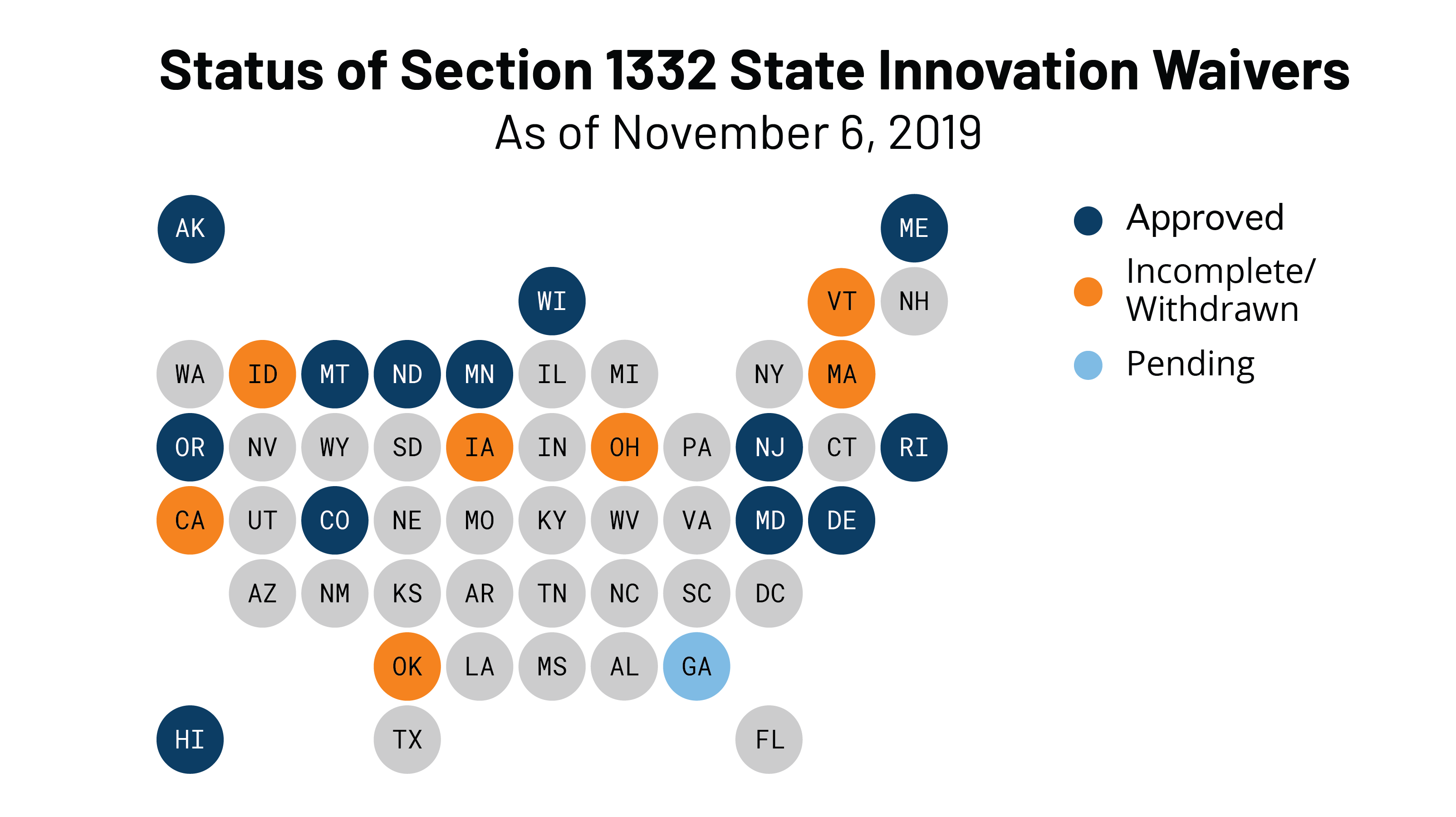
On July 24, 2020, the Centers for Medicare and Medicaid Services (CMS) and the Treasury Department approved Pennsylvania’s waiver application to operate a state-based reinsurance program under Section 1332 of the Affordable Care Act (ACA). This makes Pennsylvania the thirteenth state to be approved for a state-based reinsurance program. This post also summarizes the newest waiver proposal in Georgia.

Pennsylvania’s Waiver And More On Section 1332 Waivers

In late June, Pennsylvania received federal approval for a five-year reinsurance program beginning with the 2021 plan year. The state’s $139.3 million reinsurance program is expected to reduce premiums by about 4.6 percent (relative to what premiums would have been in the absence of the waiver) and increase enrollment in the individual market by about 0.5 percent in 2021. The federal government will contribute $95.1 million while state funds would account for about $44.2 million.

Implementation of the reinsurance program will coincide with a transition away from the federal marketplace to the new state-based marketplace, the Pennsylvania Health Insurance Exchange (Exchange). Both the reinsurance program and the Exchange were created in the same piece of 2019 legislation, which requires the Exchange to assess and collect fees—up to 3.5 percent of total monthly premiums—to support the reinsurance program. Pennsylvania expects to set the initial user fee at 3 percent of total monthly premiums. Each year, the Exchange will collect the user fee from insurers, deduct its operating expenses, and transfer the remaining funds to a reinsurance fund. In making reinsurance payments to insurers, Pennsylvania intends to first exhaust federal pass-through funding and then user fee revenue.

Based on CMS data, Pennsylvania insurers paid HealthCare.gov user fees of about $98.1 million for 2018 and about $83.1 million for 2019. (CMS has released 2018 and 2019 user fee data for each state that uses HealthCare.gov.) User fees in 2018 and 2019 were set at 3.5 percent of premiums, although the federal user fee was reduced to 3 percent for 2020.

Like nearly all states with reinsurance programs, Pennsylvania will use an overall attachment point model with parameters set annually by the insurance department. For 2021, the program is expected to reimburse insurers for 60 percent of claims between $60,000 and $100,000. To ensure program flexibility, the insurance department can make payments on a pro rata basis if funding is insufficient. Pennsylvania also intends to leverage the EDGE server maintained by CMS to determine how much each insurer is due. (This issue—whether and how states could leverage EDGE server infrastructure for reinsurance—has come up in at least one other state as well.)

Pennsylvania’s waiver application was submitted on February 11 and deemed complete on March 12. Federal regulators received and considered two supportive comments on the state’s application. In an approval letter to Commissioner Jessica Altman on July 24, the Departments laid out specific terms and conditions that the state must accept within 30 days for the waiver to go into effect. Once the waiver is accepted, the Departments will notify Pennsylvania of its amount of pass-through funding for 2021.

With Pennsylvania, 14 states have approved Section 1332 waivers. All but one approved waiver has been for a state-based reinsurance program, and CMS released a report on the effect of the 12 already-established state-based reinsurance programs. The report identifies the funding source for each state, program parameters, the impact on premiums by state and year, insurer participation, and enrollment. The average premium reduction for 2020 across all states was 17.7 percent. New Hampshire may be soon added to this list for 2021: the state’s waiver application was submitted in late April.

Latest On Georgia’s Waiver Application

Georgia submitted a waiver application in late December 2019. As discussed more here, Georgia’s application had two phases: phase one is for a reinsurance program and phase two involves much broader changes to the state’s individual market known as the “Georgia Access” model. Phase one was deemed complete on February 6, and review of phase two was “paused” to Georgia leaders could submit additional information.

Under the original Georgia Access Model, Georgia would have eliminated the use of HealthCare.gov, transitioned consumers to decentralized enrollment through private web-brokers and insurers, established its own subsidy structure, enabled the subsidization of plans that do not comply with all the ACA’s requirements, and capped enrollment if subsidy costs exceed federal and state funds. The proposal was criticized for jeopardizing access to comprehensive coverage and failing to satisfy Section 1332’s statutory guardrails.

About five months after review was “paused,” Georgia modified its waiver application, requesting that its reinsurance program be approved for 2022 (rather than 2021) and abandoning some initial components of phase two. The new waiver application was posted in early July and exposed for public comment until July 23.

The main change for phase two is that Georgia would no longer develop its own state-specific subsidy structure. Georgia would validate a consumer’s eligibility for premium tax credits and then send this information to the federal government. The federal government would then issue the subsidies to insurers and reconcile subsidies during tax season. Subsidies would only be available for qualified health plans under the ACA, as they are now. But Georgia wants to conduct its own eligibility determinations because it believes doing so will be more accurate: the state can leverage existing infrastructure, use more recent employment data, and integrate Medicaid eligibility determinations.

The waiver would, however, still eliminate the use of HealthCare.gov, which would make Georgia the only state to do so. Marketplace consumers would be forced to transition to a highly decentralized enrollment system that uses web-brokers and insurers. As a summary of the revised application puts it, Georgia will “transition responsibility for front-end functions of consumer outreach, customer service, plan shopping, selection, and enrollment from the [federal marketplace] to the commercial market.”

While federal subsidies could not be used towards non-ACA plans, Georgia continues to note that a benefit of moving away from HealthCare.gov to web-brokers and insurers is that residents could “view the full range of health plans” offered in the state. Georgia would leverage enhanced direct enrollment (EDE) standards which, as discussed more below, can lead to significant consumer confusion.

From here, Georgia will presumably respond to the latest round of public comment on its new proposal and then submit its revised application.


The COVID-19 Downturn Triggers Jump in Medicaid Enrollment

https://khn.org/news/the-covid-19-downturn-triggers-jump-in-medicaid-enrollment/

Reversing a three-year decline, the number of people covered by Medicaid nationwide rose markedly this spring as the impact of the recession caused by the outbreak of COVID-19 began to take hold.

Yet, the growth in participation in the state-federal health insurance program for low-income people was less than many analysts predicted. One possible factor tempering enrollment: People with concerns about catching the coronavirus avoided seeking care and figured they didn’t need the coverage.

Program sign-ups are widely expected to accelerate through the summer, reflecting the higher number of unemployed. As people lose their jobs, many often are left without workplace coverage or the money to buy insurance on their own.

Medicaid enrollment was 72.3 million in April, up from 71.5 million in March and 71 million in February, according to the latest enrollment figures released last week by the Centers for Medicare & Medicaid Services. The increase in March was the first enrollment uptick since March 2017.

About half of the people enrolled in Medicaid are children.

The increases varied widely around the country. Kentucky had the largest jump at nearly 7% from March to April. In addition, enrollment rose to 1.4 million in April from 1.2 million in February, according to the CMS data. That has continued, and today it’s up to 1.5 million, state officials said in an interview.

Kentucky has an aggressive outreach strategy using email or phone calls to contact thousands of residents who applied for state unemployment insurance, designed to make sure they know about Medicaid. “It’s been very effective, and in the past few weeks we’ve been enrolling 8,000 to 10,000 people a week,” said Eric Friedlander, secretary of the Kentucky Cabinet for Health and Family Services, which oversees Medicaid.

The Bluegrass State has also made enrollment easier by developing a one-page online form instead of having people fill out a 20-page application, he added.

“This is the right thing to do to help people get signed up for health care coverage and it supports the health industry in our state,” Friedlander said. “The health industry would collapse without Medicaid.”

Joan Alker, executive director of the Center for Children and Families at Georgetown University in Washington, D.C., said she expects Medicaid enrollment to keep rising this summer. “Given that there are no signs that the virus is coming under control anytime soon, job losses will become more permanent, and more folks will become eligible for Medicaid over time,” she said.

One reason Medicaid numbers have not grown faster, she suggested, is because people have more immediate needs than securing health coverage, especially if they are feeling well.

Many people are worried about getting unemployment insurance or getting evicted from their home, she noted. “That’s combined with the fact that many people are reluctant to go to their doctor because of safety concerns,” she said. “And, as a consequence, applying for Medicaid may not be at the top of their list.”

Chris Pope, a senior fellow at the Manhattan Institute for Policy Research, a conservative think tank, said the slower-than-expected growth in Medicaid could signal that people who were laid off had coverage through a spouse or a parent.

In addition, he said, “many jobs that went away did not offer health insurance,” citing millions of service-sector positions in industries such as hotels and restaurants that have been lost.

Beyond the surge in unemployment, Medicaid rolls have risen because states cannot discontinue coverage to people enrolled as of March 18, 2020, as a condition of receiving higher federal Medicaid funding included in a coronavirus relief package passed by Congress.

Medicaid is a countercyclical program, meaning enrollment typically rises during an economic downturn. But that forces states to face the fiscal challenge of paying for their share of the program even as tax revenue dries up.

An exception to this rule was the jump in enrollment starting in 2014 when the Affordable Care Act allowed states to expand Medicaid to cover everyone with incomes below 138% of the federal poverty level, or about $17,609 for an individual this year.

Enrollment soared by about 15 million people from 2014 to 2017, peaking at about 75 million as nearly three dozen states expanded the program. Since then, a strong economy and steadily declining unemployment levels led to a drop in Medicaid rolls until April.

Enrollment changes in April varied across the country.

California, which has the highest Medicaid enrollment in the country, saw its level hold relatively steady at 11.6 million people in April.

Nevada and Oklahoma posted nearly 4% enrollment growth rates between March and April’s data.

Florida’s Medicaid numbers jumped to 3.7 million in April from 3.6 million in March, nearly a 2.5% increase, the CMS data showed. Since then, Florida data shows enrollment has topped 4.1 million.

The Trump administration has been criticized by consumer advocates for not establishing a national campaign to promote Medicaid during the economic downturn and health crisis.

One indicator that Medicaid enrollment is still going up is the growing number of recipients in managed care plans in 16 states that reported data from March to May. Those plans have increased by a total of nearly 4%, according to a KFF report. (KHN is an editorially independent program of KFF.) Most states have shifted many of their Medicaid enrollees into these private health plans.

KFF estimated that nearly 13 million people who became uninsured after losing their jobs in March are eligible for Medicaid.

Robin Rudowitz, a KFF vice president, said there is typically a lag time of weeks or months before people who have lost their jobs and health coverage seek to enroll in Medicaid. The impact on Medicaid enrollment also lasts well after the immediate effect of a downturn, she said.

“There is a long tail,” she said.


KHN’s ‘What The Health?’: Trump Twists on Virus Response

https://khn.org/news/khn-podcast-what-the-health-trump-twists-on-virus-response/

KHN's 'What The Health?': Trump Twists on Virus Response | Kaiser ...

President Donald Trump — who has spent the past six months trying to play down the coronavirus pandemic — seems to have pivoted. In back-to-back briefings on July 21 and 22, Trump cautioned that the U.S. is in a dangerous place vis-a-vis the pandemic. He urged the public to wear masks — although he has rarely worn one in public.

Meanwhile, Republicans in the Senate are scrambling to put together a package for the next COVID-19 relief bill, facing a July 31 deadline, when some of the benefits passed in the spring expire. House Democrats passed their bill in May.

This week’s panelists are Julie Rovner of Kaiser Health News, Joanne Kenen of Politico, Margot Sanger-Katz of The New York Times and Tami Luhby of CNN.

Among the takeaways from this week’s podcast:

  • Although Trump’s renewed emphasis on COVID-19 has surprised some of his critics, it may persuade his supporters to take actions promoted by public health officials. Trump’s emphasis on the importance of face coverings, perhaps coupled with the rising number of cases in parts of the country, could convince people who were otherwise dismissive of masks. People who do not necessarily trust public health officials may listen to Trump.
  • Republicans on Capitol Hill are in disarray on how to approach the next coronavirus relief bill. They are not in lockstep with the White House and are not supporting Trump’s call for a payroll tax cut.
  • One reason members of Congress are not eager to cut the payroll taxes is that the economic downturn has spurred concerns the Medicare and Social Security trust funds are being depleted faster than expected. However, analysts point out that when employment rises again, some of those concerns could dissipate.
  • A key sticking point in the economic relief package is whether to extend the bump in unemployment benefits that Congress approved in the spring. Lawmakers are facing a hard deadline on the issue because that money runs out next week, and the prohibition on evictions that was also part of an earlier COVID-19 relief bill ends even sooner. With rent, mortgages and other bills coming due Aug. 1, unemployed consumers could face a tough beginning of the month.
  • The Food and Drug Administration has approved limited use of pool testing for COVID-19. That allows approved labs to put together a small number of tests to run at once, thus conserving some of the materials needed for the process. If the pool tests positive, then those people whose results were pooled have to be tested again individually. The efforts have limited usefulness when rates of transmission are high in a community, but they may be helpful in specific settings, such as schools or workplaces.
  • New data shows that opioid addiction ticked back up in 2019, after a slight decline. Part of the problem is the growing use of the powerful — and dangerous — drug fentanyl. Economic woes also play a role. Addiction is often referred to as an epidemic of despair.
  • Although it’s unlikely the judicial system will overrule the administration’s efforts to bolster short-term insurance plans — which are generally less expensive but don’t offer as much protection for consumers as policies sold on the Affordable Care Act’s marketplaces — they could be circumvented if Democrats take over the White House. Even still, Democrats would likely have to find a way to make ACA plans more affordable.