The race for a COVID-19 vaccine is well underway, with dozens of vaccine candidates being tested worldwide. Because vaccines typically take a decade to get to market, the pace of Operation Warp Speed—which aims to deliver a COVID vaccine by January 2021—has raised concerns that the government will sacrifice vaccine safety and efficacy for speed.
Shown in the graphic above, a survey conducted by Jarrard Phillips Cate & Hancock and Public Opinion Strategies found nearly half ofAmerican adults are on the fence about getting a COVID-19 vaccine,with over 20 percent saying they are unlikely to get one at all.
This hesitancy is greater among both female and Black respondents—with the latter doubly concerning given that Blacks have been disproportionately impacted by the disease. The top reasons given for skepticism include concerns about side effects (47 percent) and the risk of becoming infected by the vaccine (22 percent).
A related survey from STAT and the Harris Poll found that 78 percent of Americans worry the vaccination approval process is being driven more by politics than science.
Whom do consumers trust for information? Their doctors. Physicians must be prepared to answer questions about how they have evaluated a vaccine, why they believe it to be safe and effective, and whether they have chosen to take it themselves.
As providers prepare to deliver millions of vaccine doses once one is approved and available, leveraging the trust inherent in physician-patient relationships will be essential, especially among vaccine-hesitant populations.
Years ago, anthropologist Margaret Mead was asked by a student what she considered to be the first sign of civilization in a culture. The student expected Mead to talk about fishhooks or clay pots or grinding stones.
But no. Mead said that the first sign of civilization in an ancient culture was a femur (thighbone) that had been broken and then healed. Mead explained that in the animal kingdom, if you break your leg, you die. You cannot run from danger, get to the river for a drink or hunt for food. You are meat for prowling beasts. No animal survives a broken leg long enough for the bone to heal.
A broken femur that has healed is evidence that someone has taken time to stay with the one who fell, has bound up the wound, has carried the person to safety and has tended the person through recovery. Helping someone else through difficulty is where civilization starts, Mead said.”
“We are at our best when we serve others. Be civilized.”
CMS has pushed back publishing a final rule that would ease anti-kickback regulations on providers by a year. The move is likely to anger healthcare organizations that have long clamored for the rule’s relaxation.
The deadline to finalize the rule proposed Oct. 17, 2019, is now Aug. 31, 2021. Originally, the rule relaxing stipulations of the decades-old Stark Lawwas expected this month. It’s unclear how the extension affects OIG’s tandem rule slacking similar regulations outlined in the Federal Anti-Kickback Statute and the Civil Monetary Penalties Law.
CMS chalked up the delay to the need to detangle the many thorny issues raised by healthcare companies in their comments on the rule. “We are still working through the complexity of the issues raised by comments received on the proposed rule and therefore we are not able to meet the announced publication target date,” Wilma Robinson, HHS deputy executive secretary, wrote in a notice on the change dated Monday. CMS did not respond to requests to clarify what issues are tying up the rule.
Dive Insight:
Hospital groups are unlikely to be pleased with the delay. The American Hospital Association earlier this month sent the Office of Management and Budget a letter urging them to expedite the review and release of the final Stark and AKS regulations.
“These rules take on even more significance in light of the COVID-19 pandemic,” AHA EVP Thomas Nickels wrote in the letter dated Aug. 19. “These rules will remove unnecessary regulatory burden from hospitals and health systems, allow for enhanced care coordination for patients, improve quality, and reduce waste in the Medicare and Medicaid programs.”
AHA did not respond to a request for comment by time of publication.
Healthcare organizations have said the Stark Law and Anti-Kickback Statute, passed decades ago in an attempt to deter physicians from referring patients to other locations or for services that would financially benefit them, are outdated and burdensome. Providers say the proposed changes are long overdue, citing longstanding concerns the laws hinder efforts to coordinate patient care across different sites and episodes.
The proposed rule, if finalized, would sharply ease federal anti-kickback regulations in a bid to help providers use value-based payment arrangements, reflecting the growing shift away from fee-for-service reimbursement and siloed care models.
The rule clarified exemptions from the physician self-referral law for certain value-based payment arrangements among physicians, providers and suppliers. Specifically, it applies to models with a specific patient population, where one of the entities takes on full financial risk for providing Medicare Part A and Part B for the first six months. The payments can either be capitated or global.
Doctors would be required to pay back a fourth of payments if they don’t meet financial goals.
The proposed rule also introduced a new exemption for certain arrangements under which a doctor receives limited payment for items and services that he or she provides, and another that would allow hospitals and medical device manufacturers to donate cybersecurity tools and other related software to doctors without fear of retribution.
Comments on the proposed rule from the hospital and physician community were generally supportive of the changes, though some organizations, including the American Hospital Association and Walmart, thought the feds didn’t go far enough. Hospital groups argued the exceptions should be expanded to include private payers, along with Medicare and Medicaid and the definition of value-based arrangements should be broadened, along with some other clarifications.
Per the Social Security Act, agencies have to maintain a regular timeline for publishing final regulations, normally within three years of the draft. However, they are allowed to extend the original deadline, if they justify the change.
We don’t have all of the answers, but that’s not our biggest problem.
Thirty years ago, in preparation for hunting season, I went to a shooting range to practice with my bow. I felt fine. When I finished, I got in my truck and began to back out. When I pressed on the brake, I felt a sharp pain in my foot. My first instinct was to go over what I did walking back and forth to pull arrows from the target. Had I twisted my foot, did I trip on something? No, I had not injured my foot in any way.
When I got home, I took off my shoe and looked. My big toe was slightly swollen and slightly red. It looked like gout. I took ibuprofen. I was better by the next day. I never had another attack until this week.
I was at a friend’s house drinking wine. My knee suddenly began to hurt. I walk or jog 6-8 miles per day, so my first thought was that all the exercise was catching up to me. I took ibuprofen. It got better. But the next day my ankle suddenly became very painful; then my wrist hurt a bit. I remembered my experience with gout. I treated myself for gout, and got better.
I feel very fortunate to live in a time when gout can be easily treated. One hundred years ago, I would have been in big trouble.Which is not to say that I would not have taken medicine in an attempt to get relief. I would have tried a variety of products that claimed to help but did no good.
Today, we can treat so many illnesses that were brutal and deadly in the past. A long time ago, all children with type 1 diabetes died. Today, we have effective therapy — insulin. When I was a resident in the early 1980s, we had no specific way of treating a heart attack. Today, we can place a stent and reverse the pathological process.
In the past, something as simple as poison ivy could make a person’s life miserable. Today, we can knock it out in a short time. Modern medicine can do amazing things. To a large extent, it can do these amazing things because of effective biomedical science.
However, it can’t cure everything. Nor can it beat death. The amazing accomplishments of the medical profession in the last 100 years seem to have led some to believe, or want to believe, that doctors can solve all medical problems. This belief system came to bear with the COVID-19 pandemic.
Many expected the medical profession to step up and solve the problem. When it didn’t, disappointment arose. Then accusations began to fly. Some claimed that there were conspiracies involving Big Pharma and doctors. Others claimed there were cures that were being suppressed by the government.
Some doctors and scientists responded to this by trying to appease. They turned to in vitro data — such as the zinc/hydroxychloroquine (HCQ) interaction — to claim that zinc and HCQ would work wonders. When other doctors and scientists pointed out flaws in that data, they were attacked. It was another conspiracy. I even heard accusations that this was a plot by Bill Gates for population control.
Some doctors also turned to poor, anecdotal trials with HCQ that supposedly showed benefit in a few patients. This led quite a few to believe that HCQ was a wonder drug. Once the exaggerations about HCQ came out, it could no longer be found in pharmacies. The panic was just that strong.
Everyone seemed to get caught up in the panic mindset, and then work under the notion that a lack of clear medical success just can’t be possible in the 21st century. Many patients in intensive care units across the country were being put on HCQ, steroids, remdesivir, anti-IL-6 medication, vitamin C, and whatever else seemed like it might do something.
Many patients who were put on that medication cocktail died, because there was no legitimate science behind this approach — whether it helped was unclear.
However, over time, it became more clear that steroids helped. It became more clear that HCQ did not help. Such revelations led to more reasonable, though not entirely proven, therapeutic approaches. But because the less scientific approaches had so much hype in the beginning, and because the panic was so strong, getting away from them has been fraught with problems and accusations, and even physical threats.
Sadly, some of these accusations and threats were fueled by irresponsible doctors in academic medical centers. Misinformation was fed to the public, and the public, being not well-versed in biomedical research, latched onto the credentials of these doctors rather than seeing through their hysterical and misguided arguments about HCQ and such.
The internet and the free flow of information allows many who don’t really understand the ins and outs of biomedical research and clinical medicine to read something that sounds good and believe it because it satisfies psychological needs. This is a clear pattern of behavior when it comes to HCQ.
But it is not just irresponsible people in academic medical centers who contribute to this process. Doctors, many of whom post on medical blogs, accuse anyone who says we should slow down and evaluate our therapy of “wanting to do nothing” or “not caring about the thousands who are dying.” Even well-intentioned doctors get caught up in this need to seem like something is being done, and so they order all sorts of useless tests.
One such useless test being ordered more commonly in COVID patients is an MRI of the heart. One study in a few patients comes out that shows that COVID can affect the heart, and the next thing you know everybody with COVID needs a heart MRI. Whether the MRI is a reliable test for this is unclear. What we do with the information from the MRI is unclear. It just makes some doctors and some patients feel good to engage in such useless practices.
This pattern of behavior,the pattern of engaging in useless practices to give the appearance of care, is quite common in the profession of medicine. I find it interesting that it has not been challenged by progressives, like those so interested in the Green New Deal. The environmental harm done along these lines by misguided doctors might do as much or more environmental harm than fracking — but at least with fracking you get something to show for your efforts.
With out-of-control doctors, ordering useless tests, running MRI machines and CT scans, etc., day in and day out, without valid justifications, produces nothing useful — unless one believes that feeding hypochondriasis and feeding poor medical judgment is useful.
The profession of medicine accomplished great things in the 21st century. These great things came through American exceptionalism. They came through valid biomedical science. These amazing accomplishments led many to believe that the profession of medicine has all the answers.
But it doesn’t. The COVID pandemic has shown us that. I’m sorry that we can’t save everyone. It is tragic. But it will be more tragic if we let our limitations along these lines lead us into a dark place of anger, lack of reason, lack of valid science, and then on to invalid conspiracy theories.
American exceptionalism does not need to die because of COVID. Instead, what needs to die is a type of insanity that makes us think we have all the answers. What needs to die is a type of insanity that makes us think that if we don’t have all the answers, we have to turn to useless testing, unproven therapies, and futile care.
What needs to die is the turning to false prophets and conspiracy theories. The profession of medicine has proven that it can do a very good job combating illness.
Good doctors are trying hard to deal with and solve this pandemic. When a type of insanity gets in the way, it is a problem.
W. Robert Graham, MD, completed medical school and residency at UTHSC-Dallas (Parkland Hospital) and served as chief resident. Graham received a National Institutes of Health fellowship at the Salk Institute for oncogene research in 1985. He was a professor of medicine at Baylor College of Medicine from 1998 through 2016. In retirement, he enjoys writing and ranching.
Several factors will shape the financial performance of physician- and hospital-led organizations under total cost of care payment models.
Introduction
Broad consensus has long existed among public- and private-sector leaders in US healthcare that improvements in healthcare affordability will require, among other changes, a shift away from fee-for-service (FFS) payments to alternative payment models that reward quality and efficiency. The alternative payment model that has gained broadest adoption over the past ten years is the accountable care organization (ACO), in which physicians and/or hospitals assume responsibility for the total cost of care for a population of patients.
Launched by the Centers for Medicare & Medicaid Services (CMS) Innovation Center in 2012, Pioneer ACO was the first such model design to generate savings for Medicare. In this incarnation, Medicare set a benchmark for total cost of care per attributed ACO beneficiary: If total cost of care was kept below the benchmark, ACOs were eligible to share in the implied savings, as long as they also met established targets for quality of care. If total cost of care exceeded the benchmark, ACOs were required to repay the government for a portion of total cost of care above the benchmark.
Payment models similar to the one adopted by Pioneer ACOs also have been extended to other Medicare ACO programs, with important technical differences in estimates for savings and rules for the distribution of savings or losses as well as some models offering gain sharing without potential for penalties for costs exceeding the benchmark. State Medicaid programs as well as private payers (across Commercial, Medicare Advantage, and Medicaid Managed Care) also have adopted ACO-like models with similar goals and payment model structures. Of the roughly 33 million lives covered by an ACO in 2018, more than 50 percent were commercially insured and approximately 10 percent were Medicaid lives.2
On the whole, ACOs in the Medicare Shared Savings Program (MSSP) have delivered high-quality care, with an average composite score of 93.4 percent for quality metrics. However, cost savings achieved by the program have been limited: ACOs that entered MSSP during the period from January 1, 2012 to December 31, 2014, were estimated to have reduced cumulative Medicare FFS spending by $704M by 2015; after bonuses were accounted for, net savings to the Medicare program were estimated to be $144M.3 Put another way, in aggregate, savings from Medicare ACOs in 2015 represented only 0.02 percent of total Medicare spending. The savings achieved were largely concentrated among physician-led ACOs (rather than hospital-led ACOs). In fact, after accounting for bonuses, hospital-led ACOs actually had higher total Medicare spending by $112M on average over three years.4
While savings from MSSP have been relatively limited, in aggregate, numerous examples exist of ACOs that have achieved meaningful savings—in some cases in excess of 5 percent of total cost of care—with significant rewards to both themselves as well as sponsoring payers (for example, Millennium, Palm Beach, BCBSMA AQC).567 The wide disparity of performance among ACOs (and across Medicare, Medicaid, and Commercial ACO programs) raises the question of whether certain provider organizations are better suited than others to succeed under total cost of care arrangements, and whether success is dictated more by ACO model design or by structural characteristics of participating providers.
In the pages that follow, we examine these questions in two ways. First, we analyze “the math of ACOs” by isolating four factors that contribute to overall ACO profitability: bonus payments, “demand destruction,” market share gains, and operating expenses. Following these factors, we illustrate the math of ACOs through modeling of the performance of five different archetypes: physician-led ACOs; hospital-led ACOs with low ACO penetration and low leakage reduction; hospital-led ACOs with high ACO penetration; hospital-led ACOs with high leakage reduction; and hospital-led ACOs with high penetration and leakage reduction.
The Math of ACOs
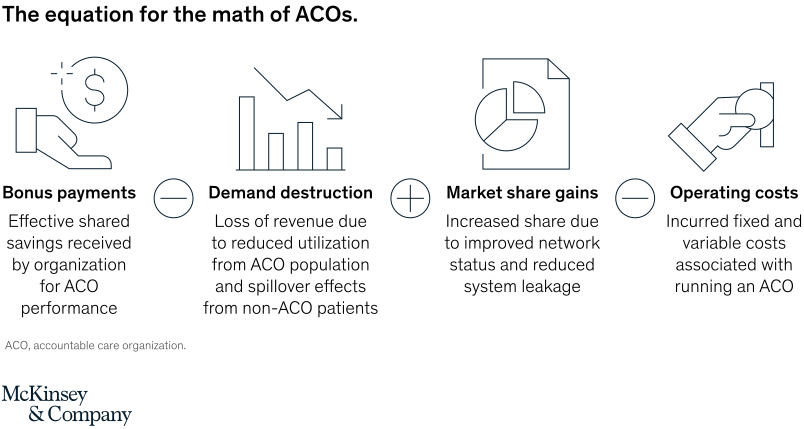
In the pages that follow, we break down “the math of ACOs” into several key parameters, each of which hospital and physician group leaders could consider evaluating when deciding whether to participate in an ACO arrangement with one or more payers. Specifically, we measure the total economic value to ACO-participating providers as the sum of four factors: bonus payments, less “demand destruction,” plus market share gains, less operating costs for the ACO (Exhibit 1).
In the discussion that follows, we examine each of these factors and understand their importance to the overall profitability of ACOs, using both academic research as well as McKinsey’s experience advising and supporting payers and providers participating in ACO models.
1. Bonus payments
The premise of ACOs rests on the opportunity for payers and participating providers to share in cost savings arising from curbing unnecessary utilization and more efficient population health management, thus aligning incentives to control total cost of care. Because ACOs are designed to reduce utilization, the bonus—or share of estimated savings received by an ACO—is one factor that significantly influences ACO profitability and has garnered the greatest attention both in academic research and in private sector negotiations and deliberations over ACO participation. Bonus payments made to ACOs are themselves based on several key design elements:
The baseline and benchmark for total costs, against which savings are estimated8 ;
The shared savings rate and minimum savings/loss rates;
Risk corridors, based on caps on gains/losses and/or “haircuts” to benchmarks; and,
Frequency of rebasing, with implications for benchmark and shared savings.
1a. Baseline and benchmark
Most ACO models are grounded in a historical baseline for total cost of care, typically on the population attributed to providers participating in the ACO. Most ACO models apply an annual trend rate to the historical baseline, in order to develop a benchmark for total cost of care for the performance period. This benchmark is then used as the point of reference to which actual costs are compared for purposes of determining the bonus to be paid.
Historical baselines may be based either on one year or averaged over multiple years in order to mitigate the potential for a single-year fluctuation in total cost of care that could create an artificially high or low point of comparison in the future. Trend factors may be based on historically observed growth rates in per capita costs, or forward-looking projections, which may depart from historical trends due to changes in policy, fee schedules, or anticipated differences between past and future population health. Trend factors may be based on national projections, more market-specific projections, or even ACO-specific projections. For these and other reasons, a pre-determined benchmark may not be a good estimate of what total cost of care would have been in the absence of the ACO. As a result, estimated savings, and hence bonuses, may not reflect the true savings generated by ACOs if compared to a rigorous assessment of what otherwise would have occurred.
Recent research suggests that an ACO’s benchmark should be set using trend data from providers in similar geographic areas and/or with similar populations instead of using a national market average trend factor.9 It has been observed in Medicare (and other) populations that regions (and therefore possibly ACOs) that start at a lower-than-average cost base tend to have a higher-than-average growth trend. For example, Medicare FFS spending in low-cost regions grew at a rate 1.2 percentage points faster than the national average (2.8 percent and 1.6 percent from 2013 to 2017 compound annual growth rate, respectively). This finding is particularly relevant in low-cost rural communities, where healthcare spending grows faster than the national average.10 Based on this research, some ACO models, such as MSSP and the Next Generation Medicare ACO model, have developed benchmarks based on blending ACO-specific baselines with market-wide baselines. This approach is intended to account for the differences in “status quo” trend, which sponsoring payers may project in the absence of ACO arrangements or associated improvements in care patterns. Some model architects have advocated for this provider-market blended approach to benchmark development because they believe such an approach balances the need to reward providers who improve their own performance with a principle tenet of this model: That ACOs within a market should be held accountable to the same targets (at least in the long term).
The shared savings rate is the percentage of any estimated savings (compared with benchmark) that is paid to the ACO, subject to meeting any requirements for quality performance. For example, an ACO with a savings rate of 50 percent that outperforms its benchmark by 3 percent would keep 1.5 percent of benchmark spend. Under the array of Medicare ACO models, the shared savings rate percentage ranges anywhere from 40 percent to 100 percent.11
In some ACO models, particularly one-sided gain sharing models that do not introduce downside risk, payers impose a minimum savings rate (MSR), which is the savings threshold for an ACO to receive a payout, typically 2 percent, but can be higher or lower.12 For example, assume ACO Alpha has a savings rate of 60 percent and MSR of 1.5 percent. If Alpha overperforms the benchmark by 1 percent, there would be no bonus payout, because the total savings do not meet or exceed the MSR. If, however, Alpha overperforms the benchmark by 3 percent, Alpha would receive a bonus of 1.8 percent of benchmark (60 percent of 3 percent). An MSR is common in one-sided risk agreements to protect the payer from paying out the ACO if modest savings are a result of random variations. ACOs in two-sided risk arrangements may often choose whether to have an MSR.
Both factors impact the payout an ACO receives. Between 2012 and 2018, average earned shared savings for MSSP ACOs were between $1.0M and $1.6M per ACO (between $10 and $100 per beneficiary).13 However, while nearly two out of three MSSP ACOs in 2018 were under benchmark, only about half of them (37 percent of all MSSP ACOs) received a payout due to the MSR.14
1c. Risk corridors
In certain arrangements, payers include clauses that limit an ACO’s gains or losses to protect against extreme situations. Caps depend on the risk-sharing agreement (for example, one-sided or two-sided) as well as the shared savings/loss rate. For example, MSSP Track 1 ACOs (one-sided risk sharing) cap shared savings at the ACO’s share of 10 percent variance to the benchmark, while Track 3 ACOs (two-sided risk sharing) cap shared savings at the ACO’s share of 20 percent variance to the benchmark and cap shared losses at 15 percent variance to the benchmark.15 In contrast with these Medicare models, many Commercial and Medicaid ACO models have applied narrower risk corridors, with common ranges of 3 to 5 percent. In our experience, payers have elected to offer narrower risk corridors. Their choice is based on their desire to mitigate risk as well as the interest of some payers (and state Medicaid programs) to share in extraordinary savings that may be attributable in part to policy changes or other interventions undertaken by the payers themselves, whether in coordination with ACOs or independent of their efforts.
Payers also may vary the level of shared savings (and/or risk), between that which applies to the first dollar of savings (versus benchmark) compared with more significant savings. For example, by applying a 1 percent adjustment or “haircut” to the benchmark, a payer might keep 100 percent of the first 1 percent of savings and share any incremental savings with the ACO at a negotiated shared savings rate. Depending on what higher shared savings rate may be offered in trade for the “haircut,” such a structure has the potential to increase the incentive for ACOs to significantly outperform the benchmark. For example, an ACO that beats the benchmark by 4 percentage points and earns 100 percent of savings after 1 percentage point would net 75 percent of total estimated savings. However, under the same risk model, if the ACO were to beat the benchmark by 2 percentage points, they would only earn 50 percent of total savings. Such a structure could therefore be either more favorable or less favorable than 60 percent shared savings without a “haircut,” depending on the ACO’s anticipated performance.
1d. Frequency of rebasing
In most ACO models (including those adopted by CMS for the Medicare FFS program), the ACO’s benchmark is reset for each performance period based (at least in part) on the ACO’s performance in the immediate prior year. This approach is commonly referred to as “rebasing.” The main criticism of this approach toward ACO model design—which is also evident in capitation rate setting for Managed Care Organizations—is that ACOs become “victims of their own success”: Improvements made by the ACO in one year lead to a benchmark that is even harder to beat in the following year. The corollary is also true: An ACO with “excessive” costs in Year 1 may be setting themselves up for significant shared savings in Year 2 simply by bringing their performance back to “normal” levels.
Even in situations where ACOs show steady improvements in management of total cost of care over several years, the “ratchet” effect of rebasing can have significant implications for the share of estimated savings that flow to the ACO. Exhibit 2 illustrates the shared savings that would be captured by an ACO, if it were to mitigate trend by 2 percentage points consistently for 5 years (assumes linear growth), under a model that provides 50 percent shared savings against a benchmark that is set with annual rebasing. In this scenario, although the ACO would earn 50 percent of the savings estimated in any one year (against benchmark), the ACO would derive only 16 percent of total savings achieved relative to a “status quo” trend.
Exhibit 2
Some ACO model designs (including MSSP) have mitigated this “ratchet” effect, to some extent, by using multi-year baselines, whereby the benchmark for a given performance year is based not on the ACO’s baseline performance in the immediate prior year but over multiple prior years. This approach smooths out the effect of one-year fluctuations in performance on the benchmark for subsequent years; by implication, improvements made by an ACO in Year 1 and sustained in Year 2 create shared savings in both years. Under a three-year baseline, weighted toward the most recent year 60/30/10 percent (as applies to new contracts under the MSSP), the ACO in Exhibit 2 would capture 22 percent of total estimated savings over 5 years. If the model were instead to adopt an evenly weighted three-year baseline, that same ACO would capture 28 percent over 5 years.
In select cases, particularly in the Commercial market, payers and ACOs have agreed to multi-year prospective benchmarks. Under this approach, the benchmark for performance Years 1 to 5 (for example) are set prospectively in Year 0; the benchmarks for Years 2 and 3, for example, are not impacted by the ACO’s performance in Year 1. If this approach were to be applied to the ACO depicted in Exhibit 2, they would earn fully 50 percent of the total savings, assuming that the prospectively established 5-year benchmark was set at the “status quo” trend line. While prospective multi-year benchmarks may be more favorable to ACOs, they also increase the sensitivity of ACO performance to both the original baseline as well as the reasonableness of the prospectively applied trend rate.
Key takeaways
While in many cases healthcare organizations are highly focused on the percent of shared savings they will receive (shared savings rate), in our experience, the financial sustainability of ACO arrangements may be equally or more greatly affected by several other design parameters outlined here, among them: the inclusion of an MSR or a “haircut” to benchmark, either of which may dampen the incentive to perform; benchmark definitions including the use of provider-specific, market-specific, and/or national baseline and trend factors; and the frequency of rebasing, as implied by the use of a single-year or multi-year baseline, or the adoption of prospectively determined multi-year benchmarks.
2. Demand destruction
Although shared savings arrangements are meant to align providers’ incentives with curbing unnecessary utilization, the calculation of bonus payments based on avoided claims costs (as described in Section 1) does not account for the foregone provider revenue (and margins) attached to reductions in patient volume. The economic impact of this reduction in patient volume, sometimes referred to as “demand destruction,” is described in this section, which we address in two parts:
Foregone economic contribution based on reduced utilization in the ACO population; and,
Spillover effects from reduced utilization in the non-ACO population, based on clinical and operational changes that “spillover” from the ACO population to the non-ACO population.
2a. Foregone economic contribution
Claims paid to hospital systems for inpatient, outpatient, and post-acute facility utilization typically comprise 40 to 70 percent of total cost of care, with hospital systems that own a greater share of outpatient diagnostic lab and/or imaging and/or skilled nursing beds falling at the upper end of this range. These same categories of facility utilization may comprise 60 to 80 percent of reductions in utilization arising from improvements in population health management by an ACO. Given the high fixed costs (and correspondingly high gross margins) associated with inpatient, outpatient, and post-acute facilities, foregone facility volume could come at an opportunity cost of 30 to 70 percent of foregone revenue—that opportunity cost being the gross contribution margin associated with incremental patient volume, calculated as revenue less variable costs: Commercially insured ACO populations are more likely to fall into the upper end of this range and Medicaid populations into the lower end. This is the reason savings rates tend to be higher in the Commercial market, to offset the larger (negative) financial impact of “demand destruction.”
For example, a hospital-led ACO that mitigates total cost of care by 3 percent (or $300 based on a benchmark of $10,000 per capita) might forego $180 to $240 of revenue per patient (assuming 60 to 80 percent of savings derived from hospital services), which may represent $90 to $120 in foregone economic contribution, assuming 50 percent gross margins. As this example shows, this foregone economic contribution may represent a significant offset to any bonus paid under shared savings arrangements, unless the shared savings percentage is significantly greater than the gross margin percentage for foregone patient revenue.
For some hospitals that are capacity constrained, the lost patient volume may be replaced (that is, backfilled) with additional patient volume that may be more or less profitable depending on the payer (for example, an ACO that backfills with more profitable Commercial patients). However, the vast majority of hospitals are not traditionally capacity constrained and therefore must look to other methods (for example, growing market share) to be financially sustainable.
In contrast, physician-led ACOs have comparatively little need to consider the financial impact of “demand destruction,” given that they never benefitted from hospitalizations and thus do not lose profits from forgone care. Furthermore, primary care practices may actually experience an increase, rather than decrease, in patient revenue, based on more effective population health management. Even for multi-specialty physician practices that sponsor ACO formation, any reductions in patient volume arising from the ACO may have only modest impact on practice profitability due to narrow contribution margins attached to incremental patient volume. Physician-led ACOs may need to be concerned with “demand destruction” only to the extent that a disproportionate share of savings is derived from reductions in practice-owned diagnostics or other high-margin services; however, the savings derived from such sources are typically smaller than reductions in utilization for emergency department, inpatient, and post-acute facility utilization.
2b. Spillover effects
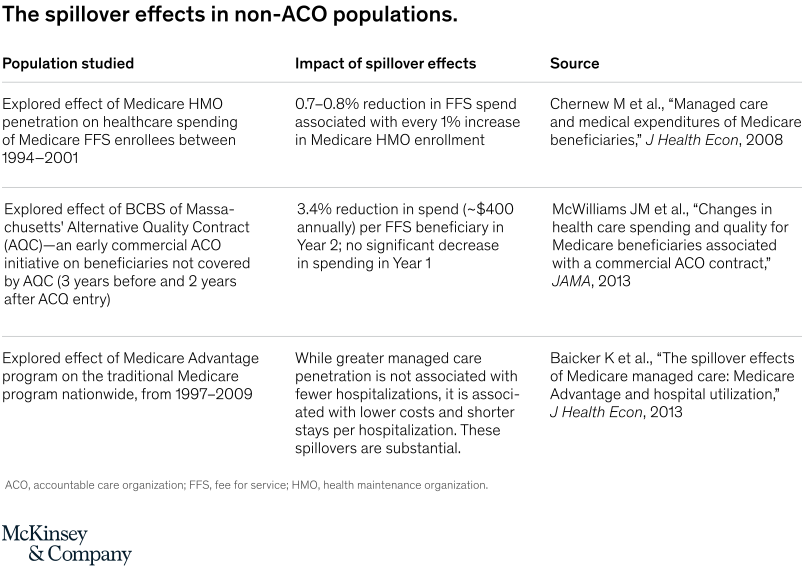
Though ACOs are not explicitly incentivized to reduce total cost of care of their non-ACO populations (including FFS), organizations often see increased efficiency across their full patient population after becoming an ACO. For example, research over the last decade has found reductions in spend for non-ACO lives between 1 and 3 percent (Exhibit 3).
Exhibit 3
The impact of spillover effects on an ACO’s profitability depends on the proportion of ACO and non-ACO lives that comprise a provider’s patient panel. Further, impact also depends on the ACO’s ability to implement differentiated processes for ACO and non-ACO lives to limit the spillover of the efficiencies. Although conventional wisdom implies that physicians will not discriminate their clinical practice patterns based on the type of payer (or payment), nonetheless many examples exist of hospitals and other providers with the ability to differentiate processes based on payer or payment type. For example, many hospitals deploy greater resources to discharge planning or initiate the process earlier for patients reimbursed under a Diagnosis Related Group (case rate) than for those reimbursed on a per diem or percent of charges model. Moreover, ACOs and other risk-bearing entities routinely direct care management activities disproportionately or exclusively toward patients for whom they have greater financial accountability for quality and/or efficiency. For physician-led ACOs, differentiating resource deployment between ACO- and non-ACO populations may be necessary to achieve a return on investment for new care management or other population health management activities. For hospital sponsors of ACOs that continue to derive the majority of their revenue from FFS populations outside the ACO, differentiating population health management efforts across ACO and FFS populations are of paramount importance to overall financial sustainability. To the extent that hospital-led ACOs are unable to do so, they may find total cost of care financial arrangements to be financially sustainable only if extended to the substantial majority of their patient populations in order to reduce the severity of any spillover effects.
Key takeaways
The adverse impact of “demand destruction” is what most distinguishes the math of hospital-led ACOs from that of physician-led ACOs. The structure of ACO-sponsoring hospitals—whether they own post-acute assets, for example—further shapes the severity of demand destruction, which then provides a point of reference for determining what shared savings percentage may be necessary to overcome the impact of demand destruction. Though in the long term, hospitals may be able to right size capacity, in the near term when deciding to become an ACO, there is often limited ability to alter the fixed-cost base. Finally, the extent of “spillover effects” from the ACO to the non-ACO population further impacts the financial sustainability of hospital-led ACOs. Hospital-led ACOs can seek to minimize the impact through 1) differentiating processes between the two populations, and/or 2) transitioning the substantial majority of their patient population into ACO arrangements.
3. Market share gains
Providers can further improve profitability through market share gains, specifically:
Reduced system leakage through improved alignment of referring physicians across both ACO and non-ACO patients; and,
Improved network status as an ACO.
3a. Reduced system leakage
ACOs can grow market share by coordinating patients within the system (that is, reduce leakage) to better manage total cost of care and quality. This coordination is often accomplished by improving the provider’s alignment with the referring physician; for example, ACOs can establish a comprehensive governance structure and process around network integrity, standardize the referral process between physicians and practices, and improve physician relationships within, and with awareness of, the network. Furthermore, ACOs can develop a process to ensure that a patient schedules follow-up appointments before leaving the physician’s office, optimizing the scheduling system and call center.
Stark Laws (anti-kickback regulations) have historically prevented systems from giving physicians financial incentives to reduce leakage. While maintaining high-quality standards, ACOs are given a waiver to this law and therefore are allowed to pursue initiatives that improve network integrity to better coordinate care for patients. In our experience, hospitals generally experience 30 to 50 percent leakage (Exhibit 4), but ACOs can improve leakage by 10 to 30 percent.
Exhibit 4
3b. Improved network status
In some instances for Commercial payers, an ACO may receive preferential status within a network by entering into a total cost of care arrangement with a payer. As a result, the ACO would see greater utilization, which will improve profitability. For example, in 2012, the Cooley Dickinson Hospital (CDH) and Cooley Dickinson Physician Hospital Organization, a health system in western Massachusetts with 66 primary care providers and 160 specialists, joined Blue Cross Blue Shield of Massachusetts’ (BCBSMA) Alternative Quality Contract (AQC), which established a per-patient global budget to cover all services and expenses for its Commercial population. As a result of joining the AQC, reducing the prices charged for services, and providing high quality of care, CDH was “designated as a high-value option in the Western Mass. Region,” which meant BCBSMA members with certain plans “[paid] less out-of-pocket when they [sought] care” at CDH.16 Other payers have also established similar mutually beneficial offerings to providers who assume more accountability for care.1718 An ACO can benefit from these arrangements up until most or all other provider systems in the same market join.
Key takeaways
These factors to improve market share (at lower cost and better quality) can help an ACO compensate for any lost profits from “demand destruction” (foregone profits and spillover effects) and increased operating costs. The opportunity from this factor, which requires initiatives that focus on reducing leakage, can be the difference between a net-neutral hospital-led ACO and a significantly profitable ACO. An example initiative would be performance management systems that analyze physician referral patterns.
4. Operating costs
Finally, profitability is impacted by operating costs or any additional expenses associated with running an ACO. These costs generally are lower for physician-led ACOs than for hospital-led ACOs (and also depend on buy-versus-build decisions). In our experience, operating costs to run an ACO vary widely depending on the provider’s operating model, cost structure (for example, existing personnel, IT capabilities), and ACO patient population (for example, number and percent of ACO lives). However, we will focus on three specific types of costs:
Care management costs, often variable, or a marginal expense for every life;
Data and analytics operating costs, which can vary widely depending on whether the ACO builds or buys this capability; and
Additional administrative costs, which are fixed or independent of the number of lives.
4a. Care management costs
In our experience, care management costs to operate an ACO range from 0.5 to 2.0 percent of total cost of care for a given ACO population. These care management costs include ensuring patients with chronic conditions are continuously managing those conditions and coordinating with physician teams to improve efficacy and efficiency of care. A core lever of success involves reducing use of unnecessary care. ACOs that spend closer to 2 percent and/or those whose efforts focus on expanding care coordination for high-risk patients struggle to achieve enough economic contribution to break even. This is because care coordination (devoting more resources to testing and treating patients with chronic disease) often does not have a positive return on investment.19 ACOs that do this effectively and ultimately spend less on care management (around 0.5 percent of the total cost of care) tend to create value primarily through curbing unnecessary utilization and steering patients toward more efficient facilities rather than managing chronic conditions. This value creation is particularly true for Commercial ACO contracts, where there is greater price variation across providers compared with Medicare and Medicaid contracts, where pricing is standardized.
4b. Data and analytics operating costs
Data and analytics operating costs are critical to supporting ACO effectiveness. For example, high-performing ACOs prioritize data interoperability across physicians and hospitals and constantly analyze electronic health records and claims data to identify opportunities to better manage patient care and reduce system leakage. ACOs can either build or license data and analytics tools, a decision that often depends on the number of ACO lives. In our experience, an ACO that decides to build its own data and analytics solutions in-house will on average invest around $24M for upfront development, amortized over 8 years for $3M per year, plus $6M in annual costs (for example, using data scientists and analysts to generate insights from the data), for a total of $9M per year. Alternatively, ACOs can license analytics software on a per-patient basis, typically costing 0.5 to 1.5 percent of the total cost of care. Thus, we find the breakeven point at around 100,000 covered ACO lives; therefore, it often makes financial sense for ACOs with more than 100,000 lives to build in-house.
4c. Additional administrative costs
Organizations must also invest in personnel to operate an ACO, typically including an executive director, head of real estate, head of care management, and lawyers and actuaries. The ACO leadership team’s responsibilities often include setting the ACO’s strategy (for example, target markets, lines of business, services offered, through which physicians and hospitals) and developing, managing, and communicating with the physician network to support continuity of care.
Key takeaways
Operating costs to run an ACO are significant. Ability to find ways to invest in fixed costs that are more transformational in nature may result in lower near-term profitability but can provide a greater return on investment in the long term both for the ACO and the rest of the system. The decision to make these investments is dependent on the number of lives covered by an individual ACO.
ACO Archetypes
Drawing on the analysis outlined above, we conducted scenario modeling of “the math of ACOs” using five different ACO archetypes, which vary in structure and performance under a common set of rules. These five archetypes include:
Typical physician-led ACO
Hospital-led ACO with low ACO penetration and low leakage reduction
Hospital-led ACO with high ACO penetration
Hospital-led ACO with high leakage reduction
Hospital-led ACO with high leakage reduction and high ACO penetration
Subsequently, taking an ACO’s structure as a given, we describe for each ACO archetype the key model design parameters and other strategic and operational choices that ACOs might make to maximize their performance.
Comparision of archetypes based on scenario modeling
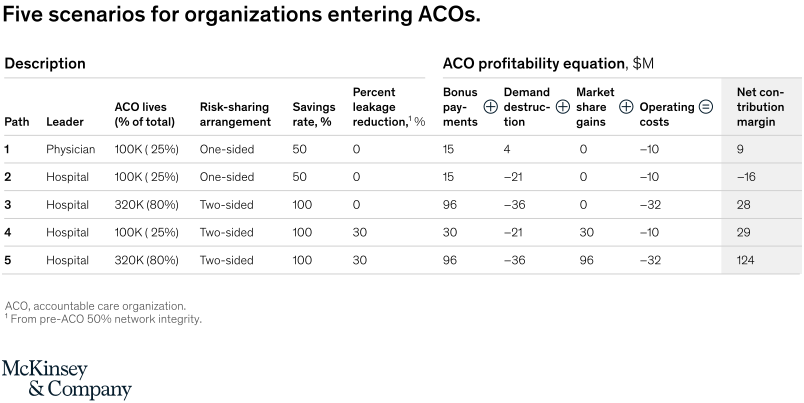
Summarizing the four factors, the profitability of each archetype reveals certain insights (Exhibit 5).
The results of a survey completed by 1,500 of Beaumont Health’s 5,000 physicians revealed a lack of confidence in the Southfield, Mich.-based system’s leadership and concern about its proposed merger with Advocate Aurora Health, according to Crain’s Detroit Business.
Crain’s reported the results of the survey after the results were presented to Beaumont’s board. The system confirmed this week that it is postponing a vote on the planned merger with Advocate Aurora until physician grievances are addressed.
The survey asked physicians to indicate whether they agreed or disagreed with several statements. Seventy-six percent of the physicians who answered the survey said they strongly or somewhat disagree with the statement “I have confidence in corporate leadership,” while 13 percent said they strongly or somewhat agree and 11 percent said they neither agree nor disagree, according to Crain’s.
Physicians were also asked about the proposed merger with Advocate Aurora, which has dual headquarters in Milwaukee and Downers Grove, Ill. According to Crain’s, 70 percent of physicians said they strongly or somewhat disagree with the following statement: “The proposed merger with Advocate Aurora Health is likely to enhance our capacity to provide compassionate, extraordinary care.” Nine percent of physicians said they somewhat or strongly agree with the statement and 21 percent said they neither agree nor disagree, according to the report.
In a statement to Becker’s Hospital Review, Beaumont said it is working to address the physicians’ concerns.
“Our physicians provided valuable input and feedback to us through the survey,” the health system said. “We take our physicians’ responses seriously and we have already started addressing many of their concerns. We know our talented and skilled physicians, nurses and staff have helped to make Beaumont the region’s leading health system and they are also key to our future. Our caregivers truly live our mission of providing compassionate, extraordinary care, every day. We recognize the importance of having an open dialogue. That’s why we continue to meet with numerous groups of physicians, nurses and staff to listen to them, address their concerns and work together with them to determine the best path forward for Beaumont.”
Beaumont and Advocate Aurora signed a nonbinding letter of intent in June to create a health system spanning Michigan, Wisconsin and Illinois. The merger would create a $17 billion system with 36 hospitals.
In-person doctor visits plummeted during the start of the COVID-19 crisis in the United States, but have rebounded to a rate somewhat below pre-pandemic levels, according to a new analysis issued by The Commonwealth Fund and conducted by researchers from Harvard Medical School, Harvard University and the life sciences firm Phreesia.
According to data compiled through Aug. 1, all physician visits were down 9% from pre-pandemic levels. That’s significantly improved compared to data from late March, when visits were down 58%. Although the rebound got major traction beginning in late April, it began plateauing in early June, when all visits were 13% lower than normal. As of early August, in-person visits were down 16% compared to pre-COVID levels. States that are currently coronavirus hot spots are seeing bigger declines than states where the case levels are lower.
Meanwhile, telemedicine encounters have settled in at rates much higher than pre-pandemic levels. However, they still make up just a fraction of patient-provider encounters for care. As of the start of this month, they comprised 7.8% of all such encounters. That’s compared to a peak of 13.8% in the latter part of April. Prior to COVID-19, they were only 0.1% of all visits.
Dive Insight:
COVID-19 has widely disrupted healthcare delivery in the United States. However, it is becoming clear that as the pandemic has become a part of everyday life for the time being, how patients visit their medical providers has also settled into a pattern.
According to Harvard researchers using data from Phreesia’s more than 50,000 provider clients, the plunge in patients seeing their physicians has rebounded from its nearly 60% dive in early spring. However, with all patient-physician encounters still consistently down from pre-COVID levels, the study’s authors warn that “the cumulative number of lost visits since mid-March remains substantial and continues to grow.”
Meanwhile, COVID-19 hotspots in the South and Southwest are depressing patient-provider encounters for the time being. Encounters were down as of late July by 15% in Arizona, Florida and Texas, compared to 12% in the Northeast and 8% in all other states.
Among medical specialties, only dermatology has seen a rebound beyond pre-COVID levels, with encounters up about 8% overall. But primary care visits are down 2%; surgery encounters, 9%; orthopedics, 18%; and pediatrics are in a 26% decline.
That the encounters between patients, doctors and other providers remains lower than normal has sparked some concerns about practices and other medical enterprises moving forward. HHS just earmarked $1.4 billion for nearly 80 children’s hospitals across the United States to try to shore them up financially.
The private sector has also undertaken an initiative to encourage patients to return to their providers. Insurer Humana, along with the Providence and Baylor Scott & White healthcare systems, launched an advertising campaign last month to encourage patients to seek out healthcare needs, even during the historic pandemic.
SARS-CoV-2, the virus that causes COVID-19, has prompted more questions than science can answer. But of the many puzzles that remain, few are more perplexing — or urgent — than this one: Why do some people get sick and never get better?
This group of individuals, nicknamed the “long haulers,” are people of all ages, races and genders. Survivors of the virus who, months later, find themselves battling a constellation of debilitating side effects that disrupt their ability to function. In a study released by Indiana University School of Medicine this August, in partnership with COVID-19 nonprofit Survivor Corps, long haulers describe nearly 100 side effects, from fatigue and body aches to night sweats and neuropathy.
The study casts doubt on the idea that the COVID-19 is a respiratory illness that lasts only a few weeks, suggesting instead that it may be a vascular disease capable of wreaking havoc on the eyes, skin, heart and brain, long after the sore throat goes away. While some hospitals, such as Mount Sinai in New York, have launched recovery centers for post-COVID care, the Centers for Disease Control and Prevention has released little data on the longterm prognosis for those who survive.
In the interim, it’s the long haulers themselves who are helping demystify their strange new world. Karyn Bishof, a firefighter paramedic in Florida, is one of them. After coming down with sore throat, nausea and fatigue in late March, she tested positive for COVID-19 and was told her case was mild. But as the weeks went on, the symptoms didn’t go away. Over four months later, the fatigue remains constant and along with it, a host of other exhausting side effects.
“I’m dealing with drastic changes in heart rate … My oxygen levels drop into the low 90, sometimes even the low eighties, I’m still dealing with headache, memory issues. I have a lot of trouble recalling things or sometimes finding my words,” Bishof tells Yahoo Life. “I’m still dealing with a runny and stuffy nose on and off. And then just a ton of other neurological issues, cardiac issues, chest pain, shortness of breath. I mean, the list goes on.”
Jessica Hulett, a writer in New York, has been battling similar effects. “The fatigue has been really persistent … All I want to do is go to sleep from like two o’clock on every day, and some days I have to,” says Hulett. “I’ve also started having a lot of like cognitive difficulties. Like I can’t remember things, I can’t focus on things.
Both Hulett and Bishof have struggled to find answers from doctors about what’s happening. “I’ve been talking a lot to my primary care doctor … she has kind of admitted, she’s like, ‘We don’t know, like we don’t know how long you’re going to be sick,’” says Hulett. “We don’t know what’s gonna make you better. We don’t know why you’re still sick.”
Luis Santos, a native-New Yorker who’s been experiencing “crushing fatigue,” cognitive issues and an unexplained spike in his cholesterol since getting COVID-19 in March, is too. “I have a team of about seven or eight doctors … and it’s a very scary thing that all these physicians are saying they don’t know. They don’t know how to make me better,” says Santos. “They’re hoping that with time they get better.”
Natalie Lambert, an associate research professor at IU School of Medicine and the lead author of the long haulers study, says this reaction is common. “I feel like this is a huge problem in health care around the world...We’re just kind of a society where you’re healthy until you can prove that you’re sick,” Lambert tells Yahoo Life. “If you’re experiencing something that’s outside of the standard of medical care, it can be really hard to get answers.”
Lambert, who began talking to patients after seeing a “wide range of COVID-19 symptoms” early on, says she doesn’t blame doctors for the gap in knowledge. “They can only treat you with the appropriate and approved standard treatments,” says Lambert. “They can’t experiment on people — so it’s understandable. But if there’s no answer to your question, what can you do?”
Survivor Corps, a grassroots movement connecting COVID-19 survivors, is trying to figure out just that — hosting webinars, sharing research and creating a Facebook group nearly 100,000 people strong. It’s from this group that Lambert pulled information about side effects, using an open-ended survey that allowed long haulers to add their symptoms.
She says the importance of these individuals, and their stories, can’t be overstated. “They are the world’s experts in the disease at this point in time,” Lambert tells Yahoo Life. “I mean, these patients know more about the disease than the medical community does.”
She hopes her research will serve as validation to long haulers — and proof that they’re not alone. “If you’re experiencing any of these symptoms, lots of people are experiencing these symptoms,” says Lambert. “And if your doctor won’t treat them, continue to advocate for yourself to try to get medical care because some of these can result in very serious health consequences.”
When it comes to the long haulers themselves, they’re urging others not to overlook the seriousness of this virus. “Right now the science for long haulers is showing that [COVID-19] doesn’t care about your age. It doesn’t care about your fitness level,” says Bishof. “It doesn’t care if you’re a firefighter-paramedic, or if you work on your computer from home … Do everything you can to protect yourself and others. This is not just a cold or a flu.”











 HENRY KOTULA