The owners of more than a dozen pharmacies in New York City and Long Island have been arrested and charged for their roles in an alleged $30 million healthcare fraud and money laundering scheme, the Department of Justice announced Dec. 21.
Peter Khaim and Arkadiy Khaimov are accused of submitting fraudulent claims for expensive cancer drugs by exploiting emergency codes and edits in the Medicare system that went into effect due to the COVID-19 pandemic. The drugs were allegedly never provided, ordered or authorized by a medical professional.
Mr. Khaim and Mr. Khaimov allegedly used COVID-19 emergency override billing codes to submit fraudulent claims to Medicare for cancer medication Targretin Gel 1%. The medication has an average wholesale price of about $34,000 for each 60 gram tube, according to the Justice Department.
Prosecutors charged Mr. Khaim and Mr. Khaimov with conspiracy to commit healthcare fraud and wire fraud, conspiracy to commit money laundering and aggravated identity theft, according to the Justice Department. Mr. Khaimov was separately charged with concealment of money laundering.
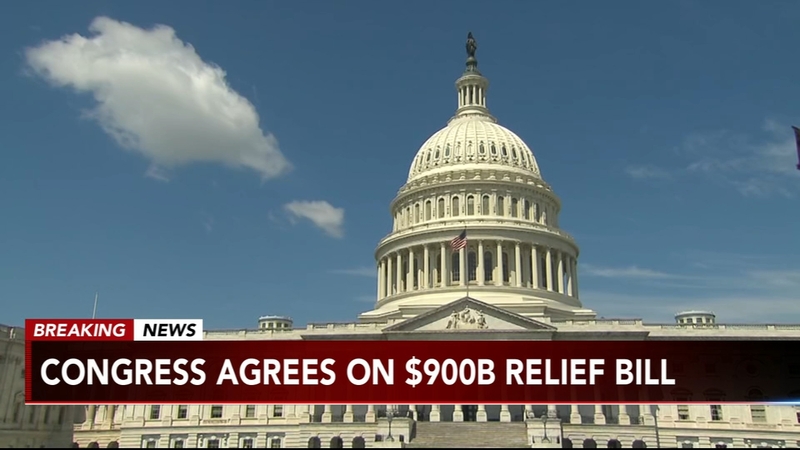
Congressional leaders have reached an agreement on a $900 billion COVID-19 relief package and $1.4 trillion government funding deal with several healthcare provisions, according to Senate Majority Leader Mitch McConnell, R-Ky., and Minority Leader Chuck Schumer, D-N.Y.
Here are seven things to know about the relief aid and funding deal:
1. Congressional leaders have yet to release text of the COVID-19 legislation, but have shared a few key details on the measure, according to CNBC.Becker’s breaks down the information that has been released thus far.
2. The COVID-19 package includes $20 billion for the purchase of vaccines, about $9 billion for vaccine distribution and about $22 billion to help states with testing, tracing and other COVID-19 mitigation programs, according to Politico.
3. Lawmakers are also expected to include a provision changing how providers can use their relief grants. In particular, the bill is expected to allow hospitals to calculate lost revenue by comparing budgeted revenue for 2020. Hospitals have said this tweak will allow them to keep more funding.
4. The agreement also allocates $284 billion for a new round of Paycheck Protection Program loans.
5. The COVID-19 relief bill also provides$600 stimulus checks to Americans earning up to $75,000 per year and $600 for their children, according to NBC. It also provides a supplemental $300 per week in unemployment benefits.
6. The year-end spending bill includes a measure to ban surprise billing. Under the measure, hospitals and physicians would be banned from charging patients out-of-network costs their insurers would not cover. Instead, patients would only be required to pay their in-network cost-sharing amount when they see an out-of-network provider, according to The Hill.The agreement gives insurers 30 days to negotiate a payment on the outstanding bill. After that period, they can enter into arbitration to gain higher reimbursement.
7. Lawmakers plan to pass the relief bill and federal spending bill Dec. 21.
The owner of an Atlanta-based home healthcare provider was sentenced to five years and three months in prison for defrauding Medicaid out of nearly $1 million, the U.S. Justice Department said Dec. 2.
Diandra Bankhead, owner and operator of Elite Homecare, admitted to submitting thousands of claims for services that were never provided to children in the Georgia Pediatric Program between September 2015 and April 2018. Children who are eligible for services under the program typically suffer from physical and cognitive disabilities.
Ms. Bankhead and Elite Homecare submitted more than 5,400 claims to Georgia Medicaid, receiving $1.2 million in reimbursement. About $1 million was determined to be fraudulent, prosecutors said.
Prosecutors said Ms. Bankhead defrauded Medicaid in several ways, including submitting fraudulent credentialing information to become a Georgia Pediatric Program provider, submitting claims for in-home nursing services provided to families who had not hired Elite and submitting claims in which employees provided more than 24 hours of services in a day.
“It is outrageous that Bankhead profited off children who suffered from significant physical and cognitive disabilities,” said U.S. Attorney Byung Pak. “For years her scheme exploited Medicaid-eligible children and their families by billing for services never performed and for children never seen, diverting critical resources from those who needed them most.”
Ms. Bankhead pleaded guilty in federal court to one count of healthcare fraud in August 2019. She was also ordered to pay $999,999 in restitution.
A complete financial recovery for many organizations is still far away, findings from Kaufman Hall indicate.
For the past three years, Kaufman Hall has released annual healthcare performance reports illustrating how hospitals and health systems are managing, both financially and operationally.
This year, however, with the pandemic altering the industry so broadly, the report took a different approach: to see how COVID-19 impacted hospitals and health systems across the country. The report’s findings deal with finances, patient volumes and recovery.
The report includes survey answers from respondents almost entirely (96%) from hospitals or health systems. Most of the respondents were in executive leadership (55%) or financial roles (39%). Survey responses were collected in August 2020.
FINANCIAL IMPACT
Findings from the report indicate that a complete financial recovery for many organizations is still far away. Almost three-quarters of the respondents said they were either moderately or extremely concerned about their organization’s financial viability in 2021 without an effective vaccine or treatment.
Looking back on the operating margins for the second quarter of the year, 33% of respondents saw their operating margins decline by more than 100% compared to the same time last year.
Revenue cycles have taken a hit from COVID-19, according to the report. Survey respondents said they are seeing increases in bad debt and uncompensated care (48%), higher percentages of uninsured or self-pay patients (44%), more Medicaid patients (41%) and lower percentages of commercially insured patients (38%).
Organizations also noted that increases in expenses, especially for personal protective equipment and labor, have impacted their finances. For 22% of respondents, their expenses increased by more than 50%.
IMPACT ON PATIENT VOLUMES
Although volumes did increase over the summer, most of the improvement occurred in areas where it is difficult to delay care, such as oncology and cardiology. For example, oncology was the only field where more than half of respondents (60%) saw their volumes recover to more than 90% of pre-pandemic levels.
More than 40% of respondents said that cardiology volumes are operating at more than 90% of pre-pandemic levels. Only 37% of respondents can say the same for orthopedics, neurology and radiology, and 22% for pediatrics.
Emergency department usage is also down as a result of the pandemic, according to the report. The respondents expect that this trend will persist beyond COVID-19 and that systems may need to reshape their business model to account for a drop in emergency department utilization.
Most respondents also said they expect to see overall volumes remain low through the summer of 2021, with some planning for suppressed volumes for the next three years.
RECOVERY MEASURES
Hospitals and health systems have taken a number of approaches to reduce costs and mitigate future revenue declines. The most common practices implemented are supply reprocessing, furloughs and salary reductions, according to the report.
Executives are considering other tactics such as restructuring physician contracts, making permanent labor reductions, changing employee health plan benefits and retirement plan contributions, or merging with another health system as additional cost reduction measures.
THE LARGER TREND
Kaufman Hall has been documenting the impact of COVID-19 hospitals since the beginning of the pandemic. In its July report, hospital operating margins were down 96% since the start of the year.
As a result of these losses, hospitals, health systems and advocacy groups continue to push Congress to deliver another round of relief measures.
Earlier this month, the House passed a $2.2 trillion stimulus bill called the HEROES Act, 2.0. The bill has yet to pass the Senate, and the chances of that happening are slim, with Republicans in favor of a much smaller, $500 billion package. Nothing is expected to happen prior to the presidential election.
Some rural hospitals that were already struggling are now in serious financial trouble due to the coronavirus.
The suspension of elective surgery and non-urgent care in most states led to an abrupt drop in patient volumes and hospital revenue. That loss, combined with the cost of preparing for COVID-19 protections for patients and employees, has forced rural hospitals into deeper distress. It’s especially important in these challenging circumstances to keep a close eye on key metrics that gauge a hospital’s financial health. By monitoring indicators, creating transparency and responding swiftly to warning signals of financial distress, hospitals can stave off bankruptcy or closure and establish a new path toward long-term sustainability.
A Shared Responsibility
Signs that a hospital is headed for, or already in, financial distress include obvious indicators such as declining revenues or a dip in patient volume. Although some distress signals seem loud and clear, problems persist at many hospitals due to lack of communication and financial assessment across the enterprise. Too often, it’s left to the CFO to monitor overall financial health by measuring against budgets and recent trends. However, a regular review of key metrics should be a shared responsibility for the entire healthcare leadership team.
Five Data Points to Review
Hospitals may need to adjust key targets to bring them in line with what’s realistically achievable while the pandemic persists, particularly when it comes to productivity, PPE costs and net revenue metrics. Think wisely and as a team about how to reassess targets. The following data points should be monitored regularly.
Aggregate volume and provider utilization trends. This data can offer a big-picture perspective to leaders and managers across departments.
Operating ratios, including expenses as a percentage of net operating revenue. Make sure costs such as labor, supplies and purchased services remain in check.
Labor costs relative to patient volume. Measure productivity in each department against department specific staffing targets as well as the overall FTE per adjusted occupied bed target for the hospital as a whole.
Patient revenue indicators. These include bad debt percentage and net to gross percentage by payer class. Are there shifts in payer mix that need to be addressed?
Liquidity ratios. These include net days in patient accounts receivable and cash collections as a percentage of net revenue. What steps can be taken to improve cash flow?
Information Gathering
Hospital leadership should conduct a monthly review of the key measures listed above. In addition, procedures should be put in place by the hospital’s finance department, with input from department managers, to produce accurate monthly stats and financial performance metrics to facilitate these periodic reviews. Annually, take a closer look at these financial indicators, as these will form the basis of strategic planning.
Federal Funding
The COVID-19 crisis reinforces the need for financial diligence and discipline. Rural hospitals received federal funding to help them during the crisis, and this created another layer of data to monitor. Whether in the form of a CARES Act grant, a PPP loan or some other type of funding, these outlays must be closely controlled, properly managed and restricted in use so the hospital does not run out of cash. In certain cases, the federal government will require hospitals to document the use of funds. For example, for CARES Act stimulus payments, hospitals must provide attestation (quarterly beginning in July) that funds are used for COVID-related costs and COVID-related loss of revenue. In any case, CHC recommends that hospitals set up a tracking system to account for these funds. Download a financial dashboard to help.
Connect the Dots
Regular reviews of financial indicators can identify operational best practices, support strategic planning efforts, create accountability, and, if necessary, redirect financial sustainability efforts. The COVID-19 crisis accelerates the timeline during which financial improvements must be made.
The most critical element of this entire process is answering, “Why?” This means finding the root causes for financial difficulties. Another critical element is clear communication of expectations and goals across hospital leadership in order to accomplish desired changes. The team, armed with data and clear objectives, can then get to the root of any problems.
Physician groups and other healthcare providers continued expressing their dissatisfaction with the 2021 Medicare physician fee schedule proposed rule from the Centers for Medicare & Medicaid Services (CMS).
“While we support the CPT coding revisions and revaluations of office and outpatient evaluation and management (E/M) services recommended by the AMA/Specialty Society RVS Update Committee [RUC], we strongly oppose the proposed budget neutrality reduction proffered by CMS for these and other physician fee schedule changes proposed for 2021,” said a letter sent Monday to CMS Administrator Seema Verma from 47 medical and health specialty groups including the American College of Surgeons, the American College of Radiology, and the American Academy of Ophthalmology. The groups represent 1.4 million providers, including physicians, social workers, and speech-language pathologists.
If adopted as proposed, the fee schedule would “reduce Medicare payment for services provided in patients’ homes, physician offices, non-physician practices, therapy clinics, skilled nursing facilities, hospitals and rehabilitation agencies — at a time when the spread of COVID‐19 remains unchecked,” the letter said.
The proposed fee schedule, which was announced in early August, includes “simplified coding and billing requirements for E/M visits [that] will go into effect January 1, 2021, saving clinicians 2.3 million hours per year in burden reduction,” CMS said. “As a result of this change, clinicians will be able to make better use of their time and restore the doctor-patient relationship by spending less time on documenting visits and more time on treating their patients.”
However, the proposed rule also lists (on p. 50375) the estimated impacts of the rule’s payment changes for each specialty, which includes losers as well as winners.
Three specialties fare the best: endocrinology, with a 17% increase; rheumatology, with a 16% increase; and hematology/oncology, with a 14% increase. At the bottom are nurse anesthetists and radiologists, both with an 11% decrease; chiropractors, with a 10% decrease; and interventional radiology, pathology, physical and occupational therapy, and cardiac surgery, all with a 9% decrease. Surgical specialties in general took some of the biggest hits, with cuts in every category ranging from 5% to 9%.
The proposed rule also lists the fee schedule’s final conversion factor — the amount that Medicare’s relative value units (RVUs) are multiplied by to arrive at a reimbursement for a particular service or procedure under Medicare’s fee-for-service system. Due to budget neutrality changes required by law, the proposed 2021 conversion factor is $32.26, a decrease of $3.83 from the 2020 conversion factor of $36.09, CMS said. Comments on the proposed rule were due by 5 p.m. on Monday.
American Medical Group Association (AMGA), which represents group practices, also weighed in on the proposed rule. “AMGA is concerned that the CMS proposed 2021 Physician Fee Schedule rule would inadvertently exacerbate the financial situation facing our membership that is a result of the ongoing novel coronavirus 2019 (COVID-19) pandemic,” the association said in a statement. “While appreciative of the effort to increase support for primary care services, the Physician Fee Schedule’s budget neutrality requirements effectively shift funds from one specialty to another, potentially undermining the team-based approach to care that is the hallmark of the group practice model.“https://tpc.googlesyndication.com/safeframe/1-0-37/html/container.html
In its comments on the rule, the American Association of Neurological Surgeons (AANS) took particular issue with the fact that the changes to the E/M codes were not included in global payments for some surgical procedures that include an E/M visit. “The AANS … strongly urges CMS to apply the RUC-recommended changes to the E/M component of the 10- and 90-day global surgery codes to maintain the relativity of the fee schedule and to comply with the Medicare law’s prohibition on specialty payment differentials,” the AANS wrote in its comments.
The AANS also wasn’t happy with a proposed add-on code known as GPC1X, which CMS said could be used for “visit complexity inherent to E/M associated with medical care services that serve as the continuing focal point for all needed health care services and/or with medical care services that are part of ongoing care related to a patient’s single, serious, or complex condition.”
The code is nothing more than a “holdover” from an earlier bundled payment scheme that has since been replaced, the AANS said. “Instead of correcting a system that would have resulted in unfair payment reductions, the agency is creating a new coding scheme that inappropriately discriminates among physician specialties — over-inflating payments to individual specialties and causing steep cuts to others.” The association urged CMS to get rid of the add-on code, noting that “more than $3.3 billion will be redistributed between specialties if this code is implemented, and it is a significant contributor to the steep reduction in the conversion factor.”
The American Association of Orthopaedic Surgeons objected to a decrease in the work RVUs for knee and hip arthroplasties. “The overall physician work for these procedures has not changed since they were last evaluated in 2013,” the group said in a statement. “If anything, orthopaedic surgeons and their staff are spending more time on the preoperative work that is essential to the clinical success and cost savings of Medicare alternative payment models.”https://tpc.googlesyndication.com/safeframe/1-0-37/html/container.html
“If these Medicare cuts are finalized, it sends a strong signal: when providers in the vanguard of value-based care begin to achieve some efficiencies in the delivery of care, CMS will use those positive developments as a justification to cut Medicare fee-for-service reimbursement regardless of the extra work that goes into achieving these outcomes,” C. Lowry Barnes, MD, president of the American Association of Hip and Knee Surgeons, said in a statement.
Congress has also gotten involved in the proposed rule. Last Friday, representatives Michael Burgess, MD (R-Texas) and Bobby Rush (D-Ill.) introduced H.R. 8505, which would temporarily waive the legislation’s budget neutrality provision and avoid the payment cuts.
A federal appellate court recently ruled that Anthem is required to pay Martin Luther King Jr. Community Hospital in Los Angeles for about 75 emergency room visits from covered patients, according to Bloomberg Law.
The appeal centered on whether Anthem was required to cover services MLK Jr. Community Hospital rendered to employees of Budco Group, an Ohio company, when the hospital was assigned the patients’ benefit payments. Anthem is the administrator of Budco’s Employee Retirement Income Security Act plan, and the employees who received services at the hospital were beneficiaries of the plan.
Between 2015 and 2017, Budco employees visited MLK Jr. Community Hospital’s emergency room at least 75 times and assigned their benefits under the company’s ERISA plan to the hospital as a condition of receiving care. Instead of paying MLK Jr. Community Hospital, which was out of Anthem’s network, the insurance company paid the beneficiaries, forcing the hospital to attempt to recover payment from the beneficiaries. The Budco employees deposited payment into their personal accounts and did not send any of the benefit payments to the hospital.
The hospital sued Anthem and Budco in 2016, seeking benefit payments and declaratory relief. The district court granted summary judgment in favor of the hospitals, and Anthem and Budco appealed.
On appeal, Anthem argued the case was blocked by a provision in its health plan that prevented patients from assigning their rights to third parties such as MLK Jr. Community Hospital, according to Bloomberg Law. The hospital argued that the “anti-assignment” provision did not bar assignments in this case.
In an unpublished split decision filed Oct. 2, the U.S. Court of Appeals for the Ninth Circuit ruled in favor of the hospital, holding that the language cited by Anthem allowed assignments to healthcare providers, including those that were out of network.
“The provision lists three entities other than the beneficiary that Anthem may pay directly. Providers are included among those entities,” the court stated. “In the same paragraph, and only two sentences later, the anti-assignment provision forbids beneficiaries from assigning benefits to ‘anyone else.’ This sentence restricting assignment must be read consistently with the entire paragraph, which concerns benefit payments to entities other than the beneficiary. Thus, we interpret the anti-assignment provision’s reference to ‘anyone else’ to permit assignments to those entities, including ‘providers.'”
Alternatively, the appellate court held that the anti-assignment provision is not part of the health plan documents.
“The anti-assignment provision is plainly not a benefit, and therefore the district court correctly determined it should not be incorporated as a description of the plan’s benefits,” the appellate court held.
In his dissenting opinion, Judge Daniel Collins said the anti-assignment provision is an express term of the documents that govern the Budco plan. He also disagreed with the majority’s alternative conclusion that the language of the anti-assignment provision did not bar the assignments that plan beneficiaries made to MLK Jr. Hospital.
Federal agencies have charged 345 people across the country, including more than 100 providers and four telehealth executives, with submitting more than $6 billion in fraudulent claims to payers. Of that, $4.5 billion was connected to telemedicine schemes and about $800 million each to substance abuse treatment and illegal opioid distribution.
More than 250 medical professionals had their federal healthcare billing privileges revoked for being involved in the scams, according to a statement released Wednesday.
The U.S. Department of Justice also said it is creating a new rapid response strike force to investigate fraud cases involving major providers that operate in multiple jurisdictions.
Dive Insight:
Telehealth fraud has increased significantly since 2016, the HHS Office of Inspector General said. As providers have quickly pivoted many services to virtual care during the COVID-19 pandemic, attempts at fraud will likely follow.
One of the cases outlined Wednesday included false claims for COVID-19 testing while another involved a COVID-19 related scheme to defraud insurers out of more than $4 million.
The telehealth fraud allegedly involved a marketing network that lured hundreds of thousands of people into a criminal scheme with phone calls, direct mail, TV ads and online pop-up ads. Telemedicine executives then paid doctors to order unneeded medical equipment, testing or drugs with either no patient interaction or only a brief call.
Those were either not given to the patients or were worthless to them. The proceeds were then laundered through international shell corporations and banks.
The scheme is similar to one DOJ prosecuted in April 2019involving fraudulent telehealth companies that pushed unneeded braces on Medicare beneficiaries in exchange for kickbacks from durable medical equipment companies.
The massive bust included the work of 175 HHS OIG agents and analysts and targeted myriad fraud operations across the U.S. and its territories.
One of the larger scams involved 29 defendants in the Middle District of Florida. A telemedicine company and medical professionals working for it billed Medicare for medical equipment for patients they never spoke to.
In New Jersey, laboratory owners paid marketers to get DNA samples at places like senior health fairs. Doctors on telemedicine platforms then ordered medically unnecessary and not reimbursable genetic testing.
An Illinois federal court has dismissed a whistleblower lawsuit alleging University of Chicago Medical Center, Medical Business Office and Trustmark Recovery Services violated the False Claims Act, according to Bloomberg Law.
MBO and Trustmark provided medical billing and debt collection services for UCMC. The whistleblowers, Kenya Sibley, Jasmeka Collins and Jessica Lopez, alleged MBO and Trustmark engaged in a “ghost payroll” scheme that involved regularly falsifying UCMC invoices, listing employes who didn’t work on the hospital’s collections and time charges from people who were not employees.
The whistleblowers, former employees of MBO and Trademark, alleged the companies and UCMC knew about the “ghost payroll” scheme, and that the allegedly falsified invoices caused the hospital to report overstated wages to the federal government, triggering a larger Medicare reimbursement than it was entitled to.
The complaint further alleged that MBO and Trustmark engaged in a “bad debt” scheme. “MBO would regularly write-off Medicare bad debts for amounts a Medicare beneficiary owed without conducting a reasonable collection effort, when Medicare beneficiaries were still paying on the debts, or when Medicare beneficiaries did not actually owe a debt,” the amended complaint states.
After writing off the bad debt, MBO would allegedly send the bad debt to Trustmark or another collection agency for further collection efforts.
On Sept. 14, Judge Harry Leinenweber of the U.S. District Court for the Northern District of Illinois dismissed the amended complaint, saying the whistleblowers failed to adequately allege the defendants engaged in a scheme to inflate bad debts and falsify invoices in University of Chicago’s cost reports.
The allegations of a “ghost payroll” scheme fail because the whistleblowers failed to allege that defendants certified compliance with any regulation, which is required when filing a false claims case, the judge said in the decision. The amended complaint also fails to establish sufficiently UCMC’s knowledge of the alleged scheme.
The judge also ruled that the amended complaint failed to adequately allege a “bad debt” scheme. Allegations related to MBO’s and Trustmark’s bad debt reports to clients cannot satisfy the requirements to show that companies or their clients submitted improper claims for bad debt reimbursements to the government, reads the decision.



/https://static.texastribune.org/media/images/MedicaidFraud-2.jpg)






 HENRY KOTULA