8 health systems with strong finances

https://www.beckershospitalreview.com/finance/8-health-systems-with-strong-finances-0713.html?utm_medium=email

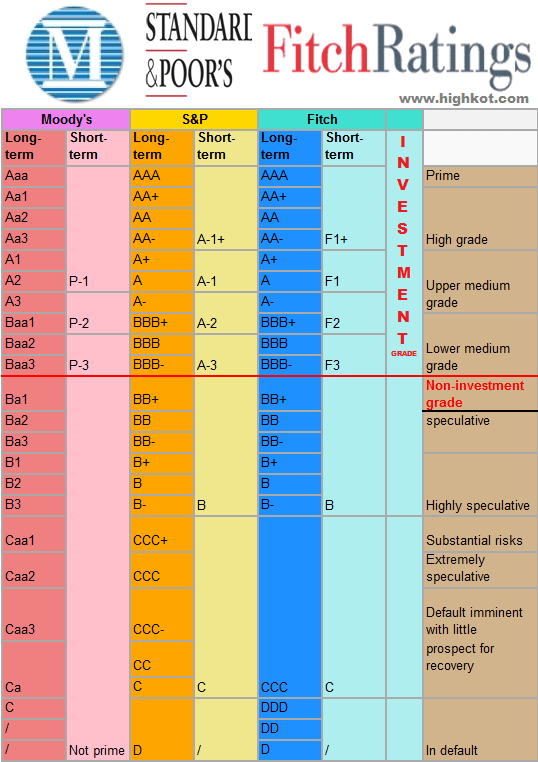
Here are eight health systems with strong operational metrics and solid financial positions, according to reports from Fitch Ratings, Moody’s Investors Service and S&P Global Ratings.

1. Baylor Scott & White Health has an “AA-” rating and stable outlook with S&P. The health system has an expansive and growing market position in Texas, healthy operating performance and robust cash flow, S&P said. The health system’s financial cushion positions it well for its COVID-19 response, according to the credit rating agency.

2. South Bend, Ind.-based Beacon Health System has an “AA-” rating and stable outlook with Fitch. Beacon is the acute care leader in its northern Indiana service area and has a track record of strong operating margins, Fitch said. The credit rating agency expects Beacon to return to strong operating margins and sustain strong liquidity, despite pressure from the COVID-19 pandemic.

3. Boston Children’s Hospital has an “Aa2” rating and stable outlook with Moody’s. The hospital has a preeminent reputation as the top children’s hospital in the U.S., robust cash reserves and strong fundraising capabilities, Moody’s said. The credit rating agency expects the hospital’s exceptional market position and robust liquidity to help it return to pre-COVID-19 levels to support proposed increases in leverage and capital investments.

4. Carle Foundation, a three-hospital system based in Urbana, Ill., has an “AA-” rating and stable outlook with Fitch. The health system has a very strong financial profile, and Fitch expects it to sustain profitable operating margins after managing through the pandemic.

5. Salt Lake City-based Intermountain Healthcare has an “AA+” rating and stable outlook with Fitch and an “Aa1” rating and stable outlook with Moody’s. The health system has a leading market position, low debt levels and strong absolute and relative cash levels, Moody’s said. The credit rating agency expects Intermountain will be able to substantially return to and sustain pre-COVID-19 volume levels and margins.

6. Oakland, Calif.-based Kaiser Permanente has an “AA-” rating and stable outlook with Fitch. The rating agency said Kaiser has a leading market share in California and other key markets, and its operational profile is arguably the most emulated model of healthcare delivery in the nation.

7. New York City-based Memorial Sloan Kettering Cancer Center has an “AA-” rating and stable outlook with S&P. The hospital has robust fundraising capabilities, an advantageous payer mix and has expanded its ambulatory footprint, providing additional revenue diversity, S&P said.

8. Tacoma, Wash.-based MultiCare Health System has an “Aa3” rating and stable outlook with Moody’s and an “AA-” rating and stable outlook with Fitch.. The 10-hospital system has an extensive footprint, a track record of successfully executing on multiple projects and strategic ventures concurrently and good financial management, Moody’s said. The credit rating agency expects MultiCare to return to stronger operating results after recovering from disruptions related to the COVID-19 pandemic.


6 latest hospital credit rating downgrades

https://www.beckershospitalreview.com/finance/6-latest-hospital-credit-rating-downgrades-0702.html?utm_medium=email

credit ratings | Özde Kurter

The following six hospital and health system credit rating downgrades occurred since June 1. They are listed below in alphabetical order.

1. Care New England (Providence, R.I.) — from “BB” to “BB-” (Fitch Ratings); from “BB-” to “B+” (S&P Global Ratings)

2. Holy Redeemer Health System (Meadowbrook, Pa.) — from “Ba1″ to Ba2” (Moody’s Investors Service); from “BBB-” to “BB+” (Fitch Ratings)

3. Indiana (Pa.) Regional Medical Center — from “Baa2” to “Baa3” (Moody’s Investors Service)

4. Mon Health (Morgantown, W.Va.) — from “BBB+” to “BBB” (S&P Global Ratings)

5. Nuvance Health (Lagrangeville, N.Y.)  — from “A3” to “Baa2” (Moody’s Investors Service)

6. Virginia Mason Medical Center (Seattle)  — from “BBB” to “BBB-” (S&P Global Ratings)


Credit downgrades aren’t attributable to COVID-19 but cash flow will be a challenge

https://www.healthcarefinancenews.com/news/credit-downgrades-arent-attributable-covid-19-cash-flow-will-be-ongoing-challenge?mkt_tok=eyJpIjoiTUdSbVptVmhaR0ZpT0RJMyIsInQiOiJ2TVwvb3g5VWF4R05DeWFScVJ4U0lXeW9xWG1cL0pVMWo1RE1cL24rd21ySEErbk9kZWNIXC9hdmZYYmJBcGU1RDQ5MDVDNXVyZ2RZSWo2djRRSXhSOVFVQk1yNjFWOTVoVjlkTXVxXC95QXU1SU8yMEhJcEtHZXJ3ZDhDc2RMb2RcLzlMcSJ9

Just How Bad Is My Bad Credit Score? | Credit.com

The coronavirus is mainly affecting the credit outlook for the rest of the year and beyond as hospitals adapt to new financial realities.

While the COVID-19 coronavirus is likely to cause cash flow and liquidity issues for hospitals through the end of the year and into 2021, the credit outlook for the healthcare industry isn’t as dire as some had feared. While there have been some downgrades this year, most of those are attributable to healthcare financial performance at the end of 2019.

At a virtual session of the Healthcare Financial Management Association on Wednesday, Lisa Goldstein, associate managing director at Moody’s Investors Service, said the agency is taking a measured approach to issuing credit ratings and will “triage” these ratings based on factors such as liquidity and cash flow.

“Changes are happening daily, and sometimes hourly with funding coming from the federal government,” said Goldstein, “so we’re taking a very measured approach.”

Healthcare is among the most volatile industries being affected by the coronavirus due to the fact that it operates like a business, with a general lack of government support to pay off debt.

Credit downgrades are on the rise, but there’s historical precedent at play. Looking at data beginning with the 2008 financial crisis, there were consistently more downgrades than upgrades in the healthcare industry, owing to its inherent volatility. It was and has generally been subject to public policy and competitive forces. In any given year, downgrades exceed upgrades.

After passage of the Affordable Care Act, however, the number of uninsured Americans hit an all-time low. Hospitals grew in occupancy and revenues improved. The situation started to worsen once more when it became clear that there was a national nursing shortage, as well as top-line revenue pressure from government and commercial payers lowering their rates, but credit downgrades didn’t truly explode until this year. There have been 24 downgrades so far this year, already exceeding the 13 downgrades in all of 2019.

The rub is that it’s not the coronavirus’s fault.

“Most downgrades were in the first quarter of the year,” said Goldstein. “We did have a lot of downgrades in March, which is when the pandemic really started – when it became a pandemic – but even though there were 11 downgrades in March, it was based on what we’d seen through the end of 2019. There were problems that were appearing that had nothing to do with the pandemic.”

Basic fundamental operating challenges were becoming more pronounced during that time. A decline in inpatient cases, a rapid rise in observation stays, a decline in outpatient cases to competing clinics and health centers, and staffing and productivity challenges all contributed to material increases in debt.

COVID-19’s effects on hospital credit ratings are in the outlook for the rest of the year and beyond. Interestingly, in March, Moody’s changed its outlook from negative to stable.

“We haven’t seen anything like this,” said Goldstein. “The industry has been through shocks, but something this long in duration has been something we think will have an impact on financial performance going forward.”

Moody’s anticipates cash flow will remain low into 2021, mostly from the suspension of elective surgeries, rising staffing expenses and uncertainty around securing enough personal protective equipment. Liquidity is still a concern, but is more of a side issue due to Medicare funding providing a Band-Aid of sorts. The CARES act will help to fill some of that gap, but not all of it, said Goldstein.

She added that the $175 billion in stimulus funding is favorable, but modestly so, since it is estimated to cover only about two months’ worth of spending. The good news is that the opportunity to apply for grant money, which doesn’t have to be repaid, can help to fill some of the gap.

Some hospital leaders are concerned that if they violate covenants – also known as a technical default – their credit outlook will be downgraded. Goldstein sought to assuage those concerns.

“Debt service covenants are expected to rise, but an expected covenant breach or violation won’t have an impact on credit quality because it’s driven by an unusual event happening,” she said. “It doesn’t speak to your fundamental history as an operating entity.”


42 hospitals closed, filed for bankruptcy this year

https://www.beckershospitalreview.com/finance/42-hospitals-closed-filed-for-bankruptcy-this-year.html?utm_medium=email
The Local Hospital Closed. These Doctors Didn't Give Up.

From reimbursement landscape challenges to dwindling patient volumes, many factors lead hospitals to shut down or file for bankruptcy. At least 42 hospitals across the U.S. have closed or entered bankruptcy this year, and the financial challenges caused by the COVID-19 pandemic may force more hospitals to do the same in coming months. 

COVID-19 has created a cash crunch for many hospitals across the nation. They’re estimated to lose $200 billion between March 1 and June 30, according to a report from the American Hospital Association. More than $161 billion of the expected revenue losses will come from canceled services, including nonelective surgeries and outpatient treatment. Moody’s Investors Service said the sharp declines in revenue and cash flow caused by the suspension of elective procedures could cause more hospitals to default on their credit agreements this year than in 2019. 

Below are the provider organizations that have filed for bankruptcy or closed since Jan. 1, beginning with the most recent. They own and operate a combined 42 hospitals.

Our Lady of Bellefonte Hospital (Ashland, Ky.)
Bon Secours Mercy Health closed Our Lady of Bellefonte Hospital in Ashland, Ky., on April 30. The 214-bed hospital was originally slated to shut down in September of this year, but the timeline was moved up after employees began accepting new jobs or tendering resignations. Bon Secours cited local competition as one reason for the hospital closure. Despite efforts to help sustain hospital operations, Bon Secours was unable to “effectively operate in an environment that has multiple acute care facilities competing for the same patients, providers and services,” the health system said.

Williamson (W.Va.) Hospital
Williamson Hospital filed for Chapter 11 bankruptcy in October and was operating on thin margins for months before shutting down on April 21. The 76-bed hospital said a drop in patient volume due to the COVID-19 pandemic forced it to close. CEO Gene Preston said the decline in patient volume was “too sudden and severe” for the hospital to sustain operations.

Decatur County General Hospital (Parsons, Tenn.)
Decatur County General Hospital closed April 15, a few weeks after the local hospital board voted to shut it down. Decatur County Mayor Mike Creasy said the closure was attributable to a few factors, including rising costs, Tennessee’s lack of Medicaid expansion and broader financial challenges facing the rural healthcare system in the U.S.

Quorum Health (Brentwood, Tenn.)
Quorum Health and its 23 hospitals filed for Chapter 11 bankruptcy April 7. The company, a spinoff of Franklin, Tenn.-based Community Health Systems, said the bankruptcy filing is part of a plan to recapitalize the business and reduce its debt load.

UPMC Susquehanna Sunbury (Pa.)
UPMC Susquehanna Sunbury closed March 31. Pittsburgh-based UPMC announced plans in December to close the rural hospital, citing dwindling patient volumes. Sunbury’s population was 9,905 at the 2010 census, down more than 6 percent from 10 years earlier. Though the hospital officially closed its doors in March, it shut down its emergency department and ended inpatient services Jan. 31.

Fairmont (W.Va.) Regional Medical Center
Irvine, Calif.-based Alecto Healthcare Services closed Fairmont Regional Medical Center on March 19. Alecto announced plans in February to close the 207-bed hospital, citing financial challenges. “Our plans to reorganize some administrative functions and develop other revenue sources were insufficient to stop the financial losses at FRMC,” Fairmont Regional CEO Bob Adcock said. “Our efforts to find a buyer or new source of financing were unsuccessful.” Morgantown-based West Virginia University Medicine will open a 10-bed hospital with an emergency department at the former Fairmont Regional Medical Center by the end of June.

Sumner Community Hospital (Wellington, Kan.)
Sumner Community Hospital closed March 12 without providing notice to employees or the local community. Kansas City, Mo.-based Rural Hospital Group, which acquired the hospital in 2018, cited financial difficulties and lack of support from local physicians as reasons for the closure. “Lack of support from the local medical community was the primary reason we are having to close the hospital,” RHG said. “We regret having to make this decision; however, despite operating the hospital in the most fiscally responsible manner possible, we simply could not overcome the divide that has existed from the time we purchased the hospital until today.”

Randolph Health
Randolph Health, a single-hospital system based in Asheboro, N.C., filed for Chapter 11 bankruptcy March 6. Randolph Health leaders have taken several steps in recent years to improve the health system’s financial picture, and they’ve made progress toward that goal. Entering Chapter 11 bankruptcy will allow Randolph Health to restructure its debt, which officials said is necessary to ensure the health system continues to provide care for many more years.

Pickens County Medical Center (Carrollton, Ala.)
Pickens County Medical Center closed March 6. Hospital leaders said the closure was attributable to the hospital’s unsustainable financial position. A news release announcing the closure specifically cited reduced federal funding, lower reimbursement from commercial payers and declining patient visits.

The Medical Center at Elizabeth Place (Dayton, Ohio)
The Medical Center at Elizabeth Place, a 12-bed hospital owned by physicians in Dayton, Ohio, closed March 5. The closure came after years of financial problems. In January 2019, the Medical Center at Elizabeth Place lost its certification as a hospital, meaning it couldn’t bill Medicare or Medicaid for services. Sixty to 65 percent of the hospital’s patients were covered through the federal programs.

Mayo Clinic Health System-Springfield (Minn.)
Mayo Clinic Health System closed its hospital in Springfield, Minn., on March 1. Mayo announced plans in December to close the hospital and its clinics in Springfield and Lamberton, Minn. At that time, James Hebl, MD, regional vice president of Mayo Clinic Health System, said the facilities faced staffing challenges, dwindling patient volumes and other issues. The hospital in Springfield is one of eight hospitals within a less than 40-mile radius, which has led to declining admissions and low use of the emergency department, Dr. Hebl said.

Faith Community Health System
Faith Community Health System, a single-hospital system based in Jacksboro, Texas and part of the Jack County (Texas) Hospital District, first entered Chapter 9 bankruptcy — a bankruptcy proceeding that offers distressed municipalities protection from creditors while a repayment plan is negotiated — in February. The bankruptcy court dismissed the case May 26 at the request of the health system. The health system asked the court to dismiss the bankruptcy case to allow it to apply for a Paycheck Protection Program loan through a Small Business Association lender. On June 11, Faith Community Health System reentered Chapter 9 bankruptcy.

Pinnacle Healthcare System
Overland Park, Kan.-based Pinnacle Healthcare System and its hospitals in Missouri and Kansas filed for Chapter 11 bankruptcy on Feb. 12. Pinnacle Regional Hospital in Boonville, Mo., formerly known as Cooper County Memorial Hospital, entered bankruptcy about a month after it abruptly shut down. Pinnacle Regional Hospital in Overland Park, formerly called Blue Valley Hospital, closed about two months after entering bankruptcy.

Central Hospital of Bowie (Texas)
Central Hospital of Bowie abruptly closed Feb. 4. Hospital officials said the facility was shut down to enable them to restructure the business. Hospital leaders voluntarily surrendered the license for Central Hospital of Bowie.

Ellwood City (Pa.) Medical Center
Ellwood City Medical Center officially closed Jan. 31. The hospital was operating under a provisional license in November when the Pennsylvania Department of Health ordered it to suspend inpatient and emergency services due to serious violations, including failure to pay employees and the inability to offer surgical services. The hospital’s owner, Americore Health, suspended all clinical services at Ellwood City Medical Center Dec. 10. At that time, hospital officials said they hoped to reopen the facility in January. Plans to reopen were halted Jan. 3 after the health department conducted an onsite inspection and determined the hospital “had not shown its suitability to resume providing any health care services.”

Thomas Health (South Charleston, W.Va.)
Thomas Health and its two hospitals filed for Chapter 11 bankruptcy on Jan. 10. In an affidavit filed in the bankruptcy case, Thomas Health President and CEO Daniel J. Lauffer cited several reasons the health system is facing financial challenges, including reduced reimbursement rates and patient outmigration. The health system announced June 18 that it reached an agreement in principle with a new capital partner that would allow it to emerge from bankruptcy.

St. Vincent Medical Center (Los Angeles)
St. Vincent Medical Center closed in January, roughly three weeks after El Segundo, Calif.-based Verity Health announced plans to shut down the 366-bed hospital. Verity, a nonprofit health system that entered Chapter 11 bankruptcy in 2018, shut down St. Vincent after a deal to sell four of its hospitals fell through. In April, Patrick Soon-Shiong, MD, the billionaire owner of the Los Angeles Times, purchased St. Vincent out of bankruptcy for $135 million.

Astria Regional Medical Center (Yakima, Wash.)
Astria Regional Medical Center filed for Chapter 11 bankruptcy in May 2019 and closed in January. When the hospital closed, 463 employees lost their jobs. Attorneys representing Astria Health said the closure of Astria Regional Medical Center, which has lost $40 million since 2017, puts Astria Health in a better financial position. “As a result of the closure … the rest of the system’s cash flows will be sufficient to safely operate patient care operations and facilities and maintain administrative solvency of the estate,” states a status report filed Jan. 20 with the bankruptcy court.


Moody’s: Patient volume recovered a bit in May, but providers face long road to recovery

https://www.fiercehealthcare.com/hospitals/moody-s-patient-volume-recovering-may-but-providers-face-long-road-to-recovery?mkt_tok=eyJpIjoiWmpjeVlXVTRZV0l5T1RndyIsInQiOiJLWWxjamNKK2lkZmNjcXV4dm0rdjZNS2lOanZtYTFoenViQjMzWnF0RGNlY1pkcjVGcFwvZFY4VjFaUUlZaFRBT1NRMGE5eWhGK1ZmR01ZSWVZWGMxOHRzTkptZVZXZmc5UnNvM3pVM2VIWDh6VllldFc3OGNZTTMxTDJrXC8wbzN1In0%3D&mrkid=959610

Moody's: Patient volume recovered a bit in May, but providers face ...

Patient volumes at hospitals, doctors’ and dentists’ offices recovered slightly in May but lagged well behind pre-pandemic levels, according to a new analysis from Moody’s Investors Service.

In all, the ratings agency estimated total surgeries at rated for-profit hospitals declined by 55% to 70% in April compared with the same period in 2019. States required hospitals to cancel or delay elective procedures, which are vital to hospitals’ bottom lines.

“Patients that had been under the care of physicians before the pandemic will return first in order to address known health needs,” officials from the ratings agency said in a statement. “Physicians and surgeons will be motivated to extend office or surgical hours in order to accommodate these patients.”

Those declines narrowed to 20% to 40% in May when compared to 2019.

Emergency room and urgent care volumes were still down 35% to 50% in May.

“This could reflect the prevalence of working-from-home arrangements and people generally staying home, which is leading to a decrease in automobile and other accidents outside the home,” the analysis said. “Weak ER volumes also suggest that many people remain apprehensive to enter a hospital, particularly for lower acuity care.”

The good news:  The analysis estimated it is unlikely there will be a return to the nationwide decline of volume experienced in late March and April because healthcare facilities are more prepared for COVID-19.

For instance, hospitals have enough personal protective equipment for staff and have expanded testing, the analysis said.

For-profit hospitals also have “unusually strong liquidity to help them weather the effects of the revenue loss associated with canceled or postponed procedures,” Moody’s added. “That is largely due to the CARES Act and other government financial relief programs that have caused hospital cash balances to swell.”

However, the bill for one of those sources of relief is coming due soon.

Hospitals and other providers will have to start repaying Medicare for advance payments starting this summer. The Centers for Medicare & Medicaid Services doled out more than $100 billion in advance payments to providers before suspending the program in late April.

Hospital group Federation of American Hospitals asked Congress to change the repayment terms for such advance payments, including giving providers at least a year to start repaying the loans.

Another risk for providers is the change in payer mix as people lose jobs and commercial coverage, shifting them onto Medicaid or the Affordable Care Act’s (ACA’s) insurance exchanges.

“This will lead to rising bad debt expense and a higher percentage of revenue generated from Medicaid or [ACA] insurance exchange products, which typically pay considerably lower rates than commercial insurance,” Moody’s said.


Recovery of medical staffing firms will lag behind hospitals, analysts say

https://www.healthcaredive.com/news/recovery-of-medical-staffing-firms-will-lag-behind-hospitals-analysts-say/580171/

COVID-19 Triggers Cash Need, Lenders Tighten Reins | PYMNTS.com

Dive Brief:

  • Though U.S. hospital staffing companies are slowly beginning to recover from the COVID-19 shutdown and corresponding drop in revenues, that rebound will lag behind hospitals.
  • Recovery of giants like ER staffing firm Envision and AMN Healthcare, which has the largest network of qualified clinicians in the U.S., will be hindered as hospitals prefer to keep their own staff employed over external contractors amid a recession.
  • The “pace of recovery will not be linear,” and depends on the mix of service lines and geography, S&P Global analysts said in a Thursday note. Analysts also expect hospitals to aggressively renegotiate rates and terms with staffing companies later in the year, which could depress margins even more in the long-term.

Dive Insight:

The collapse in patient volume following stay-at-home guidelines implemented earlier this year has had a well-documented effect on provider finances. Hospitals and doctor’s offices prepared for an influx of COVID-19 patients as lucrative elective procedures declined and revenues imploded.

At the nadir in April, anesthesiology services were down 70%, radiology down 60% and ER visits down 40%, S&P said. Analysts expect tentative recovery in May and June, but no return to pre-pandemic volume until mid-2021.

The dramatic reduction slashed the revenues and cash flows of staffing companies, though the worst is likely over. At the beginning of the pandemic, staffing companies and hospitals alike took preventive measures like furloughing nonessential and back-office workers, extending vendor payment terms, aggressively collecting old receivables and onboarding doctors to telehealth. Many have kept up adequate frontline capacity too, despite uncertain demand.

The economy saw some small gains in May as furloughed employees began to trickle back to work. But the increase in health services employment that month came largely in dental health workers and physician offices. Hospitals shed another 27,000 jobs.

Hospitals will likely fill staffing needs internally, bringing back furloughed or laid off employees first as operations slowly improve, before turning once again to medical contractors.

“Given the extended disruption, a looming recession, and possible lasting changes to health care providers, credit metrics will be much weaker than what we had previously expected for nearly all staffing companies,” analysts wrote. “Some staffing companies, particularly those that are highly leveraged, may face very significant liquidity pressures for several months. It is possible not all will be able to withstand the sharp decline.”

S&P Global has taken a number of negative rating actions on staffing companies since late March.

Envision and anesthesiology firm ASP Napa, both rated ‘CCC’ with a negative outlook, have the greatest potential for a default. Envision, owned by private equity firm KKR and one of the largest U.S. physician staffing firms, is reportedly considering a bankruptcy filing as it struggles with $7 billion in debt.

Knoxville, Tenn.-based Team Health and clinical practice management firm SCP Health have enough liquidity to chug along for several more months of lower-than-normal volumes, while AMN and Utah-based CHG Healthcare Services are both in more solid positions to weather the pandemic, S&P said.

But professional outsourced staffing businesses, like anesthesiology and radiology, should recover more quickly, and many firms have gotten financial support from lenders and private equity backers. Team Health, for example, approved a senior secured term loan from its PE sponsor, Blackstone, which covers interest payments in April through mid-May.

Liquidity was also helped by the passage of the $2.2 trillion CARES relief legislation late March.

Several staffing companies have reportedly received grants from the $100 billion allocated by the legislation for providers, along with no-interest loans from accelerated Medicare payments, sparking questions over whether companies backed by cash-rich private equity firms need the funds.


Moody’s: US healthcare system rebounds from COVID-19 in May, but a bumpy road lies ahead

https://www.healthcaredive.com/news/moodys-us-healthcare-system-rebounds-from-covid-19-in-may-but-a-bumpy-ro/580152/

Banks rating downgrade: Moody's changes outlook on Indian banks to ...

Dive Brief:

  • A Moody’s Investors Service report on Thursday suggests that the U.S. healthcare industry is on the rebound from COVID-19, but recovery will likely to slow and uneven. Moreover, the report expressed concerns that regional flareups of coronavirus could majorly set back the return to normal volumes.
  • Investment firm Jefferies affirmed those worries in hospital traffic data shared Friday, noting “a sharp reversal” in hotspot state Arizona. Analysts tracked “record lows” in Arizona’s hospital traffic last week, down from what was thought to be the trough in April and sagging below May recovery amid a significant uptick in COVID-19 cases and protests.
  • “Whether states can continue their recovery even as cases increase, as we’ve seen in [Texas] and others, or if the recent reversals in [Arizona, Illinois,] etc. become more widespread is a trend to watch in coming weeks,” Jefferies analysts wrote.

Dive Insight:

Large sections of the healthcare sector all but shut down during the spring as the coronavirus led to nationwide shelter-in-place orders. However, as states and municipalities slowly reopen, so are the doors for hospitals, ambulatory surgical centers, clinics and other integral components of healthcare delivery.

As a result, Moody’s reported “considerable sequential improvement” during May. For example, while for-profit hospitals saw surgery volumes drop as much as 70% in April compared to the same period in 2019, May volumes were down about 20% to 40% compared to last year’s. Hospital-operated ambulatory surgical centers saw an 80% to 90% drop in April volumes, but only a 30% to 40% drop in May.

However, Moody’s noted that the “path to normalized volumes are not linear.” It also pointed out that emergency room care volumes, which dropped as much as 60% in April, have yet to really rebound, as they still appeared depressed as much as 50% in May.

“This could reflect the prevalence of working-from-home arrangements and people generally staying home, which is leading to a decrease in automobile and other accidents outside the home. Weak ER volumes also suggest that many people remain apprehensive to enter a hospital, particularly for lower acuity care,” the Moody’s report said.

The firm also noted that “the shape of recovery will vary by state, region and service line, reinforcing the importance of diversification for credit quality among healthcare service providers.”

However, Moody’s believes that the darkest days of March and April are behind much of the healthcare sector. It noted that most providers have stockpiled appropriate personal protective equipment and have reconfigured their offices, waiting rooms and other infrastructure to protect the health of both patients and employees.

Traffic data from 3,300 U.S. hospitals, tracked by Jefferies via mobile device pings, indicates that compared to January 2019 levels, national traffic lows of 43.7% in mid-April improved to 63.3% by early June.

But state-by-state analysis reveals some parts of the country are trending backwards. Arizona fell to a new low of 28.5% last week after hitting 51.5% on May 20. The analysts also reported Illinois hit its own new low on June 7.

While Moody’s did express some concern about regional outbreaks, it concluded that the precautions already taken “make it less likely that the U.S. would once again shut down all non-elective care across the nation if there is a second wave of coronavirus infections.”

Moody’s did express some concerns about hospital finances, but noted that for-profit hospitals “have unusually strong liquidity” due to payouts from the CARES Act and other government-sponsored financial relief programs.

Medical device firms should be prepared for a long and uneven recovery, according to Moody’s. The dental and orthopaedic sectors “will see a greater than average impact from consumers’ inability to pay for procedures or their unwillingness to engage with the healthcare system.” Moody’s forecast “a gradual, uneven pace of recovery,” with pre-tax earnings to decline as much as 30% in 2020 compared to 2019, while revenues will shrink around 10%. It expects that earnings will rebound in 2021 to 2019 levels.

Companies that operate in discretionary sectors will be hit harder as they rely on patients able to meet large deductibles or co-payments or to pay for related procedures entirely on their own. Moody’s noted that a large number of these procedures are performed in acute care hospitals with the assistance of robotics, but hospitals may be more conservative in their robotics investments given new budget constraints.


Tower Health cutting 1,000 jobs as COVID-19 losses mount

https://www.inquirer.com/business/health/tower-health-hospital-layoffs-covid-19-20200616.html

Tower Health cutting 1,000 jobs as COVID-19 losses mount

Tower Health on Tuesday announced that it is cutting 1,000 jobs, or about 8 percent of its workforce, citing the loss of $212 million in revenue through May because of the coronavirus restrictions on nonurgent care.

Fast-growing Tower had already furloughed at least 1,000 employees in April. It’s not clear how much overlap there is between the furloughed employees, some of whom have returned to work, and the people who are now losing their jobs permanently. Tower employs 12,355, including part-timers.

“The government-mandated closure of many outpatient facilities and the suspension of elective procedures caused a 40 percent drop in system revenue,” Tower’s president and chief executive, Clint Matthews, wrote in an email to staff. “At the same time, our spending increased for personal protective equipment, staff support, and COVID-related equipment needs.”

Despite the receipt of $66 million in grants through the federal CARES Act, Tower reported an operating loss of $91.6 million in the three months ended March 31, according to its disclosure to bondholders.

Tower, which is anchored by Reading Hospital in Berks County, expanded most recently with the December acquisition of St. Christopher’s Hospital for Children in a partnership with Drexel University. Tower paid $50 million for the hospital’s business, but also signed a long-term lease with a company that paid another $65 million for the real estate.

In 2017, Tower paid $418 million for five community hospitals in Southeastern Pennsylvania — Brandywine in Coatesville, Chestnut Hill in Philadelphia, Jennersville Regional in West Grove, Phoenixville in Phoenixville, and Pottstown Memorial Medical Center, now called Pottstown Hospital, in Pottstown.

Tower’s goal was to remain competitive as bigger systems — the University of Pennsylvania Health System and Jefferson Health from the Southeast, Lehigh Valley Health Network and St. Luke’s University Health Network from the east and northeast, and University of Pittsburgh Medical Center from the west — encroached on its Berk’s county base.

Tower had set itself a difficult task in the best of times, but COVID-19 has made it significantly harder for the nonprofit, which had an operating loss of $175 million on revenue of $1.75 billion in the year ended June 30, 2019.

Because health systems have high fixed costs for buildings and equipment needed no matter how many patients are coming through the door, it’s hard for them to limit the impact of the 30% to 50% collapse in demand caused by the coronavirus pandemic.

“Hospitals and all other health service providers were hit with this disruption with lightning speed, forcing the industry to learn in real time how to handle a situation for which there was no playbook,” Standard & Poor’s analysts David P. Peknay and Suzie R. Desai said in a research report last month.

Tower’s said positions will be eliminated in executive, management, clinical, and support areas.

The cuts include consolidations of clinical operations. Tower plans to close Pottstown Hospital’s maternity unit, which employs 32 nurses and where 359 babies were born in 2018, according to the most recent state data. Tower also has maternity units at Reading Hospital in West Reading and at Phoenixville Hospital.

Tower is aiming to trim expenses by $230 million over the next two years, Matthews told staff.

Like many other health systems, Tower has taken advantage of federal programs to ensure that it has ample cash in the bank to run its businesses. Tower has deferred payroll taxes, temporarily sparing $25 million. It received $166 million in advanced Medicare payments in April.

In the private sphere, Tower obtained a $40 million line of credit in April for St. Chris, which has lost $23.6 million on operations since Tower and Drexel bought it in December. Last month, Tower said it was in the final stages of negotiating a deal to sell and then lease back 24 medical office buildings. That was expected to generate $200 million in cash for Tower.


Health system financial results for Q1

https://www.beckershospitalreview.com/finance/health-system-financial-results-for-q1-2020.html?utm_medium=email

The health systems listed below recently released financial results for the quarter ended March 31. 

Health system Revenue Operating income Net income
Indiana University Health $1.6 billion $77.6 million -$631.3 million
Allina Health $1 billion -$67.5 million -$342.5 million
Kaiser Permanente $22.6 billion $1.3 billion -$1.1 billion
Beaumont Health $1.1 billion -$54.1 million -$278.4 million
BayCare  $1.1 billion $50 million -$656.4 million
CommonSpirit Health $7.8 billion -$145 million -$1.4 billion
Mayo Clinic $3.2 billion $29 million -$623 million
Henry Ford Health System $1.5 billion -$36.2 million -$234.5 million
Intermountain Healthcare  $2.3 billion $115 million -$1 billion
Advocate Aurora Health $3.1 billion -$85.6 million -$1.3 billion
Texas Health Resources $1.1 billion -$13.8 million -$802.9 million
Banner Health $2.4 billion $30.6 million -$683.5 million
Ascension $6.1 billion -$429.4 million -$2.7 billion
AdventHealth $2.9 billion $35.7 million -$578.5 million
Ochsner Health $965 million -$32.8 million -$143.6 million
Providence  $6.3 billion -$276 million -$1.1 billion
Cleveland Clinic $2.6 billion -$39.9 million -$830.6 million
Sutter Health  $3.2 billion -$236 million -$1.1 billion
Dartmouth-Hitchcock Health $563 million -$59.3 million -$150.3 million
UPMC $5.5 billion -$41 million -$653 million
Montefiore Health System $1.5 billion -$116.1 million -$96.7 million
Allegheny Health Network $891 million -$59.5 million -$98.5 million
SSM Health $1.9 billion -$78 million -$471.1 million
Northwell Health $3.1 billion -$141 million -$710 million
MedStar Health $1.5 billion $32.2 million -$246.8 million
Scripps Health $899.6 million $47.1 million -$296 million
NewYork-Presbyterian $2.2 billion -$128.5 million -$569.4 million


10 latest hospital credit rating downgrades

https://www.beckershospitalreview.com/finance/10-latest-hospital-credit-rating-downgrades-68.html?utm_medium=email

20 recent hospital, health system outlook and credit rating ...

The following 10 hospital and health system credit rating downgrades occurred since April 1. They are listed below in alphabetical order.

1. Boone Hospital Center (Columbia, Mo.) — from “BBB” to “BBB-” (Fitch Ratings)

2. Boulder (Colo.) Community Health — from “A2” to “A3” (Moody’s Investors Service)

3. Care New England (Providence, R.I.) — from “BB” to “BB-” (Fitch Ratings)

4. Catholic Health System (Buffalo, N.Y.) — from “Baa1” to “Baa2” (Moody’s Investors Service); from “BBB+” to “BBB” (S&P Global Ratings)

5. Marshall Medical Center (Placerville, Calif.) — from “BBB-” to “BB+” (Fitch Ratings)

6. Oroville (Calif.) Hospital — from “BB+” to “BB” (S&P Global Ratings)

7. Sutter Health (Sacramento, Calif.) — from “Aa3” to “A1” (Moody’s Investors Service); from “AA-” to “A+” (S&P Global Ratings)

8. Vidant Health (Greenville, N.C.) — from “A1” to “A2” (Moody’s Investors Service)

9. Virginia Mason Medical Center (Seattle) — from “Baa2” to “Baa3” (Moody’s Investors Service)

10. Washington County (Calif.) Health Care District — from “Baa1” to “Baa2”  (Moody’s Investors Service)