Graph of the Day: Daily Confirmed Covid-19 Cases (Rolling 3-day average)

Daily confirmed COVID-19 cases, rolling 3-day average - Our World ...

‘I’m fighting a war against COVID-19 and a war against stupidity,’ says CMO of Houston hospital

https://www.beckershospitalreview.com/hospital-physician-relationships/i-m-fighting-a-war-against-covid-19-and-a-war-against-stupidity-says-cmo-of-houston-hospital.html?utm_medium=email


After two hours of sleep a night for four months and seeing a member of his team contract the virus, Joseph Varon, MD, is growing exasperated.

“I’m pretty much fighting two wars: A war against COVID and a war against stupidity,” Dr. Varon, MD, CMO and chief of critical care at United Memorial Medical Center in Houston, told NBC News. “And the problem is the first one, I have some hope about winning. But the second one is becoming more and more difficult.”

Dr. Varon noted that whether it’s information backed by science or common sense, people throughout the U.S. are not listening. “The thing that annoys me the most is that we keep on doing our best to save all these people, and then you get another batch of people that are doing exactly the opposite of what you’re telling them to do.”

In an interview with NPR, Dr. Varon said he has woken up at dawn every day for the past four months and has headed to the hospital. There, he spends six to 12 hours on rounds before seeing new admissions. He then returns home to sleep two hours, at most.

He said his staff is physically and emotionally drained. 

UMMC nurse Christina Mathers spoke with NBC News from a hospital bed in the segment, noting that she had recently tested positive for COVID-19 after not feeling well during one of her shifts. “All the fighting, all the screaming, all the finger pointing — enough is enough,” Ms. Mathers told NBC. “People just need to listen to us. We’re not going to lie. Why would we lie?” 

Ms. Mathers has worked every other day since April 29, according to The Atlantic, which created a photo essay of Dr. Varon and the UMMC team at work.


Coronavirus update: July marked the worst month on record for new infections. In excess of 1,000 died per day which represents greater than 50% of those who died during the entire Vietnam War (this in just 1 month).

https://www.washingtonpost.com/nation/2020/08/01/coronavirus-covid-updates/?utm_campaign=wp_main&utm_medium=social&utm_source=facebook&fbclid=IwAR0xbw4thPtgPhENJTwT4SvP12mXTKepV237WVnLp6dCu-hav0FqYt1p1qs

U.S. Hits Another Record for New Coronavirus Cases - The New York ...

The United States saw a devastating surge in coronavirus infections during July, with more than 1.9 million new cases in total reported — by far the most tallied in a single month and a grim sign that the country had lost its grip on the pandemic.

The month’s infection total reported by states was more than double that of June and represents about 42 percent of the 4.5 million cases the country has logged since the outbreak started, according to tracking by The Washington Post. Nationwide, testing has steadily increased — in July, it rose from about 600,000 to 820,000 tests per day — but soaring positivity rates and hospitalizations made clear that virus transmission was accelerating.

Coronavirus-related deaths also rose after declining during April and May: The country saw 25,259 fatalities in July, up more than 3,700 from the previous month, according to The Post’s data. Health experts predicted daily deaths would continue to trend upward in August, trailing spikes in infections by a few weeks. To date, more than 150,000 people in the United States have died of covid-19, the disease the novel coronavirus causes.

Here are some significant developments:

  • Over the past week, 24 states surpassed a case increase of more than 100 cases per 100,000 people — a metric the White House and Deborah Birx, the coronavirus response coordinator, have defined as “red zone” states, where the spread of the virus is serious enough to warrant stricter public health precautions.
  • The United States tallied 1,315 coronavirus deaths Friday, the fifth day in a row the country has reached a four-digit death toll, according to data analysis by The Post.
  • Anthony S. Fauci, the country’s leading expert on infectious diseases, told Congress on Friday that a “diversity of response” from states had hampered efforts to bring down the number of new infections. In contrast, he said, many European nations went into near-total lockdowns.
  • Students can return to college safely if they are tested for the coronavirus every two days, according to a JAMA study by researchers from the Yale School of Public Health, Harvard Medical School and Massachusetts General Hospital.

Amid the rise in infections and deaths, the country’s virus response remains fractured and halting. Officials at all levels of government spent July sparring over whether to roll back reopening plans and institute mask mandates and other public health requirements recommended by leading health experts.

The pandemic has also had a harsh impact on the economy, with the nation’s gross domestic product shrinking at an annual rate of 32.9 percent in the second quarter. At midnight Friday, tens of millions of American workers lost $600 weekly unemployment payments after congressional leaders failed to reach an agreement on how to extend the benefit, which has helped keep many households afloat the past four months.


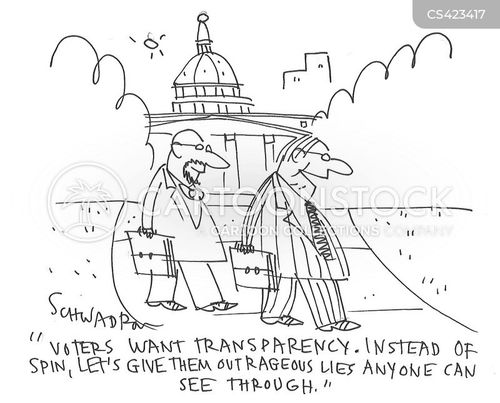
Cartoon – Importance of Transparency

Government Transparency Cartoons and Comics - funny pictures from ...

Fed chief: New surge in cases is beginning to weigh on the economy

https://www.washingtonpost.com/business/2020/07/29/powell-fed-economy/?utm_campaign=wp_main&utm_medium=social&utm_source=facebook&fbclid=IwAR2CvBwHTLxHdQVT0I2uItlkVA9TMiJQpxdEyT2wucJ-3r1J3isD2U8y6Ic

US Central Bank Chief Says Surge In Coronavirus (COVID-19) Cases ...

The Federal Reserve is keeping interest rates unchanged at close to zero, but the Fed is also extending programs to buy Treasuries and mortgage-backed securities.

The head of the Federal Reserve said Wednesday that rising numbers of coronavirus cases since mid-June are beginning to weigh on the economy, reinforcing that the fate of the recovery depends on containing the pandemic.

“On balance, it looks like the data are pointing to a slowing in the pace of the recovery,” Federal Reserve Chair Jerome H. Powell said during a news conference on Wednesday. “I want to stress it’s too early to say both how large that is and how sustained it will be.”

Job gains from May and June came “sooner and stronger” than expected, Powell said. But those encouraging signs were closely followed by a surge in coronavirus cases nationwide. Powell said that at the same time people’s lives depend on containing the public health crisis, it is also important to “deal with the economic ramifications.”

Powell said some measures of consumer spending, based on debit card and credit card use, have moved down since late June. Powell also mentioned recent labor market indicators that are pointing to slower job growth, especially for smaller businesses. Hotel occupancy rates have flattened out, Powell said, while Americans are not going to restaurants, gas stations and beauty salons as much as they had been earlier in the summer.

Powell said the upcoming jobs reports and other surveys will help flesh out the Fed’s economic outlook, cautioning that he did not “want to get ahead of where the data are on this.” But as he has for months, Powell again emphasized that the economy’s recovery depends on the country’s ability to stop the virus from spreading.

“The path of the economy is going to depend, to a very high extent, on the course of the virus and on the measures we take to keep it in check,” Powell said. “The two things are not in conflict. Social distancing measures and a fast reopening of the economy actually go together. They’re not in competition with each other.”

As expected, the Fed’s policymaking board decided to keep interest rates, which are already near zero, unchanged as it concluded two days of policy meetings this week. Markets responded optimistically to the news, with the Dow Jones industrial average ending up 160 points at Wednesday’s close.

The Federal Reserve signaled in its statement on Wednesday that the Fed would continue to use “its full range of tools” to steer the economy out of recession, even as the virus significantly shapes the future of the economy.

“The ongoing public health crisis will weigh heavily on economic activity, employment, and inflation in the near term, and poses considerable risks to the economic outlook over the medium term,” the Fed’s top panel of policymakers said in a statement at the conclusion of two days of meetings.

After sharp declines, economic activity and employment “have picked up somewhat in recent months,” the Fed said. Economists have been closely watching July indicators, which could help explain whether the recovery from earlier this summer is beginning to fizzle as some states and cities reimpose restrictions on businesses to combat rising coronavirus cases.

“Overall financial conditions have improved in recent months, in part reflecting policy measures to support the economy and the flow of credit to U.S. households and businesses,” the Fed statement read.

To support the flow of credit to households and businesses, the Fed said it would increase its holdings of Treasury securities and agency residential and commercial mortgage-backed securities at least at the current pace over the coming months. The Fed has said its support of the markets should remain in place to help safeguard the broader financial system during the pandemic.

At his news conference, Powell said the Fed was committed to keeping its lending facilities and other emergency measures in place not only during the shutdown and reopening, but also through the “long tail where a large number of people are struggling to get back to work.”

“We’re in this until we’re well through it,” Powell said.

Powell’s news conference comes as Congress clashes over another stimulus bill and an extension for enhanced unemployment benefits. On Tuesday, President Trump brushed off the new $1 trillion Senate GOP coronavirus legislation as “sort of semi-irrelevant.”

Powell has repeatedly said that the Fed cannot heal the economy alone and that more help will be needed from Congress to ease the pain for millions of Americans. On Wednesday, Powell said funding from the Cares Act has been key to keeping people in their homes and jobs. He praised the Paycheck Protection Program, for example, for getting money directly to businesses that couldn’t necessarily have been saved through a Fed lending program.

“Lending is a particular tool, and we’re using it very aggressively, but fiscal policy is essential here,” Powell said. “As I’ve said, more will be needed from all of us, and I see Congress is negotiating now over a new package, and I think that’s a good thing.”

Powell has stopped short of telling lawmakers exactly what they should do, or how urgently they should act, saying it isn’t his role to tell other parts of government how to do their jobs. But on Wednesday, Powell pushed the success of Congress’s earlier programs as reason for lawmakers to act again, said Skanda Amarnath, research director of Employ America, a policy group that advocates for full employment and higher wages.

Amarnath said Powell’s framing could give some cover to Republican lawmakers who are less convinced more help is needed, or who dispute the connection between the virus and the recovery.

“[Powell] is trying to reiterate that you can’t think of this as ‘either or,’ ” Amarnath said, adding that when it comes to tackling the pandemic and the economy, “you’re going to have to tackle one to tackle the other.”

For months, Powell has insisted that the virus will dictate an economic turnaround, which he says can’t happen until Americans feel safe going about their daily routines. Since the Fed’s last meeting in June, rising case counts have forced states to reimpose restrictions on business activity. Minutes from the Fed’s June meeting showed officials were worried the United States could enter a much worse recession later this year if the pandemic is not contained.

At this week’s Fed meeting, Fed leaders were expected to discuss other policy tools, such as forward guidance and asset purchases, without necessarily coming away with any firm conclusions. Economists are also awaiting the release of the Fed’s long-term monetary policy review, which could change the way the Fed approaches its inflation target.


3 Months Of Hell: U.S. Economy Drops 32.9% In Worst GDP Report Ever

https://www.npr.org/sections/coronavirus-live-updates/2020/07/30/896714437/3-months-of-hell-u-s-economys-worst-quarter-ever?utm_campaign=storyshare&utm_source=facebook.com&utm_medium=social&fbclid=IwAR1L_YW1uYovd5bpjtU6xV7HI_DgGsYPgmdEs3fz0RbOn8XukrKhafRsljE

Economy Shrank At 32.9% Rate In 2nd Quarter

Percent change from the preceding period, seasonally adjusted annual rate

3 Months Of Hell: U.S. Economy Drops 32.9% In Worst GDP Report ...

The coronavirus pandemic triggered the sharpest economic contraction in modern American history, the Commerce Department reported Thursday.

Gross domestic product — the broadest measure of economic activity — shrank at an annual rate of 32.9% in the second quarter as restaurants and retailers closed their doors in a desperate effort to slow the spread of the virus, which has killed more than 150,000 people in the U.S.

The economic shock in April, May and June was more than three times as sharp as the previous record — 10% in 1958 — and nearly four times the worst quarter during the Great Recession.

“Horrific,” said Nariman Behravesh, chief economist at IHS Markit. “We’ve never seen anything quite like it.”

Another 1.43 million people filed for state unemployment last week, an increase of 12,000, the Labor Department reported Thursday. It was the second week in a row of increased unemployment filings and shows that the economic picture continues to remain grim.

GDP swings are typically reported at an annual rate — as if they were to continue for a full year — which can be misleading in a volatile period like this. The overall economy in the second quarter was 9.5% smaller than during the same period a year ago.

After a sharp drop in March and April, economic activity began to rebound in May and June, although that recovery remains halting and could be jeopardized by a new surge of infections.

“As soon as the virus started to take off again in key states like Texas, California, Arizona, Florida, it’s fading very rapidly,” Behravesh said.

Restaurant owner Cameron Mitchell likens the pandemic to a hurricane. What appeared to be a business rebound in June turned out to be merely the eye of the storm, and he’s now being buffeted by gale-force winds again.

“Our associates are more scared to work today and guests are more afraid to go out, so sales have dropped,” Mitchell said.

Business at his restaurants in Florida had nearly recovered to pre-pandemic levels in June but has since fallen sharply.

Other industries have enjoyed a more durable recovery, though few are back to where they were in February.

Dentists’ offices are ordinarily one of the more stable parts of the economy, but they closed for all but emergency services during much of the spring. Dental hygienist Alexis Bailey was out of work for 10 weeks before her office in Lansing, Mich., reopened at the end of May.

At first, she was reluctant to go back to work while the virus was still circulating.

“I was terrified,” Bailey said. “I was not happy to be back. But I have a job to do and I like to do it and I want to help people. We talk about how essential we are, so that’s what we’ve had to do.”

Within an hour of returning to work, Bailey said, she began to feel comfortable, particularly with the additional protective gear and other safety precautions her office has adopted.

“I tell my patients all the time I wouldn’t be here if I didn’t feel safe,” she said.

Nationwide, dental offices added more than a quarter-million jobs in May and another 190,000 in June. And there has been no shortage of patients.

She thought no one would want to come. “But we’re booked,” Bailey said. “People miss getting their teeth cleaned. They want to catch up. Every time they come in, they say, ‘This has been nice to get out of the house and feel safe and talk to somebody.’ ”

Factory production has also begun to rebound, along with construction. But airlines and amusement parks are still struggling.

“It’s very much a sort of two-tiered economy right now,” Behravesh said.

The unemployment rate approached 15% in April, and in June it was still higher — at 11.1% — than during any previous postwar recession.

While the drop in GDP was largely driven by a decline in consumer spending, the economic fallout was cushioned somewhat by an unprecedented level of federal relief.

Wages and salaries fell sharply in April, but that was more than offset by the $1,200 relief payments that the government sent to most adults and by supplemental unemployment benefits of $600 per week.

Those government payments helped prevent an even steeper drop in consumer spending — the lifeblood of the U.S. economy — and allowed struggling families to buy groceries and pay rent.

Federal Reserve Chair Jerome Powell said Wednesday that the money “has been well spent. It has kept people in their homes. It has kept businesses in business. So that’s all a good thing.”

Those extra unemployment benefits are expiring this week, though. With coronavirus infections still threatening the recovery, additional federal support is likely to be necessary.

“Until we get the virus under control, we’re going to need more help,” Behravesh said. “Our view is that we’re not going to get to the pre-pandemic levels of economic activity until some time in 2022.”

Restaurant owner Mitchell says his business lost $700,000 in June alone. He predicts a wave of restaurant bankruptcies unless the federal government provides more relief.

“No one is looking for a handout here,” he said. “We’re looking to survive.”

He’s watching news of vaccine trials closely in hopes that eventually diners will feel comfortable eating out again in large numbers.

“I don’t think it’s the next couple of weeks,” he said. “But I tell our team, ‘Every day that goes by, it’s one day closer to the end of this thing.’ ”


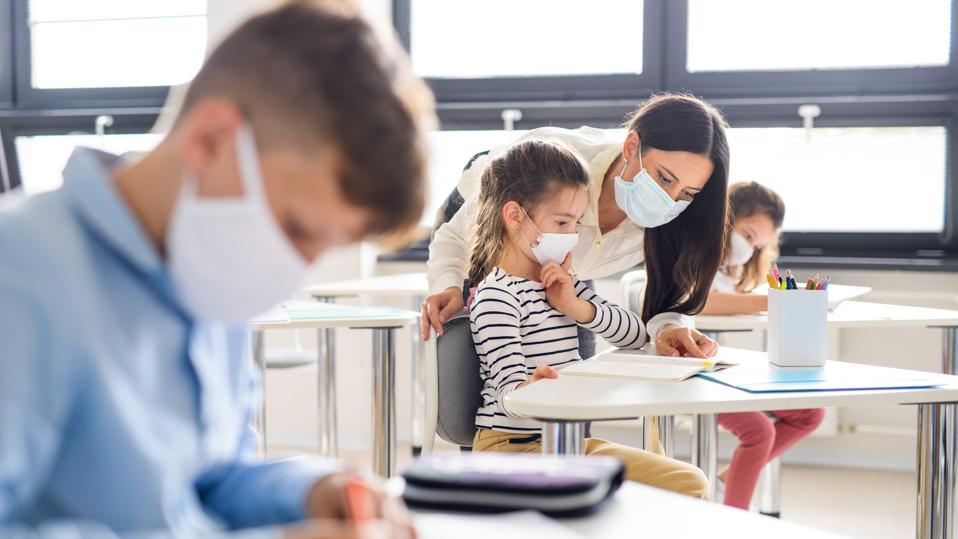
In-Person, Mask-Free Classes: Some Schools About To Resume Despite Coronavirus Resurgence

https://www.forbes.com/sites/danielcassady/2020/07/28/in-person-mask-free-classes-some-schools-about-to-resume-despite-coronavirus-resurgence/#52f69637511d

In-Person, Mask-Free Classes: Some Schools About To Resume Despite ...

TOPLINE

As coronavirus infection rates continue to spike across the nation, some school districts—including Jefferson City Schools in Jefferson, Georgia—have decided to trudge forward with reopening plans and offer face-to-face classes without requiring face masks.


KEY FACTS

Jefferson City Schools plans to begin face-to-face classes on Friday, one of the earliest starting dates in the country, according to a report from the New York Times.

School officials in Jefferson said they would strongly encourage students or teachers to wear face masks, but wouldn’t require them to do so.

The debate over face masks has proven divisive among the town’s residents, 80% of whom voted for Trump in 2016, with high school students creating petitions both for and against mandatory face masks.

Jackson county, of which Jefferson is the county seat, has seen 162 new Covid-19 cases in the past 7 days while Georgia as a whole, a recent hotspot for the virus, has seen over 170,000 cases and more that 3,500 deaths.

At least 14 other school districts have chosen to open for full, in-person classes between July 27 and August 7, according to Ed Week, each with different rules regarding face masks.

At least 14 other school districts have chosen to open for full, in-person classes between July 27 and August 7, according to Ed Week, each with different rules regarding face masks.

KEY BACKGROUND

There has been a debate about when and how schools should reopen almost since the coronavirus pandemic began. Last week President Trump, who has been adamant that schools reopen in the fall, reversed course saying that schools in coronavirus hotspots should delay reopening, but that doing so would prevent them from receiving billions in federal aid. The CDC has also backed reopening schools as of last week, saying in a statement “Reopening schools creates opportunity to invest in the education, well-being, and future of one of America’s greatest assets — our children — while taking every precaution to protect students, teachers, staff and all their families.” Some school districts are operating more judiciously, halting reopenings until the coronavirus outbreaks subside, or relying on virtual lessons and hybrid classes.


GOP Rep. Gohmert—Who Shunned Masks—Reportedly Tests Positive For Coronavirus

https://www.forbes.com/sites/carlieporterfield/2020/07/29/gop-rep-gohmert-who-shunned-masks-reportedly-tests-positive-for-coronavirus/#2a9eaa2e393f

GOP Rep. Gohmert—Who Shunned Masks—Reportedly Tests Positive For ...

TOPLINE

A Republican congressman from Texas who said last month that he doesn’t wear a mask on the House floor because he doesn’t have Covid-19 tested positive for the virus Wednesday, according to a Politico report citing anonymous sources.


KEY FACTS

Rep. Louie Gohmert was reportedly diagnosed Wednesday morning during routine White House testing, required because he was slated to travel to Texas with President Donald Trump later in the day, Politico reported. 

Gohmert has been seen not wearing his mask on the floor, and told CNN in June it’s because he is tested often enough to be aware of his status.

“I keep being tested and I don’t have it,” he told CNN last month. “So I’m not afraid of you, but if I get it I’ll wear a mask.”

Gohmert was present at the House for Tuesday’s Attorney General Bill Barr hearings without a mask.


KEY BACKGROUND

According to media reports, Gohmert is at least the eighth member of Congress to have been infected with the virus that has also been detected in more than 4.3 million Americans. Gohmert’s state, Texas, has been one of the worst-hit in the union.


What it’s like to be a nurse after 6 months of COVID-19 response

https://www.healthcaredive.com/news/what-its-like-to-be-a-nurse-6-months-coronavirus/581709/

Those on the front lines of the fight against the novel coronavirus worry about keeping themselves, their families and their patients safe.

That’s especially true for nurses seeking the reprieve of their hospitals returning to normal operations sometime this year. Many in the South and West are now treating ICUs full of COVID-19 patients they hoped would never arrive in their states, largely spared from spring’s first wave.

And like many other essential workers, those in healthcare are falling ill and dying from COVID-19. The total number of nurses stricken by the virus is still unclear, though the Centers for Disease Control and Prevention has reported 106,180 cases and 552 deaths among healthcare workers. That’s almost certainly an undercount.

National Nurses United, the country’s largest nurses union, told Healthcare Dive it has counted 165 nurse deaths from COVID-19 and an additional 1,060 healthcare worker deaths.

Safety concerns have ignited union activity among healthcare workers during the pandemic, and also given them an opportunity to punctuate labor issues that aren’t new, like nurse-patient ratios, adequate pay and racial equality.

At the same time, the hospitals they work for are facing some of their worst years yet financially, after months of delayed elective procedures and depleted volumes that analysts predict will continue through the year. Many have instituted furloughs and layoffs or other workforce reduction measures.

Healthcare Dive had in-depth conversations with three nurses to get a clearer picture of how they’re faring amid the once-in-a-century pandemic. Here’s what they said.

Elizabeth Lalasz, registered nurse, John H. Stroger Hospital in Chicago

Elizabeth Lalasz has worked at John H. Stroger Hospital in Chicago for the past 10 years. Her hospital is a safety net facility, catering to those who are “Black, Latinx, the homeless, inmates,” Lalasz told Healthcare Dive. “People who don’t actually receive the kind of healthcare they should in this country.”

Data from the CDC show racial and ethnic minority groups are at increased risk of getting COVID-19 or experiencing severe illness, regardless of age, due to long-standing systemic health and social inequities.

CDC data reveal that Black people are five times more likely to contract the virus than white people.

This spring Lalasz treated inmates from the Cook County Jail, an epicenter in the city and also the country. “That population gradually decreased, and then we just had COVID patients, many of them Latinx families,” she said.

Once Chicago’s curve began to flatten and the hospital could take non-COVID patients, those coming in for treatment were desperately sick. They’d been delaying care for non-COVID conditions, worried a trip to the hospital could risk infection.

A Kaiser Family Foundation poll conducted in May found that 48% of Americans said they or a family member had skipped or delayed medical care because of the pandemic. And 11% said the person’s condition worsened as a result of the delayed care.

When patients do come into Lalasz’s hospital, many have “chest pain, then they also have diabetes, asthma, hypertension and obesity, it just adds up,” she said.

“So now we’re also treating people who’ve been delaying care. But after the recent southern state surges, the hospital census started going down again,” she said.

Amy Arlund, registered nurse, Kaiser Permanente Medical Center in Fresno, California:

Amy Arlund works the night shift at Kaiser Fresno as an ICU nurse, which she’s done for the past two decades.

She’s also on the hospital’s infection control committee, where for years she’s fought to control the spread of clostridium difficile colitis, or C. diff., in her facility. The highly infectious disease can live on surfaces outside the body for months or sometimes years.

The measures Arlund developed to control C. diff served as her litmus test, as “the top, most stringent protocols we could adhere to,” when coronavirus patients arrived at her hospital, she told Healthcare Dive.

But when COVID-19 cases surged in northern states this spring, “it’s like all those really strict isolation protocols that prior to COVID showing up would be disciplinable offenses were gone,” Arlund said.

Widespread personal protective equipment shortages at the start of the pandemic led the CDC and the Occupational Safety and Health Administration to change their longstanding guidance on when to use N95 respirator masks, which have long been the industry standard when dealing with novel infectious diseases.

The CDC also issued guidance for N95 respirator reuse, an entirely new concept to nurses like Arlund who say those changes go against everything they learned in school.

“I think the biggest change is we always relied on science, and we have always relied heavily on infection control protocols to guide our practice,” Arlund said. “Now infection control is out of control, we can no longer rely on the information and resources we always have.”

The CDC says experts are still learning how the coronavirus spreads, though person-to-person transmission is most common, while the World Health Organization recently acknowledged that it wouldn’t rule out airborne transmission of the virus.

In Arlund’s ICU, she’s taken care of dozens of COVID positive patients and patients ruled out for coronavirus, she said. After a first wave in the beginning of April, cases dropped, but are now rising again.

Other changing guidance weighing heavily on nurses is how to effectively treat coronavirus patients.

“Are we doing remdesivir this week or are we going back to the hydroxychloroquine, or giving them convalescent plasma?”Arlund said. “Next week I’m going to be giving them some kind of lavender enema, who knows.”

Erik Andrews, registered nurse, Riverside Community Hospital in Riverside, California:

Erik Andrews, a rapid response nurse at Riverside Community Hospital in California, has treated coronavirus patients since the pandemic started earlier this year. He likens ventilating them to diffusing a bomb.

“These types of procedures generate a lot of aerosols, you have to do everything in perfectly stepwise fashion, otherwise you’re going to endanger yourself and endanger your colleagues,” Andrews, who’s been at Riverside for the past 13 years, told Healthcare Dive.

He and about 600 other nurses at the hospital went on strike for 10 days this summer after a staffing agreement between the hospital and its owner, HCA Healthcare, and SEIU Local 121RN, the union representing RCH nurses, ended without a renewal.

The nurses said it would lead to too few nurses treating too many patients during a pandemic. Insufficient PPE and recycling of single-use PPE were also putting nurses and patients at risk, the union said, and another reason for the strike.

But rapidly changing guidance around PPE use and generally inconsistent information from public officials are now making the nurses at his hospital feel apathetic.

“Unfortunately I feel like in the past few weeks it’s gotten to the point where you have to remind people about putting on their respirator instead of face mask, so people haven’t gotten lax, but definitely kind of become desensitized compared to when we first started,” Andrews said.

With two children at home, Andrews slept in a trailer in his driveway for 12 weeks when he first started treating coronavirus patients. The trailer is still there, just in case, but after testing negative twice he felt he couldn’t spend any more time away from his family.

He still worries though, especially about his coworkers’ families. Some coworkers he’s known for over a decade, including one staff member who died from COVID-19 related complications.

“It’s people you know and you know that their families worry about them every day,” he said. “So to know that they’ve had to deal with that loss is pretty horrifying, and to know that could happen to my family too.”


KHN’s ‘What The Health?’: Trump Twists on Virus Response

https://khn.org/news/khn-podcast-what-the-health-trump-twists-on-virus-response/

KHN's 'What The Health?': Trump Twists on Virus Response | Kaiser ...

President Donald Trump — who has spent the past six months trying to play down the coronavirus pandemic — seems to have pivoted. In back-to-back briefings on July 21 and 22, Trump cautioned that the U.S. is in a dangerous place vis-a-vis the pandemic. He urged the public to wear masks — although he has rarely worn one in public.

Meanwhile, Republicans in the Senate are scrambling to put together a package for the next COVID-19 relief bill, facing a July 31 deadline, when some of the benefits passed in the spring expire. House Democrats passed their bill in May.

This week’s panelists are Julie Rovner of Kaiser Health News, Joanne Kenen of Politico, Margot Sanger-Katz of The New York Times and Tami Luhby of CNN.

Among the takeaways from this week’s podcast:

  • Although Trump’s renewed emphasis on COVID-19 has surprised some of his critics, it may persuade his supporters to take actions promoted by public health officials. Trump’s emphasis on the importance of face coverings, perhaps coupled with the rising number of cases in parts of the country, could convince people who were otherwise dismissive of masks. People who do not necessarily trust public health officials may listen to Trump.
  • Republicans on Capitol Hill are in disarray on how to approach the next coronavirus relief bill. They are not in lockstep with the White House and are not supporting Trump’s call for a payroll tax cut.
  • One reason members of Congress are not eager to cut the payroll taxes is that the economic downturn has spurred concerns the Medicare and Social Security trust funds are being depleted faster than expected. However, analysts point out that when employment rises again, some of those concerns could dissipate.
  • A key sticking point in the economic relief package is whether to extend the bump in unemployment benefits that Congress approved in the spring. Lawmakers are facing a hard deadline on the issue because that money runs out next week, and the prohibition on evictions that was also part of an earlier COVID-19 relief bill ends even sooner. With rent, mortgages and other bills coming due Aug. 1, unemployed consumers could face a tough beginning of the month.
  • The Food and Drug Administration has approved limited use of pool testing for COVID-19. That allows approved labs to put together a small number of tests to run at once, thus conserving some of the materials needed for the process. If the pool tests positive, then those people whose results were pooled have to be tested again individually. The efforts have limited usefulness when rates of transmission are high in a community, but they may be helpful in specific settings, such as schools or workplaces.
  • New data shows that opioid addiction ticked back up in 2019, after a slight decline. Part of the problem is the growing use of the powerful — and dangerous — drug fentanyl. Economic woes also play a role. Addiction is often referred to as an epidemic of despair.
  • Although it’s unlikely the judicial system will overrule the administration’s efforts to bolster short-term insurance plans — which are generally less expensive but don’t offer as much protection for consumers as policies sold on the Affordable Care Act’s marketplaces — they could be circumvented if Democrats take over the White House. Even still, Democrats would likely have to find a way to make ACA plans more affordable.