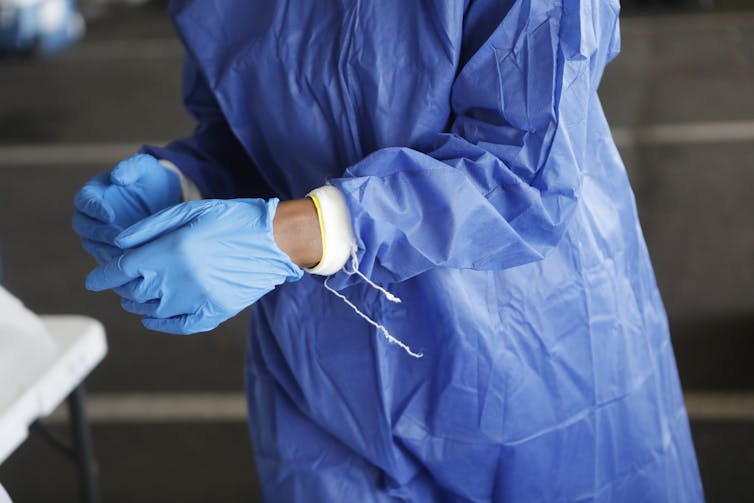
Canceled elective procedures putting pressure on nation’s hospitals

https://www.healthcarefinancenews.com/news/canceled-elective-procedures-putting-pressure-nations-hospitals

U.S. Hospitals Brace for 'Tremendous Strain' from New Virus - JEMS

Even upticks in COVID-19 patients haven’t made up for the revenue losses, since reimbursement for those services is comparatively slim.

Elective procedures are in a strange place at the moment. When the COVID-19 pandemic started to ramp up in the U.S., many of the nation’s hospitals decided to temporarily cancel elective surgeries and procedures, instead dedicating the majority of their resources to treating coronavirus patients. Some hospitals have resumed these surgeries; others resumed them and re-cancelled them; and still others are wondering when they can resume them at all.

In a recent HIMSS20 digital presentation, Reenita Das, a senior vice president and partner at Frost and Sullivan, said that during the pandemic, plastic surgery activity declined by 100%, ENT surgeries declined by 79%, cardiovascular surgeries declined by 53% and neurosurgery surgeries declined by 57%.

It’s hard to overstate the financial impact this is likely to have on hospitals’ bottom lines. Just this week, American Hospital Association President and CEO Rick Pollack, pulling from Kaufman Hall data, said the cancellation of elective surgeries is among the factors contributing to a likely industry-wide loss of $120 billion from July to December alone. When including data from earlier in the pandemic, the losses are expected to be in the vicinity of $323 billion, and half of the nation’s hospitals are expected to be in the red by the end of the year.

Doug Wolfe, cofounder and managing partner of Miami-based law firm Wolfe Pincavage, said this has amounted to a “double-whammy” for hospitals, because on top of elective procedures being cancelled, the money healthcare facilities received from the federal Coronavirus Aid, Relief, and Economic Security Act was an advance on future Medicare payments – which is coming due. While hospitals perform fewer procedures, they will now have to start paying that money back.

All hospitals are hurting, but some are in a more precarious position than others.

“Some hospital systems have had more cash on hand and more liquidity to withstand some of the financial pressure some systems are facing,” said Wolfe. “Traditionally, the smaller hospital systems in the healthcare climate we face today have faced a lot more financial pressure. They’re not able to control costs the same way as a big system. The smaller hospitals and systems were hurting to begin with.”

LOWER REVENUE, HIGHER COSTS

Some hospitals, especially ones in hot spots, are seeing a surge in COVID-19 patients. While this has kept frontline healthcare workers scrambling to care for scores of sick Americans, COVID-19 treatments are not reimbursed at the same level as surgeries. Hospital capacity is being stretched with less lucrative services.

“Some hospitals may be filling up right now, but they’re filling up with lower-reimbursing volume,” said Wolfe. “Inpatient stuff is lower reimbursement. It’s really the perfect storm for hospitals.”

John Haupert, CEO of Grady Health in Atlanta, Georgia, said this week that COVID-19 has had about a $115 million negative impact on Grady’s bottom line. Some $70 million of that is related to the reduction in the number of elective surgeries performed, as well as dips in emergency department and ambulatory visits. 

During one week in March, Grady saw a 50% reduction in surgeries and a 38% reduction in ER visits. The system is almost back to even in terms of elective and essential surgeries, but due to a COVID-19 surge currently taking place in Georgia, it has had to suspend those services once again. ER visits have only come back about halfway from that initial 38% dip, and the system is currently operating at 105% occupancy.

“Part of what we’re seeing there is reluctance from patients to come to hospitals or seek services,” said Haupert. “Many have significantly exacerbated chronic disease conditions.”

Patient hesitation has been an ongoing problem, as has the associated cost of treating coronavirus patients, said Wolfe.

“When they were ramping up to resume the elective stuff, there was a problem getting patients comfortable,” he said. “And the other thing was that the cost of treating patients in this environment has gone up. They’ve put up plexiglass everywhere, they have more wiping-down procedures, and all of these things add cost and time. They need to add more time between procedures so they can clean everything … so they’re able to do less, and it costs more to do less. Even when elective procedures do resume, it’s not going back to the way it was.”

Most hospitals have adjusted their costs to mitigate some of the financial hit. Even some larger systems, such as 92-hospital nonprofit Trinity Health in Michigan, have taken to measures such as laying off and furloughing workers and scaling back working hours for some of its staff. At the top of the month, Trinity announced another round of layoffs and furloughs – in addition to the 2,500 furloughs it announced in April – citing a projected $2 billion in revenue losses in fiscal year 2021, which began on June 1.

Hospitals are at the mercy of the market at the moment, and Wolfe anticipates there could be an uptick in mergers and consolidation as organizations look to partner with less cash-strapped entities. 

“Whether reorganization will work remains to be seen, but there will definitely be a fallout from this,” he said.


U.S. passes 4 million coronavirus cases as pace of new infections roughly doubles

https://www.washingtonpost.com/politics/us-passes-4-million-coronavirus-cases-as-pace-of-new-infections-roughly-doubles/2020/07/23/d0125192-cd02-11ea-b0e3-d55bda07d66a_story.html?utm_campaign=wp_main&utm_medium=social&utm_source=facebook&fbclid=IwAR3Ve5MnHiStJnPO_mzkc1c2sHE2EM6QOG-2HochFPBmJe6hnyvcmqEVQ4U

The United States on Thursday passed the grim milestone of 4 million confirmed coronavirus infections, and President Trump announced he was canceling the public celebration of his nomination for a second term, as institutions from schools to airlines to Major League Baseball wrestled with the consequences of a pandemic still far from under control.

The rapid spread of the virus this summer is striking, taking just 15 days to go from 3 million confirmed cases to 4 million. By comparison, the increase from 1 million cases to 2 million spanned 45 days from April 28 to June 11, and the leap to 3 million then took 27 days.

Trump’s cancellation of the in-person portion of the Republican National Convention planned for next month in Jacksonville, Fla., represented a remarkable reversal. He had insisted for months on a made-for-television spectacle that would have packed people close together in a state that is now an epicenter of the resurgent pandemic.

On Thursday, he conceded that was not going to work. “The timing for this event is not right,” Trump said during the latest of somber, solo White House briefings this week. “It’s just not right with what’s been happening.”

Florida reported 173 deaths on Thursday, its highest single-day count of new deaths, and also reported more than 10,200 new coronavirus cases.

In a scathing statement blaming the surge of new cases on Trump’s “failure to care,” presumptive Democratic nominee Joe Biden said the president “quit on this country and waved the white flag of surrender.”

Meanwhile, nearly every public health metric suggests America is badly losing its fight against the virus.

Positivity rates have reached alarming levels in numerous states, hospitalizations are soaring, and more than 1,100 new coronavirus deaths were reported across the United States on Wednesday, marking the first time since May 29 that the daily count exceeded that number, according to Washington Post tracking.

The rolling seven-day average of infections has doubled in less than a month, reaching more than 66,000 new cases per day Wednesday. The U.S. death toll now exceeds 141,000.

As a result, many businesses appear to be pulling back after their attempts to resume more normal operations proved premature, and an additional 1.4 million American workers filed for unemployment benefits last week. It was the first time since March that new claims rose. Another 980,000 new Pandemic Unemployment Assistance claims — the benefits offered to self-employed and gig workers — were also filed.

Congress, meanwhile, struggled to confront the crisis. Senate Republicans killed Trump’s payroll tax cut proposal on Thursday, widening an unusual rift with the White House over the cost and contents of the latest national coronavirus relief package.

Senate Majority Leader Mitch McConnell (R-Ky.) had planned to roll out a $1 trillion GOP bill Thursday morning, but that was canceled amid the intraparty conflicts.

Administration officials then floated a piecemeal approach, involving several different aid bills, but ran into opposition from lawmakers in both parties.

Trump’s briefing Thursday afternoon, his third of the week, reflected an effort to increase popular support for his management of the coronavirus outbreak, which even many of his allies have criticized. About 2 out of 3 Americans disapprove of Trump’s handling of the pandemic, a new poll found.

Trump dismissed or played down the risk of the virus for months after it had begun spreading in the United States and has been a self-described cheerleader for rapid reopening of businesses and schools shuttered to help slow its spread.

The survey of 1,057 adults in the United States, conducted by the Associated Press-NORC Center for Public Affairs Research, also showed that 3 out of 4 Americans, including a majority of Republicans, support mandatory face coverings when people are outside their own homes.

Democrats overwhelmingly favor mask mandates, at 89 percent. The majority of Republicans — 59 percent — also support them.

Ninety-five percent of Democrats and 75 percent of Republicans say they wear face coverings when leaving home. Overall, more Americans — 86 percent — are wearing masks compared with in May, when 73 percent were doing so.

Trump resisted wearing a mask in public until earlier this month, despite calls to set a good example from the top. He now calls it patriotic to wear a mask, though he still does not wear one consistently and says people should decide for themselves. Trump carries a black-cloth version in his pocket, which he says is sufficient for those instances when he is close to people who have not been screened for the virus.

Trump’s shift may reflect a growing consensus in favor of masks, although it is not clear that opposition to them has ebbed among some of the president’s strongest political supporters.

The business community is struggling, too. American Airlines and Southwest Airlines posted big quarterly losses between April and July in their earnings reports released Thursday, projecting that travel demand will not rebound anytime soon.

In American’s second quarter, revenue dropped more than 86 percent, to $1.6 billion, from nearly $12 billion a year ago, according to a Securities and Exchange Commission filing. The company posted a net loss of nearly $2.1 billion, attributing it to stay-at-home orders, border closures and travel restrictions.

“As a result, we have experienced an unprecedented decline in the demand for air travel, which has resulted in a material deterioration in our revenues,” the company said in the earnings report. “While the length and severity of the reduction in demand due to Covid-19 is uncertain, we expect our results of operations for the remainder of 2020 to be severely impacted.”

Southwest posted revenue of $1 billion in its second quarter, an almost 83 percent dip compared with a year ago. The company also posted a net loss of $915 million.

Trump also took a small step back from his insistence that schools should open on time this fall, conceding instead that some schools might need to delay in-person learning. Many school districts have already announced that decision.

Trump has been critical of guidance from the Centers for Disease Control and Prevention, saying it made it too tough for schools to reopen, and promised new guidelines would be issued. On Thursday, the CDC released several documents emphasizing the benefits of in-person school, in line with Trump’s messaging. Some of the guidance was written by White House officials rather than experts at the CDC, people familiar with the process said. They spoke on the condition of anonymity to discuss internal decision-making.

The new guidelines for school administrators mention precautions outlined in previous documents, but they appear to drop specific reference to keeping students six feet apart — something many schools find almost impossible to do if they are fully reopened. This document also suggests that schools consider closing only if there is “substantial, uncontrolled transmission” of the virus, and not necessarily even then.

Florida Gov. Ron DeSantis (R) echoed Trump in making a case for students to return to classrooms, despite the state’s teachers union suing over an order forcing schools to fully reopen. Meanwhile, a new poll showed that most parents would prefer to delay the start of in-person school.

During an appearance on “Fox & Friends,” DeSantis said that schoolchildren are “by far at the least risk for coronavirus, thankfully.”

“We also know they play the smallest role by far in transmission of the virus, and yet they’ve really been asked to shoulder the brunt of our control measures,” said DeSantis, a close Trump ally who had volunteered his state for the Republican convention next month.

DeSantis said that the “evidence-based decision” is for all parents to have the option of in-class instruction for their children if they choose. He said those who are not comfortable with sending their children back to school could continue distance learning.

The role children play in spreading the virus is still being studied, with experts saying that results are not definitive. A South Korean study found that children over the age of 10 were as likely to transmit the virus as adults, while those under 10 were less likely to spread it.

Deborah Birx, the White House coronavirus response coordinator, said Wednesday on Fox News that the United States is launching a study of its own, adding that the data “really needs to be confirmed here.”

Among the most visible American institutions searching for a path forward is the sports industry. Major League Baseball began a pandemic-shortened season on Thursday, playing in empty stadiums amid questions about whether the sport can make it through October without having to abort. It is as much a science experiment as a championship pursuit.

Players are prohibited from spitting or high-fiving. Foul balls that wind up in the stands will remain there.

Anthony S. Fauci, the nation’s leading infectious-disease expert, threw out the first pitch for the Washington Nationals home opener against the New York Yankees. Nationals star outfielder Juan Soto tested positive for the coronavirus on Thursday and missed the game.

Meanwhile, Japan marked a year’s delay of the Olympic Games on Thursday. Tokyo was to host the 2020 Summer Olympics starting Friday. A 15-minute ceremony in Tokyo’s newly built $1.4 billion Olympic Stadium started the countdown to the delayed games, now set to begin on July 23, 2021. The city also marked a new daily record in reported cases on Thursday, with 366.

poll this week by Japan’s Kyodo News Agency found that fewer than 1 in 4 people in Japan even want to host the games anymore. One-third of respondents said the games should be canceled, while 36 percent expressed interest in postponing them for more than a year.


Why COVID-19’s biggest impact on healthcare may not be until 2022

https://www.healthcaredive.com/news/why-covid-19s-biggest-impact-on-healthcare-may-not-be-until-2022/582129/

This perfect storm of a shift in payer mix, the impending insolvency of Medicare and the inability of states to absorb the growing costs of Medicaid represent a tsunami of challenges.

With COVID-19 there has been unprecedented stress placed upon the healthcare system. The human and financial toll of the current crisis has been extraordinary. Yet, little attention has been focused on the impact of this virus on the viability of our healthcare financing system.

Three significant shifts in healthcare financing are occurring as a result of the pandemic’s economic impact. First, as a result of job losses, there will be a shift in commercial insurance to government-funded insurance programs. Second, revenue for funding Medicare, based on payroll taxes, will be significantly decreased. Finally, states will have less tax revenue to pay for Medicaid, threatening the viability of this program as well.

More than 30 million Americans have filed for unemployment since the start of the COVID-19 pandemic. According to a recent report, about 27 million people may lose their employer-sponsored insurance. 

This will result in millions of people seeking coverage through Medicaid programs, the individual marketplace or simply becoming uninsured. Healthcare providers have relied upon margins from commercial insurance to offset costs from poorer reimbursing government funded programs and uncompensated care.

With more than 156 million Americans receiving employer sponsored insurance at the start of this year, and given recent projected job losses, providers may see a 17% shift in payer mix. The reliance on commercial insurance and cost shifting has become a necessary way for providers to financially sustain operations. 

With a 35% margin with commercial insurance compared to Medicare, a 17% shift in payer mix on a trillion dollar spend would result in a substantial reduction in financial resources available to hospitals.

Almost half of healthcare expenditures already come from government programs. Medicare, the largest of these programs, is principally supported by taxes on payroll and social security benefits. With COVID-related job losses there will be a corresponding reduction in payroll tax revenues to the Medicare system. Reports from the Congressional Research Service submitted to Congress in May, with data used prior to COVID-19, projected that Medicare would become insolvent in 2026.

Analyses performed show that there will be a gap in Medicare revenues during the next three years (from the pre-COVID projections) of close to $150 billion. The result is that Medicare will become insolvent as early as 2022. Even by applying more conservative projections, such as recovering all job losses by the end of 2020 and payroll tax revenue holding steady at pre-COVID levels, Medicare still becomes insolvent in 2023.

State revenues, too, will be under real pressure with reduced tax revenues resulting from the current economic downturn. Medicaid programs are supported in part by federal funds, but also from general funds from the state. 
On average, states are projecting about a 10% reduction in revenues in 2020, rising to almost a 25% reduction in 2021. Even without considering the growth in Medicaid enrollment hitting states, this reduced tax revenue will make sustaining current Medicaid program funding increasingly difficult.

This perfect storm of a shift in payer mix, the impending insolvency of Medicare by 2022 and the inability of states to absorb the growing costs of Medicaid represent a tsunami of challenges for the health system. Looking at this new reality, it is clear that our system for financing healthcare is severely broken and we must identify solutions to sustain access to medical care for our citizens.

This will be a challenge of a generation and we will need strength, courage and bold ideas to get through this. Pandemics have a way of changing a society’s political, economic and sociologic outlooks, and COVID-19 will be no different. 


California AG conditionally approves $350M sale of nonprofit to Prime Healthcare

https://www.healthcarefinancenews.com/news/california-ag-conditionally-approves-350m-sale-st-francis-medical-center-prime-healthcare

Prime Healthcare, CEO Prem Reddy settle false-claims suit for $65M

Prime will acquire St. Francis for a net of $350 million, with a $200 million base cash price and $60 million for accounts receivable.

California Attorney General Xavier Becerra has conditionally approved Verity Health’s application to transfer ownership of St. Francis Medical Center to Prime Healthcare. The Attorney General’s decision follows an earlier decision by the U.S. Bankruptcy Court of the Central District of California granting Verity’s request to reject the existing collective bargaining agreements which impose legacy cost structures that it said contributed to bankruptcy.

Becerra noted that his approval of the sale of St. Francis to Prime Healthcare “protect(s) access to care for the Los Angeles communities served” by St. Francis.

“The COVID-19 public health crisis has brought home the importance of having access to lifesaving hospital care nearby in our communities,” he said. “St. Francis Medical Center is not just an asset, it is an indispensable neighbor, it is the workers who serve the patients, and the doctors who save lives. We conditionally approve this sale to keep it that way.”

Prime Healthcare has built a reputation for saving financially distressed hospitals across the U.S., touting improved clinical quality. Healthgrades said Prime had hospitals named among the nation’s 100 best 53 times, and has been the recipient of several Patient Safety Excellence Awards.

The Attorney General’s office conducted an exhaustive review of the transaction for the past several months and carefully considered public input on the proposed transaction. The Attorney General’s approval includes conditions for the sale which Prime is currently reviewing. Pending a final ruling by the Bankruptcy Court, the transaction is expected to be completed this summer.

THE LARGER TREND

In early April, the U.S. Bankruptcy Court approved the Asset Purchase Agreement for the sale of St. Francis Medical Center to Prime. Under the agreement, Prime will acquire St. Francis for a net consideration of over $350 million, including a $200 million base cash price and $60 million for accounts receivable. In addition, Prime has committed to invest $47 million in capital improvements and extend offers of employment to nearly all staff.

The court also recently granted Verity’s request to reject the existing collective bargaining agreements with two unions that represent associates at St. Francis Medical Center, SEIU and UNAC. The court noted that Prime Healthcare was the only party to submit a qualifying bid for St. Francis and that without rejecting the existing CBAs, “St. Francis would not continue to operate as a going concern, and all of the UNAC (and SEIU) represented employees would lose their jobs.”

The court also noted that Prime and Verity had made multiple efforts to negotiate in good faith with the unions, and the parties devoted “hundreds of hours to negotiations,” but ultimately were unable to agree on new CBAs. Further, the court determined that one of the reasons for the hospital’s bankruptcy was the “legacy cost structure imposed by the existing CBAs.”

It then staid that the proposals were rejected “without good cause” by the unions. Prime said it negotiated in good faith and proposed increasingly generous offers to UNAC and SEIU with wages far above its existing agreements at its Los Angeles-area hospitals. Prime’s latest offer to SEIU maintained existing wages for roughly 90% of SEIU members, and increased wages for some of them. Prime said these wages would be substantially higher than those recently voted by SEIU members at three of Prime’s Los Angeles hospitals.

ON THE RECORD

“Receiving conditional approval is an important step in ensuring Prime is able to preserve the St. Francis mission for the benefit of associates, members of the medical staff and most importantly the patients and Southeast Los Angeles community that has relied on St. Francis for 75 years,” said Rich Adcock, CEO of Verity Health.

“We are honored to be selected to continue the St. Francis legacy and are working to review the conditions and finalize the sale as quickly as possible,” said Dr. Sunny Bhatia, CEO, Region I and chief medical officer of Prime Healthcare. “St. Francis’ mission is especially critical during this pandemic and we honor the service of all caregivers. Prime has already started investments at St. Francis that will enhance patient care as we commit to continue every service line, community benefit program, charity care and expand new services to the community.”


Coronavirus’s painful side effect is deep budget cuts for state and local government services

https://theconversation.com/coronaviruss-painful-side-effect-is-deep-budget-cuts-for-state-and-local-government-services-141105

Coronavirus's painful side effect is deep budget cuts for state ...

Nationwide, state and local government leaders are warning of major budget cuts as a result of the pandemic. One state – New York – even referred to the magnitude of its cuts as having “no precedent in modern times.”

Declining revenue combined with unexpected expenditures and requirements to balance budgets means state and local governments need to cut spending and possibly raise taxes or dip into reserve funds to cover the hundreds of billions of dollars lost by state and local government over the next two to three years because of the pandemic.

Without more federal aid or access to other sources of money (like reserve funds or borrowing), government officials have made it clear: Budget cuts will be happening in the coming years.

And while specifics are not yet available in all cases, those cuts have already included reducing the number of state and local jobs – from firefighters to garbage collectors to librarians – and slashing spending for education, social services and roads and bridges.

In some states, agencies have been directed to cut their budget as much as 15% or 20% – a tough challenge as most states prepared budgets for a new fiscal year that began July 1.

As a scholar of public administration who researches how governments spend money, here are the ways state and local governments have reduced spending to close the budget gap.

Cutting jobs

State and local governments laid off or furloughed 1.5 million workers in April and May.

They are also reducing spending on employees. According to surveys, government workers are feeling personal financial strain as many state and local governments have cut merit raises and regular salary increases, frozen hiring, reduced salaries and cut seasonal employees.

Washington state, for example, cut both merit raises and instituted furloughs.

survey from the National League of Cities shows 32% of cities will have to furlough or lay off employees and 41% have hiring freezes in place or planned as a result of the pandemic.

Employment reductions have met some resistance. In Nevada, for example, a state worker union filed a complaint against the governor to the state’s labor relations board for violating a collective bargaining statute by not negotiating on furloughs and salary freezes.

Most of the employee cuts have been made in education. Teachers, classroom aids, administrators, staff, maintenance crews, bus drivers and other school employees have seen salary cuts and layoffs.

The job loss has hurt public employees beyond education, too: librarians, garbage collectors, counselors, social workers, police officers, firefighters, doctors, nurses, health aides, park rangers, maintenance crews, administrative assistants and others have been affected.

Residents also face the consequences of these cuts: They can’t get ahold of staff in the city’s water and sewer departments to talk about their bill; they can’t use the internet at the library to look for jobs; their children can’t get needed services in school.

Most of these cuts have been labeled temporary, but with the extensions to stay-at-home orders and a mostly closed economy, it will be some time before these employees are back to work.

Suspending road, bridges, building and water system projects

As another way to reduce costs quickly, a National League of Cities survey shows 65% of the municipalities surveyed are stopping temporarily, or completely, capital expenditure and infrastructure projects like roads, bridges, buildings, water systems or parking garages.

In New York City, there is a US$2.3 billion proposed cut to the capital budget, a fund that supports large, multiyear investments from sidewalk and road maintenance, school buildings, senior centers, fire trucks, sewers, playgrounds, to park upkeep. There are potentially serious consequences for residents. For example, New York housing advocates are concerned that these cuts will hurt plans for 21,000 affordable homes.

Suspending these big money projects will save the government money in the short term. But it will potentially harm the struggling economy, since both public and private sectors benefit from better roads, bridges, schools and water systems and the jobs these projects create.

Delaying maintenance also has consequences for the deteriorating infrastructure in the U.S. The costs of unaddressed repairs could increase future costs. It can cost more to replace a crumbling building than it does to fix one in better repair.

Cities and towns hit

In many states, the new budgets severely cut their aid to local governments, which will lead to large local cuts in education – both K-12 and higher education – as well as social programs, transportation, health care and other areas.

New York state’s budget proposes that part of its fiscal year 2021 budget shortfall will be balanced by $8.2 billion in reductions in aid to localities. This is the state where the cuts were referred to in the budget as “not seen in modern times.” This money is normally spent on many important services that residents need everyday –mass transit, adult and elderly care, mental health support, substance abuse programs, school programs like special education, children’s health insurance and more. Lacking any of these support services can be devastating to a person, especially in this difficult time.

Fewer workers, less money

As teachers and administrators figure out how to teach both online and in person, they and their schools will need more money – not less – to meet students’ needs.

Libraries, which provide services to many communities, from free computer use to after-school programs for children, will have to cut back. They may have fewer workers, be open for fewer hours and not offer as many programs to the public.

Parks may not be maintained, broken playground equipment may stay that way, and workers may not repave paths and mow lawns. Completely separate from activists’ calls to shift police funding to other priorities, police departments’ budgets may be slashed just for lack of cash to pay the officers. Similar cuts to firefighters and ambulance workers may mean poorly equipped responders take longer to arrive on a scene and have less training to deal with the emergency.

To keep with developing public safety standards, more maintenance staff and materials will be needed to clean and sanitize schools, courtrooms, auditoriums, correctional facilitiesmetro stations, buses and other public spaces. Strained budgets and employees will make it harder to complete these new essential tasks throughout the day.

To avoid deeper cuts, state and local government officials are trying a host of strategies including borrowing money, using rainy day funds, increasing revenue by raising tax rates or creating new taxes or fees, ending tax exemptions and using federal aid as legally allowed.

Colorado was able to hold its budget to only a 3% reduction, relying largely on one-time emergency reserve funds. Delaware managed to maintain its budget and avoided layoffs largely through using money set aside in a reserve account.

Nobody knows how long the pandemic, or its economic effects, will last.

In the worst-case scenario, budget officials are prepared to make steeper cuts in the coming months if more assistance does not come from the federal government or the economy does not recover quickly enough to restore the flow of money that governments need to operate.


Hospital margins could sink to a negative 7% this year: 5 things to know

https://www.beckershospitalreview.com/finance/hospital-margins-could-sink-to-a-negative-7-this-year-5-things-to-know.html?utm_medium=email

New Kaufman Hall Report: Hospital Finances Crashed in April ...

The COVID-19 pandemic has created financial challenges for hospitals and health systems, and, without additional federal aid, half of US hospitals could be operating in the red in the second half of this year, according to an analysis released by the American Hospital Association on July 21.

Five takeaways from the analysis: 

1. Before the COVID-19 pandemic, the median hospital margin was 3.5 percent. COVID-19 is expected to drive the median hospital margin from positive to negative. 

2. Without funding from the Coronavirus Aid, Relief and Economic Security Act, hospital margins would have been a negative 15 percent in the second quarter of 2020. Margins are still expected to drop to a negative 3 percent in the second quarter.

3. Without additional aid from the federal government, hospital margins could sink to a negative 7 percent in the second half of this year. 

4. In the second quarter of this year, nearly half of U.S. hospitals had negative margins. Those hospitals will remain with negative margins without further financial support.  

5. “Heading into the COVID-19 crisis, the financial health of many hospitals and health systems were challenged, with many operating in the red,” said hospital association President and CEO Rick Pollack in a news release. “As today’s analysis shows, this pandemic is the greatest financial threat in history for hospitals and health systems and is a serious obstacle to keeping the doors open for many.” 

The full report, prepared by Kaufman, Hall & Associates and released by the AHA, is available here


Fitch: Nonprofit hospital margins unlikely to recover until COVID-19 vaccine

https://www.beckershospitalreview.com/finance/fitch-nonprofit-hospital-margins-unlikely-to-recover-until-covid-19-vaccine.html?utm_medium=email

What Happens When A Nonprofit Hospital Goes 'For-Profit' : Shots ...

Median financial ratios for nonprofit hospitals and health systems improved before the COVID-19 pandemic, which will provide some financial cushion to withstand financial pressures, according to a report from Fitch Ratings. 

The medians for 2019, based on 2018 data, showed the nonprofit hospital and health system sector stabilized after a period of operational softness. The medians for 2020, based on 2019 audited data, are expected to show improvement in operating margins driven by higher revenues, cost reductions and increased cash flow, Fitch said.

“We expect the 2020 medians will represent peak performance levels until the sector is able to recover from the effects of the pandemic on operations,” Fitch said. 

The credit rating agency said the nonprofit healthcare sector is unlikely to stabilize until a COVID-19 vaccine is widely available.

“The sector has shown considerable resiliency over the years, weathering significant events such as the Great Recession and legislative changes to funding,” Fitch said. “However, the coronavirus presents entirely new and fundamental challenges for the sector in the short term in the form of volume and revenue disruption, and over the medium to longer term with expected deterioration of individual provider payor mixes and possible changes in the behavior of healthcare consumers.”


Envision Healthcare considering bankruptcy filing

https://mailchi.mp/0d4b1a52108c/the-weekly-gist-april-24-2020?e=d1e747d2d8

KKR-backed Envision Healthcare hires restructuring advisers ...


National physician staffing firm Envision Healthcare is considering filing for bankruptcy, according a report from Bloomberg. Sources say the company, backed by private equity (PE) firm KKR, which acquired Envision for $9.9B in June 2018, has hired restructuring advisors and is working with an investment bank. The abrupt halt to elective surgeries and reduction in emergency room volumes due to COVID-19 has caused Envision’s business to shrink by 65 to 75 percent in just two weeks at its 168 open ambulatory surgery centers (ASCs), compared to the same time period last year.

The Nashville-based company, which employs over 25,000 physicians and advanced practitioners, has already been reducing pay for providers and executives, in addition to implementing temporary furloughs. Envision is also struggling with a debt load of more than $7B, resulting from its 2018 leveraged buyout, and has been unable to convince its bondholders to approve a debt swap.

It remains to be seen whether Envision will be a bellwether for how other PE-backed physician groups will weather the ongoing COVID crisis. While Envision’s composition of mainly hospital- and ASC-based providers, coupled with its huge debt load, leave it on especially shaky financial footing, many PE-backed physician groups will struggle this year to achieve anything close to the 20 percent annual rate of return often promised to investors.

If high-profile PE-backed groups like Envision end up declaring bankruptcy, it will likely impact the calculus of the many independent practices which may have previously looked to PE firms for acquisitionand temper the enthusiasm of investors, who might see physician staffing and practice roll-ups as less attractive as volumes continue to fluctuate.


39 hospitals get negative rating outlook from S&P amid pandemic

https://www.beckershospitalreview.com/finance/39-hospitals-get-negative-rating-outlook-from-s-p-amid-pandemic.html?utm_medium=email

Standard & Poor's lowers credit rating outlook to negative

S&P Global Ratings has revised the rating outlook for 39 hospitals to negative from stable due to the financial hit caused by the COVID-19 pandemic.

The affected hospitals have speculative-grade ratings or have about 100 days’ cash on hand or less, S&P said.

A negative outlook reflects S&P’s view that there is a 33 percent chance that operating and economic conditions will worsen to a degree that will cause a rating downgrade.

Below are the 39 hospitals or obligated groups, and their current rating:

1. Atrius Health (Auburndale, Mass.) — “BBB”
2. Bibb County Healthcare Authority (Centreville, Ala.) — “BB”
3. Dawson County Hospital District (Lamessa, Texas) — “CCC”
4. Delta (Colorado) County Memorial Hospital District — “BB”
5. Ector County Hospital District (Odessa, Texas) — “BBB”
6. Genesis HealthCare System (Zanesville, Ohio) — “BB+”
7. Grand River Hospital District (Rifle, Colo.) — “BB+”
8. Griffin Health Services (Derby, Conn.) — “BB+”
9. Guadalupe Regional Medical Center (Seguin, Texas) — “BB”
10. Hardin Memorial Hospital (Elizabethtown, Ky.) — “A-”
11. Holy Name Medical Center (Teaneck, N.J.) — “BBB”
12. Jackson Hospital and Clinic (Montgomery, Ala.) — “BBB-”
13. Jefferson County Public Hospital District No. 2 (Port Townsend, Wash.) — “BB+”
14. Jennie Stuart Medical Center (Hopkinsville, Ky.) — “BB+”
15. Lifespan (Providence, R.I.) — “BBB+”
16. Loma Linda (Calif.) University Medical Center — “BB-”
17. Madison Memorial Hospital (Rexburg, Idaho) — “BB+”
18. Milford (Mass.) Regional Medical Center — “BB+”
19. Mohawk Valley Health System (Utica, N.Y.) — “BB+”
20. National Jewish Health (Denver) — “BB+”
21. Nicholas H. Noyes Memorial Hospital (Dansville, N.Y.) — “BB”
22. North Oaks Health System (Hammond, La.) — “BB+”
23. Oak Valley Hospital District (Oakdale, Calif.) — “BB”
24. Opelousas (La.) General Hospital Authority — “BB+”
25. Oroville (Calif.) Hospital — “BB+”
26. OU Medicine (Oklahoma City) — “BB+”
27. Palomar Health (Poway, Calif.) — “BBB”
28. Pomona (Calif.) Valley Hospital Medical Center — “BBB”
29. Pullman (Wash.) Regional Hospital — “BBB-”
30. Rochester (N.Y.) General Hospital — “A-”
31. Ryder Memorial Hospital (Humacao, Puerto Rico) — “CCC”
32. Samaritan Medical Center (Watertown, N.Y.) — “BBB-”
33. Southeastern Regional Medical Center (Lumberton, N.C.) — “BBB+”
34. SoutheastHealth (Cape Girardeau, Mo.) — “BBB-”
35. Southwest Louisiana Hospital Association (Lake Charles) — “BB+”
36. Temple University Health System (Philadelphia) — “BBB-”
37. Westchester County Health Care Corporation (Valhalla, N.Y.) — “BBB-”
38. White River Health System (Batesville, Ark.) — “BBB-”
39. Winkler County Hospital District (Kermit, Texas) — “BB+”


Health providers seek at least $1B in next coronavirus stimulus bill

https://thehill.com/policy/healthcare/487813-providers-ask-for-at-least-1-billion-for-next-coronavirus-stimulus-bill

Health providers seek at least $1B in next coronavirus stimulus bill

Lawmakers should allocate at least another $1 billion in emergency funding for the coronavirus response, according to a letter from health care provider groups to congressional leaders.

The letter from the American Hospital Association, American Medical Association and American Nurses Association urged lawmakers to ensure that the next economic stimulus package includes funding to ensure that hospitals, health systems, physicians and nurses are “directly supported” for preparedness response.

The groups said the additional funding is needed for specific priorities, including ramping up infection controls, increasing the number of patient beds, building or retrofitting separate areas to screen and treat coronavirus patients and obtaining scarce protection supplies like masks and ventilators.

The groups also said hospitals and nurses need financial support because of the impact of canceling elective surgeries and procedures due to shortages of protective equipment, as well as patient fears.

“Such cancellations could have devastating financial implications for hospitals, physicians and nurses already at financial risk and may limit access to care,” the groups wrote.

The House early Saturday passed legislation aimed at mitigating the economic impact of the coronavirus epidemic, including provisions that would ensure that workers can take paid sick or family leave, bolster unemployment insurance and guarantee that all Americans can get free diagnostic testing for the coronavirus.

The Senate is expected to vote on the bill later this week, as the House still needs to pass “technical” corrections.