Moody’s: Patient volume recovered a bit in May, but providers face long road to recovery

https://www.fiercehealthcare.com/hospitals/moody-s-patient-volume-recovering-may-but-providers-face-long-road-to-recovery?mkt_tok=eyJpIjoiWmpjeVlXVTRZV0l5T1RndyIsInQiOiJLWWxjamNKK2lkZmNjcXV4dm0rdjZNS2lOanZtYTFoenViQjMzWnF0RGNlY1pkcjVGcFwvZFY4VjFaUUlZaFRBT1NRMGE5eWhGK1ZmR01ZSWVZWGMxOHRzTkptZVZXZmc5UnNvM3pVM2VIWDh6VllldFc3OGNZTTMxTDJrXC8wbzN1In0%3D&mrkid=959610

Moody's: Patient volume recovered a bit in May, but providers face ...

Patient volumes at hospitals, doctors’ and dentists’ offices recovered slightly in May but lagged well behind pre-pandemic levels, according to a new analysis from Moody’s Investors Service.

In all, the ratings agency estimated total surgeries at rated for-profit hospitals declined by 55% to 70% in April compared with the same period in 2019. States required hospitals to cancel or delay elective procedures, which are vital to hospitals’ bottom lines.

“Patients that had been under the care of physicians before the pandemic will return first in order to address known health needs,” officials from the ratings agency said in a statement. “Physicians and surgeons will be motivated to extend office or surgical hours in order to accommodate these patients.”

Those declines narrowed to 20% to 40% in May when compared to 2019.

Emergency room and urgent care volumes were still down 35% to 50% in May.

“This could reflect the prevalence of working-from-home arrangements and people generally staying home, which is leading to a decrease in automobile and other accidents outside the home,” the analysis said. “Weak ER volumes also suggest that many people remain apprehensive to enter a hospital, particularly for lower acuity care.”

The good news:  The analysis estimated it is unlikely there will be a return to the nationwide decline of volume experienced in late March and April because healthcare facilities are more prepared for COVID-19.

For instance, hospitals have enough personal protective equipment for staff and have expanded testing, the analysis said.

For-profit hospitals also have “unusually strong liquidity to help them weather the effects of the revenue loss associated with canceled or postponed procedures,” Moody’s added. “That is largely due to the CARES Act and other government financial relief programs that have caused hospital cash balances to swell.”

However, the bill for one of those sources of relief is coming due soon.

Hospitals and other providers will have to start repaying Medicare for advance payments starting this summer. The Centers for Medicare & Medicaid Services doled out more than $100 billion in advance payments to providers before suspending the program in late April.

Hospital group Federation of American Hospitals asked Congress to change the repayment terms for such advance payments, including giving providers at least a year to start repaying the loans.

Another risk for providers is the change in payer mix as people lose jobs and commercial coverage, shifting them onto Medicaid or the Affordable Care Act’s (ACA’s) insurance exchanges.

“This will lead to rising bad debt expense and a higher percentage of revenue generated from Medicaid or [ACA] insurance exchange products, which typically pay considerably lower rates than commercial insurance,” Moody’s said.


Telehealth could grow to a $250B revenue opportunity post-COVID-19: analysis

https://www.fiercehealthcare.com/tech/telehealth-could-grow-to-a-250b-revenue-opportunity-post-covid-mckinsey-reports

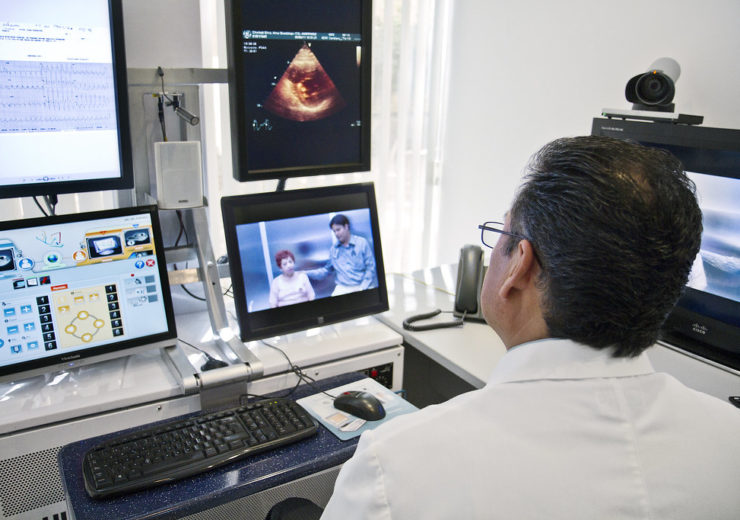
virtual visit

With the acceleration of consumer and provider adoption of telehealth, a quarter of a trillion dollars in current U.S. healthcare spend could be done virtually, according to a new report.

During the COVID-19 pandemic, consumer adoption of telehealth has skyrocketed, from 11% of U.S. consumers using telehealth in 2019 to 46% of consumers now using telehealth to replace canceled healthcare visit, according to consulting firm McKinsey & Company’s COVID-19 consumer survey conducted in April.

McKinsey’s survey also found that about 76% of consumers say they are highly or moderately likely to use telehealth in the future. Seventy-four percent of people who had used telehealth reported high satisfaction.

Health systems, independent practices, behavioral health providers, and other healthcare organizations rapidly scaled telehealth offerings to fill the gap between need and canceled in-person care. Providers are ready for the shift to virtual care: 57% view telehealth more favorably than they did before COVID-19 and 64% are more comfortable using it, according to McKinsey’s recent provider surveys.

Pre-COVID-19, the total annual revenues of U.S. telehealth players were an estimated $3 billion, with the largest vendors focused on virtual urgent care.

Telehealth is now poised to take a bigger share of the healthcare market as McKinsey estimates that up to $250 billion, or 20% of all Medicare, Medicaid, and commercial outpatient, office, and home health spend could be done virtually.

The consulting firm looked at anonymized claims data representative of commercial, Medicare, and Medicaid utilization.

The company’s claims-based analysis suggests that approximately 20% of all emergency room visits could potentially be avoided via virtual urgent care offerings, 24% of healthcare office visits and outpatient volume could be delivered virtually, and an additional 9% “near-virtually.”

Up to 35% of regular home health attendant services could be virtualized, and 2% of all outpatient volume could be shifted to the home setting, with tech-enabled medication administration.

Many of the dynamics that have helped to expand telehealth adoption are likely to be in place for at least the next 12 to 18 months, as concerns about COVID-19 remain until a vaccine is widely available.

Going forward, telehealth can increase access to necessary care in areas with shortages, such as behavioral health, improve the patient experience, and improve health outcomes, McKinsey reported.

Providers and patients are concerned that recent federal and state policies expanding access to telehealth will be rolled back once the emergency period ends.

Industry groups, including the College of Healthcare Information Management Executives (CHIME), are calling on lawmakers to ensure the changes enacted by Congress and the administration become permanent.

McKinsey’s research indicates providers’ concerns about telehealth include security, workflow integration, effectiveness compared with in-person visits, and the future for reimbursement.

“We call on Medicare and all other insurers to continue to fund telehealth programs and work collaboratively on coverage and coding to lessen provider burden. We cannot go back to pre-COVID telehealth; instead, we must go forward. Patients will demand it and providers will expect it,” CHIME CEO and President Russell Branzell said in a recent statement.

Telehealth also is drawing bipartisan support. Senator Marsha Blackburn, R-Tenn., urged Congress to “continue to support this expansion and codify the administration’s changes to support the health needs of the American people,” in a recent news release.

Rep. Robin Kelly, D-Illinois, is introducing a bill directing HHS Secretary Alex Azar to oversee a telehealth study looking at the technology’s impact on health and costs, Politico reported in its newsletter today.


Taking advantage of the telehealth opportunity

Healthcare providers and payers will need to take action to ensure the full potential of telehealth is realized after the crisis has passed, according to McKinsey.

There continue to be challenges as providers cite concerns about telehealth include security, workflow integration, effectiveness compared with in-person visits, and the future for reimbursement. There also is a gap between consumers’ interest in telehealth (76%) and actual usage (46%). Factors such as lack of awareness of telehealth offerings and understanding of insurance coverage are some of the drivers of this gap.

“The current crisis has demonstrated the relevance of telehealth and created an opening to modernize the care delivery system,” McKinsey consultants wrote. “Healthcare systems that come out ahead will be those who act decisively, invest to build capabilities at scale, work hard to rewire the care delivery model, and deliver distinctive high-quality care to consumers.”

McKinsey outlined steps industry stakeholders should take to drive the growth of telehealth.


Payers: Health plans should look to optimize provider networks and accelerate value-based contracting to incentivize telehealth. Align incentives for using telehealth, particularly for chronic patients, with the shift to risk-based payment models.

Payers also should build virtual health into new product designs to meet changing consumer preferences, This new design may include virtual-first networks, digital front-door features (for example, e-triage), seamless “plug-and-play” capabilities to offer innovative digital solutions, and benefit coverage for at-home diagnostic kits.


Health systems: Hospitals and health systems should accelerate the development of an overall consumer-integrated “front door.” Consider what the integrated product will initially cover beyond what currently exists and integrate with what may have been put in place in response to COVID-19, for example, e-triage, scheduling, clinic visits, record access.

Providers also should build the capabilities and incentives of the provider workforce to support virtual care, including, workflow design, centralized scheduling, and continuing education. And, health systems need to take steps to measure the value of virtual care by quantifying clinical outcomes, access improvement, and patient/provider satisfaction. Include the potential value from telehealth when contracting with payers for risk models to manage chronic patients, McKinsey said.


Investors and health technology firms: These players also can support the new reality of expanded telehealth services. Technology firms should consider developing scenarios on how virtual health will evolve and when, including how usage evolved post-COVID-19, based on expected consumer preferences, reimbursement, CMS and other regulations.

Investors also should develop potential options and define investment strategies based on the expected virtual health future. For example, combinations of existing players/platforms, linkages between in-person and virtual care offerings and create sustainable value. Investors and technology companies also can identify the assets and capabilities to implement these options, including specific assets or capabilities to best enable the play, and business models that will deliver attractive returns.


How Many More Will Die From Fear of the Coronavirus?

Fear of contracting the coronavirus has resulted in many people missing necessary screenings for serious illnesses, like cancer and heart disease.

Seriously ill people avoided hospitals and doctors’ offices. Patients need to return. It’s safe now.

More than 100,000 Americans have died from Covid-19. Beyond those deaths are other casualties of the pandemic — Americans seriously ill with other ailments who avoided care because they feared contracting the coronavirus at hospitals and clinics.

The toll from their deaths may be close to the toll from Covid-19. The trends are clear and concerning. Government orders to shelter in place and health care leaders’ decisions to defer nonessential care successfully prevented the spread of the virus. But these policies — complicated by the loss of employer-provided health insurance as people lost their jobs — have had the unintended effect of delaying care for some of our sickest patients.

To prevent further harm, people with serious, complex and acute illnesses must now return to the doctor for care.

Across the country, we have seen sizable decreases in new cancer diagnoses (45 percent) and reports of heart attacks (38 percent) and strokes (30 percent). Visits to hospital emergency departments are down by as much as 40 percent, but measures of how sick emergency department patients are have risen by 20 percent, according to a Mayo Clinic study, suggesting how harmful the delay can be. Meanwhile, non-Covid-19 out-of-hospital deaths have increased, while in-hospital mortality has declined.

These statistics demonstrate that people with cancer are missing necessary screenings, and those with heart attack or stroke symptoms are staying home during the precious window of time when the damage is reversible. In fact, a recent poll by the American College of Emergency Physicians and Morning Consult found that 80 percent of Americans say they are concerned about contracting the coronavirus from visiting the emergency room.

Unfortunately, we’ve witnessed grievous outcomes as a result of these delays. Recently, a middle-aged patient with abdominal pain waited five days to come to a Mayo Clinic emergency department for help, before dying of a bowel obstruction. Similarly, a young woman delayed care for weeks out of a fear of Covid-19 before she was transferred to a Cleveland Clinic intensive care unit with undiagnosed leukemia. She died within weeks of her symptoms appearing. Both deaths were preventable.

The true cost of this epidemic will not be measured in dollars; it will be measured in human lives and human suffering. In the case of cancer alone, our calculations show we can expect a quarter of a million additional preventable deaths annually if normal care does not resume. Outcomes will be similar for those who forgo treatment for heart attacks and strokes.

Over the past 12 weeks, hospitals deferred nonessential care to prevent viral spread, conserve much-needed personal protective equipment and create capacity for an expected surge of Covid-19 patients. During that time, we also have adopted methods to care for all patients safely, including standard daily screenings for the staff and masking protocols for patients and the staff in the hospital and clinic. At this point, we are gradually returning to normal activities while also mitigating risk for both patients and staff members.

The Covid-19 crisis has changed the practice of medicine in fundamental ways in just a matter of months. Telemedicine, for instance, allowed us to pivot quickly from in-person care to virtual care. We have continued to provide necessary care to our patients while promoting social distancing, reducing the risk of viral spread and recognizing patients’ fears.

Both Cleveland Clinic and Mayo Clinic have gone from providing thousands of virtual visits per month before the pandemic to hundreds of thousands now across a broad range of demographics and conditions. At Cleveland Clinic, 94 percent of diabetes patients were cared for virtually in April.

While virtual visits are here to stay, there are obvious limitations. There is no substitute for in-person care for those who are severely ill or require early interventions for life-threatening conditions. Those are the ones who — even in the midst of this pandemic — must seek the care they need.

Patients who need care at a clinic or hospital or doctor’s office should know they have reduced the risk of Covid-19 through proven infection-control precautions under guidelines from the Centers for Disease Control and Prevention. We’re taking unprecedented actions, such as restricting visiting hours, screening patient and caregiver temperatures at entrances, encouraging employees to work from home whenever possible, providing spaces that allow for social distancing, and requiring proper hand hygiene, cough etiquette and masking.

All of these strategies are intended to significantly reduce risk while allowing for vital, high-quality care for our patients.

The novel coronavirus will not go away soon, but its systemic side effects of fear and deferred care must.

We will continue to give vigilant attention to Covid-19 while urgently addressing the other deadly diseases that haven’t taken a pause during the pandemic. For patients with medical conditions that require in-person care, please allow us to safely care for you — do not delay. Lives depend on it.


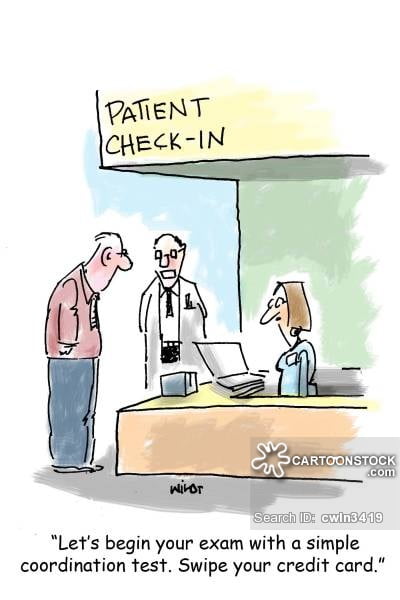
Cartoon – Let’s begin your exam with a simple coordination test

Difference Between Islamic Takaful and Conventional Insurance - ED ...

A deeper look at a new(ish) model of primary care delivery

https://mailchi.mp/f2774a4ad1ea/the-weekly-gist-may-22-2020?e=d1e747d2d8

Direct Primary Care: What Does it Mean for Independent and ...

Cometh the moment, cometh the care model. That’s one way of interpreting a new study commissioned by the Society of Actuaries, and performed by Milliman researchers, that evaluates the direct primary care (DPC) model. Often touted by advocates as a way to “cut out the middleman” and allow for greater patient-physician engagement, DPC is membership-model primary care, with a monthly or annual fee paid by the patient (or their employer) for unlimited access to a range of services for no additional out-of-pocket payment, and without billing insurance for care delivery.

In the study, Milliman reviewed existing literature, conducted a survey of nearly 200 DPC practices, and performed an in-depth analysis of one employer’s DPC offering. Their findings: higher physician satisfaction; smaller panel sizes (on average 445 patients per practice); and statistically significant decreases in overall demand for services (down 12.6 percent) and ED utilization (down 40.5 percent). All that for a monthly fee of between $65 and $85 per adult patient—resulting in a slight net increase in employer benefit costs (1.3 percent) but higher enrollee satisfaction.

The Milliman study is one of the first detailed analyses of the potential benefits of this newish care model, and the results suggest that there is promise for the approach. Critics rightly raise some doubts: could there could ever be enough physician supply to make this model work at national scale? And does the model encourage cherry-picking of more affluent, lower-utilizing patients, making the remaining risk pool more costly to cover?

But in a post-COVID world, with primary care doctors increasingly concerned about revenue stability, and employers looking to control spend (and searching for sweeteners to offset a potential shift to narrower referral networks), the model has the potential to play a greater role in future benefit design. Especially if coupled with a (potentially lower-cost) virtual-first approach, DPC could prove an attractive option for physicians and patients to move away from the fee-for-service, productivity-driven primary care model.


Charting the rebound of physician office visits

https://mailchi.mp/f2774a4ad1ea/the-weekly-gist-may-22-2020?e=d1e747d2d8

MultiBrief: Telehealth is keeping doctors, patients connected in ...

As patients begin to return to doctors’ offices, we were intrigued to read an analysis out this week from the Commonwealth Fund that provides a first glimpse into the pace of the recovery. Researchers from Harvard University and healthcare technology company Phreesia analyzed data from 12M visits at over 50,000 physician practices, finding that in-person visits had declined nearly 70 percent by mid-April, compared to pre-pandemic levels.

Behavioral health providers, medical specialists and primary care practices maintained the most volume, and procedural specialists were the hardest hit. Many practices deployed telemedicine quickly, but even with those added encounters, total visits were still down by nearly 60 percent. While visits are starting to return, it’s likely that physician practices are in for a long, slow rebound. Telemedicine as a percentage of all visits peaked in late April, and by mid-May, in-person visits had reached 55 percent of pre-pandemic levels.

Even if virtual volumes pull back from their COVID high, we’re likely to see telemedicine play a much more expansive role moving forward. Dr. Rushika Fernandopulle, CEO of Iora Health, shared his company’s learnings from their COVID-19 response, predicting that ultimately 70-80 percent of physician encounters could be virtual, necessitating a need to reorganize care delivery around populations, instead of practices.

Expect the next year to be a reckoning as changes in payment and regulations, combined with a heated marketplace for virtual care, continue to shift the balance between in-person and virtual care.


What we’ve learned from the telemedicine explosion

https://mailchi.mp/aa7806a422dd/the-weekly-gist-may-8-2020?e=d1e747d2d8

Why telemedicine could be the next big thing in employee healthcare

In our decades in healthcare, we’ve never seen a faster care transformation than the rapid growth in telemedicine sparked by COVID-19. Every system we’ve spoken with over the past two months reports its doctors are now performing thousands of “virtual visits” each week, often up from just a handful in February. As one chief digital officer told us, “We took our three-year digital strategic plan and implemented it in two weeks!

This week, we convened leaders from across our Gist Healthcare membership to share learnings and questions about their telemedicine experiences. COVID-19 brought down regulatory and payment hurdles, as well as internal cultural barriers to adoption—but leaders expressed a concern that current payment levels and physician enthusiasm could dissipate. Some insurers have hinted at pulling back on payment, although they will have a hard time doing so as long as Medicare maintains “parity” with in-person visits.

Switching to 100 percent telemedicine was easier than most doctors anticipated. But as practices now begin to ramp up office visits, new questions are emerging about how to integrate digital and physical visit workflow, requiring providers to rethink office layout and technology within the practice: is there a good physical space in the office to conduct televisits? Zoom and FaceTime have worked in a pinch, but what platform is best for long-term operational sustainability and consumer experience?

Telemedicine has also raised consumer expectations: patients expect providers to be on time for a virtual appointment—setting a bar for punctuality that will likely carry over to their next in-person office visit. Across the rest of this year, health systems and physician groups will continue to push the boundaries of virtual care, establishing how far it can be extended to provide quality care in a host of specialties.

But at the same time, systems must also prepare for growing complexity in 2021: what is the right balance of in-person versus virtual care? How should telemedicine integrate with urgent and emergency care offerings? How should physician compensation change? And as payers and disruptors expand their virtual care offerings, how can providers differentiate their own platforms in the eyes of consumers? We’ll continue to share learnings as our members work through the myriad challenges and opportunities of this new virtual care expansion.


Most consumers nervous about returning to care settings

https://mailchi.mp/aa7806a422dd/the-weekly-gist-may-8-2020?e=d1e747d2d8

As non-essential businesses begin to reopen, there’s no guarantee that merely opening the doors will make customers return. A recent Morning Consult poll provides an assessment of the impact of COVID-19 on consumer confidence: fewer than one in five US adults are currently comfortable doing (formerly) everyday activities like eating at a restaurant or going to a shopping mall.

The graphic below provides similar data for healthcare. Consumers’ willingness to visit healthcare providers in person for non-COVID care is only slightly better, at 21 percent. Which providers might see patients return most quickly?

Consumers say they are about twice as likely to visit their primary care doctor’s office than other healthcare facilities, including hospitals, specialists, and walk-in clinics. And when it comes to scheduling a routine in-office visit, nearly half say they will wait two to six months, with almost one in ten not comfortable going to a doctor’s office in person for a year or more.

Healthcare facilities face an uphill battle in bringing back patients—many of whom have ongoing chronic diseases that necessitate care now. Reaching patients through telemedicine and providing concrete messages about how they can safely see their doctor will be critical to staving off a tide of disease exacerbations that will mount as fear delays much-needed care.


CMS rolls back more Medicare, telehealth regs for providers working through pandemic

https://www.healthcaredive.com/news/CMS-second-round-COVID-rollbacks/577199/


How Telemedicine Is Changing Healthcare

Dive Brief:

  • CMS issued a another round of sweeping regulatory rollbacks Thursday that will temporarily change how some providers care for patients and get compensated during the ongoing pandemic.
  • Practitioners such as therapists previously restricted from providing telehealth services for reimbursement can now do so, and CMS is also upping payments for telephone-only telehealth visits. Accountable care organizations also scored a major win in the Thursday rule drop, with CMS pledging they wouldn’t be dinged financially for lower-than-expected health outcomes in their patient populations from COVID-19.​
  • Other major changes are related to COVID-19 testing for Medicare and Medicaid beneficiaries. A written practitioner’s order is no longer needed for diagnostic testing for Medicare payment purposes. The agency also said it will cover serology, or antibody testing, including certain FDA-authorized tests that patients self-collect at home.

Dive Insight:

The new rules come out of the recent public health emergency declaration, building on others announced in late March and early April. This round of changes, which take effect immediately, focuses on expanding testing capacity to help reopen the U.S. economy, according to CMS, along with delivering expanded care to seniors.

Major provider lobbies the American Hospital Association and American Medical Association praised the changes, noting that Medicare patients have been canceling needed medical appointments because of physical distancing and transportation challenges.

The Trump administration, which allowed traditional Medicare to temporarily cover telehealth in March, continues to expand virtual care access. CMS is expanding the types of specialists allowed to provide telehealth services for reimbursement to include physical therapists, occupational therapists, speech language pathologists and others. In the past, only doctors, nurse practitioners, physician assistants and certain others could do so.

Earlier changes included waiving the video requirement for telehealth patients without access to interactive audio-video technology – particularly those in rural areas. CMS is increasing payments for telephone visits from a range of about $14-$41 to about $46-$110, according to the release.

The rollbacks are a “major victory for medicine that will enable physicians to care for their patients, especially their elderly patients with chronic conditions who may not have access to audio-visual technology or high-speed Internet,” the AMA said.

Michael Abrams, managing partner of Numerof & Associates, a healthcare consulting firm, said the current, rapid adoption of telehealth is an experiment, and depending on the results, waivers could eventually become permanent.

“Once you increase pricing, you almost never roll it back,” Abrams said. “If this new pricing on telehealth visits makes it more attractive, attractive enough to substitute telehealth for in-office visits, that not only lowers the cost of care, but makes it very much more accessible, particularly for those whose ability to see a physician is limited.”

In a victory for ACOs, CMS said the value-based organizations wouldn’t incur any financial penalties because of COVID-19 testing and treatment for their patient populations. Roughly 60% of ACOs said previously they were likely to drop out of their risk-based model to avoid potential losses, according to the National Association of ACOs.

CMS is also allowing ACOs to remain at the same level of risk for another year, instead of bumping them up to the next risk level. NAACOs said it was “appreciative” of the changes in a statement, though they asked for additional relief for providers in two-sided risk arrangements.

Other loosened restrictions include those on who can administer COVID-19 diagnostic tests for payment to include any healthcare professional authorized to do so under state law, including pharmacists. Medicare and Medicaid recipients can now get tested at parking lot sites operated by pharmacies and other entities for reimbursement.

Outpatient hospital services such as wound care, drug administration, and behavioral health services can now be delivered in temporary expansion locations, including parking lot tents, converted hotels or patients’ homes for reimbursement, so long as they’re temporarily designated as part of a hospital.

Hospital outpatient departments that relocate off-campus are paid at lower rates under current law, but CMS is making a temporary exception to continue paying those physicians at their standard rates.

The agency will also pay for certain partial hospitalization services – that is, individual psychotherapy, patient education, and group psychotherapy – that are delivered in temporary expansion locations, including patient homes.

CMS is also now requiring nursing homes to inform residents, their families, and representatives of COVID-19 outbreaks in their facilities.