

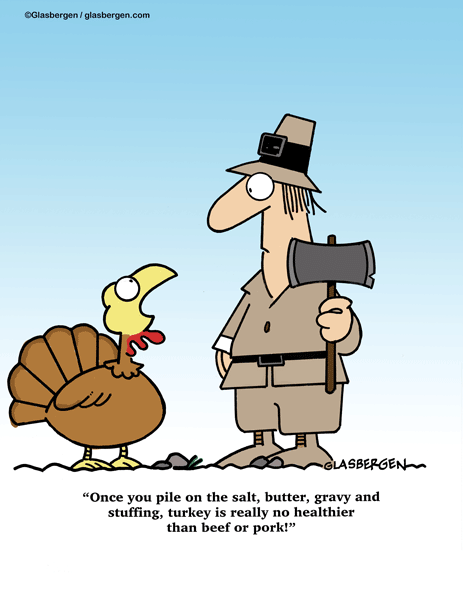
Cartoon – Healthy Eating
https://mailchi.mp/4b683d764cf3/the-weekly-gist-november-18-2022?e=d1e747d2d8

Telemedicine is supposed to make consumers’ lives easier, right? One of us had the opposite experience when managing a sick kid this week. My 14-year-old has been sick with a bad respiratory illness for over a week. We saw her pediatrician in-person, testing negative for COVID (multiple times), flu, and strep. Over the week, her symptoms worsened, and rather than haul her back to the doctor, we decided to give our health plan’s telemedicine service a try. To the plan’s credit, the video visit was easy to schedule, and we were connected to a doctor within minutes. He agreed that symptoms and timeline warranted an antibiotic, and said he was sending the prescription to our pharmacy as we wrapped up the call.
Here’s where the challenges began. We went to our usual CVS a few hours later, and they had no record of the prescription. (Note to telemedicine users: write down the name of your provider. The pharmacy asked to search for the script by the doctor’s name, which I didn’t remember—and holding up the line of a dozen other customers to fumble with the app seemed like the wrong call.)
We left and contacted the telemedicine service to see if the prescription had been transmitted, and after a half hour on hold, were finally transferred to pharmacy support. It turns out that the telemedicine service transmits their prescriptions via “e-fax”, so it was difficult to confirm if the pharmacy had received it. Not to be confused with e-prescribing, e-fax is literally an emailed image of a prescription, with none of the safeguards and communication capabilities of true electronic prescribing.
The helpful service representative kindly offered to call the pharmacy and placed us on hold—only to get a message that the pharmacy was closed for lunch and not accepting calls! Several hours later, which included being on hold for 75 minutes (!!!) with our CVS, my daughter finally got her medication.
Despite the slick app and teleconferencing system, the operations behind the virtual visit still relied on the very analog processes of phone trees and faxes—which created a level of irritation that rivaled trying to land Taylor Swift tickets for the same kid. It was a stark reminder of how far healthcare has to go to deliver a truly digital, consumer-centered experience.
https://mailchi.mp/4b683d764cf3/the-weekly-gist-november-18-2022?e=d1e747d2d8

47-hospital Sanford Health, based in Sioux Falls, SD, and 11-hospital Fairview Health Services, based in Minneapolis, MN, have signed a letter of intent to form a combined $14B health system that would retain Sanford’s name. Sanford has been seeking a health system partner for several years; most recently it was in talks with Intermountain Health, before they ended the process following a COVID-masking controversy with Sanford’s then-CEO. An announced merger with Iowa-based UnityPoint Health was also called off in 2019. Sanford had earlier attempted to combine with Fairview, in 2013, but abandoned plans after receiving pushback from Minnesota’s Attorney General, who was concerned that services could be cut, and that the system’s long-term partnership with University of Minnesota could be at risk.
The Gist: Perhaps Sanford has finally found its dance partner, one that gives it access to the booming Minneapolis metropolitan area, which the largely rural health system lacks. Like many recent mergers, the deal brings together two systems across non-overlapping markets, making it likely to pass antitrust scrutiny.
Fairview has posted losses for the last two consecutive years, making it an easier pickup for Sanford, which can now introduce its 220K member health plan to a new market. We expect more health system mergers like this in 2023, as margin pressures are motivating many to seek the promise of shelter in scale.
https://mailchi.mp/4b683d764cf3/the-weekly-gist-november-18-2022?e=d1e747d2d8
On Tuesday, the e-commerce giant unveiled its latest healthcare endeavor, Amazon Clinic, a “virtual health storefront” that can asynchronously connect patients to third-party telemedicine providers. It offers diagnosis and treatment for roughly 20 low-acuity, elective health conditions—including acne, birth control, hair loss, and seasonal allergies—at flat, out-of-pocket rates. (The service does not currently accept insurance.) It also refills prescriptions, which customers can send to any pharmacy, including Amazon’s. At its launch, Amazon Clinic is available in 32 states.
The Gist: This is exactly the kind of venture at which Amazon excels: creating a marketplace that’s convenient for buyers and sellers (patients and telemedicine providers), pricing it competitively to pursue scale over margins, and upselling customers by pairing care with Amazon’s other products or services (like Amazon Pharmacy).
Its existing customer base and logistics expertise could position it to replace telemedicine storefront competitors, including Ro and Hims & Hers, as the leading direct-to-consumer healthcare platform, at least among those that don’t take insurance.
It bears watching to see how Amazon builds on this service, including whether it eventually incorporates insurance coverage, partners with health systems (similar to Hims & Hers), or connects Amazon Clinic to Prime in order to attract greater numbers of—generally young, healthy, and relatively wealthy—consumers.
https://mailchi.mp/4b683d764cf3/the-weekly-gist-november-18-2022?e=d1e747d2d8
UHG closed its $13B acquisition of data analytics company Change in early October, just weeks after the Justice Department failed in its bid to block the sale on antitrust grounds. In court proceedings, UHG denied it intended to use Change data to give its insurance arm, UnitedHealthcare, a competitive advantage against the rival insurers who use Change as an electronic data interchange clearinghouse.
But a new ProPublica report highlights how communications between UHG and consulting firm McKinsey & Co. point to this potential data advantage as one of the clear upsides from acquiring Change. The McKinsey report was explicitly dismissed by the US District Court judge who, in his ruling in UHG’s favor, was persuaded by testimony from senior executives and evidence of UHG’s history of maintaining internal data firewalls.
The Gist: UHG has a longstanding business interest in maintaining the trust of rival insurers that use its data analytics unit, OptumInsight. Voluntary and internally imposed firewalls between the UHG’s insurance arm and its other businesses are key to maintaining this trust. Although Justice Department lawyers could not provide convincing evidence that UHG has or intends to breach its firewalls, there is still reason to monitor any such activity closely.
The failure of the McKinsey report to sway the court against the deal illustrates how difficult it is for the Justice Department to challenge vertical mergers, even when there is compelling evidence that such deals may impact competition.
https://mailchi.mp/4b683d764cf3/the-weekly-gist-november-18-2022?e=d1e747d2d8

The Department of Health and Human Services (HHS) appears set to extend the federal COVID PHE past its current expiration date of January 11, 2023, as HHS had promised to give stakeholders at least 60 days’ notice before ending it, and that deadline came and went on November 11th. Days later the Senate voted to end the PHE, a bill which Biden has promised to veto should it reach his desk. Measures set to expire with the PHE, or on a several month delay after it ends, include Medicare telehealth flexibilities, continuous enrollment guarantees in Medicaid, and boosted payments to hospitals treating COVID patients.
The Gist: Despite growing calls to end the PHE declaration, and even as White House COVID coordinator Dr. Ashish Jha has said another severe COVID surge this winter is unlikely, the White House is likely trying to buy time to resolve the complicated issues tied to the PHE, some of which must be dealt with legislatively.
And with a divided Congress ahead, it remains to be seen how these issues, especially Medicare telehealth flexibilities—a topic of bipartisan agreement—are sorted out. Meanwhile the continuation of the PHE prevents states from beginning Medicaid re-determinations, allowing millions of Americans to avoid being disenrolled.

Many different respiratory viruses are circulating throughout the United States, but the flu is responsible for a “significant proportion” of that circulation, according to CDC, all while many hospitals are dealing with surges of pediatric respiratory syncytial virus (RSV) patients.
According to CDC, 15 states reported very high activity of influenza-like illnesses (ILI) for the week ending in Nov. 5, while eight states reported high activity and six states reported moderate activity.
In addition, for the week ending in Nov. 5, 6,465 lab-confirmed flu patients were hospitalized, according to CDC, and the current percentage of outpatient provider visits for an ILI was 5.5%, above the national baseline of 2.5%.
So far this season, CDC estimates there have been at least 2.8 million flu cases, 1.4 million flu medical visits, 23,000 flu hospitalizations, and 1,300 flu deaths.
Three pediatric flu deaths occurred during the week ending in Nov. 5, bringing the total number of pediatric flu deaths for the 2022-23 season up to five.
While flu cases may be surging early, Lynette Brammer, an epidemiologist who leads CDC’s domestic influenza surveillance team, said there’s no evidence yet that the flu virus circulating is causing more severe cases than normal.
“The picture is pretty consistent across our different pieces of surveillance. There’s nothing there that makes me think that this virus is really different and causing more severe disease than we see typically with flu,” she said. “Flu can cause severe outcomes, but it’s not out of proportion this year compared to previous years. It’s not like we’re seeing a lot of hospitalizations without a lot of illness.”
In addition, Samuel Scarpino, director of life sciences at the Institute for Experiential AI at Northeastern University, said this year’s flu vaccine, “is a good match, which isn’t the case every year.” So, if considering whether or when to get a flu shot, “Now is a great time to do that,” he added.
As the flu surges nationwide, many pediatric hospitals are dealing with surges of RSV patients. According to federal data, more than 75% of pediatric hospital beds and pediatric ICU beds have been in use for the past few weeks, up from an average of roughly two-thirds full over the past two years.
Brian Cummings, medical director of the Department of Pediatrics at Mass General for Children, said they’ve seen around 2,000 RSV cases in October and more than 1,000 in the first week of November.
“It’s been escalating and been quite severe,” he said, adding that, as of Thursday, his hospital’s pediatric ICU is full and seven patients are waiting to be transferred in.
Most RSV infections have been treated in urgent care facilities and the ED and patients are sent home, Cummings said. “But even if just 10% of those need hospitalization, it creates a lot of stress on health care facilities, and so what we are seeing is we’ve had over 250 hospitalizations for RSV alone on top of the other circulating viruses.”
Many doctors’ offices have started asking parents to treat their sick children at home if they’re otherwise healthy.
“The things that would lead to us encouraging a family to come in would be the very young children, particularly under the age of 2, specifically under the age of 6 months with high fevers,” said Rhonda Patt, from Atrium Health. “If the child is lethargic, isn’t able to eat or drink very well, or if they see any signs the child is having a hard time breathing.”
Patt added that families should visit their doctor if a child gets better and then spikes with another fever or starts having other symptoms.
“With the flu, there’s a risk for secondary infection, meaning ear infections or pneumonia or things that would need antibiotics,” she said.

Philadelphia-based Thomas Jefferson University, including Jefferson Health, reported a multimillion-dollar loss in the third quarter ending Sept. 30.
Five things to know:
1. Thomas Jefferson University reported an $83.5 million loss for the quarter, down significantly from a $12.8 million gain in the same period last year.
2. Thomas Jefferson University reported $29.9 million in operating revenue. Clinical operations reported an $87.3 million loss from operations, and the insurance operations reported a $7.1 million gain for the quarter.
3. The organization reported a -3.7 percent operating margin, compared to 0.9 percent for the third quarter last year.
4. Hospital inpatient admissions grew 30.4 percent year over year to 39,463 cases for the quarter. Outpatient observations were also up 21.6 percent to 11,744 cases. Outpatient visits were up 36 percent year over year to 524,200 visits.
5. Days cash on hand for clinical operations dropped by nearly 11 days since the start of the fiscal year to 158.5 days due to nonoperating investment losses and repaying Medicare advance payments.

Cash reserves, an important indicator of financial stability, are dropping for hospitals and health systems across the U.S.
Both large and small health systems are affected by rising labor and supply costs while reimbursement remains low. St. Louis-based Ascension reported days cash on hand dropped from 336 at the end of the 2021 fiscal year to 259 as of June 30, 2022, the end of the fiscal year. The system also reported accounts receivable increased three days from 47.3 in 2021 to 50.3 in 2022 because commercial payers were slow, especially in large dollar claims.
Trinity Health, based in Livonia, Mich., also reported days cash on hand dropped to 211 in fiscal year 2022, ending June 30, compared to 254 days at the end of 2021. Trinity attributed the 43-day decrease in cash on hand to “investment losses and the recoupment of the majority of the Medicare cash advances.”
Chicago-based CommonSpirit Health reported days cash on hand decreased by 69 days in the last year. The 140-hospital health system reported 245 days cash on hand at the 2021 fiscal year’s end June 30, and 176 days for 2022.
Lehigh Valley Health Network in Allentown, Pa., said unfavorable trends in the capital market led to investment losses and a drop in days cash on hand from 216 to 150 days in the 2022 fiscal year ending June 30. The health system also had a scheduled repayment of $191.1 million in advance Medicare dollars as well as $25 million in deferred payroll tax payments.
Philadelphia-based Thomas Jefferson University reported cash on hand for clinical operations dropped by 10.9 days in just the last quarter due to nonoperating investment losses and repaying government advances, which equaled about five days cash on hand. The health system reported 158.5 days cash on hand as of Sept. 30.
While the large health systems’ days cash on hand are dropping, they still have deep reserves. Smaller hospitals and health systems are in a more dire situation. Doylestown (Pa.) Hospital reported as of Sept. 30 the system had 81 days cash on hand, and Moody’s downgraded the hospital in June after the days cash on hand dropped below 100.
Kaweah Health in Visalia, Calif., saw reserves plummet since the pandemic began from 130 to 84 days cash on hand. Gary Herbst, CEO of Kaweah Health, blamed lost elective procedures, high labor costs, inflation and more for the system’s financial issues.
“The COVID-19 pandemic, and its aftermath, have brought District hospitals to the brink of financial collapse,” Mr. Herbst wrote in an open letter to Gov. Gavin Newsom published in the Visalia Times Delta. He asked Mr. Newsom to provide additional funding for public district hospitals. “Without your help, it will soon be virtually impossible for Medi-Cal patients to receive anything but emergency medical care in the State of California.”
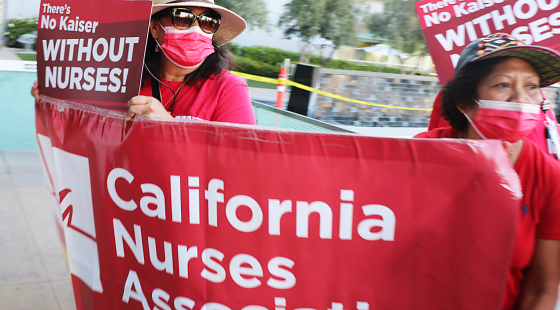
Members of the California Nurses Association have reached a tentative agreement with Kaiser Permanente, averting a planned two-day strike by more than 21,000 registered nurses and nurse practitioners in Northern California.
Both sides announced the tentative agreement Nov. 17.
Union members at Kaiser Northern California facilities have been in negotiations since June, according to a CNA news release. Registered nurses and nurse practitioners in Northern California were set to strike Nov. 21 and Nov. 22.
The four-year tentative deal boosts wages for Northern California nurses by 22.5 percent over the life of the contract, according to a statement Oakland, Calif.-based Kaiser shared with Becker’s. Kaiser had previously proposed 21.25 percent in wage increases over four years.
“The tentative agreement is driven by the changing economy, including inflation, significant changes in the marketplace and our commitment to providing our employees with excellent pay and benefits to attract and retain the best nurses,” Kaiser’s statement says.
According to both sides, the tentative agreement also includes:
“We are very pleased with this new contract, which will help us recruit new nurses and retain experienced RNs and nurse practitioners,” CNA President Cathy Kennedy, RN, said in a news release. “We not only won the biggest annual raises in 20 years, but we have also added more than 2,000 positions across our Northern California facilities. This will ensure safe staffing and better patient care.”
Ms. Kennedy also praised Kaiser’s commitment “to a workplace that is free from racism and discrimination” and the health system’s agreement “that we must fight racial and ethnic disparities in healthcare outcomes.”
“The tentative agreement honors our Northern California nurses with a market-based economic package that accounts for inflation, accelerates our investments in staffing, and addresses workplace safety, diversity and equity, remote work, and other key matters in a way that is sustainable and benefits our members and patients as well,” Kaiser’s statement reads.
Union members in Northern California will vote on approving the new four-year contract over the next few weeks. Registered nurses at Kaiser Permanente Los Angeles Medical Center also reached a tentative agreement and will vote on the deal Nov. 22.
 HENRY KOTULA