

Author Archives: henrykotula
Cartoon – Coronavirus Sign of the Times

Cartoon – Not Really much of a Leader


Cartoon – Welcome to Dysfunctional Corp.
Florida And Texas Both Set Coronavirus Death Records Thursday
TOPLINE
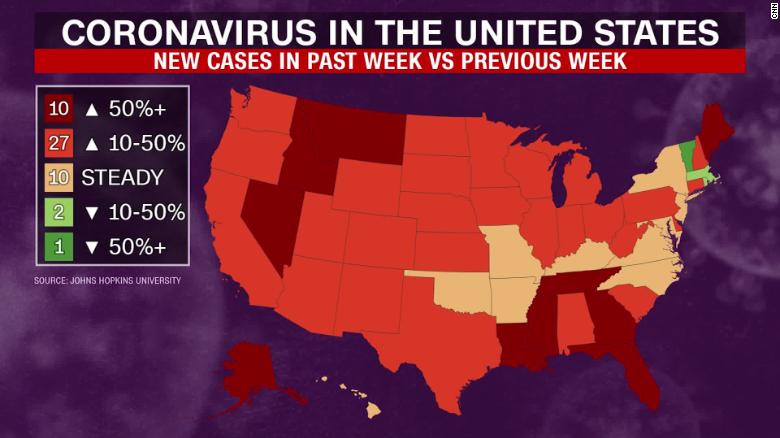
Coronavirus deaths are again on the rise in the U.S., with all three of the nation’s largest states setting new highs for daily death tolls Thursday following weeks of record increases in new cases and hospitalizations, even as President Donald Trump and other conservatives have touted death statistics as a sign the U.S. is handling the pandemic well.
KEY FACTS
California, Texas and Florida all reported new record daily highs for deaths Thursday.
California reported 149 deaths, while Florida reported 120 and Texas set a new record for the third-straight day, with 105.
Deaths are rising rapidly in Texas, with the 105 deaths breaking Wednesday’s record of 98, which shattered the record of 60 that was set on Tuesday.
Coronavirus deaths in the U.S. declined from early May through mid-June, but have picked up recently, and are now pacing at just under 1,000 per day.
The rise is being driven by record new death tolls in the nation’s largest states—the same states that have in large part contributed to the U.S.’s record rise in new cases recently.
Experts have said that deaths lag behind increases in cases and hospitalizations, with former FDA Commissioner Scott Gottlieb saying in an interview Sunday that “the total number of deaths is going to start going up again.”
KEY BACKGROUND
Coronavirus deaths reached a peak nationally in April through early May with over 2,000 a day on many days, largely driven by the severe outbreak in New York. Now the pandemic has eased in the Northeast while states in the South and West are the new national epicenters for coronavirus.
CHIEF CRITICS
Trump and Republican politicians had used the decline in deaths and a decrease in mortality rates to argue that the U.S. response to coronavirus has worked. However, there has also been a massive increase in testing, meaning that many less severe cases are now being identified.
BIG NUMBER
4.3%. According to Johns Hopkins University, that’s what the current mortality rate is among confirmed coronavirus cases in the U.S., a number that’s continually dropped as testing has increased. However, health experts like Dr. Anthony Fauci said early on in the pandemic that they believe the actual mortality rate is around 1%, which is still at least 10 times the lethality of the seasonal flu. And Gottlieb noted that even if the reported death rate continues to drop, if there is an increase in infections, the amount of deaths will ultimately rise, as well.
CRITICAL QUOTE
“It’s a false narrative to take comfort in a lower rate of death,” Fauci said on Tuesday, adding “There’s so many other things that are very dangerous and bad about this virus, don’t get yourself into false complacency.”
619-bed California hospital to join Cedars-Sinai


Huntington Hospital in Pasadena, Calif., has entered into a definitive agreement to join Los Angeles-based Cedars-Sinai Health System, roughly four months after the organizations signed a letter of intent to explore an affiliation.
The agreement calls for investments in 619-bed Huntington Hospital’s information technology, ambulatory services and physician development. Under the agreement, Huntington Hospital would be governed by a local board and its philanthropy and volunteer support would be locally controlled, the organizations said.
“On behalf of everyone at Huntington Hospital, we are all very pleased to have reached this important milestone,” said Jaynie Studenmund, chair of the Huntington Hospital board of directors, in a news release. “We pledge to work cooperatively with all the relevant parties and believe that this proposed affiliation is in the best interest of all of our stakeholders and the greater San Gabriel Valley community.”
The definitive agreement will now be submitted for regulatory review and approval. The review process is expected to take several months.
Texas has the highest uninsured rate in the U.S., with 29 percent of adults uninsured as of May
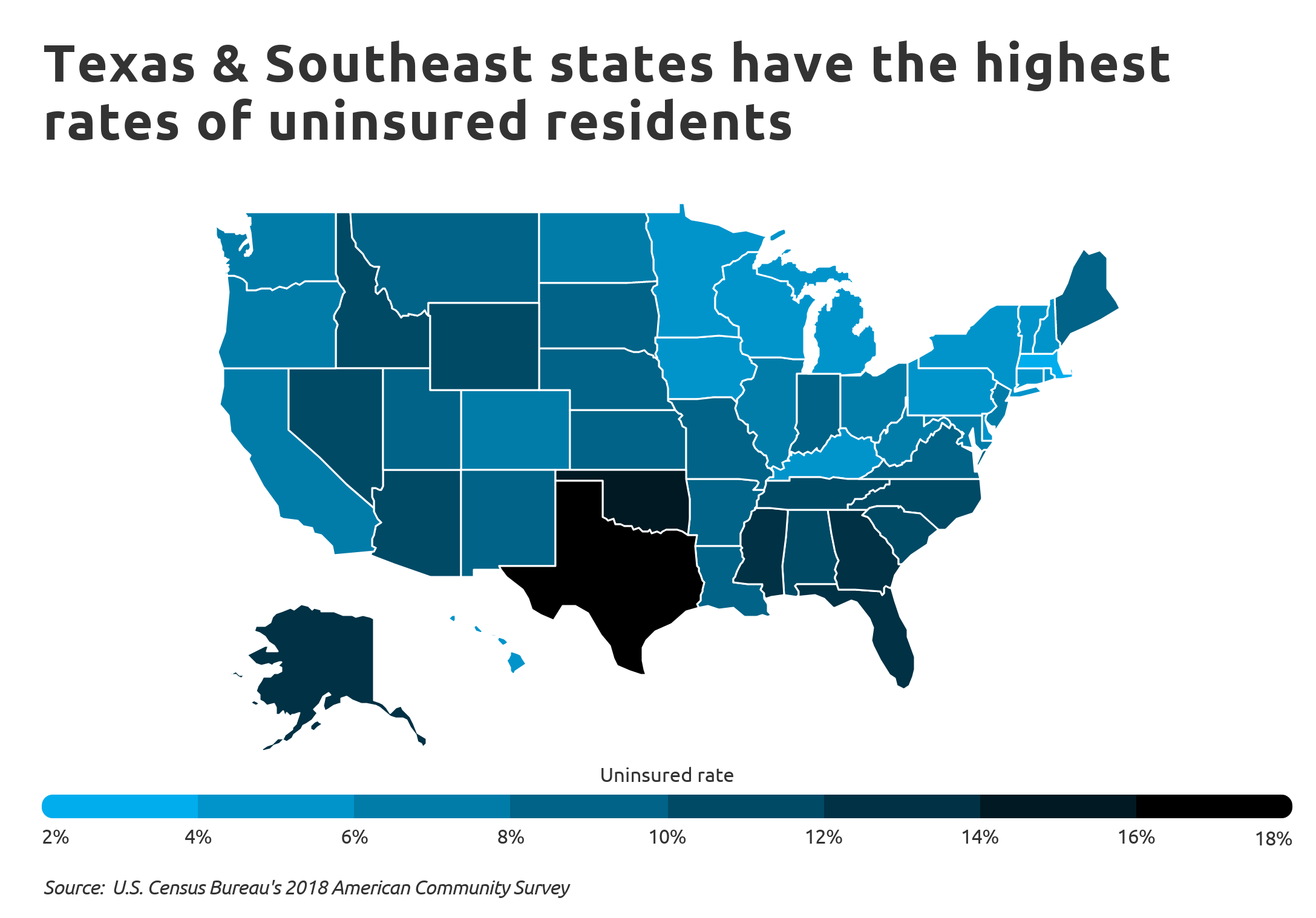
Texas has the highest uninsured rate in the U.S., with 29 percent of adults uninsured as of May, according to a report from Families USA.
The report compared uninsured rates in 2018 to rates in May 2020 using data from the U.S. Bureau of Labor Statistics and the Urban Institute. Every state saw an increase in the number of uninsured, and the total number of uninsured in the U.S. climbed 21 percent.
The increase was due in part to layoffs tied to the COVID-19 pandemic in recent months. Nearly 5.4 million Americans lost health insurance coverage from February to May of this year due to job losses, according to the report.
Below is the total percentage of all uninsured adults in each state and the District of Columbia as of May.
Texas: 29 percent
Florida: 25 percent
Oklahoma: 24 percent
Georgia: 23 percent
Mississippi: 22 percent
Nevada: 21 percent
North Carolina: 20 percent
South Carolina: 20 percent
Alabama: 19 percent
Tennessee: 19 percent
Idaho: 18 percent
Alaska: 17 percent
Arizona: 17 percent
Missouri: 17 percent
Wyoming: 17 percent
New Mexico: 16 percent
South Dakota: 16 percent
Arkansas: 15 percent
Kansas: 15 percent
Louisiana: 14 percent
Virginia: 14 percent
California: 13 percent
Colorado: 13 percent
Illinois: 13 percent
Indiana: 13 percent
Maine: 13 percent
Montana: 13 percent
New Jersey: 13 percent
Oregon: 13 percent
Utah: 13 percent
Michigan: 12 percent
Nebraska: 12 percent
Washington: 12 percent
West Virginia: 12 percent
Delaware: 11 percent
Maryland: 11 percent
New Hampshire: 11 percent
North Dakota: 11 percent
Ohio: 11 percent
Connecticut: 10 percent
Hawaii: 10 percent
Kentucky: 10 percent
New York: 10 percent
Pennsylvania: 10 percent
Wisconsin: 10 percent
Iowa: 9 percent
Rhode Island: 9 percent
Massachusetts: 8 percent
Minnesota: 8 percent
Vermont: 7 percent
District of Columbia: 6 percent
Fitch: Nonprofit hospital margins unlikely to recover until COVID-19 vaccine

Median financial ratios for nonprofit hospitals and health systems improved before the COVID-19 pandemic, which will provide some financial cushion to withstand financial pressures, according to a report from Fitch Ratings.
The medians for 2019, based on 2018 data, showed the nonprofit hospital and health system sector stabilized after a period of operational softness. The medians for 2020, based on 2019 audited data, are expected to show improvement in operating margins driven by higher revenues, cost reductions and increased cash flow, Fitch said.
“We expect the 2020 medians will represent peak performance levels until the sector is able to recover from the effects of the pandemic on operations,” Fitch said.
The credit rating agency said the nonprofit healthcare sector is unlikely to stabilize until a COVID-19 vaccine is widely available.
“The sector has shown considerable resiliency over the years, weathering significant events such as the Great Recession and legislative changes to funding,” Fitch said. “However, the coronavirus presents entirely new and fundamental challenges for the sector in the short term in the form of volume and revenue disruption, and over the medium to longer term with expected deterioration of individual provider payor mixes and possible changes in the behavior of healthcare consumers.”
 HENRY KOTULA