Hackensack Meridian Health, Maimonides Medical Center pilot sensor-embedded clothes to remotely monitor COVID-19 patients

https://www.beckershospitalreview.com/digital-transformation/hackensack-meridian-health-maimonides-medical-center-pilot-sensor-embedded-clothes-to-remotely-monitor-covid-19-patients.html?utm_medium=email

Transforming Congestive Heart Failure Management with cloth-based ...

Hackensack (N.J.) Meridian Health and New York City-based Maimonides Medical Center are partnering with remote monitoring platform Nanowear to pilot cloth-based wearable tech that monitors coronavirus patients.

Nanowear’s undergarment wearable comprises nanosensors, which detect physiological and biomarker changes that indicate when a patient’s condition is worsening and the hospitals need to further intervene. When a patient wears the garment, physicians can remotely capture and assess vitals including real-time ECH, systolic and diastolic blood pressure, temperature trends, respiration and lung volume.

The garment can collect 120 million data points per patient per day across cardiac, pulmonary and circulatory biomarker data, which is then transmitted to clinical staff.

“Nanowear’s SimpleSENSE is giving us an exponential amount of relevant data metrics about the heart and lungs from an all-in-one product that should ultimately enable us to triage lower risk patients and stratify high risk patients,” said Sameer Jamal, MD, principal investigator of the collaboration and cardiologist at Hackensack Meridian Health, according to the July 22 news release.


COVID care as a model for care redesign

https://mailchi.mp/9075526b5806/the-weekly-gist-july-24-2020?e=d1e747d2d8

We got an update from the chief medical information officer of one of our member systems about their ongoing progress in expanding telemedicine. Their rate of virtual visits peaked in late April, accounting for over half of all physician encounters. But like most systems, they’ve seen telemedicine visits drop to less than 20 percent of all appointments as physician offices have reopened.

In thinking about how the system will move telemedicine forward, she said, “We’re trying to be intentional and really design a top-notch consumer experience, with quality as the foundation.” They are going specialty-by-specialty, condition-by-condition, to redesign care pathways to optimally blend virtual and in-person care. It’s daunting, but she believes COVID-19 provided a model for how to do this quickly and effectively.

In just a few weeks, many systems stood up COVID management programs in the following way: algorithm-driven, online symptom triage triggers a virtual visit with a doctor. Testing is conducted at new, dedicated locations, to keep doctors’ offices as COVID-free as possible. Patients with concerning symptoms are monitored at home with pulse oximetry and regular check-ins; the same resources are used to ensure discharged patients are recovering well.

It’s the perfect example of how to design a safe, consumer-centered care pathway, using the whole of a health system’s resources. Now the challenge facing doctors and hospitals is: can this process be scaled across the hundreds of conditions that could benefit from a blend of virtual and traditional care?  


“We’ve jumped past burnout to anger”

https://mailchi.mp/9075526b5806/the-weekly-gist-july-24-2020?e=d1e747d2d8

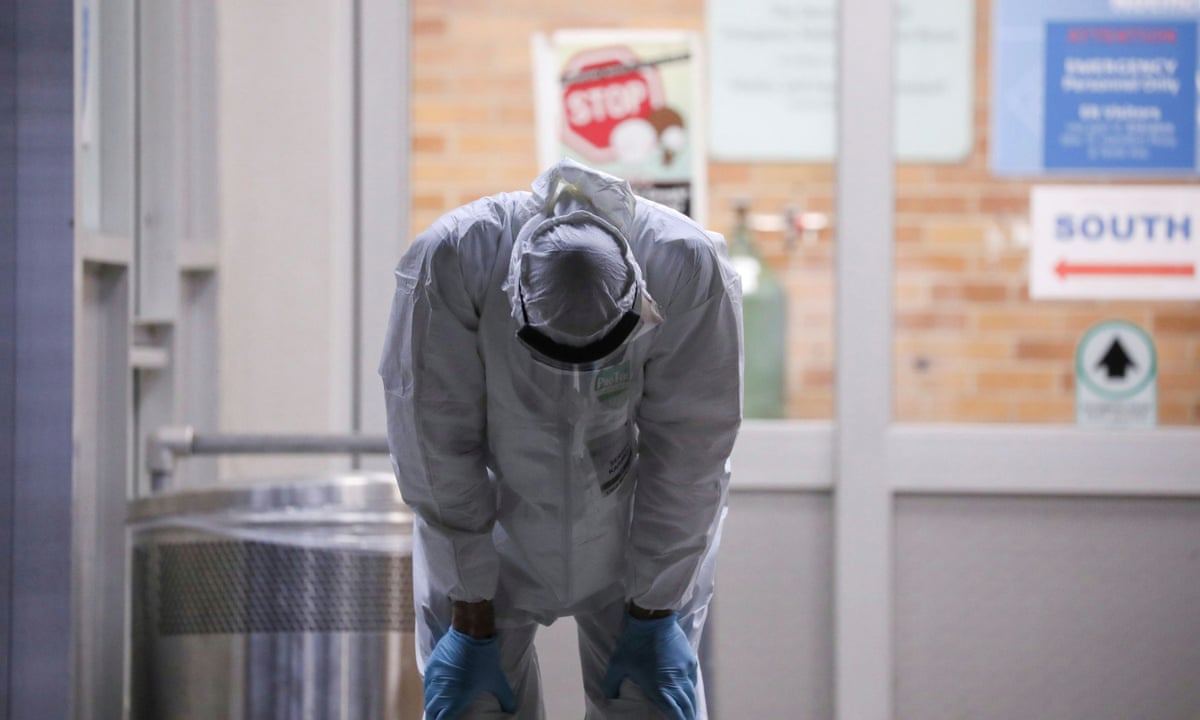
What coronavirus is doing to stressed US health workers – and why ...

Last week we wrote about an observation from some physician leaders that, paradoxically, physician burnout seemed to have waned a bit during the COVID crisis. They felt that, as clinicians rallied to provide care for patients during the pandemic, many found new purpose in the work, despite great challenges. Bureaucratic hurdles yielded to the need to make critical decisions quickly, as did regulatory barriers to telemedicine.

The piece sparked a number of doctors, most from regions now experiencing surges, to share their alternative viewpoints with us.

One employed physician wrote that, across specialties, he and his colleagues are angry. They don’t feel protected, either financially, or even for their own physical safety.

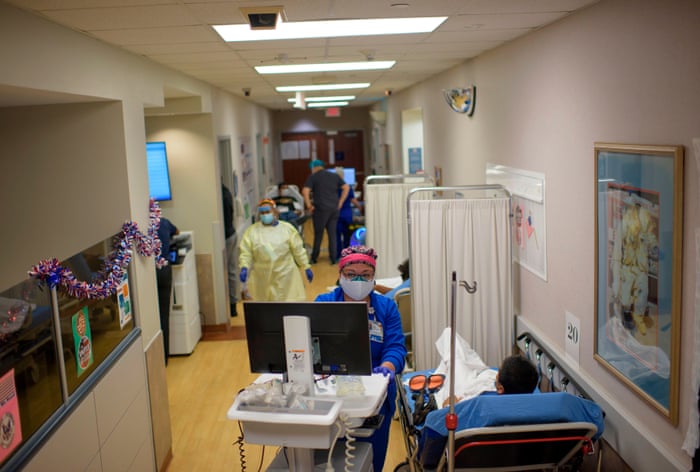
A nurse practitioner working long shifts in an emergency department overloaded with COVID patients wrote, “In April, I would have never believed that we would be scrounging for PPE at the end of July. How could this happen?” And a nephrologist redeployed to a COVID ICU shared: “With the surge in New York, it felt like the entire country was behind their doctors and nurses. I drive home past restaurants and stores filled with people refusing to wear masks. It’s so demoralizing.”

Several expressed that their employers, both health systems and payers, are “counting on our goodwill that we’ll just keep showing up.” But once the crisis passes, there may be “drastic and irrational physician revolts. Someone should be watching for it.”

These comments reveal a marked difference in physician sentiment in different parts of the country, based both on the severity of the pandemic, and the nature of the local response.  Regardless, we’d agree that the clinical workforce, both doctors and nurses, is working through a period of unprecedented stress, and for some, emotional trauma. Ensuring their stability and safety must be a top priority for every health system and medical group.


Increasing unemployment alters national payer mix

https://mailchi.mp/9075526b5806/the-weekly-gist-july-24-2020?e=d1e747d2d8


One in every five workers is now collecting unemployment benefits as the country struggles to get the COVID-19 outbreak under control. A recent Families USA study estimates a quarter of the 21.9M workers that were furloughed or laid off between February and May lost their health insurance. And the payer mix will continue to change as the pandemic wears on.

The graphic below highlights a study from consultancy Oliver Wyman, looking at the impact of rising unemployment (at 15, 20 and 30 percent) on insurance coverage. With each five to ten percent rise in unemployment, the commercially insured population decreases by three to five percentThose who lose employer-sponsored insurance either remain uninsured, buy coverage on the Obamacare marketplaces, or qualify for Medicaid.

Surprisingly, Washington State and California are reporting little to no enrollment growth in Medicaid programs thus far. Experts point to lack of outreach and consumer awareness as key contributors to the slow growth—but Medicaid enrollment will likely begin to rise quickly in coming months as temporary furloughs convert to more permanent layoffs.

The right side of the graphic spotlights the growing number of uninsured individuals in those states with the highest uninsured rates. The previous record for the largest increase in uninsured adults was between 2008 and 2009, when nearly 4M lost coverage. The current pandemic-driven increase has crushed that record by 39 percent.

On average, states are seeing uninsured populations increase by two percent, with some as high as five percent. And the two states with the highest uninsured rates, Florida and Texas, are also dealing with the largest surge in COVID-19 cases and deaths. The ranks of the uninsured will continue to climb as states reimpose shutdowns, government assistance ends, and layoffs grow.


‘The virus doesn’t care about excuses’: US faces terrifying autumn as Covid-19 surges

https://www.theguardian.com/world/2020/jul/18/us-coronavirus-fall-second-wave-autumn
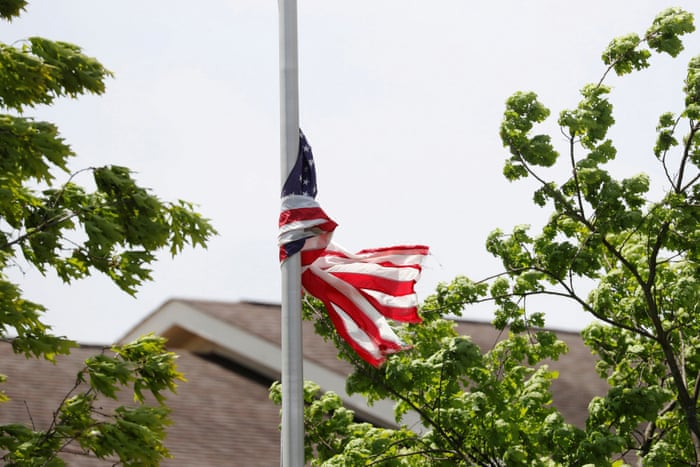
The breathing space afforded by lockdowns in the spring has been squandered, with new cases running at five times the rate of the whole of Europe. Things will only get worse, experts warn.

In early June, the United States awoke from a months-long nightmare.

Coronavirus had brutalized the north-east, with New York City alone recording more than 20,000 deaths, the bodies piling up in refrigerated trucks. Thousands sheltered at home. Rice, flour and toilet paper ran out. Millions of jobs disappeared.

But then the national curve flattened, governors declared success and patrons returned to restaurants, bars and beaches. “We are winning the fight against the invisible enemy,” vice-president Mike Pence wrote in a 16 June op-ed, titled, “There isn’t a coronavirus ‘second wave’.”

Except, in truth, the nightmare was not over – the country was not awake – and a new wave of cases was gathering with terrifying force.

As Pence was writing, the virus was spreading across the American south and interior, finding thousands of untouched communities and infecting millions of new bodies. Except for the precipitous drop in New York cases, the curve was not flat at all. It was surging, in line with epidemiological predictions.

Now, four months into the pandemic, with test results delayed, contact tracing scarce, protective equipment dwindling and emergency rooms once again filling, the United States finds itself in a fight for its life: swamped by partisanship, mistrustful of science, engulfed in mask wars and led by a president whose incompetence is rivaled only by his indifference to Americans’ suffering.

With flu season on the horizon and Donald Trump demanding that millions of students return to school in the fall – not to mention a presidential election quickly approaching – the country appears at risk of being torn apart.

“I feel like it’s March all over again,” said William Hanage, a professor of epidemiology at the Harvard TH Chan School of Public Health. “There is no way in which a large number of cases of disease, and indeed a large number of deaths, are going to be avoided.”

The problem facing the United States is plain. New cases nationally are up a remarkable 50% over the last two weeks and the daily death toll is up 42% over the same period. Cases are on the rise in 40 out of 50 states, Washington DC and Puerto Rico. Last week America recorded more than 75,000 new cases daily – five times the rate of all Europe.

“We are unfortunately seeing more higher daily case numbers than we’ve ever seen, even exceeding pre-lockdown times,” said Jennifer Nuzzo, an epidemiologist at the Johns Hopkins Center for Health Security. “The number of new cases that occur each day in the US are greater than we’ve yet experienced. So this is obviously a very worrisome direction that we’re headed in.”

The mayor of Houston, Texas, proposed a “two-week shutdown” last week after cases in the state climbed by tens of thousands. The governor of California reclosed restaurants, churches and bars, while the governors of Louisiana, Alabama and Montana made mask-wearing in public compulsory.

“Today I am sounding the alarm,” Governor Kate Brown said. “We are at risk of Covid-19 getting out of control in Oregon.”

As dire as the current position seems, the months ahead look even worse. The country anticipates hundred of thousands of hospitalizations, if the annual averages hold, during the upcoming flu season. Those hospitalizations will further strain the capacity of overstretched clinics.

But a flu outbreak could also hamper the country’s ability to fight coronavirus in other ways. Because the two viruses have similar symptoms – fever, chills, diarrhea, fatigue – mistaken diagnoses could delay care for some patients until it’s too late, and make outbreaks harder to catch, one of the country’s top health officials has warned.

“I am worried,” Dr Robert Redfield, the director of the Centers for Disease Control (CDC), said last week. “I do think the fall and the winter of 2020 and 2021 are probably going to be one of the most difficult times that we have experienced in American public health because of … the co-occurrence of Covid and influenza.”

Other factors will be in play. A precipitous reopening of schools in the fall, as demanded by Trump and the education secretary, Betsy DeVos, without safety measures recommended by the CDC, could create new superspreader events, with unknown consequences for children.

“We would expect that to be throwing fuel on the fire,” said Hanage of blanket school reopenings. “So it’s going to be bad over the next month or so. You can pretty much expect it to be getting worse in the fall.”

The list of aggravating circumstances goes on and on. A federal unemployment assistance program that gave each claimant an extra $600 a week is set to expire at the end of July. A new coronavirus relief package is being held up in Congress by Republicans’ accusations that states are wasting money, and their insistence that any new legislation include liability protections for businesses that reopen during the pandemic.

Cable broadcasts and social media have been filled, meanwhile, with video clips of furious confrontations on sidewalks, in stores and streets over wearing facial masks. In Michigan, a sheriff’s deputy shot dead a man who had stabbed another man for challenging him about not wearing a mask at a convenience store. In Georgia, the Republican governor sued the Democratic mayor of Atlanta for issuing a city-wide mask mandate.

The partisan divide on masks is slowly closing as the outbreaks intensify. The share of Republicans saying they wear masks whenever they leave home rose 10 points to 45% in the first two weeks of July, while 78% of Democrats reported doing so, according to an Axios-Ipsos poll.

Another divide has proven tragically resilient. As hotspots have shifted south, the virus continues to affect Black and Latinx communities disproportionately. Members of those communities are three times as likely to become infected and twice as likely to die from the virus as white people, according to data from early July.

The raging virus has prompted speculation in some corners that the only way out for the United States is through some kind of “herd immunity” achieved by simply giving up. But that grossly underestimates the human tragedy such a scenario would involve, epidemiologists say, in the form of tens of millions of new cases and unknown thousands of deaths.

“I think that every single serology study that’s been done to date suggests that the vast majority of Americans have not yet been exposed to this virus,” Nuzzo said. “So we’re still very much in the early stages.

“Which is good, that’s actually really good news. I don’t want to strive for herd immunity, because that means the vast majority of us will get sick and that will mean many, many more deaths. The point is to slow the spread as much as possible, protect ourselves as much as possible, until we have other tools.”

But the ability of the US to take that basic step – to slow the spread, as dozens of other countries have done – is in perilous doubt. After half a year, the Trump administration has made no effort to establish a national protocol for testing, contact tracing and supported isolation – the same proven three-pronged strategy by which other countries control their outbreaks.

Critics say that instead, Trump has dithered and denied as the national death toll climbed to almost 140,000. The Democratic presidential candidate, Joe Biden, who is hoping to unseat Trump in November, blasted the president for refusing until recently to wear a mask in public.

“He wasted four months that Americans have been making sacrifices by stoking divisions and actively discouraging people from taking a very basic step to protect each other,” Biden said in a statement last weekend.
Meanwhile the White House has attacked Dr Anthony Fauci, the country’s foremost expert on infectious diseases whose refusal to lie to the public has enraged Trump, by publishing an op-ed signed by one of the president’s top aides titled “Anthony Fauci has been wrong about everything I have interacted with him on” and by releasing a file of opposition research to the Washington Post.

Trump claimed the number of cases was a function of unusually robust testing, though experts said that positivity rates of 20% in multiple states suggested that the United States is testing too little – and that in any case closing one’s eyes to the problem by testing less would not make it go away.

“We’ve done 45 million tests,” Trump said this week, padding the figure only slightly. “If we did half that number, you’d have half the cases, probably around that number. If we did another half of that, you’d have half the numbers. Everyone would be saying we’re doing well on cases.”

Such statements by Trump have encouraged unfavorable comparisons of the US pandemic response with those in countries such as Italy, which recorded just 169 new cases on Monday after a horrific spring, and South Korea, which has kept cases in the low double-digits since April.

But the United States could also look to many African countries for lessons in pandemic response, said Amanda McClelland, who runs a global epidemic prevention program at Resolve to Save Lives.

“We’ve seen some good success in countries like Ghana, who have really focused on contact tracing, and being able to follow up superspreading events,” said McClelland. “We see Ethiopia: they kept their borders open for a lot longer than other countries, but they have really aggressive testing and active case-finding to make sure that they’re not missing cases.

“I think what we’ve seen is that you need not just a strong health system but strong leadership and governance to be able to manage the outbreak, and we’ve seen countries that have all three do well.”
But in America, the large laboratories that process Covid-19 tests are unable to keep up with demand. Quest Diagnostics announced on Tuesday that the turnaround time for most non-emergency test results was at least seven days.

“We want patients and healthcare providers to know that we will not be in a position to reduce our turnaround times as long as cases of Covid-19 continue to increase dramatically,” the lab said.

“You can’t have unlimited lab capacity, and what we’ve done is allow, to some extent, cases to go beyond our capacity,” said McClelland. “We’re never going to be able to treat and track and trace uncontrolled transmission. This outbreak is just too infectious.”

Public health experts emphasize that the United States does not have to accept as its fate a cascade of tens of millions of new cases, and tens of thousands of deaths, in the months ahead. Focused leadership and individual resolve could yet help the country follow in the footsteps of other nations that have successfully faced serious outbreaks – and brought them under control.

But it is clear that the most vulnerable Americans, including the elderly and those with pre-existing conditions, face grave danger. Republicans have argued in recent weeks that while cases in the US have soared, death rates are not climbing so quickly, because the new cases are disproportionately affecting younger adults.

That is a false reassurance, health experts say, because deaths are a lagging indicator – cases necessarily rise before deaths do – and because large outbreaks among any demographic group speeds the virus’s ability to get inside nursing homes, care facilities and other places where residents are most vulnerable.

“If we don’t do anything to stop the virus, it’s going to be very difficult to prevent it from getting to people who will die,” said Nuzzo.

There is a question of whether the United States, for all its wealth and expertise – and its self-regard as an exceptional actor on the world stage – can summon the will to keep up the fight. People are tired of fighting the virus, and of fighting each other.

“I think unfortunately people are emotionally exhausted from having to think about and worry about this virus,” said Nuzzo. “They feel like they’ve already sacrificed a lot. So the worry that I have is, what willingness is there left, to do what it takes?”

It is as if the country is “treading water in the middle of the ocean”, Hanage said.

“People tend to be shuffling very quickly between denial and fatalism,” he said. “That’s really not helpful. There are a number of things that can be done.

“What I would hope is that this marks a point when the United States finally wakes up and realizes that this is a pandemic and starts taking it seriously.

“Folks tend to look at what has happened elsewhere and then they make up some kind of magical reason why it’s not going to happen to them.

“People keep making these excuses, and the virus doesn’t care about the excuses. The virus just keeps going. If you give it the opportunity, it will take it.”


Why COVID-19’s biggest impact on healthcare may not be until 2022

https://www.healthcaredive.com/news/why-covid-19s-biggest-impact-on-healthcare-may-not-be-until-2022/582129/

This perfect storm of a shift in payer mix, the impending insolvency of Medicare and the inability of states to absorb the growing costs of Medicaid represent a tsunami of challenges.

With COVID-19 there has been unprecedented stress placed upon the healthcare system. The human and financial toll of the current crisis has been extraordinary. Yet, little attention has been focused on the impact of this virus on the viability of our healthcare financing system.

Three significant shifts in healthcare financing are occurring as a result of the pandemic’s economic impact. First, as a result of job losses, there will be a shift in commercial insurance to government-funded insurance programs. Second, revenue for funding Medicare, based on payroll taxes, will be significantly decreased. Finally, states will have less tax revenue to pay for Medicaid, threatening the viability of this program as well.

More than 30 million Americans have filed for unemployment since the start of the COVID-19 pandemic. According to a recent report, about 27 million people may lose their employer-sponsored insurance. 

This will result in millions of people seeking coverage through Medicaid programs, the individual marketplace or simply becoming uninsured. Healthcare providers have relied upon margins from commercial insurance to offset costs from poorer reimbursing government funded programs and uncompensated care.

With more than 156 million Americans receiving employer sponsored insurance at the start of this year, and given recent projected job losses, providers may see a 17% shift in payer mix. The reliance on commercial insurance and cost shifting has become a necessary way for providers to financially sustain operations. 

With a 35% margin with commercial insurance compared to Medicare, a 17% shift in payer mix on a trillion dollar spend would result in a substantial reduction in financial resources available to hospitals.

Almost half of healthcare expenditures already come from government programs. Medicare, the largest of these programs, is principally supported by taxes on payroll and social security benefits. With COVID-related job losses there will be a corresponding reduction in payroll tax revenues to the Medicare system. Reports from the Congressional Research Service submitted to Congress in May, with data used prior to COVID-19, projected that Medicare would become insolvent in 2026.

Analyses performed show that there will be a gap in Medicare revenues during the next three years (from the pre-COVID projections) of close to $150 billion. The result is that Medicare will become insolvent as early as 2022. Even by applying more conservative projections, such as recovering all job losses by the end of 2020 and payroll tax revenue holding steady at pre-COVID levels, Medicare still becomes insolvent in 2023.

State revenues, too, will be under real pressure with reduced tax revenues resulting from the current economic downturn. Medicaid programs are supported in part by federal funds, but also from general funds from the state. 
On average, states are projecting about a 10% reduction in revenues in 2020, rising to almost a 25% reduction in 2021. Even without considering the growth in Medicaid enrollment hitting states, this reduced tax revenue will make sustaining current Medicaid program funding increasingly difficult.

This perfect storm of a shift in payer mix, the impending insolvency of Medicare by 2022 and the inability of states to absorb the growing costs of Medicaid represent a tsunami of challenges for the health system. Looking at this new reality, it is clear that our system for financing healthcare is severely broken and we must identify solutions to sustain access to medical care for our citizens.

This will be a challenge of a generation and we will need strength, courage and bold ideas to get through this. Pandemics have a way of changing a society’s political, economic and sociologic outlooks, and COVID-19 will be no different. 


California AG conditionally approves $350M sale of nonprofit to Prime Healthcare

https://www.healthcarefinancenews.com/news/california-ag-conditionally-approves-350m-sale-st-francis-medical-center-prime-healthcare

Prime Healthcare, CEO Prem Reddy settle false-claims suit for $65M

Prime will acquire St. Francis for a net of $350 million, with a $200 million base cash price and $60 million for accounts receivable.

California Attorney General Xavier Becerra has conditionally approved Verity Health’s application to transfer ownership of St. Francis Medical Center to Prime Healthcare. The Attorney General’s decision follows an earlier decision by the U.S. Bankruptcy Court of the Central District of California granting Verity’s request to reject the existing collective bargaining agreements which impose legacy cost structures that it said contributed to bankruptcy.

Becerra noted that his approval of the sale of St. Francis to Prime Healthcare “protect(s) access to care for the Los Angeles communities served” by St. Francis.

“The COVID-19 public health crisis has brought home the importance of having access to lifesaving hospital care nearby in our communities,” he said. “St. Francis Medical Center is not just an asset, it is an indispensable neighbor, it is the workers who serve the patients, and the doctors who save lives. We conditionally approve this sale to keep it that way.”

Prime Healthcare has built a reputation for saving financially distressed hospitals across the U.S., touting improved clinical quality. Healthgrades said Prime had hospitals named among the nation’s 100 best 53 times, and has been the recipient of several Patient Safety Excellence Awards.

The Attorney General’s office conducted an exhaustive review of the transaction for the past several months and carefully considered public input on the proposed transaction. The Attorney General’s approval includes conditions for the sale which Prime is currently reviewing. Pending a final ruling by the Bankruptcy Court, the transaction is expected to be completed this summer.

THE LARGER TREND

In early April, the U.S. Bankruptcy Court approved the Asset Purchase Agreement for the sale of St. Francis Medical Center to Prime. Under the agreement, Prime will acquire St. Francis for a net consideration of over $350 million, including a $200 million base cash price and $60 million for accounts receivable. In addition, Prime has committed to invest $47 million in capital improvements and extend offers of employment to nearly all staff.

The court also recently granted Verity’s request to reject the existing collective bargaining agreements with two unions that represent associates at St. Francis Medical Center, SEIU and UNAC. The court noted that Prime Healthcare was the only party to submit a qualifying bid for St. Francis and that without rejecting the existing CBAs, “St. Francis would not continue to operate as a going concern, and all of the UNAC (and SEIU) represented employees would lose their jobs.”

The court also noted that Prime and Verity had made multiple efforts to negotiate in good faith with the unions, and the parties devoted “hundreds of hours to negotiations,” but ultimately were unable to agree on new CBAs. Further, the court determined that one of the reasons for the hospital’s bankruptcy was the “legacy cost structure imposed by the existing CBAs.”

It then staid that the proposals were rejected “without good cause” by the unions. Prime said it negotiated in good faith and proposed increasingly generous offers to UNAC and SEIU with wages far above its existing agreements at its Los Angeles-area hospitals. Prime’s latest offer to SEIU maintained existing wages for roughly 90% of SEIU members, and increased wages for some of them. Prime said these wages would be substantially higher than those recently voted by SEIU members at three of Prime’s Los Angeles hospitals.

ON THE RECORD

“Receiving conditional approval is an important step in ensuring Prime is able to preserve the St. Francis mission for the benefit of associates, members of the medical staff and most importantly the patients and Southeast Los Angeles community that has relied on St. Francis for 75 years,” said Rich Adcock, CEO of Verity Health.

“We are honored to be selected to continue the St. Francis legacy and are working to review the conditions and finalize the sale as quickly as possible,” said Dr. Sunny Bhatia, CEO, Region I and chief medical officer of Prime Healthcare. “St. Francis’ mission is especially critical during this pandemic and we honor the service of all caregivers. Prime has already started investments at St. Francis that will enhance patient care as we commit to continue every service line, community benefit program, charity care and expand new services to the community.”


Will Telemedicine Be the Blockbuster or Netflix of Healthcare?

https://www.medpagetoday.com/practicemanagement/telehealth/87662?xid=fb_o&trw=no&fbclid=IwAR1IRS5lgPjbTxkXuMS0fnFmvdkywSyf20YaJ-RElRIGCzU3_GY_W6rTwXw

Netflix Vs Blockbuster – The New DVD Viewing Experience

New approaches need to recognize patients’ wants and needs

One component of Blockbuster’s financial model was the late fees it charged to customers who did not return a video tape to the store in time. These fees accounted for up to 16% of its revenue. In 1997, Reed Hastings was one of the customers affected by these fees. After one late rental, he was charged a hefty $40 late fee. His frustration inspired him to help create a company that would have no late charges. This new company also had the audacious idea to send DVDs straight to the customer’s home for a flat monthly fee. The company that Reed Hastings co-founded was Netflix.

Over time, Netflix changed and adapted with new technology and shifting consumer preferences. It moved on from mailing DVDs to using a streaming platform. It developed an algorithm to help make personalized video recommendations to Netflix users. It started producing its own video content. Over time, the company planted itself firmly within many homes and routines. Conversely, Blockbuster adapted to new platforms too slowly and too late. After its peak in 2004, Blockbuster started losing market share and relevance. Today, there is only one Blockbuster store left, a curious tourist attraction in Bend, Oregon.

Markets and industries change all the time. Distinguishing these important changes from temporary fads is essential. History has many examples of companies and organizations that did not sense important changes, did not change their approach, and as a result, ended up obsolete and irrelevant. A similar shift is happening today in healthcare, but there is more at stake than a late fee. Like Netflix, the healthcare industry needs to shift and adapt to consumer preferences.

The COVID-19 pandemic has had an immediate impact on the health of our country and has also indelibly changed how patients interact with the healthcare system. Hospitals and providers around the country have had to quickly develop new strategies to connect with patients – to comply with social distancing guidelines, in an effort to slow down the spread of the virus. Consistent communication and accessibility is vital, especially given the disturbing trends in decreased preventive care visits and delayed emergency care. One solution is telehealth.

During this pandemic, we have seen that remote patient monitoring is valuable for patients with a wide variety of needs: certainly, those quarantined with coronavirus, but for healthy patients too – children in need of regularly scheduled well-child visits and adults who need routine care. Many patients have experienced telehealth for the first time and many have positive impressions, with nearly three quarters of patients who had a recent telehealth visit describing it as good or very good, according to a recent survey.

Even after the COVID-19 pandemic settles, these “temporary” approaches will permanently change patient attitudes towards technology and force healthcare providers to reexamine their approach to care. Telehealth will remain a convenient option and, in some cases, a necessary way to receive care. Embedding telehealth into standard practice of care enables providers to expand the access to people who otherwise might forgo care, and to people who may face barriers getting to a clinic, for example patients with inflexible job schedules or limited transportation.

Patients and providers are not the only people recognizing the benefits; government officials are too. While reimbursement rules were temporarily expanded to include telehealth, some states, such as Colorado and Idaho, are making COVID-19 telehealth expansions permanent.

There are many parallels to borrow from the Blockbuster example. As healthcare providers, we cannot be complacent and stick with old business models because they are what we are used to. We cannot wait for people to come to us. We cannot ignore these changing times and consumers’ changing preferences. In fact, if we adapt and provide care in ways that patients prefer, we could improve health outcomes.

The healthcare institutions that will grow and be successful during this time are those who are more like Netflix. Instead of waiting for patients to decide to seek healthcare when it may be too late (e.g., just like a Blockbuster “late fee”), we will actively reach out and remind our patients about the importance of timely healthcare services. Instead of ignoring changes in patient preferences and new technology, we will adapt quickly to new platforms for healthcare visits. Instead of waiting for patients to feel comfortable to return to a healthcare facility, we will show patients what our healthcare system is doing to ensure patient safety and protection from COVID-19. Most importantly, instead of being complacent, we will accept and develop new ways of providing care.

There was once a time that we thought that getting in a car, driving to a strip mall, and walking through aisles with thousands of video tapes was the only option to watch a movie at home. Now, many of us can get thousands of titles on our televisions, computers, and phones through several movie streaming platforms. The COVID-19 pandemic has forced healthcare systems to quickly adapt to new constraints; however, it may really be an opportunity to develop new models of care, to engage with our patients, and to make healthcare more accessible. As healthcare providers, we need to make the choice to be more like Netflix, and less like Blockbuster.


Coronavirus’s painful side effect is deep budget cuts for state and local government services

https://theconversation.com/coronaviruss-painful-side-effect-is-deep-budget-cuts-for-state-and-local-government-services-141105

Coronavirus's painful side effect is deep budget cuts for state ...

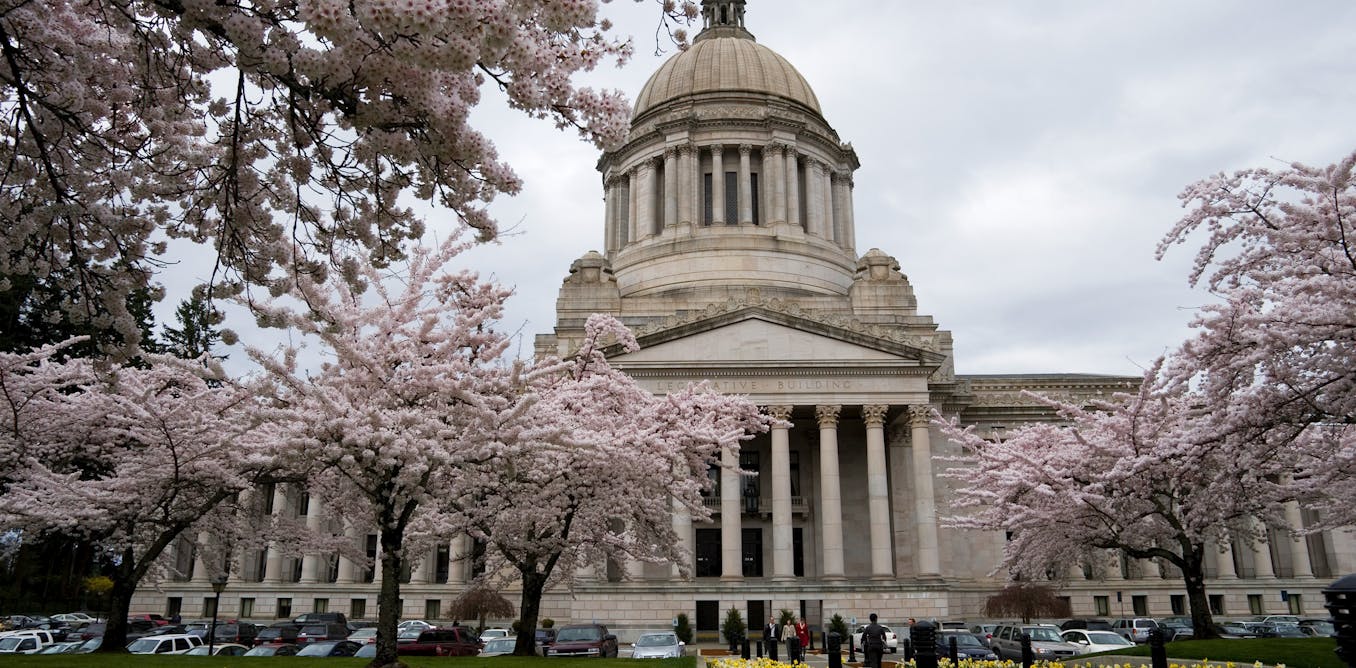
Nationwide, state and local government leaders are warning of major budget cuts as a result of the pandemic. One state – New York – even referred to the magnitude of its cuts as having “no precedent in modern times.”

Declining revenue combined with unexpected expenditures and requirements to balance budgets means state and local governments need to cut spending and possibly raise taxes or dip into reserve funds to cover the hundreds of billions of dollars lost by state and local government over the next two to three years because of the pandemic.

Without more federal aid or access to other sources of money (like reserve funds or borrowing), government officials have made it clear: Budget cuts will be happening in the coming years.

And while specifics are not yet available in all cases, those cuts have already included reducing the number of state and local jobs – from firefighters to garbage collectors to librarians – and slashing spending for education, social services and roads and bridges.

In some states, agencies have been directed to cut their budget as much as 15% or 20% – a tough challenge as most states prepared budgets for a new fiscal year that began July 1.

As a scholar of public administration who researches how governments spend money, here are the ways state and local governments have reduced spending to close the budget gap.

Cutting jobs

State and local governments laid off or furloughed 1.5 million workers in April and May.

They are also reducing spending on employees. According to surveys, government workers are feeling personal financial strain as many state and local governments have cut merit raises and regular salary increases, frozen hiring, reduced salaries and cut seasonal employees.

Washington state, for example, cut both merit raises and instituted furloughs.

survey from the National League of Cities shows 32% of cities will have to furlough or lay off employees and 41% have hiring freezes in place or planned as a result of the pandemic.

Employment reductions have met some resistance. In Nevada, for example, a state worker union filed a complaint against the governor to the state’s labor relations board for violating a collective bargaining statute by not negotiating on furloughs and salary freezes.

Most of the employee cuts have been made in education. Teachers, classroom aids, administrators, staff, maintenance crews, bus drivers and other school employees have seen salary cuts and layoffs.

The job loss has hurt public employees beyond education, too: librarians, garbage collectors, counselors, social workers, police officers, firefighters, doctors, nurses, health aides, park rangers, maintenance crews, administrative assistants and others have been affected.

Residents also face the consequences of these cuts: They can’t get ahold of staff in the city’s water and sewer departments to talk about their bill; they can’t use the internet at the library to look for jobs; their children can’t get needed services in school.

Most of these cuts have been labeled temporary, but with the extensions to stay-at-home orders and a mostly closed economy, it will be some time before these employees are back to work.

Suspending road, bridges, building and water system projects

As another way to reduce costs quickly, a National League of Cities survey shows 65% of the municipalities surveyed are stopping temporarily, or completely, capital expenditure and infrastructure projects like roads, bridges, buildings, water systems or parking garages.

In New York City, there is a US$2.3 billion proposed cut to the capital budget, a fund that supports large, multiyear investments from sidewalk and road maintenance, school buildings, senior centers, fire trucks, sewers, playgrounds, to park upkeep. There are potentially serious consequences for residents. For example, New York housing advocates are concerned that these cuts will hurt plans for 21,000 affordable homes.

Suspending these big money projects will save the government money in the short term. But it will potentially harm the struggling economy, since both public and private sectors benefit from better roads, bridges, schools and water systems and the jobs these projects create.

Delaying maintenance also has consequences for the deteriorating infrastructure in the U.S. The costs of unaddressed repairs could increase future costs. It can cost more to replace a crumbling building than it does to fix one in better repair.

Cities and towns hit

In many states, the new budgets severely cut their aid to local governments, which will lead to large local cuts in education – both K-12 and higher education – as well as social programs, transportation, health care and other areas.

New York state’s budget proposes that part of its fiscal year 2021 budget shortfall will be balanced by $8.2 billion in reductions in aid to localities. This is the state where the cuts were referred to in the budget as “not seen in modern times.” This money is normally spent on many important services that residents need everyday –mass transit, adult and elderly care, mental health support, substance abuse programs, school programs like special education, children’s health insurance and more. Lacking any of these support services can be devastating to a person, especially in this difficult time.

Fewer workers, less money

As teachers and administrators figure out how to teach both online and in person, they and their schools will need more money – not less – to meet students’ needs.

Libraries, which provide services to many communities, from free computer use to after-school programs for children, will have to cut back. They may have fewer workers, be open for fewer hours and not offer as many programs to the public.

Parks may not be maintained, broken playground equipment may stay that way, and workers may not repave paths and mow lawns. Completely separate from activists’ calls to shift police funding to other priorities, police departments’ budgets may be slashed just for lack of cash to pay the officers. Similar cuts to firefighters and ambulance workers may mean poorly equipped responders take longer to arrive on a scene and have less training to deal with the emergency.

To keep with developing public safety standards, more maintenance staff and materials will be needed to clean and sanitize schools, courtrooms, auditoriums, correctional facilitiesmetro stations, buses and other public spaces. Strained budgets and employees will make it harder to complete these new essential tasks throughout the day.

To avoid deeper cuts, state and local government officials are trying a host of strategies including borrowing money, using rainy day funds, increasing revenue by raising tax rates or creating new taxes or fees, ending tax exemptions and using federal aid as legally allowed.

Colorado was able to hold its budget to only a 3% reduction, relying largely on one-time emergency reserve funds. Delaware managed to maintain its budget and avoided layoffs largely through using money set aside in a reserve account.

Nobody knows how long the pandemic, or its economic effects, will last.

In the worst-case scenario, budget officials are prepared to make steeper cuts in the coming months if more assistance does not come from the federal government or the economy does not recover quickly enough to restore the flow of money that governments need to operate.


14 hospitals bringing back furloughed workers

https://www.beckershospitalreview.com/workforce/9-hospitals-bringing-back-furloughed-employees.html?utm_medium=email

COVID-19 Return To Work Quiz! | Constangy, Brooks, Smith ...

Many U.S. hospitals and health systems have furloughed staff to help offset revenue losses from the COVID-19 pandemic. Now, some are starting to bring furloughed workers back as they resume nonemergency procedures and medical appointments. 

Here are 14 reported in July and June:

Editor’s Note: This webpage will be updated routinely. 

July

1. Elmeria, N.Y.-based Arnot Health said it brought back about half of the about 400 people it furloughed in mid-April, according to WETM-TV .

2. Guthrie said most furloughed staff have returned to the Sayre, Pa.-based health system, according to WETM-TV .

3. Charlottesville-based University of Virginia Health System will end some of its pandemic-related furloughs and pay cuts by the end of July and others in August.

4. Holyoke (Mass.) Medical Center brought back nearly 170 of 250 furloughed employees at the start of July, and another 80 to 90 are expected to return at month’s end, President and CEO Spiros Hatiras told BusinessWest.

5. Sarasota (Fla.) Memorial Health Care System brought back 640 furloughed workers.

June

6. MUSC Health, an eight-hospital system based in Charleston, S.C., called back nearly half of the employees who had been furloughed.

7. Lewiston-based Central Maine Healthcare has recalled about three-quarters of its 300 employees furloughed in April, spokesperson Kate Carlisle told the Sun Journal. The remaining furloughed employees are expected to return by mid-July.

8. Lewiston, Maine-based St. Mary’s Health System has recalled 80 percent to 85 percent of its 77 employees furloughed in April, spokesperson Steve Costello told the Sun Journal. Others are expected to return in July.

9. About 3,000 furloughed workers at hospitals in the Dayton, Ohio, region have been called back to work, according to the Springfield News-Sun. As of June 24, 2,606 workers remained on furlough, Sarah Hackenbracht, CEO of the Greater Dayton Area Hospital Association, told the newspaper. Initially, 5,648 hospital employees were furloughed in the 11-county region during the pandemic.

10. As of June 1, Claxton-Hepburn Medical Center in Ogdensburg, N.Y., brought back 34 employees, including nurses and staff for surgery, according to WWNY-TV. This is out of about 175 employees who were furloughed in April.

11. St. Lawrence Health System, a three-hospital system in Potsdam, N.Y., had called 80 furloughed employees back to work as of June 1, according to WWNY-TV. The health system furloughed about 400 workers.

12. St. Joseph’s Health in Syracuse, N.Y., had brought back 135 workers as of June 1, according to Syracuse.com. The organization, a member of Livonia, Mich.-based Trinity Health, furloughed 500 employees in April.

13. Crouse Health in Syracuse, N.Y., an affiliate of New Hyde Park, N.Y.-based Northwell Health, had brought back 63 of its 278 furloughed workers as of June 1, according to Syracuse.com.

14. Lewis County Health System CEO Gerald Cayer said June 12 that the Lowville, N.Y.-based organization soon will end the eight-week furlough that put 14 percent of its workforce on unpaid leave, according to nny360.com. Ten furloughed employees had returned to work as of June 12, and Mr. Cayer said other employees would return to work beginning June 21.