


Cartoon – Considering Plan B


Seven months since the first coronavirus case in the country was reported, the United State’s total infection count passed the 4 million milestone Thursday, according to a tally from The New York Times, a brutal marker as cases continue to rise in most of the country and calls for masking increase.
The number of total fatalities attributed to the virus has exceeded 143,000, the Times reported.
On Wednesday, a record-breaking 12,807 new cases was enough to tip California’s total number past that of New York, once the world epicenter of the pandemic (though its per capita infection rate remains less than New York at its peak).
Nationwide daily virus deaths topped 1,000 fatalities Wednesday for the first time since May.
The troubling numbers come as calls for widespread use of face masks grows, with President Donald Trump, who has in the past downplayed the garment, calling their use “patriotic” in a tweet this week.
Labor Department numbers released Thursday showed unemployment claims over the past week have jumped for the first time since March, rising by upwards of 100,000 to total 1.4 million.
Around 230 million Americans are under a form of public masking mandate where they live, amounting to some 70% of the country, according to a Forbes analysis. A politically-charged garment for some, Americans on both sides of the aisle seem to be accepting of face masks mandates—a Politico/Morning Consult poll released this week found that 72% of voters surveyed would support a state mask mandate where they live, though Democrats identified as “strongly support[ing]” such an order roughly twice as much as Republicans, according to the survey.
President Donald Trump and inched closer to voicing support for masking during his first coronavirus briefing in months on Wednesday, saying, “Whether you like the mask or not, they have an impact, they’ll have an effect—and we need everything we can get,” Forbes reported.

Elective procedures are in a strange place at the moment. When the COVID-19 pandemic started to ramp up in the U.S., many of the nation’s hospitals decided to temporarily cancel elective surgeries and procedures, instead dedicating the majority of their resources to treating coronavirus patients. Some hospitals have resumed these surgeries; others resumed them and re-cancelled them; and still others are wondering when they can resume them at all.
In a recent HIMSS20 digital presentation, Reenita Das, a senior vice president and partner at Frost and Sullivan, said that during the pandemic, plastic surgery activity declined by 100%, ENT surgeries declined by 79%, cardiovascular surgeries declined by 53% and neurosurgery surgeries declined by 57%.
It’s hard to overstate the financial impact this is likely to have on hospitals’ bottom lines. Just this week, American Hospital Association President and CEO Rick Pollack, pulling from Kaufman Hall data, said the cancellation of elective surgeries is among the factors contributing to a likely industry-wide loss of $120 billion from July to December alone. When including data from earlier in the pandemic, the losses are expected to be in the vicinity of $323 billion, and half of the nation’s hospitals are expected to be in the red by the end of the year.

Doug Wolfe, cofounder and managing partner of Miami-based law firm Wolfe Pincavage, said this has amounted to a “double-whammy” for hospitals, because on top of elective procedures being cancelled, the money healthcare facilities received from the federal Coronavirus Aid, Relief, and Economic Security Act was an advance on future Medicare payments – which is coming due. While hospitals perform fewer procedures, they will now have to start paying that money back.
All hospitals are hurting, but some are in a more precarious position than others.
“Some hospital systems have had more cash on hand and more liquidity to withstand some of the financial pressure some systems are facing,” said Wolfe. “Traditionally, the smaller hospital systems in the healthcare climate we face today have faced a lot more financial pressure. They’re not able to control costs the same way as a big system. The smaller hospitals and systems were hurting to begin with.”
LOWER REVENUE, HIGHER COSTS
Some hospitals, especially ones in hot spots, are seeing a surge in COVID-19 patients. While this has kept frontline healthcare workers scrambling to care for scores of sick Americans, COVID-19 treatments are not reimbursed at the same level as surgeries. Hospital capacity is being stretched with less lucrative services.
“Some hospitals may be filling up right now, but they’re filling up with lower-reimbursing volume,” said Wolfe. “Inpatient stuff is lower reimbursement. It’s really the perfect storm for hospitals.”
John Haupert, CEO of Grady Health in Atlanta, Georgia, said this week that COVID-19 has had about a $115 million negative impact on Grady’s bottom line. Some $70 million of that is related to the reduction in the number of elective surgeries performed, as well as dips in emergency department and ambulatory visits.
During one week in March, Grady saw a 50% reduction in surgeries and a 38% reduction in ER visits. The system is almost back to even in terms of elective and essential surgeries, but due to a COVID-19 surge currently taking place in Georgia, it has had to suspend those services once again. ER visits have only come back about halfway from that initial 38% dip, and the system is currently operating at 105% occupancy.
“Part of what we’re seeing there is reluctance from patients to come to hospitals or seek services,” said Haupert. “Many have significantly exacerbated chronic disease conditions.”
Patient hesitation has been an ongoing problem, as has the associated cost of treating coronavirus patients, said Wolfe.
“When they were ramping up to resume the elective stuff, there was a problem getting patients comfortable,” he said. “And the other thing was that the cost of treating patients in this environment has gone up. They’ve put up plexiglass everywhere, they have more wiping-down procedures, and all of these things add cost and time. They need to add more time between procedures so they can clean everything … so they’re able to do less, and it costs more to do less. Even when elective procedures do resume, it’s not going back to the way it was.”
Most hospitals have adjusted their costs to mitigate some of the financial hit. Even some larger systems, such as 92-hospital nonprofit Trinity Health in Michigan, have taken to measures such as laying off and furloughing workers and scaling back working hours for some of its staff. At the top of the month, Trinity announced another round of layoffs and furloughs – in addition to the 2,500 furloughs it announced in April – citing a projected $2 billion in revenue losses in fiscal year 2021, which began on June 1.
Hospitals are at the mercy of the market at the moment, and Wolfe anticipates there could be an uptick in mergers and consolidation as organizations look to partner with less cash-strapped entities.
“Whether reorganization will work remains to be seen, but there will definitely be a fallout from this,” he said.


https://mailchi.mp/9075526b5806/the-weekly-gist-july-24-2020?e=d1e747d2d8

We got an update from the chief medical information officer of one of our member systems about their ongoing progress in expanding telemedicine. Their rate of virtual visits peaked in late April, accounting for over half of all physician encounters. But like most systems, they’ve seen telemedicine visits drop to less than 20 percent of all appointments as physician offices have reopened.
In thinking about how the system will move telemedicine forward, she said, “We’re trying to be intentional and really design a top-notch consumer experience, with quality as the foundation.” They are going specialty-by-specialty, condition-by-condition, to redesign care pathways to optimally blend virtual and in-person care. It’s daunting, but she believes COVID-19 provided a model for how to do this quickly and effectively.
In just a few weeks, many systems stood up COVID management programs in the following way: algorithm-driven, online symptom triage triggers a virtual visit with a doctor. Testing is conducted at new, dedicated locations, to keep doctors’ offices as COVID-free as possible. Patients with concerning symptoms are monitored at home with pulse oximetry and regular check-ins; the same resources are used to ensure discharged patients are recovering well.
It’s the perfect example of how to design a safe, consumer-centered care pathway, using the whole of a health system’s resources. Now the challenge facing doctors and hospitals is: can this process be scaled across the hundreds of conditions that could benefit from a blend of virtual and traditional care?
https://mailchi.mp/9075526b5806/the-weekly-gist-july-24-2020?e=d1e747d2d8
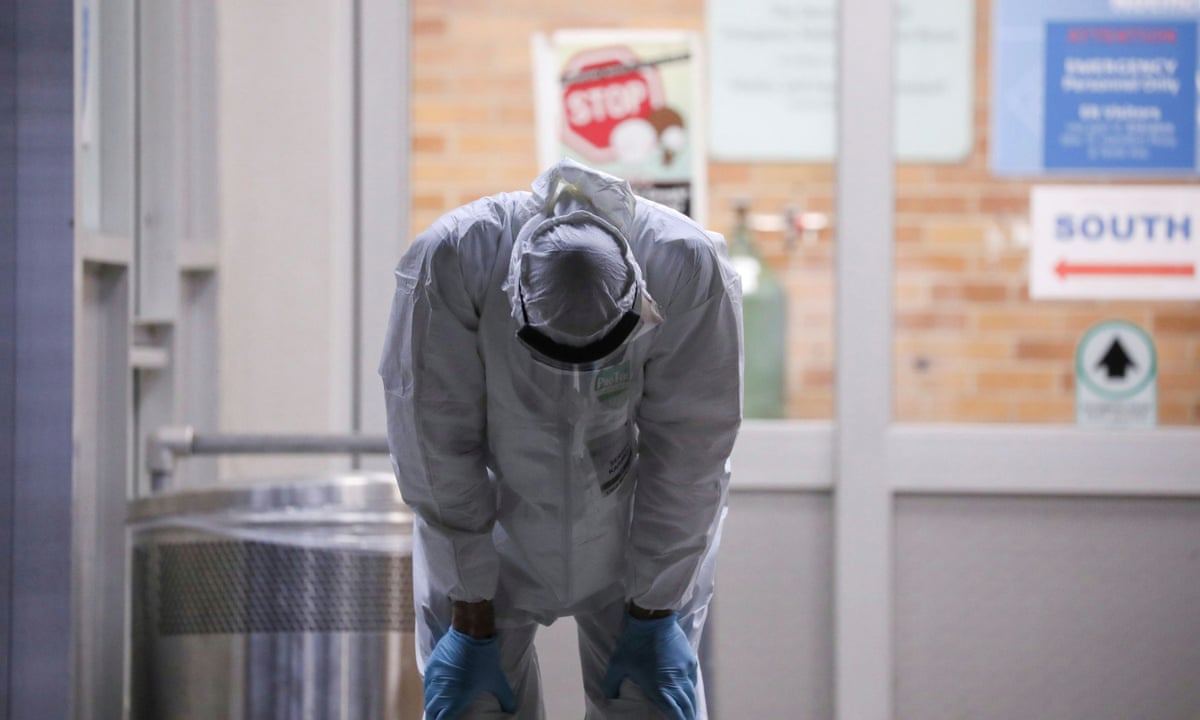
Last week we wrote about an observation from some physician leaders that, paradoxically, physician burnout seemed to have waned a bit during the COVID crisis. They felt that, as clinicians rallied to provide care for patients during the pandemic, many found new purpose in the work, despite great challenges. Bureaucratic hurdles yielded to the need to make critical decisions quickly, as did regulatory barriers to telemedicine.
The piece sparked a number of doctors, most from regions now experiencing surges, to share their alternative viewpoints with us.
One employed physician wrote that, across specialties, he and his colleagues are angry. They don’t feel protected, either financially, or even for their own physical safety.
A nurse practitioner working long shifts in an emergency department overloaded with COVID patients wrote, “In April, I would have never believed that we would be scrounging for PPE at the end of July. How could this happen?” And a nephrologist redeployed to a COVID ICU shared: “With the surge in New York, it felt like the entire country was behind their doctors and nurses. I drive home past restaurants and stores filled with people refusing to wear masks. It’s so demoralizing.”
Several expressed that their employers, both health systems and payers, are “counting on our goodwill that we’ll just keep showing up.” But once the crisis passes, there may be “drastic and irrational physician revolts. Someone should be watching for it.”
These comments reveal a marked difference in physician sentiment in different parts of the country, based both on the severity of the pandemic, and the nature of the local response. Regardless, we’d agree that the clinical workforce, both doctors and nurses, is working through a period of unprecedented stress, and for some, emotional trauma. Ensuring their stability and safety must be a top priority for every health system and medical group.


